Review: Big Head Blues Club

(Above: Blues legends Hubert Sumlin and James Cotton help Big Head Todd and the Monsters visit the “Killing Floor.”)

By Joel Francis
The Kansas City Star

Rock and roll tributes to the blues are hardly a novel concept, but the glossy, contemporary rock of Big Head Todd and the Monsters makes them an unexpected outfit to try such a feat.

Saturday’s concert at the Uptown was billed as “Back at the Crossroads: The Robert Johnson Centennial Concerts.” The four-piece, Colorado rock band aimed to celebrate Johnson in the months leading up to his 100th birthday in May, but this wasn’t quite the case. Johnson figured prominently in the set, but there was also a heavy dose of Chicago blues. The night was more like an exposition of the genre’s most overt influences on rock. Put another way, the first set opened with Todd Park Mohr alone onstage playing the dobro and ended less than an hour later with dueling drum solos.

Taking the stage in a dark suit and black fedora, frontman Mohr quickly put any expectations for the Monsters’ back catalog to bed, telling the one-third capacity crowd the only thing they’d be hearing was “straight, natural blues.” He was right for the most part, but an audience clamoring for “Bittersweet” – one of the band’s biggest tunes – needn’t have worried. The songs in the last third of the set sounded like typical Big Head Todd material outfitted with familiar blues lyrics.

Mohr opened with three stellar, solo acoustic numbers before being joined by Missouri native Lightnin’ Malcolm and Monsters keyboardist Jeremy Lawton. That trio, along with bass player Rob Squires who entered later, formed the core band for the night, present on nearly every number. They were augmented by drummer Cedric Burnside, grandson of the Fat Possum bluesman R.L. Burnside and Malcolm’s longtime touring partner, and Monsters drummer Brian Nevin.

The real blues cred, however, came from 79-year-old guitarist Hubert Sumlin, and 75-year-old harp man James Cotton. Sumlin’s playing can be heard on most of Howlin’ Wolf’s classic material and Cotton played on many great Muddy Waters records. Half a century later, both men were in just as fine of form today as they were in their Chess Records heyday. Sumlin’s soling was nimble and his vocal turn on “Sittin’ On Top of the World” was strong. Cotton made his harmonica moan and wail like a woman in pleasure and had so much fun during one solo that he started laughing when it was done.

Big Head Todd and the Monsters are no strangers to working with blues legends. In 1997 they worked with John Lee Hooker on a cover of his “Boom Boom” that reached the Top 40. Opinions of that track will likely frame one’s appreciation for the evening: The band either misappropriated a hero to dumb down a song or paid honest homage using their familiar idiom.

The best moments were the spare opening numbers, particularly Lightnin’ Malcolm’s duets with Cotton on “Walkin’ Blues” and “Future Blues.” Mohr really pushed himself at the mic all night and did a great job approximating the Wolf’s moans and rasp on the Chicago numbers. Cotton or Sumlin were onstage for about half of the two-hour set’s 22 songs. Their contributions were always a treat.

After the first, mostly acoustic set, the band took a 20 minute break. They returned for another hour of electric music that blurred the lines between Chicago blues, traditional bar band fare and the typical Big Head sound. Not everything worked – covers of ZZ Top’s “Jesus Just Left Chicago” and a slick arrangement that removed any sense of doom from “Last Fair Deal Gone Down” were questionable. But there was no doubt everyone onstage was having fun.

Setlist: Love in Vain; Stones In My Passway; Dry Spell; Kind-Hearted Woman Blues; If I Had Possession Over Judgment Day; Walkin’ Blues; Future Blues; Viola Lee Blues; When You Got A Good Friend; Travelling Riverside Blues. Intermission. Ramblin’ On My Mind; Preachin’ Blues (Up Jumped the Devil); Wang Dang Doodle; Sittin’ On Top of the World; Killing Floor; I Love the Life I Live, I Live the Life I Love; Jesus Just Left Chicago; Come On In My Kitchen; Last Fair Deal Gone Down. Encore: Cross Road Blues; I Believe I’ll Dust My Broom > Sweet Home Chicago.

Keep reading:

Review: Experience Hendrix (ft. Hubert Sumlin)
Review: T-Model Ford

Review: Buddy Guy and Bettye LaVette

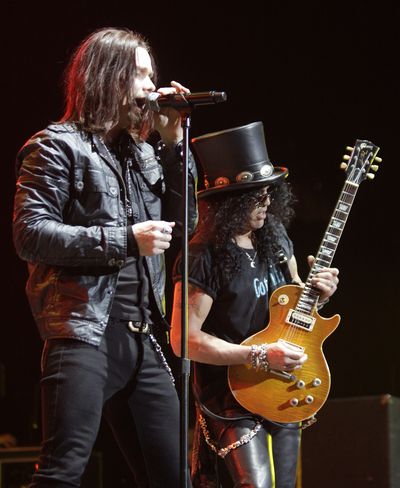
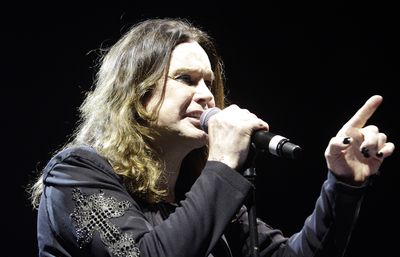
Review: Ozzy + Slash

(Above: Ozzy performs “Mr. Crowley” at the Sprint Center on Jan. 22, 2010.)

By Joel Francis
The Kansas City Star

The Prince of Darkness looked more like a soaked kitten.

Ozzy Osbourne stood center stage dripping wet, covered in foam. Thanks to the fire hose he used to liberally douse both himself and fans in the front half of the floor, Ozzy looked like he’d just fallen into a bathtub. The foam would dissolve, but Ozzy would never dry out.

Ostensibly in town to promote a new album, Ozzy performed just one new song.  Most of the rest of the setlist could have been written months in advance by a causal fan. But while the songs didn’t hold any surprises, many of the performances were still vital.

Experiencing Ozzy perform “Crazy Train” is a classic rock ‘n’ roll moment up there with hearing the Stones do “Jumping Jack Flash” or seeing Pearl Jam perform “Alive.” Despite being more than 40 years old, “War Pigs” still packs a powerful punch.

Although some of his solo material hasn’t aged as well, the three-quarters full house still reveled in the night, pumping their fists during solos and singing along. During “The Road to Nowhere” and “Mama, I’m Coming Home” the room lit up with lighters.

“Mr. Crowley” was an early highlight. Keyboard player Adam Wakeman, son of Rick Wakeman, turned the room into a giant cathedral with his ominous organ. As he played, a sheet of sparks feel from the rafters behind Ozzy, creating a curtain of fireworks.

Although there was a large video screen behind the band for most of the set and plenty of pyrotechnics, Ozzy’s oversized persona was the best visual effect of the night. Waterworks aside, he was constantly in motion, urging the crowd to clap, hopping up and down like a frog or bowing to his audience. During “Fire in the Sky” he writhed his arms and body during the lengthy guitar solo as if performing some Satanic jujitsu.

The two-hour set lagged quite a bit toward the end. It would have been difficult to maintain the energy and momentum of the opening numbers, but back-to-back, cliché-ridden guitar and drum solos deflated the show. Everyone would have been better served had the band performed two 45-minute sets with an intermission.

Fortunately Ozzy still had plenty of goodies buried in his catalog. “Crazy Train” brought the crowd back to life, while “Mama” and “Paranoid” ensured most of them would show up next time for his inevitable return.

Slash: Axl Rose is notorious for making fans wait hours before appearing; Slash came onstage 10 minutes early. His one-hour set was basically a truncated version of the show he put on last fall at the Voodoo Lounge. It was heavy on Guns ‘N’ Roses, with most of the songs coming from “Appetite For Destruction.” The Velvet Revolver material held its own, but some of the newer songs lost the crowd, especially “By the Sword.”

For a band so reliant on its guitarist, the mix was atrocious. All the instruments were trapped in a mush under bellowing drums and vocals that sounded like they emanated from a tin-can telephone. Fans may have been better served sonically by asking their next-door neighbor to play “Appetite” at full volume, then retreating to their basement and listening to it from there. Although the sound got better at times, the closing solo during “Paradise City” was practically inaudible.

Ozzy setlist: Bark at the Moon; Let Me Hear You Scream; Mr. Crowley; I Don’t Know; Fairies Wear Boots; Suicide Solution; Road to Nowhere; War Pigs; Fire in the Sky; Shot in the Dark; guitar solo > Rat Salad > drum solo; Iron Man; I Don’t Want to Change the World; Crazy Train. Encore: Mama, I’m Coming Home; Paranoid.

Slash setlist: Ghost; Sucker Train Blues; Mr. Brownstone; Back From Cali; Civil War; Nothing to Say; By the Sword; Nightrain; Sweet Child O’ Mine; Slither; Paradise City.

Keep reading:

Review: Slash

Review: “I Am Ozzy”

Review: Megadeth

Happy Clash-mas Eve

 (Above: Joe Strummer and the Mescaleros delight in performing Jimmy Cliff’s “The Harder They Come.”)

By Joel Francis
The Daily Record

Every Christmas Eve, a significant block of time is set aside to honor the late Joe Strummer, who died on Dec. 22, 2002. This year, The Daily Record celebrates Strummer’s lifelong love of reggae music.

The Clash – “Pressure Drop”

Joe Strummer – “The Harder They Come”

Joe Strummer and Jimmy Cliff – “Over the Border”

In the early days of the London punk scene, DJ/filmmaker/musician Don Letts played reggae albums at the famed Roxy Club. At first the reggae was a necessity – the punk scene was still too young for any of the bands to record their own material. But even after the punk catalog exploded, the reggae remained.

“The punks were digging on the old anti-establishment chant down Babylon (attitude), heavy bass lines and they didn’t mind the weed,” Letts told Mojo magazine in 2008.

Not that this was many of the punks’ first exposure to the Jamaican genres.

“People like (Joe) Strummer, (John) Lydon and (Paul) Simonon didn’t need Don Letts to turn them on,” Letts said in the same interview.

Jimmy Cliff in "The Harder They Come."

Strummer, Simonon and the remaining members of the Clash likely stumbled upon Toots and the Maytalls’ “Pressure Drop” shortly after its 1972 release on the soundtrack to “The Harder They Come.” Both the film and the soundtrack had a profound influence on Strummer. In 1977 the band covered “Pressure Drop,” which was released in 1979 as the b-side to “English Civil War.” The title of their second album, “Give ‘Em Enough Rope” borrows the style of “The Harder They Come” by introducing a well-known phrase and letting the second half remain implied (i.e. “… and they’ll hang themselves”).

“Safe European Home,” one of the tracks on “Rope,” not only name checks “The Harder They Come,” but borrows the phrase “Rudie can’t fail” from another reggae song, foreshadowing the band’s biggest foray into the ska/Two-Tone sound. Finally, Strummer borrowed the film plot of “The Harder They Come” and adapted it to his British punk interpretation titled “Rude Boy.”

Two decades after the release of “Rude Boy,” Strummer recorded his own version of “The Harder They Come.” Teaming with the Long Beach Dub All-Stars and U.K. reggae singer Tippa Irie, his cover was released on the 2000 benefit album “Free the West Memphis Three.” Strummer’s interpretation doesn’t alter much from Jimmy Cliff’s original, but he’s clearly having a great time. Strummer thought enough of the song that another recording of the song was posthumously released the b-side to “Coma Girl.” Recorded live with the Strummer’s final band, the Mescaleros, this version is taken at a faster tempo and joyously ragged and raw.

At one of his final recording sessions, Strummer finally got to collaborate with Cliff. Upon learning where Cliff was recording his latest album, Strummer showed up with some unfinished lyrics in hand that he felt Cliff should sing. “Over the Border,” the song that grew out of this partnership appeared on Cliff’s 2004 album “Black Magic.”

Cliff described the session with Gibson.com shortly before his induction to the Rock and Roll Hall of Fame this year.

“The two of them (producer Dave Stewart and Strummer) began playing guitar, and I came up with the melody, and then Joe chipped in with some help on the melody as well,” Cliff said. “We recorded the song right away. That was a really special moment for me. You can imagine the shock I felt after hearing that Joe was not with us anymore.”

Keep reading:

Happy Clash-mas Eve (2009)

Happy Clash-mas Eve (2008)

Review: Toots and the Maytals, the Wailers

Original Wailers keep promise to Bob Marley


Classic Christmas Carol: “A Change At Christmas (Say It Isn’t So)”

(Above: Michael Ivins (far left) of the Flaming Lips wants to be the star on top of your Christmas tree.)

By Joel Francis
The Daily Record

The Flaming Lips make every concert feel like a holiday, so it’s unsurprising several songs in their catalog have been inspired by Christmas – the biggest holiday of them all.

“A Change At Christmas (Say it Isn’t So)” isn’t the Oklahoma City-based alternative rock band’s first tribute to Christmas. They had already brought “Christmas at the Zoo” and would soon deliver “Christmas on Mars.” But “A Change At Christmas” stands out, because it displays the “one love” hippie ethos at the heart of many of the band’s songs.

In the song, Flaming Lips frontman Wayne Coyne wishes he could stop time so the whole world could permanently live in the goodwill of the season. A time, he says, “the world embraces peace and love and mercy/Instead of power and fear.” In the last verse he pleads “tell me I’m not just a dreamer,” echoing John Lennon, another Christmas idealist.

Above: Even Santa Claus gets down during a Flaming Lips concert.

The arrangement features many of the Lips trademarks, including a sunny wash of synthesizers and toy drum machine. Sleigh bells and chimes bring a Yuletide feel, while a simple piano line holds the melody.

“A Change At Christmas” is also notable for being one of the rare times Coyne abandons his signature falsetto to deliver his heartfelt words of hope in his natural range. The optimism of the track is cemented with Coyne’s final words. During the fade-out he declares “I think it’s all going to work out just fine.”

While the Lips’ other Christmas songs saw release on proper albums or seasonal singles, “A Change At Christmas” was tucked into the “Ego Tripping” EP released in 2003. At the time of its release, the Lips were riding the success of “Yoshimi Battles the Pink Robots” with a deluge of singles, EPs and other releases. “A Change At Christmas” has become buried in the back catalog, but it’s a rare Christmas song that plays well year-round. It’s especially worth digging out in December.

Keep reading:

Classic Christmas Carol: “Happy Xmas (War Is Over)”

Classic Christmas Carol: “Jesus Christ”

Review: The Flaming Lips – “Christmas On Mars”


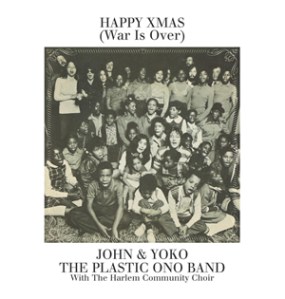
Classic Christmas Carol: “Happy Xmas (War Is Over)”

(Above: It may have been the holiday season, but John Lennon wasn’t pulling any punches when he wrote this song.)

By Joel Francis
The Daily Record

Before it was a song, “Happy Xmas (War Is Over)” was a billboard. In 1969, two years before the song was written and recorded, John Lennon and Yoko Ono proclaimed “War is Over! (If You Want It)” on signage in New York, Rome, Berlin, Tokyo and several other major cities around the world. The signs were an outgrowth of Lennon and Ono’s bed-in for peace, but the phrase stuck in Lennon’s head.

When the couple relocated to New York City in 1971, Lennon quickly feel in the company of radical ‘60s activists Jerry Rubin and Abbie Hoffman. Lennon had already gone on record against the Vietnam War at a Beatles press conference in 1966. The conflict was also a frequent topic of conversation during the bed-in. Instead of giving peace a chance, though, the United States had become even more entrenched in combat.

Inspired by his social circle and frustrated by another holiday season marked by fighting, Lennon turned his billboard slogan into a song. Lennon wrote the song over two nights in a New York City hotel room and recorded it almost immediately. Despite being released less than three weeks before Christmas, the single still managed to reach the Top 40. The feat was replicated each time the single was re-released. In Lennon’s native England, the single did not appear until 1972, when it went in the Top 5.

After a whispered shout-out (whisper-out?) to the pair’s children, Phil Spector’s wall of sound kicks in. The opening line – “And so this is Christmas/and what have you done?” – is both a nostalgic look back and the previous year and question of accountability. Despite having hope for the upcoming year, Lennon admits “the world is so wrong.” A chorus of children from the Harlem Community Choir echoes the words that started it all: War is over/If you want it.”

The melody is based on the folk ballad “Stewball,” a song about a British race horse. The first versions of “Stewball” date to the 18th century, but Woody Guthrie and Lead Belly put their stamp on the song in the 1940s. During the folk revival of the early ‘60s, both Peter, Paul and Mary and Joan Baez included the song in their repertoire.

Many artists, including skiffle singer Lonnie Donegan, a big influence on Lennon and most British musicians of his generation, have cover “Stewball,” but their numbers pale in comparison to the roster of those who have recorded “Happy Xmas (War Is Over).” From Andy Williams and Celine Dion to Maroon 5 and American Idol David Cook to the Moody Blues and the Polyphonic Spree, the song has been covered by nearly every conceivable artist in nearly every conceivable genre.

Keep reading:

Review: “December 8, 1980″

Classic Christmas Carol: “Fairytale of New York”

George Harrison – “Ding Dong, Ding Dong”

Classic Christmas Carol: “Greensleeves”

Review: “December 8, 1980”

(Above: “(Just Like) Starting Over” announced John Lennon’s return to music in the fall of 1980. After his death, it occupied the No. 1 spot for five weeks.)

By Joel Francis
The Daily Record

Rock and roll is littered with artists who left too soon. None are mourned as deeply and fervently, though, as John Lennon. The former Beatle was gunned down outside his New York City home 30 years ago today.

Keith Elliot Greenberg’s new book, “December 8, 1980: The Day John Lennon Died” marks the occasion. Much of the information contained in this brief volume has been presented before.  Even casual fans will be familiar with many of the details in Greenberg’s truncated telling of Lennon’s biography. While the Beatle’s story is well-known, Greenberg makes it worth visiting again.

“December 8, 1980” reads like a true crime television special, which makes sense given the author’s background as a producer for “America’s Most Wanted,” “48 Hours” and “MSNBC Investigates.” The unfolding day is interrupted by the histories of both Lennon and his assassin, Mark David Chapman.

Greenberg not only places the reader in both men’s minds heading to the fateful moment, but paints a vivid picture of Lennon’s home in the Dakota building and the state of New York City as a whole. First-hand stories from Lennon’s neighbors, autograph hounds who haunted the Dakota’s entry, musicians, fans and police officers. The details these auxiliary players provide peel back the years and familiarity and make the story seem fresh.

Although they were only tangentially related to the saga, Greenberg recounts the activities of Lennon’s fellow Beatles on that day, and their reactions to his death. One can feel the throngs pressing against Ringo as he visits Yoko Ono at the Dakota, and feel the energy of Bruce Springsteen’s unofficial tribute concerts in Philadelphia.

“December 8, 1980” concludes well after the titular date, covering Champan’s trial, the Beatles anthology reunion project, and the attempt on George Harrison’s life in 1999.

Beatles fans truly interested in the events of Dec. 8 and its main participants are advised to seek out any of the available solid Lennon biographies – Philip Norman’s “John Lennon: The Life” has received rave reviews – and Jack Jones’ 1992 Chapman biography “Let Me Take You Down.” Although it is essentially a distillation of those texts, Beatle fans looking for a light trot through that devastating day should be satisfied with Greenberg’s work.


Keep reading:

George Harrison – “Ding Dong, Ding Dong”

George Kalinsky: Painting with Light (includes stories of Lennon’s concerts at Madison Square Garden and the Harrison’s Concert for Bangladesh)

McCartney in Career Resurgence

Review – “How the Beatles Destroyed Rock ‘n’ Roll”


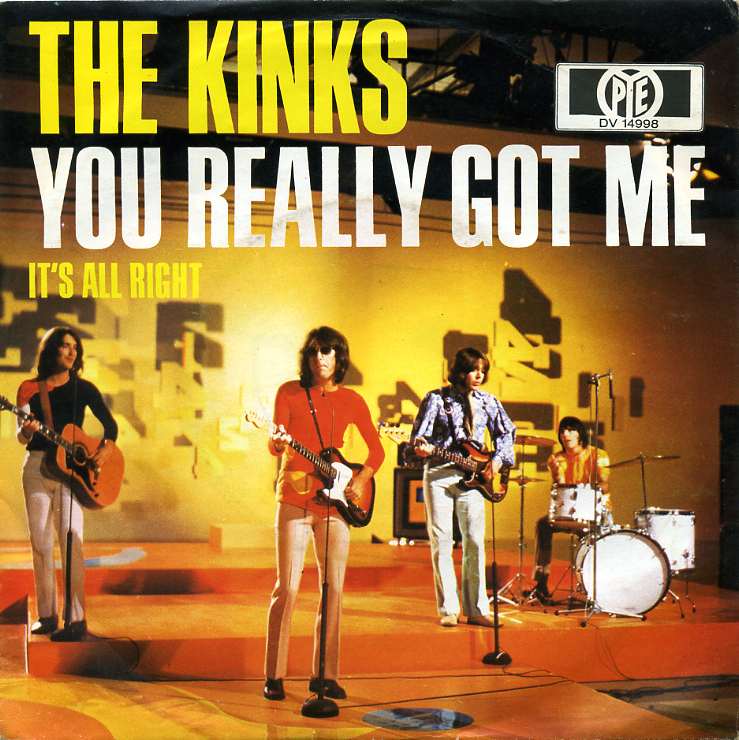
Who really got “You Really Got Me”

(Above: Metallica perform with Ray Davies at the 2009 Rock and Roll Hall of Fame 25th Anniversary Concert in New York City.)

By Joel Francis
The Daily Record

Every great song usually inspires about a dozen covers. Most of these are pedestrian and instantly forgotten. The few that transcend the original can be troublesome for the original artist. Should they mimic the new, more popular version or maintain the original vision? Bob Dylan has turned his nightly performances of “All Along the Watchtower” into a sort-of tribute to Jimi Hendrix. Trent Reznor, however, continues to perform “Hurt” as he originally intended, ignoring Johnny Cash’s transcendent interpretation.

Ray Davies wrote “You Really Got Me” in 1964 on an upright piano. The initial sketches suggest a loping bluesy number somewhere between Gerry Mulligan and Big Bill Broonzy, two of Davies’ biggest inspirations at the time.

Davies’ brother Dave had different ideas. Latching onto the riff, and drawing on “Wild Thing” and “Tequilla,” he drove the song through his distorted guitar. The song was born anew, and when Ray Davies heard the new arrangement he knew that’s how his number was supposed to be played.

Unfortunately, the Kinks had already taken the first arrangement into the studio. It was that version that Pye, their label, intended to release as the band’s third single. The Kinks and producer Shel Talmy successfully lobbied for another session to re-record the number with the newfound grit and rawness. The result was the band’s first No. 1 hit in their native England, thereby launching their career.

The Kinks’ next single was essentially a re-write of “You Really Got Me.” Despite the similar success of “All Day and All of the Night,” Ray Davies abandoned that style of writing for the most part for more lilting fare like “Tired of Waiting for You” and “Sunny Afternoon.”

Davies and the Kinks may have moved on, but the rest of the world was just catching up. “You Really Got Me” inspired the signature grimy riff of “Satisfaction,” the feel of “Wild Thing,” and all of “I Can’t Explain.” Heavily distorted guitars became a staple in the burgeoning psychedelic rock scene and, a decade later, the backbone of punk.

In the heart of punk movement, Los Angeles party band Van Halen decided to release their version of “You Really Got Me” as their debut single. Although the song only rose to No. 36 on the U.S. charts, it was tremendously popular, becoming a concert staple throughout the band’s career (and numerous line-ups).

For the most part, Van Halen’s 1978 arrangement of “You Really Got Me” stayed true to the Kinks version. The biggest difference was Eddie Van Halen’s fretboard pyrotechnics. This transformed the song from a proto-punk jam into a guitar hero workout. Matching Van Halen’s instrumental energy was frontman David Lee Roth, whose grunting and moaning punctuated an already-strong come-on.

In 1980, “You Really Got Me” was one of the last cuts on the Kinks live album “One From the Road.” The song had already been released in live format before, on 1968’s “Live At Kelvin Hall,” but this was the band’s first recorded response to Van Halen.

Sadly, the Kinks responded by turning into a Van Halen cover band. An excellent guitarist in his own right, Dave Davies fell flat trying to imitate Eddie Van Halen (as many, many other axeslingers would also discover). Ray Davies’ pinched London voice could not match Roth’s West Coast bravado. Instead of playing to their strengths, the Kinks played to Van Halen’s strong points, thereby undermining themselves and relinquishing ownership of the original “You Really Got Me.”

I mention all this, because this month Ray Davies has elected to release another version of “You Really Got Me” on his new all-star duets album “See My Friends.” Since the Kinks have been on hiatus since 1996, Davies chose Metallica to back him on this track. Although they are working with the original songwriter, the grunts and asides spewing from Metallica singer James Hetfield make clear that his band is covering Van Halen, not the Kinks. Displaying a leaden stomp that makes Black Sabbath seem nimble, Metallica drain the life from the song as Davies stands helplessly by.

The Kinks original 1964 recording of “You Really Got Me” is a brilliant track. Van Halen’s cover some 14 years later also remains exhilarating (particularly when it is coupled with “Eruption,” the Eddie Van Halen instrumental that preceeds it on the album). Sadly, we have lost one version in the wake of the other.

Keep reading:

“Death Magnetic” is Metallica’s creative rebirth

Bob Dylan: All Along the Watchtower

Lanois + Raffi = Eno

Review: “The Art of the LP”

(Above: Jay-Z takes fans behind the scenes for the making of  the cover for his 2009 release “The Blueprint 3.”)

By Joel Francis
The Daily Record

There is no shortage of books on album artwork. Pick a decade, genre or label and you’ll likely have several volumes to choose among. Johnny Morgan and Ben Wardle make an impressive entry into this crowded field with their book “The Art of the LP: Classic Album Covers 1955-1995.”

While some of the album covers are inevitably familiar – Santana’s “Abraxas,” Nirvana’s “Nevermind”  – the grouping sets this volume apart. Albums are arranged in ten categories ranging from sex, drugs and rock and roll to ego, drugs, politics and death.

It’s fascinating to watch the evolution of styles and boundaries. In the 1950s, for example, just showing a black man’s face with a red tint as on Sonny Rollins’ “A Night at the ‘Village Vanguard’ was enough to shock a racially uneasy country in the middle of the red scare. Barely over a decade later, “black power” was in full force on covers such as Miles Davis’ “On the Corner” and Funkadelic’s “One Nation Under a Groove.” More subtle comments on race and politics gave way to confrontational styles embraced in succession by reggae, punk and hip hop.

Especially interesting are the two-page spreads, like the one juxtaposing the use of the American flag on Sly and the Family Stone’s 1971 release “There’s A Riot Going On,” Bruce Springsteen’s 1984 “Born in the U.S.A.” and the Black Crowes’ 1993 album “Amorica.” Stone alters the flag’s stars to make it a statement against the Vietnam War, while the backdrop to Springsteen’s anti-Vietnam statement is seen as patriotic. The Black Crowes chose an image from Hustler of a woman in a flag patterned bikini. The authors note that the Crowes statement wouldn’t have been unusual in the free love era of the ‘60s, but needed the relaxed censorship of the ‘90s to gain mainstream circulation.

Arranging the albums so they comment and reflect on each other, not only reinforces the themes, but adds a deeper appreciation of the work. Students of art will undoubtedly relish this experience, but for the rest of us Morgan and Wardle have added a solid block of text for each work. This paragraph not only provides the context of the time and artists, but explains what the artist may have been trying to accomplish.

This text is especially fun on the disastrous covers marked with an exclamation point.  The authors clearly have a special place in their hearts for the Scorpions. No less than three of the ‘80s German metal outfit’s covers are denoted. Reaching a “Spinal Tap” moment, they muse “Would the Scorpions ever learn the difference between sexy and sexist? Of course not.”

Ending just before the peak of the CD era, Morgan and Wardle give their subjects the largest canvass possible. The oversized pages allow for half-size reproductions. Music fans used to viewing tiny CD booklets will be amazed at the details that spring from the page. Fans accustomed to vinyl sleeves won’t miss much. Gatefold covers or albums that answer the cover artwork on the back are also given full exhibition. The handsome hardbound book is housed in a red plastic slipcase.

“The Art of the LP” is a visual jukebox that will entertain and inspire music fans and artists alike. Unless your coffee table is already loaded with similar books, I suggest making room for this one.

Keep reading:

George Kalinsky: Painting with Light

Review: “Neil Young – Long May You Run: The Illustrated History”

Review: “The Oxford American: Book of Great Music Writing”

Gladys Knight and the Pips – “If I Were Your Woman”

Gladys Knight and the Pips – “If I Were Your Woman,” Pop #9, R&B #1

By Joel Francis
The Daily Record

Relationship fantasies were nothing new at Motown – Mary Wells’ “The One Who Really Loves You” was one of the label’s earliest singles. But Gladys Knight and the Pips’ 1971 single “If I Were Your Woman” shows how much Hitsville had grown up during the ‘60s. The song removes the concept from the realm of schoolgirl crushes and infuses it with some serious grown-up desire.

When “If I Were Your Woman” came out the Pips were on a run of three consecutive Top 5 R&B hits, dating back to 1969’s No. 3 “The Nitty Gritty.” The group was determined to keep this streak intact and also bolster their album sales; none of their LPs had cracked the Top 10. They accomplished both. The single went all the way to the top of the R&B charts, and the album – given the same name – lodged at No. 4.

Knight’s smoky, smoldering voice played no small role in that achievement. Listeners who grew up with “Baby Love” no doubt enjoyed hearing love songs that matured with them. Knight sumptuously plays the role of a woman in love with a man trapped in a bad relationship. Knight knows she can make him the man he deserves to be, if only he could muster the strength to walk away … and she could find the courage to confront him face-to-face.

Knight sings with the passion of a woman pouring out her deepest desires to the darkness, a conviction rooted in the comfort of knowing these words will never face the harsh scrutiny of daylight. As the song fades, it is easy to imagine Knight drifting off to sleep as her would-be beau lies awake in bed next to his partner, wondering how he wound up in this predicament. The next time Knight and her man meet, their only exchanges will be furtive glances across the room and brief, awkward conversation punctuated by nervous laughter.

Written by Gloria Jones, Clay McMurray and Pam Sawyer and produced by McMurray, “If I Were Your Woman” inspired several covers. The Jean Terrell-fronted Supremes recorded a version the following year, in 1972. One year later, Jones – better known as the original singer of the song “Tainted Love,” later recorded by Soft Cell, and girlfriend of T. Rex glam rocker Marc Bolan – recorded her own version for her second solo album.

Bonnie Bramlett, formerly known as half of Delaney and Bonnie, followed suit in 1976. The unfairly ignored Bettye LaVette put her stamp on the song on her only Motown album, 1980s “Tell Me A Lie.” Eight years later Stephanie Mills put the song back on the charts, where it reached No. 19 on the Hot Black Singles chart (now known as the Hot R&B/Hip Hop chart). That same year found the only male interpretation of the number, when George Michael performed it at Nelson Mandella’s 70th birthday tribute. Somehow people were still shocked when he came out of the closet a decade later.

Most recently, Alicia Keys included the song as part of a medley on her sophomore album, and gave it the stand-alone treatment on her 2005 live album “MTV Unplugged.”

Review: Branford Marsalis

 (Above: Branford Marsalis solos and shows off his new drummer, Justin Faulkner, at a 2009 concert.)

By Joel Francis
The Daily Record

Saturday’s Branford Marsalis concert at the Gem Theater was a night of new beginnings.

The show kicked off the 2010-2011 season of Jammin’ at the Gem and featured new bass player Robert Hurst – this was only his second gig with the quartet in as many nights. It even opened with a new song.

That number, tentatively titled “Joey’s Tune” after its composer, pianist Joey Calderazzo, was a bit of an outlier. Admittedly a work in progress, the arrangement was busy to the point of claustrophobia. When Marsalis stepped back, Calderazzo and drummer Justin Faulkner flooded the room so completely one wondered if Marsalis would be able to wedge his way back in the song.

Fortunately, the rest of the two-hour set fared better. Alternating between soprano and tenor saxophones, Marsalis guided the band through breakneck changes and lumbering mood pieces. Some of his solos displayed the pop sensibilities that made him the go-to hornsmith for Sting and Bruce Hornsby, yet his playing was always challenging, never resting too lightly on the ears.

If the set had one blemish it was that Marsalis seemed too content to introduce a number with a solo, then step away for the rest of the number to let his trio play. Aside from being the best player onstage, Marsalis’ horn was the catalyst that helped the rest of the sounds to coalesce.

“The Blossom of Parting,” a track from Marsalis’ 2009 album “Metamorphosen” was the high point of night. The song opened softly with Marsalis on soprano sax, and Faulkner switching between brushes and mallets to build new textures. Calderazzo’s mesmerizing solo blurred the lines between jazz and classical music, and showed more than a hint of Brad Mehldau’s plaintive style. When the band re-entered, Marsalis gradually built the song’s intensity. Before the song could climax, however, an over-exuberant Faulkner accidentally knocked his ride cymbal to the floor. It wasn’t the ending Marsalis hoped for, but the audience took in stride and responded with a standing ovation.

Faulkner had no problem filling the drum stool occupied by Marsalis’ longtime beatman Jeff “Tain” Watts. On a cover of Thelonious Monk’s “Teo,” Faulkner traded bars with Marsalis with a maturity that outpaced his age of 19 and an energy that underlined it. His solo during a later song recalled another drummer of Marsalis’ acquaintance, Art Blakey.

Hurst also handled himself well, despite sight-reading all of the material. His lengthy solo would have worked better tied to a song than as a stand-alone piece. Aside from that moment, Hurst drew little attention to himself – a positive attribute for now in these new surroundings.

The evening ended with an encore of “St. Louis Blues” that found Marsalis showing off his New Orleans roots and reeling off some Satchmo-like trumpet licks on his saxophone.

Keep reading:

Clark Terry’s Last Stand

Releasing Jazz from Aspic

Review: Oleta Adams

Buck O’Neil: Sweet Times and Sweet Sounds at 18th and Vine