Tapers battle elements, boozers to record history

mic-standBy Joel Francis
The
Kansas City Star

Michael Lindsey looks like any other unassuming music fan, but he’s pretty easy to pick out at a concert. He’s usually standing near the soundboard with an 8-foot mic stand.

A lot of people go to live shows to relax or as a hobby, but Lindsey goes to record what he sees and hears. He’s one of a dozen music fans around Kansas City who call themselves Team Kansasouri, dedicating themselves to capturing and sharing concerts.

“My first exposure to taping was when I was downloading other concerts I had attended,” Lindsey said. “I was frustrated when I was at a show and couldn’t find it online later, so I started recording them myself.”

For Team Kansasouri, the live show is the ultimate demonstration of a band’s mettle.

“A good live recording has a certain vibe, emotion and energy you can’t find on a studio recording,” said team member Brian Price of Eudora. “Look at the later Phish albums. They’re purely academic exercises compared to the live versions.”

According to Clinton Heylin’s book Bootleg: The Rise and Fall of the Secret Recording Industry, some of the first fan concert recordings were made at New York’s Metropolitan Opera House in 1901. Taping reached the mainstream when it received the blessing of the Grateful Dead in the 1970s. While tape trading is very much part of the Dead’s culture, the hobby goes far beyond one genre.

And no matter the type of music that’s recorded, there is one steadfast rule: Shows should never be sold.

“I found a guy on eBay who had the Sting show I made in Columbia and was trying to sell it,” team member Joe Hutchison said. “I fought him all the way to the top and got his auctions shut down.”

Record labels sue fans for illegally downloading albums, but many bands see swapping concert recordings as free advertising.

“If the selling was prevalent, the bands would stop letting us record,” Price said. “Bottom line: Taping is a privilege, and we’re going to defend our privilege.”

Network on the road

Recording a concert is not for the faint of heart or pocketbook. Lindsey’s gear bag contains two microphones stored in a waterproof plastic container lined with anti-static foam. Cost: $900.

He also has an all-in-one rig with preamp and analog-digital converter. Cost: $900.

And there’s the tripod for the mics, an external battery pack, foam tips for the mics in case of wind, some cables (homemade) and a couple of pieces of just-in-case miscellanea.

“You can spend $10,000 on gear, easy,” Lindsey said. “The good news right now is that because of the economy a lot of guys are dumping their gear. If you’ve got the money, this is a great time to get into the hobby.”

While the rest of the crowd cheers the band as it takes the stage, tapers are hunched over their gear making sure the recording levels and balance are right. Only after the first song and tape are “rolling” can they enjoy the show. Kind of. They must remain watchful of fans trying to steady themselves on a mic stand or fans whose voices could find their ways onto the recording.

“For some reason the mic stand is a beacon for drunks to steady themselves on,” Hutchison said. “You have to be vigilant about your stuff and not be afraid to push people away.”

Other elements can’t be controlled, like weather. Last summer several tapers planned to record the band moe. at an outdoor show but got caught in a 90-minute rainstorm. Most packed umbrellas to protect the gear.

“We got lucky that time because the rain was coming straight down,” Price said. If it were coming down sideways, he said, they would have been forced to shut down.

Getting through the doors with all that stuff isn’t as hard as you might think.

“At first you have to educate the manager that it’s a benefit to allow recording,” Price said. “You might want to print out the band’s taping policy from their Web site and bring it with you. Eventually they’ll come to recognize you and let you in.”

Musical history is being made

After the show, there is an unofficial competition to transfer the show from the recorder to the computer, separate each song into its own track and post the concert online as quickly as possible.

“I’ll be listening in bed at 3 in the morning excited at how good it sounds,” Price said. “But I have to be quiet because my wife is sleeping next to me.”

mic-2The Kansasouri tapers generally restrict their recordings to bands and venues friendly to taping. They document all their experiences — from where to set up at a given venue and what microphones to use to the soundman’s name — on taperssection.com, an overwhelmingly comprehensive Web site covering everything from how-to’s and gear reviews to garage sales on used equipment.

“It’s where our knowledge is passed down,” said Randall Phillips of Kansas City. “(The site has) stuff like taping methods and equipment used and other things you couldn’t learn in 10 years. If you run into a problem, someone else has experienced it and is waiting to help you online.”

Most important, it’s a social network. When tapers descended on Clinton Lake last June for the Wakarusa Music Festival, Price hosted a barbecue for everyone. And the same courtesy has been shown to him.

“If I travel to a show in St. Louis or been on vacation and gone to a show,” Price said, “there’s never been a time I didn’t run into somebody I knew.”

Aside from friendships, there are other often unexpected perks. Reggae singer Matisyahu gave out free tickets to tapers for his performance last summer. Other gifts are less conventional.

“I taped an Allman Brothers show from the balcony of the Uptown,” Hutchison said. “It was 100 degrees up there, but the show came out OK. I put it up and traded with a few people. A few weeks later, I got a box of Georgia peaches in the mail from an appreciative fan.”

But ultimate satisfaction comes from knowing a piece of musical history has been preserved.

“This is history for us,” Hutchison said. “We’re archiving it, creating documents of what happened on that night.”


IS IT ARCHIVED?
To find out if your favorite concert memories have been recorded use the search engines on the following Web sites. Keep in mind it may take some online digging to unearth your buried treasures.

http://btat.wagnerone.com

http://bt.etree.org

www.archive.org/details/etree

•To learn more about becoming a taper, go to www.taperssection.com and click on the first link, “where to begin.” More information is also available at www.flac.sourceforge.net.

Jimmy Ruffin – “What Becomes of the Brokenhearted”

jruffin

Jimmy Ruffin – “What Becomes of the Brokenhearted,” Pop #7, R&B #6

By Joel Francis

Jimmy Ruffin isn’t as well-known as his brother, the late Temptations singer David Ruffin, but Jimmy didn’t land at Motown through nepotism. Raised in Mississippi, Jimmy sang with David in the family gospel group. When he was drafted, Jimmy entertained the troops with his doo-wop singing. After the military, he settled in Detroit. Jimmy auditioned for Motown and was signed before his brother, but success didn’t come as quickly.
Relegated to supplying handclaps and finger snaps, Jimmy was forced to earn a living on the automotive assembly line. After a few failed singles, Jimmy broke through with his third single, “As Long As there is Love,” written by Smokey Robinson, and finally hit big with “What Becomes of the Brokenhearted.”
Songwriters William Witherspoon, Paul Riser and James Dean originally intended this song to go to the Spinners, who would later give Motown a Top 20 hit with “It’s a Shame.” When Ruffin heard the number, it resonated so deeply within that he begged the trio to let him record it. The resulting single was the biggest and best-known of his career.
The song’s long introduction was the result of producer Mickey Stevenson’s decision to remove Jimmy’s spoken-word verse from the final mix. A restored version was later released on several Motown compilations. But the instrumental prelude does a great job of establishing the setting for Ruffin’s “land of broken dreams.” Songwriter Riser is best known as Motown’s in-house arranger. His string arrangements that appear on albums by Stevie Wonder, Marvin Gaye, the Temptations, Diana Ross and many more. One of the few Funk Brothers to emerge from the Snakepit – their nickname for Motown’s garage-cum-recording studio – with a writing credit, his influence may explain the song’s sweeping, theatrical feel.
Jimmy released another dozen singles and four albums – including one with David – for Motown. In the mid-’70s, he signed with Polydor, who released two of his albums. Jimmy’s final album, “Sunrise,” was produced by Bee Gee Robin Gibb and released in 1980. Shortly afterward, Ruffin moved to England where he had his own talk show and continues to tour.
The song was covered by Diana Ross and the Supremes in 1969, but ignored until Dave Stewart and Zombies singer Colin Blunstone cut a version in 1981. The duo may have been spurred by the success of “Sunrise” and Jimmy’s immigration to their native England. Ten years later, Paul Young’s cover hit No. 1 on the U.S. Adult Contemporary chart on the back of its appearance in the film “Fried Green Tomatoes.”

Another tree falls in the forest

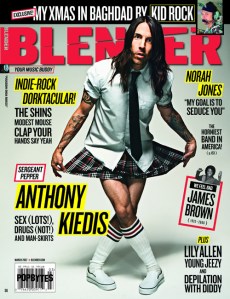
blendermarch2007cover

(Above: One of Blender’s classier covers, believe it or not.)

By Joel Francis

It was hard to muster any sympathy for Blender magazine when it was announced this week that the musical offshoot of Maxim the issue currently on newsstands will be its last.

Maxim rarely added anything of value to the musical discussion. Its biggest claim to fame was the steamy photos that adorned most covers. Inside, most of its coverage focused on musicians propped up by the hype machine. The magazine’s most reliable features were absurd lists (The 40 Worst Lyricists in Rock!), ridiculous features (Ask a Superstar) and product placements masquerading as articles (Lars Ulrich Reveals the Secrets Behind Guitar Hero Metallica).

If Maxim’s pandering approach is old news, then so is the reason for its demise: falling circulation. According to Alpha Media group, which bought Blender, Maxim and Stuff for $240 million in August 2007, paid subscriptions fell 8 percent in the past year while newsstand sales dropped 18 percent. Ad sales also suffered.

It would be easier to dismiss Blender’s demise if it weren’t happening to so many other magazines and newspapers as well. The Rocky Mountain News ceased publication in February; the Seattle Post-Intelligence went online only in March and Christian Science Monitor will follow suit in April. The News and Post-Intelligence had been around for 150 years, while the Monitor boasts over a century of history.

As newshounds and defenders of the Fourth Estate wonder how government and civic news will be reported during this dearth of outlets, music fans should ponder some of the same questions. In the past, magazines like Crawdaddy and Creem connected fans to the music they loved. Some, like Down Beat, Sing Out! and Rolling Stone are still around. Others, like Paste, Spin and Vibe, have more recently joined the fray.

But niche publications are not immune to industry trends. No Expression, which was to art what Blender was to cleavage, folded last year. According to a 2008 study conducted by the Project for Excellence in Journalism, in the past 15 years, overall magazine readership has declined and the median reader age has risen.

Although more people are willing to write about music than would volunteer to cover a city council, planning commission or school board meeting, it is still disturbing to see the number of voices in the marketplace dwindle. Can we trust bloggers to provide accurate, impartial coverage of the Live Nation/Ticketmaster merger, or the business woes and strategies of the major labels?

Music writing is more than album and concert reviews. Those are solitary experiences that only require some way to listen to music, taking notes and typing something up. True music journalism involves hitting the pavement, developing relationships with sources, forcing an interview and asking hard questions. Pazz and Jop polls, podcasts and running Motown commentaries are no substitute for this kind of reporting.

In other words, it’s one thing to know that the latest Radiohead album is amazing and that the tour is spectacular. It’s quite another to understand why the download costs $20 and the ticket “convenience fees” are 40 percent of face value (if you can find one the scalpers, er secondary market, hasn’t snatched up).

I’m not saying Blender performed or pretended to perform any of these functions. But when yet another outlet shuts down, it’s worth pondering the bigger questions.

Review: Madeleine Peyroux

music_phases-38090
By Joel Francis

The Kansas City Star

Before playing the final song of the night, Madeline Peyroux told how “Somethin’ Grand” was written around 4 in the morning, when the trucks on the nearby highway finally stopped buzzing past her Brooklyn apartment.

Most of the music Peyroux played for a sold-out edition of Cyprus Avenue Live at the Folly Theater on Friday night fit that contemplative, midnight mood.The atmosphere was struck with the first song, “Dance Me to the End of Love.” Darren Beckett’s gently brushed drums and Barak Mori’s subtle and sometimes sweeping bass lines created a bed for music that blurred the lines between jazz, folk and pop.

“Don’t Wait Too Long,” the third number up, was a showcase for the other two members of Peyroux’s band. Jon Herrington’s guitar had a warm, fluid tone. Larry Goldings spent the night switching between piano, organ and keyboards. His earthy, gospel organ was the backbone of several numbers. Peyroux’s smoky voice and phrasing, which often recalled Billie Holiday, was the evening’s stand-out instrument, though.

Peyroux established her career by covering the masters and she got a couple heavyweights out early. Leonard Cohen’s “River of Tears” was followed by Bob Dylan’s “You’re Gonna Make Me Lonesome When You Go.” On that song, Peyroux crawled inside the lyric “I could stay with you forever/and never realize the time” and delivered a spectacular performance as comfortable as a Sunday afternoon nap with a lover.

Halfway through the set, Peyroux recreated her days busking on the streets of Paris as her band huddled around her playing on a box, upright bass, mandolin and blow-organ. For the only time that night, Peyroux’s acoustic guitar lead the band as she sang “La Javanaise” and “Don’t Cry Baby.” If she performed half as good on the streets as she did in the Folly, Peyroux likely found her cap filled with coins in no time.

Between songs, Peyroux chatted with the audience, playfully pointing out the lyric in Dylan’s song refers to the French poet Arthur “Rimbaud” and not Sylvester Stallone’s “Rambo,” discussing the inspiration behind her character song “Our Lady of Pigalle” and introducing her hit “I’m All Right” as a “happy break-up song.”

Peyroux performed all but two songs from her new album, “Bare Bones,” during the course of her 90-minute set. She completely ignored her 1996 debut album “Dreamland,” which may have frustrated some long-time fans. Instead the evening’s remaining songs were split between the two other albums she released this decade.

Opening act Steve Poltz was a welcome addition to the bill. Accompanied only by his acoustic guitar, the singer/songwriter quickly won over the crowed with his frequently funny songs. A rapid-fire talking blues somehow touched on everything from the winter holidays, fruit cake, Barack Obama and YouTube, while “Brief History of My Life” somehow combined Poltz’s love of baseball with stories of his first communion. Poltz is best known for helping Jewel write “You Were Made For Me.” He closed his 35-minute set with “Everything About You,” a song that appeared on the “Notting Hill” soundtrack.

With a night filled with so many stand-out moments – from Peyroux’s sly reading of “You Can’t Do Me,” which she wrote with Walter Becker, to the bouncy optimism of “Instead” – Peyroux left no doubt that her songbook had more legs than a glass of good wine.

Setlist: Dance Me To the End of Love, Bare Bones, Don’t Wait Too Long, River of Tears, You’re Gonna Make Me Lonesome When You Go, Damn the Circumstances, I’m All Right, A Little Bit, La Javanaise, Don’t Cry Baby, Love and Treachery, You Can’t Do Me, Our Lady of Pigalle, I Must Be Saved, Instead, Somethin’ Grand.

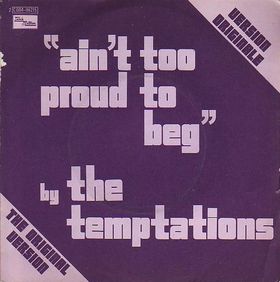
The Temptations – “Ain’t Too Proud To Beg”

680083

The Temptations – “Ain’t Too Proud To Beg,” Pop #13, R&B #1

By Joel Francis

If you’re not hooked in the first five seconds of this song, you haven’t been paying attention. All the elements attack immediately: the drum roll coupled with the insistent clanging cymbal, the knuckle-roll piano riff and, of course, David Ruffin’s raspy vocal. The stinging staccato guitar that shows up later in the initial verse is a direct homage to James Brown. Throw in the glorious backing vocals from the rest of the Temptations and a stellar horn line and you’ve got not only an incredible song, but a definitive snapshot of Motown in full glory.

“Ain’t Too Proud To Beg” would be no less a masterpiece if the story stopped there, but remarkably the song almost didn’t get made.

After a few of Smokey Robinson’s productions for the Temps failed to take hold on the charts, hotshot Norman Whitfield wanted the chance to sit behind the boards with the group. Whitfield was a long shot to topple Robinson’s incumbency, but Whitfield thought he had a number that could give him control. Enlisting songwriting help from Edward Holland, Jr. of the Holland-Dozier-Holland team, Whitfield had the Funk Brothers lay down the backing track to one of Motown’s funkiest numbers to date. The Temptations then added their vocals and Whitfield submitted the single to be auditioned at the Motown Quality Control meeting.

Quality Control meetings were the result of Berry Gordy’s days on the Detroit assembly line. Each week, the label’s top creative minds would meet, listen to music and decide what should be released. Surprisingly, “Ain’t To Proud To Beg” didn’t make the cut. It didn’t make the cut the second week, either. Politics could have been at play – Robinson and Gordy were so close that Robinson named his son Berry – but Gordy asserted that the number simply needed more work.

So Whitfield went back into the studio and moved the melody for the vocal line just out of Ruffin’s range. The straining singer’s vocals added the needed muscle and desperation to the song, and the number was once again submitted to Quality Control.

This time, however, the song had unexpected competition in the form of “Get Ready,” a Temptations number Robinson had written and produced for the band. Since Robinson was the Temps’ established producer “Get Ready” went out while “Ain’t Too Proud To Beg” stayed on the shelf. Whitfield was so upset that Gordy promised him “Beg” would be the next single if “Get Ready” failed to reach the pop Top 20.

Gordy kept his word and the song was finally released in May, 1966, eventually reaching No. 1 on the R&B charts. When Whitfield found success with the Temptations following two singles he was instated as the group’s main producer, a role he guarded fiercely until 1974.

Around the same time Whitfield was leaving Motown and the Temptations to form his own record label, the Rolling Stones found No. 17 pop hit with their cover. Through the years, the number has also yielded interpretations by Ben Harper, the Count Basie Orchestra and, even more strangely, Rick Astley, who also made it a Top 20 hit (albeit on the Adult Contemporary charts) in 1988.

Review: Raphael Saadiq

raphael_saadiq_bw-thumb-473x4932
By Joel Francis

The Kansas City Star

Raphael Saadiq brought nearly 90 minutes of eight-track soul jams into an iPod world Wednesday night at the VooDoo Lounge.

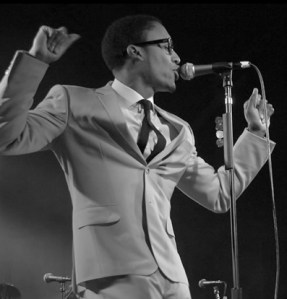
Taking the stage in a suit and glasses that echoed Temptation David Ruffin, Saadiq strapped on a white Telecaster as his six-piece band vamped over a groove that sounded like a lost Motown backing track.Setting the guitar aside, he plowed through several numbers from his latest album, the Motown and Philly soul-inspired “The Way I See It,” but it took a couple songs for the performance to connect with the audience. Part of that could have been the size of the crowd. The floor started about a quarter full, though it swelled considerably as the night wore on.

A better reason, though, was the 15-foot buffer the polite crowd kept from the stage. Sensing they need to turn things up a notch, the band kicked “100 Yard Dash” into high gear as Saadiq implored the crowd to move closer. Once they did, Saadiq kept them in the palm of his hand for the rest of the night.

The band brought out the slow jams for a quick one-two of Saadiq’s better-known cuts from his Lucy Pearl project and got everyone involved with a medley of Tony! Toni! Tone! favorites.

Sporting a broad grin, Saadiq clearly enjoyed watching the audience take over his old material. He nailed a falsetto toward the end of “Anniversary” that put nearly every woman in the audience over the edge. When he forgot the words to “All I Ask Of You” a moment later, no one seemed to mind when he took several bars to collect himself before starting again.

Album opener “Sure Hope You Mean” it was stretched out to include snippets of “Going To Kansas City” and the evening’s most intimate moment. As the band broke down the chorus, Saadiq held the mic by his side and sang to himself. Dancing around the stage he seemed lost in a private moment, oblivious to the audience.

The crowd tipped toward the thirty-year mark. For most of them, this was as close to a Motown revue as they were likely to see. Many of the folks in the balcony and sprinkled throughout the floor, however, were seeing the soul music of their childhood echoed for the second or third time.

Saadiq didn’t make it easy for the scores of fans holding cell phones and cameras to take his picture. He was constantly moving, strutting, spinning or dancing in synchronicity with his two backing vocalists. The only time he stood still was for a drawn-out gospel intro to “Let’s Talk A Walk” that teased the crowd several times.

Nearly an hour after he took the stage, Saadiq said goodnight and departed. He and the band quickly returned to perform “Still Ray” and “Big Easy,” a number inspired by Hurricane Katrina. His white Telecaster back on for the final number, Saadiq may have said goodnight once again, but his hands kept playing. He and the band jammed for a good five minutes before everyone left the stage.

The show seemed longer than its 75 minutes, but even its length was an old-school throwback. It was the same duration as those classic double-live concert LPs.

Setlist: Keep Marching, Love That Girl, 100 Yard Dash, Dance Tonight, La La, Just One Kiss, Oh Girl, Tony! Toni! Tone! Medley: Lay Your Head On My Pillow; Anniversary; All I Ask Of You; Just Me and You, Be Here, Let’s Take A Walk, Sure Hope You Mean It, Staying In Love. Encore: Still Ray,Big Easy.

Arguments over 78s still resonate in iPod world

(Above: Guy Lombardo urges listeners to “Get Out Those Old Records” in this ode to the 78.)

By Joel Francis
The Daily Record

Gallons of cyber-ink have been spilled over the wailing and gnashing of teeth that has accompanied the transition from CDs to iPods.

While I love the convenience of my iPod and cannot be more than a few yards from it without suffering from withdrawal, I also miss the anticipation of new-release Tuesdays that the old paradigm brought.

It is comforting to know, however, that ours is not the first generation of music fans to suffer format growing pains. While reading Gary Marmorstein’s “The Label,” an exhaustive history of Columbia Records, I stumbled on a passage about the poet Philip Larkin, who was furious that long-playing records were starting to replace his beloved 78s.

“When the long-playing record was introduced,” Larkin is quoted as saying in the book, “I was suspicious of it: it seemed a package deal, forcing you to buy bad tracks along with good at an unwanted price.”

Larkin’s displeasure with record labels trying to foist bad tracks on consumers by bundling them with good ones was chillingly prescient. The argument he made in the late ’40s was echoed nearly 50 years later when the labels abolished the single and hiked album prices.

Other mid-century music consumers were upset that the new 22-minute side made listening a passive experience. According to their reasoning, since you didn’t have to get up and change sides every five minutes, the music would just fade into the background.

While classical fans rejoiced that an entire movement could be contained on a single side, jazz fans were less enthusiastic. Many fans, Larkin included, felt that the time limit on a 78 was the optimal span for a group to have its say and leave before overstaying its welcome.

As Marmorstein writes: “Larkin associated the halcyon days of his youth with winding the gramophone and listening to 78s by Louis Armstrong. To Larkin, a single shellacked side was a gem, not these vinyl platters that played interminably.”

Unfortunately for Larkin, the LP not only caught on but was the dominant format for 40 years, when the CD took over. Although Columbia unveiled the LP in 1948, strange parallels still resonate today. The more things change ….

Raphael Saadiq sends a love letter to soul makers and Motown

(Above: Raphael Saadiq runs the “100 Yard Dashfor Seattle’s excellent community radio station, KEXP.)

By Joel Francis
The Kansas City Star

Raphael Saadiq’s latest album, “The Way I See It,” is draped heavily in the sounds of Motown and Philly soul, but don’t call it a tribute album.

“Boyz II Men did a tribute; I wrote a bunch of songs,” Saadiq said about his all-originals album. “This was not intended to be a tribute album. It’s more like a secret love letter to the people I love.”

People like the Funk Brothers, Motown’s now-legendary stable of musicians, and the other unknown musicians who “took music to the level where it is today that I can come out and do this,” Saadiq said. “It’s not just about Smokey (Robinson) and Stevie Wonder, but a bunch of people we don’t even know about.”

He plays most of the instruments on the album himself, but Saadiq recruited two Funk Brothers to help him get that classic Motown sound. Jack Ashford’s tambourine has graced classics like “Nowhere to Run” and “You Can’t Hurry Love.” Paul Riser, who arranged the strings on Saadiq’s album, has worked with the Supremes, Marvin Gaye and Stevie Wonder.

“I brought Jack in because he added a sound I couldn’t have had without him,” said Saadiq, who performs Wednesday at the VooDoo Lounge. “With Paul Riser it was the same thing. You can feel the energy when they walk into a room.”

Having Stevie Wonder play harmonica on one song was ultimate validation. Saadiq even went so far as to introduce his guest like Wonder introduced Dizzy Gillespie on his 1982 hit “Do I Do.”

“Seeing Stevie walk into a room and play is something I’ve never gotten used to,” Saadiq said. “Having him play on this was a stamp of approval. I’ve worked hard for a long time to have him come play (on my album).”

The former Tony! Toni! Tone! singer, who named his first solo album “Instant Vintage,” is more worried about being called “neo soul” than being pigeonholed.

“Everybody knows I hate the term ‘neo-soul,’ ” Saadiq said. “If someone was playing the blues they’d want an old soul. I don’t want a new soul — then I’d sound like somebody on the radio today, which I hate.”

On an album with so much — ahem — old-school soul, Jay-Z’s guest spot on the final track, a bonus remix, probably surprised many listeners.

“That was Q-Tip’s idea,” said Saadiq, referring to the former MC of A Tribe Called Quest. “He was like, ‘You should put Jay-Z on this record’ and then went and got him, because I didn’t know Jay like that. Some people didn’t like it. They’re probably neo-soul fans. I did this for the other people.”

More on Raphael Saadiq from The Daily Record:
“The Way I See It” album review
“The Way I See It” caps the Top 10 albums of 2008

Review: Modest Mouse

mm8_0020

(Above: The Mouse’s pre-show view of the Uptown Theater.)

By Joel Francis

The Kansas City Star

When Modest Mouse last played Kansas City 18 months ago it was promoting a No. 1 album on a sweltering night at one of the city’s worst outdoor venues (City Market). The band returned on a frigid Monday night to play before a full house at one of Kansas City’s best indoor venues, the Uptown Theater. With no new material to promote, Isaac Brock and his band played whatever they wanted.

The band hit the stage like they were shot out of cannon, launching into a vicious reading of “Bury Me With It” that featured a guitar part that sounded like something from Sonic Youth. With barely a pause, one of the most successful indie rock bands on the scene today tore into a ferocious “Never Ending Math” that set a high bar for the evening to follow.

They were more than up to the task. The six-piece band was on top of its game, stopping and starting and changing dynamics on a dime. Grandaddy guitarist Jim Fairchild, who is sitting in for ex-Smiths guitarist Johnny Marr on this tour, played well off lead singer Brock’s parts, particularly on “Interstate 8” and “Dramamine.” Fairchild even kicked in some vocals on “Satellite Skin.”

Although every performance was impressive, the band was at its best when it could stretch out. Epic performances of “Dramamine,” “The View” and “Breakthrough” built layer on top of hypnotic layer until it felt like the song would explode out of the building.

As powerful as the epics were, the band knew how to bring things down, like during an almost-unplugged version of “Bukowski” in which Brock channeled his inner Bela Fleck on banjo and a lovely bowed bass and accordion solo. Earlier in the evening, “Custom Concern” was a welcome come-down after the intense marathon numbers.

The only concessions to casual fans were “Float On,” which featured a shiny ‘80s keyboard part on the chorus, and a breakneck reading of “Dashboard,” complete with trumpet. Other than that, the evening was devoted to older songs and album cuts like the trippy “Tiny Cities Made of Ashes,” which sounded like an underwater fight with the devil.

The band played too loud and fast to incorporate much audience feedback, but the crowd was more than appreciative. The opening chords to nearly every number drew big cheers of recognition, and while it was impossible to hear anyone singing along, the swaying arms and moving lips were unmistakable signs of approval.

The enthusiasm was infectious. The notoriously and self-admittedly grumpy Brock was clearly having good time. After castigating a fan for requesting older material immediately following a song from their first album, Brock settled down. He showed off the black light posters he purchased the night before in Boulder, Colo. and told an affectionately rambling story about Roger Miller’s “Kansas City Star.” Brock promised to play the song from his iPod for the crowd after the show, but ZZ Top appeared somehow instead. No one complained.

Setlist: Bury Me With It, Never Ending Math, The View, Dramamine, Wild Packs of Family Dogs,Tiny Cities Made of Ashes, Custom Concern, Float On, Bukowski, Interstate 8, All Nite Diner, Parting of the Sensory. Encore: Third Planet, Satellite Skin, Dashboard, Baby Blue Sedan, Black Cadillacs.

Keep reading: A 2007 interview with Isaac Brock.

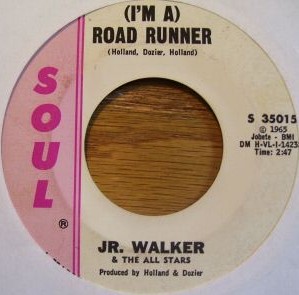
Jr. Walker and the All-Stars – “(I’m A) Roadrunner”

roadrunner

Jr. Walker and the All-Stars – “(I’m A) Roadrunner,” Pop #20, R&B# 4

Not to be confused with similarly titled hit by Bo Diddley, or the great pre-punk anthem by the Modern Lovers, this “Roadrunner” is a pure Holland-Dozier-Holland confection. Jr. Walker has clearly overcome his earlier trepidation with the microphone to confidently deliver this paean to the open road. Answering his vocals with stinging sax lines, Walker proves to be his own best all-star. The elastic guitar lines show Shorty Long’s blues influence on the label, while the organ buried in the mix is the subtle glue that keeps the performance together.

The song isn’t even in the Top 5 of Walker’s biggest hits, but it’s held up better than better-charting songs like “What Does It Take (To Win Your Love)” and “How Sweet It Is (To Be Loved By You).”

Walker’s ’60s sax rival King Curtis was the first to cover the song, but the enduring number was also covered by a post-Peter Green, pre-Lindsey Buckingham Fleetwood Mac, Jerry Garcia, Humble Pie, Peter Frampton and, most recently, James Taylor in 2008. – by Joel Francis