Carolyn Crawford – “My Smile is Just a Frown (Turned Upside Down),” R&B #39
Smokey Robinson didn’t miss very often in the early ‘60s, but for some reason this number just didn’t hit like “Two Lovers,” “The One Who Really Loves You.” Why Robinson was able to jumpstart Mary Wells’ career with the aforementioned numbers while Crawford’s stalled is a mystery. All the right elements were in place – Crawford’s voice is delightful and inviting (perhaps the wrong mood given the lyrics) and the impeccable Motown sound hits in all the right places.
“My Smile” was the second and most successful of Crawford’s three Motown singles. After her departure from the label in 1965 she went back to being a backing vocalist, popping up in 1978 on Hamilton Bohannon’s disco single “Let’s Start the Dance.” That song reached No. 56. — by Joel Francis
(Above: Are they still tempting? “Papa Was A Rolling Stone” in 2008.)
By Joel Francis The Kansas City Star
Halfway into his band’s set Saturday night at Starlight, Otis Williams, the last living original member of the Temptations, dedicated the evening’s performance to the late Motown producer Norman Whitfield.
It was fitting. Whitfield wrote several of the hits showcased during the night, like “Cloud Nine,” “Papa Was A Rolling Stone” and “Ain’t Too Proud To Beg.” It also matched the unofficial theme of the night: honoring the contributions of the departed.
The absence of late Temptations frontmen Eddie Kendricks and David Ruffin was obvious from the opening notes of “The Way You Do The Things You Do.” The group sounded good and the performance was strong, but something was missing.
Your verdict on the success of the show depends on how well you thought lead singer Bruce Williamson did filling some impossibly large shoes. It would be easy to cynically dismiss the night as nothing more than overblown karaoke, but it’s very hard to ignore the energy and delight they delivered to the crowd. The truth is these songs are so strong they sound good no matter who is singing them.
After opening with a cover of Marvin Gaye’s “How Sweet It Is (To Be Loved By You),” the Temps plowed through their classic catalog for nearly 30 minutes without taking a break. Every song had everyone on their feet, singing along.
Backed by a 10-piece horn section and four-piece band, the vocal quintet nimbly hopped from the propulsive “Ball of Confusion” to the tenderness of “I Wish it Would Rain” and the frustration of “Can’t Get Next To You.”
The only time the band veered from their prime years was to deliver a couple ballads. They also spiced up the set by performing a couple lesser-known numbers from their early Motown years. By the time they rolled into “My Girl” near the end of their 90-minute set it felt like the perfect conclusion. Unfortunately the song was followed by “Can I Get A Witness,” another Marvin Gaye cover. Despite its gospel flavor, the anti-climactic number trigged an exodus for the parking lot.
The Four Tops kicked off the night with a one-hour set. Although they sported as many original members – one – as the Temptations, they did not fare as well. The retirement of longtime lead singer Levi Stubbs was accentuated by slick production that was more Branson than Motown. Save for a pair of medleys that bookended the set, the band’s 1960s heyday was bypassed for ballads that bogged the momentum.
A tour-de-force cover of Heat Wave’s “Always and Forever” that included a long spoken introduction and tender, affecting vocals from Stubbs’ replacement Theo Peoples, drew the quartet’s biggest applause.
Although Starlight was far from sold out – partitions blocked off the back seating section and plenty of other empty chairs remained – few fans seemed concerned by the new faces singing the old songs. The consensus seemed to be, if these guys weren’t keeping the music and memories alive, would would? It’s a good question that doesn’t have an easy answer.
Setlists: Four Tops – Baby I Need Your Loving/Bernadette/It’s the Same Old Song/Just Walk Away/Still Water/Something About You/Ask the Lonely/Ain’t No Woman (Like the One I Got)/Always and Forever/Reach Out I’ll Be There/Standing in the Shadow of Love/I Can’t Help Myself (Sugar Pie Honey Bunch)
Temptations: How Sweet It Is (To Be Loved By You)/The Way You Do The Things You Do/Ain’t Too Proud To Beg/Ball of Confusion/I Wish It Would Rain/Just My Imagination/Papa Was A Rolling Stone/Can’t Get Next To You/You Are So Necessary In My Life/Get Ready/Treat Her Like A Lady/You’re My Everything/The Girl’s Alright With Me/Cloud Nine/Psychedelic Shack/My Girl/Can I Get A Witness
Martha and the Vandellas – “Dancing in the Street,” Pop #2
By Joel Francis
Poor, poor Kim Weston. Had she not passed on this song, she may be remembered for that being Marvin Gaye’s first duet partner. Instead, Martha Reeves got to place another jewel in her crown.
Funk Brother Benny Benjamin’s great drumming and the incessant, propulsive tambourine get the feet going before Marta Reeves opens her mouth. But once she does, Reeves embraces every syllable with her full voice, squeezing each note for maximum pleasure. The single was released at the end of July, 1964, but its not hard to imagine that even in the dead of winter, legions of listeners would heeded Reeves “invitation across the nation” and joined her in the streets.
The growing race riots throughout America soon cast the song in a different light. (Five years later, the Rolling Stones recast the number into the dark, political anthem “Street Fighting Man.”) It’s hard to erase the imprint that history has left on the number, but the heart of Reeves’ words is utopia: Whoever you are, whatever you wear, wherever you’re from, get outside, grab a guy (or gal) and dance. “All we need is music, sweet music.” If only life were this simple.
Like many of Motown’s signature songs, cover versions abound. The Kinks and The Who cut versions earlier in their career. Both fail to capture the joy in Reeves singing and translate the large soul arrangement to a rock quartet. Artists as diverse as Dusty Springfield, the Grateful Dead and the Carpenters also tackled the song.
Van Halen propelled the song back onto the charts nearly 20 years after the Vandellas’ hit. Eddie Van Halen’s post-disco keyboard part transforms the arrangement as Diamond Dave – never one to miss a party – celebrates the lyrics. The song is a high point on one of the group’s most puzzling albums. “Diver Down” contains not one, but two Kinks covers (which should provide a clue as to why they decided to do “Streets”), a polka featuring Alex and Eddie’s dad on clarinet, and closes with “Happy Trails.”
No discussion of “Dancing in the Street” would be complete without mentioning the horrific, oh-my-god-look-away cover performed by David Bowie and Mick Jagger. While the intent was noble – a charity single for Live Aid – the results were anything but. It didn’t help that the song was delivered at the nadir of these legendary careers. Bowie had just completed his dance-happy “Tonight” album and Jagger was in the middle of “She’s the Boss” and attempting to break up his legendary band. The production is sickeningly slick and the vocals sound tossed off. Never ones to be swayed by taste, the public sent the song to No. 7 on the U.S. chart (and clear to No. 1 elsewhere in the world).
The most intriguing version of “Dancing in the Streets” may not exist. I maintain a secret hope that somewhere there is a demo version of Marvin Gaye’s original performance. I have no idea if tape was rolling when Gaye, who co-wrote the song with Mickey Stevenson, presented the song to Reeves or if he attempted to cut a guide vocal, but I am optimistic an unmarked reel in the Motown archives will be unearthed and reveal this treasure. I got my hopes up a few years ago when the “Cellarful of Motown” rarities compilation was released, but so far nothing has surfaced. In the meantime, Martha and the Vandellas will more than suffice.
Few had heard of the Four Tops before this song was released in the summer of 1964, but the public quickly became acquainted. The quartet’s debut single sold over a million copies – a feat equally impressive in today’s iTunes era – and landed just outside the Top 10.
Songwriters and producers Holland-Dozier-Holland went the Phil Spector route in the studio, hauling in a 40-piece string section and supplementing the Four Tops’ voices with backing vocals from the Andantes, a female trio also signed to Motown. Spector’s Wall of Sound productions were simultaneously big and small. For all the attention lavished on the strings and vocals, check out the echo on those finger snaps. That’s ultimate flattery for Spector.
Levi Stubbs’ lead vocals capture the ache and longing of a lover hoping to be forgiven. The way he sings the line “lately I’ve been losing sleep” perfectly captures a midnight soul search in a bed too big.
While the competition between the Four Tops and Temptations raged within Berry Gordy’s Hitsville U.S.A. studio, on the carts and among fans, the Four Tops introductory offering more than equaled the Temptations breakthrough “The Way You Do the Things You Do.”
An incredibly durable number, the song charted in various arrangements (and punctuations, appearing as both “Baby I Need Your Lovin'” and “Baby, I Need Your Loving,”) for nearly 20 years after it was released. Folk singer Johnny Rivers had the first cover hit in 1967, but it has also been a hit for lounge singer O.C. Smith, soul singer Geraldine Hunt, pop idol Eric Carmen and, finally, funk singer Carl Carlton in 1982. — by Joel Francis
Brenda Holloway – “Every Little Bit Hurts,” Pop #11
Motown may have been “the sound of young America,” but this song was clearly aiming for an older audience. Lee Cobb’s writing is obviously influenced by the Burt Bacharach/Hal David team, but Brenda Holloway’s pristine, nuanced delivery elevates the song above imitator status. Her restraint is the key – Holloway trusts the melody and structure will carry the song further than her lungs. She was right. Although the style is closer to supper club than street party, Holloway and Cobb inspired a legion of artists to take it on.
The Spencer Davis Group, fronted by a young Steve Winwood, had a hit with it in 1965. A year later, the Small Faces tried their hand on it. Funkmaster George Clinton turned the song into a duet in 1972 when he performed it with Diane Brooks. Alicia Keys released a more faithful version on her 2006 live album “Unplugged.” Proving once again there were few musical stones they wouldn’t turn over, The Clash recorded a cover in the early ‘80s. Fellow English punkers The Jam also cut a version about the same time. — by Joel Francis
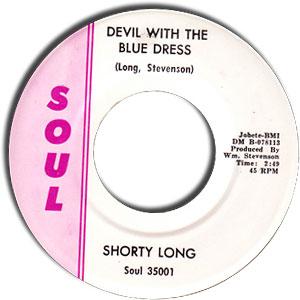
Shorty Long – “Devil with the Blue Dress,” did not chart
Mitch Ryder and Bruce Springsteen fans will be taken aback by Shorty Long’s half-speed tempo on his original recording of “Devil with the Blue Dress.” Long’s bluesy shuffle is closer to Chicago blues than Detroit soul. It’s a far cry from the frenetic, late-set showstopper “Devil” has become.
Long’s co-writer Mickey Stevenson’s crisp production serves the song well – check the smacking echo in the handclaps and the dry wash Long’s guitar is given. All the elements are in place for a hit – why this didn’t stick is a mystery. Perhaps Long’s early demise in a boating accident just five years later, in 1969, and the success of Ryder’s 1966 cover, erased him from public consciousness.
When Ryder took transplanted the number from the roadhouse to the garage, he doubled the speed and paired it with Little Richards’s “Good Golly Miss Molly” and got a No. 4 hit. That’s the arrangement Springsteen is prone to trot out, but Long’s original vision is a Motown treasure waiting to be unearthed. — by Joel Francis
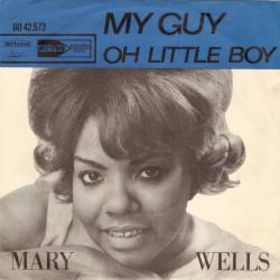
Before Gladys Knight, Martha Reeves and certainly Diana Ross, Mary Wells was Motown’s first female (super)star. Landing a No. 1 single in the heart of Beatlemania was no small feat. Arguably none of the Motown’s female stars have had bigger or more recognizable hits than “My Guy.” The Beatles themselves were so enraptured with Wells that they called her their favorite American singer.
Unfortunately, the Smokey Robinson-penned “My Guy,” was also Well’s swan song. Just a few months after “My Guy” was released, and while it was still very much ruling the charts, Wells exercised the termination clause in her Motown contract. Only 21 years old, she signed with 20th Century Fox with dreams of higher royalty rates and movie stardom. Leaving Motown also meant leaving Robinson, who penned and produced many of her greatest songs. Wells landed only one hit on the Top 40 pop charts after leaving Motown. She spent the rest of the decade bouncing to Atco, then Jubilee Records and finally Reprise Records.
Motown founder Berry Gordy was quick to groom a replacement for Wells – Diana Ross.
While the back story is interesting, none of it matters when listening to the actual song. The giddy, lightness in Wells’ delivery and the Funk Brothers bouncy accompaniment make “My Guy” stand up to the most narrow oldies playlists and misguided covers. Check the breathy semi-stutter Wells uses to sing “there’s not a man today who can take me away from my guy” in the outro. Pure delight. — by Joel Francis
The final installment of my conversation with soul music fan Brad S. includes how to build a solid, affordable soul music libarty. Here is part one and part two.
Brad S.: Okay, list time: What are your Top 10 Motown albums? You mentioned “What’s Going On,” “Songs in the Key of Life,” “Talking Book” and “Cloud Nine.” What other albums make the cut? I’m going to ask you to go for diversity here, especially if we’re fighting the perception of that “Motown hit song” stereotype.
Joel Francis: The thing to remember about albums is that prior to 1967 and “Sgt. Pepper’s,” pop albums were basically collections of singles. Going back a bit further, before Frank Sinatra’s concept albums for Capital in the late ’50s, LPs were for classical and jazz (i.e. longer performances) almost exclusively.
Berry Gordy had a hard time when Marvin Gaye and Stevie Wonder presented him with album-length concepts in the early ’70s. One could argue that “What’s Going On” and “Talking Book” were the first Motown albums that weren’t just glorified singles collections.
I know this contradicts what I said earlier, but I don’t think I can defy your stereotypes of mid-’60s Motown with any albums. That said, there are some great collections that show the depth and richness of the Motown performers of that era.
Universal, who now owns the Motown catalog, did a great job of anthologizing the great Motown groups on the “Ultimate Collection” CDs in the ’90s. These discs get the nod because they’re cheap (about $5 used on Amazon) and comprehensive. They all run in excess of two dozen tracks, which is more than enough to hit all the often-heard must-haves, but provide a deeper examination and context as well.
It’s hard to go wrong with a solid collection of Smokey Robinsons, The Temptations, early Marvin Gaye and Stevie Wonder, and the Supremes. These might not be as diverse as you were expecting, but songs like “Going to a Go-Go,” “Baby Don’t You Do It” and “Ball of Confusion” have fallen through the cracks and are worth revisiting. Divorcing oldies staples like “Uptight” and “Ain’t No Mountain High Enough” from a Top 40 context and placing them back in the artist’s cannon shines new light and perspective on the warhorses.
Because of its distribution deal with Warner Bros. the Stax side is a bit more complicated. Collections tended to fall on the pre- or post-Warner Bros. side and paint an incomplete picture. Fortunately, the consolidation of the major record labels has put all of Stax output in the hands of Concord Records. Concord has revived the Stax brand and started issuing comprehensive collections for the first time.
While there is no definitive Stax anthology series like Motown’s “Ultimate Collection,” quality single- and double-disc collections and box sets are available for nearly every Stax artist. I’d start with Otis Redding, Sam and Dave, the Staple Singers, Booker T and the MGs and Isaac Hayes and play around from there.
Two four-disc box sets provide a comprehensive overview of each label’s glory years. The Daily Record has been discussing each track on “Hitsville U.S.A.” A good follow-up project may be a walk through the “Stax Story” collection, though with more than 80 tracks to go with “Hitsville” I wouldn’t get too ancy.
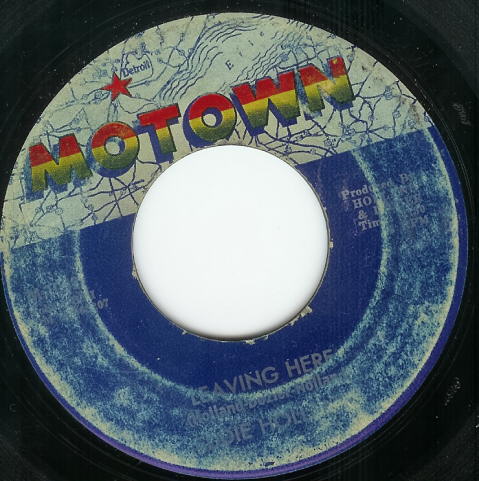
A lot changed for Eddie Holland in the two years between “Jamie” and “Leaving Here.” Holland went from reluctant (and struggling) Motown vocalist to key member of soul’s hottest songwriting team, Holland-Dozier-Holland.
After “Leaving Here” failed to find major chart success, Holland released just two more singles before permanently retreating behind his notepad. It’s just as well – the songs Holland helped write had far more success and impact than anything he performed.
Surprisingly, “Leaving Here” has had more influence as a garage rock song than a soul number. The Who recorded a smoking cover for the BBC in 1965, Motorhead released a version their debut single and Pearl Jam recorded it in the 1996 as a tribute to The Who. “Leaving Here” is one of the few songs that sounds good in the hands of almost anyone. If you find this title buried in on an obscure album, you’re guaranteed to have at least one good number. — by Joel Francis
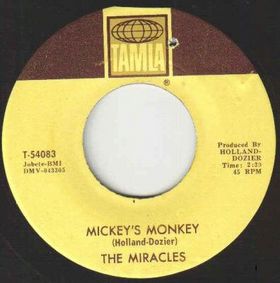
One of the most infectious and upbeat singles in the Motown catalog is unique in two ways. First, it was not written by main Miracle Smokey Robinson, but by the hot house songwriting team of Holland-Dozier-Holland. Second, it is one of few Motown songs to appropriate the Bo Diddley beat.
As Robinson’s voice joyously soars over the Funk Brothers groove, the Miracles, Martha and the Vandellas and members of the Supremes, Temptations and Marvellettes chip in on backing vocals.
The HDH production team did a great job of capturing a live sound that, like “Do You Love Me,” sounds like it was beamed directly from the greatest party in the world. Robinson’s multi-octave range is a marvel, but honestly anything over that groove would have been a hit.
“Mickey’s Monkey” was one of the Miracles biggest hits. Unsurprisingly, Berry Gordy tried to bottle lightning a second time by having Martha and the Vandellas cut a version, but neither their cover nor subsequent readings by The Rascals, The Hollies or John Cougar Mellencamp made an impact.
The “cat named Mickey from out of town” was based on Motown’s A&R director Mickey Stevenson. Stevenson wrote several Motown hits with Marvin Gaye, including “Beechwood 4-5789,” “Pride and Joy” and “Dancing in the Street.” — by Joel Francis



 joelfrancis.com
