Les Paul with Bing Crosby – “It’s Been A Long, Long Time”

By Joel Francis
The Daily Record

“Kiss me once, then kiss me twice, then kiss me once again.”

Sammy Cahn’s lyrics spoke to millions of couples separated by … well the song doesn’t say, but everyone who sent it to No. 1 in two different versions at the end of 1945 knew all too well.

For six years the specter of World War II hung over America. A nation split by heated debates over participation until Pearl Harbor forced the nation’s hand became united through victory gardens and war bonds. The country was also united in its separation, as selective service split up thousands of couples when the men were called overseas.

But when Bing Crosby’s sweet voice sang “It’s Been A Long, Long Time,” the turmoil and anxiety of the war was finally fading. Effortlessly capturing the hope and sentimentality of the lyrics, Crosby couldn’t have needed more than a couple takes. What made the recording more interesting, though, was Les Paul’s guitar playing.

If Crosby’s voice was a bird chirping at the sunrise, Paul’s arrangement was the first rays of light piercing the horizon. His tone is just as mellow and natural as Crosby’s vocals. After opening with a few understated chords, Paul kicks into gentle jazz mode, strumming a countermelody that’s nearly as interesting as the one Jule Styne penned. The solo is understated, echoing the vocal line with a couple flourishes that show why Paul continues to influences the guitar gods of the 21st century.

That voice and that guitar was all the song needed to jump to No. 1. Sure, there’s a rhythm guitar in the background, but it’s only there to reassure the hapless listeners who couldn’t find the rhythm on their own.

Paul died last Thursday. He was 94. The legendary guitarist is best-known for “How High the Moon,” his signature Gibson guitar and recording innovations. Although his performance here predates those advances, it is no less inventive.

Crosby got most of the glory for “It’s Been A Long, Long Time,” which is probably right. The song and his singing resonate with the tenor of the times. (A competing version by Harry James with Kitty Kallen also hit No. 1 that winter.) Paul, however, visited the song repeatedly throughout his career. He cut a version with his wife Mary Ford in the 1950s and came back to it nearly 30 years later on the first “Chester and Lester” album with Chet Atkins. All readings are sublime, but none capture the wistful sentimentality and promise-filled romance of his pairing with Crosby.

There’s nothing harder than not knowing or being able to do anything about the well-being of a loved one. When I hear this song, I think about my grandparents. Both sets were separated by husbands who served in the war. I think about their joyful reunions and how they are now – temporarily – separated by the grave. But Les and Bing reassure us. And then we close our eyes and lean in for that kiss. Again.

Review: Chickenfoot

(Above: Chickenfoot live it up going “Down the Drain,” one of the highlights of their performance Tuesday night at the Uptown Theater.)

By Joel Francis
The Kansas City Star

On paper, there was a potential disaster: Chickenfoot, the hard-rock supergroup that includes members of Van Halen and the Red Hot Chili Peppers, ignored several of those groups’ Top 10 hits to concentrate solely on new material at their Tuesday night concert at the Uptown Theater.

However, what sometimes comes across as forced and stiff on album, was loose and fun as former Van Halen vocalist Sammy Hagar and bass player Michael Anthony, Chili Peppers drummer Chad Smith and guitar virtuoso Joe Satriani tore through their new songs like a set of old favorites for a nearly sold-out crowd.

For the two hours they were onstage, the Uptown felt like a rock club. Throughout the night, Smith perpetually tossed drumsticks into the audience as Hagar signed autographs and slapped hands. The curtain draped across the back half of the stage pushed the band so close that Smith was able to pick out a pretty blonde in the front row and convince her to administer a spanking.

The night opened like the album, with “Avienda Revolution.” The second number, “Soap on a Rope,” featured a big greasy guitar riff that wouldn’t have been out of place in Hagar and Anthony’s old band. As Satriani reeled off one of his gravity-defying solos, he stood shoulder-to-shoulder with Anthony, smiling and bopping like the two had played together since high school.

Anthony broke out the Jack Daniels bass for barn-burning “Down the Drain.” Hagar introduced the number saying it was born out of a studio jam, but the way the group changed textures and tempos while maintaining intensity proved that this band was more than a vanity project.

Satriani rarely works with vocalists, so it was interesting to watch how he interacted with Hagar. Typically, his fingers say so much it’s difficult to get a word in edgewise, but he served the songs well, tastefully stepping back during the verses instead of just spinning his wheels until the next solo.

“Bitten by the Wolf” was the lone number during the main set that didn’t come from Chickenfoot’s self-titled album. The bluesy acoustic number was well received, but the crowd tore the roof off singing along to the next song, “Oh Yeah,” which has generated some radio airplay.

After the obligatory Hagar car song “Turnin’ Left” -– an ode to NASCAR –- the Red Rocker finally strapped on an electric guitar for the closing ballad “Future in the Past.” He reached for the six-string again, playing lap slide to introduce “Bad Motor Scooter,” a number Hagar wrote with Montrose in the ‘70s. It was the lone nod to any back catalog.

The night ended with another car song, Deep Purple’s “Highway Star,” but the band lingered onstage long after the song was over. As Smith, Anthony and Hagar reveled in the fans, Satriani filmed the moment for posterity. The fun was so infectious, everyone was reluctant to leave and break up the party.

Admittedly, it would have been nice to hear “Dreams” or “By the Way,” but why look to the past when there’s so much promise in the future?

Setlist: Avienda Revolution, Sexy Little Thing, Soap on a Rope, My Kinda Girl, Down the Drain, Bitten by the Wolf, Oh Yeah, Learning to Fall, Get It Up, Turnin’ Left, Future in the Past/encore: Bad Motor Scooter, Highway Star

ckft

Review: Alice Cooper

(Above: One of the many deaths of Alice Cooper – and “School’s Out.”)

By Joel Francis
The Kansas City Star

Friday’s concert was barely 15 minutes old when Alice Cooper was forced under the guillotine. The crime was impaling a roadie and the sold out Ameristar Casino crowd was witnesses to his guilt.

As his head flopped into the basket, Cooper emerged unscathed and unamused, briefly holding up his severed head like a “Twilight Zone” Hamlet before signaling his band to start “Welcome to My Nightmare.”

From the guillotine to the hangman’s noose to the iron maiden, Cooper’s Theater of Death definitely lived up to its name. More than a rock concert, the 90-minute spectacle was a brutal slab of rock theater set to a heavy soundtrack.

Backed by a tight, thunderous four-piece band, Cooper both opened and closed the show with “School’s Out.” In between he hit on nearly every phase of his massive back catalog. Flipping from blues-based hard rock to industrial metal, Cooper and co. did a good job unearthing album tracks and delivering the hits.

Big numbers like “I’m Eighteen” and “Poison” got the expected responses but lesser-known numbers were just as good. Cooper belted the “Ballad of Dwight Fry” from a straightjacket. Later he performed “Nurse Rozetta” from a wheelchair, setting up her PG strip-tease during “Be My Lover.”

The only time the group dialed down from 11 were the back-to-back acoustic numbers “Only Women Bleed” and “I Never Cry.” Cooper delivered “Bleed” with a lifeless Rozetta across his lap and “Cry” hanging from the gallows. The setting rendered the ballads less tender but more powerful.

Cooper uses props in the same way as the Flaming Lips. The added spectacle definitely makes the evening more entertaining, but would be worthless without the great music supporting them. Cooper’s band drove this point the two times they were given the stage alone. Deprived of their leader and all his tricks, they rocked hard and kept the audience riveted.

After an instrumental number, Cooper returned with some of his biggest numbers. It was hilarious to watch the group of graying mid-life dudes in the crowd go nuts over the silver Mardi Gras beads he tossed out during “Dirty Diamonds.” For the next number – “Billion Dollar Babies” – he presented a saber loaded with fake money, which was sprinkled over the front rows.

The main set ended with the one-two punch of “No More Mr. Nice Guy” and “Under My Wheels.” Although they’d been played to death, the band was clearly having a blast, duckwalking backward across the stage and grinning from ear to ear. It was hard to tell who was having more fun, the band or the crowd. Ultimately it didn’t matter. It was clear both sides lived for this stuff.

Setlist: School’s Out, Department of Youth, I’m Eighteen, Wicked Young Man, Ballad of Dwight Fry, Go To Hell, Guilty, Welcome To My Nightmare, Cold Ethyl, Poison, The Awakening, From the Inside, Nurse Rozetta -> Is It My Body, Be My Lover, Only Women Bleed, I Never Cry, instrumental, Vengeance Is Mine , Devil’s Food -> Dirty Diamonds, Billion Dollar Babies, Killer, No More Mr. Nice Guy -> Under My Wheels / School’s Out (encore)

Bruce Springsteen and Tom Morello – “The Ghost of Tom Joad”

By Joel Francis
The Daily Record

There is probably a good bromance film to be made about the relationship between male songwriters. They dynamics of a songwriting partnership mirror that of a romantic union – giddy joy at meeting a compatible soul, the steady rhythm of fruitful collaboration, independence and wanting to branch out and then either acceptance and adaptation or estrangement.

Some partnerships – like Morrissey and Johnny Marr – burn hot and bright, flaming out quickly. Others, like Mick Jagger and Keith Richards, settle into marriages of convenience. Jack White is quite promiscuous as a songwriter, flitting from the White Stripes to the Raconteurs, Loretta Lynn and Dead Weather. Some songwriting partnerships turn into real marriages, like Tom Waits and Kathleen Brennan or Barry Mann and Cynthia Weil.

Then there are the songwriters who have flown solo: Phil Ochs, Neil Young, But even the most ardent songwriting bachelors have had a subtle and unseen hands guiding their way and providing resistance to make the song better. Rivers Como had Matt Sharp, Jeff Tweedy had Jay Bennett, Stevie Wonder had Syreeta Wright. And Bruce Springsteen had Miami Steven Van Zandt.

Van Zandt made his presence in the E Street Band known immediately. He arranged the horn line in “Tenth Avenue Freeze-Out” and contributed to the signature guitar line on “Born To Run.” For the next eight years his guitar was the muscle behind Springsteen’s songs, constantly challenging the band and its leader to keep moving and top themselves.

When Van Zandt left the E Street band in 1984, he was replaced by Nils Lofgren. Lofgren had established an outstanding reputation on the basis of his solo work and his stints with Neil Young and Crazy Horse. As a musician he was a more-than-worthy replacement for Van Zandt, but was too easygoing to musically aggravate his new boss the way Van Zandt had.

In 1995 Van Zandt returned the E Street Band and Lofgren remained. The pair has now spent more time in the band together than they did apart. But during that time, Springsteen’s concerts have turned into carnivals rather than escapades. Musicians that used to labor over albums as a unit now record their parts separately. In short, the E Street Band is less a team than an all-star squad of longtime ringers.

Although Springsteen concerts remain incredible experiences and his albums are very good for the most part, Springsteen’s songwriting lacks the urgency, grit and desperation of his early work. Since Springsteen’s early ‘90s retreat from the E Street crew, he hasn’t had a foil, poking, prodding and disturbing him.

When Tom Morello joined the E Street Band onstage in April, 2008, the long absent counterpunch returned. Although his career was considerably shorter, the guitarist had been searching for his own artistic gadfly since the break-up of Rage Against the Machine and the disappointment of Audioslave.

Both performers were familiar with the material. Springsteen wrote “The Ghost of Tom Joad” as the title song for his 1995 solo album and Rage Against the Machine released a covered it two years later. There are several elements in the live collaboration missing on either incarnation. Morello emulates Woody Guthrie in his solo guise as the Nightwatchman, but here and Springsteen add an element of longing and loneliness Guthrie would have liked.

Five guitars are played, but only two of them matter. Springsteen rips off a blistering solo with more intensity than anything he’s recorded in years – he came closest in his appearances on Warren Zevon’s farewell album “The Wind” – and Morello soars with passionate extended solo that combines Public Enemy’s Terminator X and Eddie Van Halen to end the song.

Springsteen originally wrote “Tom Joad” for the E Street 1995 reunion project, but didn’t like the band’s arrangement and set the number aside. That it took an outsider to help the group get the song right 13 years later points the direction Springsteen’s music should head. Too comfortable with the E Streeters, he needs an album-length collaboration with obvious disciples like the Hold Steady or a partnership with more-obscure-but-still-simpatico Black Keys.

Springsteen doesn’t need anyone reverential or deferential. He needs someone like Morello kicking his ass, forcing him to be better. Hopefully these eight tantalizing minutes are the first draft of an upcoming screenplay.

Keep reading:

Review: Bruce Springsteen and the E Street Band (2008)

Review: Rage Against the Machine at Rock the Bells (2007)

Review: Springsteen’s “Dream” Needs More Work

Springsteen in the Waiting Room: Drop the Needle and Pray

Springsteen Rocks the Hall (part 1)

Springsteen Rocks the Hall (part 2)

Book Review: “Big Man” by Clarence Clemons

More Bruce Springsteen on The Daily Record

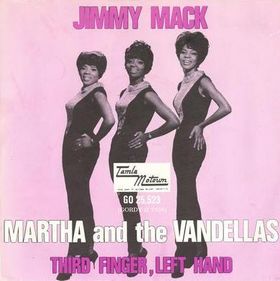
Martha and the Vandellas – “Jimmy Mack”

jimmy mack
Martha and the Vandellas – “Jimmy Mack,” Pop # 10, R&B # 1

By Joel Francis

“Jimmy Mack” capped a remarkable four-year run by the trio that started with “Come and Get These Memories” in 1963. Like most of the group’s hits during that time, “Jimmy Mack” was written and produced by the redoubtable Holland-Dozier-Holland team. Coincidentally, “Jimmy Mack” was not only the Vandellas final Top 10 hit, but the last time the trio worked with Holland-Dozier-Holland before the songwriting team departed Motown in early 1968 over a royalty dispute.

Although HDH had a half-dozen major hits with Motown before their work slowdown/standoff with Berry Gordy, “Jimmy Mack” was recorded in 1964 but shelved after it failed to pass the weekly Quality Control meetings. When it was rescued from the vaults three years later, the lyrics took on a whole new dimension.

President Lyndon Johnson’s escalation of troops in Vietnam brought new poignancy to Martha Reeves’ musings of when her man would return. Originally written as a tempted woman’s plea for her boyfriend to return, many separated young couples interpreted the song as an overseas missive to a lost loved one.

Not that the song’s arrangement could support such a weighty metaphor. “Jimmy Mack” is little more than handclaps, perky piano and vocals. Reeves’ sunny vocals are void of any heartache, but the melody is catchy enough to compensate. Listen to this once and you’ll be signing it for the rest of the day.

Nearly 20 years later, Sheena Easton revived “Jimmy Mack” and took it to No. 65 in 1986.

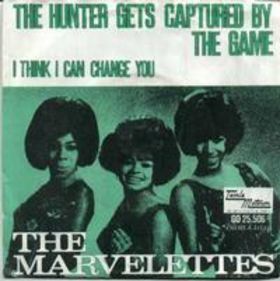
The Marvelettes – “The Hunter Gets Captured By the Game”

hunter

The Marvelettes – “The Hunter Gets Captured By the Game,” Pop # 13, R&B #2

By Joel Francis

The Marvelettes gave Motown its first No. 1 hit with “Please Mr. Postman,” but that was way back in 1961. But that was five years before “The Hunter Gets Captured by the Game” came out – a lifetime in pop music. The interceding years weren’t too kind. The group found some follow-up success with “Beechwood 4-5789,” but lost a founding member, and famously passed on “Where Did Our Love Go,” which became the Supremes’ first No. 1 hit.

By the mid-‘60s, the Marvelettes had lost another member. Only the success of greatest hits and live albums were keeping the band tethered to the Motown roster. Then Smokey Robinson entered the picture.

Robinson penned “Don’t Mess With Bill,” the comeback single for the now-trio. His pen also produced “The Hunter Gets Captured by the Game,” sung by Wanda Young, wife of Miracles’ guitarist Bobby Rodgers.

The lyrics are straightforward, but what makes the song is Young’s slinky singing and an equally elastic performance from the Funk Brothers. Check out the great guitar performance holding the whole song together and the great and rare Motown harmonica solo to appear outside of a Stevie Wonder or Shorty Long album.

The Marvelettes found a Top 10 hit with their next single – a remake of Ruby and the Romantics’ “When You’re In Love” – before losing another singer. They carried on with some success, but a full-scale comeback was quashed when the remaining members decided not to follow Berry Gordy to Los Angeles and Young’s pregnancy. After the Marvelettes dissolved, singer Ann Bogan joined New Birth, a soul outfit founded by former Motown staffer Harvey Fuqua.

“The Hunter Gets Captured by the Game” has been covered by Ella Fitzgerald, Raconteur Brendan Benson, Jerry Garcia, Blondie and Massive Attack. A reggae cover by Grace Jones reached No. 87 on the R&B charts in 1980.

Review: Toots and the Maytals, the Wailers

(Above: Toots and the Maytals deliver “54-46 Was My Number” to a massive French audience in 2009.)

By Joel Francis
The Kansas City Star

For four hours Sunday night, the back lot behind Grinder’s felt like a Jamaican resort.

The balmy summer weather was the perfect accompaniment to the music. Toots and the Maytals, the group that invented the word “reggae,” and the Wailers, the band that took it mainstream, celebrated both the roots and the future of the genre for a partially packed but fully appreciative audience.

While both groups feature only one founding member, it was more than enough for each ensemble. Led by bass player Aston “Family Man” Barrett, the Wailers blasted through an energetic hour of Bob Marley’s greatest hits.

The 10-piece band stuck closely to the original arrangements handed down from Mount Marley, but no one seemed to be looking for anything new. The Wailers played the hits for a crowd who had worn out their copies of “Legend” and needed no prompting to sing and dance along.

With a deck stacked so deeply, it was hard to go wrong, but a few songs stood out. “Jamming” took its title literally enough to feature some nice guitar work. “Wait In Vain” featured some nice harmony vocals from lead singer Elan Atias and the two female backing vocalists. The trio tossed the audience a curveball in the middle of that number when they worked “We Are the World” and a shout-out to Michael Jackson in the chorus.

The Wailers’ set ended with an epic medley of “Exodus” and “Punky Reggae Party.” Anchored by the wah guitar strumming and keyboard riff and garnished by horns, the 10-minute performance suggested a slithering, dancing convoy.

When “Exodus” was over, so was the set. It seemed a shame to shut down a band that felt like it was just getting start. The puzzlement was compounded by 45-minute wait before Toots and the Maytals came on.

Toots Hibbert made up for the wait between sets by opening with the song most people wanted to hear -– “Pressure Drop” -– and blasting through his best-known numbers. The music Hibbert made with the Maytals isn’t as famous as Marley’s, but it’s just as influential, mixing gospel, soul, funk and folk.

The earliest highlight wasn’t an original number, though. Hibbert and the seven-piece Maytals transformed “Louie Louie” to something that sounded like a Jamaican version of Booker T and the MGs that ended in double-time with Hibbert screaming like Ronald Isley at the end of “Shout” and verbally jousting with his two female backing singers. The trick worked so well it was reprised several times throughout the set.

A slowed-down reading of “Bam Bam” found Hibbert on acoustic guitar with an arrangement that betrayed the song’s sea shanty roots. Hibbert stayed on acoustic for a ferocious “Funky Kingston,” which more than lived up to its title. He blew a blues harp on “My Love Is So Strong” and dared the crowd to keep up with his fast dance moves several times.

The indefatigable Hibbert still has great pipes and he showed them off frequently. An improvised tribute to Kinston went from soul ballad to blues shuffle to reggae groove before getting a big gospel finish. The Maytals’ church collided with a great cover of “Take Me Home, Country Roads” that reclaimed the number from Dwight Schrute and Andy Bernard’s break room shenanigans.

The Maytals’ 95-minute set ended with romps through “Broadway Jungle” and “54-46 Was My Number” that culminated in another gospel blow-out and the band riffing on “Beat It.”

Public Property opened the evening with a 30-minute set played against the setting sun and an arriving audience. The six-piece band was definitely a disciple of the acts who followed. Their infectious set including the catchy “Choo-Choo Song.”

Setlists

The Wailers: Intro/horn instrumental, Lively Up Yourself, Rastaman Vibration, I Shot the Sheriff, Jamming, Wait In Vain ->We Are the World, Three Little Birds, One Love, Exodus/Punky Reggae Party

Toots and the Maytals: Pressure Drop, Pomp and Pride, Louie Louie, Reggae Got Soul, Time Tough, Bam Bam, Funky Kingston, unknown song, My Love is So Strong, Sweet and Dandy, Reggae Music All Right (improv), Take Me Home Country Roads, You Know, Light Your Light, Monkey Man/encore/Broadway Jungle, 54-46 Was My Number

Keep reading:

Review: Toots and the Maytals (2007)

Review: Sly and Robbie (2009)

Marvin Gaye and Kim Weston – “It Takes Two”

it takes two
Marvin Gaye and Kim Weston – “It Takes Two,” Pop # 14, R&B # 4

By Joel Francis

“It Takes Two” was one of the last songs Kim Weston recorded for Motown. Its success established Marvin Gaye as a capable duet partner. Gaye was already one of Motown’s bigger stars, but his brief pairing with Weston and subsequent success with Tammi Terrell helped earn Gaye the titles of “Prince of Motown” and “Prince of Soul.”

The coupling of Weston and Gaye was fairly obvious. Gaye had collaborated with Weston’s husband, William “Mickey” Stevenson on “Dancing in the Street,” “Stubborn Kind of Fellow” and “Pride and Joy.” As Stevenson’s romantic song came together, his two frequent collaborators came to mind.

On paper, this song should have been a miserable, schmaltzy failure. That it didn’t come off as corny and syrupy is a testament to the talents of Gaye, Weston and Stevenson (who also produced the cut).

His arrangement is responsible for removing most of the sappiness. The strings add a romantic touch without going too far and the horn line during the chorus keep the song swinging. Benny Benjamin’s drumming is the coup de grace, ensuring that the song will never be a slow dance number.

As great as Gaye and Weston are on this track, they are nearly upstaged by Otis Redding and Carla Thomas’ fabulous version released the same year on the essential “King and Queen” album. Lightning did not strike a third time, however, when Tina Turner and Rod Stewart trotted out their cover in 1990. The song went to No. 5 in the UK but mercifully did not chart in America. Bruce Springsteen frequently incorporates “It Takes Two” into his live versions of “Two Hearts.”

The Four Tops – “Standing in the Shadows of Love”

1341603
The Four Tops – “Standing in the Shadows of Love,” Pop # 6, R&B 2

By Joel Francis

Holland-Dozier-Holland had so much fun and success with the arrangement of “Reach Out (I’ll Be There)” they decided to do it again as “Standing in the Shadows of Love.” Unlike most sequels, this one was just as good and just as fun.

Despite the upbeat arrangement and dance rhythms, this song is as bleak as they come. Check the opening lyrics: “Standing in the shadows of love/getting ready for the heartache to come,” or “You’ve taken away all my reasons for living/when you pushed aside all the love I’ve been giving.” This stuff makes the Cure’s “A Letter to Elise” look like a nursery rhyme.

Levi Stubbs dumps a lifetime of anguish into his vocals. Fortunately, the Funk Brothers take away a lot of the pain. Check out the instrumental version of “Shadows’ from the original master tapes on the second disc of the “Standing in the Shadows of Motown” deluxe edition. The performance there is so strong and tight, the number practically stands on its own. The combination of the Funk Brothers and Four Tops on this song is so propulsive, it’s baffling to realize the song never hit No. 1.

The Jackson 5 put their spin on the song in 1971, but the lads lacked the gravitas to give a convincing performance. Barry White, a man with considerably more weight and emotion in his delivery, added an extended instrumental opening to his 1973 version. The song was turned into a dance number in the ‘80s by France Joli and attempted by Hall and Oates on their 2004 album.

When Aerosmith released this single “The Other Side” in 1990, Holland-Dozier-Holland thought the song bore enough similarity to “Shadows” that they threatened with lawsuit. Aerosmith caved, giving HDH a shared credit with Steven Tyler and song doctor Jim Vallance.

Soulsville sings Hitsville

soulsville sings hitsville

By Joel Francis

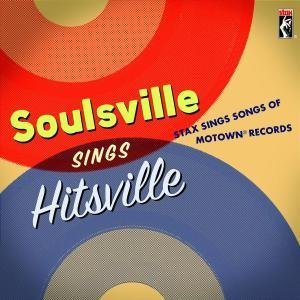
Rare was the time Berry Gordy would let Motown artists record songs outside of the Hitsville catalog (and its lucrative publishing).  Fortunately, Jim Stewart at Stax did not have the same stipulation. Thanks to the 2007 compilation “Soulsville Sings Hitsville: Stax Sings the Songs of Motown Records” soul fans have at least one direct barometer to use in the never-ending debate of Stax vs. Motown.

Rivalries and arguments aside, “Soulsville Sings Hitsville” is a great 15-song collection that casts many soul nuggets worn out by oldies radio in a new light. Soul fans from either side of the Mason-Dixon line will find a lot to enjoy here. And now for the 15-round battle in the head-to-head match of Stax vs. Motown.

Round 1:  – “Stop! In the Name of Love”

Margie Joseph vs. the Supremes

The Supremes took this song to No. 1 in 1965 and made it one of their defining songs. Margie Joseph adds a lengthy monologue and a completely new arrangement that transforms the song. They lyrics are about the only element these versions share. Although it’s hard to top Holland-Dozier-Holland production, Joseph accomplishes the feat by making the song her own and having an infinitely better singing voice than Diana Ross.

Winner: Stax

Round 2:  – “I Don’t Know Why I Love You”

David Porter vs. Stevie Wonder, the Jackson 5

David Porter made his name as half of the Porter-Isaac Hayes hitmaking machine in the ‘60s before striking out on his own in the ‘70s. His version of “I Don’t Know Why” easily tops the Jackson 5’s reading. Michael Jackson just isn’t old enough to put the necessary grit in his vocals and ends up practically shouting the song. The gold medal here, though, goes to the co-author and original performer Stevie Wonder. Released as a single from his 1968 album “For Once In My Life,” the song peaked at No. 16 on the R&B charts. Wonder’s vocals simmer, building in intensity until they boil over at the 1:40 mark. Wonder sings so hard he’s almost out of breath as the great arrangement continues to build until the only options are to explode out of the speakers or fade out. Faced with potential lawsuits from music lovers, the track ends just under the three-minute mark.

Winner: Motown

Round 3 – “You’ve Got to Earn It”

Staples Singers vs. the Temptations

One of the Staples Singers’ biggest hits, this song is so closely identified with the group that I didn’t even know the Temptations recorded the original. This Smokey Robinson-penned number was released in 1965 on the b-side of “Since I Lost My Baby.” The Tempts version is serviceable, but aside from Eddie Kendricks’ lead vocals isn’t that memorable. The Staples version trumps on every level: Mavis Staples great singing, the spectacular arrangement featuring a signature descending horn line and harmonica, and the soulful playing and support of Pops and Yvonne Staples.

Winner: Stax

Round 4 – “Can I Get a Witness”

Calvin Scott vs. Marvin Gaye

In the NFL, when a play is challenged and the officials go under the hood for review, there must be incontrovertible evidence to overturn the call. So goes it with covers. It is not sufficient to merely equal the original recording, the burden of the cover is to surpass the original. Calvin Scott does a good job putting his twist on one of Marvin Gaye’s earliest hits, but he doesn’t add anything to it either. Take pity on Scott, however – topping Gaye is no small feat.

Winner: Motown

Round 5 – “Reach Out (I’ll Be There)”

Mar-Keys vs. Four Tops

Although some session credits are available, the Mar-Keys kind of became the catch name for whoever was playing with the Memphis Horns. Some of their cuts ended up on Booker T. and the MGs or Isaac Hayes albums, some were added to Bar-Kays releases and others credited to the Mar-Keys themselves. The Mar-Keys’ 1971 version of “Reach Out (I’ll Be There)” is one of the numbers that has fallen through the cataloging cracks – Stax historians aren’t really sure who played on it. However, one fact is indisputable: this track rocks. Andrew Horn blows a mad sax solo with enough grit and soul to match Levi Stubbs’ incomparable voice, while the rest of the musicians strip the sheen laid by the Funk Brothers on the original Motown recording. That said, the Four Tops version became one of their defining performances for good reason. The decision here comes down to preference: the dirtier R&B of Stax or the polished soul of Motown. I like ‘em both.

Winner: Push

Round 6 – “Never Can Say Goodbye”

Isaac Hayes vs. Jackson 5

Isaac Hayes and the Jackson 5 both released their interpretations of Clifton Davis’ “Never Can Say Goodbye” in 1971. The results couldn’t be more different. The pain in Hayes’ deep voice pits him as a grown man with life experience against a bunch of talented kids acting their hearts out. In the weeks following the death of Michael Jackson, the J5 performance has become an unofficial tribute to their singer. It’s a fine sentiment, but, as Mos Def would say, this is grown man business. Hayes wins, no contest.

Winner: Stax

Round 7 – “My Cherie Amour”

Billy Eckstein vs. Stevie Wonder

In the 1940s, Billy Eckstein’s orchestra was one of the first large bop combos in jazz, providing an early home for Dexter Gordon, Miles Davis, Art Blakey, Charlie Parker and Dizzy Gillespie. In the ‘50s, Eckstein’s smooth voice influenced up-and-coming soul singers like Sam Cooke and Solomon Burke. Eckstein dabbled in both soul and jazz in the 1960s, even popping up on  a couple Motown LPs. Although his career was pretty much over by the ‘70s, Al Bell was able to coax the legend to cut a few albums for Stax. Unfortunately, Eckstein’s 1970 delivery of “My Cherie Amour” borders on parody and sadly resembles Jim “Gomer Pyle” Nabors’ version of “You Are the Sunshine Of My Life” that may be found on the Golden Throats series.

Winner: Motown

Round 8 – “Oh, Be My Love”

Barbara Lewis vs. Smokey Robinson and the Miracles

Barbara Lewis actually got her start as a teen soul singer in early ‘60s Detroit before finding greater success on Stax. Based on this number, it’s odd that Berry Gordy passed on Lewis at a time when he was seemingly signing every promising young singer in the city. Lewis’ voice is a perfect fit for the Motown sound. Then again, maybe it’s for the best Lewis didn’t join the Motown family. Chances are she would have ended up another in the long line of promising female talents discarded in the wake of Diana Ross. Lewis does a fine job with this interpretation of a 1967 Miracles b-side penned by Smokey Robinson. Unfortunately, the original version could not be located for comparison.

Winner: No decision

Round 9 – “I Hear a Symphony”

Booker T. and the MGs vs. Diana Ross and the Supremes

On paper, this looks like a slam dunk: Remove Ross’ weak vocals and replace it with one of the tightest, funkiest groups of the day. But somehow, the MGs’ performance just doesn’t add up. The melody just doesn’t sound complete coming only from Steve Cropper’s guitar and Booker T. Jones’ organ can’t replicate the fullness of the Funk Brothers playing. The Supremes’ version is definitely more than the sum of its parts, and a testament to the acumen of the Holland-Dozier-Holland team.

Winner: Motown

Round 10 – “Chained”

Mavis Staples vs. Marvin Gaye

Marvin Gaye took a break from cutting duets with Kim Weston and Tammi Terrell to lay down this funky number in 1968. The backing vocals and atmosphere give the track a live feel and the sax break is as close to the Stax sound as Motown gets. Mavis Staples cut her version a year later. She more than holds her own against Gaye’s vocals, and the arrangement is just as energetic. Both versions can pack the dance floor, yet are just different enough to stand on their own. Why choose one performance when you can have both?

Winner: Push

Round 11 – “Ask the Lonely”

John Gary Williams vs. Four Tops

John Gary Williams cut several sides for Stax/Volt as a member of the Mad Lads until he was drafted in 1966. When Williams got out of the military, he wasn’t exactly greeted with open arms. His former group had carried on in his absence, and found Williams’ replacement to be much easier to work with. Stax owner Jim Stewart pressured the group to take Williams back and he recorded with the Lads until 1972. That year, Williams was finally able to go solo. He released only one album, which included covers of George Harrison’s “My Sweet Lord,” the Spinners and this reading of “Ask the Lonely.” The smooth sax solo that opens this song and Williams’ vocals foreshadow the Quiet Storm movement. Williams arrangement and delivery may have been ahead of it’s time, but it’s not nearly enough to wrestle the title away from Levi Stubbs’ gut-busting performance on the original.

Winner: Motown

Round 12 – “Signed, Sealed, Delivered”

Soul Children vs. Stevie Wonder

The success of “Signed, Sealed and Delivered” – it spent six weeks at No. 1 on the R&B charts in 1970 – gave Stevie Wonder a great deal of leverage when he renegotiated his contract with Motown and gained the artistic control that birthed his spectacular output later in the decade. “Signed” was the first single 20-year-old Wonder produced; his arrangement is so good you can get lost in the various instruments. There isn’t much that can be improved on Wonder’s version and the Soul Children’s slowed-down gospel interpretation falls flat in the face of his triumph.

Winner: Motown

Round 13 – “Someday We’ll Be Together”

Frederick Knight vs. Diana Ross and the Supremes

Diana Ross’ name is coupled with the Supremes on the label of “Someday We’ll Be Together,” technically making it the ensemble’s final No. 1 hit before Ross started her solo career. Peeling back the label and examining the musicians’ chart, however, one can see that the song was actually a dry run for Ross’ solo career. Supremes Mary Wilson and Cindy Birdsong, who replaced founding ‘preme Florence Ballard, are nowhere to be found, but even if they did they probably wouldn’t have been able to help. The song, co-written and produced by Harvey Fuqua, is a mess. The strings are way too syrupy, and the backing vocals are over-performed. Everything on the track is over-produced. Perhaps this was an effort to make Ross’ thin vocals sound more emotionally relevant, but even that is a failure. It does sport a great guitar line, though. Frederick Knight vaults over this ridiculously low bar, but he doesn’t exactly salvage the song. His strings are more restrained, the arrangement slightly more funky and the vocals greatly improved, but the song itself – which predates Fuqua’s time at Motown – is far from memorable.

Winner: Stax

Round 14 – “I Wish It Would Rain”

O.B. Clinton vs. the Temptations

“I Wish It Would Rain” is one of the most devastatingly heartbreaking songs in the Motown catalog. Mourning his lost love, David Ruffin lays his soul bare for all to see. Topping this soul masterpiece would be quite a challenge – so O.B. McClinton didn’t even try. Dubbed the “Chocolate Cowboy,” McClinton was an oddity on the Stax label. His singles only charted on the country charts, with his slower tempo, pedal steel-backed version of “I Wish It Would Rain” peaking at No. 67 in 1973. His is a noble attempt, but the song works better in R&B than it does country.

Winner: Motown

Round 15 – “I Heard It Through the Grapevine”

The Bar-Kays vs. Marvin Gaye, Gladys Knight and the Pips

The wah wah guitar solo that punctures the Bar-Kays’ version of “I Heard It Through the Grapevine” just past the four-minute mark eclipses anything Gordy had imagined at Motown (save Rare Earth) and points Stax down the very odd path of Iron Butterfly and the acid rock of the early ‘70s. This version draws on the spirit of Isaac Hayes’ Oscar-winning “Shaft” and steers close to CCR’s lengthy, jammed-out rendition. I’m not sure if this actually tops the performances Marvin Gaye and Gladys Knight took to No. 1 a little more than a year apart. The versions are so different; it’s comparing apples and oranges. Enjoy them all.

Winner: Push

Final score: Stax 4, Motown 7.

The winner in this (the only) bout is overwhelmingly Motown, but Hitsville has an incumbent’s advantage of making Stax tackle its material. Listening to the Supremes tackle the Emotions, Levi Stubbs sparring with the Otis Redding songbook , the Temptations doing Sam and Dave and Norman Whitfield and Holland-Dozier-Holland applying their touches to Hayes/Porter and MGs arrangements would not only be a fantastic delight, but likely tip in favor of Soulsville. Sadly, we’ll never know. As a consolation prize, we have this compilation to bridge two very different and influential approaches to soul music.