Smokey Robinson and the Miracles – “I Second That Emotion,” Pop # 4, R&B # 1
By Joel Francis
Smokey Robinson was Christmas shopping with fellow Motown songwriter Al Cleveland when Cleveland let slip the malapropism “I second that emotion.” Intrigued, Robinson penned a lyric about a man disinterested in flirting, fishing for long-term love. In other words, it’s the complete opposite of every Kiss song ever.
The arrangement and delivery is relaxed and easy. Never a forceful singer, Robinson lets the horns punctuate his pleas. His vocals are soft and comforting as a pillow, while Miracle Marv Tarplin’s guitar pulls the song over the unusually subdued percussion. There’s no climax or resolution to the number – the horn breakdown in the final moment is as close as we get. It’s almost like Robinson is auditioning the idea.
The song fades before we learn the woman’s reaction, but audiences were delighted, sending “I Second That Emotion” into the Top 5 and earning the Miracles their sixth million-selling single.
Less than two years later, Diana Ross and the Supremes and the Temptations teamed up for a television special and album. “Diana Ross and the Supremes Join the Temptations” featured their interpretation of “I Second that Emotion,” which was a Top 20 UK hit (the single was not released in America). The album marked the debut of new Temp Dennis Edwards, who replaced the troubled David Ruffin. Miracle guitarist Tarplin reprised his role for the all-star revision. The song has a diverse cover life, with performances issued by Jerry Garcia, ‘80s synth band Japan, and “Stand By Your Man” country singer Tammy Wynette.
(Above: Cross Canadian Ragweed show off their new song “51 Pieces.” What’s with the Raiders shirt on an Oakie?)
By Joel Francis
The Kansas City Star
The television show “CMT Crossroads” found a niche by pairing seemingly disparate artists like Taylor Swift and Def Leppard or Lucinda Williams and Elvis Costello for a one-hour performance. With their blend of arena-ready country channeled through classic rock radio, Cross Canadian Ragweed could fill a show all by themselves.
The Oklahoma-based quartet preached to a half-full Crossroads Friday night delivering nearly two dozen tracks from across their 12-year career and several songs from their just-released seventh album. Singer and lead guitarist Cody Canada played like a character from the latest edition of “Guitar Hero,” flipping between Eddie Van Halen’s finger-tapping technique, the heavy rhythm riffs inspired by Angus Young and subtle finger-picked solos a la Mark Knopfler.
Although it’s fun and easy, the congregated faithful weren’t playing spot the influence. They were too busy dancing in bliss, rocking to the music, hands raised, hallelujah. Their following is so loyal Canada could toss a lyric to the crowd and get it back twice as loud, but even he was impressed when the boisterous bunch sang along to material released just 10 days ago.
The high points of the two hour set came from opposite ends of the spectrum. “Anywhere But Here” opened like the country cousin of “Panama” and benefited from the extra muscle the band put into the extended reading. When snippets of “Won’t Get Fooled Again” appeared, it was less a cover than an assimilation.
Canada’s three-song solo acoustic set showed off his songwriting and storytelling chops. “Lonely Girl” was inspired by his sister while new number “Bluebonnets” was written for his four-year-old son. The trilogy of acoustic numbers was followed by a three-part medley Canada dubbed “The Trifecta,” which swaggered from rock to blues before ending with another new cut, “Pretty Lady.”
Bass player Jeremy Plato gave Canada a smoke break by handling lead vocals on two songs. His voice was a nice change of pace but too many bass solos – including two in the final three numbers – bogged the energy a bit. Ditto for the drum solo that preceded “Number.”
Ragweed’s set ended with guaranteed crowd pleasers “Carney Man” and “Late Last Night.” For “Time To Move On” Jonathan Tyler, who led the first act on the bill, joined the quartet on guitar. The night ended with a new song that felt old. Although it wasn’t officially released until Sept. 1, the crowd went ballistic for “51 Pieces” based on the opening lines of the story that introduced the number.
Lucero got sandwich billing between opener Jonathan Tyler and Northern Lights and Ragweed. The Memphis-based quartet sounds like the E Street Band via Uncle Tupelo and front man Ben Nichols sounds like Jay Farrar after too many cigarettes and way too much whiskey.
Their one-hour set was heavy on fan requests and included “Kiss the Bottle,””Raising Hell” and new material like “Darken My Door.” Although Lucero weren’t the band most of the crowd came to see, they did a great job of firing up the sizable swarm in front of the stage.
Setlist: Sister, Alabama, Burn Like the Sun, Mexican Sky, Deal, To Find My Love, Hammer Down, 42 Miles, Soul Agent, Anywhere But Here (including Won’t Get Fooled Again), Drag, drum solo, Number, (acoustic set) Let the Rain Fall Down (unsure if this title is correct), Lonely Girl, Bluebonnets, The Trifecta (including Pretty Lady), Carney Man, Time to Move On (with Jonathan Tyler), Late Last Night, (encore) 51 Pieces
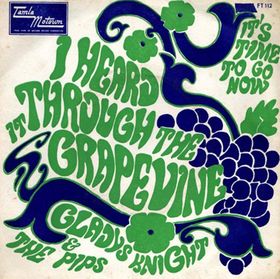
Gladys Knight and the Pips – “I Heard It Through the Grapevine,” Pop # 2, R&B # 1
By Joel Francis
Unlike nearly every other soul singer at the time, Gladys Knight didn’t want to go to Motown. She was (rightly) worried she and her group, the Pips, would end up playing second fiddle to Diana Ross and the Supremes. However, the Pips were a democracy. When the rest of the group voted to migrate to Hitsville, Knight reluctantly acquiesced.
“I Heard It Through the Grapevine” was a thrice-heated leftover when Norman Whitfield presented his song to the group in 1967. Smokey Robinson and the Miracles cut a version the previous year that didn’t make it out of Berry Gordy’s Quality Control meeting. A second Miracles recording of “Grapevine” was buried as an album cut on 1968’s “Special Occasion” LP. The Isley Brothers were rumored to have recorded a version during their brief stint on the label, but no recording has surfaced to date. Several Motown scholars believe a recording session with the Isleys to cut “Grapevine” was scheduled, but then cancelled.
This is likely the case. In 2005, Motown released the two-disc clearinghouse “Motown Sings Motown Treasures.” This incredible and enlightening collection presented many recordings – Kim Weston performing “Stop! In the Name of Love,” the Supremes doing “Can IGet A Witness,” and the Miracles original, unissued version of “Grapevine,” among others – previously locked in the vaults. It seems unlikely that the Isley Bros. version of “Grapevine,” if it exists, would have been omitted from this collection.
Although it wouldn’t be released for another year, Marvin Gaye had also cut his reading of “Grapevine” by the time the Pips were hearing Whitfield’s pitch.
Whitfield’s latest “Grapevine” arrangement was inspired by Aretha Franklin’s “Respect” and Whitfield’s desire to “out-funk” Franklin. It’s clear from the great snare-and-cymbal intro that Whitfield was on to something new. Motown had been a lot of things until that point, but it had rarely been so overtly funky. In the coming years, Whitfield would help place Hitsville at the epicenter of psychedelic soul. This recording was one of the first steps down that path.
Whitfield’s attempt to out-do the Memphis soul sound Aretha was getting from Atlantic producer Jerry Wexler was buoyed by Knight’s singing. The gospel background isn’t as obvious in Knight’s delivery, and her voice is a little earthier than Franklin’s, but Knight’s vocals can soar just as high. In fact, the song is little more than drums, piano and Knight’s powerful voice until a scratch guitar enters during the first chorus.
Stealing a page from the Holland-Dozier-Holland production book, the tambourine is mixed front and center. The instrument serves as a tractor, dragging the entire song it its wake. The signature organ line that introduces Gaye’s chart-topping “Grapevine” makes a cameo on the piano about a minute into the song. The saxophone solo bisecting the song is a straight-up homage to King Curtis, the Memphis soul legend. Even the juiciest gossip is rarely this much fun.
The fourth time was the charm for Whitfield, as the Pips’ powerful “Grapevine” finally made it past Gordy’s Quality Control meeting. That didn’t guarantee label support, though, as Knight was forced to rely on her DJ connections to promote the song. When “Grapevine” finally caught on, it caught fire holding the top spot on the R&B chart for six weeks and stalling behind the Monkee’s “Daydream Believer” at No. 2 on the pop chart. Although it was Motown’s best-selling single to date, the “Grapevine” story was far from over.
(Above: Happy Labor Day! Bob Dylan’s tribute to Merle Haggard and the working man.)
Bob Dylan – “Workingman’s Blues No. 2”
By Joel Francis The Daily Record
Merle Haggard was on a roll in 1969. In just three years he had racked up seven No. 1 hits and released eight albums. Haggard’s days digging ditches and toiling in prison were finally receding, but he refused to forget the unlucky people he labored beside for so long. “Working Man Blues” was Haggard’s tribute to his fans and his roots.
More than 35 years later, Bob Dylan turned Haggard’s tribute into a personal homage. Abandoning the Bakersfield sound that Haggard helped popularize, Dylan’s “Workingman’s Blues No. 2,” is a nostalgic ballad, introduced by a piano and accented with touches of violin.
Haggard’s “Working Man Blue” is a blazing portrait of a hard-workin’, hard-drinkin’ man with nine kids struggling to make ends meet. In the prime of his career, Haggard’s hero might “get a little tired on the weekend, but “Monday morning, I’m right back with the crew.”
Dylan catches up with a similar blue collar man thousands of shifts later. Worn by hard work and tight budgets, the place he loves best is a “sweet memory.” Too tired to get his boots and shoes, all the weary man can muster is to try “to keep the hunger from creeping its way into my gut.”
Dylan matches Haggard’s detail, but also pulls the camer back a bit, opening with a portrait of “an evenin’ haze settlin’ over the town/starlight by the edge of the creek.” Doubling the number of verses and tripling the song’s length also gives Dylan to explore the weary worker’s love life. The nine kids have moved out and the wife is gone, leaving the fatigued to wonder “am I wrong in thinking/That you have forgotten me?” and imagining his love returning to lead him off to dance in a new suit and a world where he doesn’t have to live on rice and beans.
“Workingman’s Blues No. 2” is less a celebration of the working man than a compliment to Haggard, who toured with Dylan shortly before the sequel was written. At the time it was rumored Haggard would return the favor by penning “Blowing in the Wind 2.” That song hasn’t come to light, but pair of “Working Man” songs provide a perfect Labor Day soundtrack. Play Haggard’s at the outdoor cookout while clutching a cold one; save Dylan’s for some midnight, pre-shift soul searching.
(Below: Merle Haggard’s original “Working Man Blues.” Kick up your heels before the whistle blows.)
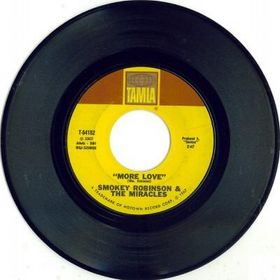
Smokey Robinson and the Miracles – “More Love,” Pop # 23, R&B # 5
By Joel Francis
Smokey Robinson has penned dozens of gorgeous love songs throughout his career, but few are affecting as “More Love.” The reassuring lyrics speak to the tragedies the couple suffered as a result of life on the road. Between 1957 and 1964, Claudette Robinson had eight miscarriages. This heartbreaking back story adds to the romance of the chorus:
“More love, more joy,
|Than age or time could ever destroy.
My love will be so sound,
It would take about a hundred lifetimes
To live it down, wear it down, tear it down.”
The song opens with some gospel chords on the piano before the gently insistent bassline enters. Robinson’s voice appears on a pillow of strings, as the arrangement slowly builds underneath. After Robinson delivers the chorus a second time, the performance pulls back to that great bassline before reaching a climax that sustains through the rest of the song.
Foreshadowing Motown’s cross-country relocation, the track was performed by Los Angeles session musicians before the Miracles – including Claudette – overdubbed their voices in Detroit. It’s unclear why Robinson, who also produced the cut, bypassed the Funk Brothers, but the public didn’t seem to mind. The song was wedged near the top of both the pop and R&B charts in the spring of 1967.
Foreshadowing another Motown move, “More Love” was the second single credited to “Smokey Robinson and the Miracles.” Berry’s decision to give Robinson top billing started the avalanche that benefitted Diana Ross and Martha Reeves but doomed David Ruffin and the Temptations.
Smokey and Claudette eventually had two children, both named in tribute to Motown. Son Berry Robinson was the namesake of label founder Berry Gordy, and daughter Tamla Robinson was named after the Hitsville subsidiary.
Former New Christy Minstrels singer Kim Carnes had a No. 10 hit on the Adult Contemporary charts in 1980 with her reading of “More Love.” The song was her biggest hit until “Bette Davis Eyes” hit No. 1 the following year. “More Love” has also been covered by Paul Young, Barbara McNair and the 5th Dimension.
(Above: The eccentric Lee “Scratch” Perry give a tour of his Black Ark studio in Kingston, Jamaica. Perry produced reggae greats Junior Murvin, Bob Marley and the Wailers, Max Romeo, U-Roy and many more at Black Ark before it mysteriously burned to the ground.)
By Joel Francis The Kansas City Star
Halfway through the third song of the night, Lee “Scratch” Perry ordered the band to halt. He wasn’t feeling it from the crowd, and reggae can’t be performed without the proper energy. After admonishing the audience and getting the desired feedback, Perry and his four-piece backing band resumed the number.
The request may have seemed more reasonable had it occurred hours earlier. The hundred or so fans who populated the Beaumont Club Sunday evening had patiently waited through two bands and an overlong DJ set. As the clock tipped toward Monday, they had a right to be tired.
Fortunately, both the crowd and Perry were rejuvenated by the time-out. The 73-year-old reggae legend delivered over an hour of his favorites and four songs by Bob Marley, one of the scores of reggae greats Perry has produced throughout his five-decade career.
Marley’s songs were nearly unrecognizable. Perry didn’t own them as much as deconstruct the numbers, turning them into springboards for his chanted verses and call-and-response choruses. “Kaya,” a number Perry co-wrote and produced with Marley closed the night, while “One Drop,” a number Marley wrote and recorded alone, concluded a trio of interpretations.
With scores of albums to his name, Perry had more than enough original material to draw from. “Roast Fish and Cornbread” came from his heyday in the late ‘70s, while set opening “Secret Laboratory” hailed from a decade later. The playful “Pum Pum” came from last year’s collaboration with “Party Hard” rocker Andrew W.K.
Although Perry’s arrangements are similar, Lionized, the four-piece Maryland band backing him, did a good job of mixing textures and varying tempos. They knew how to push both Perry and the crowd for maximum effect.
Lionized got 40 minutes for themselves before Perry took the stage. They were preceded by local DJ FSTZ, who spun dub, trance and techno for 70 minutes. 77 Jefferson took the stage when the sun was still up with an upbeat 40-minute set.
The diminutive Perry took the stage at 11 p.m. carrying a suitcase and wearing enough bling to make Flavor Flav and Lil Jon blush. Rings decorated every finger and multiple bracelets adorned each wrist. Mirrors and amulets were stuffed into every surface of his cap and spray-painted work boots. More than a dozen charms dangled around the microphone head.
The reggae equivalent of Sun Ra, Perry has claimed to be from outer space at various times throughout his career. He proved it a couple times on Sunday night by dumping a bottle of water over his cap-covered head and right shoe while dancing what looked like the hokey pokey during “Roast Fish and Cornbread.” Later in the set he flicked his lighter and licked it with his tongue.
The small crowd negated any sightline issues – there was more than enough room for everyone on the dance floor. Sound was good, but clarity isn’t Perry’s aim. He mixes everything into a large, murky soup. Although instruments were discernable, his voice wasn’t. Drenched in artificial echo and natural patios it was hard to make out what he was saying.
It wasn’t difficult to figure out what Perry wanted, though. Jah and love, sure, but also lots of dancing and movement. Once Perry threw down the gauntlet, an unspoken agreement was struck: You give me what I want, and I’ll give you what you came for. Although it took longer than either anticipated, both sides ultimately got what they wanted.
Setlist (as written, though not performed in this order): Secret Laboratory, Inspector Gadget, Jungle Safari, Roast Fish and Cornbread, Jah Live, Sun is Shining, One Drop, I Am A Mad Man, Devil Dead, Wait Inna Babylon, Kaya, Pum Pum
Marvin Gaye and Tammi Terrell – “Ain’t No Mountain High Enough,” Pop # 19, R&B # 3
By Joel Francis
Marvin Gaye found his greatest early success as a duet partner. The 1964 album “Together” was his first album to chart, and his duets placed in the Top 20 with a consistency that eluded him as a solo artist. Unfortunately, Gaye’s soul partners, Mary Wells and Kim Weston, both left Motown for (allegedly) greener pastures shortly after collaborating with Gaye. As established Motown solo artists, pairing of Gaye with Wells and Weston made sense. The teaming of Gaye with Hitsville newcomer Tammi Terrell, however, was inspired.
Terrell arrived at Motown in 1965 after bouncing from Scepter Records, where she recorded as Tammy Montgomery, James Brown’s Try Records and the Chess Records subsidiary Checker. Her initial Motown singles didn’t much fare better than her previous efforts, but “Ain’t No Mountain High Enough” took both her and Gaye’s careers to a new level.
Motown’s new singing pair was paired with the songwriting team Berry Gordy hired to replace the gradually exiting Holland-Dozier-Holland squad. Husband and wife Nickolas Ashford and Valerie Simpson came to Gordy’s attention in 1966 with their No. 1 hit “Let’s Go Get Stoned” for Ray Charles. (Ironically, “Stoned” was Charles’ first single after leaving rehab for his heroin addiction.)
“Mountain was a heck of a debut for both Ashford and Simpson and Gaye and Terrell. It’s obvious from the few seconds of spoken introduction that the signers have great rapport and their voices dance perfectly on the chorus. Although Gaye and Terrell sound like they’re giggling from the same care-free piano bench, their vocal parts were actually recorded separately. Terrell felt like she hadn’t rehearsed the lyrics enough to record with Gaye, so after some coaching with producers Harvey Fuqua and Johnny Bristol she cut her part alone.
Although Fuqua and Bristol had helmed dozens of Motown hits, “Mountain” doesn’t have the expected Hitsville sound. The most obvious explanation is that Ashford and Simpson were an “outside” songwriting team and that Holland-Dozier-Holland were on their way out. It also highlights that when people talk about the “Motown sound” they are often talking about Holland-Dozier-Holland’s signature production style. Holland-Dozier-Holland’s defection not only deprived Motown of its greatest songwriting team, but also Gordy’s vaunted “sound of young America.”
As one team of stars left, another was being born. The success of “Ain’t No Mountain High Enough” helped transform Gaye into one of Motown’s biggest and most enduring performers, whose brightest days were yet to come.
Levi Stubbs’ performance on “Bernadette” cements his status as Motown’s greatest male vocalist. The magnificent feats Stubbs laid down on the Four Tops previous pair of singles, “Reach Out” and “Standing in the Shadows of Love” reaches an impassioned crescendo on “Bernadette.” Stubbs joy, appreciation and devotion to Bernadette is still making women envy that name and that kind of partner.
The Holland-Dozier-Holland team that wrote and produced the previous two Tops singles once again employ the same lush orchestration, wrapping Stubbs’ urgent vocals in insistent strings, soaring background vocals and their signature propulsive snare drum.
“Bernadette” was the Tops last Top 10 hit until “Keeper of the Castle” took off in 1972. Perhaps coincidentally, “Bernadette” was also the Tops next-to-last collaboration with Holland-Dozier-Holland. The HDH-Four Tops swan song “7-Rooms of Gloom” hit No. 7 on the R&B charts in the summer of 1967.
Although Holland-Dozier-Holland had a handful of hits with Diana Ross and the Supremes before they left Motown in early 1968, “Bernadette” marks the last appearance by the incredible songwriting and production trio on the “Hitsville U.S.A.” set.
After Holland-Dozier-Holland departed, Berry Gordy placed all his best songwriters on Diana Ross and the Supremes and other pet artists like the Jackson 5. Groups that weren’t assigned to a producer – as the Temptations were to Norman Whitfield – floundered as the Hitsville transitioned. Many groups, including increasingly ignored girl groups like Martha and the Vandellas and the Marvelettes never regained their former glory.
As free agents, the Holland-Dozier-Holland team continued to turn out hits like Freda Payne’s “Band of Gold” and “The Day I Found Myself” by Honey Comb, but neither HDH nor Motown were ever as good again after they parted ways.
(Above: Blondie perform “My Heart Will Go On” and validate the cliche: It’s the singer, not the song.)
By Joel Francis
The Kansas City Star
Blondie performed all four of their No. 1 hits during Tuesday’s concert at Crossroads KC, but they opened their encore set with someone else’s chart topper.
Playing with an energy that recalled their CBGB’s heyday, the sextet slammed through a surprising cover of Celine Dion’s “Titanic hit “My Heart Will Go On.” It is unsure what was more shocking: that Blondie covered Celine Dion; or that it was really, really good.
If Blondie ever get around to making another album, that cover should definitely be included. Until then, the back catalog satisfied the nearly full venue. The 80-minute set played like a greatest hits album and clocked in at about the same length.
High points included a blistering “Rapture” that went from the rap hit to punk to a blues jam and finally ended up in the band’s hip-hop update, “No Exit.” Debbie Harry’s voice isn’t as strong as it used to be, but “Maria” put to rest any questions on her strength as a singer. She nailed the big notes of the chorus and the lower register of the verses.
Drummer Clem Burke was the group’s secret weapon. Throughout the night, the founding member set the tone by opening and closing most numbers, driving the rest of the band with his powerful playing and delivering emphatic fills that always seemed to enhance the performance. His moody playing underlined the dark moodiness of the one-two of “Fade Away and Radiate” and “Screaming Skin.”
When the band stretched out on “Atomic,” Harry retreated to the shadows at the side of the stage. She may have been out of the spotlight, but it was clear with the two detours into her solo catalog that Harry was always in the driver’s seat.
Harry reclaimed center stage with the reggae sing-along of “The Tide Is High” that drew the biggest response of the night. Harry made sure the crowd stayed involved by switching from to a cover of “I’ll Take You There.” She may have transformed the Staples Singers’ hit from social anthem to come-on, but the audience still hung on every word. When the band flipped back to “Tide,” there were scores of arms waving and fingers aloft, responding to the chorus “The tide is high but I’m holding on/I’m gonna be your number one.”
Fifty minutes earlier it was the band holding one finger in the air, as the performers frantically signaled to the soundman to turn up their monitors. Opening number “Call Me” suffered from dropped coverage, with Harry’s weak vocals buried in a horrible mix that seemed to frustrate both band and audience. The sound improved during “Hanging on the Telephone,” the next number, but it took until the fourth song, “The Hardest Part,” for everything to click.
Once the sound was solved, the band rocked like a finely tuned machine. Although only half of the six musicians onstage were original members, most of the rest have been onboard since the band reunited 10 years ago.
The evening ended with three straight No. 1 hits. After the Dion cover and the disco thump of “Heart of Glass,” Blondie segued into “Don’t Stop ‘Til You Get Enough.” Michael Jackson moments have become the cliché of the summer, but this inspired pairing made complete musical sense and kept bodies moving.
Few of Blondie’s peers in the late ‘70s New York punk scene had as much mainstream success as Blondie, and even fewer of those acts are still going today. Although the night may have ended sooner than expected, there were few complaints with what it delivered. At this point, we’re happy to take what we can get.
Setlist: Call Me, Hanging on the Telephone, Two Times Blue, The Hardest Part, Fade Away and Radiate, Screaming Skin, Maria, Atomic, The Tide Is High/I’ll Take You There, You’re Too Hot, Rapture/jam/No Exit, One Way Or Another. Encore: My Heart Will Go On, Heart of Glass, Don’t Stop ‘Til You Get Enough
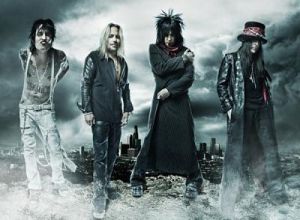
Motley Crue’s “Dr. Feelgood” album may end with the ballad “Time For Change,” but Sunday night the band gave its fans at the Sprint Center nearly two hours of the same ol’ situation.
Celebrating the 20th anniversary of the “Feelgood” album, the hair metal icons spent the first hour of their set playing it in order. Kicking off with the title track, the band performed in a small padded cell erected onstage. It looked pretty cool head-on, but offered zero visibility from the sides or the rafters. Fortunately the cell went away and the stage opened up as the quartet slid into the second number, “Slice of Your Pie.”The performance capped the six-hour Crue Fest 2 that also featured Godsmack, Theory of a Deadman and Drowning Pool. The audio quality in the three-quarters-full arena was solid, given that the day’s style of music didn’t demand any attention to its nuances.
Resurrecting albums in concert is the latest rock trend, but it’s a rarely a sure-fire success. Most albums have – no matter how classic – have a few tracks that can be skipped, and what goes down well on album doesn’t always play well live.
“Feelgood” is a great example. On the one hand, fans got to live top-to-bottom the record from the band’s most successful period. However, there were good reasons why songs like “Without You” and “She Goes Down” were mothballed.
Pacing was another issue. The massive response to “Kickstart My Heart” was tempered by the ballad “Without You” and a bizarre Tommy Lee solo moment onstage where he chastised security for not tossing drumsticks into the crowd that landed short of the barricade.
The Crue seemed looser and happier when they shed the album cycle. After a Mick Mars guitar solo, the band tore through their favorites with an energy that ignited the already-reved crowed.
“Saints of Los Angeles” was one of two songs performed that didn’t date from the ‘80s and one of the stronger moments. Although it is just a couple years old, the audience sang along with every word. The pyro-heavy closing set was at its peak during “Wild Side” and “Shout at the Devil,” when flashpots erupted with every “shout.”
Lee slid behind the piano bench for “Home Sweet Home” as his bandmates crowded around the grand piano like drunken saloon crooners. After picking up an assist from the two omnipresent female backing vocalists/dancers during the electric section, the song ended with Lee and vocalist Vince Neil singing from the piano bench together.
The backing singers wore black leather boots that would have made Gene Simmons envious and legs that would have made him covetous. After one hour and 45 minutes onstage, the women – who were barely older than the “Dr. Feelgood” album the evening celebrated – showed off their assets as the band roared through “Girls Girls Girls.”
Godsmack: I arrived about 20 minutes into the metal quartet’s one hour set. The Massachusetts-based band had spent some time apart, but is back on the road for the first time in over a year celebrating its 10th anniversary. Their setlist was heavy on the hits, and included one new song, “Whiskey Hangover.”
The band also celebrated the acts that inspired them, tossing a bit of Pantera’s “Walk” into “Keep Away,” which drew a huge response. Later on, singer/guitarist Sully Erna hopped behind a second drumkit for a friendly drum duel. As the drummers went back and forth, the band slipped in snippets of their favorite tunes, letting the audience supply the words. Some of the choices, like “Back in Black,” “War Pigs” and Led Zepplin’s “Moby Dick,” were expected. “Aqualung” and “Tom Sawyer” hinted at a different side of the group.
After a one-two punch of “Whatever” and “I Stand Alone,” the band ceded the stage to Motley Crue with the promise of more new music to come. In a few years, it wouldn’t be surprising to see them headlining their own rock caravan.
Setlists
Motley Crue: the “Dr. Feelgood” album: Dr. Feelgood, Slice of Your Pie, Rattlesnake Shake, Kickstart My Heart, Without You, Same Ol’ Situation (S.O.S.), Sticky Sweet, She Goes Down, Don’t Go Away Mad (Just Go Away), Time for Change; guitar solo, Wild Side, Saints of Los Angeles, Shout at the Devil, Primal Scream/encore: Home Sweet Home, Girls Girls Girls
Godsmack (partial): Keep Away/Walk, Speak, Whiskey Hangover, Voodoo, Batalla de los Tambores, Whatever, I Stand Alone




 joelfrancis.com