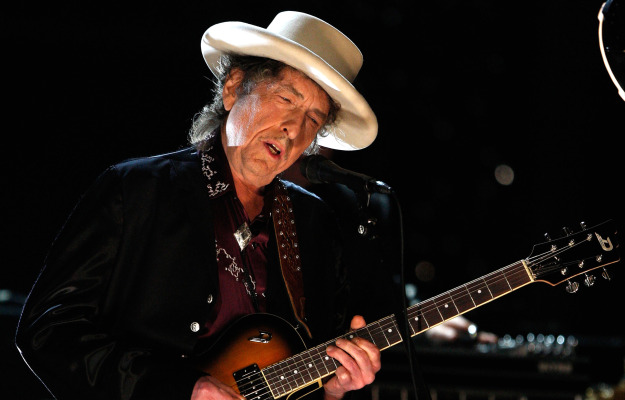
Woody Guthrie – “Deportees (Plane Wreck at Los Gatos)”

(Above: Arlo Guthrie pays tribute to his father as their friend Pete Seeger aids in a performance of “Deportees (Plane Wreck at Los Gatos).”)

By Joel Francis
The Daily Record

Illegal immigration is a hot-button topic in the current political landscape, but it is hardly a new issue. In January, 1948, a plane crashed carrying 28 migrant farmers being deported by the U.S. government. All 32 passengers were killed in this tragedy, but when newspapers and radio stations reported the incident they only mentioned the names of the pilot, co-pilot, stewardess and guard. The workers were described only as “deportees.”

This incensed Woody Guthrie, who felt the workers were just as human as the other victims. Thus inspired, he wrote a poem expressing the injustice of the situation. Since the workers’ names were not known – 60 years later, 12 of the victims are still unknown – he made up names.

Ten years later, Guthrie had been hospitalized at Greystone Park Psychiatric Hospital for what would later be diagnosed as Huntington’s disease. Although Guthrie was very much out of the public eye, learning his music became a rite of passage for the musicians in the burgeoning folk revival. Schoolteacher Martin Hoffman was inspired by Guthrie’s “Deportee” poem and set the words to music. The song was quickly passed around the folk community and Guthrie’s friend Pete Seeger added it to his repertoire.

Guthrie’s lyrics not only pay respect to the departed workers, but question the system that seduces workers to leave their families and risk their lives to find unsecured work under questionable conditions. In addition to the 28 workers who died in the plane crash, Guthrie jumps to first person and pays tribute to the other workers who either died on the job in America or perished trying to reach a better life.

“We died in your hills, we died in your deserts,
We died in your valleys and died on your plains.
We died ‘neath your trees and we died in your bushes,
Both sides of the river, we died just the same. “

After restoring humanity to the anonymous deportees and chronicling the plights of their families and countrymen, Guthrie delivers some damning questions in the final verse.

Is this the best way we can grow our big orchards?
Is this the best way we can grow our good fruit?
To fall like dry leaves to rot on my topsoil
And be called by no name except “deportees”?

In the 2004 book “Reefer Madness,” author Eric Schlosser raises many of the same questions with his essay “In the Strawberry Fields.” Drawing on firsthand accounts, Schlosser describes the conditions of the illegal farmers in the California strawberry fields. The workers’ living conditions and treatment are amount to slavery in all but name, he argues. Schlosser’s questions, like Guthrie’s, remain unanswered.

“Deportee (Plane Wreck at Los Gatos)” has been covered so often that Guthrie biographer Joe Klein declared it the “last great song” Guthrie wrote. Artists who have recorded their vision of the song, either in tribute, in protest or both, include Pete Seeger, Guthrie’s son Arlo Guthrie, the Byrds, Bruce Springsteen, the Kingston Trio, Joan Baez, Bob Dylan, Dolly Parton, the country super group the Highwaymen, Peter, Paul and Mary, Concrete Blonde, Nanci Griffith, the Los Lobos side group Los Super Seven, Old Crow Medicine Show and Billy Bragg.

Keep reading:

Bob Dylan – “Workingman’s Blues No. 2”

Bruce Springsteen and Tom Morello – “The Ghost of Tom Joad”

KC Recalls: Johnny Cash at Leavenworth prison

15 x 15

(Above: The only acceptable version of “Hoochie Coochie Man.”)

By Joel Francis
The Daily Record

A fun game has been going around the internet recently: Name 15 albums that influenced your taste in music today in 15 minutes. Because we never play anything straight up at The Daily Record, we twisted the rules a little and came up with 15 songs we dislike by artists we like.

  1. Led Zeppelin – “Stairway to Heaven.” Might as well get this heavy out of the way first. Classic rock radio has destroyed this great band’s best-known song. I’ve heard it so many times at this point I can conjure it up in my sleep. I never need to hear it again. Let me go one step further: I’d rather hear a half-hour live version of “Moby Dick” than have to sit through “Stairway” again.
  2. Joni Mitchell – “The Circle Game.” Joni Mitchell’s 1970 song about the cycles of life is actually a remarkable song. It works too well, though, leaving me completely depressed and feeling like I care about has decayed around me in just under 5 minutes. No wonder Mitchell selected this song to close her classic album “Ladies of the Canyon.” After this there’s nowhere to go.
  3. Beastie Boys – “Fight For Your Right To Party.” The Beastie Boys were a lot more creative and fun than the frat boy stereotype this dumb song earned them.
  4. Van Halen – “Love Walks In.” The Sammy Hagar period of the band is rightly painted as inferior to the original lineup, but you can’t help when you were born and I came of age right in the middle of Van Hagar. I never had a problem with Eddie switching from six-string to synths, but the sugary melody combined with lyrics about aliens made this song more than I could handle.
  5. Boogie Down Productions – “Jimmy.” Usually a master of the message, KRS-One’s sermon on safe sex comes off as both preachy and simplistic. The idiotic chorus destroys what little credibility may remain. The track did inspire the Young MC cut “Keep It In Your Pants” from his follow-up to “Stone Cold Rhymin’.” I wish I didn’t know these things, but I do and there’s nothing anyone can do about it.
  6. Anyone – “The Long Black Veil.” First performed by Lefty Frizzell in 1959, this country classic has become a staple for Johnny Cash, The Band, Emmylou Harris, Joan Baez, Bruce Springsteen and a dozen more. I can’t argue with any of those artists, but for a reason I could never put a finger on, it never resonated with me.
  7. Radiohead – “Creep.” This song introduced Radiohead to America, and for that I should be grateful, but “Pablo Honey” is the outlier in their catalog for me. In my mind, the catalog officially starts with “The Bends.”
  8. James Brown – “Killing Is Out, School Is In.” This song became the unintentional center point of Brown’s 2002 concert at the River Market. A lackluster set had already been derailed by a couple Janis Joplin covers by Brown’s then-wife and mayor Kay Barnes onstage proclamation of James Brown Day. Several years after Columbine, the message was not only no longer timely, but embarrassing. The song was later released as a single. Thankfully few heard it.
  9. David Bowie – “Changes.” Yet another song ruined by radio and turned into lazy shorthand for its era by television and movie producers.
  10. The Beatles – “The Long and Winding Road.” Dislike may be too strong a word for this song, but Paul McCartney had already delivered a better ballad for the “Let It Be/Get Back” project. This one feels like a syrupy afterthought to me.
  11. Steve Earle – “The Devil’s Right Hand.” This number brought Earle acclaim as a songwriter before he established himself as a recording artist in his own right. I think Lynyrd Skynyrd covered the same turf better with “Saturday Night Special.” The verses aren’t band, but the song is overly reliant on the repetitive chorus.
  12. The Who – “Behind Blues Eyes.” This sensitive number never seemed to fit in with the rest of “Who’s Next” and it seemed even more out of place as a single. Pete Townshend usually struck the right balance of being tough and vulnerable at the same time (see “The Song Is Over” or “How Many Friends”). He sounds weak and whiney on “Blue Eyes.” Limp Bizkit’s cover confirmed my instinct. Sympathy for Fred Durst? Never!
  13. Anyone but Muddy Waters – “Hoochie Coochie Man.” In the hands of Waters and the Chess studio pros, this is a blues masterpiece. For just about anyone else, it is usually a lame attempt for a middle-aged white guy to show he’s hep to the blooze. I’m looking at you Eric Clapton, Alexis Korner, Steven Seagal and Dion.
  14. Jay-Z – “Young Forever.” Alphaville’s 1984 hit “Forever Young” worked perfectly as the soundtrack to Napolean Dynamite’s dance with Deb. In the hands of Hova, however, it is ridiculous.
  15. Louie Armstrong – “What A Wonderful World.” There’s nothing wrong with Satchmo’s sublime performance. He manages to walk the tightrope between sincere and saccharine as the strings underneath support his presentation. Unfortunately, no one understood the song’s message, as it has a crutch when movie producers want to tug on heartstrings. Joey Ramone’s version was great upon release, but in the decade since it has become a hipster version of the same cliché.  I guess this leaves me with Wayne Coyne and the Flaming Lips’ weird yet heartfelt reading. I don’t think mainstream America is ready for that to be thrust down their throats – yet.

Keep reading:

Review: Flaming Lips New Year’s Freakout

Jay-Z – “The Blueprint 3″

Review: “Pops” by Terry Teachout

Review: “Ripped” by Greg Kot

(Above: A librarian at the Edmonton Public Library reviews Greg Kot’s book “Ripped.”)

By Joel Francis
The Daily Record

When I was in graduate school I wrote my précis – an abridged thesis – on how the internet was changing the music industry. It was an exciting time. Napster was in full swing and Metallica’s lawsuit was not only breaking news, but new research ripe for my writing. (Incidentally, the record industry’s great hope at the time was to create a new type of CD that could not be copied or ripped to computer.) I was praised for my paper, but the research did not age well. Barely two years after graduation, its findings were horribly outdated.

Greg Kot fares much better in his recent book “Ripped” How the Wired Generation Revolutionized Music.” Published in 2009, he takes the long view on the digital evolution of the past decade. The book opens with an overview of how the major labels wound up on the wrong side of their consumers at the turn of the century. In the first three chapters, Kot covers the consolidations that homogenized commercial radio and placed extra emphasis on the major labels’ profit margins; the labels’ revolt against the payola system they built and established; and how labels quashed their artists’ efforts to embrace the Internet.

That’s a lot to cover in 50 pages, but Kot is wise not to belabor these points. Other books – notably Steve Knopper’s “Appetite for Self-Destruction,” which appeared a few months earlier – cover this ground in far more depth. Kot’s summary provides a nice launching pad for the real meat of his book, namely how the net has allowed artists and fans to connect in unexpected ways with unexpected results.

Today Prince is a punching bag for declaring the internet “completely over,” but his actions in the mid-‘90s laid the groundwork for the path Radiohead, Nine Inch Nails and other bands currently follow. Walking away from his contract with Warner Bros., Prince built a network with his fans where he would release music directly to them, at a pace he dictated. Without the modern digital infrastructure, distribution was often slow and frustrating. It is puzzling that yesterday’s visionary opted out just when technology became the most accommodating.

Kot also discusses how the internet helped Wilco and Death Cab For Cutie develop an online cult following and how that translated to mainstream success. Another chapter is devoted to the impact of Pitchfork and other online tastemakers. The book ends with the stories of Lily Allen, Nine Inch Nail’s Trent Reznor and Radiohead and how their business models have turned the industry on its head.

A music critic and reporter for the Chicago Tribune, Kot draws on his day job to incorporate first-hand quotes delivered in the heat of the moment. Putting the reader in the speaker’s mind in real time keeps the stories fresh and makes the linear exposition more exciting. Very little is revealed through hindsight; the reader gets everything as it occurs.

“Ripped” shares many traits with Thomas Freidman’s 2006 exploration of the online paradigm “The World is Flat.” Both books hold few revelations for readers who followed the events unfold in real time, but are also handy encapsulations of everything that has occurred. At the same time, they are immensely in explaining to the uninitiated how we got to where we are. Whether “Ripped” deserves a spot on the bookshelf or a visit to the library depends on the reader’s level of knowledge. Either way, it is worth reading.

Keep reading:

Review – “Record Store Days”

Radiohead Rock St. Louis

Review – “King of the Queen City”

Review: Wilco returns to the Crossroads (2009)

Review: Alejandro Escovedo

(Above: Alejandro Escovedo and his Sensitive Boys revisit “Chelsea Hotel ’78” at the Record Bar on August 28, 2010.)

By Joel Francis
The Daily Record

Before playing a note, Alejandro Escovedo apologized for letting five years elapse since their last show in Kansas City. That show featured Escovedo’s True Believers band mate Jon Dee Graham, a string quartet and ended with Mott the Hoople covers around two a.m.

Saturday’s sold-out show at the Record Bar was a little more restrained in contrast, but no less potent. The strings were gone, and Graham was replaced by other True Believer, drummer Hector Munoz. He was part of a lean, four-piece band that knew how to wring maximum emotion from Escovedo’s songs. The 90-minute  show also ended at a more respectable time – just 30 minutes into the next day – with a Rolling Stones cover.

Escovedo’s songwriting holds more facets than a jewel, encompassing classical, country, Mexican, punk and classic rock. He displayed several of those sides, especially on the gorgeous instrumental “Fort Worth Blues” and the south of the border flavored “Rosalie.” Mostly, though, the quartet modulated between two modes – full-throttle rock and poignant acoustic ballads. Songs like “This Bed Is Getting Crowded” and “Tender Heart” were too mature to be straight-up punk, but they weren’t far off. It was invigorating to watch the 49-year-old songwriter rip into his material with such raw passion.

Ten years ago, Escovedo played a benefit show at the City Market for Jim Strahm. A big influence on the Kansas City music scene, Strahm sold a lot of musicians their first instrument, booked them their first gigs or joined them onstage. Sadly, Strahm did not survive his bout with cancer – Saturday would have been his 50th birthday. Fittingly, Escovedo dedicated the show to his friend, which added extra juice to the opening song, “Always a Friend.”

While the electric numbers were delivered with a fury that barely allowed anyone, band or audience, to catch their breath, the ballads were given ample space to breath. An incredible reading of “Sister Lost Soul” was delivered at half its album tempo and felt almost like a prayer. It was followed by “Down in the Bowery” and a story about Escovedo’s 18-year-old son who once called his father’s music “old music for old people.” Built on the generations’ shared love of the Ramones, it included the line “I hope you live long enough to forget half the stuff that they taught you.”

Regardless of style or tempo, one element was consistent: the intricate, interplay between Escovedo’s rhythm guitar and David Pulkingham’s tasteful leads. Some of their best moments included the solo over the stomping bass-and-drums introduction to “Street Songs,” “Fort Worth Blue” and “Rosalie” and “Real as an Animal.”

“Castanets” was one of a handful of the night’s songs that wasn’t pulled from Escovedo’s two most recent releases. Banned from setlists for a while after Escovedo learned it was a favorite of former president George W. Bush, it had the crowd dancing and joining in on the infectious chorus of “I like it better when she walks away.”

After performing a new song, Escovedo closed the night sans guitar on a lengthy cover of “Beast of Burden.” With a trio of fans onstage providing backing vocals or percussion, Escovedo worked the crowd like, take your pick, an exuberant wedding singer or fevered rock and roll evangelist. By the end, everyone was converted.

Setlist: Always a Friend; This Bed Is Getting Crowded; Anchor; Street Songs; Tender Heart; Fort Worth Blue; Sister Lost Soul; Down in the Bowery; Rosalie; Chelsea Hotel ’78; Castanets; Real as an Animal. Encore: Sensitive Boys; Lucky Day (new song); Beast of Burden (Rolling Stones cover).

Keep reading:

Carrie Rodriguez honors family, roots on new album

Review: Old 97s, Lucero

Review: Los Lobos

Review: Goo Goo Dolls

(Above: It was impossible to go anywhere in 1997 without hearing “Iris,” the Goo Goo Dolls’ biggest hit.)

By Joel Francis
The Kansas City Star

During the mid- to late ‘90s, the Goo Goo Dolls racked up multiplatinum albums, Top 10 hits and Grammy nominations. That was a long time ago, but you wouldn’t know that walking into the Independence Events Center on Thursday night.

“We are small, but we are mighty,” lead singer John Rzeznik told the house, which was better than three-quarters full. As expected, the crowded demonstrated its approval by singing along to “Dizzy” the second of seven cuts from 1998’s “Dizzy Up the Girl” played that night.

By including 11 songs from their 2007 greatest hits album, the Dolls had a surefire set list. Most songs drew a cheer from the opening chords and were long-form exercises in audience participation. Even “Home,” one of five new songs the band bravely tested from their upcoming album, found several fans singing along.

The best numbers were the most obvious ones. “Black Balloon” found the area in front of the stage filled with, what else, black balloons. At times the reactions during “Name” and “Slide” threatened to overwhelm the very vocal-friendly mix.

Touring guitarist Brad Fernquist added some nice slide guitar to Rzeznik’s otherwise solo “Acoustic #3.” “All Eyes on Me” featured a great instrumental coda that provided one of the few times the band stretched out.

The biggest moment, of course, was “Iris.” Rzeznik prefaced it by telling the crowd “we gotta play this one” and everyone reacted to the introduction like they had just walked out of “City of Angels.” After a full performance of the song, the back kicked into it one more time to let the crowd have a solo run through the chorus. They probably could have done it once more and achieved the same result.

Hopping around barefoot on the massive stage, bass player Robby Takac took the mic for four numbers. His rawer songs showed off the influence the Replacements had on the Dolls’ sound. This was especially true on “Another Time Around,” the lone nod to their pre-fame days. Even though it was written more than 15 years later, “Now I Hear,” Takac’s contribution to the forthcoming “Something For the Rest of Us” album, sounded like it could have been cut at the same session.

After blowing their big bullets – “Name” and “Iris” – during the main set, the band returned with another new track and “Broadway,” another “Dizzy” single. The 90-minute set may have not offered many surprises, but everyone got exactly what they were looking for: a fun romp down memory lane.

Setlist: The Sweetest Lie (new song); Big Machine; Slide; Dizzy; Here Is Gone; Another Second Time Around; Smash; Can’t Let Go; Black Balloon; Home (new song); Better Days; Stay With You; Now I Hear (new song); Tucked Away; Name; Let Love In; As I Am (new song); All Eyes On Me; Acoustic #3; Iris. Encore: Not Broken (new song); Broadway.

Keep reading:

Review: Chickenfoot

Review: Jack Johnson

Review: Motley Crue

Review: Experience Hendrix

Review: Jack Johnson

(Above: “Better Together,” the closing song, taken from Jack Johnson’s concert at Sandstone Amphitheater on August 16, 2010.)

By Joel Francis
The Kansas City Star

Kansas may be a landlocked state, but for two hours on Monday night there was prime beachfront property in Bonner Springs.

Surfer-cum-songwriter Jack Johnson brought a mellow vibe that matched the cooler weather and gentle breeze. There were some empty seats in the middle section, but the lawn in back and area up front were both comfortably crowded.

The crowd started singing along on the opening lines of “You and Your Heart” and with the exception of a few tracks Johnson recorded with Hawaiian singer Paula Fuga, didn’t let up until the closing refrain of “Better Together,” the final song. Many songs were greeted with spontaneous exclamations by the fans in the back. More fortunate fans closer to the stage shouted their feelings directly at Johnson, who engaged them a couple times.

Backed by a three-piece band, Johnson let his lyrics carry the conversation, intermittently interrupting himself to point out the half moon hanging over the lawn or to read a sign from a fan who had driven 700 miles without sleep to see the show.

Stacked together, the similar tempo and feel of his songs blended together like the gentle sway of the tide washing against the shore. The atmosphere was amplified by a large, curved screen behind the band that projected pictures of swirling water, palm trees, album covers and, occasionally, the action onstage.

Along the way, Johnson was joined by several guests. Alo guitarist Dan Lebowitz who added some nifty slide guitar to a cover of Steve Miller’s “The Joker,” and texture to a couple ukulele-driven numbers. Fuga duetted with Johnson on “Turn Your Love,” one of his songs, and “Country Roads,” one of hers. G. Love brought some blues harp and much-needed energy to “Rodeo Clowns” and “At or With Me.”

The best cameos, however, came from within Johnson’s band. Bass player Merlo Podlewski burst from his fixed spot at the back of the stage to drop a lively rap into “Staple It Together.” Keyboard player Zach Gill was the secret weapon. He splashed some honky tonk piano into “Red Wine, Mistakes and Mythology” and added an elegant introduction to “Go On.” Gill gave “Mudfootball” a zydeco feel with his accordion solo.

Detractors may argue that too many of Johnson’s songs mine the same tempo and sound alike. It would be hard to refute that argument. But Johnson’s songs are also dominated by the concept of philia. Watching several thousand fans sing and celebrate together it’s impossible to deny he didn’t realize his dream, if only for a few hours.

G. Love – One of two opening acts, G. Love told the large crowd about a previous gig at the Grand Emporium when he drank so many gin and tonics he passed out against the microphone. Armed only with a harmonica and acoustic guitar, his 45-minute set would have fit nicely at that or any of Kansas City’s current blues clubs.

New song “Milk and Sugar” echoed Mississippi Fred McDowell’s “Coffee Blues.” “Freight Train Blues” was offered in the same arrangement Bob Dylan used on his debut recording, while “Mystery Train” featured a long instrumental introduction that made the familiar song unique. In between, G. Love delivered crowd-pleasing originals “Cold Beverages” and “Booty Call.”

Jack Johnson setlist: You and Your Heart; If I Had Eyes; Taylor; Sitting, Waiting, Wishing; The Horizon Has Been Defeated; Inaudible Melodies; To the Sea; Go On; Upside Down; Red Wine, Mistakes, Mythology; Bubbletoes; Mellow Mood (Bob Marley cover); Wasting Time; Breakdown; My Little Girl; Turn Your Love (with Paula Fuga, Dan Lebowitz); Country Road (with Paula Fuga, Dan Lebowitz); Flake (with Dan Lebowitz); The Joker (Steve Miller cover) with Dan Lebowitz; Banana Pancakes; Mudfootball; Good People; Rodeo Clowns (with G. Love); Staple it Together (with G. Love); At or With Me (with G. Love); Encore (Jack Johnson solo): Do You Remember; Home; Times Like These; Gone; Angel; Better Together (with full band, G. Love, Paula Fuga, Alo).

Keep reading:

Review: Modest Mouse (2010)

Review: Michael Franti

Review: David Gray

Review: Wilco (2009)

thePhantom – “Bohemian Seduction Grooves”

By Joel Francis
Ink Magazine

“Seduction” is the key word in the thesis-length title of thePhantom’s new EP, Bohemian Seductive Grooves for the Gay Soul. But thePhantom, aka Kansas City rapper/producer Kemet Coleman, would rather have you in his head than in his bed.

The five-track release is thePhantom’s attempt to translate the urban theory he’s been soaking up as a student at the University of Missouri-Kansas City into urban beats and rhymes. Dropouts needn’t worry. The vibe is more relaxed than the last day of school, with wordplay more effortless than a third-grade spelling test.

The low-key production on opening track “Midnight Seduction” sets the mood. ThePhantom’s words are set against a wash of synthesizers perfect for that late-night comedown when the energy starts to fade but sleep is still a long way off. “Downtown,” the second cut, bumps the tempo, but the rest of the album plays like lost tracks from a chill-out compilation.

ThePhantom says his master plan is to unite Kansas City’s diverse citizenry on the dance floor, a place where both blue-collar and artisans are equally comfortable. Of course if that effort creates a gathering of eligible women, thePhantom’s fine with that, too. On “Just Right” he makes the case for romance without stooping to the crass cliches common to the genre.

On December’s Destroy and Rebuild, thePhantom had an entire album to present his titular concept. Padded with a five-minute instrumental, the EP’s 22 minutes are ample time for thePhantom to gather his bohemians and gay souls, but not long enough to keep them on the dance floor. The result feels more like an outline than the conclusion. Sadly, that’s exactly what this is. ThePhantom has announced this EP will be his final project. Even so, he leaves behind a body of work worth further study.

Keep reading:

Steddy P and DJ Mahf – “While You Were Sleeping”

KC’s MCs throw down this weekend

Jazz, hip hop collide to celebrate landmark album

The Supremes – “Stoned Love”

The Supremes – “Stoned Love,” Pop # 7, R&B #1

By Joel Francis
The Daily Record

“Stoned Love” was the Supremes’ biggest hit of the post-Diana Ross era, and with good reason – it sounds like a throwback to the golden Holland-Dozier-Holland age of Motown.

Motown producer Frank Wilson discovered the song when it was played over Detroit radio during a talent search contest. Amazed to find such a mature work had been penned by a local teenager, Wilson worked with Kenny Thomas, the young writer, and arranger David DePitte before presenting the number to Berry Gordy and the Supremes.

In a narrative repeated so frequently it has nearly become a cliché, Gordy hated the song. The reason for Gordy’s dislike is unclear, but there was concern over the title. Thomas and Wilson insisted the title referred to love with a solid foundation, not drug use. The original title, “Stone Love” supports this claim. Somehow the single was mislabeled “Stoned Love” at the pressing plant and the new title stuck.

Just as they had three years ago when the Doors sang “we couldn’t get much higher” on the Ed Sullivan Show, CBS freaked out over the potential reference and cut the song from the girls’ appearance on the Merv Griffin Show.

As usual, the censors paid more attention to the hysteria than the work itself. Wilson’s lyrics call for “a love for each other that will bring fighting to an end/forgiving one another” and challenge for the “young at heart” to “rise up and take your stand.”

The hope-filled lyrics brim with the optimism of youth and could easily turn into treacle. Thomas and DePitte turned them into a great showcase for Jean Terrell’s talents. All elements seem to feed off her emotion, particularly the inspired backing vocals of fellow Supremes Mary Wilson and Cindy Birdsong. Wilson and Birdsong had been banished from the final recording sessions with Ross and they seem extra happy to be operating as a group again.

From the propulsive snare driving the song, down to the swirling strings and display of voices, the arrangement recalls the Supreme’s finest moments with the Holland-Dozier-Holland team. Fans seemed to agree, sending the song to the top of the R&B chart an into the pop Top 10. Again, Gordy’s steadfast, initial instinct had been proven wrong.

The legacy of “Stoned Love” lies more with its title than its tune. Angie Stone incorporated it into the introduction on her “Stone Love” album in 2004, just one of many similar titles it inspired. These include “Stone in Love” by Journey and the smilar “Stoned in Love” by UK dance pop artist Chicane. In 2006 Justin Timberlake released the single “LoveStoned.” None of these songs hold a candle to “Stoned Love.”

Review: Bob Dylan

(Above: Zimmy and band roll and tumble.)

By Joel Francis
The Daily Record

Two of the most iconic songwriters of the 1960s visited Kansas City just two weeks apart. But while patrons packed the Sprint Center and doled out big money to see Paul McCartney, acres of more reasonably priced empty seats could be found at Bob Dylan’s concert at Starlight Theater on Saturday night.

Part of this can be attributed to frequency. McCartney has only played Kansas City three times since the Beatles called it quits. Dylan rolls through town about every 15 months. But delivery also plays a big role. McCartney performs his beloved numbers exactly (or close to the ways) how everyone remembers them; Dylan plays nothing straight.

Saturday’s performance ran just shy of two hours and felt pretty much the same as Dylan’s many previous stops in town, including the show he played at Starlight just over three years ago. After opening with two tracks from the ‘70s – including a stunning “Senor (Tales of Yankee Power),”  Dylan and his four-piece band ping-ponged between his golden era in the ‘60s and material cut in the past decade.

The best moments were the ballads. The delicate “Just Like A Woman” opened with a lengthy instrumental section that highlighted the subtle interplay between acoustic, electric and pedal steel guitars, and Dylan’s organ, his preferred instrument of the night. The instruments danced deftly until the signature descending guitar riff entered, heralding the first verse. “Workingman’s Blues No. 2” had a similar feel later in the set, and featured Dylan’s best harmonica solo of the night.

Dylan gave a nice treat when he paired two of the best numbers from his protest era. Almost a half a century after their debut, “The Ballad of Hollis Brown” and “The Lonesome Death of Hattie Carroll” remain a potent commentary on poverty and race. Their impact was muted, however, by an arrangement of “Hattie Carroll” that rendered the number nearly unrecognizable.

The band mined the Chicago blues for two newer numbers, “My Wife’s Hometown” and “Rollin’ and Tumblin’.” The former was the only time Dylan strapped on an electric guitar. It should have been repeated. His prodding duel with lead guitarist Charlie Sexton seemed to invigorate the rest of the band.

A slump in the final third of the set ended with a spectacular “Ballad of a Thin Man.” The lone illumination from the footlights added an other-worldly atmosphere to the song as Dylan stepped away from his keyboard and sang into a microphone set just off center, in front of the drums.

Reliable encores “Like a Rolling Stone” and “All Along the Watchtower” still pack a punch and hold pleasant surprises. Dylan intentionally dropped his vocals after the second chorus on “Like a Rolling Stone” to give the band some space to play and let Sexton take an extra solo. “Watchtower” came in a staccato fashion that resembled the far-off gallop of the riders’ horses, before they suddenly stormed the gates.

The Dough Rollers: Dylan’s attraction to this duo isn’t hard to spot. Their 35-minute opening set included covers of John Lee Hooker, Mississippi Fred McDowell and early gospel numbers. The pair sounds like they have just been pulled off an old field recording cut by Alan Lomax. Malcolm Ford sounds like he learned to sing by studying antique cylinder recordings. Jack Byrne’s bottleneck slide on “Were You There When They Crucified My Lord” was especially tasty. The set also included an interpretation of “Goin’ to Kansas City.” They would be a great show at B.B.’s Lawnside BBQ or Knucklehead’s.

Dylan’s setlist: Watching the River Flow, Senor (Tales of Yankee Power), Most Likely You Go Your Way (And I’ll Go Mine), My Wife’s Home Town, Rollin’ and Tumblin’, Just Like A Woman, The Ballad of Hollis Brown, The Lonesome Death of Hattie Carroll, Cry A While, Workingman’s Blues No. 2, Highway 61 Revisited, I Feel A Change Comin’ On, Thunder on the Mountain, Ballad of a Thin Man. Encore: Like a Rolling Stone, Jolene, All Along the Watchtower.

Keep reading:

Bob Dylan: All Along the Watchtower (2004)

Bob Dylan – “Workingman’s Blues No. 2”

“Tell Tale Signs” Sheds Light on Legend

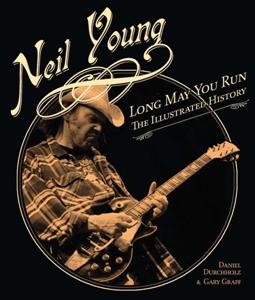
Review: “Neil Young – Long May You Run: The Illustrated History”

(Above: Neil Young, his wife Pegi and the late Ben Keith perform “Long May You Run.”)

By Joel Francis
The Daily Record

Pity the Kindle reader or Web surfer. The computer screen is still years away from capturing the depth and richness in the pages of “Long May You Rung,” Daniel Durchholz and Gary Graff’s new illustrated history of Neil Young.

Much of the book’s information will be familiar to longtime fans. What makes “Long May You Run” a treasure, however, is its presentation. Read about Young’s high school days at Kelvin Technical School in Winnipeg, and a photo of the school and two yearbook photos are right there alongside the text. Concert photos, tour programs and magazine covers all accompany entries on the myriad of Young’s tours. These and other similar visual clues that populate the book help put the events in context.

Also handy are the sidebars that detail Young’s sidemen, producers and female collaborators, his film career, favorite guitar, Motown stint, the Bridge School and nearly everything else that wouldn’t fit comfortably in the chronological narrative. The text is also punctuated with dozens of quotes from usual suspects Crosby, Stills and Nash and Eddie Vedder to Ben Folds and Toby Keith.

Authors Durchholz and Graff are clearly in their element. The St. Louis-based Durchholz boasts music bylines from the St. Louis Post-Dispatch, Washington Post and Rolling Stone. Graff has written for Billboard, the Cleveland Plain Dealer and New York Times and is the editor of “The Ties that Bind: Bruce Springsteen: A to E to Z” and the MusicHound Essential Album guides.

Their story opens with a photo of a two-year-old Young nestled by a full-page shot of his first band, the Squires. It closes with essays on his Linc/Volt hybrid car and the first volume of the Neil Young Archives. In between we see Young grow his hair long, cut it short, grow a beard, and dabble with folk, classic rock, electronica, country and grunge. Never comfortable with one look or style of music, the only constant in the narrative arc is Young himself.

Four appendices chronicle Young’s discography, providing the recording details, cover art and track listing for all of his albums, compilations and box sets. Further resources include the catalog number and a- and b-sides for all of his singles, his guest appearances on others’ albums and the tribute albums released in Young’s honor.

“Long May You Run” stops short of being a Young reference guide, but that was never the goal. It is a wonderful coffee table companion that is puts a trove of information, visual and otherwise at the reader’s fingertips. While there’s nothing in “Long May You Run” that can’t be found on a comprehensive Web site, it is a lot more fun to flip through and soak up.

Keep reading:

Review: “I Am Ozzy”

Review: “Big Man” by Clarence Clemons

Review – “Record Store Days”