(Above: Toad the Wet Sprocket perform “I’ll Bet On You,” a new song that would fit comfortably on any best-of collection.)
By Joel Francis The Kansas City Star
Toad the Wet Sprocket, the ’90s alternative to alternative music, seemed to be the victims of bad timing. Sure, the band scored two platinum albums and a handful of Top 40 singles, but it was too late (and soft) to be considered college rock and too early for indie rock.
The band’s break-up in 1998 didn’t create any waves. There was no critical re-evaluation of its catalog or new fans clamoring to the legend. Toad was just gone.
On Friday night at the Uptown Theater, 16 years after Toad’s last album, the band reminded fans what they had been missing and delivered hope of a promising future as well.
More than half of the 100-minute set drew from the “Fear” and “Dulcinea” albums, Toad’s best and best-selling releases. The sing-alongs came fast and furious, starting with “Good Intentions” and continuing through “All I Want,” “Nightingale Song,” “Brother” and “Fall Down.”
Nestled among those chestnuts were five tracks from Toad’s upcoming new album. Singles like “New Constellation” and “Bet on Me” didn’t show any of the lapsed time between recording sessions and fit comfortably in the band’s sound. The fans may not have been singing along with these songs yet, but there’s a good bet they will the next time Toad rolls through town.
The old songs sound pretty much like they did two decades ago. Touring guitarist Johnny Hawthorne added nice texture to “Windmills” and “Walk on the Ocean” with his pedal steel. His mandolin was a nice touch on “Nightingale Song” and “Come Back Down.”
Lead guitarist Todd Nichols was given the mic for “Inside” and “Crazy Life.” During “Come Down,” one of the band’s biggest Kickstarter donors was invited onstage to play cowbell.
Singer Glen Phillips seemed as surprised as anyone at the band’s reception. The Kickstarter campaign to fund a new album raised more than a quarter of a million dollars in two months. While the Uptown wasn’t close to full — the balcony was open, but the sparse crowd upstairs could have easily fit among all the empty seats downstairs — Phillips commented on the audience reception several times. Without major publicity, he said, fans have been finding their own way back to the band.
The world may not have been asking for a Toad the Wet Sprocket reunion, but Friday’s show made a strong case for it being a good idea.
Setlist: The Moment; Woodburning; Good Intentions; Crowing; Windmills; New Constellation; Inside; All I Want; Whatever I Fear; Come Back Down; Nightingale Song; Something’s Always Wrong; The Eye; Crazy Life; Jam; California Wasted; Brother; Fall Down. Encore: Come Down; Bet on Me; Ziggy Stardust (David Bowie cover); Walk on the Ocean.
(Above: Rodrigo y Gabriela ended their main set at the Uptown Theater in Kansas City, Mo., with the joyous “Humana.”)
By Joel Francis The Kansas City Star
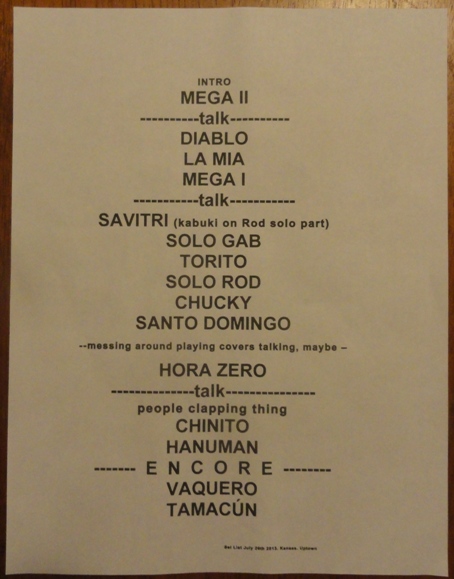
About a third of the way through her set on Friday night, Gabriela Quintero explained her pact with the Uptown Theater crowd. She and Rodrigo Sanchez promised to play only acoustic guitars if the audience let the pair play whatever they wanted.
The audience in the crowded theater responded enthusiastically to almost everything thrown at it in the 100-minute set. The rapt attention the acoustic instrumental music commanded spoke to the pair’s skill and ingenuity.
The music was a mixture of Mexican, Irish, African, metal and folk, leading to another of Quintero’s maxims: They don’t label their music because then they’d be trapped playing to that label. With no classification, they can — and do — play anything.
Rodrigo y Gabriela started performing together in their native Mexico in the late ’90s. By the new millennium, the pair had relocated to Dublin and caught the eye of Damien Rice and David Gray. Their first album came out in 2002. In the dozen years since, they have released an album almost yearly, alternating studio material with live albums.
Friday’s performance touched on many of those albums and also previewed material slated for release next year. With no new album since 2012’s “Area 52,” Sanchez admitted there wasn’t really a reason for the duo to be touring. They just wanted to play.
While both guitarists are virtuosos, Quintero displayed an especially strong right hand. Viciously strumming without a pick, she summoned a plethora of textures and rhythms. Often treating her guitar like a percussive instrument, she was easily able to generate as much kick as a bass drum. Quintero’s skill with a wah pedal also added to her arsenal.
Against this backdrop, Sanchez showed amazing dexterity with his left hand, lacing songs with intricate riffs and solos. Sanchez also wasn’t shy about showing off his metal roots. He tossed Metallica riffs between songs a few times, and threw in some Megadeth for good measure. A full cover of Metallica’s “Orion” showed why the pair have earned the respect of their metal heroes. A right-turn cover of Daft Punk’s “Get Lucky” generated the biggest applause of the night.
The sound was immaculate. Both instruments were close mic’d, adding the squeak of fingers on the fretboards and sound of Sanchez’s pick hitting the strings to the mix. When inattentive fans started talking, the rest of the audience had no qualms about shutting them up.
Although their songs have no words, Sanchez and Quintero had no trouble keeping the crowd involved. At one point Sanchez had a three-part clap circulating around the theater. The two’s infectious energy — Quintero relished jumping around the stage — kept fans on their feet for most of the last half of the set.
(Above: The Rev. Horton Heat pays tribute to his long-suffering bass player with “The Jimbo Song.” This performance is from September, 2009, at the Midland Theater in Kansas City, Mo.)
By Joel Francis The Kansas City Star
The Rev. Horton Heat needed only the briefest introduction to clue the crowd at Crossroads KC on Friday night in on what would happen for the next 95 minutes: “It’s a psychobilly freakout.”
Backed by a two-piece rhythm section and singing into a vintage microphone, the reverend spent the first half of the set tearing down his back catalog, playing one song from each album in chronological order (but skipping the Christmas platter).
If Brian Setzer dropped the Vegas schtick, he’d sound a lot like Heat. The stripped-down, hot-rod sound that supercharges rock and country is an admittedly narrow shaft to mine, but Heat was able to vary the mood.
“Martini Time” found the singer in lounge mode, while “Indigo Friends” was built around warp-speed Chicago blues. The “Jimbo Song” sounded like a lost Ramones track, and hints of surf guitar snuck into a few guitar solos.
Although Heat’s catalog is based on original compositions, he peppered several covers into the second half of the set. “Johnny B. Goode” and “Folsom Prison Blues” made expected appearances, as did Merle Haggard’s “Honky Tonk Night Time Man” and Bill Haley’s “Rock This Joint.” Dirtfoot saxman Scott Gerardy joined the band for the Haley and Johnny Cash numbers and the original noir study “Lonely Gun.”
The performance capped an evening of genre studies at Crossroads. Hometown rockabilly revivalists Rumblejetts opened the night. The six-piece ensemble Dirtfoot brought the night’s most distinctive sounds. The Louisiana-based band wasn’t afraid to put both saxophone and banjo to work on the same song and find out what happens during the ensuing jam.
Ha Ha Tonka singer Brian Roberts was clearly glad to be back in his native Missouri. He was frequently stomping around stage, emphatically strumming his acoustic guitar. The jangly quartet’s 45-minute set featured old favorites like “Buckle on the Bible Belt” and “Usual Suspects.” The band borrowed a song from fellow Springfield act Red Meat, “12 Inch 3 Speed Oscillating Fan,” which got much of the crowd singing along. That was followed by a quiet a cappella performance of the traditional song “Hangman (Gallows Pole).”
Setlist: Psychobilly Freakout, Lonesome Train Whistle, Baddest of the Bad, Martini Time, Jimbo Song, The Party in Your Head, Galaxy 500, Indigo Friends, Drinkin’ and Smokin’ Cigarettes, Johnny B. Goode, Honky Tonk Night Time Man, Lonely Gun, Rock this Joint, 400 Bucks, Bales of Cocaine, Devil’s Chasing Me. Encore: Big Red Rocket of Love > drum solo > Folsom Prison Blues > Big Red Rocket of Love.
(Above: Roman Numerals spread the word at SXSW in 2010.)
By Joel Francis The Kansas City Star
Note: Sigur Ros pulled me away from covering the first day of MoTM, but I was at the RecordBar on Friday and the outdoor stage on Saturday (with a quick reprise back at the RecordBar).
Friday
In some unfortunate scheduling, Spirit is the Spirit, a Lawrence-based quintet, was forced to compete with Grizzly Bear. It’s too bad fans of laid-back, analog rock were forced to chose, because many Grizzly fans would likely appreciate Austen Malone’s easygoing, reassuring approach.Spirit’s 40-minute set recalled the earthier moments from the Band and the relaxed vibe of “Workingman’s Dead.” The quintet performed several songs from its new EP and was finally able to coax the sparse crowd to dance on the set-closing “Pillows.”
Indie rock supergroup Divine Fits rock the Middle of the Map outdoor stage on Saturday.
Roman Numerals are technically a local band, but Friday’s abbreviated set felt more like a homecoming. The four-piece band was playing with drummer Pete LaPorte for the first time in five years and singer/guitarist William Smith had flown in from his home in New York City.
Stepping in at the last minute for the Guards, who called in sick, the Numerals delivered a gripping 30-minute preview of their set planned for Saturday on the outdoor stage.
The RecordBar crowd swelled considerably for the Numerals, but it didn’t approach feeling full until fans started appearing at the conclusion of Grizzly Bear’s set, in anticipation of Deerhoof.
By the time Deerhoof went onstage at midnight, the RecordBar had a line out the door. A packed house watched the avante-indie quartet make its Kansas City debut (although the band did open for the Flaming Lips mini-residency at Liberty Hall in Lawrence last summer).
Cross Sonic Youth with a Japanese game show and you’re in the ballpark of Deerhoof’s unique sound. The diminuitive Satomi Matsuzaki’s enchanting vocals served as a counterpoint to the chaos, while Greg Saunier’s drumming anchored the seemingly free-form songs.
The biggest responses during the 70-minute set came early for the catchy “Panda Panda Panda” and Flaming Lips’ drummer (and Lawrence resident) Kliph Scurlock’s surprise guest appearance behind the kit.
Saturday
Beautiful Bodies had no problem sustaining the momentum from Roman Numerals’ incredible set-closing cover of Joy Division’s “Transmission.” Bodies singer Alicia Solombrino spent more time in the crowd than she did onstage. She wasn’t always visible, but it was easy to gauge where she was by the disproportionate amount of hands (and phones) in the air.
Fans further away found plenty to like from the five-piece band’s high energy, half-hour set. The parking lot hosting the outdoor stage was only a third full, but the balcony at nearby Buzzard Beach was packed.
Sandwiched between Beautiful Bodies’ grrl-power pop and Futurebirds’ alt-country, the Soft Reeds were a palate cleanser.
The quintet’s 30 minute set previewed material from an upcoming new album. Bursts of free jazz sax highlighted the opening number, and songs like “Finding Patterns” and “Moving in Time” recalled the nervous energy of the Talking Heads. The band also covered Roxy Music’s “Virginia Plain.”
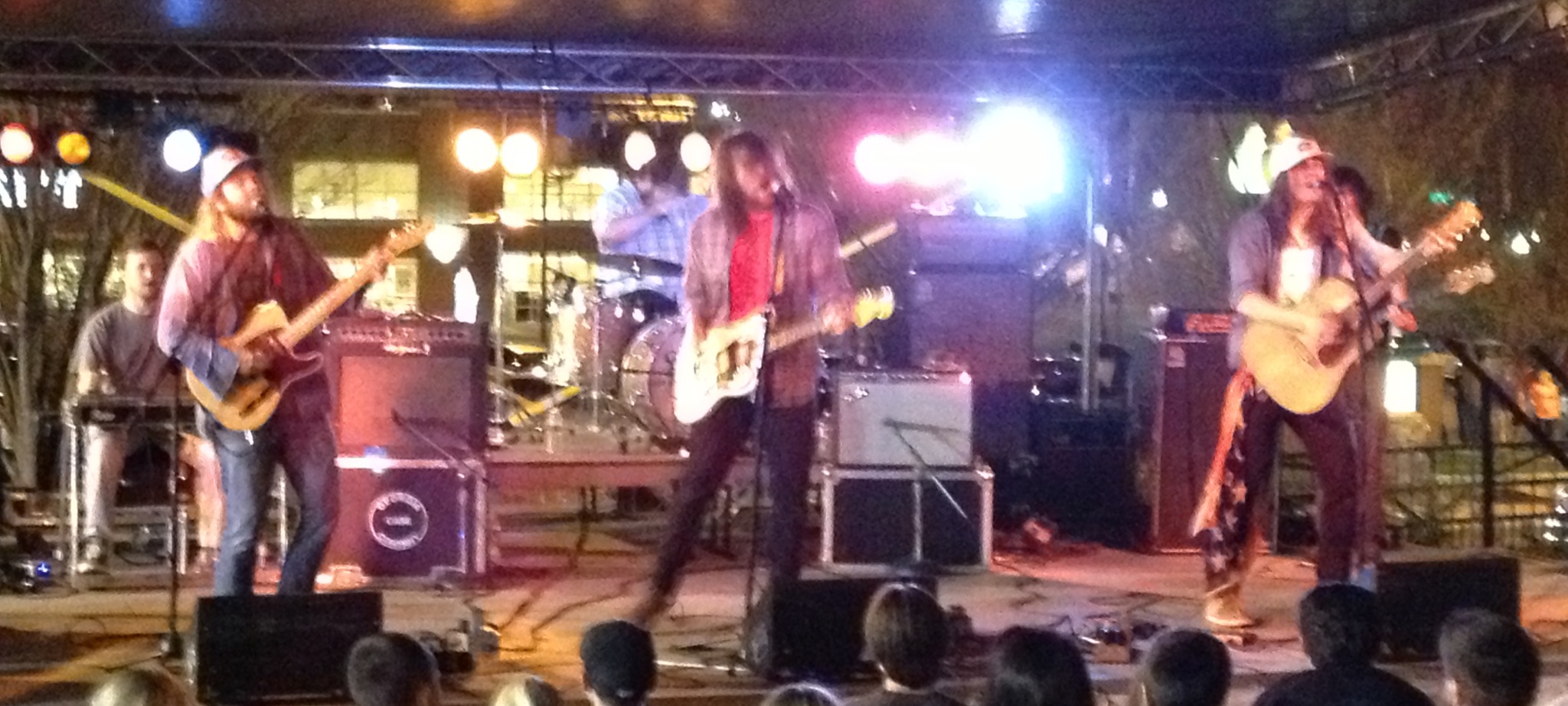
Fans missing Uncle Tupelo will have an instant friend in Futurebirds. The five-piece alt-country band from Athens, Ga. made an impressive KC debut. Their too-short 50 minute set was grounded in the earthy jangle of three guitars and driven to the stratosphere by the cry of a pedal steel. A cover of Chris Isaak’s “Wicked Game,” highlighted the band’s strengths, a perfect balance of smooth yet ragged. The one-two of “Wild Heart” and the anthemic “Yur Not Dead” closed the set on the highest moment of the day so far.
The Futurebirds make their Kansas City debut at the 2013 Middle of the Map festival.
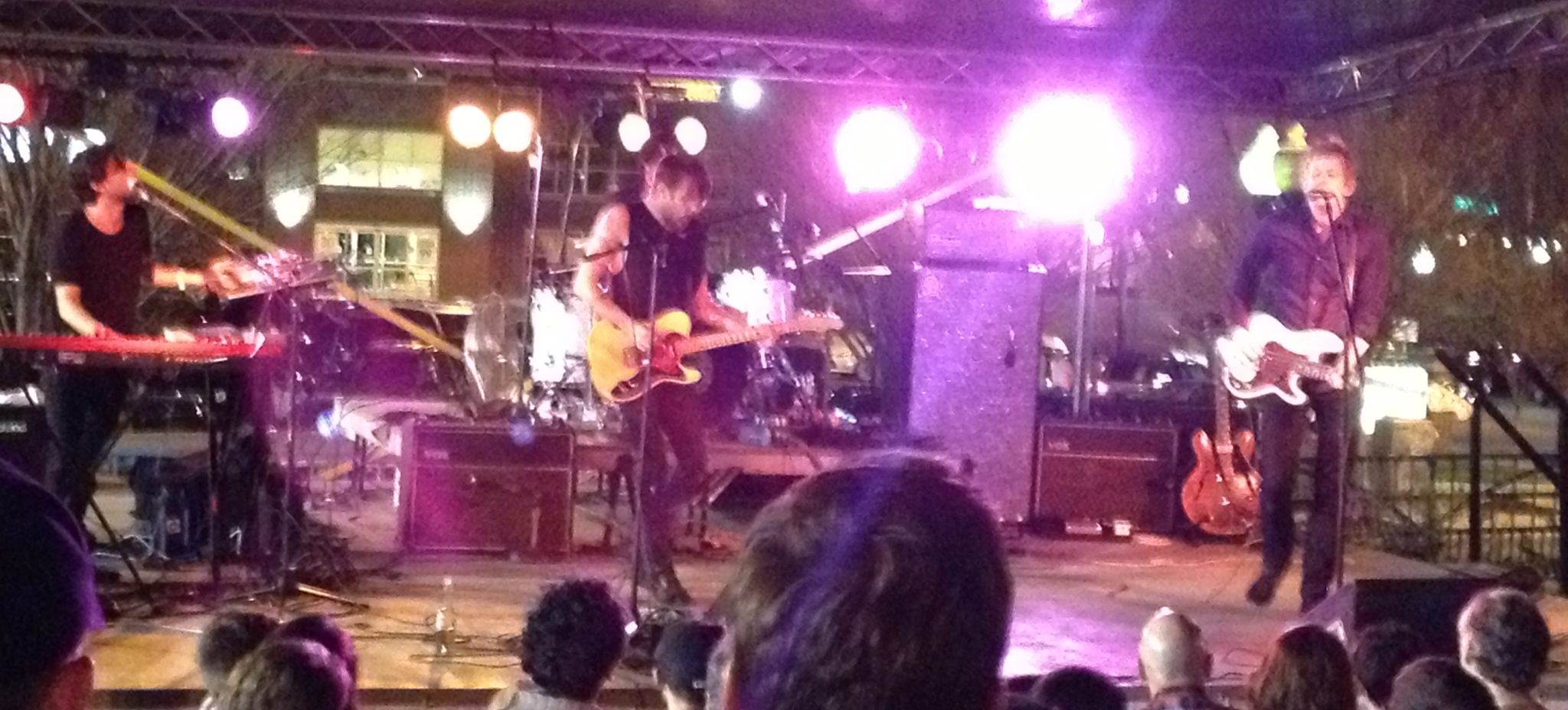
Divine Fits had its work cut out following Futurebirds. The supergroup comprised of members of Spoon, Wolf Parade and New Bomb Turks proved up to the task. The quartet performed all but one track from their sole LP during the one-hour set, with a new song, “Chained to Love” and a cover of Tom Petty’s “You Got Lucky.”
Both diversions blended well with the group’s sound: driving indie rock built over basic synth patterns. The material blossomed onstage gaining raw energy and losing the sterility of the recorded versions. Frontmen Britt Daniel and Dan Boeckner alternated vocal and lead guitar duties. Two of the band’s most neurotic numbers, “What Gets You Alone” and “Shivers” also provided the night’s best moments.
It was hard not to miss the Beaumont Club throughout the weekend, the outdoor stage offered several benefits. Although capacity never rose more than two-thirds full, it offered much greater capacity. It also provided the opportunity to simultaneous enjoy great music and beautiful spring weather.
Tennis It seemed no one wanted to leave the RecordBar after Making Movies. The venue was one-in, one-out well into Tennis’ set and the room didn’t start to thin until around 1 a.m.
The husband and wife duo of Alaina Moore and Patrick Riley were augmented by a two-piece rhythm section for their 50-minute set. The band’s jangly indie pop and confessional, introspective lyrics made them seem like the cool aunt and uncle to Best Coast. Songs were filled with complex lyrics and romantic devotion typical of a married couple who met in a college philosophy course. The biggest responses went to “Petition” and “Origins.” The response to “Petition” was so great that Moore joked that know she knows how Taylor Swift feels.
The final notes had barely died before the house lights were thrown on and patrons were ordered out. Middle of the Map 2013 was officially over at the RecordBar.
Sigur Ros’ performance at Starlight on Thursday night felt more like being cast under a spell for nearly two hours than seeing a rock show.
The Icelandic trio rarely spoke to the crowd and preferred to sing Hopelandic, an imagined language. Carried by singer Jonsi Birgisson’s angelic falsetto, the linguistic structure only enhanced the trance. Unencumbered by English, the songs could be about whatever you wanted them to be. Augmented by three piece horn and string sections and a pair of multi-instrumentalists, the group created heavenly textures that juxtaposed near operatic beauty with stains of hard rock.
The M. Night Shyamalan of ensembles, Sigur Ros patiently builds layers and moods before suddenly whisking the listener around in another direction. This was especially true on “Hrafntinna” which build tension from discordant horns before ending with a lush brass coda that wouldn’t have been out of place at the Kauffman Center.
Arrangements are designed so that each part complements without drawing attention until suddenly the key instrument emerges at the perfect moment. Despite the presence of so many musicians, the mix was pristine. On “Festival” I could hear bass player Georg Holm’s pick hitting the string on each heavy downstroke.
Sigur Ros ended a three-year hiatus with the release of their sixth album, “Valtari,” last year, the band has already moved on. One quarter of the setlist drew from the new record “Kveikur,” which is scheduled for release in June. The material blended well with the older songs, but also showed a new, darker dimension. The title track featured digital textures, exotic percussion and heavy drums. “Brennisteinn” opened with a nasty, distorted synth bassline and sounded like a musical wrestling match between good and evil.
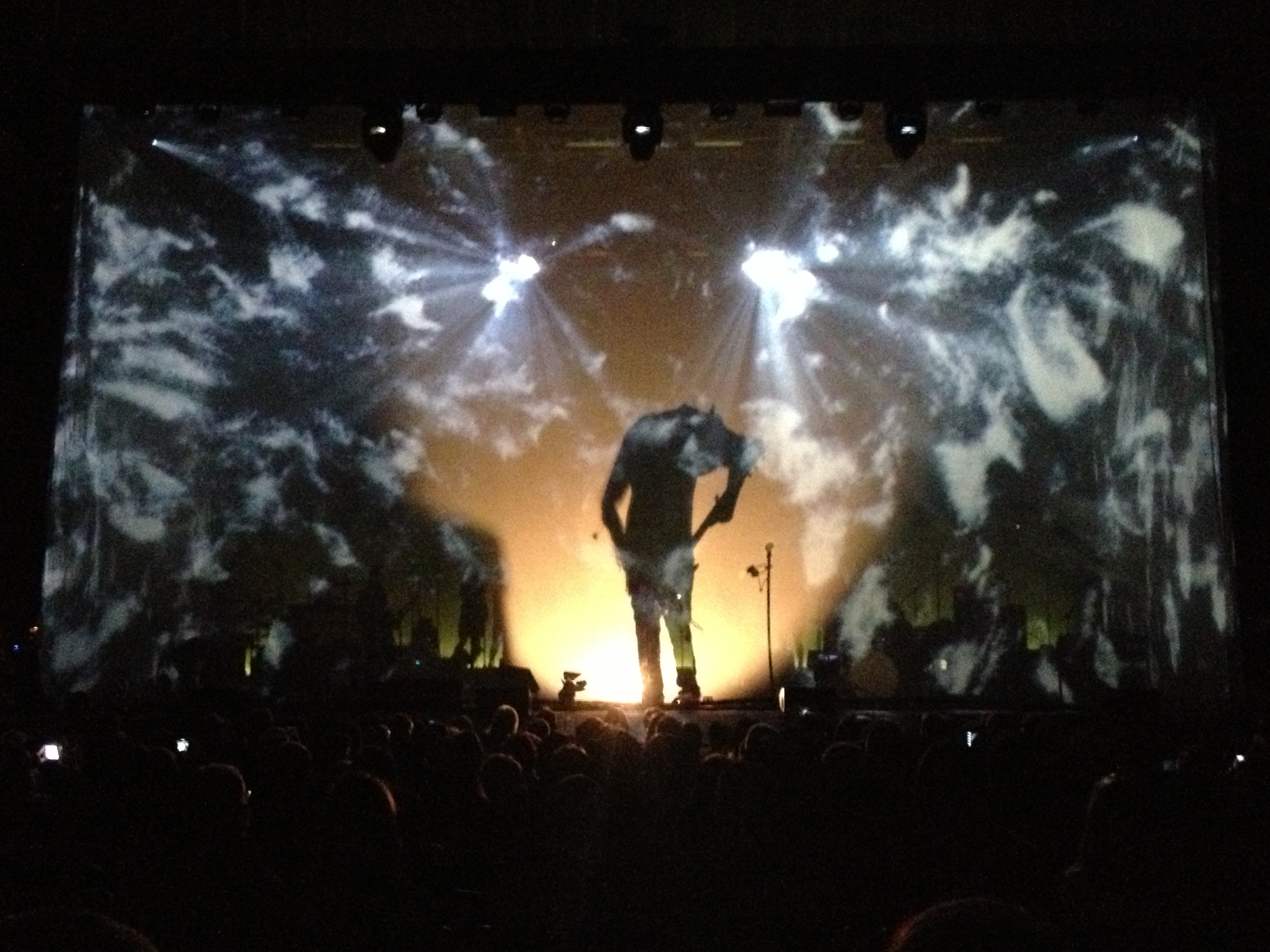
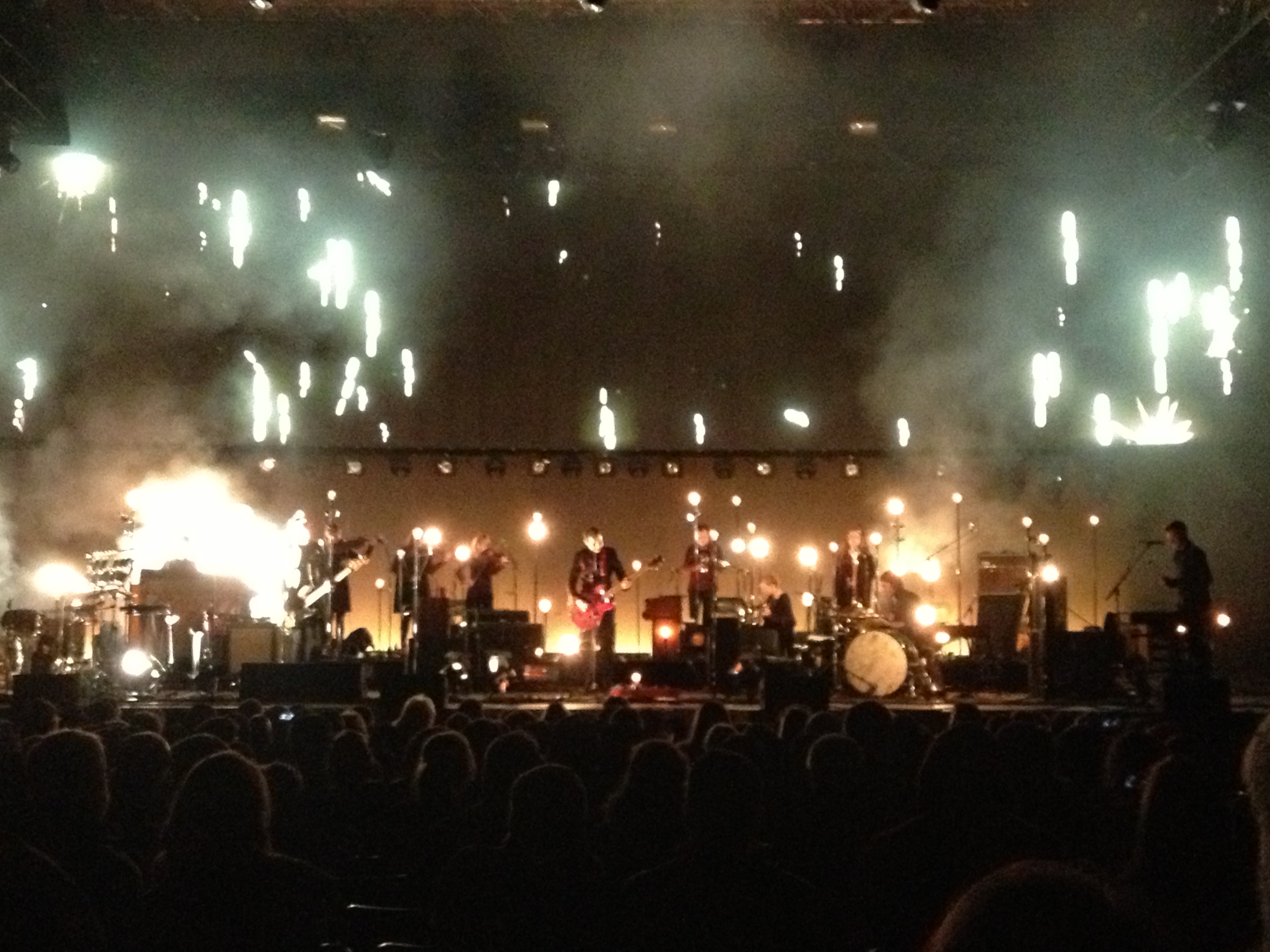
The setting was nearly as expansive as the sound. The first two numbers were delivered behind a trio of sheer veils, which cast wild shadows and broad colors. When the curtains fell, a video screen spanned the width of the stage, projecting images of nature. The slow pan of craggy rocks gradually revealing a mountain range on “E-bow” made the stage seem like it was moving. The low-50s temperature reinforced the mood cast by pictures of rainstorms, bleak landscapes, flashlights in fog and other monochromatic patterns.
Starlight was three-quarters full, optimistically, and the audience soaked up every moment in reverie. There was very little talking and most applause was held until the end of a piece. The big exceptions were the one-two of “Hoppípolla” and “Með Blóðnasir” which spontaneously had the crowd on its feet with evangelistic fervor. The joyous horns at the end of “Festival” rang out like church bells on Christmas Day and inspired a few pockets of dancing.
Setlist: Yfirborð (new song); Ný Batterí; Vaka; Hrafntinna (new song); Sæglópur; Fljótavík; E-bow; Varúð; Hoppípolla ->Með Blóðnasir; Kveikur (new song); Olsen Olsen; Festival; Brennisteinn (new song). Encore: Glósóli ; Popplagið.
(Above: ‘Song stylist’ Bettye LaVette captivates the crowd with an a capella version of Sinead O’Connor’s “I Do Not Want What I Haven’t Got.”)
By Joel Francis The Kansas City Star
Bettye LaVette didn’t write any of the songs she performed for 90 minutes in front of a sold-out crowd Saturday at Knuckleheads, but she owned every single one of them. It’s hard to imagine the original songwriters — including John Lennon, Pete Townshend, Lucinda Williams and Cee-Lo Green— investing more emotion than LaVette poured into her performance. Her voice ached and cracked with every syllable and her arms and legs writhed on every word.
Chatty and playful, LaVette told the audience the biggest reason why she covered Gnarls Barkley’s “Crazy” was so her grandchildren would think she was hip. By stripping the song of its kinetic energy and slowing the tempo way down, LaVette turned the ubiquitous hit into a cathartic confession. It also illustrated why she’d rather be called a “song stylist” than a singer.
At any other concert LaVette’s mournful, pleading reading of the Who’s “Love Reign O’er Me” would have been the showstopper. Saturday night it was only one of many powerful moments that earned pin-drop silence from the crowd. Other stand-out moments included “The Forecast” and the haunting country ballads “Choices” and “The More I Search (The More I Die).”
While many of the top performances were quiet, LaVette and her four-piece band did a great job of varying tempos and textures. A cover of Lucinda Williams’ “Joy” was bathed in a swampy funk. “I’m Tired” was wrapped in a twisted country-rock guitar riff. The band’s best moment came on “Your Turn to Cry” when it successfully re-reated the Muscle Shoals production from LaVette’s shelved, would-be 1972 recording.
LaVette discussed those disappointments frankly, sharing how much she wanted to be on American Bandstand and how crushed she was when the show’s producers found her debut 1962 single “My Man – He’s a Lovin’ Man” too suggestive. She said that much of her life had been pretty good, except that she was continually denied her biggest joy, the opportunity to sing.
The happiness LaVette has found over the past 10 years when her career finally started taking off was evident in the night’s final songs, “Close As I’ll Get to Heaven” and an a capella reading of Sinead O’Connor’s “I Do Not Want What I Haven’t Got.”
Setlist: The Word; The Forecast; Take Me Like I Am; Choices; Joy; Your Turn to Cry; They Call It Love; Crazy; My Man – He’s a Lovin’ Man; The More I Search (The More I Die); I’m Tired; Love Reign O’er Me; Close As I’ll Get to Heaven; I Do Not Want What I Haven’t Got.
(Above: Thievery Corporation gets the whole room jumping by firing “Warning Shots.”)
By Joel Francis The Kansas City Star
Dance ensemble Thievery Corporation took fans around the world and through its considerable catalog during its inaugural performance in Kansas City on Wednesday night at the Midland.
Although Thievery Corporation functions as a duo in the studio, onstage CEOs Rob Garza (turntables and keyboards) and Eric Hilton (guitar) expanded the board to include a horn section, a full rhythm section and a division of vocalists. Boston MC Mr. Lif brought a hard energy to “Culture of Fear” while mid-Atlantic Rastafarians Ras Puma and Sleepy Wonder imported Jamaican riddims and patois to “Overstand” and “Amerimacka.” Nearly every singer was onstage jumping around during the powerful “Warning Shots.”Many of the best moments, however, belonged to the women. “Garden State” soundtrack staple “Lebanese Blonde” featured Natalia Clavier’s silver tongue paired with Hilton’s sitar. French singer LouLou delivered a spellbinding “La Femme Parallel” in her native tongue. LouLou also was featured in the most organic moment of the night, when Hilton and Garza strapped on six-strings for the ballad “Sweet Tides.”Despite the globetrotting nature of the night, many of the songs featured similar downtempo beats and relied on textures to keep them fresh. As the band moved through trance, bossa nova and dub, detours into reggae, hip-hop and dancehall were welcome. “Vampires,” an anti-International Money Fund screed set to Afro-Beat, was especially energetic. I’m not sure whether the political message got through, but it was hard to find anyone not dancing.
The small crowd fit comfortably on the first three tiers of the Midland floor. The engaged crowd made the most of the ample space, letting the music inspire large, sweeping dances with plenty of room to move around. With no backdrop and a basic light show, Thievery Corporation relied on its music to inspire the audience, and it definitely worked. The constant movements seemed to close in the cavernous room and make it feel more full and energetic.
With the band and audience in complete simpatico, it seemed a little soon when the musicians called it a night after nearly two hours. It felt as though the spell could have lasted all night, especially given how long many fans had waited. It took 15 years and seven albums for the band to finally find Kansas City. Hopefully it won’t take that long for it to come back.
Setlist: “Web of Deception,” “Lebanese Blonde,” “Sol Tapado,” “Take My Soul,” “Liberation Front,” “Culture of Fear,” “Overstand,” “Radio Retaliation,” “Illumination,” “All That We Perceive,” “La Femme Parallel,” “Amerimacka,” “Vampires,” “The Heart’s a Lonely Hunter,” “Unified Tribes,” “Assault on Babylon,” “Warning Shots.” Encore: “Sweet Tides,” “The Richest Man in Babylon,” “Coming from the Top.”
(Above: Missy Higgins performs “Nightminds” sans band at the Beaumont Club in Kansas City, Mo.)
By Joel Francis The Kansas City Star
Four years after she walked away from the music industry, Australian singer/songwriter Missy Higgins brought some of the people who helped her record again onstage at the Beaumont Club on Saturday night. It could have been a comfort blanket, but it was probably just too much fun to resist.
The triple bill of Higgins, Katie Herzig (who co-wrote one of the songs on Higgins’ new album) and Butterfly Boucher (who co-produced the record) created a communal, free-wheeling vibe. All of the artists appeared in each other’s sets. When Boucher’s opening set was done, she and drummer Will Sayles stayed on as the rhythm section for the other two sets.The laid-back nature of the night created several fun moments. When Higgins was late missing her cue to join Herzig, it created some dead time onstage as everyone waited. Later, when it was Herzig’s turn to return the favor, she was nowhere to be found. Higgins joked that her friend was already in her pajamas, doing yoga. The one-song delay while Herzig was located was well worth the wait. The voices of Higgins, Herzig and Boucher blended beautifully on the poppy “Tricks.”Higgins’ 90-minute performance drew from her comeback album, “The Old Razzle Dazzle,” but mostly delivered a nice cross section of her catalog. Fans didn’t have any problem singing along with the new song “Hello Hello,” but they were especially excited by “Scar,” Higgins’ debut single. Before “Everyone’s Waiting,” Higgins discussed the motives for her sabbatical. A solo version of “Nightminds” was one of the night’s most inspirational moments.
The rows of chairs neatly lining the dance floor and atmosphere generated by the confessional music made lattes seem more appropriate than beers. Incredibly, the sound in the Beaumont Club — a venue long notorious for muddy mixes and inaudible vocals — was pristine. Each instrument was both audible and in perfect balance in the mix.
Herzig’s music has probably been heard by more people on TV than on the radio. Her 45-minute set included the infectious “Hey Na Na,” used in the first “Sex and the City” movie. Higgins guested on “Wish You Well” and “Lost and Found,” both of which have been featured on “Grey’s Anatomy.” Cellist Claire Indie and multi-instrumentalist Jordan Hamlin created the perfect space for Herzig’s songs. Hamlin’s amazing backing vocals pushed a mash-up of “Sweet Dreams” and “Seven Nation Army” even further into the stratosphere and generated one of the few rocking moments of the night.
Setlist: Secret, The River, The Hidden Ones, This Is How It Goes, Hello Hello, The Special Two, Tricks, Going North, Peachy, Where I Stood, Nightminds, Everyone’s Waiting, Sugarcane, Watering Hole, Unashamed Desire, Scar, Warm Whispers, Steer.
(Above: Her Majesty gets an assist from 007 to open the London Olympics in July, 2012.)
By Joel Francis The Daily Record
James Bond, the most famous spy in the world, first graced the big screen in “Dr. No” 50 years ago. This weekend, 007 will appear on the big screen for the 25th time in “Skyfall.” To celebrate both events, The Daily Record presents a three-part retrospective examining and celebrating the often wonderful and sometimes puzzling world James Bond theme songs. This series originally appeared in 2008 in advance of “The Quantum of Solace.”
(Above: Reggae pioneers the Skatalites pay tribute to Dave Brubeck, and prove that it is possible to skank to jazz.)
By Joel Francis The Daily Record
The original run of the Skatalites lasted barely over a year. That brief window has proved to be more than enough time to build a legacy strong to survive nearly half a century later.
The music the seven-piece island band played for two hours at Davey’s Uptown Rambler’s Club on Thursday night transformed the sound of Jamaican music, but has deep tentacles into many forms of American music, including jazz, doo wop, R&B, gospel and even country.
The band never tried to hide its influences. “Music is My Occupation” reappropriated the horn line from “Ring of Fire.” Next, on their version of the James Bond theme, the famous surf guitar was transferred to a punchy horn line. The arrangement inspired more dancing than danger. Think of it as the soundtrack to the scene after the big fight, when 007 waltzes away with the girl.
Three horns lined the front of the stage, proclaiming the band’s strength. Founding member Lester Sterling played an old saxophone that looked like it had been rescued from a shipwreck but never failed to summon a melody pure and true. The big rhythm section included keyboards and guitar. They players may have been hidden behind the brass, but never played second fiddle.
The band had no problem moving the tricky 5/4 time of Dave Brubeck’s signature “Take Five” to a ska beat. Originally recorded with Val Bennett as “The Russians are Coming,” the piece featured Sterling’s longest solo of the night and proved he could hang with the players in the Blue Room any night.
When Sterling wanted to show off ska’s versatility, he launched the band into a cover of “I Should Have Known Better.” The Beatles were contemporaries when the Skatalties first laid down their version. A cover of Bob Marley’s “Three Little Birds” – courtesy of drummer Trevor Thompson – and the spiritual “We Shall Not Be Moved” were the night’s only vocal moments.
The two-hour set was generous to a fault. While the room was packed for the first hour, there was plenty of elbow room when “The Guns of Navarone,” the band’s biggest song, finally emerged near the end. Most of the instrumentals employed a similar arrangement, allowing some sameness to eventually creep. The performances were always energetic, however, and kept a steady flow of dancing near the stage.
Purists can quibble over the lack of original members onstage and they’d have a point. Sterling is the only founding member, and almost half the band wasn’t born when the Skatalites were at their peak in Studio One. Blame Father Time for the attrition then ask if the music should be forced to pass along with its musicians.
Sterling put it another way between numbers: “When you’re good, you’re good.”


 Nestled among those chestnuts were five tracks from Toad’s upcoming new album. Singles like “New Constellation” and “Bet on Me” didn’t show any of the lapsed time between recording sessions and fit comfortably in the band’s sound. The fans may not have been singing along with these songs yet, but there’s a good bet they will the next time Toad rolls through town.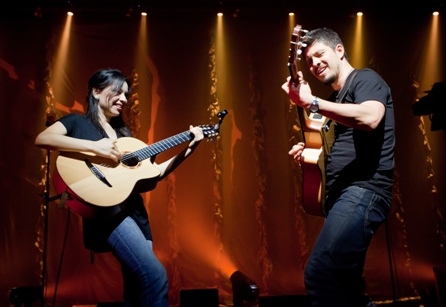



 joelfrancis.com