It took 34 on-stage musicians to turn Stevie Wonder’s inner visions into reality on Thursday night at the Fiserv Forum in Milwaukee.
Wonder’s band encompassed a 12-piece string section, six backing vocalists, a five-piece horn ensemble, two percussionists, two guitarists, two keyboard players and one drummer, bass player, guest singer, conductor and, of course, the man himself. Oh, and two of his grandchildren.
Performing in the same space that just three months ago was home to the Republican National Convention, Wonder and his expansive entourage spread a message of love, hope and joy to all people, regardless of background or political affiliation. With only 11 dates, Wonder’s Sing Your Song! As We Fix Our Nation’s Broken Heart tour is aimed primarily at swing states in the weeks leading up to the presidential election.
Flanked by his son and daughter – both of whom were in the band – Wonder took the stage and proclaimed he was “here to speak to you from the heart and spread some love.” That message shined in the opening number, “Can We Fix Our Nations Broken Heart.” Released late this summer, the song was a call for unity and understanding.
For the next two and a half hours, Wonder played most of his biggest numbers, many of which happened to reinforce his message of dropping defenses and building bridges. As polarized as the nation is right now, Wonder’s dream felt a lot less naïve when delivered via “Higher Ground” or “As.”
Wonder let the crowd take over for several songs in the first set, leading the nearly sold-out arena through “You Are My Sunshine,” which segued into “You Are the Sunshine of My Life.” The crowd also handled lead vocals for a trio of Wonder’s early hits: “For Once In My Life,” “Signed, Sealed, Delivered I’m Yours,” and “My Cherie Amour.”
Other high points in the first set include the early one-two punch of “If You Really Love Me” and “Master Blaster (Jammin’).” One of Wonder’s most beautiful ballads, “Overjoyed” closed the opening portion.
After a dozen songs, Wonder introduced his latest protégé, Shelea, and took a short break. Seated behind Wonder’s grand piano, Shelea delivered a medley of Aretha Franklin, Roberta Flack and Carole King songs that were well-received. A full-band performance of her original song “Something’s Coming” was better suited for the Broadway stage than the Apollo Theater. Fortunately, a dynamite version of the instrumental “Contusion” – the first of many songs from Wonder’s acclaimed album Songs in the Key of Life – brought Wonder back out and the night back on track.
The rest of the night was a powerhouse, each song building on each other, taking the audience higher and higher. The buoyant, horn-driven “Sir Duke” led right into the joyous reminiscing of “I Wish.” Wonder wrote “Isn’t She Lovely” for his newborn daughter Aisha Morris, now a grown woman who performed with the backing vocalists and brought her own children to the show. This gave way to another singalong, the worldwide smash “I Just Called to Say I Love You.” Whatever treacly sentimentality that song held in the hearts of the cynical was quickly wiped away by “Superstition.”
A few songs earlier, Wonder briefly tabled his dream of hope with a hard dose of reality, putting the plea “Love’s in Need of Love Today” against “Village Ghetto Land,” a beautiful baroque hymn of injustice and poverty. Wonder pushed even more focus on inequality and oppression with “Living for the City.” Performed consecutively, these songs were a poignant reminder of how society can’t advance until every person is able to move forward.
An extended medley of three epic numbers ended the night. First up was “Do I Do,” a horn-infected disco number that made sure everyone stayed on their feet. That gave way to the rapturous “As,” one of Wonder’s most beloved songs. Just when “As” started to fade away, Wonder kicked the band into the bossa nova groove of “Another Star” and took the energy to another level. By the time Wonder said good night he had achieved his dream of bringing people together. Everyone rejoiced as Wonder’s music cascaded over their souls. Of course, the tougher job is achieving this feeling of togetherness away from the concert. But Wonder clearly believes we are up to the task. I do, too.
Set list: First set: Can We Fix Our Nation’s Broken Heart, As If You Read My Mind, If You Really Love Me, Master Blaster (Jammin’), Higher Ground, You Are My Sunshine > You Are the Sunshine of My Life, For Once in My Life, Signed, Sealed, Delivered I’m Yours, Send One Your Love, My Cherie Amour, Overjoyed. Shelea set: Medley: Until You Come Back to Me (That’s What I’m Gonna Do)/Feel Like Makin’ Love/ You’ve Got a Friend, Something’s Coming, Contusion. Second set: Don’t You Worry ‘Bout a Thing, Love’s in Need of Love Today, Village Ghetto Land, Living for the City, Sir Duke, I Wish, Isn’t She Lovely, I Just Called to Say I Love You, Superstition, Do I Do > As > Another Star.
After averaging nearly an album a year for the first quarter-century of his career, Stevie Wonder slowed down his output considerably in the late ‘80s, releasing only three albums in eight years.
Wonder surprised and delighted fans by dropping Natural Wonder, a double-live album, just eight months after his previous offering, Conversation Peace. With a set list that includes many big hits, deep cuts and new songs, Natural Wonder seems to have something for everyone. The concept of Stevie Wonder performing with a symphony orchestra is intriguing but the result is something less than vital. While the performances captured on Natural Wonder are strong, many of them simply aren’t that different from their studio counterparts.
The stirring new song “Dancing to the Rhythm” makes full use of the lush musical backdrop, combining a drum corps with horn section and sweeping string section. Wonder’s skills as an arranger shine on this dynamic opening number. A few songs later, the appropriately bluesy instrumental “Stevie Ray Blues” sets up an energetic romp through “Higher Ground.” The final new number is “Ms. & Mr. Little Ones,” an undistinguished Conversation Peace outtake.
The performance of “Tomorrow Robins Will Sing” shows how a little tightening could have improved the songs on Conversation Peace. Natural Wonder’s live version trims nearly a minute off its studio counterpart and is much better for it. Overall, Natural Wonder is a fun souvenir of a magical night for those who were there, but not something fans will turn to often.
Ten years after the one-two of Conversation Peace and Natural Wonder, Wonder gifted fans with A Time to Love, his last album to date. The album’s two singles set the template for much of the release: funk numbers and ballads.
“From the Bottom of My Heart” is a drippy love song that offers no surprises, including the fact that it won another Grammy. A third of the album runs in this vein. There are two more songs just as bland, plus a tribute to Wonder’s late wife and collaborator Syreeta Wright and a jazzy duet with his daughter, Aisha Morris.
The best of these songs is “Moon Blue,” a jazz number with some of Wonder’s best singing. In a better world, this would be a standard. It’s easy to imagine Robert Glasper or Erykah Badu digging into the song. The other stand-out ballad is “Passionate Raindrops,” which harkens back to Talking Book. A Time to Love would be a much better album if Wonder had kept these two ballads and excised the rest.
The upbeat numbers are an equally mixed bag. Lead single “So What the Fuss” doesn’t quite work, but Prince’s funky guitar lines almost make up for it. “Sweetest Somebody I Know” mines Wonder’s classic clavinet sound, while “Please Don’t Hurt My Baby” heads further down the path plowed by “Superstition.” On “Positivity,” Wonder’s second duet with Morris, his daughter’s sunny soprano is a nice counterpoint to Wonder’s talk box. It’s hard to believe this number was never used in an animated kid’s film. “Tell Your Heart I Love You” features Wonder’s signature harmonica, an under-utilized instrument on his later albums. Its arrival pushes the bluesy number to another level.
A Time to Love ends with the title number. Across nine minutes, Wonder, with help from India.Arie on vocals and Paul McCartney on guitars, ponders why we have time for so many other activities, but not for love. It’s not the most groundbreaking thought, but the percussion and choir sweep in and save the day. A couple minutes could easily be trimmed from the performance without missing anything. This advice applies to A Time to Love as a whole. At 15 songs and 78 minutes (only 7 minutes shorter than Songs in the Key of Life), A Time to Love would be a much better album if Wonder culled most of the ballads and brought the run time to under an hour.
Almost 20 years later, A Time to Love still stands as Wonder’s most recent album. While Wonder hasn’t been prolific in the decades since he has kept busy. In the final installment, we’ll look at 15 excellent, late-period, non-album Stevie Wonder songs.
Billed as a 12-year-old genius on his third LP (released in 1963), Stevie Wonder made good on that promise less than a decade later, releasing six masterworks in as many years between 1971 and 1976. Wonder’s critical acclaim was matched by popular appeal, as he won Grammys for Album of the Year three times in four years and sent seemingly everything he touched to the top of the charts.
Yet Wonder’s output after the 1970s has been derided nearly as much as his long pinnacle has been celebrated. The release of a new digital single, “Can We Fix Our Nation’s Broken Heart,” made me realize how much I missed Wonder’s voice and sent me scurrying back to his forgotten era to see what I had overlooked.
The 1980s opened strong for Wonder. Just nine months into the new decade, Wonder released Hotter Than July, an album that continued his 1970s hot streak. From the infectious reggae groove of lead single “Master Blaster (Jammin’)” to the tender ballad “Lately,” the release touches on many of Wonder’s strengths. Hotter Than July is rightly regarded as a classic, so I won’t spend much time on it here, but I’d be remiss not to point out the beautiful “Rocket Love.” The album closes with “Happy Birthday,” a tribute to Martin Luther King, Jr. and a plea to turn King’s birthday into a national holiday. It worked.
Two years later, Wonder gifted fans with Original Musiquarium I, an unconventional double-LP collection that paired a dozen tracks from the ‘70s with one new song on each side. Of the new material, the 10-minute “Do I Do” is easily the best. “Do I Do” has an effervescent groove that could be the cousin of “Another Star.” The expansive track has room for both a Dizzy Gillespie guest spot and an exploration of the still-young world of rap. It took nearly a decade before exploring the nexus of jazz and hip hop was considered edgy. Once again, Wonder was on the vanguard. The ballad “Ribbon in the Sky” is another key new song on this collection.
Less than a month before Original Musiquarium I dropped, a single with Wonder raced to the top of the charts, a harbinger of some musical misadventures that lie ahead. Written by Paul McCartney, the simplistic ode to racial harmony “Ebony and Ivory” sat atop the U.S. pop charts for seven weeks in 1982. “Ebony and Ivory” earns all the mockery it has received. That said, I must confess the song works better in the context of McCartney’s excellent Tug of War album, where it closes the song cycle than it does as a stand-alone single. “What’s That You’re Doing?” the pair’s other collaboration on Tug of War, is better, but still feels like less than the sum of its parts.
Wonder’s reputation really started to take a hit with his 1984 soundtrack to The Woman in Red. At eight songs and 40 minutes, The Woman in Red feels slight in comparison to Wonder’s previous albums. Two duets with Dionne Warwick, a Warwick solo track and an instrumental written by someone else comprise half the album, making it feel even lighter.
Used copies of The Woman in Red are ubiquitous at flea markets, antique malls, garage sales and record stores thanks to the single “I Just Called to Say I Love You,” which topped the charts around the world and sold millions of copies. In the 40 years since its release, “I Just Called” has been the punchline for scores of jokes and memes and served as Exhibit A for proving Wonder’s muse had departed. The saccharine ballad deserves every bit of scorn lobbed its way, but Wonder’s well was far from dry, as we shall soon see.
The album ends “Don’t Drive Drunk,” a public service announcement masquerading as a musical number. This continues the trend of Wonder ending albums with a bold social declaration. Unfortunately, Wonder isn’t able to thread the needle as deftly as he did on “Happy Birthday.” Wonder’s heart is in the right place, but “Don’t Drive Drunk” is ham-fisted. The production is interesting, but there’s not much of a song. The Woman in Red’s lone redeeming spot is “Love Light in Flight,” the only time Wonder’s innovative production lines up with lyrics that are more substantial than a greeting card.
A little more than a year after The Woman in Red soundtrack, Wonder dropped his 20th studio album, In Square Circle. The world was still very much enthralled/nauseated by “I Just Called” when In Square Circle came out and the association mars the album’s reputation. While Wonder’s peak releases have a timeless feel, his later work is very much tethered to its time. In Square Circle is a very ‘80s album, which may have hurt the release for a while, but it’s been long enough that we can now embrace the once-awkward signifiers of the era.
The platter opens with lead single “Part-Time Lover,” a fine if unambitious pop song. I’m divided over the next cut, “Love You Too Much,” which somehow feels both fun and annoying at the same time. Fortunately, the strong ballad “Whereabouts” picks up the slack. “Stranger on the Shore of Love” combines a peak-era arrangement with modern production. Wonder’s production takes another step forward on the brilliant “Never in Your Sun.”
If nothing else, this exercise has been worthwhile for bringing “Never in Your Sun” to my attention. I guess I should pay more attention to Tyler the Creator, because he shouted out this song a few years ago. You can also tell the Neptunes were paying attention.
Side two isn’t as strong, but contains “Overjoyed,” one of Wonder’s all-time best ballads and another big-statement closing song: “It’s Wrong (Apartheid).” Recorded at the peak of the Artists United Against Apartheid and the “Sun City” movement, “It’s Wrong (Apartheid)” is not subtle. Wonder compares the racist institution to slavery and the holocaust, which might be accurate, but is so heavy-handed even Billy Bragg would blanch. The production saves the song. An electronic polyrhythm propels the number and an African choir reinforces Wonder’s sentiment and injects joy into the performance.
Arriving between the half-baked (and overblown) Woman in Red soundtrack and disappointing Characters (more on this in a in the next installment), In Square Circle has been unfairly maligned as a mediocre Wonder release. In Square Circle belongs in every fan’s collection and demonstrates that Wonder was still pushing boundaries as a producer and writing strong songs in the decade of decadence.
Concert capsules are immediate, extemporaneous pieces; less a review and more a reaction.
I’ve never seen a show like this before.
Shortly after 8 p.m., Lucinda Williams shuffled onstage with a warning: she’d suffered a stroke and wouldn’t be playing guitar. The evening would also incorporate stories about her songs, drawing on Williams’ recent (excellent) memoir. Seated in a chair, the stories tended to ramble and the vocals were feeble.
More than two and a half hours later, (nearly as long as Beyoncé’s set at Arrowhead last week) Williams was standing, tearing through “Joy” with youthful vigor. How did this happen?
Buick 6, Williams’ stellar four-piece backing band, and the crowd at the Uptown Theater deserve most of the credit. Buick 6 handled missed vocal cues and lapses with ease, keeping the song going until Williams could climb back in.
The comfortably crowded audience was pin-drop silent during the stories and demonstratively supportive when Williams faltered or questioned if she was doing a good job (which happened several times). The audience never left her side, shouting encouragement at the right times and patiently allowing one of the most accomplished songwriters of her generation to do her thing.
The set list contained deep cuts, such as “Pineola” and “Crescent City,” Bob Dylan and Hank Williams covers and favorites “Car Wheels on a Gravel Road” and “Those Three Days.”
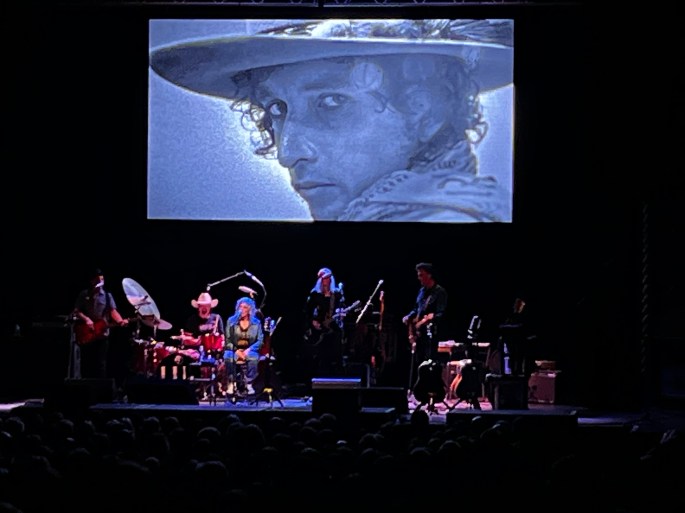
It’s been 48 hours since my sister and I experienced what one friend called the Barbenheimer of concerts. On Sunday, Oct. 1 we saw the final show of Beyonce’s Renaissance tour at Arrowhead Stadium. The next night, we caught the second performance of Bob Dylan’s two-night tour opener at the Midland Theater.
The two experiences were as dichotomous as you would expect. Beyoncé continues to operate at the peak of her powers as an artist and performer. The nearly three-hour show didn’t start until almost 10 p.m. and was a feast for the senses, including a massive high-definition video screen as wide as a football field.
Dylan started promptly at 8 p.m. and left the stage one hour and 45 minutes later, just a few minutes shy of 24 hours after Beyoncé’s start. His stage was austere, consisting of a few lamps, mainly decorated with a line of road cases along the back of the stage, resting impatiently in front of an unadorned black brick wall.
At 82 years old, Dylan’s glory days are clearly behind him. He led a four-piece band from behind a baby grand piano. His voice, never sonorous, was surprisingly clear in the mix. Dylan thanked the crowd several times between songs. It was clear these shows were special to him.
There were several moments when despite playing together for years, Dylan and his band failed to gel. Momentum would hiccup in the transition between chorus and verse, or never quite materialize at all. Dylan also hit quite a few bum notes on his piano, which was prominent in the clean mix.
This isn’t to denigrate Dylan’s performance in any way. A late-set delivery of “Mother of Muses” was captivating. Other strong moments included a completely rearranged “Gotta Serve Somebody” and the classic “When I Paint My Masterpiece.” A version of “To Be Alone With You” showed the influence of Little Richard.
If there is one through-line between Dylan and Beyoncé’s performances it is a commitment to new material. Dylan played all but one song from his latest album, Rough and Rowdy Ways. Beyoncé delivered all 16 songs from Renaissance. Fans hoping to hear classics from Blood on the Tracks or hits “Halo” and “Single Ladies (Put a Ring on It)” were out of luck.
The Houston-born diva sprinkled “Love on Top,” “Drunk on Love” and a shortened version of “Formation” among her 37-song set.
One of the night’s strongest moments came when Beyoncé introduced her daughter Blue Ivy at the end of “Run the World (Girls).” The 11-year-old had no problem picking up her mother’s metaphorical baton, dancing with a skill that showed she has probably been working with choreographers since before she could walk.
Renaissance is a celebration of positivity that embraces all body shapes, colors, genders and orientations. A stadium filled with fans that heeded Queen Bey’s call to wear something silver shimmied and sparkled along with Renaissance’s resilient disco beats as costumes, sets and props changed throughout the night.
As Sunday marched proudly into Monday, Beyoncé’s troupe seemed indefatigable. The sensory smorgasbord concluded with a trailer for the upcoming movie made from the tour. A promise of more to come. The concert was ending, but the performance would be immortal.
Dylan, in contrast, walked humbly out from behind his piano at the conclusion of a moving rendition of “Every Grain of Sand.” He stood slightly stage right of center and soaked in the applause for a few moments before humbly bowing and ambling offstage. There was no encore. No guarantee his once seemingly never-ending tour would carry him back through town. This may not have been goodbye, but it felt a lot like farewell.
Concert capsules are immediate, extemporaneous pieces; less a review and more a reaction.
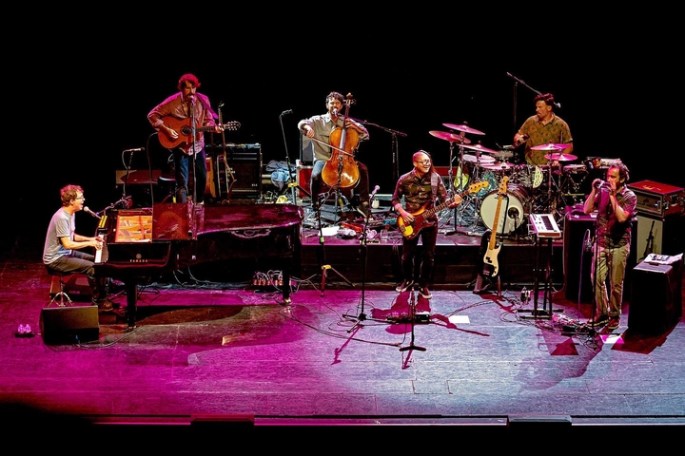
I’ve seen Ben Folds a little more than a half-dozen times in several configurations, but last night’s show at the Uptown Theater was easily the best performance I’ve seen him give. Opening act Tall Heights also served as part of Folds’ band (that’s them on the riser in the back). Including an acoustic guitar and cello added fresh textures to the songs and opened new avenues for instrumental interplay.
The sold-out crowd was also on point, effortlessly handling Regina Spektor’s part on “You Don’t Know Me” and nailing the three-part harmony on “Not the Same,” a Folds staple.
While nearly half of the 90-minute set drew from What Matters Most, Folds’ first album of new material in eight years, the crowd stayed engaged and enthusiastic.
For the encore, Folds returned with a solo version of “Zak and Sara,” with a little harmony help from High Trees on the last verse and chorus. This lead into two more songs from Folds’ solo debut, now more than 20 years old. A gentle “Still Fighting It” gave way to a raucous singalong on “Anne Waits.”
“The Train” is a stand-out song on an otherwise unmemorable (but not horrible) Outkast album. Released in 2006, Idlewild turned out to be Outkast’s final album.
By Joel Francis The Daily Record
A few weeks ago, Rolling Stone made a list. It seems like that’s all they do these days, mainly because it’s too darn hard to get anyone to pay attention to what you’re saying unless it’s in a list or a Tik Tok video. (Old man yells at clouds, shakes fist.)
This time Rolling Stone made a pretty good list, 50 Genuinely Horrible Albums by Brilliant Artists. As I read the list, I was struck by how many of these albums I either currently own or have owned at one point. Thankfully, the number wasn’t as high as I feared, but it still comprised just under 25% of the total.
Masochist that I am, I thought it would be fun to walk through the 11 genuinely horrible albums by brilliant artists that have found their way into my collection at one way or another. I sold off or traded in 99% of my CD collection many years ago, just before the disc bubble collapsed, so only five of these titles are part of my current music library. The number by the album is where Rolling Stone has ranked it.
50. The Who – It’s Hard
As a fan of The Who in general and Pete Townshend’s songwriting in particular, I own all of the Who’s studio albums on LP, including this one. Aside from the OK single “Athena” and incredible “Eminence Front,” I knew this wasn’t a gem when I bought it for about $5. It was also the last of the historical Who albums I purchased. (I’ve since picked up the band’s 2019 self-titled album.)
49. Billy Joel – The Bridge
I got this as part of a budget-priced, triple-pack of CDs in college. The other two albums in the set were The Nylon Curtain and Storm Front. Released in 1982, The Nylon Curtain contains “Allentown,” “Pressure” and “Goodnight Saigon,” a poignant portrait of Vietnam and one of Joel’s best story-songs. Storm Front has “We Didn’t Start the Fire” and isn’t as good as you remember, although my mom, and everyone else’s, loved “And So It Goes.”
While the cliché says that you can’t judge a book by its cover, the artwork for The Bridge should have been my first warning. The horrible pastels scream waiting room or budget hotel lobby, which is probably the most appropriate space for these bland songs. “A Matter of Trust” was the big single, and the duet with Ray Charles on “Baby Grand” is the album’s high point. In retrospect, I should have removed The Nylon Curtain from this set and gifted the other two discs to the person at the register
48. Van Halen – Van Halen III
Van Halen was my favorite band in high school. One of the first concerts I saw was Van Halen on the Right Here, Right Now tour in 1993. I saw the band again on the Balance tour two years later, and caught Sammy Hagar’s first post-Van Halen tour in 1997. When Eddie and company came back through town in support of this album, you know I couldn’t miss them. My favorite part of the night was hearing bass player Michael Anthony sing “Somebody Get Me a Doctor,” which probably says all you need to know about new singer Gary Cherone and the VHIII material performed. I revisited the entire Van Halen catalog after Eddie’s passing a couple years ago and, yeah, aside from the instrumental opening and lead single “Without You,” there’s nothing memorable happening here.
Incidentally, that 1998 show was the last time I saw Eddie in concert. Don’t feel too sorry for me – I did catch Chickenfoot.
46. Outkast – Idlewild
Planning a wedding is a lot of work. As a longtime Outkast fan, I jumped at the chance in the late summer of 2006 to take a break from planning my upcoming wedding, sit in the air conditioning and think of nothing but the magical story unfolding on the movie screen in front of me. It worked. For two hours, I didn’t think of the wedding. I haven’t really thought about the movie Idlewild since.
Speakerboxx/The Love Below was packed with so many great ideas, that some residual creativity had to seep into the grooves of the Idlewild soundtrack, right? I remember the singles off this album being pretty good. At least good enough to buy this LP at Amoeba on sale when my wife and I were in Los Angeles on vacation. Although I haven’t played my copy in years, Idlewild strikes me more as forgettable than horrible.
44. R.E.M. – Around the Sun
On Tuesday, October 5, 2004, I bought Around the Sun and Real Gone, the new Tom Waits album also released that day, on my lunch break. After work, some friends an I piled into a car and headed to Columbia, Mo., to see the recently reformed Pixies in concert. The two discs were the perfect soundtrack for the two-hour car ride.
Around the Sun definitely took some of the buzz out of that evening. It seemed uninspired upon first listen and the water-treading live album the band released as the follow-up seemed to confirm they felt the same way. I added “Leaving New York” to my 72-song, nearly five-hour R.E.M. playlist, but the chorus lyric of “leaving was never my proud” always stains the song for me. My favorite track is the one everyone seems to hate, “The Outsiders,” with Q-Tip. Tip’s laid-back delivery is the perfect complement to Michael Stipe’s singing. Who could deny Peter Buck’s simple but fantastic guitar part? “Final Straw” is pretty good, too, but I haven’t given the other 10 songs on the album any thought. As the only R.E.M. album I don’t own on LP, I would buy this again if it was reissued. I’m sure the queue at the register would be very short, which I why I don’t expect this to get the 20th anniversary treatment next year.
42. The Clash – Cut the Crap
Loyal readers may have noticed this site is a bitferventin itsadoration ofJoe Strummer. Dedicated Clash fans know the band’s manager Bernie Rhodes ruined the songs on Cut the Crap with chintzy, dated production that embarrassed all the musicians involved.
But …. OK, there is no but. The song “This is England” is the Clash’s final masterpiece. Put it, “Dirty Punk,” “Three Card Trick” and “North and South” with “This is England” on an EP and there still might be one song too many. I own all of Joe Strummer’s albums, so I own Cut the Crap, but honestly, I play the Walker soundtrack more often. You can read more about my thoughts on Cut the Crap and the two tribute albums it inspired, Re-Cutting the Crap.
41. Genesis – Calling All Stations
At this point, I’ve owned seven of the 10 albums on this list. I guess if you’re going to own a bunch of horrible albums, you want them to be the least horrible from the lot, right? Thankfully, I only have four of the subsequent 40 titles.
Invisible Touch, a very, very not-horrible album, was percolating just as I was starting to discover popular music in late elementary school and junior high. By the time We Can’t Dance came out, I was in high school and knew the score. I was looking forward to seeing Genesis on that tour, but they skipped Kansas City, Mo., and headed to Ames, Iowa, instead. Ames is only three hours from Kansas City, but when you’re 15 and don’t have a car, Ames may as well be Mars.
In the six years between We Can’t Dance and Calling All Stations, Genesis lost Phil Collins and – shades of Van Halen III – brought in a relatively unknown singer to fill the void. There are a few good moments on this album. The title song and singles “Shipwrecked” and “Congo” are solid. “The Dividing Line” rock harder than anything the band had done since Duke (even if the lyrics leave a bit to be desired).
The silver lining in Calling All Stations was that this new iteration of Genesis had exhumed several classic, long-overlooked songs for the tour. Not that anyone would in the United States would hear them. Poor ticket sales ended the tour – and singer Ray Wilson’s tenure in the band – in Europe. It would be almost 25 years until I experienced Genesis in concert, finally checking that long-vacant box on my wish list. (By the way, Rolling Stone also has a recent interview with Wilson that is well worth your time.)
35. Pete Townshend – Psychoderelict
I bought this from the cut-out bargain bin at Best Buy for a buck.
That should be where the story ends, but it doesn’t. A few years later, I bought the dialogue-free edition of Psychderelict for five bucks or so at the used CD store. Freed from the radio-drama acting of the first version, Townshend’s songs breathed a little bit more. That said, I haven’t really given Pscyhoderelict much thought since jettisoning it from the collection.
34. Aerosmith – Nine Lives
If nothing else, this exercise proves that I remain a loyal fan well past the sell-by date. After discovering Aerosmith in junior high through the song “The Other Side” and seeing the band four long years later on the Get a Grip tour as a high school student, I was primed primed for whatever the band wanted to give me next. Unfortunately, what they gave me, four years later, as a college student, was Nine Lives. Lead single “Falling In Love (Is Hard on the Knees)” felt like it was trying too hard (although the horn arrangement is fantastic). The second single, “Hole in my Soul” was a retread of the “Crazy”/”Cryin’” ballad formula that worked so well earlier in the decade.
To quote Cousin Eddie in National Lampoon’s Christmas Vacation, “If that thing had nine lives, she just spent them all.”
Nine Lives got some spins the spring it came out and over the summer, but by the time everyone returned to campus in the fall it had been replaced in my rotation by the Chemical Brothers’ Dig Your Own Hole, Coil from Toad the Wet Sprocket and Wyclef’s The Carnival.
12. Van Morrison – Latest Record Project, Volume 1
Van Morrison is a legend, but he’s also a legendary crank. When my then-fiancée and I travelled to Washington, D.C., to watch him perform in the summer of 2006, a large digital clock sat at the extreme edge of stage left, pointed toward the center. It started at 90:00 and by the time it hit 0:00 Van the Man was walking off the stage.
The title alone is reason to see Morrison’s 42nd studio album as nothing more than a cynical cash grab. But it was a cynical cash grab with solid marketing. I bought this triple-LP set because it promised to be signed by Van himself. Since I couldn’t picture Morrison going down the line, signing autographs for fans (his limo zipped right past me after the D.C. concert), this seemed to be the best option. So now I have Van Morrison’s autograph. And an album I’ve only played partially. You know what they say about a fool and his money.
I have three items in defense of Latest Record Project:
The autographed edition the autographed edition was the same price as the unsigned version.
I have more albums by Bob Dylan than anyone else in my record collection. I have all of Bob Dylan’s records, including Triplicate, a three-LP set of Dylan singing standards (which is also his third standards album), Self-Portrait and Dylan, a mid-‘70s collection of outtakes from the dreadful Self-Portrait album. Is Down in the Groove worse than those albums? Rolling Stone seems to think so. I don’t feel compelled to play them all in succession and find out. In for a penny, in for a pound.
Joe Strummer, lyricist, lead singer and rhythm guitarist for The Clash died on December 22, 2002. By the time I found out it was late the next day. Every 24th of December since then, I have declared Clashmas Eve and dedicated to the memory of Strummer and the majesty of The Clash. This non-denominational holiday can – and should – be celebrated by all.
Joe Strummer and the Latino Rockabilly War – Permanent Record soundtrack (1988)
Joe Strummer only gets one side of this soundtrack, but he used it to re-establish himself as a solo artist and build anticipation for a proper, full album. In retrospect, I wonder if the Permanent Record didn’t work too well.
It’s true that none of the five songs here are going to replace “White Riot,” or even “Johnny Appleseed.” At the same time, there’s none of the sub-par material like “Ride Your Donkey” that mar Strummer’s eventual solo debut Earthquake Weather.
Most of the songs on Permanent Record are solid, straight-up rockers. Although “Trash City” stands out as the best track, “Baby the Trans” and “Nefertiti Rock” are also a lot of fun. “Theme from Permanent Record” is an instrumental with Strummer’s wordless vocals.
The biggest problem with both the Permanent Record material and Earthquake Weather is the weird ‘80s production that makes everything sound both flat and glossy at the same time. The energy of these performances really struggles to come through. I don’t know if the problem is in how the instruments were recorded or in the mix, but I would love someone to try clean up these remix them.
While I’m dreaming, there is another 10 minutes worth of outtakes from these sessions floating around on bootlegs. It would be nice to add them to this set and release everything as stand-alone EP.
In case you are wondering, the second side of this album finds the Stranglers covering the Kinks as well as original songs from Lou Reed, the Bo-Deans, J.D. Souther and the Godfathers. I bet I play the Strummer side of this album 10 times for every spin the flip side gets. Take the Lou Reed track off there and that number goes down even more.
The Clash – Live at Shea Stadium (2008)
On a road trip several years ago, I subjected a traveling companion to a recreation of the legendary Clash and Who concert at Shea Stadium in 1982. Thanks to archival releases by both bands, each set can be heard in its entirety.
The two groups were obviously in very different places and had very different jobs to do that night. The Who performed for nearly three times as long as the Clash (two hours and 20 minutes) and were nearing the end of their first farewell tour.
The Clash poured their souls into a breathless 50-minute set that maintains its intensity and energy throughout. The music videos for “Should I Stay or Should I Go” and “Career Opportunities” were shot at this gig and with good reason. The quartet is tight and ready to blow anyone off the stage. “Clampdown,” “I Fought the Law” and opening number “London Calling” are also impeccable. Legend has it that The Clash were treated poorly by Who fans at earlier concerts. In this set they aim to convert everyone in the ballpark. Although the band splintered the following year, none of those cracks are apparent in this set.
Coming on the heels of this set, the Who’s performance couldn’t help but be a disappointment. The band had to pace itself for a much longer set and couldn’t match the Clash’s energy. Although the Who open with several of their earliest hits, they sound like a group tired of each other and tired of the road, going through the motions. Although these performances are nearly 40 years old, the Who ended up having the last laugh. It is still possible to hear Roger Daltrey and Pete Townshend play these songs. Sadly, our ability to hear the Clash in concert is limited to archival releases like this.
(Side note to the official Clash archivists and Columbia Records: How about a retrospective collection from The Clash’s shows at Bond’s Casino?)
The Pogues with Joe Strummer – Live in London (2014)
Joe Strummer was never the kind of performer who would plop down on a stool, acoustic guitar in hand and play his catalog. He needed to be in a band. Even when his name was out front, Strummer fed off the energy from the musicians around him. I think this is why Strummer struggled so much after the Clash ended. He didn’t have a group of mates to perform with and draw inspiration from.
When the Pogues asked Strummer to play guitar on a late ‘80s tour, Strummer had so much fun he stuck around to produce the Pogues fifth album. When the Pogues again asked Strummer to go on tour with them in 1991, he was no longer anonymously playing guitar, but positioned front and center, replacing Shane MacGowan.
Live in London is a fantastic snapshot from that tour. On one hand, it shows how uniquely suited MacGowan is for the Pogues. Strummer seems to have trouble keeping up with the band on the faster songs, such as the opening song “If I Should Fall with God” and “Turkish Song of Damned.” Conversely, the recording also shows how easily the Pogues are able to slip into Clash numbers “London Calling” and “Straight to Hell.”
The Pogues soldiered on for a couple more albums and tours after the ’91 tour eventually breaking up, then getting back together with MacGowan in 2001. They have toured sporadically since then, but released no new studio material. Strummer became involved with several film soundtracks throughout the ‘90s but didn’t release any new studio material until forming the Mescaleros at the end of the decade.
The Clash – London Calling (1979)
I have an excellent, 560-page book that breaks down each song on the Clash’s third album. Countless other think-pieces have been written about the album as well. Here are some stray thoughts.
I love that Rolling Stone named London Calling the best album of the ‘80s when it was released in 1979.
I love that artists across all genres have drawn inspiration from London Calling. The Black Crowes, Anne Lennox, Third Eye Blind and Manic Street Preachers all covered “Train in Vain.” I’m not sure those four acts have much in common beyond a love of this song.
I love that 32 years after its release, the song “London Calling” – a warning about an environmental apocalypse – was selected as the theme song for the 2012 Olympic games in London.
I love that Beto O’Rourke loves and relates to the Clash so deeply that he said Ted Cruz was working for the clampdown during a debate like this was an everyday reference. (Beto isn’t wrong, by the way.)
I love that the greatest punk album of all time went out of its way to also include ska on “Rudy Can’t Fail,” lounge music on “Lost in the Supermarket” and pop music on the aforementioned Top 40 hit “Train in Vain.” The song “The Cheat Card” even features a wall of sound, Phil Spector-esque arrangement that had guitarist Mick Jones on piano and trumpet solo.
Never Mind the Bollocks and the Clash’s first album may have burned hotter as succinct statements of raw punk rock, but London Calling sustained that passion across four sides of vinyl and transcended the genre in the process. If you like music, you love London Calling.
Joe Strummer and the Mescaleros – Live at Acton Town Hall (2012)
Joe Strummer’s time with the Mescaleros has gained heightened importance over the years. The Mescaleros were, of course, Strummer’s final band, but also the ensemble that galvanized him to record and tour regularly.
Even in that context, this show at Acton Town Hall is of historic importance. This recording captures Strummer in fine form a little more than a month before his death, doing a benefit show for striking firefighters. Even better, former Clash bandmate Mick Jones joins Strummer onstage during the encore for the pair’s first performance together since the US Festival in 1983.
Acton Town Hall wasn’t Strummer’s final show, but it sure seems like the stars aligned for one magical night.
The Clash – Sandinista! (1980)
At three LPs and 36 songs, most would say Sandinista is too much. I would argue there’s not enough. The Clash were ridiculously prolific, turning out five albums in five years, plus another album’s worth of non-album singles, but the time around Sandinista was bountiful even by those standards.
In addition to fitting studio time for Sandinista! around a hectic touring schedule, the Clash also recorded and released the “Bankrobber” single with two dub versions as b-sides. After recording on Sandinista wrapped, the Clash started working on Ellen Foley’s Spirit of St. Louis album. Foley was dating Clash guitarist Mick Jones at the time. The Clash not only serve as Foley’s band for the entire album, but Jones and Joe Strummer wrote six original songs for the album. (Clash collaborator Tymon Dogg, who worked with the band on Sandinista, also wrote three songs for Foley.)
Imagine a version of Sandinista! where “One More Dub” on side two is replaced with “Bankrobber.” Swap out “Broadway” with “Charlie Don’t Surf” and call the third record a bonus LP: The Clash in Dub. While we’re at it, let’s drop the children’s songs as well. I wonder how history would regard this much improved version of Sandinista! It wouldn’t eclipse London’s Calling, but I bet it would have a much better reputation and we’d see more Sandinista! tracks on tribute albums.
Since we can’t change the past, my dream version of Sandinista! would contain the original album, plus the “Bankrobber” single material and the demo or working versions of tracks Jones and Strummer wrote for Foley (in other words, the Clash versions, sans Foley). I shudder to think what studio scraps from the Sandinista! sessions might remain after listening to sides five and six of the original album, but if there are any other goodies left over, include them as well. That’s easily three compact discs worth of material and I’d buy it in a second. As with all of these suggestions, someone, please, come take my money.
It’s been a while since we’ve had any social distancing spins, but hopefully everyone is still social distancing and staying safe. I’d say Happy Holidays, but these are all Christmas albums, so Merry Christmas and thanks for reading.
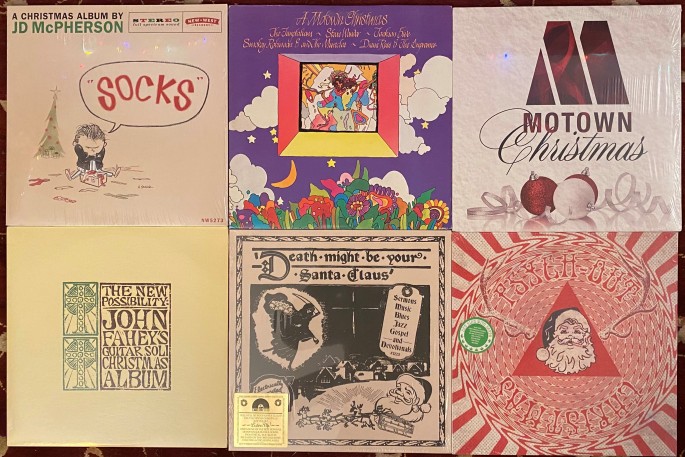
Various artists – Motown Christmas (2014) Various artists – A Motown Christmas (1973)
I didn’t spend a lot of time with Motown Christmas before tucking it into my pile of purchases. Seeing Smokey Robinson and the Temptation among the featured artists was all I needed. You can imagine my surprise when I played this album months later (I bought it out of season) and discovered this was a collection of contemporary Motown artists. I didn’t bother me too much, because it didn’t cost much and what’s here is great.
Smokey Robinson opens the album with a song that has that classic Miracles sound augmented by a drum loop that is way too prominent in the mix. Gregory Porter and Anita Wilson take us to church with a soaring gospel mash-up of “Go Tell It On the Mountain” and “Ain’t No Mountain High Enough.” Other high points include India.Arie and Gene Moore’s duet on “Mary Did you Know” and Tye Tribbett, who turns “The Little Drummer Boy” into a serious dancefloor jam.
A Motown Christmas is the album I thought I was buying the first time. Oh, what a difference that little article – the letter a – makes. A Motown Christmas rounds up the best moments from several of the label’s biggest Christmas albums. Let’s face it, no one needs to own all these albums, but sprinkling the high points across two records is a pretty tasty collection.
A Motown Christmas serves up four songs each from Stevie Wonder (including “Someday at Christmas” and “Ave Maria”), the Temptations and Smokey Robinson and the Miracles. Diana Ross and the Supremes get five cuts and the Jackson 5 have six songs, plus a Michael Jackson solo performance of “Little Christmas Tree.”
Either yuletide Motown set will keep spirits high. If you play them back-to-back the label’s impact becomes even more apparent.
J.D. McPherson – Socks (2018)
Oklahoma singer/songwriter J.D. McPherson mines the same early rock and roll territory that has served Brian Setzer so well on his holiday records.
While Setzer borrows from the high-octane crowd of Gene Vincent, Elvis Presley and Chuck Berry, McPherson draws from a more diverse pool. “Hey Skinny Santa” sounds like a Louis Jordan jump song and “Twinkle (Little Christmas Lights)” has a New Orleans shuffle and a piano solo that sounds like it was lifted from Huey “Piano” Smith. McPherson veers closer to Setzer’s territory on “Bad Kid,” which features a guitar solo that splits the difference between Duane Eddy and Dick Dale, and “Santa’s Got a Mean Machine” which sounds like it was cut in Sun Studio.
McPherson also scores points for writing 11 original holiday songs for this album. Not only is McPherson a solid songwriter, but this means you don’t have to slog through the same overworked standards that are always on repeat at the mall.
Various artists – Psych-out Christmas (compilation)
If you learn one thing about me through all these Social Distancing Spins blog entries, you should know I will absolutely buy any album if the cover art and sleeve are intriguing and the price is right (read: cheap).
Cleopatra’s 2013 compilation Psyche-out Christmas is one such purchase and I am all the better for it. The album opens with a dumb skit featuring Halloween monsters throwing a Christmas party that sounds like something Dr. Demento might reject for being too corny, but don’t let that put you off. The Elephants rip through the Beatles’ “Christmas Time is Here Again” and Psychic Ills live up to their name with a hung-over reading of “Run Rudolph Run.”
Miss Quintron and the Pussycats are the only band to get two tracks. Their performances of “Silent Night” and “Jingle Bell Rock” are fun. For some reason a group called the Sons of Hippies cover the Zombies’ “Time of the Season.” The biggest name is Iggy Pop who delivers a straightforward version of “White Christmas” that’s called the “Guitar Stooge Version” for some reason. I guess that means James Williamson or Ron Asheton play on the track, but the guitar follows the vocal melody and is pretty low in the mix. Hands-down, the best song is Sleepy Sun’s version of “What Child of This,” which features a galloping rhythm section complemented with shoegaze guitars.
Psyche-out Christmas is one of those collections that is greater than the sum of its part. Aside from Sleepy Sun there aren’t really any songs that scream to be included on a playlist (or mixtape) on their own merits. But the 17 songs here hang together for a very enjoyable listen that is guaranteed to draw at least a couple puzzled looks when unsuspecting listeners have to confirm if they are really hearing what they think they are hearing.
Various artists – Death May Be Your Santa Claus (compilation)
If Psyche-out Christmas doesn’t drive the squares out of your holiday party, Death May Be Your Santa Claus should do the trick. This 2013 Record Store Day – Black Friday exclusive gathers sermons, blues, jazz and gospel tracks issued in the 1920s, ‘30s and ‘40s.
Clips of Reverend J.M. Gates sermons from the 1920s appear every couple songs and provide not only the title track but ask the question Will hell be your Santa Claus? Um, maybe? A little bit of Gates goes a long way and I could have done with half as much. The rest of the songs from Sonny Boy Williamson (the first one), Bessie Smith, Tampa Red and very early Duke Ellington are will appeal to fans of early blues and jazz. Aside from the Heavenly Gospel Singers’ version of “When Was Jesus Born?” not many of the other songs are very well-known.
The award for best song title and group name combo goes to Butterbeans and Susie, who perform “Papa Ain’t No Santa Claus (and Mama Ain’t No Christmas Tree).” The song comes from the pen of Fats Waller’s lyricist Andy Razaf and ragtime pianist Alexander Hill. The Butterbeans and Susie are Joe and Susie Edwards, who sing, and pianist Eddie Heywood.
The Edwards were a married comedy team that performed from the 1920s until the 1960s, which is pretty impressive when you consider how much comedy changed during that time. They started in the vaudeville era and managed to keep it going through the advent of radio, talking movies and finally television. Joe Edwards was known as Butterbeans, which is how the duo got their name. You can learn all kinds of stuff on the internet.
John Fahey – The New Possibility (1968)
Folk guitarist John Fahey remains fairly unknown nearly two decades after his death, but he inspires a deep devotion from those that discover him. Listening to this album it is easy to hear why.
The performances on The New Possibility sound like they were captured in one take with a live guitar. If there is any overdubbing it is hidden well. The tempos across the 14 standards captured here are fairly steady as well.
I understand that this can read like the recipe for a snooze-fest and in most circumstances I’d agree. But there is something in Fahey’s playing that is both magnetic and intimate. The New Possibility makes me feel like I am sitting inside Fahey’s guitar, feeling the wood vibrate around me while the strings oscillate overhead.
While the arrangements are fairly straightforward, there is something in Fahey’s playing that simultaneously makes me want to pull close and provides a feeling of comfort. Every time I’ve put this album on at a holiday gathering, people will almost immediately stop talking and listen. When I play this album by myself, I usually end up playing it twice because the environment it creates is so soothing and refreshing. Next time the holiday blues or yuletide fatigue start to fade in, send them packing with The New Possibility.
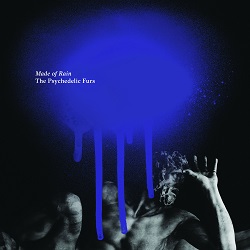
For better or worse, the Psychedelic Furs will always be tied to “Pretty in Pink” and the films of John Hughes. The master of 1980s coming-of-age movies directed his last film in 1991, the same year the Furs released their final album. That is until now, 29 years later, and Made of Rain.
Just the eighth album from the band, Made of Rain is far from the cash-in or pale imitation skeptics could rightly assume after so long an absence. To be sure, Made of Rain will never be mistaken for one of the Furs classics made in the first half of the Me Decade, but it is also better than some of the albums released toward the end of the group’s original run.
“The Boy that Invented Rock and Roll” opens the album with no concession to the passage of time. Singer Richard Butler is still entrenched in that odd niche between Johnny Rotten and David Bowie, while Mars Williams’ saxophone darts around Tim Butler’s propulsive bassline. Lead single “Don’t Believe” is a tough number that features a short, soaring chorus against a dark backdrop. Later, “Come All Ye Faithful” finds Richard Butler at his sardonic best, delivering lines like “When I said I loved you, and I lied / I never really loved you, I was laughing at you all the time.”
Even less-successful numbers such as “Ash Wednesday” and “You’ll Be Mine” get by on their ability to conjure the specific feelings and memories only the Psychedelic Furs can produce. It isn’t pure nostalgia, but also a wonder that no matter how much has changed, life could somehow sound and feel this way again.
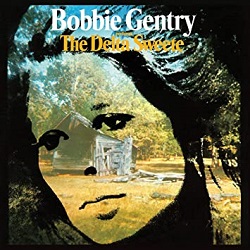
Bobbie Gentry – The Delta Sweete
After the surprising – and massive – No. 1 hit “Ode to Billie Joe,” Bobbie Gentry recorded a sometimes-autobiographical song cycle about life in the South. As a Mississippi native, the material is a natural for Gentry, but odd production choices make The Delta Sweete a completely unique release.
Neither psychedelic nor countrypolitian, the acoustic instruments at the heart of each performance are saturated with strings, horns and seemingly everything producer Kelly Gordon could think of. The busy arrangements often draw the focus away from Gentry’s voice and lyrics. At times, the material resembles folk songs posturing Las Vegas show tunes.
Perhaps no number on The Delta Sweete embodies this juxtaposition better than “Sermon,” also known as the country gospel song “God’s Going to Cut You Down.” Gentry’s version is startling upbeat, accented with punchy horns. It is especially astonishing for those used to the foreboding Johnny Cash version.
The new deluxe version unearths a mono mix of the album, along with band tracks, but the spare acoustic demos are most fascinating addition. The Delta Sweete might be a better album if it stayed closer in spirit to these stripped-down performances, but it would also be a lot less interesting.
Prophets of Rage – Prophets of Rage
The remaining members of Rage Against the Machine have had a hard time filling the void left by the unexpected near-retirement of frontman Zack de la Rocha nearly 20 years ago. The trio paired with Chris Cornell for three albums in the ‘00s and are now working with Public Enemy’s Chuck D and DJ Lord and B-Real of Cypress Hill.
The supergroup’s 2017 self-titled album is closer in sound, content and spirit to the Machine’s celebrated catalog. Chuck D has no problem agitating a lyric against injustice and the like-minded B-Real is a better foil in this context than a post-reality show Flava Flav.
Neither Public Enemy nor Rage Against the Machine were known for subtly and truthfully the Prophets of Rage doesn’t offer many surprises. The album sounds pretty much exactly as one would imagine. Those excited by this prospect know playing the Prophets at maximum volume satisfies both a primal and sociopolitical need.












 joelfrancis.com