Tapers battle elements, boozers to record history

mic-standBy Joel Francis
The
Kansas City Star

Michael Lindsey looks like any other unassuming music fan, but he’s pretty easy to pick out at a concert. He’s usually standing near the soundboard with an 8-foot mic stand.

A lot of people go to live shows to relax or as a hobby, but Lindsey goes to record what he sees and hears. He’s one of a dozen music fans around Kansas City who call themselves Team Kansasouri, dedicating themselves to capturing and sharing concerts.

“My first exposure to taping was when I was downloading other concerts I had attended,” Lindsey said. “I was frustrated when I was at a show and couldn’t find it online later, so I started recording them myself.”

For Team Kansasouri, the live show is the ultimate demonstration of a band’s mettle.

“A good live recording has a certain vibe, emotion and energy you can’t find on a studio recording,” said team member Brian Price of Eudora. “Look at the later Phish albums. They’re purely academic exercises compared to the live versions.”

According to Clinton Heylin’s book Bootleg: The Rise and Fall of the Secret Recording Industry, some of the first fan concert recordings were made at New York’s Metropolitan Opera House in 1901. Taping reached the mainstream when it received the blessing of the Grateful Dead in the 1970s. While tape trading is very much part of the Dead’s culture, the hobby goes far beyond one genre.

And no matter the type of music that’s recorded, there is one steadfast rule: Shows should never be sold.

“I found a guy on eBay who had the Sting show I made in Columbia and was trying to sell it,” team member Joe Hutchison said. “I fought him all the way to the top and got his auctions shut down.”

Record labels sue fans for illegally downloading albums, but many bands see swapping concert recordings as free advertising.

“If the selling was prevalent, the bands would stop letting us record,” Price said. “Bottom line: Taping is a privilege, and we’re going to defend our privilege.”

Network on the road

Recording a concert is not for the faint of heart or pocketbook. Lindsey’s gear bag contains two microphones stored in a waterproof plastic container lined with anti-static foam. Cost: $900.

He also has an all-in-one rig with preamp and analog-digital converter. Cost: $900.

And there’s the tripod for the mics, an external battery pack, foam tips for the mics in case of wind, some cables (homemade) and a couple of pieces of just-in-case miscellanea.

“You can spend $10,000 on gear, easy,” Lindsey said. “The good news right now is that because of the economy a lot of guys are dumping their gear. If you’ve got the money, this is a great time to get into the hobby.”

While the rest of the crowd cheers the band as it takes the stage, tapers are hunched over their gear making sure the recording levels and balance are right. Only after the first song and tape are “rolling” can they enjoy the show. Kind of. They must remain watchful of fans trying to steady themselves on a mic stand or fans whose voices could find their ways onto the recording.

“For some reason the mic stand is a beacon for drunks to steady themselves on,” Hutchison said. “You have to be vigilant about your stuff and not be afraid to push people away.”

Other elements can’t be controlled, like weather. Last summer several tapers planned to record the band moe. at an outdoor show but got caught in a 90-minute rainstorm. Most packed umbrellas to protect the gear.

“We got lucky that time because the rain was coming straight down,” Price said. If it were coming down sideways, he said, they would have been forced to shut down.

Getting through the doors with all that stuff isn’t as hard as you might think.

“At first you have to educate the manager that it’s a benefit to allow recording,” Price said. “You might want to print out the band’s taping policy from their Web site and bring it with you. Eventually they’ll come to recognize you and let you in.”

Musical history is being made

After the show, there is an unofficial competition to transfer the show from the recorder to the computer, separate each song into its own track and post the concert online as quickly as possible.

“I’ll be listening in bed at 3 in the morning excited at how good it sounds,” Price said. “But I have to be quiet because my wife is sleeping next to me.”

mic-2The Kansasouri tapers generally restrict their recordings to bands and venues friendly to taping. They document all their experiences — from where to set up at a given venue and what microphones to use to the soundman’s name — on taperssection.com, an overwhelmingly comprehensive Web site covering everything from how-to’s and gear reviews to garage sales on used equipment.

“It’s where our knowledge is passed down,” said Randall Phillips of Kansas City. “(The site has) stuff like taping methods and equipment used and other things you couldn’t learn in 10 years. If you run into a problem, someone else has experienced it and is waiting to help you online.”

Most important, it’s a social network. When tapers descended on Clinton Lake last June for the Wakarusa Music Festival, Price hosted a barbecue for everyone. And the same courtesy has been shown to him.

“If I travel to a show in St. Louis or been on vacation and gone to a show,” Price said, “there’s never been a time I didn’t run into somebody I knew.”

Aside from friendships, there are other often unexpected perks. Reggae singer Matisyahu gave out free tickets to tapers for his performance last summer. Other gifts are less conventional.

“I taped an Allman Brothers show from the balcony of the Uptown,” Hutchison said. “It was 100 degrees up there, but the show came out OK. I put it up and traded with a few people. A few weeks later, I got a box of Georgia peaches in the mail from an appreciative fan.”

But ultimate satisfaction comes from knowing a piece of musical history has been preserved.

“This is history for us,” Hutchison said. “We’re archiving it, creating documents of what happened on that night.”


IS IT ARCHIVED?
To find out if your favorite concert memories have been recorded use the search engines on the following Web sites. Keep in mind it may take some online digging to unearth your buried treasures.

http://btat.wagnerone.com

http://bt.etree.org

www.archive.org/details/etree

•To learn more about becoming a taper, go to www.taperssection.com and click on the first link, “where to begin.” More information is also available at www.flac.sourceforge.net.

Review: Madeleine Peyroux

music_phases-38090
By Joel Francis

The Kansas City Star

Before playing the final song of the night, Madeline Peyroux told how “Somethin’ Grand” was written around 4 in the morning, when the trucks on the nearby highway finally stopped buzzing past her Brooklyn apartment.

Most of the music Peyroux played for a sold-out edition of Cyprus Avenue Live at the Folly Theater on Friday night fit that contemplative, midnight mood.The atmosphere was struck with the first song, “Dance Me to the End of Love.” Darren Beckett’s gently brushed drums and Barak Mori’s subtle and sometimes sweeping bass lines created a bed for music that blurred the lines between jazz, folk and pop.

“Don’t Wait Too Long,” the third number up, was a showcase for the other two members of Peyroux’s band. Jon Herrington’s guitar had a warm, fluid tone. Larry Goldings spent the night switching between piano, organ and keyboards. His earthy, gospel organ was the backbone of several numbers. Peyroux’s smoky voice and phrasing, which often recalled Billie Holiday, was the evening’s stand-out instrument, though.

Peyroux established her career by covering the masters and she got a couple heavyweights out early. Leonard Cohen’s “River of Tears” was followed by Bob Dylan’s “You’re Gonna Make Me Lonesome When You Go.” On that song, Peyroux crawled inside the lyric “I could stay with you forever/and never realize the time” and delivered a spectacular performance as comfortable as a Sunday afternoon nap with a lover.

Halfway through the set, Peyroux recreated her days busking on the streets of Paris as her band huddled around her playing on a box, upright bass, mandolin and blow-organ. For the only time that night, Peyroux’s acoustic guitar lead the band as she sang “La Javanaise” and “Don’t Cry Baby.” If she performed half as good on the streets as she did in the Folly, Peyroux likely found her cap filled with coins in no time.

Between songs, Peyroux chatted with the audience, playfully pointing out the lyric in Dylan’s song refers to the French poet Arthur “Rimbaud” and not Sylvester Stallone’s “Rambo,” discussing the inspiration behind her character song “Our Lady of Pigalle” and introducing her hit “I’m All Right” as a “happy break-up song.”

Peyroux performed all but two songs from her new album, “Bare Bones,” during the course of her 90-minute set. She completely ignored her 1996 debut album “Dreamland,” which may have frustrated some long-time fans. Instead the evening’s remaining songs were split between the two other albums she released this decade.

Opening act Steve Poltz was a welcome addition to the bill. Accompanied only by his acoustic guitar, the singer/songwriter quickly won over the crowed with his frequently funny songs. A rapid-fire talking blues somehow touched on everything from the winter holidays, fruit cake, Barack Obama and YouTube, while “Brief History of My Life” somehow combined Poltz’s love of baseball with stories of his first communion. Poltz is best known for helping Jewel write “You Were Made For Me.” He closed his 35-minute set with “Everything About You,” a song that appeared on the “Notting Hill” soundtrack.

With a night filled with so many stand-out moments – from Peyroux’s sly reading of “You Can’t Do Me,” which she wrote with Walter Becker, to the bouncy optimism of “Instead” – Peyroux left no doubt that her songbook had more legs than a glass of good wine.

Setlist: Dance Me To the End of Love, Bare Bones, Don’t Wait Too Long, River of Tears, You’re Gonna Make Me Lonesome When You Go, Damn the Circumstances, I’m All Right, A Little Bit, La Javanaise, Don’t Cry Baby, Love and Treachery, You Can’t Do Me, Our Lady of Pigalle, I Must Be Saved, Instead, Somethin’ Grand.

Review: Raphael Saadiq

raphael_saadiq_bw-thumb-473x4932
By Joel Francis

The Kansas City Star

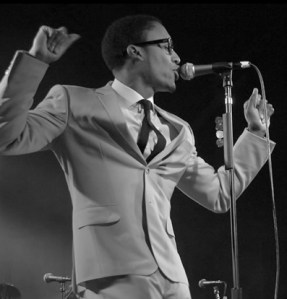
Raphael Saadiq brought nearly 90 minutes of eight-track soul jams into an iPod world Wednesday night at the VooDoo Lounge.

Taking the stage in a suit and glasses that echoed Temptation David Ruffin, Saadiq strapped on a white Telecaster as his six-piece band vamped over a groove that sounded like a lost Motown backing track.Setting the guitar aside, he plowed through several numbers from his latest album, the Motown and Philly soul-inspired “The Way I See It,” but it took a couple songs for the performance to connect with the audience. Part of that could have been the size of the crowd. The floor started about a quarter full, though it swelled considerably as the night wore on.

A better reason, though, was the 15-foot buffer the polite crowd kept from the stage. Sensing they need to turn things up a notch, the band kicked “100 Yard Dash” into high gear as Saadiq implored the crowd to move closer. Once they did, Saadiq kept them in the palm of his hand for the rest of the night.

The band brought out the slow jams for a quick one-two of Saadiq’s better-known cuts from his Lucy Pearl project and got everyone involved with a medley of Tony! Toni! Tone! favorites.

Sporting a broad grin, Saadiq clearly enjoyed watching the audience take over his old material. He nailed a falsetto toward the end of “Anniversary” that put nearly every woman in the audience over the edge. When he forgot the words to “All I Ask Of You” a moment later, no one seemed to mind when he took several bars to collect himself before starting again.

Album opener “Sure Hope You Mean” it was stretched out to include snippets of “Going To Kansas City” and the evening’s most intimate moment. As the band broke down the chorus, Saadiq held the mic by his side and sang to himself. Dancing around the stage he seemed lost in a private moment, oblivious to the audience.

The crowd tipped toward the thirty-year mark. For most of them, this was as close to a Motown revue as they were likely to see. Many of the folks in the balcony and sprinkled throughout the floor, however, were seeing the soul music of their childhood echoed for the second or third time.

Saadiq didn’t make it easy for the scores of fans holding cell phones and cameras to take his picture. He was constantly moving, strutting, spinning or dancing in synchronicity with his two backing vocalists. The only time he stood still was for a drawn-out gospel intro to “Let’s Talk A Walk” that teased the crowd several times.

Nearly an hour after he took the stage, Saadiq said goodnight and departed. He and the band quickly returned to perform “Still Ray” and “Big Easy,” a number inspired by Hurricane Katrina. His white Telecaster back on for the final number, Saadiq may have said goodnight once again, but his hands kept playing. He and the band jammed for a good five minutes before everyone left the stage.

The show seemed longer than its 75 minutes, but even its length was an old-school throwback. It was the same duration as those classic double-live concert LPs.

Setlist: Keep Marching, Love That Girl, 100 Yard Dash, Dance Tonight, La La, Just One Kiss, Oh Girl, Tony! Toni! Tone! Medley: Lay Your Head On My Pillow; Anniversary; All I Ask Of You; Just Me and You, Be Here, Let’s Take A Walk, Sure Hope You Mean It, Staying In Love. Encore: Still Ray,Big Easy.

Raphael Saadiq sends a love letter to soul makers and Motown

(Above: Raphael Saadiq runs the “100 Yard Dashfor Seattle’s excellent community radio station, KEXP.)

By Joel Francis
The Kansas City Star

Raphael Saadiq’s latest album, “The Way I See It,” is draped heavily in the sounds of Motown and Philly soul, but don’t call it a tribute album.

“Boyz II Men did a tribute; I wrote a bunch of songs,” Saadiq said about his all-originals album. “This was not intended to be a tribute album. It’s more like a secret love letter to the people I love.”

People like the Funk Brothers, Motown’s now-legendary stable of musicians, and the other unknown musicians who “took music to the level where it is today that I can come out and do this,” Saadiq said. “It’s not just about Smokey (Robinson) and Stevie Wonder, but a bunch of people we don’t even know about.”

He plays most of the instruments on the album himself, but Saadiq recruited two Funk Brothers to help him get that classic Motown sound. Jack Ashford’s tambourine has graced classics like “Nowhere to Run” and “You Can’t Hurry Love.” Paul Riser, who arranged the strings on Saadiq’s album, has worked with the Supremes, Marvin Gaye and Stevie Wonder.

“I brought Jack in because he added a sound I couldn’t have had without him,” said Saadiq, who performs Wednesday at the VooDoo Lounge. “With Paul Riser it was the same thing. You can feel the energy when they walk into a room.”

Having Stevie Wonder play harmonica on one song was ultimate validation. Saadiq even went so far as to introduce his guest like Wonder introduced Dizzy Gillespie on his 1982 hit “Do I Do.”

“Seeing Stevie walk into a room and play is something I’ve never gotten used to,” Saadiq said. “Having him play on this was a stamp of approval. I’ve worked hard for a long time to have him come play (on my album).”

The former Tony! Toni! Tone! singer, who named his first solo album “Instant Vintage,” is more worried about being called “neo soul” than being pigeonholed.

“Everybody knows I hate the term ‘neo-soul,’ ” Saadiq said. “If someone was playing the blues they’d want an old soul. I don’t want a new soul — then I’d sound like somebody on the radio today, which I hate.”

On an album with so much — ahem — old-school soul, Jay-Z’s guest spot on the final track, a bonus remix, probably surprised many listeners.

“That was Q-Tip’s idea,” said Saadiq, referring to the former MC of A Tribe Called Quest. “He was like, ‘You should put Jay-Z on this record’ and then went and got him, because I didn’t know Jay like that. Some people didn’t like it. They’re probably neo-soul fans. I did this for the other people.”

More on Raphael Saadiq from The Daily Record:
“The Way I See It” album review
“The Way I See It” caps the Top 10 albums of 2008

Review: Modest Mouse

mm8_0020

(Above: The Mouse’s pre-show view of the Uptown Theater.)

By Joel Francis

The Kansas City Star

When Modest Mouse last played Kansas City 18 months ago it was promoting a No. 1 album on a sweltering night at one of the city’s worst outdoor venues (City Market). The band returned on a frigid Monday night to play before a full house at one of Kansas City’s best indoor venues, the Uptown Theater. With no new material to promote, Isaac Brock and his band played whatever they wanted.

The band hit the stage like they were shot out of cannon, launching into a vicious reading of “Bury Me With It” that featured a guitar part that sounded like something from Sonic Youth. With barely a pause, one of the most successful indie rock bands on the scene today tore into a ferocious “Never Ending Math” that set a high bar for the evening to follow.

They were more than up to the task. The six-piece band was on top of its game, stopping and starting and changing dynamics on a dime. Grandaddy guitarist Jim Fairchild, who is sitting in for ex-Smiths guitarist Johnny Marr on this tour, played well off lead singer Brock’s parts, particularly on “Interstate 8” and “Dramamine.” Fairchild even kicked in some vocals on “Satellite Skin.”

Although every performance was impressive, the band was at its best when it could stretch out. Epic performances of “Dramamine,” “The View” and “Breakthrough” built layer on top of hypnotic layer until it felt like the song would explode out of the building.

As powerful as the epics were, the band knew how to bring things down, like during an almost-unplugged version of “Bukowski” in which Brock channeled his inner Bela Fleck on banjo and a lovely bowed bass and accordion solo. Earlier in the evening, “Custom Concern” was a welcome come-down after the intense marathon numbers.

The only concessions to casual fans were “Float On,” which featured a shiny ‘80s keyboard part on the chorus, and a breakneck reading of “Dashboard,” complete with trumpet. Other than that, the evening was devoted to older songs and album cuts like the trippy “Tiny Cities Made of Ashes,” which sounded like an underwater fight with the devil.

The band played too loud and fast to incorporate much audience feedback, but the crowd was more than appreciative. The opening chords to nearly every number drew big cheers of recognition, and while it was impossible to hear anyone singing along, the swaying arms and moving lips were unmistakable signs of approval.

The enthusiasm was infectious. The notoriously and self-admittedly grumpy Brock was clearly having good time. After castigating a fan for requesting older material immediately following a song from their first album, Brock settled down. He showed off the black light posters he purchased the night before in Boulder, Colo. and told an affectionately rambling story about Roger Miller’s “Kansas City Star.” Brock promised to play the song from his iPod for the crowd after the show, but ZZ Top appeared somehow instead. No one complained.

Setlist: Bury Me With It, Never Ending Math, The View, Dramamine, Wild Packs of Family Dogs,Tiny Cities Made of Ashes, Custom Concern, Float On, Bukowski, Interstate 8, All Nite Diner, Parting of the Sensory. Encore: Third Planet, Satellite Skin, Dashboard, Baby Blue Sedan, Black Cadillacs.

Keep reading: A 2007 interview with Isaac Brock.

Review: Flogging Molly

(Above: “Drunken Lullabies.”)

By Joel Francis
The Kansas City Star

It didn’t take much for Flogging Molly to transform Fat Tuesday into St. Patrick’s Day.

The Celtic punk band performed a blazing 90-min. set for a sold-out Uptown Theater crowd Tuesday night. The evening opened at full throttle with “Man With No Country,” a joyous jangle of guitars, violin, banjo and drums.

“The Likes of You Again” started acoustically before exploding into a high-octane jig and reel. It’s a trick Flogging Molly has perfected: take an Irish melody, crank the performance to 11 and drop in an anthemic chorus. Although this leaves the songs sounding similar, there’s enough twiddling with the dynamics that they never get old.

The banjo intro to “Drunken Lullabies” had everyone stomping so hard the balcony was shaking. When the full band finally entered, the crowd ignited in a fury of singing, clapping, dancing and moshing. It was the band’s biggest response of the night, although they came close a couple other times.

After “Lullabies” it was impossible to go any higher, so the band dialed it down with a three-song acoustic set. “The Son Never Shines (On Closed Doors)” was dedicated to singer Dave King’s 87-year-old Irish mother. Dressed with a banjo melody and nifty slide guitar solo, the ode to a home that isn’t visited frequently enough was just as affecting as the full-bore material.

The 90-minute set was split evenly between the band’s first two and most recent studio albums. Early in the set, King promised they would perform several more obscure songs, like “The Worst Day Since Yesteday,” but they didn’t seem to stump anyone signing along.

With the house lights up, the crowd launched into the chorus of “Rebels of the Sacred Heart” after the opening chord. If that song felt like a soccer anthem, the next number, “If I Ever Leave This World Alive,” transformed the Uptown into an Irish pub. With cups hoisted and lyrics belted it was the second biggest response of the night.

The band stood six abreast across the front of the stage, with the drummer on risers behind. Acknowledging their previous shows at the Beaumont Club and growing audience, King noted they were “a long way from the old mechanical bull days.”

The Los Angeles-based Aggrolites set the bar high with their amazing 45-minute opening set. The quintet’s “dirty reggae” sounded like Kingston via Aztlan, or Los Lobos paying tribute to the Specials, sans horns. The band’s not-so-secret weapon was organist Roger Rivas, who propelled the most numbers with his mighty B3. Rarely pausing between songs, the band kept the energy high and the crowd moving. They closed with an optimistic, doubletime cover of the Beatles’ “Don’t Let Me Down” that found two members of Flogging Molly onstage contributing backing vocals onstage.

Setlist: Man With No Country/The Likes of You Again/Requiem for a Dying Song/Selfish Man/The Worst Day Since Yesterday/You Won’t Make a Fool Out of Me/(No More) Paddy’s Lament/Drunken Lullabies/Us of Lesser Gods/The Son Never Shines (On Closed Doors)/Float/Tobacco Island/The Kilburn High Road/Rebels of the Sacred Heart/If I Ever Leave This World Alive/The Lightning Storm/What’s Left of the Flag/Seven Deadly Sins/The Story So Far//encore//Grace of God Go I/Devil’s Dance Floor/Salty Dog

Review: Gov’t Mule

(Above: Mule, meet Radiohead. Radiohead, Mule.)

By Joel Francis
The Kansas City Star

One fan’s T-shirt asked: “Got Mule?” And for the second time in three months, the answer was “yes.”

Nearly 12 weeks after playing to a packed Voodoo Lounge, Gov’t Mule played for another full house Wednesday night at the Granada in Lawrence.

The classic rock jam quartet opened with the dirty blues stomp of “Brand New Angel” before segueing into the wah-driven “Perfect Shelter.” The show didn’t really start, though, until the surprise cover of Jimi Hendrix’ “If 6 Was 9.” It was the first of many cover treats.

A raucous “Helter Skelter” bumped against a medley of Temple of the Dog’s “Hunger Strike” and Traffic’s “Dear Mr. Fantasy.” Earlier in the night, Radiohead’s “Creep” was followed by Led Zeppelin’s “Trampled Underfoot.”

There was just as much diversity in band’s original material. Propelled by Danny Lewis’ organ, the intro to “Larger Than Life” recalled Medeski, Martin and Wood. “Streamline Woman,” meanwhile sounded like Led Zeppelin lost in the Florida swamps. And all bets were off for the progressive rocker “Silent Scream,” which encompassed 20 minutes and a drum solo.

The band played a one-hour opening set, before taking a 20-minute break and coming back for another 90 minutes. During that time, most sets of eyes were trained on singer and guitarist Warren Haynes. Haynes also plays in the Allman Bros. and was hailed by Rolling Stone as one of the greatest guitarists of all time. His playing is impressive, but not flashy. It’s like he knows exactly where to put his fingers again and again and again.

Although Haynes took many noteworthy solos, the instrumental “Birth of the Mule” was his tour de force. The 10-minute number opened with Haynes’ delicate, fingerpicked slide playing. Starting like a gentle rain and building into a full storm, the song culminated in a heavy riff reminiscent of Black Sabbath before gliding back to the ground, light as a feather.

The middle-aged, mostly male Mule heads who knew exactly what they were getting into. Although the floor was too packed to dance, everyone seemed content to nod and sway in place.

The night closed with a pair of slide blues rave-ups. Hayes did a great job of replicating Muddy Waters’ early playing style on “Champagne and Reefer.” The tune paired so nicely with Hound Dog Taylor’s “Gonna Send You Back To Georgia” that the two were stretched for 20 minutes.

Setlist: Brand New Angel, Perfect Shelter, Streamline Woman, Larger Than Life ->If 6 Was 9 ->Larger Than Life, Get Out Of My Life, Birth of the Mule, Temporary Saint, Creep, Trampled Underfoot/Intermission/Patchwork Quilt, Helter Skelter, Hunger Strike->Dear Mr. Fantasy->Hunger Strike, Silent Scream->Drum Solo, Like Flies->Mule->I’ve Been Working->Mule/Encore/Champagne and Reefer, Gonna Send You Back To Georgia

Meet the New Boss: Pat Green

pat-green
By Joel Francis

The Kansas City Star

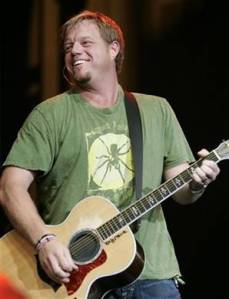
Pat Green may be a country singer from Texas, but his inspiration is a rock star from New Jersey.

“I’m trying to do what (Bruce) Springsteen did,” he said. “Jersey knew all about Springsteen before ‘Born in the U.S.A.’ came out and launched him.”

“Texas knows what I’m about. I can sell out as big of an arena as you want in Texas, but in Kansas City I’m playing a thousand-seater.”

Green will bring the music he describes as “if Springsteen and Willie Nelson had a kid” on Saturday to the Granada Theater in Lawrence. He’ll also be previewing his new album, “What I’m For,” which comes out Tuesday.

“When I get a new record out, I do like Springsteen and just make the shows longer. All the new stuff gets added to the old,” Green said. “You identify the bigger songs from that and throw them in the every-night pile.”

One new song he’s playing is “Country Star,” a country rewrite of Nickelback’s “Rock Star.” Green said he’s not sure if everyone will get the joke, and he’s fine with that.

“It’s a laughable notion to think of myself as a star,” he said. “Some of my guys know I’m kidding, that I’m not going to buy a shiny belt buckle and 10-gallon hat. But I like to write ambiguously, so that my songs can mean more than one thing to people. Others will laugh. Just picturing it is kind of funny.”

The flip side of that coin is “In It for the Money,” a soul-searching song about finding the right motivation.

“There is a quote by William Jennings I’m sure I’m going to butcher, but you have to do it for the right reasons. You have to care. This is not a dress rehearsal,” Green said. “Do you do it for love or do you do it for money?”

“What I’m For” also features a new arrangement of “Carry On,” a song Green has been carrying for more than a decade. The Police remake of their hit “Don’t Stand So Close to Me” inspired Green to take a different approach to his warhorse.

“That song is just part of my soul,” Green said. “Because I love it so much, I can move the furniture around without everyone getting upset with me. I never know how I’m going to play it in concert. Sometimes it’s just me and the guitar like a ballad. It’s been worn in every way you can wear it.”

Assisting Green for the first time is producer Dann Huff. The award-winning veteran has worked with artists as diverse as Bon Jovi, Megadeth and LeAnn Rimes.

“Keith Urban was mostly responsible for me hiring Dann Huff,” Green said. “I compared his work with Rascal Flatts and Faith Hill. Those albums sound completely different. They made me aware of Dan’s ability to wrap his hands around the individual artist and make the record toward them, rather than bending the artist to his vision.”

Pushing aside notions of trying to recapture the success of “Wave on Wave,” Green’s 2003 breakthrough hit, Green wrote an album that captured his life now as a father and family man.

“I’m not just going to sing anything to have a radio hit. I have to love it and believe it to sell it,” Green said. “I write about what I’m in tune with in this space, and that’s what Springsteen does, as well.”

Green, who happens to have his album coming out the same day as Springsteen’s “Working on a Dream,” has paid homage to the Boss by performing “Atlantic City” at his shows for years. For this tour he’s adding a new wrinkle.

“I think for this next tour I’m going to pull something off ‘The Rising’ for our encore,” Green said. “I have several songs in mind, but I don’t want to say what. If I go a different way, I won’t be caught lying.”

Mongol Beach Party will get its groove on with a weekend reunion

mbp
By Joel Francis

The Kansas City Star

The Mongol Beach Party reunion was already booked when Mark Southerland found out about it.

“I think what happened was (drummer) Bill (Belzer) booked the show, called (guitarist) Jeff (Freeling), and everyone else found out through third parties,” said Southerland, who plays saxophone in the band.

Although the idea had been floated casually in conversation before, this time no one said no. Seventeen years apart seemed like the right time to hook back up.

“When we started this band, none of us had been in bands before,” singer Christian Hankel said. “Now we’ve spent our lives since then in bands and music.”

Today Hankel and trombonist Kyle Dahlquist are part of Alacartoona; Belzer is in the New Amsterdams with Get Up Kid Matt Pryor; and Southerland is involved in several projects, including the Malachy Papers and Snuff Jazz. Bass player Scott Easterday fronts the reconvened Expassionates; and Freeling, the lone Mongol based outside of Kansas City, plays guitar with Chicago’s Blue Man Group.

“The fact that we’ve all continued on as musicians and none of us have set down our instruments has helped us reapproach the Mongol songs again,” Freeling said. “It’s not as if we’re reliving our glory days.”

Fans who show up at the RecordBar Friday and Saturday are guaranteed the same good-time, quirky dance-rock songs they heard nearly 20 years ago at the Shadow, Harling’s Upstairs and the Hurricane.

“I get the big sense that this isn’t just our reunion,” Hankel said. “People are using us as a way of getting together with their circle of friends from that time.”

Kansas City in the late ’80s was a different scene. There were fewer places to play, fewer outlets for exposure and fewer bands.

“Back then if you wanted to be known it was expensive and difficult,” Hankel said. “You couldn’t set up a MySpace page or Web site because those didn’t exist. You could make a CD, but that was worthless unless you could get somebody to play it.”

Instead the Mongols took whatever gigs they could get, even when it meant they were packaged with completely different bands like the Sin City Disciples.

“Bands were country or blues or whatever and had their own music scene that would go with them,” Easterday said. “We were different because we cut across the sub-scenes.”

Record producer Tom Mardikes was introduced to Mongols by his aerobics instructor, Freeling’s mother.

“Tom believed in a ‘Kansas City sound’ unique to our town,” Hankel said. “He took us to City Spark Studios, offered us unfettered access to the studio to record a full CD and promotion to college radio.”

“Toast,” the Mongols’ only album, was recorded in 1991. Long out of print, it was remastered and reissued this month.

“We included a few new additions to this version,” Easterday said. “There are our three demos cut at City Spark and a couple songs from a limited-edition cassette we made.”

Mongol Beach Party formed out of the Rockhurst High School friendships of Belzer, Freeling and Hankel and the musical partnerships forged at the University of Missouri-Kansas City. After five years of living together in a house at 43rd and Harrison, and a single-minded focus on the band, the group unraveled when Belzer joined Uncle Tupelo.

“Jeff Tweedy would come drunkenly into Cicero’s (a St. Louis club the Mongols sometimes played),” Belzer said. “I loved his band, and when I was talking to him one time the idea came up for me to tour Europe with them.”

Belzer couldn’t be blamed for taking advantage of the opportunity to play for bigger crowds and share the bill with Bob Mould, Michelle Shocked and bluesman Taj Mahal. He wasn’t the only Mongol looking to expand his horizons.

“Bill did not break up the band,” Hankel said. “Because we were so close emotionally, but starting to branch out artistically, there was enormous pressure within the group. Side projects were not part of the culture at that time.”

Today the only musical trend hipper than a side project is a full-blown reunion.

“I’ll be honest, I’m looking forward to the rehearsals more than the shows,” Hankel said last week. “Jeff and I were best friends before Mongol Beach Party, and we lost touch for a long time. I’m excited about reconnecting with these guys.”


mongol farewells
The Mongol Beach Party shows are Friday and Saturday at the RecordBar. The Friday show starts at 9 p.m. with opening act the Afterparty. The Saturday show starts at 9 p.m. with the Last Call Girls. Tickets for either show cost $10 in advance, $15 at the door. Advance tickets are available at the RecordBar or through groovetickets.com.

Review: Neil Diamond

(Above: Neil Diamond delivers the excellent “Pretty Amazing Grace.”)

By Joel Francis
The Kansas City Star

For nearly two hours on Monday night, Neil Diamond and his beautiful noise turned an arctic December evening to a hot August night.

After opening with high-energy performances of “Holly Holy” and “Beautiful Noise,” Diamond slowed down for “Love on the Rocks.” Strolling the perimeter of the stage, the applause swelled every time Diamond approached a new seating section. Although the Sprint Center wasn’t full – the end sections were curtained off up top – Diamond worked the crowd like he was playing a massive living room.

Diamond revisited the first side of his classic live album “Hot August Nights” with the one-two of “Crunchy Granola Suite” and “Done Too Soon.” He followed that up with a different, but equally moving pairing. Prefacing the autobiographical “Brooklyn Roads” with a story about growing up in the borough, Diamond performed the song as childhood photos floated by on the screens above the stage. It was followed by another song about New York, “I Am… I Said.”

The old songs were the highlights, but the new songs got the best performances. “Home Before Dark,” found Diamond seated on a stool at stage left, fingerpicking an acoustic guitar. “Pretty Amazing Grace” started with a stripped-down arrangement that worked its way into a calypso groove. It was on these numbers and the main-set closers of “Man of God” and “Hell Yeah” that Diamond’s singing was at its most heartfelt and expressive.

Forgoing special effects, Diamond’s stage was decorated with his 13-piece band on a series of six risers that slid back and forth across the stage. As expected for such a large ensemble, the arrangements were epic and cinematic, recreating orchestras for “Play Me” and Cinemascope arrangements for “Crunchy Granola Suite.” The only time the band failed him was on a slowed-down reading of “Solitary Man.” Diamond’s new tempo made the song even lonelier, but the intrusion of the backup singers on the chorus broke the spell every time.

Despite working a notoriously audiophobic room with so many instruments, the sound was great. The mix was so precise individual instruments could be singled out without harming the overall sound.

The houselights came on for “Forever in Blue Jeans” and they stayed up for “Sweet Caroline.” That one had everyone on their feet and singing along like it was Fenway Park. Diamond was so pleased he gave the number a victory lap. Even though he has performed the song a million times and even though he had just performed it, Diamond sang with conviction, drawing out the last night as if he didn’t want it to end.

The night ended with the sure-fire crowd pleasers of “Cracklin’ Rosie,” “America” and Brother Love’s Traveling Salvation Show” that had everyone on their feet, singing along.

Setlist: Holly Holy/Beautiful Noise/Love on the Rocks/Play Me/Cherry Cherry/Home Before Dark/Don’t Go There/Pretty Amazing Grace/Crunchy Granola Suite/Done Too Soon/Brooklyn Roads/I Am…I Said/Solitary Man/Forever in Blue Jeans/Sweet Caroline/Sweet Caroline (reprise)/You Don’t Bring Me Flowers/I’m a Believer/Man of God/Hell Yeah//encores: Cracklin’ Rosie/America/Brother Love’s Traveling Salvation Show