George Harrison – “Ding Dong, Ding Dong”

(Above: The original 1974 promotional film for “Ding Dong, Ding Dong.”)

By Joel Francis

It seems hard to believe in wake of the deification of St. John and the myth building of Sir Paul, but George Harrison was far and away the most successful of the solo Beatles after the implosion of the group.

The “Silent Beatle” racked up three No. 1 hits, a blockbuster triple-album, lured the reclusive Bob Dylan to appear at his all-star charity concert alongside Eric Clapton and fellow Beatle Ringo Starr, scored big with the subsequent Concert for Bangladesh soundtrack album.

Harrison rang in 1975 with “Ding Dong, Ding Dong,” the second single from his third solo album and the opening cut on its second side. A gentle kiss-off to his former band and bright look ahead, Harrison’s laid-back, hopeful approach – “ring out the old, ring in the new; ring out the false, ring in the true” – supported his optimistic spirituality.

The catchy number is pretty simple, essentially four choruses and a bridge bolstered by a short, two-stanza verse. The arrangement hangs on Harrison’s slide guitar riff and is punctuated by a horn section. The galloping drums recall Phil Spector’s production on the previous two Harrison albums.

The presence of keyboard player Gary Wright, bassist Klaus Voorman and Starr suggest the basic track may have been laid down during 1973’s “Living in the Material World” sessions. The three musicians aren’t credited anywhere else on the “Dark Horse” album. Guitarists Ronnie Woods, Mick Jones, in pre-Foreigner guise, and Albert Lee also appear in Harrison’s Wall of Sound.

While the song’s roots stretch back, the vocals are unmistakably new. Harrison developed laryngitis while recording the album, and because of a pending U.S. tour – the first-ever American tour by a Beatle since the group’s final show in 1966 – he could not wait for his throat to heal. The resulting vocals were raspy and strained and Harrison’s voice was completely shot when the tour kicked off.

“Ding Dong, Ding Dong” was Harrison’s lowest-charting single to date, but it still cracked the Top 40. For some reason, Harrison didn’t perform it during the North American tour. The trek was one of the first major arena tours, and performers will still figuring out how to translate the nuances of their songwriting to large sports domes. Critics savaged Harrison’s hoarse voice and bombastic band arrangements and silenced Harrison’s ambition as a live act.

The failure of Harrison’s 1974 U.S. Tour ended his reign as Top Beatle. The following year McCartney launched a massively successful tour immortalized on the “Wings Over America” LP and Lennon grabbed headlines with his Lost Weekend escapades.

Harrison returned to his familiar post, turning out reliable, if largely unchallenging, albums and guesting on songs with friends. Once again, he was the most celebrated second fiddle in pop music. “Ring out the old, ring in the new” indeed.

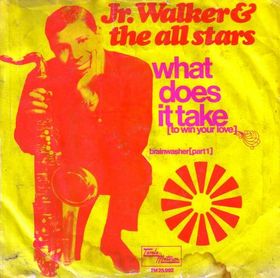
Jr. Walker and the All Stars – “What Does It Take (To Win Your Love)”


Jr. Walker and the All Stars – “What Does It Take (To Win Your Love),” Pop # 4, R&B # 1

By Joel Francis

“What Does It Take (To Win Your Love)” was Jr. Walker’s second chart-topper and first since 1965’s “Shotgun,” but the two songs couldn’t have been more different. While “Shotgun” was a raw roadhouse rumble with the horn dominating the vocals, “What Does It Take” was a smooth love song designed to drive traffic to the bedroom.

Although Walker penned many of the All Stars’ best numbers, like “Shake and Fingerpop,” “Hip City” and “Last Call,” he handed the reigns over to the songwriting and production duo of Harvey Fuqua and Johnny Bristol in a bid for greater pop success in the late ‘60s.

On paper it looked like a solid decision. Fuqua and Bristol were trusted entities. The latter discovered Walker, and the former gave Walker his first record deal. When Fuqua’s Harvey Records were purchased by Motown, Fuqua, Bristol and Walker became part of the Hitsville family.

While Fuqua and Bristol were successful in taking Walker back to the top of the charts, they did it by depriving Walker of his signature sound. The great saxophone that propelled so many All Stars singles was relegated to anonymous responses that could have been handled by any session player. Walker has overcome his initial microphone shyness to deliver a credible vocal, but his delivery his hardly distinct. All the right elements may be in place, but the product is competently forgettable.

Any thoughts that Walker strayed too far from the sound that made him great are reinforced by Kenny G’s 1986 cover featuring Bristol on lead vocals.

Classic Christmas Carol: “St. Stephen’s Day Murders”

(Above: Ceoltoiri Chluain Tarbh [Clontarf] go on the wren in 2008.)

By Joel Francis

Information on St. Stephen is scarce. Everything known about his life is contained in two chapters in the New Testament’s book of Acts. Stephen was one of several men appointed by the 12 disciples to preach the gospel. A man “full of faith,” Stephen “did great wonders among the people.”

However, the religious leaders in the synagogues at Libertine, Cyrene and Alexandria were not impressed. They falsely accused Stephen of blaspheming against God and Moses, and bribed witness to lie and corroborate the charges. Stephen was found guilty, taken outside the city limits and stoned.

At this point, history ends and religion takes over. The Catholic Church paid tribute to Stephen, Christianity’s first martyr after the crucifixion of Christ, designated Dec. 26, St. Stephen’s Day. On this day, also known the Feast of St. Stephen, families gathered to eat and drink together. Because Christmas Day was celebrated with friends at parties at the time, this day with family was a nice counterpoint.

Centuries later, the Irish further appended the legend with the hunting of wren. At some point during the Feast of St. Stephen, the children from each family would find a wren and chase it until it was captured or died from exhaustion. After “going on the wren,” the children would tie the dead bird to the end of a pole or put it in a cage and parade around town singing.

Each group would stop at homes around the neighborhood, show their bird and collect some money. At the end of the day, the money the town’s children gathered was pooled and used to host a huge city-wide dance.

There are two tales why the wren became the unfortunate victim of the day. In one version, St. Stephen had all but eluded his capture when a singing wren betrayed his hiding place. This account conveniently ignores Stephen’s statement on trial about seeing the heavens open and Jesus standing at the right hand of God. The other explanation is that during the Viking raids on the Emerald Island in the eighth century, wrens betrayed the Irish soldiers’ location and foiled a potential ambush.

With this tradition in mind, Catholic-raised songwriter Elvis Costello teamed with Irish luminary Paddy Maloney and the Chieftains to pen a song depicting one of the most Irish of holidays. Against the backdrop of an Irish reel, Costello paints the picture of family “feeding their faces until they explode and getting drunk in an attempt to hide the awkwardness that comes with not having seen each other since this time last year.

The day’s only relief comes when the nattering, obnoxious children finally go out to murder the wren and the adults are finally “rid of them (rid of them!).”

“St. Stephen’s Day Murders” originally appeared on the Chieftains’ 1991 holiday album “The Bells of Dublin.” The theme of the wren is revisited in the songs “The Arrival of the Wren Boys” and “The Wren in the Furze Dance.” “St. Stephen’s Day Murders” also appears as a bonus track on the Rhino edition of Elvis Costello’s “Mighty Like A Rose.”

Keep reading:

Classic Christmas Carol: “In the Bleak Midwinter”

Classic Christmas Carol: “Greensleeves”

Classic Christmas Carol: “I Heard the Bells on Christmas Day”

Classic Christmas Carol: “Fairytale of New York”

Classic Christmas Carol: “Jesus Christ”

David Ruffin – “My Whole World Ended (The Moment You Left Me)”


David Ruffin – “My Whole World Ended (The Moment You Left Me),” Pop # 9, R&B # 2

By Joel Francis

Former Temptation David Ruffin stuck pretty close to his old band’s template on his solo debut. The Harvey Fuqua/Johnny Bristol song was slated to be the Tempts’ next single, but Ruffin was able to sweet talk taking the song with him when he was fired. With backing vocals provided by the Originals, the song sounds enough like the Temptations casual listeners could be forgiven for thinking the news of Ruffin’s departure was nothing but a bad dream.

The lyrics also deal with the frequent Temptations theme of lost love. Like he did in “I Wish It Would Rain” and “Since I Lost My Baby,” Ruffin ruminates over how a promising relationship soured and what to do with the loneliness and ache.

A Top 10 pop hit that just missed the top spot on the R&B charts, “My Whole World Ended” was a promising start to Ruffin’s new career. Unfortunately, the problems that plagued him in the Temptations continued to haunt. Because he wasn’t a songwriter, Ruffin was dependent on others for material, and Ruffin’s erratic behavior and continued drug use didn’t endear him to many Hitsville songsmiths. Ruffin caused further problems when he started forcing his way onstage during Temptations concerts. Fans were ecstatic to hear the old singer deliver the hits, but the group, with new member Dennis Edwards, was less than enthused.

Despite these problems, Ruffin maintained a decent solo career. Although he never matched the success of “My Whole World Ended,” he had several minor hits peaking with another Top 10 smash on 1975’s “Walk Away From Love.”

There was a flurry of immediate covers after the release of “My Whole World” in early 1969. The Chi-Lites, Kiki Dee and the Spinners all recorded interpretations of the song within 18 months of its initial release.

Happy Clash-mas Eve

(Above: The video for “Love Kills,” one of two songs Joe Strummer wrote for 1985 film “Sid and Nancy.” These songs represented his first post-Clash solo work. )

By Joel Francis

Every Christmas Eve, a significant block of time is set aside to honor the late Joe Strummer, who died on Dec. 22, 2002. This year, The Daily Record examines four songs from the last days of The Clash and Strummer’s reluctant transition to solo artist.

“This Is England” by The Clash, from “Cut the Crap”

The final single in the Clash’s illustrious career, “This Is England” has been unfairly overlooked. After firing manager Bernie Rhodes in 1978, Strummer convinced the rest of the group to bring Rhodes back in 1981. That decision hastened the end of the band. Rhodes played Mick Jones off of Strummer, and after the difficult “Combat Rock” sessions convinced Strummer the band would be better with him in charge and without Jones.

Strummer fired Jones, but regretted the decision for the rest of his life. Realizing he had been duped, Strummer and Paul Simonon, the only remaining members in the band at the end, abandoned the material recorded for the post-Jones album “Out of Control.” Rhodes finished the album alone, changed its title to “Cut the Crap” released the album without the band’s permission.

As sad and unfortunate as this tale may be, it shouldn’t detract from the greatness of “This is England.” The synths and drum machine may not line up with the Clash’s established sound, but the diatribe against the Motherland, soaring chorus and knife blade guitars are pure Strummer.

“Sightsee MC” by Big Audio Dynamite, from “No. 10 Upping Street”

When Mick Jones found artistic success with his post-Clash ensemble Big Audio Dynamite, Joe Strummer was both elated and devastated. He was happy for his old friend, but fell into a depression, because he knew the Clash were over. Strummer found a way to work with Jones again, though, when he appeared in the studio and offered to produce the group’s second album.

Despite being penned by its two best-know members, “Sightsee MC” sounds nothing like The Clash. Full of samples, synth beds and big drums, the production hasn’t aged well, but the song was very its time when it was released in 1986. Jones’ rap delivery recalls the Clash song “The Magnificent Seven,” and the Jamaican patios fits in with the band’s love for reggae.  Spidery guitar line and references to “send out a mayday to London” delineate Clash connection.

Strummer frequently performed “Sightsee MC” in concert during his 1988 “Rock Against the Rich” tour with his new band, the Latino Rockabilly War.

“Filibustero” by Joe Strummer, from the “Walker” soundtrack

After writing songs for “Sid and Nancy” and “Straight to Hell,” Strummer became British director Alex Cox’ go-to guy for soundtracks. “Walker,” Cox’ 1987 “acid Western” starring Ed Harris and Peter Boyle has been mostly forgotten, but its soundtrack stands proudly as Strummer’s first post-Clash, solo LP.

Strummer was surprisingly tentative in his leadership of the project, though. Every day he showed up at the Russian Hill recording studio in San Francisco with a boom box and cassettes of sketches and ideas he had heard and recorded the night before. Instructing his musicians to “work something up” he’d disappear for several hours, then return to hear what developed. Under those circumstances, it’s amazing the music not only turned out well, but pleased Strummer.

The lead-off track, “Filibustero” sounds like something out of the Buena Vista Social Club or Afro-Cuban All-Stars. The former punk rock warlord uses Latin American rhythms, arrangements and melodies to capture the film’s Nicaraguan setting. For some reason, “Filibustero” was released as a single, which included several remixes. It did not chart, but it did establish Strummer on the road to world music he would explore in depth a decade later with the Mescaleros.

“Trash City” by Joe Strummer and the Latino Rockabilly War, from the “Permanent Record” soundtrack

Strummer’s work on the “Permanent Record” album marked his fourth soundtrack in as many years, but these sessions were different. After flirting with world music on “Walker,” Strummer was ready to rock out again. He recruited several L.A.-based underground musicians, including former Circle Jerks bassist Zander Schloss and former Red Hot Chili Peppers/future Pearl Jam drummer Jack Irons, and dubbed them the Latino Rockabilly War.

Of the five songs the group contributed to the “Permanent Record” soundtrack, only “Trash City” was released as a single. The track fades in like a party already in progress, as Iron’s drums and Strummer’s guitar hammer the rhythm home. Dropping his normally serious, political façade, Strummer sings about visiting “a girl from Kalamazoo” and tosses in non-sequiturs about coffee shops in Seoul, bowling and vandalism for good measure. The yelps and scream on the outro show how much fun Strummer is having.

Keep reading:

Happy Clash-mas Eve (2008)

Review: Carbon/Silicon at the Record Bar (Mick Jones/Terry James project)

Classic Christmas Carol: “Jesus Christ”

By Joel Francis

Big Star’s third album isn’t a happy affair. The record was delayed for four years by their label and issued in various configurations before finally being issued on CD as “Third/Sister Lovers,” nearly 15 years later. More than three decades later, it remains a fascinating mish mash of songs about death, abandonment, sexual paranoia and odd Velvet Underground and Jerry Lee Lewis covers.

Yet – perhaps metaphorically – out of this mess comes “Jesus Christ.” The fourth cut on the album, the song eschews the expected sarcasm and is a straightforward celebration of the Savior’s birth. In two short verses, songwriter and vocalist Alex Chilton paints an image of angles rejoicing that “Jesus Christ was born today.”

“Jesus Christ” is barely over two and a half minutes, but Chilton doesn’t even need that much to get his point across. The track starts with 20 seconds of nonsense before song kicks in, and closes with a saxophone solo from guest Carl Marsh that betrays the band’s Memphis roots. The performance has a deceptively spare arrangement, alternating between raw verses delivered with just Chilton’s guitar and voice and Jody Stephens’ drums. The touches of piano and percussion on the chorus, however, show that the boys have studied Phil Spector’s Wall of Sound. Although he’s barely audible in the mix, producer Jim Dickinson is presumably somewhere in the background, thumping away on bass.

Big Star may not have been big stars – a video for this song couldn’t even be found online – but they were very influential. Power pop acts like Teenage Fanclub, Matthew Sweet and the New Pornographers owe a lot of their sound to Big Star. Paul Westerberg name-checked Big Star’s leader in the Replacements single “Alex Chilton.” Both Teenage Fanclub and Athens, Ga.-based acolytes R.E.M. have recorded memorable versions of “Jesus Christ.”

Keep reading:

Classic Christmas Carol: “In the Bleak Midwinter”

Classic Christmas Carol: “Greensleeves”

Classic Christmas Carol: “I Heard the Bells on Christmas Day”

Classic Christmas Carol: “Fairytale of New York”

Top 10 Concerts of 2009


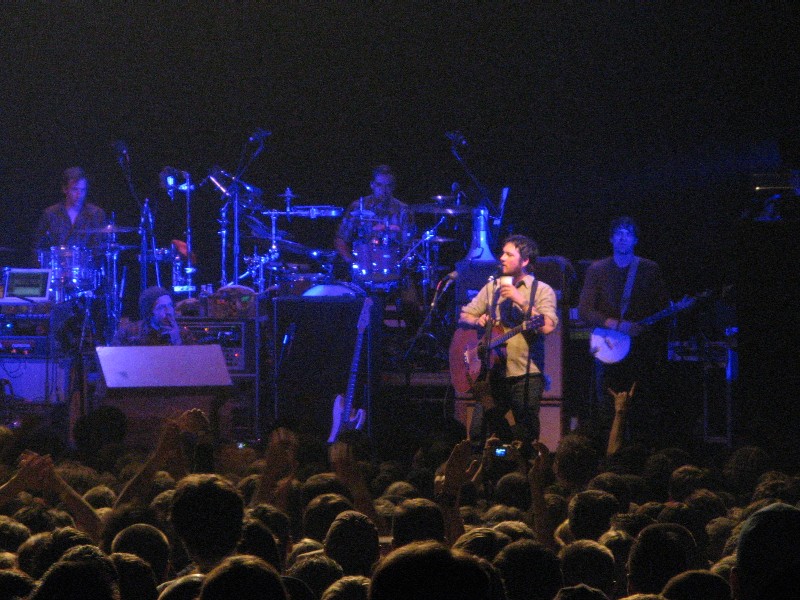
(Above: Modest Mouse’s concert at the Uptown Theater in March deserves an honorable mention.)

By Joel Francis

Stevie Wonder, Starlight Theater, June 27

One day after the shocking death of Michael Jackson, Motown legend Stevie Wonder took the stage before a packed Starlight Theater to both grieve and celebrate his old friend. Wonder’s songbook and the scarcity of his performances – he last played Kansas City in 1986 – already guaranteed a special evening. The timing made it historic. Keep reading….

Bela Fleck, Uptown Theater, April 2

Banjo legend Bela Fleck ditched his band the Flecktones for a half dozen African musicians he encountered on his musical adventure across the continent. The three-hour showcase not only exposed the audience to artists they likely wouldn’t have otherwise been able to experience, but brought the performers to the nooks and crannies of America. Keep reading ….

Sonny Rollins, Walton Arts Center (Fayetteville, Ark.), April 16

Saxophone legend Sonny Rollins marked his first performance in the state of Arkansas by reminiscing about radio host Bob Burns, aka the Arkansas Traveler and crowing about his idol, native son Louis Jordan. In between stories, Rollins and his four-piece band made transcendence standard with extended performances of chestnuts like “In A Sentimental Mood” and newer material. Keep reading ….

Leonard Cohen, Midland Theater, Nov. 9

Leonard Cohen knew that most of his biggest fans had never seen him in concert and that this tour would be their only chance to experience him in person. Accordingly, Cohen, 75, generously packed his three-hour concert with all his big numbers – “Hallelujah,” “Famous Blue Raincoat,” “Chelsea Hotel No. 2,” “Everybody Knows,” and about two dozen more – some album cuts and one new song.

Helping Cohen through this immaculate musical buffet was an impeccable six-piece band. Javier Mas’ performance on bandurria and 12-string acoustic guitar frequently stole the spotlight. His playing added new shades and textures to the songs and his solos were always breathtaking. Reed man Dino Soldo was also impressive on clarinet, sax, harmonica and other wind instruments. Three backing vocalists, including Cohen’s longtime collaborator Sharon Robinson, helped smooth the rough patches in Cohen’s gravely baritone.

The adoring, sold-out crowd marinated in every moment, cheering at choice lines and raining ovations on the surprisingly spry singer as he skipped and hopped joyously around the stage. Cohen may have been forced back on the road for financial reasons, but both he and his audience delighted in celebration.

Sly and Robbie, Folly Theater, June 6
Lee “Scratch” Perry, Beaumont Club, August 30

This summer was a great time to be a reggae fan in Kansas City. Jamaican visitors included two biological sons of Bob Marley, and several metaphorical ones, including Toots and the Maytals, the reconstituted Wailers and Matisyahu. Pioneers Sly and Robbie and Lee “Scratch” Perry were the season’s bookends.

Sly and Robbie, veterans of literally hundreds of reggae recordings, kicked off the unofficial summer of reggae with nearly two hours of rumbling riddims at the Folly Theater. Nearly three months later, the eccentric and prolific producer “Scratch” Perry kept a small Beaumont Club crowd waiting for hours, before finally appearing with a psychotropic set of Bob Marley numbers he produced and originals like “Roast Fish and Cornbread” and “Pum Pum.”

Keep reading:

–          Sly and Robbie
–          Lee “Scratch” Perry

Jimmy Cobb, Gem Theater, October 17

As the last living performer from Miles Davis’ landmark jazz recording, Jimmy Cobb left a crowded Gem Theater crowd feeling anything but kind of blue. The drummer and his five-piece So What Band celebrated the 50th anniversary of “Kind of Blue” by playing all of its numbers, but treating the lauded original recordings more like an outline than a blueprint. When Cobb finally unleashed a drum solo more than an hour into the set, he was rewarded with the standing ovation he deserved. Keep reading ….

Pogues, Midland Theater, October 25

It took the renowned Irish acoustic punk band nearly three decades to reach Kansas City, and the groups notorious singer Shane McGowan wasn’t going to vacate the stage quickly. Alone onstage, the dying chords of “Fiesta” still ringing out, McGowan delivered a very inebriated, off-key version of “Kansas City.” A drink in each hand and cigarette dangling from his mouth, McGowan finally shuffled off to whoops and cheers.

The rest of the Pogues, recently reunited and sober (with one exception), have learned to live with these incidents. It’s probably safe to say a good portion of the crowd showed up because of them. Both the morbidly and musically curious had plenty of cause to be glad. After his only face plant of the evening, McGowan replied with aplomb “That’s why they call me Mr. Trips.” Overall, though, he was in good enough shape to deliver great versions of “If I Should Fall From Grace With God,” “Dirty Old Town” and “Bottle of Smoke.”

Despite suffering from a muddy mix, the rest of the band held up their end of the bargain, especially accordion player James Fearnley who ran and slid around the stage like Bruce Springsteen at the Super Bowl and tin whistle-ist Spider Stacy’s percussive beating of his head with a cookie sheet during “Fiesta.” The McGowan songbook was augmented by the traditional Irish numbers “Irish Rover” and “I’ll Tell Me Ma” and late-Pogues number “Tuesday Morning.” There were a few stones left unturned – “Fairytale of New York” was missed – but more than enough good moments to justify the wait.

Alice Cooper, Ameristar Casino, August 8

Alice Cooper’s theatrics aren’t as shocking as they were 30 years ago. What is shocking is how captivating and entertaining his stage show remains. Cooper’s adventures with the noose, guillotine, iron maiden, hypodermic needle, wheelchair, guns and swords mesmerized a fist-pumping, sold-out audience who sang along to every syllable of “No More Mr. Nice Guy” and nearly every other song in the set. Keep reading ….

Raphael Saadiq, Voodoo Lounge, March 13

While not officially tied to the 50th Anniversary commemoration of Motown, Raphael Saadiq’s 75-minute concert in front of a pitifully small crowd at the Voodoo Lounge was an homage to old-school soul, complete with David Ruffin’s horned glasses, tight suits and choreographed dances. The best aspect, though, was that all the music was new and original material written by the former Tony! Toni! Tone! frontman, much of it drawn from his incredible album “The Way I See It.” Keep reading …

Keep Reading:

Top 10 Concerts of 2008

Stuff your stocking with these live collections

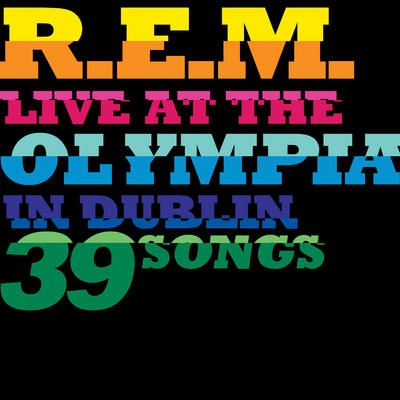
(Above: If you’ve been good, maybe Santa will bring the new R.E.M. album, “Live at the Olympia.”)

By Joel Francis

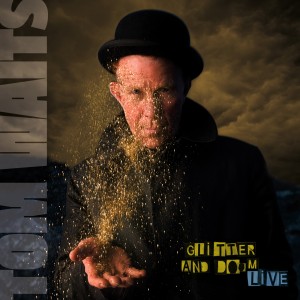
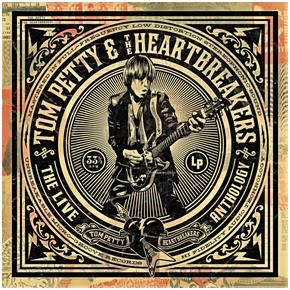
The holiday season is a notorious dumping ground for greatest hits, repackagings and other musical ephemera. Four established artists, however, transcend the fourth-quarter wasteland. New live albums by Paul McCartney, R.E.M., Tom Waits and Tom Petty are essential additions to any music fan’s library.

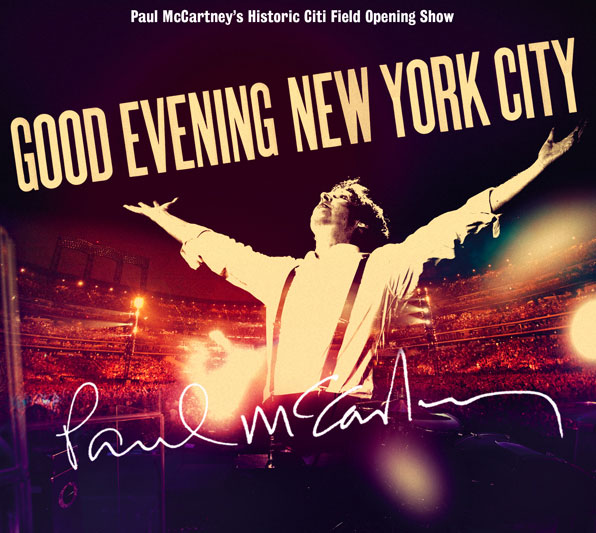
After dropping just one live album in the first half of his solo career, Paul McCartney opened the floodgates over the past two decades. Issuing six live albums since 1990, McCartney has faithfully documented nearly all of his tours and several special performances, but “Good Evening New York City” stands out. The two-CD, one-DVD set documents McCartney’s three-night inaugural performance at the Mets new home Citi Field last summer. Backed by his tight, longstanding quartet, Sir Paul unloads several surprises, like the forgotten “Mrs. Vandebilt,” a tribute to John Lennon with a medley of “A Day in the Life” and “Give Peace a Chance,” and the delightful segue way into Jimi Hendrix’ “Foxy Lady” at the end of “Let Me Roll It.”

Other delights are newer cuts “Only Mama Knows” and “See the Changes,” and the full-band arrangement of “Something” that echoes the performance at the Concert for George. Of course Beatle numbers are plentiful, but the obligatory “Hey Jude” and “Let It Be,” are countered with “Paperback Writer” and “Day Tripper.”

As with all McCartney live albums, the stage banter has been removed, giving the album a bit of a workman-like quality, as the band grinds through the songs with only brief pauses. This editing creates some curious results, such as Billy Joel’s unannounced duet on “I Saw Her Standing There,” or the accidentally buttressing of “Yesterday” and “Helter Skelter” (there was likely an encore break separating the two).

Although there are many places to hear Sir Paul shuffle through the world’s greatest jukebox, few are this energetic or diverse.

When R.E.M. released their last live album, “R.E.M. Live,” only two years ago the band seemed to be running on fumes. Following the disappointing “Beyond the Sun” album with a stop-gap, hits-in-concert set as generic as its title was a naked, holiday cash grab.

A lot has changed since then. Last year’s “Accelerate” brought the trio long-absent acclaim and reinvigorated both the band and its fans. Although “Live at the Olympia” was recorded only four months after “R.E.M. Live” the results couldn’t be more different. While “Live” hit all the obvious marks with little passion, “Olympia” digs deep into the catalog, offering early fan favorites “Driver 8” and obscurities like “Circus Envy.” “Olympia” boasts 17 more songs than “Live” and only two overlapping numbers, so both collections can coexist comfortably.

Fans excited by “Accelerate” will celebrate this 39-track collection. “Live at the Olympia” is the sound of a band being reborn.

Unlike McCartney and R.E.M., it has been nearly a generation since Tom Waits last issued a live album. “Glitter and Doom Live” does a good job spotlighting Waits’ sonic shifts over the last several years, leaning heavily on tracks from his decade on the Anti- label. Drawn from stops along his 2008 tour of the same name, “Glitter and Doom Live” is more a sampler than a complete performance.

Most of the stage banter has been excised, hilariously, to the second disc. “Tom’s Tales” is a 36-minute montage of Waits’ musings about vultures, jokes about Nazi pasta and adventures on eBay that could stand on its own as one of the year’s best comedy albums.

The songs that made the cut, though, are invigorating. “Orphans” cuts “Lucinda” and “Fanin Street” are more raw while “The Part You Throw Away” is delicate and tender. “Get Behind the Mule” sounds like a voodoo chant at a deep South juke joint, and early cuts like “Singapore” and “I’ll Shoot the Moon” are completely reworked. While hardcore fans may have been happier with a set that recreated Waits’ concert experience, few will be disappointed with the 16 songs delivered.

Tom Petty has issued more than a dozen albums during his hit-filled, three-decade career, but until now has only had one live album to his name. “Live Anthology” corrects that problem by offering 50 choice cuts spanning 30 years of gigs. The performances zig zag through the years, but the set flows, creating a dream concert spread across four discs (more if you buy the deluxe edition).

Although all the hits are here, the opening number, “Nightwatchman” shows how deep Petty is willing to delve. More than living up to its name, “Anthology” explores early performances of hits “Even the Losers” right up to full-band arrangements of “Square One” off Petty’s most recent solo album. A sing-along stroll through “A Thing About You” segues seamlessly into Bobby Womack’s soul ballad “I’m In Love.” Later, “Breakdown” slides into a few bars of “Hit the Road, Jack.”

There are no cuts from the Heartbreakers’ mid-‘80s stint as Bob Dylan’s backing band, but honestly, there are enough other incredible moments that they’re not missed. A sublime “Learning to Fly” with Stevie Nicks on backing vocals, an extended “Good to Be King” and unreleased originals like “Melinda” and “Driving Down to Georgia” and covers like “Good Good Loving” and “Goldfinger” (yes, that one) make the set an embarrassment of riches.

This collection not only cements the Heartbreakers’ legend as one of the tightest and most versatile bands of all time, but amplifies their love of rock and roll in all its forms. “Live Anthology” is both more consistent and comprehensive than Petty’s previous box set, the hits/album cuts/rarities collection “Playback.” It is the jewel of Petty’s catalog.

Classic Christmas Carol: “Fairytale of New York”

(Above: “Fairytale of New York” is the best modern Christmas song of all time.)

By Joel Francis
The Daily Record

There aren’t many Christmas songs set in jail, but dang if songwriter Shane McGowan and the Pogues don’t turn lockdown sunny side up during the four and a half minutes of “Fairytale of New York.”

“Fairytales” opens famously on Christmas Eve in the drunk tank. As an old man sings and mourns his last Christmas, the narrator’s mind drifts to a Christmas Eve with the love of his life.

McGowan paints a vivid picture of that day in the New World with “cars big as bars,” “rivers of gold,” and a wind that “goes right through you.” After exploring the Big Apple together, the pair stumbled into a place where

“Sinatra was swinging,
All the drunks they were singing.
We kissed on a corner,
Then danced through the night.”

Irish composer Fiachra Trench’s string arrangement captures perfectly the hope of the moment and excitement of a new life in a new world. During the subsequent verses, love fades and is replaced by drunkenness and addiction. But even as the couple exchanges insults, they keep returning to that Christmas Eve when the choir sang and the bells rang out.

Guest singer Kirsty MacColl appears as the woman in the story. Her melodic voice is a nice counterpoint to McGowan’s gruff brogue. MacColl’s part was originally written for Pogues bassist Cait O’Riordan. That plan fell through in 1986, when O’Riordan absconded with Elvis Costello, who was producing the band’s second album.

When the group hired Steve Lillywhite to produce their third album, he suggested MacColl, his wife at the time, to sing guide vocals on a demo until the band could find a replacement. McGowan liked her part so much she was asked to sing on the record.

Released in December, 1987, “Fairytale of New York” has become a holiday staple. In 2005 the song was re-released as a single, to benefit “Justice for Kirsty,” a crusade to uncover the truth behind MacColl’s 2000 death in a controversial boating accident.

“Fairytale of New York” has been covered numerous times, but never improved.

Keep reading:

Classic Christmas Carol: “In the Bleak Midwinter”

Classic Christmas Carol: “Greensleeves”

Classic Christmas Carol: “I Heard the Bells on Christmas Day”

Top 10 Albums of 2009 (in haiku)

By Joel Francis

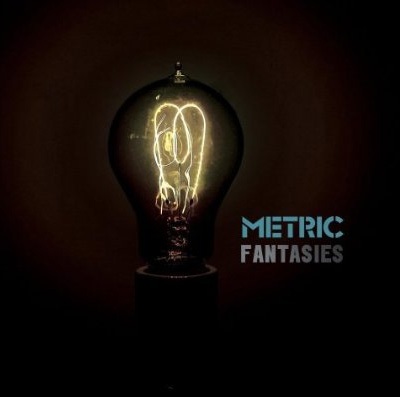
Metric – Fantasies
Indie synth band shines
on fourth album. Smart dance-pop
bests Metric, Phoenix.

Speech Debelle – Speech Therapy
Fun from start to end,
Brit blends hip hop, jazz and soul,
wins Mercury Prize.

Bela Fleck – Throw Down Your Heart: Tales from the Acoustic Planet, Vol. 3
Mismatch on paper
Banjo goes to Africa?
A joyous result.

Neko Case – Middle Cyclone
Red-head continues
streak of amazing albums.
Doubtless to persist.

Allen Toussaint – The Bright Mississippi
NOLA pianist
and songwriter honors roots
with great jazz album.

Me’Shell Ndegeocello – Devil’s Halo
Poetry, jazz, soul –
Don’t try to classify this.
Bass phenom triumphs.

Ben Gibbard and Jay Farrar – One Fast Move or I’m Gone
Voices of Death Cab
and Son Volt pay homage to
poet Kerouac.

Black Joe Lewis and the Honeybears – Tell ‘Em What Your Name Is!
Southern soul throwbacks
bridge JB, Otis.
For fans of Daptone.

Mountain Goats – The Life of the World to Come
Indie sensation
examines life via Bible.
(Isn’t Christian rock.)

Mos Def – The Ecstatic
Fourth LP finds MC
back on game. Fans rejoice. More
rhymes, less acting, please.

Honorable mention:
Maxwell – BLACKsummer’snight
Eight years, a long time.
Welcome back, neo-soul man.
Slow jams worth the wait.

Keep Reading:

Top 10 Albums of 2008 (haiku remix)

Top 10 concerts of 2008

Review: Son Volt (2005)

Review: Neko Case, Son Volt and more at Wakarusa 2005

Green Ribbon Haikus (2008)

Feature: Hail Death Cab

Review: Bela Fleck’s Africa Project

Top 10 Albums of 2007

Top 10 Albums of 2006

Review: Mos Def, Kweli, others at Rock the Bells (2007)

Top 10 albums of 2005

Top 10 Albums of 2004