Claypool hits the jackpot on casino debut

les-claypool.jpg

By Joel Francis
The Kansas City Star

A sold-out and animated crowd renewed Les Claypool’s faith Monday night at Harrah’s Voodoo Lounge.

“I’ve never played a casino before,” Claypool confessed to the crowd toward the end of his set. “I was thinking ‘What’s next, is Claypool going to be playing Branson?’”

Judging from their response, most of the crowd would have been more than happy to travel the three hours to see the bass-playing legend. Claypool’s done quite well following his eclectic muse for the past 20 years, and it saw him through this betting-hall debut.

For a shade over two hours Claypool led his quartet – drummer Paulo Baldi, Skerik on saxophone and sometime Malachy Papers collaborator Mike Dillon on percussion – through a bizarre but upbeat mélange of prog funk free jazz.

That looks like a head-scratcher on paper, but it works surprisingly well in concert. Each player has a well-defined role and knows how to walk the line between the experimental and excruciating. The result may not be for the uninitiated, but it is more accessible than imagined.

The quartet hit their stride with the third song, “David Makalaster.” The band stretched the song to nearly 10 minutes, with each instrument adding new textures and layers.

In a way, this was the template of the night. Claypool would narrate a couple verses of a song and then the group would explore every nook and cranny of what it had to offer. While this is the province of many a jam band – and no doubt there were many jam fans present – Claypool has enough variance in his catalog that the songs never felt  the same.

The credit for this goes to the drummers. Their propulsive interplay kept the group moving forward and made the explorations hypnotic, not repetitive. The light-speed synergy between the two percussionists, who were briefly joined by a third, unnamed guest, created the illusion of an invading drum corp. Drum solos are usually the time for a beer or bathroom run, but when Claypool ceded the stage to the percussion, it drew the biggest cheers of the night.

Claypool keep the songbook focused on his most recent efforts with the Frog Brigade and his 2006 solo album, “Of Whales and Woe.” Set closer “D’s Diner” flirted with hip-hop, and Claypool returned for an unaccompanied stroll through Primus’ “American Life.” When the full band returned for a Black Sabbath cover Claypool bypassed “N.I.B.,” which Primus covered several years ago, in favor of “Electric Funeral.”

Claypool has made a career of blending the disparate. He’s wise and faithful enough to know better than to pander to new fans, but he does know how to make the existing ones very happy. Even if it means playing a casino.

The Miracles – “Shop Around”

Shop Around

The Miracles – “Shop Around” Pop #2, R&B #1

Barry Gordy borrowed $800 from his family to launch the Tamla label. The first group Gordy signed to Tamla was The Matadors, who changed their name to The Miracles.

It’s impossible to underestimate how important main Miracle Smokey Robinson was to Barry Gordy’s success. He not only brought dozens of hit records to the charts with The Miracles, but wrote most of Mary Well’s early hits and “My Girl” for the Temptations. It is impossible to get to Hitsville U.S.A. without going through Robinson.

This song was Motown’s first No. 1 hit (on the R&B charts, at least), over 45 years ago. If you updated the production and handed this song to Mariah Carey under the altered title to “Sleep Around” it would probably be a hit again today. Not that this is necessarily a good thing. — by Joel Francis

Barrett Strong – “Money (That’s What I Want)”

Note: This post is the beginning of a new running feature on The Daily Record. In anticipation of the 50th anniversary of Motown, we’ll be walking through the “Motown: Hitsville U.S.A. (1959-1971)” box set track by track.


Money 45

Barrett Strong – “Money (That’s What I Want)”Pop #23, R&B #2


Barrett Strong may not have wanted to be a lead singer, but Motown founder Barry Gordy definitely wanted money. Strong’s sister went to school with Jackie Wilson, whom Gordy had written some songs for in the early ‘50s. Gordy’s song “Lonesome Teardrops” was a big hit for Wilson, but when Gordy realized the real money in the music game was producing and publishing, he started his own label.

Strong said he was never comfortable on the mic, but he was definitely in the zone with songwriting partner Norman Whitfield. The two would go on to pen several hits for The Temptations including “I Wish It Would Rain,” “Cloud Nine,” and “Just My Imagination” and Edwin Starr’s No. 1 anti-war hit “War.” All of these songs made Gordy some serious money. — by Joel Francis

Warren Zevon far from forgotten

By Joel Francis
The Daily Record

Warren Zevon fans can be forgiven if the seem a bit excitable recently. Two out-of-print albums have been remastered and debuted on CD with bonus tracks, a two-disc set of demos and early recordings dating before 1976, a no-holds-barred biography and the remaster of Zevon’s best-selling album, “Excitable Boy,” complete with a trio of unheard tracks, have all been dropped on consumers in the past several months.

“Excitable Boy” is the best album in Zevon’s catalog. It contains his biggest hit “Werewolves of London,” along with several other biggies, like “Lawyers, Guns and Money.” Most fans already have this album, but the bonus cuts and improved sound may be a temptation to pony up again. Producer Jackson Browne was wise in dropping “Tule’s Blues” and “Frozen Notes” from “Excitable Boy”’s running order – they would have killed the album’s momentum. But separated as bonus tracks they are beautiful numbers that deserved to have airing.

“Stand in the Fire” is a live album made during one of Zevon’s brief mid-life bouts of sobriety that swaps booze for pumps an extra dose of adrenaline. Zevon’s energy is infectious and its hard not to wish you were at the club the night this was recorded. But for all the zest he pumps into rocking numbers like “Jeannie Needs A Shooter” and a closing Bo Diddley medley, Zevon is just as affecting in ballad mode on the bonus tracks of  “Frank and Jesse James” and “Hasten Down the Wind.”

Released just a year after “Stand in the Fire,” “The Envoy” finds Zevon back on the wagon. While there are some gems – author Thomas McGuane co-wrote “The Overdraft,” – the album also contains an ode to Zevon’s drug dealer, which should always be a red flag to the uninitiated to drive around the block and come back later. The bonus tracks aren’t any more inspired – an alternate take, an outtake, a plodding instrumental and a tossed-off cover of “Wild Thing” – but it’s still nice to have this one back in print.

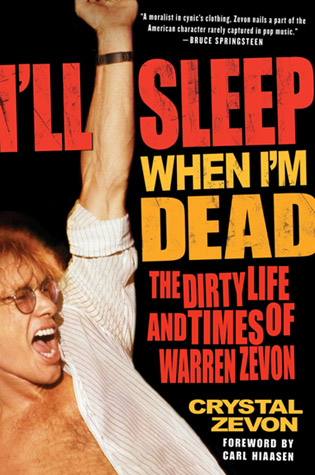
Zevon’s ex-wife Crystal Zevon and draws on interviews with dozens of musicians, producers, former girlfriends and family members to paint a personal portrait of Zevon in the biography “I’ll Sleep When I’m Dead”. Memoirs penned by ex-wives should be approached with caution, but this project got Zevon’s blessing and is admirable in its objectivity. In the first half of the book, Zevon mixes a dangerous cocktail of vodka, cocaine and firearms in his quest for the exposure he knows he deserves. Zevon got his shot, but the same addictions that drove him cost him his wife and daughter.

When he loses his record contract Zevon plunges further into excess, but is eventually rescued and rehabilitated. Finally serious about his sobriety, Zevon found a new addiction in sex. The diary entries reproduced in the book are peppered with stories about neighbors he slept with, daliances with groupies (he duped one into having an abortion) and his hobby in videotaping his adventures. The book’s concurrent themes of addiction and music paint Zevon as a volatile person probably best appreciated from the stage or album. Readers looking for the enlightenment behind their favorite song or album are likely to be disappointed, but they will have a better understanding what Zevon was going through personally while writing, touring and recording.

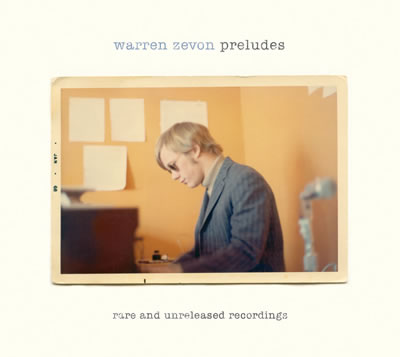
“Preludes” is the greatest treasure for long-time fans. This two-disc set contains an interview from 2000 and an intimate look at Zevon in his pre-fame days crafting demos of “Accidentally Like A Martyr,” “Desperados Under the Eaves” and “Poor Poor Pitiful Me” and six unreleased tracks including “Studebaker,” which Zevon’s son Jordan performed on a 2004 tribute album. Jordan Zevon found these recordings, along with hundreds more, when he was cleaning out one of his dad’s storage spaces.

Zevon always hovered in that zone between critical acclaim and mainstream success. Its nice to see, four years after his death, that he continues to get the respect and exposure he deserved. These releases, and hopefully future ones in the same vein, will ensure that Zevon is kept in our hearts a while longer.

Review: Wilco Wows at Crossroads KC

wilco_x3.jpg

By Joel Francis

The Kansas City Star

In front of a sold-out, rapturous crowd Saturday night, Wilco closed out the inaugural concert season at Crossroads KC at Grinder’s with a perfect performance from a band at the peak of its powers.

Wilco performed as many songs – four – from its first album, “A.M.,” released back in 1995, as its current one, “Sky Blue Sky.” Those albums are different creatures, but the transition was seamless. While the crescendo and subtlety of “Hate It Here” stood in sharp contrast to the straightforward rock of “Box Full of Letters,” the juxtaposition of each song actually made them reinforce each other.

Wilco’s compulsion to explore the dark corners of its songs brought an energy and freshness to the performance. Show opener “Via Chicago” was a perfect balance of power and nuance and noise and melody. The song started quietly, but a cacophony erupted during the chorus when each band member blasted away independently on his instrument before suddenly rejoining the ensemble for the verse.

Nearly two hours after taking the stage the sextet re-emerged for a second encore, which featured the nonstop haymaker punches of “Red-Eyed and Blue,” “I Got You,” “Casino Queen” and “Outtasite (Outta Mind).” Already excited, the audience was whipped into a joyous frenzy that found many bouncing up and down involuntarily.

If the audience was delirious, the band was having as much fun. Jeff Tweedy broke into a hambone dance during “Hummingbird,” bass player John Stirratt frequently jumped around the stage, and Pat Sansone struck a Pete Townshend pose with a couple windmill strums on his guitar during “Outtasite.” Even the sound guys were bobbing their heads.

The show also demonstrated why in just one summer Crossroads KC has become the city’s best outdoor music venue. The capacity grounds were crowded, but not uncomfortable. The promoters probably could have packed another 100 people inside.

Thanks to loads of fresh mulch laid down by the grounds crew, the turf was firm and dry despite a hard rain that began before dawn and lasted until noon. In an age of skyrocketing ticket prices Crossroads KC has hosted several of the summer’s best performers at prices that don’t require a second mortgage or even a second thought.

The evening ended with a ferocious delivery of “Spiders (Kidsmoke),” which culminated in a fireworks display and a gentle jab from Tweedy at the opening act at the Sprint Center, just a few blocks north: “Take that, Elton John.”

Set list: Via Chicago/Company on my Back/You Are My Face/I Am Trying To Break Your Heart/Pot Kettle Black/Handshake Drugs/Side With the Seeds/A Shot in the Arm/She’s A Jar/Impossible Germany/Pick Up the Change/Box Full of Letters/Jesus, etc./Too Far Apart/Walken/I’m the Man Who Loves You/Encore 1: Hummingbird/Hesitating Beauty/Hate It Here/Heavy Metal Drummer/Encore 2: Red-Eyed and Blue/I Got You (At the End of the Century)/Casino Queen/Outtasite (Outta Mind)/Spiders (Kidsmoke)

Keep reading:

Jay Bennett, Always In Love

Wakarusa Music Festival (2005)

Holiday Marketing Can Reveal Bands’ Inner Grinch

Review: Taj Mahal at Crossroads

blues_tajmahal.jpg

Blues for Tourists and Purists

By Joel Francis

The Kansas City Star

Blues legend Taj Mahal put on a performance as grand as his namesake Friday night at Crossroads KC.

The Taj Mahal Trio opened with an instrumental that showcased Mahal’s tasty fretwork. Mahal may not win a notes-per-minute competition, but few musicians are as articulate on their instruments.

From there the trio delivered 90 minutes of great blues that was firmly rooted in the genre’s sharecropping/plantation origins, but wasn’t afraid to detour into world music and pop melodies. The result was an evening that pleased both the tourists and the purists.

The set started strongly with “Done Changed My Way of Thinking,” and “Checkin’ Up on My Baby,” which featured Mahal on a hollow body electric guitar. “Blues With a Feeling” found Mahal seated behind a keyboard and delivering part of the song in French. Mahal’s instrument of choice often played the dual role of both the seducer and the seduced, and he wasn’t afraid to sprinkle dirty old man jokes between numbers or moan in a rasp that recalled Howlin Wolf to make his point.

The highlights came when Mahal strapped on an acoustic guitar and performed, in succession, “Fishin’ Blues,” “Queen Bee” and “Corrina.” He said good night, but within a few minutes he started strumming “M’Banjo” and then led his rhythm section through a spirited “You’re Gonna Need Somebody On Your Bond” and “Lovin’ In My Baby’s Eyes,” a beautiful pop ballad that in an alternate world would have been a big hit.

The biggest disappointment of the evening was the turnout. Crossroads was only a third full — about 700 people — and most of the crowd resembled the lot that used to turn up at the old Grand Emporium. Mahal deserved a wider audience, but those who were there knew they were lucky to be hearing a legend, still in his prime, do what he does best.

Rage Rocks the Bells

Rock the Bells Zack

Public Enemy, Black Star, The Roots and Wu-Tang fight the Battle of the Bay in San Francisco

By Joel Francis

The Giants may have been out of town, but that didn’t stop the hits from pouring across McCovey Cove near ATT Stadium when the Rock the Bells festival landed in San Francisco last week.


It was a dream bill that 45,000 fans of ‘90s hip hop couldn’t resist, but with two stages of incredible lineups performing simultaneously some sacrifices had to be made. In the end, The Roots won over The Coup and Public Enemy trumped Blackalicious. Below are some of the day’s highlights.


Public Enemy

Public Enemy was raging against the machine before there was a Rage Against the Machine. Backed by a full band, Chuck D, Flavor Flav and Terminator X showed that songs written during Reagan and Bush Sr. still had plenty of both relevance and resonance. The band did their best Rage tribute with a version of “Son of a Bush” that’s unlikely to win any fans at Fox News. That said, Chuck D probably knows he’s unlikely to win any new fans in the era of T.I., Chamillionaire and, shudder, Flavor of Love, so the band mostly stuck to songs off its groundbreaking initial albums like “Black Steel in the Hour of Chaos,” “Fight the Power,” “Rebel Without a Pause,” and “Public Enemy No. 1.” Anthrax guitarist Scott Ian popped out to lend his axe to “Bring the Noise” and Flavor Flav closed down the set with a performance of “911 Is A Joke” that had the crowd rapping along.


The Roots

As anyone who saw the Roots perform at the Voodoo Lounge last spring can attest, this Philadelphia-based band is one of the most engaging and entertaining performers in the business – regardless of genre. Giving the only 45 minutes was criminal, though predictably the band made the most of what they had. MC Black Thought and drummer/bandleader ?uestlove opened the set with drums-and-mic duet “Web” before the rest of the band and a three-piece horn section joined them. Every song was a highlight, but to watch the group transition from the hip hop beats of “The Next Movement”  to the funky rock of “The Seed 2.0” to the neo-soul flavors of “Act Too (The Love of My Life)” and finally a Philly soul cover of “I Can Understand It” was mind-bogglingly delicious.


Talib Kweli and Mos Def

Mos Def and Talib Kweli have only made one album together which was released nearly a decade ago, but they are still linked in most fans’ minds. There’s good reason for this, as each bring out the best in the other. Mos Def is one of the most improvisational MCs in the business, which is both a blessing and a curse. On his best nights, he rivals most jazz performers with his reworkings of song. On an off night, he comes across as bored. Kweli is one of the best MCs in the game (you don’t get props from Jay-Z on record for nothing) who keeps getting better, but can at times slip into auctioneer mode. Kweli keeps Mos from wandering off, while Mos pushes Kweli’s cadences.

Kweli opened the set on his own, teasing songs from his new album, “Ear Drum,” and launching into classics like “The Blast” and “Move Something,” before bringing out Strong Arm Steady and Jean Grae. Though the guests – especially Grae – were a nice surprise, Kweli was at his best when the DJ dropped out and let Kweli rhyme a cappella. Mos Def took the stage halfway through “Get By” and the results were as close to jazz as two men with a mic are likely to get. From there the duo segued into the classic “Definition,” “Supreme Supreme,” a newer collaboration, and “Respiration.”


Mos performed most of his set on the ground in the area between the stage and the crowd barricade after noticing the strong wind off the bay had the lighting rigs swaying like chandeliers. “It’s hard enough to be a black man in America,” he quipped. “I got kids, y’all.” Fortunately, video cameras and three giant screens kept Mos from being invisible at ground level as he worked his way through a set heavy on newer material. Mos closed with a great medley of “Ms. Fat Booty” and “Brown Skin Lady,” which brought Kweli back out and, finally, “Umi Says.”


Wu-Tang Clan

Hip hop as a live medium tends to get a bad rap (sorry) and acts like Wu-Tang Clan are Exhibit A on how something that sounds great on record doesn’t always transfer well to the stage. Part of the problem is the makeup of the group. There are nine MCs in the Clan, which can be a nightmare at the mixing board. Throughout the evening, each mic was mixed at a different level, rendering lots of vocals inaudible and resulting in something that sounded like loud choreographed chanting. Most songs could only be recognized by the sample or the chorus. Oddly enough the evening’s finest number, “Triumph,” had little in the way of either. Method Man carried the rest of the Clan on his back and carried the night (when he wasn’t crowd surfing and being carried by the crowd), which leaned heavily towards the group’s debut “Enter the Wu-Tang (36 Chambers).”


Rage Against the Machine

After seven years and nearly two presidential terms apart, Rage reclaimed the stage with a force and energy so powerful a S.W.A.T. team should have assembled. In between Wu-Tang and Rage’s sets, the crowd quickly morphed from a diverse, backpacker good-times gathering to a muscular, white frat-boy mosh pit. There was a mixture of menace and testosterone in the air as a crowd who had patiently waited through three Audioslave albums hungered for the return of the real thing.

They weren’t disappointed. Singer Zack De La Rocha led the band through over a dozen volatile indictments that included hits like “Bombtrack,” “Bulls on Parade” and “Guerilla Radio” with album cuts like “Bullet in the Head,” “Vietnow” and the Afrika Bambaataa cover “Renegades of Funk.” This was the musical equivalent of “Fight Club.”


As the festival closed, the defiant refrain of “Killing in the Name” hung in the air. Seven years was too long to wait, but the combustion of Rage’s 80-minute set made it understandable why these ingredients couldn’t be mixed too often.

McCartney in Career Resurgence

Paul McCartney

By Joel Francis

A new Paul McCartney album is not going to slip into the market unnoticed, but while gallons of ink have been spilled over McCartney’s alliance with Starbucks few have recognized the quiet dynasty of solid albums McCartney has made in the past decade.


McCartney has always been his legacy’s own worst enemy. His productivity in the decade after the Fab Four’s break-up produced a number of big hits, but also created a glut of filler. It appears that no one was willing to tell the ex-Beatle that some of his material was, well, awful (or, to be more generous, severely lacking inspiration).


The five rock albums that McCartney has released since the completion of the Beatles Anthology project in 1996, may not be enough to erase the public perception of McCartney as a featherweight solo artist, but time will show this period as the richest in his post-Beatles career.


Flaming Pie (1997) – McCartney returned from the Beatles Anthology rejuvenated. There is an energy in the performances and focus in most of the songwriting that had just been hinted at on previous albums. Ringo’s appearance on “Beautiful Night” helps make it the album’s highlight, but several small touches – like McCartney’s acknowledgement of his legacy with the lyric “I go back so far/I’m in front of me” – show glimpses of promise and consistency unseen in years.

Run Devil Run (1999) – McCartney had romped through his childhood favorites before, but his freshness on the ‘50s classics he recorded for “Run Devil Run” sound more like an energetic, carefree teenager than a middle-aged legend dealing with the death of his wife. Backed by David Gilmour and Ian Paice, this is a rare no-skip McCartney album.

Driving Rain (2001) – “Driving” is the key word here. Like much of “Flaming Pie” and all of “Run Devil Run” this album was recorded live with a limited overdubs with the ensemble that continues to serve as McCartney’s live band. Though the album contains the embarrassing “Freedom,” the light sprinkling of experimental electronic arrangements, the Eastern flair on “Riding to Japur,” and the ten-minute jam of “Rinse the Raindrops” show McCartney was still effectively working new tricks into his craft.

Chaos and Creation in the Backyard (2005) – The crown jewel of the McCartney catalog. Definitely the strongest and most consistent self-penned album since McCartney’s post-Beatles, pre-Wings period thanks to producer Nigel Godrich’s quality control standards. McCartney handles most of the instruments himself on this low-key affair that showcases his strongest collection of songs in a long time.

Memory Almost Full (2007) – McCartney’s latest release is almost like a mixtape of his back catalog. The lead track and single, “Dance Tonight” has a homespun whimsy that recalls “Ram,” while “Only Mama Knows” wouldn’t have sounded out of place on “Wings Over America.” The band that backed McCartney on “Driving Rain” returns for most cuts, and while there are a couple miscues, the results are on par with the standards McCartney set ten years ago.

While this ouput is unlikely to win McCartney any new fans rock fans (his classical work also continues to grow), it is encouraging to see a legend continue to challenge himself. Beatles fans have good reason to be excited to hear what Sir Paul gives us next and can sleep easily knowing it won’t be the great American songbook.

Modest Mouse: Johnny Strikes Up the Band

Modest Mouse

The Kansas City Star 

By JOEL FRANCIS

Isaac Brock says he isn’t surprised that Modest Mouse hit the mainstream a few years ago. Maybe that’s because he doesn’t really think about it.

“I don’t ask myself why people like an album,” said Brock, who founded the band in 1993. “Thinking about those things doesn’t take up as much of my mental sphere as cleaning my floor.”

In 2004 the band went from underground status to platinum-sellers with “Good News for People Who Love Bad News.”

When it came time to work on the follow-up, “We Were Dead Before the Ship Even Sank,” Brock didn’t worry about what anyone would expect: longtime fans, Top 40 scenesters or record executives at Sony. His lack of concern paid off. Even with two new faces in the band — former Smiths guitarist Johnny Marr and prodigal founding drummer Jeremiah Green (who quit in 2003) — the record has been a success.

“For me … it’s counterproductive to think about that stuff,” Brock said. “Somehow we are able to leave all of that at the studio door and start from scratch.

“People assume since Johnny’s in the band he’s changed how we did things. But there are six people in this band, and everyone contributes in their own way. We all do it.”

In other words, don’t come to the show expecting “The Queen Is Dead, Part II.”

“It’s a funny thing,” Brock said. “There will definitely be people who show up based on the premise that Johnny is in the band. But our shows are going to be a lot uglier than what the Smiths did.”

Still, Marr’s contributions influence more than the songs he worked on in the studio. Brock said Marr’s impact on the older material is noticeable.

“That’s where we’ve gotten a lot stronger,” Brock said. “I told him that on any song he didn’t have to play it as it had been played before. Make your own canvas. It would have been a waste if I didn’t let him make his own imprint.”

While Marr’s arrival to the Mouse has generated most of the publicity, Brock also welcomed founding drummer Green back after a one-album absence.

“He just needed to take a break,” Brock said, declining to elaborate on why Green left other than saying he “went out of town for a while.”

“Everyone who leaves is welcome to come back,” Brock said, “with some exceptions.”

Brock said he was surprised at the synergy Green has with Modest Mouse’s second drummer, newcomer Joe Plummer.

“We brought Joe in to play percussion, but the way he and Jeremiah have been playing together as drummers is very cool,” Brock said. “It’s much more interesting than I ever expected.”

Making music that is interesting is the only gauge Brock has for his artistic process.

“It would take a change in who I am for me to care too much,” he said. “I’m not much interested in much other than being who I am.”

Concert Review: Wakarusa Music Festival (2007)

(Above: An areal view of the Wakarusa Nation at Clinton Lake State Park near Lawrence, Kan. in 2007.)


By Joel Francis
The Kansas City Star

Michael Franti and Spearhead, Sun Down Stage

Michael Franti brought his political party to Wakarusa Sunday night. Its platform is both progressive and accessible: share love, be honest, bring the troops home and, oh yeah, have fun.

Franti was backed by his five-piece band Spearhead, and within moments of taking the stage had the masses jumping, waving, clapping and singing on cue. The 90-minute show leaned heavily toward the group’s newest release, “Yell Fire,” and its kinetic energy rarely waned. With barely a pause between songs, Franti’s mix of dub, soul, rock and smatterings of country topped by his spoken/rapped leftist lyrics created a fervor and energy unseen in the political arena by the newest voting generation.

Spearhead’s platform was augmented by a couple of well-placed covers. A medley of “Get Up, Stand Up/Stir It Up” drew great applause, but was dwarfed by the reception for “What I Got.” The Sublime cover was wrapped around a medley of the Sesame Street theme, “The Rainbow Connection” and Cookie Monster’s trademark “C is For Cookie” that Franti said was the high point of a recent gig in San Quinten prison.

The show ended with a stunt guaranteed to put Franti’s already-high approval rating through the roof with at least half the audience when 10 topless, body-painted women joined the band onstage. It was a move no other political party would dare to attempt.

Medeski, Martin and Wood, Sundown Stage

Medeski, Martin and Wood, the most democratically named band since Crosby, Stills and Nash, opened their 80-minute set with a frenzied cacophony of mashed organ keys and frenetic drumming joined by a rock-solid bass line that didn’t let up for 20 minutes.

So much for a soft opening.

Few bands can pull this off without getting monotonous, but more than 15 years of playing hundreds of shows together annually have made the trio the tightest musical battery imaginable. Pockets of melody spring to life from improvisation before a nod of the head or flick of the wrist send the music spiraling off again.

MMW’s music is difficult to describe and impossible to classify. Suffice it to say they are one of the few groups to be greeted with open arms by the traditional fans at the Newport Jazz Festival and the jam fans at Bonnaroo.

Though they were not joined by guitarist John Scofield, who has been touring with the band, no one seemed to mind. A scan of the crowd revealed hundreds of heads locked into the band’s groove, bobbing in unison. Since the trio has no vocalist it’s as close to a sing-along as they’re likely to get.

The Greencards, Homegrown Tent

The Greencards won enough new fans with their mix of melancholy and up-tempo bluegrass music to have their visas renewed indefinitely.

The quartet’s sound split the difference between Old Crow Medicine Show and Allison Krauss and Union Station, but with Krauss’ sense of longing replacing Old Crow’s down-home humor.

Though they performed several original numbers, the absolute high point was a haunting cover of Patti Griffith’s “What You Are.” Anchored by a strummed mandolin and electric bass, singer Carol Young’s voice nailed the heartache and longing of the lyrics. The song built quietly in intensity with an acoustic guitar providing tender sympathy and touches of color from a violin. The applause from that number alone was enough to move the band through customs with no problems.

Keep Reading:

Wakarusa Music Festival (2008)

Wakarusa Music Festival (2006)

Wakarusa Music Festival (2005)