Powerful songs help move protest music back in mainstream

(Above: D’Angelo exposes “The Charade” in the opening hours of Black History Month on “Saturday Night Live.”)

By Joel Francis
The Daily Record

Two anthems of the civil rights movement were released within days of each other, in the dying weeks of 2014. John Legend and Common wrote “Glory” for the civil rights film “Selma.” As the third track on D’Angelo’s long-delayed third album, “The Charade” was released with less fanfare but greater anticipation.

More importantly, after being shunted to the underground for more than a decade, protest music has reemerged in the mainstream. Both “Glory” and “The Charade” were performed on national, network television in February.

Glory-From-the-Motion-Picture-_Selma_-Single

On paper, “Glory” almost looks too obvious. John Legend recorded an entire album of R&B protest songs with The Roots in 2010 (with Common guesting on the lead single). Common’s history of uplifting poetry has earned him invitations to perform at the White House and guest spots from Maya Angelou and the Last Poets on his albums. “Glory” isn’t the first time Common has invoked Martin Luther King for a film. In 2006, he collaborated with Will.I.Am an end-credits anthem for the movie “The Freedom Writers” that sampled King’s “I Have A Dream” speech.

It is clear from the opening gospel chords, that “Glory” is a celebration. It doesn’t challenge the listener like Common’s “Song for Asatta” or Legend’s version of “I Can’t Write Left Handed.” It something we can all feel good about while listening. That may sound like an insult, but it’s not. The civil rights movement brought out the worst in our society, and anyone who weathered that storm, or had a loved one who did, deserves a moment to catch their breath, smile and feel proud.

(Above: Common and John Legend show “Glory” at the Grammys.)

While “Glory” namechecks Ferguson, “The Charade” captures the confusion, frustration and anger of the injustice there. “All we wanted was a chance to talk,” D’Angelo pleads in the chorus. “’Stead we only got outlined in chalk.”

Like most of the songs on “Black Messiah,” “The Charade” doesn’t announce its presence as much as slink into being. D’Angelo’s lyrics are tough to decipher on the first listen, demanding repeated listens and close attention. “Glory” has a gospel choir; “The Charade” has multi-tracked vocals.

The difference between the songs is even more stark in performance. On “Saturday Night Live” D’Angelo and his band dressed in all black, with a chalk outline behind the singer on the floor. Backing vocalists wore shirts stating “I Can’t Breath” and “Black Lives Matter.” D’Angelo wore a hoodie, his face hidden in the shadows. The blistering delivery was a gauntlet – ignore this, America. Driving the point home, the ensemble raised fists in the air over the dying notes, summoning images of John Carlos and Tommie Smith at the 1968 Olympics.

Less than two weeks later, Common and Legend were tapped to close the Grammys. Backed by an orchestra and a gospel choir, everyone wore suits and was clean-shaven. The production dovetailed with Beyonce’s stirring version of “Take My Hand, Precious Lord,” King’s favorite song. The performance was moving, but if “Glory” didn’t feel as powerful as “The Charade” on “SNL,” it might be because it felt more safe.

“Glory” points to how far we’ve come and “The Charade” shows how far we have to go, but both songs end up at the same hopeful place. “Comin’ of the Lord, my eyes have seen the glory,” Common concludes. “With the veil off our eyes, we’ll truly see/and we’ll march on,” D’Angelo affirms. “And it really won’t take too long.”

Keep reading:
John Legend and the Roots – “Wake Up!”

Edwin Starr – “War”

Review: Gil Scott-Heron

Top 10 albums of 2014 (in haiku)

(Above: “Funk n Roll” is the standout track on one of the best Prince albums in years.)

By Joel Francis
The Daily Record

Best-of lists are ubiquitous this time of year. Because The Daily Record loves you so much, we do it in haiku.

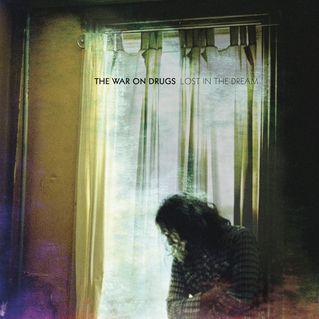
war on drugs1.      War on Drugs – Lost in the Dream
Title says it all.
Chet Baker sang let’s get lost.
Join me won’t you, please?

2.      TV on the Rado – Seeds
Title song is hymn:
“This time, I’ve got seeds on ground.”

Makes my soul smile.

3.      Flying Lotus – You’re Dead
DJ, hip hop, jazz
Introspective mélange iskelis
 feast for brain and ears.

4.      Old 97s – Most Messed Up
20 years later,
Too Far To Care gets sequel.
Band is best when messed.

5.      Kelis – Food
Ribs, cobbler, fish fry.
These tasty song titles whet
appetite for tunes.

6.      Hold Steady – Teeth Dreams?????????????
Lucero axeman
adds grit to busy lyrics.
The Ambassador.

7.      New Pornographers – Brill Bruisers
Supergroup returns
with best batch of power pop
since Twin Cinema.

8.      Lydia Loveless – Somewhere Else
Farm girl references
Verlaine, Rimbaud, Chris Isaak.
eno high life
Arty honky tonk?

9.      Brian Eno and Karl Hyde – High Life
2 albums, 2 months.
Ambient meets house, techno.
Second one is best.

10.  Warpaint –Warpaint
Female quartet takes
four years after debut.
Follow-up worth wait.

Keep reading:

Top ten albums of 2013

Top 10 albums of 2012

Top 10 albums of 2011


Review: Bootsy Collins

(Above: Bootsy Collins takes the stage in Kansas City, Mo. for the first time in a generation.)

By Joel Francis
The Kansas City Star

Bootsy Collins comes by the nickname Star Child honestly. He plays a light-up star-shaped bass, is famous for his star sunglasses and has a personality so radiant he could be nothing but a star.

But it has also been many moons since the R&B pioneer and right-hand-man in George Clinton’s Parliament-Funkadelic empire has been to town. Before Collins took the stage Saturday at VooDoo Lounge, his MC announced the last time the band was in Kansas City it played a funk festival at Arrowhead Stadium. If true, that would have been in the late 1970s.

Collins made up for lost time, opening with a torrential 20-minute medley of both solo and P-Funk classics. Snippets of “Hollywood Squares,” “Mothership Connection” and “Dr. Funkenstein” had the entire house dancing. Although he would perform some complete numbers, most of the night was basically a medley of his best-known songs and choruses.

The two-hour set only slowed down once, for the ballad “I’d Rather Be With You.” Even then, Collins slipped a few bars of “What’s a Telephone Number” and “I Just Called to Say I Love You.” It’s incredible this hit was selected from all of Stevie Wonder’s considerable contributions to funk. It’s even more remarkable that Collins and his band made it work.

DSC_4314Several members of the 10-piece unit have played together for decades. Vocalist Mudbone Cooper and keyboard player Razor Sharp Johnson date to the original Rubber Band from the ’70s.

MC and drummer Kash Waddy goes back even further. He played with the Collins brothers in a band called the Pacemakers that was discovered by James Brown in the 1960s. Collins touched on those days during his monologue about working with Brown on the jam “Funk (Making Something out of Nothing).”

Collins was a little too generous in sharing the spotlight. He left the stage for tributes to friends Bobby Womack and Buddy Miles, a cover of Dee-Lite’s hit “Groove Is in the Heart,” on which he originally played bass, and, oddly, Parliament’s “Flashlight.” The performances were fine, but Collins was missed. His personality is huge, and just him being onstage pushed the energy up a couple notches.

Every time Collins left the stage he returned in a different outfit. The best was the mirror-ball tuxedo and top hat he wore to open the show, and the red-sequined Casper the Friendly Ghost gown he debuted last. During “Tear the Roof off the Sucker,” a couple of bandmates helped Collins remove the ghost gown to reveal a Chiefs jersey of Alex Smith underneath.

Dressed as if he were ready to return to Arrowhead, Collins jumped into the crowd and spent about 10 minutes hugging fans, shaking hands and posing for selfies as the band roared on.

When he finally returned to the stage, Collins announced he was auctioning the jersey to raise money for his Bootsy Collins Foundation. The jersey brought $600, and the winner got the privilege of closing down the vamp on “One Nation Under a Groove.”
Setlist: Bootsy? (What’s the Name of this Town) > PsychoticBumpSchool > Hollywood Squares > Mothership Connection > Dr. Funkenstein, Groove Is in the Heart, Don’t Take My Funk, Body Slam > Funk (Making Something out of Nothing), I’d Rather Be With You (including What’s a Telephone Number, I Just Called to Say I Love You), Them Changes, Flashlight, Stretchin’ Out (In a Rubber Band) > Funk (Making Something out of Nothing) > Tear the Roof off the Sucker > Touch Somebody > Aqua Boogie > One Nation (Under a Groove).

Fans fuel Toad the Wet Sprocket’s success

(Above: Toad the Wet Sprocket “Fly from Heaven.” The band lands at the Uptown Theater in Kansas City, Mo. on Thursday, Nov. 20.)

By Joel Francis
The Daily Record

The question never went away. Inevitably, someone would ask Glen Phillips when his old band, Toad the Wet Sprocket, was getting back together.

When that finally happened, the question changed: When are you making a new album? Sixteen years after their previous release, the answer arrived last summer with “New Constellations,” a Kickstarter-funded set of 15 new songs.

If that sounds like a long wait for a fan, think of it from Phillips point of view. Although happy to be back onstage with his friends, he was confined to singing material written during his early 20s.

“It was nice to be young, but I don’t want to live there forever,” said Phillips, now 43. “The new songs feel like us, but also feel relevant to what we do now. In addition, they have also brought our older material into new, broader context.”

1-toad2Toad the Wet Sprocket formed in the late ‘80s, and peaked in the early ‘90s. The quartet’s laid-back vibe provided an antidote to the angsty grunge dominating the radio at the time. In 1998, after two platinum albums, one gold record and a dozen Top 40 hits, the band called it a day.

“Enough years have passed and there is enough ease between us now that it was fun to come in and get to deal with Toad as a project,” Phillips said. “It used to be every song I wrote I brought to the band. If it didn’t work there, I had no other outlets.”

That depth was also helpful in selecting songs. “Finally Fading” originally appeared on Phillips’ 2005 album “Winter Pays for Summer.” “Bet On You” was built on “See You Again,” a song from fellow Toadster’s Todd Nichols and Dean Dinning’s Lapdog project.

“We did a lot of culling. Todd and Dean brought some songs in where I’d finish lyrics on them,” Phillips said. “When we reached the end it felt like there was a lot of up-tempo pop songs. We needed more slower, emotional material. That’s when I came up with ‘Enough.’”

With the amount of time between releases and amount of preparation that went into “New Constellations,” Phillips cautions this may be Toad’s final album before conceding even he doesn’t know the band’s future.

“What we may do in the future is do a single than a full ramp-up to an album,” Phillips said. “Making an album puts you on a long schedule. It is interesting to think about. We may look back and say ‘Why did we go through all of that?’

“Or maybe we will do another whole album. I don’t know.”

When Phillips and his bandmates last came to town, they were previewing “Constellations” material. Now, 15 months later, audiences have had time to learn the new songs and sing them back with the same passion as old favorites.

“We were never the cool kids,” Phillips said. “the people who stuck with us did because our music means a lot to them. That really benefited us (with the Kickstarter drive). We have been speaking to people’s hearts for a while and they decided to give back.”

Keep reading:

Review: Toad the Wet Sprocket

Matthew Sweet returns to Midwest Roots

Review: The Rainmakers

Review: Los Lobos

(Above: Unplugged or electric, Los Lobos know how to move a crowd.)

By Joel Francis
The Kansas City Star

To celebrate how far they have come as a band over the last 40 years, Los Lobos went back to where they started.

Over the course of more than a dozen studio albums, the quintet from East Los Angeles has covered folk, blues, R&B, film scores, and traditional and experimental rock. For two hours on Friday night at Yardley Hall, the only English spoken came between songs, and there were no electric guitars in sight.

Instead, the set list focused on traditional Tex-Mex and Latin American songs, with a few originals tossed in for good measure. Despite their different sources, the material blended perfectly.

The songs also displayed different strengths and talents. Several showcased excellent three- and four-part harmonies. Guitarist David Hidalgo not only played violin during “El Gusto,” he also sang a lead vocal line that took him into falsetto on the chorus.

Perhaps the best singing of the night came during “Sabor a Mi.” The ballad allowed Cesar Rosas to show off a range and expression only hinted at on the band’s mainstream releases.

4006_loslobos_MARQUEE_SNP509546v1Taking the stage, spaced evenly in a single row across the front, Los Lobos opened with “Yo Canto,” a track from their latest album, 2010’s underrated “Tin Can Trust.” The song was typical of the night: rapid tempo, high energy and spot-on. In fact, the band slowed down only twice before pausing for a 20-minute intermission.

Behind the band rested enough guitars of different sizes and shapes to open a music store. Conrad Lozano, the only musician not to trade instruments throughout the night, played an acoustic bass so big it looked like a small rowboat slung over his shoulder with a short neck attached.

Steve Berlin was the night’s not-so-secret weapon. He didn’t play on every song, but his contributions added just the right color to the performance. He played two great soprano sax solos during “Borinquen Patria Mia” and “Bailar la Cumbia.” Berlin’s bass sax on “Chuco’s Cumbia” delivered the deep urgency that made the song hit even harder.

Several numbers were staples of Los Lobos’ earliest repertoire as a wedding and restaurant band. It wasn’t hard to imagine the band’s tip jar overflowing during the final three numbers of the night. “Volver Volver” finally got a few fans on their feet, while “Guantanamera” provided material familiar enough to sing with. Berlin also added a great flute solo on that one.

The quintet returned for a traditional reading of its biggest hit, “La Bamba.” The band has been playing this one since it hit No. 1 in 1987, but as the musicians traded verses and exchanged smiles it seemed no one, onstage or off, had gotten tired of it.

Setlist: Yo Canto, Colas, El Cascabel, La Pistola y el Corazon, Los Ojos de Pancha, El Cuchipe, Arizona Skies/Borinquen Patria Mia, Sabor a Mi, Pajarillo, El Gusto. Intermission. Los Mamonales, Cancion del Mariachi, Chuco’s Cumbia, La Feria de las Flores, Bailar la Cumbia, Mexico Americano, Ay te Dejo en San Antonio, Volver Volver, Guantanamera. Encore: La Bamba.

Keep reading:

Review: Ringo Starr

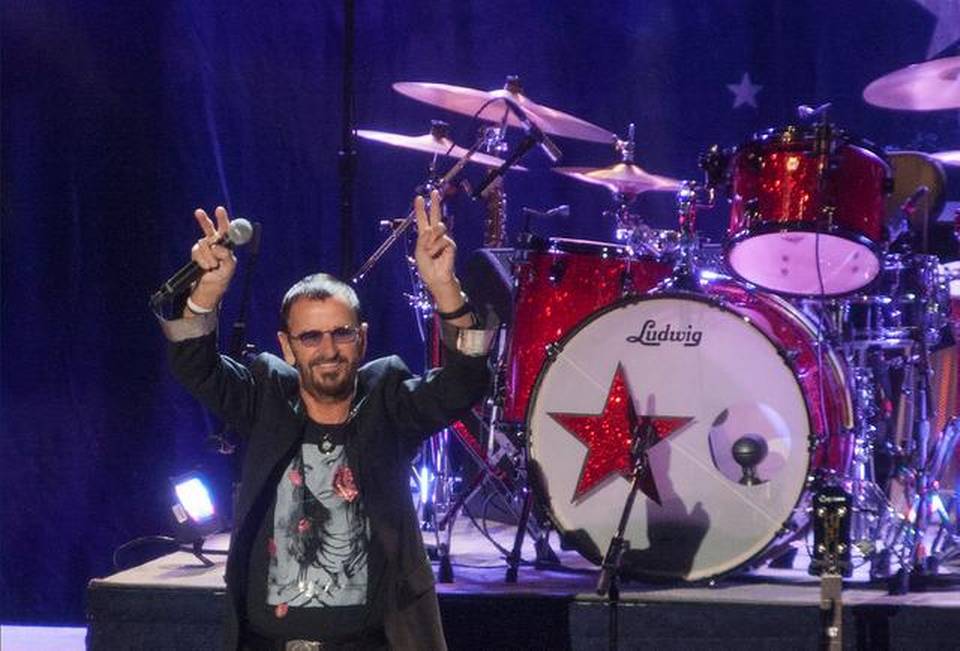
(Above: The run from “Don’t Pass Me By,” “Yellow Submarine” and “Black Magic Woman/Gypsy Queen” was one of the strongest parts of Ringo Starr’s long overdue return to Kansas City in October, 2014.)

By Joel Francis
The Kansas City Star

The last time both Paul McCartney and Ringo Starr both performed in Kansas City in the same year they were onstage together at Municipal Stadium.

The Fab Four’s drummer gave his first performance in the area since 1992 on Saturday night, only three months after McCartney’s concert at the Sprint Center.

Starlight Theater wasn’t quite full, but judging from the crowd’s reaction to “Yellow Submarine” and “With A Little Help from My Friends” many people had waited a long time for this moment.

Several members of Ringo’s All-Starr band were also making belated returns. Bass player Richard Page congratulated the Royals for their playoff success and noted that last time he played Kansas City his band Mr. Mister was opening for Tina Turner, and the Royals had just won the World Series. Guitarist Steve Lukather said he couldn’t remember the last time he was here.

ringoNow in its 25th year and 13th iteration, the All-Starr Band works as a round-robin jukebox with each musician taking the spotlight, then introducing the next band member up. Guitarist Todd Rundgren was the biggest name on the bill aside from the headliner. While the other names may not have been as familiar, the songs they helped take to the top of the charts – “Rosanna,” “Evil Ways,” “Broken Wings” – definitely were.

The seven-piece band had the most opportunity to stretch out and show off on the Santana numbers – “Evil Ways,” “Oye Como Va” and especially “Black Magic Woman/Gypsy Queen” – lead by organist Gregg Rolie, a founding member of the Santana band. Lukather handled lead guitar duties for most of the night, but seem to save his best solos for those songs. Surprisingly, the band also jammed over a slowed-down Bo Diddley beat during Toto’s “Roseanna.” Rundgren’s “Bang on the Drum” incorporated a bit of “Low Rider” during Page’s bass solo.

The only unfamiliar song in the two-hour set was Page’s “You Are Mine.” Rundgren’s amazing guitar arrangement for the ballad showed why he has been an influential and in-demand producer for several decades.

As expected, the Beatles material and early Starr solo singles drew the biggest response. Starr opened and closed the set with a trio of songs and peppered another five in between. His contribution to “The Beatles” album (known as “The White Album”), “Don’t Pass Me By” was a fun surprise. Lukather, Rundgren and Page were clearly having a ball playing their hero’s songs. All three huddled together, sharing one mic on the choruses of “Boys” and “I Wanna Be Your Man.”

The night closed with the introduction of Billy Shears and “With a Little Help from My Friends.” As the song was winding down, the band jumped into John Lennon’s “Give Peace a Chance,” a fitting tribute to the man who has made peace and love his motto.

Setlist: Matchbox, It Don’t Come Easy, Wings, I Saw the Light, Evil Ways, Rosanna, Kyrie, Bang the Drum All Day, Boys, Don’t Pass Me By, Yellow Submarine, Black Magic Woman/Gypsy Queen, Honey Don’t, Anthem, You Are Mine, Africa, Oye Como Va, Love is the Answer, I Wanna Be Your Man, Broken Wings, Hold the Line, Photograph, Act Naturally, With a Little Help from My Friends > Give Peace a Chance.

Keep reading:

Review: R.E.M. “Unplugged, 1991”

(Above: Michael Stipe introduces what “may well be his favorite song in the R.E.M. catalog.” The classic “Fall on Me” gets the unplugged treatment for MTV in 1991.)

By Joel Francis
The Daily Record

The first volume of R.E.M.’s “MTV Unplugged” collection is a perfect storm of both the band and the zeitgeist.

In 1991, “Unplugged” was just starting to take off, thanks to the success of Paul McCartney’s official bootleg from his appearance on the show. The show was gaining a reputation for a place where classic rock artists could rekindle their audience by playing stripped-down versions of hits and a venue for newer, but still established, bands could expand their palette.

The year was also a watershed for R.E.M. Signing with Warner Bros. and a massive tour for “Green” had catapulted the quartet from cult status. “Out of Time,” the follow-up to “Green” became R.E.M.’s first No. 1 album, and produced their biggest hit, “Losing My Religion.”

“Out of Time” was also uniquely suited for “MTV Unplugged.” After building success with riff-heavy arena-ready songs like “The One I Love” and “Orange Crush,” the band decided to scale back. Mandolin, acoustic guitar and organ dominated songwriting process and, in turn, the final recordings.

R-E-M-MTV-Unplugged-1991It seemed inevitable that R.E.M. would appear on the popular MTV show. The surprising part is that it took 23 years for the performance to see proper release. After surviving for nearly a generation as old, dubbed VHS copies and bootlegged CDs, R.E.M. “Unplugged” was finally released. It debuted in April as a Record Store Day Exclusive vinyl set paired with an encore 2001 “Unplugged” performance. Several months later, stand-alone editions of both shows were released in multiple formats.

As a time capsule, “Unplugged” stands somewhere between essential and curiosity. The 17-song set is dominated by “Out of Time.” More than half the album is present, along with one outtake. As such, the album does a great job fleshing out this under-recorded era. Because the band abandoned touring and focused on television appearances and music videos, “Unplugged” stands as one of R.E.M.’s longest sets of the early ‘90s.

That said, most of the arrangements stick pretty close to the album versions so there aren’t any big revelations present. The best songs include a jangly, sing-along version of “End of the World” and an energetic reading of “Radio Song” sans KRS-One that leans heavily on guest Peter Holsapple’s organ. A low-key, less urgent “Disturbance at the Heron House” is a rare revision of an electric number and makes me wish the band had tried a few more (“These Days” and “Driver 8” spring to mind).

Five bonus tracks that never made it to air follow the full broadcast performance. Driven by Bill Berry’s congas, “Get Up” takes on a new life. “Swan Swan H” and “World Leader Pretend” mirror their album counterparts. “Fretless” represents the one song that doesn’t work unplugged.  The studio version of this “Out of Time” outtake foreshadows the direction the band would take on “Automatic for the People.” Robbed of electricity, it lacks the sense of suspicion and dread that fuels the track.

R.E.M. did themselves a disservice by waiting so long to release this set. It undoubtedly would have sold better 20 years ago when the band was at its peak and fans were anxious for new material.  While die-hards and completists have owned this performance for years, the improved sound and bonus tracks make it a worthwhile addition to the catalog. Ultimately, “Unplugged 1991” is a nice complement to a band working at peak convergence of popularity and artistry.

Disclaimer: The Daily Record was sent a complementary review copy of “Unplugged 1991” from Soundstagedirect.com in exchange for promoting the site. Readers may purchase this album, or any other, with a 10 percent discount using code KWS10. Soundstagedirect.com is not the only online retailer carrying this title.

Keep reading:

R.I.P. R.E.M.

Rock Hall commemorates 35 years of Austin City Limits

Classic Christmas Carol: “Jesus Christ”

Review: Chris Thile and Edgar Meyers

(Above: They aren’t the mountain chain associated with bluegrass music, but the Rockies are still an excellent backdrop for Chris Thile and Edgar Meyer.)

By Joel Francis
The Kansas City Star

One of the perks of being a cult artist is that you can count on a good portion of your audience to follow you anywhere. Barely a month ago, Chris Thile was onstage at the Uptown Theater celebrating the reunion of Nickel Creek, the influential bluegrass trio he helped found in the ’90s.

A good portion of that night’s audience likely followed Thile across town for his Kauffman Center debut on Thursday night. Acclaimed classical bass player Edgar Meyer joined Thile onstage in Helzberg Hall.

The hall was three-quarters full for the two-hour and 15-minute performance (including a 20-minute intermission.) Although the music occasionally recalled Nickel Creek’s buoyant acoustic melodies, Thile and Meyer quickly established their own identity.

The pair play a hybrid of classical, bluegrass and folk, equally at home on the couch after dinner or dressed up at a wedding.

The delicate bowed melody of “Monkey Actually” recalled banjo player Bela Fleck’s classical work. The connotation is appropriate, since both Meyer and Thile have worked with Fleck separately. Together, the pair earned a Grammy for their work with cellist Yo-Yo Ma.

Chris_Thile_and_Edgar_MeyerMuch of the evening focused on Thile and Meyer’s new album, “Bass and Mandolin.” The pair played all but two tracks from their second collaboration. Standouts included “Friday,” which sounded like both instruments were in a race, and the gentle “I’ll Remember for You,” which found Meyer on piano and Thile on guitar. “It’s Dark in Here” could have been a lost Rodrigo y Gabriela cut.

If albums like this had singles and radio had interest in playing anything like this, the enchanting “El Cinco Real” would be on every DJ and programmer’s desk in the country. Instead it will have to settle for a life of NPR bumper music.

The material’s musical intricacies were offset by the pair’s between-song banter and jokes. One running gag was how lazy the song titles were. After fretting that the audience might not be able to keep up with the show not knowing that “Ham and Cheese” and “Fence Post in the Front Yard” had been played, Thile casually referred to two Bach arrangements as cover songs.

One song had an intentional title. Meyer’s father introduced him to the jazz bassist Ray Brown when Meyer was a child. Later, Meyer learned that Brown once recorded a cover of “Doxie,” but unwilling to pay royalties to songwriter Sonny Rollins, Brown put a new melody on top of the same chord changes and called his number “FSR.” Meyer and Thile titled their tribute to Brown “FBR.”

After an improvised number the duo said since the piece changed every night, it should have a new title as well. They took several suggestions from the audience — “Swiss Cheese,” “Hole in My Sock,” “One Numb Toe,” “Succotash” — riffing on the ideas and sharing titles from other cities. In the end, Thile and Meyer decided they liked “Snuffleupagus” best.

After announcing the upcoming intermission, Thile joked that they had been counting people during the first half of the set and would notice if anyone snuck out.

“What Chris means,” Meyer said, “is we’re glad that each and every one of you is here.”

Setlist: Why Only One?, The Farmer and the Duck, Monkey Actually, Ham and Cheese, Friday, FRB, Canon, I’ll Remember for You, Fence Post in the Front Yard. Intermission. Tuesday, Tarnation, This is the Pig, Look What I Found, El Cinco Real, Snuffleupagus, Prelude, It’s Dark in Here. Encore: BM3.

Matthew Sweet returns to Midwest Roots

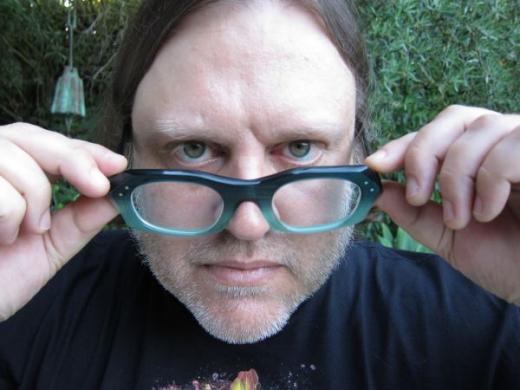
(Above: Matthew Sweet’s performance is definitely a time capsule.)

By Joel Francis
The Kansas City Star

Matthew Sweet is bringing it all back home.

The power-pop singer/songwriter grew up in Lincoln, Neb., but spent 20 years living in Los Angeles.

Last year he returned to his Midwest roots and moved to Omaha.

Around the same time, Sweet released a third volume of covers recorded with former Bangles singer Susanna Hoffs. The project focused on the 1980s and let Sweet play songs from his formative years as a music fan and musician.

Musically, he is returning home too. Sweet, who performs Tuesday at Knuckleheads, has been extensively revisiting his breakthrough album, 1991’s “Girlfriend,” along with its follow-ups, “Altered Beast” and “100% Fun.”

“I guess I have been a bit nostalgic lately,” Sweet said, revealing the idea to revisit “Girlfriend” came out of marking the album’s 20th anniversary.

“The crowds have been so happy to experience the feelings they had back then. It’s not a thing I feel weird about because it feels really natural and healthy.”

Sweet and Hoffs started their collaborative cover albums back in 2006. Each installment focused on a different decade, starting with the 1960s. The series concluded with the ’80s, the decade that saw Hoffs’ greatest commercial success with the Bangles and Sweet’s initial success in the music world.

matthewsweet“I graduated from high school in 1983,” Sweet said. “We covered XTC’s ‘Towers of London’ on our last album. I remember when I bought (the XTC album) ‘Black Sea.’ I definitely got to experience more connections like that on this album than the ’60s and ’70s projects.”

Four years passed between the second and third “Under the Covers” volumes. Sweet said their record label, Shout Factory, grew impatient waiting for the next installment.

“It took a long time for the ’80s volume to come together. We were like a year and a half late turning it in,” Sweet said. “Susanna and I still Skype tracks back and forth occasionally, but I feel the trio of albums will be it for us. We have not planned on doing a ’90s album.”

The 1990s were good to Sweet. After bouncing between labels and releasing a pair of albums in the late ’80s, Sweet found a home at Zoo Entertainment and started a run of critically acclaimed albums that also landed a handful of tracks in the Top 40.

Sweet moved from New York to Los Angeles to capitalize on his success.

“I’ve lived on both coasts and in the South,” Sweet said. “It’s been real comfortable to go back (to Nebraska). I’m rediscovering things I remember liking as a kid, like seasons. I’m a big fan of weather and nature, and it is amazing to experience distinct times of the year and see them change.”

Now back in Omaha, Sweet is no longer affiliated with a label. He plans to record at home, and his fans are helping.

Money for his 12th solo album eclipsed its Kickstarter goal of $32,000. The project’s funding closed Saturday. He’s now writing songs.

“I’m also going to make demos of every song, because I haven’t done it in forever because we’ve just recorded as we went. Those will be available for fans and also will let me pick and choose what I want to use,” Sweet said.

Fussing over demos is almost exactly opposite of the approach Sweet took on his previous solo album, 2011’s “Modern Art.” For that album, Sweet intentionally tried to keep his right brain out of the process, making up melodies and recording where his imagination took them.

“That was almost a stream-of-conscious process,” Sweet said. “I’d hum something into my iPhone, then overdub on that and build a whole song.”

Sweet hopes to have the Kickstarter album out in the spring. Right now there isn’t any new material to debut on tour, but Sweet hopes it won’t be long before he can play new songs.

“It’s been a long time since I’ve played Kansas City,” Sweet said. “Hopefully with me living just up the road now we can make it there more frequently.”

Keep reading:

The Man in (Frank) Black

Cake: John McCrea sees a future without music

The Evolution of Devo

Must-see bands at the 80-35 Festival

(Above: Ziggy Marley will perform at this year’s 80-35 festival, but there are many great bands waiting to be discovered.)

By Joel Francis
The Kansas City Star

Over the past six years, the 80-35 music festival has put Des Moines and the Iowa music scene on the map. Great headliners draw increasingly bigger crowds, but the festival’s secret strength is drawing the best acts from the upper Midwest.

This year is no exception. Bands from nearly every neighboring state will fill the fest’s three stages this weekend.  Here are several bands I’m most looking forward to experiencing live on our nation’s birthday. (Note: Since I will only be able to attend the first day of the festival, all of the following recommendations are from Friday’s lineup.)

Any noisy three-piece rock band from Minneapolis is going to draw comparisons to Husker Du. Fury Things don’t run away from the similarities. Guitars explode from blown amps and drums sound like they are being punished. The band makes a compelling case for coming out early, and are guaranteed to jumpstart the day. (Fury Things perform at 12:45 p.m. on the Kum & Go stage.)

If the Beach Boys hung out in Greenwich Village instead of Venice Beach they probably would have turned out a lot like the River Monks. The Des Moines-based quartet combines a sea of lush harmony vocals over a forest of banjos, guitars and other wooden instruments. Bonus points for an album cover that looks like a physical realization of Brian Eno’s topographic covers in the Ambient series. (The River Monks perform at 8 p.m. on the Hy-Vee stage.)

Singer Johnathan Tolliver fronts soul outfit Black Diet like the second coming of Isaac Hayes, only with a better falsetto. The band may come from Minneapolis, but the sound is straight-up Memphis soul. Touches of slide blues guitar alongside a meaty B3 organ imagine what Booker T and the MGs may have sounded like if Duane Allman sat in (and brought a gospel choir). (Black Diet perform at 4:45 p.m. on the Kum & Go stage.)

8035logo_1Maids haven’t released an album, but the electronic duo has more than enough original material from surreptitiously released singles to fill a set. Danny Heggen’s high tenor soars over keyboards and drum machines while just a touch of guitar fill out the minimalist sound. The song “Seashell” sounds like a lost 8-bit classic until waves of synthesizers take over the track, turning everyone in their wake into Fred Astaire and Ginger Rogers. (Maids perform at 6 p.m. on the Hy-Vee stage.)

Tree probably isn’t named for his love of forestry, but the Chicago MC proves there is more to hip hop than odes to weed. His raspy voice and rhymes are good enough, but what really stands out is the production. The song “Fame” sounds like it was inspired by William Burrough’s cut-up technique, with snippets of gospel organ or jazz piano diced and reassembled at random. “The King” employs fellow Chicagoan Kanye West’s old trick of speeding up a familiar song for the backing track, but Tree ends up with something that would sound like an over-the-top parody if it didn’t work so well. (Tree performs at 2:45 p.m. on the Kum & Go stage.)

Look for a review of Friday’s 80-35 festivities next week on The Daily Record.

 Keep reading:

10 Must-see bands at Kanrocksas (part 1 – Friday)

Wakarusa Music Festival: A Look Back

Middle of the Map 2013