Social Distancing Spins – Day 39

By Joel Francis

Cabin fever has taken hold, but let’s not replace it with a real fever. Stay in and stay safe, my friends.

Bob Marley and the Wailers – Rastaman Vibration (1976) Bob Marley had a lot to prove with Rastaman Vibration as former Wailers Peter Tosh and Bunny Wailer also released their solo debuts that year. But dissonance in the Wailers camp turned to delight for music fans, because all three albums are reggae classics. (We looked at Tosh’s Legalize It yesterday and will likely examine Wailers’ Blackheart Man tomorrow.) Of course, Marley was the biggest star at the time and as such Rastaman Vibration had the greatest resonance. The eighth Marley album, Rastaman Vibration has some of the reggae legend’s best political songs. “Johnny Was” strikes at the casual violence that allows stray bullets to kill innocent bystanders. “Rat Race” calls out a suspected attempted by the CIA to subvert Jamaican politics. The best of them all, though – and arguably Marley’s greatest political song ever – is “War.” As Marley recites Halie Selassie’s 1963 address to the United Nations general assembly the reggae groove behind him simmers, gradually adding backing vocalists and horns. Selassie’s words remain powerful today: “That until the basic human rights/are equally guaranteed to all/without regard to race/this a war.” The song took on added meaning when Sinead O’Connor performed an a cappella version on Saturday Night Live, then tore up a photo of the pope to priests abusing children.

Rastaman Vibration isn’t without light-hearted moments, but songs like “Cry to Me” and “Positive Vibration” are come up short when matched against Marley triumphs “No Woman No Cry” and “Three Little Birds.” The funniest moment in the album comes from the suggestion printed inside the faux burlap textured gatefold sleeve: “This album jacket is great for cleaning herb.”

Marilyn Maye – A Taste of “Sherry!” (1967) Marilyn Maye is a treasure. She started performing around Kansas in the 1930s as a child and had her own live radio show as a teenager. In 1966, Maye was nominated for the Best New Artist Grammy (Tom Jones won). Across her seven decade recording career, Maye has appeared on The Tonight Show more than any other singer. To be honest, Maye’s style of jazz/cabaret singing usually isn’t my cup of tea, but after watching her perform at a local jazz festival several years ago I was converted. Her magic and mastery onstage doesn’t completely translate to this album, one of her earliest, but it is a great reminder of an incredible talent from a bygone generation.

The Libertines – Up the Bracket (2002) One of the greatest British punk albums exploded into the garage rock revival populated by the Strokes, the Yeah Yeah Yeahs, the White Stripes and a bunch of other decent bands we’ve all forgotten about. The Libertines stood out in this landscape populated by loud guitars and snotty attitudes by being a bit more in-your-face and noisy without being off-putting or obnoxious (well, OK, they could be obnoxious). Blessed with cover artwork that recalled The Clash’s “White Riot,” they did one better and got Clash guitarist Mick Jones to produce the album as well. The result is an aggressive, tuneful romp with catchy songs that manages to live up to its title, British slang for a punch in the throat.

Prince – Dirty Mind (1980) Before “Little Red Corvette” and “Let’s Go Crazy” made him a superstar, Prince was a just hard-working funk prodigy hailing from the Upper Midwest (or nowhere, by the standards of the suits on the coasts). After proving that he could handle all the instruments himself on his debut, For You, Prince was hungry for even more control and commercial success on his second, self-titled release. He achieved both goals. Dirty Mind invested all the victories from the first two albums and emerged as the first album Prince recorded in his native Minneapolis with the local musicians previously in his touring band.

Dirty Mind contains all of Prince’s calling cards: carefree pop – “Uptown,” “When You Were Mind” – sexual controversy – “Sister,” “Head” – and a mélange of genres that roamed from new wave to soul and from rock to funk across little more than half an hour. Dirty Mind was the first classic album of Prince’s career and it remains a must-own record today.

John Legend and The Roots – Wake Up! (2010) When this album came out a decade ago, Barak Obama had been sworn in as the first black president in American history and the Tea Party were still calling themselves tea baggers and had yet to take power in the halls of congress. It is important to establish the political context into which Wake Up! was released, because this collaboration between John Legend and The Roots is a very political anthem. The best band in hip hop and the soul crooner selected 11 largely unknown soul protest songs and recast them for this new (Obama) era. As always, The Roots are impeccable and the carefully selected guests add gravitas with their performances. Legend is a capable singer but I can’t help wish that Raphael Saadiq or D’Angelo were helming the project instead. There are several times – particularly during the lengthy version of Bill Withers’ “I Can’t Write Left Handed” and “Hard Times” (a song Curtis Mayfield wrote for Baby Huey, who we discussed back on Day 31) – where Legend’s voice is too smooth and lacks the depth to bring the anger and desperation of the lyrics fully to life. But perfect should never be the enemy of good and Wake Up! is very good indeed. It is also sadly all too relevant.

Blakroc – self-titled (2009) The words “Black Keys” only appear once on this album, in small print inside the gatefold. That’s too bad, because fans of the blues-turned-arena band would probably find a lot to like here. True, Dan Auerbach cedes his vocals to a dozen or so MCs, but the musical guts of this record are the undeniable – and unmistakable – guitar and drums grooves that have powered the duo’s rock releases. The pair provide some very Wu Tang-inspired backing for the RZA and Pharoahe Monch on “Dollaz and Sense.” The collaborations with Diplomat Jim Jones are some of few times when the traditional Keys sensibilities cut through. Jones guests with Mos Def on “Ain’t Nothing Like You (Hoochie Coo)” and appears with Nicole Wray and Billy Danze on “What You Do To Me.” Whether you are a hip hop head or rock fan, there is plenty of gold in Blakroc.

Social Distancing Spins – Day 38

By Joel Francis

Watching the anti-quarantine protests and five o’clock follies, I am trying to take comfort in these words by Walt Whitman:

Meditating among liars, and retreating sternly into
myself, I see that there are really no liars or lies
after all,
And that nothing fails its perfect return—And that
what are called lies are perfect returns.
 
Let’s get into the music.

Talking Heads – Fear of Music (1979) The Talking Heads’ third album is very much a transitional piece. You can hear some glimpses of where they are headed, into the full-blown, Brian Eno-assisted soundscapes that populate their next album, Remain in Light, but for the most part Fear of Music is spare. The song titles are just as lean. Most are one or two words, reading like a cryptic poem on the sticker placed on the pack of the album: “Mind,” Paper,” “Cities.” “Air,” “Heaven,” “Animals.” After the surprise success of “Take Me To The River” on their previous album, the Heads are intentionally running as far away from mainstream success as possible, exploring African rhythms and Ddaist nonsense on “I Zimbra,” feral primitivism on “Animals” and cinematic isolation on “Drugs.” “Cities” races with frantic paranoia and “Air” is laced with sinister synthesizers and processed vocals. Even the songs with strong melodies serve as warnings. “No time for dancing/or lovey dovey,” singer David Byrne proclaims on “Life During Wartime.” Later, “Heaven” is merely a place where nothing ever happens. The Talking Heads were never this stark – or dark – again. Which is why Fear of Music is my favorite Talking Heads album.

Thom Yorke – Tomorrow’s Modern Boxes (2014) The Radiohead frontman’s second solo album is more likely to rattle around in your head after a deep listen than spring from your lips like a Broadway melody. The music is moody and cerebral. And as I found out when I saw Thom Yorke in concert in the fall of 2019, surprisingly danceable and energetic when dialed up to 11. My favorite moments are when Yorke stretches out and lets the tracks hypnotize. “There Is No Ice (For My Drink)” is a glitchy wonderland. “The Mother Lode” manages to combine ambient music with dubstep. I’m not enough of a cryptologist to pretend to know what these songs are about, nor versed enough in EDM to compare this to other, similar pieces. What I can say is that Tomorrow’s Modern Boxes is a solid listen that helps place Radiohead’s The King of Limbs in context.

INXS – Kick (1987) Nearly 25 years after the death of lead singer Michael Hutchence, the music of INXS remains ubiquitous. The Australian band’s pop prowess is undeniable, but they always had trouble crafting great albums around those magnificent singles. Kick, their sixth album, is the one time everything clicked. OK, it helps that five of the dozen tracks here were big hits, but the other seven are no slouches. Opening track “Guns in the Sky” plays like a set of expectations the band will need met before delivering the hits. It sets the table nicely for the great run of “New Sensation,” “Devil Inside” and “Need you Tonight.” The first half concludes with “The Loved One,” the only cover on the album. The second side includes another amazing run of “Never Tear Us Apart,” “Mystify” and the title song. You’ve heard these songs so many times I don’t need to describe them. Kick was so big that even the songs that weren’t singles ended up being recognizable. Knowing the songs’ omnipresence you may question needing to own the album. The answer is yes, of course you do. Because even though you’ve heard them a million times, once you get done playing Kick, you’re going to want to flip it over and play it again.

Berwanger – Exorcism Rock (2016) Singer, songwriter and guitarist Josh Berwanger has been a fixture on the Kansas City music scene since The Anniversary broke through in the late ‘90s. Fans missing that great band might find the next best thing with Exorcism Rock. Former bandmate Adrianne deLanda contributes backing vocals on two tracks and former Anniversary producer Doug Boehm is back behind the boards. But you don’t need to know any of that to enjoy the infectious, hook-heavy songs. It’s impossible not to smile and sing along. The lyrics get catty sometimes – “Heard you on the radio/Song’s bad/I thought I’d just let you know,” goes the chorus on the title track – but the music is always sunny. Stir up Cheap Trick, Tom Petty and the Get Up Kids, another local favorite, and you’re getting close. I saw Berwanger last fall and the songs sound even better in person. I can’t wait to hear them again once all this blows over.

Paul McCartney – Tug of War (1982) Yes, this is the album with “Ebony and Ivory,” and yes that song is awful. But despite that transgression, Tug of War is a great album. First of all, there’s another, even better Stevie Wonder collaboration, the funky “What’s That You’re Doing.” Rockabilly legend Carl Perkins pops up for another duet on “Get It.” Jazz bassist Stanley Clarke also appears on two tracks. The most notable collaborator is producer George Martin, who wrote a great orchestral accompaniment for the title song and a very Beatle-esque horn line to “Take It Away.” Martin also added sublime strings to the affecting “Here Today,” McCartney’s tribute to John Lennon. Despite all this star power, McCartney is always in the driver’s seat. Side two kicks off with the upbeat “Ballroom Dancing.” Later, “Wanderlust” adds another composition to McCartney’s awesome ballad songbook. By the time you get to “Ebony and Ivory,” almost hidden away as the last song on the album, it starts to make a little more sense in the context of the album. Tug of War is easily found in the sale racks at a cheap price and should be an easy purchase next time you see it.

Peter Tosh – Legalize It (1976) Reggae guitarist Peter Tosh had a lot to prove on Legalize It, his solo debut. After coming up in the Wailers, Tosh was eager to establish himself as more than Bob Marley’s sidekick. Although the title song is a strident political statement (with supporting cover art), the rest of the album is surprisingly playful. “Ketchy Shuby” is a light-hearted look at love and “Whatcha Gonna Do” manages to stay perky despite a narrative about running afoul of the law. Think of it as the reggae equivalent of “Here Comes the Judge.” The most heartfelt moments arrive in the middle of the album. “Why Must I Cry” is an emotional breakup song written with Bob Marley. The next song is an excellent Rastafarian hymn, “Igziabeher (Let Jah Be Praised).” Legalize It successfully established Tosh as a star in his own right and ranks among his best work.

Social Distancing Spins – Days 35-37

By Joel Francis

The nice weather is giving me a different type of spring fever. I miss baseball and concerts and hanging out with friends. Thankfully, there is always music. Let’s dive back into the stacks.

Dave Douglas and High Risk – Dark Territory (2016) A few years ago, it felt like there was a trend, or maybe it was a micro-trend, of acoustic jazz musicians performing with electronic musicians. Pianist Brad Mehldau did it with drummer Mark Guiliana and trumpet player Dave Douglas collaborated with electronic artist Shigeto for two albums under the High Risk moniker. Both projects were mostly rewarding and enjoyable. I had the good fortune to see High Risk play at the Iowa City Jazz Festival in support of their first album. Watching Shigeto respond to Douglas’ playing, and then hearing how the rhythm section responded to their interplay was fascinating. I know there can be an easy temptation to assume electronic musicians pre-program beats and melodies and the acoustic musicians shape their music around that, but High Risk was a true live collaboration.  Dark Territory is the most recent High Risk album but I’m still holding onto hope that we might get another album from them at some point. I also hope more musicians explore this concept.

The Clash – Cut the Crap (1985)
Various artists – Recutting the Crap, Vol. 1 (2017)
Various artists – Recutting the Crap, Vol. 2/The Future Was Unwritten (2018) The final album from the seminal punk group The Clash is a mess, not even a hot mess. The conventional thinking is that solid songs were killed by poor (over)production. The good folks at Crooked Beat Records, a shop I used to visit regularly when I had relatives in Washington, D.C., tested this theory by rounding up several local bands to put their spin on the material written after guitarist Mick Jones was fired from the band and manager Bernie Rhodes assumed more control over the group’s music. It looks solid on paper and in truth it’s not bad on record, either. However, the thesis doesn’t hold up for a couple reasons. First, I don’t think all of the songs are as strong as they could be. Joe Strummer didn’t have Jones there to bounce ideas off and push him to improve the material. Secondly, the Clash are a hard band to cover. Sure, you can get the chords right and nail the lyrics, but the non-musical elements – the hunger, the spirit, the righteousness – can’t be taught or copied. You either have them or you don’t. A lot of big-name acts learned this the hard way on the disastrous Burning London tribute album back in 1999. 

Recutting the Crap is best when Cut the Crap is its worst; the lesser known, underdeveloped materials. The tribute runs into problems on “This Is England,” easily the best song on Cut the Crap, and the bonus album of songs that could have been Clash songs. Joe Strummer’s solo contributions to soundtracks and his collaborations with Mick Jones in Big Audio Dynamite. Here, the original material is so strong that the covers, however well-intentioned, come off as pale covers.

Both Cut the Crap and Recutting the Crap are interesting endeavors, but each fall short of the goal line for different reasons.

Sonic Youth – Dirty (1992) The NYC noise rockers found the perfect balance between their early indie releases and having a major label budget (and promotion) on Dirty, their seventh album. “Sugar Kane” and “Wish Fulfillment” strike the balance between melody and discord. “Youth Against Fascism” and “Chapel Hill” have a strong political message as urgent and unruly as what Rage Against the Machine was doing at the time (albeit with a different musical approach). Then there are savage cuts like “Drunken Butterfly” and “Purr” that no doubt confounded the record label executives. The deluxe edition I own contains two extra LPs containing b-sides and rehearsal tracks. A cover of Alice Cooper’s “Is It My Body” sung by Kim Gordon picks up the same feminist string as the Dirty album track“Swimsuit Issue.” A sideways tribute to the New York Dolls on “Personality Crisis” is a hoot. The works-in-progress recordings fill out the story of Dirty, but they’re not interesting enough on their own to keep me turning back to them as often as the album.

Dirty is my favorite major-label era Sonic Youth album. It’s likely that even casual Sonic Youth fans will get Dirty frequently. Anyone nostalgic for the early ‘90s alt-rock scene should check it out as well.

John Coltrane – Ballads (1963) Entire books and doctoral theses have been written about John Coltrane’s genius. I’m not sure I have anything to add, except to say that hearing Coltrane perform with his classic quartet – and especially McCoy Tyner, who we talked about way back on Day 2, is always a deep pleasure. Listening to him hold back the sheets of sound for this slower material provides yet another layer of reward. Put this on after a stressful day for the perfect lull in the storm.

U2 – Pop (1997) U2’s PopMart tour marked the first time I saw the band in concert, so I’m a little biased toward this album. Pop also feels like the last moment that U2 stopped trying to be U2 and while I enjoy several of their albums after this, they also feel very safe and calculated. At the time it came out, recording for the album ran late, cutting into tour rehearsal time and resulting in a rush-released product. You can still hear the effects of this today because the album feels disjointed. I think listening to Pop on vinyl improves the experience because there are forced pauses in the music between sides. The first side contains the opening three hard dance songs. More gentle, acoustic numbers comprise most of the second side, segueing into the most experimental (and weakest) material on the third side (“Miami” and “The Playboy Mansion”). Pop ends with three atmospheric, contemplative tracks on the final side. Being able to concentrate on one style of song at a time gives the album an extended EP feel, which helps it. Regardless how you feel about Pop, the sound of U2 swinging for the fences and missing here is still vastly preferable to the weak bunts and sacrifice fly balls they’ve been serving up for the most part ever since.

The Decemberists – What a Terrible World, What a Beautiful World (2015) The seventh album from the Portland, Ore., indie rockers was also the first release that they sounded like themselves for a while. They went all-in on the proggy concept album “The Hazards of Love,” then responded with the very poppy and folky The King is Dead (which we discussed back on Day 18). Finally, the pendulum arrived back in the middle for this excellent release. Several moments, including “Cavalry Captain” and “Mistral,” recall the high points of their early albums. They break the fourth wall on opening number “The Singer Addresses His Audience,” which comes across as a more academic (and less fun) version of “The Wilco Song,” only with references to Axe shampoo. The centerpiece is “12/17/12,” a response to the massacre at Sandy Hook Elementary School that leaves me with a lump in my throat every time. This is a good place to start if you are curious about the band. Longtime Decemberists fans will find much to love here as well.

The White Stripes – The White Stripes XX (2019) Arriving just in time for the 20th anniversary of the White Stripes’ debut album, this look back includes a record of studio outtakes from the album’s studio recording sessions, and a set from the duo’s tour opening for Pavement. (A DVD documents an additional show from that year.) The platter of outtakes reveal a couple items of curiosity. The is an early version of “Dead Leaves and the Dirty Ground,” which wouldn’t appear until the band’s third album. The smoking version of “Little Red Book” is nearly worth the price of admission on its own. The most surprising thing about the live set is that it exists at all. If you listened to the first season of the Striped podcast, you may remember that the Stripes were essentially driving themselves to these shows and losing money in doing so. It’s amazing that Jack and Meg had the money and foresight to roll tape on these gigs at all. The other revelation is how fully formed their sound is, right off the bat. The recording is a little distant, but the essence of the band that ended up playing arenas around the world is very present on this tiny club stage. Ultimately, there’s nothing here that replaces the raw, honest goodness of the White Stripes’ first album (with the exception of that “Little Red Book.” Yowza!) but the material here is the perfect complement. A dig through the detritus for those who want it.

Social Distancing Spins – Day 34

Day 34

By Joel Francis

Based on the announcements made today it looks like we’ll be doing this for at least another month. I hope everyone out there is safe and healthy.

Ringo Starr – Beaucoups of Blues (1970) The Fab Four drummer had a busy year in 1970. He not only released two solo albums, but was an integral part of Let It Be, the final Beatles album. Beaucoups of Blues was the last Ringo-related release of the year. Frankly, this is a criminally underappreciated album. The premise is simple: Ringo travelled to Nashville and cut a bunch of country tunes with the best session players in the city. The results are even better than expected. As demonstrated on songs like “Honey Don’t” and “Act Naturally,” Ringo has a great voice for country songs. The instrumental support is superb. Finally, the album barely breaks the half-hour mark, so it doesn’t overstay its welcome. If you like the Beatles, country music or top-shelf musicianship, don’t hesitate to grab Beaucoups of Blues next time you see it.

Mikal Cronin – MCII (2013) If you are a big fan of the prolife garage rocker Ty Segall, you may recognize Mikal Cronin as the bass player from Segall’s band. For his second solo album, Cronin brings a lot of the dirt and scuzz from Segall’s projects, but sweetens it up with lots of acoustic rhythm guitar and some keyboards and strings. The result is nearly 40 minutes of wonderful power pop that changes tempo and textures just enough to remain invigorating throughout. After kicking out the cobwebs with rockers like “Shout It Out” and “See My Way,” Cronin ends the album on a graceful, contemplative note with the slow, string-laden “Piano Mantra.”

MCII was my favorite album that year and it remains an absolute delight. Put this on, turn it up and let ‘er rip.

Ella Fitzgerald and Louis Armstrong – Ella and Louis (compilation) The First Lady of Song and Satchmo only appeared in the studio together a handful of times, likely because they knew the universe would not be able to handle this abundance of joy. The two-record set I own combines 1956’s Ella and Louis with 1957’s Ella and Louis Again. There has never been a time I’ve played this music that I haven’t felt better afterward. Dwell on that for a moment. Think about how much has changed in the world over the past 63 years, when these songs were released. And these two have been able to deliver unbridled bliss that entire time. If you don’t own this, there has never been a better time to buy it. We are all stuck at home, starving for human interaction. Think of it as therapy and have it delivered. If you own this, I hope I have inspired you to play it now. The world needs more gaiety, in all times, but especially now.

Rolling Stones – Goat’s Head Soup (1973) The Stones’ 13th U.S. long-player ended their incredible hot streak that started way back with 1966’s Aftermath. I’m fairly confident that the Stones were the best rock band on the planet during that run. You could argue the Beatles, but they broke up in 1970. In 1966, the Who were still figuring everything out on A Quick One (a fine album). The Kinks kept pace for most of that time, but peaked with 1971’s Muswell Hillbillies. Look, the point is that the Stones were very, very good for about seven years. And then Goat’s Head Soup came out.

Goat’s Head Soup isn’t a bad album, necessarily, it’s just not as good as the half-dozen albums that came before. “Dancing with Mr. D” starts the record on a tepid note and it takes the last two songs on the side to rescue the album. “Angie” was a No. 1 hit and the horn-driven “Doo Doo Doo Doo Doo (Heartbreaker)” is solid, but neither are as vital as “Wild Horses” and “Brown Sugar,” the songs that clearly inspired these. The second side is better just because it doesn’t try as hard. “Silver Train” is a ragged romp powered by Mick Taylor’s slide guitar that recall’s the better moments on Exile on Main Street. “Winter” is a beautiful downtempo number to which anyone who has experienced a season that just won’t let go – meteorological or otherwise – can relate. The performance is so good it almost makes up for the malaise plaguing the weaker numbers. There is enough good stuff on Goat’s Head Soup to make it a worthwhile addition, but temper your expectations.

Bruce Springsteen – Human Touch (1992) This was the first Bruce Springsteen album I owned. I know, I picked a really bad time to become a fan. I remember watching Springsteen on Saturday Night Live around the time of this release, when I was just starting to discover him (away from the omnipresent hits, at least). Everything I read said the stage was where Springsteen really came alive. I was underwhelmed. The new arrangement of “57 Channels” was too noisy for my tastes at the time and I didn’t know what to make of the other songs performed because they were on Lucky Town, the other album the Boss released on the same day. I didn’t know what to make of the guy. The live setting didn’t resonate so I kept going back to Human Touch, looking for something that I may have missed.

Here we are nearly 30 (!!!) years later, and I’m still not sure how much gold there is in hills of Human Touch. The album opens with the title track, easily the album’s best song and sonically similar to the Tunnel of Love material. From there it flatlines and coasts. The songs I liked best back in the day remain my favorites today: “With Every Wish,” “Roll of the Dice,” “Real World,” the title track, “Man’s Job,” “The Long Goodbye” – mostly clustered in the middle for some reason. It is only because of Devils and Dust and, especially, Western Stars that I am finally able to appreciate “Pony Boy.”

Thanks to the Tracks box set fans are able to sift through a dozen or so outtakes and piece together their own version of Human Touch. I think the album would have been better with “Sad Eyes,” “Trouble River,” “Red Headed Woman” and “All the Way Home” replacing “Soul Driver,” “Gloria’s Eyes,” “All or Nothin’ at All” and “Real Man.” More importantly, I think we’ve already given this record more time than it deserves. Let’s just move on.

Los Lobos – The Neighborhood (1990) A good friend of mine once commented that Los Lobos were like the second coming of The Band, a group of supremely talented multi-instrumentalists who could sound like themselves while still maintaining the spirit of any genre. For their fifth album, the East Los Angeles quintet enlisted an actual member of The Band to help them along their journey through New Orleans soul (“Jenny’s Got a Pony”), the bluesy swagger of “I Walk Alone” and the heavenly skip of “Angel Dance.” Helm sings on the ballad “Little John of God” where his vocals are understated but the perfect accent. The only element this album doesn’t touch is traditional Mexican music, but that was the focus of their entire previous album, La Pistola y el Corazon, so it’s understandable the wolves bypass it here. There’s not a bad track among the 13 songs here. The Neighborhood remains a high-water mark in the band’s formidable catalog.

Social Distancing Spins – Day 33 (and one-third)

Day 33

By Joel Francis

Keep grinding and hang in there, my friends.

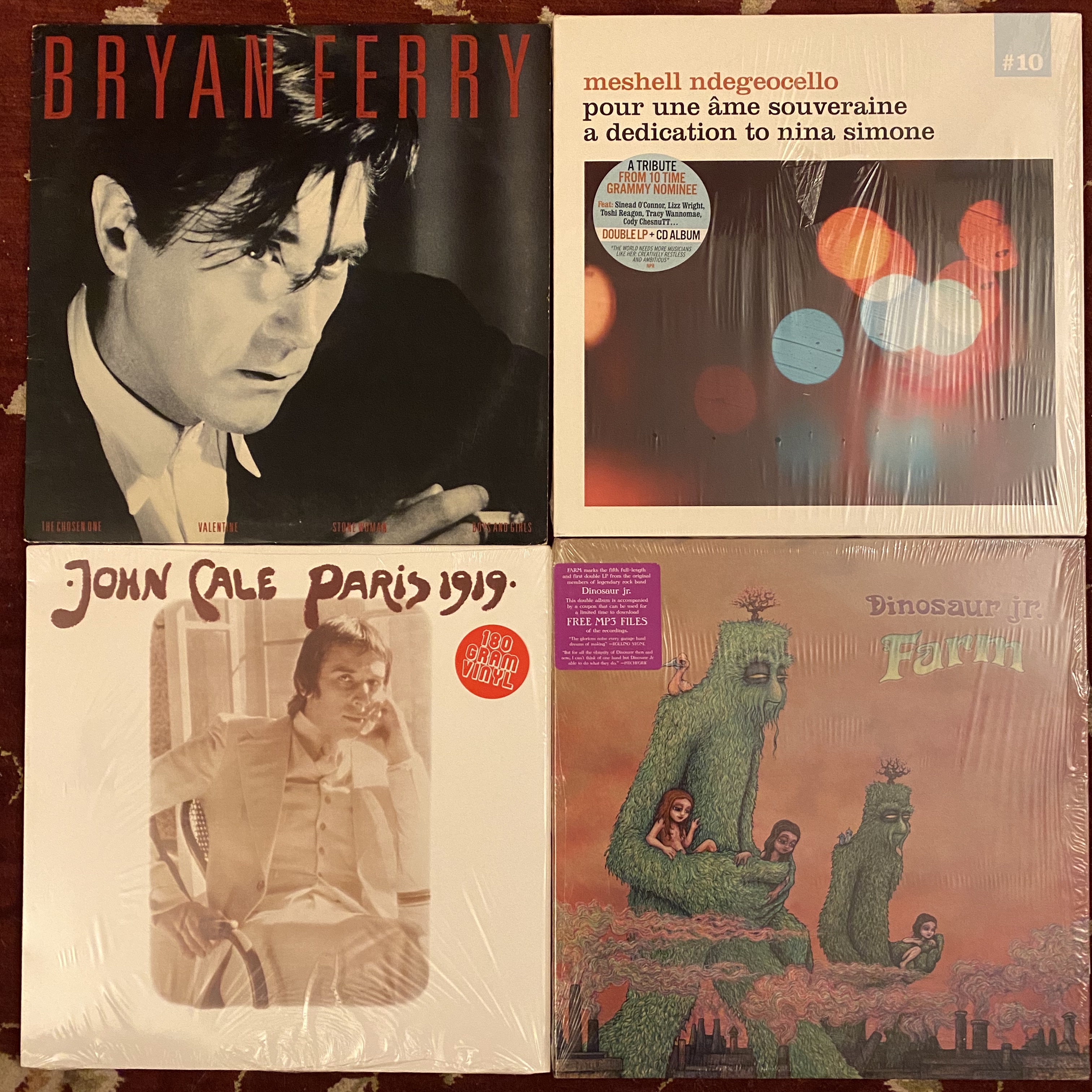
Dinosaur Jr. – Farm (2009) Of all the ‘80s underground bands that reunited, Dinosaur Jr. might be the most underappreciated. If you read Michael Azerrad’s book Our Band Could Be Your Life, you may remember the chapter on Dinosaur Jr. as being the most venomous and spite-filled. (If you haven’t read this book, grab a copy and chow down. It’s not only a wonderful primer on how we got from the Sex Pistols to Nirvana, but a heck of a ride in the van with several then-unknown/now-influential bands.)

Yet just six years after guitarist J. Mascis and bass play Lou Barlow spilled their bile over the page, they were not only playing shows together again, but making new music. Farm is the second album in the reunion run. The trio – including drummer Murph – have blown out the cobwebs and are locked in, particularly on the nearly nine-minute song “Imagination Blind.” In the past, Mascis’s ferocious guitar was matched only by his aggressive vocals. His singing is more laid back these days, providing a counter-point that makes his guitar roar even louder. To date, Dinosaur Jr. have released four albums since reconvening – one more than they gave us in their original run. Farm is my favorite from the second batch.

John Cale – Paris 1919 (1973) Perhaps its because he only appeared on half of their albums, but John Cale has always been hidden in Lou Reed’s shadow of the Velvet Underground. There are no traces of the Underground’s sonic experiments with Cale on this, his third album. The songs are all stately and proper, with orchestration and a lyric sheet that reads like Victorian poetry. It’s also a masterpiece. Cale’s lyrics were rarely this direct and his music this accessible – and elegant – again. Think Brian Wilson spiked with Dylan Thomas and you’re getting close. Either way, you’re going to want to hear this. And then play it again.

Bryan Ferry – Boys and Girls (1985) Prior to Boys and Girls, Bryan Ferry solo albums were almost exclusively vehicles for the singer to put his own twist on other people’s material. With the end of Roxy Music, however, solo albums became Ferry’s outlet for his own compositions. Boys and Girls is Ferry’s first album after Roxy, and it retains the same impeccable sheen as Avalon. If anything, Boys and Girls is so polished it tends to get a bit samey. That said, Ferry’s songwriting is strong enough to keep me coming back to it. My favorites here are the opening singles “Sensation” and “Slave To Love” and the haunting title track. If you miss the sound and feel of late-period Roxy Music and want to keep the party going, Boys and Girls is the place to go.

Meshell Ndegeocello – Pour une ame Souveraine: A Dedication to Nina Simone (2012) Look closely at the album title – this is a dedication to Nina Simone, not a tribute. For her tenth solo album, Ndegeocello does her best to reclaim these well-known covers associated with the diva and civil rights activist. It works.

It is almost impossible to think of the Animals version of “Don’t Let Me Be Understood,” except to comment on the vast differences between the interpretations. The same thing goes with Leonard Cohen’s “Suzanne” and “House of the Rising Son.” The sensual “Real Real” with Toshi Reagon sounds something Ndegeocello wrote yesterday, not a 45-year-old Simone song. Simone was always searching for something new in her music, regardless of the cost, personal or professional. Ndegeocello captures that restless, temperamental spirit well across these 14 tracks. This won’t replace either woman’s individual work, but can proudly rest next to them.

Social Distancing Spins – Day 32

By Joel Francis

Today’s entry puts us at 200 albums in the quarantined exploration of my record collection. Don’t worry, there is still more than enough to keep us busy until well after a COVID-19 vaccine is discovered and dispersed.

Wilco – Sky Blue Sky (2007) It took a while for Sky Blue Sky to grow on me. I admit I was pretty underwhelmed at first. I had seen Wilco several times in support of their previous album and was expecting something raw and bleeding based on those shows. What I got was considerably more mellow and gentle. Once I got past my expectations, I was able to appreciate what Wilco had crafted, rather than what I thought they should have done. Guess who had the better vision.

Many of Sky Blue Sky’s finest moments have become concert favorites. “Impossible Germany” is a great showcase for guitarist Nels Cline’s formidable talents, while “Shake It Off” provides an opportunity for the band to show off their tight-but-loose jam chops. My favorite song is “Hate It Here,” a deceptively cheery song about a person learning to live without a longtime partner. The Wilco catalog is stocked with great albums, but Sky Blue Sky makes a sleeper case for being one of the best of the bunch.

Scott H. Biram – The Bad Testament (2017) Scott H. Biram is like hearing a preacher who got caught doing something dirty and decided to go whole hog down the dark path. A one-man band, Biram sits at the crossroads of folk, blues and country with plenty of hellfire and brimstone to go around. On his sixth long-player, Biram moves between acoustic and electric guitars and mixes in snippets of televangelists between tracks. If you’ve ever succumbed mightily to temptation and prayed just as hard for salvation, you know where Biram is coming from. Buckle your hat and put this on.

George Harrison – Thirty-Three and 1/3 (1978) The fifth album from the Quiet Beatle after the split is a lukewarm affair. The first song, “Woman Don’t You Cry for Me,” opens with a popping bass funk riff that always makes me take a second look at the label and make sure this is actually a George Harrison album. Unfortunately, the second cut is limp, failing to build any momentum from “Woman.” This is the album’s biggest problem. There are some good songs, but they are sunk around listless tracks. The strongest run comes on the second side with the run of “True Love,” “Pure Smokey” and “Crackerbox Palace.” If you put these songs with the three good songs from the first side you’d have a solid EP. That’s six out of ten good songs, a fantastic batting average for baseball but far too low for a Beatle.

Phosphorescent –  Muchacho (2013)

The Lone Bellow – Half Moon Light (2020) The Lone Bellow have always sounded more southern than their Brooklyn roots imply. For their fourth album the trio let more of the indie rock sound from their native borough creep into the mix. Likewise, Phosphorescent frontman and Huntsville, Ala. native has always had more than a little Williamsburg hipster in his brand of country music. Although Half Moon Light and Muchacho were recorded several years apart, they share a complementary vibe and kinship.

The best moments on Muchacho include the triumphant “A Charm/A Blade” and “The Quotidian Beasts,” which sounds like Calexico produced by Daniel Lanois. “Song for Zula” has been all over the place, but I like it best as the music over the credits for the very underappreciated indie romance film “The Spectacular Now.”

Half Moon Light is a similarly sturdy album. Among the stand-out tracks here are “Friends,” the horns and harmony assisted “I Can Feel You Dancing” and the tender “Dust Settles.” If you ever wondered what David Gray might sound like with a touch more country in his repertoire, these albums are for you.

The Flaming Lips – 7 Skies H3 (2011) A while back, the Flaming Lips, Oklahoma City’s finest psychedelic rock export, recorded a 24-hour song, slipped it on a thumb drive and stuck them a real human skull. 7 Skies H3 is a one-hour distillation of the best moments from that experiment. You know, in case you didn’t want to spend a day of your life listening to the full song or want a human skull. (Or maybe a second one. If you already own two, you are likely a voodoo priest. Would a third really matter at this point?)

As expected the results aren’t typical three-minute singles. All the tracks are either instrumental or feature heavily processed vocals. I wouldn’t play it for a backyard cook-out, but as a psychedelic exercise, it is quite good. My favorite moments include “Battling Voices from Beyond,” an aggressive track propelled by tympani and the closing ethereal two-for of the title track and “Can’t Let Go,” the closest thing to a traditional song on the album.

Social Distancing Spins – Day 31

Day 31

By Joel Francis

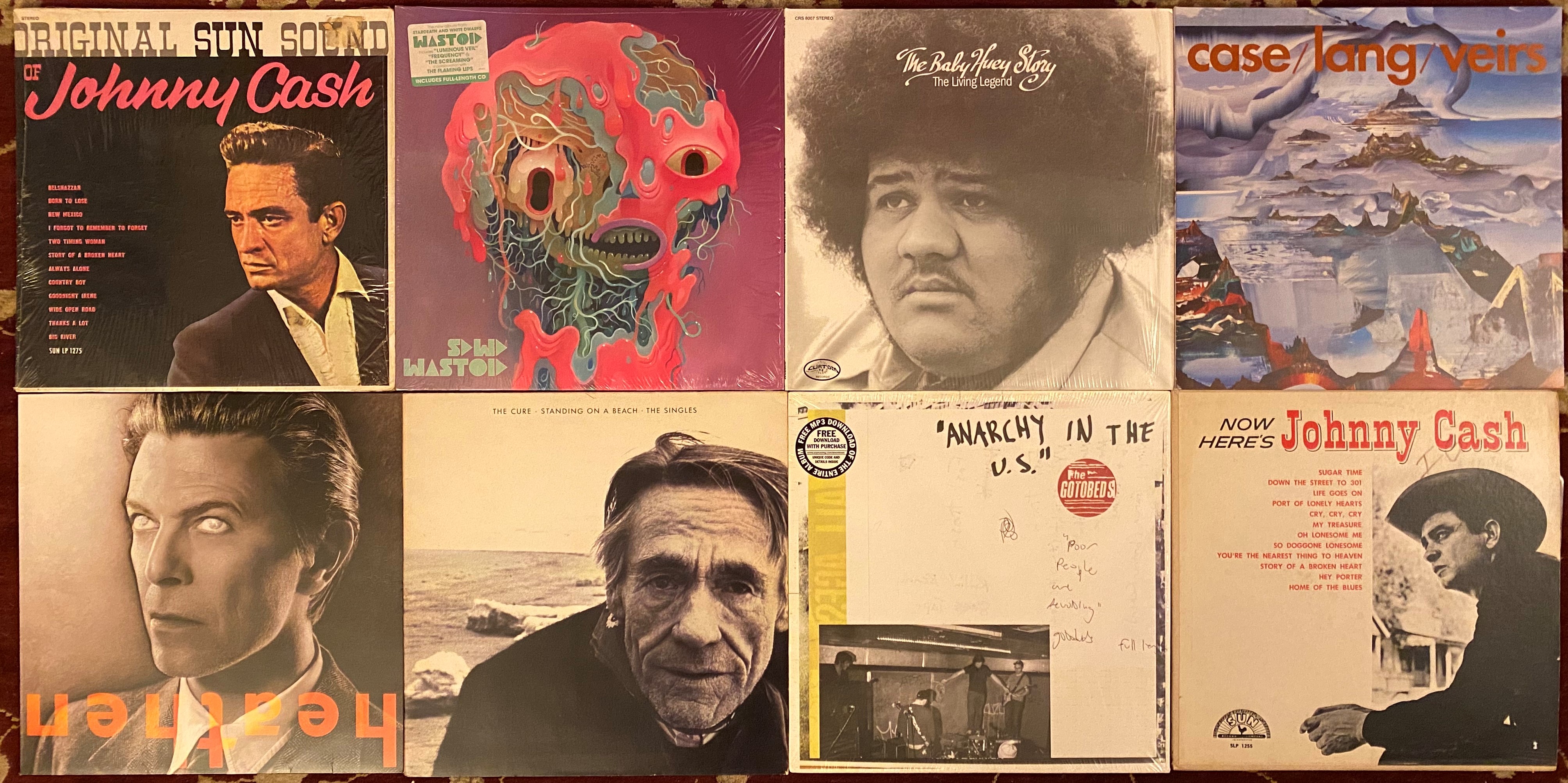
Baby Huey – The Baby Huey Story: The Living Legend (1971) Sadly, Baby Huey was no longer living by the time The Living Legend came out. The soul singer died from a heart attack four months before album’s release.  With no chance of a sequel, The Baby Huey Story makes the most of its shot. “Listen To Me” starts the album with a horn chart so strong it should be in every pep band’s repertoire. An extended reading of Sam Cooke’s “A Change is Going to Come” turns the civil rights anthem into a psychedelic soul adventure. On the flip side, Huey tackles “California Dreamin’” and three songs by benefactor and producer Curtis Mayfield. “Hard Times,” another civil rights song, popped up a dozen years ago on a collaborative album between John Legend and the Roots. In fact, hip hop musicians have mined this album pretty hard for beats and samples since the early ‘80s. There’s a good chance you’ve already heard a lot of Baby Huey’s Story, just in five- or 10-second looped intervals. Soul fans and hip hop heads will find a lot to enjoy in Huey’s abbreviated catalog.

The Cure – Standing on a Beach: The Single (compilation) Greatest hits collections were the meat and potatoes of my music library during my time as a student. In those days of early internet, anthologies were the best place to start for bands and artists with daunting catalogs. I mention this because I learned through the hits collections Standing on the Beach and Galore that the Cure were a very different band on their singles than they were on album. Singles Cure were bright, poppy and quirky. Album Cure was moody, dark and confrontational. I am a Singles Cure fan. Standing on a Beach starts with the band’s early lo-fi post-punk work and leaves off at the doorstep of their must successful commercial period. The transformation is subtle on Standing on a Beach. There aren’t any huge leaps in sound and the progression feels very natural. It’s also more fun than any proper Cure album would allow.

David Bowie – Heathen (2002) At the time of its release, Heathen was hailed as a comeback for Bowie. In retrospect this seems odd, because the final three albums Bowie released as a touring musician, before disappearing for a decade, are very much of a piece. They are Bowie reflecting on his past work, cherry-picking the best bits and reprising them in a contemporary context. Of these three albums – 1999’s Hours, Heathen and 2003’s Reality – I like Heathen best. It feels the most fully realized. There’s not a bum track to be found, but “Slow Burn” and “Everyone Says Hi” stand out as favorites. The reference to the Yankees in “Slip Away” will always make me think of that horrible/wonderful period after 9/11 when we were all New Yorkers, even if the only thing you’d done in New York at the time was go to the Bronx for a ball game like me.

Johnny Cash – Now Here’s Johnny Cash (compilation)

Johnny Cash – Original Sun Sound (compilation) Both of these albums are early 1960s attempts by the Sun Records label to cash in on Johnny’s stardom (See what I did there?) after he moved on with Columbia Records. Interestingly, neither of them contain many hits. Now Here has “Cry Cry Cry” and “Hey Porter” while Original has “Big River.” That’s it. The rest of the 21 tracks across the two albums are deep cuts. And they go pretty deep. “Belshazzar” outfits an Old Testament tale the Tennessee Two sound. Cash liked “Country Boy” so much he cut it again 30-some odd years later on Unchained.  Even the Lead Belly chestnut “Goodnight Irene” gets a spin. The producers on Now Here positioned “Oh, Lonesome Me” next to “So Doggone Lonesome.” “Port of Lonely Hearts” appears earlier in the collection, further driving the point home.  Fans wanting the hits should look elsewhere, but anyone wanting a deeper look at his early period will be pleased. Even better, both of these albums can be found pretty easily for under five bucks.

Stardeath and White Dwarves – Wastoid (2014) Stardeath may have won some new fans through nepotism – lead singer Dennis Coyne is the nephew of Wayne Coyne from the Flaming Lips – but they kept the converted by producing entertaining slabs of psychedelic, experimental rock. Wastoid is the Oklahoma City quartet’s second album. They are significantly heavier than the Lips, but share that band’s morbid playful side. If you ever wanted the Flaming Lips to make a stoner rock album, this is for you. I enjoy Wastoid more than their debut, simply because it sounds more effortless and assured. Stardeath released an EP in 2015 and have been strangely quite since then. I hope we get some new stuff at some point.

Neko Case, k.d. lang, Laura Veirs – Case/Lang/Veirs (2016) The appetite for supergroups goes back to Sun’s Million Dollar Quartet. But for every Traveling Wilburys or CSNY, it seems you get about three Nodding Hillbillies or the Firms. Maybe that’s why Case/Lang/Veirs works so well. I don’t remember hearing much of anything about this project before its release. There was no time to build anticipation and expectation, it was just … there.

The greater reason why Case/Lang/Veirs works is because all three women are incredible songwriters with voices of gold that perfectly complement each other. While this album doesn’t match the high points each artist has achieved on her own it should be cherished by fans of all three.

The Gotobeds – Poor People are Revolting (2014) Sometimes you end up with an album purely because of the convergence of mood, price and genre. The Pittsburgh-based punk quartet are fine purveyors of their craft, but don’t know why I have three of their albums. I’d definitely go see them the next time they come through town, but my fandom isn’t as deep as my record shelf suggests. Poor People are Revolting is the Gotobeds’ first full-length album. If you like the sound of Pavement, the Fall and Sonic Youth noisily colliding with populist politics, this is the place for you.

Social Distancing Spins – Days 28 – 30

By Joel Francis

I hope everyone had a good holiday weekend (if you’re into that sort of thing).

R.E.M. – Reveal (2001) I counted down the days to this album’s release after hearing the lead single, “Imitation of Life.” While I still like that song and a few other moments on Reveal, it was the most unsatisfying experience I’d had with an R.E.M. album until that point. Reveal gets off to a strong start with the first handful of songs, but then just kind of floats on its pillows of keyboards. Reveal also receives a strong demerit for failing to include “Fascinating,” one of the band’s best late-period ballads. It was reportedly cut because it sounded too much like the other material, but Reveal’s biggest problem is that it sounds too samey, and few of its songs are as memorable – or beautiful – as “Fascinating.” Hearing Reveal made me wonder if Up, the band’s first album after the departure of drummer Bill Berry, was a fluke. I don’t begrudge the band for pressing on as a trio, but the great moments were further apart.

Bootsy’s Rubber Band – Bootsy? Player of the Year (1978) George Clinton’s P-Funk was a well-oiled machine by the time bass man Bootsy Collins’ their album dropped. Your mileage with Bootsy? Player of the Year will depend on how much you like Clinton’s signature sound. “Bootsy? (What’s the Name of This Town” and “Roto-Rooter” are exactly the type of high-energy funk exercises you imagine them to be. (“Town” even features some funky flute.) “Hollywood Squares” opens with an appropriately theatrical fanfare, complete with tympani. The slow grind R&B workout “Very Yes” features uncredited but very accommodating female singers. The original funkateer is in prime form here.

Matthew Sweet – Wicked System of Things (2018) After a delightful trio of covers albums with Susanna Hoffs, Matthew Sweet finally pivoted back to his solo career. That return featured so many ideas and guests it was split across two albums, Tomorrow Forever and Tomorrow’s Daughter. The Tomorrow follow-up features Sweet stripping down and rocking out in a trio. Wicked System features some Sweet’s most aggressive playing in nearly a decade, but just because the riffs are harder doesn’t mean the album is lacking Sweet’s power pop chops. “Eternity Now” and “Backwards Upside Down” are great pop songs that could easily slot alongside his ‘90s work in a setlist. “It’s a Charade” is a deceptively sunny protest song, thanks to the cheery backing vocals on the chorus. Wicked System of Things snuck out as a Record Store Day release. I’m not sure it is on streaming platforms, but it is definitely worth seeking out if you are a fan of Sweet or power pop.

The Replacements – Hootenany (1983)

The Replacements – All Shook Down (1990) The Minneapolis college rock favorite’s second album is a beautiful mess, starting with the opening title track. “Hootenany” sounds like something some drunks would rip through in the basement while warming up. In other words, it’s a perfect encapsulation of the ‘Mats’ IDGAF ethos. “Run It,” the second song turns back to the more familiar sound of the band’s debut. Side one ends with “Mr. Whirly,” another drunken jam free-associating well-known riffs and lyrics. My favorite early ‘Mats song kicks off side two. “Within Your Reach” is the first glimpse of Paul Westerberg’s more sensitive and nuanced songwriting, which would blossom on the next two albums.

By the time of All Shook Down, Westerberg was positioning himself as a Serious Songwriter. While the compositions and performances are undoubtedly better, they also aren’t as much fun. That’s not to say it isn’t a good album. “Merry Go Round,” “Nobody” and “Somebody Take the Wheel” belong on any solid Replacements playlist. “Sadly Beautiful” is Westerberg at his aching, lonely best. All Shook Down ends with a song called “The Last,” a fitting title for what would be the end of the line for the band.

Beatles – Anthology 1 (1995) It’s hard to believe, but right now we are as far from the release of the Beatles Anthology series as that landmark look back was from the end of the Beatles. It’s also hard to believe that something that was seen as the ultimate treasure trove when it came out has become so inessential today. Be honest, when was the last time you listened to any of the Anthology collections? Prior to this, it had been years for me, especially for this first volume. Thanks to all the spoken word interludes Anthology 1 has an audio documentary feel the other collections lack. At times it feels like the only reason a performance is included on the album is because it was featured in the film. It’s great fun watching the Fab Four ham it up on Morcambe and Wise, but hearing only the audio is much less fun (and insightful). Hearing the Decca audition tape and the Quarrymen performances are historically interesting but not musically vital. In other words, I’m glad they’re here and that I have them, but I rarely reach for them.

Of course, the big draw for this set was the reunion track “Free As a Bird.” I liked it at the time and I still enjoy it today. Then again, I am also a big fan of George Harrison, Paul McCartney and Ringo Starr as individual musicians, so I was already standing on third before the first pitch was thrown. Hearing these three interact musically on John Lennon’s recording is a delight, and frankly Anthology 1’s best moment. That’s not to say there aren’t other great songs here. The early versions of “One After 909” and hearing “A Hard Day’s Night” and “Eight Days a Week” are definite high points. But the band was finding their footing more than they were experimenting. That came in the later, superior, Anthologies.

Social Distancing Spins – Day 27

By Joel Francis

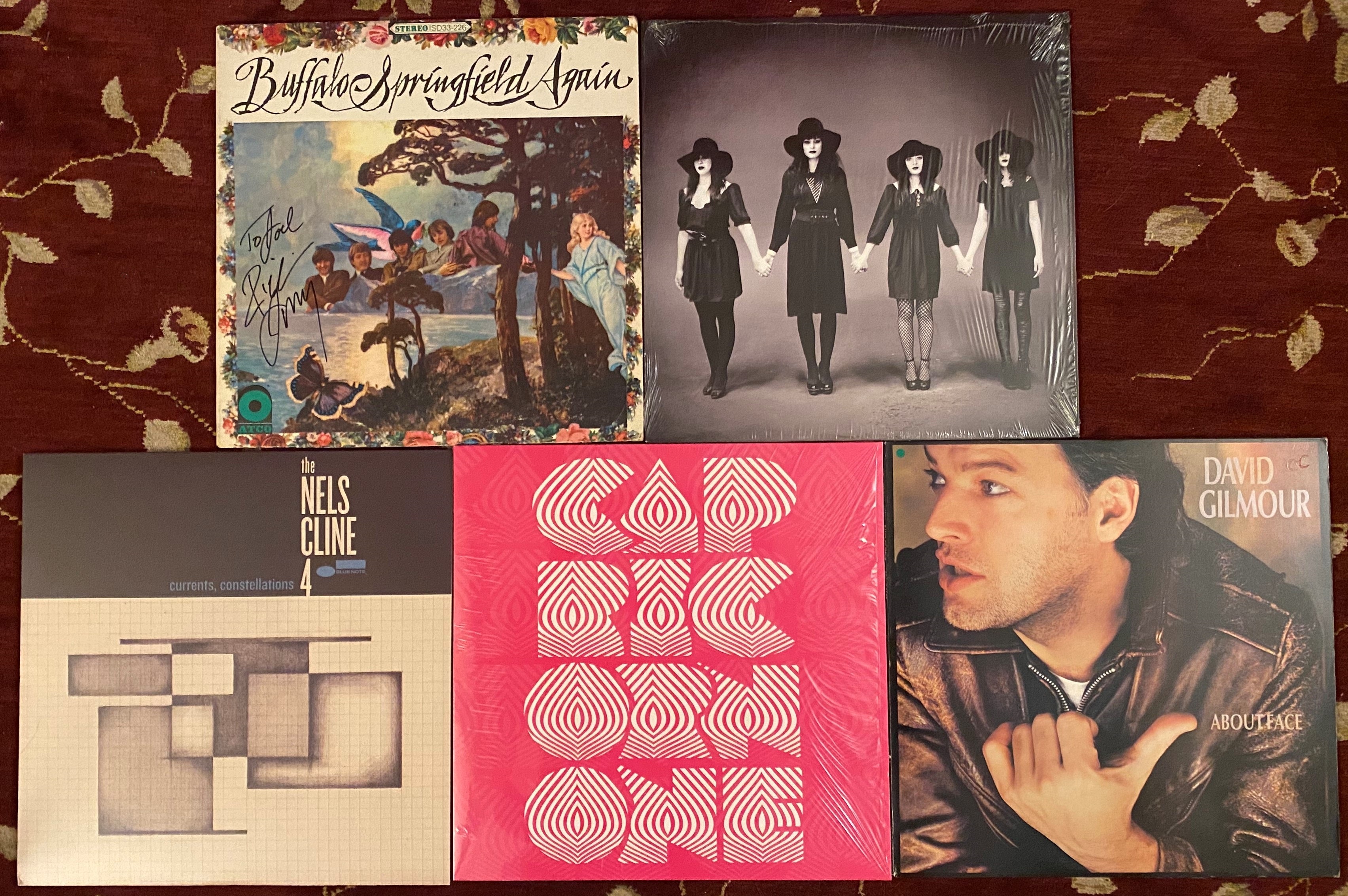
David Gilmour – About Face (1984) Simply put, About Face is not only David Gilmour’s finest solo album, but superior to Pink Floyd’s Momentary Lapse of Reason and The Division Bell as well. “Murder” is Gilmour’s response to the assassination of John Lennon. It starts as quiet acoustic number before exploding in anger against Steve Winwood’s expansive organ playing. I have no idea what “Cruise” is about, but it’s an extremely catchy acoustic number. I’ll admit to be taken aback the first time I heard R&B horns on “Blue Light,” something Pink Floyd never explored, but they have grown on me. Pete Townshend wrote the lyrics for two numbers here. These compositions fit will with what Townshend was doing on his White City album, which I discussed way back on Day 4. Check out the live album Brixton Academy in 1985 featuring both Townshend and Gilmour for another stellar example of their synergy during this time. “You Know I’m Right” is about Roger Waters, with a title (and lyrics) shutting the door on any reconciliation. Gilmour and the Floyd (sans Waters) would be back in a couple years, but About Face makes a strong case that this was the (albeit less commercial) path Gilmour should have considered instead.

The Nels Cline 4 – Currents, Constellations (2018) Playing this album is a good way to find out who your true friends are. While some will hear obnoxious jazz guitar noodling (with two guitarists, no less), others will hear sublime fretboard interplay. If you do happen upon someone who also appreciates this music, buy this person a drink or ask them to marry you, depending on his or her gender and your preference.

Ed Ackerson – Capricorn One (2019) I must confess I had never heard of Ed Ackerson before buying a ticket to his memorial concert last February. Circumstances aligned in my favor: a free evening, a solid lineup, a reasonable ticket price and an opportunity to finally see a show at the famed First Avenue. For a while I felt like an interloper, but after exiting with an armload of vinyl and all the $1 CDs I could get, I now count myself converted.

Capricorn One was Ackerson’s last album before succumbing to pancreatic cancer last October. It’s a Syd Barrett-influenced slab of soaring guitars as wonderfully atmospheric as its sci fi-inspired title implies. Ackerson wrote all the songs, played all the instruments and produced all the tracks. His final musical vision is a great ride.

The Black Belles – self-titled (2011) The self-titled debut by this garage rock quartet is unfortunately their only release. Produced by Jack White for his Third Man Records, it’s hard to tell where the producer stops and the band ends, but if you like White’s raw aesthetic that’s not a bad thing. According to the band the writing and recording came together pretty quickly. They did several high-profile shows during their brief time together, including backing Stephen Colbert on the Colbert Report and playing on his “Charlene” single. They also performed at the Devil’s Night Halloween concert in 2012. My favorite songs here include the appropriately titled “Honky Tonk Horror,” the moody “Not Tonight” and the very Jack White “In a Cage” but the entire album is good enough to make me wish there was at least another volume. Main songwriter, guitarist and vocalist Olivia Jean has subsequently released two solo albums with White and Third Man.

Buffalo Springfield – Again (1967) Neil Young jumps to the fore on Buffalo Springfield’s second album, and it’s easy to see why. His three compositions – album opener “Mr. Soul,” “Expecting to Fly” and closing cut “Broken Arrow” – are all classics in his expansive songbook. But the other songs here are no slouches either. Stephen Still’s banjo-driven “Bluebird” is a lovely song. Later, the harmony vocals on his song “Rock and Roll Woman” foreshadow the coming of Crosby, Stills and Nash. Richie Furay chips in a couple solid compositions as well. The unique horn arrangement on “Good Time Boy” definitely makes it stand out on the album. Buffalo Springfield collapsed under their own weight the following year. Again ranks as the group’s finest release during their short tenure.

Social Distancing Spins – Days 26 and 27

By Joel Francis

Nice weather and conference calls are an anathema to playing records.

Jay-Z – The Black Album (2003) Reading Jay-Z’s book Decoded has me turning back to his old albums for the first time in quite a while. Sean Carter has always been at his best when rhyming about himself, particularly his early exploits as a hustler. Jay’s told it so many times it’s almost as much cliché as legend by this point. The Black Album is loaded with boasting and taunts over some of the best productions of the time. The Neptunes, Rick Rubin, Just Blaze, Timbaland and a young Kanye West all contribute tracks. One of Hova’s best-known rhymes on the album comes from “Moment of Clarity”: “If skills sold, truth be told, I’d probably be lyrically Talib Kweli.” As we saw on 4:44, Jay can’t really do conscious rap without inevitably turning it back on himself. (Remember his lament over not investing in Dumbo real estate in “The Story of O.J.”?) The Black Album is all about Jay-Z all the time, and we are better for it.

Paul McCartney – Press To Play (1986) Somewhere along the way, I got the idea that Press to Play was a solid Paul McCartney album, unfairly overlooked because of its very of-the-moment production. It isn’t. There are some songs I genuinely enjoy here, such as the flamenco guitar-accented “Footprints,” “Press” and “Move Over Busker.” There is a solid EP lurking among these 10 tracks. The problem with the rest is that despite help from 10cc’s Eric Stewart, the songwriting simply isn’t that strong. McCartney was wise to bring in Elvis Costello as a songwriting partner for his next album, Flowers in the Dirt. I didn’t pay much for Press to Play so I don’t feel badly about owning it, but all but the most dedicated McCartney fans can press skip instead.

Sonny Rollins – Next Album (1972) Jazz albums from the 1970s can be a dicey proposition. One never knows how much synthesizer or slap/fretless bass will be involved. Fortunately, Sonny Rollins plays to his strengths on Next Album. For the most part, Rollins plays in an acoustic four-piece setting. Opening number “Playin’ in the Yard” is the only track to feature electric bass and electric piano. It’s also the only time Next Album sounds of the moment, but anyone who enjoyed Joe Zawinul’s tenure with Cannonball Adderly will feel right at home. Later, “The Everywhere Calypso” lives up to its name with a fun Caribbean beat. The absolute high point is a 10-minute version of “Skylark” that closes the album. The band gradually fades away during the performance, leaving Rollins to play unaccompanied for several blissful minutes.

DJ Shadow – Endtroducing (1996) The Bay-area DJ’s first album is the one to which all of his other releases will be compared. None of the songs on this all-instrumental album made the charts, but “Building Steam with a Grain of Salt” has appeared in several commercials. You would probably recognize the haunting piano line if you heard it. The spacey “Midnight in a Perfect World” is another favorite. Clocking in at nearly 10 minutes “Stem/Long Stem/Transmission 2” is the centerpiece of the album. It starts with a harp refrain before building into a hard drum attack (with strings). It eventually settles back down into something almost ambient. If Brian Eno ever tried to create dance music, it might sound a lot like this. Whenever someone says that sampling isn’t music, I hold up Endtroducing as an emphatic counterargument. Then walk away, because arguing about what constitutes music, much like arguing about authenticity or what is or isn’t a sport, is a waste of time. And I’d rather be listening to music than quarreling about it.

Toots and the Maytals – Funky Kingston (1975) Reggae pioneer Toots Hibberts’ first album for Island Records is so strong you might be forgiven for thinking you are listening to a greatest hits album. Many of his biggest – and best – songs are here: “Funky Kingston,” “Time Tough,” “Pressure Drop” (later covered by the Clash, the Specials and Keith Richards) and a delightful cover of John Denver’s “Country Roads” (with West Jamaica standing in for West Virginia). Hibbert’s singing has always been filled with as much soul and gospel as reggae. His joyous vocals go a long way toward making these great songs even more infectious.

Junior Walker and the All Stars – Shotgun (1965) Junior Walker recorded nearly 20 albums for Motown, but this is really the only one you need. From the title song to Holland-Dozier-Holland’s “(I’m a) Roadrunner” to the infectious “Shake and Fingerpop,” Shotgun not only contains Junior Walker’s best-known tunes, but a deep well of great album tracks as well. “Shoot Your Shot” could be “Shotgun”’s cousin, complete with dance steps. “Cleo’s Mood” steps away from the template and sounds like a Leiber-Stoller revival. When you see Shotgun, don’t be afraid to pull the trigger. You know you need this.