Social Distancing Spins, Day 1

By Joel Francis

The coronavirus pandemic has taken a lot of things away, but one thing it has provided me in abundance is plenty of extra time at home. I decided to make the most of my social distancing by doing a deep dive through my album collection. As the turntable spun, I was inspired to write about what I heard.

My intent is to provide brief snippets about each day’s albums. I understand that many of these classic recordings deserve lengthy posts on their own, but since we will be covering a lot of ground here I will try to remain brisk and on point. Ready? Let’s get to it.

Black Sabbath – Heaven and Hell (1980) Sabbath’s first half-dozen albums are rightly canonical. Heaven and Hell isn’t as groundbreaking but every bit as enjoyable as those classic platters. Sadly, the Ronnie James Dio era of Sabbath is mostly remembered by headbangers these days. This is the only Sabbath album I own, but I look forward to someday adding Mob Rules to the collection.

Hot Water Music – Light It Up (2017) – Playing the most recent album from the veteran Florida rock band was intended to wet my whistle for their concert at the RecordBar, scheduled just a few days away. Alas, like everything else on the horizon it was moved forward on the calendar until a hopefully calmer time. With a name swiped from Charles Bukowski and a sound like gasoline arguing with barbed wire the show is guaranteed to be a winner whenever it is held.

The Hold Steady – Heaven is Whenever (2010) This was my least-favorite Hold Steady album when it was released and I confess I haven’t played it as much as the albums that preceded and followed it. I thought the departure of multi-instrumentalist Franz Nicolay left too much of a hole in their sound, though the band sounded great when I saw them on this tour. Playing it now, I don’t think I gave Heaven is Whenever is enough credit at the time. It’s not a masterpiece on the scale of Boys and Girls in America and not as fierce as Teeth Dreams but there are some freaking fine moments, including “Our Whole Lives,” buried at the end of side two.

Bruce Springsteen – Born in the U.S.A. (1984) What can be said about this landmark that hasn’t been said before? To be fair, this album was a request from my five-year-old son who loves “Dancing in the Dark” thanks to E Street Radio. “Dancing” is the next-to-last track, meaning he exposed to 10 other great tunes while waiting for his favorite number. Hopefully a few more of them will stick, although I’m not sure I want him singing “I’m on Fire” quite yet.

The Yawpers – American Man (2015) This Denver-based trio fits in well on Bloodshot’s roster of alt-country acts. Songwriter Nate Cook’s early 21st-centry examination of the U.S. of A. plays like a road trip. On songs like “9 to 5,” “Kiss It” and “Walter” they sound like Uncle Tupelo being chased through the Overlook Hotel by Jack Torrance.

The Highwomen – self-titled (2019) I toured the Country Music Hall of Fame in Nashville a few years ago. I was fascinated by the museum until the timeline reached the late 1980s. After Dwight Yoakam and Steve Earle came on the scene, mainstream country and I quickly parted ways. The four songwriters in Highwomen are trying to reclaim popular country music on their own terms. Many, many great artists have tried to bend Music City to their tastes only to retreat exhausted. The best of them found Music Row sucking up to their pioneering sound only after it became popular. My guess is that the Highwomen will follow this same route, but they are so good you can’t rule out they will be the ones to finally break the stale, chauvinistic stockade.

(I say this and then notice that I’ve namedropped two male country stars in this piece without mentioning any of the female members of the Highwomen. Sigh. Please forgive me, Brandi Carlile, Amanda Shires, Natalie Hemby and Maren Morris.)

Jamila Woods – Legacy! Legacy! (2019) The Ivy League-educated neo-soul songstress focuses on the small to show us the large on her second album. Each of the thirteen tracks focus on an important black artists – Nikki Giovanni, Eartha Kitt, Jean-Michel Basquiat – explore what it means to be black in America today. What sounds like an academic thesis is actually a good dance album, thanks to a soundscape that slides between jazz, soul, hip hop, Afro-beat and even touches of EDM.

Jeff Tweedy – Together at Last (2017) Thanks to the film “I Am Trying to Break Your Heart,” Jeff Tweedy’s bands Uncle Tupelo and Wilco barely made it into the mainstream before the monoculture collapsed and the entertainment world splintered into a million micro-genres and sects. The eleven songs performed here are stripped of all wonky production and distilled to voice and guitar. They are still amazing.

Joni Mitchell – Ladies of the Canyon (1970) Joni Mitchell’s work in the 1970s is every bit as good as Neil Young’s and even better than Bob Dylan’s. This album finds Mitchell branching out by adding more instruments to the guitar-and-voice arrangements found on her first two albums. The jazz clarinet solo at the end of “For Free” gets me every time. Three of Mitchell’s biggest songs are tucked at the end of side two. “Big Yellow Taxi” and “Woodstock” set up “The Circle Game,” a look at mortality than never fails to leave me feeling deeply blue.

Ian Hunter – You’re Never Alone with a Schizophrenic (1979) Ringo’s All-Starr Band isn’t the place for deep cuts, so I knew when Ian Hunter was listed as the guitar player for the 2001 tour I held a ticket for, I knew I was going to hear “Cleveland Rocks.” The only problem was the show was in St. Louis, so it didn’t really work. That’s Hunter’s catalog in a nutshell for me. All the right ingredients are there on paper and I get excited about hearing the albums when I read the reviews, but they never fully click with me. His releases are so plentiful in the used bins and priced so cheaply I keep giving them a shot hoping the next one will be The One.

Bear Hands – Fake Tunes (2019) Another play anticipating a performance that was cancelled. They descending keyboard part on “Blue Lips” reminds me of a good appropriation of Vampire Weekend’s first album (that’s a compliment). The overall vibe sends me to the same place as Beck’s “Guero” and “The Information” albums.

Thom Yorke – Susperia (2018) I’m not sure we needed a remake of Susperia, the 1977 Italian horror classic, but I’m glad it gave us Thom Yorke’s moody score. Trading his laptop for a piano, the Radiohead frontman provides 80 minutes of spare, melancholy instrumentals. The few vocal tracks make you wish there were more.

Yorke performed in Kansas City, Mo., less than two months after Susperia’s release, but ignored his latest album until the final song of the night. His performance of Unmade alone at the keyboard was the perfect benediction for a skittery night of electronic music.

Jack White and the Bricks – Live on the Garden Bowl Lanes: 1999 (2013)

The Go – Whatcha Doin’ (1999) These albums both arrived courtesy of the Third Man Records Vault and were recorded around the same time. Jack White was always a man of a million projects. When Meg was unavailable for a White Stripes show he grabbed some buddies – including future Raconteur Brendan Benson and Dirtbombs drummer Ben Blackwell – for a set including a couple songs that would become Stripes staples, a pair of Bob Dylan covers and a song by ? and the Mysterians (not 96 Tears). The sound is a little rough but the performance is solid.

The debut album from The Go, Whatcha Doin’ is hefty slab of garage rock guaranteed to put a smile on your face. Jack White plays guitar and co-writes a couple songs, but this isn’t his show. He left the band shortly after the album came out, but there was no animosity. In 2003, The Go opened several shows for the White Stripes in the United Kingdom.

Syl Johnson – We Do It Together (compilation) This is the sixth platter in the amazing Complete Mythology box set released by the Numero Group in 2010.The material starts in 1970 and ends in 1977, omitting the time Johnson spent with Hi Records. Never lacking in self-confidence, Johnson frequently claimed he was every bit as good as James Brown and Al Green. Although he doesn’t have their notoriety, Johnson’s albums could easily slip into a DJ set of those soul masters.

KC Recalls: The Clash at Starlight

(Above: The Clash perform “Three Card Trick” at what would be their next-to-last concert in June, 1985.)

By Joel Francis
The Daily Record

Thirty years ago today, The Clash took the stage at Starlight Theater for their first and only concert in Kansas City. They were a far cry from The Only Band That Matters, as the groundbreaking punk band was known when it London by storm in the late ‘70s. Key members Mick Jones, guitar, and Topper Headon, drums, had been replaced by three hired guns. The mission, however, remained the same.

clashKCstarlightStub“You’re gonna do ten days’ work in ten minutes when you deal with us,” lead singer Joe Strummer told NME in 1984. “We’ll smash down the number one groups and show that rebel rock can be number one.”

Alan Murphy, 28, didn’t have to wait long for his favorite song. “London Calling” kicked off the night, followed by the powerful “Safe European Home.” The Starlight setlist could not be located, but staples of that tour included “Career Opportunities,” “Clampdown,” “Brand New Cadillac” and “Janie Jones.”

A pair of covers made big impressions on a pair of fans seeing the band in concert for the first time. Michael Webber, 20 at the time, was happy to finally experience the band’s iconic reggae cover “Police and Thieves.” “I Fought the Law” was a high point of the show for Derek Koch, then 23.

The “Out of Control” tour marked the Clash’s first extensive U.S. tour in two years. Although there was no new album to support, the band played many new songs that would end up on its final album, “Cut the Crap.” These included “This is England,” the last great Clash song, “Three Card Trick” and b-side “Sex Mad Roar.” Two new songs never saw studio release. “(In the) Pouring Rain” was released in live form on “The Future Is Unwritten” soundtrack and “Jericho” is only available on bootlegs.

Clash_PaulJoe-Roskilde-850005_∏Per-Ake-Warn-1024x976Koch recalls watching bass player Paul Simonon “throwing all the great poses I had only seen in pictures on TV or video, and Joe prowl(ing) the stage like an angry lion.”

Coverage of the Clash’s Sunday night concert at Starlight was surprisingly light. The Kansas City Times ignored the event entirely, and the Star only mentioned it in a run-down of summer concerts. A monster truck rally at Arrowhead Stadium dominated entertainment coverage that weekend, receiving both a preview story in Saturday’s paper and event coverage on Monday. Copies of The Pitch were unavailable for research at press time.

For Webber, Murphy and Steve Wilson, 31, the absence of Mick Jones, put an asterisk on the concert. Although everyone interviewed wishes they had trekked to other cities to see the band in its prime, that Sunday night at Starlight still carries great memories.

“(We arrived) just as the band began to play,” Wilson said. “I think what struck me was this sense, however diminished by Mick’s absence, that ‘Wow, I’m finally seeing the f-king Clash.’“

Keep reading:


KC Recalls: Elvis Presley at Kemper Arena

KC Recalls: Johnny Cash at Leavenworth prison

Review: Carbon/Silicon at the Record Bar

Ever Fallen For The Buzzcocks?

Clashmas Eve (Tenth Anniversary Edition)

(Above: The second part of “The Night London Burned,” a 30-minute documentary about Joe Strummer’s final concert and onstage reunion with Mick Jones.)

By Joel Francis
The Daily Record

Note: Every year on Christmas Eve, we mark the passing of Clash singer and musical legend Joe Strummer. This year marks the tenth anniversary of Strummer’s passing on Dec. 22, 2002.

“War Cry”

The limp reception to Joe Strummer’s 1989 solo album “Earthquake Weather” didn’t sit well with its creator. But just because Strummer was a stranger to the studio for nearly a decade, doesn’t mean he wasn’t involved with music.

41R6GY31MNL._SL500_AA300_One of Strummer’s great discoveries during the 1990s was the Glastonbury Festival. The three-day summer festival combined two of Strummer’s passions: live music and camping. Every June his entourage would grow, eventually becoming a makeshift community dubbed “Strummerville.” Performances by the Prodigy, Bjork, Elastica and others at the festival fostered a love for techno music that would influence Strummer’s music for the rest of his life.

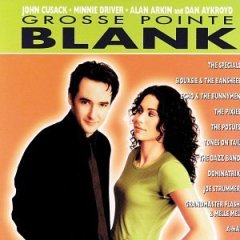
The song “War Cry” from the “Grosse Pointe Blank” soundtrack is the most overtly electronic-influenced track in Strummer’s catalog. The swirling melody is carried by a pulsing keyboard riff, but the track’s energy comes from Strummer’s vigorous guitar playing. The six-minute instrumental is the only piece from Strummer’s film score to see official release.

Strummer produced the original “Grosse Pointe Blank”  soundtrack and included two tracks from his old band. The first volume was so successful a second was released. “War Cry” was unfortunately buried near the end of the sequel.

“MacDougal Street Blues,” Strummer’s contribution to a Jack Kerouac spoken word compilation also released in 1997, found Strummer working in the same style. Kerouac sounds like he was recorded in a bathroom, but Strummer’s musical backing almost seems like a skeletal cousin to “War Cry.”

We didn’t know it at the time, but “War Cry” signaled the end of Joe Strummer’s wilderness years.

“Bhindi Bhagee”

The first time I heard this song was on a Saturday afternoon broadcast of World Café. I was in the car with my dad and halfway through the second verse I commented that the track sounded like someone from the Clash recording a Paul Simon song arranged by Peter Gabriel. DJ David Dye confirmed one third of my theory, but I still don’t think the other two guesses missed the mark by much.

globalThe musical re-awakening Strummer experienced at Glastonbury carried over to his appearance (as a guest, not an artist) at Peter Gabriel’s WOMAD music festival. Listening to the acts from around the world perform, hanging out with musicians like Donovan and spending time at Gabriel’s Real World recording studio finally provided the tipping point for him to get serious about making his own music again.
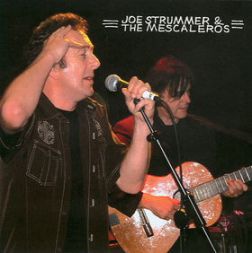
The music Strummer made with the Mescaleros was diverse, encompassing dance and electronic, country, punk and rock. On the band’s sophomore release, “Global A Go-Go,” Strummer branched out big time for their sophomore release. The platter more than lives up to its name, featuring lots of violin, exotic percussion, flute and other world music flourishes.

“Bhindi Bhagee” opens with acoustic guitar and flute and features Strummer delivering his intricate lyrics in a laid-back conversational style. Like Simon, Strummer lets the song unspool like a story. The chorus is basically a list of everything Strummer hopes to encompass with the arrangement. The best part comes at the bridge, where Strummer honestly explains where he’s at musically.

So anyway, I told him I was in a band
He said, “Oh yeah, oh yeah – what’s your music like?”
I said, “It’s um, um, well, it’s kinda like
You know, it’s got a bit of, um, you know.”

Yeah, all of that and a lot more.

“White Riot (live)”

Joe Strummer and Paul Simonon weren’t looking for trouble when they attended the Notting Hill Carnival in 1976, but they shouldn’t have been surprised a riot broke out. Founded as response to the Notting Hill race riots and the racial issues plaguing England in the late 1950s, the carnival had become increasingly violent in its second decade.

Joe aCTONAs Strummer watched the England’s racial minorities physically challenging the authorities, he wished his fellow Caucasians would have the courage to take a similar stand.  Although written long before the Occupy movement, Strummer finally found a body willing to pick up his gauntlet:

“All the power’s in the hands/of people rich enough to buy it
While we walk the street/Too chicken to even try it.”

Along with the Sex Pistols “Anarchy in the U.K.,” “White Riot” kicked off England’s punk movement. As the band’s debut single, it clearly had special meaning to Strummer, who performed the song as the final encore during his last tour with the Mescaleros in 2001 and 2002. (An early version of the song has Strummer singing the first verse a capella before the full band kicks in. It’s an interesting thought, but the message is much stronger in the final arrangement.) The already-potent track became even more powerful when Strummer invited Mick Jones onstage to play it with the Mescaleros at what would be Strummer’s final concert.

The duo, sharing the stage for the first time in nearly 20 years, clearly had fun with the reggae bounce of “Bankrobber,” stretching it to over nine minutes. “White Riot” is the tour de force, though. After calling for the song “in the key of A,” Strummer almost seems to second guess himself. As the guitarist – I’d like to think its Jones, but don’t know for sure – plows into the opening chords, Strummer hastily calls a halt to the song, instructing the drummer to count it off properly. The aggression and anger in the original version – Strummer almost sounds determined to push you out in front of the cops if you won’t fight willingly – now shows hints of age and wisdom that suggest that while this is one way to bring about change, it isn’t necessarily the only path to revolution. It’s a subtle change, but doesn’t cost the performance any of its original urgency.

Less than five minutes after ending “White Riot,” Strummer and Jones concluded the concert with a blistering “London’s Burning.” Barely five weeks later, Strummer was gone.

Keep reading:

Happy Clash-mas Eve (reggae edition)

Happy Clash-mas Eve (1980s edition)

Happy Clash-mas Eve (classic edition)

007’s Greatest Hits – The Music of James Bond

(Above: Her Majesty gets an assist from 007 to open the London Olympics in July, 2012.)

By Joel Francis
The Daily Record

James Bond, the most famous spy in the world, first graced the big screen in “Dr. No” 50 years ago. This weekend, 007 will appear on the big screen for the 25th time in “Skyfall.” To celebrate both events, The Daily Record presents a three-part retrospective examining and celebrating the often wonderful and sometimes puzzling world James Bond theme songs. This series originally appeared in 2008 in advance of “The Quantum of Solace.”

The Music of James Bond: Part One – The Classic Years

The Music of James Bond: Part Two – The Seventies

The Music of James Bond: Part Three – The ’80s and Beyond

Crescent City snapshots

By Joel Francis
The Daily Record

A recent trip to New Orleans provided me the opportunity to bask in several facets of jazz. When possible, I took video footage to preserve a few choice moments.

My first night in the Big Easy, I stopped in at the legendary Preservation Hall. With its intentionally rough-hewn interior, stepping inside was like visiting a living history farm. The Hall has been a tourist destination for half a century, but don’t let that keep you away. Sure, this may be the only live jazz most people will hear for the rest of the year, but that doesn’t mean it’s not worth experiencing. The setlist stuck to pre-war standards, but they were delivered with plenty of fun and energy. The venue’s name is apt. The arrangements aren’t groundbreaking, but the Preservation Hall band is keeping a sound alive that may otherwise have been forgotten. Unfortunately, no audio or video is allowed.

Located on Bourbon Street a few blocks from Preservation Hall (and near Skully’s, a great record store), Fritzel’s European Jazz Pub draws on the same era, but from a different perspective. If Preservation Hall celebrates the Sidney Bechet of New Orleans, Fritzel’s commemorates the European Bechet. In fact, thanks to an audience request, the band leader treated the crowd to a great version of Bechet’s “Petite Fleur.” The 1959 hit isn’t the easiest song to master, but the clarinet player blew effortlessly. I was able to take a little video to capture the atmosphere in Fritzel’s.

After two days in the French Quarter, I had had enough. The tourist trap may be fine for less-seasoned travelers, but I quickly discovered Frenchmen Street was where the locals partied, The corridor featured many fine clubs within the space of a few blocks, including Snug Harbor, the Apple Barrel and my destination for the next two nights, the Blue Nile and d.b.a.

Kermit Ruffins has enough of a following that he can play nearly every night of the week. Locals now have to share Ruffins with tourists (like me) thanks to his appearances on “Treme.” The two-hour set was filled with standards like “What a Wonderful World” and “On the Sunny Side of the Street,” which Ruffins managed to freshen up without offending purists. An entertainer and trumpet player from the Satchmo school, Ruffins was determined to make everyone in room smile and get on their feet. The best moment arrived after an intermission, when the house PA’s version of Tupac’s “I Ain’t Mad At Ya” faded into a live version, with Ruffin’s delivering a blistering post-Katrina rhyme. Here is some footage I shot of Ruffin infusing the Black Eyed Peas with some much-needed zydeco.

On my final night in NOLA, I returned to Frenchmen Street to witness Rebirth Brass Band at d.b.a. There are a myriad of great brass bands in the Crescent City, but Rebirth may be the only one that can boast a parental advisory rating in its catalog. The eight-piece unit mixes funk and hip hop into the traditional brass band sound. The stifling heat in the small room couldn’t keep the crowd from dancing, and the band seemed to be having the most fun. Here’s a bit of Rebirth’s tribute to another native son, Fats Domino.

Keep reading:

On the Streets of Philadelphia

A Capitol Fourth

A tour of KC’s Women in Jazz

Jerry Leiber and the ballad of “Kansas City”

(Above: Paul McCartney goes to Kansas City with a little help from his friends.)

By Joel Francis
The Daily Record

The Big Apple has “New York, New York,” “Empire State of Mind” and dozens more. The Windy City has “Sweet Home Chicago” and “Jesus Just Left Chicago.” Tom Waits gifted the Twin Cities with not one but two songs (“Christmas Card from a Hooker in Minneapolis” and “9th and Hennipen”). Visitors to the Bay City are encouraged to “wear some flowers in (their) hair” while the City of Angels gets “California Love,” “Beverly Hills” and “Hollywood Swingin’.” Heck, the even the Gateway City has “St. Louis Blues.”

But there’s only one universally known song about my hometown: “Kansas City.” (Only obsessive music fans and listeners of a certain age will recall “Everything Is Up To Date in Kansas City” and “Train to Kansas City.”) When listening to Jay-Z, Frank Sinatra, Tom Waits and Louis Armstrong boast about other American cities I try to find comfort reminding myself that the Beatles only sang about one city during their career and they chose “Kansas City.”

“Kansas City” is the only song visiting performers feel obliged to work into their setlist. Willie Nelson played it at Farm Aid earlier this month and Paul McCartney used it to open his 1993 show at Arrowhead Stadium (the recording from that night also appears the album “Paul Is Live”). I’ve heard the song so many times in concert I feel like someone should tell all touring acts that no, really, they don’t have to play “Kansas City” on our behalf.

It’s not like the song is invisible around town. Twelfth Street and Vine may be gone (typical of my hometown – undermining its greatest assets), but the song is still very present. Go to a Royals game and if you stick around until the end you are guaranteed to hear “Kansas City.” If the boys in blue win, fans are treated to the Beatles version. If they lose then Wilbert Harrison is piped through the speakers.

“Kansas City” was seven years old by the time Harrison got his hands on it. Originally recorded by bluesman Little Willie Littlefield in 1952, the song was written by a couple of 19-year-old Jews inspired by a Big Joe Turner record. Littlefield’s performance featured a somewhat racier chorus, ending with the line “with my Kansas City baby and some Kansas City wine.” When Federal Records received Littlefield’s recording they promptly rechristened it “K.C. Lovin’.”

Wilbert Harrison

Harrison had been performing “K.C. Lovin’” for years before he decided to record it in 1959 under its original title and with the sanitized chorus we all know today. Released on Fury Records, the platter went straight to No. 1 and spawned an army of imitators. Within weeks, interpretations of “Kansas City” by Hank Ballard, Rockin’ Ronald, Little Richard, Rocky Olson and a reissue of Littlefield’s original recording could be found in record shops. Paired with his own “Hey Hey Hey,” Little Richard’s cover hit No. 27 in the UK and inspired the Beatles’ recording.

The men – boys, really – who penned “Kansas City” wouldn’t visit the town that inspired their song until the mid-‘80s, nearly 35 years after handing the tune to Littlefield. Despite this handicap, Jerry Leiber and Mike Stoller nailed their vision of “a melody that sounded like it could have come out of a little band in Kansas City,” as Stoller later explained on a UK television show.

Hot on the heels of “Hound Dog,” “Kansas City” cemented Leiber and Stoller’s reputation as rock and roll’s hottest songwriters. Before the decade was out they would write scores of hit songs for the biggest singers of the day – Elvis Presley, the Drifters, Phil Spector, Ben E. King and, especially, the Coasters – and shape the young days of rock and roll more than anyone else. A sampling of their songs from the time reads like an early rock and roll greatest hits collection: “Hound Dog,” “Jailhouse Rock,” “Smokey Joe’s Café,” “Riot in Cell Block Nine,” “On Broadway,” “Love Potion No. 9,” “Young Blood,” “Searchin’,” “Yakety Yak,” “Stand By Me” and on and on.

Jerry Leiber (left) and Mike Stoller show the King of Rock and Roll his next hit.

The duo’s use of strings on the Drifters’ “There Goes My Baby” predates (and foreshadows) the Motown sound that would dominate pop music in the coming decade. In fact many of their arrangements and innovations were so prescient that Leiber and Stoller found themselves on the sidelines for much of the 1960s. The Beatles and other British Invasion bands learned to write emulating Leiber and Stoller and other Brill Building songwriters, making third-party songwriters largely redundant. The expansive use of the recording studio rendered Leiber and Stoller’s pioneering arrangements sounding (for a while) like quaint relics of the past.

Despite these advancements, rock and roll and pop music will never outgrow the shadow of Leiber and Stoller. Grammy awards, hall of fame inductions and songwriting royalties stand as a testament to Leiber and Stoller’s perpetual influence. Even “American Idol” paused to pay tribute with an all Leiber-and-Stoller episode last spring.

Jerry Leiber, 78, died Monday. His survivors include Mike Stoller, his songwriting partner of 60 years, his family and everyone who ever picked up the guitar or sat down at the piano and tried to write a song or become a star.

Keep reading:

Solomon Burke’s Sweet Soul Music

Talking King Records with Jon Hartley Fox

Remembering Gennett Records

Farewell, Charlie Louvin

 (Above: Charlie Louvin sings of the “Great Atomic Power” at a February, 2009, performance in Raleigh, N.C.)

By Joel Francis
The Daily Record

My first exposure to the Louvin Brothers was on one of those “worst album covers of all time” Web sites. Standing in front of what appears to be a backyard BBQ gone horribly wrong, two Bing Crosby wannabes in matching white suits raise their arms in welcome. Above them, the title proclaims “Satan is Real.” Behind them, the most ridiculously fake, wooden Mephistopheles looms like failed a junior high shop class project.

A few years later, while visiting home during college, I decided this cover would be a perfect piece of art in my dorm room and went to the Music Exchange in search of a copy. I asked the man behind the counter (it wasn’t Ron Rook) if they had any albums by the “Lovin’ Brothers.”

“Do you mean the Loooovin Brothers,” he asked, making a point of drawing out the long “o” and informing the store of my ignorance.

“Um, yeah, whatever,” I stammered. They were out.

Sometime after that, I happened upon a CD of “Satan Is Real” at the Kansas City Public Library. After mocking its cover for so long, I had to hear what the actual music sounded like. Pretty freaking good, it turned out.

Charlie and Ira Louvin’s music wasn’t the kind I wanted to listen to that often, but when the mood hit it landed deep and only the Louvins would do. As if by magic, their names started appearing in the album credits of my favorite musicians – the Byrds and Gram Parsons, Emmylou Harris, Johnny Cash, Buddy Miller, Uncle Tupelo. Far from a novelty act or wacky cover, the brothers’ influence was everywhere.

A couple years ago, a friend lent me his copy of the Louvin Brothers Bear Family box set. At eight discs it was way more than I’d ever need, but he swore it was the best stuff ever recorded. I respected his deep and diverse tasted and promised to dive in. I’ll now confess that I only just scratched the surface. A little country gospel still goes a long way for me.

This same friend also told me about the time he saw Charlie played the Grand Emporium. Only a few people bothered to show up for the full set peppered with stories and a fond remembrance of Ira, who died in a car crash near Jefferson City, Mo. in 1965. Afterward, Charlie hung out, reveling in conversation with his fans.

I made a mental note to see Charlie the next time he came through town. His next appearance was opening for Lucinda Williams. It was a dream ticket, but I had other obligations that night. Then were appearances booked at Knuckleheads and Davey’s Uptown. Just before the show, however, the performance would be cancelled. Then, miraculously, another date would be booked several months out.

Each time a show was cancelled I feared that I’d missed my chance. Wednesday my worries were confirmed: Charlie Louvin died from complications from pancreatic cancer. He was 83.

My in-person opportunity may have vanished, but I have hours of his music to relish. As I think of Charlie reuniting with Ira at long last, a song by Gram Parsons, one of the brothers’ greatest disciples – in style, if not message – springs to mind: “The Angels Rejoiced Last Night.”

Keep reading:

Review: Chris Hillman thumbs through his back pages

Carrie Rodriguez honors family, roots on new album

KC Recalls: Johnny Cash at Leavenworth prison


Happy Clash-mas Eve

 (Above: Joe Strummer and the Mescaleros delight in performing Jimmy Cliff’s “The Harder They Come.”)

By Joel Francis
The Daily Record

Every Christmas Eve, a significant block of time is set aside to honor the late Joe Strummer, who died on Dec. 22, 2002. This year, The Daily Record celebrates Strummer’s lifelong love of reggae music.

The Clash – “Pressure Drop”

Joe Strummer – “The Harder They Come”

Joe Strummer and Jimmy Cliff – “Over the Border”

In the early days of the London punk scene, DJ/filmmaker/musician Don Letts played reggae albums at the famed Roxy Club. At first the reggae was a necessity – the punk scene was still too young for any of the bands to record their own material. But even after the punk catalog exploded, the reggae remained.

“The punks were digging on the old anti-establishment chant down Babylon (attitude), heavy bass lines and they didn’t mind the weed,” Letts told Mojo magazine in 2008.

Not that this was many of the punks’ first exposure to the Jamaican genres.

“People like (Joe) Strummer, (John) Lydon and (Paul) Simonon didn’t need Don Letts to turn them on,” Letts said in the same interview.

Jimmy Cliff in "The Harder They Come."

Strummer, Simonon and the remaining members of the Clash likely stumbled upon Toots and the Maytalls’ “Pressure Drop” shortly after its 1972 release on the soundtrack to “The Harder They Come.” Both the film and the soundtrack had a profound influence on Strummer. In 1977 the band covered “Pressure Drop,” which was released in 1979 as the b-side to “English Civil War.” The title of their second album, “Give ‘Em Enough Rope” borrows the style of “The Harder They Come” by introducing a well-known phrase and letting the second half remain implied (i.e. “… and they’ll hang themselves”).

“Safe European Home,” one of the tracks on “Rope,” not only name checks “The Harder They Come,” but borrows the phrase “Rudie can’t fail” from another reggae song, foreshadowing the band’s biggest foray into the ska/Two-Tone sound. Finally, Strummer borrowed the film plot of “The Harder They Come” and adapted it to his British punk interpretation titled “Rude Boy.”

Two decades after the release of “Rude Boy,” Strummer recorded his own version of “The Harder They Come.” Teaming with the Long Beach Dub All-Stars and U.K. reggae singer Tippa Irie, his cover was released on the 2000 benefit album “Free the West Memphis Three.” Strummer’s interpretation doesn’t alter much from Jimmy Cliff’s original, but he’s clearly having a great time. Strummer thought enough of the song that another recording of the song was posthumously released the b-side to “Coma Girl.” Recorded live with the Strummer’s final band, the Mescaleros, this version is taken at a faster tempo and joyously ragged and raw.

At one of his final recording sessions, Strummer finally got to collaborate with Cliff. Upon learning where Cliff was recording his latest album, Strummer showed up with some unfinished lyrics in hand that he felt Cliff should sing. “Over the Border,” the song that grew out of this partnership appeared on Cliff’s 2004 album “Black Magic.”

Cliff described the session with Gibson.com shortly before his induction to the Rock and Roll Hall of Fame this year.

“The two of them (producer Dave Stewart and Strummer) began playing guitar, and I came up with the melody, and then Joe chipped in with some help on the melody as well,” Cliff said. “We recorded the song right away. That was a really special moment for me. You can imagine the shock I felt after hearing that Joe was not with us anymore.”

Keep reading:

Happy Clash-mas Eve (2009)

Happy Clash-mas Eve (2008)

Review: Toots and the Maytals, the Wailers

Original Wailers keep promise to Bob Marley


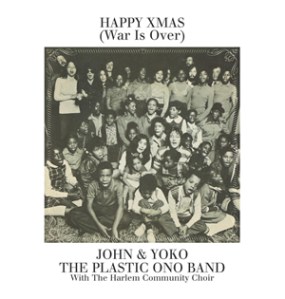
Classic Christmas Carol: “Happy Xmas (War Is Over)”

(Above: It may have been the holiday season, but John Lennon wasn’t pulling any punches when he wrote this song.)

By Joel Francis
The Daily Record

Before it was a song, “Happy Xmas (War Is Over)” was a billboard. In 1969, two years before the song was written and recorded, John Lennon and Yoko Ono proclaimed “War is Over! (If You Want It)” on signage in New York, Rome, Berlin, Tokyo and several other major cities around the world. The signs were an outgrowth of Lennon and Ono’s bed-in for peace, but the phrase stuck in Lennon’s head.

When the couple relocated to New York City in 1971, Lennon quickly feel in the company of radical ‘60s activists Jerry Rubin and Abbie Hoffman. Lennon had already gone on record against the Vietnam War at a Beatles press conference in 1966. The conflict was also a frequent topic of conversation during the bed-in. Instead of giving peace a chance, though, the United States had become even more entrenched in combat.

Inspired by his social circle and frustrated by another holiday season marked by fighting, Lennon turned his billboard slogan into a song. Lennon wrote the song over two nights in a New York City hotel room and recorded it almost immediately. Despite being released less than three weeks before Christmas, the single still managed to reach the Top 40. The feat was replicated each time the single was re-released. In Lennon’s native England, the single did not appear until 1972, when it went in the Top 5.

After a whispered shout-out (whisper-out?) to the pair’s children, Phil Spector’s wall of sound kicks in. The opening line – “And so this is Christmas/and what have you done?” – is both a nostalgic look back and the previous year and question of accountability. Despite having hope for the upcoming year, Lennon admits “the world is so wrong.” A chorus of children from the Harlem Community Choir echoes the words that started it all: War is over/If you want it.”

The melody is based on the folk ballad “Stewball,” a song about a British race horse. The first versions of “Stewball” date to the 18th century, but Woody Guthrie and Lead Belly put their stamp on the song in the 1940s. During the folk revival of the early ‘60s, both Peter, Paul and Mary and Joan Baez included the song in their repertoire.

Many artists, including skiffle singer Lonnie Donegan, a big influence on Lennon and most British musicians of his generation, have cover “Stewball,” but their numbers pale in comparison to the roster of those who have recorded “Happy Xmas (War Is Over).” From Andy Williams and Celine Dion to Maroon 5 and American Idol David Cook to the Moody Blues and the Polyphonic Spree, the song has been covered by nearly every conceivable artist in nearly every conceivable genre.

Keep reading:

Review: “December 8, 1980″

Classic Christmas Carol: “Fairytale of New York”

George Harrison – “Ding Dong, Ding Dong”

Classic Christmas Carol: “Greensleeves”

Review: “December 8, 1980”

(Above: “(Just Like) Starting Over” announced John Lennon’s return to music in the fall of 1980. After his death, it occupied the No. 1 spot for five weeks.)

By Joel Francis
The Daily Record

Rock and roll is littered with artists who left too soon. None are mourned as deeply and fervently, though, as John Lennon. The former Beatle was gunned down outside his New York City home 30 years ago today.

Keith Elliot Greenberg’s new book, “December 8, 1980: The Day John Lennon Died” marks the occasion. Much of the information contained in this brief volume has been presented before.  Even casual fans will be familiar with many of the details in Greenberg’s truncated telling of Lennon’s biography. While the Beatle’s story is well-known, Greenberg makes it worth visiting again.

“December 8, 1980” reads like a true crime television special, which makes sense given the author’s background as a producer for “America’s Most Wanted,” “48 Hours” and “MSNBC Investigates.” The unfolding day is interrupted by the histories of both Lennon and his assassin, Mark David Chapman.

Greenberg not only places the reader in both men’s minds heading to the fateful moment, but paints a vivid picture of Lennon’s home in the Dakota building and the state of New York City as a whole. First-hand stories from Lennon’s neighbors, autograph hounds who haunted the Dakota’s entry, musicians, fans and police officers. The details these auxiliary players provide peel back the years and familiarity and make the story seem fresh.

Although they were only tangentially related to the saga, Greenberg recounts the activities of Lennon’s fellow Beatles on that day, and their reactions to his death. One can feel the throngs pressing against Ringo as he visits Yoko Ono at the Dakota, and feel the energy of Bruce Springsteen’s unofficial tribute concerts in Philadelphia.

“December 8, 1980” concludes well after the titular date, covering Champan’s trial, the Beatles anthology reunion project, and the attempt on George Harrison’s life in 1999.

Beatles fans truly interested in the events of Dec. 8 and its main participants are advised to seek out any of the available solid Lennon biographies – Philip Norman’s “John Lennon: The Life” has received rave reviews – and Jack Jones’ 1992 Chapman biography “Let Me Take You Down.” Although it is essentially a distillation of those texts, Beatle fans looking for a light trot through that devastating day should be satisfied with Greenberg’s work.


Keep reading:

George Harrison – “Ding Dong, Ding Dong”

George Kalinsky: Painting with Light (includes stories of Lennon’s concerts at Madison Square Garden and the Harrison’s Concert for Bangladesh)

McCartney in Career Resurgence

Review – “How the Beatles Destroyed Rock ‘n’ Roll”