After averaging nearly an album a year for the first quarter-century of his career, Stevie Wonder slowed down his output considerably in the late ‘80s, releasing only three albums in eight years.
Wonder surprised and delighted fans by dropping Natural Wonder, a double-live album, just eight months after his previous offering, Conversation Peace. With a set list that includes many big hits, deep cuts and new songs, Natural Wonder seems to have something for everyone. The concept of Stevie Wonder performing with a symphony orchestra is intriguing but the result is something less than vital. While the performances captured on Natural Wonder are strong, many of them simply aren’t that different from their studio counterparts.
The stirring new song “Dancing to the Rhythm” makes full use of the lush musical backdrop, combining a drum corps with horn section and sweeping string section. Wonder’s skills as an arranger shine on this dynamic opening number. A few songs later, the appropriately bluesy instrumental “Stevie Ray Blues” sets up an energetic romp through “Higher Ground.” The final new number is “Ms. & Mr. Little Ones,” an undistinguished Conversation Peace outtake.
The performance of “Tomorrow Robins Will Sing” shows how a little tightening could have improved the songs on Conversation Peace. Natural Wonder’s live version trims nearly a minute off its studio counterpart and is much better for it. Overall, Natural Wonder is a fun souvenir of a magical night for those who were there, but not something fans will turn to often.
Ten years after the one-two of Conversation Peace and Natural Wonder, Wonder gifted fans with A Time to Love, his last album to date. The album’s two singles set the template for much of the release: funk numbers and ballads.
“From the Bottom of My Heart” is a drippy love song that offers no surprises, including the fact that it won another Grammy. A third of the album runs in this vein. There are two more songs just as bland, plus a tribute to Wonder’s late wife and collaborator Syreeta Wright and a jazzy duet with his daughter, Aisha Morris.
The best of these songs is “Moon Blue,” a jazz number with some of Wonder’s best singing. In a better world, this would be a standard. It’s easy to imagine Robert Glasper or Erykah Badu digging into the song. The other stand-out ballad is “Passionate Raindrops,” which harkens back to Talking Book. A Time to Love would be a much better album if Wonder had kept these two ballads and excised the rest.
The upbeat numbers are an equally mixed bag. Lead single “So What the Fuss” doesn’t quite work, but Prince’s funky guitar lines almost make up for it. “Sweetest Somebody I Know” mines Wonder’s classic clavinet sound, while “Please Don’t Hurt My Baby” heads further down the path plowed by “Superstition.” On “Positivity,” Wonder’s second duet with Morris, his daughter’s sunny soprano is a nice counterpoint to Wonder’s talk box. It’s hard to believe this number was never used in an animated kid’s film. “Tell Your Heart I Love You” features Wonder’s signature harmonica, an under-utilized instrument on his later albums. Its arrival pushes the bluesy number to another level.
A Time to Love ends with the title number. Across nine minutes, Wonder, with help from India.Arie on vocals and Paul McCartney on guitars, ponders why we have time for so many other activities, but not for love. It’s not the most groundbreaking thought, but the percussion and choir sweep in and save the day. A couple minutes could easily be trimmed from the performance without missing anything. This advice applies to A Time to Love as a whole. At 15 songs and 78 minutes (only 7 minutes shorter than Songs in the Key of Life), A Time to Love would be a much better album if Wonder culled most of the ballads and brought the run time to under an hour.
Almost 20 years later, A Time to Love still stands as Wonder’s most recent album. While Wonder hasn’t been prolific in the decades since he has kept busy. In the final installment, we’ll look at 15 excellent, late-period, non-album Stevie Wonder songs.
More than halfway through the 1980s, Stevie Wonder’s output was mixed. Hotter Than July and In Square Circle were both strong releases, but the ubiquity of successful sappy singles “Ebony and Ivory” and “I Just Called to Say I Love You” cast a pall over his triumphs.
At 12 songs and more than an hour, no one could accuse Wonder of being lethargic on his 1987 release Characters. Sadly, not much works. “You Will Know” is fine, but opening the album with this ballad makes it feel like we’ve joined something already in progress. “Skeletons,” a look at political corruption, feels like an update of something we’ve heard before – and done much better – on “Superstition” and “You Haven’t Done Nothing.”
Wonder and Michael Jackson traded album appearances in 1987. After Wonder guested the Bad album cut “Just Good Friends,” Jackson repaid the favor with the single “Get It.” Like Wonder’s earlier efforts with Paul McCartney, these meetings of the Motown child stars are somehow less than the sum of their parts. Neither is bad, per se, but they don’t linger in my ears past their runtimes.
“My Eyes Don’t Cry No More” combines autobiographic verses with a resolute chorus over a swinging electronic production. Another tear-themed song, “Cryin’ Through the Night” (shouldn’t these two titles cancel each other out?) is a surprisingly up-tempo tale of heartbreak. Finally, “Free,” the closing song on the vinyl edition, stands as the album’s final moment, a rousing call for freedom. Wonder really liked ending albums with proclamations.
These five songs – less than half the album – comprise Characters’ high points. The other songs are either too maudlin or half-baked to discuss. “Come Let Me Make Your Love Come Down” earns special derision for not only its awkward title, but for squandering a rare guitar summit between B.B. King and Stevie Ray Vaughan. When critics trumpet Wonder’s lost muse, most of that reputation rests on The Woman in Red and Characters. And for those two albums, it is deserved.
For the better part of two decades, Stevie Wonder’s production defined and redefined the boundaries of music. By the time Wonder rolled into the 1990s, his fourth decade as an artist, he was now following the sound of the times rather than creating it. No one stays on the bleeding edge forever and how Wonder adapted his songwriting and arrangements to the culture reveals other facets of his creativity.
Wonder took another break after Characters, releasing his next album four years later, in 1991. The soundtrack to Spike Lee’s Jungle Fever featured programmed drums and lots of synthesizers across it’s 11 tracks. The overall aesthetic tiptoes up to the au courant sound of new jack swing, but rarely feels that urban.
Lead song “Fun Day” is an exception to this rule, featuring a lively hip hop drum track. The song soars, living up to its title and erasing any lingering doubts caused by Wonder’s previous underbaked release. Obligatory ballad single “These Three Words” is heartfelt and has a timeless feel. It is easily Wonder’s best ballad since “Overjoyed.”
The soundtrack’s final single, “Gotta Have You” combines a programmed drum track with a typically funky groove. Although it wasn’t released as a single, the title song featured prominently in the film. While it won’t win any songwriting awards it is infectiously catchy and fun. The best song is buried near the end. “Chemical Love” is an anti-drug number that dodges cliches and generalizations by looking at the spiritual and emotional cravings people try to fill with poisonous substances.
Jungle Fever doesn’t quite rise to classic status – the rest of the material is fine but not particularly noteworthy – but it is worth a second look.
Wonder went further into new jack swing on Conversation Peace, released in 1995. At 13 songs and 74 minutes, there is a good album buried among all the bloat. Excising some of the songs and trimming down the performances – most cuts hover around six minutes – would have helped immensely. For every banger like “My Love is With You,” the apex of Wonder’s new jack swing infatuation, there’s a track like “Cold Chill” that goes nowhere and takes too long to get there.
“Edge of Eternity” is an upbeat love song with a tight horn line, while “Take the Time Out” is an empathetic look at homelessness and poverty with Ladysmith Black Mambazo. Deeper in the album, “For Your Love” is the requisite love ballad single. Despite winning a Grammy, the track feels pretty generic. The propulsive “Sorry” is much better, but its production sounds more like the mid-‘80s than the mid-‘90s. “Sorry” sets up the closing number and title song to end the album on a strong note.
Billed as a 12-year-old genius on his third LP (released in 1963), Stevie Wonder made good on that promise less than a decade later, releasing six masterworks in as many years between 1971 and 1976. Wonder’s critical acclaim was matched by popular appeal, as he won Grammys for Album of the Year three times in four years and sent seemingly everything he touched to the top of the charts.
Yet Wonder’s output after the 1970s has been derided nearly as much as his long pinnacle has been celebrated. The release of a new digital single, “Can We Fix Our Nation’s Broken Heart,” made me realize how much I missed Wonder’s voice and sent me scurrying back to his forgotten era to see what I had overlooked.
The 1980s opened strong for Wonder. Just nine months into the new decade, Wonder released Hotter Than July, an album that continued his 1970s hot streak. From the infectious reggae groove of lead single “Master Blaster (Jammin’)” to the tender ballad “Lately,” the release touches on many of Wonder’s strengths. Hotter Than July is rightly regarded as a classic, so I won’t spend much time on it here, but I’d be remiss not to point out the beautiful “Rocket Love.” The album closes with “Happy Birthday,” a tribute to Martin Luther King, Jr. and a plea to turn King’s birthday into a national holiday. It worked.
Two years later, Wonder gifted fans with Original Musiquarium I, an unconventional double-LP collection that paired a dozen tracks from the ‘70s with one new song on each side. Of the new material, the 10-minute “Do I Do” is easily the best. “Do I Do” has an effervescent groove that could be the cousin of “Another Star.” The expansive track has room for both a Dizzy Gillespie guest spot and an exploration of the still-young world of rap. It took nearly a decade before exploring the nexus of jazz and hip hop was considered edgy. Once again, Wonder was on the vanguard. The ballad “Ribbon in the Sky” is another key new song on this collection.
Less than a month before Original Musiquarium I dropped, a single with Wonder raced to the top of the charts, a harbinger of some musical misadventures that lie ahead. Written by Paul McCartney, the simplistic ode to racial harmony “Ebony and Ivory” sat atop the U.S. pop charts for seven weeks in 1982. “Ebony and Ivory” earns all the mockery it has received. That said, I must confess the song works better in the context of McCartney’s excellent Tug of War album, where it closes the song cycle than it does as a stand-alone single. “What’s That You’re Doing?” the pair’s other collaboration on Tug of War, is better, but still feels like less than the sum of its parts.
Wonder’s reputation really started to take a hit with his 1984 soundtrack to The Woman in Red. At eight songs and 40 minutes, The Woman in Red feels slight in comparison to Wonder’s previous albums. Two duets with Dionne Warwick, a Warwick solo track and an instrumental written by someone else comprise half the album, making it feel even lighter.
Used copies of The Woman in Red are ubiquitous at flea markets, antique malls, garage sales and record stores thanks to the single “I Just Called to Say I Love You,” which topped the charts around the world and sold millions of copies. In the 40 years since its release, “I Just Called” has been the punchline for scores of jokes and memes and served as Exhibit A for proving Wonder’s muse had departed. The saccharine ballad deserves every bit of scorn lobbed its way, but Wonder’s well was far from dry, as we shall soon see.
The album ends “Don’t Drive Drunk,” a public service announcement masquerading as a musical number. This continues the trend of Wonder ending albums with a bold social declaration. Unfortunately, Wonder isn’t able to thread the needle as deftly as he did on “Happy Birthday.” Wonder’s heart is in the right place, but “Don’t Drive Drunk” is ham-fisted. The production is interesting, but there’s not much of a song. The Woman in Red’s lone redeeming spot is “Love Light in Flight,” the only time Wonder’s innovative production lines up with lyrics that are more substantial than a greeting card.
A little more than a year after The Woman in Red soundtrack, Wonder dropped his 20th studio album, In Square Circle. The world was still very much enthralled/nauseated by “I Just Called” when In Square Circle came out and the association mars the album’s reputation. While Wonder’s peak releases have a timeless feel, his later work is very much tethered to its time. In Square Circle is a very ‘80s album, which may have hurt the release for a while, but it’s been long enough that we can now embrace the once-awkward signifiers of the era.
The platter opens with lead single “Part-Time Lover,” a fine if unambitious pop song. I’m divided over the next cut, “Love You Too Much,” which somehow feels both fun and annoying at the same time. Fortunately, the strong ballad “Whereabouts” picks up the slack. “Stranger on the Shore of Love” combines a peak-era arrangement with modern production. Wonder’s production takes another step forward on the brilliant “Never in Your Sun.”
If nothing else, this exercise has been worthwhile for bringing “Never in Your Sun” to my attention. I guess I should pay more attention to Tyler the Creator, because he shouted out this song a few years ago. You can also tell the Neptunes were paying attention.
Side two isn’t as strong, but contains “Overjoyed,” one of Wonder’s all-time best ballads and another big-statement closing song: “It’s Wrong (Apartheid).” Recorded at the peak of the Artists United Against Apartheid and the “Sun City” movement, “It’s Wrong (Apartheid)” is not subtle. Wonder compares the racist institution to slavery and the holocaust, which might be accurate, but is so heavy-handed even Billy Bragg would blanch. The production saves the song. An electronic polyrhythm propels the number and an African choir reinforces Wonder’s sentiment and injects joy into the performance.
Arriving between the half-baked (and overblown) Woman in Red soundtrack and disappointing Characters (more on this in a in the next installment), In Square Circle has been unfairly maligned as a mediocre Wonder release. In Square Circle belongs in every fan’s collection and demonstrates that Wonder was still pushing boundaries as a producer and writing strong songs in the decade of decadence.
In the new Beatles documentary series Get Back, on the first day of filming after guitarist George Harrison abruptly walked out of rehearsal and left the band, Paul McCartney made a prescient observation:
“It’s going to be such an incredible sort of comical thing, in like 50 years’ time, you know. They (the Beatles) broke up because Yoko (Ono) sat on an amp.”
For far too long, Yoko Ono has been painted as the villain the Beatles story, The person who turned John Lennon’s heart away from the band and drove a wedge in his partnership with McCartney.
Obviously, these accusations are rooted in misogyny, racism, and ignorance. More importantly, they are now also clearly wrong. Regardless of how the other Beatles felt about Lennon bringing Ono into the band’s inner circle, everyone in the group is clearly over it by the time the cameras started rolling for Get Back. And sure, one could argue that the Fabs were just pretending to enjoy Ono for the sake of the cameras, but if you’ve seen Give My Regards to Broad Street you know McCartney isn’t that good of an actor.
Besides, Ono was far from the only visitor to the Beatles’ sessions. McCartney’s fiancé Linda Eastman and Ringo Starr’s wife Maureen Starkey both show up and hang out while the band is working. George’s small entourage of Hare Krishnas are seen observing the band at work. Eastman’s daughter, Heather, tags along with McCartney while the band works during a weekend session. If Yoko’s mere presence was such a burden, wouldn’t bringing a child into the studio be out of the question? Nevertheless, everyone seemingly has fun dancing and playing with Heather.
Furthermore, McCartney is an active participant in not one, but two spontaneous, extended jam sessions where Ono took the mic and lead the way. He appears to be enjoying the moment and the music that comes out of these jams is some of the most riveting, cutting-edge material in the film.
I grew up reading that the sessions at Twickenham Studio were when the band was falling apart and that it was only by moving to Apple Corps headquarters and inviting Billy Preston to participate that the Beatles were saved. Get Back complicates this mythology. Granted, the Beatles seem more comfortable and friendly once they are at home at Apple and Preston joins, but Lennon and McCartney’s relationship is never in doubt for a moment. In fact, many of my favorite moments in the documentary was watching those two bounce ideas around at lighting speed only to fly off on a random tangent and somehow remain in lockstep the entire time.
As for the Beatles growing a part as musicians, Lennon and Harrison discuss this in the third part of Get Back. After working on “All Things Must Pass” and “Let It Down” the day before the famous rooftop concert, Harrison told Lennon about all the songs he’d written.
“I’ve got so many songs that I’ve got, like, my quota of tunes for the next ten years, or albums,” Harrison said. “I’d just like to do maybe an album of songs.”
Lennon asks Harrison if he means this to be a solo album, which Harrison confirms. The two seem to agree on how solo projects could co-exist with the Beatles.
“You see it’s good if we put out an LP and it’s safe that The Beatles are together, but George is doing an album,” Lennon said. “Same thing as me doing an album.”
Harrison picked up the thread.
“That way it also preserves this, the Beatle bit of it, more,” Harrison replied.
So, if Yoko is not obviously disruptive and the Beatles were clearly open to a looser unit where partners, family, friends, and musical collaborators could come and go without undermining some special Beatles magic, we must look elsewhere for reasons for the Beatles’ falling out. Get Back shows that the Lennon-McCartney partnership is still working. And there seems to be enough flexibility within the group for solo projects to exist alongside Beatles releases. So, why did the Beatles break up? The answer to this question never appears on-camera in Get Back, but he lurks in the shadows of the second and third parts.
Two days before the rooftop performance, Lennon arrives at rehearsals glowing over his conversation with Allen Klein the night before. Klein is the Rolling Stones current manager and managed Sam Cooke before the Stones. One of Klein’s major calling cards was that he would bulldog the labels into giving his artists everything they were owed (lining his own pockets in the process). Klein wormed his way into Lennon’s heart by talking about a benefit concert for the war-torn Republic of Biafra.
“He knows what we’re like, you know, just from the pick-up,” Lennon gushed. “I mean, he said he had to see me to know exactly if he was right or not. But the way he described each one of us, you know, and what we’d done and what we’re going to do, and that …. He knows me as much as you do. Incredible guy. We (Lennon and Ono) were both just stunned.”
Lennon is still talking about this conversation with Klein the next day as well. Producer Glyn Johns knew Klein from his work with the Rolling Stones.
“I don’t know if he speaks to you the same way as he does other people – perhaps not, because you’re who you are,” Johns said. “But he can take anything you say, if he disagrees with it … I don’t know … he can convince anybody of anything. I mean, I could say this piano is black, you see, right, and in five minutes he’d have me believing it was green.”
Klein came to the Beatles in a vulnerable moment. The group established Apple Corps as tax shelter, but were hemorrhaging money. Klein promised to fix Apple’s financial problems and end the days of the Beatles being played as suckers.
A few days after meeting with Lennon, Klein met with the rest of the band. Lennon was already on board, but his enthusiasm pulled Harrison and Starr on board as well. McCartney was suspicious of Klein and wanted very little to do with him.
McCartney tried to persuade his bandmates to sign with Lee Eastman, his father-in-law. Smelling nepotism, the other three declined. Lusting for the whole Beatles enchilada, Klein made the relationship between himself and Eastman as rocky as possible, pitting his three clients against McCartney. Ultimately, McCartney had to sue Lennon, Harrison, and Starr to dissolve the Beatles partnership.
Ironically, while Klein was gunning for the Beatles, his other clients, the Rolling Stones, were growing dissatisfied. Never one to leave money on the table, Mick Jagger was suspicious of how Klein always managed to turn a personal profit in the band’s business affairs. In 1970, the same year McCartney was suing the other Beatles, Jagger announced Klein was no longer the Stones’ manager.
By the middle of 1972, Harrison and Lennon were fed up with Klein as well. Klein helped Harrison organize a benefit concert like the one that had enchanted Lennon. Harrison’s groundbreaking Concert for Bangladesh at Madison Square Garden brought out some of the biggest names in music and resulting in a triple-album set and film that raised millions.
Unfortunately, Klein botched the paperwork, which meant Harrison had to pay taxes on the amount raised. It also came to light that Klein was making more than $1 from each copy of the live album, which sold for $10. Lennon was upset that Klein wouldn’t give Ono’s career the same support and attention that he gave the other former Beatles. In 1973, Lennon, Harrison and Starr announced they wouldn’t renew Klein’s contract.
“Let’s say possibly Paul’s suspicions were right,” Lennon admitted at the time.
Is it fair to blame the Beatles demise on Klein? In the short term, he made the band a lot of money, but he lined his own pockets with some of it and refused to cooperate with McCartney and Eastman. McCartney could have done himself a favor and selected someone other than his father-in-law as an option to manage the band. It’s also important to note that the Beatles were all in their late 20s at the time Klein entered their lives. Twenty-something millionaires aren’t known for their prudence.
Given that so-called “creative differences” were never the problem in the Beatles, it should not be a surprise that the Get Back/Let It Be sessions were musically successful. What is surprising it that this project and the band’s final masterpiece Abbey Road were able to happen at all while the band struggled with the financial and managerial issues that clearly taxed their native capacity and opened them up to opportunists and sharks.
Ono has unfairly been blamed for breaking up the Beatles for far too long. It’s time to shift the criticism onto the smooth-talking accountant who slimed his way into the band and succeeded in pitting the musicians against each other. More than any other single person, Allen Klein broke up the Beatles.
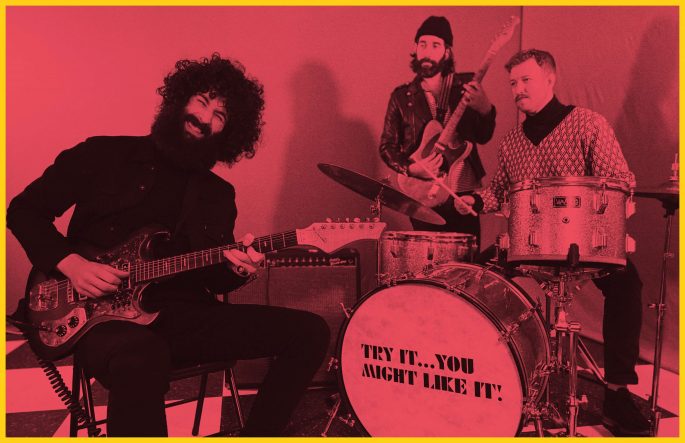
Guitarist Matt Stubbs, a veteran of blues harpist Charlie Musselwhite’s band and one third of the new blues act GA-20, thinks it’s time for a blues revival.
After all, Stubbs reasons, soul music had its resurrection with Lee Fields, Sharon Jones and the Daptones. Traditional country had a resurgence with Coulter Wall and Charlie Crockett.
“What I’d like to see is more traditional blues,” Stubbs said. “I think if more people heard this style of blues, they would like it. That’s a lot of why we make the records we do and why I produce the as I do. We’ll have people come up to us after shows and ask ‘What kind of music is this?’ I tell them it’s traditional blues.”
Traditional blues is more raw and primitive than what came later, when blues musicians – who often also worked as sharecroppers – migrated north from Deep South in the 1940s and ‘50s, settling in Chicago, Detroit and other northern cities.
The primarily acoustic blues from the Mississippi Delta became electrified to overcome the noise in the clubs and on the street. British musicians heard this amplified blues, absorbed it and imported it back to the United States on early albums by the Rolling Stones, Yardbirds and Fleetwood Mac, to name just a few acts.
See GA-20 in Kansas City, Mo. at Knuckleheads on Tuesday, Nov. 2.
“These days, if you go to a blues festival, you get a lot of the modern blues or rock take,” Stubbs said. “A lot of great artists do that, but that’s not we are doing. That’s not what I put on my turntable. I think when a lot of people hear the word blues, they think of guitar shredding and music derived from British blues and classic rock.”
On their second album, GA-20 pay tribute to Hound Dog Taylor, a less-celebrated figure from the Chicago blues scene. Stubbs discovered Taylor when he heard “Give Me Back My Wig” on a blues CD at 15 or 16 years old. Stubbs said that song stood out because it was a little more rough around the edges.
“That’s the kind of blues that’s always spoken to me,” Stubbs said. “I like it to be kind of raw.”
Taylor is a good fit with GA-20 for several reasons. Like GA-20, Taylor’s band The Houserockers featured a lineup of two guitars and drums – no bass. GA-20 (named after a vintage guitar amplifier) and Taylor also both caught the ear of Bruce Iglauer, founder of the blues label Alligator Records.
“Bruce started the label because Hound Dog couldn’t get a record deal at the time,” Stubbs said. “Bruce saw us before the pandemic and was interested in working for us, but we were already signed to Colemine Records.”
Stubbs brainstormed ways to make something work and realized it was approaching the 50th anniversary of Alligator Records and Taylor’s first album. He came up with the idea for Colemine and Alligator to pair up and recognize those anniversaries.
Music was always present when Stubbs was growing up in Boston. His dad is also a guitarist and the young Stubbs was always listening to his father rehearse and perform. When Stubbs heard Lenny Kravitz’ “Are You Gonna Go My Way?” his dad told him if he liked that, he’d probably like Jimi Hendrix. That opened a door to Albert King and Freddie King.
“When I was 16, I joined my dad’s band,” Stubbs said. “I went to music college, dropped out and started gigging as much as possible.”
In his early 20s, Stubbs got the chance to join blues singer Janiva Magness. That lead to playing with John Németh. One of the musicians in Nemeth’s stable was June Core, longtime drummer for Charlie Musselwhite.
“When Charlie’s guitar player moved onto other things, Charlie called me up and asked if I wanted to play guitar,” Stubbs said. “There was no rehearsal.”
That was about 13 or 14 years ago, Stubbs guesses. GA-20 grew out of a year when Musselwhite went on the road with Ben Harper and his band for a year. With nothing to do, Stubbs formed another band with guitarist Pat Faherty so he could work.
“Pat was a friend who came to a lot of my shows. He was into other music before the blues,” Stubbs said. “We started with two guitars and a harmonica for a gig or two. It ended up morphing into drums and two guitars with no harmonica.
“We had to keep the band lean out of necessity to make money,” Stubbs continued. “We started to sound pretty good, so I booked some studio time to record that first album. There were no expectations, it was just a fun project.”
Those session resulted in Lonely Soul, GA-20’s debut release, which featured Musselwhite’s harp on one track and was released on Colemine. The album hit No. 2 on the Billboard blues chart in 2018. A four-song live EP came out in September, 2020, when live concerts were shut down.
Now Stubbs is back on the road with both GA-20 and Musselwhite. A European tour and several festival appearances in 2022 are currently in the works. Stubbs said he hopes to put out another GA-20 album in May.
GA-20 plays Knuckleheads with J.D. Simo on Tuesday, Nov. 2. Go here to buy tickets online and get more information.
“I think the only place I’ve played in Kansas City is Knuckleheads,” Stubbs said. “I was there with John Németh and Janiva Magness. I played there before the venue across the street (Knuckleheads Garage) was open.”
It’s been a while since we’ve had any social distancing spins, but hopefully everyone is still social distancing and staying safe. I’d say Happy Holidays, but these are all Christmas albums, so Merry Christmas and thanks for reading.
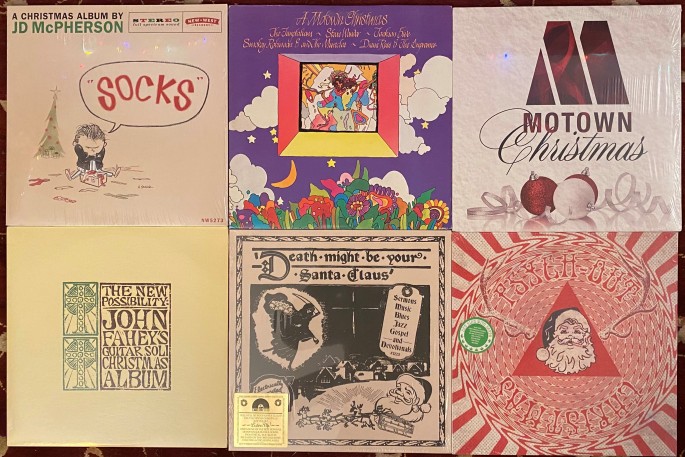
Various artists – Motown Christmas (2014) Various artists – A Motown Christmas (1973)
I didn’t spend a lot of time with Motown Christmas before tucking it into my pile of purchases. Seeing Smokey Robinson and the Temptation among the featured artists was all I needed. You can imagine my surprise when I played this album months later (I bought it out of season) and discovered this was a collection of contemporary Motown artists. I didn’t bother me too much, because it didn’t cost much and what’s here is great.
Smokey Robinson opens the album with a song that has that classic Miracles sound augmented by a drum loop that is way too prominent in the mix. Gregory Porter and Anita Wilson take us to church with a soaring gospel mash-up of “Go Tell It On the Mountain” and “Ain’t No Mountain High Enough.” Other high points include India.Arie and Gene Moore’s duet on “Mary Did you Know” and Tye Tribbett, who turns “The Little Drummer Boy” into a serious dancefloor jam.
A Motown Christmas is the album I thought I was buying the first time. Oh, what a difference that little article – the letter a – makes. A Motown Christmas rounds up the best moments from several of the label’s biggest Christmas albums. Let’s face it, no one needs to own all these albums, but sprinkling the high points across two records is a pretty tasty collection.
A Motown Christmas serves up four songs each from Stevie Wonder (including “Someday at Christmas” and “Ave Maria”), the Temptations and Smokey Robinson and the Miracles. Diana Ross and the Supremes get five cuts and the Jackson 5 have six songs, plus a Michael Jackson solo performance of “Little Christmas Tree.”
Either yuletide Motown set will keep spirits high. If you play them back-to-back the label’s impact becomes even more apparent.
J.D. McPherson – Socks (2018)
Oklahoma singer/songwriter J.D. McPherson mines the same early rock and roll territory that has served Brian Setzer so well on his holiday records.
While Setzer borrows from the high-octane crowd of Gene Vincent, Elvis Presley and Chuck Berry, McPherson draws from a more diverse pool. “Hey Skinny Santa” sounds like a Louis Jordan jump song and “Twinkle (Little Christmas Lights)” has a New Orleans shuffle and a piano solo that sounds like it was lifted from Huey “Piano” Smith. McPherson veers closer to Setzer’s territory on “Bad Kid,” which features a guitar solo that splits the difference between Duane Eddy and Dick Dale, and “Santa’s Got a Mean Machine” which sounds like it was cut in Sun Studio.
McPherson also scores points for writing 11 original holiday songs for this album. Not only is McPherson a solid songwriter, but this means you don’t have to slog through the same overworked standards that are always on repeat at the mall.
Various artists – Psych-out Christmas (compilation)
If you learn one thing about me through all these Social Distancing Spins blog entries, you should know I will absolutely buy any album if the cover art and sleeve are intriguing and the price is right (read: cheap).
Cleopatra’s 2013 compilation Psyche-out Christmas is one such purchase and I am all the better for it. The album opens with a dumb skit featuring Halloween monsters throwing a Christmas party that sounds like something Dr. Demento might reject for being too corny, but don’t let that put you off. The Elephants rip through the Beatles’ “Christmas Time is Here Again” and Psychic Ills live up to their name with a hung-over reading of “Run Rudolph Run.”
Miss Quintron and the Pussycats are the only band to get two tracks. Their performances of “Silent Night” and “Jingle Bell Rock” are fun. For some reason a group called the Sons of Hippies cover the Zombies’ “Time of the Season.” The biggest name is Iggy Pop who delivers a straightforward version of “White Christmas” that’s called the “Guitar Stooge Version” for some reason. I guess that means James Williamson or Ron Asheton play on the track, but the guitar follows the vocal melody and is pretty low in the mix. Hands-down, the best song is Sleepy Sun’s version of “What Child of This,” which features a galloping rhythm section complemented with shoegaze guitars.
Psyche-out Christmas is one of those collections that is greater than the sum of its part. Aside from Sleepy Sun there aren’t really any songs that scream to be included on a playlist (or mixtape) on their own merits. But the 17 songs here hang together for a very enjoyable listen that is guaranteed to draw at least a couple puzzled looks when unsuspecting listeners have to confirm if they are really hearing what they think they are hearing.
Various artists – Death May Be Your Santa Claus (compilation)
If Psyche-out Christmas doesn’t drive the squares out of your holiday party, Death May Be Your Santa Claus should do the trick. This 2013 Record Store Day – Black Friday exclusive gathers sermons, blues, jazz and gospel tracks issued in the 1920s, ‘30s and ‘40s.
Clips of Reverend J.M. Gates sermons from the 1920s appear every couple songs and provide not only the title track but ask the question Will hell be your Santa Claus? Um, maybe? A little bit of Gates goes a long way and I could have done with half as much. The rest of the songs from Sonny Boy Williamson (the first one), Bessie Smith, Tampa Red and very early Duke Ellington are will appeal to fans of early blues and jazz. Aside from the Heavenly Gospel Singers’ version of “When Was Jesus Born?” not many of the other songs are very well-known.
The award for best song title and group name combo goes to Butterbeans and Susie, who perform “Papa Ain’t No Santa Claus (and Mama Ain’t No Christmas Tree).” The song comes from the pen of Fats Waller’s lyricist Andy Razaf and ragtime pianist Alexander Hill. The Butterbeans and Susie are Joe and Susie Edwards, who sing, and pianist Eddie Heywood.
The Edwards were a married comedy team that performed from the 1920s until the 1960s, which is pretty impressive when you consider how much comedy changed during that time. They started in the vaudeville era and managed to keep it going through the advent of radio, talking movies and finally television. Joe Edwards was known as Butterbeans, which is how the duo got their name. You can learn all kinds of stuff on the internet.
John Fahey – The New Possibility (1968)
Folk guitarist John Fahey remains fairly unknown nearly two decades after his death, but he inspires a deep devotion from those that discover him. Listening to this album it is easy to hear why.
The performances on The New Possibility sound like they were captured in one take with a live guitar. If there is any overdubbing it is hidden well. The tempos across the 14 standards captured here are fairly steady as well.
I understand that this can read like the recipe for a snooze-fest and in most circumstances I’d agree. But there is something in Fahey’s playing that is both magnetic and intimate. The New Possibility makes me feel like I am sitting inside Fahey’s guitar, feeling the wood vibrate around me while the strings oscillate overhead.
While the arrangements are fairly straightforward, there is something in Fahey’s playing that simultaneously makes me want to pull close and provides a feeling of comfort. Every time I’ve put this album on at a holiday gathering, people will almost immediately stop talking and listen. When I play this album by myself, I usually end up playing it twice because the environment it creates is so soothing and refreshing. Next time the holiday blues or yuletide fatigue start to fade in, send them packing with The New Possibility.
The exploration of my record collection continues.
10,000 Maniacs – In My Tribe (1987) Here’s the moment where everything came together for the Maniacs, and for my money is their finest album. Our Time in Eden sold more copies and had bigger singles but none of that success would have been possible without the creative breakthroughs on In My Tribe. There’s not a bad song on the album. Opener “What’s the Matter Here” so effortless and graceful it takes a few dozen listens to figure out Natale Merchant is singing about child abuse. It’s the perfect balance of poignance without being preachy. R.E.M.’s Michael Stipe pops up to provide countermelody vocals on “A Campfire Song.” I believe this is the first time Stipe and Merchant duet on record. Their voices complement each other so well I’ve always longed for a full duets album. Jerome Augustyniak’s percussion arrangement on a cover of Cat Steven’s “Peace Train” gives the song a fresh spin while staying true to the hopeful spirit of the original. The album ends with “Verdi Cries,” an achingly nostalgic look back at a European holiday and the anonymous tourist who played “Aida” every day from his room. Merchant’s wordless chorus and the string arrangement by David Campbell (Beck’s dad) end this perfect album on the perfect note.
The Beach Boys – Ten Years of Harmony (compilation) Contrary to popular perception, the Beach Boys made a tremendous amount of great music after Pet Sounds. Consistent with popular perception, the Beach Boys created several boatloads of embarrassing drek during that same era. Ten Years of Harmony collects the highlights from the 1970s. Not everything here is gold. “It’s a Beautiful Day” is a forced, mawkish attempt of a song that used to roll effortlessly out of the group during their heyday. Despite this misstep, there are enough stellar moments across the two platters to make this an essential addition to any Beach Boys collection. Think of it as a bookend to the stellar Endless Summer compilation. Bonus points to the producers for not tacking on any live versions of their early hits.
Teisco – Musiche de Teisco (compilation) A clerk in a record shop in Seattle recommended this album, so I added it to my pile. Hopefully by now I established that if the price is low and the cover intriguing, I will absolutely take a chance on an album. This is a collection of Italian electronic music recorded between 1975 and 1980. Imagine Pink Floyd as a Krautrock band and you’re pretty close. I have no idea why the covers depicts a person playing guitar when most of the music here is keyboard-based.
The Rolling Stones – Sticky Fingers (1971) I went whole-hog when I discovered the Rolling Stones, evangelizing the band as if they were some obscure group. In the midst of this fervor, my family gathered at my grandparents. We were all watching some movie on television when a commercial came on advertising a Stones hit collection. I was mortified to see the song “Bitch” roll across the screen amongst other hits like “Jumpin’ Jack Flash” and “Honky Tonk Women.” My fear was that some familial authority would connect my newfound love of the band with the distaste of “Bitch” and place the Stones off limit. It seemed like “Bitch” scrolled across the screen three times as often as any other song title. Thankfully, the crisis existed only in my mind and no one said a word.
This anniversary edition of Stick Fingers features two versions of “Bitch.” The one we all know and love is on the first record, while an extended version graces the bonus disc. An extra two minutes of horns grooving over that great Keith Richards guitar riff ain’t a band thing at all. The bonus disc also includes a version of “Brown Sugar” with Eric Clapton on slide guitar. The horns are removed from the track to give Slowhand’s snoozy playing more prominence and Mick Jagger’s racist lyrics are pushed up in the mix. Yes, the zipper on the cover works.
TV on the Radio – Return to Cookie Mountain (2006) The last time TV on the Radio performed in Kansas City was almost five years ago to the day. The first time I saw them, in support of this, their third album, was also in March. They always play intense compact sets, around 75 to 80 minutes in length. Return to Cookie Mountain, the album and the tour, were what cemented my TVOTR fandom. Opener “I Was a Lover” sounds like a chopped and screwed version of a My Bloody Valentine track with haunting falsetto vocals over the top. “Wolf Like Me,” a straight-up rock song about turning into a werewolf, sounds like something destined for a budget Halloween album but never fails to get my blood pumping. Having David Bowie sing on “Provence” was the ultimate seal of approval at the time. Now it sounds more like providence.
Steve Earle – Train a Comin’ (1994) Country singer Steve Earle emerged from incarceration with little going for him. After an existence as a songwriter for hire, Earle shot up his chance at mainstream country success with the Nashville machine behind him. An unassuming, acoustic album, Train a Comin’ opens the second chapter of Earle’s career, spurning the muscle of Music Row for a less lucrative but uncompromised existence as a six-string troubadour and songwriter extraordinaire. He’s been releasing an album about every 18 months ever since (and stopping through town almost as frequently).
R.E.M. – Fables of the Reconstruction (1985) R.E.M.’s third album is an outlier in their catalog. It doesn’t have the jangle or mystique of Murmur and Reckoning, doesn’t punch as hard as Lifes (sic) Rich Pageant and doesn’t have the commercial breakthroughs like Document. But being the odd duck isn’t a bad thing. The album doesn’t pull me in until the second song, “Maps and Legends,” which is followed by “Driver 8,” the big single. The second side is even better, opening with “Can’t Get There from Here” (with punchy horns foreshadowing “Finest Worksong” on Document). Peter Buck’s great guitar line is pushed to the front of the mix on “Green Grow the Rushes,” intentionally burying Michael Stipe’s vocals in the back. “Kohoutek” is a great performance and the acoustic “Wendel Gee” closes things off. Stipe’s lyrics are as inscrutable as ever, so I can’t really tell you what any of these songs are about, but they sound great going by.
The coronavirus quarantine has given me plenty of time to explore and write about my record collection.
The Records – self-titled (1979) When you name yourself something as basic as “The Records” you are telegraphing your lack of ambition (ditto for the current rock act The Record Company). I mean, one song released as a stand-alone single at the time was called “Rock and Roll Love Letter.” But being obvious doesn’t make The Records any less fun to play. The combination of chiming guitars straight out of the Byrds’ playbook and sweet harmony vocals on “Starry Eyes” practically laid the foundation for Matthew Sweet’s career. “Girls That Don’t Exist” thumps like a Cars track and “Girl” echoes of Cheap Trick. Again, none of these are bad things. Worse acts have gotten by on a lot less and the sum of these reductive parts is nothing short of a lost power-pop gem.
I have to take a moment to call out “Teenarama.” All the infectious melody in the world – and this cut has a lot of it – can’t mask predatory lyrics like “I wanted a change of style/to be with a juvenile” and “I thought that a younger girl/could show me the world.” Gross. I realize that grown men singing about young girls goes back further than Chuck Berry singing about someone at least half his age on “Sweet Little Sixteen” but that doesn’t make it any less despicable. Stop, now.
Ike and Tina Turner – Workin’ Together (1971) Legitimate question: When did everyone find out that Ike Turner was an abuser? Was it the film What’s Love Got to Do With It, Tina Turner’s autobiography or did everyone kind of know before then? I ask because I couldn’t help but dwell on the Turners’ tumultuous relationship during the Ike Turner-penned song “You Can Have It.” In the song, Tina Turner talks about working up the courage to walk away from a man who was no good. Project much, Ike?
Although this is a catalog-entry album, it plays like a greatest hits collection. The iconic versions of “Proud Mary,” “Get Back” and “Ooh Poo Pah Doo” (with a classical piano intro) are all here, as is the DJ classic “Funkier than a Mosquita’s Tweeter.” Throw in the fine title track and a cover of “Let It Be” and this has just about everything you’d want from soul’s dysfunctional couple.
Mudcrutch – 2 (2016) It is fitting that Tom Petty’s final recording is a reunion with his old band from Gainesville, Fla., and not the Heartbreakers. It is also fitting that guitarist Mike Campbell and keyboard player Benmont Tench are the backbone of both bands. Petty’s name was always out front, but Campbell and Tench (along with deceased bass player Howie Epstein) were the heart of the Heartbreakers. Everyone in Mudcrutch get the chance to sing an original song and Petty retools “Trailer,” a lost ‘80s Heartbreakers classic. This is the sound of musical friends enjoying each other’s company with no pretense other than to have a good time. “Beautiful Blue” belongs in every Petty playlist. There are worse things to have on one’s headstone than “I Forgive It All,” another Petty standout.
Tamaryn – Tender New Signs (2012) I had never heard of the New Zealand-born singer Tamaryn when I walked into the old RecordBar location to see the Raveonettes at the Middle of the Map festival. Performing immediately prior to the headliners, Tamaryn’s lush set of dream pop almost stole the night. Tender New Signs is very much in line what I heard that night. Tamaryn’s latest releases have moved in a more pop direction. They’re not bad, but the layered shoegaze approach here and on her second album, The Waves, are what I keep coming back to.
Prince and the Revolution – Parade (1986) I purchased this album on my way home from work the day Prince died. Surprisingly, the record store still had a handful of Prince titles in stock. I had all the others, so Parade was the winner. I can’t remember what I did first after arriving home, take off my jacket or put this on the turntable.
I never saw Under the Cherry Moon, the Prince film this album is supposed to accompany. I can tell you that I adore the hit single “Kiss” and that it may be my least favorite song on the album. There’s a reason why “Mountains” was a concert mainstay, but for even more fun check out the 10-minute version on the 12-inch single. More contemplative songs like “Under the Cherry Moon,” “Do You Lie” and the instrumental “Venus de Milo” weigh heavily in what would be come D’Angelo’s signature sound a decade later. There’s a reason why D’Angelo’s chose to pay tribute to Prince with this album’s closer “Sometimes it Snows in April.” That songs never fails to make the room dusty.
Mission of Burma – Signals, Calls and Marches (1981) Mission of Burma have always been on the artier side of the punk spectrum, but that doesn’t mean they aren’t brutally loud and abrasive. This debut EP cleans up their sound considerably but it will still pin you up against the back wall if you aren’t watching out. The reissue I own adds the group’s debut single “Academy Fight Song,” it’s b-side and a pair of unreleased songs on a second LP. I only wish the record label had either put all the material on one album (there is certainly enough room) or pressed the bonus content on smaller platter. There is a lot of unused wax on this essential yet brief release.
The Conquerors – Wyld Time (2016) This Kansas City band generated a lot of good press when Wyld Time, their debut album came out. I was so enamored with their British Invasion throwback sound that after hearing them at an in-store performance, I immediately scurried over to the racks and bought the album. Sadly, it appears the wyld times are over for the Conquerors. Their social media hasn’t been updated since 2017. This disappointing development shouldn’t stop any revivalists from enjoying the Conquerors only offering.
Joe Strummer – US North (1986)
Joe Strummer – Forbidden City (1993) This pair of 12-inch singles deliver some gems from the Joe Strummer archives. I have no idea why it took more than 30 years for Strummer’s collaboration with his former Clash bandmate Mick Jones to see daylight. “U.S. North” dovetails nicely with the pair’s work on the Big Audio Dynamite album No. 10, Upping St. and would have been a highlight on anything either artist released around that time. “Forbidden City” ended up on a Strummer’s first album with the Mescaleros in 1999. This demo version has a saxophone that gives it the same sound and feel as the Pigs With Wings soundtrack Strummer did in the early ‘90s. The demo is nice enough, but I don’t know it’s good enough to warrant a stand-alone release. I’d have preferred it if they included it on a proper collection, with more unreleased material. I guess I wasn’t disappointed enough not to buy it, though. There’s one born every minute, eh?
Each day during the quarantine I’m going deep into my record collection and writing about what I pull out.
Dave Brubeck Quartet – Time Further Out (1961) Dave Brubeck’s groundbreaking 1959 release Time Out was so successful a sequel was inevitable. The point of these albums isn’t the complexity of each composition’s time signature. It’s how much fun the group seems to be having as they effortlessly skate through rhythms that would make prog rock bands break out in sweat. Take “Unsquare Dance” for example. On the face it seems simple enough – just handclaps and snare drum with Brubeck intermittently tickling the keyboard. The result is catchy and edgy enough to appear in “Baby Driver,” a mixtape masquerading as a heist film released a mere 56 years after the song was recorded.
Bob Dylan – Live 1966: Acoustic Set (1998) The first time I saw Bob Dylan in concert, in the late ‘90s, a friend asked me if he played acoustic or electric. The answer, of course, was both, but the aftermath of that plugged in Newport set warranted the question nearly half a century later. This archival release was recorded about a year after the firestorm at the folk festival. The seven songs that comprise this acoustic set are immaculate. Of course the songs are amazing, but what stands out to me is Dylan’s harmonica playing and the way he teases phrases and moments. This set makes a strong case that Dylan may be an even better performer onstage alone, without a net. Knowing that the arrangements will soon get turned up amplifies the solo performances even more.
Pete Townshend – White City (1985) After the death of drummer Keith Moon, Pete Townshend is often accused of holding back his best work for solo projects and delivering second-rate material for The Who. I disagree. “Face Dances” has just as many strong moments as “Who Are You,” Moon’s final album. By the time the band got to “It’s Hard” no one’s heart seemed to be in it. Besides, it is very difficult to imagine Roger Daltrey singing anything on this album beyond the bombastic (and excellent) opener “Give Blood.” I don’t see where John Entwistle’s bass would add anything, either.
There’s supposed to be a story in here somewhere. I once watched Townshend’s 60-minute film version of White City so long ago it was on videotape. The narrative wasn’t any more apparent after that experience, although it was nice to hear different and extended versions of the material. Don’t overthink this, just appreciate it.
Raconteurs – Live at Cain’s Ballroom (2020) I saw the Raconteur’s performance in Kansas City that immediately followed the shows in Tulsa, Okla. that form this album. It was … good. Nothing groundbreaking, but a solid night out. Unless something changes, I don’t think I’ll feel compelled to buy a ticket next time they come through. The same goes with this album. It’s great to have a document of that tour, but the performance doesn’t have the energy of their concert at the Ryman Auditorium on a 2011 tour (released in 2013). I think I’ll be playing that album more often.
Various Artists – Big Blue Ball (compilation) In the early 1990s, Peter Gabriel hosted a series of weeklong workshops at his home studio. Artists from all over the world were encouraged to add to existing recordings and develop and contribute original material. This collection, released in 2008, a brisk 13 years after the final gathering, is the culmination of those sessions. There are a couple Gabriel gems to be sure, but fun for me is scouring the musician credits and try to pick out how everyone interacts together. Living Colour axeman Vernon Reid lays down synth guitars on “Rivers,” a New Age track that wouldn’t be out of place at a spa (or at least what I imagine a spa would be playing). Gabriel corrals jazz drummer Billy Cobham, former Public Image Ltd. bass player Jah Wobble and onetime Prince foil Wendy Melvoin for the single “Burn You Up, Burn You Down.” The song “Forest” opens like an outtake from Gabriel’s Passion soundtrack before turning into something that might be heard at a dance club or upscale art gallery (or at least what I imagine an upscale art gallery would be playing). Most of the album stays in this vein of world music with modern elements.
Echo de Africa National – Récit Historique de Bobo-Dioulasso (unknown) I know absolutely nothing about this album. I couldn’t even determine the year when it came out. The two side-length songs aren’t even given titles. To my ears, it sounds like this was recorded sometime between 1965 and 1975. I can tell you that if you like African ensembles with multiple horn players, percussionists and guitarists, who like to stretch out, this is probably for you. I haven’t been disappointed by it.
Various Artists – Light on the South Side (compilation) Less an album than an aural art installation, Light on the South Side combines 18 obscure blues and soul cuts with a gorgeous 132-page hardcover book featuring sumptuous black-and-white photography of African-American working class adults in the 1970s looking to escape the pressures of everyday life in the dive bars on Chicago’s South Side. You can smell the polyester and cigarette smoke listening to Little Mack do the “Goose Step” or hearing about Bobby Rush’s “Bowlegged Woman.” Crack open a High Life tall boy and enjoy.
Welcome to another installment of spelunking in my record collection while the world … well, who knows what’s happening out there. Let’s just stick to the music.
A.K. Salim – Afro-Soul/Drum Orgy (1965) I knew nothing about this album that wasn’t on its packaging when I bought it. I don’t know much more now. But this much is certain: If you want lots of African percussion with blasts of free jazz swooping in and out, this is the place to be. It’s not for every day listening, but at the right time this always does the trick.
Nas – Illmatic: Live from the Kennedy Center (2018) Illmatic is such a great album that this edition marks the third time I’ve purchased it. After owning the original CD and album, I passed on the 20th anniversary edition and rolled my eyes when I heard an orchestral live version was coming out. Then I heard a track and knew I was going to have to buy this again. Hearing these performances with the National Symphony Orchestra takes the album to another level. It’s almost like watching The Godfather in a 1972 theater, then viewing it in IMAX. The jazz organ underpinning the original “Memory Lane” becomes a swirling concerto complemented by the DJ Green Lantern’s scratches. Earlier, Nas shouts out his dad’s original cornet solo on “Life’s a Bitch.” There’s amateur footage on Youtube of Kendrick Lamar doing a similar performance with the NSO. Cross your fingers this someday gets official release.
McCoy Tyner – McCoy Tyner plays Ellington (1965) This is essentially an album by the celebrated John Coltrane quartet without the legendary leader. Without their leader’s sheets of sound, everyone else gets more room to shine. Tyner was usually the person keeping Coltrane’s songs from falling apart – think about his insistent piano line in “My Favorite Things” while Coltrane scrapes the stratosphere. Finally out front and on his own, Tyner showcases and ability to pay tribute to a genre pioneer in Ellington while applying the some of the touches he showed with the futurist saxophonist. We lost a giant when McCoy Tyner died earlier this month.
The Raconteurs – Help Us Stranger (2019) The Raconteurs have always been my least-favorite Jack White project, however their by-the-numbers approach made for a refreshing listen after White’s previous release, the bizarre solo album Boarding House Reach. Help Us Stranger arrived more than a decade after the Racontuers’ previous release. While I didn’t really miss them, it is nice to hear White doing some straight-up rocking without all the cutesy tricks and gimmicks.
Marvin Gaye – Here, My Dear (1978) Here’s a question to pull out when the party gets dull (or maybe when you want it to end): Who had a better 1970s, Stevie Wonder or Marvin Gaye? At first glance, it looks like Wonder in a landslide. He won all the Album of the Year Grammys and graduated from opening for the Rolling Stones to recording with Ella Fitzgerald. A second look reveals that Gaye’s decade was every bit as incredible, even if he didn’t win as many trophies. Of course What’s Going On and Let’s Get It On are the twin pillars, but I Want You and Trouble Man are very, very good, even if they tend to get lost in the shadows. Then there’s Here My Dear, Gaye’s final album of the decade and a bitter kiss-off to his ex-wife (and label boss Barry Gordy’s sister) Anna Gordy.
Gaye knew going into the recording sessions that Anna Gordy would receive all royalties from the album’s release, as per the terms of the divorce. Undaunted, Gaye recorded the longest album of his career and used that time to dissect the relationship, peel open Gordy’s heart and spray lemon juice on the wounds. Here, My Dear isn’t only a bitter album, though. Gaye slides between soul, gospel, funk and jazz as he bares his soul and examines the wreckage. At the time, it seemed few wanted to go on Gaye’s deeply personal journey. The album didn’t sell well initially, but eventually even Gordy came around to appreciating Here, My Dear.
Roy Ayers Ubiquity – A Tear to a Smile (1975) The first time I saw Roy Ayers in concert I didn’t get it at all. I was expecting a jazz vibes player in the tradition of Lionel Hampton or Bobby Hutcherson. Instead, I got what I thought was a smooth jazz crooner going on about sunshine and searching. The second time, I got it. If Louis Jordan is the link between Louis Armstrong and Ray Charles, then Ayers is the cog that connects Milt Jackson with Tupac.
Tom Verlaine – Words from the Front (1982) I think I spotted this at a yard sale for a song a picked it up on a whim. While I like Television, this is the only album I own from the Verlaine catalog. I always enjoy this album while it’s playing, but it leaves my mind almost immediately after it’s done. Sorry, Tom.
Various Artists – The Afro-Peruvian Classics: The Soul of Black Peru (compilation) I got this album in a bundle when Luaka Bop celebrated its 25th anniversary. Dismiss this collection as a mere toss-in at your own peril. You can hear everything from the roots of Celia Cruz and the samba to songs like “Son de los Diablos” that wouldn’t be out of place on the Buena Vista Social Club soundtrack. Afro-Peruvian music originated with the slaves brought over from Africa and forced to settle in Peru. There’s no trace of this horrific history on the 15 hip-shaking cuts here, but it does explain why some of the music sounds like a flamenco band got kidnapped by an aggressive drum circle.
The Dead Girls – Out of Earshot (2010) The Dead Girls were Kansas City band who weren’t afraid to proclaim their power pop influences. This is their second release and as far as I know the only one that made it only vinyl. You can hear a lot of Big Star, the Replacements and Thin Lizzy on this release and while the album plays more like a tribute act than saying something on its own, it’s still a very fine listen.
Paul Simon – Stranger to Stranger (2016) Paul Simon started taking his time between albums after Graceland took off, which is to say more than 35 years ago. Appropriately, Stranger to Stranger sounds like it has been crafted by a patient perfectionist. Simon spent an entire 40-minute podcast breaking down how he built “Werewolf,” the opening track, around the rhythms – but not guitars – of Flamenco music. Other tracks employ the experimental instruments developed by Harry Partch or the laptop sampling of Clap! Clap! “Cool Papa Bell” marries the rhythms and mood of Graceland with the profanity of The Capeman. It’s cerebral stuff to be sure, but also infinitely hummable and pleasurable.
Joe Strummer – 001 (compilation) The 2018 collection 001 is both an overview of Joe Strummer’s career opportunities outside of The Clash and a treasure of unreleased material from his archives. The ten-year jump from his pre-Clash band The 101ers to “Love Kills” from the Sid and Nancy soundtrack is jarring, but other than that the collection flows quite smoothly until its unfortunate, premature ending.
Kudos to the Strummer estate for making this set affordable, instead of a trophy piece that only the super-rich or ultra-dedicated can acquire.
U2 – October (1981) The Irish quartet’s sophomore album is easily the group’s most overlooked release. It doesn’t have the promise of their defiant debut, the hit singles on War or the Brian Eno cache of The Unforgettable Fire. All bets for October’s reappraisal were off once The Joshua Tree and Achtung Baby took off.
October’s status may seem harsh in this context, but it’s pretty fair. October is by no means a difficult listen, but it also doesn’t the chops to muscle its way into the conversation. That said, it is still nice to see “Gloria” and “October,” the album’s two best songs, creeping back into setlists for the first time since the ‘80s.








 joelfrancis.com