Review – Arctic Monkeys

(Above: The Arctic Monkeys put their spin on Nick Cave’s “Red Right Hand.”)

By Joel Francis
The Kansas City Star

Five years ago, the Arctic Monkeys arrived on the music scene riding a wave of hype. The influential British music publication the NME ranked the Arctic Monkey’s debut album, “Whatever People Say I Am, That’s What I’m Not,” ahead of the Beatles, Radiohead and the Clash on its list of top 100 British albums.

Monday night the English quintet came to Liberty Hall in Lawrence in support of its third album, “Humbug.” The transitional album didn’t command the propaganda and isn’t as flashy as their first two efforts, but that didn’t stop a nearly full house from rabidly devouring everything the band played.

Over the course of their 80-minute set, the Monkeys delivered more than half of “Humbug,” including a couple B-sides, and half of their second release, 2007’s “Favourite Worst Nightmare.” The contrasting material revealed two very different sides of the band. “Humbug”’s songs, for the most part, are more downbeat, while the cuts from “Nightmare” border on metal.

Opening number “Dance Little Liar” foreshadowed the juxtaposition with a drum cadence lifted from Metallica’s “One.” As the number died down, a bank of strobe lights behind the band kicked on and the group thrashed their way through “Brainstorm” with a performance that wouldn’t have been out of place at Ozzfest.

The band’s approach seemed to be to combine the angular approach of the Talking Heads and Gang of Four with the speed and intensity of Slayer. Slanted guitar lines, surf riffs and plenty of tremolo framed most of the songs. Even at their heaviest, the Monkey’s songs were infused with enough pop hooks to keep the crowd moving, although it was hard to tell if they were dancing or moshing.

Although the newer material was well received, the biggest cheers came for the three numbers from the band’s debut. The opening chords of “Still Take You Home” prompted a big response, and the crowd went nuts during the one-two of “The View from the Afternoon” and “I Bet You Look Good on the Dance Floor.”

Surprisingly those numbers arrived in the middle of the set. After lifting the crowd so high, there was nowhere to go but down, so Alex Turner strapped on an acoustic guitar for the country-tinged “Cornerstone.” Later, a deconstructed reading of Nick Cave’s “Red Right Hand” rendered the already spooky song in a completely new light.

The Monkey’s performed on a minimalist stage, in front of a plain curtain and a bank of lights raised about 10 feet off the ground by a series of poles. When the lights were on, which was frequent, it created an artificial ceiling and made the mid-sized theater feel like a cramped, sweaty basement.

Bass player Nick O’Malley is the band’s secret weapon. Tucked in the back corner at stage right, he supplied the needed melody underpinning the abstract guitar lines. As Jamie Cook and Andy Nicholson strafed the songs from unprecedented angles on their guitars, Malley’s melodic bass lines and Matt Helders’ manic drumming held the performances together.

The set ended with the poppy “Fluorescent Adolescent,” which sounded like a mangled Mod single. The aggressive “Nettles” had the crowd clapping along and featured more false endings than a Beethoven symphony. When the number final ended, the instruments were abandoned buzzing, leaving feedback long after the band had departed.

On the way back to the car, I overheard two fans lamenting that more songs from the first album weren’t performed.

“I guess what we have to remember,” one fan said, trying to console himself, “is that what would be new to us, these guys have been carrying for five years.”

Sleepy Sun: While the Arctic Monkeys focus on delivering tightly crafted, manic singles, opening act Sleepy Sun was content to play spacey, long-form album tracks. The six-piece San Francisco band’s 45-minute set was filled with psychedelic, progressive rock that incorporated more than a hint of Black Sabbath and first-album-era Led Zeppelin. The co-ed lead singers brought a touch of folk to the arrangements, particularly when tambourine, harmonica or acoustic guitars were introduced. Fans of Death Star and the Seven Dwarfs, Black Moth Super Rainbow and the Flaming Lips might want to keep an eye open for their next trip through town.

Setlist: Dance Little Liar > Brainstorm; This House is a Circus; Still Take You Home; Potion Approaching; Joining the Dots; My Propeller; Crying Lightning; The View from the Afternoon; I Bet You Look Good on the Dance Floor; Cornerstone; Fire and the Thud; Do Me A Favour; Pretty Visitors; Red Right Hand (Nick Cave cover) > If You Were There, Beware; 505. Encore: Fluorescent Adolescent; Nettles.

Keep reading:

Review: Flaming Lips New Year’s Freakout
Review: The Decemberists
Review: Megadeth
Review: Get Up Kids
Review: Modest Mouse
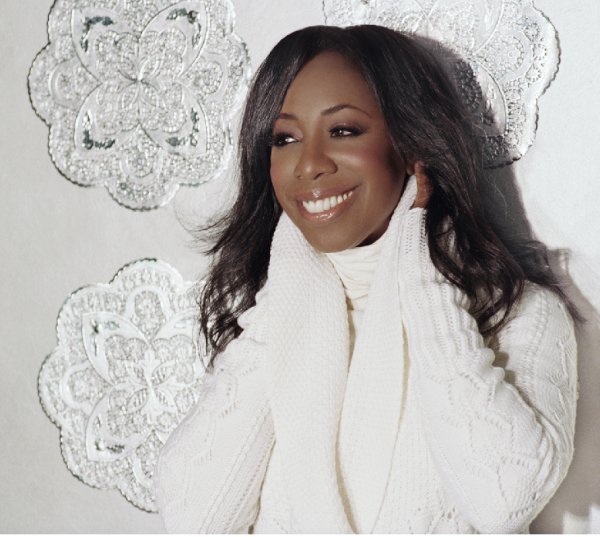
Review: Oleta Adams

(Above: “Get Here” brought down the house at Oleta Adams’ recent homecoming concert in Kansas City, Mo.)

By Joel Francis
The Kansas City Star

Oleta Adams took the stage of Gem Theater on Saturday night with a smile and an apology.

“I’m sorry I’m dressed this way,” she said, wearing a stunning, strapless, turquoise dress. “I thought it was supposed to be spring.”

It would take more than a dumping of out-of-season snow to keep the nearly full house from seeing its hometown girl. For more than two hours, the singer, who was a staple of the local jazz scene in the 1980s, indulged them with stories, a wide selection of songs, and surprises.

The evening got off to a rocky start. Adams’ piano was initially buried in the mix. The drums, played by her husband John Cushon, and keyboards, played by Kansas City native Everett Freeman, Jr., overshadowed everything. The songs were played at a level reserved for noisy clubs or large theaters, not a respectful group in an acoustically sound room.

Adams’ powerful voice, however, would not be derailed by the sonic disarray. After opening with “Feelin’ Good,” the first of several cuts from her latest album, she led her four-piece band into “New York State of Mind.” By the time she got to the reworked bridge that ushered in a lengthy guitar solo, the song bore little resemblance to Billy Joel’s hit. “I Just Had to Hear Your Voice” displayed Adams’ dynamic range. The lyric-heavy melody found her working the verses in a lower register before opening up and soaring on the chorus.

After 40 minutes, Adams announced a short break. It felt premature, but the timing couldn’t have been better. When the group returned 30 minutes later, the sound issues had been resolved. Balance had been restored and instruments were complementing instead of competing. The always-upbeat Adams seemed happier with the situation, too. During “My Heart Won’t Lie” she held onto a note with a phrasing that recalled Nina Simone and drew big applause.

The biggest cheers of the night, however, didn’t go to Adams. After playfully introducing her band, Adams informed the audience that the mother of her bass player, Jeanne Arland Peterson, was sitting in their midst. With the spotlight focused on Peterson, Adams was able to coax her to come onstage.

Peterson looked fragile making her way up the steps, but spring to life behind Adams’ grand piano. After a breathtaking solo, Peterson launched into “All the Things You Are” with her son, Paul Peterson, and Cushon. The impromptu trio sounded like they’d been playing together for years (and, I suppose, two-thirds of them had). When the 88-year-old pianist wanted to hear a solo, she raised her left hand and shot her index finger at the musician in question as if holding a gun.

Once the massive standing ovation died down, Adams joined the trio for a romp through “More Than You Know.” Peterson’s hands slid across the keyboard with gusto and inspired Adams’ best performance of the night.

Clearly excited to be playing again in her adopted hometown, Adams relished talking with the crowd as much as performing. She sang the praises of the 18th and Vine District, and recalled her days playing at the Signboard Lounge in Crown Center.

“My favorite moment every night,” Adams said, “was waiting to see who got beat up in the bathrooms.”

Fights, Adams remembered, sometimes broke out because someone didn’t applaud the right way. Adams also told of a police detective who frequented her gigs. When someone would start talking too loudly, he would start polishing his badge, hinting at what might happen if the chatter didn’t stop.

“I always had the most dedicated fans,” she said, laughing.

The night ended with what Adams said she called the “fourth set” back in her Signboard days. After hinting at her gospel roots in the first set by prefacing “No Way To Love Me“ with I Corinthians 13, Adams took the assembly to church with a powerful one-two of “If You’re Willing” and “Holy is the Lamb.” Both songs were from Adams’ 1997 gospel collection “Come Walk With Me” and fans voiced their pleasure by clapping along and shouting amen.

The poignant “Long and Lonely Hours” is part of a new collection of prayers set to song that Adams hopes will be her next album. The invocation was written after her mother died after spending five months in the hospital, and deals with the feelings of abandonment, awkwardness and, ultimately, acceptance, one feels alone at night in the hospital.

Adams wouldn’t let the night end on a dark note, so she immediately sprang into “Get Here.” Fans burst into applause at the opening chord of her most famous number and several cried out with excitement. Expectations can be high for homecoming shows, but it was clear from the closing ovation that Adams had met them all.

“Tonight,” the woman sitting next to me said, “we got our own jewel, right here at the Gem.”

Setlist: Feelin’ Good; New York State of Mind; I Just Had To Hear Your Voice; I Hope You Dance; Picture You the Way That I Do; Circle of One. Intermission. The Power of Sacrifice; Let’s Stay Here; My Heart Won’t Lie; All The Things You Are (ft. Jeanne Arland Peterson); More Than You Know; If You’re Willing; Holy is the Lamb; Long and Lonely Hours (solo); Get Here.

Keep reading:

Review: Kind of Blue turns 50

Review: Sonny Rollins

Buck O’Neil: Sweet times, sweet sounds at 18th and Vine

15 jazz greats to emerge in the last 20 years

Review: Experience Hendrix

(Above: Jonny Lang and Aerosmith’s Brad Whitford blaze through “Fire.”)

By Joel Francis
The Kansas City Star

The lineup for Tuesday’s Experience Hendrix concert at the Uptown Theater seemed to set up a joke: How many guitarists does it take to pay tribute to the most celebrated axeman of all time? The answer: Fourteen, including half of Los Lobos, all of Living Colour, a pair of virtuosos, a handful of bluesmen and several contemporaries.

HENDRIX_FY_031610_CGO_002F
Bass player Billy Cox met Jimi Hendrix while the two were in the Army. He is the last living musician from any of the bands Hendrix lead.

Billy Cox, the Band of Gypsys bass player and Jimi Hendrix’ last living band mate, opened the night with a heartfelt thank you and romp through “Stone Free.” Backing him on drums was Chris Layton, better known for his time backing Stevie Ray Vaughan in Double Trouble, and Ernie Isley of the Isley Brothers. The star-power of the opening lineup may have had the loaded house drooling over their guitar magazines, but they didn’t have long to revel.

Every 20 minutes or so, another pairing of musicians emerged, each seeming to emphasize a different aspect of Hendrix’ music. His rhythm and blues roots came out in Living Colour’s set, while members of Los Lobos paid tribute to his roots and Kenny Wayne Shepherd emphasized the rock star angle.

Jonny Lang’s performance of “Fire” was the first explosive moment of the night. Backed by Brad Whitford of Aerosmith and a vivacious chorus of singers, Lang’s feverish vocals and impassioned playing drove the crowd to their feet. Whitford was finally able to emerge from the long shadow of his Aerosmith band mate Joe Perry as he and Lang traded solos.

Lang’s set was followed by Kenny Wayne Shepherd’s explosive interpretation of “Voodoo Child (Slight Return).” Knowing his boss was about to burn down the fret board, singer Noah Hunt, who also sings in the Kenny Wayne Shepherd Band, abandoned the stage after completing his verses. Alone onstage, save the rhythm section of Layton and Scott Nelson, Shepherd struck about every rock star pose imaginable as he soloed endlessly to the rapture of the crowd.

Susan Tedeschi was the lone intruder into this guy’s night out. Although she wasn’t given a set of her own, each of her frequent guest appearances was inspiring. Her singing on “One Rainy Wish” added an earthy sensuality and vulnerability to Hendrix’ lyrics, and her tasty guitar solos were a welcome relief from the pyrotechnics.

The night’s two dozen songs spotlighted classic rock staples “Purple Haze,” “Foxy Lady” and “The Wind Cries Mary,” and also unearthed some deeper treasures. Cox celebrated the guitarist he met in the Army with “Message of Love,” a song he a Hendrix recorded on the “Band of Gypsys” album. Eric Johnson embraced Hendrix’ love of unusual textures with the deep cut “House Burning Down.”

Robert Randolph and Sacred Steel brought new life into “Purple Haze.” The result wasn’t too different from what Randolph’s Family Band typically serves up, but the playing was much more elastic bouncing between the trio of steel guitars. Eric Johnson enlisted three drummers to help summon the heavy, drugged feel on “Are You Experienced.” Later, Joe Satriani had no trouble coaxing alien sounds from his guitar during “Third Stone From the Sun.”

Midway through the set, guitarist emeritus Hubert Sumlin emerged to represent the pre-Hendrix guitar world. Backed by Tedeschi, and Cesar Rosas and David Hildago of Los Lobos, Sumlin showed none of his 78 years powering through “Killing Floor,” a song he originally cut with Howlin’ Wolf for Chess Records in 1966.
HENDRIX_FY_031610_CGO_001F
While all the expected heavy hitters drew big responses, some of the evening’s best moments occurred during songs Hendrix didn’t write. Robert Randolph and Sacred Steel teamed with Cox and Living Colour singer Corey Glover for a jubilant gallop through Buddy Miles’ “Them Changes.” Cox tried to end the number, but Randolph wouldn’t let it stop, motivating Glover’s fervent yelps with his riffs. Early in the night, Isley’s unaccompanied incorporation of “Amazing Grace,” mostly played with his teeth, brought back shades of Woodstock.

After every trick and novelty had been exhausted, Cox returned to the stage and closed the night with the blues staple “Red House.” When all the performers were brought out for a final bow, they extended nearly all the way across the stage. Evidently it takes a lot of bodies to fill some very big shoes.

PROGRAM
Stone Free – Billy Cox, Ernie Isley
Message To Love – Billy Cox, Ernie Isley
Manic Depression > Amazing Grace – Ernie Isley
Power of Soul – Living Colour
Crosstown Traffic – Living Colour
House Burning Down – Eric Johnson
Bold As Love – Eric Johnson
One Rainy Wish – Eric Johnson, Susan Tedeschi
Are You Experienced – Eric Johnson, Will Calhoun
Fire – Jonny Lang, Brad Whitford
The Wind Cries Mary – Jonny Lang, Brad Whitford
Spanish Castle Magic – Jonny Lang, Brad Whitford, Susan Tedeschi
I Don’t Live Today – Kenny Wayne Shepherd, Noah Hunt
Come One – Kenny Wayne Shepherd, Noah Hunt
Voodoo Chile > Voodoo Child (Slight Return) – Kenny Wayne Shepherd, Noah Hunt
Can You See Me – David Hildago, Cesar Rosas
Little Wing – David Hildago, Cesar Rosas
Killing Floor – Hubert Sumlin, David Hildago, Cesar Rosas, Susan Tedeschi
Purple Haze – Robert Randolph and Sacred Steel
Them Changes – Robert Randolph and Sacred Steel, Billy Cox, Corey Glover
Third Stone from the Sun – Joe Satriani, Corey Glover, Doug Wimbish, Will Calhoun
Foxy Lady – Joe Satriani, Living Colour
All Along the Watchtower – Joe Satriani, Living Colour
Red House – Billy Cox, Joe Satriani, Brad Whitford, Robert Randolph, Will Calhoun

Note: Except when replaced by Living Colour or Billy Cox, Chris Layton and Scott Nelson played drums and bass. The Sacred Steel is Robert Randolph, Darick Campbell and Aubrey Ghent. Living Colour is Will Calhoun, Corey Glover, Vernon Reid and Doug Wimbish.

Keep reading:

Rock Hall celebrates the 40th anniversary of Woodstock

Review: Buddy Guy

Review: Los Lobos

Review: Chickenfoot

Review: Robert Randolph and the Family Band

Review: The Original Wailers

(Above: “We and Dem” was one of several new cuts the Original Wailers performed in Kansas City.)

By Joel Francis
The Kansas City Star

New material can be problematic for established acts. At a Kemper Arena concert several years ago, Elton John apologized for playing new songs and promised the he’d get to the hits as quickly as possible.
The Original Wailers took the opposite track Friday at the Voodoo Lounge, making several tracks from their upcoming album the centerpiece of the show. The gamble paid off.

Bob Marley casts a long shadow over all reggae acts, but the Original Wailers are especially stricken: Their two guitarists, J unior Marvin and Al Anderson, played with Marley on some of his greatest albums, including “Exodus” and “Uprising.”

The seven-piece band didn’t overlook those moments, but it was clear they want to be remembered as something more as well. After introducing themselves with a trio of Marley numbers, they dove into several songs from the as-yet unreleased album “Justice.”
Wailers1
Even though the crowd couldn’t sing along, they didn’t seem to mind. Part of this had to do with band’s enthusiasm for the numbers. It was evident they were happy to be playing their new creations, and as a result the performances bounced a little bit higher. The other reason is that the songs maintained several of Marley’s hallmarks, like socially conscious, yet upbeat lyrics underlined by gospel organ lines and subtly textured guitar parts.

“Blackbird Fly” was dedicated to the late Joseph Hill from Culture and floated as effortlessly as its title implied. “Backslider” was a song about hypocrites in the vein of “Who the Cap Fit,” and “We and Dem” featured a nifty dub bass-and-drum breakdown.

After several new songs, Anderson declared the band would take a request. There were shouts for “I Shot the Sheriff” and “No Woman No Cry.” Both were good suggestions; neither was played. Instead, the band played another new number, “What’s Love Supposed To Do.” It might have been a cruel trick, but the poppy number kept everyone dancing happily.

Marvin and keyboard player Desi Hyson shared vocal duties. The pair were as much educators as entertainers, pausing between tracks to frame each song. The song “Justice” was prefaced by a quote from founding Wailer Peter Tosh, which drew a big cheer.

The band didn’t deliver a big Marley hit until nearly halfway through the two-hour show. The Voodoo Lounge wasn’t close to full, but just about everyone in the place ran onto the dance floor during the opening chords of “Three Little Birds.” A more obscure cut “Heathen,” also from the “Exodus” album, kept the floor crowded thanks to Anderson and Marvin’s extended solos. A master of feel, Anderson added touches of Latin, psychedelica, blues and even metal into the songs.

After introducing “Jammin’” the crowd didn’t need an incentive to stick around, but Marvin gave them one anyway, leading them through dance steps, hand claps and a call and response. Anderson added a weird, dissonant blues riff to the mix that didn’t seem to fit but somehow worked. As the band worked the groove, backing vocalist Erica Newell, spurred on by fans near the stage, unleashed her funkiest dance moves of the night.

Wailers2After a brief break, Anderson resumed the stage alone, playing a guitar solo that recalled Jimmy Page’s “White Summer/Black Mountainside.” Eventually joined by drummer Paapa Nyarkoh, the rest of the band fell in as he slid into the familiar intro to “Redemption Song.” The performance had a hymn-like solemnity until Marvin kicked it into doubletime, reworking the last verse into a ska number.

The night ended with a 15-minute romp through “Exodus” that wouldn’t quit. After jamming through all the verses, Nyarkoh took a drum solo that didn’t slow the dancing by a single step. Marvin eventually regained the stage, but the band wouldn’t stop, working the groove tighter and tighter as Anderson took a long solo. At this point there were two options: continue playing the number for the rest of the night, which no one on stage or in the crowd seemed to mind, or break it off immediately. Realizing the band had an upcoming gig and the audience may have weekend plans, Anderson chose the latter. If he hadn’t we might all still be dancing.

Setlist: Natty Dread, Rastaman Vibration, Forever Loving Jah, Solution, We Are the Children, Backslider, Justice, Pimper’s Paradise, We and Dem, Blackbird Fly, Three Little Birds, Heathen, What Love’s Supposed To Do, Jammin’. Encore: Al Anderson guitar solo > Redemption Song, Exodus/drum solo.

Keep reading:

Original Wailers keep promise to Bob Marley

Review: Toots and the Maytals, the Wailers

Review: Sly and Robbie

Review: Lee “Scratch” Perry

Original Wailers keep promise to Bob Marley

(Above: The Original Wailers perform Bob Marley’s classic “No Woman No Cry,” in 2008.)
By Joel Francis
The Kansas City Star

Guitarist Junior Marvin’s two musical heroes growing up: Bob Marley and Stevie Wonder.

And in a twist he couldn’t have dreamed of back then, both Marley and Wonder made competing offers for his services. It was Valentine’s Day, 1977.

Marvin had met Marley through Island Records president Chris Blackwell, who knew of Marvin’s work with Traffic in England. Wonder, meanwhile, saw Marvin play in the States with T-Bone Walker, Ike and Tina Turner and Billy Preston.

“I mean, how can you choose?” Marvin said. “Just getting a call from either of these guys was a dream come true, and I got calls from both on the same day.”

He sought the advice of friends and family and other musicians, he said.

“They said I had to go with the man who shared my heritage. I’m Jamaican, so I chose Bob Marley.”

Junior Marvin, left, with Bob Marley.

The timing couldn’t have been better. Marley and the Wailers were getting ready to record “Exodus.” Marvin’s distinctive guitar work was all over future classics “Jamming,” “One Love,” “Wait in Vain” and “Three Little Birds.” In 1999, Time magazine declared “Exodus” the album of the century.

“When Time wrote that, it was probably the proudest moment of my career,” Marvin said. “I am proud of that album. We all worked so hard on it. It was an honor to be selected over Michael Jackson and Stevie Wonder.”

In 1978, the Wailers produced the album “Kaya” and the hit “Is This Love.” The following year Marvin played on “Survival,” which united him with Al Anderson. Anderson, who had delivered the timeless guitar solo on Marley’s early hit “No Woman No Cry,” had left the Wailers in 1976 to work with Peter Tosh.

“I met Al while I was playing with T-Bone. He was working with Mary Young and playing on Island sessions at the time,” Marvin said. “One night I had a dream I would have the opportunity to play in a group with Al.”

Both Anderson and Marvin played with Marley until his death in 1981. Shortly after Marley died, they made a pact to continue performing as the Wailers.

“We spent time with Bob in Germany while he was ill,” Marvin said. “He asked us to keep the band together after he was gone. He made us promise to keep the standard of music high, but to create our own songs as well.”

Led by bass player Aston “Family Man” Barrett, the Wailers released three studio albums and three live efforts after Marley’s death. In 2008, the group collaborated with Kenny Chesney on a No. 1 country hit, “Everybody Wants to Go to Heaven.”

“That was a lot of fun,” Marvin said. “He was real down-to-earth. He was interested in our history and was even talking about the possibility doing a reggae album.”

Chesney shot the video for “Heaven” in Jamaica with the Wailers. The band appeared happy on tape, but trouble was brewing. Before the end of the year, Marvin and Anderson left the band.

“We looked up to Family Man as our leader, but when his girlfriend took over it became a John and Yoko kind of thing,” Marvin said. “It was like the other band members didn’t count. There were no rehearsals, and we were not represented financially.”

The guitarists felt the musical standards weren’t living up to their promise to Marley, so they struck out on their own as the Original Wailers. Despite boasting two lead guitarists, the division of labor in the Original Wailers is relatively simple. Because they overlapped on only a few albums, each man plays lead on the material where he originally appeared. As a lead singer before his stint in the Wailers, Marvin handles the vocals.

“Whenever we play, we explain the two Wailers to people,” Marvin said. “I think there’s room for all of us to coexist.”

Original Wailers shows, Marvin said, are about half Marley classics and half new material. This summer he hopes the Original Wailers will release their first album, “Justice.”

“We just got off a five-week European tour, and the reaction to the classics and the new songs was pretty much the same,” Marvin said. “Obviously more people were able to sing along to ‘Buffalo Soldier,’ but they were dancing and enjoying the new songs as well. We were thrilled to see that.”

Marvin said he feels Marley’s spirit in all the music he creates and has no regrets about choosing Marley over Wonder back in 1977. Besides, he got his chance to play with Stevie Wonder.

“I have a photo of me standing between Stevie and Bob singing ‘jamming in the name of the Lord,’ ” Marvin said. “It’s from when we played the first black music convention in Philadelphia for (Philly soul songwriters and producers Kenny) Gamble and (Leon) Huff. It was a proud moment to be standing on the same stage as those two men at the same time.”

Keep reading:

Review: The Original Wailers

Review: Toots and the Maytals, the Wailers

Review: Sly and Robbie

Review: Lee “Scratch” Perry

Review: David Gray

(Above: A 2006 performance of “Freedom” at Hammersmith Apollo Theater in London. When David Gray returned to the song at the Uptown Theater in Kansas City, it was one of several stand-out moments during the show.)

By Joel Francis
The Kansas City Star

David Gray rewarded a decade’s worth of patience Wednesday night at a sold-out Uptown Theater. The English singer-songwriter broke through in America with the release of his album “White Ladder” in 2000. Gray has released three additional albums since then, but this was his first performance in Kansas City.

The set stopped just shy of two hours, and drew almost exclusively from those albums, tipping slightly toward last fall’s “Draw the Line.”

The crowd didn’t need a reason to get excited, but Gray gave them incentive anyway, pulling out heavy hitter “Sail Away” early. Directing the audience into the chorus with a broad sweep of his arm, the performance felt like an encore. It was the second number of the night.

Once he held the crowd, Gray never let them go. Or rather, the crowd never let go of him. Even quiet numbers were assaulted with proclamations of love and song requests.  The opening chords of “Babylon,” the song that likely introduced a lot of the audience to Gray, drew an evangelic fervor. Arms were waved and voices raised as the congregation celebrated every syllable of the song.

A couple times early on, Gray shook his head and wiped his face as if to shut out the relentless adoration, but the performances were too strong to be capsized by the overzealous assembly. Much of the credit for this goes to Gray’s four-piece backing band.

All of the members save one were lined up on the lip of the stage, adding further intimacy to the evening. Positioned at extreme stage left, drummer Keith Prior was the secret weapon, adding urgency and energy in all the right places, yet knowing exactly when to back off.

On “Now and Always” bass player Robbie Malone added a great bass line to Gray’s wailing harmonica that left the song sounding like a train in the distance. Guitarist Neill MacColl contributed great slide guitar to “Be Mine” and “Fugitive.” He also delivered especially nimble line on “Nemesis.” Behind them all, keyboard player James Hallaway was the subtle glue that held everything together.

Shifting from guitar to piano, Gray was spectacular regardless of the setting, be it the spare, solo piano of “Ain’t No Love,” the hushed acoustic guitar of “Kathleen,” or an epic full-band performance like “Freedom.” Whatever he played and however he delivered them, Gray’s songs all bore a certain similarity. Many of them started at a glacier’s pace. Like an iceberg, they didn’t appear to be moving, then would suddenly tower over everything, overwhelming the surroundings with their strength and beauty.

With touch of echo on the vocals and a starry backdrop, “The Other Side” seemed to be emanating from the Flint Hills. It was one of the more powerful performances of the night, but “Nemesis,” the next number, was even better. As thin beams of light bounced off a mirror ball and sprayed into the space, Gray closed his eyes and threw his arms out over his guitar as if healing the room. Meanwhile, everyone prayed it wouldn’t be another ten years until his return.

Phosphorescent: This pleasant, low-key act from New York was the perfect complement to Gray’s asthetic. The quintet’s 30-minute set caught fire with a pair of Willie Nelson covers: “It’s Not Supposed to Be That Way” and “Reasons to Quit.” Unfortunately, just when they started to build momentum, time elapsed. They would definitely be worth a closer look in a smaller venue, like Davy’s Uptown.

Setlist
Draw the Line; Sail Away; Jackdaw; World To Me; Now and Always; Kathleen; Babylon; Be Mine; Stella the Artist; Slow Motion; Freedom; Ain’t No Love; Fugitive; The One I Love. Encore: This Year’s Love; The Other Side; Nemesis; Please Forgive Me.

Keep reading:

Review: Mutemath

Review: Wilco returns to the Crossroads (2009)

Review: No Doubt, Paramore

Reggae, rock, hip-hop, pop: It’s all Michael Franti

(Above: Released last summer, “Say Hey (I Love You)” is the biggest hit in Michael Franti and Spearhead’s 16-year career.)

By Joel Francis
The Kansas City Star

Michael Franti’s first trip beyond the borders of the United States came when his family spent a year in Canada.

Seeing his homeland from the outside opened his eyes.

The musician has been around the world several times during his 20 years as a performer, but he has never stopped searching for new perspectives. Many of those experiences are funneled into the music he makes with the band Spearhead, which combines pop, rock, reggae, hip-hop and world influences.

“Playing music was really my first opportunity to travel,” Franti said. “Wherever I went, I would always go out and see stuff — museums, architecture, rivers, lakes, parks.”

As Franti became familiar with the larger offerings of major cities, he started seeking smaller experiences.

“The most unique experience you can have is just to have a conversation,” Franti said. “I’ve had heartfelt talks with people in parks in cities, and farmers in undeveloped countries who lay out plastic tarps to collect rainwater.”

Michael Franti is the opening act on John Mayer’s Battle Studies Tour. The two will perform at the Sprint Center in Kansas City on March 22.

Standing six and a half feet tall and sporting long dreadlocks, Franti rarely blends in with a crowd. He can often be spotted with a guitar slung over his shoulder, walking barefoot.

“I’ve carried my guitar to places with the most harsh conditions. I’m talking about famine, hunger, poverty,” Franti said. “But those people don’t want to sing about how hard life is. They want to dance and clap and sing along.”

The adopted son of a teacher and university professor, Franti formed his first band while attending the University of San Francisco. He has been fronting Spearhead, his third outfit, for 16 years. Although Franti’s medium has shifted from hard-core punk to hip-hop to reggae and pop, his lyrics have always retained a fervent, though upbeat, political bent.

In 2006, Franti took his politics to a new level when he toured the Middle East with his guitar and a movie camera. His goal was to capture the emotions of war-torn people on film and in song. Franti returned with 200 hours of footage that was edited down to the 86-minute documentary “I Know I’m Not Alone.” The music from the trip appeared on the album “Yell Fire!”

“These experiences helped me realize a political song is only as good as its ability to make people dance and move,” Franti said. “I started writing songs of upliftment, inspiration. A lot of songs are about conviction for life and rising above.”

Franti and Spearhead’s most successful song by far is “Say Hey (I Love You).” Despite being released nearly a year ago, the song has taken on a surprising second life. It has popped up on the television show “Weeds,” appeared on the “Valentine’s Day” movie soundtrack and peaked at No. 18 on the Billboard Top 100 chart.

“Say Hey” had just started to crest last summer when Franti’s appendix ruptured, sending him to the hospital and the band’s concert dates by the wayside.

“We had been touring for a while, and things were starting to blow up,” Franti said. “Suddenly I have a near-death experience, and I’m in the hospital. It was a healthy reminder that life is precious, and you have to value every second. There are several songs on the new album about the preciousness of life and how grateful I am to be able to play music.”

Continuing the trend of his previous two albums, Franti made his new record, “The Sound of Sunshine,” in Jamaica with producers Sly and Robbie. The legendary duo has worked with everyone from reggae giants Peter Tosh and Black Uhuru to Bob Dylan and the Rolling Stones.

“Working with Sly and Robbie is always a thrill. They are so quick to share their knowledge,” Franti said. “Every time I think a song needs a better beat, they’re the only ones I think of.”

As Spearhead worked in the studio in Jamaica, people on the street could hear the music they were making. The band could tell how well a track was working by how much it inspired the people outside.

“Jamaica is an island of contradictions,” Franti said. “It’s a tropical island, but a poor country. I could see what people were going through trying to find the light. That’s really what I was trying to write about on this album.”

One of the few places Franti hasn’t taken his music to is Haiti.

“We’ve been invited, but it hasn’t worked out,” Franti said. “We have played in East Timor, however, which is in a similar economic situation. I remember thinking when we played there, if this place ever had an earthquake, everything would crumble. There was no economic infrastructure.”

John Mayer, the headlining act on Franti’s current tour, once sang he was “waiting on the world to change.” Unlike Mayer, however, Franti says he has seen progress from his actions.

“When I first got started, I wrote a lot about the prisons in California and how much money was spent there instead of in schools,” Franti said. “Then someone asked me if I’d play in a prison, so we did that. Afterward, people would come up to me and tell me what they’ve done and how much music has helped them through that time and what they want to do to get out. I’m still getting letters from guys I played for.

“That’s why I travel with my guitar,” Franti said. “I don’t want to just sing about it, I want to be directly involved.”

An early visit to Kansas City

For all of his travels, Michael Franti will always remember Kansas City. In 1992, his political rap group the Disposable Heroes of Hiphoprisy opened for U2.

Shortly after their concert at Arrowhead Stadium, Franti was hanging out with Bono and another band member when William S. Burroughs walked in. The Beat Generation legend was living in Lawrence at the time and was about to record an album with the Heroes.

“He came in carrying what looked like a bowling ball bag with him,” Franti said. “He drops it on the bed and it bounced like it was real heavy. Burroughs looks at us and goes, ‘I just thought you’d like to see my gun collection’ and pulls out a pistol with a barrel longer than my forearm.”

While Franti and Bono collected themselves, Franti’s bandmate Rono Tse picked up one of the weapons.

“Burroughs reaches over to him and says, ‘Give me a second here.’ He opens the chamber, dumps the bullets out and gives Rono the gun back,” Franti said. “Bono and I were talking about it later. We think he did it just for effect.”

Michael Franti timeline
1966 Michael Franti is born in Oakland, Calif., the son of an African-American father and an Irish-German-French mother. His mother puts him up for adoption because she is worried her family will not accept the baby. Franti is adopted by a couple with three biological children and one other adopted child.1986 As a student at the University of San Francisco, Franti forms his first band, the Beatnigs, an industrial, hard-core punk outfit.

1988 The Beatnigs release their only album. Their song “Television” becomes an underground success.

1990 Franti and his bandmate Rono Tse form the Disposable Heroes of Hiphoprisy. The group is known for its jazz-based samples and heavy political lyrics.

1992 The Heroes release their only album, “Hypocrisy Is the Greatest Luxury.” The band is invited to open for U2 on its tour, which stops at Arrowhead Stadium in October.

1994 Franti forms the band Spearhead, which releases its first album, “Home.”

1997 Spearhead leaves Capitol Records after releasing two albums. Franti starts his own label, Boo Boo Wax.

1999 Franti founds the annual Power to the Peaceful music festival in San Francisco.

2000 Franti rails against the death penalty on the concept album “Stay Human.”

2003 Spearhead responds to the post-9/11 landscape with the song “Bomb the World” and the album “Everyone Deserves Music.” Franti works with reggae musicians Sly and Robbie for the first time when he hires them to remix a track.

2006 Inspired by a trip to Israel, Baghdad, the Gaza Strip and West Bank, Franti produces the anti-war film “I Know I’m Not Alone.” The trip also influences Spearhead’s album “Yell Fire!” which is produced by Sly and Robbie. In June, the band headlines on the main stage on the final day of the Wakarusa Music Festival outside of Lawrence.

2007 Franti and Spearhead make their second appearance at the Bonnaroo Music Festival in Manchester, Tenn. The group made its Bonnaroo debut in 2003 and is scheduled to perform there this June.

2008 Spearhead releases its sixth studio album, “All Rebel Rockers.” Again produced by Sly and Robbie, it is the group’s best-selling and highest-charting record to date.

2009 “Say Hey (I Love You)” is released as a single in June. Weeks later, Franti is hospitalized after his appendix ruptures. The band is forced to cancel its headlining slot at Wanderlust and several other festivals.

2010 Michael Franti and Spearhead open for John Mayer on his Battle Studies tour.

Keep reading:

Review: Michael Franti at Wakarusa

Review: Sly and Robbie

Review: Alice in Chains

(Above: Alice In Chains’ new singer William DuVall has no problem claiming “Dam That River.”)

By Joel Francis
The Kansas City Star

As Alice in Chains took the stage Sunday night at the Midland, a large, beating heart was projected onto a curtain. Nearly two hours later, the reformed grunge band proved to the sold-out crowd they were still very much alive.

The band had its foot on the gas and eyes on the rearview mirror. The quartet proved they were once again a going concern by delivering more than half of its new album, “Black Gives Way to Blue.” In turn, longtime fans were rewarded with nearly all of the classic 1992 album “Dirt.”

New singer William DuVall had no problem filling the shoes of Layne Staley, the band’s former lead singer who died of a drug overdose in 2002. While DuVall’s vocals are eerily similar to Staley’s, he puts enough of himself in the performance to prove it’s not just karaoke. In a way, his style recalls H.R. of the Bad Brains. Like H.R., DuVall can be soulful and hard as nails at the same time.

But while all eyes were judging DuVall, there were no questions about who was leading the show. Guitarist Jerry Cantrell was the first member hit with the spotlight, and frequently stationed himself center stage. The band’s chief songwriter, Cantrell sang lead or harmony vocals on nearly as many songs as DuVall, and never failed to elicit cheers with his solos.

ALICEINCHAINS_FY_022110_CGO_003F
Several times the crowd’s lusty singing threatened to overwhelm the band. Cantrell encouraged the crowd to join in on the chorus of “Got Me Wrong,” but they needed no enticement when the opening line of “Would?” rumbled out of Mike Inez’ bass guitar. Classics “Man in the Box,” “No Excuses” and “Rooster” also turned into massive sing-alongs.

The succession of the three opening numbers on “Dirt” early in the set were so vital and energetic it was hard to believe the material was nearly 20 years old. Later, the already psychedelic “Sickman” was somehow even more trippy, as the band dragged the throng through the sonic undertow.

While Staley wasn’t missed onstage, he was noticeably absent from the songwriting process. Staley had a way of tightening and punching up Cantrell’s songs. Unfortunately, several of the newer songs lacked Staley’s urgency. “Last of My Kind” went nowhere for nearly six minutes. There is an unquestionably great song buried somewhere in the seven minutes of “Acid Bubble.” Unfortunately, it too was content to plod along unchecked at mid-tempo.

While the new material didn’t get the massive responses of the tried and true, they still went over well. There were plenty of hands in the air and heads nodding along to show the crowd hadn’t come out to see a nostalgia act. New songs “Check My Brain” and “Your Decision” should figure into setlists for some time.

It would have been easy for Alice in Chains to take the easy route and cash in. The Doors, Queen and INXS have all lost a charismatic frontman and tried to plug a stand-in into the spot. Alice in Chains have succeeded thus far because they are looking beyond the flannel shirt/Doc Martens set. They’re not preaching to the choir, they’re still looking to convert.

“Sometimes,” Cantrell said, “it takes a few times banging your head against the wall until you finally get through, if you know what I mean.”

Setlist: All Secrets Known, It Ain’t Like That, Again, Check My Brain, Them Bones, Dam that River, Rain When I Die, Your Decision, Got Me Wrong, We Die Young, Looking In View, Down in a Hole, Sickman, Lesson Learned, Acid Bubble, No Excuses, Angry Chair, Man in the Box. Encore: Sludge Factory, Would?, Rooster.

Keep reading:

Concert review: Megadeth

Album review: Chris Cornell – “Scream”

Remembering Ron Asheton of the Stooges

Review: B.B. King and Buddy Guy

(Above: B.B. King and Buddy Guy jam on “Rock Me Baby” with Eric Clapton and Jimmie Vaughan at a recent Crossroads Festival.)
By Joel Francis
The Kansas City Star
 
Few in the sold-out crowd that greeted B.B. King, the 84-year-old King of the Blues, at the Midland theater on Friday night expected the energy and vitality of King’s essential “Live at the Regal” album, released 45 years ago. It is also likely few expected the extensive banter that filled King’s 90 minutes onstage.

King’s set opened with a 10-minute vamp that allowed everyone in his eight-piece backing band the chance to solo. Once King took the stage, he proved he still had the chops and voice fans love. His excellent reading of the blues warhorse “Key to the Highway” melded nicely into King’s own “Blues Man.”

Another classic, “See That My Grave Is Kept Clean,” was driven by a military cadence on the snare drum. When coupled with King’s four-piece horn arrangement, the song recalled a New Orleans funeral march. The band followed that number with a song King recorded with U2 back in the ‘80s. In their most upbeat performance of the night, the King and his band lit into “When Love Comes To Town” with surprising energy. Sadly, it was not to last.

From there King’s set was as much a monologue as it was a musical dialogue. Here are some of his best one-liners:
•    “You can look at me and tell I ain’t no Michael Phelps. I don’t smoke.”
•    After hitting a bum note on Lucille, his guitar: “I know I shouldn’t have let her go to the liquor store.”
•    After the audience response didn’t meet expectations: “I think you’re teasing me. You sound like Tiger Woods.”

As King’s chitchat neared the 20-minute mark, fans started to grow restless. Some shouted song requests; others just yelled “play something.” King apologized for not being able to play one of the requests, then continued rambling about Viagra and instructing men how to set the mood by playing Willie Nelson’s “Always On My Mind.”

After a bizarre musical riff on ED medications, King finally gave the crowd another song in the form of “Rock Me Baby.” The aborted performance led into King’s signature number, “The Thrill Is Gone.” Even then, King littered the song with asides and shout-outs to the sound men and lighting crew. When the throng realized they weren’t going to get another full performance, they started leaving en masse.

No one can fault King for growing old. He’s lived a rich life and brought joy to millions of people around the globe. Perhaps King feels he needs to stay onstage for so long to justify his high ticket price. If this is the case, he may be better off knocking a couple bucks off the ticket and cutting half of his horn section. (The quartet was only onstage half the time anyway.) While King’s onstage generosity is commendable, fans might be more appreciative of a shorter set loaded with music than the current drawn-out arrangement.

It would be unfair to label Chicago blues legend Buddy Guy the evening’s “opening act.” Guy just happened to go onstage first.

Listening to Guy is like hearing the history of electric blues on shuffle. Backed by a tight four-piece band, the 73-year-old guitarist tore through a 65-minute tribute to his heroes and contemporaries.

Guy teased out an abstract solo over the familiar opening chords of “Hoochie Coochie Man” in a setting that was more Thelonious Monk than Muddy Waters, and took particular delight in delivering the song’s more racy lyrics. Guy’s tribute to his late friend and collaborator Junior Wells on “Hoodoo Man” was another high point.

The night’s signature moment started with Guy playing so quietly one could hear his amp buzzing over the P.A. As “Drowning on Dry Land” progressed, Guy eased his way off-stage and into the crowd. He nailed a long solo while walking nearly two-thirds of the way up the floor, and finished it plopped down in a surprised fan’s seat.

Before leaving the stage, Guy paid tribute to his friend and inspiration, B.B. King. Growing up in Louisiana, Guy said, there were no music shops, just stores that happened to have instruments in one corner. Before King’s records came out, inventory was priced to move. But after “Three O’Clock Blues,” guitars were suddenly harder to come by.

B.B. King setlist: I Need You So, Let the Good Times Roll, Key to the Highway>Blues Man, See That My Grave Is Kept Clean, When Love Comes To Town, You Are My Sunshine, “ED Medication Blues,” Rock Me Baby, The Thrill Is Gone.

Buddy Guy setlist: Nobody Understands Me But My Guitar, Muddy Waters medley: Hoochie Coochie Man/She’s 19 Years Old/Love Her With A Feeling, Hoodoo Man, Slippin’ Out, Slippin’ In, Drowning On Dry Land, Close to You, Boom Boom, Strange Brew, Voodoo Chile, Sunshine of Your Love.

Keep reading:

Review: Buddy Guy (2008)

Review: Buddy and Bettye at Roots N Blues N BBQ Fest 2008

The True Story of Cadillac Records

Review: Yo La Tengo

(Above: Yo La Tengo tear into “Sugarcube.”)

By Joel Francis
The Kansas City Star

Almost an hour into Yo La Tengo’s show Tuesday night at the Granada Theater, a fan asked how long the band had been together. The choices presented were 12, 13 or 14 years or longer.

Singer/guitarist Ira Kaplan quickly set the record straight: “I’d like to take this opportunity to announce that this is our 26th year of rocking,” he said. “And I know a lot of you are similarly looking forward to your 26th birthday.”

The indie-rock trio from Hoboken, N.J., is not only a case study in longevity, but consistency. Its set exceeded two hours and touched on all facets of the band’s career, from a whisper-soft reading “Speeding Motorcycle,” one of the band’s earliest “hits,” to bright, up-tempo new song “Nothing To Hide.”

The opening number showcased the two facets of Yo La Tengo’s personality. “We’re an American Band,” was not a Grand Funk cover, but a 10-minute, laid-back drone. Kaplan’s sweet falsetto vocals were countered by his sudden guitar spasms, creating something like an abrasive lullaby.

The rest of the night swung between those two poles. A spacey reading of “Little Eyes” drew big cheers. Drummer Georgia Hubley (Kaplan’s wife) took over vocal duties. Kaplan’s guitar had a flat tone and was buried in the mix, making it feel like the song was floating out of a distant radio.
Other early highlights included the jaunty “Mr. Tough,” which had some people dancing. “I’m On My Way,” another new song, featured bass player James McNew on lead vocals and Hubley on acoustic guitar.

The mellow, dreamy soundscape was punctured by the ferocious drums and guitar that introduced a raucous “Sugarcube.” The energy from that number carried into “More Stars From Heaven,” that slowly built in intensity until reaching a blissful crescendo after nearly 10 minutes.

While Yo La Tengo knows how to nurse a mood, the instrumental “I Heard You Looking” was a tour de force. With Hubley and McNew holding down the groove, Kaplan battered and molested his guitar for nearly 20 minutes. Jumping in the air while strumming, and swinging the instrument by its neck, Kaplan did everything he could to coax out new sounds. When his guitar strap broke, Kaplan kept on playing, using the experience to add new texture to his strumming.

After surveying their catalog, the band turned to their influences during the encore sets. A fun garage rock cover of the Small Faces’ “What Cha Gonna Do” and a goofy duet of “It’s OK, I’m Alright” with opening band Times New Viking showed the trio’s sense of humor. While the crowd didn’t get the band’s oft-requested cover of Sun Ra’s “Nuclear War,” the night closed with another Ra cover.

Nearly two hours after taking the stage, Yo La Tengo surprised everyone by returning for a second encore. After playing a stripped down version of “Big Day Coming,” that found Hubley replacing Kaplan on lead vocals, the trio broke out some doo-wop on Sun Ra’s “Somebody’s In Love.” Although the house wasn’t sold out, it was comforting to know the band could, and would, come back and do this again anytime they wanted.

Setlist: We’re An American Band, All Your Secrets, Periodically Double or Triple, Avalon or Someone Very Similar, Little Eyes, Here To Fall, If It’s True, Mr. Tough, I’m On My Way, Don’t Say, Tom Courtenay, Sugarcube, More Stars Than There Are In Heaven, The Story of Jazz, Nothing To Hide, I Heard You Looking. Encore: It’s OK, I’m Alright (with Times New Viking), Stockholm Syndrome, What Cha Gonna Do (Small Faces cover), Speeding Motorcycle; Big Day Coming (acoustic), Somebody’s In Love (Sun Ra cover).