Review: Michael Franti

(Above: Michael Franti and Spearhead perform at the Electric Picnic Festival in Ireland.)

By Joel Francis
The Kansas City Star

Michael Franti and Spearhead were just starting their new song, “The Sound of Sunshine” when the first drops of rain appeared. By the guitar solo they were landing regularly. At the end it was obvious the rain wasn’t moving on.

The building storm intensified “Yell Fire,” the politically charged next number, but Franti was undeterred, worming his way through the crowd, getting wet with the masses that filled two-thirds of Crossroads to see him on a Sunday night. As Franti made his way back onstage he pulled some musicians from the crowd who lead an impromptu jam on “Smells Like Teen Spirit.” When the song ended Franti’s voice could be heard, but he was nowhere to be seen.

Michael Franti spent nearly as much time in the crowd as he did onstage. (Photo by Travis Beye.)

“Those of you in front, turn around,” Franti’s voice boomed, and there he was, standing on something in the middle of the lawn, acoustic guitar around his neck, water dripping from his dreadlocks, tattooed skin glistening. “Hey Hey” was already a pretty infectious song, made all the more so by the troubadour standing among us. As everyone sang along, Franti worked in a few bars of “Singing in the Rain” and how great the weather was in Kansas City.

That is it about water falling from the sky that makes every note hit deeper? Couples dance closer, hands clap harder and voices sing louder. The rain erodes social boundaries, arbitrary delineations of Our Group and Their Group and baptizes everyone in the communal experience of music.

The encore found everyone in the band down in the pit with the crowd, banging away at their instruments as if oblivious to the relationship between water and electricity. With the audience packed around, joining in on vocals and percussion, for a moment it almost felt like summer camp.

The first half of the concert couldn’t compare to the hour that developed in the downpour. Backed by a six-piece band, Franti delivered old favorites, like an acoustic arrangement of “Sometimes” that allowed for several solos, and new songs like the current single “Shake It Shake It,” which found everyone doing just that. Another stand-out track from the forthcoming “Sound of Sunshine” album was “Never Too Late,” a ballad about angels and life Franti wrote in the hospital while recovering from an emergency appendectomy last summer. It sounds corny, but he made it poignant.

At six feet, five inches, Franti is hard to miss, even in a chicken mask. Spearhead invaded the last song of opening act One Eskimo’s set dressed in Mexican wrestling masks. The band roughhoused around the stage and eventually hoisted the singer and bass player on their shoulders mid-song.

One Eskimo returned the favor during the final number of Spearhead’s two-hour set, appearing onstage with a sizable class of children culled from the crowd for “Say Hey (I Love You).” Spearhead’s surprise hit from last summer had everyone singing along from the first note, and Franti was happy to share the mic with the young fans onstage.

After everyone in both the elevated and ground-level audiences had their fill of singing and dancing, Franti discovered a wind-up, cymbal-playing monkey, which he happily held up to the mic and let have a solo.

A new rhythm came out of that, and Franti coaxed a boy to do the robot, much to the delight of the crowd. The rain was still coming down, but no one wanted to leave. When you’re this wet, what’s a few more drops?

Setlist: Love Don’t Wait, The Thing That Helps, Rude Boys Back in Town, All I Want Is You, Hello Bonjour, Shake it Shake It, Right On Time, Sometimes, Never Too Late, Sometimes, Everyone Deserves Music, Light Up Ya Lighter, Only Thing Missing Is You, Sound of Sunshine, Yell Fire, Hey Hey, I Won’t Leave You Alone, I’ll Be Waiting. Encore: Yes I Will, I Got Love For You, Say Hey (I Love You).

Keep reading:

Reggae, rock, hip-hop, pop: It’s all Michael Franti

Review: Michael Franti at the Wakarusa Music Festival (2007)

Review: Pieta Brown, Truckstop Honeymoon

(Above: Pieta Brown sings to Loretta Lynn.)
By Joel Francis
The Kansas City Star
When Pieta Brown was in town almost two months ago, she played her songs before a sold-out Midland Theater. As the opening act on Mark Knopfler’s tour, she had a dream gig of full houses and open-minded audiences.

Opportunities like that can boost a career, but it doesn’t happen overnight. Which is why just seven weeks later, Brown was back. The material may have been the same, but without Knopfler’s boost, Brown had trouble drawing more than three dozen people to her early evening set Friday night at Crosstown Station.

These are the roller coaster realities of an emerging artist, all too familiar to Brown. The daughter of folk singer Greg Brown, she released her first solo album in 2002. Her latest release dropped in April. On those albums Brown has crafted a sound that will please fans of Kathleen Edwards, Carrie Rodriguez and the Cowboy Junkies.

As before, Brown arrived armed with guitarist Bo Ramsey, who not only produced several of her father’s albums, but has also worked with obvious influences Lucinda Williams, Ani DiFranco and Calexico. Brown’s songs provided ample space for his tasty, slow-as-molasses solos to drip out.

Above: Bo Ramsey, left, and Pieta Brown during a 2009 performance.

The duo’s 75-minute set included several stand-out numbers, including “In My Mind I Was Talking To Loretta,” an homage to the time Brown’s parents took her to see “Coal Miner’s Daughter” and she came home wanting to be “Roletta Lynn.” The song is also a tribute to the run-down Iowa shack she grew up in surrounded by “miles and miles of haystacks and miles and miles of gravel roads,” as she told the crowd.

Other high points included the new song “Prayer of Roses,” and “4th of July,” a poignant memory of a rural holiday. The country girl also mixed in several blues numbers, including an adaptation of “Rolling and Tumbling” and a cover of Memphis Minnie’s “Looking the World Over.”

The sparse crowd sat attentively, appreciative, but distant.  It was the type of polite crowd that would wait until between songs to get up and head to the bathroom. No one thought, however, to stand up and move closer, which left a 15-foot chasm between the stage and the first row of tables.

Although Brown’s material was strong, the similar moods and arrangements caused them to blend together after a while. Some of the audience started to get bored, as the chatter from the bar picked up until it threatened to overwhelm the last quarter of the set.

For all of her considerable talents, Brown would be better off teaming up with similarly minded and situated artists. This would take the pressure off of having to sustain a full set, and broaden her reach. She would be a great addition to the July bill at Crossroads that includes Dar Williams and Rodriguez.

Brown was long gone by the time Truckstop Honeymoon took the stage an hour later. The quartet not only had the benefit of a later time slot, but also a local following. After Hurricane Katrina washed out bass player Katie Euliss and guitar/banjo player Mike West’s New Orleans home, the couple relocated to Lawrence, Kan.

Augmented by mandolin player Jake Wagner and drummer Colin Mahoney, the pair traded and harmonized on verses like Johnny Cash and June Carter, refusing to take anything seriously. When Euliss sang about the Christmas she got her mama high it was hard to tell how much was she made up. Later, West introduced the original “My Automobile” as a P-Funk cover.

The 90-minute set also included several new songs, like “Latch Key Kid Recipe Book,” an ode to absent parents and oven pizzas. “Kansas in the Spring” drew a parallel between tornadoes in the heartland and hurricanes on the coast.

The best moment was “Vacation Bible School,” another song that felt autobiographical. After coaxing the crowd into singing along on the ridiculously convoluted chorus about getting kicked out of bible school, West broke the audience into three parts and held a yodeling competition.

Keep reading:

Carrie Rodriguez honors family, roots on new album

Review: Robert Plant and Allison Krauss

Elvis Costello – “Secret, Profane and Sugarcane”

(Below: You have to hear it at least once – Truckstop Honeymoon’s ode to vacation Bible school.)

Review: Maxwell and Jill Scott

(Above: Maxwell performs “Fistful of Tears” in Dallas on the fall 2009 arena leg of the tour.)

By Joel Francis
The Kansas City Star

If the local birth notices are unusually high late next February, we’ll know why. Sunday night at Starlight, neo-soul stars Maxwell and Jill Scott set a romantic mood with three hours of slow jams designed to linger long after the last note expired.

Shortly after sunset, a silhouette appeared on the screen behind the band. As the 10-piece band vamped, Maxwell suavely strolled out in a three-piece suit and sunglasses. Women erupted in spontaneous shrieks of delight as he set the mood early with “Sumthin’ Sumthin’.”

It was hardly the only time Maxwell would play to the fairer sex. Over the course of his 90- minute set he praised (“Fortunate,” “Ascension”), chastised (“Cold”), apologized (“Pretty Wings”) and seduced (pretty much every other song) the women in the audience. The set comprised two-thirds of Maxwell’s 2009 comeback album “BLACKsummer’snight,” and another half dozen hits and favorites for good measure.

The band rolled through the first three numbers without stopping. The come-hither strut of “Sumthin’ Sumthin’” easily rolled into “Get To Know Ya” and an arrangement based on James Brown’s “The Big Payback.” After a New Orleans jazz breakdown and trumpet solo, the ensemble took a deft turn into the Kool and the Gang-inspired “Cold,” one of the most upbeat kiss-off songs of all time.

Nearly every musician backing Maxwell has a foot in the worlds of jazz and hip hop. Many members have collaborated with rappers Mos Def, Jay-Z or Diddy. Pianist Robert Glasper was received a Grammy nomination for his 2009 album “Double Booked.” This jazz pedigree was on display all night, in the way Glasper or organist Travis Sayles would respond to a vocal phrase, or feed off the rhythm section.

Although the size of venues, staging and setlists have changed, Maxwell and the band have been touring together for nearly two years now. They’ve had plenty of time to sand out the rough spots, and Sunday’s night was an effortlessly paced ride. The roughest element was likely the most surprising: Maxwell’s voice.

The rasp in Maxwell’s throat was obvious from the first number; by the fifth he ‘fessed up to overdoing it the previous night in St. Louis and asking for the audience to help him on the high notes he couldn’t hit. He then bravely launched into the falsetto-sung “This Woman’s Work,” holding the mic stand over the crowd on the chorus. It was a generous gesture, but Maxwell would have been better off letting back-up singer Latina Webb play a greater role. Their duet on “Reunion” was one of the better moments of the night.

This was a small hurdle to overcome. Maxwell’s voice grew stronger with each number, to the point that he was able to handle the high parts in a cover of the Isley Brothers’ “Don’t Say Goodnight” with ease. The set ended with two guaranteed crowd-pleasers, “Fortunate” and “Ascension.” On the latter, the very full (but not sold out) house delivered the entire first verse a capella, much to Maxwell’s delight.

Jill Scott had the misfortune of taking the stage with the sun blazing through most of her 80-minute set, rendering most of her lighting and effects moot. It wasn’t a big loss, though, because like Maxwell the focus was on her voice and her band.

The 10-piece group sizzled through the keyboard propelled “It’s Love” that got most of the crowd up and dancing. If that number bounced with the energy of a passionate night on the town, then the next song, “Not Like Crazy,” gently embraced the delicate pleasure of waking up next to that person the following morning.

The two new numbers were studies in contrast. “I Love You” rode a bubbly ‘80s synth line, but wasn’t a radical departure in sound or subject. “Hear My Call” was a desperate, dead-of-night cry for help in the aftermath of a relationship. Scott performed the song backed only by piano. When it was over, she walked to the opposite end of the stage where her other keyboard player started one of her most affirming songs, “He Loves Me.”

Soon the band and the crowd were both fired up, but Scott stopped the show with her near-operatic vocal display that brought a richly deserved standing ovation. Scott made sure everyone stayed on their feet with the girl-power anthem “Hate On Me,” early hit “A Long Walk” and carpe diem hymn “Golden.”

It would have been a delight to have Scott and Maxwell share the stage for a number, but even apart the pair was a perfect complement. Both realized their roles as facilitators as much as entertainers.

“I’m here to support, engage and enthuse,” Maxwell said suggestively.

Scott was more direct: “This is an effort to get y’all some tonight.”

Jill Scott setlist: Gimme, The Real Thing, Insomnia, It’s Love, Not Like Crazy > The Way, Come See Me, Crown Royal, I Love You (new song), Cross My Mind, Hear My Call (new song), He Loves Me, Hate on Me, A Long Walk, Golden.

Maxwell setlist: Sumthin’ Sumthin’ > Get to Know Ya > Cold, Lifetime, Bad Habits, This Woman’s Work, Help Somebody, Fistful of Tears, Stop the World, Reunion, Till the Cops Come Knockin’, Don’t Say Goodnight (Isley Brothers cover) > Fortunate, Ascension. Encore: Pretty Wings.

Keep reading:

Fans delay Maxwell’s next album

Review: Jill Scott at Starlight

Raphael Saadiq sends a love letter to soul makers and Motown

Jamie Foxx brings it to Sprint Center on Saturday

Fans delay Maxwell’s next album

(Above: The video for “Pretty Wings,” one of the biggest songs to come off Maxwell’s latest album.)

By Joel Francis
The Kansas City Star

When Maxwell released his first album in eight years last summer, he planned on making up for lost time by hitting his audience with three albums over a short period of time. The fans, however, had another plan. “BLACKsummer’snight” debuted at No. 1, spawned two singles that stayed on the charts for 46 and 47 weeks, respectively.

The assuring everyone “I’m back for good,” the follow up album is ready. Now Maxwell’s waiting for the excitement to die down.

“This (new album) will be the second in a trilogy,” Maxwell said. “They were going to come out in succession, but then the first one created this response. We’re waiting for the people to tell us when they’re ready.”

The soul man mapped his return cautiously, playing the Uptown on the first leg of his tour in the fall of 2008. By the time his show reached St. Louis a year later he was playing arenas and had two sold-out nights at Madison Square Garden under his belt.

“Honestly, I like the intimate settings better,” said Maxwell, who celebrated his 37th birthday on May 23. “People can hear us better and see us better. But because of the success of the record, I’d be in every town for two weeks if I did that.”

When Maxwell plays Starlight on Sunday, he will bring Jill Scott, one of the singers who blossomed during his time away.

“She is absolutely amazing,” Maxwell said of Scott. “Apart from the music, she not only has the most beautiful smile but the biggest spirit. She typifies soul right now.”

Maxwell said his set is “very different” from previous tour legs. The stage has been redesigned by Roy Bennett, who came to Maxwell’s attention through his work with Nine Inch Nails and Rammstein.

“His ability to design is stellar. We’ve got great video and lights,” Maxwell said. “More importantly is my band. These musicians could stand out in front of a cloth.”

The ten-piece outfit includes several artists who have made names for themselves in the jazz world, like pianist Robert Glasper and bass player Derrick Hodge. The pieces of the ensemble started falling into place when a friend introduced Maxwell to Chris Dave. Dave’s impressive resume includes collaborations with Mint Condition, Meshell Ndgeocello, Pat Metheny, Kenny Garrett.

“Chris is just an incredible drummer. He knew the person who introduced me to the horn section, and the band kind of evolved from there,” Maxwell said. “I won’t say it was happenstance, because I do believe in destiny, but it came together very organically.”

The musical landscape Maxwell re-entered is markedly different. Labels are failing and artists are selling fewer albums and, as a result, generating less money for both themselves and their label.

“It hasn’t been a problem for me, which is incredible,” Maxwell said. “We just added the fourth leg of the tour and I’m getting better album sales than I’ve ever had. I’ve been pretty – and I hate using this word, but – lucky. Blessed.”

For Maxwell the comeback is over. He’s returned and conquered, and now he’s ready to move on. Worn down by being asked why he voluntarily dropped out of sight so many times, Maxwell has a simple, smirking answer: “I like Seinfeld.”

Keep reading:

Review: Maxwell and Jill Scott

Review: Jill Scott at Starlight

Stevie Wonder celebrates Michael Jackson at Starlight

Review: Raphael Saadiq

Review: James Taylor and Carole King

(Above: James Taylor and Carole King are accompanied by Leland Sklar (bass) and Russ Kunkel (drums) on “Ellen” in 2010.)

By Joel Francis
The Kansas City Star

For more than 30 years, James Taylor and Carole King have been writing the type of songs that fans want to hold close and wrap around themselves like a blanket. When the pair announced their joint tour, the material and musicianship were beyond question. The biggest hurdle lay in translating that intimacy to large spaces.

Taylor and King had no problem transforming the spacious Sprint Center into a cozy club for their two-and-a-half-hour performance Friday night. The stage set the mood. The raised white platform was situated in the middle of the floor, and surrounded by three rows of nightclub tables, each outfitted with a warm, glowing lamp.

The ambience was cemented when the duo entered through the crowd to take the stage. Taylor’s chair was positioned in the curve of King’s grand piano so the two could have constant eye contact while they played. Even when Taylor eventually stood up and King stepped away from the piano, the chemistry and closeness was evident.

The atmosphere was such that when someone shouted a request, Taylor picked the oversized setlist off the floor, pointed to the number and told them they’d get to it eventually.

Both singers were chatty, but Taylor had the better banter, cracking wise about calling the onstage seating “raised seats” because “high chairs” wasn’t right and “stools” sounded dirty. His wry sense of humor was also on display when he tried to set up the common theme between “Beautiful” and “Shower the People.”

“Here’s another song,” Taylor started. “I know that’s a surprise. ‘Oh, they’re going to play another song.’ Well, here we have two in a row that … I guess they’re all in a row. We tried doing them all at once, but it didn’t work.”

The sold-out crowd (although both of the end sections up top were curtained off), devoured every syllable, musical or otherwise. Each song was greeted with thunderous applause that threatened to overwhelm the performance at times. When the band joyously performed the Motown classic and Taylor hit “How Sweet It Is (To Be Loved By You)” they seemed to be singing to the appreciative audience as much as themselves. The response definitely surprised the performers, particularly King, who took the stage for the encore looking at the crowd in wonder, mouth agape.

King’s reaction was genuine, but she shouldn’t have been so shocked. The setlist included all but three songs from King’s masterpiece “Tapestry” and nine of the 12 cuts on Taylor’s best-selling “Greatest Hits” collection. This night wasn’t about introducing new material, but to reunite with longtime musical friends.

“Fire and Rain,” “So Far Away,” “Country Road,” “Crying in the Rain.” Nearly every number could have been a defining moment. The biggest moments were the small ones, like Taylor’s exquisite harmony on “Will You Still Love Me Tomorrow” on the line “when the night/meets the morning sun.” Or the way Taylor and King traded verses on “You’ve Got a Friend.”

During “Smackwater Jack” and “I Feel the Earth Move” the 68-year old King bounced around stage like a teenager. Not to be outdone, the 62-year-old Taylor strapped on an electric guitar for the crackling “Steamroller.” After blowing a harmonica solo, he duck walked across the stage. The blues song was out of Taylor’s normal dynamic, but the audience response was so great Taylor should consider cutting an album on the Alligator label.

Before the third song, Taylor introduced the band so the audience could fully appreciate the accompanists. Bass player Leland Sklar, drummer Russ Kunkel and guitarist Danny Kortchmar are collective known as The Section.

The three defined the mellow, Los Angeles sound of the 1970s singer/songwriter movement, appearing not only on “Tapestry” and “Sweet Baby James,” but several records by Jackson Browne, Warren Zevon and Jimmy Buffett. Sklar and Kunkel’s playing was tasteful and understated, with every note or beat serving the song. Kortchmar relished the times he could cut loose with a solo, like on “Smackwater Jack” and “Jazzman.”

The Section was augmented by a trio of backing singers and keyboard player Robbie Kondor. Singer Arnold McCuller took the crowd to church with his Gospel delivery during “Shower the People” that was the first big moment of the set. It made for a hard song to follow, but King pulled out one she wrote that was made famous by the Queen of Soul, “(You Make Me Feel Like) A Natural Woman.” When the chorus hit, everyone in the arena became part of the ensemble.

The evening ended with the quiet “You Can Close Your Eyes.” Accompanied only by Taylor’s guitar, the two sat side by side, King staring into Taylor’s eyes as she harmonized. As the last note rang out, she briefly rested her head on his shoulder before the two rose and strolled off, hand in hand.

“This reunion has been waiting to happen since the early ‘70s,” Taylor had said earlier. But for the fans present the question isn’t “What took you so long?” Rather, it’s “When are you coming back?”

Setlist: Blossom, So Far Away, Honey Don’t Leave L.A., Carolina On My Mind, Way Over Yonder, Smackwater Jack, Country Road, Sweet Seasons, Mexico, Song of Long Ago > Long Ago and Far Away, Beautiful, Shower the People, (You Make Me Feel Like) A Natural Woman. Intermission. Copperline, Crying in the Rain, That Sweet Old Roll (Hi-De-Ho), Sweet Baby James, Jazzman, Will You Love Me Tomorrow, Steamroller, It’s Too Late, Fire and Rain, I Feel the Earth Move, You’ve Got A Friend. Encore: Up on the Roof, How Sweet It Is (To Be Loved By You), You Can Close Your Eyes.

Review: Public Image Ltd.

(Above: John Lydon made his first post-Sex Pistols statement with “Public Image.” “Rise” is one of PiL’s most accessible tunes. Here the reunited band performs them at the 2010 Coachella music festival.)

By Joel Francis
The Kansas City Star

There was nothing rotten about the performance John Lydon and Public Image Ltd. delivered Monday night at the Midland Theater. Faced with a miniscule crowd in a minor market on a weeknight, Lydon and the band could have phoned in their performance and few would have known. The four-piece band held nothing back during the high-energy, two hour show.

Public Image Ltd., or PiL, is the band Lydon formed after the Sex Pistols imploded. Although the band carried on for 15 years, its catalog can be broken down into two distinct eras. The first three albums were a conscious deconstruction of the Pistols mythology, filled with long, heavy, experimental pieces. Later work boiled down to Lydon solo projects under the PiL name produced with a rotating cast of musicians (including, incredibly, Steve Vai).

The reconstituted PiL, back together for the first time since disbanding in 1992, drew equally from both eras, and tossed in a couple numbers from Lydon’s 1997 solo release for good measure. Older numbers, like the magnificent “Poptones,” the epic “Albatross” or “Chant” were studies in texture and ambience. As the rhythm section of Bruce Smith on drums and new member Scott Firth on bass anchored the songs, guitarist Lu Edmonds welded huge blocks of sound which Lydon penetrated effortlessly with his shrill voice.

The backing trio clearly enjoyed having the space to stretch out and play with different sounds. Firth and Edmonds sparred on “Flowers of Romance” before Edmonds delivered his first solo of the night on an electric banjo. Firth switched to upright electric bass for several numbers which added extra punch to Smith’s cadences.

Although Lydon was about the same age as his gray-haired compatriots he appeared decades younger. His head was shaved, save long, blonde spikes on top that looked like a mischievous crown. After removing a red vest early in the night, Lydon was clad entirely in black. He kept a lyric book on a music stand near his mic and although he rarely looked at them during a number, he dutifully turned the page after each song. When Lydon was really feeling the music, he would hop up and down or do a robo-monster march, a manic expression plastered on his face.

While the older material was dark and amorphous, the newer songs were bright, poppy and quite danceable. The set opened with PiL’s biggest number, “This Is Not a Love Song.” Later, “Sun” was delivered via acoustic guitar and mouth organ. As Lydon led the crowd in sing-along, the arrangement almost had a klezmer feel. “Disappointed” got the biggest reaction during the main set and had everyone near the stage bouncing. Lydon later joked about the song’s message of forgiveness didn’t quite stand with the cynicism of his other tunes.

During his four decades in the spotlight, Lydon has cultivated a reputation for acerbically speaking his mind, and he didn’t disappoint onstage Monday. “Warrior” contained a political diatribe and a few not-so-kind words for Sarah Palin. Lydon introduced “Religion” as “a song that is 30 years old and as accurate as ever.” He then made a few comments about the Pope that won’t be earning him a Vatican invite any time soon.

The night ended with “Public Image,” the song that most resembles Lydon’s former band, and the upbeat “Rise,” which contains an interpretation of the Irish blessing “may the road rise to meet you.” “Open Up,” Lydon’s collaboration with the techno duo Leftfield, closed the night. As the crowd danced to the heavy bed of looped synthesizers, Lydon’s voice panned and swirled around the room.

As the band waved good night, the punk provocateur let his guard drop with a fleeting moment of sincerity when thanked everyone from the bottom of his heart for coming out. The tiny crowd comfortably filled the first two tiers on the floor, but the third was sparse and the fourth was empty.There were a few dozen people sitting on chairs in the back, but the entire audience could have probably crammed into the Beaumont Club. That venue may have been more size-appropriate, but it wouldn’t have been much fun. PiL had no problem filling the vast Midland, and Lydon’s outsized persona needed – and deserved – a bigger stage.

Setlist: This Is Not A Love Song, Poptones, Memories, Tie Me to the Length of That, Albatross, Death Disco, Flowers of Romance, Psychopath, Warrior, USLS 1, Disappointed, Sun, Bags, Chant, Rise, Religion. Encore: Public Image, Rise, Open Up.

Keep reading:

Review: Carbon/Silicon at the Record Bar

Ever Fallen For The Buzzcocks?

Review – Greg Ginn and the Taylor Texas Corrugators

Go green with Stiff Little Fingers

Dischord finds harmony in D.C. hardcore scene

Jeff Beck relishes “Commotion”

(Above: Jeff Beck darn near steals “A Day in the Life” from the Beatles.)

By Joel Francis
The Kansas City Star

Guitar wizard Jeff Beck’s career spans six decades and encompasses rock, fusion, prog rock, rockabilly, techno and blues.

So when Beck says he prefers to experiment in different styles, it’s a bit like Mick Jagger saying he likes groupies.

There are few times on Beck’s 17 studio albums where he dips into as many styles as he has on his latest release, “Emotion and Commotion.”

The record includes performances with a full orchestra, collaborations with Irish, soul and opera singers and a pair of tributes to the late Jeff Buckley.

“I try not to get stuck on something or I’ll end up doing four albums of the same thing. I dabble,” Beck said in a recent telephone interview while on tour in Australia.

While Beck covers the gamut, his latest album was largely the product of good-luck accidents. Taking a cue from his fellow guitarists in the Yardbirds, Eric Clapton and Jimmy Page, Beck appears with an orchestra on several pieces, including Puccini’s aria “Nessun Dorma” and an arrangement of “Corpus Christi Carol,” recorded in tribute to Buckley.

“The whole idea of me doing classical numbers started five or six years ago,” Beck said. “I was trying to get my guitar to sound like a voice in an orchestra.”

The initial result — an interpretation of Mahler’s Symphony No. 5 — remains unreleased, but it encouraged Beck to keep trying.

“It was a hell of a lot of work for it to just be lying around, but (Mahler’s Fifth) allowed me to compromise,” Beck said. “I didn’t want to take an entire album’s worth to EMI Classics, because I couldn’t see a career jumping on orchestra stages every night with me as conductor. So we just have a taste.”

Beck unintentionally mirrored another aspect of Clapton’s career when he covered “Over the Rainbow.” Clapton performed the number on his 2001 tour, but Beck said he has no intention of hearing Clapton’s interpretation “because I don’t want to realize any similarity.

“I used to watch weepy movies, genuine quality films by Busby Berkeley, where all of a sudden a band kicks in and music would happen,” Beck said. “When I heard that song, it was one of the most beautiful performances.”

The lush orchestral numbers are countered by a pair of songs featuring Joss Stone on vocals, and several hard-rocking cuts with his old touring band, including young British bass savant Tal Wilkenfeld.

On “Lilac Wine,” a second tribute to Buckley, Beck is joined by Imelda May on the mic.

“This is how my life is,” Beck said. “I meet people or hear about them, and then I find out they’re available when I look into them. Imelda and Joss are two of the most beautiful women ever, and they fancy working with me, so who’s going to say no?”

“Emotion and Commotion” closes with a song from the Oscar-winning score to “Atonement.” Beck had been working with an orchestra on the piece, when producer Steve Lipson told him opera singer Olivia Safe was recording next door.

“We played her ‘Elegy for Dunkirk,’ and she completely flipped out. The next thing I know, she’s sitting in on it,” Beck said. “I was missing some element on my own. The performance is much deeper, thanks to her.”

The tributes to Buckley were also serendipitous. Beck wasn’t familiar with the late singer-songwriter until someone slipped him a CD on the way out of a party.

Beck said he was incredibly moved by Buckley’s singing and wanted to interpret that voice on the guitar.

“Without any design, these songs slid into place,” he said. “At first we were going to do ‘Hallelujah,’ but that song has become very popular, so we decided against it.”

Before embarking on his latest tour, Beck paired with Clapton for a handful of dates in Japan. The shows featured solo sets from each guitarist and culminated with a jam.

“Eric and I have always been linked through the Yardbirds, but we always seem to brush casually past each other,” Beck said. “I know people were hoping we’d compete to see who’s better, but I’ve always thought it looks stupid to try and out-shred someone. Eric would hit me with a certain style of music, and then it’s up to me to respond. It’s a meeting of two people, not a guitar contest.”

While Beck’s tour will include about half of the songs from “Emotion and Commotion,” it will feature none of the guest musicians, including Wilkenfeld.

However, the tour has reunited Beck with drummer Narada Michael Walden, who played on Beck’s 1976 album “Wired.” Walden has since produced “The Bodyguard” soundtrack, wrote the No. 1 hit “Freeway of Love” for Aretha Franklin and has penned or produced other chart-toppers for Mariah Carey, Diana Ross, Starship and Al Jarreau.

“I had to replace the rhythm section because they had other commitments,” Beck said. “Tal had her own project to do, which she delayed while she was playing with me. I hesitated to call Narada because I knew how busy he was, but he said I should have called 30 years ago. He was waiting for the call.”

Keep reading:

The Best of Jeff Beck

Review: B.B. King and Buddy Guy

Review: Experience Hendrix

The True Story of Cadillac Records (Part One): The Birth of Chess Records and the Chicago Blues

The Best of Jeff Beck

(Above: “Goodbye Porkpie Hat” was Charles Mingus’ tribute to Lester Young. It has been a regular part of Jeff Beck’s performances for the past 30 years.)

By Joel Francis
The Kansas City Star

The guitarist’s guitarist, Jeff Beck has a long and varied career. Here are some of the high points from each of the genres he’s worked in.

Blues

“Ultimate Yardbirds” (2001)

The song “For Your Love” brought the Yardbirds their first big hit, but it cost them their guitarist. When Eric Clapton quit the group for abandoning their blues roots, Jeff Beck was recruited. Beck’s tenure in the Yardbirds bridged the early rave-up blues era and the later psychedelic rock phase. For a brief period, he was joined by Jimmy Page on bass and, later, second guitar. Shortly after the Beck-Page incarnation appeared in the film “Blow Up,” Beck left the band and started his solo career. He has, however, participated on several of the Yardbirds’ reunion albums.

Note: The Yardbirds’ catalog was a frustrating mess of reissues and piecemeal compilations until Rhino released the two-disc anthology “Ultimate Yardbirds.” The collection contains every A-side, key album tracks and a handful of rarities across all three eras of the band.

Hard rock

“Truth” (1968), “Beck-Ola” (1969)

As a nonvocalist, Beck has always had to hunt for a singer. When assembling his first post-Yardbirds project, he nabbed a little-known English R&B singer Rod “The Mod” Stewart. He also recruited Ronnie Wood to play bass. The trio — joined by a rotating cast of drummers — made two albums together before Stewart and Wood left to join the Faces. Both records have a similar feel to the heavy blues/rock Beck’s former bandmate Jimmy Page was making with Led Zeppelin.

Progressive rock

“Beck Bogert Appice,” “Live in Japan” (both 1973)

After the demise of the Jeff Beck Group’s second lineup, Beck teamed up with the rhythm section from Vanilla Fudge, drummer Carmen Appice and bass player Tim Bogert. While the studio album was a typical slab of power trio hard rock, the band expanded its template on the live album, stretching several songs to the 10-minute mark. Both albums contain Beck’s version of “Superstition,” the song Stevie Wonder wrote with Beck in mind, before Wonder’s manager persuaded him to keep it for himself.

Jazz/fusion

“Blow by Blow” (1975), “Wired” (1976)

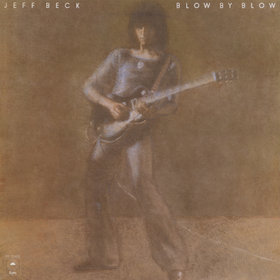
Beck teamed with producer George Martin for his first all-instrumental solo projects. Asthetically, the albums fit comfortably alongside Chick Corea’s “Return to Forever” and the Mahavishnu Orchestra. “Blow by Blow” contains two Stevie Wonder covers and a version of the Beatles’ “She’s a Woman.” “Wired” contains some outtakes from the “Blow by Blow” sessions and a cover of Charles Mingus’ “Goodbye Porkpie Hat” that has become a concert staple. The drummer on “Wired,” Narada Michael Walden, is in Beck’s current touring band.

Pop

“Flash” (1985)

After a five-year recess, Beck returned with Nile Rodgers of Chic. “Flash” was Beck’s bid for mainstream credibility and featured eight singers across its 11 tracks. The album won a Grammy and reunited Beck with Stewart on Curtis Mayfield’s “People Get Ready.”

Rockabilly

“Crazy Legs” (1993)

The guitar sound on “B-I-Bickey-Bi, Bo-Bo-Go” and other early Gene Vincent singles had a big effect on Beck as a teenager. In the early ’90s he paired with the Big Town Playboys to pay tribute to Cliff Gallup, Vincent’s guitar player.

Techno

“Who Else!” (1999), “You Had It Coming” (2001)

Longtime fans were surprised when Beck embraced the samples and looping techniques made popular by the Chemical Brothers and Aphex Twins. “You Had It Coming” finds Beck sparring with guitarist Jennifer Batten and features an update of Muddy Waters’ “Rolling and Tumbling” with Imogen Heap on vocals.

Guest Appearances

Jeff Beck has popped up in some unlikely places over the years. Here are some of his most noteworthy performances on others’ albums.

  • Stevie Wonder – “Talking Book” on the song “Lookin’ For Another Pure Love”
  • Tina Turner – “Private Dancer” on the song “Private Dancer”
  • Mick Jagger – “She’s the Boss” and “Primitive Cool”
  • Roger Waters – “Amused to Death”
  • Jon Bon Jovi – “Blaze of Glory – Young Guns II” soundtrack
  • Hans Zimmer – “Days of Thunder” soundtrack
  • Buddy Guy – “Damn Right, I’ve Got the Blues” on the song “Mustang Sally”
  • The Pretenders – “Viva el Amor!” on the song “Legalise Me”
  • Toots and the Maytals – “True Love” on the song “54-46 Was My Number”
  • Cyndi Lauper – “The Body Acoustic” on the song “Above the Clouds”
  • Morrissey – “Years of Refusal” on the song “Black Cloud”

Keep Reading:

Jeff Beck relishes “Commotion”

Review: Jonsi

(Above: This live version of “Grow Till Tall” doesn’t begin to capture the emotion of experiencing it in person.)

By Joel Francis
The Kansas City Star

When bands play Liberty Hall, they usually park their bus on Seventh Street, on the south side of the building. Prior to Jonsi’s show on Thursday night, that space was conspicuously empty except for two huge generators with power cords running inside the theater.

The generators only hinted at the energy Jonsi, lead singer for the atmospheric indie rock band Sigur Ros, would pour into his 80-minute set. The performance culminated with “Grow Till Tall” and the most powerful emotional moment I’ve experienced at a concert.

Before we get to that, however, a little context is appropriate. The Icelandic quartet Sigur Ros formed in the late ‘90s, but didn’t break through until their 2002 release. The album didn’t have a title – fans have named it “()” or parenthesis based on the symbols on the cover – or song titles. The lyrics are in Hopelandic, a nonsense language the band invented. It’s admittedly pretentious, but surprisingly accessible once one gets past the packaging and listens.

Sigur Ros songs are built on minimalist structures equally influenced by rock, classical and ambient elements. Imagine Radiohead singing in a foreign language spiked with a heavy dose of Brian Eno and you’re getting close. On his own, Jonsi still hews pretty closely that sound. Although he didn’t perform any Sigur Ros songs on Thursday, he likely could have slipped one in and only the audience response would have given it away.

Backed by a four-piece band that included his partner Alex Somers on guitar, Jonsi delivered all of “Go,” his debut solo album released this month, and four new songs that didn’t make it on the record. Jonsi and Somers, the masterminds behind “Go,” crept onstage together in the dark, the unmistakable falsetto of Jonsi’s voice marking their entrance. While Jonsi played acoustic guitar, Somers used a violin bow on vibraphone keys to create a gentle feedback. The rest of the band emerged on the next number, but this approach – Jonsi’s gorgeous, angelic voice placed within inventive settings – remained a hallmark of the night.

The music was bolstered by the theatrical staging. Four large, luminescent boxes framed the stage and an intricate glass and screen installation stood behind the band. As the projections on the boxes and screen changed, so did the mood of the room. All the images were developed by 59 Productions, and at times the combination of music and visuals threatened to overwhelm the senses. One could almost feel the heat from the fire projected around the band, smell the ozone after the simulated storm and taste the fat, wet raindrops dripping down the screens.

The band shifted textures by changing instruments after nearly every song. On a given number there might be three people playing keyboards, or two guitarists, or toy piano, percussion, vibraphone or digital manipulation. The consistent musician was drummer þorvaldur þorvaldsson. Þorvaldsson attacked his kit with the power of John Bonham or Dave Grohl, but had the finesse of a seasoned jazz drummer. More than any one player, he could change the mood of a song with a single cymbal crash and he was frequently the driving force behind the powerful crescendos.

The main set closed with Jonsi on piano, a single light shining over his shoulder. It felt like the house was privy to a late-night songwriting session. The number, appropriately titled “New Piano Song,” gave way to “Around Us.” As the melody entered, a golden glow of light settled on the crowd that felt like a sunrise. The song ended with Jonsi’s singing dissolving into a digitized barrage of vocals that ended suddenly, letting his live, pure sound ring out.

The sold-out crowd responded as it had throughout the night, waiting until the number was finished, then jumping to its feet with applause. Each number was held hushed reverence, punctuated by delighted bursts of applause between numbers. It seemed no one wanted to break the spell by talking. Pristine sound also helped perpetuate the atmosphere.

When Jonsi returned, he wore something on his head that resembled an American Indian headdress and matched the multi-colored fringes on his shirt. After “Animal Arithmetic,” the quintet moved into “Grow Till Tall.” With a forest scene projected around the band, it felt like the performance was coming from the home of “Where the Wild Things Are.”

As the song shifted, autumn settled on the forest and falling leaves swirled around the musicians. The leaves gave way to a gentle snow, which warmed into a hard rain. As the rain intensified so did the performance. Jonsi was bent over at the waist, singing into the floor and the rest of the band flailed as if caught in a terrific wind.

Like a roller coaster car inching its way to the top of a hill, the music kept ratcheting in intensity, building past any release point until it became a dense sheet of white noise, and even then it continued to swell. It seemed the only thing that kept the audience from being engulfed by the sound and the building from being torn apart was the fragile magnificence of Jonsi’s voice that penetrated the noise.

Three hours after that moment, the emotion remains strong. In a review posted on Jonsi’s Web site moments after the show, one fan stated that the performance had taken her through every emotion except anger and she knew she wouldn’t be able to sleep. That should have given her plenty of time to drive up to Minneapolis for the next concert. I know of at least one person ready to go with her.

Setlist: Hengilas; Icicle Sleeves; Kolinour; Tornado; Sinking Friendships; Saint Naïve; K12; Go Do; Boy Lilikoi; New Piano Song; Around Us. Encore: Animal Arithmetic; Grow Till Tall.

Keep reading:

Radiohead Rock St. Louis

Review: Mutemath

Review: Yo La Tengo

Review: Lupe Fiasco

(Above: “Shining Down” was one of several new songs Lupe Fiasco performed at his recent concert at the Midland Theater in Kansas City, Mo.)

By Joel Francis
The Kansas City Star

Chicago rapper Lupe Fiasco’s Kansas City debut promised to touch the sky, but left many fans hanging in midair. While Fiasco’s 65-minute set was strong, the lack of an encore left the brief evening seeking resolution.

As his guitar player noodle a riff reminiscent of “Sweet Child O’ Mine,” Fiasco launched into “Shining Down,” a song he released as a on-line single last year. A handful of similarly low-profile or unreleased cuts were sprinkled throughout the set. It has been three years since Fiasco’s last release, and the crowd happily embraced the new material.

Hip hop always sounds better when delivered through live instruments. Fiasco’s band included a drummer and a DJ, who rocked two Macs instead of two turntables, and it flexed its muscles several times. The setlist included a devastating reading of Radiohead’s “The National Anthem” as Fiasco spit some of his most articulate and angry rhymes of the night. The players also bridged one song to another with brief solos or instrumentals.
.
Although the new songs were appreciated, the evening didn’t officially seem to start until the fifth number, “Hip Hop Saved My Life.” The performance raised a sea of hands and kicked off a powerful run through most of Fiasco’s biggest songs. A surprise detour through N.E.R.D.’s “Everybody Nose” (“all the girls standing the line for the bathroom”) led straight into “Go Go Gadget Flow” and Fiasco’s pride for the Windy City. The run culminated with the skateboard anthem that took Fiasco into the mainstream, “Kick, Push.”

The favorites were exhausted, but Fiasco still had plenty of tricks up his sleeve. “Scream,” another new track, was a low-key mood piece set in a wash of keyboards and guitars over insistent drumming and magical delivery. From there Fiasco made his biggest statement of the night. The trio of “Little Weapon,” a song about child soldiers in Africa, “Streets of Fire,” a portrait of inner-city gang culture, and “Fighters” created a stirring case against violence and war. 

The cavernous Midland was more empty than full. The upper balcony was closed and the floor was only three-quarters populated. While the fans’ energy rarely flagged, the sound suffered, and one had to wonder if the performance wouldn’t have been better in a smaller venue. 

A lot of the band’s sound seemed lost in the room. The drums were thin and it seemed only the guitar or DJ could be heard in the mix at the same time. Only Fiasco’s ultra-enunciated, rapid-fire rhymes consistently penetrated the space.

The set ended with two of Fiasco’s biggest songs off “The Cool.” “Superstar” is a portrait of the fragility behind a celebrity’s public armor, and the hook-happy “Paris, Tokyo” is a hip hop love song about life on the road.

When the band departed after a little over an hour, an encore seemed inevitable. Too many good songs –including Lupe’s duets with Kanye West, “Touch the Sky,” “Us Placers” – had yet to be played. Chanting for their return, the crowd continued to stand in disbelief when the house lights came on. As the canned music grew louder, they gradually filed out.

Les Izmore: The local MC turned his 30-minute opening set into a taste of the city’s hip hop scene. Backed by a DJ, he performed one number alone, then brought out Dutch Newman for another. His set really took off when the four-piece horn section and rhythm section from Hearts of Darkness came out. “Middle of the Map” had a tight James Brown feel, and the Afro-beat number “America One” got the crowd involved. Izmore took the stage wearing a duck head and leading the crowd in “Row, Row, Row Your Boat,” but quickly proved he’s no joke.

Setlist: Shining Down, Solar Midnite, The Instrumental, The National Anthem, State-Run Radio, Hip-Hop Saved My Life, High Definition, Everyone Nose (N.E.R.D. cover); Go Go Gadget Flow; I Gotcha; Kick, Push; Scream;Little Weapon; The Cool; Streets on Fire; Fighters; I’m Beaming; Superstar; Paris, Tokyo.

Keep reading:

Les Izmore – Jazz, hip hop collide to celebrate landmark album
Review: Talib Kweli & Hi-Tek
Professor Griff discusses the past – and future – of Public Enemy
Review: For The Roots It’s All In The Music