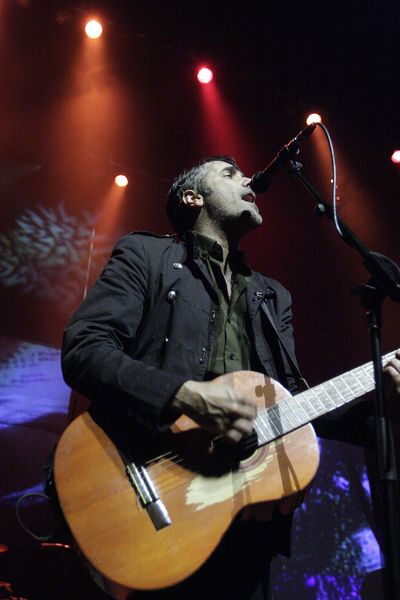
Justin Townes Earle: His father’s son

(Above: Justin Townes Earle performs the joyous/sorrowful “Harlem River Blues” for David Letterman.)

By Joel Francis
The Kansas City Star 

While he was living in Los Angeles in the throes of addiction, songwriter Steve Earle reached out to his son Justin, who was living with his mom in Nashville.

“I had very little contact with my dad growing up,” Justin Townes Earle said, “but once a month I’d get a package in the mail full of records.”

Steve Earle was a country sensation at the time, building on the success of his albums “Guitar Town” and “Copperhead Road,” but the albums he mailed his son bore little relation to ones he was making.

“I guarantee you I was the first kid in Nashville to have Nirvana’s ‘Bleach,’ because I got it from my dad in ’89 when it first came out,” Earle said. “I had all the AC/DC albums … Mudhoney. I got Ice Cube’s ‘Lethal Injection’ from my father.”

A few years later, the elder Earle — now clean of his addictions — offered some musical advice to his son: Write what you know and write honestly. By this time Justin Townes Earle, 14, had discovered the music native to his hometown.

“I took that advice and ran with it,” Earle said. “I’m the type of person who, once you point me in the right direction, just leave me alone and let me go.”

Earle plays the Bottleneck in Lawrence tonight. Fifteen years have passed since his songwriting career began, and although he suffered some of the same dark periods of substance abuse his father endured, Earle has persevered. He has released an album a year since 2007, each building on the last.

“My albums have been a conscious progression,” Earle said. “ ‘Yuma’ was me addressing my Woody Guthrie thing. ‘The Good Life’ addressed the honky-tonk ghost. With ‘Midnight at the Movies’ I was trying to push to the weirder side of folk, and then on ‘Harlem River Blues’ I was going for more of the gospel and blues.”

Last year’s “Harlem River Blues” opens with what may be the standout track in Earle’s impressive catalog, an upbeat, jaunty gospel number … about suicide by drowning.

“That song initially came from something I remembered when reading the ‘Basketball Diaries’ when I was young,” Earle said. “Jim Carroll and his buddies were the toughest kids in New York because they’d jump off the cliffs into the Harlem River.”

The darker elements draw on Earle’s days as a homeless junkie. Shortly after being fired from his father’s band in the early 2000s, Earle spent two years on the streets in perpetual search for the next fix.

“Because I am a drug addict, I have friends with fairly miserable lives and a few who actually took their own lives,” Earle said. “I talked with one friend about eight hours before he did it (killed himself) and as he told me his plan. I saw a look of ease on his face I’d never seen. It was what he wanted to do and why the song has a celebratory feeling.”

Barely 29, Earle feels like he has already lived several lifetimes. He quit school at 14 and ran off with some other budding songwriters at 16. A near-death experience hastened the start of his recovery from hard substances, although Earle still smokes and just swore off alcohol.

“The album ‘Harlem River Blues’ is about a man in his late 20s realizing he’s human and slowing down. The invincible part of my 20s are over,” Earle said. “I’ve run the gamut. There’s something about drugs that make you realize how delicate life is.”

Most of Earle’s immediate future will be consumed with touring, but he plans to take several weeks in October to record his next album. After that he’s moving from New York City to Europe for three years.

“I want to go to Barcelona on weekends and Paris for dinner,” Earle said. “I’ve been to Barcelona three times on tour but have never been to the beach. I want to spend a month in Marrakech. I just want to take in as much as I can.”

Thursday’s show will be Earle’s first appearance in the area since he opened for Levon Helm at the Crossroads in July, a night Earle calls “one of my favorite shows of all time.”

“I had done a couple shows with Levon prior to that night, but because his voice was bad he didn’t sing,” Earle said. “After my set I walked out and ordered a couple drinks from the bar at the right side of the stage. When the band kicked into ‘Ophelia’ and I heard that voice, I dropped my drinks and ran to the side of the stage.

“I didn’t move for the rest of the night.”

Keep reading:

Catching up with the Hot Club of Cowtown
Woody Guthrie – “Deportees (Plane Wreck at Los Gatos)”

Review: Alejandro Escovedo

Review: Devotchka

By Joel Francis
The Kansas City Star

Nick Urata remembers his first gig in Kansas City – the band’s bus crashed right in front of where they were going to play, the Hurricane.

Urata and his fellow members in Devotchka had more lush surroundings on Saturday night. Although the balcony of the Midland was closed and the floor was about half full, Urata’s soaring voice filled the cavernous space. Urata clearly appreciated his surroundings, thanking the crowd for letting him play in such a “classy joint.”

Devotchka – the name is Russian slang for “girl” – may be based in Denver, but their music covers the map, pulling in elements of mariachi, gypsy and French music and indie rock. The quartet’s theatric sound is built on layers and textures, much of it cribbed in the same Eastern European rhythms and energy used by Gogol Bordello, although Devotchka’s music is significantly less aggressive.

The musicians’ versatility meant the sound could change dramatically from song to song. Concert opener “The Alley” drew in the crowd with its propulsive rhythms, courtesy of drummer Shawn King and percussion from touring member Mauro Refosco, a veteran of David Byrne’s band and Thom Yorke’s Atoms For Peace project. Later, Refosco moved to keyboards and King played trumpet to give “We’re Leaving” a South-of-the-border feel.

Tom Hagerman alternated primarily between accordion and violin while Jeanie Schroder held down the bottom end on upright bass and a Sousaphone adorned with red Christmas lights. Hagerman’s accordion and Schroder’s Sousaphone tag-teamed nicely on the appropriately named “Basso Profundo.”

Of all of the high-caliber musicianship onstage, however, Urata’s singing was easily the most impressive instrument. His powerful tenor always hovered over everything else onstage, always complementing the arrangements underneath. His articulate enunciation effortlessly unspooled the short-story-like quality of the group’s lyrics.

Urata’s falsetto danced delicately with Hagerman’s violin on “Undone” and  he displayed near operatic range on “We’re Leaving.” During the encore Urata pulled a page from vocal legend Freddy Mercury’s playbook and engaged the audience in an operatic call and response. Just like Queen at Wembly, Urata pulled it off flawlessly.

Urata’s talents extended well beyond his esophagus, however. During “Poland,” Schroder bellowed a rare Sousaphone solo which Urata countered by playing the Theramin. During “Ranchero” he delivered a guitar solo that played off King’s drums like Tom chasing Jerry.

Several screens behind the band displayed abstract images, sometimes superimposed with close-ups of a soloist, adding another layer texture to the presentation. Devotchka got a real-life assist during “Vengo! Vengo!” when two women came out and performed a fabric dance high above the stage. The dancers returned during “Contrabanda,” performing a shadow dance behind two of the screens.

The duo performed in front of those same screens a few songs later, twirling umbrellas as a kaleidoscope of colors washed over them during “100 Other Lovers.” A subtle light show also enhanced the atmosphere.

All the props, lighting and extra space helped, but the band proved they didn’t need a big room to work their magic. For the encore, Urata and Hagerman emerged alone to deliver a stripped-down, straightforward version of Neil Young’s “Only Love Can Break Your Heart.” The performance was just as magical and transfixing as the best moments from the main set. The rest of the ensemble returned for two more songs, stretching out and flexing some hard rock muscle on “Ranchero” and leading a sing-along through the waltzy ballad “You Love Me.”

Setlist: The Alley;Head Honcho; Queen of the Surface Streets; Poland >The Clockwise Witness; The Man from San Sebastian; We’re Leaving; Vengo! Vengo!; Exhaustible; All the Sand in all the Sea; How It Ends; Basso Profundo; Undone; Contrabanda; I Cried Like a Silly Boy; 100 Other Lovers; Mexican. Encore: Only Love Can Break Your Heart (Neil Young cover); Ranchero; You Love Me.

Keep reading:

The Evolution of Devo

Easy success means hard work for Vampire Weekend

Review: Sufjan Stevens

Review: Vince Gill

 (Above: Vince Gill and his eight-piece band remember “Pretty Little Adriana” in Tulsa, Ok. on Jan. 22, 2011.)

By Joel Francis
The Kansas City Star

Vince Gill took the Carlsen Center stage thanking the sold-out house for spending their Thursday night with him. “I understand y’all are busy tomorrow night,” he said, alluding to KU’s  pending Friday night game against Richmond.

Two and a half hours later a delirious fan repaid the courtesy, calling out “It was a good Thursday night.” It would be foolish to disagree. Between the salutation and response, Gill delivered a cascade of hits, album tracks, stories and jokes.After opening with what he called a “drinkin’ song” (the No. 1 hit “One More Chance”), a “leavin’ song” (the No. 2 “Take Your Memory With You”) and a song about dying (“Tryin’ To Get Over You,” another No. 1 hit), Gill announced it was time for a cheating song. Before starting “Pocket Full of Gold,” however, Gill asked if there was anyone in the crowd with someone they shouldn’t be … then he turned the house lights up.

It was that kind of night. Whenever the music got too serious, like the achingly sincere “I Still Believe In You,” where Gill name checks wife Amy Grant in the chorus, he would immediately deflate the atmosphere with laughter. After the classic ballad “Look At Us,” Gill told the story of a couple married 69 years, about to divorce. Asked why they would give up now after so much time together they replied that they had only planned on staying together until their children were dead.

After complaining about eating too much Oklahoma Joe’s BBQ before the show, one female fan shouted that Gill should have gone to Jackstack. After contemplating the suggestion for the briefest of moments, Gill countered with the good-natured inquiry “Well how big a gal are you?” Then he explained his all-you-should-eat restaurant concept, were patrons are weighed upon entering and then served nutritionally appropriate portions.

For all the storytelling, however, the focus always remained on the music. Every member of Gill’s eight-piece band had been with him for several decades, and it showed. Although the ensemble could expertly echo the arrangements that made Gill’s songs hits, they were at their best when given room to stretch out. The bluegrass number “High Lonesome Sound” found Gill taking a guitar solo before passing the solo onto another band member. By the time the song was done half the group had soloed. On the closer “Liza Jane,” Gill let his band ride the Southern boogie groove, suggesting they could probably find a new audience on the jam band circuit.

Surrounded by great musicians, Gill was clearly the best artist onstage. The 22 songs performed ranged from Southern rock to jazz, adult contemporary to gospel and both traditional and contemporary country, all stemming from his pen. His guitar solos reinforced the lyrics, be it the tasteful, restrained solo in “Tryin’ To Get Over You” or the free-for-all that ended “Pretty Little Adriana.” Gill and his band sounded like the Allman Brothers by the end of that one. Gill announced the homage as intentional when he quoted a few bars of “Jessica” as the song wound down.

The evening’s centerpiece was a lengthy remembrance of Gill’s father, a man who dressed like a lawyer by day, but was more often found in his favorite outfit: ball cap, overalls (no shirt), cigarette and chaw. Gill remembered his father as a tough man who liberally doled out corporal punishment, but was his son’s biggest supporter once Gill left home.

The tribute set up a song idea by Gill’s father that Gill and Rodney Crowell finally completed years after Gill’s father had died. Released the duo’s Notorious Cherry Bombs album, Gill had a hard time explaining to his wife and mother – the song’s subject – why he found a song titled “It’s Hard to Kiss the Lips at Night (That Chew Your Ass Out All Day Long)” so hilarious. Like the rest of the evening, that lighthearted moment was immediately balanced by “Key To Life” the poignant song Gill wrote about his father after his death. Either way, Gill prospered.

Setlist: One More Chance; Take Your Memory With You; Tryin’ To Get Over You; Pocket Full of Gold; High Lonesome Sound; Don’t Let Our Love Start Slippin’ Away; I Still Believe In You; Some Things Never Get Old; Faint of Heart; What the Cowgirls Do; Next Big Thing; Look At Us; This Old Guitar and Me; Pretty Little Adriana; If You Ever Have Forever In Mind; It’s Hard to Kiss the Lips at Night (That Chew Your Ass Out All Day Long); Key to Life; Go Rest High on that Mountain; When I Call Your Name; Oklahoma Borderline. Encore: Whenever You Come Around; Liza Jane.

Keep reading:

Farewell, Charlie Louvin

Review: Alejandro Escovedo

Catching up with the Hot Club of Cowtown

Carrie Rodriguez honors family, roots on new album

Review: Robert Plant and Allison Krauss

Review: Pete Yorn, Ben Kweller

(Above: Pete Yorn and his band are still living “Life on a Chain” at the Voodoo Lounge on Feb. 20, 2011.)

By Joel Francis
The Kansas City Star

Pete Yorn and Ben Kweller delivered a two-hour clinic on rock songwriting in front of a small but enthusiastic crowd at Harrah’s Voodoo Lounge on Sunday’s night.

Kweller’s 45-minute opening set revealed his debt to the singer/songwriter movement of the early ‘70s. Alternating between acoustic guitar and piano, Kweller delivered several fan favorites, including “I’m On My Way,” “Thirteen” and “Penny on the Train Track.” Stripped bare, his songs could have slipped comfortably on the AM radio dial next to Carol King, James Taylor and Bob Dylan.

Highlights included the country folk of “Fight,” the luscious piano ballad “In Other Words” and a big moment on “The Rules” when Kweller stomped on a surprise pedal and turned his acoustic guitar into a snarling, distorted electric beast.

Although the low-key set initially underwhelmed the bar patrons, Kweller eventually won them over with his combination of good-natured banter and strong songwriting. By the final note the room was his.

If Kweller’s showcase was a bare-bones, how-to session, Yorn’s full-blown, full-band set delivered lessons on layering and arrangements.

After opening with three songs from last year’s self-titled album (his fifth overall), Yorn reached back to his debut, 2001’s “musicforthemorningafter.” “Life on a Chain” got the crowd fully engaged while “Just Another” showcased Yorn’s sensitive side.

Written almost entirely with major chords, Yorn’s songs are like a self-affirmation clinic with guitars. With a full workweek looming, Yorn sprayed sunshine on the unsuspecting crowd with a barrage of optimistic lyrics such as “seeing is believing” (“Murray”), “convince yourself that everything is alright” (“For Nancy”) and “life’s been great to me” (“Future Life”). A wistful look back at childhood (“Velcro Shoes”) was especially sepia toned, but none of it seemed particularly over the top.

The only exception to this was a solo acoustic reading of Neil Young’s “Rockin’ in the Free World.” Before playing the song Yorn told the crowd it was the first song he ever played before an audience, at age 15. He added that the lyrics didn’t fully sink in until he performed the song a few weeks ago at Carnegie Hall. This newfound understanding clearly weighed heavily on Yorn. The mournful, down-tempo arrangement was delivered with a sense of doom.

With or without his band, Yorn stayed primarily on acoustic rhythm guitar, so it was up to second guitarist Mark Noseworthy to provide different textures. The band’s not-so-secret weapon, Noseworthy played a mean slide solo during a cover of Junior Kimbrough’s “I Feel Good Again” and a delicate countermelody on “On Your Side” that helped the song swell like a poignant lump in the throat.

The brief 70-minute setlist was split nearly evenly between songs from Yorn’s first and newest releases, but Yorn seemed just about as tired of playing the old songs as the crowd was of signing them. Which means when he inevitably rolls through town again soon, everyone will enjoy one more cheerful romp.

Pete Yorn setlist: Precious Stone; Badman; Rock Crowd; Life on a Chain; Just Another; Velcro Shoes; I Feel Good Again; Rockin’ in the Free World; Burrito; Strange Condition; Future Life; On Your Side; Closet; For Nancy (‘Cos It Already Is). Encore: For Us; Murray.

Keep reading:

Review: James Taylor and Carole King

Review: Jack Johnson

Review: Bob Dylan

Review: Big Head Blues Club

(Above: Blues legends Hubert Sumlin and James Cotton help Big Head Todd and the Monsters visit the “Killing Floor.”)

By Joel Francis
The Kansas City Star

Rock and roll tributes to the blues are hardly a novel concept, but the glossy, contemporary rock of Big Head Todd and the Monsters makes them an unexpected outfit to try such a feat.

Saturday’s concert at the Uptown was billed as “Back at the Crossroads: The Robert Johnson Centennial Concerts.” The four-piece, Colorado rock band aimed to celebrate Johnson in the months leading up to his 100th birthday in May, but this wasn’t quite the case. Johnson figured prominently in the set, but there was also a heavy dose of Chicago blues. The night was more like an exposition of the genre’s most overt influences on rock. Put another way, the first set opened with Todd Park Mohr alone onstage playing the dobro and ended less than an hour later with dueling drum solos.

Taking the stage in a dark suit and black fedora, frontman Mohr quickly put any expectations for the Monsters’ back catalog to bed, telling the one-third capacity crowd the only thing they’d be hearing was “straight, natural blues.” He was right for the most part, but an audience clamoring for “Bittersweet” – one of the band’s biggest tunes – needn’t have worried. The songs in the last third of the set sounded like typical Big Head Todd material outfitted with familiar blues lyrics.

Mohr opened with three stellar, solo acoustic numbers before being joined by Missouri native Lightnin’ Malcolm and Monsters keyboardist Jeremy Lawton. That trio, along with bass player Rob Squires who entered later, formed the core band for the night, present on nearly every number. They were augmented by drummer Cedric Burnside, grandson of the Fat Possum bluesman R.L. Burnside and Malcolm’s longtime touring partner, and Monsters drummer Brian Nevin.

The real blues cred, however, came from 79-year-old guitarist Hubert Sumlin, and 75-year-old harp man James Cotton. Sumlin’s playing can be heard on most of Howlin’ Wolf’s classic material and Cotton played on many great Muddy Waters records. Half a century later, both men were in just as fine of form today as they were in their Chess Records heyday. Sumlin’s soling was nimble and his vocal turn on “Sittin’ On Top of the World” was strong. Cotton made his harmonica moan and wail like a woman in pleasure and had so much fun during one solo that he started laughing when it was done.

Big Head Todd and the Monsters are no strangers to working with blues legends. In 1997 they worked with John Lee Hooker on a cover of his “Boom Boom” that reached the Top 40. Opinions of that track will likely frame one’s appreciation for the evening: The band either misappropriated a hero to dumb down a song or paid honest homage using their familiar idiom.

The best moments were the spare opening numbers, particularly Lightnin’ Malcolm’s duets with Cotton on “Walkin’ Blues” and “Future Blues.” Mohr really pushed himself at the mic all night and did a great job approximating the Wolf’s moans and rasp on the Chicago numbers. Cotton or Sumlin were onstage for about half of the two-hour set’s 22 songs. Their contributions were always a treat.

After the first, mostly acoustic set, the band took a 20 minute break. They returned for another hour of electric music that blurred the lines between Chicago blues, traditional bar band fare and the typical Big Head sound. Not everything worked – covers of ZZ Top’s “Jesus Just Left Chicago” and a slick arrangement that removed any sense of doom from “Last Fair Deal Gone Down” were questionable. But there was no doubt everyone onstage was having fun.

Setlist: Love in Vain; Stones In My Passway; Dry Spell; Kind-Hearted Woman Blues; If I Had Possession Over Judgment Day; Walkin’ Blues; Future Blues; Viola Lee Blues; When You Got A Good Friend; Travelling Riverside Blues. Intermission. Ramblin’ On My Mind; Preachin’ Blues (Up Jumped the Devil); Wang Dang Doodle; Sittin’ On Top of the World; Killing Floor; I Love the Life I Live, I Live the Life I Love; Jesus Just Left Chicago; Come On In My Kitchen; Last Fair Deal Gone Down. Encore: Cross Road Blues; I Believe I’ll Dust My Broom > Sweet Home Chicago.

Keep reading:

Review: Experience Hendrix (ft. Hubert Sumlin)

Review: T-Model Ford

Review: Buddy Guy and Bettye LaVette

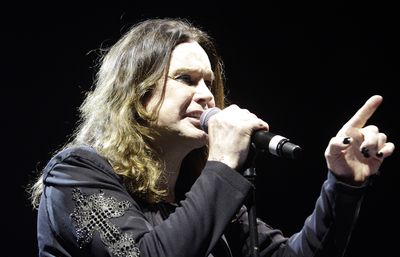
Review: Ozzy + Slash

(Above: Ozzy performs “Mr. Crowley” at the Sprint Center on Jan. 22, 2010.)

By Joel Francis
The Kansas City Star

The Prince of Darkness looked more like a soaked kitten.

Ozzy Osbourne stood center stage dripping wet, covered in foam. Thanks to the fire hose he used to liberally douse both himself and fans in the front half of the floor, Ozzy looked like he’d just fallen into a bathtub. The foam would dissolve, but Ozzy would never dry out.

Ostensibly in town to promote a new album, Ozzy performed just one new song.  Most of the rest of the setlist could have been written months in advance by a causal fan. But while the songs didn’t hold any surprises, many of the performances were still vital.

Experiencing Ozzy perform “Crazy Train” is a classic rock ‘n’ roll moment up there with hearing the Stones do “Jumping Jack Flash” or seeing Pearl Jam perform “Alive.” Despite being more than 40 years old, “War Pigs” still packs a powerful punch.

Although some of his solo material hasn’t aged as well, the three-quarters full house still reveled in the night, pumping their fists during solos and singing along. During “The Road to Nowhere” and “Mama, I’m Coming Home” the room lit up with lighters.

“Mr. Crowley” was an early highlight. Keyboard player Adam Wakeman, son of Rick Wakeman, turned the room into a giant cathedral with his ominous organ. As he played, a sheet of sparks feel from the rafters behind Ozzy, creating a curtain of fireworks.

Although there was a large video screen behind the band for most of the set and plenty of pyrotechnics, Ozzy’s oversized persona was the best visual effect of the night. Waterworks aside, he was constantly in motion, urging the crowd to clap, hopping up and down like a frog or bowing to his audience. During “Fire in the Sky” he writhed his arms and body during the lengthy guitar solo as if performing some Satanic jujitsu.

The two-hour set lagged quite a bit toward the end. It would have been difficult to maintain the energy and momentum of the opening numbers, but back-to-back, cliché-ridden guitar and drum solos deflated the show. Everyone would have been better served had the band performed two 45-minute sets with an intermission.

Fortunately Ozzy still had plenty of goodies buried in his catalog. “Crazy Train” brought the crowd back to life, while “Mama” and “Paranoid” ensured most of them would show up next time for his inevitable return.

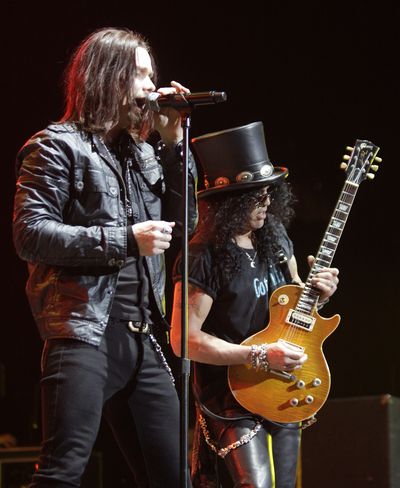
Slash: Axl Rose is notorious for making fans wait hours before appearing; Slash came onstage 10 minutes early. His one-hour set was basically a truncated version of the show he put on last fall at the Voodoo Lounge. It was heavy on Guns ‘N’ Roses, with most of the songs coming from “Appetite For Destruction.” The Velvet Revolver material held its own, but some of the newer songs lost the crowd, especially “By the Sword.”

For a band so reliant on its guitarist, the mix was atrocious. All the instruments were trapped in a mush under bellowing drums and vocals that sounded like they emanated from a tin-can telephone. Fans may have been better served sonically by asking their next-door neighbor to play “Appetite” at full volume, then retreating to their basement and listening to it from there. Although the sound got better at times, the closing solo during “Paradise City” was practically inaudible.

Ozzy setlist: Bark at the Moon; Let Me Hear You Scream; Mr. Crowley; I Don’t Know; Fairies Wear Boots; Suicide Solution; Road to Nowhere; War Pigs; Fire in the Sky; Shot in the Dark; guitar solo > Rat Salad > drum solo; Iron Man; I Don’t Want to Change the World; Crazy Train. Encore: Mama, I’m Coming Home; Paranoid.

Slash setlist: Ghost; Sucker Train Blues; Mr. Brownstone; Back From Cali; Civil War; Nothing to Say; By the Sword; Nightrain; Sweet Child O’ Mine; Slither; Paradise City.

Keep reading:

Review: Slash

Review: “I Am Ozzy”

Review: Megadeth

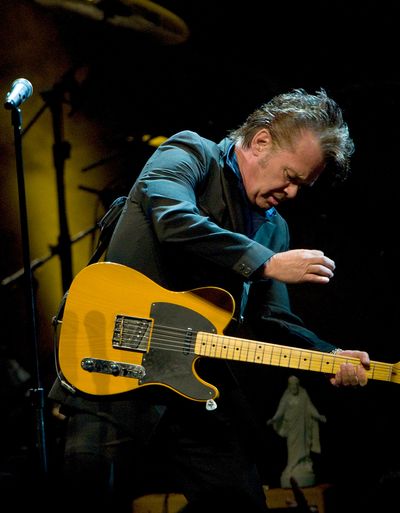
Review: John Mellencamp

(Above: John Mellencamp tells the story of Jackie Brown at the Midland Theater in Kansas City.)

By Joel Francis
The Kansas City Star 

Friday night’s sold-out John Mellencamp show at the Midland Theater was the tale of two concerts. For the first 90 minutes, Mellencamp used his vast songbook to explore the nooks and crannies of American music. Opener “Authority Song” was stripped of its big country riff and rode bare bones on the spare bass and drum line. Later in the show, “Jack and Diane” was given the same treatment, with Miriam Strum’s violin shouldering the melody.

“No One Cares About Me” resembled prime-era Johnny Cash with a boom-chicka rhythm section and guitarist Andy York doing his best Carl Perkins impression. “Deep Blue Heart” sounded like an outtake from Bob Dylan’s “Time Out Of Mind.”

While there weren’t any jump-to-your-feet, hands-in-the-air climaxes during this part, there were a few goose bump-inducing moments. The smallest moments were the biggest, like Mellencamp’s poignant solo, acoustic delivery of “Jackie Brown,” where he was joined by Strum at the end.

A subdued “Check It Out” had the wistful air of someone watching their grandchildren play in the yard. Later, the entire theater clapped and sang along as Mellencamp sang “Cherry Bomb” without his band or his guitar.

It was clear, however, that the crowd wasn’t expecting a low-key evening. The chatter from the bar downstairs floated into the balcony during the quiet “Longest Days.” Story/songs “Right Behind Me” and “Easter Eve” lacked a traditional chorus and struggled to captivate the crowd.

After the beautiful violin/accordion duet of “New Hymn,” the full drum kit that had been tantalizing the crowd all night was finally put to use. Starting with the heartland hymn “Rain on the Scarecrow,” Mellencamp and his six-piece backing band cut loose and delivered 30 minutes of the expected energetic sing-alongs. With each song, the band raised the volume and dropped formality. Singles like “Pink Houses” drew the biggest responses, while the band seemed to relish trotting out album cuts “The Real Life” and “No Better Than This.”

In a way, Mellencamp served as his own opening act. As the audience found their seats an hour-long documentary played. The film showed Mellencamp on tour and as he recorded his latest album at Sun Studios in Memphis, the San Antonio hotel room where Robert Johnson once recorded, and First African Baptist Church in Savannah, Ga.

Mellencamp recorded the album using a single microphone to capture the entire band in one take. The approach may puzzle some fans, but it’s clear from the first half of the night that his songwriting chops are as strong as ever. The struggle will be to win fans over to new arrangements and sounds that don’t resemble the long-loved radio hits.

After a little more than two hours, the house lights were up, and Mellencamp was safely shuttled to his Airstream trailer parked behind the building. A large portion of the crowd lingered, whistling and clapping in vain as the stage was cleared. The evening wasn’t a complete success, but it was enough to leave them wanting more.

Setlist: Authority Song; No One Cares About Me; Deep Blue Heart; Death Letter; Walk Tall; The West End; Check It Out; Save Some Time To Dream (solo, acoustic); Cherry Bomb (a capella); Don’t Need This Body; Right Behind Me; Jackie Brown (solo, acoustic); Longest Days; Easter Eve; Jack and Diane; Small Town (solo, acoustic); New Hymn; Rain on the Scarecrow; Paper and Fire; The Real Life; Human Wheels; If I Die Sudden; No Better Than This; Pink Houses; R.O.C.K. in the U.S.A.

Keep reading:

Review: Bob Dylan

Review: Old 97s, Lucero

Review: T-Model Ford

Easy success means hard work for Vampire Weekend

 (Above: Vampire Weekend goes on “Holiday” with this track from their 2010 sophomore release, “Contra.”)

By Joel Francis
The Kansas City Star

Success has come easily to Vampire Weekend. After starting in 2006, the indie-rock band generated major buzz the next year with its single “Cape Cod Kwassa Kwassa,” which appeared on Rolling Stone’s 100 Best Songs of the Year list.

With a mix of preppy ’80s rock and heavy debt to the African sounds of Paul Simon’s “Graceland” album, Vampire Weekend’s self-titled debut was seemingly everywhere. Songs popped up in movies, TV shows and video games, and the band performed to a capacity crowd at the high-profile Central Park SummerStage in New York.

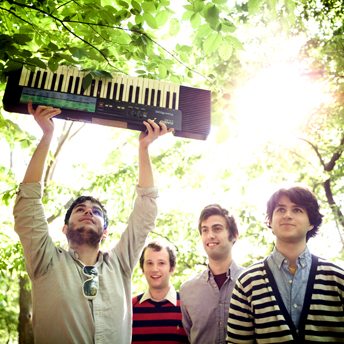
The Ivy League lads of Vampire Weekend worship both their Casio and the trees.

“When we signed with (record label) XL, if someone would have told me we would have sold 100,000 copies of our first record, I would have been elated,” said Chris Baio, the group’s bass player. “The fact that we sold 400,000 copies beyond that is just an extra bonus.”

Hot starts have derailed more than one promising band, but Baio said the group was talking about its follow-up effort just months after the first one dropped.

“We definitely felt some pressure as we started getting more and more success with the first record,” Baio said. “Very early on we were talking about the second album. I think we came up with the title ‘Contra’ within two months of the (first) album’s release.”

When it came time to record the follow-up, the band was able to push aside all the external pressure and make the album it wanted.

“If we were going for the easy commercial release it would have been five “A-Punks” and five “Oxford Commas,” Baio said, referring to two of Vampire Weekend’s biggest singles. “We didn’t think at all about the amount of records we had sold when we went in the studio to make ‘Contra.’ ”

Instead, they toyed with the formula, stretching some numbers beyond the four-minute limit imposed on “Vampire Weekend” and playing with arrangements.

“Some of the instrumentation on ‘Contra’ is a little bit weirder,” Baio said.

“There’s one song called ‘Diplomat’s Son’ that has abrupt changes that make it almost proggy in structure.”

When Vampire Weekend played Liberty Hall in Lawrence in September 2008, it emptied its repertoire in a 50-minute set. Standing in front of a static image of its only album’s cover, the band performed all of its songs, in addition to a couple of B-sides and new numbers.

“When we started, there was no light show, and we were using the house mixer,” Baio said. “Now we have our own sound and lighting guy. We have a background we’re proud of that changes at different points during the show and a good, new light show.”

Baio said both the production and set list will be improved when Vampire Weekend plays Starlight Theatre on Saturday with Beach House and the Very Best.

“I feel like we’re now putting on a full show at 85 minutes,” Baio said. “We may make some changes to the set, like if someone tweets a request, but for the most part we try not to change it. It has a nice ebb and flow we like, or rather just flow, no ebb.”

That makes the set similar to Vampire Weekend’s three-year history — one steady rush with few breaks, something the band isn’t interested in pushing any further.

“With the exception of when we went in and recorded ‘Contra,’ the past three years have been a steady grind,” Baio said. “We’re going to take some time between the second and third albums, and for now that’s still a ways off. We’re not going to be playing any songs off the third record this year.”

Keep reading:

The Evolution of Devo

Open wide for Mouth

Peter, Bjorn and John Heart Hip Hop


Review: Sufjan Stevens

(Above: An excerpt from Sufjan Stevens’ 25-minute saga “Impossible Souls” performed at the Uptown Theater in Kansas City.)

By Joel Francis
The Kansas City Star

It’s unlikely one will ever find a reissue of “Tales of Topographic Oceans” in the record bins at Urban Outfitters or see hipsters sporting Emerson, Lake and Palmer shirts with their skinny jeans. But on Sunday night at the Uptown Theater, indie singer/songwriter Sufjan Stevens delivered a chunk of progressive rock that would have made fans of Gentle Giant and Yes proud.

The earthy folk rock of Stevens’ breakthrough albums – “Seven Swans,” “Michigan” and “Illinois” – has been replaced by electronic, adventurous rock landscapes. About an hour into his two-hour set, Stevens explained the shift saying songwriting was “no longer loyal” to him so he started playing with rudimentary sounds. 

 Sufjan Stevens shifts gears with his new “Age of Adz.”  Extended segments of noises and effects – particularly on the 25-minute journey “Impossible Soul” – made the set feel more like an art installation that a rock show at times. But whether channeling Genesis and the Flaming Lips or Paul Simon and Cat Stevens, the Uptown’s sold-out crowd hung on every note.

After tossing fans a bone with “Seven Swans,” Stevens and his 11-piece band focused exclusively on material from August’s hour-long “All Delighted People” EP and “The Age of Adz,” an album released this month. The poppy “Too Much” came with a boozy twin-trombone solo and could have been a dance hit in another dimension if not for the extended burps and warbles of guitars, organ and synthesizers in its second half.

As the band delivered its complex themes and arrangements, a large trapezoidal video screen reinforced the themes. Space opera “The Age of Adz” featured a film that looked like an animated Funkadelic album cover. Stevens later explained the number as an “explorative supernatural song about love and heartache” and added that a “broken heart doesn’t always bring the apocalypse, but it always feels like it.”Sure it’s pretentious, but it was also a lot of fun and more accessible than it sounds.

The songs felt intimate despite Steven’s everything-including-the-kitchen-sink approach. This was due in large part to his hushed, soft falsetto and intimate, yet inviting lyrics. Even the most bombastic material contained letters of encouragement, boasting self-affirming lyrics like “don’t be distracted” and “Sufjan, follow your heart.”

Several numbers were delivered with spare arrangements featuring little more than Steven’s voice and finger-picked guitar. “Heirloom” was just as delicate as its title, while “Futile Devices” was a soul-baring tribute to Stevens’ brother.  When Stevens later forgot the lyrics during the quiet “Enchanting Ghost” it only enhanced the intimacy.

Stevens prepped his crowd for “Impossible Soul,” informing them they were about to embark on an “intense, emotional, psychotherapy experiment.” The result was nowhere near as ponderous the introduction or running time implied. “Soul” is less a song than an exploration of a song idea from every conceivable angle. Melodies and themes were tackled via prog-rock, ‘80s dance and autotune before concluding with Stevens gingerly plucking his acoustic guitar. It was enough fun that the band slipped in a bit of Salt and Peppa’s “Push It” and one of the supporting singers danced around the stage spraying silly string.

The crowd’s patience with the new material was rewarded with three songs from “Illinois.” “Chicago” ended the main set and drew the biggest cheers of the night. After saying goodnight, Stevens returned alone and delivered “Concerning the UFO” on piano and “John Wayne Gacy, Jr.” on acoustic guitar. It was a bit creepy to hear the audience sing along with Steven’s haunting portrait of the serial killer and an odd note to end the show on.

As with the rest of the evening’s detours, no one seemed to mind. After five long years, the hero had finally returned to his fans. The path may not have been expected, but the results were just as spectacular.DM Stith: The opening act only got 20 minutes, but he had no trouble silencing the crowd. Armed only with his acoustic guitar, the singer/songwriter delivered four songs very much in mold of Stevens’ most popular work. Using several pedals and a sampler, Stith was able to recreate a percussion section and choir by building then looping a series of claps, stomps and harmony vocals. The trick may not be new, but it was still impressive. Stith’s songwriting was even better. It would be interesting to see what he could do with a full set. Several of his songs may be downloaded for free on the Website for Asthmatic Kitty, the label Stevens founded.

Sufjan Stevens Setlist: Seven Swans; Too Much; Age of Adz; Heirloom; I Walked; Futile Devices; Vesuvius; Now That I’m Older; Get Real, Get Right; Enchanting Ghost; Impossible Soul; Chicago. Encore: Concerning the UFO Sighting Near Highland, Illinois; John Wayne Gacy, Jr.

Keep reading:

Review: The Decemberists

Review: “Ripped” by Greg Kot

Review: Modest Mouse (2010)

Review: Smashing Pumpkins, Cake

(Above: The reconfigured Smashing Pumpkins incinerate the old country with “As Rome Burns,” a yet-unreleased track.)

By Joel Francis
The Kansas City Star

Billy Corgan has learned to compromise. After frustrating and confounding fans with obscure songs and indulgent jams on the Smashing Pumpkins’ 20th anniversary tour just two years ago, he has struck a balance between the old (and beloved) and the new.

The unspoken agreement of Saturday’s show at Sandstone Amphitheater was one for you, one for me. Fans seemed thrilled to meet Corgan and his reconstituted Pumpkins halfway. Opening with the drum roll into “Cherub Rock,” the quartet alternated between favorites like “Zero” and “Drown” with newer numbers such as “Song for a Sun” and unreleased material like “As Rome Burns.”
“We’ve found the songs you know tend to get the biggest cheers,” Corgan told the audience before launching into “Tonight, Tonight” and he was right. “Today” provided the first big sing-along moment of the night, turned the chorus of “Bullet With Butterfly Wings” over to the very vocal throng. Even “Stand Inside Your Love,” an underrated single from the original configuration’s final retail album, drew a big response.

The 80-minute setlist ignored “Gish” but drew from every other album in the band’s catalog and a couple soundtrack contributions. Most of the songs sounded pretty much like they were recorded. The only exceptions were new arrangements of “Adore”-era material. The new version of “Adore” rode Nicole Fiorentino’s bass, and discarded the drum programming for a full band sound. “Eye” was given a trippy intro full of shimmering guitars and big, echoing drums.

Smashpumpkins_fyi_ spf_09252010_135FNewer material dovetailed nicely with the familiar. “Tarantula,” from 2007’s forgotten “Zeitgeist,” emerged seamlessly from “Cherub Rock” just as “Drown” gave way to “As Rome Burns.” “Song for a Son” had a progressive feel and guitar lick similar to “Stairway to Heaven.” It was one of several of the night’s numbers to feature Corgan and Jeff Schroeder harmonizing on twin guitar solos.

Before breaking up at the dawn of the millennium, the Smashing Pumpkins were one of the most successful bands to come from the grunge era. Corgan and founding drummer Jimmy Chamberlain reconvened for “Zeitgeist,” recruiting supporting musicians for the subsequent tour, before Chamberlain left again last year.

Corgan may be the only founding member left in the band, but the new cast proved more than capable. Twenty-year-old Mike Byrne was a monster on the drums, having no trouble replicating the complex rolls and fills that are so much a part of the Pumpkin’s sound. The band was amazingly tight and precise, slithering across the changing dynamics and textures and following Corgan’s every move.

The stage set-up was basic, but impressive. The only effects were banks of lights set up above and behind the band, constantly strobing and changing. Two large metal fans were perched atop metal towers in the back at either side of the stage. The visual arrangement kept anyone from receiving the spotlight. The band was lit as a whole and the emphasis was placed on the music.

The band exited shortly before midnight against a wall of lights pointing into the audience. They were visible only as vague silhouettes, but had long established their identity.

Cake’s one-hour set preceding the Pumpkins couldn’t have been more different. Singer John McCrea chatted with the crowd between nearly every number, espousing his views on religion, American society and the gradual disappearance of three-four time. Along the way, the five-piece college rockers delivered audience favorites “Comfort Eagle” and “Frank Sinatra” and songs from their upcoming new album.

Although most of Cake’s songs ride a slow funk groove and McCrea’s tongue-in-cheek spoken/sung lyrics, two of evening’s best numbers veered from that formula. “Mexico” sounded like a lost Decemberists track, while new song “Bound Away” was a travelogue in the form of an Irish drinking song.

Smashing Pumpkins setlist: Cherub Rock, Tarantula, Adore, Song for a Son, Today, Drown, As Rome Burns, Freak, Tonight Tonight, Stand Inside Your Love, Eye, Bullet With Butterfly Wings, United States (including the Star-Spangled Banner and Moby Dick). Encore: Zero.

Cake setlist: Comfort Eagle, Rock and Roll Lifestyle, Sick of Me, War Pigs (Black Sabbath cover), Frank Sinatra, Wheels, Stickshfits and Safetybelts, Love You Madly, Guitar, Arco Arena, Mexico, Bound Away, Never There, The Distance.

Keep reading:

Review: Cake

Review – The Black Keys

Review: Alice in Chains

Out of the Tar Pit Back Onto the Stage