Celebrating Buck O’Neil, Kansas City and Jazz

(Above: Thirty seconds with Buck O’Neil is guaranteed to brighten your day.)

By Joel Francis

Buck O’Neil, Negro Leagues baseball player and ambassador of all things good, died at age 90 three years ago this month. Today we pay tribute to Buck by reprinting his longest music-only interview.

I spoke to Buck as an undergrad back in the summer of 1998 while freelancing for the Kansas City Blues Society. For some reason the article never made it into “Blues News,” and it languished until Ken Burns premiered his “Jazz” documentary series in 2001. I was working for The Examiner in Independence, Mo. at the time. They were all too happy to run my interview.

The day photographer and I took the picture that accompanied the story (not the one that appears online), we met Buck at the Blue Room then hit Arthur Bryant’s around the corner. Now *that’s* Kansas City.

Keep reading:
Buck O’Neil: Sweet Times and Sweet Sounds at 18th and Vine.

Releasing Jazz from Aspic

(Above: Ornette Coleman jams with the Roots. Improbably, people respond positively to the non-traditional collaboration.)

By Joel Francis

In 1958, Danny and the Juniors sang “Rock and Roll is Here to Stay.” Although the genre was only seven years removed from the its birth on the “Rocket 88” single and three years from its explosion into the mainstream with Elvis Presley, Danny White was right. Sixty years later, it is hard to imagine American culture without rock and roll.

It is also hard to imagine what the malt-shop teens and leather jacket hoods of the Eisenhower administration would have thought about auto-tune, power pop and nu-metal. Although the seeds of today’s rock were planted in the 1950s, the resulting flora has blossomed into hybrids that bear little resemblance to the original crop.

Picture how different today’s musical landscape would be if anything that varied from the pre-British Invasion strains of rock and roll were bastardized. If songs bearing the touch of John Lennon and Paul McCartney or Mick Jagger and Keith Richards were decried as impure for straying from the “true” roots of Chuck Berry and Buddy Holly.  Or if anything after the summer of punk and the rise of synthesizers was kept at arm’s length and segregated from the great Rock Cannon.

Would we expect our children to dig out old Bill Haley and Beach Boys albums if this were the case? Teach them “Fun Fun Fun” and “Maybelline” as historical exercises? Of course not. They would shrug, pay us lip service and invent their own confounding strain of music. The ties to existing music would be obvious – nothing emerges in a vacuum – but nothing we couldn’t dismiss as the impure follies of youth.

Why, then, do we place the same parameters around jazz and feign surprise with then inevitable occurs?

It seems every year a new study comes out showing the median age of jazz listeners climbs while attendance drops. The latest is a National Endowment for the Arts Survey of Public Participation in the Arts conducted through the U.S. Census Bureau. Predictably, the self-appointed Guardians of Jazz like Wall Street Journal columnist and former Kansas City resident Terry Teachout are freaking out. But all this hand-wringing is like an ordinary bicycle enthusiast fretting while the chain-driven model populates the streets. The vehicle is still very much alive, it’s just been modified and influenced by culture.

Too many jazz museums and concert curators suffer from WWWS: What would Wynton say. Would Wynton Marsails, the genre’s most prominent performer and steadfast caretaker, approve of their exhibit or event? While Marsalis is a talent trumpet player who deserves every bit of his fame and credit for bringing jazz to the masses, he is conservative and traditionalist to a fault. Museum directors and concert promoters should be following their own muse and vision, not looking to someone as restrictive as Marsalis for tacit endorsement.

The growth of jazz from Dixieland to big band to bebop is celebrated, but somewhere along the line – about 1965, shortly before John Coltrane’s death, when free jazz and fusion started to creep into the mix – a line was drawn. In shorthand, acoustic Herbie Hancock playing with Miles Davis and recording for Blue Note is “good” jazz; synthesizer-rocking Hancock’s best-selling “Head Hunters,” though, is “bad.”

If directors and promoters must get the thumbs-up from a Marsalis, could it please be Branford? Although a lesser celebrity, the tenor saxophone player and older brother of Wynton has equally distinguished jazz pedigree. He’s also allowed jazz to grow, branching into pop with Sting, serving as musical director for the Tonight Show and working with hip hop artists.

If the stodgy stylistic caretakers turned up their noses when jazz artists, the highest pedigree of musicians, started dabbling in rock and funk, they have completely ignored most jazz performers slumming with rappers in a genre oft-maligned for possessing the lowest level of musicianship.

The elitists are missing the point. At their best, jazz and hip hop are better together than chocolate and peanut better. The improvisational aspect of jazz fits the free-flowing poetry delivered by a great MC. The swing of the instruments matches the swagger of the beats. Dig the way DJ Logic’s turntable work complements Medeski, Martin and Wood’s “Combustication” album, how Mos Def and Q-Tip’s rhymes soar over Ron Carter’s live basslines, or how Roy Hargrove’s trumpet pushes and accentuates Common’s poetry.

Teachout and Wynton Marsalis’ simplified stances ignore the long history of jazz in popular culture. The enduring standard “Someday My Prince Will Come,” was plucked from Disney’s “Snow White and the Seven Dwarfs.” Although both Dave Brubeck and Louis Armstrong released albums of Disney material, it is doubtful Wynton Marsalis would record a song from a children’s cartoon.

The Chicken Little jazz forecasts don’t show that jazz is less popular or interesting today. The news they bring is even more disturbing: hard evidence that the standard-bearers of the genre are increasing ignorant to how their beloved music has grown, changed and been embraced. They’re the ones missing the party, but don’t worry – their numbers are dwindling.

(Below: More Ornette Coleman with the Roots for all the alarmists. Note how well the musicians play together despite being from the disparate worlds of jazz and hip hop. Surely this is a sign of the apocalypse.)

Contest: Win the entire No Doubt catalog

(Above: No Doubt light up Starlight Theater in Kansas City, Mo. on July 6, 2009.)

Tickets to see No Doubt on their first tour in five years weren’t cheap. But the band has done their best to alleviate part of that sting by giving everyone who bought a ticket a free download of their entire catalog.

Three weeks after covering No Doubt’s energetic, fan-friendly set at Starlight Theater, I received an e-mail providing me access to the following albums:

The Singles 1992-2003 (2003)
Everything In Time (B-Sides, Rarities, Remixes) (2003)
Rock Steady (2001)
Return Of Saturn (2000)
Tragic Kingdom (1995)
The Beacon Street Collection (1995)
No Doubt (1992)

The download also includes No Doubt’s first recording since reuniting, a cover of Adam and the Ant’s “Stand and Deliver.”

The hidden message in this goodwill statement is that 13 years of recordings aren’t worth as much as a ticket to a 95-minute concert. I’m sure decision wasn’t met with open arms at Interscope, the band’s label.

While No Doubt fans are delighted and Interscope is disgusted, I am mostly apathetic. Although the show was a blast, I haven’t found myself pining to play any No Doubt material since the concert. This might be short-sighted of me, but my musical shortcomings, dear readers, are your gain.

I am giving away my access code to the entire No Doubt discography. To win everything the band has recorded, reply to this post with your best No Doubt story, or why you feel you deserve to win. After 10 days, I will contact the person with the best story and give them my download code.

Good luck, now start typing!

“Kind of Blue” coming to KC

(Above: Drummer Jimmy Cobb gets down with his So What band.)

By Joel Francis

Fifty years ago, Miles Davis walked in to the recording studio, handed everyone in his band slips of paper with outlines of melody and a couple scales and told them to start playing. What emerged from those two sessions is arguable the greatest and greatest-selling jazz album of all time.

“Kind of Blue” contains several numbers that have become standards, like “So What” and “Freddie Freeloader” and features the classic lineup of John Coltrane, Cannonball Adderley, Wynton Kelly, Paul Chambers, Jimmy Cobb an and Bill Evans.

As the only remaining member of that ensemble, drummer Jimmy Cobb has been touring the world this year celebrating “Kind of Blue” and the music of Miles, Trane and Adderley from that period with his So What band.

Although the official Jammin’ at the Gem concert lineup has yet to be announced, both Pollstar and the International Music Network are showing that Cobb will perform at the Gem Theater in the heart of Kansas City Mo.’s historic jazz district on Saturday, Oct. 17.

This is one of two U.S. dates Cobb has scheduled for the remainder of the year. The 80-year-old Cobb was recently named and NEA Jazz Master. His other works with Miles include “Sketches of Spain,” “Porgy and Bess” and “Someday My Prince Will Come.”

The members of Cobb’s So What band are as follows: Vincent Herring , alto saxophone,  Javon Jackson tenor saxophone, Wallace Roney, trumpet, Buster Williams, bass,  and Larry Willis, piano.

Ticket information is unavailable at this time.

Contest: Win a pair of tickets to the Air Guitar Championship

(Above: This could be you – or one of your really drunken friends.)

Be it Jimi Hendrix with a broom stick or Eddie Van Halen and a tennis racket, every music fan has gone through an air guitar phase, whether he (or she) wants to admit it or not.

If you’ve kept practicing your air guitar moves or like to laugh at those who have, then make plans to be at the Record Bar, on Tuesday, June 9 for the Air Guitar Championships.

Tickets for the competition run $10 online (plus TicketBastard fees), but The Daily Record is giving a one of its loyal readers the chance to get in free.

Here’s how this will work: If you live in the Kansas City area and want to go, simply leave a comment for this entry describing your favorite air guitar song or greatest air guitar moment. Be sure to leave your e-mail address, because that’s how I’ll contact the winner to let them know they’ve won a two tickets to witness or participate in the Air Guitar Championships.

Originality counts, folks, so don’t inundate us with stories about “Eruption” and “Stairway to Heaven.”

The people throwing this competition are serious about finding the ultimate air guitar hero. Winners at the 23 regional showcases will have the chance to compete in the championship round this August in New York City. There they will be judged by reigning U.S. and World Air Guitar Champion “Hot Lixx” Hulahan (I know, but that’s what it says in the press release) and Daily Show correspondent Jason Jones.

For complete rules, videos and other information visit the Air Guitar Championships Web site.

Commence sending your stories … now!

Piano Men: Dave Brubeck, Dr. John and the Jacksonville Jazz Festival

(Above: The Night Tripper gets “Qualified.”)

By Joel Francis
The Daily Record

While in Jacksonville, Fla. this past weekend for a wedding, I was able to sneak away from my duties as a groomsman long enough to check out the Jacksonville Jazz Festival. On Friday night I arrived in time to catch the last half of the Dave Brubeck Quartet’s performance witht St. John’s River City Band. The local big band was well-prepared and sounded great, but their charts didn’t add much to the two songs I heard. “Blue Rondo a la Turk” was perfect the way Brubeck, Paul Desmond and company recorded it 50 years ago. It was interesting to hear the arrangement augmented with a battery of brass, but they certainly didn’t add anything new to the number.

The River City Band’s contribution to set closer “Take Five” fared better, if only because the structure of Brubeck’s signature song is more elastic. Brubeck has been required to end every night with this number for decades, yet he keeps finding new ways to interpret this song and keep it fresh.

Brubeck, who was supported by sax man Bobby Militello, drummer Randy Jones and his son Chris Brubeck on electric bass, reportedly played for about an hour, but we were lucky to even get that much. During his set, the conductor of the St. John’s River City Band announced that Brubeck had been hospitalized in March and put extra time in rehab to be in shape by May and fulfill his date in Jacksonville.

Dr. John took the stage after a short break. Backed by a guitar/bass/drums trio dubbed the Lower 911, his set was considerably louder but no less spirited that Brubeck’s. Opening with “Iko Iko,” John strolled through his catalog, treating the audience to “Makin’ Whoopee,” “Tipitina,” “Junco Man,” “Accentuate the Positive,” “Right Place, Wrong Time,” and several songs off his latest album, “The City that Care Forgot,” an angry diatribe against the government’s treatment of his native New Orleans during Hurricane Katrina.

As evidenced in the song listing above, John pulled heavily from his early ‘70s stint on Atlantic. The highlight of these tunes was “Qualified,” a lesser-heard, energetic album cut off “In the Right Place.”

Because of the perpetual heavy rains that have peppered Jacksonville for the better part of May, Friday night’s shows were delayed and pushed indoors to the Times-Union building. The facility has two stages; the auditorium Brubeck and John shared was about the size of Yardley Hall at Johnson County Community College. Although the balcony was closed, the floor was packed, giving Brubeck a slightly larger audience than the one he played to in Kansas City last fall at the Folly Theater. John must have been pleased with the turnout, which was considerably larger than the crowds he usually plays to at the Beaumont Club.

The explanation for the crowd size lies in the Jacksonville Jazz Festival’s dirty little secret: it’s free. Although the festival featured names like Simone, Chris Botti, Stanley Clark, former Miles Davis drummer Jimmy Cobb, Roberta Flack and Bill Frissel scattered on four outdoor stages throughout downtown, the art, beverage and food vendors were the only people asking for money.

Their demographics don’t pefectly align, and Jacksonville’s metro population of 1.3 million makes it about a half a million people smaller than Kansas City. It is frustrating to see Kansas City unable to support and sustain paid events like the Rhythm and Ribs Festival and Spirt Festival while free shows like Jacksonville’s Jazz Festival flourish. What would it take to see a similar event take root and become an annual highlight in Kansas City? Perhaps we should pick some of Jacksonville’s brightest minds to find out.

Tapers battle elements, boozers to record history

mic-standBy Joel Francis
The
Kansas City Star

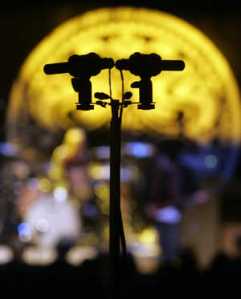
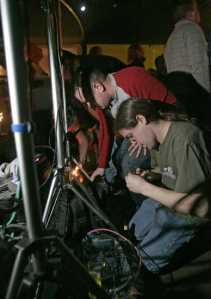
Michael Lindsey looks like any other unassuming music fan, but he’s pretty easy to pick out at a concert. He’s usually standing near the soundboard with an 8-foot mic stand.

A lot of people go to live shows to relax or as a hobby, but Lindsey goes to record what he sees and hears. He’s one of a dozen music fans around Kansas City who call themselves Team Kansasouri, dedicating themselves to capturing and sharing concerts.

“My first exposure to taping was when I was downloading other concerts I had attended,” Lindsey said. “I was frustrated when I was at a show and couldn’t find it online later, so I started recording them myself.”

For Team Kansasouri, the live show is the ultimate demonstration of a band’s mettle.

“A good live recording has a certain vibe, emotion and energy you can’t find on a studio recording,” said team member Brian Price of Eudora. “Look at the later Phish albums. They’re purely academic exercises compared to the live versions.”

According to Clinton Heylin’s book Bootleg: The Rise and Fall of the Secret Recording Industry, some of the first fan concert recordings were made at New York’s Metropolitan Opera House in 1901. Taping reached the mainstream when it received the blessing of the Grateful Dead in the 1970s. While tape trading is very much part of the Dead’s culture, the hobby goes far beyond one genre.

And no matter the type of music that’s recorded, there is one steadfast rule: Shows should never be sold.

“I found a guy on eBay who had the Sting show I made in Columbia and was trying to sell it,” team member Joe Hutchison said. “I fought him all the way to the top and got his auctions shut down.”

Record labels sue fans for illegally downloading albums, but many bands see swapping concert recordings as free advertising.

“If the selling was prevalent, the bands would stop letting us record,” Price said. “Bottom line: Taping is a privilege, and we’re going to defend our privilege.”

Network on the road

Recording a concert is not for the faint of heart or pocketbook. Lindsey’s gear bag contains two microphones stored in a waterproof plastic container lined with anti-static foam. Cost: $900.

He also has an all-in-one rig with preamp and analog-digital converter. Cost: $900.

And there’s the tripod for the mics, an external battery pack, foam tips for the mics in case of wind, some cables (homemade) and a couple of pieces of just-in-case miscellanea.

“You can spend $10,000 on gear, easy,” Lindsey said. “The good news right now is that because of the economy a lot of guys are dumping their gear. If you’ve got the money, this is a great time to get into the hobby.”

While the rest of the crowd cheers the band as it takes the stage, tapers are hunched over their gear making sure the recording levels and balance are right. Only after the first song and tape are “rolling” can they enjoy the show. Kind of. They must remain watchful of fans trying to steady themselves on a mic stand or fans whose voices could find their ways onto the recording.

“For some reason the mic stand is a beacon for drunks to steady themselves on,” Hutchison said. “You have to be vigilant about your stuff and not be afraid to push people away.”

Other elements can’t be controlled, like weather. Last summer several tapers planned to record the band moe. at an outdoor show but got caught in a 90-minute rainstorm. Most packed umbrellas to protect the gear.

“We got lucky that time because the rain was coming straight down,” Price said. If it were coming down sideways, he said, they would have been forced to shut down.

Getting through the doors with all that stuff isn’t as hard as you might think.

“At first you have to educate the manager that it’s a benefit to allow recording,” Price said. “You might want to print out the band’s taping policy from their Web site and bring it with you. Eventually they’ll come to recognize you and let you in.”

Musical history is being made

After the show, there is an unofficial competition to transfer the show from the recorder to the computer, separate each song into its own track and post the concert online as quickly as possible.

“I’ll be listening in bed at 3 in the morning excited at how good it sounds,” Price said. “But I have to be quiet because my wife is sleeping next to me.”
mic-2The Kansasouri tapers generally restrict their recordings to bands and venues friendly to taping. They document all their experiences — from where to set up at a given venue and what microphones to use to the soundman’s name — on taperssection.com, an overwhelmingly comprehensive Web site covering everything from how-to’s and gear reviews to garage sales on used equipment.

“It’s where our knowledge is passed down,” said Randall Phillips of Kansas City. “(The site has) stuff like taping methods and equipment used and other things you couldn’t learn in 10 years. If you run into a problem, someone else has experienced it and is waiting to help you online.”

Most important, it’s a social network. When tapers descended on Clinton Lake last June for the Wakarusa Music Festival, Price hosted a barbecue for everyone. And the same courtesy has been shown to him.

“If I travel to a show in St. Louis or been on vacation and gone to a show,” Price said, “there’s never been a time I didn’t run into somebody I knew.”

Aside from friendships, there are other often unexpected perks. Reggae singer Matisyahu gave out free tickets to tapers for his performance last summer. Other gifts are less conventional.

“I taped an Allman Brothers show from the balcony of the Uptown,” Hutchison said. “It was 100 degrees up there, but the show came out OK. I put it up and traded with a few people. A few weeks later, I got a box of Georgia peaches in the mail from an appreciative fan.”

But ultimate satisfaction comes from knowing a piece of musical history has been preserved.

“This is history for us,” Hutchison said. “We’re archiving it, creating documents of what happened on that night.”


IS IT ARCHIVED?
To find out if your favorite concert memories have been recorded use the search engines on the following Web sites. Keep in mind it may take some online digging to unearth your buried treasures.

http://btat.wagnerone.com

http://bt.etree.org

www.archive.org/details/etree

•To learn more about becoming a taper, go to www.taperssection.com and click on the first link, “where to begin.” More information is also available at www.flac.sourceforge.net.

Funding the arts is good use of government money

(Above: A recent performance by the Blue Note 7 at the Gem Theater started this whole debate.)

By Joel Francis

Friend of the blog Plastic Sax ran a compelling editorial earlier this week about government sponsorships. The questions it raised about why classical music and jazz are the most heavily subsided genres and why private businesses featuring similar artists had to compete against government funds are worth greater discussion.

It seems the crux of the issues with subsidizing government sponsorships is that they run counter to the age-old capitalist creed of letting the marketplace decide. The folks at Jardine’s and The Phoenix work just as hard to bring people in to hear jazz as the Folly and the Gem, why aren’t they getting help?

At the risk of sounding like a socialist, The Daily Record believes there needs to be boundaries placed on the free market. Aside from public radio, there are no government subsidies on Kansas City’s radio dial, and the town has been without a jazz station and an FM classical station in nearly two decades. Beethoven will never bring the ratings that BTO seem to provide to the city’s countless classic rock stations, but does this warrant erasing classical music from the dial? How can an audience or appreciation be built in this void?

A case could be made that successful jazz clubs are penalized for their success, but the nights they compete with federally funded concerts are scarce compared to the evenings they have to themselves. Are the dozen shows each year at the Folly and Gem cutting that deeply into their profits? 

Jazz and classical music are funded because they’re the least controversial. They’re popular enough that most people will applaud the effort, but ignored enough that no one is going to waste the time digging into the music searching for scandalous meaning. There will never be a Piss Christ controversy with this music. However, imagine being the senator that suggests the National Endowment of the Arts support an evening of Slayer doing “Reign in Blood” at the Kennedy Center or a 20th Anniversary Death Row Records tour. This may not be fair, but equality is a rare visitor in the annals of politics.

It’s easy to be cynical and complain about an ever-dropping lowest common denominator. Jazz and classical artists will never be as popular as Ryan Seacrest and the latest American Idol, and “Nightline” and “Meet the Press” will never bring the ratings of “Two and a Half Men” and “Rock of Love Bus.” But that doesn’t mean work with greater meaning – whatever the medium – shouldn’t coexist with revenue-generating evanescence. A balance must be struck, and if it takes government funding to maintain that equilibrium, then the money should be spent.

Therefore, The Daily Record posits that if the government has billions of dollars each month to spend waging war and sustaining the defense industry, it should certainly continue to throw as many sheckles as possible into the arts, however they’re defined.

15 jazz greats to emerge in the last 20 years (part three)

(Above: Savion Glover does his thing with plenty o’ swing.)

By Joel Francis
The Daily Record

Continuing The Daily Record’s look at the state of jazz today, here is the final of three installments shedding light on 15 jazz greats to emerge in the last 20 years. Note that these musicians are not necessarily the 15 greatest jazz artists to arrive since 1990. A brief listen to any of them, though, should more than persuade the most ardent purist that jazz is alive and well.

Eldar Djangirov

Eldar Djangirov is the continuation of the great line of pianists to emerge from Kansas City, Mo. that stretches back to Count Basie and Jay McShann. The three have more than an adopted hometown in common, though. Although none were born in Kansas City, all experienced significant musical growth while living there. Unlike Basie and McShann, though, Eldar’s formation started before puberty. He performed at a Russian jazz festival at age 5 and at age 12 became the youngest guest ever on Marian McPartlan’s Piano Jazz radio show. Though his latest album is straight-up smooth jazz, Eldar’s earlier work has a breadth that recalls everyone from Ahmad Jamal to Art Tatum. Albums to start with: Eldar, Live at the Blue Note

Christian McBride

Bass player Christian McBride was mentored and hailed by no less an authority than Ray Brown before starting off on his own. McBride works comfortably in the traditional vein on his early albums like “Fingerpainting,” the excellent tribute to Herbie Hancock performed in a bass/guitar/trumpet setting. He gets more funky and touches on fusion with his three-disc live set recorded at Tonic and studio albums “Sci-Fi” and “Vertical Vision.” In 2003, McBride collaborated with hip hop drummer Ahmir “?uestlove” Thompson of the Roots and keyboardist Uri Caine for a spectacular collaboration known as the Philadelphia Experiment. McBride has also worked extensively with Sting and Pat Metheny. Albums to start with: Fingerpainting, The Philadelphia Experiment.

Joshua Redman

Expectations have been high for Joshua Redman since winning the Thelonious Monk International Jazz Saxophone Competition in 1991. While Redman hasn’t fulfilled those unrealistic expectations by taking his instrument to the heights achieved by Sonny Rollins and John Coltrane, he has built a strong career on his own terms. Redman’s early quintets helped launch the careers of Christian McBride and Brad Mehldau and his work as musical director of the San Francisco Jazz Collective paired him with legends like Bobby Hutcherson and new artists like Miguel Zenon. Redman’s catalog is adventurous enough to include covers of Eric Clapton’s “Tears in Heaven” with guitarist Pat Metheny and funky experiments that recall Eddie Harris. Albums to start with: Spirit of the Moment, Back East.

Savion Glover

Jazz tap may have died with the golden age of big-budget Hollywood musicals, but Savion Glover is trying his best to bring it back. He has appeared in televised concerts with Wynton Marsalis’ Jazz at the Lincoln Center Orchestra, collaborated with poet Reg E. Gaines and saxophone player Matana Roberts for the John Coltrane-inspired improve “If Trane Was Here,” appeared in Spike Lee’s “Bamboozled” and was a cast member of “Sesame Street.” Glover hasn’t recorded any albums, but his live performances are a potent reminder that jazz isn’t the exclusive province of those with a horn or a voice.

Bad Plus

Combining rock and jazz is nothing new, but the piano/drums/bass trio Bad Plus have done it in an acoustic setting that resembles Medeski, Martin and Wood more than Weather Report. Their early albums were filled with original material that split the difference between Oscar Peterson and Ben Folds, tempered by occasional arrangements of Pixies and Black Sabbath classics. Unfortunately, recent releases have steered sharply away from new compositions and saturated the increasing covers with more irony. While the concept of their newest album – all covers with a female vocalist – makes one wary, their early material should not be overlooked. Albums to start with: Give, Suspicious Activity.

Keep Reading 15 Jazz Greats to Emerge in the Last 20 Years

Part One

Part Two

Five Legends Still Adding to Their Legacies

KC Recalls: The Coon-Sanders Night Hawk Orchestra

coon

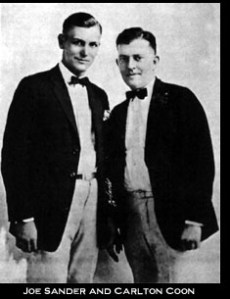
(Above: Joseph Sanders, left, and Carleton Coon.)

By Joel Francis

The music Carleton Coon and Joseph Sanders made for a dozen years together helped put Kansas City jazz on the map. Their Nighthawk Orchestra may have broken up in 1932, but it’s two bandleaders have been silently reunited for 40 years at Mt. Moriah Cemetery in Kansas City.

Coon and Sanders first met at a downtown Kansas City music store in 1918. Tall, handsome and quick-tempered Sanders, was an amateur baseball player on leave from the Army. He was practically the antonym of the pudgy, extroverted Coon. Despite their physical and temperamental differences, both men quickly found they shared a love of jazz and complementary tenor voices.

The following year, when Sanders got out of the Army, the two teamed up, formed a jazz combo and started booking gigs around Kansas City. With Coon handling business, Sanders writing songs and city boss Tom Pendergast ignoring prohibition with his “wide open” bars, clubs and brothels, the Coon-Sanders Novelty Orchestra was soon one of town’s in-demand outfits.

Shortly after Thanksgiving, 1922, the orchestra was booked to play on radio station WDAF. The success of that performance helped launch their weekly show, broadcast from 11:30 p.m. until 12:30 a.m. When the announcer let slip that “anyone who’d stay up this late to hear us would have to be a real night hawk,” thousands of listeners spread across Canada, Mexico and most of the United States let him know that they were proud to be “night hawks.”

Sanders quickly penned a theme song “Night Hawks Blues” and the pair rechristened their ensemble the Coon-Sanders Original Night Hawk Orchestra. In 1924, they recorded for the Victor record label in Chicago and agreed to let burgeoning Chicago promoter Jules Stein book a four-week tour. Stein parlayed his profits from that tour into his own booking company, which he called Music Corporation of America, or MCA.

On the strength of that tour, the Night Hawk Orchestra relocated to Chicago where their performance opening the Balloon Ballroom of the Congress Hotel was broadcast on KYW. Two years later, they moved to the Blackhawk Restaurant where fan Al Capone frequently left $100 tips for the band. On the strength of WGN radio broadcasts and reputation built playing around Chicago (including Capone’s Dells supper club in Morton Grove, Ill.), the Coon-Sanders Orchestra relocated once again in 1931.

Broadcasting weekly from Terrace Room in the Hotel New Yorker on CBS radio, Coon and Sanders found themselves in the same Big Apple circles as Bing Crosby and Guy Lombardo. Coon loved the night life, frequenting the Cotton Club and other Harlem jazz clubs, and making friends with Cab Calloway and Duke Ellington.

Sanders, on the other hand, was less enamored. He longed for the Midwest and made his sentiment plain the final number recorded by the Coon-Sanders Original Night Hawk Orchestra, “I Want to Go Home.”

Unfortunately, circumstances forced the bandleaders’ hands. Popular taste was shifting away from the Caucasian stylings of Coon and Sanders and toward all-black ensembles like the Ellington, Calloway and Kansas City’s Bennie Moten orchestras.

These circumstances, coupled with the Great Depression, forced the Night Hawks back to Chicago in April, 1932, for an engagement at the College Inn. Sander’s delight to be back in familiar territory was tempered when Coon was admitted to the hospital in critical condition. He died a few weeks later from blood poisoning from an abscessed tooth.

kc-graves_coon1

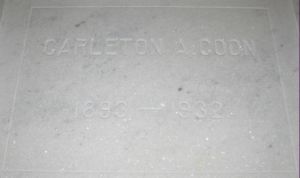
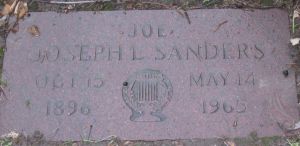
Coon’s 1932 funeral was one of the largest Kansas City had seen. Although his procession carried on for miles, his band’s legacy did not stretch so far. Less than a year after Coon’s death, Sanders dissolved the group and moved to Hollywood to write movie scores. Although Sanders was active in music for the rest of his life, he never regained the popularity he found with the Nighthawk Orchestra. In 1965, he died after having a stroke and was buried about 200 yards sound of his friend, Carleton Coon, at Mt. Moriah Cemetery.

Today, the Coon-Sanders Original Night Hawk Orchestra is a footnote in the Kansas City jazz story that includes big bands lead by Bennie Moten, Count Basie, Andy Kirk and Jay McShann, and soloists like Big Joe Turner, Mary Lou Williams, Walter Page and, of course, Charlie Parker. But Coon and Sander’s early triumphs helped paved the way for all who followed them out of Kansas City.

Ironically, the Night Hawks are most celebrated in Huntington, West Virginia, where the Coon Sanders Nighthawks Fans’ Bash has been held on the weekend after Mother’s Day for 39 years.sanders