Review – “Record Store Days”

(Above: The crew at Championship Vinyl discuss their favorite Side 1, Track 1’s in the ultimate record store flick “High Fidelity.”)

By Joel Francis
The Daily Record

Music fans geeked out for Record Store Day, have a new bedside companion until the next incarnation of the annual event. In “Record Store Days,” Gary Calamar and Phil Gallo have loving assembled a history of their musical Mecca.

The tome operates on several levels. The bountiful pictures that depict the stacks, musicians and proprietors of record shops qualify the book as a fetish object. It’s easy to get lost in the details, such as trying to identify the covers on display during Elvis Presley’s trip to a Memphis shop, or getting lost in the promotion displays in a picture the counter at The Holiday Shop, a Roeland Park, Kan. store in the 1950s.

The chapters are quickly paced, and contain lots of headers, so they can be read in bits and pieces. There are nearly as many sidebars as photos. The insets tell the stories behind the most outlandish names, like Minneapolis’ Oarjokefolkopus or Los Angeles’ Licorice Pizza, chronicle the history of record stores in movies, and tell about finding that first love in the racks – musical or otherwise. Along the way, plenty of musicians, owners and fans relate their favorite vinyl experiences.

Finally, the book offers a comprehensive history of the independent retail industry. The story starts at the turn of the last century, when records were sold in furniture stores as an accoutrement to Victrolas and other record players. Like everything else, music sales declined during the Depression, and the materials used to create the platters were scarce during World War II.

The record store as we know it blossomed in the 1950s, and enjoyed a heyday in the 1960s and ‘70s. The spaces almost became alternative community centers, where music fans would swap songs and stories while digging for the latest gem.

The final half of the book also serves as a cautionary tale of the industry. CDs gradually replace vinyl, but when the bubble bursts in the late ‘90s, neither the major labels nor the stores have anything to replace them. Particularly telling is the story behind SoundScan, the computer-based sales tabulator that destroyed the manipulative hand tallying.

“Record Store Days” ends on a happy note, with the opening of Amoeba on Sunset Boulevard in Los Angeles and the recent resurgence of vinyl. The final chapter discusses the founding of Record Store Day and is sunny enough to convince anyone to hop in their car and run to a record shop as soon as they finish the page. The book doesn’t try to be objective. It reads like a loving embrace written by people who love vinyl, for record fans.

The book’s biggest flaw is that too much of the action is centered in Los Angeles and New York. There are some mentions of Criminal Records in Atlanta, Waterloo in Austin, Texas and Oarjokefolkopus, but little else occurs between the coasts. Some love for the great college town record shops would have been a welcome – and diverse – addition.

Calamar and Gallo are not out to convert new fans to the cult of vinyl, and readers will quickly know if they are in the target audience. (Hint: If you don’t think it’s cool that the record on the cover actually has grooves, this book likely isn’t for you.) The duo knows the next best experience to being in a record store is reading about record stores, and their offering does a great job of taking fans there.

Keep reading:

Review – “King of the Queen City”

Review: “The Oxford American: Book of Great Music Writing”

Review – “How the Beatles Destroyed Rock ‘n’ Roll”

2010 Grammys: A Live Diary

By Joel Francis
The Daily Record

We at The Daily Record try to play clean in our tiny corner of the interweb. Once a year, on “music’s biggest night” the gloves come off and the snark comes out. This year, we present a live diary of the 62nd Annual Grammy Awards. We’ll be doing this live throughout the telecast, so keep checking back.

7:01 – Lady Gaga opens the show in a dress she bought at Bjork’s garage sale.

7:02 – She forgot to buy the pants, though.

7:04 – At last, Elton John has found someone with more flamboyant taste in eye wear. Wonder how that feels.

7:11 – Stephen Colbert may have already delivered the line of the night. Re: Susan Boyle selling the most records of ’09 and saving the bottom line –  “You may think you’re the coolest people in the world, but just remember that your industry was saved by a Scottish woman in sensible shoes.”

7:13 – Beyonce wins “Song of the Year” but can’t make it onstage to accept the award. Why not have it received by the Chippettes, stars of the year’s best film “Alvin and the Chipmunks: The Squeakquel”? Now that’s synergy!

7:15 – Who the hell thought it was a good idea to turn “American Idiot” into a musical? I can hear this one flopping faster than Twyla Tharpe’s tribute to Bob Dylan. Forget “Movin’ Out,” how about moving on?

7:16 – Nothing screams “punk rock” louder than a Broadway chorus. Even the Clash buried their choral version of “Career Opportunities” on the last side of “Sandinista.”

7:24 – I can’t figure out which interests me less Kirsten Bell’s insipid new movie “When In Rome” or what song Bon Jovi will play tonight. Let me guess: a really lame one from the ’80s.

7:26 – Does Taylor Swift have a clause in her contract that she must win every award for which she is nominated? Has she ever lost?

7:27 – I’m a little disappointed Kayne West didn’t jump onstage and start talking about how great Keith Urban is.

7:28 – Hey, Beyonce brought the S1W’s with her. Nice to see her kicking it old school.

7:29 – (The S1Ws were the black panther dancers who guard the stage during Public Enemy performances.)

7:32 – Nothing screams 2010 like Alanis Morrissette songs. On to the next one.

7:37 – Questlove just tweeted “must admit that watching twitter tweets are better than watching the actual event.”

7:41 – Pink is wearing the sexiest berka of all time.

7:44 – Nothing screams “class” like a chick in a g-string spraying water everywhere. Pink is so talented!

7:45 – Between Pink and GaGa that’s four butt-cheeks bared tonight. Just wait until Howard Stern and Prince come out.

7:47 – I’m not sure who the Zac Brown are, but respect the fact that they didn’t get all gussied up for the show.

7:48 – I’m also glad none of them were wearing a g-string.

7:55 – Will.I.Am looks like Mr. Roboto from that Styx album.

7:56 – Fergie looks like someone from either Buck Rogers or the original Battlestar Galatca. Does anyone else remember when Channel 62 used to show all those back-to-back on Saturday afternoons?

7:58 – I gotta admit that watching the Peas do “I Got A Feeling” in concert would probably be a lot of fun. That song got a lot more infectious energy than it deserved.

8:00 – OK, so we’re an hour into this thing and a couple ground rules have already been established. No. 1, no one can perform a song all the way through. Medleys only, please. No. 2, all performance must somehow make their way from the main stage to the satellite stage, and back.

8:01 – They keep advertising the 3-D Michael Jackson tribute with Celine Dion. That woman’s so skinny, I bet even in 3D she’s only 2D.

8:06 – Who the heck are Lady Antebellum?

8:07 – I knew it would happen. People are starting to compose songs for those episode-capping montages. This Lady Antebellum song would be perfect over the poignant closing moments of “Grey’s Anatomy.”

8:09 – The presenter just said there was a Grammy category for artists who don’t have musical talent. Wait, there’s a Grammy for people with musical talent? When are they going to give that one out. Oh yeah, it was done earlier in the day in the parking lot behind the Ross downtown.

8:11 – I bet Stephen Colbert’s daughter thinks her dad is cool now that he’s won a Grammy.

8:12 – Oh, just as I blogged the above Colbert asked his daughter if she thought he was cool now. I am so freaking prescient!! (She said yes, by the way.)

8:13 – The Target ad just showed a white dog with a red spot of his eye. Spuds McKenzie lives!

8:14 – OK, that’s three exclamation points in the past two entries. I’m calming down now.

8:18 – Wow, Taylor Swift was up for “Song of the Year” and she didn’t win. I bet she gets at least half an album’s worth of songs of out how she’s feeling right now.

8:20 – They just introduced Robert Downey, Jr. as the most “self-important” actor of his day. How out of control is your ego when you’re crowned most “self-important” in Hollywood?

8:21 – That operatic introduction to “Blame It” was brilliant. Every time I hear this song I remember that Stevie Wonder stopped his show at Starlight last summer to play it over the PA.

8:23 – If they hadn’t just shown George Clinton in the audience, I would have sworn he was the white-haired conductor onstage.

8:24 – I think “Blame It” is starting to suffer from auto-tune overload. It sounds like Kraftwerk.

8:25 – Now Slash is onstage playing the guitar solo from “November Rain.” He probably just heard someone talking about alcohol and bum rushed.

8:27 – Joe Posnanski just tweeted: “They really had people VOTE to determine what Jon Bon Jovi sings at the Grammys? Was there a ‘What’s the difference’ option?'”

8:33 – Hey, Green Day won “Best Rock Album” for their follow-up to “American Idiot.” Can’t wait until that gets turned into a Broadway musical.

8:34 – Chris O’Donnell looks like McSteamy on “Grey’s Anatomy.” I hate myself for knowing this.

8:36 – Wow, a “country” band singing a patriotic song. Way to think outside the box, guys.

8:37 – Answer: Leon Russell with the Zac Brown Band. Question: Who will be headlining Knucklehead’s Labor Day celebration in 2012?

8:38 – Are the red-staters happy that the Zac Brown Band is celebrating America by playing a patriotic number, or upset with them for supporting Obama? This is so confusing. I thought we established that one couldn’t love their country without blindly supporting its president.

8:46 – Has anyone noticed how Taylor Swift strums from her elbow and not her wrist? It’s like she just picked up a guitar for the first time.

8:47 – I hope the tattooed guy on banjo is getting paid well for this gig.

8:49 – Good Lord, Taylor, stay in key! She has pitch like Mariah Carey at a baseball game in Japan.

8:53 – Dang, I forgot to get my 3D glasses. Fortunately, I still have 7 minutes to make it to Target.

8:54 – All you chumps who forgot your 3D glasses will now be given a migraine.

8:56 – I think Smokey could have handled the whole MJ tribute on his own. I would have loved to hear him cover a less-maudlin ballad on his own. I’d even settle for “Ben.”

8:57 – I love how Beyonce is wearing her 3D specs while Jay-Z is sans glasses. Hey B, you’re at the event. It’s already in 3D.

9:01 – I bet MJ’s kids feel really out of place when they hang out at their Uncle Tito’s place. Those are some pale-faced children.

9:03 – Wow, they were just paying tribute to MJ on the Grammys and now there’s a a commercial for “This Is It” on DVD. What a weird coincidence. It’s almost like it was planned.

9:08 – All you have to do to win an icon award is write “Sweet Talkin’ Guy”? Seems to be setting the bar a bit low.

9:09 – So what you were really voting for was which part of a Bon Jovi song they’ll perform.

9:10 – I hope Roger McGuinn is getting a cut of “We Weren’t Born to Follow.” Methinks Bon Jovi should have paid more attention to the Byrds’ “Wasn’t Born to Follow” when they were ripping it off.

9:11 – Someone needs to say it: Bon Jove are looking old. How many chins does Sambora have, anyway? I count three.

9:12 – I’ll tell you who says you can’t go home: Thomas Wolfe. And if home sounds like this, I’ll be out with Dean Moriarty on the road.

9:14 – Jon Bon Jovi should be forced to sing “Living on a Prayer” over the PA at a Home Depot.

9:16 – What the? How did Mos Def get onstage? “True Magic” had more artistry than the entire careers of everyone else onstage tonight – combined (except for Smokey Robinson and Leon Russell).

9:18 – Next year at this time, I hope Mos Def and Talib Kweli are being presented with the Best Rap Song award for “History.” Black Star rules.

9:19 – So Kanye actually wins an award and he doesn’t show up to collect it? How classic would it have been for Taylor to crash his speech? Probably why he didn’t show up.

9:21 – Seriously, though, best of luck to you and whatever you’re going through, Kanye. Your albums are genius. I hope you get your magic back and exorcise those demons.

9:26 – So it’s OK to sing “Bridge Over Troubled Water” to show support for the Haitians even though the song was banned by Clear Channel in the wake of 9/11?

9:28 – I just want to get this off my chest: Mary J. Blige, magnificent voice, but she oversings and all her songs are vamps and choruses. She doesn’t know what to do with a verse. And the a-hole who thought it would be a good idea to run that voice through auto-tune for MJB’s latest single should be shot. That’s like tying Fred Astaire’s ankles together.

9:30 – Do Mary J and Andrea Bocelli know they’re both singing the same song? Their “duet” was like an otolaryngological cock fight.

9:37 – Who’d have thought the Latin Grammys would have lasted a decade?

9:38 – How come there isn’t a Jazz Grammys or Klezmer Grammys?

9:42 – How many support musicians does the Dave Matthews Band need for this song? Maybe the USC Marching Trojans will show up again.

9:44 – Dave Matthews dances worse than Elaine Benes from “Sienfeld.”

9:46 – Now Ricky Martin has stolen Chris O’Donnel’s close-cropped look. He should just be glad he’s not forced to pay is way in with the general public.

9:48 – I think Beyonce’s dress is made of all of Jay-Z’s discarded bling.

9:55 – When I saw Maxwell last fall at the Saavis/Keil/Whatever it’s now called Center in St. Louis I imagined the experience was similar to seeing Marvin Gaye back in the day. Maxwell is the real deal and he’s killing it right now. Best performance of the night so far.

9:58 – Maxwell + Roberta Flack. At last, a duet with two people who actually know how to sing with a partner.

10:00 – As the show rounds the three hour mark, just think: the whole night could have been as good as what we just heard.

10:05 – I wonder if this is the combo Jeff Beck will be bringing to Starlight in April.

10:06 – So what’s the thinking here, now that all the kiddies have gone to bed we can shelve the pop tarts and have some real music?

10:07 – Does Quentin Tarantino know that pretending to act like such a badass is making him look like a huge douchebag?

10:14 – Is there a song underneath all these edits? Why not change the lyrics for television? I wonder if the producers have a lyric sheet up in the booth so they know when to drop out. That would be classic to see.

10:17 – Jamie Foxx is singing along with every lyric, but I have to say I think Drake is horribly overrated.

10:18 – Drake’s blend of preppie (black leather jacket, black shirt) with ghetto (torn, sagging jeans) is cracking me up. He’s clearly trying to have it both ways.

10:26 – Taylor Swift wins Album of the Year. Yawn.

10:29 – That’s it for the night. Thanks for reading and for hanging out.

Keep reading:

2010 Grammys: A Running Diary

Releasing Jazz from Aspic

(Above: Ornette Coleman jams with the Roots. Improbably, people respond positively to the non-traditional collaboration.)

By Joel Francis

In 1958, Danny and the Juniors sang “Rock and Roll is Here to Stay.” Although the genre was only seven years removed from the its birth on the “Rocket 88” single and three years from its explosion into the mainstream with Elvis Presley, Danny White was right. Sixty years later, it is hard to imagine American culture without rock and roll.

It is also hard to imagine what the malt-shop teens and leather jacket hoods of the Eisenhower administration would have thought about auto-tune, power pop and nu-metal. Although the seeds of today’s rock were planted in the 1950s, the resulting flora has blossomed into hybrids that bear little resemblance to the original crop.

Picture how different today’s musical landscape would be if anything that varied from the pre-British Invasion strains of rock and roll were bastardized. If songs bearing the touch of John Lennon and Paul McCartney or Mick Jagger and Keith Richards were decried as impure for straying from the “true” roots of Chuck Berry and Buddy Holly.  Or if anything after the summer of punk and the rise of synthesizers was kept at arm’s length and segregated from the great Rock Cannon.

Would we expect our children to dig out old Bill Haley and Beach Boys albums if this were the case? Teach them “Fun Fun Fun” and “Maybelline” as historical exercises? Of course not. They would shrug, pay us lip service and invent their own confounding strain of music. The ties to existing music would be obvious – nothing emerges in a vacuum – but nothing we couldn’t dismiss as the impure follies of youth.

Why, then, do we place the same parameters around jazz and feign surprise with then inevitable occurs?

It seems every year a new study comes out showing the median age of jazz listeners climbs while attendance drops. The latest is a National Endowment for the Arts Survey of Public Participation in the Arts conducted through the U.S. Census Bureau. Predictably, the self-appointed Guardians of Jazz like Wall Street Journal columnist and former Kansas City resident Terry Teachout are freaking out. But all this hand-wringing is like an ordinary bicycle enthusiast fretting while the chain-driven model populates the streets. The vehicle is still very much alive, it’s just been modified and influenced by culture.

Too many jazz museums and concert curators suffer from WWWS: What would Wynton say. Would Wynton Marsails, the genre’s most prominent performer and steadfast caretaker, approve of their exhibit or event? While Marsalis is a talent trumpet player who deserves every bit of his fame and credit for bringing jazz to the masses, he is conservative and traditionalist to a fault. Museum directors and concert promoters should be following their own muse and vision, not looking to someone as restrictive as Marsalis for tacit endorsement.

The growth of jazz from Dixieland to big band to bebop is celebrated, but somewhere along the line – about 1965, shortly before John Coltrane’s death, when free jazz and fusion started to creep into the mix – a line was drawn. In shorthand, acoustic Herbie Hancock playing with Miles Davis and recording for Blue Note is “good” jazz; synthesizer-rocking Hancock’s best-selling “Head Hunters,” though, is “bad.”

If directors and promoters must get the thumbs-up from a Marsalis, could it please be Branford? Although a lesser celebrity, the tenor saxophone player and older brother of Wynton has equally distinguished jazz pedigree. He’s also allowed jazz to grow, branching into pop with Sting, serving as musical director for the Tonight Show and working with hip hop artists.

If the stodgy stylistic caretakers turned up their noses when jazz artists, the highest pedigree of musicians, started dabbling in rock and funk, they have completely ignored most jazz performers slumming with rappers in a genre oft-maligned for possessing the lowest level of musicianship.

The elitists are missing the point. At their best, jazz and hip hop are better together than chocolate and peanut better. The improvisational aspect of jazz fits the free-flowing poetry delivered by a great MC. The swing of the instruments matches the swagger of the beats. Dig the way DJ Logic’s turntable work complements Medeski, Martin and Wood’s “Combustication” album, how Mos Def and Q-Tip’s rhymes soar over Ron Carter’s live basslines, or how Roy Hargrove’s trumpet pushes and accentuates Common’s poetry.

Teachout and Wynton Marsalis’ simplified stances ignore the long history of jazz in popular culture. The enduring standard “Someday My Prince Will Come,” was plucked from Disney’s “Snow White and the Seven Dwarfs.” Although both Dave Brubeck and Louis Armstrong released albums of Disney material, it is doubtful Wynton Marsalis would record a song from a children’s cartoon.

The Chicken Little jazz forecasts don’t show that jazz is less popular or interesting today. The news they bring is even more disturbing: hard evidence that the standard-bearers of the genre are increasing ignorant to how their beloved music has grown, changed and been embraced. They’re the ones missing the party, but don’t worry – their numbers are dwindling.

(Below: More Ornette Coleman with the Roots for all the alarmists. Note how well the musicians play together despite being from the disparate worlds of jazz and hip hop. Surely this is a sign of the apocalypse.)

Mariah Carey sells out, or All that Glitters…

(Above: Neil Young sets the record straight with a live performance of “This Note’s For You” from 1988. Thanks to Viacom, clips for Roca Pads and Redman’s Potty Fresh were unavailable.)

By Joel Francis
The Daily Record

Earlier this week, Billboard reported the booklet in the new Mariah Carey CD will contain “lifestyle ads.”

The 34-page “mini-magazine” will be co-produced by Elle magazine and house ads for Elizabeth Arden, Angel Champagne, Carmen Steffens, Le Métier de Beauté and the Bahamas Board of Tourism. The booklet will also contain Carey-centric articles with the enticing titles like “VIP Access to Her Sexy Love Life,” “Amazing Closet,” “Recording Rituals.”

Evidently the music wasn’t enough.

Annoying as the ad campaigns may have been, there have been no Chevy ads in Bob Seeger or John Mellencamp albums. Other artists have been less scrupulous about whoring their album space, but were never this brazen. Master P turned the booklets for all his No Limit artists into mini-catalogs, and Outkast frequently squeezed ads for their pit bulls alongside lyrics and musician credits. At least those performers had a stake in the products in question.

Carey’s move is more egregious on several levels. First, retailers have already found ways to cross-promote. According to the Billboard story, Walmart will display Carey’s album next to her Arden fragrance Forever, which has an ad on the back cover of the CD booklet. Even more disturbingly, Island-Def Jam, Carey’s label, has eyed Rihanna, Bon Jovi and Kanye West to follow suit if the initial venture is a success. Carey has never been a bastion of artistry, but if the major labels can turn a buck from this experiment, expect ads in CD booklets to become the norm.

“The idea was really simple thinking: ‘We sell millions of records, so you should advertise with us,’” Antonio “L.A.” Reid, chairman, Island Def Jam Music Group, a unit of Universal Music Group, told Billboard.

If an album is more valuable as an advertising vehicle, why not give the music away? In 2007, Prince gave away copies of his album “Planet Earth” in the Sunday edition of a London newspaper. Two years before that he included his album as a door prize at concerts. This year, fans who bought tickets for No Doubt’s summer concert tour were gifted with the band’s entire catalog.

Fans who buy the album digitally through iTunes or Amazon will also be subjected to the advertising. The ads will also be included in the electronic PDFs accompanying download sales. The only way to circumvent the booklet blights is the easiest and cheapest solution: ignore Carey or steal the music. Until the major labels start respecting the listeners, there is absolutely no reason to respect them.

Beatles’ cash grab redefines “Money for Nothing”

(Above: Generations later, Paul’s message still rings out: “You Never Give Me Your Money.”)

By Joel Francis
The Daily Record

Hold tight to your pocketbooks; 9/9/9, the inverted day of the Beast draws neigh.

As any Beatle fan will tell you, Aug. 9 is not only the day Beatles edition of Rock Band lands in stores, but when the remastered Beatles albums will finally be released. On CD, that is, not to iTunes.

That information has been second only to anything related to Michael Jackson or Jack White in the online news hemisphere. The buried story, however, is that the Beatles trail only KISS in their devotion to part fans from their money.

Earlier this week, Paul and Ringo teased the public with their “Box of Vision,” an LP-sized storage container-cum-book for the upcoming remasters. The $90 artifact contains full-size replicas of all the original LP artwork, spiffy new sleeves to house the disc and a “Catalography” guidebook. Inventing new words doesn’t make this a better value.

Basically what you get with this set is a guidebook of discography information readily accessed online, blow-ups of all the artwork that will accompany the CDs and a mega-expensive flip-book. To top off the insult, the flip-book contains slots not only for the traditional catalog (i.e. “Please Please Me” through “Let It Be”) but posthumous releases like “Live at the BBC,” “Love,” and the “Anthology” series. That’s fine, but why are there spaces designated for the red and blue albums and “1” collection? That material is already presented throughout the rest of the catalog.

It’s easy to be cynical and say this move is designed to rankle completes and make them buy redundant collections. It’s easy because even a quick glance at the Beatles online store will jade the most intensely optimistic fans.

When the 40th anniversary of the White Album hit last summer, the Beatles did not release the long hoped-for remastered edition. They offered a $530 white pen. Last year also marked the 40th anniversary of the “Yellow Submarine” film, which one could commemorate with a $200 9-inch figurine or a $65 Yellow Submarine “musical globe with Nowhere Man base.” (I wonder who decided they could get more for a Nowhere Man base over a Blue Meanie base.) Oh, and don’t forget to get a jump start on the 45th anniversary of “Help” buy grabbing the $121 deluxe edition DVD with a reproduction of the script and 60-page book with rarely seen photos.

Official band stores are rarely a bargain, but asking $33 for “Live at the BBC,” $30 for the red and blue albums and $35 for the “Anthology” entries is insulting, especially since all these items may be found on Amazon for about $10 (some are significantly cheaper). You can find a used version of the “Help” deluxe edition for $25 there, too.

The Beatles have a big and diverse enough fan base that more than a few of their admirers can afford to spend extravagantly. But shouldn’t they be getting more bang for their buck than $1,000 album cover lithograph collection?  (I wonder if there’s a connection between these prints and what appears in the Box of Vision.) Is a Beatles edition of Monopoly or Trivial Pursuit really worth double the price ($40)?

Instead of wasting fans’ time and money with worthless trinkets, the band giving the fans what they want. The remastered CDs would have meant something if they appeared six or seven years ago when the upgraded Bob Dylan and Rolling Stones catalogs were introduced. And instead of hoarding the non-album and alternate cuts until the Past Masters and Anthology releases, they could have been sprinkled on the intended albums, creating a sense of context.

Ironically, by trying to dictate the conversation and sell overpriced novelties, Paul and Ringo have inadvertently left piles of cash on the table. Unable to find legitimate remasters, the “purple chick” bootlegs appeared. Unable to legally download the catalog, torrents and illegal MP3s proliferated the Web.

If Paul and Ringo really wanted to create a stir and control the game, they would mine the Apple vaults and create something as innovative, comprehensive and entertaining as Neil Young’s “Archives” box set. Instead, the pair end up looking as backwards and out-of-touch as all the bands that tried to keep up them back in the ‘60s.

iPod shuffles expectations

(The iPod has come a long way since its introduction in Oct., 2001. What has commercial radio done over that period?)

By Joel Francis

The Daily Record’s two-week experiment ended yesterday. For the past two weeks, I’ve been listening to my iPod on all-song shuffle, dedicated to penetrating 10 percent of my 12,226-tune pocket library. The journey was not only a blast, but it’s also been very revelatory. Songs sound different when they arrive unannounced and stripped of all context.

At first blush, the Futureheads sound a lot like the Jam, and “Mystery Title” from Robert Plant’s “Pictures At Eleven” doesn’t sound that different from what Zeppelin were going for on “In Through the Out Door.” To these ears, Mavis Staples’ 2008 album “Hope: Live at the Hideout” paled in comparison with its studio counterpart “Down In Mississippi,” and Staples’ energetic stop at the Folly Theater on that tour. But “The Hideout”‘s “Freedom Highway” blew me away when it popped up.

The Nine Inch Nails track “Zero-Sum” sounded like something Peter Gabriel would have placed on “Security.” The shuffle rescued the magnificient “I’m a Lady” from its burial deep in the second half of Santogold’s album. Heck, even a Ghostface Killah’s comedy sketch managed to evoke a chuckle when it popped up between Dinosaur Jr and Billie Holiday.

Not to sound too much like a fuddy-duddy, but there are a lot of aspects of the old music paradigm that I miss. Record Store Day is a great new tradition, but it can’t compete with the rush and anticipation of New Release Tuesdays. I also miss the days when radio would actually turn me on to good music and artists. None of my or my friends’ automobiles in high school and college had CD players, so we relied on the radio for entertainment. It wasn’t perfect – Kansas City still had way too much classic rock clogging the airways – but when you haven’t yet heard “Frankenstein” a million times, it didn’t seem so bad. We tried to sing the “woo-woos” all the way through “Sympathy for the Devil” (impossible) and memorize the lyrics to “American Pie” and “Like a Rolling Stone.” (Check and check. Also, sadly, “We Didn’t Start the Fire.”)

I didn’t need to know anything about the Telecommunications Act of 1996 to notice that radio started to suck that year. Eventually, though, we graduated and got better cars. I made sure mine had a CD player and turned my back completely on commercial radio. I have yet to find a compelling reason to go back. And while my iPod only reveals what I put into it, it’s nice to know there are still hundreds of treasures waiting to be revealed. Now if only I could figure out how to be the ninth caller and win that T-shirt.

Five Jazz Legends Still Adding to Their Legacies

(Above: The Dave Brubeck Quartet “Take Five” at the Ottawa Jazz Festival.)

By Joel Francis

In a belated post-script to The Daily Record’s series on 15 jazz greats to emerge in the past 20 years, we look at five artists who are still significantly contributing to their legendary status. Although their reputations were cemented generations ago, it would be criminal to overlook their most recent works.

Roy Haynes

At the 2005 Newport Jazz Festival, Chick Corea, Pat Metheny, Christian McBride, Joshua Redman and several others all paid tribute to drummer Roy Haynes on the occasion of his 80th birthday. These musicians honored Haynes not only for his resume, which includes stints with Lester Young, Bud Powell, Thelonious Monk and Sarah Vaughan, but because he has allowed the younger artists to grow and learn under his guidance. Haynes has released six albums this decade, starting with “The Roy Haynes Trio,” which recaps his career through new performances, “Birds of a Feather,” a tribute to his former bandleader Charlie Parker, and the strong live set “Whereas.”

Dave Brubeck

One of the most important – and popular – jazz pianists of the post-War era, Dave Brubeck landed on the cover of Time magazine and became a legend with his groundbreaking, yet accessible, work with saxophonist Paul Desmond. Although the 16 years Brubeck and Desmond played together in the Dave Brubeck Quartet form the crux of his catalog, Brubeck has built an impressive resume in the 40-plus years since.

Brubeck’s current quartet, consisting of drummer Randy Jones, bass player Michael Moore and saxophonist/flautist Bobby Militello, may be the best ensemble he’s worked with since his mid-’70s pairing with Gerry Mulligan. Unlike many of his contemporaries, there has never been a Brubeck comeback; there are no lulls or low periods in his catalog. Brubeck has continued to write, record and perform regularly well past his 88th birthday. Of the nearly dozen albums Brubeck has released this decade, three stand out. “The Crossing” kicked off the 21st century with nine strong, new selections, including an ode to longtime drummer “Randy Jones,” Militello’s delightful solo on “Day After Day” and the title song, Brubeck’s interpretation of a chugging ocean liner. Brubeck blends old and new songs on “London Flat, London Sharp,” and the his quartet sizzles on the live album “Park Avenue South,” which mixes standards and favorites with more recent material.

Wayne Shorter

After two years of auditioning other horn players, Wayne Shorter’s saxophone turned out to be the piece missing in Miles Davis second great quintet. An alumni of Art Blakey’s Jazz Messengers, Shorter not only filled the spot vacated by John Coltrane, but contributed many key songs to the group’s repertoire. As if that weren’t enough, he was simultaneously cutting magnificent solo albums on Blue Note. Shorter followed his bandleader’s path into fusion, but took a more pop approach in Weather Report, the group he co-founded with keyboardist Joe Zawinul, another Davis alum. Shorter floundered in the days after Weather Report’s demise in the mid-’80s, but his three most recent albums are among the most inspired of his career. After a 12-year absence from recording, Shorter returned with “Footprints Live,” which documents his reinvigorated 2001 tour. He fronted an acoustic band for the first time in over a generation on “Algeria,” which paired Rollins and his “Footprints” rhythm section with Brad Mehldau for several selections. Shorter’s hot streak continued with his most recent album “Beyond the Sound Barrier” and his inspired playing on Herbie Hancock’s Grammy-winning “River: The Joni Sessions.”

McCoy Tyner

More people have probably heard McCoy Tyner than know who he is. The backbone and counterfoil in John Coltrane’s masterful quartet for six years, Tyner’s piano has graced well-known recordings like “My Favorite Things” and “A Love Supreme.” Tyner also put out several stellar albums under his own name on Blue Note and Impulse in the 1960s. No less active today, Tyner collaborated with Bobby Hutcherson for the live album “Land of Giants” and played tenor Joe Lovano and the awesome rhythm section of Christian McBride and Jeff “Tain” Watts for 2007’s  self-titled release. Tyner’s latest album, “Guitars,” was recorded over a two-day span that paired Tyner, Ron Carter and Jack DeJohnette with several of six-string luminaries, including John Scofield, Bill Frisell, Marc Ribot, Bela Fleck and Derek Trucks. Uninformed fans should stay away from 2004’s “Illuminations,” however. A dream pairing on paper of Tyner, McBride, Terence Blanchard, Lewis Nash and Gary Bartz, the performances are ruined by a glossy production that smothers the quintet’s interplay and is suitable only for shopping for a sweater at Nordstrom with your mom.

Sonny Rollins

Sonny Rollins’ legacy includes recordings with Charlie Parker, Miles Davis, Thelonious Monk, Dizzy Gillespie, Max Roach, Bud Powell and Clifford Brown – and that’s just in his first decade of playing. In the half-century since then, Rollins (along with contemporary John Coltrane) established himself as the preeminent post-Bird saxophonist. Although the pace of Rollins’ releases has slowed considerably, what he has put out have only added to his reputation. Recorded in Boston just four days after the Sept. 11 attacks in New York City, “Without A Song” is an emotional listen finding Rollins channeling his conflicted emotions through long solos. “This Is What I Do” continues Rollin’s penchant for transforming b-quality songs into must-listen melodies with the Bing Crosby standard “Sweet Leilani.” Rollins’ most recently release, “Road Songs, Vol. 1” mines the archives for several cherry-picked performances that prove that the passion on “Without A Song” was no fluke.

Keep Reading: 15 Jazz Legends to Emerge in the Last 20 Years

Part One

Part Two

Part Three

Tapers battle elements, boozers to record history

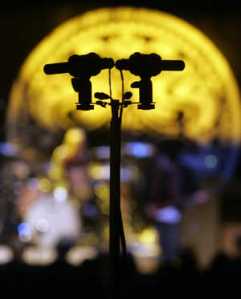
mic-standBy Joel Francis
The
Kansas City Star

Michael Lindsey looks like any other unassuming music fan, but he’s pretty easy to pick out at a concert. He’s usually standing near the soundboard with an 8-foot mic stand.

A lot of people go to live shows to relax or as a hobby, but Lindsey goes to record what he sees and hears. He’s one of a dozen music fans around Kansas City who call themselves Team Kansasouri, dedicating themselves to capturing and sharing concerts.

“My first exposure to taping was when I was downloading other concerts I had attended,” Lindsey said. “I was frustrated when I was at a show and couldn’t find it online later, so I started recording them myself.”

For Team Kansasouri, the live show is the ultimate demonstration of a band’s mettle.

“A good live recording has a certain vibe, emotion and energy you can’t find on a studio recording,” said team member Brian Price of Eudora. “Look at the later Phish albums. They’re purely academic exercises compared to the live versions.”

According to Clinton Heylin’s book Bootleg: The Rise and Fall of the Secret Recording Industry, some of the first fan concert recordings were made at New York’s Metropolitan Opera House in 1901. Taping reached the mainstream when it received the blessing of the Grateful Dead in the 1970s. While tape trading is very much part of the Dead’s culture, the hobby goes far beyond one genre.

And no matter the type of music that’s recorded, there is one steadfast rule: Shows should never be sold.

“I found a guy on eBay who had the Sting show I made in Columbia and was trying to sell it,” team member Joe Hutchison said. “I fought him all the way to the top and got his auctions shut down.”

Record labels sue fans for illegally downloading albums, but many bands see swapping concert recordings as free advertising.

“If the selling was prevalent, the bands would stop letting us record,” Price said. “Bottom line: Taping is a privilege, and we’re going to defend our privilege.”

Network on the road

Recording a concert is not for the faint of heart or pocketbook. Lindsey’s gear bag contains two microphones stored in a waterproof plastic container lined with anti-static foam. Cost: $900.

He also has an all-in-one rig with preamp and analog-digital converter. Cost: $900.

And there’s the tripod for the mics, an external battery pack, foam tips for the mics in case of wind, some cables (homemade) and a couple of pieces of just-in-case miscellanea.

“You can spend $10,000 on gear, easy,” Lindsey said. “The good news right now is that because of the economy a lot of guys are dumping their gear. If you’ve got the money, this is a great time to get into the hobby.”

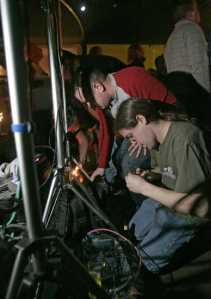
While the rest of the crowd cheers the band as it takes the stage, tapers are hunched over their gear making sure the recording levels and balance are right. Only after the first song and tape are “rolling” can they enjoy the show. Kind of. They must remain watchful of fans trying to steady themselves on a mic stand or fans whose voices could find their ways onto the recording.

“For some reason the mic stand is a beacon for drunks to steady themselves on,” Hutchison said. “You have to be vigilant about your stuff and not be afraid to push people away.”

Other elements can’t be controlled, like weather. Last summer several tapers planned to record the band moe. at an outdoor show but got caught in a 90-minute rainstorm. Most packed umbrellas to protect the gear.

“We got lucky that time because the rain was coming straight down,” Price said. If it were coming down sideways, he said, they would have been forced to shut down.

Getting through the doors with all that stuff isn’t as hard as you might think.

“At first you have to educate the manager that it’s a benefit to allow recording,” Price said. “You might want to print out the band’s taping policy from their Web site and bring it with you. Eventually they’ll come to recognize you and let you in.”

Musical history is being made

After the show, there is an unofficial competition to transfer the show from the recorder to the computer, separate each song into its own track and post the concert online as quickly as possible.

“I’ll be listening in bed at 3 in the morning excited at how good it sounds,” Price said. “But I have to be quiet because my wife is sleeping next to me.”

mic-2The Kansasouri tapers generally restrict their recordings to bands and venues friendly to taping. They document all their experiences — from where to set up at a given venue and what microphones to use to the soundman’s name — on taperssection.com, an overwhelmingly comprehensive Web site covering everything from how-to’s and gear reviews to garage sales on used equipment.

“It’s where our knowledge is passed down,” said Randall Phillips of Kansas City. “(The site has) stuff like taping methods and equipment used and other things you couldn’t learn in 10 years. If you run into a problem, someone else has experienced it and is waiting to help you online.”

Most important, it’s a social network. When tapers descended on Clinton Lake last June for the Wakarusa Music Festival, Price hosted a barbecue for everyone. And the same courtesy has been shown to him.

“If I travel to a show in St. Louis or been on vacation and gone to a show,” Price said, “there’s never been a time I didn’t run into somebody I knew.”

Aside from friendships, there are other often unexpected perks. Reggae singer Matisyahu gave out free tickets to tapers for his performance last summer. Other gifts are less conventional.

“I taped an Allman Brothers show from the balcony of the Uptown,” Hutchison said. “It was 100 degrees up there, but the show came out OK. I put it up and traded with a few people. A few weeks later, I got a box of Georgia peaches in the mail from an appreciative fan.”

But ultimate satisfaction comes from knowing a piece of musical history has been preserved.

“This is history for us,” Hutchison said. “We’re archiving it, creating documents of what happened on that night.”


IS IT ARCHIVED?
To find out if your favorite concert memories have been recorded use the search engines on the following Web sites. Keep in mind it may take some online digging to unearth your buried treasures.

http://btat.wagnerone.com

http://bt.etree.org

www.archive.org/details/etree

•To learn more about becoming a taper, go to www.taperssection.com and click on the first link, “where to begin.” More information is also available at www.flac.sourceforge.net.

Another tree falls in the forest

blendermarch2007cover

(Above: One of Blender’s classier covers, believe it or not.)

By Joel Francis

It was hard to muster any sympathy for Blender magazine when it was announced this week that the musical offshoot of Maxim the issue currently on newsstands will be its last.

Maxim rarely added anything of value to the musical discussion. Its biggest claim to fame was the steamy photos that adorned most covers. Inside, most of its coverage focused on musicians propped up by the hype machine. The magazine’s most reliable features were absurd lists (The 40 Worst Lyricists in Rock!), ridiculous features (Ask a Superstar) and product placements masquerading as articles (Lars Ulrich Reveals the Secrets Behind Guitar Hero Metallica).

If Maxim’s pandering approach is old news, then so is the reason for its demise: falling circulation. According to Alpha Media group, which bought Blender, Maxim and Stuff for $240 million in August 2007, paid subscriptions fell 8 percent in the past year while newsstand sales dropped 18 percent. Ad sales also suffered.

It would be easier to dismiss Blender’s demise if it weren’t happening to so many other magazines and newspapers as well. The Rocky Mountain News ceased publication in February; the Seattle Post-Intelligence went online only in March and Christian Science Monitor will follow suit in April. The News and Post-Intelligence had been around for 150 years, while the Monitor boasts over a century of history.

As newshounds and defenders of the Fourth Estate wonder how government and civic news will be reported during this dearth of outlets, music fans should ponder some of the same questions. In the past, magazines like Crawdaddy and Creem connected fans to the music they loved. Some, like Down Beat, Sing Out! and Rolling Stone are still around. Others, like Paste, Spin and Vibe, have more recently joined the fray.

But niche publications are not immune to industry trends. No Expression, which was to art what Blender was to cleavage, folded last year. According to a 2008 study conducted by the Project for Excellence in Journalism, in the past 15 years, overall magazine readership has declined and the median reader age has risen.

Although more people are willing to write about music than would volunteer to cover a city council, planning commission or school board meeting, it is still disturbing to see the number of voices in the marketplace dwindle. Can we trust bloggers to provide accurate, impartial coverage of the Live Nation/Ticketmaster merger, or the business woes and strategies of the major labels?

Music writing is more than album and concert reviews. Those are solitary experiences that only require some way to listen to music, taking notes and typing something up. True music journalism involves hitting the pavement, developing relationships with sources, forcing an interview and asking hard questions. Pazz and Jop polls, podcasts and running Motown commentaries are no substitute for this kind of reporting.

In other words, it’s one thing to know that the latest Radiohead album is amazing and that the tour is spectacular. It’s quite another to understand why the download costs $20 and the ticket “convenience fees” are 40 percent of face value (if you can find one the scalpers, er secondary market, hasn’t snatched up).

I’m not saying Blender performed or pretended to perform any of these functions. But when yet another outlet shuts down, it’s worth pondering the bigger questions.

Arguments over 78s still resonate in iPod world

(Above: Guy Lombardo urges listeners to “Get Out Those Old Records” in this ode to the 78.)

By Joel Francis
The Daily Record

Gallons of cyber-ink have been spilled over the wailing and gnashing of teeth that has accompanied the transition from CDs to iPods.

While I love the convenience of my iPod and cannot be more than a few yards from it without suffering from withdrawal, I also miss the anticipation of new-release Tuesdays that the old paradigm brought.

It is comforting to know, however, that ours is not the first generation of music fans to suffer format growing pains. While reading Gary Marmorstein’s “The Label,” an exhaustive history of Columbia Records, I stumbled on a passage about the poet Philip Larkin, who was furious that long-playing records were starting to replace his beloved 78s.

“When the long-playing record was introduced,” Larkin is quoted as saying in the book, “I was suspicious of it: it seemed a package deal, forcing you to buy bad tracks along with good at an unwanted price.”

Larkin’s displeasure with record labels trying to foist bad tracks on consumers by bundling them with good ones was chillingly prescient. The argument he made in the late ’40s was echoed nearly 50 years later when the labels abolished the single and hiked album prices.

Other mid-century music consumers were upset that the new 22-minute side made listening a passive experience. According to their reasoning, since you didn’t have to get up and change sides every five minutes, the music would just fade into the background.

While classical fans rejoiced that an entire movement could be contained on a single side, jazz fans were less enthusiastic. Many fans, Larkin included, felt that the time limit on a 78 was the optimal span for a group to have its say and leave before overstaying its welcome.

As Marmorstein writes: “Larkin associated the halcyon days of his youth with winding the gramophone and listening to 78s by Louis Armstrong. To Larkin, a single shellacked side was a gem, not these vinyl platters that played interminably.”

Unfortunately for Larkin, the LP not only caught on but was the dominant format for 40 years, when the CD took over. Although Columbia unveiled the LP in 1948, strange parallels still resonate today. The more things change ….