Review: Sly and Robbie

(Above: Sly and Robbie drop heavy riddim at Red Rocks in 2008.)

By Joel Francis
The Kansas City Star

If Robbie Shakespeare’s job as a musician fizzles, he could probably make a living bringing down buildings. Alongside rhythm partner Sly Dunbar, Shakespeare’s bass rattled the foundations of the Folly Theater for nearly two hours Saturday night.

Backed by the four-piece Taxi Gang, Sly and Robbie delivered their signature reggae sound, which has appeared on literally tens of thousands of records, encompassing everyone from Bob Dylan to Peter Tosh.

The night started with an instrumental that exceeded 20 minutes in which the musicians passed solos like a jazz combo. As the trombone and saxophone bridged the gap between Afro-beat and ska, the keyboards and guitar subliminally sparkled underneath. When the guitarist popped to the forefront he delivered solos that recalled Carlos Santana, displayed Eddie Van Halen’s two-finger tapping and went Jacques Cousteau on his wah peddle for a solo that sounded like it was played underwater.

Though they politely shared the spotlight, Sly and Robbie were never far from the forefront. Robbie’s bass was so loud it drowned out most of the vocals and probably registered on the Richter scale. Sly’s drums sat neatly on top, crisp, precise and articulate. Their playing wasn’t flashy, but their grooves spoke volumes.

The Folly was half-full at best, but the band worked the room like it was packed. Putting down his horn, the trombone player paced the stage leading the crowd in call and response. He delivered a great cover of LeRoy Smart’s “Ballistic Affair,” which featured Sly and Robbie on the original 1976 recording, and drew the biggest applause of the night with a reading of Bob Marley’s “Rastaman Chant.” The sextet slowed that number ever so slightly, accentuating the song’s gospel elements.

Though their playing was engaging, the music did get a little samey after about an hour. The echo-laden drums and behind-the-beat accompaniment typical of deep dub only hold so much room for exploration. Fortunately, a surprise appearance from singer Peter Gayle rescued the set.

Acting as if there were a secret ordinance against standing still, Gayle was constantly kicking his feet along with the beat, twirling his long dreadlocks or suggestively swinging his hips. His G-rated cover of Webbie’s “I Miss You” excited the crowd and the energy stayed high after he was gone.

The concert was part of the “Cyprus Avenue Live at the Folly” series, and came just one night after the ensemble’s performance at the Wakarusa Music Festival in its new home at Ozark, Ark.

The band opened their encore set with a cover of Tex Ritter’s Oscar winning ““High Noon (Do Not Forsake Me).” Robbie said this was their first time performing the number and the arrangement was little more than his vocals and Sly pounding out the Bo Diddley beat on his bass drum. They closed with “Welcome to Jamrock,” which after several minutes somehow morphed into a gentle jazz saxophone solo. After saying good night, half the ensemble left the stage. Seemingly oblivious, the saxophone and keyboard players and guitarist played on, lost in the rhythm.

Wakarusa Music Festival: A Look Back

wakarusa_05_c.sized

By Joel Francis

This weekend marks the first time Wakarusa will not be held at Clinton Lake near Lawrence, Kan. After establishing itself as a second-tier destination festival in 2004, Wakarusa has moved to Mulberry Mountain in Ozark, Ark.

The Daily Record covered the previous four incarnations of Wakarusa. Join us now in a look back at the festival.

2005 – Wakarusa grows in its second year, offering what may be its greatest lineup to date, including Son Volt, Wilco, Neko Case, Calexico, Big Head Todd and the Monsters, String Cheese Incident and a then-unknown Matisyahu. Promoters are rewarded with a turnout of about 15,000 fans each day, doubling the inaugural turnout. Read more Wakarusa 2005 festival coverage.

2006 – The third annual Wakarusa Music Festival gets off to a sour start when music fans are greeted with highway patrol drug checks near Clinton Lake. “Narcarusa” is further sullied when it is revealed police strategically placed infrared cameras around the festival grounds to catch drug activity. Despite these setbacks, the festival once again reaches its 15,000-fan daily capacity and features the Flaming Lips, Les Claypool, P-Funk sideman Bernie Worrell, Gov’t Mule, Robert Randolph and the Family Band and back-to-back sets by Camper Van Beethoven and Cracker. Read more Wakarusa 2006 festival coverage.

2007 – Security is toned-down, but Mother Nature rages with hard winds on Friday and Sunday rain during the fourth Wakarusa. Crowds are down to 12,000 fans each day, which might be a reflection of the festival’s most mediocre lineup. Michael Franti and Spearhead close out the festival and the lineup also includes Be Good Tanyas, Medeski, Martin and Wood, Widespread Panic and Ben Harper. Read more Wakarusa 2007 festival coverage.

2008 – Heavy rains capsize Wakarusa’s final festival to date at Clinton Lake. The downpour ends Friday’s sets prematurely and the swamp left inside most concert tents force fans to abandon shoes at the perimeter or in the muck. Further disappointment hits when Bettye LaVette, Dweezil Zappa and Emmylou Harris cancel performances. An return engagement with the Flaming Lips in addition to sets by Old 97s, Ben Folds, Alejandro Escovedo, members of the Meters, Ozomatli and a Friday afternoon infusion of hip hop from Blackalicious and Arrested Development still leave fans with plenty to love. Read more Wakarusa 2008 festival coverage.

Traveling Wilburys – “Inside Out”

(Above: The Traveling Wilburys turn “Inside Out.”)

By Joel Francis
The Daily Record

Their meeting was almost too serendipitous. Fresh off the success of “Cloud 9,” George Harrison and producer Jeff Lynne decided to record a b-side with Roy Orbison. When the entourage reached Tom Petty’s house to retrieve Harrison’s guitar, Petty insisted on accompanying the trio to their destination: Bob Dylan’s studio. Dylan was home, of course, and the quintet became the greatest supergroup ever: the Traveling Wilburys.

When the group reconvened two years later in 1990, a lot of the magic was gone. Orbison had died and the remaining members no longer had the element of surprise on their side. Indeed, expectations were set so high not even the century’s greatest songwriter, a former Beatle and a pair of hit-making disciples of both could live up to the standard.

Much of the Wilburys’ sequel, “Volume 3,” sounds forced and lacks the laidback organic vibe that made the first album such a delight. But they got it right in a couple places and “Inside Out” is a lost gem of the era.

Both the second song on “Volume 3” and second single released from the album, “Inside Out” is a transparent look at the Wilburys’ songwriting process and joy that manages to be greater than the sum of its considerable parts.

After opening with a chord progression that sounds like something off Petty’s then-recent “Full Moon Fever” album, Dylan delivers a verse that almost makes “Wiggle Wiggle” look like “Desolation Row.” But the lyrics aren’t that important. The song’s charm lies in the way Dylan’s verse slides into Lynne’s slick multi-tracked bridge that prefaces Petty’s catchy chorus. Oh, and just for good measure Harrison contributes a middle eight that rivals anything his ex-Beatle bandmates ever wrote.  All the ingredients are wrapped in Lynne’s signature production and over in three and a half minutes.

Like a jewelry store exhibit, everything is on open display yet just out of reach. “She’s My Baby” may have been the biggest single and “Wilbury Twist” the most memorable song, but nearly 20 years later, “Inside Out” still sparkles the brightest.

Contest: Win a pair of tickets to the Air Guitar Championship

(Above: This could be you – or one of your really drunken friends.)

Be it Jimi Hendrix with a broom stick or Eddie Van Halen and a tennis racket, every music fan has gone through an air guitar phase, whether he (or she) wants to admit it or not.

If you’ve kept practicing your air guitar moves or like to laugh at those who have, then make plans to be at the Record Bar, on Tuesday, June 9 for the Air Guitar Championships.

Tickets for the competition run $10 online (plus TicketBastard fees), but The Daily Record is giving a one of its loyal readers the chance to get in free.

Here’s how this will work: If you live in the Kansas City area and want to go, simply leave a comment for this entry describing your favorite air guitar song or greatest air guitar moment. Be sure to leave your e-mail address, because that’s how I’ll contact the winner to let them know they’ve won a two tickets to witness or participate in the Air Guitar Championships.

Originality counts, folks, so don’t inundate us with stories about “Eruption” and “Stairway to Heaven.”

The people throwing this competition are serious about finding the ultimate air guitar hero. Winners at the 23 regional showcases will have the chance to compete in the championship round this August in New York City. There they will be judged by reigning U.S. and World Air Guitar Champion “Hot Lixx” Hulahan (I know, but that’s what it says in the press release) and Daily Show correspondent Jason Jones.

For complete rules, videos and other information visit the Air Guitar Championships Web site.

Commence sending your stories … now!

Review: The Decemberists

(Above: “The Rake Song,” a standout cut from “The Hazards of Love.”)

By Joel Francis
The Kansas City Star

What you thought of Wednesday night’s concert by the Decemberists at the Uptown Theater is largely based on your opinion of the band’s latest release, “The Hazards of Love.”

The Portland-based lit-rockers played the album in its entirety during the first set of their 2-hour, 15-minute set. That meant fans who weren’t familiar with the record (or just wanted the old stuff) had to wait over an hour before the band gave them the goods.“The Hazards of Love” isn’t a standard catalog entry. It’s a full-on concept album that nearly buckles under its own weight. The story involves a woman in love with a changeling who lives in the forest and gets kidnapped by a jealous queen. Somehow an angry rake is also involved.

And while the Decemberists had hints of progressive rock in their music before, they have now embraced it completely. “Hazards” isn’t too far from the being the indie equivalent of “Tales of Topgraphic Oceans.” In other words, the evening needed a huge caveat before the first note was played.

But what a note it was. Organist Jenny Conlee took the stage alone pumping huge cords out of her B3 organ as her bandmates slowly joined her. The music shifted from acoustic numbers to heavy blues-based Black Sabbath riffs, country and canticles as different themes and characters were introduced.

To help with their production, the quintet enlisted Becky Stark of Lavender Diamond and Shara Worden of My Brightest Diamond to play the beau and queen. Both artists were committed to their roles. Stark wore an all-white, flowing princess dress and would sway back and forth and gently swing her arms when her character appeared in the plot. Worden, whose band opened for the Decemberists last time they were in town, succeeded in her efforts to look and sound sinister.

While delivering the unabridged “Hazards of Love” may not be the most palatable approach, in hindsight it is understandable. Each number was largely dependent on the songs around it. Only a few numbers might have stood alone.

“The Wanting Comes In Waves” has a great pop chorus that ultimately serves as the climax to the tale. “The Rake Song” found everyone on stage, save songwriter/frontman Colin Meloy and bass player Nate Query banging on small drum sets placed throughout the stage. The power of those four additional drummers brought the hammer of the gods to the song.

“Margaret in Captivity” was another highlight. Backlit by a huge white light, Stark looked ethereal as the band played an intriguing melody that unfortunately shared the same chord changes as Bon Jovi’s “Dead or Alive.”

Meloy’s “thank you” at the end of “Hazards” was his first acknowledgement of the audience. However, after the half-hour break, Meloy returned as his usual loquacious self.

The band came back sans Stark and Worden took their time delivering favorites from across their catalog, stopping to tell jokes, organizing sing-alongs, explaining their songs and goading the audience. Before they played “Oceanside” Meloy explained what an ocean is because “I know that many of you have never seen an ocean. It’s much bigger than your muddy Missouri (River).”

Nearly every song in the second hour was greeted with big applause and loud singing. The crowd especially got into “Dracula’s Daughter,” the unreleased number Meloy called his worst song ever. That flowed right into “O Valencia,” which got the biggest response of the night.

At the end of “Valencia,” Worden and Stark snuck back onstage as a single spotlight focused on Meloy playing a familiar Spanish-tinged solo on his acoustic guitar. Suddenly the stage lit up and the rest of the band hit the riff to Heart’s “Crazy On You.” Worden and Stark threw themselves into their new roles as Ann and Nancy Wilson, showing off some great rock and roll pipes.

The encore kicked off with Meloy delivering a solo acoustic reading of the love song “Red Right Ankle.” That was followed by “A Cautionary Song,” which found everyone but Meloy, Query and Conlee parading through the audience with drums, tambourines and other percussion. Somehow Meloy orchestrated that maneuver into a lighthearted restaging of “Lawrence of Arabia.”

Whatever. Anyone who sat through an hour of music involving a rake and bought a ticket for something the band called “A Short Fazed Hovel Tour” was definitely up for anything thrown at them.

Setlist: The “Hazards of Love” album. Intermission. Oceanside; July July!; Billy Liar; We Both Go Down Together; The Engine Driver; The Sporting Life; Dracula’s Daughter; O Valencia; Crazy On You; Encore: Red Right Ankle; A Cautionary Song

Jay Bennett, Always In Love

(Above: Jay Bennett and Jeff Tweedy perform the unreleased Wilco song “Cars Can’t Escape.”)

By Joel Francis
The Daily Record

When I first heard Jay Bennett had been fired from Wilco back in 2001, I was worried the band had just lost their secret weapon. Jeff Tweedy may have been the wordsmith and idea man, but Bennett was the artist who polished those ideas to perfection.

Bennett died in his sleep May 24. He was 45 years old.

Bennett’s presence was felt from the moment he joined Wilco in 1995. Tweedy was still trying to crawl out from the shadow of Uncle Tupelo and establish his identity independent of his Tupelo cohort (and rival) Jay Farrar. Bennett’s presence on the band’s second album, “Being There,” added a new dimension to the arrangements and production.

“Summerteeth” is arguable Wilco’s finest hour and definitely the perfect product of the Tweedy/Bennett vision. For each of Tweedy’s dark moments, like “She’s A Jar” or “Via Chicago,” there are the sun-drenched pop anthems of “Nothing’severgonnastandinmyway(again)” and “I’m Always in Love.” Wilco’s music has never been happier and more optimistic than it is on “Summerteeth.” For proof, check out the opening riff in the title song. “Summerteeth” the song is the musical equivalent of a gentle breeze caressing the backyard hammock, or those Corona beach commercials.

Bookending the recording of “Summerteeth” are two albums using unused Woody Guthrie lyrics recorded with British folker Billy Bragg. Bennett’s touch is felt across both volumes of the “Mermaid Avenue” material; “Secrets of the Sea” and “Hoodoo Voodoo” continue that “Summerteeth” vibe.

Wilco’s next album, “Yankee Hotel Foxtrot,” famously found the band in transition and butting heads. But if “I Am Trying to Break Your Heart” and “I’m the Man Who Loves You” point to the band’s future without Bennett, “Jesus, etc.” and “Heavy Metal Drummer” still held plenty of Bennett’s sunny, radio-friendly magic.

Although Tweedy continued building critical acclaim and growing his fan base after “Foxtrot,” Bennett was not as successful on his own. That Bennett was working as a VCR repairman prior to joining Wilco says a lot about his craft. Bennett was a tinkerer, one who was best improving and polishing other’s creations. Left to both build and execute, he struggled.

Despite this, Bennett’s four solo albums still have merit. His first post-Wilco release, a collaboration with Edward Burch called “The Palace at 4 a.m.,” has a remake of the “Summerteeth” track “My Darling” that may top the original. This album and the two that follow it have more unused Guthrie material which makes for a nice “Mermaid Avenue” post script. (The post script continued this year with Wilco’s release of Guthrie’s “Jolly Banker.” Hopefully a “Volume Three” will appear sometime.) Bennett’s limited singing ability can grows wearisome across these releases, his production never does.

Bennett’s most complete solo statement was his second-to-last album, 2006’s “The Magnificent Defeat.” The second word in the title should be given more emphasis than the third. Bennett’s lyrics and delivery have a bit of Elvis Costello anger to them, but the fun he had putting the album together jumps out the speakers and makes for an infectious listen.

Today, Tweedy and bass player John Stirratt are all that remain of the Wilco lineup that brought us “Summerteeth” and “Being There.” But every time the band launches into “She’s A Jar” or “ELT” – as they frequently do – a little bit of Jay Bennett will be smiling on the audience. And they’ll be smiling back.

Keep reading:

Wilco Wows At Crossroads KC

Wakarusa Music Festival (2005)

Holiday Marketing Can Reveal Bands’ Inner Grinch

Piano Men: Dave Brubeck, Dr. John and the Jacksonville Jazz Festival

(Above: The Night Tripper gets “Qualified.”)

By Joel Francis
The Daily Record

While in Jacksonville, Fla. this past weekend for a wedding, I was able to sneak away from my duties as a groomsman long enough to check out the Jacksonville Jazz Festival. On Friday night I arrived in time to catch the last half of the Dave Brubeck Quartet’s performance witht St. John’s River City Band. The local big band was well-prepared and sounded great, but their charts didn’t add much to the two songs I heard. “Blue Rondo a la Turk” was perfect the way Brubeck, Paul Desmond and company recorded it 50 years ago. It was interesting to hear the arrangement augmented with a battery of brass, but they certainly didn’t add anything new to the number.

The River City Band’s contribution to set closer “Take Five” fared better, if only because the structure of Brubeck’s signature song is more elastic. Brubeck has been required to end every night with this number for decades, yet he keeps finding new ways to interpret this song and keep it fresh.

Brubeck, who was supported by sax man Bobby Militello, drummer Randy Jones and his son Chris Brubeck on electric bass, reportedly played for about an hour, but we were lucky to even get that much. During his set, the conductor of the St. John’s River City Band announced that Brubeck had been hospitalized in March and put extra time in rehab to be in shape by May and fulfill his date in Jacksonville.

Dr. John took the stage after a short break. Backed by a guitar/bass/drums trio dubbed the Lower 911, his set was considerably louder but no less spirited that Brubeck’s. Opening with “Iko Iko,” John strolled through his catalog, treating the audience to “Makin’ Whoopee,” “Tipitina,” “Junco Man,” “Accentuate the Positive,” “Right Place, Wrong Time,” and several songs off his latest album, “The City that Care Forgot,” an angry diatribe against the government’s treatment of his native New Orleans during Hurricane Katrina.

As evidenced in the song listing above, John pulled heavily from his early ‘70s stint on Atlantic. The highlight of these tunes was “Qualified,” a lesser-heard, energetic album cut off “In the Right Place.”

Because of the perpetual heavy rains that have peppered Jacksonville for the better part of May, Friday night’s shows were delayed and pushed indoors to the Times-Union building. The facility has two stages; the auditorium Brubeck and John shared was about the size of Yardley Hall at Johnson County Community College. Although the balcony was closed, the floor was packed, giving Brubeck a slightly larger audience than the one he played to in Kansas City last fall at the Folly Theater. John must have been pleased with the turnout, which was considerably larger than the crowds he usually plays to at the Beaumont Club.

The explanation for the crowd size lies in the Jacksonville Jazz Festival’s dirty little secret: it’s free. Although the festival featured names like Simone, Chris Botti, Stanley Clark, former Miles Davis drummer Jimmy Cobb, Roberta Flack and Bill Frissel scattered on four outdoor stages throughout downtown, the art, beverage and food vendors were the only people asking for money.

Their demographics don’t pefectly align, and Jacksonville’s metro population of 1.3 million makes it about a half a million people smaller than Kansas City. It is frustrating to see Kansas City unable to support and sustain paid events like the Rhythm and Ribs Festival and Spirt Festival while free shows like Jacksonville’s Jazz Festival flourish. What would it take to see a similar event take root and become an annual highlight in Kansas City? Perhaps we should pick some of Jacksonville’s brightest minds to find out.

The Elgins – “Heaven Must Have Sent You”

elgins heaven

The Elgins – “Heaven Must Have Sent You,” Pop #50 , R&B #9

By Joel Francis

I suspect that if you took this single and replaced the word “Elgins” with “Supremes” and gave it to DJs with no other changes, it would have been a far bigger hit.

Not that Saundra Edwards’ voice sounds like Diana Ross’ – Edwards’ has more depth and fullness – but the Holland-Dozier-Holland team that cranked this number out sure cribbed it in the same production and arrangement that sent all the Supremes material to the top of the charts.

Unfortunately, Edwards wasn’t Ross and the Elgins weren’t the Supremes. Frustrated by her lack of success at Motown – Edwards recorded two songs for the label in 1962 as Saundra Mallett and the Vandellas – left the group shortly after the group recorded their only full-length platter. The Elgins briefly carried on with Yvonne Allen in Edwards’ place, but disbanded in 1968.

Although it had little impact at the time, “Heaven Must Have Sent You” finally became a Motown pop hit in 1979 – for disco singer Bonnie Pointer, the youngest of the Pointer Sisters. Spurred by this hit, though, the Elgins regrouped in the 1980s. Although there was only one original Elgin in this lineup, the group toured and re-recorded “Heaven Must Have Sent You.” Edwards also cut a solo album in the early ‘80s with the same producer the Elgins were using at the time.

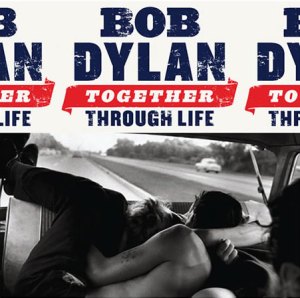
“Together Through Life” is a minor masterpiece

ttl

By Joel Francis

After delivering three “important” albums in the past dozen years, it’s nice to know Bob Dylan can make an album without making a statement.

“Together Through Life” feels like an afternoon drive through a dusty Texas border town with the windows rolled down. Much of that feel comes from the ubiquitous accordion played by David Hildago of Los Lobos. Lyricist Robert Hunter – who co-wrote all but one of “Life”’s tunes with Dylan and is best known  for writing “Casey Jones” and other songs with the Grateful Dead – deserves some credit for the record’s lack of ponderousness.

But lack of weight doesn’t equal a lightweight record in this case. The album is a cousin to “New Morning,” a solid, offering that is overshadowed by the albums surrounding it and filled with songs Dylan recorded because he wanted to, not because he had something to say.

Sonically, the album is cut from the same cloth that has defined Dylan’s previous ‘00’s offerings. It is a pastiche of Chess blues, Sun Records country and rock and pre-war pop. While there’s nothing as sunny as “Silvio,” a track Dylan and Hunter collaborated on 20 years ago, there’s also nothing as forgettable as “Ugliest Girl in the World,” the other fruit borne of that union.

Guitarist Mike Campbell from Tom Petty’s Heartbreakers adds light acoustic guitars and mandolin to most tracks, but drops a murky electric guitar reminiscent of Neil Young on “Forgetful Heart.”  Lyrically the song resembles the material for “Time Out Of Mind,” right down to the dark lyrics: “The door has closed, if indeed there ever was a door.”

While Dylan albums are rarely sunny endeavors, the gloom of “Forgetful Heart,” and the sarcasm of “It’s All Good” are broken by upbeat numbers like “Jolene” and “Shake Mama Shake” – both of which sound like they came from the Chess Studios at 2120 S. Michigan Avenue circa 1958. The tongue-in-cheek “My Wife’s Hometown” might be Dylan’s funniest number since his knock-knock joke in “Po’ Boy “ while “I Feel A Change Coming On” has a twilight optimism.

Fans have grown accustomed to waiting nearly five years between new offerings. “Together Through Life” is surprise arrival little more than two years after “Modern Life.” “Life”’s runtime of 10 tracks and 45 minutes and lack of “statement song” like “Highlands” or “Ain’t Talkin’” make a tempting case to write the album off as a lesser work. Although it will never measure among the first-tier cannon, those who dismiss it do so at their own folly.

Temptations – “Beauty Is Only Skin Deep”

tempt beauty

Temptations – “Beauty Is Only Skin Deep,” Pop #3, R&B #1

By Joel Francis

After teaming to give the Tempts a No. 1 R&B hit with “Ain’t Too Proud To Beg,” Norman Whitfield and Eddie Holland paired again to deliver “Beauty Is Only Skin Deep,” which fared even better. The song was the Temptations’ third hit of 1966 and fifth consecutive R&B No. 1, dating back to 1965’s “My Girl.”

After a sharp blast of horns and drum roll from “Pistol” Allen, the song drops to a tinkle of glockenspiel that would make Bruce Springsteen proud and slowly builds, with a crescendo at the chorus. There’s a whisper of guitar and the rumble of James Jamerson’s bass, but Paul Riser’s arrangement is essentially David Ruffin and the Tempts’ voices, horns – complete with trumpet solo! – and that magnificent snare. It was more than enough.

Contrast the prominence the other Temptations are given with their backing performance in this song to the anonymity Mary Wilson and Florence Ballard of the Supremes were often given. As part of the Holland-Dozier-Holland team, Eddie Holland certainly knew how to write and arrange interesting counter-vocals. It makes one wonder how much influence label owner Berry Gordy exerted to push Diana Ross to the front and minimize the contributions of her bandmates.

Although the title seems enlightened, few women would regard a lyric like “A pretty face you may not possess/ But what I like about it is your tenderness” as a compliment.

Whitfield actually recorded the song’s backing track two years before he added the Temptations’ vocals. In the interceding time he shopped it to several Motown artists, including David Ruffin’s brother, Jimmy, and the Miracles, who included their version on the “Away We Go-Go” album. (Never one to miss a trend, Gordy also released “The Supremes A Go-Go” album in that same summer of 1966.) The Ruffin and Miracles versions are the only substantial covers of the song on record to date.