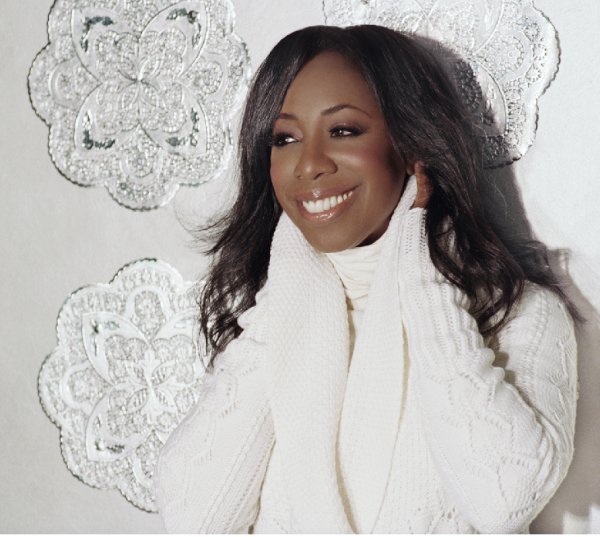
Review: Oleta Adams

(Above: “Get Here” brought down the house at Oleta Adams’ recent homecoming concert in Kansas City, Mo.)

By Joel Francis
The Kansas City Star

Oleta Adams took the stage of Gem Theater on Saturday night with a smile and an apology.

“I’m sorry I’m dressed this way,” she said, wearing a stunning, strapless, turquoise dress. “I thought it was supposed to be spring.”

It would take more than a dumping of out-of-season snow to keep the nearly full house from seeing its hometown girl. For more than two hours, the singer, who was a staple of the local jazz scene in the 1980s, indulged them with stories, a wide selection of songs, and surprises.

The evening got off to a rocky start. Adams’ piano was initially buried in the mix. The drums, played by her husband John Cushon, and keyboards, played by Kansas City native Everett Freeman, Jr., overshadowed everything. The songs were played at a level reserved for noisy clubs or large theaters, not a respectful group in an acoustically sound room.

Adams’ powerful voice, however, would not be derailed by the sonic disarray. After opening with “Feelin’ Good,” the first of several cuts from her latest album, she led her four-piece band into “New York State of Mind.” By the time she got to the reworked bridge that ushered in a lengthy guitar solo, the song bore little resemblance to Billy Joel’s hit. “I Just Had to Hear Your Voice” displayed Adams’ dynamic range. The lyric-heavy melody found her working the verses in a lower register before opening up and soaring on the chorus.

After 40 minutes, Adams announced a short break. It felt premature, but the timing couldn’t have been better. When the group returned 30 minutes later, the sound issues had been resolved. Balance had been restored and instruments were complementing instead of competing. The always-upbeat Adams seemed happier with the situation, too. During “My Heart Won’t Lie” she held onto a note with a phrasing that recalled Nina Simone and drew big applause.
The biggest cheers of the night, however, didn’t go to Adams. After playfully introducing her band, Adams informed the audience that the mother of her bass player, Jeanne Arland Peterson, was sitting in their midst. With the spotlight focused on Peterson, Adams was able to coax her to come onstage.

Peterson looked fragile making her way up the steps, but spring to life behind Adams’ grand piano. After a breathtaking solo, Peterson launched into “All the Things You Are” with her son, Paul Peterson, and Cushon. The impromptu trio sounded like they’d been playing together for years (and, I suppose, two-thirds of them had). When the 88-year-old pianist wanted to hear a solo, she raised her left hand and shot her index finger at the musician in question as if holding a gun.

Once the massive standing ovation died down, Adams joined the trio for a romp through “More Than You Know.” Peterson’s hands slid across the keyboard with gusto and inspired Adams’ best performance of the night.

Clearly excited to be playing again in her adopted hometown, Adams relished talking with the crowd as much as performing. She sang the praises of the 18th and Vine District, and recalled her days playing at the Signboard Lounge in Crown Center.

“My favorite moment every night,” Adams said, “was waiting to see who got beat up in the bathrooms.”

Fights, Adams remembered, sometimes broke out because someone didn’t applaud the right way. Adams also told of a police detective who frequented her gigs. When someone would start talking too loudly, he would start polishing his badge, hinting at what might happen if the chatter didn’t stop.

“I always had the most dedicated fans,” she said, laughing.

The night ended with what Adams said she called the “fourth set” back in her Signboard days. After hinting at her gospel roots in the first set by prefacing “No Way To Love Me“ with I Corinthians 13, Adams took the assembly to church with a powerful one-two of “If You’re Willing” and “Holy is the Lamb.” Both songs were from Adams’ 1997 gospel collection “Come Walk With Me” and fans voiced their pleasure by clapping along and shouting amen.

The poignant “Long and Lonely Hours” is part of a new collection of prayers set to song that Adams hopes will be her next album. The invocation was written after her mother died after spending five months in the hospital, and deals with the feelings of abandonment, awkwardness and, ultimately, acceptance, one feels alone at night in the hospital.

Adams wouldn’t let the night end on a dark note, so she immediately sprang into “Get Here.” Fans burst into applause at the opening chord of her most famous number and several cried out with excitement. Expectations can be high for homecoming shows, but it was clear from the closing ovation that Adams had met them all.

“Tonight,” the woman sitting next to me said, “we got our own jewel, right here at the Gem.”

Setlist: Feelin’ Good; New York State of Mind; I Just Had To Hear Your Voice; I Hope You Dance; Picture You the Way That I Do; Circle of One. Intermission. The Power of Sacrifice; Let’s Stay Here; My Heart Won’t Lie; All The Things You Are (ft. Jeanne Arland Peterson); More Than You Know; If You’re Willing; Holy is the Lamb; Long and Lonely Hours (solo); Get Here.

Keep reading:

Review: Kind of Blue turns 50

Review: Sonny Rollins

Buck O’Neil: Sweet times, sweet sounds at 18th and Vine

15 jazz greats to emerge in the last 20 years

A Cowboy’s Sweetheart

(Flora Keller’s favorite song was Patsy Montana’s 1935 hit “I Want to be a Cowboy’s Sweetheart.”)

By Joel Francis
The Daily Record

In the corner of my record collection is a heavy black album. The spine is falling apart and the cover shows signs of mold. The thick pages hold aged 78s by Jimmie Rodgers, Hank Williams, Jimmy Webb, Kitty Wells and other old-time country favorites.

These heavy platters are all that’s left of my wife’s great grandmother’s personal music collection. The pistol-packin’ mama ran a bar and caroused around Marshall, Mo. for a spell in the 1960s. Although the singles in the album were released long after my wife’s grandma moved out, they were also the basis of her lifelong love of country music.

Flora Bullard was born Aug. 14, 1930, in Marshall. She was barely a teenager when her  father took the family tto San Francisco so he could work in the shipyards during the war. A few months after the family returned to Marshall, the 14-year-old Flora caught the eye of Virgil Keller, who was eight years her senior. The pair was married when she was 15; nine months later they had their first child.

Jobs were scarce, so Virgil re-enlisted in the early ‘50s and was sent to Germany for three years. When he was called to Ft. Leavenworth, the family permanently relocated. After an honorable discharge Virgil reported to the Kansas State Penitentiary (now Lansing Correctional Facility) where he worked as a corrections officer for 20 years. (Cool fact: Virgil was present the night Perry Smith and Dick Hickock of “In Cold Blood” notoriety were hanged.)

My wife's late grandmother bore a striking resemblence to Kitty Wells (above) in her later years.

Of course all of this happened long before I came onto the scene. When I arrived, Virgil had been dead for several years, and Flora would not be keeping house in Leavenworth much longer. A few weeks before my first Christmas with the family, I downloaded a collection of country Christmas songs. This wasn’t Brooks and Dunn, Faith Hill or what passes for country music today. These honky-tonkin’ tunes were loaded with so much twang you could feel grit forming between your teeth after a couple songs. Everyone in the house hated it. Flora loved it, which was good enough for me.

After an automobile accident accelerated her Alzheimer’s and necessitated her placement in the Tonganoxie Nursing Home, my wife and I would take her on day trips to Lawrence. Traveling U.S. 24/40 on the road to and from the home, she’d tell us stories about hanging outside of theaters in San Francisco, hoping to catch a glimpse (or more) of Hank Snow, Ernest Tubb and other country stars of the day.

The two hallmarks of Flora’s favorite country songs were steel guitars and yodeling. She couldn’t play guitar, but she could yodel with the best of them. When my wife was a young girl, Flora taught her how, a talent that sadly did not take. Though my wife couldn’t sing with her, Flora was happy to yodel on her own (or with her youngest daughter). Her favorite song was Patsy Montana’s 1935 hit “I Want to be a Cowboy’s Sweetheart.”

Whenever she sang, I was transported to a dusty, one-horse town on the plains during the Depression. I imagined the family singing together to escape the bone-numbing hard work that needed to be done to make ends meet. I imagined someone out of a Frank Capra movie running into the room with a telegram inviting everyone to see the Carter Family that night in a big tent in the middle of an even bigger field.

I’ll have to dream even more now. Flora Keller died Tuesday morning, surrounded by her two daughters and three grand-daughters as they drank beer and toasted the good times. A smoker for 40 years, Flora kicked the habit cold turkey several decades ago, but not before her lungs were irreparably damaged. Now that she is free of her body, she is once again reunited with her Cowboy, forever his sweetheart.

Review: Experience Hendrix

(Above: Jonny Lang and Aerosmith’s Brad Whitford blaze through “Fire.”)

By Joel Francis
The Kansas City Star

The lineup for Tuesday’s Experience Hendrix concert at the Uptown Theater seemed to set up a joke: How many guitarists does it take to pay tribute to the most celebrated axeman of all time? The answer: Fourteen, including half of Los Lobos, all of Living Colour, a pair of virtuosos, a handful of bluesmen and several contemporaries.

HENDRIX_FY_031610_CGO_002F
Bass player Billy Cox met Jimi Hendrix while the two were in the Army. He is the last living musician from any of the bands Hendrix lead.

Billy Cox, the Band of Gypsys bass player and Jimi Hendrix’ last living band mate, opened the night with a heartfelt thank you and romp through “Stone Free.” Backing him on drums was Chris Layton, better known for his time backing Stevie Ray Vaughan in Double Trouble, and Ernie Isley of the Isley Brothers. The star-power of the opening lineup may have had the loaded house drooling over their guitar magazines, but they didn’t have long to revel.

Every 20 minutes or so, another pairing of musicians emerged, each seeming to emphasize a different aspect of Hendrix’ music. His rhythm and blues roots came out in Living Colour’s set, while members of Los Lobos paid tribute to his roots and Kenny Wayne Shepherd emphasized the rock star angle.

Jonny Lang’s performance of “Fire” was the first explosive moment of the night. Backed by Brad Whitford of Aerosmith and a vivacious chorus of singers, Lang’s feverish vocals and impassioned playing drove the crowd to their feet. Whitford was finally able to emerge from the long shadow of his Aerosmith band mate Joe Perry as he and Lang traded solos.

Lang’s set was followed by Kenny Wayne Shepherd’s explosive interpretation of “Voodoo Child (Slight Return).” Knowing his boss was about to burn down the fret board, singer Noah Hunt, who also sings in the Kenny Wayne Shepherd Band, abandoned the stage after completing his verses. Alone onstage, save the rhythm section of Layton and Scott Nelson, Shepherd struck about every rock star pose imaginable as he soloed endlessly to the rapture of the crowd.

Susan Tedeschi was the lone intruder into this guy’s night out. Although she wasn’t given a set of her own, each of her frequent guest appearances was inspiring. Her singing on “One Rainy Wish” added an earthy sensuality and vulnerability to Hendrix’ lyrics, and her tasty guitar solos were a welcome relief from the pyrotechnics.

The night’s two dozen songs spotlighted classic rock staples “Purple Haze,” “Foxy Lady” and “The Wind Cries Mary,” and also unearthed some deeper treasures. Cox celebrated the guitarist he met in the Army with “Message of Love,” a song he a Hendrix recorded on the “Band of Gypsys” album. Eric Johnson embraced Hendrix’ love of unusual textures with the deep cut “House Burning Down.”

Robert Randolph and Sacred Steel brought new life into “Purple Haze.” The result wasn’t too different from what Randolph’s Family Band typically serves up, but the playing was much more elastic bouncing between the trio of steel guitars. Eric Johnson enlisted three drummers to help summon the heavy, drugged feel on “Are You Experienced.” Later, Joe Satriani had no trouble coaxing alien sounds from his guitar during “Third Stone From the Sun.”

Midway through the set, guitarist emeritus Hubert Sumlin emerged to represent the pre-Hendrix guitar world. Backed by Tedeschi, and Cesar Rosas and David Hildago of Los Lobos, Sumlin showed none of his 78 years powering through “Killing Floor,” a song he originally cut with Howlin’ Wolf for Chess Records in 1966.
HENDRIX_FY_031610_CGO_001F
While all the expected heavy hitters drew big responses, some of the evening’s best moments occurred during songs Hendrix didn’t write. Robert Randolph and Sacred Steel teamed with Cox and Living Colour singer Corey Glover for a jubilant gallop through Buddy Miles’ “Them Changes.” Cox tried to end the number, but Randolph wouldn’t let it stop, motivating Glover’s fervent yelps with his riffs. Early in the night, Isley’s unaccompanied incorporation of “Amazing Grace,” mostly played with his teeth, brought back shades of Woodstock.

After every trick and novelty had been exhausted, Cox returned to the stage and closed the night with the blues staple “Red House.” When all the performers were brought out for a final bow, they extended nearly all the way across the stage. Evidently it takes a lot of bodies to fill some very big shoes.

PROGRAM
Stone Free – Billy Cox, Ernie Isley
Message To Love – Billy Cox, Ernie Isley
Manic Depression > Amazing Grace – Ernie Isley
Power of Soul – Living Colour
Crosstown Traffic – Living Colour
House Burning Down – Eric Johnson
Bold As Love – Eric Johnson
One Rainy Wish – Eric Johnson, Susan Tedeschi
Are You Experienced – Eric Johnson, Will Calhoun
Fire – Jonny Lang, Brad Whitford
The Wind Cries Mary – Jonny Lang, Brad Whitford
Spanish Castle Magic – Jonny Lang, Brad Whitford, Susan Tedeschi
I Don’t Live Today – Kenny Wayne Shepherd, Noah Hunt
Come One – Kenny Wayne Shepherd, Noah Hunt
Voodoo Chile > Voodoo Child (Slight Return) – Kenny Wayne Shepherd, Noah Hunt
Can You See Me – David Hildago, Cesar Rosas
Little Wing – David Hildago, Cesar Rosas
Killing Floor – Hubert Sumlin, David Hildago, Cesar Rosas, Susan Tedeschi
Purple Haze – Robert Randolph and Sacred Steel
Them Changes – Robert Randolph and Sacred Steel, Billy Cox, Corey Glover
Third Stone from the Sun – Joe Satriani, Corey Glover, Doug Wimbish, Will Calhoun
Foxy Lady – Joe Satriani, Living Colour
All Along the Watchtower – Joe Satriani, Living Colour
Red House – Billy Cox, Joe Satriani, Brad Whitford, Robert Randolph, Will Calhoun

Note: Except when replaced by Living Colour or Billy Cox, Chris Layton and Scott Nelson played drums and bass. The Sacred Steel is Robert Randolph, Darick Campbell and Aubrey Ghent. Living Colour is Will Calhoun, Corey Glover, Vernon Reid and Doug Wimbish.

Keep reading:

Rock Hall celebrates the 40th anniversary of Woodstock

Review: Buddy Guy

Review: Los Lobos

Review: Chickenfoot

Review: Robert Randolph and the Family Band

Review: The Original Wailers

(Above: “We and Dem” was one of several new cuts the Original Wailers performed in Kansas City.)

By Joel Francis
The Kansas City Star

New material can be problematic for established acts. At a Kemper Arena concert several years ago, Elton John apologized for playing new songs and promised the he’d get to the hits as quickly as possible.
The Original Wailers took the opposite track Friday at the Voodoo Lounge, making several tracks from their upcoming album the centerpiece of the show. The gamble paid off.

Bob Marley casts a long shadow over all reggae acts, but the Original Wailers are especially stricken: Their two guitarists, J unior Marvin and Al Anderson, played with Marley on some of his greatest albums, including “Exodus” and “Uprising.”

The seven-piece band didn’t overlook those moments, but it was clear they want to be remembered as something more as well. After introducing themselves with a trio of Marley numbers, they dove into several songs from the as-yet unreleased album “Justice.”
Wailers1
Even though the crowd couldn’t sing along, they didn’t seem to mind. Part of this had to do with band’s enthusiasm for the numbers. It was evident they were happy to be playing their new creations, and as a result the performances bounced a little bit higher. The other reason is that the songs maintained several of Marley’s hallmarks, like socially conscious, yet upbeat lyrics underlined by gospel organ lines and subtly textured guitar parts.

“Blackbird Fly” was dedicated to the late Joseph Hill from Culture and floated as effortlessly as its title implied. “Backslider” was a song about hypocrites in the vein of “Who the Cap Fit,” and “We and Dem” featured a nifty dub bass-and-drum breakdown.

After several new songs, Anderson declared the band would take a request. There were shouts for “I Shot the Sheriff” and “No Woman No Cry.” Both were good suggestions; neither was played. Instead, the band played another new number, “What’s Love Supposed To Do.” It might have been a cruel trick, but the poppy number kept everyone dancing happily.

Marvin and keyboard player Desi Hyson shared vocal duties. The pair were as much educators as entertainers, pausing between tracks to frame each song. The song “Justice” was prefaced by a quote from founding Wailer Peter Tosh, which drew a big cheer.

The band didn’t deliver a big Marley hit until nearly halfway through the two-hour show. The Voodoo Lounge wasn’t close to full, but just about everyone in the place ran onto the dance floor during the opening chords of “Three Little Birds.” A more obscure cut “Heathen,” also from the “Exodus” album, kept the floor crowded thanks to Anderson and Marvin’s extended solos. A master of feel, Anderson added touches of Latin, psychedelica, blues and even metal into the songs.

After introducing “Jammin’” the crowd didn’t need an incentive to stick around, but Marvin gave them one anyway, leading them through dance steps, hand claps and a call and response. Anderson added a weird, dissonant blues riff to the mix that didn’t seem to fit but somehow worked. As the band worked the groove, backing vocalist Erica Newell, spurred on by fans near the stage, unleashed her funkiest dance moves of the night.

Wailers2After a brief break, Anderson resumed the stage alone, playing a guitar solo that recalled Jimmy Page’s “White Summer/Black Mountainside.” Eventually joined by drummer Paapa Nyarkoh, the rest of the band fell in as he slid into the familiar intro to “Redemption Song.” The performance had a hymn-like solemnity until Marvin kicked it into doubletime, reworking the last verse into a ska number.

The night ended with a 15-minute romp through “Exodus” that wouldn’t quit. After jamming through all the verses, Nyarkoh took a drum solo that didn’t slow the dancing by a single step. Marvin eventually regained the stage, but the band wouldn’t stop, working the groove tighter and tighter as Anderson took a long solo. At this point there were two options: continue playing the number for the rest of the night, which no one on stage or in the crowd seemed to mind, or break it off immediately. Realizing the band had an upcoming gig and the audience may have weekend plans, Anderson chose the latter. If he hadn’t we might all still be dancing.

Setlist: Natty Dread, Rastaman Vibration, Forever Loving Jah, Solution, We Are the Children, Backslider, Justice, Pimper’s Paradise, We and Dem, Blackbird Fly, Three Little Birds, Heathen, What Love’s Supposed To Do, Jammin’. Encore: Al Anderson guitar solo > Redemption Song, Exodus/drum solo.

Keep reading:

Original Wailers keep promise to Bob Marley

Review: Toots and the Maytals, the Wailers

Review: Sly and Robbie

Review: Lee “Scratch” Perry

Original Wailers keep promise to Bob Marley

(Above: The Original Wailers perform Bob Marley’s classic “No Woman No Cry,” in 2008.)
By Joel Francis
The Kansas City Star

Guitarist Junior Marvin’s two musical heroes growing up: Bob Marley and Stevie Wonder.

And in a twist he couldn’t have dreamed of back then, both Marley and Wonder made competing offers for his services. It was Valentine’s Day, 1977.

Marvin had met Marley through Island Records president Chris Blackwell, who knew of Marvin’s work with Traffic in England. Wonder, meanwhile, saw Marvin play in the States with T-Bone Walker, Ike and Tina Turner and Billy Preston.

“I mean, how can you choose?” Marvin said. “Just getting a call from either of these guys was a dream come true, and I got calls from both on the same day.”

He sought the advice of friends and family and other musicians, he said.

“They said I had to go with the man who shared my heritage. I’m Jamaican, so I chose Bob Marley.”

Junior Marvin, left, with Bob Marley.

The timing couldn’t have been better. Marley and the Wailers were getting ready to record “Exodus.” Marvin’s distinctive guitar work was all over future classics “Jamming,” “One Love,” “Wait in Vain” and “Three Little Birds.” In 1999, Time magazine declared “Exodus” the album of the century.

“When Time wrote that, it was probably the proudest moment of my career,” Marvin said. “I am proud of that album. We all worked so hard on it. It was an honor to be selected over Michael Jackson and Stevie Wonder.”

In 1978, the Wailers produced the album “Kaya” and the hit “Is This Love.” The following year Marvin played on “Survival,” which united him with Al Anderson. Anderson, who had delivered the timeless guitar solo on Marley’s early hit “No Woman No Cry,” had left the Wailers in 1976 to work with Peter Tosh.

“I met Al while I was playing with T-Bone. He was working with Mary Young and playing on Island sessions at the time,” Marvin said. “One night I had a dream I would have the opportunity to play in a group with Al.”

Both Anderson and Marvin played with Marley until his death in 1981. Shortly after Marley died, they made a pact to continue performing as the Wailers.

“We spent time with Bob in Germany while he was ill,” Marvin said. “He asked us to keep the band together after he was gone. He made us promise to keep the standard of music high, but to create our own songs as well.”

Led by bass player Aston “Family Man” Barrett, the Wailers released three studio albums and three live efforts after Marley’s death. In 2008, the group collaborated with Kenny Chesney on a No. 1 country hit, “Everybody Wants to Go to Heaven.”

“That was a lot of fun,” Marvin said. “He was real down-to-earth. He was interested in our history and was even talking about the possibility doing a reggae album.”

Chesney shot the video for “Heaven” in Jamaica with the Wailers. The band appeared happy on tape, but trouble was brewing. Before the end of the year, Marvin and Anderson left the band.

“We looked up to Family Man as our leader, but when his girlfriend took over it became a John and Yoko kind of thing,” Marvin said. “It was like the other band members didn’t count. There were no rehearsals, and we were not represented financially.”

The guitarists felt the musical standards weren’t living up to their promise to Marley, so they struck out on their own as the Original Wailers. Despite boasting two lead guitarists, the division of labor in the Original Wailers is relatively simple. Because they overlapped on only a few albums, each man plays lead on the material where he originally appeared. As a lead singer before his stint in the Wailers, Marvin handles the vocals.

“Whenever we play, we explain the two Wailers to people,” Marvin said. “I think there’s room for all of us to coexist.”

Original Wailers shows, Marvin said, are about half Marley classics and half new material. This summer he hopes the Original Wailers will release their first album, “Justice.”

“We just got off a five-week European tour, and the reaction to the classics and the new songs was pretty much the same,” Marvin said. “Obviously more people were able to sing along to ‘Buffalo Soldier,’ but they were dancing and enjoying the new songs as well. We were thrilled to see that.”

Marvin said he feels Marley’s spirit in all the music he creates and has no regrets about choosing Marley over Wonder back in 1977. Besides, he got his chance to play with Stevie Wonder.

“I have a photo of me standing between Stevie and Bob singing ‘jamming in the name of the Lord,’ ” Marvin said. “It’s from when we played the first black music convention in Philadelphia for (Philly soul songwriters and producers Kenny) Gamble and (Leon) Huff. It was a proud moment to be standing on the same stage as those two men at the same time.”

Keep reading:

Review: The Original Wailers

Review: Toots and the Maytals, the Wailers

Review: Sly and Robbie

Review: Lee “Scratch” Perry

Review: David Gray

(Above: A 2006 performance of “Freedom” at Hammersmith Apollo Theater in London. When David Gray returned to the song at the Uptown Theater in Kansas City, it was one of several stand-out moments during the show.)

By Joel Francis
The Kansas City Star

David Gray rewarded a decade’s worth of patience Wednesday night at a sold-out Uptown Theater. The English singer-songwriter broke through in America with the release of his album “White Ladder” in 2000. Gray has released three additional albums since then, but this was his first performance in Kansas City.

The set stopped just shy of two hours, and drew almost exclusively from those albums, tipping slightly toward last fall’s “Draw the Line.”

The crowd didn’t need a reason to get excited, but Gray gave them incentive anyway, pulling out heavy hitter “Sail Away” early. Directing the audience into the chorus with a broad sweep of his arm, the performance felt like an encore. It was the second number of the night.

Once he held the crowd, Gray never let them go. Or rather, the crowd never let go of him. Even quiet numbers were assaulted with proclamations of love and song requests.  The opening chords of “Babylon,” the song that likely introduced a lot of the audience to Gray, drew an evangelic fervor. Arms were waved and voices raised as the congregation celebrated every syllable of the song.

A couple times early on, Gray shook his head and wiped his face as if to shut out the relentless adoration, but the performances were too strong to be capsized by the overzealous assembly. Much of the credit for this goes to Gray’s four-piece backing band.

All of the members save one were lined up on the lip of the stage, adding further intimacy to the evening. Positioned at extreme stage left, drummer Keith Prior was the secret weapon, adding urgency and energy in all the right places, yet knowing exactly when to back off.

On “Now and Always” bass player Robbie Malone added a great bass line to Gray’s wailing harmonica that left the song sounding like a train in the distance. Guitarist Neill MacColl contributed great slide guitar to “Be Mine” and “Fugitive.” He also delivered especially nimble line on “Nemesis.” Behind them all, keyboard player James Hallaway was the subtle glue that held everything together.

Shifting from guitar to piano, Gray was spectacular regardless of the setting, be it the spare, solo piano of “Ain’t No Love,” the hushed acoustic guitar of “Kathleen,” or an epic full-band performance like “Freedom.” Whatever he played and however he delivered them, Gray’s songs all bore a certain similarity. Many of them started at a glacier’s pace. Like an iceberg, they didn’t appear to be moving, then would suddenly tower over everything, overwhelming the surroundings with their strength and beauty.

With touch of echo on the vocals and a starry backdrop, “The Other Side” seemed to be emanating from the Flint Hills. It was one of the more powerful performances of the night, but “Nemesis,” the next number, was even better. As thin beams of light bounced off a mirror ball and sprayed into the space, Gray closed his eyes and threw his arms out over his guitar as if healing the room. Meanwhile, everyone prayed it wouldn’t be another ten years until his return.

Phosphorescent: This pleasant, low-key act from New York was the perfect complement to Gray’s asthetic. The quintet’s 30-minute set caught fire with a pair of Willie Nelson covers: “It’s Not Supposed to Be That Way” and “Reasons to Quit.” Unfortunately, just when they started to build momentum, time elapsed. They would definitely be worth a closer look in a smaller venue, like Davy’s Uptown.

Setlist
Draw the Line; Sail Away; Jackdaw; World To Me; Now and Always; Kathleen; Babylon; Be Mine; Stella the Artist; Slow Motion; Freedom; Ain’t No Love; Fugitive; The One I Love. Encore: This Year’s Love; The Other Side; Nemesis; Please Forgive Me.

Keep reading:

Review: Mutemath

Review: Wilco returns to the Crossroads (2009)

Review: No Doubt, Paramore

Reggae, rock, hip-hop, pop: It’s all Michael Franti

(Above: Released last summer, “Say Hey (I Love You)” is the biggest hit in Michael Franti and Spearhead’s 16-year career.)

By Joel Francis
The Kansas City Star

Michael Franti’s first trip beyond the borders of the United States came when his family spent a year in Canada.

Seeing his homeland from the outside opened his eyes.

The musician has been around the world several times during his 20 years as a performer, but he has never stopped searching for new perspectives. Many of those experiences are funneled into the music he makes with the band Spearhead, which combines pop, rock, reggae, hip-hop and world influences.

“Playing music was really my first opportunity to travel,” Franti said. “Wherever I went, I would always go out and see stuff — museums, architecture, rivers, lakes, parks.”

As Franti became familiar with the larger offerings of major cities, he started seeking smaller experiences.

“The most unique experience you can have is just to have a conversation,” Franti said. “I’ve had heartfelt talks with people in parks in cities, and farmers in undeveloped countries who lay out plastic tarps to collect rainwater.”

Michael Franti is the opening act on John Mayer’s Battle Studies Tour. The two will perform at the Sprint Center in Kansas City on March 22.

Standing six and a half feet tall and sporting long dreadlocks, Franti rarely blends in with a crowd. He can often be spotted with a guitar slung over his shoulder, walking barefoot.

“I’ve carried my guitar to places with the most harsh conditions. I’m talking about famine, hunger, poverty,” Franti said. “But those people don’t want to sing about how hard life is. They want to dance and clap and sing along.”

The adopted son of a teacher and university professor, Franti formed his first band while attending the University of San Francisco. He has been fronting Spearhead, his third outfit, for 16 years. Although Franti’s medium has shifted from hard-core punk to hip-hop to reggae and pop, his lyrics have always retained a fervent, though upbeat, political bent.

In 2006, Franti took his politics to a new level when he toured the Middle East with his guitar and a movie camera. His goal was to capture the emotions of war-torn people on film and in song. Franti returned with 200 hours of footage that was edited down to the 86-minute documentary “I Know I’m Not Alone.” The music from the trip appeared on the album “Yell Fire!”

“These experiences helped me realize a political song is only as good as its ability to make people dance and move,” Franti said. “I started writing songs of upliftment, inspiration. A lot of songs are about conviction for life and rising above.”

Franti and Spearhead’s most successful song by far is “Say Hey (I Love You).” Despite being released nearly a year ago, the song has taken on a surprising second life. It has popped up on the television show “Weeds,” appeared on the “Valentine’s Day” movie soundtrack and peaked at No. 18 on the Billboard Top 100 chart.

“Say Hey” had just started to crest last summer when Franti’s appendix ruptured, sending him to the hospital and the band’s concert dates by the wayside.

“We had been touring for a while, and things were starting to blow up,” Franti said. “Suddenly I have a near-death experience, and I’m in the hospital. It was a healthy reminder that life is precious, and you have to value every second. There are several songs on the new album about the preciousness of life and how grateful I am to be able to play music.”

Continuing the trend of his previous two albums, Franti made his new record, “The Sound of Sunshine,” in Jamaica with producers Sly and Robbie. The legendary duo has worked with everyone from reggae giants Peter Tosh and Black Uhuru to Bob Dylan and the Rolling Stones.

“Working with Sly and Robbie is always a thrill. They are so quick to share their knowledge,” Franti said. “Every time I think a song needs a better beat, they’re the only ones I think of.”

As Spearhead worked in the studio in Jamaica, people on the street could hear the music they were making. The band could tell how well a track was working by how much it inspired the people outside.

“Jamaica is an island of contradictions,” Franti said. “It’s a tropical island, but a poor country. I could see what people were going through trying to find the light. That’s really what I was trying to write about on this album.”

One of the few places Franti hasn’t taken his music to is Haiti.

“We’ve been invited, but it hasn’t worked out,” Franti said. “We have played in East Timor, however, which is in a similar economic situation. I remember thinking when we played there, if this place ever had an earthquake, everything would crumble. There was no economic infrastructure.”

John Mayer, the headlining act on Franti’s current tour, once sang he was “waiting on the world to change.” Unlike Mayer, however, Franti says he has seen progress from his actions.

“When I first got started, I wrote a lot about the prisons in California and how much money was spent there instead of in schools,” Franti said. “Then someone asked me if I’d play in a prison, so we did that. Afterward, people would come up to me and tell me what they’ve done and how much music has helped them through that time and what they want to do to get out. I’m still getting letters from guys I played for.

“That’s why I travel with my guitar,” Franti said. “I don’t want to just sing about it, I want to be directly involved.”

An early visit to Kansas City

For all of his travels, Michael Franti will always remember Kansas City. In 1992, his political rap group the Disposable Heroes of Hiphoprisy opened for U2.

Shortly after their concert at Arrowhead Stadium, Franti was hanging out with Bono and another band member when William S. Burroughs walked in. The Beat Generation legend was living in Lawrence at the time and was about to record an album with the Heroes.

“He came in carrying what looked like a bowling ball bag with him,” Franti said. “He drops it on the bed and it bounced like it was real heavy. Burroughs looks at us and goes, ‘I just thought you’d like to see my gun collection’ and pulls out a pistol with a barrel longer than my forearm.”

While Franti and Bono collected themselves, Franti’s bandmate Rono Tse picked up one of the weapons.

“Burroughs reaches over to him and says, ‘Give me a second here.’ He opens the chamber, dumps the bullets out and gives Rono the gun back,” Franti said. “Bono and I were talking about it later. We think he did it just for effect.”

Michael Franti timeline
1966 Michael Franti is born in Oakland, Calif., the son of an African-American father and an Irish-German-French mother. His mother puts him up for adoption because she is worried her family will not accept the baby. Franti is adopted by a couple with three biological children and one other adopted child.1986 As a student at the University of San Francisco, Franti forms his first band, the Beatnigs, an industrial, hard-core punk outfit.

1988 The Beatnigs release their only album. Their song “Television” becomes an underground success.

1990 Franti and his bandmate Rono Tse form the Disposable Heroes of Hiphoprisy. The group is known for its jazz-based samples and heavy political lyrics.

1992 The Heroes release their only album, “Hypocrisy Is the Greatest Luxury.” The band is invited to open for U2 on its tour, which stops at Arrowhead Stadium in October.

1994 Franti forms the band Spearhead, which releases its first album, “Home.”

1997 Spearhead leaves Capitol Records after releasing two albums. Franti starts his own label, Boo Boo Wax.

1999 Franti founds the annual Power to the Peaceful music festival in San Francisco.

2000 Franti rails against the death penalty on the concept album “Stay Human.”

2003 Spearhead responds to the post-9/11 landscape with the song “Bomb the World” and the album “Everyone Deserves Music.” Franti works with reggae musicians Sly and Robbie for the first time when he hires them to remix a track.

2006 Inspired by a trip to Israel, Baghdad, the Gaza Strip and West Bank, Franti produces the anti-war film “I Know I’m Not Alone.” The trip also influences Spearhead’s album “Yell Fire!” which is produced by Sly and Robbie. In June, the band headlines on the main stage on the final day of the Wakarusa Music Festival outside of Lawrence.

2007 Franti and Spearhead make their second appearance at the Bonnaroo Music Festival in Manchester, Tenn. The group made its Bonnaroo debut in 2003 and is scheduled to perform there this June.

2008 Spearhead releases its sixth studio album, “All Rebel Rockers.” Again produced by Sly and Robbie, it is the group’s best-selling and highest-charting record to date.

2009 “Say Hey (I Love You)” is released as a single in June. Weeks later, Franti is hospitalized after his appendix ruptures. The band is forced to cancel its headlining slot at Wanderlust and several other festivals.

2010 Michael Franti and Spearhead open for John Mayer on his Battle Studies tour.

Keep reading:

Review: Michael Franti at Wakarusa

Review: Sly and Robbie

Jazz, hip hop collide to celebrate landmark album

(Above:  “The Sixth Sense”  – A classic joint from a classic album.)

By Joel Francis
The Daily Record

Trumpet player Hermon Mehari of Diverse kept a copy of Common’s landmark hip hop album “Like Water for Chocolate” in his car for two years, but it wasn’t until he saw Les Izmore at the Czar Bar in January that he knew what he wanted to do with it.

The idea was as ambitious as the album Mehari wanted to celebrate: to combine the jazz chops of Diverse with Izmore’s hip hop style. Both outfits are staples of the local music scenes that rarely overlap.

“The people in the jazz scene often worry why people don’t go out, but the truth is some people don’t have a reason to go to Jardine’s or the Blue Room,” Mehari said. “Likewise, a lot of people may never have been to a hip hop show before. Hopefully this will give everyone a reason to get out more.”

Izmore frequently performs both on his own and with the Afro-beat collective Hearts of Darkness. Diverse made a big splash on the jazz scene when Bobby Watson unveiled the combo in 2008. They kept the momentum alive with a self-titled debut the following year and several high-profile shows and collaborations.

“Diverse has wanted to do a cross-genre collaboration for a while,” Melhari said. “I heard Les that night and was impressed. Could to tell from Les’ rhythms he liked all of that.”

By “all of that” Mehari means Common, Black Star, the Roots and the other members of the late-‘90s New Native Tongues movement in hip hop. The low-key faction turned their backs on the hard, gangsta stance of the moment to focus on socially conscious lyrics backed with soulful or jazz-influenced production.

“Hermon pretty much said he want to link up in the future,” Izmore said. “I was definitely interested, but I didn’t know he already had an idea. When he brought up ‘Like Water For Chocolate’ I was like hell yeah. That’s one of my favorite albums ever.”

On Friday, March 19, Izmore and Diverse will collaborate and celebrate the 10th anniversary of “Like Water For Chocolate” at the Czar Bar.

That album’s music, there’s no album with the sound like they have,” Izmore said. “That was my way into (Afro-beat legend) Fela (Kuti) because (his son) Femi is on there. That album can get you into so much stuff. You have the jazz guys, the hip hop, DJ Premier, Jill Scott. It’s a who’s who of that time. These are some of the best artists of their time.”

The “Like Water for Chocolate” roster also includes jazz trumpet player Roy Hargrove, rappers Mos Def and Slum Village, DJ Premier, Black Thought, Rahzel and Questlove from the Roots, soul singers D’Angelo, Macy Gray and Bilal and future Gnarls Barkley singer Cee-Lo. Producer James Yancey, or J Dilla, a longtime friend of Common’s who had worked with A Tribe Called Quest, tied all the elements together.

In keeping with the spirit of the album, Izmore and Diverse will have a few friends on hand to help them out as well. Hearts of Darkness singer Brandy Gordon will take on all the female vocal parts, and Lee Langston will stand in for D’Angelo, Bilal and Cee-Lo. Local MCs Reach and Vertigone also help out.

“We will definitely keep the jazz tradition and hip hop tradition of improve and freestyle alive,” Izmore said. “We’re not going to do the album straight through, and we might even skip a song or two. We want to leave a lot of room for improv.”

As an MC who grew up with the album, Izmore said he needed little preparation for the show. Diverse had the tougher job translating and arranging the record’s sounds and textures.

“We all expected this show to be harder than jazz shows because of a lot of the intricacies,” Mehari said. “Some of the things you have to do goes against the nature of a jazz musician. Like in jazz there are usually a lot of changes, but here because of the loops you have to find ways to be creative within that repetition.”

Izmore and Diverse worked out their parts separately, then rehearsed together in the weeks leading up to the performance.

“When I first heard them I was ecstatic,” Izmore said. “I knew it was going to be a fun night, because they got it down. It doesn’t sound like jazz players doing hip hop.”

Mehari said he was pleasantly surprised by the reaction in the jazz community.

“When Diverse played a house party at 57th and Ward Parkway, people there asked me what we had coming up,” Mehari said. “I wouldn’t have expected them to get excited, but they did.”

With its socially conscious poetry, innovative rhythms and intricate rhymes, Mehari said “Like Water For Chocolate” forced him to grow as an artist. Now he’s hoping to use the album to expand the horizon’s of Kansas City’s music community.

“This is how the scene grows,” Mehari continued. “I think people are too reliant on fans. I think it’s our job as artists to take things higher.”

Keep reading:

Releasing Jazz from Aspic

Review: Talib Kweli & Hi-Tek

Review: Sonny Rollins

Review: For The Roots It’s All In The Music

15 jazz greats to emerge in the last 20 years

Professor Griff discusses the past – and future – of Public Enemy

Buck O’Neil: Sweet times, sweet sounds at 18th and Vine

Review: Snoop Dogg with Method Man and Redman

Go green with Stiff Little Fingers

(Above: The Stiff Little Fingers in all their glory. This live footage of “Alternative Ulster” from 1979 features scrolling lyrics so fans can sing along. Good luck.)

By Joel Francis
The Daily Record

The original incarnation of Stiff Little Fingers wasn’t around very long, but during their five-year tenure they were the best band to call Ireland home.

The Belfast, punk group formed in the late-‘70s as a cover act with a moniker nicked from one of their favorite songs – “Highway Star.” It wasn’t long, however, until the punk bug that had been sweeping England infiltrated Ireland. After replacing their bass player and swapping guitar solos for gnarled sneers, the quartet rechristened themselves after their new favorite song, the Vibrators’ “Stiff Little Fingers.”

After playing a show at the Glenmachan Hotel, the CBGB’s of the Irish punk scene, Stiff Little Fingers, or SLF, singer Jake Burns introduced the band to a couple of his pen pals, journalists Gordon Ogilvie and Colin McClelland.

"The Irish Clash."

Teaming with Ogilvie to write about their native land’s current violent political climate, the Fingers recorded their first single. “Suspect Device” was packaged to look like a bomb, but a copy managed to find its way to legendary BBC DJ and underground music champion John Peel, who played the song endlessly.

The band’s second single became their biggest hit. Released in 1978, “Alternative Ulster” was an insistent, yet catchy plea for plea for a united Ireland. (“Ulster” is British shorthand for Northern Ireland.)

After the success of “Ulster,” the Fingers recorded their first album, “Inflammable Material.” When a deal with Island Records fell through, the band was forced to release the record on their own. The album sold more than 100,000 copies and became the first independent release to chart in the United Kingdom when it landed at No. 14 on the album chart. That success paved the way for a contract with Chrysalis Records the following year.

Despite this victory, drummer Brian Faloon decided to leave the band. He was replaced by Jim Reilly, who beat the skins on the band’s third single, “Gotta Gettaway.”

In the spring of 1978, Stiff Little Fingers performed alongside the Clash, Buzzcocks, Sham 69 and several other punk acts in the Rock Against Racism concert. This appearance earned SLF the nickname “the Irish Clash.” Intended as a compliment, the handle hurt more than it helped, since the band failed to live up to comparisons. The Clash had the budget and backing of a major label, while SLF were left to their own devices.

The designation isn’t without merit, though. Both groups had a penchant for populist lyrics, disenchantment and reggae. The Fingers didn’t share the Clash’s penchant for experimentalism, but when it came to straight-ahead punk songs, Burns and guitarist Henry Cluney could definitely give Joe Strummer and Mick Jones a run for their money.

Despite their triumphs, the group had trouble capitalizing on their great singles and memorable albums. They released their second and third albums in 1980 and 1981, but the line-up had become a revolving door. When Reilly left the band after the tour for their third album, Brian Taylor became the band’s third drummer in as many years.

This collection is the best place to for neophytes to jump into the SLF catalog.

The other band started fighting about which direction to take the band. The arguments frequently ended in fistfights. In 1982, weeks after releasing their fourth studio album, Burns pulled the plug on Stiff Little Fingers.

Five years later, the band reunited to make some money. After a handful of short tours, Burns decided to take the group into the studio and record some new songs. Despite and impressive lineup that included former Jam bassist Bruce Foxton, the Fingers were basically Burns’ show. From 1991 to 2006, he and Foxton were the only two consistent members of the group.

The reformed Fingers have released four albums, but have been quiet since the original SLF bass player, Ali McMordie, replaced Foxton four years ago. Burns has been promising new material for several years. Until that comes, there are more than enough treasures from the band’s glory days to keep fans happy.

Keep reading:

Dischord finds harmony in D.C. hardcore scene

Review: Carbon/Silicon at the Record Bar

Ever Fallen For The Buzzcocks?

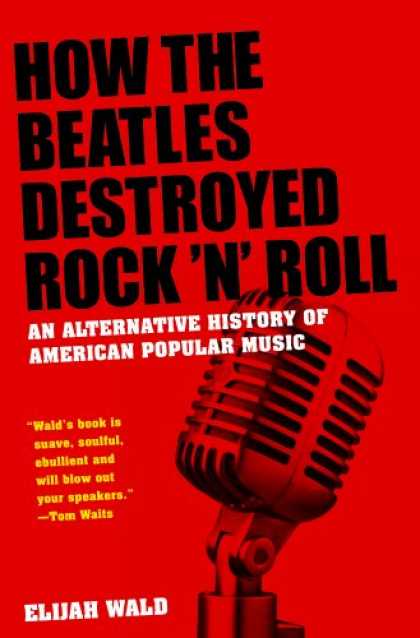
Review – “How the Beatles Destroyed Rock ‘n’ Roll”

(Above: Don’t read “How the Beatles Destroyed Rock ‘n’ Roll” expecting author Elijah Wald to bash the Fab Four.)

By Joel Francis
The Daily Record

Elijah Wald’s provocatively titled book slipped into the marketplace about the same time the much-ballyhooed Beatles remasters slammed retail shelves. But Wald isn’t trying to turn fans against their beloved Fab Four. He’s trying to reinforce their importance by approaching their arrival with a magical mystery tour that examines music from a populist perspective.

For the most part, Wald’s narrative manages to ignore critics and historians and answer the greater question of “Why did people like this?” Starting 100 years ago with ragtime, Wald walks through the growth, progression and trends that emerged in the first half of the 20th century.

Wald focuses on the Beatles because they were able to make artistically respectable music while staying true to their genre. Their foil is Paul Whiteman, who despite accomplishing the same feat, has been forgotten.

Whiteman was a Caucasian big band leader who crowned himself “King of Jazz.” Despite earning the endorsements from Duke Ellington and Louis Armstrong and selling millions of records, Whiteman’s career has been largely dismissed by jazz historians because his arrangements were so genteel. Indeed, part of Whiteman’s mission was to sand the rough edges off of jazz and respectable, if unchallenging, middle-brow dance music.

By eschewing the conventional narrative based on critical favorites, Wald shows how mainstream performers and tastes shaped the progression of music. Traditional viewpoints and assumptions are confounded again and again as Wald shows how the popular persuades the acclaimed. For example, Wald tells how Guy Lombardo’s arrangements influenced Armstrong’s celebrated Hot Five and Hot Seven records.

He also builds interesting parallels between celebrated trendsetters and those who are slighted for their foresight. In one instance, romantic crooner Vaughn Monroe was savaged in the press when his stage shows were little more than reconstructions of his singles. Yet only a few years later, as recorded music replaced live interpretations on the radio, it became what audiences expected.

Wald covers a lot of territory in a hurry, but it rarely feels like any corners are cut. Although the history is told in a linear fashion, Wald is a master of connecting previously unseen dots. The lines he draws between the Bennie Moten Orchestra and Elvis Presley, or Parlimanent-Funkadelic and Benny Goodman are both ingenious and obvious in retrospect. While not all of Wald’s parallels or arguments work, they are worth pondering.

In a way, “How the Beatles Destroyed Rock and Roll” is the natural outgrowth of Wald’s previous book, “Escaping the Delta.” That volume examined the curious arrival of Robert Johnson as the figurehead of “authentic” pre-war blues. In looking at Johnson’s forgotten peers like Peetey Wheatstraw and Bumble Bee Slim, Wald not only places Johnson’s music in context, but draws attention to arguably more deserving performers.

Admittedly, Wald may be giving himself the upper hand by focusing on unheard and unheralded performers. But while Wald’s arguments are contrarian, they are also well-researched and measured. In fact, the only argument Wald fails to back up is his title. Not only does Wald leave the Fab Four’s legacy intact, he doesn’t address them directly until the final two chapters. Fans of the British Invasion and Boomers looking to relieve their adolescence are bound to be disappointed.

Armchair historians and musicologists are bound to be the most pleased with this text. Wald is not encouraging the reader to explore Whiteman’s catalog or discard his or her favorite performers, only look at them through a longer lens.

Keep reading:

A Conversation with Elijah Wald

Talking King Records with author Jon Hartley Fox

Review – “King of the Queen City”

Talking Motown with author Bill Dahl

Key King Artists

The True Story of Cadillac Records