Top 10 shows of 2010

(Above: Gil Scott-Heron performs “We Almost Lost Detroit” in concert. His June 20 performance at Blues Alley in Washington, D.C., earns an honorable mention as one of the top shows of the year.)

By Joel Francis
The Daily Record

Jonsi, April 22, Liberty Hall

Sigur Ros concerts have a sustained emotional intensity matched only by Radiohead’s events. On his own, Sigur Ros frontman Jonsi ratcheted the passion even higher. The 80-minute set focused only on Jonsi’s solo release “Go” and a few outtakes. Although the material was original, the textures, delivery and emotions echoed Jonsi’s other band, including a climax that was one of the most sustained and forceful moments in which I’ve ever had the joy of being included. Read more.

Emmylou Harris, July 18, Stiefel Theater, Salina, Kan.

Four days after delivering a short set in the blistering heat to the Lilith Fair crowd at Sandstone Amphitheater, Emmylou Harris took her Red Hot Band to tiny Salina, Kan. For two hours she gave an intimate set in a theater slightly smaller and slightly newer than Kansas City’s Folly Theater. The set reprised many of the songs performed at Lilith – including a beautiful a capella rendition of “Calling My Children Home” and Harris’ hymn “The Pearl” – a lovely tribute to her departed friend Anna McGarrigle, and other gems spanning her entire career. Harris’ enchanting voice captivates in any setting. Removed from the heat and placed in a charming surrounding it shined even brighter. Read a review of Lilith Fair here.

Pearl Jam, May 3, Sprint Center

Nearly all of the 28 songs Pearl Jam performed during its sold-out, two-and-a-half hour concert were sing-alongs. Kansas City fans has waited eight years since the band’s last stop to join in with their heroes, and the crowd let the band know it. Near the end, Eddie Vedder introduced Kansas City Royals legend Willie Wilson by wearing a No. 6 Royals jersey. Vedder later invited onstage wounded Iraqi war vet Tomas Young, who appeared in the documentary “Body of War.” With Young in a wheelchair to his left, Vedder performed “No More,” the song the pair wrote together. During the encore, a member of the gold-medal winning U.S. Olympic bobsledding team, joined the band on bass for “Yellow Ledbetter.” As the song ended it felt like the evening was winding down, but guitarist Mike McCready refused to quit, spraying a spastic version of Jimi Hendrix’ arrangement of “The Star Spangled Banner.”

Sharon Jones and the Dap Kings, Sept. 21, Midland Theater

An ice storm and obscurity kept many fans away from Sharon Jones’ previous show in the area, a January gig at the Granada three years ago. With those obstacles removed, a crowded Midland Theater audience witnessed a soul revue straight out of the early ‘60s. With a band rooted in the Stax sound and a performance indebted to James Brown and Tina Turner, the diminutive Jones never let up. Jones only stopped dancing to chastise over-eager fans who kept climbing onto her stage. The tight, eight-piece horn section provided motivation enough for everyone else to keep moving.

Flaming Lips, Jan. 1, Cox Area, Oklahoma City

The year was less than an hour old when the Flaming Lips provided one of its top moments. After performing their standard 90-minute set, complete with lasers, confetti and sing-along versions of “Yoshimi Battles the Pink Robots” and “She Don’t Use Jelly.” Then more balloons and confetti ushered in the new year. The Lips celebrated by bringing opening act Star Death and White Dwarfs onstage for a joint performance of Pink Floyd’s “Dark Side of the Moon” in its entirety. Read more.

Izmore/Diverse – Like Water for Chocolate Tribute, March 19, Czar Bar

Combining hip hop and jazz became something of a cliché in the 1990s. The results typically only hinted at the union’s potential, and didn’t satisfy fans of either genre. Ten years after Common released his landmark album “Like Water For Chocolate,” a hip hop album that paid tribute to jazz, Afro-beat and gospel with the help of Roy Hargrove, Femi Kuti, Cee-Lo Green, J Dilla and others, some of Kansas City’s finest artists decided to celebrate the anniversary. MC Les Izmore delivered Common’s rhymes while the jazz quartet Diverse provided innovative and imaginative new backdrops. The result was both jazz and hip hop at their finest, with neither form compromising to the other. Read a feature on the event here.

David Gray, March 17, Uptown Theater

After releasing several solid albums in obscurity in the 1990s, David Gray finally broke into the mainstream at the turn of the century. As his tours grew bigger and catalog became richer, a Kansas City date remained elusive. On St. Patrick’s Day, Gray finally satisfied a ravenous capacity crowd with a two-hour set sprinkled with the songs that made him a household name. Songs like “Babylon” and “World To Me” are written well enough to make the show memorable, but the passion and energy Gray and his band invested in the night made this an amazing night for even this casual fan. A strong opening set from Phosphorescent made the evening even better. Read more.

Black Keys, June 4, Crossroads

The Akron, Ohio, garage blues duo opened Crossroads’ summer season with a sold-out night that focused on their latest effort, the spectacular “Brothers.” Drummer Patrick Carney and guitarist Dan Auerbach were augmented with a bass player and keyboardist on several numbers, but their trademark sound remained unaltered. Read more.

Public Image Ltd., April 26, Midland Theater

On paper, fans had a right to be cynical about this tour. After embarrassing himself with a handful of half-assed Sex Pistols reunions, Johnny Rotten recruited two new musicians to reconstitute his Public Image Ltd. project. Although Rotten was PiL’s only consistent member, and his current X-piece band had never played together before, they managed to flawlessly replicate the band’s finest moments. The Midland was embarrassingly empty – the balcony was closed, and the floor was less than half full – but Rotten played like it was the final night of the tour in front of a festival crowd. Read more.

Allen Toussaint, Jan. 8, Folly Theater

Seventy-two-year-old New Orleans pianist Allen Toussaint has been writing, producing and performing hit singles for more than 50 years. His songs include “Working In A Coal Mine,” “Mother In Law,” “A Certain Girl” and “Get Out Of My Life Woman.” Toussaint performed all of these numbers and more in what was remarkably his first concert in Kansas City. His own remarkable catalog aside, the evening’s high point was an amazing solo version of Paul Simon’s “American Tune.” Read more.

Keep reading:

Top 10 Concerts of 2009

Top 10 concerts of 2008

Happy Clash-mas Eve

 (Above: Joe Strummer and the Mescaleros delight in performing Jimmy Cliff’s “The Harder They Come.”)

By Joel Francis
The Daily Record

Every Christmas Eve, a significant block of time is set aside to honor the late Joe Strummer, who died on Dec. 22, 2002. This year, The Daily Record celebrates Strummer’s lifelong love of reggae music.

The Clash – “Pressure Drop”

Joe Strummer – “The Harder They Come”

Joe Strummer and Jimmy Cliff – “Over the Border”

In the early days of the London punk scene, DJ/filmmaker/musician Don Letts played reggae albums at the famed Roxy Club. At first the reggae was a necessity – the punk scene was still too young for any of the bands to record their own material. But even after the punk catalog exploded, the reggae remained.

“The punks were digging on the old anti-establishment chant down Babylon (attitude), heavy bass lines and they didn’t mind the weed,” Letts told Mojo magazine in 2008.

Not that this was many of the punks’ first exposure to the Jamaican genres.

“People like (Joe) Strummer, (John) Lydon and (Paul) Simonon didn’t need Don Letts to turn them on,” Letts said in the same interview.

Jimmy Cliff in "The Harder They Come."

Strummer, Simonon and the remaining members of the Clash likely stumbled upon Toots and the Maytalls’ “Pressure Drop” shortly after its 1972 release on the soundtrack to “The Harder They Come.” Both the film and the soundtrack had a profound influence on Strummer. In 1977 the band covered “Pressure Drop,” which was released in 1979 as the b-side to “English Civil War.” The title of their second album, “Give ‘Em Enough Rope” borrows the style of “The Harder They Come” by introducing a well-known phrase and letting the second half remain implied (i.e. “… and they’ll hang themselves”).

“Safe European Home,” one of the tracks on “Rope,” not only name checks “The Harder They Come,” but borrows the phrase “Rudie can’t fail” from another reggae song, foreshadowing the band’s biggest foray into the ska/Two-Tone sound. Finally, Strummer borrowed the film plot of “The Harder They Come” and adapted it to his British punk interpretation titled “Rude Boy.”

Two decades after the release of “Rude Boy,” Strummer recorded his own version of “The Harder They Come.” Teaming with the Long Beach Dub All-Stars and U.K. reggae singer Tippa Irie, his cover was released on the 2000 benefit album “Free the West Memphis Three.” Strummer’s interpretation doesn’t alter much from Jimmy Cliff’s original, but he’s clearly having a great time. Strummer thought enough of the song that another recording of the song was posthumously released the b-side to “Coma Girl.” Recorded live with the Strummer’s final band, the Mescaleros, this version is taken at a faster tempo and joyously ragged and raw.

At one of his final recording sessions, Strummer finally got to collaborate with Cliff. Upon learning where Cliff was recording his latest album, Strummer showed up with some unfinished lyrics in hand that he felt Cliff should sing. “Over the Border,” the song that grew out of this partnership appeared on Cliff’s 2004 album “Black Magic.”

Cliff described the session with Gibson.com shortly before his induction to the Rock and Roll Hall of Fame this year.

“The two of them (producer Dave Stewart and Strummer) began playing guitar, and I came up with the melody, and then Joe chipped in with some help on the melody as well,” Cliff said. “We recorded the song right away. That was a really special moment for me. You can imagine the shock I felt after hearing that Joe was not with us anymore.”

Keep reading:

Happy Clash-mas Eve (2009)

Happy Clash-mas Eve (2008)

Review: Toots and the Maytals, the Wailers

Original Wailers keep promise to Bob Marley


Classic Christmas Carol: “A Change At Christmas (Say It Isn’t So)”

(Above: Michael Ivins (far left) of the Flaming Lips wants to be the star on top of your Christmas tree.)

By Joel Francis
The Daily Record

The Flaming Lips make every concert feel like a holiday, so it’s unsurprising several songs in their catalog have been inspired by Christmas – the biggest holiday of them all.

“A Change At Christmas (Say it Isn’t So)” isn’t the Oklahoma City-based alternative rock band’s first tribute to Christmas. They had already brought “Christmas at the Zoo” and would soon deliver “Christmas on Mars.” But “A Change At Christmas” stands out, because it displays the “one love” hippie ethos at the heart of many of the band’s songs.

In the song, Flaming Lips frontman Wayne Coyne wishes he could stop time so the whole world could permanently live in the goodwill of the season. A time, he says, “the world embraces peace and love and mercy/Instead of power and fear.” In the last verse he pleads “tell me I’m not just a dreamer,” echoing John Lennon, another Christmas idealist.

Above: Even Santa Claus gets down during a Flaming Lips concert.

The arrangement features many of the Lips trademarks, including a sunny wash of synthesizers and toy drum machine. Sleigh bells and chimes bring a Yuletide feel, while a simple piano line holds the melody.

“A Change At Christmas” is also notable for being one of the rare times Coyne abandons his signature falsetto to deliver his heartfelt words of hope in his natural range. The optimism of the track is cemented with Coyne’s final words. During the fade-out he declares “I think it’s all going to work out just fine.”

While the Lips’ other Christmas songs saw release on proper albums or seasonal singles, “A Change At Christmas” was tucked into the “Ego Tripping” EP released in 2003. At the time of its release, the Lips were riding the success of “Yoshimi Battles the Pink Robots” with a deluge of singles, EPs and other releases. “A Change At Christmas” has become buried in the back catalog, but it’s a rare Christmas song that plays well year-round. It’s especially worth digging out in December.

Keep reading:

Classic Christmas Carol: “Happy Xmas (War Is Over)”

Classic Christmas Carol: “Jesus Christ”

Review: The Flaming Lips – “Christmas On Mars”


A Christmas conversation

(Above: Jimmy Smith’s “Christmas Cooking,” released in 1964, is a classic, overlooked holiday album.)

By Joel Francis
The Daily Record

The other day I was in a retail bookstore when I noticed the wonderful sounds of the Charlie Brown Christmas soundtrack coming from the overhead speakers. As I enjoyed the music, two thoughts hit me. First, I wondered if the store would be playing Vince Guaraldi’s jazz interpretations of Christmas carols if they weren’t connected to an iconic cartoon. Then I started thinking about my other favorite jazz Christmas recordings. Joining me in this Yuletide journey is my friend Bill Brownlee, the award-winning blogger behind There Stands the Glass and Plastic Sax.

The Daily Record: I don’t pull out the Christmas music until after Thanksgiving, but inevitably the first song I gravitate to is John Coltrane’s reading of “Greensleeves.” He cut this song many times. It can be found on his “Live at the Village Vanguard” collection and his “Ballads” album. My favorite version, though, may be found on Coltrane’s 1961 Impulse debut “Africa/Brass.” Not only does the performance run over 10 minutes – more than enough time to get lost in the playing – but classic Coltrane sidemen McCoy Tyner and Elvin Jones are augmented by a large brass section. The extra players beef up the sound and provide a larger-than-usual context.

Bill, what are some Christmas albums or performances that you turn to year after year?

Bill Brownlee: Along with most Americans, I’m inundated with Christmas music well before Thanksgiving. And as much as I love Donny Hathaway, Nat “King” Cole and Brenda Lee, involuntarily hearing their holiday hits saps my spirit.  Even Charlie Brown Christmas is played out for me.  And speaking of Vince Guaraldi, how often do you hear “Cast Your Fate To the Wind” played at a box store or on the radio?  There’s your answer.

That’s why I embrace the odd and the overlooked material.   Asked to supply music for my compound’s tree trimming festivities on Saturday, I immediately turned to Dan Hicks’ new Crazy For Christmas album.  The hillbilly jazz selection was so unpopular that I had to turn to (predictably boring) Motown Christmas to quell the insurrection.

TDR: The Motown Christmas may not be the most inventive holiday collection out there, but it’s certainly a lot of fun. It seems only a few new Christmas songs are allowed to escape each year. At this pitiful pace, it will be several years before today’s songwriters gift the public with something as great as Stevie Wonder’s “Someday at Christmas.” His “Ava Maria” is also sublime. It’s also difficult to complain with the blending of the Temptations vocals (even if the arrangements are overly familiar) or the joy in Diana Ross and Michael Jackson’s delivery.
If it’s a classic R&B Christmas you want, though, I’d suggest “Christmas in Soulsville” aka “It’s Christmas Time Again.” The tracklisting more inventive – where else are you going to hear “Back Door Santa” and not one, but two versions of “Santa Claus Wants Some Lovin'”? And the lineup is impeccable: Otis Redding, Isaac Hayes, the Staple Singers, Rufus Thomas, Booker T and the MGs, Albert King and more. Stuff that in your stocking.

BB: I remember being so disappointed after I purchased a small stack of Motown Christmas LPs- the Temptations, the Miracles, the Jackson Five and so on. The arrangements and performances were totally uninspired.  Maybe that bad experience enhances my appreciation of stuff like Clarence Carter’s “Back
Door Santa.”

TDR: It sounds like we’re in agreement on the Stax recordings. What are some of your other Yuletide favorites? What’s been tickling your ears this season?

BB: The two new recordings I love are the aforementioned Dan Hicks and Matt Wilson’s Christmas Tree-O. It’s playful in a Lester Bowie/Rahsaan Roland Kirk sense. Fun.How about you?  What are you listening to?

TDR: There are several Christmas albums I reach for every year. Jimmy Smith’s “Christmas Cooking” is incredible. If you can get past the drum machines, Fats Domino’s “Christmas Gumbo” is a lot of fun. My wife insists we listen to Emmylou Harris’ “By the Light of the Stable” every year as we put up the tree. And if you’re stuck in a family situation where no one can agree on anything and you don’t want to be saddled with a commercial Christmas radio station, any of the eight EPs in Sufjan Stevens’ holiday series will do the trick.
Another treat of the season is watching bands incorporate holiday music into their stage act. Do you have any favorite Christmas concert memories?

BB: What kind of postmodern indie rock utopia do you live in?  Your suggestion that everyone can agree on Sufjan seems bizarre.
Oh, Emmylou!  Perfect.  There are certain voices that are ideal matches for the Christian holiday.  And no, Sufjan’s isn’t one of them.  I’m thinking of Emmylou, Johnny Cash, Dolly Parton, Lou Rawls, Louis Armstrong and Mahalia Jackson.
And I seem to remember that both of us attended a Charles Brown gig on a cold winter night shortly before he passed.  “Merry Christmas, Baby”!

TDR: First off, I should clarify that these Sufjan EPs all pre-date “The Age of Adz,” so he’s still very much in folky banjo troubadour mode. I don’t know why these recordings seem to pacify everyone, but it works for some reason. Granted, it’s a small focus group – six people. My sister and I (and our spouses) are Sufjan fans in general. He has some hymns and traditional material that pleases my parents and his arrangements low-key and accessible for them. Plus, after having to endure James Brown’s “Funky Soulful Christmas” and the Buck Owens Christmas album, I’m sure anything sounds good to them.

I’m not sure I can get behind a Dolly Parton Christmas, but I definitely agree with the rest of the singers on your list. Your mention of Mahalia Jackson reminded me to recommend Odetta’s “Christmas Spirituals,” if you haven’t heard it before.

That Charles Brown show was special to me in many ways. Not only was it his last performance in Kansas City, but it was my first experience at the Grand Emporium. I was 18 at the time, so I needed my dad to go with me so I could get in, not that I had to twist his arm to go. Even though it was February, everyone still enjoyed hearing him play his legendary Christmas songs, tell stories and sing the blues. Thanks for mentioning this amazing experience we shared.

More importantly, thank you for taking time to talk about Christmas music with me. Do you have any parting comments before signing off?

BB: I’ll close with a list:

TEN OF MY FAVORITE ODD AND OVERLOOKED CHRISTMAS ALBUMS:
Sam Billen- A Word of Encouragement (2010 release available as a free download)
Brave Combo- It’s Christmas, Man
Charles Brown- Cool Christmas Blues
John Fahey- Christmas Guitar
Dan Hicks- Crazy For Christmas (2010 release)
Tish Hinojosa- Memorabilia Navidena
Manzanera and MacKay Present: The Players- Christmas
Max Roach- It’s Christmas Again
Allen Toussaint & Friends- A New Orleans Christmas
Matt Wilson- Christmas Tree-O (2010 release)

Merry Christmas!

TDR: That’s a great list, Bill. You mention several of my favorites (Allen Toussaint, John Fahey) some I need to hear (Brave Combo, Sam Billen) and some I’ve been unable to find (Manzanera/MacKay, Max Roach). It’s certainly enough to keep me busy until Christmas next year. Thanks for sharing, and thanks for stopping by.

Merry Christmas everyone!


Top 10 albums of 2010

By Joel Francis
The Daily Record

Year-end, Top 10 lists are everywhere. Only The Daily Record presents its favorite records in haiku. Enjoy.

1. Arcade Fire – Suburbs

Four sides of vinyl.
Suburban sprawl? Viewing life
takes time to explore.

2. The Roots – How I Got Over

Late night’s finest band
drops another classic.
Best since “Game Theory.”

3. Janelle Monae – The ArchAndroid

Ambitious concept
spread over diverse styles,
An amazing voice.

4. Bobby Watson – Gates BBQ Suite

Mouth-watering sounds
Basie, Ollie should be proud
Tribute to KayCee

5. Black Keys – Brothers

Broader sound gives pair
more room for dirty landscapes
Blues and guitar bros.

6. Kanye West – My Beautiful Dark Twisted Fantasy

Self-proclaimed jerk
Submits tortured, twisted art
Tender, repulsive

7. Cee-Lo Green – The Ladykiller

Soul man blurs genres
for nonstop party. Like it?
If not, forget you.

8. Big Boi – Sir Lucious Lefty, Son of Chico Dusty

Execs slow release,
block Andre, but can’t stop fun.
More “Speakerboxx” joy.

9. Oriole Post – Silver City

A down-home hoedown
Warm as buttermilk biscuits
Full of Midwest heart.

10. Brad Mehldau – Highway Rider

Piano maestro
back with Josh Redman.
Expansive, probing.

Keep reading:

Top 10 Albums of 2009

Top 10 Albums of 2008

Top 10 Albums of 2007

Top 10 Albums of 2006

Top 10 albums of 2005

Top 10 Albums of 2004

Classic Christmas Carol: “Happy Xmas (War Is Over)”

(Above: It may have been the holiday season, but John Lennon wasn’t pulling any punches when he wrote this song.)

By Joel Francis
The Daily Record

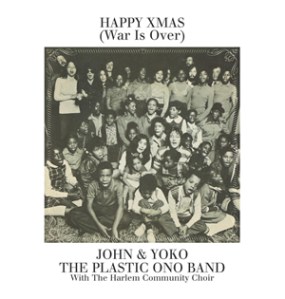
Before it was a song, “Happy Xmas (War Is Over)” was a billboard. In 1969, two years before the song was written and recorded, John Lennon and Yoko Ono proclaimed “War is Over! (If You Want It)” on signage in New York, Rome, Berlin, Tokyo and several other major cities around the world. The signs were an outgrowth of Lennon and Ono’s bed-in for peace, but the phrase stuck in Lennon’s head.

When the couple relocated to New York City in 1971, Lennon quickly feel in the company of radical ‘60s activists Jerry Rubin and Abbie Hoffman. Lennon had already gone on record against the Vietnam War at a Beatles press conference in 1966. The conflict was also a frequent topic of conversation during the bed-in. Instead of giving peace a chance, though, the United States had become even more entrenched in combat.

Inspired by his social circle and frustrated by another holiday season marked by fighting, Lennon turned his billboard slogan into a song. Lennon wrote the song over two nights in a New York City hotel room and recorded it almost immediately. Despite being released less than three weeks before Christmas, the single still managed to reach the Top 40. The feat was replicated each time the single was re-released. In Lennon’s native England, the single did not appear until 1972, when it went in the Top 5.

After a whispered shout-out (whisper-out?) to the pair’s children, Phil Spector’s wall of sound kicks in. The opening line – “And so this is Christmas/and what have you done?” – is both a nostalgic look back and the previous year and question of accountability. Despite having hope for the upcoming year, Lennon admits “the world is so wrong.” A chorus of children from the Harlem Community Choir echoes the words that started it all: War is over/If you want it.”

The melody is based on the folk ballad “Stewball,” a song about a British race horse. The first versions of “Stewball” date to the 18th century, but Woody Guthrie and Lead Belly put their stamp on the song in the 1940s. During the folk revival of the early ‘60s, both Peter, Paul and Mary and Joan Baez included the song in their repertoire.

Many artists, including skiffle singer Lonnie Donegan, a big influence on Lennon and most British musicians of his generation, have cover “Stewball,” but their numbers pale in comparison to the roster of those who have recorded “Happy Xmas (War Is Over).” From Andy Williams and Celine Dion to Maroon 5 and American Idol David Cook to the Moody Blues and the Polyphonic Spree, the song has been covered by nearly every conceivable artist in nearly every conceivable genre.

Keep reading:

Review: “December 8, 1980″

Classic Christmas Carol: “Fairytale of New York”

George Harrison – “Ding Dong, Ding Dong”

Classic Christmas Carol: “Greensleeves”

Review: “December 8, 1980”

(Above: “(Just Like) Starting Over” announced John Lennon’s return to music in the fall of 1980. After his death, it occupied the No. 1 spot for five weeks.)

By Joel Francis
The Daily Record

Rock and roll is littered with artists who left too soon. None are mourned as deeply and fervently, though, as John Lennon. The former Beatle was gunned down outside his New York City home 30 years ago today.

Keith Elliot Greenberg’s new book, “December 8, 1980: The Day John Lennon Died” marks the occasion. Much of the information contained in this brief volume has been presented before.  Even casual fans will be familiar with many of the details in Greenberg’s truncated telling of Lennon’s biography. While the Beatle’s story is well-known, Greenberg makes it worth visiting again.

“December 8, 1980” reads like a true crime television special, which makes sense given the author’s background as a producer for “America’s Most Wanted,” “48 Hours” and “MSNBC Investigates.” The unfolding day is interrupted by the histories of both Lennon and his assassin, Mark David Chapman.

Greenberg not only places the reader in both men’s minds heading to the fateful moment, but paints a vivid picture of Lennon’s home in the Dakota building and the state of New York City as a whole. First-hand stories from Lennon’s neighbors, autograph hounds who haunted the Dakota’s entry, musicians, fans and police officers. The details these auxiliary players provide peel back the years and familiarity and make the story seem fresh.

Although they were only tangentially related to the saga, Greenberg recounts the activities of Lennon’s fellow Beatles on that day, and their reactions to his death. One can feel the throngs pressing against Ringo as he visits Yoko Ono at the Dakota, and feel the energy of Bruce Springsteen’s unofficial tribute concerts in Philadelphia.

“December 8, 1980” concludes well after the titular date, covering Champan’s trial, the Beatles anthology reunion project, and the attempt on George Harrison’s life in 1999.

Beatles fans truly interested in the events of Dec. 8 and its main participants are advised to seek out any of the available solid Lennon biographies – Philip Norman’s “John Lennon: The Life” has received rave reviews – and Jack Jones’ 1992 Chapman biography “Let Me Take You Down.” Although it is essentially a distillation of those texts, Beatle fans looking for a light trot through that devastating day should be satisfied with Greenberg’s work.


Keep reading:

George Harrison – “Ding Dong, Ding Dong”

George Kalinsky: Painting with Light (includes stories of Lennon’s concerts at Madison Square Garden and the Harrison’s Concert for Bangladesh)

McCartney in Career Resurgence

Review – “How the Beatles Destroyed Rock ‘n’ Roll”


Who really got “You Really Got Me”

(Above: Metallica perform with Ray Davies at the 2009 Rock and Roll Hall of Fame 25th Anniversary Concert in New York City.)

By Joel Francis
The Daily Record

Every great song usually inspires about a dozen covers. Most of these are pedestrian and instantly forgotten. The few that transcend the original can be troublesome for the original artist. Should they mimic the new, more popular version or maintain the original vision? Bob Dylan has turned his nightly performances of “All Along the Watchtower” into a sort-of tribute to Jimi Hendrix. Trent Reznor, however, continues to perform “Hurt” as he originally intended, ignoring Johnny Cash’s transcendent interpretation.

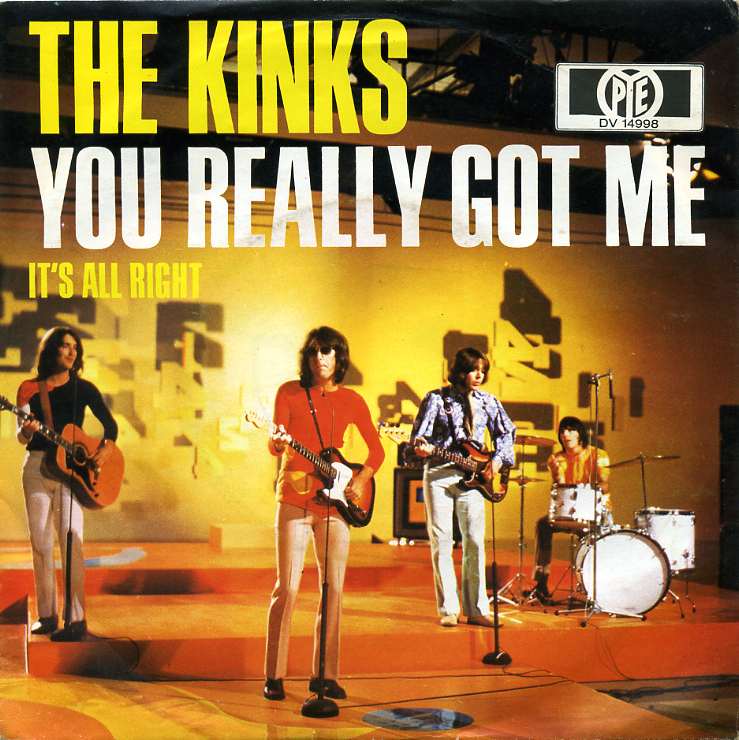
Ray Davies wrote “You Really Got Me” in 1964 on an upright piano. The initial sketches suggest a loping bluesy number somewhere between Gerry Mulligan and Big Bill Broonzy, two of Davies’ biggest inspirations at the time.

Davies’ brother Dave had different ideas. Latching onto the riff, and drawing on “Wild Thing” and “Tequilla,” he drove the song through his distorted guitar. The song was born anew, and when Ray Davies heard the new arrangement he knew that’s how his number was supposed to be played.

Unfortunately, the Kinks had already taken the first arrangement into the studio. It was that version that Pye, their label, intended to release as the band’s third single. The Kinks and producer Shel Talmy successfully lobbied for another session to re-record the number with the newfound grit and rawness. The result was the band’s first No. 1 hit in their native England, thereby launching their career.

The Kinks’ next single was essentially a re-write of “You Really Got Me.” Despite the similar success of “All Day and All of the Night,” Ray Davies abandoned that style of writing for the most part for more lilting fare like “Tired of Waiting for You” and “Sunny Afternoon.”

Davies and the Kinks may have moved on, but the rest of the world was just catching up. “You Really Got Me” inspired the signature grimy riff of “Satisfaction,” the feel of “Wild Thing,” and all of “I Can’t Explain.” Heavily distorted guitars became a staple in the burgeoning psychedelic rock scene and, a decade later, the backbone of punk.

In the heart of punk movement, Los Angeles party band Van Halen decided to release their version of “You Really Got Me” as their debut single. Although the song only rose to No. 36 on the U.S. charts, it was tremendously popular, becoming a concert staple throughout the band’s career (and numerous line-ups).

For the most part, Van Halen’s 1978 arrangement of “You Really Got Me” stayed true to the Kinks version. The biggest difference was Eddie Van Halen’s fretboard pyrotechnics. This transformed the song from a proto-punk jam into a guitar hero workout. Matching Van Halen’s instrumental energy was frontman David Lee Roth, whose grunting and moaning punctuated an already-strong come-on.

In 1980, “You Really Got Me” was one of the last cuts on the Kinks live album “One From the Road.” The song had already been released in live format before, on 1968’s “Live At Kelvin Hall,” but this was the band’s first recorded response to Van Halen.

Sadly, the Kinks responded by turning into a Van Halen cover band. An excellent guitarist in his own right, Dave Davies fell flat trying to imitate Eddie Van Halen (as many, many other axeslingers would also discover). Ray Davies’ pinched London voice could not match Roth’s West Coast bravado. Instead of playing to their strengths, the Kinks played to Van Halen’s strong points, thereby undermining themselves and relinquishing ownership of the original “You Really Got Me.”

I mention all this, because this month Ray Davies has elected to release another version of “You Really Got Me” on his new all-star duets album “See My Friends.” Since the Kinks have been on hiatus since 1996, Davies chose Metallica to back him on this track. Although they are working with the original songwriter, the grunts and asides spewing from Metallica singer James Hetfield make clear that his band is covering Van Halen, not the Kinks. Displaying a leaden stomp that makes Black Sabbath seem nimble, Metallica drain the life from the song as Davies stands helplessly by.

The Kinks original 1964 recording of “You Really Got Me” is a brilliant track. Van Halen’s cover some 14 years later also remains exhilarating (particularly when it is coupled with “Eruption,” the Eddie Van Halen instrumental that preceeds it on the album). Sadly, we have lost one version in the wake of the other.

Keep reading:

“Death Magnetic” is Metallica’s creative rebirth

Bob Dylan: All Along the Watchtower

Lanois + Raffi = Eno

A Black Friday blowout

(Above: Jazz pianist Mark Lowrey teamed up with local musicians for the second installment of the Mark Lowrey vs. Hip Hop series.)

By Joel Francis
The Daily Record

Mark Lowrey sits behind a grand piano, contemplating using a Thelonious Monk number as an introduction to the rapper Common’s song “Thelonious.” As his fingers coax a signature Monk melody from the keys, bass player Dominique Sanders and drummer Ryan Lee nod in approval.

“I thought it was really obvious at first,” Lowrey admits. “But sometimes obvious is good.”

Two days before Thanksgiving, Lowrey and his rhythm section are sorting through ideas, sketching a musical landscape. They are joined by singer Schelli Tolliver and MCs Les Izmore and Reach. The final vision – a bridging of jazz and hip hop, structured and improvised – will be displayed tonight at Crosstown Station. The Black Friday ensemble takes the stage at 10 p.m. Cover is $10.

“We’ll be doing a mix of originals and covers,” says trumpet player Hermon Mehari, who will also be participating. “We’re playing tribute to some of the great hip hop artists of our time like Talib Kweli, A Tribe Called Quest, J Dilla. Additionally, Reach and Les will both do some originals.”

After a few trials, the Monk number “I Mean You” has been successfully married to “Thelonious.” On “The Light,” another Common song, the band suddenly drops into Michael Jackson’s “Human Nature” right after the lyric “It’s kinda fresh you listen to more than hip hop.”

KC MCs Les Izmore (left) and Reach salute Charlie Parker inside the Mutual Musicians Foundation.

“When Les and Diverse played this (‘The Light’) earlier this year they did ‘Unforgettable’ in that spot,” Lowrey says. “Everybody liked that, but we didn’t want to use the same thing. We were tossing out ideas, and someone suggested Michael Jackson.”

That same process informed the playlist. Everyone presented the songs they wanted to do, and the set was culled from what worked and how the band’s reactions. When Reach takes the mic for Notorious B.I.G.’s “Big Poppa” he intersperses short bursts of freestyle around the original lyrics. A later run through of Jay-Z’s “Show Me What You Got” reveals an energy only hinted at on the Top 10 single. As Reach commands the imaginary crowd to wave their arms, Lee goes berserk on his drum kit.

“These shows have a different energy than Hearts of Darkness,” Izmore says of the local Afrobeat group he fronts. “With those shows you’re always trying to keep people dancing and keep the energy high. Here you can chill out and listen.”

Rehearsals will soon move to Crosstown Station, but for tonight the Mutual Musicians Foundation is home. The hallowed hall on Highland, home to Hootie and Bird, Count Basie and Big Joe Turner. The spirit of innovation those musicians introduced to the world via Kansas City is very much on display in the current sextet. Some may scoff that jazz and hip hop may seem to exist on disparate planets, but their orbits collide surprisingly often.

“I grew up on jazz, John Coltrane, Stan Getz, Ella Fitzgerald,” Reach says. “She (Ella) very much influenced my delivery and the way I play with cadences.”

Lowrey first toyed with combining rap and hip hop when he invited local MC Kartoon to sit in with his group a couple years ago. Both artists enjoyed the experience and Kartoon put Lowrey in touch with other vocalists in the KC hip hop scene.

“Hip hop has always been influenced by jazz,” Reach says. “Now, because the younger jazz musicians have grown up with hip hop, we are seeing it influence jazz. It’s kind of come full circle.”

In the past year, Lowrey has hosted several Mark Lowrey vs. Hip Hop concerts. The shows are basic, but explosive. Lowrey and drummer Brandon Draper create free jazz textures, as MCs and musicians alike improvise over the ever-changing structure.

“Our arrangements for this show are based in the tradition of jazz where you play the melody, then improvise over the chords before coming back to the head (melody),” Lowrey says. “The only difference is that we’re adding MCs in the mix with the horns.”

At another jazz/hip hop mash-up last February, Izmore and Diverse, a local jazz quartet that includes Mehari and Lee, celebrated the 10th anniversary of Common’s album “Like Water For Chocolate” by rearranging and performing the record in its entirety. The night ended with an encore of the Charlie Parker song “Diverse.”

“I’ve never seen a crowd of non-jazz fans so into the music,” Mehari says. “It’s the perfect example of what we want to do. Bring people in with hip hop and music they want to hear, then take them on a journey to new sounds. Once we’ve earned their trust, they’ll follow us anywhere.”

Keep reading:

KC’s MCs throw down this weekend

Jazz, hip hop collide to celebrate landmark album

Open wide for Mouth

Review: “The Art of the LP”

(Above: Jay-Z takes fans behind the scenes for the making of  the cover for his 2009 release “The Blueprint 3.”)

By Joel Francis
The Daily Record

There is no shortage of books on album artwork. Pick a decade, genre or label and you’ll likely have several volumes to choose among. Johnny Morgan and Ben Wardle make an impressive entry into this crowded field with their book “The Art of the LP: Classic Album Covers 1955-1995.”

While some of the album covers are inevitably familiar – Santana’s “Abraxas,” Nirvana’s “Nevermind”  – the grouping sets this volume apart. Albums are arranged in ten categories ranging from sex, drugs and rock and roll to ego, drugs, politics and death.

It’s fascinating to watch the evolution of styles and boundaries. In the 1950s, for example, just showing a black man’s face with a red tint as on Sonny Rollins’ “A Night at the ‘Village Vanguard’ was enough to shock a racially uneasy country in the middle of the red scare. Barely over a decade later, “black power” was in full force on covers such as Miles Davis’ “On the Corner” and Funkadelic’s “One Nation Under a Groove.” More subtle comments on race and politics gave way to confrontational styles embraced in succession by reggae, punk and hip hop.

Especially interesting are the two-page spreads, like the one juxtaposing the use of the American flag on Sly and the Family Stone’s 1971 release “There’s A Riot Going On,” Bruce Springsteen’s 1984 “Born in the U.S.A.” and the Black Crowes’ 1993 album “Amorica.” Stone alters the flag’s stars to make it a statement against the Vietnam War, while the backdrop to Springsteen’s anti-Vietnam statement is seen as patriotic. The Black Crowes chose an image from Hustler of a woman in a flag patterned bikini. The authors note that the Crowes statement wouldn’t have been unusual in the free love era of the ‘60s, but needed the relaxed censorship of the ‘90s to gain mainstream circulation.

Arranging the albums so they comment and reflect on each other, not only reinforces the themes, but adds a deeper appreciation of the work. Students of art will undoubtedly relish this experience, but for the rest of us Morgan and Wardle have added a solid block of text for each work. This paragraph not only provides the context of the time and artists, but explains what the artist may have been trying to accomplish.

This text is especially fun on the disastrous covers marked with an exclamation point.  The authors clearly have a special place in their hearts for the Scorpions. No less than three of the ‘80s German metal outfit’s covers are denoted. Reaching a “Spinal Tap” moment, they muse “Would the Scorpions ever learn the difference between sexy and sexist? Of course not.”

Ending just before the peak of the CD era, Morgan and Wardle give their subjects the largest canvass possible. The oversized pages allow for half-size reproductions. Music fans used to viewing tiny CD booklets will be amazed at the details that spring from the page. Fans accustomed to vinyl sleeves won’t miss much. Gatefold covers or albums that answer the cover artwork on the back are also given full exhibition. The handsome hardbound book is housed in a red plastic slipcase.

“The Art of the LP” is a visual jukebox that will entertain and inspire music fans and artists alike. Unless your coffee table is already loaded with similar books, I suggest making room for this one.

Keep reading:

George Kalinsky: Painting with Light

Review: “Neil Young – Long May You Run: The Illustrated History”

Review: “The Oxford American: Book of Great Music Writing”