Review: Jeff Beck

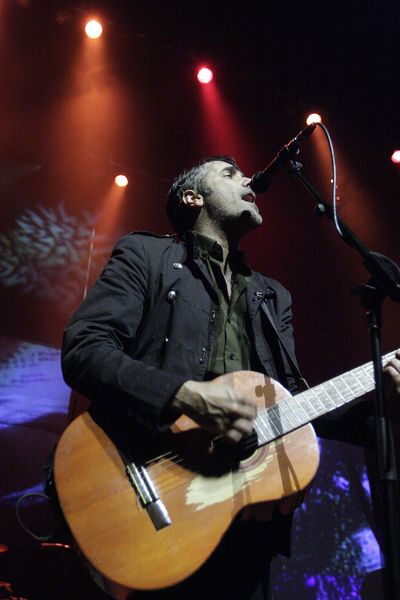
(Above: Jeff Beck takes fans higher with this cover of the Sly and the Family Stone classic.)

By Joel Francis
The Kansas City Star 

After staying away from Kansas City for more than a decade, guitar wizard Jeff Beck has graced city limits twice in a year. The setlist for Saturday night’s concert at a sold-out Uptown Theater may have resembled his y concert at Starlight in APril 2010, but if anyone had a problem with the encore performance they did a good job of hiding it.

Beck had been touring with a pair of vocalists and a horn section and playing 1950s rockabilly and rock and roll classics, so it was somewhat disappointing to see him take the stage with his standard touring band. Any misgivings were easily brushed aside before the first chorus, however.

The musical structure of all pop songs is repetitive – verse, chorus, verse, bridge. Clever lyrics are a major reason why many songs stay fresh. As an instrumentalist, Beck turned to different tools to keep his music interesting. The guitarist and his backing trio, which included Jason Robello on keyboards, Rhonda Smith on bass and drummer Narada Michael Walden, worked hard to make sure the energy never flagged.

The hour-and-45-minute set shifted smoothly between all-out rockers like “Big Block” and delicate readings of “Corpus Christi Carol” and “Two Rivers.” When the quartet opened up the throttle they created a powerful sound. The rhythm section of Walden and Smith played off each other with a notesy, complementary competition in the vein of Keith Moon and John Entwistle. Robello subtly filled in the remaining colors.

Shunning the microphone set up at extreme stage right for most of the night, Beck did all of his communicating with his hands and arms. A flick of the wrist indicated the tempo, while an outstretched arm highlighted the soloist. By shooting his arm straight up, Beck induced a nifty call-and-response with audience during “Led Boots” and coaxed them into signing the final stanza of “Over the Rainbow.” When a fan seated near the stage was caught recording the performance, Beck wagged his finger back and forth disapprovingly.

Taking the stage in a black suit jacket and matching pants, Beck quickly shed the coat. His traditional attire of arms bare to the shoulders was almost like the magician’s disclaimer: nothing up my sleeves. But like a master illusionist, although Beck’s arsenal was on full display, it was impossible to figure out his tricks. On a fairly straightforward reading of “Over the Rainbow,” Beck played the melody barely moving his left hand on the neck of the guitar. The notes were altered by knobs and bars under his busy right hand.

The Beatles needed a full orchestra for their “A Day in the Life.” Beck had everything he needed beyond his wrists. Tenderly plucking the first verse, he slowly built the song until the grand climax exploded off the stage.

Over the course of the evening, Beck paid tribute to many of his favorite artists, including Jeff Buckley (“Corpus Christi Carol”), Muddy Waters (“Rollin’ and Tumblin’,” featuring White on vocals), Les Paul (“How High the Moon”), Jimi Hendrix (“Little Wing,” with Walden on the mic), Sly and the Family Stone (the lengthy raucous “I Want to Take You Higher”) and Puccini (set-closing “Nessun Dorma”). The styles may have been diverse, but Beck never sounded like anything other than himself.

Setlist: Plan B; Stratus; Led Boots; Corpus Christi Carol; Hammerhead; Mna Na Eireann (Women of Ireland); bass solo; People Get Ready; You Never Know; Rollin’ and Tumblin’; Big Block; Over the Rainbow; Little Wing; Blast from the East; Two Rivers; Dirty Mind; drum solo; Brush With the Blues; A Day in the Life. Encore: I Want to Take You Higher; How High the Moon; Nessun Dorma.

Keep reading: 

Jeff Beck relishes “Commotion”

Solomon Burke’s Sweet Soul Music

Review: Bob Dylan

Justin Townes Earle: His father’s son

(Above: Justin Townes Earle performs the joyous/sorrowful “Harlem River Blues” for David Letterman.)

By Joel Francis
The Kansas City Star 

While he was living in Los Angeles in the throes of addiction, songwriter Steve Earle reached out to his son Justin, who was living with his mom in Nashville.

“I had very little contact with my dad growing up,” Justin Townes Earle said, “but once a month I’d get a package in the mail full of records.”

Steve Earle was a country sensation at the time, building on the success of his albums “Guitar Town” and “Copperhead Road,” but the albums he mailed his son bore little relation to ones he was making.

“I guarantee you I was the first kid in Nashville to have Nirvana’s ‘Bleach,’ because I got it from my dad in ’89 when it first came out,” Earle said. “I had all the AC/DC albums … Mudhoney. I got Ice Cube’s ‘Lethal Injection’ from my father.”

A few years later, the elder Earle — now clean of his addictions — offered some musical advice to his son: Write what you know and write honestly. By this time Justin Townes Earle, 14, had discovered the music native to his hometown.

“I took that advice and ran with it,” Earle said. “I’m the type of person who, once you point me in the right direction, just leave me alone and let me go.”

Earle plays the Bottleneck in Lawrence tonight. Fifteen years have passed since his songwriting career began, and although he suffered some of the same dark periods of substance abuse his father endured, Earle has persevered. He has released an album a year since 2007, each building on the last.

“My albums have been a conscious progression,” Earle said. “ ‘Yuma’ was me addressing my Woody Guthrie thing. ‘The Good Life’ addressed the honky-tonk ghost. With ‘Midnight at the Movies’ I was trying to push to the weirder side of folk, and then on ‘Harlem River Blues’ I was going for more of the gospel and blues.”

Last year’s “Harlem River Blues” opens with what may be the standout track in Earle’s impressive catalog, an upbeat, jaunty gospel number … about suicide by drowning.

“That song initially came from something I remembered when reading the ‘Basketball Diaries’ when I was young,” Earle said. “Jim Carroll and his buddies were the toughest kids in New York because they’d jump off the cliffs into the Harlem River.”

The darker elements draw on Earle’s days as a homeless junkie. Shortly after being fired from his father’s band in the early 2000s, Earle spent two years on the streets in perpetual search for the next fix.

“Because I am a drug addict, I have friends with fairly miserable lives and a few who actually took their own lives,” Earle said. “I talked with one friend about eight hours before he did it (killed himself) and as he told me his plan. I saw a look of ease on his face I’d never seen. It was what he wanted to do and why the song has a celebratory feeling.”

Barely 29, Earle feels like he has already lived several lifetimes. He quit school at 14 and ran off with some other budding songwriters at 16. A near-death experience hastened the start of his recovery from hard substances, although Earle still smokes and just swore off alcohol.

“The album ‘Harlem River Blues’ is about a man in his late 20s realizing he’s human and slowing down. The invincible part of my 20s are over,” Earle said. “I’ve run the gamut. There’s something about drugs that make you realize how delicate life is.”

Most of Earle’s immediate future will be consumed with touring, but he plans to take several weeks in October to record his next album. After that he’s moving from New York City to Europe for three years.

“I want to go to Barcelona on weekends and Paris for dinner,” Earle said. “I’ve been to Barcelona three times on tour but have never been to the beach. I want to spend a month in Marrakech. I just want to take in as much as I can.”

Thursday’s show will be Earle’s first appearance in the area since he opened for Levon Helm at the Crossroads in July, a night Earle calls “one of my favorite shows of all time.”

“I had done a couple shows with Levon prior to that night, but because his voice was bad he didn’t sing,” Earle said. “After my set I walked out and ordered a couple drinks from the bar at the right side of the stage. When the band kicked into ‘Ophelia’ and I heard that voice, I dropped my drinks and ran to the side of the stage.

“I didn’t move for the rest of the night.”

Keep reading:

Catching up with the Hot Club of Cowtown

Woody Guthrie – “Deportees (Plane Wreck at Los Gatos)”

Review: Alejandro Escovedo

Review: Devotchka

By Joel Francis
The Kansas City Star

Nick Urata remembers his first gig in Kansas City – the band’s bus crashed right in front of where they were going to play, the Hurricane.

Urata and his fellow members in Devotchka had more lush surroundings on Saturday night. Although the balcony of the Midland was closed and the floor was about half full, Urata’s soaring voice filled the cavernous space. Urata clearly appreciated his surroundings, thanking the crowd for letting him play in such a “classy joint.”

Devotchka – the name is Russian slang for “girl” – may be based in Denver, but their music covers the map, pulling in elements of mariachi, gypsy and French music and indie rock. The quartet’s theatric sound is built on layers and textures, much of it cribbed in the same Eastern European rhythms and energy used by Gogol Bordello, although Devotchka’s music is significantly less aggressive.

The musicians’ versatility meant the sound could change dramatically from song to song. Concert opener “The Alley” drew in the crowd with its propulsive rhythms, courtesy of drummer Shawn King and percussion from touring member Mauro Refosco, a veteran of David Byrne’s band and Thom Yorke’s Atoms For Peace project. Later, Refosco moved to keyboards and King played trumpet to give “We’re Leaving” a South-of-the-border feel.

Tom Hagerman alternated primarily between accordion and violin while Jeanie Schroder held down the bottom end on upright bass and a Sousaphone adorned with red Christmas lights. Hagerman’s accordion and Schroder’s Sousaphone tag-teamed nicely on the appropriately named “Basso Profundo.”

Of all of the high-caliber musicianship onstage, however, Urata’s singing was easily the most impressive instrument. His powerful tenor always hovered over everything else onstage, always complementing the arrangements underneath. His articulate enunciation effortlessly unspooled the short-story-like quality of the group’s lyrics.

Urata’s falsetto danced delicately with Hagerman’s violin on “Undone” and  he displayed near operatic range on “We’re Leaving.” During the encore Urata pulled a page from vocal legend Freddy Mercury’s playbook and engaged the audience in an operatic call and response. Just like Queen at Wembly, Urata pulled it off flawlessly.

Urata’s talents extended well beyond his esophagus, however. During “Poland,” Schroder bellowed a rare Sousaphone solo which Urata countered by playing the Theramin. During “Ranchero” he delivered a guitar solo that played off King’s drums like Tom chasing Jerry.

Several screens behind the band displayed abstract images, sometimes superimposed with close-ups of a soloist, adding another layer texture to the presentation. Devotchka got a real-life assist during “Vengo! Vengo!” when two women came out and performed a fabric dance high above the stage. The dancers returned during “Contrabanda,” performing a shadow dance behind two of the screens.

The duo performed in front of those same screens a few songs later, twirling umbrellas as a kaleidoscope of colors washed over them during “100 Other Lovers.” A subtle light show also enhanced the atmosphere.

All the props, lighting and extra space helped, but the band proved they didn’t need a big room to work their magic. For the encore, Urata and Hagerman emerged alone to deliver a stripped-down, straightforward version of Neil Young’s “Only Love Can Break Your Heart.” The performance was just as magical and transfixing as the best moments from the main set. The rest of the ensemble returned for two more songs, stretching out and flexing some hard rock muscle on “Ranchero” and leading a sing-along through the waltzy ballad “You Love Me.”

Setlist: The Alley;Head Honcho; Queen of the Surface Streets; Poland >The Clockwise Witness; The Man from San Sebastian; We’re Leaving; Vengo! Vengo!; Exhaustible; All the Sand in all the Sea; How It Ends; Basso Profundo; Undone; Contrabanda; I Cried Like a Silly Boy; 100 Other Lovers; Mexican. Encore: Only Love Can Break Your Heart (Neil Young cover); Ranchero; You Love Me.

Keep reading:

The Evolution of Devo

Easy success means hard work for Vampire Weekend

Review: Sufjan Stevens

Review: Vince Gill

 (Above: Vince Gill and his eight-piece band remember “Pretty Little Adriana” in Tulsa, Ok. on Jan. 22, 2011.)

By Joel Francis
The Kansas City Star

Vince Gill took the Carlsen Center stage thanking the sold-out house for spending their Thursday night with him. “I understand y’all are busy tomorrow night,” he said, alluding to KU’s  pending Friday night game against Richmond.

Two and a half hours later a delirious fan repaid the courtesy, calling out “It was a good Thursday night.” It would be foolish to disagree. Between the salutation and response, Gill delivered a cascade of hits, album tracks, stories and jokes.After opening with what he called a “drinkin’ song” (the No. 1 hit “One More Chance”), a “leavin’ song” (the No. 2 “Take Your Memory With You”) and a song about dying (“Tryin’ To Get Over You,” another No. 1 hit), Gill announced it was time for a cheating song. Before starting “Pocket Full of Gold,” however, Gill asked if there was anyone in the crowd with someone they shouldn’t be … then he turned the house lights up.

It was that kind of night. Whenever the music got too serious, like the achingly sincere “I Still Believe In You,” where Gill name checks wife Amy Grant in the chorus, he would immediately deflate the atmosphere with laughter. After the classic ballad “Look At Us,” Gill told the story of a couple married 69 years, about to divorce. Asked why they would give up now after so much time together they replied that they had only planned on staying together until their children were dead.

After complaining about eating too much Oklahoma Joe’s BBQ before the show, one female fan shouted that Gill should have gone to Jackstack. After contemplating the suggestion for the briefest of moments, Gill countered with the good-natured inquiry “Well how big a gal are you?” Then he explained his all-you-should-eat restaurant concept, were patrons are weighed upon entering and then served nutritionally appropriate portions.

For all the storytelling, however, the focus always remained on the music. Every member of Gill’s eight-piece band had been with him for several decades, and it showed. Although the ensemble could expertly echo the arrangements that made Gill’s songs hits, they were at their best when given room to stretch out. The bluegrass number “High Lonesome Sound” found Gill taking a guitar solo before passing the solo onto another band member. By the time the song was done half the group had soloed. On the closer “Liza Jane,” Gill let his band ride the Southern boogie groove, suggesting they could probably find a new audience on the jam band circuit.

Surrounded by great musicians, Gill was clearly the best artist onstage. The 22 songs performed ranged from Southern rock to jazz, adult contemporary to gospel and both traditional and contemporary country, all stemming from his pen. His guitar solos reinforced the lyrics, be it the tasteful, restrained solo in “Tryin’ To Get Over You” or the free-for-all that ended “Pretty Little Adriana.” Gill and his band sounded like the Allman Brothers by the end of that one. Gill announced the homage as intentional when he quoted a few bars of “Jessica” as the song wound down.

The evening’s centerpiece was a lengthy remembrance of Gill’s father, a man who dressed like a lawyer by day, but was more often found in his favorite outfit: ball cap, overalls (no shirt), cigarette and chaw. Gill remembered his father as a tough man who liberally doled out corporal punishment, but was his son’s biggest supporter once Gill left home.

The tribute set up a song idea by Gill’s father that Gill and Rodney Crowell finally completed years after Gill’s father had died. Released the duo’s Notorious Cherry Bombs album, Gill had a hard time explaining to his wife and mother – the song’s subject – why he found a song titled “It’s Hard to Kiss the Lips at Night (That Chew Your Ass Out All Day Long)” so hilarious. Like the rest of the evening, that lighthearted moment was immediately balanced by “Key To Life” the poignant song Gill wrote about his father after his death. Either way, Gill prospered.

Setlist: One More Chance; Take Your Memory With You; Tryin’ To Get Over You; Pocket Full of Gold; High Lonesome Sound; Don’t Let Our Love Start Slippin’ Away; I Still Believe In You; Some Things Never Get Old; Faint of Heart; What the Cowgirls Do; Next Big Thing; Look At Us; This Old Guitar and Me; Pretty Little Adriana; If You Ever Have Forever In Mind; It’s Hard to Kiss the Lips at Night (That Chew Your Ass Out All Day Long); Key to Life; Go Rest High on that Mountain; When I Call Your Name; Oklahoma Borderline. Encore: Whenever You Come Around; Liza Jane.

Keep reading:

Farewell, Charlie Louvin

Review: Alejandro Escovedo

Catching up with the Hot Club of Cowtown

Carrie Rodriguez honors family, roots on new album

Review: Robert Plant and Allison Krauss

Review: Pete Yorn, Ben Kweller

(Above: Pete Yorn and his band are still living “Life on a Chain” at the Voodoo Lounge on Feb. 20, 2011.)

By Joel Francis
The Kansas City Star

Pete Yorn and Ben Kweller delivered a two-hour clinic on rock songwriting in front of a small but enthusiastic crowd at Harrah’s Voodoo Lounge on Sunday’s night.

Kweller’s 45-minute opening set revealed his debt to the singer/songwriter movement of the early ‘70s. Alternating between acoustic guitar and piano, Kweller delivered several fan favorites, including “I’m On My Way,” “Thirteen” and “Penny on the Train Track.” Stripped bare, his songs could have slipped comfortably on the AM radio dial next to Carol King, James Taylor and Bob Dylan.

Highlights included the country folk of “Fight,” the luscious piano ballad “In Other Words” and a big moment on “The Rules” when Kweller stomped on a surprise pedal and turned his acoustic guitar into a snarling, distorted electric beast.

Although the low-key set initially underwhelmed the bar patrons, Kweller eventually won them over with his combination of good-natured banter and strong songwriting. By the final note the room was his.

If Kweller’s showcase was a bare-bones, how-to session, Yorn’s full-blown, full-band set delivered lessons on layering and arrangements.

After opening with three songs from last year’s self-titled album (his fifth overall), Yorn reached back to his debut, 2001’s “musicforthemorningafter.” “Life on a Chain” got the crowd fully engaged while “Just Another” showcased Yorn’s sensitive side.

Written almost entirely with major chords, Yorn’s songs are like a self-affirmation clinic with guitars. With a full workweek looming, Yorn sprayed sunshine on the unsuspecting crowd with a barrage of optimistic lyrics such as “seeing is believing” (“Murray”), “convince yourself that everything is alright” (“For Nancy”) and “life’s been great to me” (“Future Life”). A wistful look back at childhood (“Velcro Shoes”) was especially sepia toned, but none of it seemed particularly over the top.

The only exception to this was a solo acoustic reading of Neil Young’s “Rockin’ in the Free World.” Before playing the song Yorn told the crowd it was the first song he ever played before an audience, at age 15. He added that the lyrics didn’t fully sink in until he performed the song a few weeks ago at Carnegie Hall. This newfound understanding clearly weighed heavily on Yorn. The mournful, down-tempo arrangement was delivered with a sense of doom.

With or without his band, Yorn stayed primarily on acoustic rhythm guitar, so it was up to second guitarist Mark Noseworthy to provide different textures. The band’s not-so-secret weapon, Noseworthy played a mean slide solo during a cover of Junior Kimbrough’s “I Feel Good Again” and a delicate countermelody on “On Your Side” that helped the song swell like a poignant lump in the throat.

The brief 70-minute setlist was split nearly evenly between songs from Yorn’s first and newest releases, but Yorn seemed just about as tired of playing the old songs as the crowd was of signing them. Which means when he inevitably rolls through town again soon, everyone will enjoy one more cheerful romp.

Pete Yorn setlist: Precious Stone; Badman; Rock Crowd; Life on a Chain; Just Another; Velcro Shoes; I Feel Good Again; Rockin’ in the Free World; Burrito; Strange Condition; Future Life; On Your Side; Closet; For Nancy (‘Cos It Already Is). Encore: For Us; Murray.

Keep reading:

Review: James Taylor and Carole King

Review: Jack Johnson

Review: Bob Dylan

Review: Big Head Blues Club

(Above: Blues legends Hubert Sumlin and James Cotton help Big Head Todd and the Monsters visit the “Killing Floor.”)

By Joel Francis
The Kansas City Star

Rock and roll tributes to the blues are hardly a novel concept, but the glossy, contemporary rock of Big Head Todd and the Monsters makes them an unexpected outfit to try such a feat.

Saturday’s concert at the Uptown was billed as “Back at the Crossroads: The Robert Johnson Centennial Concerts.” The four-piece, Colorado rock band aimed to celebrate Johnson in the months leading up to his 100th birthday in May, but this wasn’t quite the case. Johnson figured prominently in the set, but there was also a heavy dose of Chicago blues. The night was more like an exposition of the genre’s most overt influences on rock. Put another way, the first set opened with Todd Park Mohr alone onstage playing the dobro and ended less than an hour later with dueling drum solos.

Taking the stage in a dark suit and black fedora, frontman Mohr quickly put any expectations for the Monsters’ back catalog to bed, telling the one-third capacity crowd the only thing they’d be hearing was “straight, natural blues.” He was right for the most part, but an audience clamoring for “Bittersweet” – one of the band’s biggest tunes – needn’t have worried. The songs in the last third of the set sounded like typical Big Head Todd material outfitted with familiar blues lyrics.

Mohr opened with three stellar, solo acoustic numbers before being joined by Missouri native Lightnin’ Malcolm and Monsters keyboardist Jeremy Lawton. That trio, along with bass player Rob Squires who entered later, formed the core band for the night, present on nearly every number. They were augmented by drummer Cedric Burnside, grandson of the Fat Possum bluesman R.L. Burnside and Malcolm’s longtime touring partner, and Monsters drummer Brian Nevin.

The real blues cred, however, came from 79-year-old guitarist Hubert Sumlin, and 75-year-old harp man James Cotton. Sumlin’s playing can be heard on most of Howlin’ Wolf’s classic material and Cotton played on many great Muddy Waters records. Half a century later, both men were in just as fine of form today as they were in their Chess Records heyday. Sumlin’s soling was nimble and his vocal turn on “Sittin’ On Top of the World” was strong. Cotton made his harmonica moan and wail like a woman in pleasure and had so much fun during one solo that he started laughing when it was done.

Big Head Todd and the Monsters are no strangers to working with blues legends. In 1997 they worked with John Lee Hooker on a cover of his “Boom Boom” that reached the Top 40. Opinions of that track will likely frame one’s appreciation for the evening: The band either misappropriated a hero to dumb down a song or paid honest homage using their familiar idiom.

The best moments were the spare opening numbers, particularly Lightnin’ Malcolm’s duets with Cotton on “Walkin’ Blues” and “Future Blues.” Mohr really pushed himself at the mic all night and did a great job approximating the Wolf’s moans and rasp on the Chicago numbers. Cotton or Sumlin were onstage for about half of the two-hour set’s 22 songs. Their contributions were always a treat.

After the first, mostly acoustic set, the band took a 20 minute break. They returned for another hour of electric music that blurred the lines between Chicago blues, traditional bar band fare and the typical Big Head sound. Not everything worked – covers of ZZ Top’s “Jesus Just Left Chicago” and a slick arrangement that removed any sense of doom from “Last Fair Deal Gone Down” were questionable. But there was no doubt everyone onstage was having fun.

Setlist: Love in Vain; Stones In My Passway; Dry Spell; Kind-Hearted Woman Blues; If I Had Possession Over Judgment Day; Walkin’ Blues; Future Blues; Viola Lee Blues; When You Got A Good Friend; Travelling Riverside Blues. Intermission. Ramblin’ On My Mind; Preachin’ Blues (Up Jumped the Devil); Wang Dang Doodle; Sittin’ On Top of the World; Killing Floor; I Love the Life I Live, I Live the Life I Love; Jesus Just Left Chicago; Come On In My Kitchen; Last Fair Deal Gone Down. Encore: Cross Road Blues; I Believe I’ll Dust My Broom > Sweet Home Chicago.

Keep reading:

Review: Experience Hendrix (ft. Hubert Sumlin)

Review: T-Model Ford

Review: Buddy Guy and Bettye LaVette

A Grammys note

(Above: A pre-Soy Bomb Grammy performance by Bob Dylan.)

By Joel Francis
The Daily Record

For the past couple years, The Daily Record has celebrated the Grammy Awards with a running diary, documenting every moment with maximum snark. It was a lot of fun, but it won’t be happening tonight.

Making fun of the Grammys is like saying Bud Selig is out-of-touch or pointing out bias on Fox News. There doesn’t need to be any more wood added to this well-fueled fire. In fact, making fun of the Grammys irrelevance may perversely be giving them more relevance. For years, Grammy ratings were steadily sliding downward. Over the past few telecasts, however, viewership has sharply risen. This spike has coincided with the bevy of Tweets, blogs and Facebook posts lampooning the event.

I’m sure there will be some incredible moments on tonight’s broadcast. I’m also sure it won’t be worth more than three hours of my time. Tomorrow dozens of Websites will have links to the evening’s best moments, which I’ll be able to view in their entirety in under 20 minutes.

The Grammys try to be all (mainstream) things to all people. This weakens the telecast, but could be a boon the next day. Since all the performances are professionally recorded and mixed, it shouldn’t be too much trouble to put MP3s of those songs on iTunes the next day. Granted, there isn’t a lot of money left to be shaken from that tree, but I’m confident a substantial profit could be easily turned.

Just a thought. See you in the funny papers.

Keep reading:

2010 Grammys: A Live Diary

2009 Grammys: A Running Diary


Review: Ozzy + Slash

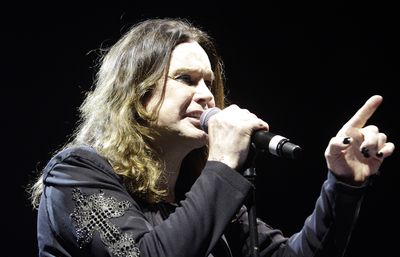
(Above: Ozzy performs “Mr. Crowley” at the Sprint Center on Jan. 22, 2010.)

By Joel Francis
The Kansas City Star

The Prince of Darkness looked more like a soaked kitten.

Ozzy Osbourne stood center stage dripping wet, covered in foam. Thanks to the fire hose he used to liberally douse both himself and fans in the front half of the floor, Ozzy looked like he’d just fallen into a bathtub. The foam would dissolve, but Ozzy would never dry out.

Ostensibly in town to promote a new album, Ozzy performed just one new song.  Most of the rest of the setlist could have been written months in advance by a causal fan. But while the songs didn’t hold any surprises, many of the performances were still vital.

Experiencing Ozzy perform “Crazy Train” is a classic rock ‘n’ roll moment up there with hearing the Stones do “Jumping Jack Flash” or seeing Pearl Jam perform “Alive.” Despite being more than 40 years old, “War Pigs” still packs a powerful punch.

Although some of his solo material hasn’t aged as well, the three-quarters full house still reveled in the night, pumping their fists during solos and singing along. During “The Road to Nowhere” and “Mama, I’m Coming Home” the room lit up with lighters.

“Mr. Crowley” was an early highlight. Keyboard player Adam Wakeman, son of Rick Wakeman, turned the room into a giant cathedral with his ominous organ. As he played, a sheet of sparks feel from the rafters behind Ozzy, creating a curtain of fireworks.

Although there was a large video screen behind the band for most of the set and plenty of pyrotechnics, Ozzy’s oversized persona was the best visual effect of the night. Waterworks aside, he was constantly in motion, urging the crowd to clap, hopping up and down like a frog or bowing to his audience. During “Fire in the Sky” he writhed his arms and body during the lengthy guitar solo as if performing some Satanic jujitsu.

The two-hour set lagged quite a bit toward the end. It would have been difficult to maintain the energy and momentum of the opening numbers, but back-to-back, cliché-ridden guitar and drum solos deflated the show. Everyone would have been better served had the band performed two 45-minute sets with an intermission.

Fortunately Ozzy still had plenty of goodies buried in his catalog. “Crazy Train” brought the crowd back to life, while “Mama” and “Paranoid” ensured most of them would show up next time for his inevitable return.

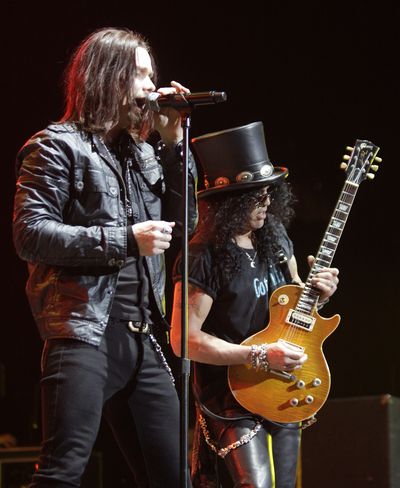
Slash: Axl Rose is notorious for making fans wait hours before appearing; Slash came onstage 10 minutes early. His one-hour set was basically a truncated version of the show he put on last fall at the Voodoo Lounge. It was heavy on Guns ‘N’ Roses, with most of the songs coming from “Appetite For Destruction.” The Velvet Revolver material held its own, but some of the newer songs lost the crowd, especially “By the Sword.”

For a band so reliant on its guitarist, the mix was atrocious. All the instruments were trapped in a mush under bellowing drums and vocals that sounded like they emanated from a tin-can telephone. Fans may have been better served sonically by asking their next-door neighbor to play “Appetite” at full volume, then retreating to their basement and listening to it from there. Although the sound got better at times, the closing solo during “Paradise City” was practically inaudible.

Ozzy setlist: Bark at the Moon; Let Me Hear You Scream; Mr. Crowley; I Don’t Know; Fairies Wear Boots; Suicide Solution; Road to Nowhere; War Pigs; Fire in the Sky; Shot in the Dark; guitar solo > Rat Salad > drum solo; Iron Man; I Don’t Want to Change the World; Crazy Train. Encore: Mama, I’m Coming Home; Paranoid.

Slash setlist: Ghost; Sucker Train Blues; Mr. Brownstone; Back From Cali; Civil War; Nothing to Say; By the Sword; Nightrain; Sweet Child O’ Mine; Slither; Paradise City.

Keep reading:

Review: Slash

Review: “I Am Ozzy”

Review: Megadeth

Farewell, Charlie Louvin

 (Above: Charlie Louvin sings of the “Great Atomic Power” at a February, 2009, performance in Raleigh, N.C.)

By Joel Francis
The Daily Record

My first exposure to the Louvin Brothers was on one of those “worst album covers of all time” Web sites. Standing in front of what appears to be a backyard BBQ gone horribly wrong, two Bing Crosby wannabes in matching white suits raise their arms in welcome. Above them, the title proclaims “Satan is Real.” Behind them, the most ridiculously fake, wooden Mephistopheles looms like failed a junior high shop class project.

A few years later, while visiting home during college, I decided this cover would be a perfect piece of art in my dorm room and went to the Music Exchange in search of a copy. I asked the man behind the counter (it wasn’t Ron Rook) if they had any albums by the “Lovin’ Brothers.”

“Do you mean the Loooovin Brothers,” he asked, making a point of drawing out the long “o” and informing the store of my ignorance.

“Um, yeah, whatever,” I stammered. They were out.

Sometime after that, I happened upon a CD of “Satan Is Real” at the Kansas City Public Library. After mocking its cover for so long, I had to hear what the actual music sounded like. Pretty freaking good, it turned out.

Charlie and Ira Louvin’s music wasn’t the kind I wanted to listen to that often, but when the mood hit it landed deep and only the Louvins would do. As if by magic, their names started appearing in the album credits of my favorite musicians – the Byrds and Gram Parsons, Emmylou Harris, Johnny Cash, Buddy Miller, Uncle Tupelo. Far from a novelty act or wacky cover, the brothers’ influence was everywhere.

A couple years ago, a friend lent me his copy of the Louvin Brothers Bear Family box set. At eight discs it was way more than I’d ever need, but he swore it was the best stuff ever recorded. I respected his deep and diverse tasted and promised to dive in. I’ll now confess that I only just scratched the surface. A little country gospel still goes a long way for me.

This same friend also told me about the time he saw Charlie played the Grand Emporium. Only a few people bothered to show up for the full set peppered with stories and a fond remembrance of Ira, who died in a car crash near Jefferson City, Mo. in 1965. Afterward, Charlie hung out, reveling in conversation with his fans.

I made a mental note to see Charlie the next time he came through town. His next appearance was opening for Lucinda Williams. It was a dream ticket, but I had other obligations that night. Then were appearances booked at Knuckleheads and Davey’s Uptown. Just before the show, however, the performance would be cancelled. Then, miraculously, another date would be booked several months out.

Each time a show was cancelled I feared that I’d missed my chance. Wednesday my worries were confirmed: Charlie Louvin died from complications from pancreatic cancer. He was 83.

My in-person opportunity may have vanished, but I have hours of his music to relish. As I think of Charlie reuniting with Ira at long last, a song by Gram Parsons, one of the brothers’ greatest disciples – in style, if not message – springs to mind: “The Angels Rejoiced Last Night.”

Keep reading:

Review: Chris Hillman thumbs through his back pages

Carrie Rodriguez honors family, roots on new album

KC Recalls: Johnny Cash at Leavenworth prison


Independence sounds good

(Above: Ariana Grande takes the stage at the Independence Events Center, in Independence, Mo. in 2015.)

By Joel Francis
The Daily Record

The Missouri Mavericks hockey team has only been playing for two seasons, so there aren’t a lot of championship banners hanging above their home rink at the Independence Events Center. But doesn’t mean the rafters are empty.

Scores of black sound baffles drape from the ceiling and dozens more hang perpendicularly around the seating perimeter. They’re all part of the design to make the arena’s music sound better.

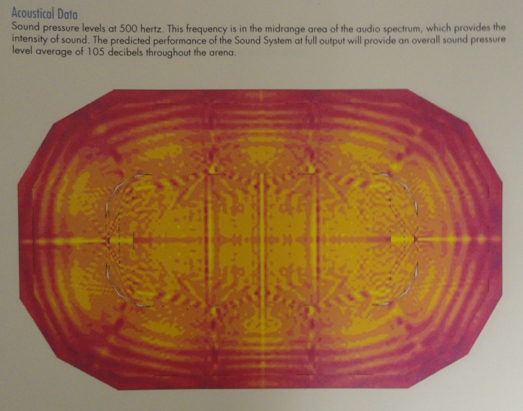
“Before this place was even built, engineers mapped the space,” said Paul Fray, chief engineer for the Events Center. “They mapped every frequency using a 3D computer program so they’d know how each frequency would react in the room.”

The catwalk high above the arena floor provides a unique look at the sound baffles strategically hung from the ceiling.

Based on those findings, strategically placed ceiling baffles were hung and wood-fiber panels were placed along the walls at the back of the seating level. When Fray pops Sting’s greatest hits into the arena’s sound system the playback is crisp and clear, as if it is being played in a giant living room.

“This is the best-sounding arena I’ve been in,” said Fray, a four-decade veteran of the Kansas City concert scene. “The overhead speakers are aimed at specific seating areas, then we have clusters of subs (subwoofers) at each end.”

When the Events Center hosts concerts, the act brings their own sound engineer and equipment. Their sound system is run through a separate power transformer devoted solely to audio equipment. This, Fray said, eliminates the hum that often arises when the transformer is shared with the lighting rigs.

“A guy from the Zac Brown Band crew told me we had more power available for them here than when he worked on the crew for the Bon Jovi show at Giants Stadium,” Fray said.

Fray said when he mixes he tries to visualize the sound as a 3D image, with the vocals in front and the guitars, bass and drums filling out the space behind.  When an instrument solo occurs he moves that to the front of the mix.

Audio engineers used 3D sound captures like the one above to gage how different frequencies would react in the room.

“A lot of the time, when there’s a problem with the sound it’s how the front-of-house engineer is mixing,” Fray said. “In the late ‘70s and early ‘80s I saw a lot of shows at Memorial Hall and they sounded good when you didn’t try to overpower the room. When I saw Velvet Revolver there a few years ago it was the worst sound I’d ever heard. You couldn’t pick out any of the instruments.”

A well-engineered room offers more forgiveness to the sound crew.

“All of the front-of-house guys have been very pleased with the arena,” Fray said. “Alice Cooper and Rob Zombie were here a while back and they were very happy with the venue. They thought it was a nice place to play.”

That’s good news for music fans on a couple levels. Not only will they be able to better enjoy the show while it happens, but it means there’s a good chance the performers will come back and fans will be able to live the moment all over again.

Keep reading:

Review: Goo Goo Dolls at the Independence Events Center

Review: Alice Cooper

George Kalinsky: Painting with Light