(Above: Neil Young sets the record straight with a live performance of “This Note’s For You” from 1988. Thanks to Viacom, clips for Roca Pads and Redman’s Potty Fresh were unavailable.)
By Joel Francis The Daily Record
Earlier this week, Billboard reported the booklet in the new Mariah Carey CD will contain “lifestyle ads.”
The 34-page “mini-magazine” will be co-produced by Elle magazine and house ads for Elizabeth Arden, Angel Champagne, Carmen Steffens, Le Métier de Beauté and the Bahamas Board of Tourism. The booklet will also contain Carey-centric articles with the enticing titles like “VIP Access to Her Sexy Love Life,” “Amazing Closet,” “Recording Rituals.”
Evidently the music wasn’t enough.
Annoying as the ad campaigns may have been, there have been no Chevy ads in Bob Seeger or John Mellencamp albums. Other artists have been less scrupulous about whoring their album space, but were never this brazen. Master P turned the booklets for all his No Limit artists into mini-catalogs, and Outkast frequently squeezed ads for their pit bulls alongside lyrics and musician credits. At least those performers had a stake in the products in question.
Carey’s move is more egregious on several levels. First, retailers have already found ways to cross-promote. According to the Billboard story, Walmart will display Carey’s album next to her Arden fragrance Forever, which has an ad on the back cover of the CD booklet. Even more disturbingly, Island-Def Jam, Carey’s label, has eyed Rihanna, Bon Jovi and Kanye West to follow suit if the initial venture is a success. Carey has never been a bastion of artistry, but if the major labels can turn a buck from this experiment, expect ads in CD booklets to become the norm.
“The idea was really simple thinking: ‘We sell millions of records, so you should advertise with us,’” Antonio “L.A.” Reid, chairman, Island Def Jam Music Group, a unit of Universal Music Group, told Billboard.
Fans who buy the album digitally through iTunes or Amazon will also be subjected to the advertising. The ads will also be included in the electronic PDFs accompanying download sales. The only way to circumvent the booklet blights is the easiest and cheapest solution: ignore Carey or steal the music. Until the major labels start respecting the listeners, there is absolutely no reason to respect them.
(Above: Picture this on the 50-yard line: the Flaming Lips, “Race for the Prize.”)
By Joel Francis
The five years since Janet Jackson’s Super Bowl halftime “wardrobe malfunction” two things are clear: Nipple shields have not become the must-have fashion accessory everyone predicted; and halftime shows have never been better.
It would be easy to get tired of all the blue-chip baby boomer performers if they didn’t put on such compelling shows. The Rolling Stones abysmal 2006 act aside, it doesn’t get much better than hearing “Drive My Car” and “Runnin’ Down A Dream” at halftime. Yeah, they’ve been done to death, but they’re a lot better than whatever song Janet and Justin Timberlake were singing and Aerosmith’s pairing with Britney Spears. Does anyone remember those songs today?
Even fans tired of the oldies can’t argue with the energy that propelled Prince’s set in 2006 and Bruce Springsteen’s show last night into the top echelon of pop music performances.
Which is exactly why it’s time to change things up. The canary is choking; there’s not much more ore in the vein the NFL has mined these past five years. Let’s stop now, before Fleetwood Mac and the Eagles are serenading us with mid-game naps. It’s time to take the halftime show in a new direction. A direction hinted at in 2002 when U2 were brought in to play: dynamic bands that can connect with a huge audience, playing high-energy hits written within 20 years of their performance.
The Flaming Lips are the perfect band to open this new era. Imagine frontman Wayne Coyne rolling over the crowd in his giant hamster ball as “Race For the Prize” blasts through the stadium. Lasers penetrate the clouds of smoke as confetti, streamers and balloons rain on the crowd. Did we mention the Lips also come with their own space aliens and super heroes? Oh, and a flying saucer?
In their 25-year history, the Lips have twice rocked the massive crowds at Bonnarro and will have no problem connecting to the fans in the upper deck or on the couch. Their songs may not be as universally known as “American Girl,” but “She Don’t Use Jelly” was an MTV staple big enough to land the band on “Beverly Hills 90210.” And the “Yeah Yeah Yeah Song” will have as many people signing along as the outro of “Hey Jude.” The biggest obstacle will be cleaning up all the joyous debris on the field (lay down a tarp) and getting everyone to settle down enough to concentrate on the resumed game.
It wasn’t that long ago that the Blues Brothers (minus John Belushi) and Miami Sound Machine were given center-stage at the world’s biggest intermission. But there is a midway point between dinosaur bands and Top 40 vapidity. Once the Flaming Lips remind the audience of this territory, bands like the Foo Fighters, Arcade Fire and Robert Randolph and the Family Band are perfect future candidates.
Inoffensive doesn’t have to be the antonym of adventure. The Flaming Lips are the embodiment of the party atmosphere the NFL wants the Super Bowl to inhabit. It’s time to let them take the stage. Book them for 2010.
Read The Daily Record’s coverage of the Flaming Lips at Wakarusa in 2006and 2008.
A 5-year-old boy stands on top of the soda counter at the corner store belting out a version of “Born Free.” The customers pause from their shopping to look up and smile appreciatively. A burst of applause greets the boy when he is finished.
The store owner gives the boy a treat and he hops down off the counter.
“I knew all the words and he’d give me candy,” Vernon Quinzy said. “Ever since then I knew I wanted to sing and act.”
This was the start of Quinzy’s show business career. Thirty-four years later he has returned to his hometown of Independence to regroup, spend time with his family and refocus.
“I’d gotten out of the acting end of things,” Quinzy said. “That, combined with my sister and her two boys.”
Since returning to the area, Quinzy appeared in “Little House on the Prairie” at the Coterie Theater and is currently starring in “Kansas City Cabaret” at the Quality Hill Playhouse, 303 W. 10th St., Kansas City.
“I think the theater work has stretched me,” Quinzy said. “It has allowed me to grow as a performer. In KC Cabaret, every song is about an artist or composer who spent time in the area, so I get to both act and sing.”
If Quinzy has enjoyed “Kansas City Cabaret,” the cast has enjoyed him more.
“He’s about the sweetest human being you’d ever want to meet,” said Cabaret co-star Teri Wilder. “I love his voice Ð he could sing to me anytime.”
Director J. Kent Barnhart agreed.
“He’s the easiest guy to work with. He’s very hard working and very kind,” Barnhart said. “It’s always interesting to see new people in this place because it is so small, but he’s taken very well to working with a smaller cast and theater.”
Ask Quinzy about his accomplishments and he’ll talk about them in a shy way where he isn’t really talking about them. But the truth is that he palled around with Prince in the ’80s, and Luther Vandross called him last week to make sure Quinzy could attend his concert.
“Do you remember the Morris Day and the Time video ‘The Oak Tree?’ ” Quinzy asked. “I’m the person cutting down the oak tree at the very first of the video. I also did videos with Vanity, Appelonia, the whole group of Prince artists.”
So how was working with the purple one?
“He’s really shy,” Quinzy said. “He’d give you directions, but never look at you directly Ð he’d look at your shoes. It seems like he saves it all, I guess for the performance, but one-on-one he’s completely different.”
After graduating from Fort Osage High School in 1980, Quinzy attended the University of Missouri-Kansas City and transferred after two years to the American Academy of the Arts in New York. He spent the better part of the 1980s modeling, singing and acting and maintaining apartments in Los Angeles, Chicago and New York.
“I would usually spend a few months in each place,” Quinzy said. “I would mainly do acting in L.A., in Chicago I would do print work (modeling) and some jingles and then in New York for singing. This is when I was the busiest.”
Quinzy’s acting work got him spots in Luther Vandross, Prince and other music videos and a role as a hospital intern in “Days of Our Lives.” It seemed he would break into stardom with Morgan Fairchild’s evening soap “Paper Dolls,” but the show was canned after one season.
“I really enjoyed getting the role on ‘Paper Dolls’ and how it happened,” Quinzy said. “I was brought on as someone with five lines, but the casting director at MGM was very interested in me. Had the show gone on the role would have been expanded.”
In New York Quinzy would sing commercial jingles for advertisements.
“I have a short attention span so it all worked great for me, but it brought me to a point where I decided I needed a focus,” Quinzy said.
Work at the jingle houses were slowing down and Quinzy missed his family. So he decided to go back to his roots.
“He’s very close to my boys,” said Joyce Fowler, Quinzy’s sister. “They love going to see any kind of musical or show he’s in.”
As a single mom, Fowler said she can see Quinzy’s impact.
“He’s made a difference in their lives as far as personality,” Fowler said. “He’s been a positive male role model for them.”
Quinzy may have relocated, but the work hasn’t slowed. He is still very much in demand, just won’t show it.
“He gets lots of offers to go places, but they all want him to go someplace for a year,” Fowler said. “But he doesn’t want to relocate.”
Church has played a major role in keeping Quinzy grounded, he said. He is an experienced Sunday School teacher, most recently teaching the junior class at Village Heights Community of Christ.
“It gives me a foundation and balance in my life,” Quinzy said. “I think without the church it would be easier to get caught up in the heady side of the business.”
And the children thought it was great their teacher was popular.
“When I was teaching Sunday School in Los Angeles I was doing modeling and they’d see me doing underwear ads and they’d cut them out and put it up on the church bulletin board,” Quinzy said.
Ask Barbara Wiley about Quinzy and her voice will light up. She watched him grow from a teen-age actor in church and school plays and recruited him to teach when he returned to his home congregation.
“The kids love him,” said Wiley, a member of the pastorate team at Village Heights. “He makes class interesting for them. He’s a dream of a church school teacher because he cares about the kids and he’s interested in them and they know it.”
Quinzy has enjoyed his time back home, but may be leaving soon. He has been offered a job to host a PBS series on 18th and Vine, the old Kansas City jazz district. The job will take him to Los Angeles.
“They have allowed us to do the pilot and it just kind of fell into place,” Quinzy said. “I’m sure I’m not going to be here for a lot longer.”
But for now, Quinzy is content.
“I’m working and I’m happy and I enjoy all the people I’m working with,” Quinzy said. “I’m living my dream because I’m working , but I’m sure work will take be back to New York and L.A.”
(Above: Bill Shapiro appeared on television in Kansas City in 2008 to celebrate 30 years of his radio show, “Cypress Avenue.”)
By Joel Francis
The Examiner
Late at night, the house is silent.
Everyone is asleep, or so it seems. In a bedroom, a dim light shines through the blankets peaked around a small figure sitting up under the covers. The sound of tinny music can barely be heard.
The boy beneath the sheets is still, but his heart is racing. His hands tremble as he fine-tunes the radio under the covers with him. He thought it was lost forever, but he has found it: the jazz radio station carrying the songs of Dave Brubeck and Shorty Rogers. It was only late at night he could pick up the phantom AM signals from stations in exotic places like New Orleans. Forget sleep, he had found something far more important.
Fast-forward 50 years.
Today, the city – Kansas City – is alive. Cars zoom past on the interstate, clearly visible from the law office’s window on the 20th floor near Crown Center. Visitors scurry in and out of the renovated Union Station.
A train blows by in the distance. The stress of daily life is lost in this picturesque, birds-eye view.
The scene is quite different, but the boy, now 62 years old, has not changed. The passion for discovering new music still burns within.
Today Bill Shapiro doesn’t hid his love of music; on the contrary, he broadcasts it. Shapiro has hosted the weekly radio show “Cyprus Avenue” for more than 20 years on KUCR 89.3 FM, the University of Missouri-Kansas City, National Public Radio affiliate.
Taking the show’s title from a song on Van Morrison’s “Astral Weeks” album, “Cyprus Avenue” has become one of KCUR’s highest-rated local shows.
Shapiro has found freedom on the airwaves. Unrestricted by playlists generated by demographic studies and corporate interests, Shapiro plays the music that excites him in hopes of engaging his audience.
“He has a lot more information and insight into groups that commercial radio doesn’t know about,” says Robert Moore, KCUR and “Cyprus Avenue” producer and music director. “A show like his would never happen on commercial radio because they don’t break down artists. They just play one format.”
While commercial radio serves a bevy of Bachman-Turner Overdrive and saccharine teen pop, Shapiro slips his sophisticated audience the Velvet Underground, Stevie Wonder and Uncle Tupelo, all linked by a common theme for a given show.
When Beck’s “Midnite Vultures” was released in 1999, no Kansas City radio stations would pick it up, despite heavy play from MTV and VH1. “Cyprus Avenue” not only spotlighted the album, but buttressed it with Prince’s “Rave Un2 the Joy Fantastic,” forming a fitting tribute to both.
Shapiro sprinkles his shows with information from box sets, liner notes and magazine interviews, but for the most part he lets the music do the talking.
His inspiration may come from a television special or an album passed onto him by a friend.
More often than not, Corky Carrol, co-owner of Village Records in Overland Park, Kan., points Shapiro to a quality release. The two usually talk once a week about scheduled new releases.
“It’s strange to think that this is the only place to hear Elvis Costello or Nick Drake on the radio,” Carrol says. “You know at least for two hours you are going to get a solid effort, not a couple of good songs then Celine Dion.”
Says Moore, “He turns the public on to new groups they won’t hear anywhere else. Unfortunately, it won’t have any impact on commercial radio because it is run by corporations. It’s expected that this is what non-commercial radio does.”
“Cyprus Avenue” may be popular, but Shapiro has yet to reach the notoriety of Murray the K. Sure, he gets calls at the office from fans and fan mail isn’t unexpected, but for the most part Shapiro is anonymous. That’s fine by him.
“Other than family I don’t think I could tell you a specific person who might claim to be my biggest fan or a longtime listener,” Shapiro says.
Carrol has supplied Shapiro with music for more than 25 years and is a regular “Cyprus Avenue” listener. Carrol says he has bought “thousands and thousands” of albums for Shapiro.
“It’s hard to get one past him, but there are a few records he’s missed,” Carrol says. “His purchases are all over the board. I think the only thing I haven’t sold him is a classical record.”
A hit all over the country
The diverse playlists on “Cyprus Avenue” have made the show successful not only in Kansas City, but all over the country. During much of the 1980s, “Cyprus Avenue” was distributed on NPR’s satellite uplink system.
“In those days you could buy an hour of stereo time for $40,” Shapiro says. “I thought it was worth a shot and was willing to invest a couple thousand dollars.”
Several stations picked up “Cyprus Avenue” and it became a hit in Minneapolis and a dozen other smaller markets, but when satellite costs rose, Shapiro pulled his show.
“I knew it wasn’t going to grow because it didn’t fit the NPR format,” Shapiro says. “People think public radio should be country and jazz or folk for the adventurous.”
But Shapiro wasn’t content with confining the show to his hometown. He decided to give the satellite one more try, this time with a national sponsor. “Cyprus Avenue” proved to be popular, running in more than 40 markets, including Detroit, San Francisco and Jacksonville, Fla. Unable to find a sponsor, expenses were mounting and Shapiro was faced with a decision.
“I decided I could either earn a living as an attorney, or I could get in my car and drive across the country and build ‘Cyprus Avenue’ into a radio show,” Shapiro says.
For the second time, “Cyprus Avenue” was pulled from the uplink
“We just weren’t penetrating the major markets,” Shapiro says. “Today radio is a secondary medium. People don’t care about shows, they care about stations and that’s why radio is as homogenous as it is. Advertisers just want a demographic to sell their product to. I don’t fit that mold. I knew I’d never get the audience I wanted.”
Compromising the show to build a bigger audience would be counteractive to everything Shapiro was trying to do – share the music he loves with his friends. And if his only contact with these friends is through the radio, so be it.
“A lot of people use the TV as a companion. My stereo is my companion,” Shaprio says. “I alwasy have 30 to 50 unopened CDs at home. They come to me faster than I can listen to them. There is always part of my head saying, ‘Is this something you want to take further and put on the radio?’”
When Shapiro listens to music at home, he makes sure it gets the audio treatment it deserves. At age 12, Shapiro built his own Hi-Fi system from a Heath kit. That system has been upgraded and replaced many times since.
“I’m a sound freak,” Shapiro says. “I have more money tied up in sound equipment than most people have in a home. I wasn’t to hear it as well as I can hear it. I buy all the gold CDs and audiophile stuff.
“To me, music is as important as oxygen and food,” Shapiro continues. “When I’m home, I have music on 24 hours a day. In the car, music is on the whole time.”
Hooked by a phonograph
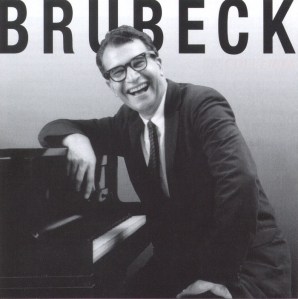
Shapiro got hooked on music in 1942 when an uncle gave him a phonograph player for his fifth birthday. A family friend in the jukebox business kept Shapiro supplied with records once they were too scratched for commercial play. At age 12, he discovered Brubeck, Paul Desmond and West Coast jazz.
Shapiro tried music lessons – he tackled the piano, vibraphone and banjo – but his musical aptitude was mental, not physical. He spent his time amassing records and building playback systems.
“Whatever money I made went into getting more records and improving what I had,” Shapiro says.
Shapiro migrated across Missouri and graduated pre-med from Washington University in St. Louis in 1958 with the intent of becoming a doctor.
Still an avid jazz fan, Shapiro would often get together with friends and play records. Then he saw Elvis Presley’s first appearance on the Tommy and Jimmy Dorsey show. Shapiro was hooked on rock and roll and spreading the gospel of Elvis.
“I didn’t know who or what it was, but it had the same impact on me as hearing JFK was shot,” Shapiro says. “I can still visualize that room and the TV set and here we are 50 years later.”
To a generation of buzz-cut, starched-collar squares, Elvis represented the rebellious, darker side of 1950s adolescence.
“Presley was a lightning rod from my generation, a button-down generation,” Shapiro says. “There was a whole side of our lives – smoking cigarettes, sipping beers, getting lad – that was never talked about, and here it was in our living room. I immediately became a hard-core rock and roll fan.”
By the time Shapiro graduated, he had abandoned the idea of being a doctor. He headed north to the University of Michigan and enrolled in law school. With his law degree in hand in 1961, Shapiro decided he wanted to be a tax attorney. He heard that New York University had a graduate tax law program, so he went to the Big Apple. One show on Manhattan Public Radio planted the germ that would become “Cyprus Avenue.”
“It was a thematic program,” Shapiro says. “They’d take someone like big-band arranger Fletcher Henderson and play arrangements done by different bands. They might play a combo version next to a big band version. I listened to that show religiously. In later years, I got thinking that there was so much richness and social impact in pop music as in jazz and I could do the same thing.”
Shapiro had finally found his calling, but after three universities and seven years of higher education, a career shift was not going to happen.
“By this time my family and I had spent a lot on higher education,” Shapiro says. “If I’d know then what I knew no, I would have been in the music business. It just wasn’t in the cards.”
The jump from disc jockey to tax law may seem extreme, but Shapiro says his work is extremely satisfying.
“Tax law is not what most people think it is,” Shapiro says. “It is the most creative part of the law, because what we do is planning. You might want to buy your partner out. If you do it one way, Uncle Sam takes a hunk. If you do it differently, you save money.”
Shapiro left New York in 1962 and returned to Kansas City to work and start a family. As his family grew and Shapiro flourished professionally, he became involved with broadcasting, but it was television that proved to be Shapiro’s stepping-stone to radio.
Deeply involved with public television’s early on-air auctions and fund-rasiers, Shapiro’s good deeds did not go unnoticed. A high school friend working at KCUR called Shapiro and asked if she could take him to lunch and discuss fund-raising methods. At the end of the meal, she asked if there was anything she could do for him. Shapiro asked for an audition to do a public radio rock show.
The dream was starting to materialize. Shapiro arrived at the studio with a stack of records for the show and hoped that the manager liked it.
“My first show was called ‘Ballads by Rockers.’ It was all ballad material done by people thought of as screamers,” Shapiro says. “He (the manager) says, if you can do that every week, you’re on.”
Sonic spelunking
As Cyprus Avenue entered its second decade on the air, Shapiro realized new music and artists – particularly rap and alternative – were not striking the same chord with him.
“I’ve known for a long time I’m the generation these people want to rebel against,” Shapiro says. “I respect the fact that the music says this to the previous generation,” he says, emphatically holding up his middle finger. “There is a need to shake up the status quo.”
Shapiro doesn’t mind the envelope pushing done by newer artists, he just doesn’t get it musically. The Talking Heads and Beck are about as modern as Shapiro gets with “Cypuss Avenue.”
But Shapiro’s show doesn’t need Moby and Soundgarden to be effective. “Cyprus Avenue” is a discovery process – for both Shapiro and for listeners – of influential artists and the impact they’ve had on music.
By showing listeners the roots of music, Shapiro leaves the listener naturally curious of the modern amplification and integration of this process.
“Cyprus Avenue” isn’t a forum for Shapiro to amaze everyone with his knowledge. It’s a platform for him to share his love of music and enlighten listeners who don’t fit commercial radio demographics.
Jackie Nixon, NPR director of strategic planning and audience research, says that shows like “Cyprus Avenue” are what NPR is all about.
“We treat our listeners with respect and intelligence and try to produce programming that makes people think as well as entertain,” Nixon says.
For Shapiro, those sleepless nights in the early 1940s were a discovery process.
“It was like going into a cave with a flashlight and all of a sudden – bang, something is shining back at you,” he says.
Shapiro has not forgotten that feeling and tries to instill the same feeling of excitement in his listeners.
“I think I broaden the awareness of the intelligence and importance of popular music,” Shapiro says. “I lift it out of the aural wallpaper and let people know it can be a powerful element. That it shapes opinions and tells a lot about where we are and where we are going.”


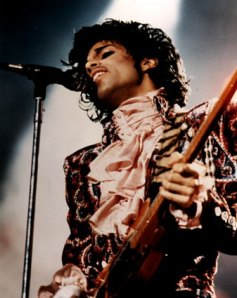 When Beck’s “Midnite Vultures” was released in 1999, no Kansas City radio stations would pick it up, despite heavy play from MTV and VH1. “Cyprus Avenue” not only spotlighted the album, but buttressed it with Prince’s “Rave Un2 the Joy Fantastic,” forming a fitting tribute to both.
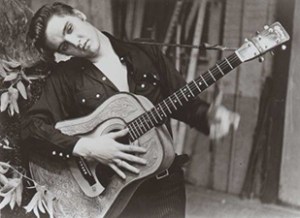 records. Then he saw Elvis Presley’s first appearance on the Tommy and Jimmy Dorsey show. Shapiro was hooked on rock and roll and spreading the gospel of Elvis.
 Shapiro gets with “Cypuss Avenue.”
 joelfrancis.com