15 jazz greats to emerge in the last 20 years (part two)

(Above: The Kora Jazz Trio in concert.)

By Joel Francis

Continuing The Daily Record’s look at the state of jazz today, here is the second of three installments shedding light on 15 jazz greats to emerge in the last 20 years. Note that these musicians are not necessarily the 15 greatest jazz artists to arrive since 1990. A brief listen to any of them, though, should more than persuade the most ardent purist that jazz is alive and well.

Ravi Coltrane

Not only has Ravi Coltrane followed in his famous father’s footsteps as a musician, but he’s established himself with his dad’s instrument. The child of John and Alice Coltrane (Ravi was two when his dad died), Ravi cut his teeth with McCoy Tyner and Elvin Jones before finally stepping out on his own. In little over 10 years, he’s build a strong catalog that would sound just as sweet under a different surname. Coltrane is currently on the road in a new septet celebrating 70 years of Blue Note Records. Albums to start with: Mad 6, In Flux.

Kora Jazz Trio

Comprised of pianist Abdoulaye Diabaté (who is not related to kora master Toumani Diabate), griot percussionist Moussa Sissokho and kora player Djeli Moussa Diawara, this trio deftly blends their African heritage with American jazz. Throughout their three albums, they have tackled songs by Charlie Parker, Thelonious Monk and the Buena Vista Social Club and delivered over a dozen dazzling originals. Imagine McCoy Tyner getting lost in an African marketplace and you’re getting close. Albums to start with: Part II, Part III

Diana Krall

Pianist and singer Diana Krall grew up surrounded by her dad’s extensive collection of Fats Waller albums, but ended up with a style and sound closer to that of Ralph Sharon, Tony Bennett’s longtime arranger and accompanist. Although Krall’s music is certainly not aggressive or pushing any boundaries, dismissing her music as smooth jazz for dinner parties would be a mistake. Her performances of Irving Berlin, Cole Porter and Jimmy McHugh have a freshness, energy and vitality lacking in other “supper club” performers. Krall’s most recent album, “The Girl in the Other Room,” leans heavily on original material written with her husband, Elvis Costello. Albums to start with: Love Scenes, The Girl in the Other Room

Medeski, Martin and Wood

Decades of touring have made the bass/keyboard/drums trio of Medeski, Martin and Wood one of today’s tightest ensembles. Their experimental, groove-based sound is broad enough to be equally at home at both Newport and Bonnaroo without changing a thing. Early pieces like “Hermeto’s Daydream” sound like Dave Brubeck run through “A Clockwork Orange,” while newer material features hip hop artists like DJ Logic, and guitarists Marc Ribot and John Scofield. Albums to start with: Notes from the Underground, Combustication.

Jason Moran

Pianist Jason Moran only has 10 years of recording under his belt, but he’s covered a lot of territory in that time. His albums contain interpretations of Prokofiev and Afrika Bambaataa interspersed with original compositions and spoken-word pieces. In addition to releasing seven albums under his own name, Moran has worked and recorded with Andrew Hill, Cassandra Wilson, Christian McBride, Don Byron, Ravi Coltrane and dozens more. Only 34 years old, Moran is just getting started. Albums to start with: Modernistic, Same Mother

Keep Reading: 15 Jazz Greats to Emerge in the Last 20 Years

Part One

Part Three

Five Legends Still Adding to Their Legacies

15 jazz greats to emerge in the last 20 years (part one)

(Above: Brad Mehldau performs an arrangement based on Radiohead’s “Exit Music (For A Film).”

By Joel Francis

Continuing The Daily Record’s look at the state of jazz today, here is the first of three installments shedding light on 15 jazz greats to emerge in the last 20 years. Note that these musicians are not necessarily the 15 greatest jazz artists to arrive since 1990. A brief listen to any of them, though, should more than persuade the most ardent purist that jazz is alive and well.

Roy Hargrove

Over the past 20 years, Roy Hargrove’s trumpet has proven to be one of the most versatile instruments ever. He’s equally at home conjuring Cuba on his own or summoning the spirit of African rebellion with rapper Common. Although Hargrove has yet found a way to reconcile his split personalities, he has built a strong catalog. In the Roy Hargrove Quintet, Hargrove works the more traditional mold forged by Freddie Hubbard and Clifford Brown. The RH Factor is the less-focused urban playground where Hargrove’s funky side comes out. Albums to start with: Habana, Earfood.

Brad Mehldau

Pianist Brad Mehldau cut his teeth working with saxophonists Joshua Redman and Wayne Shorter before striking out on his own. His lengthy concert arrangements often leave no stone unturned. Although his classical approach to playing is influenced by Bill Evans, Mehldau has no problem converting songs by Radiohead, the Beatles and Nick Drake into extended jazz workouts and placing them on footing equal to George Gershwin and Cole Porter standards. Mehldau made albums with opera singer Renee Fleming, guitarist Pat Metheny and pop producer Jon Brion without pandering on any project. Albums to start with: Back at the Vanguard, Day is Done.

Madeleine Peyroux

Singer Madeleine Peyroux’s voice sounds more than a little like Billie Holiday, but her style is closer to Joni Mitchell’s. Born in the South, raised in New York and California and seasoned in Paris, Peyroux splits the distance between jazz, folk and pop. Her interpretations of Leonard Cohen, Bob Dylan and Hank Williams numbers made her a star on Lilith Fair stages a decade ago and earned her acclaim as the “Best International Jazz Artist” by the BBC in 2007. Albums to start with: Dreamland, Half the Perfect World.

Miguel Zenón

Puerto Rican saxophonist Miguel Zenon recalls the tasteful, silky tone of Paul Desmond. In little more than five years, he’s released four albums, worked as a founding member of the SF Jazz Collective, won the Best New Artist award from JazzTimes in 2006 and named Rising Star-Alto Saxophone for three consecutive years in the Down Beat Critic’s Poll. While Zenon’s horn rests easily on the ears, his arrangements capture the spirit of his native island through insistent originals and unlikely hymns like “Great is Thy Faithfulness.” Albums to start with: Jibaro, Awake.

Maria Schneider

Maria Schneider’s compositions for her jazz orchestra have been some of the most ambitious works in the jazz canon since the heyday of the Duke Ellington Orchestra or Dave Brubeck’s late-’60s expositions. At once sweeping and evocative, Schnieder’s near-classical pieces reveal the deep influence of Gil Evans. The cinematic expanse of her work takes the listener on a journey where everyone from George Gershwin to Gustav Mahler is likely to appear. Albums to start with: Evanescence, Sky Blue.

Keep Reading: 15 Jazz Greats to Emerge in the Last 20 Years

Part Two

Part Three

Five Legends Still Adding to Their Legacies

KC Recalls: The Coon-Sanders Night Hawk Orchestra

coon

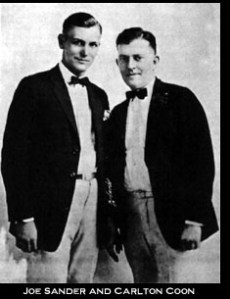
(Above: Joseph Sanders, left, and Carleton Coon.)

By Joel Francis

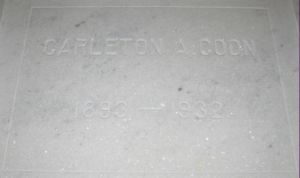
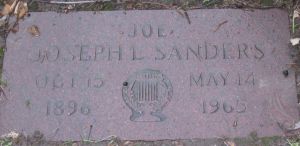
The music Carleton Coon and Joseph Sanders made for a dozen years together helped put Kansas City jazz on the map. Their Nighthawk Orchestra may have broken up in 1932, but it’s two bandleaders have been silently reunited for 40 years at Mt. Moriah Cemetery in Kansas City.

Coon and Sanders first met at a downtown Kansas City music store in 1918. Tall, handsome and quick-tempered Sanders, was an amateur baseball player on leave from the Army. He was practically the antonym of the pudgy, extroverted Coon. Despite their physical and temperamental differences, both men quickly found they shared a love of jazz and complementary tenor voices.

The following year, when Sanders got out of the Army, the two teamed up, formed a jazz combo and started booking gigs around Kansas City. With Coon handling business, Sanders writing songs and city boss Tom Pendergast ignoring prohibition with his “wide open” bars, clubs and brothels, the Coon-Sanders Novelty Orchestra was soon one of town’s in-demand outfits.

Shortly after Thanksgiving, 1922, the orchestra was booked to play on radio station WDAF. The success of that performance helped launch their weekly show, broadcast from 11:30 p.m. until 12:30 a.m. When the announcer let slip that “anyone who’d stay up this late to hear us would have to be a real night hawk,” thousands of listeners spread across Canada, Mexico and most of the United States let him know that they were proud to be “night hawks.”

Sanders quickly penned a theme song “Night Hawks Blues” and the pair rechristened their ensemble the Coon-Sanders Original Night Hawk Orchestra. In 1924, they recorded for the Victor record label in Chicago and agreed to let burgeoning Chicago promoter Jules Stein book a four-week tour. Stein parlayed his profits from that tour into his own booking company, which he called Music Corporation of America, or MCA.

On the strength of that tour, the Night Hawk Orchestra relocated to Chicago where their performance opening the Balloon Ballroom of the Congress Hotel was broadcast on KYW. Two years later, they moved to the Blackhawk Restaurant where fan Al Capone frequently left $100 tips for the band. On the strength of WGN radio broadcasts and reputation built playing around Chicago (including Capone’s Dells supper club in Morton Grove, Ill.), the Coon-Sanders Orchestra relocated once again in 1931.

Broadcasting weekly from Terrace Room in the Hotel New Yorker on CBS radio, Coon and Sanders found themselves in the same Big Apple circles as Bing Crosby and Guy Lombardo. Coon loved the night life, frequenting the Cotton Club and other Harlem jazz clubs, and making friends with Cab Calloway and Duke Ellington.

Sanders, on the other hand, was less enamored. He longed for the Midwest and made his sentiment plain the final number recorded by the Coon-Sanders Original Night Hawk Orchestra, “I Want to Go Home.”

Unfortunately, circumstances forced the bandleaders’ hands. Popular taste was shifting away from the Caucasian stylings of Coon and Sanders and toward all-black ensembles like the Ellington, Calloway and Kansas City’s Bennie Moten orchestras.

These circumstances, coupled with the Great Depression, forced the Night Hawks back to Chicago in April, 1932, for an engagement at the College Inn. Sander’s delight to be back in familiar territory was tempered when Coon was admitted to the hospital in critical condition. He died a few weeks later from blood poisoning from an abscessed tooth.

kc-graves_coon1

Coon’s 1932 funeral was one of the largest Kansas City had seen. Although his procession carried on for miles, his band’s legacy did not stretch so far. Less than a year after Coon’s death, Sanders dissolved the group and moved to Hollywood to write movie scores. Although Sanders was active in music for the rest of his life, he never regained the popularity he found with the Nighthawk Orchestra. In 1965, he died after having a stroke and was buried about 200 yards sound of his friend, Carleton Coon, at Mt. Moriah Cemetery.

Today, the Coon-Sanders Original Night Hawk Orchestra is a footnote in the Kansas City jazz story that includes big bands lead by Bennie Moten, Count Basie, Andy Kirk and Jay McShann, and soloists like Big Joe Turner, Mary Lou Williams, Walter Page and, of course, Charlie Parker. But Coon and Sander’s early triumphs helped paved the way for all who followed them out of Kansas City.

Ironically, the Night Hawks are most celebrated in Huntington, West Virginia, where the Coon Sanders Nighthawks Fans’ Bash has been held on the weekend after Mother’s Day for 39 years.sanders

Bird lives! (and so will jazz)

(Above: Mos Def is a rapper, but his song “Umi Says” has a very jazzy feel.)

By Joel Francis
The Daily Record

The New York Times jazz and pop critic Ben Ratliff participated in a very enlightening Q and A with readers yesterday. It seems Kansas City jazz fans, like our friend at Plastic Sax, aren’t the only ones obsessed about the state of the genre.

Several people asked Ratliff why jazz didn’t have a bigger audience, what the media’s responsibility is to promote jazz to a larger audience, if there is a stigma against jazz in mainstream culture and, most bluntly, whether jazz was dead.

Similarly, several readers were concerned about the legacy of today’s jazz artists. They asked which contemporary artists have the best potential to join the pantheon of innovators like Miles and Duke, and whether the current crop of players are pioneers or regurgitators. One bold reader actually called out the elephant likely hiding behind many of these questions. “Pretty much all jazz sounds the same today,” he said.

It seems that just as baseball fans can’t wait to compare Albert Pujols to Stan Musial, jazzheads love debating the merits of John Medeski to Jimmy Smith or Joshua Redman to Sonny Rollins. They (we) are forever insecure that our moment in the sun won’t measure up to the established legacy. They are right. Just as no contemporary president will be as lauded as the Founding Fathers, and no slugging outfield can surpass Babe Ruth’s mythology, there is no way that the abilities of Jaco Pastorius or Christian McBride can exceed the monumental achievements of Charlie Mingus and Ray Brown.

But that doesn’t mean they can’t all be enjoyed. Trumpeter Roy Hargrove hasn’t redefined the instrument the way Louis Armstrong did in the Hot Five and Hot Seven, but I think his playing on D’Angelo’s “Voodoo” and Common’s “Like Water For Chocolate” is inventive and unique. There is no comparison between the works, because they can’t be compared. They exist in different worlds. And questions about “is it jazz” are as silly and insignificant as whether or not poker or Nascar are sports. It doesn’t matter.

One of the elements I enjoy most about jazz is watching how it absorbed in reinterpreted in new contexts. One can hear the free jazz influence of John Coltrane and Pharaoh Sanders in both the Stooges and the Soft Machine, but what they did with it was drastically different.

Ironically, “fans” might be the only ones worrying or arguing about these issues. Just as Hargrove had no problem working with Common and D’Angelo, I’m sure Ron Carter didn’t hesitate before recording with A Tribe Called Quest and Black Star. Artists make art, not distinctions.

To these ears, pieces like “Water” from the Roots’ album “Phrenology” or Mos Def’s “Modern Marvel” from “The New Danger” embody the spirit of jazz as much as anything Rudy Van Gelder recorded for Impulse or Blue Note.

Just as folk music survived the birth of the electric guitar (and Bob Dylan plugging in), and Sacred Harp has peacefully coexisted with gospel, jazz will survive. It will not be preserved in amber, but it is too indelible to be erased from American culture.

Although Ratliff’s answers were thoughtful and informative, he failed to pass along one key piece of advice to the Chicken Littles so worried about the future of their art: Pick up a horn and do it yourself.

The True Story of Cadillac Records (Part Two): Chess Records and the Birth of Rock and Roll

BoDiddleyGunslinger

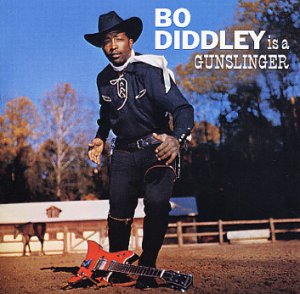
Above: Musical pioneer Bo Diddley was cruelly excluded from the “Cadillac Records” story.

By Joel Francis

With Willie Dixon feeding steady hits to Muddy Waters, Howlin’ Wolf and other Chess artists, the label had become a driving force of popular taste less than a decade after it was founded. While blues were the label’s backbone, the Chess brothers had a hand in nearly every facet of African-American music – from doo-wop groups like the Moonglows and Flamingos and jazz pianists Ahmad Jamal and Ramsey Lewis to the comedy styling of Moms Mabley and sermons by Rev. C.L. Franklin, Aretha Franklin’s father. Starting in 1963, Chess even had its own Chicago radio station, WVON, Voice of the Negro, which is still on the air today.

Chess introduced the world to rock and roll in 1951 when it released Ike Turner and Jackie Brenston’s “Rocket 88.” Four years later, two new Chess artists helped rock and roll grow up in a hurry.

Chuck Berry was discovered by Muddy Waters while on vacation to St. Louis. Berry’s upbeat blues were spiked with country and given a teenage twist. Songs about work became songs about school; his love songs were less dark and more playful. Berry was a poet, capable of packing more syllables per stanza than any other singer. Consider the imagery and complexity in the familiar opening lines Berry’s legendary “Johnny B. Goode:” “Deep down in Louisiana close to New Orleans/Way back up in the woods among the evergreens.” Berry’s guitar was just as active as his mouth. His quick fingers brought the blues at twice the tempo and his athletic solos made him the first guitar hero.

If Chuck Berry’s souped-up songs took the blues to the teen market in the guise of rock and roll, Bo Diddley’s African rhythms gave them a beat everyone could dance to. Diddley was born Ellas Bates in McComb, Miss. but took the last name McDaniel from his mother’s cousin, Gussie McDaniel, with whom he moved to Chicago as a child in 1934.  Diddley’s songs were downright primitive compared to Berry’s, but no less powerful or influential. His shave-and-a-haircut beat was the backbone for many of his own hits like “Bo Diddley,” and “Who Do You Love,” and countless imitators like Johnny Otis’ “Willie and the Hand Jive” and Bruce Sprinsteen’s “She’s the One.” Diddley produced strange sounds from homemade guitars, while Jerome Green’s maracas fueled the relentless beat. Diddley and Green’s back-and-forth on “Say Man” is one of the earliest recorded raps.

The 1960s were a boon for Chess. New stars like Etta James kept the label at the top of the charts while Chuck Berry was in jail. Rock and roll may have knocked Muddy Waters and Howlin’ Wolf from their perches at the top of the charts, but their old singles found a huge white audience in England. Teenagers who bought guitars to form skiffle bands were suddenly playing Willie Dixon’s songs and ravenous for Chicago’s blues. Dixon obliged them, organizing several annual American Folk Blues Festival tours of Europe. In return, the British Invasion bands brought Chess music back to America with them, introducing white America to the music its dark-skinned brothers and sisters had been enjoying decades. Waters, Wolf and the rest of the Chess stable were suddenly pulled from the chitlin circuit to colleges, theaters and festivals.

Chess responded to the changing marketplace in several ways. Before then, most Chess releases were 45 rpm singles. Now the brothers started packaging their hits together into LP records. Decade-old Sonny Boy Williamson tracks appeared on a “Real Folk Blues” compilation designed to appeal to the hootenanny crowd. Later, classic Waters and Wolf tunes were given psychedelic updates for the Summer of Love.

Keep reading The True Story of Cadillac Records.
Part One: The Birth of Chess Records and the Chicago Blues
Part Three: The Final Days and Legacy of Chess Records

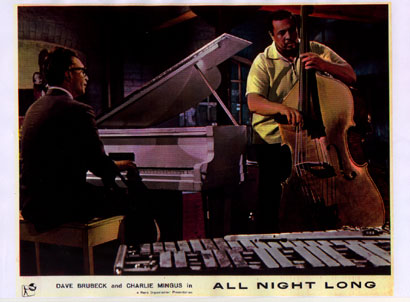
Dave Brubeck and Charles Mingus – “Non-Sectarian Blues”

By Joel Francis

The unlikely pairing of Dave Brubeck and Charles Mingus at a London film studio should have been a collision of worlds on par with the big bang.

In the early sixties, Brubeck was rewriting the jazz songbook with his legendary quartet that featured Paul Desmond, drummer Joe Morello and bass player Eugene Wright. Signed to Columbia Records, home to both Miles Davis and Doris Day, their “cool jazz” was both critically acclaimed and extremely accessible. In other words, it was jazz both hardcore fans and housewives could appreciate.

Charles Mingus, on the other hand, was the dark prince from the underbelly of the genre. His dense, avant-garde approach carried discordant melodies and boasted nearly impenetrable titles like “Pithecanthropus Erectus” and “If Charlie Parker Were a Gunslinger, There’d Be a Whole Lot of Dead Copycats.” He was on the threshold of a three-album deal with Impulse Records, the jazz label John Coltrane helped transform into the bastion of cutting-edge, experimental music.

Although Mingus and Brubeck’s music was world apart, the bassman and pianist first crossed paths in the post-War San Francisco jazz scene. The two met again in 1962 at Pinewood Studios in London.

The unfathomable union of Brubeck and Mingus occurred under the most commercial circumstances. Brubeck had been hired to write the score for “All Night Long,” a modern telling of “Othello” starring Richard Attenborough. In the liner notes to the 1991 Brubeck box set “Time Changes,” he describes their encounter.

“My contract for the film specified I would not play with Charlie Mingus, because I knew how demanding Charlie could be and I just wanted to avoid it. It was out of respect,” Brubeck said.

“And fear,” he added.

Mingus, who had also been hired to score certain scenes, kept bugging the director to play with Brubeck. Finally, Brubeck relented – with three stipulations: no rehearsal, no synching and no overdubbing. Everything had to be live and off-the-cuff.

With those rules in place, the pair decided upon a Mingus composition. “Non-Sectarian Blues” begins with Mingus thumping borrowed bass, walking the beat as Brubeck joins in on the piano. Mingus can be heard grunting and shouting encouragement to Brubeck as the pair play off each other with staccato piano riffs and pulsing, aggressive baselines. The result is so natural and engaging it’s hard to believe these men came from such seemingly disparate camps.

Although the song was recorded in1962, the performance remained unheard outside theaters until the Brubeck collection “Summit Sessions” was released in 1971.

“When it was over, Charlie picked me up off the floor and gave me a bear hug,” Brubeck said. “It was wonderful.”

Jazz Sets Make Great (Late) Stocking Stuffers

By Joel Francis
The Kansas City Star’s Back To Rockville blog

Two excellent jazz collections slipped into the bins quietly during the holiday rush last year.

“If You Got To Ask, You Ain’t Got It,” is three comprehensive discs of pure fun from Fats Waller. The set is comprised of 66 cuts from 1926 to 1943 than find the jolly, indomitable pianist in solo, quintet and big band settings. The included 100-page book contains an excellent biography that puts the songs into context, and a history of Fats’ various recording groups and sidemen.

But the true feast is the music, and what a feast it is. One disc focuses on Fats’ work out of the Tin Pan Alley songbook and includes his joyful interpretations of “Dinah,” “Two Sleepy People” and “‘Tain’t Nobody’s Business.” These songs have been, and continue to be, performed as a rite of passage for jazz musicians, and with good reason. It’s a fair bet, though, that no one has infused such glee and humor into their readings. One or two verses from any of these songs are guaranteed to chase the blues away and bring a smile to the listeners’ face.

The second disc finds Fats in instrumental, and often solo, mode and was the most revelatory to me. Fats’ organ work on “St. Louis Blues” blurs the lines between classical and jazz, and gospel chording obvious on several other songs point to the path Ray Charles would later take. In fact, one could easily look at this set as one of the many birth places of soul music.

Many of Fats’ most recognizable tunes – “Honeysuckle Rose,” “All That Meat and No Potatoes” and “Ain’t Misbehavin’” – can be found on the disc titled “Fats Waller Sings and Plays Fats Waller.” At 22 tracks, the disc just dips its toe in the water of Fats’ songwriting (the accompanying book says he wrote more than 400 songs), but like everything else here it’s all top-shelf.

To the uninitiated – which I’ll confess included me – “If You Got To Ask” is a great entry point to the world of Fats Waller. Longtime fans will no doubt enjoy having a great cross-section of the man’s works in one place.

Most of my familiarity with Fats’ came from Louis Armstrong’s 1955 tribute album “Satch Plays Fats.” Two songs from that album are found on Time Life’s “The Wonderful World of Louis Armstrong” collection. Armstrong has been collected and compiled literally hundreds of times, but what sets this entry apart is its DVD.

With performances spanning four decades, it is a true delight to see Satchmo perform hits like “When the Saints Go Marching In,” “Sleepy Time Down South” and “Mack the Knife.” Those songs are all present alongside 37 other well-known tracks like “What A Wonderful World,” “Blueberry Hill” and “Do You Know What It Means to Miss New Orleans?” on the two CDs that round out the set. There’s nothing from the Hot Five or Hot Seven ensembles here, but it’s just as well: true Satchmo fans will need at least one disc devoted exclusively to this period. The rest of his career, and material from the Verve, Decca, Columbia and RCA labels are all here, though.

If you’ve already got a decent, multi-disc Armstrong collection, it may not be worth your money to pick this one up, but fans looking for that first Armstrong purchase would do well to steer toward this collection if only for the DVD.

Perhaps the most attractive aspect of both these collections, aside from the music, is the price. Both may be found online for about $30, and while it may be too late to request them as stocking stuffers, there’s nothing wrong with treating yourself.

A Life Full Of Jazz

By Joel Francis
The Examiner

A smile beams from Rusty Tucker’s face. Conversation has just shifted to jazz, his favorite topic and lifelong passion. Tucker can’t disguise his delight. In fact, he can’t get more than a couple sentences without breaking into laughter or pausing to effuse happiness.

“I met all the people who are great now, when they were just starting out, Little Richard, Ray Charles,” Tucker said. “When I met Ray he was singin’ like Nat King Cole.”

When one of Charles’ musicians was sick, Tucker filled in for a one-night stand in Wichita, Kan.

“He (Ray) always said he was going to drive the first 100 miles,” Tucker said with a laugh. “Several years later when I saw him and went backstage to say hello he told me, ‘I knew I’d seen you before.'”

If stories were touchdown passes, Tucker would be Joe Montana.

“One of the biggest pleasures I had was playing with Dizzy (Gillespie),” Tucker said. “Teddy Stewart, my drummer, used to play with Diz and when Dizzy learned that, he couldn’t believe it. He said, why don’t we do a number together with both bands. So we did ‘A Night In Tunisia.’ The house went wild and I had to play a solo in front of Diz. The people just went crazy.”

Don’t worry, there’s more.

Tucker and Myra Taylor share a laugh at a 2006 jazz symposium at the University of Kansas.

“One night we were at Tootie Mayfair’s club on U.S. 40. Bird (Charlie Parker) was playing on 18th Street, then he was going to meet up with us. We’d had no rehearsal or nothing, and about midnight Bird walks in,” Tucker said. “He said we’ll do things everybody knows like blues, ‘How High the Moon,’ ‘What is This Thing Called Love,’ and ‘Perdido.’

“The blues went all right, but when we did ‘What Is This Thing Called Love,’ our piano player was an accordion player learning piano, see,” said Tucker, interrupting himself.

The apprentice pianist botched a couple chords, drawing Parker’s ire.

“Bird called us together and said it ain’t no sin not to know a tune, but to say you know a tune and not know, you (messed up) those chords,” Parker yelled at the pianist.

Bird sent word out to bring in a new keyboard player, but none were to be found at 1 a.m.

“They got in a big argument and finally Bird just told the piano player, ‘you just lay out.’ ”

Tucker grew up in Birmingham, Ala. where he took trumpet lessons from W.C. Handy Jr. It wasn’t unusual to see the elder Handy, a veteran bluesman and writer of many songs including “St. Louis Blues,” wandering the halls of and speaking to his son’s music school.

“He would always give lectures,” Tucker said. “He told us how to write tunes and get them copyrighted. He said he was getting $30,000 a year off that one tune (“St. Louis Blues”) so to always copyright your tunes.”

One day the Punch Miller Band came to town and announced they were auditioning trumpet players. Tucker tried out and got a job to play with them at the state fair.

“He (Punch) looked like Louis (Armstrong) and played like Louis and said ‘That’s why I can’t make any money,’ ” Tucker said. “I played with them at the state fair then for four or five weeks we’d go around. Then they told me they wanted me to go on the road with them. I was 18 and ran away from home to go with them. They called me ‘school boy.’ ”

He was in love with both the music and several of the dancers.

“I fell in love and ran away. My parents didn’t know where I was,” Tucker said. “I fell in love with a lot of the dancers. That was my problem; that’s why I’ve been married three times.”

Tucker toured with Punch for three years.

“We played the state fair in Sedalia and my first wife got sick,” Tucker said. “She lived in Kansas and her folks were going to come and take her back. I was supposed to meet the show in New Orleans and during the time I was here (in Kansas City) I met The Scamps and other musicians. At that time they were starting shows at the Orchid Room down at 12th and Vine and needed a trumpet player.”

Tucker decided to stay in town and take the Orchid Room gig. That was 1947 or ’48, he can’t remember the exact year, and Tucker has been here ever since. These days he plays most Thursday, Friday and Saturday nights at the Phoenix Club as a member of either Tim Whitmer’s KC Express or The Scamps, which he joined 25 years ago.

“Sometimes the Scamps play from 4 to 8 Saturday, then I play 9 to 1 with Tim. It’s long but I got used to it,” Tucker said. “The Scamps usually play for an older crowd. We do the Ink Spots and Mills Brothers. Tim does more jazz tunes. When I was on the carnivals with Punch we used to play all day so I’m used to playing long hours.”

Tucker may be a veteran of the KC jazz scene, but he still performs like he has something to prove, said Rudy Massingale, pianist and only original member of the Scamps still performing with the group.

“I think Mr. Tucker is still reaching for his goal,” Massingale said. “It seems like he’s just starting out and has to make a big impression.”

Independence has been Tucker’s home for 30 years now. He lives just off Noland Road with his wife, Diane. His children, daughters DuJuan and Carla, and son Lynn, live in Kansas City.

“It’s quiet and I don’t get any noise,” Tucker said. “Everything is so convenient. We were looking at a place in Vegas but the stores were so far away and there are so many people it’s crowded out there.”

By stretching his talent, Tucker today counts drums and piano among the instruments he can play.

“He’s a good showman,” Massingale said. “The main thing is getting the crowd’s emotions into it and he has that gift.”

Life is a Cabaret

By Joel Francis
The Examiner

A 5-year-old boy stands on top of the soda counter at the corner store belting out a version of “Born Free.” The customers pause from their shopping to look up and smile appreciatively. A burst of applause greets the boy when he is finished.

The store owner gives the boy a treat and he hops down off the counter.

“I knew all the words and he’d give me candy,” Vernon Quinzy said. “Ever since then I knew I wanted to sing and act.”

This was the start of Quinzy’s show business career. Thirty-four years later he has returned to his hometown of Independence to regroup, spend time with his family and refocus.

“I’d gotten out of the acting end of things,” Quinzy said. “That, combined with my sister and her two boys.”

Since returning to the area, Quinzy appeared in “Little House on the Prairie” at the Coterie Theater and is currently starring in “Kansas City Cabaret” at the Quality Hill Playhouse, 303 W. 10th St., Kansas City.

“I think the theater work has stretched me,” Quinzy said. “It has allowed me to grow as a performer. In KC Cabaret, every song is about an artist or composer who spent time in the area, so I get to both act and sing.”

If Quinzy has enjoyed “Kansas City Cabaret,” the cast has enjoyed him more.

“He’s about the sweetest human being you’d ever want to meet,” said Cabaret co-star Teri Wilder. “I love his voice Ð he could sing to me anytime.”

Director J. Kent Barnhart agreed.

“He’s the easiest guy to work with. He’s very hard working and very kind,” Barnhart said. “It’s always interesting to see new people in this place because it is so small, but he’s taken very well to working with a smaller cast and theater.”

Ask Quinzy about his accomplishments and he’ll talk about them in a shy way where he isn’t really talking about them. But the truth is that he palled around with Prince in the ’80s, and Luther Vandross called him last week to make sure Quinzy could attend his concert.

“Do you remember the Morris Day and the Time video ‘The Oak Tree?’ ” Quinzy asked. “I’m the person cutting down the oak tree at the very first of the video. I also did videos with Vanity, Appelonia, the whole group of Prince artists.”

So how was working with the purple one?

“He’s really shy,” Quinzy said. “He’d give you directions, but never look at you directly Ð he’d look at your shoes. It seems like he saves it all, I guess for the performance, but one-on-one he’s completely different.”

After graduating from Fort Osage High School in 1980, Quinzy attended the University of Missouri-Kansas City and transferred after two years to the American Academy of the Arts in New York. He spent the better part of the 1980s modeling, singing and acting and maintaining apartments in Los Angeles, Chicago and New York.

“I would usually spend a few months in each place,” Quinzy said. “I would mainly do acting in L.A., in Chicago I would do print work (modeling) and some jingles and then in New York for singing. This is when I was the busiest.”

Quinzy’s acting work got him spots in Luther Vandross, Prince and other music videos and a role as a hospital intern in “Days of Our Lives.” It seemed he would break into stardom with Morgan Fairchild’s evening soap “Paper Dolls,” but the show was canned after one season.

“I really enjoyed getting the role on ‘Paper Dolls’ and how it happened,” Quinzy said. “I was brought on as someone with five lines, but the casting director at MGM was very interested in me. Had the show gone on the role would have been expanded.”

In New York Quinzy would sing commercial jingles for advertisements.

“I have a short attention span so it all worked great for me, but it brought me to a point where I decided I needed a focus,” Quinzy said.

Work at the jingle houses were slowing down and Quinzy missed his family. So he decided to go back to his roots.

“He’s very close to my boys,” said Joyce Fowler, Quinzy’s sister. “They love going to see any kind of musical or show he’s in.”

As a single mom, Fowler said she can see Quinzy’s impact.

“He’s made a difference in their lives as far as personality,” Fowler said. “He’s been a positive male role model for them.”

Quinzy may have relocated, but the work hasn’t slowed. He is still very much in demand, just won’t show it.

“He gets lots of offers to go places, but they all want him to go someplace for a year,” Fowler said. “But he doesn’t want to relocate.”

Church has played a major role in keeping Quinzy grounded, he said. He is an experienced Sunday School teacher, most recently teaching the junior class at Village Heights Community of Christ.

“It gives me a foundation and balance in my life,” Quinzy said. “I think without the church it would be easier to get caught up in the heady side of the business.”

And the children thought it was great their teacher was popular.

“When I was teaching Sunday School in Los Angeles I was doing modeling and they’d see me doing underwear ads and they’d cut them out and put it up on the church bulletin board,” Quinzy said.

Ask Barbara Wiley about Quinzy and her voice will light up. She watched him grow from a teen-age actor in church and school plays and recruited him to teach when he returned to his home congregation.

“The kids love him,” said Wiley, a member of the pastorate team at Village Heights. “He makes class interesting for them. He’s a dream of a church school teacher because he cares about the kids and he’s interested in them and they know it.”

Quinzy has enjoyed his time back home, but may be leaving soon. He has been offered a job to host a PBS series on 18th and Vine, the old Kansas City jazz district. The job will take him to Los Angeles.

“They have allowed us to do the pilot and it just kind of fell into place,” Quinzy said. “I’m sure I’m not going to be here for a lot longer.”

But for now, Quinzy is content.

“I’m working and I’m happy and I enjoy all the people I’m working with,” Quinzy said. “I’m living my dream because I’m working , but I’m sure work will take be back to New York and L.A.”

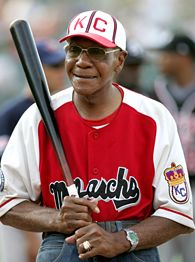
Buck O’Neil: Sweet times, sweet sounds at 18th and Vine

Buck O'Neil

Sweet times, sweet sounds at 18th and Vine
An Interview With Buck O’Neil

By Joel Francis

(Note: This 1998 interview was published in 2001 by The Independence Examiner newspaper.)

Q: I’d like to talk about the jazz scene in Kansas City, be cause you talked a little bit about that in your book, and I think that’s an exciting aspect of our town that people may not hear about as much, especially when they think of you. What was Kansas City like in the 1930s and ’40s?

A: Outstanding. See, Kansas City was a wide-open town and all the restaurants would have live music hotels would have live music, bars live music, and so it became easy to get a gig here. So musicians flocked here and played. Kansas City was a town that closed up at 1 o’clock (a.m.), at least the legitimate places. And so the musicians would flock to this area (18th and Vine) and we had a place called the Subway.

All the musicians would come after they got through working and, oh, they would jam all night, have jam sessions, yeah. You wouldn’t be surprised to see Basie there, or Joe Taylor, Georgia Thomas and musicians from all over the country. You would see them down there at this thing jammin’, just having a good time they were having a good time. Or Charlie Parker would drop in, or a blues singer maybe Big Joe Turner, somebody would drop in. All of these things were happening here, just a couple blocks from here; (it was) very alive.

Q: You were obviously a big part of the baseball scene. Why were baseball and jazz so closely linked together?

A: We played the same circuit, man. We’d go to Chicago to play. We’d be playin’ on the South Side and they would visit our ball games and we would go to the jazz joints. It was the same thing, not only there, also in New York City. We would play ball in the afternoon, say Sunday afternoon in New York City, Sunday night go down to Sugar Ray’s, the Apollo we were catchin’ all the acts there or the Baby Grand. All of this live music, it was just jazz. They were playin’ jazz all over. We did this at all of the places we would play. At matinee shows all of the theaters had bands. In Harlem, like I said, we would go to the matinee and maybe we would catch Cab Calloway, see? And we would go from there to Washington, D.C., and the Howard Theater. Maybe Ma Mabley was there and we would catch her, or Duke Ellington, or Fletcher Henderson. Everyplace that we went to play, the jazz people went, too. This was during the days of segregation, so we probably stayed at the same places, and we got to know them and they knew us.

Q: How would you describe the Kansas City style of jazz?

A: Exciting. Different. It was different that New Orleans. And right out of Kansas City, we come up with Charlie Parker, blowin’ notes nobody’d heard before. This is a brand new thing! These were the kind of things you could hear at that Subway. Here come a new dude, come in blowin’ something you hadn’t heard before a different note. Where did this come from? Where did this sound come from? It was a brand new sound.

And the good thing about it was that the musician was telling a story and it was his story to tell. They were playing the same song, but when it was his turn to come up and blow, it was different. And you could see the other musicians listening and coming in, you know. This drummer’s going to change the beat now. He’s got to change that. You could hear it if you’re listening; you could hear the change. This guy’s playin’ “Ain’t Misbehavin'” a little different than the other guy did. He’s puttin’ a little something of him in there. You could listen to a new story. The guy would blow notes, you knew who it was without seeing him, you know what I mean? You knew it was Armstrong. You didn’t have to be in there. You knew it was Ben Webster. You knew all these things. A little jazz. So many things were happening all over the country.

Q: Like what?

A: The music was live and the whole country (was) changing. A top musician would go to, maybe, Paris and when he came back from Paris, this was his style, but he had picked up something else. Or he might go to Egypt Cairo, or something like that. And here was a guy doing something on the bongos that was just different than they were doing in Harlem. You added a little something to what you were doing. You would take a little of this, a little of that.

And the jazz singers (did this with their) different phrasing styles. Like, nobody phrased like Billie Holiday. She could just open her mouth and hey, that’s Billie. You knew because nobody did it like Billie. You could hear the different phrasing and all of it was so clean, so clear.

This is the only thing I have against a lot of the things they play now. It’s hard to understand, because a lot of the words, the way they’re sayin’ them, I don’t get. But they were so clear. Like the tones they were playin’. The tones were so clear, you could hear it, you knew it; you weren’t confused. I like rap. I like to hear rap if the guy is distinct and I can understand what he’s saying. But if he jumbles it all together where I can’t understand it, it ain’t good. This is why music then, anyone who sang it, (sang) a clear note. You could understand it. You like to know what they’re doing and where they’re going from there. They will lead you around through this thing if you listen. Music is a great medium.

Q: What role did Tom Pendergast and his political machine play in the development of jazz in Kansas City?

A: It provided a place for them to play it was a job. It was in that era they had the speakeasy they had everything goin’ on and you had to provide entertainment with it.

Q: So did Pendergast turn a blind eye to it?

A: No. If there was a blind eye, it may have been the government turning a blind eye to Pendergast. There wasn’t anything illegal about jazz, but the things Pendergast was doing could have been illegal.

Q: Did any of Pendergast’s illegal activities help the jazz scene grow?

A: It just may have, because you know you’ve got to entertain the people you’re selling whiskey to, or the people going to gamble. Right now, we’ve got the boats, and gambling is legal. Whereas it wasn’t legal during that day and you had to entertain people. This was good entertainment.

Q: If speakeasies were illegal, how did people know where to go to hear the music?

A: Pendergast was running the city. When you say illegal, if I am the boss of the city and I am running the city this way, it wouldn’t be illegal. What would have been against the law was this: If you were running a club and instead of closing at 1 o’clock, you stayed open ’till 3 o’clock. If you stayed open at 3, you were doing the same things at 3 you were doing at 10, but the law was you had to close at this time. And the places would close, the musicians would come down here and go into that Subway and play and jam. And somebody down there would be doing something illegal, because somebody would be selling some whiskey. A lot of these things were happening before prohibition.

Q: So did Prohibition help the jazz scene?

A: Yeah, sure. Actually it opened it up all over the country. Wherein you had to go just to certain spots before, now you’re (playing) in Manhattan, you’re playing in Times Square. You’re playing now all over the country, even going to universities to play. Before you were playing in speakeasies, but now you’re playing in clubs.

Q: What were some of the hot jazz clubs in Kansas City at that time?

A: The Milton was strictly jazz. They had so many different clubs in Kansas City and … music was everywhere. During that time, just like a band comes to the Starlight and plays now, every weekend it was some band at the Municipal Audi torium. That doesn’t just mean Count Basie or something like that, but Benny Goodman would play; everybody would come. I’ve seen so many wonderful bands down there.

Q: What are some of your favorite bands you’ve seen play there?

A: I like Duke. To really jump I like Lionel Hampton. I was a very good friend of Count Basie; I like Basie. I like Goodman. The Jazz Philharmonic that was the top musicians put together and they traveled all over the country. Oh man, you talk about some music! You’d hear these great artists play. I like Armstrong. They had a girl band called the Sweethearts of Rhythm; they could play. First of all you were going because it was a girl band and you wanted to see them, but they could play.

There was another one called Tiny Davis. She blew that trumpet Louis Armstrong-style; she could play. Bob Burnside played the sax he could play the bell off of that horn! It was the era of the Mills Brothers. They were one of the first singing groups, the Platters and a whole lot of others came behind them.

Q: I couldn’t go too far in this interview without mentioning Satchel Paige.

A: He was an outstanding athlete.

Q: What did Satchel think of the jazz scene?

A: He loved it. He used to play the ukulele. He would play on the bus and we would sing along. Satchel Paige, yeah, we had a lot of fun.

Q: Did Satchel go with you to all the concerts at Municipal?

A: Yes, yes he would go. We all would go as a team. They (jazz musicians) would come out to the ball game in the afternoon and at night we would go down to the jazz concert. That was a couple of musts. If you lived in Kansas City, it was a must on Sunday afternoon to go to the Monarchs and see baseball, and it was a must after that to go to the Municipal Auditorium and hear these bands.

Q: Did they ever bring any of the Monarchs onstage and introduce them as celebrities?

A: Actually they would introduce the teams, because if we were playing the Chicago American Giants here, they would be going too. All of us would be there.

Q: Did both teams sit together?

A: Sometimes.

Q: What did your managers think about the jazz scene?

A: They were there. What do you mean “what did they think,” they were with us! (Laughs).

Q: Did they impose any rules about drinking and things like that?

A: You knew that yourself. You knew you couldn’t drink too much. We were there, but we didn’t drink that much. Everybody drank a little maybe, but you didn’t drink that much because you knew you had to play ball the next day.

Q: I’d like to name off some jazz performers and have you tell me some memories about them. A lot of these we have mentioned already. Let’s start with Bennie Moten.

A: Bennie Moten, that was early. That’s when I first met Count. Count was playin’ with Bennie Moten. A good musician.

Q: Lionel Hampton.

A: I made him first base coach for the Monarchs. It was just for a show. They were playing here that night and I put him in a uniform. His wife said that he kept that uniform and had it on an easel he kept in one room. He would tell everybody about that uniform.

Q: Count Basie.

A: Basie was a Yankee fan, and I’m a Dodger fan, see. And we would bet every year on the Yankees and Dodgers. You know he beat me most of the time, but we had a lot of fun.

Q: Duke Ellington.

A: Duke was sophisticated and clean. Clean music. Like with Lio nel, you wanted to dance, Duke you wanted to listen.

Q: Charlie Parker.

A: Oh, now you got a new step. You could start dancin’ a different way because you got a different beat. Charlie, he used to blow here at that Subway. He’d drop in as a kid, blowin’ that horn, making those new sounds.

Q: How did his death at such a young age affect you?

A: It wasn’t too much of a shock because of the way he was going. You knew the things happening to him, so it wasn’t a shock.

Q: Louis Armstrong.

A: That was music you could listen to, and you could laugh with Louie because Louie had a kind of a laughing horn, you know. When he blew that horn you’d laugh about the different notes he’d play. The thing about it is, you know that handkerchief he had to cover up so nobody was coppin’ those things. Quite a fella. Baseball nut too; he liked baseball.

Q: What was Satchmo’s favorite team?

A: It would be, more or less, the Black Yankees.

Q: What do you think caused the decline in the jazz scene in Kansas City?

A: It’s coming back now, and that’s all over the country. Different listeners are coming and they’re looking for new sounds. This is our last progress in anything and it’s something new, something different.

Q: What does jazz mean to you?

A: It has afforded me a lot of pleasure. I listen to it now and I like all music. There’s something about music. With television, I have to look, but I can do anything I want to do and listen to music. Every once and awhile somebody’s going to hit a note or something and I’m going to stop and listen to what they’re playing. Music can put me to sleep at night or it can wake me up. It’s a soothing thing, but it can be very exciting too.