15 x 15

(Above: The only acceptable version of “Hoochie Coochie Man.”)

By Joel Francis
The Daily Record

A fun game has been going around the internet recently: Name 15 albums that influenced your taste in music today in 15 minutes. Because we never play anything straight up at The Daily Record, we twisted the rules a little and came up with 15 songs we dislike by artists we like.

  1. Led Zeppelin – “Stairway to Heaven.” Might as well get this heavy out of the way first. Classic rock radio has destroyed this great band’s best-known song. I’ve heard it so many times at this point I can conjure it up in my sleep. I never need to hear it again. Let me go one step further: I’d rather hear a half-hour live version of “Moby Dick” than have to sit through “Stairway” again.
  2. Joni Mitchell – “The Circle Game.” Joni Mitchell’s 1970 song about the cycles of life is actually a remarkable song. It works too well, though, leaving me completely depressed and feeling like I care about has decayed around me in just under 5 minutes. No wonder Mitchell selected this song to close her classic album “Ladies of the Canyon.” After this there’s nowhere to go.
  3. Beastie Boys – “Fight For Your Right To Party.” The Beastie Boys were a lot more creative and fun than the frat boy stereotype this dumb song earned them.
  4. Van Halen – “Love Walks In.” The Sammy Hagar period of the band is rightly painted as inferior to the original lineup, but you can’t help when you were born and I came of age right in the middle of Van Hagar. I never had a problem with Eddie switching from six-string to synths, but the sugary melody combined with lyrics about aliens made this song more than I could handle.
  5. Boogie Down Productions – “Jimmy.” Usually a master of the message, KRS-One’s sermon on safe sex comes off as both preachy and simplistic. The idiotic chorus destroys what little credibility may remain. The track did inspire the Young MC cut “Keep It In Your Pants” from his follow-up to “Stone Cold Rhymin’.” I wish I didn’t know these things, but I do and there’s nothing anyone can do about it.
  6. Anyone – “The Long Black Veil.” First performed by Lefty Frizzell in 1959, this country classic has become a staple for Johnny Cash, The Band, Emmylou Harris, Joan Baez, Bruce Springsteen and a dozen more. I can’t argue with any of those artists, but for a reason I could never put a finger on, it never resonated with me.
  7. Radiohead – “Creep.” This song introduced Radiohead to America, and for that I should be grateful, but “Pablo Honey” is the outlier in their catalog for me. In my mind, the catalog officially starts with “The Bends.”
  8. James Brown – “Killing Is Out, School Is In.” This song became the unintentional center point of Brown’s 2002 concert at the River Market. A lackluster set had already been derailed by a couple Janis Joplin covers by Brown’s then-wife and mayor Kay Barnes onstage proclamation of James Brown Day. Several years after Columbine, the message was not only no longer timely, but embarrassing. The song was later released as a single. Thankfully few heard it.
  9. David Bowie – “Changes.” Yet another song ruined by radio and turned into lazy shorthand for its era by television and movie producers.
  10. The Beatles – “The Long and Winding Road.” Dislike may be too strong a word for this song, but Paul McCartney had already delivered a better ballad for the “Let It Be/Get Back” project. This one feels like a syrupy afterthought to me.
  11. Steve Earle – “The Devil’s Right Hand.” This number brought Earle acclaim as a songwriter before he established himself as a recording artist in his own right. I think Lynyrd Skynyrd covered the same turf better with “Saturday Night Special.” The verses aren’t band, but the song is overly reliant on the repetitive chorus.
  12. The Who – “Behind Blues Eyes.” This sensitive number never seemed to fit in with the rest of “Who’s Next” and it seemed even more out of place as a single. Pete Townshend usually struck the right balance of being tough and vulnerable at the same time (see “The Song Is Over” or “How Many Friends”). He sounds weak and whiney on “Blue Eyes.” Limp Bizkit’s cover confirmed my instinct. Sympathy for Fred Durst? Never!
  13. Anyone but Muddy Waters – “Hoochie Coochie Man.” In the hands of Waters and the Chess studio pros, this is a blues masterpiece. For just about anyone else, it is usually a lame attempt for a middle-aged white guy to show he’s hep to the blooze. I’m looking at you Eric Clapton, Alexis Korner, Steven Seagal and Dion.
  14. Jay-Z – “Young Forever.” Alphaville’s 1984 hit “Forever Young” worked perfectly as the soundtrack to Napolean Dynamite’s dance with Deb. In the hands of Hova, however, it is ridiculous.
  15. Louie Armstrong – “What A Wonderful World.” There’s nothing wrong with Satchmo’s sublime performance. He manages to walk the tightrope between sincere and saccharine as the strings underneath support his presentation. Unfortunately, no one understood the song’s message, as it has a crutch when movie producers want to tug on heartstrings. Joey Ramone’s version was great upon release, but in the decade since it has become a hipster version of the same cliché.  I guess this leaves me with Wayne Coyne and the Flaming Lips’ weird yet heartfelt reading. I don’t think mainstream America is ready for that to be thrust down their throats – yet.

Keep reading:

Review: Flaming Lips New Year’s Freakout

Jay-Z – “The Blueprint 3″

Review: “Pops” by Terry Teachout

Review: Old 97s, Lucero

(Above: The Old 97s road-test the new song “Every Night Is Friday Night Without You.”)

By Joel Francis
The Kansas City Star

The 16-year history of the Texas-born Old 97s follows a trajectory well worn by other bands: start out with plenty of youthful energy and fire in the belly and gradually grow more mellow and/or pop-oriented. For theirThursday night’s performance at Crossroads, the alto-country quartet shrugged off its pop trappings and attacked their material with vibrant intensity.

The first sign of the evening’s energy came on the second song, “Dance With Me.” Recorded as a pop song for their latest album, 2008’s “Blame It On Gravity,” guitarist Ken Bethea tore into the main riff like a buzz saw, pushing the tempo to nearly double its original speed. When bass player Murry Hammond was given the mic shortly thereafter for a cover of Merle Haggard’s “Mama Tried” the band pushed and prodded the laid-back vocalist.

Flanked by Bethea and Hammond in nearly matching red plaid shirts, photogenic singer/front man Rhett Millershook his hips like Elvis behind his Stratocaster. He yelped, yowled and screamed his way through the 90 minute set list that featured as many cuts from their first album – four- as their latest.

The band’s third album, “Too Far To Care,” is widely considered its best. They treated the crowd to six cuts, or nearly half the album and they consistently received the biggest responses of the night. “Big Brown Eyes” and “Barrier Reef” got everyone dancing and Miller took an audience request of “Niteclub” during the encore.

Miller seemed to enjoy playing the scorned lover and dumping extra venom into likes like “I hope you crash your momma’s car” and “Thought so much about suicide/parts of me have already died” on back-to-back trips down lonely street during “Lonely Holiday” and “Wish the Worst.” A couple songs later, on “Melt Show,” he emphatically kicked the air during the chorus.

Bethea spurred Miller’s energy, leaping into the air at the start of “The Fool,” dropping a Dick Dale-style guitar solo into “Smokers,” another Hammond vocal showcase,” and adding a nice countermelody to the most delicate and upbeat song in their catalog, “Question.” His solo leading into “Timebomb,” the traditional closer, turned the already fast number into something like a punk song.

Drummer Philip Peeples was the brick on the accelerator that never let up. His cadences consistently pushed the band harder and faster. His kit was at the center of “Every Friday Night Is Lonely Without You,” a staccato-riffed song from the band’s upcoming fall album. It was the only song the half-capacity crowd didn’t sing or air guitar along to all night, but embraced just the same. Peeples also took nice mini-solos during “Doreen” and “Early Morning.”

Lucero rock the Bottleneck in 2008.

The drum solo after “Early Morning” led into a reading of R.E.M.’s “Driver 8,” one of covers the band cut for its new “Mimeograph” EP. The arrangement hewed closely to the original, but it was interesting to hear the lyrics through Miller’s enunciation.

Normally the more rambunctious of the two bands, Lucero was more subdued that night. Singer Ben Nichols embraced the band’s mellow side with numbers like the gospel piano ballad “Goodbye Again,” “Kiss the Bottle” and the one-two of “Hey Darlin’ Do You Gamble?” and “Nobody’s Darlings.”

The five-piece band displayed its Memphis roots by adding a two-piece horn section for a set that featured several cuts from last year’s album “1372 Overton Park.” Early in the set the horns competed with the pedal steel in the mix, but they soon settled in adding extra punch and depth. The brass gave “That Much Further To Go” and “Sixes and Sevens” an E Street sound.

Lucero’s 65-minute set ended with nearly everyone taking a solo during the joyous “All Sewn Up.”

Old 97s setlist: Streets of Where I’m From; Dance With Me; Won’t Be Home; Mama Tried (Merle Haggard cover); Lonely Holiday; Wish the Worst; The Fool; Smokers; Melt Show; Question; Stoned; Up the Devil’s Pay; Barrier Reef; Driver 8 (REM cover); Early Morning; Can’t Get A Line; Big Brown Eyes; Doreen. Encore:Every Night Is Friday Night Without You; Niteclub; The Easy Way; Timebomb.

Keep reading:

Review: Old 97s (2008)

Review: Cross Canadian Ragweed (with Lucero)

Review: “The Oxford American: Book of Great Music Writing”

Grandpa’s Got A Brand New Bag

(Above: “Jefferson Jericho Blues” is one of several new songs Tom Petty and the Heartbreakers have been regularly playing on their tour this summer.)

By Joel Francis
The Daily Record

The sets Heart and Sarah McLachlan delivered back-to-back at last week’s Lilith Fair were studies in contrast. Sure their styles are wildly divergent, but each act presented three new songs during their one-hour sets.

Heart was proud of their songs, delivering them in succession. They may have gone one song too far, but the crowd responded positively. McLachlan, on the other hand, apologized for performing new songs. She sprinkled them throughout her hit-laden set and express regret before and after each one. She needn’t have bothered – the audience enjoyed them anyway.

Beloved songwriter James Taylor has only released one album of original material this decade.

Nostalgia is the single most lucrative element in the music industry today. Fans are wiling to shell out more than ever to see legendary artists in concert. Paradoxically, those fans are loathe to hear anything outside of the sacred catalog. This is a closed cannon. With a few exceptions, anything after two dozen hit singles or 10 successful albums is off limits. Some artists, like Billy Joel, are fine with this. Joel hasn’t written any new pop material in nearly two decades. Others, like Fleetwood Mac, shuttle most of their new music to individual projects (although the band did deliver a new album in 2003, their first in eight years).

Solo performers have fewer options. Paul McCartney and Elton John have bravely soldiered on, each releasing four albums in the past decade and highlighting his latest release in concert. James Taylor and Paul Simon have slowed their output to a trickle; both have only released one or two albums of original material in the new millennium, respectively.

Guitarist Junior Marvin and the Original Wailers have been playing material from their upcoming album alongside Bob Marley's classic material.

Then there are the rare established artists whose fans salivate over new material. In 2007, Bruce Springsteen’s “Magic” hit No. 1 on the album charts. Despite a Clear Channel missive not to play any of the new material on its stations, Springsteen performed the majority of the album on his sold-out tour. When “Working on a Dream” appeared just 18 months later, it featured heavily in setlists as well.

The Original Wailers face an even more daunting task. Their catalog is not only the most popular and indelible in reggae, but Bob Marley, their frontman and songwriter, has been dead for 30 years. When the band performed in Kansas City earlier this year they boldly mixed many original songs from their upcoming album in with Marley’s classics. Surprisingly, the new riddims didn’t stop the dancing for a moment.

Artists have three choices onstage: ignore performing new material, apologize and play a couple new songs, or deliver a block of new material. None of these are optimal. (Quick caveat: the songs in question should be worthwhile additions to the catalog, not a cheap excuse to trot out the same tired hits yet again.)

Overconfidence in new material may send fans fleeing for the bathroom and bar. I’m confused why any artist would ever apologize for the music they perform, especially if it is something they have written or hold dear. Ignoring new work reinforces the same message as apologizing: I’m not proud of this material. If they’re not proud of it, why should fans bother?

Despite their perceived authority and glamor, artists have little power over how their music will be marketed, sold and received. Going onstage is as close to complete control that they will ever have. Songwriters should own all of their material, especially the latest and least familiar. Don’t be afraid to surprise. Weaving new material in with the old not only freshens the setlist, but shakes some dust off the favorites by placing them in a new perspective and context. It tells the fan “if you liked this then, try this now.” Remember: Today’s new songs are tomorrow’s sing-alongs.

Keep reading:

Review: Lilith Fair

Review: The Original Wailers

Review: Bruce Springsteen

Review: James Taylor and Carole King

Edwin Starr – “War”

Edwin Starr – “War,” Pop #1, R&B #1

By Joel Francis
The Daily Record

The Temptations had cut other political songs, such as “Message for a Black Man,” before they recorded the original version of “War” in 1969. Although the songs were generally well-received, they were closer to Norman Whitfield songs featuring the Temptations’ vocals than true Tempts cuts and rarely performed them in concert. Although Motown received several requests to release “War” as a single after it appeared on “Psychedelic Shack,” Berry Gordy feared ruining his group’s image with such a political number and resisted. Instead, he handed the number to another artist in Whitfield’s stable: Edwin Starr.

Prior to cutting “War,” Starr had been kept out of the studio for six months. His last big hit “25 Miles,” which reached No. 6, was 18 months old and long forgotten. Consequently, Starr was hungry when he was finally able to reach the mic. His pent-up energy added more charge to Whitfield’s already incendiary lyrics. Starr’s impassioned singing put Dennis Edwards and Paul Williams to shame on the now-placid Temptations reading.

Bolstering Starr’s vocals was a powerful horn riff, funky organ line and a smorgasboard of wah-wah guitars, fuzz bass, tambourines and nearly every other trick in Whitfield’s psychedelic bag of tricks. The production was Phil Spector’s Wall of Sound reimagined for the trippy, proto-metal flower child age.

Just over 15 years after its initial release, Bruce Springsteen took the song back into the Top 10 with his cover. Although no major U.S. conflict was brewing at the time, the song still packed a powerful punch. A little more than 15 year’s after the Boss’s version, “War” illustrated how far society had regressed when the song was placed on a list of “lyrically questionable songs” banned by the Clear Channel Communications corporation in the wake of the Sept. 11 attacks. The list also included “Imagine” by John Lennon and Louis Armstrong’s “What A Wonderful World.” Sadly, it is hard to picture as political statement as powerful as “War” penetrating the airwaves again.

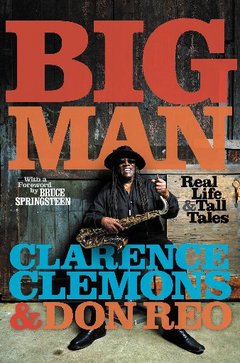
Review: “Big Man” by Clarence Clemons

(Above: Clarence Clemons, the Big Man, scored a Top 40 hit with this song.)

By Joel Francis
The Daily Record

Legions of dedicated Bruce Springsteen fans have no doubt haunted hotel bars after concerts in hopes of being able to buy their heroes a drink and soak in their stories. In his new autobiography “Big Man,” E Street saxophone player Clarence Clemons offers fans the next best thing with 360 pages of his favorite stories from the road and adventures with friends like Robert DeNiro, Kinky Friedman and, of course, the Boss.

The warning is right there in the subtitle: “Real Life and Tall Tales.” This is not a chronological telling of Clemons’ life. Rather, it’s a series of episodes and anecdotes. In the first 50 pages, the story races from Clemmons’ childhood in rural Virginia to meeting Springsteen, his first job with a band and ultimately joining the Bruce Springsteen Band.

Early vignettes like the portrait of Clemons and Springsteen hanging out underneath the Jersey pier are vivid snapshots of uninhibited creativity, innocence and ambition. The book is best when it operates along these lines, lifting the veil of history and putting the reader in the moment.

Clemmons’ telling of receiving a phone call from Springsteen while on tour with Ringo Starr’s All-Starr Band is especially poignant. Also entertaining is the tale of shooting pool with Fidel Castro in Cuba as Hunter S. Thompson offers commentary from the bar.

But moments like this are divorced from context, and raise many unanswered questions. Clemons never discusses how he spent decade away from the E Street Band or how he became friends with the Good Doctor. Too frequently the story is bogged down by diversions of pay phone conversations with Groucho Marx and competitive exchanges with Norman Mailer.

There is no doubt that Clemons is an intelligent man, filled with wit who knows how to tell a story. He is happy to take the reader into the Temple of Soul, the backstage sanctuary Clemons creates before each show, but unwilling to reveal everything that happens away from the music.

Clemons recognizes omitting the juicy bits undermines his purpose. At one point he jokes about writing another book that contains all the sex and drug stories from the early days and publishing it after everyone in the band has died, but realizes everyone has children and grandchildren and quickly recants. The decision is understandable, but the kid gloves weaken the saga and experience.

For example, we learn that Springsteen has two rules: don’t take drugs and be on time. Clemons reports that since he breaks one rule regularly, he is always punctual. Drugs, particularly marijuana, show up several times, but Clemons never explains his introduction to these experiences or their perpetual attraction.

Clemons is more transparent about his health problems. He had both knees and hips replaced prior to the “Working on a Dream” tour and underwent a tough rehab regimen before being able to perform at the Super Bowl. These issues, coupled with ruminations on the deaths of E Street veterans Danny Federici and Terry Magovern give the last third of the book a morbid preoccupation. What should be a celebration, feels like a premature wake.

The biggest problem with “Big Man,” however, is co-writer Don Reo. While most “as told to” authors stay in the background, Reo has no difficulty inserting himself into the story, bragging about his past as a television writer for “The Cher Show” and bringing “Blossom” to the small screen. Reo sometimes serves as an uber-fan insider, providing a third-party perspective on the inner workings of a Springsteen tour or an alternate angle on some of Clemons’ tales. Unfortunately, he’s too preoccupied with dropping names and gushing about how cool it is to be part of Clemmons’ entourage to be completely effective.

Reo’s interruptions also cause an inconsistent narrative voice. Clemmons’ story distractingly jumps between first and third person, depending on which author is helming the chapter.

Despite these shortcomings, “Big Man” is a breezy, entertaining read. Although it may have worked better as a series of blog entries or podcasts, hardcore fans will revel in hearing the man who defined “Jungleland” spin yarns.

(Below: Clemons reflects on the death of longtime E Street band member Danny Federici.)

Keep reading:

Review: Boss is Bigger than Big 12 Tourney (2008)

Bruce Springsteen and Tom Morello – “The Ghost of Tom Joad”

Review: Springsteen’s “Dream” Needs More Work

Springsteen in the Waiting Room: Drop the Needle and Pray

Springsteen Rocks the Hall (part 1)

Springsteen Rocks the Hall (part 2)

More Bruce Springsteen on The Daily Record

Bruce Springsteen rocks the Hall (part 2)

(Above: Bruce Springsteen and the E Street Band back Chuck Berry at the 1995 Concert for the Rock and Roll Hall of Fame in Cleveland.)

By Joel Francis
The Daily Record

“Rock Hall Live,” an exquisite nine DVD box set of performances and speeches from the past 25 years of Rock and Roll Hall of Fame induction ceremonies is a treasure trove for all music fans, but it should especially attractive to Bruce Springsteen fans. Springsteen appears on all but two of the discs in more than a dozen performances and nearly as many speeches. As the unofficial MC of the collection, Springsteen makes more appearances than anyone else.

On Monday, The Daily Record examined the first half of Springsteen’s performances on the “Rock Hall Live” box set. Today, we look at Springsteen’s appearance at the Concert for the Rock and Roll Hall of Fame, his triumphant E Street reunion kick-off and sitting in with U2.

1995 – “Johnny B. Goode” (with Chuck Berry)

In the classic Chuck Berry film “Hail Hail Rock and Roll,” Springsteen tells the story of how he and his pre-E Street band backed Berry in the 1970s. More than two decades later, at the Concert for the Rock and Roll Hall of Fame, Springsteen reprises the role here, this time with his E Street brothers in tow. Springsteen is relegated to backing vocals and rhythm guitar, but Clarence Clemons punctuates Berry’s lyrical bursts with stings of saxophone a la King Curtis. Sporting a goatee and ear-to-ear grin, Springsteen sheds his backup roll to peel off a brief solo after Berry’s duckwalk.

1995 – “Whole Lotta Shakin’ Going On” (with Jerry Lee Lewis, rehearsal)

In this bonus feature Springsteen and the E Street band rehearses “Whole Lotta Shakin’ Going On” with Jerry Lee Lewis before the Concert for the Rock and Roll Hall of Fame. The musicians soundcheck their instruments as the crew preps the stage. There’s one dry run through the number, which is unfortunately edited out. Even though everyone is just messing around they still earn applause from the resting workers on the side of the stage. The footage isn’t incredible enlightening or interesting, but it’s worth watching once.

1999 – “The Promised Land,” “Backstreets,” “Tenth Avenue Freeze-Out,” “In the Midnight Hour” (with Wilson Pickett)

The E Street Band were on the cusp of their first tour together in 11 years when they teased the world with a four-song set at the Waldorf-Astoria hotel in New York. Although the entire performance is captured in the “Rock Hall Live” box, it is frustratingly spread across four discs. Springsteen calls each band member one at a time to join him during onstage during his induction to the hall. While there’s no rust from the decade apart in the opening “The Promised Land,” the band is still getting warmed up. There’s no sweat on Springsteen’s dress shirt at the end of the number.

One can tell from the opening chords of “Backstreets” that this is going to be a special performance. Springsteen unloads every ounce of his soul into the microphone and beats a great solo out of his battered Telecaster. The band is majestic and powerful and inspired the normally staid attendees to dance around their banquet tables.

As photos of a young Springsteen flash on video boards behind the band, the Boss drops to his knees as the classic Little Steven horn arrangement to “Tenth Avenue Freeze-Out” kicks in. Sans guitar, Springsteen uses his arms, legs and hips to cue the band and animate the crowd. It works. Everyone onstage and in the crowd is firing on all cylinders when Billy Joel slips beside Roy Bittan on the organ bench and Wilson Pickett enters to deliver “In the Midnight Hour.” Pickett’s voice is as powerful as ever and Springsteen draws on his years of “Detroit Medley” experience to match that ferocity while delivering the second verse. The band burnishes their credentials as the best house band in the business. If anyone were looking to update “The Last Waltz” and showcase a classic ensemble and their influences, the E Street Band should be the top candidate.

2005 – “I Still Haven’t Found What I’m Looking For” (with U2)

“When I say that America is not just a country, but an idea, I’m thinking about people like Bruce Springsteen,” Bono says, introducing the song over The Edge’s chiming guitar chords. As the second verse starts, we catch a glimpse of Springsteen in the wings, waiting for his entrance. It takes the Boss a moment to get oriented before delivering the third verse, which kills the momentum of the performance. The moment is a bit superfluous – U2 doesn’t need his help – bit it’s a nice gesture. Springsteen matches Bono’s vocal passion and closes the performance on a powerful note.

Keep reading:

Bruce Springsteen and Tom Morello – “The Ghost of Tom Joad”

Review: Springsteen’s “Dream” Needs More Work

Springsteen in the Waiting Room: Drop the Needle and Pray

Review: “Big Man” by Clarence Clemons

New DVD Set Celebrates Rock Hall Performances

More Bruce Springsteen on The Daily Record


Bruce Springsteen rocks the Hall (part one)

(Above: Bruce Springsteen isn’t even close to being the biggest legend onstage in this historic performance of “I Saw Her Standing There” from 1987.)

By Joel Francis
The Daily Record

“Rock Hall Live,” an exquisite nine DVD box set of performances and speeches from the past 25 years of Rock and Roll Hall of Fame induction ceremonies is a treasure trove for all music fans, but it should especially attractive to Bruce Springsteen fans. Springsteen appears on all but two of the discs in more than a dozen performances and nearly as many speeches. As the unofficial MC of the collection, Springsteen makes more appearances than anyone else.

The Daily Record previously reviewed “Rock Hall Live.” On Monday and Friday of this week it will examine every Springsteen performance on the collection. Although these performances are scattered throughout the box set, we will look at them in chronological order. On Wednesday, The Daily Record will review Springsteen’s concert at the Sprint Center in Kansas City, Mo. (NOTE: Tuesday’s concert was cancelled because of the death of Springsteen’s cousin and road manager. On Wednesday The Daily Record will discuss Stevie Wonder’s 1968 hit “For Once in My Life.”)

1987 – “(Oh) Pretty Woman” (with Roy Orbison)

The footage from these early inductions – 1987 heralded the Hall’s second class of members – is shaky and the audio is questionable at best. Surrounded by Bo Diddley, Smokey Robinson, B.B. King, Carl Perkins and scores of other music legends, and awestruck Springsteen pays tribute to the man he immortalized in the lyrics to “Thunder Road.” Springsteen is so excited he forgets the song in a couple places, but his joy at being able to celebrate with Roy Orbison is infectious. Two years later, Orbison was gone and Springsteen paid him another tribute by performing “Crying” at that year’s ceremony.

1988 – “I Saw Her Standing There” (with Mick Jagger and the Rock Hall Jam Band)

It takes the cameraman a few moments to find the vocalist amongst the throng of performers onstage, but the camera finally lands on Billy Joel, belting out the first verse from the peanut gallery. Mick Jagger takes the second verse with an assist from George Harrison. Somewhere onstage, Ringo Starr is one of several happy drummers, making the occasion the closest thing to a Beatles reunion to happen until the Anthology project. (Paul McCartney was feuding with Harrison and Starr at the time and opted not to attend.) After a guitar solo from Jeff Beck, Springsteen finally gets the mic for the third verse. Despite forgetting a few of the words, he exuberantly finishes the number with Jagger.

1988 – “(I Can’t Get No) Satisfaction” (with Mick Jagger and the Rock Hall Jam Band)

In his 2004 speech inducting Jackson Browne to the Rock Hall, Springsteen says he wishes he’d written “Satisfaction.” Sixteen years earlier, Springsteen realized part of his dream by performing the number with half of its authors. Surrounded by John Fogerty, Bob Dylan, Harrison, Beach Boy Mike Love, Jeff Lynne, Tina Turner, Ben E. King and keytar-rocking band leader Paul Schaffer, Springsteen trades lines with Jagger on the chorus. Sporting a gray suit and bolo tie and backed by E Street drummer Max Weinberg somewhere in the swarm, Springsteen is little more than a vocal prop in this chaotic number.

1993 – “Green River,” “Born on the Bayou,” “Who’ll Stop the Rain” (all with John Fogerty and Robbie Robertson)

Springsteen plays rhythm guitar and adds backing vocals to this trio of Creedence Clearwater Revival classics. Still upset at his former CCR band mates, John Fogerty refuses to perform with Doug Clifford and Stu Cook. The tension between the three is evident during the acceptance speech, but it completely dissolves once Fogerty straps on his guitar and steps behind the mic. The songs don’t really need three guitarists, but Springsteen is elated to be performing with yet another idol and happy to let Robbie Robertson and Fogerty do all the heavy lifting. There is also rehearsal footage of Springsteen, Fogerty, Robertson and bass player Don Was playing around with different arrangements. Robertson is clearly in charge of the ensemble and again Springsteen seems content to observe. Springsteen does jump into action, however, to work out the harmony vocal line with Fogerty and to successfully lobby for the inclusion of “Green River.”

1994 – “Come Together” (with Axl Rose)

This is a bad idea on paper and it’s even worse onstage. Springsteen looks stiff, sharply strumming a black Stratocaster that matches his tuxedo. A few paces away, Axl Rose more relaxed wearing jeans and flannel as he bobs and weaves like a snake hearing some inaudible flute. This isn’t a duet so much as two performers doing the same song in a shared space. Rose’s voice is fine in its own context, but it’s rarely complementary. His performance here is so grating it makes one long for Aerosmith’s version (shudder). Springsteen seems relieved when the song finally ends.

Keep reading:

Springsteen Rocks the Hall (part 2)

Review: Boss is Bigger than Big 12 Tourney (2008)

Bruce Springsteen and Tom Morello – “The Ghost of Tom Joad”

Review: Springsteen’s “Dream” Needs More Work

Springsteen in the Waiting Room: Drop the Needle and Pray

New DVD Set Celebrates Rock Hall Performances

More Bruce Springsteen in The Daily Record

New DVD Box Set Celebrates Rock Hall Performances

rock hall dvds

By Joel Francis

When the Rolling Stones were inducted into the Rock and Roll Hall of Fame in 1989, a tuxedo-clad Mick Jagger famously announced “Tonight we’re all on our best behavior — and we’re being rewarded for 25 years of bad behavior.”

That irony is on full display throughout eight of the DVDs in a new collection of induction ceremony performances released by Time Life and the Rock Hall this month. (A ninth disc features highlights from the 1995 Concert for the Rock and Roll Hall of Fame held in Cleveland.) Despite white tablecloth banquet tables and austere surroundings, great music frequently prevails.

The “Rock Hall Live” discs each run between 75 and 90 minutes and have a loose theme of soul, punk or ‘50s pioneers and the performances span the first ceremony in 1986 to this year’s Metallica induction. The performances tend to fall in two camps.

The early ceremonies were all-star celebrations of the inductees’ songbooks shot with on a couple video camera. Through fly-on-the-wall footage we see Jerry Lee Lewis and Chuck Berry swap verses on “Roll Over Beethoven” and Little Richard rejoice through “I Can’t Turn You Loose” as Jagger, Bob Dylan, members of the Beatles, Beach Boys and other rock royalty stand shoulder to shoulder, holding mics and strumming instruments. It’s fun to play spot the artist during these early presentations. Sometimes the results are shocking, as when Stevie Ray Vaughan appears – playing a Les Paul, no less – during “Beethoven.”

As the ceremonies grew in stature, the performances were better preserved and choreographed. The past 15 years of inductions play like one massive VH1 special, makes sense as these events have been a spring broadcast staple on that channel for better than a decade. Although the production is smoother, the spontaneity is retained when Jimmy Page casually strolls onstage to join Jeff Beck on “Beck’s Bolero” and Queen jam with the Foo Fighters on “Tie Your Mother Down.”

With are more than 100 performances across the nine discs, some unevenness is expected. Some this is because of the health of the performers. These discs capture some of the final appearances by The Band’s Rick Danko, Ruth Brown, Lynyrd Skynyrd’s Billy Powell and Johnny Cash. Brown and Powell are fine, but Danko and Cash labor through their sets. Sometimes the pairings misfire, as on Bruce Springsteen and Axl Rose’s duet through “Come Together.”

These missteps are minimized by the tight pacing of each disc, which moves from artist to artist like a well-paced soundtrack, with occasional snippets of introduction and induction speeches. (Complete version of selected speeches are available as bonus features.)  Despite the loose themes, each disc boasts a variety of guitar heroes, singer/songwriters, tributes and hits.

The best moments come when the performers reach beyond the formal atmosphere, like when Patti Smith spits onstage, or two kids bum rush the stage to help Green Day commemorate the Ramones. There is an impressive display of solos from guitar heroes Beck, Page, Eric Clapton, Buddy Guy, B.B. King, Joe Perry, Carlos Santana, Peter Green, and Kirk Hammett, but the greatest six-string moment is Prince’s searing tribute to George Harrison on “While My Guitar Gently Weeps.” Anchored by Tom Petty, Jeff Lynne and Harrison’s son Dhani, the immaculately tailored Prince soars on an jaw-dropping solo that is long on both melody and style.

Each disc contains about a several bonus features, which highlight backstage moments like watching Steven Tyler and Joe Perry induct Led Zeppelin from the wings of the stage with the band (and Willie Nelson!). It’s fun to watch Robbie Robertson, Bruce Springsteen and John Fogerty work out “Green River” and to eavesdrop on Hammett and Perry talk about guitars, but one viewing is probably enough.

One downside to this set is the packaging and sequencing. Each disc is housed in its own separate, full-sized case. This takes up a lot of shelf space. It would have been nice if they all came bundled in one compact, cardboard and plastic unit like seasons of TV shows.

The greater inconvenience is the sequencing. Cream’s three-song reunion from 1993 is spread across three discs. Ditto for the Doors’ 1993 set with Pearl Jam’s Eddie Vedder (three songs over three discs) and Bruce Springsteen’s E Street revival from 1999 (four songs on four discs). Culling the best moments is understandable, but it would have been great to get the multi-song sets in one place. It is also puzzling that less than two hours of the six-hour Concert for the Rock and Roll Hall of Fame are included.

Oversights aside, any of these discs stand alone as a fun romp through rock history and celebration of its greatest songs and players across most genres and eras. At $120, this set isn’t cheap, but it’s a heck of a lot more affordable – and easier to come by – than the ticket that gets you a plate at one of those sterile, banquet tables. You don’t have to dress up, either.

(Full disclosure: The Daily Record received a complimentary review copy of “Rock Hall Live.”)

Keep Reading:

Rock Hall Celebrates 50 Years of Motown

Rock Hall Celebrates the 40th Anniversary of Woodstock

George Kalinsky: Painting with Light (Rock Hall photo exhibit)

Bruce Springsteen Rocks the Hall (part one)

Bruce Springsteen Rocks the Hall (part two)

Stuck in a Moment: 9/11 and U2

(Above: U2 encourage America to “Walk On” in a live appearance broadcast less than two weeks after the Sept. 11 attacks.)

By Joel Francis

U2’s “All That You Can’t Leave Behind” had been out for nearly a year the morning two planes slammed into the World Trade Center, another collided with the Pentagon and a fourth flight was forced into the Pennsylvania farmland.

Following the trend of “The Joshua Tree” the first three songs were released to huge acclaim as singles. It was the fourth cut, though, that found the greatest resonance. By the time “Walk On” came out in November, 2001, the song had become an unofficial anthem of hope.

When the quartet performed the song live on the “America: A Tribute to Heroes” special just 10 days after the attacks it was prefaced with the first verse of “Peace On Earth.” Written about an Irish terrorism attack, the lyrics were poignant: “Heaven on Earth, we need it now.”

The words that didn’t make the broadcast, but ended most concerts on U2’s then-current tour were just as affecting. As pictures of missing loved ones were plastered on every available surface in New York City, and the names of the departed rolled up the video boards in arenas each night, Bono sang “They’re reading names out on the radio/All the folks the rest of us won’t get to know.”

I had only been to New York City briefly at that point. On our way to Cooperstown, N.Y., to watch my childhood hero George Brett get inducted into the National Baseball Hall of Fame in 1999, my dad and I saw Kansas City,Mo.-native David Cone make his first start in Yankee Stadium after throwing a perfect game. He got shelled and after driving in that afternoon for the game we slept at a hotel in New Jersey.

At that time, I didn’t know Battery Park from Battery Island. But listening to Bono sing “New York,” I felt like an honorary citizen. Songs like “When I Look at the World” and “Grace” spoke to my feelings of grief and confusion. Several months later, when Bruce Springsteen released “The Rising” my soundtrack was expanded. That album ended with “My City of Ruins,” the most poignant performance on the “Tribute to Heroes” telecast. As the first anniversary of the attacks rolled around, “Into the Fire” and “You’re Missing” helped quell all the resurfaced sentiment.

If the Big Apple was largely unknown to me, the Middle East was a greater enigma. The only images I had of the region and its inhabitants were those pumped over the news. Surely that wasn’t right. Not all of these people were monsters. They were regular Joes and Janes like you and me, trying to do whatever it was they did to make ends meet and survive, right?

“Passion,” Peter Gabriel’s 1989 soundtrack to the uber-controversial film “The Last Temptation of Christ,” was filled with music from the Middle East and Africa meant to evoke the time of Christ. The instrumental album was my way of relating to the people of Afghanistan and the region that gave birth to al Qaeda and the Taliban.

These albums were my balms in 2001 and 2002. Starting the album when I backed out of the driveway, it took me exactly four cuts off “The Rising” to reach the first anniversary 9/11 memorial service in downtown Kansas City. For more than an hour, Christians, Jews and Muslims celebrated and mourned together. We weren’t three sects, we were one collective.

And then it all seemed to evaporate. The services and events of Sept. 11, 2003 weren’t quite as elaborate. Within a couple years it seemed the only experience available away from the crash sites was a prayer breakfast or moment of silence. In 2007, the day was marked by rapper 50 Cent’s boast that he would sell more copies of his new album than Kanye West. He didn’t.

I have no problem with an open marketplace on national holidays. Johnny Cash’s final album, “American V: A Hundred Highways,” came out on July 4, 2006. I can think of no artist better suited to that day, but his record was merely a window-dressing to the occasion. Heck, I made time on Sept. 11, 2001, to pick up Bob Dylan’s new release, “Love and Theft.”

I take issue, however, when ephemera overshadow history. No one cared about 50’s album. All of its singles had vanished from the charts by Thanksgiving, yet the competition he invented to sell more records eclipsed the anniversary. This year the other artist to release a masterpiece on Sept. 11, 2001, Jay-Z, was going to put out the third installment in his “Blueprint” series on Sept. 11. (Because the album leaked the date was pushed up to Sept. 8.)

A proud New Yorker, Jay-Z appeared at the Concert for New York benefit in October, 2001, and is donating all profits from his Sept. 11, 2009, concert at Madison Square Garden to the New York Police and Fire Widows’ and Children’s Benefit Fund. If anyone gets Sept. 11, it’s Jay-Z, yet on his new album, he reduced the events to a crude metaphor for his prowess:

“I was gonna 9/11 them but they didn’t need the help
and they did a good job, them boys is talented as hell,
so not only did they brick but they put a building up as well
then ran a plane into that building and when that building fell
ran to the crash site with no mask and inhaled, toxins deep inside they lungs”

A friend recently reminded me that American culture doesn’t handle history very well. It can market the hell out of nostalgia, but history is another matter. Dec. 7, 1941, the Day of Infamy, has been reduced to a scratchy FDR soundbite. Memorial Day is for mattress sales. On top of that, the events of Sept. 11 are awkwardly unresolved. Victory has been declared, but not achieved. Were it to happen, no one in America or the Middle East has any idea what it would look like. There are no holidays, my friend said, marking the Tet Offensive or the charge at San Juan Hill. Additionally, Sept. 11 has become so politicized any organized event tied to the day is instantly and cynically scrutinized.

If record sales and a proposed day of community service aren’t the answers, perhaps the best solution is subtle one that’s somehow gone underground and survived: prayer. After all the speechifying, 8:46 and 9:03 a.m., EST, are always observed with a moment of silence. Each Sept. 11, take a moment to converse with whatever Supreme Being you believe in. Spill your guts, pause and listen for twice as long as you spoke. It might not change the world, but it could change your day.

Bruce Springsteen and Tom Morello – “The Ghost of Tom Joad”

By Joel Francis
The Daily Record

There is probably a good bromance film to be made about the relationship between male songwriters. They dynamics of a songwriting partnership mirror that of a romantic union – giddy joy at meeting a compatible soul, the steady rhythm of fruitful collaboration, independence and wanting to branch out and then either acceptance and adaptation or estrangement.

Some partnerships – like Morrissey and Johnny Marr – burn hot and bright, flaming out quickly. Others, like Mick Jagger and Keith Richards, settle into marriages of convenience. Jack White is quite promiscuous as a songwriter, flitting from the White Stripes to the Raconteurs, Loretta Lynn and Dead Weather. Some songwriting partnerships turn into real marriages, like Tom Waits and Kathleen Brennan or Barry Mann and Cynthia Weil.

Then there are the songwriters who have flown solo: Phil Ochs, Neil Young, But even the most ardent songwriting bachelors have had a subtle and unseen hands guiding their way and providing resistance to make the song better. Rivers Como had Matt Sharp, Jeff Tweedy had Jay Bennett, Stevie Wonder had Syreeta Wright. And Bruce Springsteen had Miami Steven Van Zandt.

Van Zandt made his presence in the E Street Band known immediately. He arranged the horn line in “Tenth Avenue Freeze-Out” and contributed to the signature guitar line on “Born To Run.” For the next eight years his guitar was the muscle behind Springsteen’s songs, constantly challenging the band and its leader to keep moving and top themselves.

When Van Zandt left the E Street band in 1984, he was replaced by Nils Lofgren. Lofgren had established an outstanding reputation on the basis of his solo work and his stints with Neil Young and Crazy Horse. As a musician he was a more-than-worthy replacement for Van Zandt, but was too easygoing to musically aggravate his new boss the way Van Zandt had.

In 1995 Van Zandt returned the E Street Band and Lofgren remained. The pair has now spent more time in the band together than they did apart. But during that time, Springsteen’s concerts have turned into carnivals rather than escapades. Musicians that used to labor over albums as a unit now record their parts separately. In short, the E Street Band is less a team than an all-star squad of longtime ringers.

Although Springsteen concerts remain incredible experiences and his albums are very good for the most part, Springsteen’s songwriting lacks the urgency, grit and desperation of his early work. Since Springsteen’s early ‘90s retreat from the E Street crew, he hasn’t had a foil, poking, prodding and disturbing him.

When Tom Morello joined the E Street Band onstage in April, 2008, the long absent counterpunch returned. Although his career was considerably shorter, the guitarist had been searching for his own artistic gadfly since the break-up of Rage Against the Machine and the disappointment of Audioslave.

Both performers were familiar with the material. Springsteen wrote “The Ghost of Tom Joad” as the title song for his 1995 solo album and Rage Against the Machine released a covered it two years later. There are several elements in the live collaboration missing on either incarnation. Morello emulates Woody Guthrie in his solo guise as the Nightwatchman, but here and Springsteen add an element of longing and loneliness Guthrie would have liked.

Five guitars are played, but only two of them matter. Springsteen rips off a blistering solo with more intensity than anything he’s recorded in years – he came closest in his appearances on Warren Zevon’s farewell album “The Wind” – and Morello soars with passionate extended solo that combines Public Enemy’s Terminator X and Eddie Van Halen to end the song.

Springsteen originally wrote “Tom Joad” for the E Street 1995 reunion project, but didn’t like the band’s arrangement and set the number aside. That it took an outsider to help the group get the song right 13 years later points the direction Springsteen’s music should head. Too comfortable with the E Streeters, he needs an album-length collaboration with obvious disciples like the Hold Steady or a partnership with more-obscure-but-still-simpatico Black Keys.

Springsteen doesn’t need anyone reverential or deferential. He needs someone like Morello kicking his ass, forcing him to be better. Hopefully these eight tantalizing minutes are the first draft of an upcoming screenplay.

Keep reading:

Review: Bruce Springsteen and the E Street Band (2008)

Review: Rage Against the Machine at Rock the Bells (2007)

Review: Springsteen’s “Dream” Needs More Work

Springsteen in the Waiting Room: Drop the Needle and Pray

Springsteen Rocks the Hall (part 1)

Springsteen Rocks the Hall (part 2)

Book Review: “Big Man” by Clarence Clemons

More Bruce Springsteen on The Daily Record