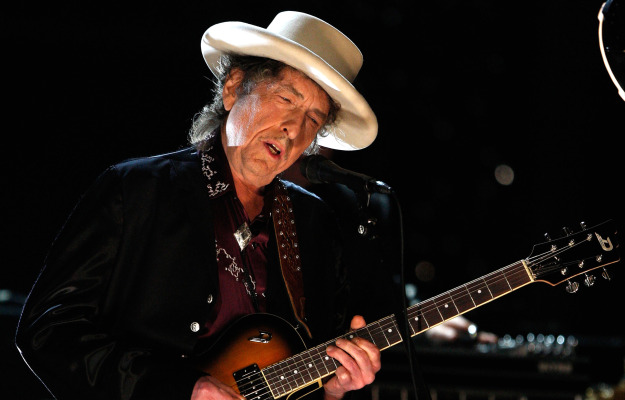
Two of the most iconic songwriters of the 1960s visited Kansas City just two weeks apart. But while patrons packed the Sprint Center and doled out big money to see Paul McCartney, acres of more reasonably priced empty seats could be found at Bob Dylan’s concert at Starlight Theater on Saturday night.
Part of this can be attributed to frequency. McCartney has only played Kansas City three times since the Beatles called it quits. Dylan rolls through town about every 15 months. But delivery also plays a big role. McCartney performs his beloved numbers exactly (or close to the ways) how everyone remembers them; Dylan plays nothing straight.
Saturday’s performance ran just shy of two hours and felt pretty much the same as Dylan’s many previous stops in town, including the show he played at Starlight just over three years ago. After opening with two tracks from the ‘70s – including a stunning “Senor (Tales of Yankee Power),” Dylan and his four-piece band ping-ponged between his golden era in the ‘60s and material cut in the past decade.
The best moments were the ballads. The delicate “Just Like A Woman” opened with a lengthy instrumental section that highlighted the subtle interplay between acoustic, electric and pedal steel guitars, and Dylan’s organ, his preferred instrument of the night. The instruments danced deftly until the signature descending guitar riff entered, heralding the first verse. “Workingman’s Blues No. 2” had a similar feel later in the set, and featured Dylan’s best harmonica solo of the night.
Dylan gave a nice treat when he paired two of the best numbers from his protest era. Almost a half a century after their debut, “The Ballad of Hollis Brown” and “The Lonesome Death of Hattie Carroll” remain a potent commentary on poverty and race. Their impact was muted, however, by an arrangement of “Hattie Carroll” that rendered the number nearly unrecognizable.
The band mined the Chicago blues for two newer numbers, “My Wife’s Hometown” and “Rollin’ and Tumblin’.” The former was the only time Dylan strapped on an electric guitar. It should have been repeated. His prodding duel with lead guitarist Charlie Sexton seemed to invigorate the rest of the band.
A slump in the final third of the set ended with a spectacular “Ballad of a Thin Man.” The lone illumination from the footlights added an other-worldly atmosphere to the song as Dylan stepped away from his keyboard and sang into a microphone set just off center, in front of the drums.
Reliable encores “Like a Rolling Stone” and “All Along the Watchtower” still pack a punch and hold pleasant surprises. Dylan intentionally dropped his vocals after the second chorus on “Like a Rolling Stone” to give the band some space to play and let Sexton take an extra solo. “Watchtower” came in a staccato fashion that resembled the far-off gallop of the riders’ horses, before they suddenly stormed the gates.
The Dough Rollers: Dylan’s attraction to this duo isn’t hard to spot. Their 35-minute opening set included covers of John Lee Hooker, Mississippi Fred McDowell and early gospel numbers. The pair sounds like they have just been pulled off an old field recording cut by Alan Lomax. Malcolm Ford sounds like he learned to sing by studying antique cylinder recordings. Jack Byrne’s bottleneck slide on “Were You There When They Crucified My Lord” was especially tasty. The set also included an interpretation of “Goin’ to Kansas City.” They would be a great show at B.B.’s Lawnside BBQ or Knucklehead’s.
Dylan’s setlist: Watching the River Flow, Senor (Tales of Yankee Power), Most Likely You Go Your Way (And I’ll Go Mine), My Wife’s Home Town, Rollin’ and Tumblin’, Just Like A Woman, The Ballad of Hollis Brown, The Lonesome Death of Hattie Carroll, Cry A While, Workingman’s Blues No. 2, Highway 61 Revisited, I Feel A Change Comin’ On, Thunder on the Mountain, Ballad of a Thin Man. Encore: Like a Rolling Stone, Jolene, All Along the Watchtower.
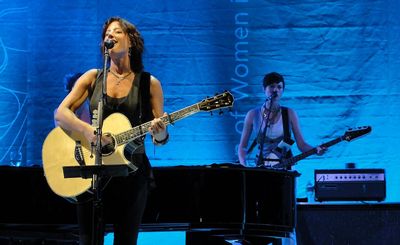
(Above: Sarah McLachlan and Emmylou Harris’ duet on “Angel” was the best musical moment of Lilith Fair 2010. The festival stopped in Kansas City on July 15.)
By Joel Francis The Kansas City Star
The sunglasses every artist wore onstage at Thursday’s Lilith Fair were more than a fashion accessory – they were as vital as the instruments.
For five of the festival’s eight hours of music, performers played directly into the sun. Singer/songwriter Ingrid Michaelson summed up the misery.
“It’s so hot out here I felt sweat dripping down my legs, and for a second there I thought I pulled a Fergie,” she said, referring to the pop star’s onstage pee incident.
The performers had it easy compared to the fans. After their 40-minute sets they could retreat to cooler confines. Fans had fewer options. Many ditched their seats and scrambled to whatever shade they could find. This made an already undersold Sandstone Amphitheater look even emptier.
All facilities past the second section of seating were closed. Drivers expecting to park in the main lot at the top of the hill were directed to the auxiliary lot. Fans with lawn tickets were upgraded to second-tier seats, while those with second-level seats could move down. As the sun shrank the crowd grew, filling most of the seating, but it was rough going for the early bands.
Vedera fared better than most acts. Sequestered to a tiny side stage, several hundred dedicated fans crowded into the awkward space to hear the local band deliver new gems like “Greater Than” and “Satisfy” in their half-hour set. Vedera was the last of three local acts, which also included singer/songwriters Julia Othmer and Sara Swenson.
Emily Haines of Metric, looking hot and bothered.
Metric was the first band to appear on the main stage, and red flag the fact that holding an all-day event in a venue with little no cover was a poor idea. The relentless sun rendered moot any lighting or special effects. When it was finally dark enough for these tricks to emerge, the video screens captured a static image of the Lilith Fair logo, meaning fans in the back had no close-up view of events all day.
The four-piece indie band’s dark synth pop isn’t built for daylight. Sound problems plagued the first couple songs, but what the atmosphere didn’t kill the temperature did. When you’re sweating just standing still, it’s hard to be convinced to dance. Singer Emily Haines did a robotic dance to the Big Brother-esque lyrics of “Satellite Mind,” and prefaced “Gimme Sympathy” with a bit of Neil Young’s “Hey Hey, My My.” Their set was heavy on last year’s “Fantasies,” but surprisingly did not include their contribution to the latest Twilight film, “Eclipse (All Yours).”
Michaelson had better success connecting with the sparse crowd with her jangly pop. Backed by a five-piece band, Michelson bookended her set with ironic covers, incorporating Lady Gaga’s “Pokerface” into her own “Soldier” and closing with Britney Spears’ “Toxic,” which featured everyone onstage in a synchronized dance. Both moves drew big cheers. In between, she delivered her hit “The Way I Am,” which recalled Regina Spektor’s quirky vocal phrasing, the bouncy “Locked Up,” and new song “Parachute.”
Halfway through the Court Yard Hounds’ set, Emily Robison found herself in trouble.
“This is a quintessential chick song,” she said, intending to introduce Joni Mitchell’s “This Flight Tonight.” The chick the crowd knew, however, was Robison’s main gig with fellow Yard Hound and sister Martie Maguire, the Dixie Chicks. The unexpected burst of delight flummoxed Robison for a moment.
“No, no, not that chick,” she said, trying to recover. “I mean a hippie chick.”
Robison and Maguire released three Dixie Chicks albums before singer Natalie Maines arrived and turned the group into superstars. When Maines bowed out of making new music, the sisters soldiered on. Their sound hews closer to Americana and roots music than the Chicks’ pop country, but suffers without Maines’ feisty spirit. “It Didn’t Make A Sound” featured a nice honky tonk piano solo, and “The Coast” was a pleasant tribute to the sister’s native Texas beaches, but it was too gentle to engage the crowd.
Sisters Nancy (left) and Ann Wilson, the heart of Heart.
Conversation ceased, however, when the sisters unleashed a furious bluegrass instrumental that had fans on their feet, clapping and stomping along. The set ended with a moment out of “O Brother, Where Art Thou?” when Maguire’s 6-year-old twin daughters joined the ensemble, tentatively playing percussion alongside their mother.
Emmylou Harris is the Mother Maybelle Carter of her generation, collaborating with everyone from Bob Dylan and Neil Young to Ryan Adams and Lyle Lovett. The artists everyone else on the bill respect as legends, she calls contemporaries. Yet even her distinct, wonderful voice wasn’t enough to sway the crowd. As with most artists during the day, the audience was divided between hardcore fans, politely curious listeners and everyone else, waiting impatiently for their act to appear. The ambitious and diverse bill ended up leaving everyone out at some point during the day.
Harris and her four-piece Red Dirt Band leaned heavily on her 1999 album “Red Dirt Girl,” mixing in the good old country of “Wheels” and “Born to Run” (a Paul Kennerly song, not a Bruce Springsteen cover). The most riveting moments were the a cappella gospel arrangement of “Calling My Children Home” and Harris’ own hymn, “The Pearl.”
Harris also shared the day’s best musical moment when she joined Sarah McLachlan on “Angel.” These multi-artist bills should have more of this synergy. Witnessing Harris and the Hounds collaborate on a Bill Monroe bluegrass number, or Haines join McLachlan on “Possession” would have been special events fans would treasure long after they had forgotten the heat and the ticket price.
Lilith Fair found Sarah McLachland closed out the day.
It wasn’t until Heart took the stage at 8:45 that the fair had its first galvanizing musical moment. The raucous blast of “Barracuda” eradicated the gentle sway of the afternoon and invigorated a crowd that had traded the sun for the moon and was finally ready to move. Sisters Ann and Nancy Wilson delivered a heavy slab of ‘70s rock that had fists pumping and hips shaking. Guitarist Nancy Wilson concluded her acoustic intro to “Crazy On You” with a scissor kick, cueing the rest of the six-piece band. Singer Ann Wilson was in top form, belting the refrain from the Rolling Stones’ “Gimme Shelter” during their own “Even It Up” and easily finessing the dynamics of “Magic Man.”
Lilith Fair founder Sarah McLachlan closed the day nearly eight hours after the first act appeared. The Vancouver native congratulated the crowd for braving the heat and rewarded them with many of her biggest hits, including “Building a Mystery,” “World On Fire” and “Adia.” She needlessly apologized before playing each of her three new songs, but the crowd responded well to those numbers as well.
Here’s a tip to established artists trying to introduce new songs: If you act proud of your new material, fans will be more likely to embrace it. Today’s new song is tomorrow’s sing-along.
The night ended with the gentle lilt of McLachlan’s “Ice Cream” before most of the day’s artists -– including Swenson, who shared a mic with the Court Yard Hounds -– joined together for a joyous romp through Patti Smith’s “Because the Night.”
Setlists:
Metric – “Twilight Galaxy,” “Satellite Minds,” “Help I’m Alive,” “Gold Guns Girls,” “Hey Hey, My My” > “Gimme Sympathy,” “Dead Disco.” Ingrid Michaelson – “Soldier” > “Pokerface,” “The Way I Am,” “Parachute,” “Maybe,” “Locked Up,” “The Way I Am,” “Toxic.”
Court Yard Hounds – “Delight (Something New Under the Sun,” “It Didn’t Make a Sound,” untitled new song, “Then Again,” “Fear of Wasted Time,” bluegrass instrumental, “The Coast,” “Ain’t No Son.”
Emmylou Harris – “Here I Am,” “Orphan Girl,” “Evangeline,” “Wheels,” “Born To Run,” “Calling My Children Home,” “Red Dirt Girl,” “Get Up John,” “Bang the Drum Slowly,” “Shores of White Sand,” “The Pearl.”
Heart – “Barracuda,” “Straight On” “Even It Up/Gimme Shelter,” “WTF,” “Hey You,” “Red Velvet Car,” “Alone,” “Magic Man,” “Crazy On You.” Encore: “What Is and What Should Never Be.”
Sarah McLachlan – “Angel” (with Emmylou Harris), “Building a Mystery,” “Loving You Is Easy,” “World On Fire,” “I Will Remember You,” “Forgiveness,” “Adia,” “Out Of Tune,” “Sweet Surrender,” “Possession.” Encore: “Ice Cream,” “Because the Night” (with most of the day’s perfomers).
The Temptations – “Ball Of Confusion,” Pop # 3, R&B # 2
By Joel Francis
The Daily Record
Clocking in at over four minutes, “Ball of Confusion” was an epic by Motown standards. The arrangement and themes, however, were very much in line with the top-shelf, psychedelic social commentary songwriter and producer Norman Whitfield had been consistently turning out.
Sonically and thematically, “Ball of Confusion” doesn’t stray from the formula Whitfield developed for the Temptation in 1968 with “Cloud Nine.”
If Sly Stone were Martin Luther, this is how he would have delivered his 95 Theses. In a cadence cribbed in Bob Dylan’s delivery from “Subterranean Homesick Blues,” Dennis Edwards lists his grievances: “segregation, determination, demonstration, integration, aggravation, humiliation, obligation.”
The arrangement is just as claustrophobic and frustrated as the lyrics, with nearly every instrument – electric organ, wah guitar, drums and vocals – threatening to strangle each other in the mix. Brief bursts of harmonica or horns provide the only moments of relief. Edwards handles the lion’s share of the singing, but once again the other four members tag-team lead duties. Bass singer Melvin Franklin memorably punctuates each verse with the adage of complacency – “and the band played on.”
“Ball of Confusion” isn’t exactly a fun song, but it is a lot of fun to listen to. The song was the Tempts’ second strong single of the 1970s, landing in the Top 5 on both the pop and R&B charts. It also marked their third straight solo Top 10 hit.
The complex number isn’t easy to replicate, but that hasn’t stopped others from trying. Shortly after the Tempts’ number had dropped in the charts, Berry Gordy handed the tune to another Motown group, the Undisputed Truth, to try their hand. A generation later, pop band Duran Duran and metal outfit Anthrax both released covers in the 1990s. The 21st century also saw a resurgence of interest in the song, with the Neville Brothers, Widespread Panic and Tesla all releasing covers.
The song also appeared as a centerpiece in the film “Sister Act Two: Back in the Habit” (featuring a young and then-unknown Lauryn Hill). It’s biggest distinction outside of Motown, however, is in kick-starting Tina Turner’s solo career in the early ‘80s. Turner’s reading appeared on a 1982 tribute album, it wasn’t a big hit in the United States or United Kingdom, but it did hook her up with the songwriters and producers who helmed Turner’s multi-platinum comeback effort, “Private Dancer.”
(Above: Hot Club of Cowtown get lowdown at the Americana Music Association Festival in 2009.)
By Joel Francis
The Daily Record
When Elana James was growing up in Kansas City, you could usually find her in Westport on the weekends. After checking out the bookstore, window shopping for clothes or catching a movie she’d take out her violin and busk.
What James played, though, wasn’t the classical music she’d been trained. James’ bow bounced to old timey fiddle music meant for dancing. And it tormented her.
“I thought it was the road to ruin,” James (nee Fremerman) said. “It wasn’t until I graduated from college I realized I wanted to play a more immediate, social music and, especially, dance music. It was such an undeniable pull by then I didn’t feel bad about leaving classical music, but I was at war with myself for a long time over it.”
James may have gotten over her classical guilt, but she had a harder time getting over the demise of her band, the Hot Club of Cowtown. In the past decade, the band broke through and found success, only to crumble at its peak. After a few years apart, the trio reformed to try it all over again.
“It’s funny,” James said, “a lot of stuff has changed around us, but I don’t feel like what we do has changed, only gotten better.”
The Western swing trio opened the decade with two albums under their belt and were building a steady following with their dynamic live shows. In 2004 they caught a deserved break when Bob Dylan and Willie Nelson invited them to offer their joint tour of minor league ball parks.
“We were in England on tour when our manager told us of the offer,” James said, recalling the fateful day. “It was totally incredible – it was one of the happiest, most exciting things I had experience in my life at that point. There were no expectations for the tour. We just thought we’d play our 23 and a half minute slot and that’s it. It turned out the tour was incredibly fun, musically gratifying experience.”
What should have been a tipping point turned to disappointment when Hot Club guitarist Whit Smith decided to pursue other projects. Fortunately another guitarist, Bob Dylan, offered James a spot in his band.
“It’s not something I like to talk about,” James said. “He (Dylan) loved my playing and was a huge advocate of me musically and personally. He gave me a lot of confidence and it was an honor to have that reception from him.
“The highest compliment you can get is to be asked to play with somebody else,” James continued.”I got a lot out of my friendship with him and his enthusiasm for the things I was doing.”
After double-duty time with Dylan – James also served as opening act on the tour – James formed the Continental Two and released a solo album. She couldn’t stay away from her Cowtown bandmates, though. Smith frequently sat in with James. Before long, bass player Jake Erwin was back in the fold as well.
“The band is the best at what we do,” James said. “Nobody sounds like us or does what we do as well. That’s why we got back together.”
But a lot changed over the band’s four year hiatus. Print outlets that used to champion the band, like “No Depression” were no longer around. And the decay of the major labels meant the standard system of filters were no longer in place.
“It’s been difficult after stopping to regain that momentum. We’ve had to come back and reintroduce ourselves. The media opportuines – so disorganized and spread out,” James said. “We are swimming in a difficult sea.”
Between the release of a greatest hits compilation in 2008 and a new album in 2009, the threesome spent the year touring the world, reintroducing themselves to fans.
“We weren’t expecting it, but people found out about us and things have been going great guns,” James said. “We’re actually having more work than we can accommodate. We have to be choosy.”
While there won’t be a new Cowtown album this year, James said the band will “probably start heading in that direction.” In the meantime, they just want to enjoy their accomplishments.
“This is our fun year,” James said. “There’s no major agenda. Last year was hard work, making the record, then putting it out on three continents and touring to support it.”
Although James didn’t know it at the time, the country music she plays today is just as much a part of her upbringing as the classical instruction she started receiving at age 5.
“Coming from Kansas,” James said, “even though I didn’t grow up listening to fiddle tunes and old dudes sitting on the porch and drinking moonshine, when you pull back I can see how that culture just seeped into me. I wouldn’t be who I am today without my time in Kansas City.”
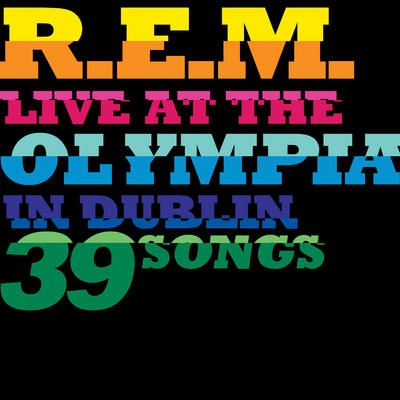
(Above: If you’ve been good, maybe Santa will bring the new R.E.M. album, “Live at the Olympia.”)
By Joel Francis
The holiday season is a notorious dumping ground for greatest hits, repackagings and other musical ephemera. Four established artists, however, transcend the fourth-quarter wasteland. New live albums by Paul McCartney, R.E.M., Tom Waits and Tom Petty are essential additions to any music fan’s library.
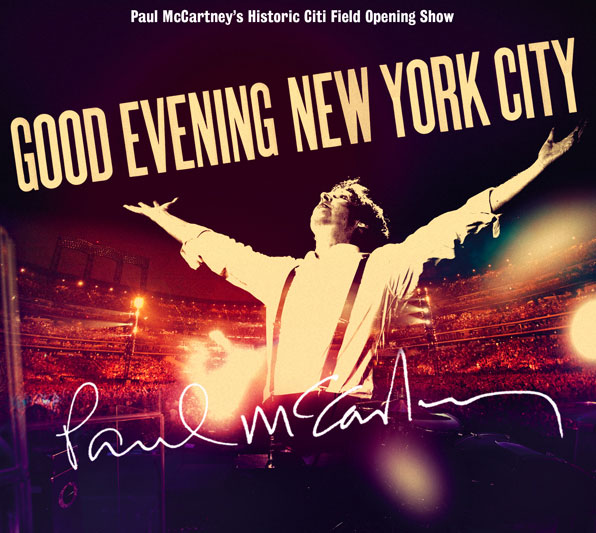
After dropping just one live album in the first half of his solo career, Paul McCartney opened the floodgates over the past two decades. Issuing six live albums since 1990, McCartney has faithfully documented nearly all of his tours and several special performances, but “Good Evening New York City” stands out. The two-CD, one-DVD set documents McCartney’s three-night inaugural performance at the Mets new home Citi Field last summer. Backed by his tight, longstanding quartet, Sir Paul unloads several surprises, like the forgotten “Mrs. Vandebilt,” a tribute to John Lennon with a medley of “A Day in the Life” and “Give Peace a Chance,” and the delightful segue way into Jimi Hendrix’ “Foxy Lady” at the end of “Let Me Roll It.”
Other delights are newer cuts “Only Mama Knows” and “See the Changes,” and the full-band arrangement of “Something” that echoes the performance at the Concert for George. Of course Beatle numbers are plentiful, but the obligatory “Hey Jude” and “Let It Be,” are countered with “Paperback Writer” and “Day Tripper.”
As with all McCartney live albums, the stage banter has been removed, giving the album a bit of a workman-like quality, as the band grinds through the songs with only brief pauses. This editing creates some curious results, such as Billy Joel’s unannounced duet on “I Saw Her Standing There,” or the accidentally buttressing of “Yesterday” and “Helter Skelter” (there was likely an encore break separating the two).
Although there are many places to hear Sir Paul shuffle through the world’s greatest jukebox, few are this energetic or diverse.
When R.E.M. released their last live album, “R.E.M. Live,” only two years ago the band seemed to be running on fumes. Following the disappointing “Beyond the Sun” album with a stop-gap, hits-in-concert set as generic as its title was a naked, holiday cash grab.
A lot has changed since then. Last year’s “Accelerate” brought the trio long-absent acclaim and reinvigorated both the band and its fans. Although “Live at the Olympia” was recorded only four months after “R.E.M. Live” the results couldn’t be more different. While “Live” hit all the obvious marks with little passion, “Olympia” digs deep into the catalog, offering early fan favorites “Driver 8” and obscurities like “Circus Envy.” “Olympia” boasts 17 more songs than “Live” and only two overlapping numbers, so both collections can coexist comfortably.
Fans excited by “Accelerate” will celebrate this 39-track collection. “Live at the Olympia” is the sound of a band being reborn.
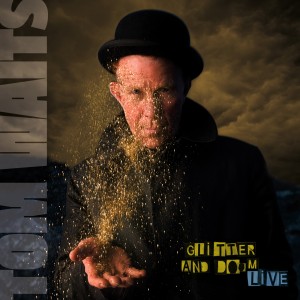
Unlike McCartney and R.E.M., it has been nearly a generation since Tom Waits last issued a live album. “Glitter and Doom Live” does a good job spotlighting Waits’ sonic shifts over the last several years, leaning heavily on tracks from his decade on the Anti- label. Drawn from stops along his 2008 tour of the same name, “Glitter and Doom Live” is more a sampler than a complete performance.
Most of the stage banter has been excised, hilariously, to the second disc. “Tom’s Tales” is a 36-minute montage of Waits’ musings about vultures, jokes about Nazi pasta and adventures on eBay that could stand on its own as one of the year’s best comedy albums.
The songs that made the cut, though, are invigorating. “Orphans” cuts “Lucinda” and “Fanin Street” are more raw while “The Part You Throw Away” is delicate and tender. “Get Behind the Mule” sounds like a voodoo chant at a deep South juke joint, and early cuts like “Singapore” and “I’ll Shoot the Moon” are completely reworked. While hardcore fans may have been happier with a set that recreated Waits’ concert experience, few will be disappointed with the 16 songs delivered.
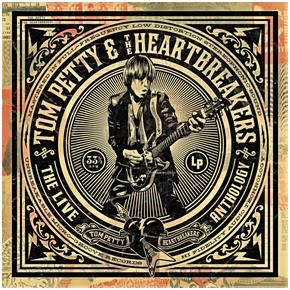
Tom Petty has issued more than a dozen albums during his hit-filled, three-decade career, but until now has only had one live album to his name. “Live Anthology” corrects that problem by offering 50 choice cuts spanning 30 years of gigs. The performances zig zag through the years, but the set flows, creating a dream concert spread across four discs (more if you buy the deluxe edition).
Although all the hits are here, the opening number, “Nightwatchman” shows how deep Petty is willing to delve. More than living up to its name, “Anthology” explores early performances of hits “Even the Losers” right up to full-band arrangements of “Square One” off Petty’s most recent solo album. A sing-along stroll through “A Thing About You” segues seamlessly into Bobby Womack’s soul ballad “I’m In Love.” Later, “Breakdown” slides into a few bars of “Hit the Road, Jack.”
There are no cuts from the Heartbreakers’ mid-‘80s stint as Bob Dylan’s backing band, but honestly, there are enough other incredible moments that they’re not missed. A sublime “Learning to Fly” with Stevie Nicks on backing vocals, an extended “Good to Be King” and unreleased originals like “Melinda” and “Driving Down to Georgia” and covers like “Good Good Loving” and “Goldfinger” (yes, that one) make the set an embarrassment of riches.
This collection not only cements the Heartbreakers’ legend as one of the tightest and most versatile bands of all time, but amplifies their love of rock and roll in all its forms. “Live Anthology” is both more consistent and comprehensive than Petty’s previous box set, the hits/album cuts/rarities collection “Playback.” It is the jewel of Petty’s catalog.
(Above: The magnificent video for “Must Be Santa,” far and away the best track on Bob Dylan’s new holiday album, “Christmas in the Heart.”)
By Joel Francis The Daily Record
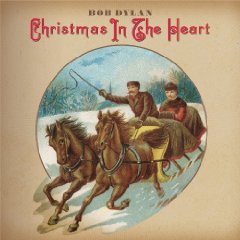
Bob Dylan surprised a lot of people when he announced the release of his first Christmas album several months ago. “Christmas in the Heart” surprises in a different way, however, by playing it straight and offering no surprises at all.
Adorned with a cover that looks like a Norman Rockwell collectible dinner plate come to life, “Christmas in the Heart” features 15 well-worn holiday favorites with arrangements and production straight out of the 1940s and ‘50s.
In retrospect, Dylan’s desire to record a Christmas album shouldn’t have been an astonishment. For the past several years, Dylan has dabbled in pre-war pop. A cover of “Return to Me” popped up on a soundtrack several years ago, and several similar originals, including “Beyond the Horizon,” populated his 2006 album “Modern Times.”
Of course, Dylan has long been a purveyor of traditional song and the folk tradition. As the oral history components of American society diminish, holiday and children’s music are the few remaining songs passed from generation to generation. Christmas music stands directly at the crossroads of these passions.
A third consideration is that Dylan delights in doing the unexpected and challenging expectations. The man who returned to the Newport Folk Festival nearly 10 years ago in a wig (and dons a similar headpiece in the video for a “Christmas in the Heart” song), appeared in a Victoria’s Secret commercial and wrote a song with Michael Bolton, clearly enjoys toying with his dedicated following and legend.
Unfortunately, this understanding doesn’t make “Christmas in the Heart” an enjoyable listen. Producing the album under the pseudonym Jack Frost, Dylan drapes the album in arpeggio guitars that recall Les Paul’s singles with Bing Crosby, lilting backing voices in the style of the Andrews Sisters and a nostalgic gauze that would be at home on a Perry Como platter. By smoothing every surface, Dylan leaves no room for any rough edges, which, frankly, is all his voice has to offer these days.
The song selection is another stumbling block. The vast majority of these hymns and carols have been heard and performed a thousand times over. Although his arrangements are clever – check out the piano on “Little Drummer Boy” or violin and light country touch on “Silver Bells” – they hem too closely to the tried and true. Dylan does not have a traditional voice, so it’s understandable his singing doesn’t work in this traditional setting. The album would have been better served if Dylan played to his strengths, like a reading of “Run Rudolph Run” a la “Summer Days,” or more obscure choices, like Buck Owens’ “Santa Looked a lot Like Daddy.”
The single “Must Be Santa” hints at what “Heart” could have been. Originally a 1961 sing-along with Columbia Records honcho Mitch Miller, Dylan more than doubles the tempo and thanks to the frenetic accordion playing of Los Lobos’ David Hildago – who also bolstered Dylan’s “Together Through Life,” released just six months prior – turns the song into a mariachi rave. Another lesser-known track, “Christmas Blues” was also a good choice. More songs like this and fewer Latin hymns could have made “Christmas in the Heart” a holiday staple.
With all album proceeds going to charity, Dylan’s intentions are noble and his reasons sound, but the flawed execution prove the record’s undoing. It’s too bad “Must Be Santa” wasn’t released as a stand-alone single, with any of the remaining 14 songs on its b-side, or as the centerpiece of an EP. As it is, “Christmas in the Heart” is best purchased as a Black Friday bargain.
When the Rolling Stones were inducted into the Rock and Roll Hall of Fame in 1989, a tuxedo-clad Mick Jagger famously announced “Tonight we’re all on our best behavior — and we’re being rewarded for 25 years of bad behavior.”
That irony is on full display throughout eight of the DVDs in a new collection of induction ceremony performances released by Time Life and the Rock Hall this month. (A ninth disc features highlights from the 1995 Concert for the Rock and Roll Hall of Fame held in Cleveland.) Despite white tablecloth banquet tables and austere surroundings, great music frequently prevails.
The “Rock Hall Live” discs each run between 75 and 90 minutes and have a loose theme of soul, punk or ‘50s pioneers and the performances span the first ceremony in 1986 to this year’s Metallica induction. The performances tend to fall in two camps.
The early ceremonies were all-star celebrations of the inductees’ songbooks shot with on a couple video camera. Through fly-on-the-wall footage we see Jerry Lee Lewis and Chuck Berry swap verses on “Roll Over Beethoven” and Little Richard rejoice through “I Can’t Turn You Loose” as Jagger, Bob Dylan, members of the Beatles, Beach Boys and other rock royalty stand shoulder to shoulder, holding mics and strumming instruments. It’s fun to play spot the artist during these early presentations. Sometimes the results are shocking, as when Stevie Ray Vaughan appears – playing a Les Paul, no less – during “Beethoven.”
As the ceremonies grew in stature, the performances were better preserved and choreographed. The past 15 years of inductions play like one massive VH1 special, makes sense as these events have been a spring broadcast staple on that channel for better than a decade. Although the production is smoother, the spontaneity is retained when Jimmy Page casually strolls onstage to join Jeff Beck on “Beck’s Bolero” and Queen jam with the Foo Fighters on “Tie Your Mother Down.”
With are more than 100 performances across the nine discs, some unevenness is expected. Some this is because of the health of the performers. These discs capture some of the final appearances by The Band’s Rick Danko, Ruth Brown, Lynyrd Skynyrd’s Billy Powell and Johnny Cash. Brown and Powell are fine, but Danko and Cash labor through their sets. Sometimes the pairings misfire, as on Bruce Springsteen and Axl Rose’s duet through “Come Together.”
These missteps are minimized by the tight pacing of each disc, which moves from artist to artist like a well-paced soundtrack, with occasional snippets of introduction and induction speeches. (Complete version of selected speeches are available as bonus features.) Despite the loose themes, each disc boasts a variety of guitar heroes, singer/songwriters, tributes and hits.
The best moments come when the performers reach beyond the formal atmosphere, like when Patti Smith spits onstage, or two kids bum rush the stage to help Green Day commemorate the Ramones. There is an impressive display of solos from guitar heroes Beck, Page, Eric Clapton, Buddy Guy, B.B. King, Joe Perry, Carlos Santana, Peter Green, and Kirk Hammett, but the greatest six-string moment is Prince’s searing tribute to George Harrison on “While My Guitar Gently Weeps.” Anchored by Tom Petty, Jeff Lynne and Harrison’s son Dhani, the immaculately tailored Prince soars on an jaw-dropping solo that is long on both melody and style.
Each disc contains about a several bonus features, which highlight backstage moments like watching Steven Tyler and Joe Perry induct Led Zeppelin from the wings of the stage with the band (and Willie Nelson!). It’s fun to watch Robbie Robertson, Bruce Springsteen and John Fogerty work out “Green River” and to eavesdrop on Hammett and Perry talk about guitars, but one viewing is probably enough.
One downside to this set is the packaging and sequencing. Each disc is housed in its own separate, full-sized case. This takes up a lot of shelf space. It would have been nice if they all came bundled in one compact, cardboard and plastic unit like seasons of TV shows.
The greater inconvenience is the sequencing. Cream’s three-song reunion from 1993 is spread across three discs. Ditto for the Doors’ 1993 set with Pearl Jam’s Eddie Vedder (three songs over three discs) and Bruce Springsteen’s E Street revival from 1999 (four songs on four discs). Culling the best moments is understandable, but it would have been great to get the multi-song sets in one place. It is also puzzling that less than two hours of the six-hour Concert for the Rock and Roll Hall of Fame are included.
Oversights aside, any of these discs stand alone as a fun romp through rock history and celebration of its greatest songs and players across most genres and eras. At $120, this set isn’t cheap, but it’s a heck of a lot more affordable – and easier to come by – than the ticket that gets you a plate at one of those sterile, banquet tables. You don’t have to dress up, either.
(Full disclosure: The Daily Record received a complimentary review copy of “Rock Hall Live.”)
(Above: U2 encourage America to “Walk On” in a live appearance broadcast less than two weeks after the Sept. 11 attacks.)
By Joel Francis
U2’s “All That You Can’t Leave Behind” had been out for nearly a year the morning two planes slammed into the World Trade Center, another collided with the Pentagon and a fourth flight was forced into the Pennsylvania farmland.
Following the trend of “The Joshua Tree” the first three songs were released to huge acclaim as singles. It was the fourth cut, though, that found the greatest resonance. By the time “Walk On” came out in November, 2001, the song had become an unofficial anthem of hope.
When the quartet performed the song live on the “America: A Tribute to Heroes” special just 10 days after the attacks it was prefaced with the first verse of “Peace On Earth.” Written about an Irish terrorism attack, the lyrics were poignant: “Heaven on Earth, we need it now.”
The words that didn’t make the broadcast, but ended most concerts on U2’s then-current tour were just as affecting. As pictures of missing loved ones were plastered on every available surface in New York City, and the names of the departed rolled up the video boards in arenas each night, Bono sang “They’re reading names out on the radio/All the folks the rest of us won’t get to know.”
I had only been to New York City briefly at that point. On our way to Cooperstown, N.Y., to watch my childhood hero George Brett get inducted into the National Baseball Hall of Fame in 1999, my dad and I saw Kansas City,Mo.-native David Cone make his first start in Yankee Stadium after throwing a perfect game. He got shelled and after driving in that afternoon for the game we slept at a hotel in New Jersey.
At that time, I didn’t know Battery Park from Battery Island. But listening to Bono sing “New York,” I felt like an honorary citizen. Songs like “When I Look at the World” and “Grace” spoke to my feelings of grief and confusion. Several months later, when Bruce Springsteen released “The Rising” my soundtrack was expanded. That album ended with “My City of Ruins,” the most poignant performance on the “Tribute to Heroes” telecast. As the first anniversary of the attacks rolled around, “Into the Fire” and “You’re Missing” helped quell all the resurfaced sentiment.
If the Big Apple was largely unknown to me, the Middle East was a greater enigma. The only images I had of the region and its inhabitants were those pumped over the news. Surely that wasn’t right. Not all of these people were monsters. They were regular Joes and Janes like you and me, trying to do whatever it was they did to make ends meet and survive, right?
“Passion,” Peter Gabriel’s 1989 soundtrack to the uber-controversial film “The Last Temptation of Christ,” was filled with music from the Middle East and Africa meant to evoke the time of Christ. The instrumental album was my way of relating to the people of Afghanistan and the region that gave birth to al Qaeda and the Taliban.
These albums were my balms in 2001 and 2002. Starting the album when I backed out of the driveway, it took me exactly four cuts off “The Rising” to reach the first anniversary 9/11 memorial service in downtown Kansas City. For more than an hour, Christians, Jews and Muslims celebrated and mourned together. We weren’t three sects, we were one collective.
And then it all seemed to evaporate. The services and events of Sept. 11, 2003 weren’t quite as elaborate. Within a couple years it seemed the only experience available away from the crash sites was a prayer breakfast or moment of silence. In 2007, the day was marked by rapper 50 Cent’s boast that he would sell more copies of his new album than Kanye West. He didn’t.
I have no problem with an open marketplace on national holidays. Johnny Cash’s final album, “American V: A Hundred Highways,” came out on July 4, 2006. I can think of no artist better suited to that day, but his record was merely a window-dressing to the occasion. Heck, I made time on Sept. 11, 2001, to pick up Bob Dylan’s new release, “Love and Theft.”
I take issue, however, when ephemera overshadow history. No one cared about 50’s album. All of its singles had vanished from the charts by Thanksgiving, yet the competition he invented to sell more records eclipsed the anniversary. This year the other artist to release a masterpiece on Sept. 11, 2001, Jay-Z, was going to put out the third installment in his “Blueprint” series on Sept. 11. (Because the album leaked the date was pushed up to Sept. 8.)
A proud New Yorker, Jay-Z appeared at the Concert for New York benefit in October, 2001, and is donating all profits from his Sept. 11, 2009, concert at Madison Square Garden to the New York Police and Fire Widows’ and Children’s Benefit Fund. If anyone gets Sept. 11, it’s Jay-Z, yet on his new album, he reduced the events to a crude metaphor for his prowess:
“I was gonna 9/11 them but they didn’t need the help
and they did a good job, them boys is talented as hell,
so not only did they brick but they put a building up as well
then ran a plane into that building and when that building fell
ran to the crash site with no mask and inhaled, toxins deep inside they lungs”
A friend recently reminded me that American culture doesn’t handle history very well. It can market the hell out of nostalgia, but history is another matter. Dec. 7, 1941, the Day of Infamy, has been reduced to a scratchy FDR soundbite. Memorial Day is for mattress sales. On top of that, the events of Sept. 11 are awkwardly unresolved. Victory has been declared, but not achieved. Were it to happen, no one in America or the Middle East has any idea what it would look like. There are no holidays, my friend said, marking the Tet Offensive or the charge at San Juan Hill. Additionally, Sept. 11 has become so politicized any organized event tied to the day is instantly and cynically scrutinized.
If record sales and a proposed day of community service aren’t the answers, perhaps the best solution is subtle one that’s somehow gone underground and survived: prayer. After all the speechifying, 8:46 and 9:03 a.m., EST, are always observed with a moment of silence. Each Sept. 11, take a moment to converse with whatever Supreme Being you believe in. Spill your guts, pause and listen for twice as long as you spoke. It might not change the world, but it could change your day.
(Above: Happy Labor Day! Bob Dylan’s tribute to Merle Haggard and the working man.)
Bob Dylan – “Workingman’s Blues No. 2”
By Joel Francis The Daily Record
Merle Haggard was on a roll in 1969. In just three years he had racked up seven No. 1 hits and released eight albums. Haggard’s days digging ditches and toiling in prison were finally receding, but he refused to forget the unlucky people he labored beside for so long. “Working Man Blues” was Haggard’s tribute to his fans and his roots.
More than 35 years later, Bob Dylan turned Haggard’s tribute into a personal homage. Abandoning the Bakersfield sound that Haggard helped popularize, Dylan’s “Workingman’s Blues No. 2,” is a nostalgic ballad, introduced by a piano and accented with touches of violin.
Haggard’s “Working Man Blue” is a blazing portrait of a hard-workin’, hard-drinkin’ man with nine kids struggling to make ends meet. In the prime of his career, Haggard’s hero might “get a little tired on the weekend, but “Monday morning, I’m right back with the crew.”
Dylan catches up with a similar blue collar man thousands of shifts later. Worn by hard work and tight budgets, the place he loves best is a “sweet memory.” Too tired to get his boots and shoes, all the weary man can muster is to try “to keep the hunger from creeping its way into my gut.”
Dylan matches Haggard’s detail, but also pulls the camer back a bit, opening with a portrait of “an evenin’ haze settlin’ over the town/starlight by the edge of the creek.” Doubling the number of verses and tripling the song’s length also gives Dylan to explore the weary worker’s love life. The nine kids have moved out and the wife is gone, leaving the fatigued to wonder “am I wrong in thinking/That you have forgotten me?” and imagining his love returning to lead him off to dance in a new suit and a world where he doesn’t have to live on rice and beans.
“Workingman’s Blues No. 2” is less a celebration of the working man than a compliment to Haggard, who toured with Dylan shortly before the sequel was written. At the time it was rumored Haggard would return the favor by penning “Blowing in the Wind 2.” That song hasn’t come to light, but pair of “Working Man” songs provide a perfect Labor Day soundtrack. Play Haggard’s at the outdoor cookout while clutching a cold one; save Dylan’s for some midnight, pre-shift soul searching.
(Below: Merle Haggard’s original “Working Man Blues.” Kick up your heels before the whistle blows.)
When Elvis Costello picked up an acoustic guitar in the mid-‘80s after two baffling albums full of horns and keyboards, the result was one of the high points in Costello’s already-great discography. Costello teamed with producer T-Bone Burnett for that album, “King of America,” and 23 years later the two are back together for “Secret, Profane and Sugarcane.”
Costello has never quite eclipsed that peak, settling into a pattern of churning out reliable genre exercises in country, jazz, classical and rock and collaborating with Burt Bacharach, the Brodsky Quartet and Allen Toussaint. Burnett, on the other hand, has become the go-to man for Americana/roots recordings, winning a Grammys for his production on Robert Plant and Allisson Krauss’ debut album and the “O Brother Where Art Thou?” soundtrack. The reunion of Costello and Burnett creates an accessible entry point for a public that reaches beyond his usual audience of the core and the curious.
Unfortunately, the magic that sparked “King of America” is absent on “Secret, Profane and Sugarcane.” While Burnett has rounded up an all-star cast of bluegrass musicians, the music feels like a stiff genre exercise. It is almost as if Costello is guesting on his own “Pickin’ On” tribute, or starring in “O Brother Where Art Costello.” Costello’s decision to revisit two songs from his back catalog reinforces this notion. “Complicated Shadows” was a great Johnny Cash-inspired slow-burning rock song in its original incarnation back in 1996. Here, it’s half the length and feels like Costello slapped his old lyrics over a generic bluegrass arrangement.
It neither helps nor hurts the listening experience to know that these songs were culled from an unfinished opera about Hans Christian Anderson, previous albums and leftovers from other projects. With little exception, they are all painted with the same brush and do little to distinguish themselves from the gray wash of an album that is neither offensive nor interesting.
The songs that do stand out are the two co-written by Burnett and Costello. “Sulphur to Sugarcane” is an extended innuendo delivered with a broad poke in the ribs and exaggerated arched eyebrow. It recalls the routines of Dusty and Lefty, the off-color cowboy duo played by Woody Harrelson and John C. Riley in the film “A Prairie Home Companion.”
“The Crooked Line,” however, is a standout in the good way. This next-to-last tune rewards the listener for nearly making it through the album with the harmony vocals of Emmylou Harris. Harris may be the best and most underrated duet singer in music. She consistently works harder on her supporting vocals than most singers invest in their singles. Her voice soars, subtly complimenting the melody, adding a mesmerizing countermelody. Whether on Lyle Lovett’s “Waltz Through the Bottomland” or Bob Dylan’s “Mozambique,” her voice never ceases to inadvertently creep into the spotlight and eventually command full attention.
Drawing on the chemistry she and Costello established in their previous collaboration on his “Delivery Man” album and subsequent tour, Harris doesn’t disappoint on “The Crooked Line.” Like a jazz musician breathing life into a trite pop standard, Harris signing salvages a ho-hum song and arrangement and turns it into something worth repeated listens.
“Secret, Profane and Sugarcane” has been released on Starbuck’s Hear Music label, and it seems a perfect fit for the latte-drinking, NPR-listening caricature scribbled up in political circles. For this audience, Costello’s name means maverick, Burnett’s means quality and the country-folk stylings make it unique, yet comfortable. But fans of Costello, Burnett and bluegrass alike can do much better than this.


 The best moments were the ballads. The delicate “Just Like A Woman” opened with a lengthy instrumental section that highlighted the subtle interplay between acoustic, electric and pedal steel guitars, and Dylan’s organ, his preferred instrument of the night. The instruments danced deftly until the signature descending guitar riff entered, heralding the first verse. “Workingman’s Blues No. 2” had a similar feel later in the set, and featured Dylan’s best harmonica solo of the night.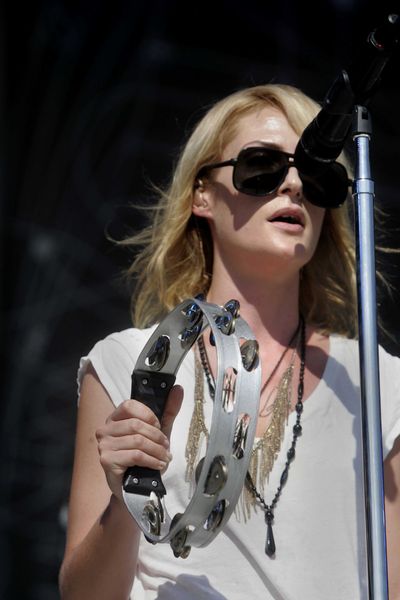





 joelfrancis.com