Talking Motown with Bill Dahl

(Above: Richard “Popcorn” Wylie’s version of “Money (That’s What I Want)” is one of music writer Bill Dahl’s favorite early Motown songs.)

By Joel Francis
The Daily Record

Chances are good that Chicago-based music writer Bill Dahl has penned the liner notes to at least one of your favorite reissues or compilations. Since 1985, Dahl has been commissioned to write the notes for hundreds of blues, R&B, rockabilly and rock collections on both major and boutique labels.

In 1998, Dhal was recognized with a Grammy nomination for his essay on Ray Charles’ sax section included in the “Ray Charles – Genius and Soul: The 50th Anniversary Collection” box set. In 2000, he received the Keepin’ the Blues Alive award from the Blues Foundation in Memphis. His book, “Motown: The Golden Years” was published in 2001. Dahl’s latest project was co-authoring the amazingly comprehensive liner notes for each of the 12 volumes in the Hip-O Select “Complete Motown Singles” series.

Dahl also writes regularly on his Web site. He recently spoke to The Daily Record via e-mail.

The Daily Record: What was your first exposure to Motown and how did you become interested in writing about it?

Bill Dahl: I started buying quite a bit of Motown vinyl—the Miracles, the Temptations, Jr. Walker, Marvin Gaye, the Four Tops—during the early ‘70s as an outgrowth of my record collecting interests, which were expanding rapidly from my original love of ‘50s rock and roll. I was getting into soul, blues, rockabilly, etc., and loving it all (much to the chagrin of my mainstream rock-loving high school classmates, who ragged me unmercifully; I guess I never was much of a conformist).

TDR: What are some of the more interesting stories or facts you learned in researching these liner notes?

BD: One thing that always impresses me is the loyalty the great majority of Motown’s ‘60s artists have to the company and Mr. Gordy to this day. I was fortunate to attend a charity tribute to him a few years ago in LA, and a virtual galaxy of Motown stars performed and paid homage to their beaming boss. Later, all of them trooped up to the stage at the end to sing the old Hitsville fight song!

I’ve found it interesting that several of the better-known songwriting teams had a similar setup to that of Lennon-McCartney—if one wrote it, both names went on automatically. It’s been a pleasure tracking down a lot of the lesser-known acts, including a lot of the Rare Earth label rockers, to get their intriguing stories. They’re too often overlooked and made their own contributions to Hitsville history.

TDR: What are some of the biggest misconceptions about Motown?

BD: The goofy and totally unfounded rumors that the mob was involved with the label, solely because a few very competent Caucasians wielded power in the front office. The only color Mr. Gordy cared about was green, so he hired the best person for the job. There were more than a few R&B labels where “da boys” were in up to their eyeballs (no names here), but Motown wasn’t one of them.

TDR: Motown’s big stars get a lot of attention. Who are some of the unheralded Motown artists worth checking out? Were there any long-forgotten gems you discovered as a result of working on the Complete Motown Singles notes?

BD: I remember being amazed by Richard “Popcorn” Wylie’s version of “Money (That’s What I Want),” which is on the first Complete Singles box. It sounds like B. Bumble and the Stingers meet Hitsville!

Gino Parks’ “Same Thing” (which I knew about already) and several others of his songs are fantastic, as are Singin’ Sammy Ward’s early blues numbers, like “Who’s The Fool.” I love Jr. Walker’s early instrumentals – “Mutiny,” with James Jamerson’s jazz bass solo, is astounding – Shorty Long, Brenda Holloway, Kim Weston, the Velvelettes, and some of Little Stevie Wonder’s overlooked early outings. Los Angeles guitarist Arthur Adams’ “It’s Private Tonight,” which came out on Motown-distributed Chisa (it’s on the 1970 box), is the perfect marriage of blues and soul.

TDR: How detrimental do you think Berry Gordy’s favoritism toward Diana Ross was to the label? How much better would Martha Reeves, Gladys Knight, Kim Weston and Mary Wells have fared otherwise?

BD: It wasn’t detrimental in the slightest; the Supremes made some of the biggest hits of the ‘60s at a time when the British Invasion was otherwise dominating our charts, and Diana Ross had a coquettish mainstream appeal that none of the rest had. Mary Wells ruined her own career by walking away from Motown when she turned 21. Gladys Knight and the Pips were already stars when they arrived at Motown and far bigger ones when they left, though they got even hotter at Buddah. Kim Weston’s Motown career was inextricably intertwined with that of her husband, Motown A&R chief Mickey Stevenson, for both better and worse.  And Martha Reeves and her Vandellas had a series of incredible hits, much like the Marvelettes, that made both groups long-term mainstays.

TDR: There has been some disagreement over Tammi Terrell’s involvement on the duet albums with Marvin Gaye that bear her name. Did she return to the studio after her collapse and is that her voice on those songs? What was (Motown songwriter) Valerie Simpson’s role in these recordings?

BD: It’s impossible to say for sure, since Valerie has never admitted any possible lead vocal involvement (Marvin Gaye’s biography stated such unequivocally, but I’d be less inclined to buy in).  I doubt we’ll ever know one way or the other for sure, though Valerie’s role as co-producer and co-writer on many of them was so crucial that Tammi was no doubt channeling her vocal approach when she sang them (if indeed she was on the last couple hits).

TDR: The Complete Motown Singles Collection series ends in 1972. Why stop there? What is your favorite post-1972 Motown single or moment?

BD:  That was the end of the Detroit era—the Golden Years—so it seems like a reasonable place to end it, though you’d have to ask my boss Harry Weinger (Vice President of A&R for Universal Music – ed.) there. I’m not sure I have too many post-1972 favorites—I’m very partial to the 1959-72 Motown era we’ve covered on the Complete Motown Singles series—but  Gloria Jones, Yvonne Fair, Chicago blues guitarist Luther Allison, and Jr. Walker’s “Peace, Love and Understanding” come to mind.

TDR: In your mind, what was the greatest single factor in the label’s decline? Was it the departure of Holland-Dozier-Holland, the move to Los Angeles, Gordy’s interest in movies or something else?

BD: I don’t think we can accurately say Motown declined, since it’s still a going entity today and enjoyed a ton of hits after 1972. Times change and so do musical tastes, so keeping the same sound in 1972 that sold so well in the mid-‘60s would have been a recipe for disaster. Certainly HDH’s departure was a blow, but that gave other writers and producers more room to create their own soulful magic, like Norman Whitfield. The move to Los Angeles hurt the artists and musicians that chose to remain in the Motor City, and didn’t help the local economy either.

Mr. Gordy’s early ‘70s interest in the film industry made him a lot harder to reach on the phone at the time, much to the frustration of some staffers, but artistically it had a negligible effect since he wasn’t all that active musically by then anyway other than with the Jackson 5.

TDR: Ultimately, what do you feel is Motown’s greatest and most lasting impact on music today? Why?

BD: As the top indie label of the ‘60s, Motown turned the industry on its ear. There had been successful African-American owned record labels prior to Motown—Duke/Peacock, Fire/Fury, and Vee-Jay come to mind—but none were so monumentally successful. Gordy’s mantra of making R&B attuned to pop sensibilities had never been pulled off so convincingly. He also did a masterful job of delegating authority in the A&R department. It sounds like a cliché to say these classic recordings will never die, but they won’t.

TDR: Now that this project is over, what is your next venture? Are there any more Motown projects on the horizon?

BD: There are no Motown projects immediately scheduled, but I wrote the notes on Reel Music’s CD reissue of Jimmy Ruffin’s fine “Ruff ‘n Ready” Motown LP, complete with a fresh in-depth interview with the gracious Mr. Ruffin, which is just coming out.

I’m hoping and praying that Rhino Handmade finally releases the wonderful Wilson Pickett boxed set that it’s been sitting on for more than two years. A recent proclamation on the label’s website says it’s been scheduled. I wrote a huge track-by-track essay for it, much like the ones in the Motown boxes. It’s got everything he did for Atlantic on it and plenty more. Interestingly, the Funk Brothers played on Pickett’s first solo platters for Double L, a fact scantily documented before I started doing research for this box.

Keep reading:

Music essays and reviews by Bill Dahl

More features and interviews on The Daily Record:

Former NBA player at home in KC music scene

Jamie Foxx brings it to Sprint Center on Saturday

George Kalinsky: Painting with Light

Modest Mouse: Johnny Strikes Up the Band

Hail Death Cab

Ever Fallen For The Buzzcocks?

Out of the Tar Pit Back Onto the Stage

Local Doctor Claims He’s Treating Elvis

Down on “Cypress Avenue”

Marvin Gaye – “I Heard It Through the Grapevine”

256489
Marvin Gaye – “I Heard It Through the Grapevine,” Pop # 1, R&B # 1

By Joel Francis

Producer and songwriter Norman Whitfield had finally triumphed. His fourth attempt at recording “I Heard It Through the Grapevine” had finally made it past Berry Gordy’s Quality Control meetings and triumphed at the top of the charts. Now, just over a year later, he wanted to release an earlier version of the song recorded by Marvin Gaye. Label honcho Berry Gordy had denied Whitfield’s request to release Gaye’s “Grapevine” before Gladys Knight had a hit with the song. His stance would not change. Whitfield was successful, however, in getting the song inserted on Gaye’s “In the Groove” album. Just as he had hoped, listeners started requesting “Grapevine” and DJs clamored for Motown to release the song as a single. Finally released in late October, 1968, “Grapevine” shot to the top of both the pop and R&B charts, outselling Knight’s version and becoming the biggest-selling Motown single to date. The song was so popular, Gaye’s album “In the Groove” was renamed “I Heard It Through the Grapevine.”

The path to getting the song recorded wasn’t much smoother. Whitfield spent a month recording the backing track with the Funk Brothers, Detroit Symphony and backing vocal group the Andantes. During these sessions, Gaye and Whitfield started to argue over the vocal arrangement. Whitfield, who worked primarily with the Temptations, wanted Gaye to sing above his natural ranges, as David Ruffin did on the Tempt’s hit “Ain’t To Proud To Beg.” Gaye initially resisted, but finally gave in. The combination of Gaye’s rasp and the Andantes convinced Whitfield he had a hit. Now he had to persuade Gordy.

Gaye’s version of “I Heard it Through the Grapevine” bears little resemblance to the song Knight took to No. 1. The defining organ line in Gaye’s arrangement barely appears in Knight’s version. Her reading was all about funk and atmosphere; Gaye’s speaks directly to the lyrics. His strained voice is haunting and filled with pain. And while the emphasis is placed on the strings, check out the great interaction between the bass and drums and the great drum sound. It almost sounds tribal.

This reading of “Grapevine” has become the definitive version, but that hasn’t stopped dozens of other artists from trying their hand. Hoping to strike lightning thrice, Whitfield gave the song to the Temptations, who included it on their 1969 album “Puzzle People.” In 1970, Creedence Clearwater Revival released a blistering 11 minute version that featured lots of fretwork and jamming from the usually concise quartet. Talk-box titan and funkmaster Roger Troutman took the song back to No. 1 on the R&B charts with his 1982 cover. The song was also famously co-opted by the California Raisins (and sung by former Jimi Hendrix drummer Buddy Miles) in 1986.

Stevie Wonder – “For Once in my Life”

for once
Stevie Wonder – “For Once in my Life,” Pop # 2, R&B # 2

By Joel Francis

“For Once in my Life” was less than two years old, but already practically a staple by the time Stevie Wonder’s cover was finally released in October, 1968.

Jean DuShon recorded the original version for the Chess Records subsidiary Cadet in 1966. Although the label failed to promote the single, it still managed to reach the ears of Berry Gordy. He was not pleased to learn that Motown composer Ron Miller had written the number for a performer outside of the Hitsville stable. Gordy demanded Miller let a Motown artist record the number and he promptly gave it to Barbara McNair for her 1966 album “Here I Am.” Best known as an actress who appeared on “Mission: Impossible,” “Hogan’s Heroes” and “Dr. Kildare,” McNair’s version sank without a trace.

Gordy wasn’t done with the song, though. In 1967 he gave it to the Temptations as a showcase for baritone Paul Williams. Their downbeat interpretation was one of the highlights of a 1968 television special with the Supremes.

Tony Bennett released his version of “For Once in My Life” the same time the Temptations were staking claim to the tune. Bennett’s reading was a crossover hit, lodging in the Top 10 of the Easy Listening chart and peaking at 91 on the pop chart. The title song of his 1967 album, it became one of the crooner’s signature numbers.

So the public was more than familiar with “For Once in My Life” by the time Wonder’s version hit the streets. Arriving a year after Bennett’s version peaked, Wonder’s interpretation became the most successful and definitive reading of the song. Like many great songs, however, this one almost didn’t get released.

Wonder recorded his vision of “For Once in My Life” the same summer the Temptations cut the song. Wonder’s upbeat arrangement stood in sharp contrast to the Temptations’ soulful balladry, and Gordy preferred the Tempts’ reading. After a year of pleading and cajoling, the head of Motown’s Quality Control department finally talked Gordy into allowing Wonder’s version to be released as a single. The result, of course, was a No. 2 single (held out of the top spot by Marvin Gaye’s “I Heard it Through the Grapevine”) that became the title track of Wonder’s tenth album.

Sonically, it’s hard to believe this song hails from 1968. The production and arrangement sounds like a throwback from the Holland-Dozier-Holland heydays of 1966. The big strings and Wonder’s vocals are front and center in the mix with the drums pushing the entire arrangement. The strings and horn tiptoe just shy of being bombastic, and a great piano line snakes along the bottom of the mix. Wonder’s harmonica makes the most of its verse-long solo, nimbly improvising on the melody like a jazz horn. The backing vocals are a little corny, but they are redeemed by Wonder’s best vocal performance to date. Wonder wasn’t yet 18 when he recorded this song, but there is a confidence in his delivery and phrasing that shows how much he’d grow since “Uptight” was released the summer before.

Wonder had far from the final word on the song. Gordy’s old boss Jackie Wilson released a cover that tried to split the difference between the Bennett and Wonder arrangements as a single to compete with Wonder. His version stalled at No. 70 on the cart. Ella Fitzgerald performed the song in concert throughout the summer of 1968 with an arrangement based on Bennett’s version. The following year, Frank Sinatra included his reading on the “My Way” album. In the twilight of his career, Sinatra revisited the song with Gladys Knight and Wonder for the 1994 “Duets II” album. Wonder returned to the song a dozen years later, sharing vocal duties with Bennett for Bennett’s “Duets: An American Classic” recording.

An enduring classic, “For Once in My Life” was covered by rocksteady singer Slim Smith in1969, recorded by James Brown in 1970 and translated into German by Stefan Gwildis in 2005. The song has also popped up on “Oprah,” “American Idol” and countless other television shows and films.

Diana Ross and the Supremes – “Love Child”

Lovechild-single-supremes
Diana Ross and the Supremes – “Love Child,” Pop # 1, R&B # 2

By Joel Francis

The departure of Holland-Dozier-Holland reverberated throughout Hitsville, but no one felt it as acutely as the Supremes. Between 1964’s “Where Did Our Love Go” and 1967’s “Reflections,” the powerhouse songwriting and production triumvirate landed 10 songs at No. 1 and a three more in the Top 10.

Berry Gordy spared little expense in turning the Supremes into the biggest group on his label, and he was loathe to see them slink back to their pre-HDH obscurity. Before the two trios met, the best the Supremes could muster was No. 23. Those numbers were no longer acceptable.

Desperate, Gordy sequestered a half dozen of his best writers in a Detroit hotel and demanded they come up with a new hit for Diana Ross and the Supremes. Credited anonymously to “The Clan,” the result was another No. 1 hit for Gordy’s favorite group. The Clan model worked so well, Gordy revived it the following year, this time as “The Corporation,” to write hits for the Jackson 5. Gordy gave both these teams generic names to prevent writers and producers from superseding the fame of the performer or the label.

It would have been fascinating to be a fly on the wall as the writers pitched this song to Gordy. Love songs were the Supremes bread and butter, but it’s doubtful Gordy envisioned his siren singing about abstinence. In “Love Child,” a woman, scarred by being born out of wedlock, the singer tries to convince her man to “hold on just a little bit longer” and understand that “no child of mine will be bearing/The name of shame I’ve been wearing.” “Love Child” wasn’t the first song to touch on unwanted pregnancy – Gordy himself and Smokey Robinson wrote the song  “Bad Girl” in the early days of the Miracles  – but it became the definitive song on the subject until “Billie Jean.”

Diana Ross is the only Supreme to appear on “Love Child,” and for once her voice does a song justice. This might be because the background of the woman in the song mirrors Ross’s childhood in the Brewster-Douglass housing project in Detroit. Unlike the song’s subject, Ross was born to married parents. The painfully shy Ross could no doubt to the lyrics like “So afraid that others knew I had no name” and “I started school/And a worn, torn dress that somebody threw out. Too poor to afford the stylish clothes she coveted, the aspiring fashion designer made her own clothes cobbled from scraps and hand-me-downs.

“Love Child” opens with a few bars of funk guitar before the sweep of strings relegate the guitar to the back of the mix. The arrangement – particularly the strings and backing vocals – foreshadows the disco trend that would serve Ross so well in the decade to come. For such a hard-driving song, the percussion is surprisingly soft. During Hitsville’s production-line heyday, the song would have been driven by snare and tambourine. Nearly a minute of “Love Child” passes before the snare a full drum kit completely engage. Instead, the propulsion rests with what sounds like ride cymbal, maracas and a glockenspiel.

Although they aren’t on the record, Mary Wilson and Cindy Birdsong performed the song with Ross on the Ed Sullivan Show in September, 1968. Despite the show’s conservative stance against the Rolling Stones “Let’s Spend the Night Together,” and the Doors “Light My Fire,” they lyrics to “Love Child” were performed as-is with no discussion. It was one of the group’s final performances on the popular Sunday night TV staple.

Despite its success, few performers have covered “Love Child.” It is unlikely the Supremes number will be confused with Deep Purple’s 1975 song of the same name.

Gladys Knight and the Pips – “I Heard It Through the Grapevine”

grapevine
Gladys Knight and the Pips – “I Heard It Through the Grapevine,” Pop # 2, R&B # 1

By Joel Francis

Unlike nearly every other soul singer at the time, Gladys Knight didn’t want to go to Motown. She was (rightly) worried she and her group, the Pips, would end up playing second fiddle to Diana Ross and the Supremes. However, the Pips were a democracy. When the rest of the group voted to migrate to Hitsville, Knight reluctantly acquiesced.

“I Heard It Through the Grapevine” was a thrice-heated leftover when Norman Whitfield presented his song to the group in 1967. Smokey Robinson and the Miracles cut a version the previous year that didn’t make it out of Berry Gordy’s Quality Control meeting. A second Miracles recording of “Grapevine” was buried as an album cut on 1968’s “Special Occasion” LP.  The Isley Brothers were rumored to have recorded a version during their brief stint on the label, but no recording has surfaced to date. Several Motown scholars believe a recording session with the Isleys to cut “Grapevine” was scheduled, but then cancelled.

This is likely the case. In 2005, Motown released the two-disc clearinghouse “Motown Sings Motown Treasures.” This incredible and enlightening collection presented many recordings – Kim Weston performing “Stop! In the Name of Love,” the Supremes doing “Can IGet A Witness,” and the Miracles original, unissued version of “Grapevine,” among others – previously locked in the vaults. It seems unlikely that the Isley Bros. version of “Grapevine,” if it exists, would have been omitted from this collection.

Although it wouldn’t be released for another year, Marvin Gaye had also cut his reading of “Grapevine” by the time the Pips were hearing Whitfield’s pitch.

Whitfield’s latest “Grapevine” arrangement was inspired by Aretha Franklin’s “Respect” and Whitfield’s desire to “out-funk” Franklin. It’s clear from the great snare-and-cymbal intro that Whitfield was on to something new. Motown had been a lot of things until that point, but it had rarely been so overtly funky. In the coming years, Whitfield would help place Hitsville at the epicenter of psychedelic soul. This recording was one of the first steps down that path.

Whitfield’s attempt to out-do the Memphis soul sound Aretha was getting from Atlantic producer Jerry Wexler was buoyed by Knight’s singing. The gospel background isn’t as obvious in Knight’s delivery, and her voice is a little earthier than Franklin’s, but Knight’s vocals can soar just as high. In fact, the song is little more than drums, piano and Knight’s powerful voice until a scratch guitar enters during the first chorus.

Stealing a page from the Holland-Dozier-Holland production book, the tambourine is mixed front and center. The instrument serves as a tractor, dragging the entire song it its wake. The signature organ line that introduces Gaye’s chart-topping “Grapevine” makes a cameo on the piano about a minute into the song. The saxophone solo bisecting the song is a straight-up homage to King Curtis, the Memphis soul legend. Even the juiciest gossip is rarely this much fun.

The fourth time was the charm for Whitfield, as the Pips’ powerful “Grapevine” finally made it past Gordy’s Quality Control meeting. That didn’t guarantee label support, though, as Knight was forced to rely on her DJ connections to promote the song. When “Grapevine” finally caught on, it caught fire holding the top spot on the R&B chart for six weeks and stalling behind the Monkee’s “Daydream Believer” at No. 2 on the pop chart. Although it was Motown’s best-selling single to date, the “Grapevine” story was far from over.

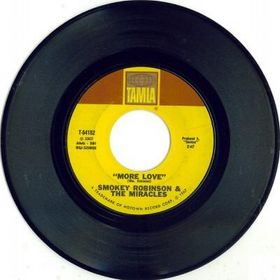
Smokey Robinson and the Miracles – “More Love”

422268
Smokey Robinson and the Miracles – “More Love,” Pop # 23, R&B # 5

By Joel Francis

Smokey Robinson has penned dozens of gorgeous love songs throughout his career, but few are affecting as “More Love.” The reassuring lyrics speak to the tragedies the couple suffered as a result of life on the road. Between 1957 and 1964, Claudette Robinson had eight miscarriages. This heartbreaking back story adds to the romance of the chorus:

“More love, more joy,
|Than age or time could ever destroy.
My love will be so sound,
It would take about a hundred lifetimes
To live it down, wear it down, tear it down.”

The song opens with some gospel chords on the piano before the gently insistent bassline enters. Robinson’s voice appears on a pillow of strings, as the arrangement slowly builds underneath. After Robinson delivers the chorus a second time, the performance pulls back to that great bassline before reaching a climax that sustains through the rest of the song.

Foreshadowing Motown’s cross-country relocation, the track was performed by Los Angeles session musicians before the Miracles – including Claudette – overdubbed their voices in Detroit. It’s unclear why Robinson, who also produced the cut,  bypassed the Funk Brothers, but the public didn’t seem to mind. The song was wedged near the top of both the pop and R&B charts in the spring of 1967.

Foreshadowing another Motown move, “More Love” was the second single credited to “Smokey Robinson and the Miracles.” Berry’s decision to give Robinson top billing started the avalanche that benefitted Diana Ross and Martha Reeves but doomed David Ruffin and the Temptations.

Smokey and Claudette eventually had two children, both named in tribute to Motown. Son Berry Robinson was the namesake of label founder Berry Gordy, and daughter Tamla Robinson was named after the Hitsville subsidiary.

Former New Christy Minstrels singer Kim Carnes had a No. 10 hit on the Adult Contemporary charts in 1980 with her reading of “More Love.” The song was her biggest hit until “Bette Davis Eyes” hit No. 1 the following year. “More Love” has also been covered by Paul Young, Barbara McNair and the 5th Dimension.

Marvin Gaye and Tammi Terrell – “Ain’t No Mountain High Enough”

mountain
Marvin Gaye and Tammi Terrell – “Ain’t No Mountain High Enough,” Pop # 19, R&B # 3

By Joel Francis

Marvin Gaye found his greatest early success as a duet partner. The 1964 album “Together” was his first album to chart, and his duets placed in the Top 20 with a consistency that eluded him as a solo artist. Unfortunately, Gaye’s soul partners, Mary Wells and Kim Weston, both left Motown for (allegedly) greener pastures shortly after collaborating with Gaye. As established Motown solo artists, pairing of Gaye with Wells and Weston made sense. The teaming of Gaye with Hitsville newcomer Tammi Terrell, however, was inspired.

Terrell arrived at Motown in 1965 after bouncing from Scepter Records, where she recorded as Tammy Montgomery, James Brown’s Try Records and the Chess Records subsidiary Checker. Her initial Motown singles didn’t much fare better than her previous efforts, but “Ain’t No Mountain High Enough” took both her and Gaye’s careers to a new level.

Motown’s new singing pair was paired with the songwriting team Berry Gordy hired to replace the gradually exiting Holland-Dozier-Holland squad. Husband and wife Nickolas Ashford and Valerie Simpson came to Gordy’s attention in 1966 with their No. 1 hit “Let’s Go Get Stoned” for Ray Charles. (Ironically, “Stoned” was Charles’ first single after leaving rehab for his heroin addiction.)

“Mountain was a heck of a debut for both Ashford and Simpson and Gaye and Terrell. It’s obvious from the few seconds of spoken introduction that the signers have great rapport and their voices dance perfectly on the chorus. Although Gaye and Terrell sound like they’re giggling from the same care-free piano bench, their vocal parts were actually recorded separately. Terrell felt like she hadn’t rehearsed the lyrics enough to record with Gaye, so after some coaching with producers Harvey Fuqua and Johnny Bristol she cut her part alone.

Although Fuqua and Bristol had helmed dozens of Motown hits, “Mountain” doesn’t have the expected Hitsville sound. The most obvious explanation is that Ashford and Simpson were an “outside” songwriting team and that Holland-Dozier-Holland were on their way out. It also highlights that when people talk about the “Motown sound” they are often talking about Holland-Dozier-Holland’s signature production style. Holland-Dozier-Holland’s defection not only deprived Motown of its greatest songwriting team, but also Gordy’s vaunted “sound of young America.”

As one team of stars left, another was being born. The success of “Ain’t No Mountain High Enough” helped transform Gaye into one of Motown’s biggest and most enduring performers, whose brightest days were yet to come.

Four Tops – “Bernadette”

Four-tops-bernadette
Four Tops – “Bernadette,” Pop # 4, R&B # 3

By Joel Francis

Levi Stubbs’ performance on “Bernadette” cements his status as Motown’s greatest male vocalist. The magnificent feats Stubbs laid down on the Four Tops previous pair of singles, “Reach Out” and “Standing in the Shadows of Love” reaches an impassioned crescendo on “Bernadette.” Stubbs joy, appreciation and devotion to Bernadette is still making women envy that name and that kind of partner.

The Holland-Dozier-Holland team that wrote and produced the previous two Tops singles once again employ the same lush orchestration, wrapping Stubbs’ urgent vocals in insistent strings, soaring background vocals and their signature propulsive snare drum.

“Bernadette” was the Tops last Top 10 hit until “Keeper of the Castle” took off in 1972. Perhaps coincidentally, “Bernadette” was also the Tops next-to-last collaboration with Holland-Dozier-Holland. The HDH-Four Tops swan song “7-Rooms of Gloom” hit No. 7 on the R&B charts in the summer of 1967.

Although Holland-Dozier-Holland had a handful of hits with Diana Ross and the Supremes before they left Motown in early 1968, “Bernadette” marks the last appearance by the incredible songwriting and production trio on the “Hitsville U.S.A.” set.

After Holland-Dozier-Holland departed, Berry Gordy placed all his best songwriters on Diana Ross and the Supremes and other pet artists like the Jackson 5. Groups that weren’t assigned to a producer – as the Temptations were to Norman Whitfield – floundered as the Hitsville transitioned. Many groups, including increasingly ignored girl groups like Martha and the Vandellas and the Marvelettes never regained their former glory.

As free agents, the Holland-Dozier-Holland team continued to turn out hits like Freda Payne’s “Band of Gold” and “The Day I Found Myself” by Honey Comb, but neither HDH nor Motown were ever as good again after they parted ways.

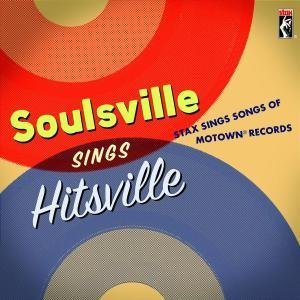
Soulsville sings Hitsville

soulsville sings hitsville

By Joel Francis

Rare was the time Berry Gordy would let Motown artists record songs outside of the Hitsville catalog (and its lucrative publishing).  Fortunately, Jim Stewart at Stax did not have the same stipulation. Thanks to the 2007 compilation “Soulsville Sings Hitsville: Stax Sings the Songs of Motown Records” soul fans have at least one direct barometer to use in the never-ending debate of Stax vs. Motown.

Rivalries and arguments aside, “Soulsville Sings Hitsville” is a great 15-song collection that casts many soul nuggets worn out by oldies radio in a new light. Soul fans from either side of the Mason-Dixon line will find a lot to enjoy here. And now for the 15-round battle in the head-to-head match of Stax vs. Motown.

Round 1:  – “Stop! In the Name of Love”

Margie Joseph vs. the Supremes

The Supremes took this song to No. 1 in 1965 and made it one of their defining songs. Margie Joseph adds a lengthy monologue and a completely new arrangement that transforms the song. They lyrics are about the only element these versions share. Although it’s hard to top Holland-Dozier-Holland production, Joseph accomplishes the feat by making the song her own and having an infinitely better singing voice than Diana Ross.

Winner: Stax

Round 2:  – “I Don’t Know Why I Love You”

David Porter vs. Stevie Wonder, the Jackson 5

David Porter made his name as half of the Porter-Isaac Hayes hitmaking machine in the ‘60s before striking out on his own in the ‘70s. His version of “I Don’t Know Why” easily tops the Jackson 5’s reading. Michael Jackson just isn’t old enough to put the necessary grit in his vocals and ends up practically shouting the song. The gold medal here, though, goes to the co-author and original performer Stevie Wonder. Released as a single from his 1968 album “For Once In My Life,” the song peaked at No. 16 on the R&B charts. Wonder’s vocals simmer, building in intensity until they boil over at the 1:40 mark. Wonder sings so hard he’s almost out of breath as the great arrangement continues to build until the only options are to explode out of the speakers or fade out. Faced with potential lawsuits from music lovers, the track ends just under the three-minute mark.

Winner: Motown

Round 3 – “You’ve Got to Earn It”

Staples Singers vs. the Temptations

One of the Staples Singers’ biggest hits, this song is so closely identified with the group that I didn’t even know the Temptations recorded the original. This Smokey Robinson-penned number was released in 1965 on the b-side of “Since I Lost My Baby.” The Tempts version is serviceable, but aside from Eddie Kendricks’ lead vocals isn’t that memorable. The Staples version trumps on every level: Mavis Staples great singing, the spectacular arrangement featuring a signature descending horn line and harmonica, and the soulful playing and support of Pops and Yvonne Staples.

Winner: Stax

Round 4 – “Can I Get a Witness”

Calvin Scott vs. Marvin Gaye

In the NFL, when a play is challenged and the officials go under the hood for review, there must be incontrovertible evidence to overturn the call. So goes it with covers. It is not sufficient to merely equal the original recording, the burden of the cover is to surpass the original. Calvin Scott does a good job putting his twist on one of Marvin Gaye’s earliest hits, but he doesn’t add anything to it either. Take pity on Scott, however – topping Gaye is no small feat.

Winner: Motown

Round 5 – “Reach Out (I’ll Be There)”

Mar-Keys vs. Four Tops

Although some session credits are available, the Mar-Keys kind of became the catch name for whoever was playing with the Memphis Horns. Some of their cuts ended up on Booker T. and the MGs or Isaac Hayes albums, some were added to Bar-Kays releases and others credited to the Mar-Keys themselves. The Mar-Keys’ 1971 version of “Reach Out (I’ll Be There)” is one of the numbers that has fallen through the cataloging cracks – Stax historians aren’t really sure who played on it. However, one fact is indisputable: this track rocks. Andrew Horn blows a mad sax solo with enough grit and soul to match Levi Stubbs’ incomparable voice, while the rest of the musicians strip the sheen laid by the Funk Brothers on the original Motown recording. That said, the Four Tops version became one of their defining performances for good reason. The decision here comes down to preference: the dirtier R&B of Stax or the polished soul of Motown. I like ‘em both.

Winner: Push

Round 6 – “Never Can Say Goodbye”

Isaac Hayes vs. Jackson 5

Isaac Hayes and the Jackson 5 both released their interpretations of Clifton Davis’ “Never Can Say Goodbye” in 1971. The results couldn’t be more different. The pain in Hayes’ deep voice pits him as a grown man with life experience against a bunch of talented kids acting their hearts out. In the weeks following the death of Michael Jackson, the J5 performance has become an unofficial tribute to their singer. It’s a fine sentiment, but, as Mos Def would say, this is grown man business. Hayes wins, no contest.

Winner: Stax

Round 7 – “My Cherie Amour”

Billy Eckstein vs. Stevie Wonder

In the 1940s, Billy Eckstein’s orchestra was one of the first large bop combos in jazz, providing an early home for Dexter Gordon, Miles Davis, Art Blakey, Charlie Parker and Dizzy Gillespie. In the ‘50s, Eckstein’s smooth voice influenced up-and-coming soul singers like Sam Cooke and Solomon Burke. Eckstein dabbled in both soul and jazz in the 1960s, even popping up on  a couple Motown LPs. Although his career was pretty much over by the ‘70s, Al Bell was able to coax the legend to cut a few albums for Stax. Unfortunately, Eckstein’s 1970 delivery of “My Cherie Amour” borders on parody and sadly resembles Jim “Gomer Pyle” Nabors’ version of “You Are the Sunshine Of My Life” that may be found on the Golden Throats series.

Winner: Motown

Round 8 – “Oh, Be My Love”

Barbara Lewis vs. Smokey Robinson and the Miracles

Barbara Lewis actually got her start as a teen soul singer in early ‘60s Detroit before finding greater success on Stax. Based on this number, it’s odd that Berry Gordy passed on Lewis at a time when he was seemingly signing every promising young singer in the city. Lewis’ voice is a perfect fit for the Motown sound. Then again, maybe it’s for the best Lewis didn’t join the Motown family. Chances are she would have ended up another in the long line of promising female talents discarded in the wake of Diana Ross. Lewis does a fine job with this interpretation of a 1967 Miracles b-side penned by Smokey Robinson. Unfortunately, the original version could not be located for comparison.

Winner: No decision

Round 9 – “I Hear a Symphony”

Booker T. and the MGs vs. Diana Ross and the Supremes

On paper, this looks like a slam dunk: Remove Ross’ weak vocals and replace it with one of the tightest, funkiest groups of the day. But somehow, the MGs’ performance just doesn’t add up. The melody just doesn’t sound complete coming only from Steve Cropper’s guitar and Booker T. Jones’ organ can’t replicate the fullness of the Funk Brothers playing. The Supremes’ version is definitely more than the sum of its parts, and a testament to the acumen of the Holland-Dozier-Holland team.

Winner: Motown

Round 10 – “Chained”

Mavis Staples vs. Marvin Gaye

Marvin Gaye took a break from cutting duets with Kim Weston and Tammi Terrell to lay down this funky number in 1968. The backing vocals and atmosphere give the track a live feel and the sax break is as close to the Stax sound as Motown gets. Mavis Staples cut her version a year later. She more than holds her own against Gaye’s vocals, and the arrangement is just as energetic. Both versions can pack the dance floor, yet are just different enough to stand on their own. Why choose one performance when you can have both?

Winner: Push

Round 11 – “Ask the Lonely”

John Gary Williams vs. Four Tops

John Gary Williams cut several sides for Stax/Volt as a member of the Mad Lads until he was drafted in 1966. When Williams got out of the military, he wasn’t exactly greeted with open arms. His former group had carried on in his absence, and found Williams’ replacement to be much easier to work with. Stax owner Jim Stewart pressured the group to take Williams back and he recorded with the Lads until 1972. That year, Williams was finally able to go solo. He released only one album, which included covers of George Harrison’s “My Sweet Lord,” the Spinners and this reading of “Ask the Lonely.” The smooth sax solo that opens this song and Williams’ vocals foreshadow the Quiet Storm movement. Williams arrangement and delivery may have been ahead of it’s time, but it’s not nearly enough to wrestle the title away from Levi Stubbs’ gut-busting performance on the original.

Winner: Motown

Round 12 – “Signed, Sealed, Delivered”

Soul Children vs. Stevie Wonder

The success of “Signed, Sealed and Delivered” – it spent six weeks at No. 1 on the R&B charts in 1970 – gave Stevie Wonder a great deal of leverage when he renegotiated his contract with Motown and gained the artistic control that birthed his spectacular output later in the decade. “Signed” was the first single 20-year-old Wonder produced; his arrangement is so good you can get lost in the various instruments. There isn’t much that can be improved on Wonder’s version and the Soul Children’s slowed-down gospel interpretation falls flat in the face of his triumph.

Winner: Motown

Round 13 – “Someday We’ll Be Together”

Frederick Knight vs. Diana Ross and the Supremes

Diana Ross’ name is coupled with the Supremes on the label of “Someday We’ll Be Together,” technically making it the ensemble’s final No. 1 hit before Ross started her solo career. Peeling back the label and examining the musicians’ chart, however, one can see that the song was actually a dry run for Ross’ solo career. Supremes Mary Wilson and Cindy Birdsong, who replaced founding ‘preme Florence Ballard, are nowhere to be found, but even if they did they probably wouldn’t have been able to help. The song, co-written and produced by Harvey Fuqua, is a mess. The strings are way too syrupy, and the backing vocals are over-performed. Everything on the track is over-produced. Perhaps this was an effort to make Ross’ thin vocals sound more emotionally relevant, but even that is a failure. It does sport a great guitar line, though. Frederick Knight vaults over this ridiculously low bar, but he doesn’t exactly salvage the song. His strings are more restrained, the arrangement slightly more funky and the vocals greatly improved, but the song itself – which predates Fuqua’s time at Motown – is far from memorable.

Winner: Stax

Round 14 – “I Wish It Would Rain”

O.B. Clinton vs. the Temptations

“I Wish It Would Rain” is one of the most devastatingly heartbreaking songs in the Motown catalog. Mourning his lost love, David Ruffin lays his soul bare for all to see. Topping this soul masterpiece would be quite a challenge – so O.B. McClinton didn’t even try. Dubbed the “Chocolate Cowboy,” McClinton was an oddity on the Stax label. His singles only charted on the country charts, with his slower tempo, pedal steel-backed version of “I Wish It Would Rain” peaking at No. 67 in 1973. His is a noble attempt, but the song works better in R&B than it does country.

Winner: Motown

Round 15 – “I Heard It Through the Grapevine”

The Bar-Kays vs. Marvin Gaye, Gladys Knight and the Pips

The wah wah guitar solo that punctures the Bar-Kays’ version of “I Heard It Through the Grapevine” just past the four-minute mark eclipses anything Gordy had imagined at Motown (save Rare Earth) and points Stax down the very odd path of Iron Butterfly and the acid rock of the early ‘70s. This version draws on the spirit of Isaac Hayes’ Oscar-winning “Shaft” and steers close to CCR’s lengthy, jammed-out rendition. I’m not sure if this actually tops the performances Marvin Gaye and Gladys Knight took to No. 1 a little more than a year apart. The versions are so different; it’s comparing apples and oranges. Enjoy them all.

Winner: Push

Final score: Stax 4, Motown 7.

The winner in this (the only) bout is overwhelmingly Motown, but Hitsville has an incumbent’s advantage of making Stax tackle its material. Listening to the Supremes tackle the Emotions, Levi Stubbs sparring with the Otis Redding songbook , the Temptations doing Sam and Dave and Norman Whitfield and Holland-Dozier-Holland applying their touches to Hayes/Porter and MGs arrangements would not only be a fantastic delight, but likely tip in favor of Soulsville. Sadly, we’ll never know. As a consolation prize, we have this compilation to bridge two very different and influential approaches to soul music.

Michael Jackson: We want you back

(Above: Bill Cosby emcees the Jackson 5’s infectious reading of “Dancin’ Machine.”)

By Joel Francis
The Daily Record

Before Michael Jackson was the King of Pop or Wacko Jacko he was little Michael, the adorable child singer for the Jackson 5. Michael and his brothers were the final star group to come out of Hitsville U.S.A. Their career bridges the gap between Motown’s glory days in Detroit and its descent to becoming just another record label in Los Angeles.

Hannah Montana, the Jonas Brothers and all the other tween pop stars with arena tours and television shows would be nothing today without the groundwork Michael and the Jackson 5 laid in the early ‘70s. Motown founder Berry Gordy was among the first businessmen to recognize how lucrative the tweener market could be. He marketed the Jackson 5 to fans the same age as the performers. Black or white, young Americans tried to imitate the dance moves and routines they saw on the Ed Sullivan Show, network television specials and even the band’s own Saturday morning cartoon.

Like that other brilliant piece of musical marketing, the Monkees, the Jackson 5 didn’t write their own material. Holland-Dozier-Holland may have departed, but Gordy was able to round up another ad hoc songwriting team to write material for the teen sensations. Anonymously dubbed “The Corporation” so other labels wouldn’t steal them away from Motown, the team was responsible for “ABC,” “I Want You Back,” “The Love You Save,” “Maybe Tomorrow” and “Sugar Daddy” to name but a few of their J5 hits.

The music may have been marketed to tweens, but it more than holds up today. The titles alone of the aforementioned songs should be enough for smiles to spread on most faces. Don’t worry if they don’t, though. After a few bars have played, they will jolt the rest of the way into your consciousness, making you involuntarily start tapping your feet and grooving along with the happy rhythms.

In 1972, 14-year-old Michael started cutting his own records for Motown. His early solo hits include “Got to Be There,” a cover of “Rockin’ Robin.” Michael’s first No. 1 solo hit was the title song to the film “Ben.” The movie may have been about a boy and his pet rat (Ben was the rat, of course), but Michael’s song was nominated for an Academy Award for Best Original Song.

Jackson’s biggest moment occurred when he was no longer on the Motown label, but front and center on Motown’s stage. In 1983 a television special was shot in Los Angeles celebrating 25 years of Motown records. Many of the label’s biggest hits reunited or returned to pay tribute to Berry Gordy and Hitsville, U.S.A. After performing with his brothers as the Jackson 5 for the first time in eight years, Michael took the stage himself to perform his new song “Billie Jean” and debut the dance step that defined the ‘80s – the moonwalk.

That iconic moment helped propel Michael’s career to unfathomable heights, but his music was never as fresh, fun and invigorating as it was before. As the decade fell away, Michael fell into parody and a host of other well-known problems.

But forget about all of that. Tonight, celebrate the kid who couldn’t stop smilin’, dancin’ and singin’ in front of those day-glo bell bottoms and beret-topped afros. Remember Michael for his best years on Motown.

Keep Reading:
More Michael Jackson Memories
Stevie Wonder Celebrates Michael Jackson at Starlight