Springsteen’s “Dream” Needs More Work

bruce-dream

By Joel Francis

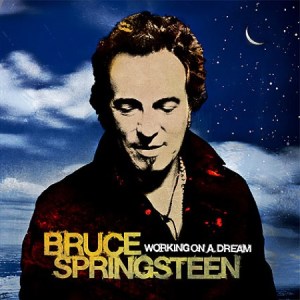
For someone whose live converts are so immediate and visceral, Bruce Springsteen’s studio albums often need time to marinate before digesting.

Unlike Springsteen’s previous album – 2007’s “Magic” – “Working On A Dream” has not revealed any new flavors since its release two months ago. The record is overcooked in parts, underdone in others and often lacking necessary ingredients.

Opening cut “Outlaw Pete” is an obvious overcooked number. Clocking in at eight minutes, the arrangement shows Springsteen’s love of Ennio Morricone, but nicks part of its melody from Kiss’s late-’70s disco hit “I Was Made For Loving You.” This faux pas would be more forgivable if Springsteen hadn’t borrowed “Jenny (867-5309)” for his previous album’s opener, “Radio Nowhere.” The real problem, though, lies in the words. Pete’s story is never as interesting as its musical setting, and the lyrics are flat-out lazy, rhyming “feet” with “Pete,” “Dan” with “man” and “side” with “slide.” It would be easy to mistake this as a children’s song if everything else weren’t so earnest.

On the other side, “Queen of the Super Market” is severely underdone. The attempted portrait of a supermarket as an erotic smorgasbord is even sillier in song than it appears on paper. Again, Springsteen’s word choice is questionable, dropping an f-bomb in the last verse so out of place it could have been a suggestion from Ryan Adams.

Most tracks fall somewhere in between. Lead single “My Lucky Day” is good, but doesn’t stand out as an evergreen concert staple a la “Badlands” or “Mary’s Place.” Ditto for the second single, “Working on a Dream,” which would work better without the whistled solo.

Several numbers find Springsteen flexing his pop muscles, singing sunny love songs in under three minutes. The best of these, “Surprise,” is little more than a constant repetition of the title in a Brian Wilson vein that works, um, surprisingly well.

When the band gets it right, the results are spectacular. “Good Eye” and bonus track “A Night With the Jersey Devil” are distorted blues stompers that could have appeared on a Fat Possum release. “The Wrestler” is a dark human portrait in the vein of “Devil’s and Dust” that deserves all the accolades and awards it received from its connection to Mickey Rourke’s film.

Easily the best song, though, is “Last Carnival,” a tribute to fallen E Streeter Danny Federici. The affecting ballad has a gorgeous vocal arrangement along the lines of “My City of Ruins” and poignant lyrics that use a fairground as a metaphor for lost friendship.

Ultimately, “Working on a Dream” works best as an appetizer that can tickle the taste buds at times, but is unsatisfying as an entrée.

Review: Boss is Bigger than Big 12 Tourney (2008)

Bruce Springsteen and Tom Morello – “The Ghost of Tom Joad”

Book Review: “Big Man” by Clarence Clemons

Springsteen in the Waiting Room: Drop the Needle and Pray

Springsteen Rocks the Hall (part 1)
Springsteen Rocks the Hall (part 2)

More Bruce Springsteen on The Daily Record

Review: Bela Fleck’s Africa Project

(Above: Vusi Mahlasela at Live 8.)

By Joel Francis
The Kansas City Star

Bela Fleck has taken his banjo to some unexpected forays into jazz, classical and holiday music. For his latest project, not only did Fleck bring his banjo to Africa, but he brought several of his African collaborators with him on tour.

For three hours Fleck and his Africa Project mesmerized a half-full Uptown Theater Thursday night.

Starting promptly at 8, Fleck opened with a 10 minute solo improvisation based on the melodies and techniques he picked up in Africa. After introducing thumb pianist and Anania Ngoliga and guitarist John Kitime from Tanzania, Fleck ceded the stage to the duo. That set the pattern for the night: Fleck’s introduction, a couple solo numbers followed by a couple duets.

Ngoliga’s thumb piano was a wooden box about the size of a sampler with about three dozen metal strips of varying lengths attached. Backed by Kitime’s buoyant acoustic guitar, the pair sang about their native country. After 15 minutes, Fleck came out for “Kabibi.” Ngoliga sang that one in a voice so high it almost sounded like a children’s song. His happiness was so infectious it’s hard to imagine anyone not cracking a smile while listening.

There were only two drawbacks to Fleck’s format. Just as it seemed the performers were getting in a groove, it was time for the next act. Perhaps more frustrating was the high level of entertainment and musicianship from the artists. Each could easily carry a show of their own. With any luck, some of them will come back through again.

On the other hand, Fleck is to be commended for introducing these musicians to his audience. During his set, kora player Toumani Diabate recalled the last time he was in Kansas City … 18 years ago. It is very conceivable this was the first (and only) performance our town will see from the rest of the artists.

Next up was D’Gary and Mario, a guitarist and percussionist from Madagascar. D’Gary’s playing style was like Spanish flamenco married to Ali Farka Toure’s African blues. D’Gary’s playing was virtuosic, yet warm and inviting. He was joined by Mario who played a small tin can filled with glass, sealed and attached to a stick. It may not sound impressive, but somehow Mario managed to turn the simple instrument into an uber-maraca.

After sitting in with the pair for one number, Fleck brought out bluegrass violinist Casey Drieson to join them on “Kinetsa.” Drieson was initially absent in the mix. Frustrated, he walked across the stage and started playing into D’Gary’s microphone. The cheers that erupted were so great that when Drieson tried to retreat, Fleck urged him to take another solo.

(Above: The six-string wonders of D’Gary.)

Vusi Mahlesela came out after a 20-minute intermission. His guitar style was closest to the Western tradition. It’s easy to imagine him in the South African equivalent of a Greenwich Village coffee shop. A former anti-apartheid activist, Mahlesela sang in an expressive tenor. Like most of the performers, he didn’t sing much in English, but he put his whole body into what he said.

The joyous “Thula Mana” was dedicated to Mahlesela’s grandma, who protected him from the Afrikaans police force. If Fleck added the least to this pairing, it is only because Mahlesela’s presence was so complete.

Finally, Fleck introduced kora master Toumani Diabate. A native of Mali, Diabate has collaborated with Taj Mahal and Bjork and was the best-known of Fleck’s guests. Clad in a traditional golden robe, Diabate’s instrument was the most traditional and formal of the night. After a long solo piece, Fleck came out and urged Diabate to explain his instrument. Diabate’s kora looked like an industrial broomstick with many protruding strings stuck in a gigantic half-gourd. After demonstrating the four-finger picking technique (thumbs and two index fingers), Diabate slowly built a song starting with the bassline, adding melody and finally improvisation.

Dierson returned – this time with a working mic – to join Fleck and Diabate on “Throw Down Your Heart.” Banjo and kora work well together because both instruments are treble-heavy and prone to twang. Playing double stops on the low strings, Dierson’s violin was a pleasant counterpoint that added fresh textures.

The night ended with everyone onstage together for an improvised jam and Mahlesela’s “When You Come Back,” a tribute to his home continent.

Western artists have been mining African music since before they wouldn’t play Sun City, but Fleck may be the most accommodating. He acted as less a host than a facilitator who was honored to sit in with his guests.

The collaborations were so organic it seemed they could have taken place anywhere – the studio, living room, outside. They just happened to be experienced in the Uptown this night.

(Below: Toumani Diabate rocks the kora.)

Review: Madeleine Peyroux

music_phases-38090
By Joel Francis

The Kansas City Star

Before playing the final song of the night, Madeline Peyroux told how “Somethin’ Grand” was written around 4 in the morning, when the trucks on the nearby highway finally stopped buzzing past her Brooklyn apartment.

Most of the music Peyroux played for a sold-out edition of Cyprus Avenue Live at the Folly Theater on Friday night fit that contemplative, midnight mood.The atmosphere was struck with the first song, “Dance Me to the End of Love.” Darren Beckett’s gently brushed drums and Barak Mori’s subtle and sometimes sweeping bass lines created a bed for music that blurred the lines between jazz, folk and pop.

“Don’t Wait Too Long,” the third number up, was a showcase for the other two members of Peyroux’s band. Jon Herrington’s guitar had a warm, fluid tone. Larry Goldings spent the night switching between piano, organ and keyboards. His earthy, gospel organ was the backbone of several numbers. Peyroux’s smoky voice and phrasing, which often recalled Billie Holiday, was the evening’s stand-out instrument, though.

Peyroux established her career by covering the masters and she got a couple heavyweights out early. Leonard Cohen’s “River of Tears” was followed by Bob Dylan’s “You’re Gonna Make Me Lonesome When You Go.” On that song, Peyroux crawled inside the lyric “I could stay with you forever/and never realize the time” and delivered a spectacular performance as comfortable as a Sunday afternoon nap with a lover.

Halfway through the set, Peyroux recreated her days busking on the streets of Paris as her band huddled around her playing on a box, upright bass, mandolin and blow-organ. For the only time that night, Peyroux’s acoustic guitar lead the band as she sang “La Javanaise” and “Don’t Cry Baby.” If she performed half as good on the streets as she did in the Folly, Peyroux likely found her cap filled with coins in no time.

Between songs, Peyroux chatted with the audience, playfully pointing out the lyric in Dylan’s song refers to the French poet Arthur “Rimbaud” and not Sylvester Stallone’s “Rambo,” discussing the inspiration behind her character song “Our Lady of Pigalle” and introducing her hit “I’m All Right” as a “happy break-up song.”

Peyroux performed all but two songs from her new album, “Bare Bones,” during the course of her 90-minute set. She completely ignored her 1996 debut album “Dreamland,” which may have frustrated some long-time fans. Instead the evening’s remaining songs were split between the two other albums she released this decade.

Opening act Steve Poltz was a welcome addition to the bill. Accompanied only by his acoustic guitar, the singer/songwriter quickly won over the crowed with his frequently funny songs. A rapid-fire talking blues somehow touched on everything from the winter holidays, fruit cake, Barack Obama and YouTube, while “Brief History of My Life” somehow combined Poltz’s love of baseball with stories of his first communion. Poltz is best known for helping Jewel write “You Were Made For Me.” He closed his 35-minute set with “Everything About You,” a song that appeared on the “Notting Hill” soundtrack.

With a night filled with so many stand-out moments – from Peyroux’s sly reading of “You Can’t Do Me,” which she wrote with Walter Becker, to the bouncy optimism of “Instead” – Peyroux left no doubt that her songbook had more legs than a glass of good wine.

Setlist: Dance Me To the End of Love, Bare Bones, Don’t Wait Too Long, River of Tears, You’re Gonna Make Me Lonesome When You Go, Damn the Circumstances, I’m All Right, A Little Bit, La Javanaise, Don’t Cry Baby, Love and Treachery, You Can’t Do Me, Our Lady of Pigalle, I Must Be Saved, Instead, Somethin’ Grand.

Review: Raphael Saadiq

raphael_saadiq_bw-thumb-473x4932
By Joel Francis

The Kansas City Star

Raphael Saadiq brought nearly 90 minutes of eight-track soul jams into an iPod world Wednesday night at the VooDoo Lounge.

Taking the stage in a suit and glasses that echoed Temptation David Ruffin, Saadiq strapped on a white Telecaster as his six-piece band vamped over a groove that sounded like a lost Motown backing track.Setting the guitar aside, he plowed through several numbers from his latest album, the Motown and Philly soul-inspired “The Way I See It,” but it took a couple songs for the performance to connect with the audience. Part of that could have been the size of the crowd. The floor started about a quarter full, though it swelled considerably as the night wore on.

A better reason, though, was the 15-foot buffer the polite crowd kept from the stage. Sensing they need to turn things up a notch, the band kicked “100 Yard Dash” into high gear as Saadiq implored the crowd to move closer. Once they did, Saadiq kept them in the palm of his hand for the rest of the night.

The band brought out the slow jams for a quick one-two of Saadiq’s better-known cuts from his Lucy Pearl project and got everyone involved with a medley of Tony! Toni! Tone! favorites.

Sporting a broad grin, Saadiq clearly enjoyed watching the audience take over his old material. He nailed a falsetto toward the end of “Anniversary” that put nearly every woman in the audience over the edge. When he forgot the words to “All I Ask Of You” a moment later, no one seemed to mind when he took several bars to collect himself before starting again.

Album opener “Sure Hope You Mean” it was stretched out to include snippets of “Going To Kansas City” and the evening’s most intimate moment. As the band broke down the chorus, Saadiq held the mic by his side and sang to himself. Dancing around the stage he seemed lost in a private moment, oblivious to the audience.

The crowd tipped toward the thirty-year mark. For most of them, this was as close to a Motown revue as they were likely to see. Many of the folks in the balcony and sprinkled throughout the floor, however, were seeing the soul music of their childhood echoed for the second or third time.

Saadiq didn’t make it easy for the scores of fans holding cell phones and cameras to take his picture. He was constantly moving, strutting, spinning or dancing in synchronicity with his two backing vocalists. The only time he stood still was for a drawn-out gospel intro to “Let’s Talk A Walk” that teased the crowd several times.

Nearly an hour after he took the stage, Saadiq said goodnight and departed. He and the band quickly returned to perform “Still Ray” and “Big Easy,” a number inspired by Hurricane Katrina. His white Telecaster back on for the final number, Saadiq may have said goodnight once again, but his hands kept playing. He and the band jammed for a good five minutes before everyone left the stage.

The show seemed longer than its 75 minutes, but even its length was an old-school throwback. It was the same duration as those classic double-live concert LPs.

Setlist: Keep Marching, Love That Girl, 100 Yard Dash, Dance Tonight, La La, Just One Kiss, Oh Girl, Tony! Toni! Tone! Medley: Lay Your Head On My Pillow; Anniversary; All I Ask Of You; Just Me and You, Be Here, Let’s Take A Walk, Sure Hope You Mean It, Staying In Love. Encore: Still Ray,Big Easy.

Review: Modest Mouse

mm8_0020

(Above: The Mouse’s pre-show view of the Uptown Theater.)

By Joel Francis

The Kansas City Star

When Modest Mouse last played Kansas City 18 months ago it was promoting a No. 1 album on a sweltering night at one of the city’s worst outdoor venues (City Market). The band returned on a frigid Monday night to play before a full house at one of Kansas City’s best indoor venues, the Uptown Theater. With no new material to promote, Isaac Brock and his band played whatever they wanted.

The band hit the stage like they were shot out of cannon, launching into a vicious reading of “Bury Me With It” that featured a guitar part that sounded like something from Sonic Youth. With barely a pause, one of the most successful indie rock bands on the scene today tore into a ferocious “Never Ending Math” that set a high bar for the evening to follow.

They were more than up to the task. The six-piece band was on top of its game, stopping and starting and changing dynamics on a dime. Grandaddy guitarist Jim Fairchild, who is sitting in for ex-Smiths guitarist Johnny Marr on this tour, played well off lead singer Brock’s parts, particularly on “Interstate 8” and “Dramamine.” Fairchild even kicked in some vocals on “Satellite Skin.”

Although every performance was impressive, the band was at its best when it could stretch out. Epic performances of “Dramamine,” “The View” and “Breakthrough” built layer on top of hypnotic layer until it felt like the song would explode out of the building.

As powerful as the epics were, the band knew how to bring things down, like during an almost-unplugged version of “Bukowski” in which Brock channeled his inner Bela Fleck on banjo and a lovely bowed bass and accordion solo. Earlier in the evening, “Custom Concern” was a welcome come-down after the intense marathon numbers.

The only concessions to casual fans were “Float On,” which featured a shiny ‘80s keyboard part on the chorus, and a breakneck reading of “Dashboard,” complete with trumpet. Other than that, the evening was devoted to older songs and album cuts like the trippy “Tiny Cities Made of Ashes,” which sounded like an underwater fight with the devil.

The band played too loud and fast to incorporate much audience feedback, but the crowd was more than appreciative. The opening chords to nearly every number drew big cheers of recognition, and while it was impossible to hear anyone singing along, the swaying arms and moving lips were unmistakable signs of approval.

The enthusiasm was infectious. The notoriously and self-admittedly grumpy Brock was clearly having good time. After castigating a fan for requesting older material immediately following a song from their first album, Brock settled down. He showed off the black light posters he purchased the night before in Boulder, Colo. and told an affectionately rambling story about Roger Miller’s “Kansas City Star.” Brock promised to play the song from his iPod for the crowd after the show, but ZZ Top appeared somehow instead. No one complained.

Setlist: Bury Me With It, Never Ending Math, The View, Dramamine, Wild Packs of Family Dogs,Tiny Cities Made of Ashes, Custom Concern, Float On, Bukowski, Interstate 8, All Nite Diner, Parting of the Sensory. Encore: Third Planet, Satellite Skin, Dashboard, Baby Blue Sedan, Black Cadillacs.

Keep reading: A 2007 interview with Isaac Brock.

Review: Flogging Molly

(Above: “Drunken Lullabies.”)

By Joel Francis
The Kansas City Star

It didn’t take much for Flogging Molly to transform Fat Tuesday into St. Patrick’s Day.

The Celtic punk band performed a blazing 90-min. set for a sold-out Uptown Theater crowd Tuesday night. The evening opened at full throttle with “Man With No Country,” a joyous jangle of guitars, violin, banjo and drums.

“The Likes of You Again” started acoustically before exploding into a high-octane jig and reel. It’s a trick Flogging Molly has perfected: take an Irish melody, crank the performance to 11 and drop in an anthemic chorus. Although this leaves the songs sounding similar, there’s enough twiddling with the dynamics that they never get old.

The banjo intro to “Drunken Lullabies” had everyone stomping so hard the balcony was shaking. When the full band finally entered, the crowd ignited in a fury of singing, clapping, dancing and moshing. It was the band’s biggest response of the night, although they came close a couple other times.

After “Lullabies” it was impossible to go any higher, so the band dialed it down with a three-song acoustic set. “The Son Never Shines (On Closed Doors)” was dedicated to singer Dave King’s 87-year-old Irish mother. Dressed with a banjo melody and nifty slide guitar solo, the ode to a home that isn’t visited frequently enough was just as affecting as the full-bore material.

The 90-minute set was split evenly between the band’s first two and most recent studio albums. Early in the set, King promised they would perform several more obscure songs, like “The Worst Day Since Yesteday,” but they didn’t seem to stump anyone signing along.

With the house lights up, the crowd launched into the chorus of “Rebels of the Sacred Heart” after the opening chord. If that song felt like a soccer anthem, the next number, “If I Ever Leave This World Alive,” transformed the Uptown into an Irish pub. With cups hoisted and lyrics belted it was the second biggest response of the night.

The band stood six abreast across the front of the stage, with the drummer on risers behind. Acknowledging their previous shows at the Beaumont Club and growing audience, King noted they were “a long way from the old mechanical bull days.”

The Los Angeles-based Aggrolites set the bar high with their amazing 45-minute opening set. The quintet’s “dirty reggae” sounded like Kingston via Aztlan, or Los Lobos paying tribute to the Specials, sans horns. The band’s not-so-secret weapon was organist Roger Rivas, who propelled the most numbers with his mighty B3. Rarely pausing between songs, the band kept the energy high and the crowd moving. They closed with an optimistic, doubletime cover of the Beatles’ “Don’t Let Me Down” that found two members of Flogging Molly onstage contributing backing vocals onstage.

Setlist: Man With No Country/The Likes of You Again/Requiem for a Dying Song/Selfish Man/The Worst Day Since Yesterday/You Won’t Make a Fool Out of Me/(No More) Paddy’s Lament/Drunken Lullabies/Us of Lesser Gods/The Son Never Shines (On Closed Doors)/Float/Tobacco Island/The Kilburn High Road/Rebels of the Sacred Heart/If I Ever Leave This World Alive/The Lightning Storm/What’s Left of the Flag/Seven Deadly Sins/The Story So Far//encore//Grace of God Go I/Devil’s Dance Floor/Salty Dog

15 jazz greats to emerge in the last 20 years (part three)

(Above: Savion Glover does his thing with plenty o’ swing.)

By Joel Francis
The Daily Record

Continuing The Daily Record’s look at the state of jazz today, here is the final of three installments shedding light on 15 jazz greats to emerge in the last 20 years. Note that these musicians are not necessarily the 15 greatest jazz artists to arrive since 1990. A brief listen to any of them, though, should more than persuade the most ardent purist that jazz is alive and well.

Eldar Djangirov

Eldar Djangirov is the continuation of the great line of pianists to emerge from Kansas City, Mo. that stretches back to Count Basie and Jay McShann. The three have more than an adopted hometown in common, though. Although none were born in Kansas City, all experienced significant musical growth while living there. Unlike Basie and McShann, though, Eldar’s formation started before puberty. He performed at a Russian jazz festival at age 5 and at age 12 became the youngest guest ever on Marian McPartlan’s Piano Jazz radio show. Though his latest album is straight-up smooth jazz, Eldar’s earlier work has a breadth that recalls everyone from Ahmad Jamal to Art Tatum. Albums to start with: Eldar, Live at the Blue Note

Christian McBride

Bass player Christian McBride was mentored and hailed by no less an authority than Ray Brown before starting off on his own. McBride works comfortably in the traditional vein on his early albums like “Fingerpainting,” the excellent tribute to Herbie Hancock performed in a bass/guitar/trumpet setting. He gets more funky and touches on fusion with his three-disc live set recorded at Tonic and studio albums “Sci-Fi” and “Vertical Vision.” In 2003, McBride collaborated with hip hop drummer Ahmir “?uestlove” Thompson of the Roots and keyboardist Uri Caine for a spectacular collaboration known as the Philadelphia Experiment. McBride has also worked extensively with Sting and Pat Metheny. Albums to start with: Fingerpainting, The Philadelphia Experiment.

Joshua Redman

Expectations have been high for Joshua Redman since winning the Thelonious Monk International Jazz Saxophone Competition in 1991. While Redman hasn’t fulfilled those unrealistic expectations by taking his instrument to the heights achieved by Sonny Rollins and John Coltrane, he has built a strong career on his own terms. Redman’s early quintets helped launch the careers of Christian McBride and Brad Mehldau and his work as musical director of the San Francisco Jazz Collective paired him with legends like Bobby Hutcherson and new artists like Miguel Zenon. Redman’s catalog is adventurous enough to include covers of Eric Clapton’s “Tears in Heaven” with guitarist Pat Metheny and funky experiments that recall Eddie Harris. Albums to start with: Spirit of the Moment, Back East.

Savion Glover

Jazz tap may have died with the golden age of big-budget Hollywood musicals, but Savion Glover is trying his best to bring it back. He has appeared in televised concerts with Wynton Marsalis’ Jazz at the Lincoln Center Orchestra, collaborated with poet Reg E. Gaines and saxophone player Matana Roberts for the John Coltrane-inspired improve “If Trane Was Here,” appeared in Spike Lee’s “Bamboozled” and was a cast member of “Sesame Street.” Glover hasn’t recorded any albums, but his live performances are a potent reminder that jazz isn’t the exclusive province of those with a horn or a voice.

Bad Plus

Combining rock and jazz is nothing new, but the piano/drums/bass trio Bad Plus have done it in an acoustic setting that resembles Medeski, Martin and Wood more than Weather Report. Their early albums were filled with original material that split the difference between Oscar Peterson and Ben Folds, tempered by occasional arrangements of Pixies and Black Sabbath classics. Unfortunately, recent releases have steered sharply away from new compositions and saturated the increasing covers with more irony. While the concept of their newest album – all covers with a female vocalist – makes one wary, their early material should not be overlooked. Albums to start with: Give, Suspicious Activity.

Keep Reading 15 Jazz Greats to Emerge in the Last 20 Years

Part One

Part Two

Five Legends Still Adding to Their Legacies

15 jazz greats to emerge in the last 20 years (part two)

(Above: The Kora Jazz Trio in concert.)

By Joel Francis

Continuing The Daily Record’s look at the state of jazz today, here is the second of three installments shedding light on 15 jazz greats to emerge in the last 20 years. Note that these musicians are not necessarily the 15 greatest jazz artists to arrive since 1990. A brief listen to any of them, though, should more than persuade the most ardent purist that jazz is alive and well.

Ravi Coltrane

Not only has Ravi Coltrane followed in his famous father’s footsteps as a musician, but he’s established himself with his dad’s instrument. The child of John and Alice Coltrane (Ravi was two when his dad died), Ravi cut his teeth with McCoy Tyner and Elvin Jones before finally stepping out on his own. In little over 10 years, he’s build a strong catalog that would sound just as sweet under a different surname. Coltrane is currently on the road in a new septet celebrating 70 years of Blue Note Records. Albums to start with: Mad 6, In Flux.

Kora Jazz Trio

Comprised of pianist Abdoulaye Diabaté (who is not related to kora master Toumani Diabate), griot percussionist Moussa Sissokho and kora player Djeli Moussa Diawara, this trio deftly blends their African heritage with American jazz. Throughout their three albums, they have tackled songs by Charlie Parker, Thelonious Monk and the Buena Vista Social Club and delivered over a dozen dazzling originals. Imagine McCoy Tyner getting lost in an African marketplace and you’re getting close. Albums to start with: Part II, Part III

Diana Krall

Pianist and singer Diana Krall grew up surrounded by her dad’s extensive collection of Fats Waller albums, but ended up with a style and sound closer to that of Ralph Sharon, Tony Bennett’s longtime arranger and accompanist. Although Krall’s music is certainly not aggressive or pushing any boundaries, dismissing her music as smooth jazz for dinner parties would be a mistake. Her performances of Irving Berlin, Cole Porter and Jimmy McHugh have a freshness, energy and vitality lacking in other “supper club” performers. Krall’s most recent album, “The Girl in the Other Room,” leans heavily on original material written with her husband, Elvis Costello. Albums to start with: Love Scenes, The Girl in the Other Room

Medeski, Martin and Wood

Decades of touring have made the bass/keyboard/drums trio of Medeski, Martin and Wood one of today’s tightest ensembles. Their experimental, groove-based sound is broad enough to be equally at home at both Newport and Bonnaroo without changing a thing. Early pieces like “Hermeto’s Daydream” sound like Dave Brubeck run through “A Clockwork Orange,” while newer material features hip hop artists like DJ Logic, and guitarists Marc Ribot and John Scofield. Albums to start with: Notes from the Underground, Combustication.

Jason Moran

Pianist Jason Moran only has 10 years of recording under his belt, but he’s covered a lot of territory in that time. His albums contain interpretations of Prokofiev and Afrika Bambaataa interspersed with original compositions and spoken-word pieces. In addition to releasing seven albums under his own name, Moran has worked and recorded with Andrew Hill, Cassandra Wilson, Christian McBride, Don Byron, Ravi Coltrane and dozens more. Only 34 years old, Moran is just getting started. Albums to start with: Modernistic, Same Mother

Keep Reading: 15 Jazz Greats to Emerge in the Last 20 Years

Part One

Part Three

Five Legends Still Adding to Their Legacies

15 jazz greats to emerge in the last 20 years (part one)

(Above: Brad Mehldau performs an arrangement based on Radiohead’s “Exit Music (For A Film).”

By Joel Francis

Continuing The Daily Record’s look at the state of jazz today, here is the first of three installments shedding light on 15 jazz greats to emerge in the last 20 years. Note that these musicians are not necessarily the 15 greatest jazz artists to arrive since 1990. A brief listen to any of them, though, should more than persuade the most ardent purist that jazz is alive and well.

Roy Hargrove

Over the past 20 years, Roy Hargrove’s trumpet has proven to be one of the most versatile instruments ever. He’s equally at home conjuring Cuba on his own or summoning the spirit of African rebellion with rapper Common. Although Hargrove has yet found a way to reconcile his split personalities, he has built a strong catalog. In the Roy Hargrove Quintet, Hargrove works the more traditional mold forged by Freddie Hubbard and Clifford Brown. The RH Factor is the less-focused urban playground where Hargrove’s funky side comes out. Albums to start with: Habana, Earfood.

Brad Mehldau

Pianist Brad Mehldau cut his teeth working with saxophonists Joshua Redman and Wayne Shorter before striking out on his own. His lengthy concert arrangements often leave no stone unturned. Although his classical approach to playing is influenced by Bill Evans, Mehldau has no problem converting songs by Radiohead, the Beatles and Nick Drake into extended jazz workouts and placing them on footing equal to George Gershwin and Cole Porter standards. Mehldau made albums with opera singer Renee Fleming, guitarist Pat Metheny and pop producer Jon Brion without pandering on any project. Albums to start with: Back at the Vanguard, Day is Done.

Madeleine Peyroux

Singer Madeleine Peyroux’s voice sounds more than a little like Billie Holiday, but her style is closer to Joni Mitchell’s. Born in the South, raised in New York and California and seasoned in Paris, Peyroux splits the distance between jazz, folk and pop. Her interpretations of Leonard Cohen, Bob Dylan and Hank Williams numbers made her a star on Lilith Fair stages a decade ago and earned her acclaim as the “Best International Jazz Artist” by the BBC in 2007. Albums to start with: Dreamland, Half the Perfect World.

Miguel Zenón

Puerto Rican saxophonist Miguel Zenon recalls the tasteful, silky tone of Paul Desmond. In little more than five years, he’s released four albums, worked as a founding member of the SF Jazz Collective, won the Best New Artist award from JazzTimes in 2006 and named Rising Star-Alto Saxophone for three consecutive years in the Down Beat Critic’s Poll. While Zenon’s horn rests easily on the ears, his arrangements capture the spirit of his native island through insistent originals and unlikely hymns like “Great is Thy Faithfulness.” Albums to start with: Jibaro, Awake.

Maria Schneider

Maria Schneider’s compositions for her jazz orchestra have been some of the most ambitious works in the jazz canon since the heyday of the Duke Ellington Orchestra or Dave Brubeck’s late-’60s expositions. At once sweeping and evocative, Schnieder’s near-classical pieces reveal the deep influence of Gil Evans. The cinematic expanse of her work takes the listener on a journey where everyone from George Gershwin to Gustav Mahler is likely to appear. Albums to start with: Evanescence, Sky Blue.

Keep Reading: 15 Jazz Greats to Emerge in the Last 20 Years

Part Two

Part Three

Five Legends Still Adding to Their Legacies

Review: Gov’t Mule

(Above: Mule, meet Radiohead. Radiohead, Mule.)

By Joel Francis
The Kansas City Star

One fan’s T-shirt asked: “Got Mule?” And for the second time in three months, the answer was “yes.”

Nearly 12 weeks after playing to a packed Voodoo Lounge, Gov’t Mule played for another full house Wednesday night at the Granada in Lawrence.

The classic rock jam quartet opened with the dirty blues stomp of “Brand New Angel” before segueing into the wah-driven “Perfect Shelter.” The show didn’t really start, though, until the surprise cover of Jimi Hendrix’ “If 6 Was 9.” It was the first of many cover treats.

A raucous “Helter Skelter” bumped against a medley of Temple of the Dog’s “Hunger Strike” and Traffic’s “Dear Mr. Fantasy.” Earlier in the night, Radiohead’s “Creep” was followed by Led Zeppelin’s “Trampled Underfoot.”

There was just as much diversity in band’s original material. Propelled by Danny Lewis’ organ, the intro to “Larger Than Life” recalled Medeski, Martin and Wood. “Streamline Woman,” meanwhile sounded like Led Zeppelin lost in the Florida swamps. And all bets were off for the progressive rocker “Silent Scream,” which encompassed 20 minutes and a drum solo.

The band played a one-hour opening set, before taking a 20-minute break and coming back for another 90 minutes. During that time, most sets of eyes were trained on singer and guitarist Warren Haynes. Haynes also plays in the Allman Bros. and was hailed by Rolling Stone as one of the greatest guitarists of all time. His playing is impressive, but not flashy. It’s like he knows exactly where to put his fingers again and again and again.

Although Haynes took many noteworthy solos, the instrumental “Birth of the Mule” was his tour de force. The 10-minute number opened with Haynes’ delicate, fingerpicked slide playing. Starting like a gentle rain and building into a full storm, the song culminated in a heavy riff reminiscent of Black Sabbath before gliding back to the ground, light as a feather.

The middle-aged, mostly male Mule heads who knew exactly what they were getting into. Although the floor was too packed to dance, everyone seemed content to nod and sway in place.

The night closed with a pair of slide blues rave-ups. Hayes did a great job of replicating Muddy Waters’ early playing style on “Champagne and Reefer.” The tune paired so nicely with Hound Dog Taylor’s “Gonna Send You Back To Georgia” that the two were stretched for 20 minutes.

Setlist: Brand New Angel, Perfect Shelter, Streamline Woman, Larger Than Life ->If 6 Was 9 ->Larger Than Life, Get Out Of My Life, Birth of the Mule, Temporary Saint, Creep, Trampled Underfoot/Intermission/Patchwork Quilt, Helter Skelter, Hunger Strike->Dear Mr. Fantasy->Hunger Strike, Silent Scream->Drum Solo, Like Flies->Mule->I’ve Been Working->Mule/Encore/Champagne and Reefer, Gonna Send You Back To Georgia