Album review – “Stax: The Soul of Hip-Hop”

30535_03_HH_Book.qxd:-

By Joel Francis

When RZA needed a hook for “C.R.E.A.M.” he turned to the Charmels’ “As Long As I’ve Got You” and joined a large fraternity of rappers and producers who have leaned on the Stax catalog for their tracks. And though Stax has provided the samples for hits by Jay-Z, Public Enemy, Notorious B.I.G. and countless others, the source material has somehow remained in the secret province of crate-diggers.

Until now. “Stax: The Soul of Hip Hop” is 14 wonderfully selected, mostly obscure late-period Stax cuts released as part of Concord Record’s revitalization of the label. It’s unlikely that many Ghostface Killah fans listening to “Supreme Clientele” would have the urge to track down the source material for “The Grain.” But listening to Rufus Thomas’ “Do the Funky Penguin” on this compilation not only sheds light on the music that informed Ghostface – it’s fun enough to make the album more than a history lesson.

It’s great if De La Soul and Cypress Hill are the reasons these song sound familiar, but the collection succeeds because it dusts off great songs that are ignored on most retrospectives. 24-Carat Black’s lone album was ignored in 1973. That album’s title track “Ghetto: Misfortune’s Wealth” opens this compilation with a slab of socially conscious funk. The female trio the Emotions found their greatest success with Earth, Wind and Fire in the late ‘70s, but “Blind Alley” shows they were fully formed pop soul act long before Maurice White helmed their albums.

The Dramatics’ “Get Up and Get Down” foreshadows the disco movement, while Little Milton’s “Packed Up and Took My Mind” is the marriage of soul and blues that Robert Cray has been chasing for 20 years. The inclusion of Isaac Hayes and Booker T. and the MGs tosses a bone to casual fans, although two Hayes cuts may be one too many.

The only misstep is a song that dates from Stax’ early days with Atlantic Records. Wendy Rene’s 1964 track “After the Laughter (Come Tears)” is an unconvincing ballad whose best quality is a great calliope organ line. Complaining about this cut, the extra Hayes track and the wish that the producers would have packed the disc with more tracks, though, misses the point and spoils a great treasure.

This set not only proves that the hip hop samplers had immaculate taste, but that they weren’t just cherry picking.  While they may have only mined 10 or 15 seconds from each track, the ore runs consistently deep through each performance.

If hip hop is the reason for this collection to exist and that marketing angle will draw those fans to this music, then so be it. But a celebration this fun doesn’t need an excuse.
Elvis Costello – “Secret, Profane and Sugarcane”

spasc

By Joel Francis

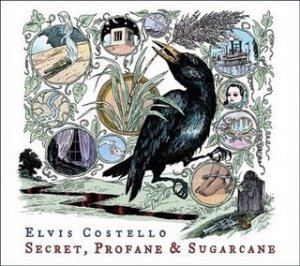
When Elvis Costello picked up an acoustic guitar in the mid-‘80s after two baffling albums full of horns and keyboards, the result was one of the high points in Costello’s already-great discography. Costello teamed with producer T-Bone Burnett for that album, “King of America,” and 23 years later the two are back together for “Secret, Profane and Sugarcane.”

Costello has never quite eclipsed that peak, settling into a pattern of churning out reliable genre exercises in country, jazz, classical and rock and collaborating with Burt Bacharach, the Brodsky Quartet and Allen Toussaint. Burnett, on the other hand, has become the go-to man for Americana/roots recordings, winning a Grammys for his production on Robert Plant and Allisson Krauss’ debut album and the “O Brother Where Art Thou?” soundtrack. The reunion of Costello and Burnett creates an accessible entry point for a public that reaches beyond his usual audience of the core and the curious.

Unfortunately, the magic that sparked “King of America” is absent on “Secret, Profane and Sugarcane.” While Burnett has rounded up an all-star cast of bluegrass musicians, the music feels like a stiff genre exercise. It is almost as if Costello is guesting on his own “Pickin’ On” tribute, or starring in “O Brother Where Art Costello.” Costello’s decision to revisit two songs from his back catalog reinforces this notion. “Complicated Shadows” was a great Johnny Cash-inspired slow-burning rock song in its original incarnation back in 1996. Here, it’s half the length and feels like Costello slapped his old lyrics over a generic bluegrass arrangement.

It neither helps nor hurts the listening experience to know that these songs were culled from an unfinished opera about Hans Christian Anderson, previous albums and leftovers from other projects. With little exception, they are all painted with the same brush and do little to distinguish themselves from the gray wash of an album that is neither offensive nor interesting.

The songs that do stand out are the two co-written by Burnett and Costello. “Sulphur to Sugarcane” is an extended innuendo delivered with a broad poke in the ribs and exaggerated arched eyebrow. It recalls the routines of Dusty and Lefty, the off-color cowboy duo played by Woody Harrelson and John C. Riley in the film “A Prairie Home Companion.”

“The Crooked Line,” however, is a standout in the good way. This next-to-last tune rewards the listener for nearly making it through the album with the harmony vocals of Emmylou Harris. Harris may be the best and most underrated duet singer in music. She consistently works harder on her supporting vocals than most singers invest in their singles. Her voice soars, subtly complimenting the melody, adding a mesmerizing countermelody. Whether on Lyle Lovett’s “Waltz Through the Bottomland” or Bob Dylan’s “Mozambique,” her voice never ceases to inadvertently creep into the spotlight and eventually command full attention.

Drawing on the chemistry she and Costello established in their previous collaboration on his “Delivery Man” album and subsequent tour, Harris doesn’t disappoint on “The Crooked Line.” Like a jazz musician breathing life into a trite pop standard, Harris signing salvages a ho-hum song and arrangement and turns it into something worth repeated listens.

“Secret, Profane and Sugarcane” has been released on Starbuck’s Hear Music label, and it seems a perfect fit for the latte-drinking, NPR-listening caricature scribbled up in political circles. For this audience, Costello’s name means maverick, Burnett’s means quality and the country-folk stylings make it unique, yet comfortable. But fans of Costello, Burnett and bluegrass alike can do much better than this.

Iggy Pop – “Preliminaires”

IggyPop-02-big

By Joel Francis

Purists of all stripes can relax: Iggy Pop’s much ballyhooed 15 studio album, “Preliminaires,” is not the jazz album Pop talked up before its release.

That said, the album’s lone foray into the genre is actually one of its best songs. Borrowing enough of Louis Armstrong’s New Orleans hot jazz sound and arrangements to earn Satchmo a partial songwriting credit, “I Want to Go to the Beach” is surprising triumph that should throw a nice curveball into dinner party playlists.

The rest of “Preliminaries,” however, is more French café than bebop bistro. Pop opens and closes the album with two spoken word pieces in French and provides two versions of “She’s the Business” – both with and without French narration – that are straight from the Serge Gainsbourg model.

Other tracks find Pop channeling late-period Leonard Cohen for “I Want to Go to the Beach,” dropping in some acoustic Delta blues for “He’s Dead/She’s Alive” and delivering another spoken word piece about how dogs are the ultimate companion based on the Michel Houellebecq novel “The Possibility of an Island.” On the gentle yet foreboding “Spanish Coast,” Pop croons in a deep baritone on what could be a lost Marianne Faithful song. There’s also a cover of Antonio Carlos Jobim’s “How Insensative.”

Try as he might, Pop can’t repress his rock side for the entire album. “Nice To Be Dead” is a solid rocker that is one of the album’s best tracks and very much what one would expect from Pop. The electronic “Party Time” is to cocktail parties what “Night Clubbing” was to nights on the town.

While “Preliminaires” is a departure, it doesn’t arrive out of the blue. Pop first dabbled in jazz on a 1990 duet with Debbie Harry on Cole Porter’s “Well, Did You Evah!” He also did an entire album of jazz-tinged spoken word pieces. And although that album, “Avenue B,” was a disaster, “Preliminaires” succeeds in large part because Pop delivers each track with authority and authenticity.

While Pop’s genre hopping could be a bizarre recipe for disaster, he turns this into a strength, weaving the diverse threads together for a cohesive listen.  The resulting variance in mood and texture is another element that keeps “Preliminaires” from being as stilted and dreary as “Avenue B.” “Preliminaires” greatest strength, though, might simply be that Pop knows when to quit. Most songs hover between two and three minutes and the 12-track affair is over in a brief 36 minutes.

“Preliminaries” will not bump “Lust for Life” or “The Passenger” off the pedestal atop Pop’s catalog and likely won’t even stand as a major entry in his canon, but curious fans interested in what the Wild One can do when stripped of his raw power should find something to like.

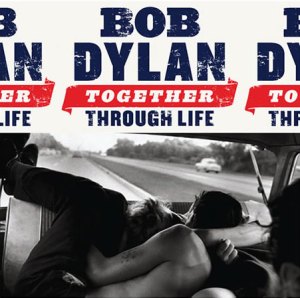
“Together Through Life” is a minor masterpiece

ttl

By Joel Francis

After delivering three “important” albums in the past dozen years, it’s nice to know Bob Dylan can make an album without making a statement.

“Together Through Life” feels like an afternoon drive through a dusty Texas border town with the windows rolled down. Much of that feel comes from the ubiquitous accordion played by David Hildago of Los Lobos. Lyricist Robert Hunter – who co-wrote all but one of “Life”’s tunes with Dylan and is best known  for writing “Casey Jones” and other songs with the Grateful Dead – deserves some credit for the record’s lack of ponderousness.

But lack of weight doesn’t equal a lightweight record in this case. The album is a cousin to “New Morning,” a solid, offering that is overshadowed by the albums surrounding it and filled with songs Dylan recorded because he wanted to, not because he had something to say.

Sonically, the album is cut from the same cloth that has defined Dylan’s previous ‘00’s offerings. It is a pastiche of Chess blues, Sun Records country and rock and pre-war pop. While there’s nothing as sunny as “Silvio,” a track Dylan and Hunter collaborated on 20 years ago, there’s also nothing as forgettable as “Ugliest Girl in the World,” the other fruit borne of that union.

Guitarist Mike Campbell from Tom Petty’s Heartbreakers adds light acoustic guitars and mandolin to most tracks, but drops a murky electric guitar reminiscent of Neil Young on “Forgetful Heart.”  Lyrically the song resembles the material for “Time Out Of Mind,” right down to the dark lyrics: “The door has closed, if indeed there ever was a door.”

While Dylan albums are rarely sunny endeavors, the gloom of “Forgetful Heart,” and the sarcasm of “It’s All Good” are broken by upbeat numbers like “Jolene” and “Shake Mama Shake” – both of which sound like they came from the Chess Studios at 2120 S. Michigan Avenue circa 1958. The tongue-in-cheek “My Wife’s Hometown” might be Dylan’s funniest number since his knock-knock joke in “Po’ Boy “ while “I Feel A Change Coming On” has a twilight optimism.

Fans have grown accustomed to waiting nearly five years between new offerings. “Together Through Life” is surprise arrival little more than two years after “Modern Life.” “Life”’s runtime of 10 tracks and 45 minutes and lack of “statement song” like “Highlands” or “Ain’t Talkin’” make a tempting case to write the album off as a lesser work. Although it will never measure among the first-tier cannon, those who dismiss it do so at their own folly.

Chris Cornell – “Scream”

cover-front-chris-cornell-scream-2009

By Joel Francis

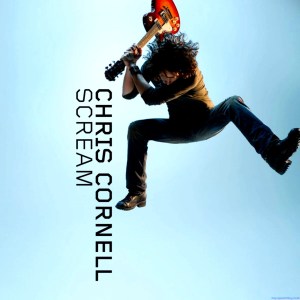
In the two months since Chris Cornell’s latest album, “Scream,” appeared on store shelves it has been mocked by Trent Reznor, bashed by critics and ignored by fans.

There’s only one problem with this: the album isn’t all bad.

This is not to say that “Scream” is a masterpiece that will make fans forget “Superunknown;” it is a flawed album. But the biggest problem lies not with the album, but Cornell’s fans. The hard rockers who grew up with Cornell in Soundgarden and backed by Rage Against the Machine in Audioslave are unwilling to give his collaboration with hip hop producer Timbaland a chance.

Timbaland made his name in the ‘90s working with Missy Elliott and Jay-Z. He cemented his radio-/club-friendly reputation this decade through collaborations with Justin Timberlake, Pussycat Dolls. None of these names are likely to impress Cornell’s hard rockin’ fan base.

The album bubbles, shakes and bounces with a consistency that surpasses Timbaland’s 2007 vanity project “Shock Value” and harkens back to his glory days with Elliott. Thanks to inventive interludes, the songs flow from one to the next, never letting the energy or mood flag.

And for a dance album, Cornell’s songwriting is strong. It’s hard to imagine many club bangers – “Hey Ya” aside – working well stripped to acoustic guitar and vocals, but it’s not difficult to envision Cornell performing “Ground Zero,” “Time” or “Long Gone” unplugged.

If this had been a Madonna album the public couldn’t buy (or download) enough copies. When Lil Wayne straps on a guitar and he’s praised for expanding his sound and showing artistic growth. Why can’t rockers do the same?

“Scream” is far from perfect. Lyrics have never been Cornell’s strong suit and he comes embarrassingly short several times on this album. Next to the rhythm, the chorus is the most important element of a dance song, and Cornell flunks badly on “Part of Me.” “That bitch ain’t a part of me” repeated eight time with multi-tracked and auto-tuned vocals is the most egregious crime, but hardly the only offender. At other times, you can imagine Cornell and Timbaland standing in awe over a track they’ve created only to realize they need to add a melody and lyrics.

The dirty little secret is that Chris Cornell is the Roger Daltrey of his generation. Like Daltrey, he is one of the most powerful, dynamic and expressive voices in rock. Unfortunately, also like Daltrey, he’s only as good as the guitarists backing him. Supported by Kim Thayil in Soundgarden or Tom Morello in Audioslave, Cornell was great. Timbaland is obviously not a full-time replacement for Thayil or Morello, but he was a bold and inventive choice for foil on this project.

Although “Scream” is a pop album, it is not a naked bid for crossover success. Judging by the studied calculation of Cornell’s previous two solo albums, he knew the risks he was taking. Although “Scream” will be too rocky for the clubbers and too clubby for the rockers, it is an interesting leap that deserves a better fate and a second listen.

Springsteen’s “Dream” Needs More Work

bruce-dream

By Joel Francis

For someone whose live converts are so immediate and visceral, Bruce Springsteen’s studio albums often need time to marinate before digesting.

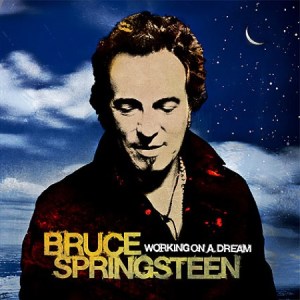
Unlike Springsteen’s previous album – 2007’s “Magic” – “Working On A Dream” has not revealed any new flavors since its release two months ago. The record is overcooked in parts, underdone in others and often lacking necessary ingredients.

Opening cut “Outlaw Pete” is an obvious overcooked number. Clocking in at eight minutes, the arrangement shows Springsteen’s love of Ennio Morricone, but nicks part of its melody from Kiss’s late-’70s disco hit “I Was Made For Loving You.” This faux pas would be more forgivable if Springsteen hadn’t borrowed “Jenny (867-5309)” for his previous album’s opener, “Radio Nowhere.” The real problem, though, lies in the words. Pete’s story is never as interesting as its musical setting, and the lyrics are flat-out lazy, rhyming “feet” with “Pete,” “Dan” with “man” and “side” with “slide.” It would be easy to mistake this as a children’s song if everything else weren’t so earnest.

On the other side, “Queen of the Super Market” is severely underdone. The attempted portrait of a supermarket as an erotic smorgasbord is even sillier in song than it appears on paper. Again, Springsteen’s word choice is questionable, dropping an f-bomb in the last verse so out of place it could have been a suggestion from Ryan Adams.

Most tracks fall somewhere in between. Lead single “My Lucky Day” is good, but doesn’t stand out as an evergreen concert staple a la “Badlands” or “Mary’s Place.” Ditto for the second single, “Working on a Dream,” which would work better without the whistled solo.

Several numbers find Springsteen flexing his pop muscles, singing sunny love songs in under three minutes. The best of these, “Surprise,” is little more than a constant repetition of the title in a Brian Wilson vein that works, um, surprisingly well.

When the band gets it right, the results are spectacular. “Good Eye” and bonus track “A Night With the Jersey Devil” are distorted blues stompers that could have appeared on a Fat Possum release. “The Wrestler” is a dark human portrait in the vein of “Devil’s and Dust” that deserves all the accolades and awards it received from its connection to Mickey Rourke’s film.

Easily the best song, though, is “Last Carnival,” a tribute to fallen E Streeter Danny Federici. The affecting ballad has a gorgeous vocal arrangement along the lines of “My City of Ruins” and poignant lyrics that use a fairground as a metaphor for lost friendship.

Ultimately, “Working on a Dream” works best as an appetizer that can tickle the taste buds at times, but is unsatisfying as an entrée.

Review: Boss is Bigger than Big 12 Tourney (2008)

Bruce Springsteen and Tom Morello – “The Ghost of Tom Joad”

Book Review: “Big Man” by Clarence Clemons

Springsteen in the Waiting Room: Drop the Needle and Pray

Springsteen Rocks the Hall (part 1)

Springsteen Rocks the Hall (part 2)

More Bruce Springsteen on The Daily Record

15 jazz greats to emerge in the last 20 years (part three)

(Above: Savion Glover does his thing with plenty o’ swing.)

By Joel Francis
The Daily Record

Continuing The Daily Record’s look at the state of jazz today, here is the final of three installments shedding light on 15 jazz greats to emerge in the last 20 years. Note that these musicians are not necessarily the 15 greatest jazz artists to arrive since 1990. A brief listen to any of them, though, should more than persuade the most ardent purist that jazz is alive and well.

Eldar Djangirov

Eldar Djangirov is the continuation of the great line of pianists to emerge from Kansas City, Mo. that stretches back to Count Basie and Jay McShann. The three have more than an adopted hometown in common, though. Although none were born in Kansas City, all experienced significant musical growth while living there. Unlike Basie and McShann, though, Eldar’s formation started before puberty. He performed at a Russian jazz festival at age 5 and at age 12 became the youngest guest ever on Marian McPartlan’s Piano Jazz radio show. Though his latest album is straight-up smooth jazz, Eldar’s earlier work has a breadth that recalls everyone from Ahmad Jamal to Art Tatum. Albums to start with: Eldar, Live at the Blue Note

Christian McBride

Bass player Christian McBride was mentored and hailed by no less an authority than Ray Brown before starting off on his own. McBride works comfortably in the traditional vein on his early albums like “Fingerpainting,” the excellent tribute to Herbie Hancock performed in a bass/guitar/trumpet setting. He gets more funky and touches on fusion with his three-disc live set recorded at Tonic and studio albums “Sci-Fi” and “Vertical Vision.” In 2003, McBride collaborated with hip hop drummer Ahmir “?uestlove” Thompson of the Roots and keyboardist Uri Caine for a spectacular collaboration known as the Philadelphia Experiment. McBride has also worked extensively with Sting and Pat Metheny. Albums to start with: Fingerpainting, The Philadelphia Experiment.

Joshua Redman

Expectations have been high for Joshua Redman since winning the Thelonious Monk International Jazz Saxophone Competition in 1991. While Redman hasn’t fulfilled those unrealistic expectations by taking his instrument to the heights achieved by Sonny Rollins and John Coltrane, he has built a strong career on his own terms. Redman’s early quintets helped launch the careers of Christian McBride and Brad Mehldau and his work as musical director of the San Francisco Jazz Collective paired him with legends like Bobby Hutcherson and new artists like Miguel Zenon. Redman’s catalog is adventurous enough to include covers of Eric Clapton’s “Tears in Heaven” with guitarist Pat Metheny and funky experiments that recall Eddie Harris. Albums to start with: Spirit of the Moment, Back East.

Savion Glover

Jazz tap may have died with the golden age of big-budget Hollywood musicals, but Savion Glover is trying his best to bring it back. He has appeared in televised concerts with Wynton Marsalis’ Jazz at the Lincoln Center Orchestra, collaborated with poet Reg E. Gaines and saxophone player Matana Roberts for the John Coltrane-inspired improve “If Trane Was Here,” appeared in Spike Lee’s “Bamboozled” and was a cast member of “Sesame Street.” Glover hasn’t recorded any albums, but his live performances are a potent reminder that jazz isn’t the exclusive province of those with a horn or a voice.

Bad Plus

Combining rock and jazz is nothing new, but the piano/drums/bass trio Bad Plus have done it in an acoustic setting that resembles Medeski, Martin and Wood more than Weather Report. Their early albums were filled with original material that split the difference between Oscar Peterson and Ben Folds, tempered by occasional arrangements of Pixies and Black Sabbath classics. Unfortunately, recent releases have steered sharply away from new compositions and saturated the increasing covers with more irony. While the concept of their newest album – all covers with a female vocalist – makes one wary, their early material should not be overlooked. Albums to start with: Give, Suspicious Activity.

Keep Reading 15 Jazz Greats to Emerge in the Last 20 Years

Part One

Part Two

Five Legends Still Adding to Their Legacies

15 jazz greats to emerge in the last 20 years (part two)

(Above: The Kora Jazz Trio in concert.)

By Joel Francis

Continuing The Daily Record’s look at the state of jazz today, here is the second of three installments shedding light on 15 jazz greats to emerge in the last 20 years. Note that these musicians are not necessarily the 15 greatest jazz artists to arrive since 1990. A brief listen to any of them, though, should more than persuade the most ardent purist that jazz is alive and well.

Ravi Coltrane

Not only has Ravi Coltrane followed in his famous father’s footsteps as a musician, but he’s established himself with his dad’s instrument. The child of John and Alice Coltrane (Ravi was two when his dad died), Ravi cut his teeth with McCoy Tyner and Elvin Jones before finally stepping out on his own. In little over 10 years, he’s build a strong catalog that would sound just as sweet under a different surname. Coltrane is currently on the road in a new septet celebrating 70 years of Blue Note Records. Albums to start with: Mad 6, In Flux.

Kora Jazz Trio

Comprised of pianist Abdoulaye Diabaté (who is not related to kora master Toumani Diabate), griot percussionist Moussa Sissokho and kora player Djeli Moussa Diawara, this trio deftly blends their African heritage with American jazz. Throughout their three albums, they have tackled songs by Charlie Parker, Thelonious Monk and the Buena Vista Social Club and delivered over a dozen dazzling originals. Imagine McCoy Tyner getting lost in an African marketplace and you’re getting close. Albums to start with: Part II, Part III

Diana Krall

Pianist and singer Diana Krall grew up surrounded by her dad’s extensive collection of Fats Waller albums, but ended up with a style and sound closer to that of Ralph Sharon, Tony Bennett’s longtime arranger and accompanist. Although Krall’s music is certainly not aggressive or pushing any boundaries, dismissing her music as smooth jazz for dinner parties would be a mistake. Her performances of Irving Berlin, Cole Porter and Jimmy McHugh have a freshness, energy and vitality lacking in other “supper club” performers. Krall’s most recent album, “The Girl in the Other Room,” leans heavily on original material written with her husband, Elvis Costello. Albums to start with: Love Scenes, The Girl in the Other Room

Medeski, Martin and Wood

Decades of touring have made the bass/keyboard/drums trio of Medeski, Martin and Wood one of today’s tightest ensembles. Their experimental, groove-based sound is broad enough to be equally at home at both Newport and Bonnaroo without changing a thing. Early pieces like “Hermeto’s Daydream” sound like Dave Brubeck run through “A Clockwork Orange,” while newer material features hip hop artists like DJ Logic, and guitarists Marc Ribot and John Scofield. Albums to start with: Notes from the Underground, Combustication.

Jason Moran

Pianist Jason Moran only has 10 years of recording under his belt, but he’s covered a lot of territory in that time. His albums contain interpretations of Prokofiev and Afrika Bambaataa interspersed with original compositions and spoken-word pieces. In addition to releasing seven albums under his own name, Moran has worked and recorded with Andrew Hill, Cassandra Wilson, Christian McBride, Don Byron, Ravi Coltrane and dozens more. Only 34 years old, Moran is just getting started. Albums to start with: Modernistic, Same Mother

Keep Reading: 15 Jazz Greats to Emerge in the Last 20 Years

Part One

Part Three

Five Legends Still Adding to Their Legacies

15 jazz greats to emerge in the last 20 years (part one)

(Above: Brad Mehldau performs an arrangement based on Radiohead’s “Exit Music (For A Film).”

By Joel Francis

Continuing The Daily Record’s look at the state of jazz today, here is the first of three installments shedding light on 15 jazz greats to emerge in the last 20 years. Note that these musicians are not necessarily the 15 greatest jazz artists to arrive since 1990. A brief listen to any of them, though, should more than persuade the most ardent purist that jazz is alive and well.

Roy Hargrove

Over the past 20 years, Roy Hargrove’s trumpet has proven to be one of the most versatile instruments ever. He’s equally at home conjuring Cuba on his own or summoning the spirit of African rebellion with rapper Common. Although Hargrove has yet found a way to reconcile his split personalities, he has built a strong catalog. In the Roy Hargrove Quintet, Hargrove works the more traditional mold forged by Freddie Hubbard and Clifford Brown. The RH Factor is the less-focused urban playground where Hargrove’s funky side comes out. Albums to start with: Habana, Earfood.

Brad Mehldau

Pianist Brad Mehldau cut his teeth working with saxophonists Joshua Redman and Wayne Shorter before striking out on his own. His lengthy concert arrangements often leave no stone unturned. Although his classical approach to playing is influenced by Bill Evans, Mehldau has no problem converting songs by Radiohead, the Beatles and Nick Drake into extended jazz workouts and placing them on footing equal to George Gershwin and Cole Porter standards. Mehldau made albums with opera singer Renee Fleming, guitarist Pat Metheny and pop producer Jon Brion without pandering on any project. Albums to start with: Back at the Vanguard, Day is Done.

Madeleine Peyroux

Singer Madeleine Peyroux’s voice sounds more than a little like Billie Holiday, but her style is closer to Joni Mitchell’s. Born in the South, raised in New York and California and seasoned in Paris, Peyroux splits the distance between jazz, folk and pop. Her interpretations of Leonard Cohen, Bob Dylan and Hank Williams numbers made her a star on Lilith Fair stages a decade ago and earned her acclaim as the “Best International Jazz Artist” by the BBC in 2007. Albums to start with: Dreamland, Half the Perfect World.

Miguel Zenón

Puerto Rican saxophonist Miguel Zenon recalls the tasteful, silky tone of Paul Desmond. In little more than five years, he’s released four albums, worked as a founding member of the SF Jazz Collective, won the Best New Artist award from JazzTimes in 2006 and named Rising Star-Alto Saxophone for three consecutive years in the Down Beat Critic’s Poll. While Zenon’s horn rests easily on the ears, his arrangements capture the spirit of his native island through insistent originals and unlikely hymns like “Great is Thy Faithfulness.” Albums to start with: Jibaro, Awake.

Maria Schneider

Maria Schneider’s compositions for her jazz orchestra have been some of the most ambitious works in the jazz canon since the heyday of the Duke Ellington Orchestra or Dave Brubeck’s late-’60s expositions. At once sweeping and evocative, Schnieder’s near-classical pieces reveal the deep influence of Gil Evans. The cinematic expanse of her work takes the listener on a journey where everyone from George Gershwin to Gustav Mahler is likely to appear. Albums to start with: Evanescence, Sky Blue.

Keep Reading: 15 Jazz Greats to Emerge in the Last 20 Years

Part Two

Part Three

Five Legends Still Adding to Their Legacies

Another Side of Norah Jones

Above: Norah Jones strolls through Wilco’s “Jesus, Etc.” at the 2008 Bridge School Benefit concert.

By Joel Francis

When Beyonce sang “a diva is a female version of a hustler” she probably wasn’t thinking of Norah Jones.

Jones has made her name with impeccable background music that is tasteful to a fault and straddles the line between folk and jazz. It appears she saves the more interesting facets of her personality for her side projects with the Little Willies, El Madmo, a punk one-off, and her burgeoning side career as hip hop chanteuse. Jones’ appearances with Talib Kweli, Andre 3000, Wyclef Jean and Q-Tip prove there may be more than a little hustler in her after all.

“Take Off Your Cool” with Andre 3000 of Outkast, from “Speakerboxxx/The Love Below”

Jones was a little more than a year removed from the massive success “Come Away With Me” when this number appeared. Both camps took shots from a surprised public. Andre 3000 was blasted for pandering by working with the reigning adult contemporary queen and Jones was flamed for lowering herself to the low level of hip hop. Of course, the final result proved all naysayers wrong.

Anchored by a finger-picked acoustic guitar, the gentle production wouldn’t out of place on Jones’ own album – that is if Jones’ stuffy supporters could get past Andre 3000’s greasy come-ons.

“Any Other Day” with Wyclef Jean, from “The Carnival Vol. II: Memoirs of an Immigrant”

This song, which first appeared on the Hurricane Katrina relief charity album “Come Together Now,” has more in common with the Dave Matthews Band than the Fugees. Wyclef Jean’s acoustic guitar leads the way, but it is essentially Jones’ showcase. She affectingly croons the story of someone trapped by a storm, while Jean drops in a faux-Bob Marley patois.

A quick glance and the writing credit explains Jones’ prominence. The song is a true collaboration, with Jones and her then-boyfriend Lee Alexander sharing authorship with Jean and his producer Jerry “Wonder” Duplessis.

“Soon the New Day” with Talib Kweli, from “Ear Drum”

Even so-called “conscious rappers” aren’t above desires of the flesh. This celebration of one-night stands is draped across producer Madlib’s backdrop of smooth ’70s soul. As Talib Kweli boasts about his conquest, Jones’ voice surfaces like the first rays of dawn gently forcing their way into the bedroom through the closed shade.

Although Jones is essentially limited to one line, she makes the most of it, adding heart and emotion to Kweli’s calculated braggadocio. But don’t mistake Jones as the conscience of the story – there is no remorse from either party. She clearly enjoyed it just as much as he did, just in a different way. Despite their disparate deliveries, the two voices work naturally together – neither performer sounds of his (or her) element.

“Soon the New Day” is a stand-out tune on a great album that should have been a single.

“Life Is Better” with Q-Tip, from “The Renaissance”

This cut is essentially a jam, with Q-Tip and Jones giving props to hip hop pioneers like the Cold Crush Brothers, the Leaders of the New School and, of course, Tip’s close friend J. Dilla. Jones gets the song to herself for the first two minutes and she makes the most of it. It’s fun to hear her away from her natural reference points singing of hip hop songs “banging for you” against a thumping bass line and jazzy sample. Tip’s verse is a roll call of his favorite artists.

Jones’ strong performance in her most urban setting to date makes one wish she’d take similar chances on her own albums. But if she’s not willing to alienate her own audience, it’s nice to see her spreading her wings elsewhere. Don’t be surprised when she shows up on the next Snoop Dogg album.