Bettye LaVette – “Interpretations: The British Rock Songbook”

(Above: Bettye LaVette owns The Who’s “Love Reign O’er Me” at the Kennedy Center Honors in 2008. This performance helped inspire LaVette’s latest album, and is included as a bonus track.)

By Joel Francis
The Daily Record

From Rod Stewart to Barry Manilow, albums based on the 1960s and ‘70s pop song book are a dime a dozen and usually worth even less. So while the concept behind Bettye LaVette’s latest album may not be novel, the delivery certainly is. LaVette has audaciously selected a baker’s dozen of the era’s biggest songs and steals every single performance.

Throughout “Interpretations: The British Rock Songbook” LaVette not only erases Paul McCartney and Elton John’s fingerprints from “Maybe I’m Amazed” and “Don’t Let the Sun Go Down on Me,” respectively. She scrubs off four decades of radio saturation, turning in performances that arrive sounding completely fresh.

LaVette accomplishes this feat by ignoring the original melody and phrasing and focusing entirely on the lyrics. She crawls inside the words, mining new depth and emotion and lets that frame the arrangement. Pink Floyd’s “Wish You Were Here” aches with loneliness. LaVette sneaks a reference to HIV/AIDS in “Salt of the Earth,” the Rolling Stones free-love era tribute to the working class. In “Don’t Let the Sun,” LaVette pleads with a desperation that feels like her life is hanging in the balance between light and dark. Robert Plant liked her treatment of “All Of My Love” so much he gave her the opening slot on his summer tour.

While every song fulfills the title by hailing from the United Kingdom, LaVette slyly hedges her bets with two numbers that are also associated with one of her primary influences, Nina Simone. LaVette mirrors Simone’s epic treatment and sparse arrangement of George Harrison’s “Isn’t It A Pity.” Earlier, LaVette reminds listeners that while the Animals may have had the bigger hit with “Don’t Let Me Be Misunderstood,” it was originally a Simone single. LaVette happily returns the gift.

Five years into her comeback, LaVette sings like something to prove. At 64 she is a contemporary of most of the performers she covers on “Interpretations.” But while most of them are content to coast by on these very songs, LaVette still sings with a hunger fueled by the decades she unjustly lost in obscurity. The force and authority in her voice make LaVette one of the most vital and compelling artists today.

Keep reading:

Review: Bettye LaVette and Buddy Guy at Roots n Blues BBQ Fest (2008)

Review Roundup – Rakim, Dodos, Naomi Shelton, Blakroc and Daptone Gold

Review – Booker T.

Review Roundup – Rakim, Dodos, Naomi Shelton, Blakroc and Daptone Gold

(Above: The title song from Naomi Shelton’s debut album.)

By Joel Francis
The Daily Record

The first month of 2010 is almost in the history books. Fortunately, there’s still time to take one last look at some overlooked releases from the final quarter of 2009.

The Dodos – “Time to Die”

The Dodos third album isn’t a major departure from 2007’s “Visiter.” Several subtle elements, however, make “Time to Die” an improvement. First off, the San Francisco-based indie duo has added vibraphonist Keaton Snyder to their ranks. His playing adds new textures and new rhythms to the songs. Like Vampire Weekend, the Dodos add elements of African music to their arrangements. Unlike Vampire Weekend, though, the Dodos don’t use world music as a template. They incorporate its ingredient into already solid songs. At times the album recalls a more sophisticated Shins. “Time To Die” is filled with a high sense of melody and smart indie rock songwriting bolstered by intricate arrangements that serve the song.

Blakroc – “Blakroc”

Dan Auerbach and Patrick Carney have been making great garage blues albums for nearly a decade as the Black Keys. After about five albums, however, some staleness started to creep into the formula. After recruiting Danger Mouse to produce their 2008 release, and Auerbach’s early ’09 solo album, the pair dropped their biggest transformation. “Blakroc” pairs the Keys with former Roc-a-fella co-owner Damon Dash and a host of MCs, including Mos Def, Ludacris, Q-Tip, Pharoahe Monch and members of the Wu Tang Clan. The result is the expected mash-up of rap vocals and raw gutbucket rock that exceeds expectations. Auerbach’s dirty, fuzzy guitars and Carney’s drums add an urgency often lacking in the urban world of sampling. In turn, the MCs feed off the vibe, responding with more bounce and personality in their delivery. More, please.

Naomi Shelton and the Gospel Queens – “What Have You Done, My Brother?”

Naomi Shelton’s back story should sound familiar to fans of Bettye LaVette. Shelton palled around with pre-fame Wilson Pickett, Otis Redding and Lou Rawls. Despite their encouragement, success eluded Shelton, who played regular gigs around New York City. Thirty years later, Shelton became part of the “Daptone Super-Soul Revue,” but it took another decade for her debut album to emerge. “What Have You Done, My Brother?” is a classic gospel album that sounds like it could have been cut 50 years ago. Despite its traditional arrangements, the album finds contemporary resonance in the title song, which questions the war in Iraq. Shelton’s cover of Sam Cooke’s “A Change Is Gonna Come” is especially poignant. A survivor of the civil rights movement, Shelton combines the longing of Cooke’s vision with the optimism of the Obama-era.

Various Artists – “Daptone Gold”

Daptone Records found fame with the diminutive dynamite Sharon Jones, but the entire stable should appeal to Jones’ fans. “Daptone Gold” is a 22-track sampler of the Daptone roster. While Jones is appropriately represented (sometimes through non-album tracks), there are no bum cuts. The old school gospel of Naomi Shelton sets nicely next to Antibalas’ political Afrobeat and the instrumental soul of the Budos Band. Other artists include Stax throwbacks Lee Fields and Charles Bradley. Hip hop fans will recognize “Make the Road By Walking,” the Menahan Street Band track Jay-Z smartly sampled for his own “Roc Boys (And the Winner Is).” At 78 minutes, this generous sampler will certainly send newcomers diving into the back catalog for more.

Rakim – “The Seventh Seal”

Rakim made his name as one of rap’s premier MCs with his groundbreaking albums with Eric B in the late ‘80s and early ‘90s. It’s been 10 years since the world has heard anything from Rakim. During that decade he toured sporadically and signed with Dr. Dre’s Aftermath label. The prospect of Dre making beats for Rakim made fans salivate, but unfortunately “The Seventh Seal” is not that long-awaited album. It’s difficult to forget about that hypothetical masterpiece with all the b-list production that plagues “The Seventh Seal.” Rakim sports enough killer flow to justify his reputation, but tracks like “Won’t Be Long” and album opener “How To Emcee” are more stilted and dated than anything on “Paid in Full” or “Follow the Leader.” While there are enough moments on “The Seventh Seal” to make it a must-have for old school fans, casual listeners should probably just ask the devoted to cull a few cuts from this for a killer Rakim mixtape.

(Below: “Holy Are You,” one of the better cuts off Rakim’s “The Seventh Seal.”)

Keep Reading:

More album reviews from The Daily Record.

Stuff your stocking with these live collections

(Above: If you’ve been good, maybe Santa will bring the new R.E.M. album, “Live at the Olympia.”)

By Joel Francis

The holiday season is a notorious dumping ground for greatest hits, repackagings and other musical ephemera. Four established artists, however, transcend the fourth-quarter wasteland. New live albums by Paul McCartney, R.E.M., Tom Waits and Tom Petty are essential additions to any music fan’s library.

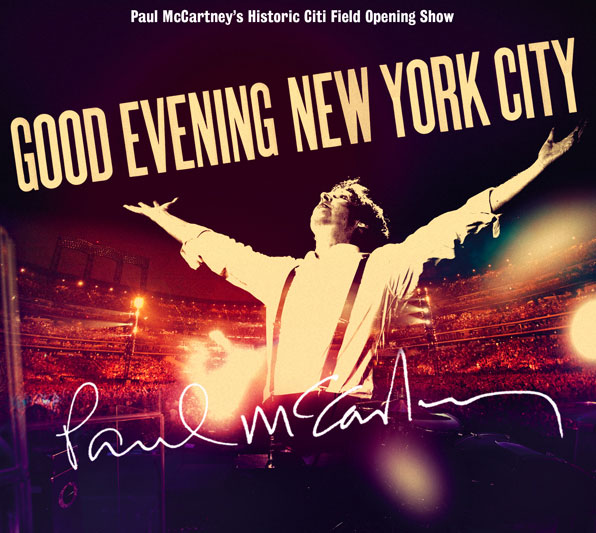
After dropping just one live album in the first half of his solo career, Paul McCartney opened the floodgates over the past two decades. Issuing six live albums since 1990, McCartney has faithfully documented nearly all of his tours and several special performances, but “Good Evening New York City” stands out. The two-CD, one-DVD set documents McCartney’s three-night inaugural performance at the Mets new home Citi Field last summer. Backed by his tight, longstanding quartet, Sir Paul unloads several surprises, like the forgotten “Mrs. Vandebilt,” a tribute to John Lennon with a medley of “A Day in the Life” and “Give Peace a Chance,” and the delightful segue way into Jimi Hendrix’ “Foxy Lady” at the end of “Let Me Roll It.”

Other delights are newer cuts “Only Mama Knows” and “See the Changes,” and the full-band arrangement of “Something” that echoes the performance at the Concert for George. Of course Beatle numbers are plentiful, but the obligatory “Hey Jude” and “Let It Be,” are countered with “Paperback Writer” and “Day Tripper.”

As with all McCartney live albums, the stage banter has been removed, giving the album a bit of a workman-like quality, as the band grinds through the songs with only brief pauses. This editing creates some curious results, such as Billy Joel’s unannounced duet on “I Saw Her Standing There,” or the accidentally buttressing of “Yesterday” and “Helter Skelter” (there was likely an encore break separating the two).

Although there are many places to hear Sir Paul shuffle through the world’s greatest jukebox, few are this energetic or diverse.

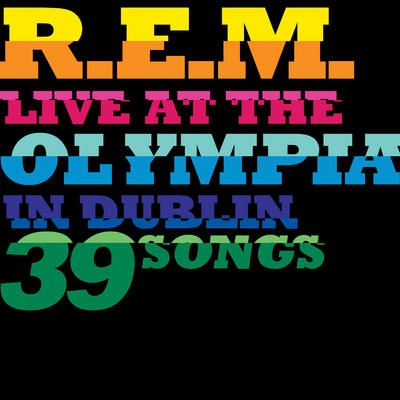
When R.E.M. released their last live album, “R.E.M. Live,” only two years ago the band seemed to be running on fumes. Following the disappointing “Beyond the Sun” album with a stop-gap, hits-in-concert set as generic as its title was a naked, holiday cash grab.

A lot has changed since then. Last year’s “Accelerate” brought the trio long-absent acclaim and reinvigorated both the band and its fans. Although “Live at the Olympia” was recorded only four months after “R.E.M. Live” the results couldn’t be more different. While “Live” hit all the obvious marks with little passion, “Olympia” digs deep into the catalog, offering early fan favorites “Driver 8” and obscurities like “Circus Envy.” “Olympia” boasts 17 more songs than “Live” and only two overlapping numbers, so both collections can coexist comfortably.

Fans excited by “Accelerate” will celebrate this 39-track collection. “Live at the Olympia” is the sound of a band being reborn.

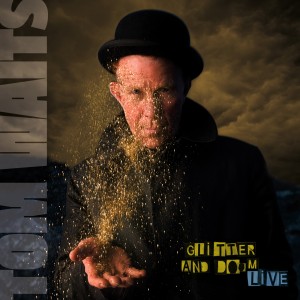
Unlike McCartney and R.E.M., it has been nearly a generation since Tom Waits last issued a live album. “Glitter and Doom Live” does a good job spotlighting Waits’ sonic shifts over the last several years, leaning heavily on tracks from his decade on the Anti- label. Drawn from stops along his 2008 tour of the same name, “Glitter and Doom Live” is more a sampler than a complete performance.

Most of the stage banter has been excised, hilariously, to the second disc. “Tom’s Tales” is a 36-minute montage of Waits’ musings about vultures, jokes about Nazi pasta and adventures on eBay that could stand on its own as one of the year’s best comedy albums.

The songs that made the cut, though, are invigorating. “Orphans” cuts “Lucinda” and “Fanin Street” are more raw while “The Part You Throw Away” is delicate and tender. “Get Behind the Mule” sounds like a voodoo chant at a deep South juke joint, and early cuts like “Singapore” and “I’ll Shoot the Moon” are completely reworked. While hardcore fans may have been happier with a set that recreated Waits’ concert experience, few will be disappointed with the 16 songs delivered.

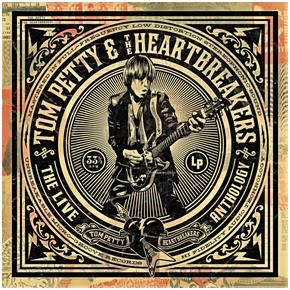
Tom Petty has issued more than a dozen albums during his hit-filled, three-decade career, but until now has only had one live album to his name. “Live Anthology” corrects that problem by offering 50 choice cuts spanning 30 years of gigs. The performances zig zag through the years, but the set flows, creating a dream concert spread across four discs (more if you buy the deluxe edition).

Although all the hits are here, the opening number, “Nightwatchman” shows how deep Petty is willing to delve. More than living up to its name, “Anthology” explores early performances of hits “Even the Losers” right up to full-band arrangements of “Square One” off Petty’s most recent solo album. A sing-along stroll through “A Thing About You” segues seamlessly into Bobby Womack’s soul ballad “I’m In Love.” Later, “Breakdown” slides into a few bars of “Hit the Road, Jack.”

There are no cuts from the Heartbreakers’ mid-‘80s stint as Bob Dylan’s backing band, but honestly, there are enough other incredible moments that they’re not missed. A sublime “Learning to Fly” with Stevie Nicks on backing vocals, an extended “Good to Be King” and unreleased originals like “Melinda” and “Driving Down to Georgia” and covers like “Good Good Loving” and “Goldfinger” (yes, that one) make the set an embarrassment of riches.

This collection not only cements the Heartbreakers’ legend as one of the tightest and most versatile bands of all time, but amplifies their love of rock and roll in all its forms. “Live Anthology” is both more consistent and comprehensive than Petty’s previous box set, the hits/album cuts/rarities collection “Playback.” It is the jewel of Petty’s catalog.

Dylan’s Christmas offers lots of heart, but little else

(Above: The magnificent video for “Must Be Santa,” far and away the best track on Bob Dylan’s new holiday album, “Christmas in the Heart.”)

By Joel Francis
The Daily Record

Bob Dylan surprised a lot of people when he announced the release of his first Christmas album several months ago. “Christmas in the Heart” surprises in a different way, however, by playing it straight and offering no surprises at all.

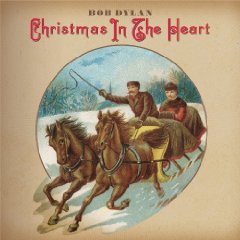
Adorned with a cover that looks like a Norman Rockwell collectible dinner plate come to life, “Christmas in the Heart” features 15 well-worn holiday favorites with arrangements and production straight out of the 1940s and ‘50s.

In retrospect, Dylan’s desire to record a Christmas album shouldn’t have been an astonishment. For the past several years, Dylan has dabbled in pre-war pop. A cover of “Return to Me” popped up on a soundtrack several years ago, and several similar originals, including “Beyond the Horizon,” populated his 2006 album “Modern Times.”

Of course, Dylan has long been a purveyor of traditional song and the folk tradition. As the oral history components of American society diminish, holiday and children’s music are the few remaining songs passed from generation to generation. Christmas music stands directly at the crossroads of these passions.

A third consideration is that Dylan delights in doing the unexpected and challenging expectations. The man who returned to the Newport Folk Festival nearly 10 years ago in a wig (and dons a similar headpiece in the video for a “Christmas in the Heart” song), appeared in a Victoria’s Secret commercial and wrote a song with Michael Bolton, clearly enjoys toying with his dedicated following and legend.

Unfortunately, this understanding doesn’t make “Christmas in the Heart” an enjoyable listen. Producing the album under the pseudonym Jack Frost, Dylan drapes the album in arpeggio guitars that recall Les Paul’s singles with Bing Crosby, lilting backing voices in the style of the Andrews Sisters and a nostalgic gauze that would be at home on a Perry Como platter. By smoothing every surface, Dylan leaves no room for any rough edges, which, frankly, is all his voice has to offer these days.

The song selection is another stumbling block. The vast majority of these hymns and carols have been heard and performed a thousand times over. Although his arrangements are clever – check out the piano on “Little Drummer Boy” or violin and light country touch on “Silver Bells” – they hem too closely to the tried and true. Dylan does not have a traditional voice, so it’s understandable his singing doesn’t work in this traditional setting. The album would have been better served if Dylan played to his strengths, like a reading of “Run Rudolph Run” a la “Summer Days,” or more obscure choices, like Buck Owens’ “Santa Looked a lot Like Daddy.”

The single “Must Be Santa” hints at what “Heart” could have been. Originally a 1961 sing-along with Columbia Records honcho Mitch Miller, Dylan more than doubles the tempo and thanks to the frenetic accordion playing of Los Lobos’ David Hildago – who also bolstered Dylan’s “Together Through Life,” released just six months prior – turns the song into a mariachi rave. Another lesser-known track, “Christmas Blues” was also a good choice. More songs like this and fewer Latin hymns could have made “Christmas in the Heart” a holiday staple.

With all album proceeds going to charity, Dylan’s intentions are noble and his reasons sound, but the flawed execution prove the record’s undoing. It’s too bad “Must Be Santa” wasn’t released as a stand-alone single, with any of the remaining 14 songs on its b-side, or as the centerpiece of an EP. As it is, “Christmas in the Heart” is best purchased as a Black Friday bargain.

Keep reading:

“Together Through Life” is a Minor Masterpiece

Traveling Wilburies – “Inside Out”

“Tell Tale Signs” Sheds Light on Legend

Bob Dylan – “All Along the Watchtower” (live)

George Kalinsky: Painting with Light

Bob Dylan – “Workingman’s Blues No. 2”

What Bob Dylan Means to Me (part 1)

What Bob Dylan Means to Me (part 2)

Bruce Springsteen rocks the Hall (part 2)

(Above: Bruce Springsteen and the E Street Band back Chuck Berry at the 1995 Concert for the Rock and Roll Hall of Fame in Cleveland.)

By Joel Francis
The Daily Record

“Rock Hall Live,” an exquisite nine DVD box set of performances and speeches from the past 25 years of Rock and Roll Hall of Fame induction ceremonies is a treasure trove for all music fans, but it should especially attractive to Bruce Springsteen fans. Springsteen appears on all but two of the discs in more than a dozen performances and nearly as many speeches. As the unofficial MC of the collection, Springsteen makes more appearances than anyone else.

On Monday, The Daily Record examined the first half of Springsteen’s performances on the “Rock Hall Live” box set. Today, we look at Springsteen’s appearance at the Concert for the Rock and Roll Hall of Fame, his triumphant E Street reunion kick-off and sitting in with U2.

1995 – “Johnny B. Goode” (with Chuck Berry)

In the classic Chuck Berry film “Hail Hail Rock and Roll,” Springsteen tells the story of how he and his pre-E Street band backed Berry in the 1970s. More than two decades later, at the Concert for the Rock and Roll Hall of Fame, Springsteen reprises the role here, this time with his E Street brothers in tow. Springsteen is relegated to backing vocals and rhythm guitar, but Clarence Clemons punctuates Berry’s lyrical bursts with stings of saxophone a la King Curtis. Sporting a goatee and ear-to-ear grin, Springsteen sheds his backup roll to peel off a brief solo after Berry’s duckwalk.

1995 – “Whole Lotta Shakin’ Going On” (with Jerry Lee Lewis, rehearsal)

In this bonus feature Springsteen and the E Street band rehearses “Whole Lotta Shakin’ Going On” with Jerry Lee Lewis before the Concert for the Rock and Roll Hall of Fame. The musicians soundcheck their instruments as the crew preps the stage. There’s one dry run through the number, which is unfortunately edited out. Even though everyone is just messing around they still earn applause from the resting workers on the side of the stage. The footage isn’t incredible enlightening or interesting, but it’s worth watching once.

1999 – “The Promised Land,” “Backstreets,” “Tenth Avenue Freeze-Out,” “In the Midnight Hour” (with Wilson Pickett)

The E Street Band were on the cusp of their first tour together in 11 years when they teased the world with a four-song set at the Waldorf-Astoria hotel in New York. Although the entire performance is captured in the “Rock Hall Live” box, it is frustratingly spread across four discs. Springsteen calls each band member one at a time to join him during onstage during his induction to the hall. While there’s no rust from the decade apart in the opening “The Promised Land,” the band is still getting warmed up. There’s no sweat on Springsteen’s dress shirt at the end of the number.

One can tell from the opening chords of “Backstreets” that this is going to be a special performance. Springsteen unloads every ounce of his soul into the microphone and beats a great solo out of his battered Telecaster. The band is majestic and powerful and inspired the normally staid attendees to dance around their banquet tables.

As photos of a young Springsteen flash on video boards behind the band, the Boss drops to his knees as the classic Little Steven horn arrangement to “Tenth Avenue Freeze-Out” kicks in. Sans guitar, Springsteen uses his arms, legs and hips to cue the band and animate the crowd. It works. Everyone onstage and in the crowd is firing on all cylinders when Billy Joel slips beside Roy Bittan on the organ bench and Wilson Pickett enters to deliver “In the Midnight Hour.” Pickett’s voice is as powerful as ever and Springsteen draws on his years of “Detroit Medley” experience to match that ferocity while delivering the second verse. The band burnishes their credentials as the best house band in the business. If anyone were looking to update “The Last Waltz” and showcase a classic ensemble and their influences, the E Street Band should be the top candidate.

2005 – “I Still Haven’t Found What I’m Looking For” (with U2)

“When I say that America is not just a country, but an idea, I’m thinking about people like Bruce Springsteen,” Bono says, introducing the song over The Edge’s chiming guitar chords. As the second verse starts, we catch a glimpse of Springsteen in the wings, waiting for his entrance. It takes the Boss a moment to get oriented before delivering the third verse, which kills the momentum of the performance. The moment is a bit superfluous – U2 doesn’t need his help – bit it’s a nice gesture. Springsteen matches Bono’s vocal passion and closes the performance on a powerful note.

Keep reading:

Bruce Springsteen and Tom Morello – “The Ghost of Tom Joad”

Review: Springsteen’s “Dream” Needs More Work

Springsteen in the Waiting Room: Drop the Needle and Pray

Review: “Big Man” by Clarence Clemons

New DVD Set Celebrates Rock Hall Performances

More Bruce Springsteen on The Daily Record


New DVD Box Set Celebrates Rock Hall Performances

rock hall dvds

By Joel Francis

When the Rolling Stones were inducted into the Rock and Roll Hall of Fame in 1989, a tuxedo-clad Mick Jagger famously announced “Tonight we’re all on our best behavior — and we’re being rewarded for 25 years of bad behavior.”

That irony is on full display throughout eight of the DVDs in a new collection of induction ceremony performances released by Time Life and the Rock Hall this month. (A ninth disc features highlights from the 1995 Concert for the Rock and Roll Hall of Fame held in Cleveland.) Despite white tablecloth banquet tables and austere surroundings, great music frequently prevails.

The “Rock Hall Live” discs each run between 75 and 90 minutes and have a loose theme of soul, punk or ‘50s pioneers and the performances span the first ceremony in 1986 to this year’s Metallica induction. The performances tend to fall in two camps.

The early ceremonies were all-star celebrations of the inductees’ songbooks shot with on a couple video camera. Through fly-on-the-wall footage we see Jerry Lee Lewis and Chuck Berry swap verses on “Roll Over Beethoven” and Little Richard rejoice through “I Can’t Turn You Loose” as Jagger, Bob Dylan, members of the Beatles, Beach Boys and other rock royalty stand shoulder to shoulder, holding mics and strumming instruments. It’s fun to play spot the artist during these early presentations. Sometimes the results are shocking, as when Stevie Ray Vaughan appears – playing a Les Paul, no less – during “Beethoven.”

As the ceremonies grew in stature, the performances were better preserved and choreographed. The past 15 years of inductions play like one massive VH1 special, makes sense as these events have been a spring broadcast staple on that channel for better than a decade. Although the production is smoother, the spontaneity is retained when Jimmy Page casually strolls onstage to join Jeff Beck on “Beck’s Bolero” and Queen jam with the Foo Fighters on “Tie Your Mother Down.”

With are more than 100 performances across the nine discs, some unevenness is expected. Some this is because of the health of the performers. These discs capture some of the final appearances by The Band’s Rick Danko, Ruth Brown, Lynyrd Skynyrd’s Billy Powell and Johnny Cash. Brown and Powell are fine, but Danko and Cash labor through their sets. Sometimes the pairings misfire, as on Bruce Springsteen and Axl Rose’s duet through “Come Together.”

These missteps are minimized by the tight pacing of each disc, which moves from artist to artist like a well-paced soundtrack, with occasional snippets of introduction and induction speeches. (Complete version of selected speeches are available as bonus features.)  Despite the loose themes, each disc boasts a variety of guitar heroes, singer/songwriters, tributes and hits.

The best moments come when the performers reach beyond the formal atmosphere, like when Patti Smith spits onstage, or two kids bum rush the stage to help Green Day commemorate the Ramones. There is an impressive display of solos from guitar heroes Beck, Page, Eric Clapton, Buddy Guy, B.B. King, Joe Perry, Carlos Santana, Peter Green, and Kirk Hammett, but the greatest six-string moment is Prince’s searing tribute to George Harrison on “While My Guitar Gently Weeps.” Anchored by Tom Petty, Jeff Lynne and Harrison’s son Dhani, the immaculately tailored Prince soars on an jaw-dropping solo that is long on both melody and style.

Each disc contains about a several bonus features, which highlight backstage moments like watching Steven Tyler and Joe Perry induct Led Zeppelin from the wings of the stage with the band (and Willie Nelson!). It’s fun to watch Robbie Robertson, Bruce Springsteen and John Fogerty work out “Green River” and to eavesdrop on Hammett and Perry talk about guitars, but one viewing is probably enough.

One downside to this set is the packaging and sequencing. Each disc is housed in its own separate, full-sized case. This takes up a lot of shelf space. It would have been nice if they all came bundled in one compact, cardboard and plastic unit like seasons of TV shows.

The greater inconvenience is the sequencing. Cream’s three-song reunion from 1993 is spread across three discs. Ditto for the Doors’ 1993 set with Pearl Jam’s Eddie Vedder (three songs over three discs) and Bruce Springsteen’s E Street revival from 1999 (four songs on four discs). Culling the best moments is understandable, but it would have been great to get the multi-song sets in one place. It is also puzzling that less than two hours of the six-hour Concert for the Rock and Roll Hall of Fame are included.

Oversights aside, any of these discs stand alone as a fun romp through rock history and celebration of its greatest songs and players across most genres and eras. At $120, this set isn’t cheap, but it’s a heck of a lot more affordable – and easier to come by – than the ticket that gets you a plate at one of those sterile, banquet tables. You don’t have to dress up, either.

(Full disclosure: The Daily Record received a complimentary review copy of “Rock Hall Live.”)

Keep Reading:

Rock Hall Celebrates 50 Years of Motown

Rock Hall Celebrates the 40th Anniversary of Woodstock

George Kalinsky: Painting with Light (Rock Hall photo exhibit)

Bruce Springsteen Rocks the Hall (part one)

Bruce Springsteen Rocks the Hall (part two)

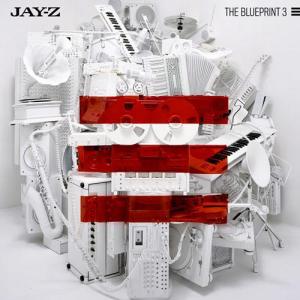
Jay-Z – “The Blueprint 3”

Blueprint_3
By Joel Francis

“The Blueprint 3” is not just the third installment in Jay-Z’s “Blueprint” saga. It’s also the third album since Jay “retired” in 2004. “The Blueprint 3” manages to split the differences in both of these lineages. It falls between the pared-down masterpiece of the first “Blueprint” and its guest- and lard-laden sequel. Similarly, it splits the difference between Hova’s uninspired comeback “Kingdom Come” and “American Gangster”’s return to form.

Just because “Blueprint 3” isn’t as bland and unfocused as “Kingdom Come” and “Blueprint 2,” doesn’t mean it’s a triumph. The album gets off to a strong start with “What We Talkin’ About,” which continues the hard feel of “American Gangster.”

No ID supplied an excellent track for “D.O.A. (Death of Auto-Tune),” the lead single. “Run this Town,” Jay’s collaboration with Rihanna and Kanye West is another in a long line of classic summer singles. “Empire State of Mind,” Jay’s duet with Alicia Keys, completes the album’s early run through its three consecutive singles. The strongest song on the album, the town fathers can immediately add it to the overflowing Big Apple hymnal.

“Hate,” a chorus-less mic battle between Jay and West, has fire in the belly. Young Jeezy nicks part of “Public Service Announcement” for his opening verse in “Real As It Gets.” Jay responds with one of his most convicted performances on the album.

Remove the EP’s worth of solid cuts, though, and Jay’s post-retirement secret emerges: he’s having problem finding new things to say. There’s nothing as fun and clever as “Brooklyn Go Hard,” his contribution to this year’s “Notorious” soundtrack. That song contains one of the best verses in Jay’s cannon:

“I father, I Brooklyn Dodger them,
I Jack, I Rob, I sin,
Ah man, I’m Jackie Robinson
‘Cept when I run base, I dodge the pen,
Lucky me, Luckily they didn’t get me,
Now when I bring the Nets I’m the black Branch Ricky,
From Brooklyn corners, burnin’ branches of sticky.”

Instead, Jay drops a dated Mac/PC comparison and gives us this in “Venus vs. Mars:”

“Shorty like Pepsi, me I’m the coke man,
Body like a coke bottle, I crush it like a Coke can,

Started at the window, then the bedroom wall,
the Ying to my Yang, I skeet skeet off,
I hits it from the back, Shorty like the front,
the Bonnie to my Clyde,
both riding shotgun,
both covered in gold like C3PO,
James and Florida Evans let the good times roll.”

Using this strained metaphor, Jay is able to reference his past as a drug dealer (now nearly 15 years ago), brag about his sexual prowess and remind everyone about his bank roll. Toss in a reference to his estranged father, and this is basically every Jay-cliché in one verse.

There aren’t many points on “Blueprint 3” as hollow as this, but there are enough that it can’t be excused as an isolated incident. Album closing “Young Forever” is intended as an uplifting anthem, but is cornier than an all-occasion greeting card that suffers from the P. Diddy school of sampling. Kanye West gets the production credit here, but all he does here is cue Alphaville’s “Forever Young” – best known for its prominence in the film “Napoleon Dynamite” – and let Jay karaoke.

Despite surrounding himself with A-list producers and guests, Jay lacks much of the fire and creativity that fueled masterpieces like the original “Blueprint.” After three installments, it’s clear Jay needs to go back to the drawing board.

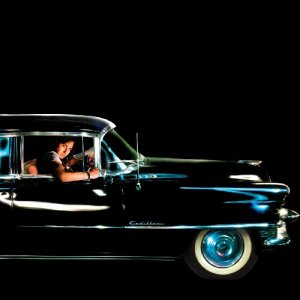
Andrew W.K. – “55 Cadillac”

55

By Joel Francis

From “Brand New Cadillac” to “Little Red Corvette,” no art form has had a love affair with the automobile quite like rock and roll. So while the subject matter for Andrew W.K.’s fourth album, “55 Cadillac,” is well-trod, his approach is surprising and fresh.

W.K. appeared on the scene in 2001 sporting a bloody nose on his album cover and urging hard rock fans to “Party Hard.” In the years since opened a New York night club, penned an advice column that was compiled into a book, produced an album by reggae legend Lee “Scratch” Perry, hosted a show on Cartoon Network and continued to turn out big dumb anthems like “Make Sex.” That said, few could have seen the side of Andrew W.K. he reveals on “55 Cadillac.”

Comprised of eight “spontaneous solo piano improvisations,” the album finds W.K. expressing himself on the 88 keys he started learning at age 4.

“55 Cadillac” opens where Neko Case’s “Middle Cyclone” – which features our heroine on the hood of a 1968 Mercury Cougar  – left off, with the sound of crickets and frogs. Like a drag race, W.K.’s prize auto doesn’t start, but “begin.” Appropriately, we can hear the motor thrust and idle as pistons warm up on the first cut, “Begin the Engine.”

Though the performances are spontaneous, W.K. obviously put a lot of thought into tone and texture. “Seeing the Car” is suitably elegant, while “Night Driver” features an upbeat, galloping melody. The stately ballad “5” is the album’s most tuneful moment and “City Time” is choppy, reflecting urban stop-and-go traffic.

The tracks are joined by the sound of a car racing past and the album works as one long piece. The songs flow well, sustaining the mood without becoming stale, but despite the solid pacing it can easily become background music.

W.K.’s party rock persona doesn’t emerge until the opus’ closing minutes. When the flood of electric guitars enter on “Cadillac,” the closing track,” it sounds like a lost snippet of musical dialogue between Queen’s Brian May and Freddy Mercury.

Co-released on the Sonic Youth guitarist’s Ecstatic Peace! Label, “55 Cadillac” is the rare album that can be enjoyed by both Thurston Moore and Thurston Howell, III.

Soulsville sings Hitsville

soulsville sings hitsville

By Joel Francis

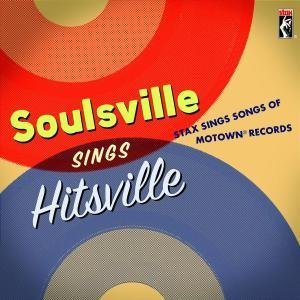
Rare was the time Berry Gordy would let Motown artists record songs outside of the Hitsville catalog (and its lucrative publishing).  Fortunately, Jim Stewart at Stax did not have the same stipulation. Thanks to the 2007 compilation “Soulsville Sings Hitsville: Stax Sings the Songs of Motown Records” soul fans have at least one direct barometer to use in the never-ending debate of Stax vs. Motown.

Rivalries and arguments aside, “Soulsville Sings Hitsville” is a great 15-song collection that casts many soul nuggets worn out by oldies radio in a new light. Soul fans from either side of the Mason-Dixon line will find a lot to enjoy here. And now for the 15-round battle in the head-to-head match of Stax vs. Motown.

Round 1:  – “Stop! In the Name of Love”

Margie Joseph vs. the Supremes

The Supremes took this song to No. 1 in 1965 and made it one of their defining songs. Margie Joseph adds a lengthy monologue and a completely new arrangement that transforms the song. They lyrics are about the only element these versions share. Although it’s hard to top Holland-Dozier-Holland production, Joseph accomplishes the feat by making the song her own and having an infinitely better singing voice than Diana Ross.

Winner: Stax

Round 2:  – “I Don’t Know Why I Love You”

David Porter vs. Stevie Wonder, the Jackson 5

David Porter made his name as half of the Porter-Isaac Hayes hitmaking machine in the ‘60s before striking out on his own in the ‘70s. His version of “I Don’t Know Why” easily tops the Jackson 5’s reading. Michael Jackson just isn’t old enough to put the necessary grit in his vocals and ends up practically shouting the song. The gold medal here, though, goes to the co-author and original performer Stevie Wonder. Released as a single from his 1968 album “For Once In My Life,” the song peaked at No. 16 on the R&B charts. Wonder’s vocals simmer, building in intensity until they boil over at the 1:40 mark. Wonder sings so hard he’s almost out of breath as the great arrangement continues to build until the only options are to explode out of the speakers or fade out. Faced with potential lawsuits from music lovers, the track ends just under the three-minute mark.

Winner: Motown

Round 3 – “You’ve Got to Earn It”

Staples Singers vs. the Temptations

One of the Staples Singers’ biggest hits, this song is so closely identified with the group that I didn’t even know the Temptations recorded the original. This Smokey Robinson-penned number was released in 1965 on the b-side of “Since I Lost My Baby.” The Tempts version is serviceable, but aside from Eddie Kendricks’ lead vocals isn’t that memorable. The Staples version trumps on every level: Mavis Staples great singing, the spectacular arrangement featuring a signature descending horn line and harmonica, and the soulful playing and support of Pops and Yvonne Staples.

Winner: Stax

Round 4 – “Can I Get a Witness”

Calvin Scott vs. Marvin Gaye

In the NFL, when a play is challenged and the officials go under the hood for review, there must be incontrovertible evidence to overturn the call. So goes it with covers. It is not sufficient to merely equal the original recording, the burden of the cover is to surpass the original. Calvin Scott does a good job putting his twist on one of Marvin Gaye’s earliest hits, but he doesn’t add anything to it either. Take pity on Scott, however – topping Gaye is no small feat.

Winner: Motown

Round 5 – “Reach Out (I’ll Be There)”

Mar-Keys vs. Four Tops

Although some session credits are available, the Mar-Keys kind of became the catch name for whoever was playing with the Memphis Horns. Some of their cuts ended up on Booker T. and the MGs or Isaac Hayes albums, some were added to Bar-Kays releases and others credited to the Mar-Keys themselves. The Mar-Keys’ 1971 version of “Reach Out (I’ll Be There)” is one of the numbers that has fallen through the cataloging cracks – Stax historians aren’t really sure who played on it. However, one fact is indisputable: this track rocks. Andrew Horn blows a mad sax solo with enough grit and soul to match Levi Stubbs’ incomparable voice, while the rest of the musicians strip the sheen laid by the Funk Brothers on the original Motown recording. That said, the Four Tops version became one of their defining performances for good reason. The decision here comes down to preference: the dirtier R&B of Stax or the polished soul of Motown. I like ‘em both.

Winner: Push

Round 6 – “Never Can Say Goodbye”

Isaac Hayes vs. Jackson 5

Isaac Hayes and the Jackson 5 both released their interpretations of Clifton Davis’ “Never Can Say Goodbye” in 1971. The results couldn’t be more different. The pain in Hayes’ deep voice pits him as a grown man with life experience against a bunch of talented kids acting their hearts out. In the weeks following the death of Michael Jackson, the J5 performance has become an unofficial tribute to their singer. It’s a fine sentiment, but, as Mos Def would say, this is grown man business. Hayes wins, no contest.

Winner: Stax

Round 7 – “My Cherie Amour”

Billy Eckstein vs. Stevie Wonder

In the 1940s, Billy Eckstein’s orchestra was one of the first large bop combos in jazz, providing an early home for Dexter Gordon, Miles Davis, Art Blakey, Charlie Parker and Dizzy Gillespie. In the ‘50s, Eckstein’s smooth voice influenced up-and-coming soul singers like Sam Cooke and Solomon Burke. Eckstein dabbled in both soul and jazz in the 1960s, even popping up on  a couple Motown LPs. Although his career was pretty much over by the ‘70s, Al Bell was able to coax the legend to cut a few albums for Stax. Unfortunately, Eckstein’s 1970 delivery of “My Cherie Amour” borders on parody and sadly resembles Jim “Gomer Pyle” Nabors’ version of “You Are the Sunshine Of My Life” that may be found on the Golden Throats series.

Winner: Motown

Round 8 – “Oh, Be My Love”

Barbara Lewis vs. Smokey Robinson and the Miracles

Barbara Lewis actually got her start as a teen soul singer in early ‘60s Detroit before finding greater success on Stax. Based on this number, it’s odd that Berry Gordy passed on Lewis at a time when he was seemingly signing every promising young singer in the city. Lewis’ voice is a perfect fit for the Motown sound. Then again, maybe it’s for the best Lewis didn’t join the Motown family. Chances are she would have ended up another in the long line of promising female talents discarded in the wake of Diana Ross. Lewis does a fine job with this interpretation of a 1967 Miracles b-side penned by Smokey Robinson. Unfortunately, the original version could not be located for comparison.

Winner: No decision

Round 9 – “I Hear a Symphony”

Booker T. and the MGs vs. Diana Ross and the Supremes

On paper, this looks like a slam dunk: Remove Ross’ weak vocals and replace it with one of the tightest, funkiest groups of the day. But somehow, the MGs’ performance just doesn’t add up. The melody just doesn’t sound complete coming only from Steve Cropper’s guitar and Booker T. Jones’ organ can’t replicate the fullness of the Funk Brothers playing. The Supremes’ version is definitely more than the sum of its parts, and a testament to the acumen of the Holland-Dozier-Holland team.

Winner: Motown

Round 10 – “Chained”

Mavis Staples vs. Marvin Gaye

Marvin Gaye took a break from cutting duets with Kim Weston and Tammi Terrell to lay down this funky number in 1968. The backing vocals and atmosphere give the track a live feel and the sax break is as close to the Stax sound as Motown gets. Mavis Staples cut her version a year later. She more than holds her own against Gaye’s vocals, and the arrangement is just as energetic. Both versions can pack the dance floor, yet are just different enough to stand on their own. Why choose one performance when you can have both?

Winner: Push

Round 11 – “Ask the Lonely”

John Gary Williams vs. Four Tops

John Gary Williams cut several sides for Stax/Volt as a member of the Mad Lads until he was drafted in 1966. When Williams got out of the military, he wasn’t exactly greeted with open arms. His former group had carried on in his absence, and found Williams’ replacement to be much easier to work with. Stax owner Jim Stewart pressured the group to take Williams back and he recorded with the Lads until 1972. That year, Williams was finally able to go solo. He released only one album, which included covers of George Harrison’s “My Sweet Lord,” the Spinners and this reading of “Ask the Lonely.” The smooth sax solo that opens this song and Williams’ vocals foreshadow the Quiet Storm movement. Williams arrangement and delivery may have been ahead of it’s time, but it’s not nearly enough to wrestle the title away from Levi Stubbs’ gut-busting performance on the original.

Winner: Motown

Round 12 – “Signed, Sealed, Delivered”

Soul Children vs. Stevie Wonder

The success of “Signed, Sealed and Delivered” – it spent six weeks at No. 1 on the R&B charts in 1970 – gave Stevie Wonder a great deal of leverage when he renegotiated his contract with Motown and gained the artistic control that birthed his spectacular output later in the decade. “Signed” was the first single 20-year-old Wonder produced; his arrangement is so good you can get lost in the various instruments. There isn’t much that can be improved on Wonder’s version and the Soul Children’s slowed-down gospel interpretation falls flat in the face of his triumph.

Winner: Motown

Round 13 – “Someday We’ll Be Together”

Frederick Knight vs. Diana Ross and the Supremes

Diana Ross’ name is coupled with the Supremes on the label of “Someday We’ll Be Together,” technically making it the ensemble’s final No. 1 hit before Ross started her solo career. Peeling back the label and examining the musicians’ chart, however, one can see that the song was actually a dry run for Ross’ solo career. Supremes Mary Wilson and Cindy Birdsong, who replaced founding ‘preme Florence Ballard, are nowhere to be found, but even if they did they probably wouldn’t have been able to help. The song, co-written and produced by Harvey Fuqua, is a mess. The strings are way too syrupy, and the backing vocals are over-performed. Everything on the track is over-produced. Perhaps this was an effort to make Ross’ thin vocals sound more emotionally relevant, but even that is a failure. It does sport a great guitar line, though. Frederick Knight vaults over this ridiculously low bar, but he doesn’t exactly salvage the song. His strings are more restrained, the arrangement slightly more funky and the vocals greatly improved, but the song itself – which predates Fuqua’s time at Motown – is far from memorable.

Winner: Stax

Round 14 – “I Wish It Would Rain”

O.B. Clinton vs. the Temptations

“I Wish It Would Rain” is one of the most devastatingly heartbreaking songs in the Motown catalog. Mourning his lost love, David Ruffin lays his soul bare for all to see. Topping this soul masterpiece would be quite a challenge – so O.B. McClinton didn’t even try. Dubbed the “Chocolate Cowboy,” McClinton was an oddity on the Stax label. His singles only charted on the country charts, with his slower tempo, pedal steel-backed version of “I Wish It Would Rain” peaking at No. 67 in 1973. His is a noble attempt, but the song works better in R&B than it does country.

Winner: Motown

Round 15 – “I Heard It Through the Grapevine”

The Bar-Kays vs. Marvin Gaye, Gladys Knight and the Pips

The wah wah guitar solo that punctures the Bar-Kays’ version of “I Heard It Through the Grapevine” just past the four-minute mark eclipses anything Gordy had imagined at Motown (save Rare Earth) and points Stax down the very odd path of Iron Butterfly and the acid rock of the early ‘70s. This version draws on the spirit of Isaac Hayes’ Oscar-winning “Shaft” and steers close to CCR’s lengthy, jammed-out rendition. I’m not sure if this actually tops the performances Marvin Gaye and Gladys Knight took to No. 1 a little more than a year apart. The versions are so different; it’s comparing apples and oranges. Enjoy them all.

Winner: Push

Final score: Stax 4, Motown 7.

The winner in this (the only) bout is overwhelmingly Motown, but Hitsville has an incumbent’s advantage of making Stax tackle its material. Listening to the Supremes tackle the Emotions, Levi Stubbs sparring with the Otis Redding songbook , the Temptations doing Sam and Dave and Norman Whitfield and Holland-Dozier-Holland applying their touches to Hayes/Porter and MGs arrangements would not only be a fantastic delight, but likely tip in favor of Soulsville. Sadly, we’ll never know. As a consolation prize, we have this compilation to bridge two very different and influential approaches to soul music.

“Stax Does the Beatles”

zzstaxdoesthebeatles~_101b

By Joel Francis

The ultimate Stax tribute to the Beatles was Booker T and the MGs 1970 album “McLemore Avenue.”  None of those tracks appear on the 2007 compilation “Stax Does the Beatles,” but strong contributions from Isaac Hayes, the Bar Kays, Carla Thomas and four other MG tracks make collection as strong as it appears on paper.

Otis Redding opens the album with arguably the greatest Beatles cover of all time. His version of “Day Tripper” (presented here in an unreleased alternate take) may even top the Beatles. Redding’s “Day Tripper” may be second only to Wilson Pickett and Duane Allman’s “Hey Jude” in the pantheon of Beatle covers. Pickett’s reading is sadly missing on this album, but David Porter’s “Help!” continues Redding’s frenetic horn lines and double-time delivery to add an urgency only hinted in John Lennon’s originals vocals.

“Stax Does the Beatles” contains two very different versions of “Yesterday,” a funky, sassy spin on “And I Love Her” and a slight cheat with John Gary Williams’ 1973 cover of George Harrison’s “My Sweet Lord.” Some readings work better than others, but all are stamped with the high quality that defined the Stax catalog.

The collection’s centerpiece is Isaac Hayes’ 12-minute cinematic, romantic rendition of “Something.” His arrangement features almost as many instruments as the Beatles “A Day in the Life,” including saxophone, wah guitar, full orchestra and a gorgeous piano line that holds the whole thing together. And that’s just the first 2 minutes.

Some might complain Hayes’ “Something” is overblown, over-produced and pretentious. They haven’t been paying attention to the deep longing in Hayes’ voice.

Although “Something” and “Day Tripper” come the closest, nothing on this collection will replace or make one forget the Beatles versions. The magic in their songs is that there are so many nooks and crannies it seems unlikely future generations will ever exhaust the possibilities of reinterpretation.

For Beatle fans that can play a song in their head by just thinking of the title or chorus, these R&B translations are for you. They are a fresh coat of paint on a favorite structure. For soul fans interested in the influence of soul in rock and vice versa, there is much to enjoy in “Stax Does the Beatles.” People who don’t like either Stax or the Beatles should find the nearest house of worship and repent. Then buy this on the way home.