(Above: “Goodbye Porkpie Hat” was Charles Mingus’ tribute to Lester Young. It has been a regular part of Jeff Beck’s performances for the past 30 years.)
By Joel Francis The Kansas City Star
The guitarist’s guitarist, Jeff Beck has a long and varied career. Here are some of the high points from each of the genres he’s worked in.
Blues
“Ultimate Yardbirds” (2001)
The song “For Your Love” brought the Yardbirds their first big hit, but it cost them their guitarist. When Eric Clapton quit the group for abandoning their blues roots, Jeff Beck was recruited. Beck’s tenure in the Yardbirds bridged the early rave-up blues era and the later psychedelic rock phase. For a brief period, he was joined by Jimmy Page on bass and, later, second guitar. Shortly after the Beck-Page incarnation appeared in the film “Blow Up,” Beck left the band and started his solo career. He has, however, participated on several of the Yardbirds’ reunion albums.
Note: The Yardbirds’ catalog was a frustrating mess of reissues and piecemeal compilations until Rhino released the two-disc anthology “Ultimate Yardbirds.” The collection contains every A-side, key album tracks and a handful of rarities across all three eras of the band.
Hard rock
“Truth” (1968), “Beck-Ola” (1969)
As a nonvocalist, Beck has always had to hunt for a singer. When assembling his first post-Yardbirds project, he nabbed a little-known English R&B singer Rod “The Mod” Stewart. He also recruited Ronnie Wood to play bass. The trio — joined by a rotating cast of drummers — made two albums together before Stewart and Wood left to join the Faces. Both records have a similar feel to the heavy blues/rock Beck’s former bandmate Jimmy Page was making with Led Zeppelin.
Progressive rock
“Beck Bogert Appice,” “Live in Japan” (both 1973)
After the demise of the Jeff Beck Group’s second lineup, Beck teamed up with the rhythm section from Vanilla Fudge, drummer Carmen Appice and bass player Tim Bogert. While the studio album was a typical slab of power trio hard rock, the band expanded its template on the live album, stretching several songs to the 10-minute mark. Both albums contain Beck’s version of “Superstition,” the song Stevie Wonder wrote with Beck in mind, before Wonder’s manager persuaded him to keep it for himself.
Jazz/fusion
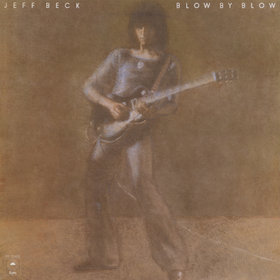
“Blow by Blow” (1975), “Wired” (1976)
Beck teamed with producer George Martin for his first all-instrumental solo projects. Asthetically, the albums fit comfortably alongside Chick Corea’s “Return to Forever” and the Mahavishnu Orchestra. “Blow by Blow” contains two Stevie Wonder covers and a version of the Beatles’ “She’s a Woman.” “Wired” contains some outtakes from the “Blow by Blow” sessions and a cover of Charles Mingus’ “Goodbye Porkpie Hat” that has become a concert staple. The drummer on “Wired,” Narada Michael Walden, is in Beck’s current touring band.
Pop
“Flash” (1985)
After a five-year recess, Beck returned with Nile Rodgers of Chic. “Flash” was Beck’s bid for mainstream credibility and featured eight singers across its 11 tracks. The album won a Grammy and reunited Beck with Stewart on Curtis Mayfield’s “People Get Ready.”
Rockabilly
“Crazy Legs” (1993)
The guitar sound on “B-I-Bickey-Bi, Bo-Bo-Go” and other early Gene Vincent singles had a big effect on Beck as a teenager. In the early ’90s he paired with the Big Town Playboys to pay tribute to Cliff Gallup, Vincent’s guitar player.
Techno
“Who Else!” (1999), “You Had It Coming” (2001)
Longtime fans were surprised when Beck embraced the samples and looping techniques made popular by the Chemical Brothers and Aphex Twins. “You Had It Coming” finds Beck sparring with guitarist Jennifer Batten and features an update of Muddy Waters’ “Rolling and Tumbling” with Imogen Heap on vocals.
Guest Appearances
Jeff Beck has popped up in some unlikely places over the years. Here are some of his most noteworthy performances on others’ albums.
Stevie Wonder – “Talking Book” on the song “Lookin’ For Another Pure Love”
Tina Turner – “Private Dancer” on the song “Private Dancer”
Mick Jagger – “She’s the Boss” and “Primitive Cool”
Roger Waters – “Amused to Death”
Jon Bon Jovi – “Blaze of Glory – Young Guns II” soundtrack
Hans Zimmer – “Days of Thunder” soundtrack
Buddy Guy – “Damn Right, I’ve Got the Blues” on the song “Mustang Sally”
The Pretenders – “Viva el Amor!” on the song “Legalise Me”
Toots and the Maytals – “True Love” on the song “54-46 Was My Number”
Cyndi Lauper – “The Body Acoustic” on the song “Above the Clouds”
Morrissey – “Years of Refusal” on the song “Black Cloud”
(Above: The Stiff Little Fingers in all their glory. This live footage of “Alternative Ulster” from 1979 features scrolling lyrics so fans can sing along. Good luck.)
By Joel Francis
The Daily Record
The original incarnation of Stiff Little Fingers wasn’t around very long, but during their five-year tenure they were the best band to call Ireland home.
The Belfast, punk group formed in the late-‘70s as a cover act with a moniker nicked from one of their favorite songs – “Highway Star.” It wasn’t long, however, until the punk bug that had been sweeping England infiltrated Ireland. After replacing their bass player and swapping guitar solos for gnarled sneers, the quartet rechristened themselves after their new favorite song, the Vibrators’ “Stiff Little Fingers.”
After playing a show at the Glenmachan Hotel, the CBGB’s of the Irish punk scene, Stiff Little Fingers, or SLF, singer Jake Burns introduced the band to a couple of his pen pals, journalists Gordon Ogilvie and Colin McClelland.
"The Irish Clash."
Teaming with Ogilvie to write about their native land’s current violent political climate, the Fingers recorded their first single. “Suspect Device” was packaged to look like a bomb, but a copy managed to find its way to legendary BBC DJ and underground music champion John Peel, who played the song endlessly.
The band’s second single became their biggest hit. Released in 1978, “Alternative Ulster” was an insistent, yet catchy plea for plea for a united Ireland. (“Ulster” is British shorthand for Northern Ireland.)
After the success of “Ulster,” the Fingers recorded their first album, “Inflammable Material.” When a deal with Island Records fell through, the band was forced to release the record on their own. The album sold more than 100,000 copies and became the first independent release to chart in the United Kingdom when it landed at No. 14 on the album chart. That success paved the way for a contract with Chrysalis Records the following year.
Despite this victory, drummer Brian Faloon decided to leave the band. He was replaced by Jim Reilly, who beat the skins on the band’s third single, “Gotta Gettaway.”
In the spring of 1978, Stiff Little Fingers performed alongside the Clash, Buzzcocks, Sham 69 and several other punk acts in the Rock Against Racism concert. This appearance earned SLF the nickname “the Irish Clash.” Intended as a compliment, the handle hurt more than it helped, since the band failed to live up to comparisons. The Clash had the budget and backing of a major label, while SLF were left to their own devices.
The designation isn’t without merit, though. Both groups had a penchant for populist lyrics, disenchantment and reggae. The Fingers didn’t share the Clash’s penchant for experimentalism, but when it came to straight-ahead punk songs, Burns and guitarist Henry Cluney could definitely give Joe Strummer and Mick Jones a run for their money.
Despite their triumphs, the group had trouble capitalizing on their great singles and memorable albums. They released their second and third albums in 1980 and 1981, but the line-up had become a revolving door. When Reilly left the band after the tour for their third album, Brian Taylor became the band’s third drummer in as many years.
This collection is the best place to for neophytes to jump into the SLF catalog.
The other band started fighting about which direction to take the band. The arguments frequently ended in fistfights. In 1982, weeks after releasing their fourth studio album, Burns pulled the plug on Stiff Little Fingers.
Five years later, the band reunited to make some money. After a handful of short tours, Burns decided to take the group into the studio and record some new songs. Despite and impressive lineup that included former Jam bassist Bruce Foxton, the Fingers were basically Burns’ show. From 1991 to 2006, he and Foxton were the only two consistent members of the group.
The reformed Fingers have released four albums, but have been quiet since the original SLF bass player, Ali McMordie, replaced Foxton four years ago. Burns has been promising new material for several years. Until that comes, there are more than enough treasures from the band’s glory days to keep fans happy.
(Above: Blues guitarist Freddie King was one of several King artists to get pinched when James Brown’s career started taking off.)
By Joel Francis
The Daily Record
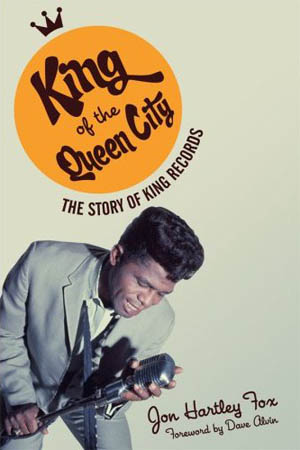
Jon Fox Hartley is the author of the book “King of the Queen City” about King Records in Cincinnati. From 1943 to 1968, King was the home of James Brown, Freddie King, Grandpa Jones and countless other musicians. While other independent labels of the time concentrated on one type of music, King founder Syd Nathan wanted to produce “music for the little man” in all genres.
Fox , a native of Dayton, Ohio who now lives in California, recently took the time to speak with The Daily Record over the phone.
In the book, you make the case for several forgotten artists, such as Henry Glover, Wynonie Harris, Roy Brown and the Dominoes. These pioneers made important contributions to music, but have been ignored by the Rock and Roll Hall of Fame. Why do you think they have been overlooked and haven’t received the recognition they deserve?
I think the first reason is that they’re all dead and have been for several years. Because of that, there’s no one to go to award shows and remind people they haven’t been elected. Also, because of the haphazard status of King reissues, records on King weren’t as available and presented as well as those on other labels. Finally, while all of these artists had pop success, they weren’t pop artist with large audiences. They were niche artists.
I would think that Wynonie Harris has a pretty good shot at getting in (the Rock and Roll Hall of Fame). Henry Glover’s daughter has talked to me about putting together some kind of campaign to get Henry into the Rock and Roll Hall of Fame in Country Music Hall of Fame.
Jon Hartley Fox
In the book you also make the case for “Good Rockin’ Tonight” as the first rock and roll song. Why do you believe “Good Rockin’” that title over “Rocket 88”? How does acknowledging “Good Rockin’,” which was recorded in 1948, change our perspective of the landscape of early rock and roll?
It’s funny, because I made this argument in the book but hadn’t thought I’d have to explain or defend it. Right before the book came out, my wife says “You know you’re going to have to talk about that.” And she was right, because everyone has asked.
It’s a backwards process. You start with a song acknowledged as rock and roll, like “Rocket 88.” Then you break down the attributes that make it rock as opposed to jump blues or country. There’s a certain beat, a certain attitude and the subject matter of the lyrics aimed at kids. There’s also the aggressive, hyper-charged vocals. Once you have those attributes of what makes a song rock and roll, you can apply them to other songs and see if they measure up.
For me, “Good Rockin’ Tonight” makes a strong case. It was the first post-war song to use “rockin’” in the sense of having a good time. “We’re going to party tonight.” It was also one of the first songs to be bought and listened to by white teenagers. The trend crested in the ‘50s, but as early as late ‘40s, white kids were buying these songs and listening to them on the radio.
If you take “Good Rockin’ Tonight” as the first rock and roll song over something by Bill Haley and the Comets or Elvis Presley or Jackie Brenston, it changes our understanding that rock and roll was something brand new that popped on the scene fully formed. It coincides with the evolution of a lot of things reflected in the music people in the upper South and Midwest heard on radio stations out of Memphis and Nashville. You’d hear country, gospel, jump blues, R&B and country boogie on those stations. Then you realize everything that went into rock and roll wasn’t a market creation so much as young people coming of age hearing the music of the ‘40s and synthesizing them.
Describe King founder Syd Nathan. What kind of a person was he? How did he live? How did his personality compare to other independent label owners of the time like, say, Leonard Chess or Berry Gordy?
When I talked to people about Syd Nathan, the word that invariably came up was “character,” as in He was a real character. He was kind of like someone out of a short story. He was tight with a penny, but generous sometimes. He was ahead of the race line culturally and politically, but could tell the crudest racist joke. He was a fun guy but abusive and could push people to the brink of mayhem.
A lot of people got mad at Syd Nathan, but few stayed mad at him. He was gregarious and loved to be surrounded by people. He was the guy holding court in the corner booth at the bar.
In talking to people who worked for and knew Syd Nathan, everyone respected him. Everyone had Syd stories. It is rare to find anybody who will badmouth Syd Nathan these days. I think that’s partly out of nostalgia, but I also think on a day-to-day basis he was probably a real good guy.
There are several stories about Syd’s anger, but I think he used those temper tantrums in the studio to get results out of people. He was trying to get the artist fired up. If he thought there was a spark missing from the performance, he would pick a fight to get the artist fired up. I think these fights were calculated, because Syd never held a grudge and no one stayed mad.
Compared to Leonard Chess or Berry Gordy, Syd Nathan was certainly more expansive musically than either man. He didn’t want to limit himself to one style of music; he wanted to try it all.
I really don’t know this for sure, but I think Syd was probably a little more progressive on race matters than Leonard Chess. I often thought of this while researching the book. At King, Henry Glover would write songs, play on sessions and produce. He was a highly valued vice president of the company. At Chess, Willie Dixon filled many of the same roles, but his day job was as a janitor at Chess.
I had long heard a rumor that during World War II Nathan had 30 or 40 Japanese-Americans working for him. I thought that was unusual because on the West Coast these people were being sent to internment camps.
Well I asked somebody who knew Syd at a book signing. He told me Syd was working with a religious political action group trying to relocate people about to be interred. Syd accepted about 30 to 40 families. They were American citizens, but if they’d stayed at home they would have been locked up. Syd moved them all to Cincinnati where they lived in an apartment complex on the bus line so they could come in to King and work each day.
Most labels find one niche and exploit it. Why do you think King was so successful in so many varied genres?
I think they were successful because they wanted to be and weren’t afraid to try. Syd realized he could make more money if he didn’t specialize in one kind of music, but did a lot of different things. Before the days of record stores, only two or three shops in a town would sell records back in the corner. They’d sell what they got from wherever. Syd saw that specializing was leaving money on the table so if they wanted gospel, he had gospel records for them. Same thing for blues, country, R&B, whatever.
Syd also realized that the song sold the record more than the style or performer. If he thought a song was good, he’d record it in several different styles. Once in a while he was right, and the same song was a hit on the country and R&B charts by different performers.
Once the major labels smelled money and figured out what King and other independent labels were doing they would swoop in and take it away. Syd knew the more diverse he could make King the more control he would have and the more success was guaranteed.
One often hears of a hit record ruining a company, like the Beatles and Vee-Jay. How was King able to sustain the massive popularity of James Brown? Did Brown’s success come at the price of other artists on the label?
To answer the last part first, yeah, Brown sometimes hurt other artists. Freddie King was very vocal about why he left King. One of his reasons was that all the promotional muscle and ad money went to James Brown. There were certainly others who felt his success came at their expense.
King built a huge infrastructure in the ‘40s and ‘50s. They had their own pressing plant and printing facilities to make covers; the studio was in house. The infrastructure took a certain amount of volume to make it profitable.
Right about the time they got it perfected in the mid-‘50s, business started to fall off. But just as the market started to decrease, along comes James Brown. Here was an infrastructure dedicated to James Brown, because frankly there weren’t many other artists left.
Had James’ success hit at a busier time, he might have swamped them. Other labels might not have been able to keep up with demand or gotten paid. That wasn’t a factor at King because they controlled their pressing. If they needed 100,000 James Brown records shipped out, they could get it done. They didn’t have to stand in line like other labels did.
In one of the last chapters you discuss the difficulties King supporters have faced in trying to get the label complex the landmark recognition it deserves. Other than the unveiling of a plaque in 2008, why has King yet to be recognized by the city of Cincinnati?
Again, I think this is in part because the principals are all dead or moved away a long time ago. There’s no real physical presence. The ice house complex (the former King building) is an ugly building in an industrial facility in a funky part of town. With the label’s move to Nashville in the ‘70s, there’s nothing to memorialize. About the only thing to do is put something on the building, and now they’ve got that done.
People have been trying for years to get something done with the old facility. A group at Xavier University in Cincinnati is the latest to try. They want to build a King museum with a recording studio and training facility for youth. We’ll see how this goes. It seems something like this gets proposed every 10 years.
The important thing about King is the spirit of it and I don’t know how to memorialize that. King was never about the facility, it was the spirit and idea of making records.
(Above: A rare Gennett Records 78 featuring Edna Hicks singing “Satisfied Blues.”)
By Joel Francis The Daily Record
From the highway, Richmond, Ind. looks like any other blip on the highway between Indianapolis and Columbus, Ohio. It’s not quite blink-and-you’ll-miss it – the town does have five exits from I-70 – but there’s nothing enticing about it, either.
The music made in this unassuming locale eighty years ago, however, is still captivating. Thanks to the efforts of Henry Gennett and his label, Gennett Records, this blip on the Indiana-Ohio border is known as the “cradle of recorded jazz.”
Like most label heads, Gennett was not a music man. The Nashville businessman bought the highly successful Starr Piano Company from a trio of Richmond entrepreneurs who started the business 20 years ago.
By 1915, Starr Pianos were one of the most prestigious brands in the country and Gennett was selling 15,000 instruments a year. The winds of change were blowing, however, and Gennett sensed the piano paradigm was about to be usurped by the phonograph.
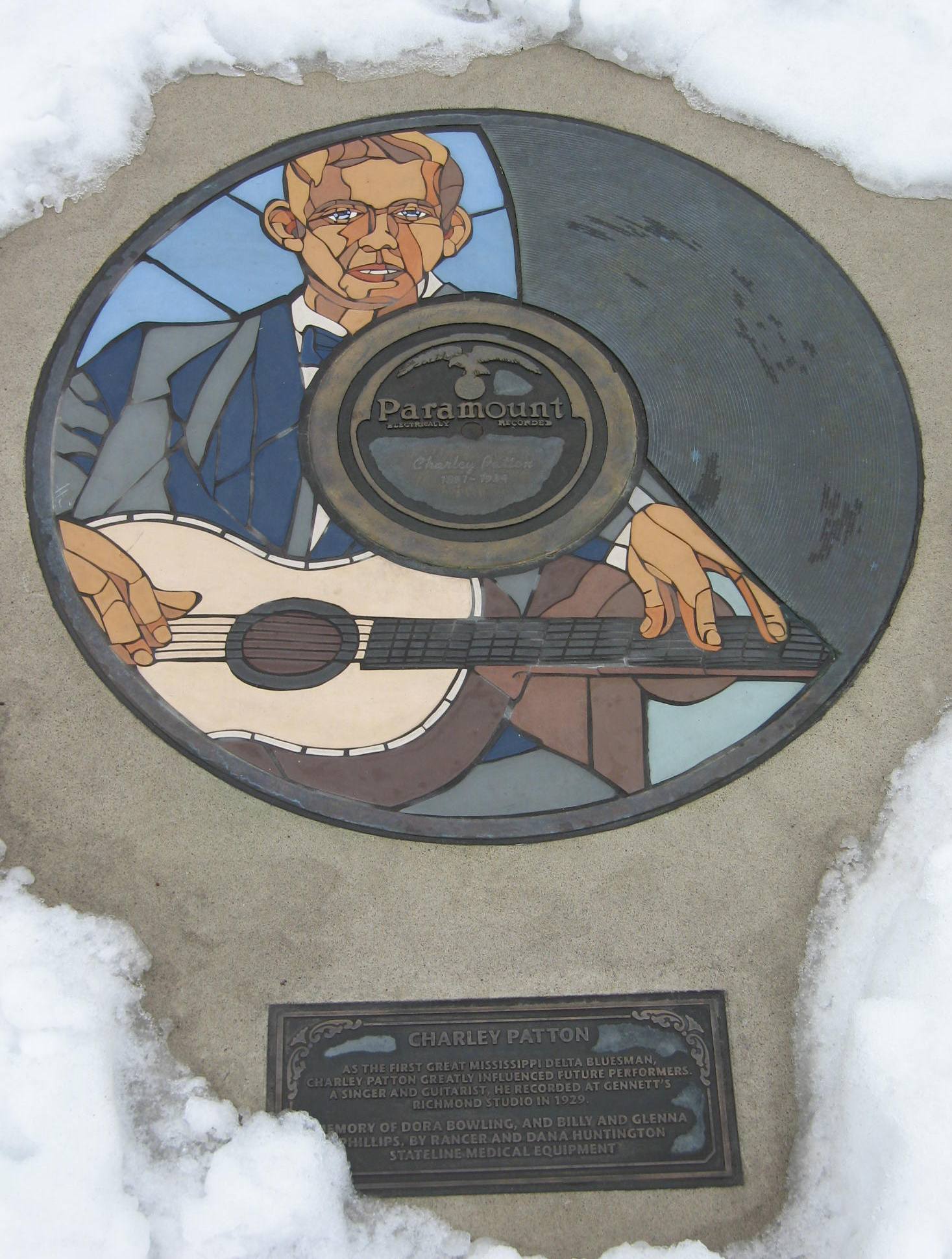
Charlie Patton was one of many then-unknown musicians to record for Gennett.
By the end of the decade, Gennett was not only manufacturing his own brand of phonograph, but cutting original material for prospective customers to play on their new appliance. Since Victor and Columbia had snatched up the biggest names in music to exclusive contracts, Gennett grabbed lesser-known musicians passing through town on their way to gigs.
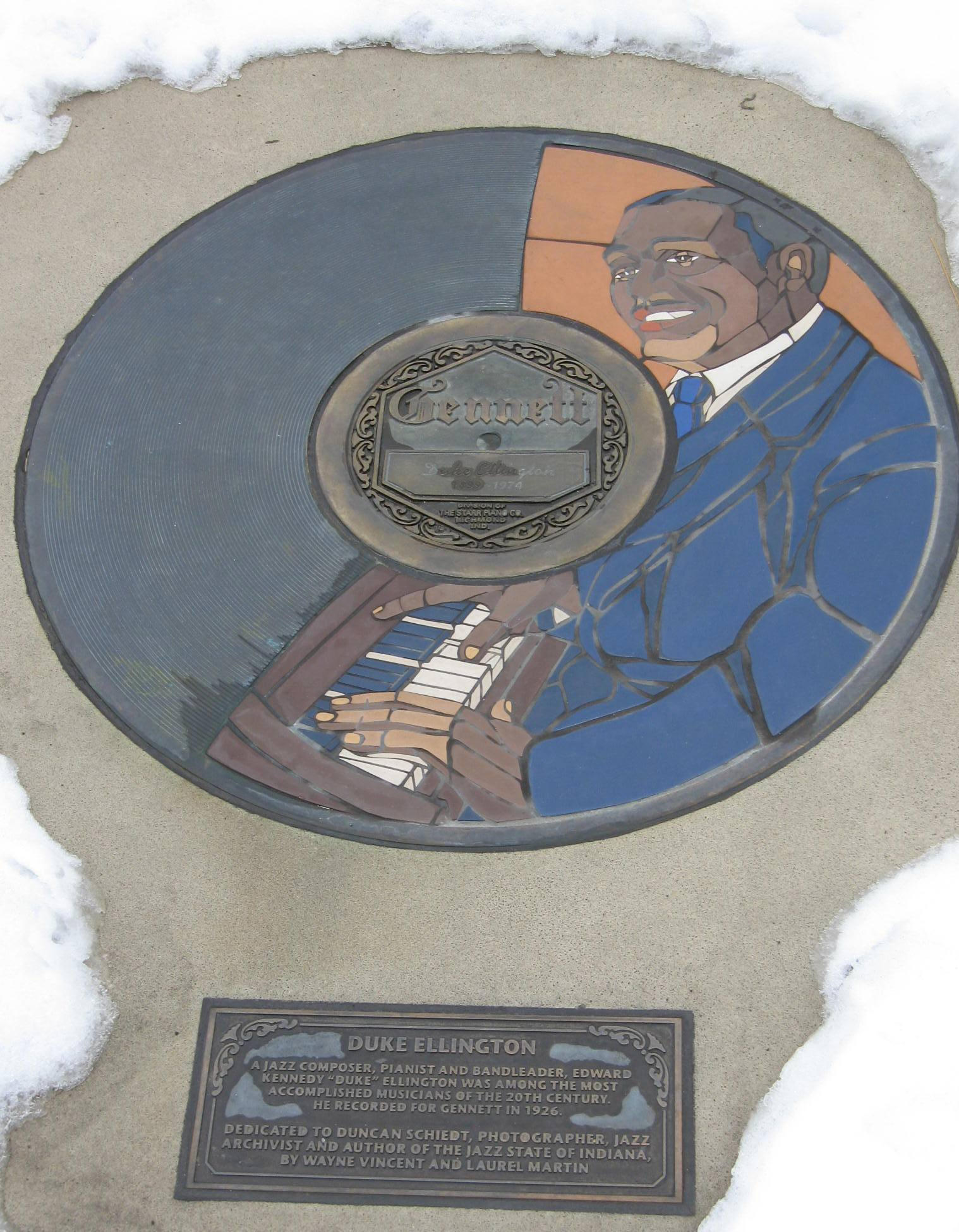
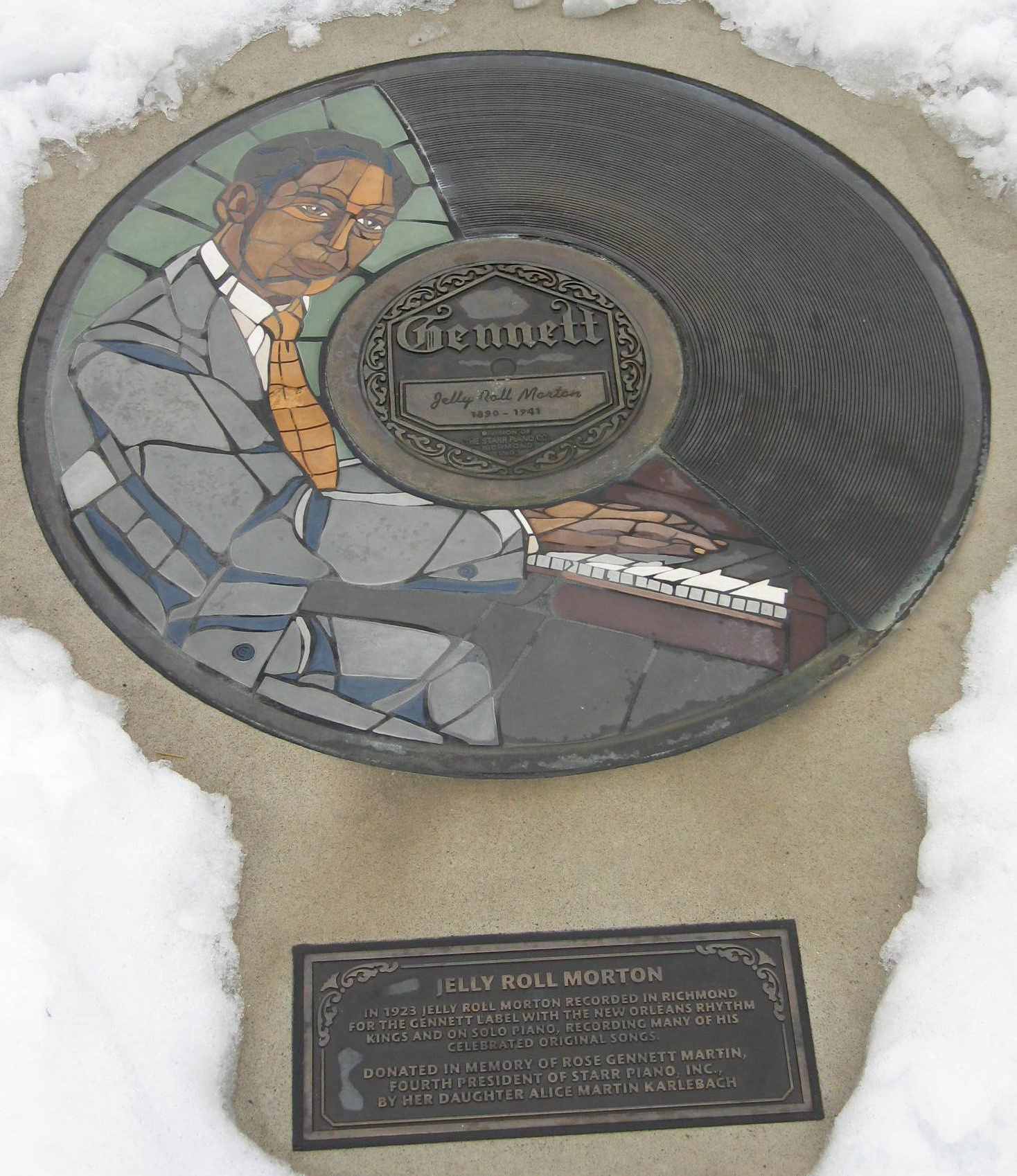
The artists Gennett recorded in the ‘20s were unfamiliar at the time, but read like a jazz hall of fame today: Duke Ellington, Jelly Roll Morton, the King Oliver band – which included a bottle green Louis Armstrong, Bix Beiderbecke, the New Orleans Rhythm Kings and Hoagy Carmichael. Gennett also recorded bluesmen Big Bill Broonzy, Charlie Patton, Blind Lemon Jefferson and future country legend Gene Autry and other hillbilly pioneers Fiddlin’ Doc Roberts, Vernon Dalhart and Bradley Kincaid.
Ironically, at the same time Gennett was recording many of the biggest names in African-American music, Richmond was a Ku Klux Klan stronghold. At one point, 45 percent of the white men in Wayne County, which includes Richmond, were Klan members. This market was too lucrative for Gennett to ignore, who secretly recorded these bigots in the Gennett Records studios and released them on private labels.
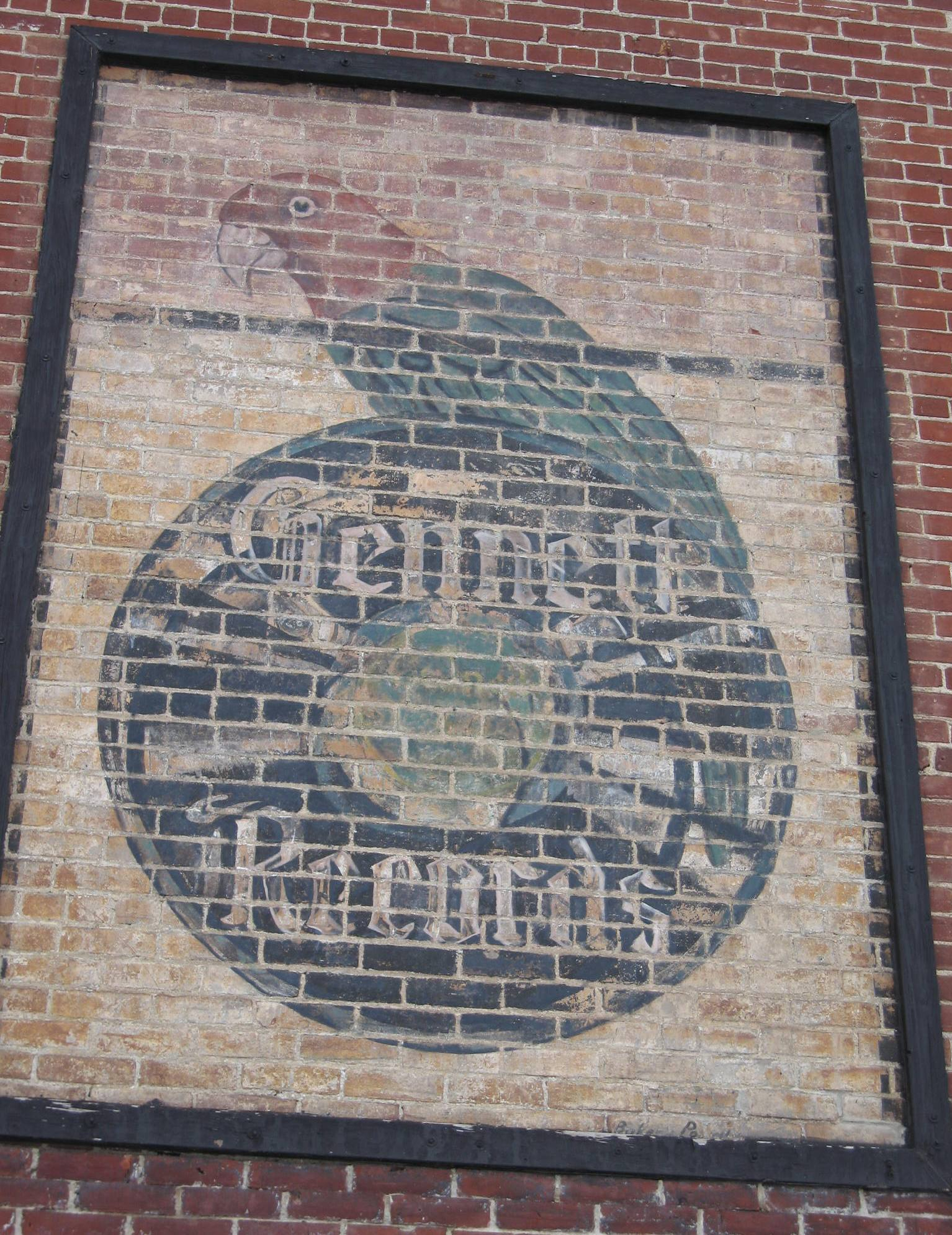
Gennett paid his artists a flat fee of $15 to $50 per session and sold the records for $1. The label’s slogan, “The Difference is in the Tone,” was something of a joke. Heavy drapes hung on the walls could not hide the sounds of passing trains, and purists noted Gennett platters did not sound as good as singles cut on the coasts. For a while, though, the Gennett parrot was ubiquitous. In 1920, the label sold three million records.
Just when it looked like Henry Gennett had successfully stayed ahead of the technology curve, radio came along. Suddenly, fans didn’t have to own every song they wanted to hear. The coupling of radio and the Great Depression buckled Gennett Records and the Starr Piano Company. In 1935, the label was sold to Decca; in 1952 the largely inactive Starr Piano Company was sold at auction and the Richmond factory was shut down.
The Gennett studio is partially intact today. Although the building was once five stories tall, all that remains is part of the façade – still proudly sporting the Gennett Records logo – and the gutted first floor. The Starr Piano Company’s 60-foot smokestack stands defiantly several yards away from the remains of the studio.
This is all that remains of the Gennett building today. Most of the structure was torn down in the 1960s and ’70s.
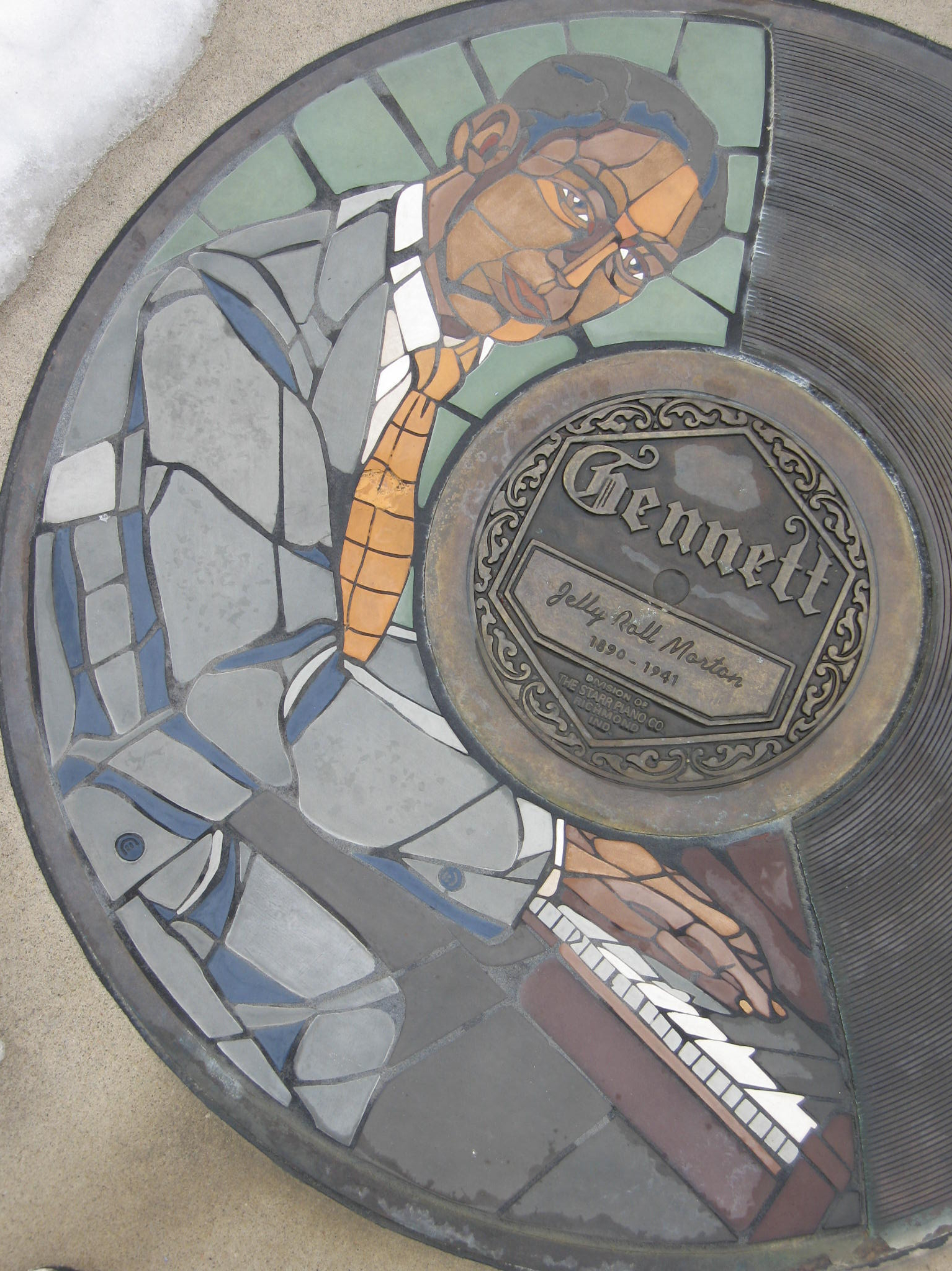
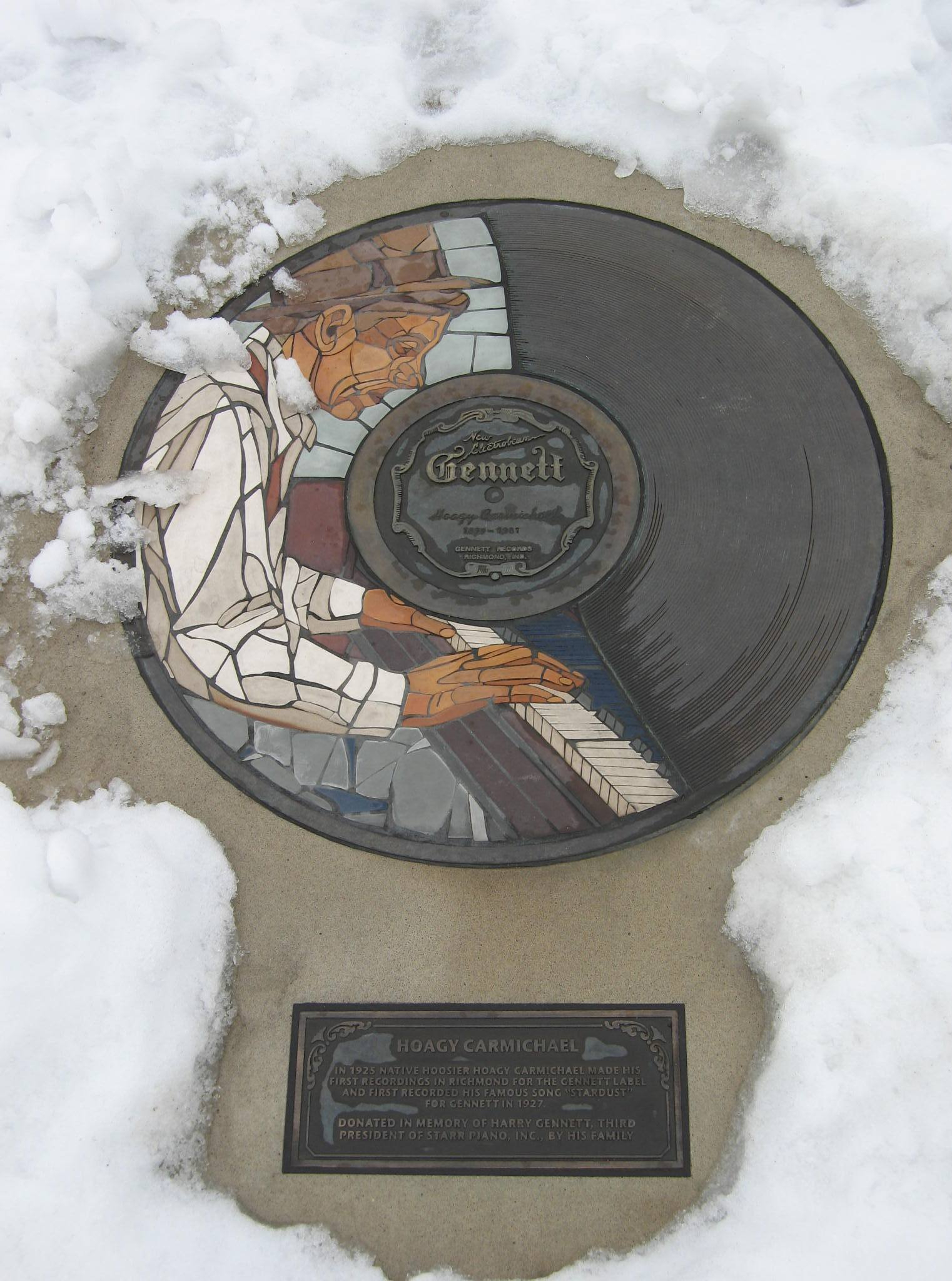
Across the street lies the Gennett Walk of Fame. It was snowy on the day we visited, but someone had taken the time to clear off the markers of several celebrated musicians. The round plaques are meant to resemble a 78 record, and sport a tile mosaic of the artist. A bronze plaque below the 78 contains a brief biography.
It seems most of the Richmond’s current 40,000 residents have forgotten about Gennett Records. The first person we asked for directions had never heard of it, and the only nod to the label outside of the old building and walk of fame was mural on the side of a the 4th Floor Blues Club on the way out of town.
It’s easy to miss the sign for the Gennett memorial. The narrow road is hidden behind a railroad bridge and tucked next to row of businesses. But if you’ve ventured far enough off the beaten path to stumble into Richmond, go a little further and rediscover some great music.
I visited the historic Gennett Records recording studio and the Gennett Walk of Fame in Richmond, Ind. on March 2, 2010. Here are my photos from the trip. (Don’t miss The Daily Record feature “Remembering Gennett Records.”)
This sign points the way to the Gennett building, but it’s easy to miss if you’re not looking for it.This is all that remains of the Gennett building today. Most of the structure was torn down in the 1960s and ’70s.Close-up of the Gennett parrot still visible on the tower today.This plaque is mounted on the Gennett building to the left of what appears to be the former main entrance.There isn’t much to see inside the building. The structure has been gutted.Detail work of the marker celebrating Jelly Roll Morton on the Gennett Walk of Fame.Hoagy Carmichel’s plaque on the Gennett Walk of Fame.Blues legend Charlie Patton’s marker on the Gennett Walk of Fame.Duke Ellington is also honored on the Gennett Walk of Fame.Jelly Roll Morton’s plaque on the Gennett Walk of Fame.
(Above: The groundbreaking “Working on a Building,” which the Swan Silvertones cut for King Records.)
By Joel Francis The Daily Record
James Brown is certainly the best-known artist to record for Syd Nathan’s Cincinnati-based label, but King Records had forged a reputation long before Brown emerged. For a quarter century, from 1943 to 1968, King recorded some of the top performers in not only R&B, but gospel, jazz, bluegrass, rockabilly, blues and early rock and roll.
Here are some other King artists worth checking out.
Bill Doggett Organist Bill Doggett was the biggest-selling instrumentalist on King. He joined the label after leaving Louis Jordan’s band in 1951, and recorded several sides with a trio. When the results weren’t what he’d hoped, Doggett added saxophone and guitar to the lineup and scored big hits with “Ding Dong, “Hammer Head” and “Shindig.” Doggett’s biggest success, though, was the 1956 smash “Honky Tonk.” The record sold 1.5 million copies that year, spent seven months on the chart and won several awards Doggett left King for Warner Bros. in 1960 when King owner Syd Nathan refused to increase Doggett’s royalty rate.
Swan Silvertones Claude Jeter’s Swan Silvertone’s were the biggest gospel act to record for King. They were only with the label for five years, from 1946 to 1951. The 45 songs cut for King bridged the transition from the traditional barbershop-based style of gospel singing to a more spontaneous, emotional approach. Jeter’s duet with co-lead singer Solomon Womack on “Working on a Building” epitomized the potential of the new method and influenced future stars Al Green, Curtis Mayfield and Sam Cooke. The Slivertone’s later recordings on Specialty and Vee-Jay receive more attention, but the half-decade at King cemented the group’s sound and reputation.
Charlie Feathers Rockabilly guitarist Charlie Feathers is one of those criminally forgotten musicians whose talent outshines his reputation. Feathers grew up in Mississippi listening to the Grand Ol Opry, but learned guitar from bluesman Junior Kimbrough. Feathers briefly recorded for Sun before coming to King in 1956. After cutting several raw, visceral rockabilly numbers that went nowhere, commercially speaking, Feathers decided to model himself after Elvis Presley. When the sanitized new records also refused to budge, a frustrated Feathers left King. He bounced around from label to label, continuing to perform until his death in 1998. In 2003, director Quentin Tarantino resurrected a couple Feathers songs for his “Kill Bill” films.
Stanley Brothers Bluegrass legends Carter and Ralph Stanley were already stars when they signed to King in 1958. That fall, the duo released one of the genre’s landmark albums, an untitled recorded nicknamed after its catalog number, King 615. Along with old-timey mountain music, the Brothers recorded gospel and even R&B numbers, putting their stamp on Hank Ballard’s “Finger Poppin’ Time.” The Stanley Brothers reached new audiences during the folk revival of the early ‘60s, and cut their final album for King in 1965. Carter Stanley died the following year, but his Ralph kept the flame alive. In 2006, Ralph Stanley found improbable acclaim for his a cappella reading of “O Death” on the “O Brother, Where Art Thou?” soundtrack.
Little Willie John Soul singer Little Willie John had one of the longer tenures at King, spending one third of his life on the label. Unfortunately, John only lived to 30 and all his success came early. The Detroit native was just 18 when he landed his first big hit, “All Around the World.” In the next few years, John racked up 10 more To 20 R&B hits, including his signature number, “Fever.” A has-been at 25, John struggled with alcohol and drug addiction. He was charged with manslaughter after stabbing a man to death following a concert in Seattle. In 1968, John died in prison.
(Below: “Can’t Hardly Stand It” was one of several great rockabilly songs Charlie Feathers cut for King in the 1950s.)
(Above: The Delmore Brothers landed a hit with “Blues Stay Away From Me” in 1949 on King Records.)
By Joel Francis
The Daily Record
In a musical landscape that lionizes pioneering indie labels Chess, Motown and Atlantic, Cincinnati’s King Records is at best remembered as a footnote and the early home of James Brown.
Author Jon Hartley Fox aims to correct that perspective with his new book “King of the Queen City: The Story of King Records.” While Brown receives his due, Fox spends a great deal of time making the case that King was the most diverse and innovative label of its time.
King Records was founded in 1943 by Syd Nathan, a 40-year-old Cincinnati businessman with asthma and poor eyesight. Nathan’s got into the music business started by reselling old jukebox platters at the tail end of the depression. The venture proved so successful he opened Syd’s Record Shop on Cincinnati’s Central Avenue in 1940.
The first artists Nathan signed to King were Grandpa Jones and Merle Travis. Their success, coupled with the early hit “I’m Using My Bible for a Road Map,” led Nathan to advertise with the slogan, “If it’s a King, it’s a hillbilly.”
In 1945, Nathan dipped his toe in the waters of “race music” (the term “rhythm and blues” wouldn’t be coined for another three years), with Queen Records. The success of early artists like Bull Moose Johnson led the subsidiary to be moved onto the proper King label.
Nathan’s pursuit to make records for the “little man” took him into nearly every conceivable genre of music. Throughout his quarter century at the helm of King, the label produced hits on the country, blues, gospel, pop, R&B and jazz charts. A cross section of King’s staggeringly diverse roster includes Freddie King, Hank Ballard and the Midnighters, the Stanley Brothers, Homer and Jethro and, briefly, John Lee Hooker, Hot Lips Page and Johnny Otis.
The label’s biggest artist, however, nearly didn’t make it out of the studio. James Brown came to King through a demo of “Please, Please, Please.” Nathan hated the track with a passion, and released it only to humiliate the producer, who staked his career on its success. The Hardest Working Man in Show Business went on to have an unprecedented string of hits on King beginning with “Please, Please, Please” 1956 and continuing until 1971, when Brown and his back catalog moved to Polydor.
The label’s success went beyond its across-the-board chart triumphs. In the early 1940s it was the first independent label to have its own fully functioning recording studio. Nathan was also at the vanguard of race relations, hiring black producers to supervise sessions with white musicians. Eight years before the hometown Cincinnati Reds would let blacks and whites play on the same team, Nathan had integrated crews in nearly every facet of the label.
Clearly, Fox has a lot of ground to cover in his book, and he does a good job of presenting the material in easy-to-digest portions. Each chapter covers a different facet of the label, such as country, gospel, solo or group R&B acts, production and distribution. From one-hit wonders to major performers, Fox does a good job breaking down the biographies of all the key players. In one or two pages, Fox paints a tight picture of everything the subject did before, during and after King. In that regard, the book functions almost as well as an encyclopedia of mid-century, Midwestern performers.
That approach, however, can also suffer from losing sight of the forest from all the trees. Nathan’s persona could have provided an easy and useful narrative thread, but he disappears for pages at a time. We don’t learn about his failing health until Fox casually mentions Nathan had a heart attack during a treatise on Brown. We also don’t learn much about Nathan’s personality – when he showed up at the office, his lifestyle, where he lived or his personal life.
The book’s timing also puts Fox at a disadvantage. Nathan died in 1968 and Brown in 2006. Most of the other performers are also deceased, giving Fox few primary sources to work with. Despite these difficulties, Fox proves himself a good researcher who draws on previously published material and interviews to tell his story.
The concise book covers a lot of territory in just over 200 pages. “King of the Queen City” is a brief but compelling work that should be devoured by music historians, both professional and amateur.
(Above: Elvis brings a mid-year Christmas to Kemper Arena in 1977.)
By Joel Francis The Daily Record
When Elvis Presley, who would have celebrated his 75th birthday today, rolled into Kansas City for the first of two concerts at Kemper Arena, he was far from the hungry, hunky artist who terrorized parents and could only be shown on television from the waist down.
Presley played the arena twice in the last 18 months of his life. Although the monarchy was waning, the King could still captivate a crowd. Jess Ritter wrote about Presley’s initial show on April 21, 1976, in the Kansas City Times.
“From the moment (Elvis) strode onstage last night, though, he proved clearly that, at age 41, he is still one of the most charismatic entertainers in America,” Ritter wrote. “Elvis worked hard in his stint, which lasted well over an hour. The punk hip gyrations of the past are gone and all his movements are carefully choreographed, but they are vividly real – and insinuating. In his ice-blue shirt, white singlet and tight white pants encircled at the waist with a massive rhinestone belt, Elvis dominated the stage without trying too hard.”
Ritter doesn’t mention many of the songs played in the brief review, focusing instead on Presley’s medical conditions and history. The only number mentioned by name was “Return to Sender.”
Presley’s bicentennial show wasn’t his first stop in town. He played Municipal Auditorium – the biggest concert hall in town prior to the construction of Kemper Arena – in 1971 and 1974. The venue was also the site of Presley’s only previous Kansas City concert, on May 24, 1956.
Such frequent performances were part of the King’s new motif. After the success of his ’68 Comeback Special, Presley ditched Hollywood and returned to the stage. The TCB Band, anchored by former Ricky Nelson guitarist James Burton, accompanied him on most of those occasions.
The band that rolled into Kemper 14 months later, in June, 1977, was more or less the same, with two exceptions. Drummer Larry London had replaced Ronnie Tutt, who left to join the Jerry Garcia Band. Tony Brown debuted with the band that night on keyboards – without the benefit of any rehearsals.
Brown, now a Nashville music executive, spoke with an Australian Elvis fan site about his time in the TCB Band. He said Presley liked to surprise the band. One night the King called for “Blueberry Hill, which wasn’t in the repertoire.
“I just started playing the rhythm of the song, you know,” Brown said. “This is in front of, like, 20,000 people. I’m sweating. I mean you can feel the water rolling.”
Brown suffered the collective skunk eye from his bandmates until Presley bailed him out.
“Elvis says, ‘That’s not the way it goes,’ walks over to the piano, sits down and plays something. Then the band kicks in,” Brown recalled. “He started singing it and got up and left and out in front and did the next couple of songs I was worthless. I mean total embarrassment, you know.”
While Brown fared better in his debut, his boss was not so lucky. Shifra Stein described the spectacle for the Kansas City Times.
“Looking in desperate need of a rest (Presley) drank frequently on stage from a paper cup. Sometimes he stood to one side, eyes closed, and let his show troupe take over for him,” Stein wrote. “At other times, in mocking self-parody, he ran through all his old songs – ‘Jailhouse Rock,’ ‘It’s Now or Never,’ ‘Hound Dog,’ ‘Don’t Be Cruel’ and so on. In several instances he forgot his lyrics, and at one point sang ‘My Way’ reading the lyrics from a paper, explaining to the audience ‘I can’t remember the words.’”
But the sold-out crowd didn’t care.
“The arena was filled with thousands of aging teenagers,” Stein wrote, “mostly women in their 30s whose voices rose to a maddened shriek when their beloved idol climbed on stage about 10 p.m.”
They bought $5 belt buckles, “souvenir programs with poorly reproduced Elvis photos for $3” and snapped up tickets being scalped for $50. Stein estimated the evening “represented almost one-quarter of a million dollars in profit for Presley who is currently raking it in on tour across the country.”
The concerts were the crown jewel of Kansas City’s return to national prominence at a time when the city boasted Major League Baseball, NFL, NBA and NHL franchises and hosted the 1976 Republican National Convention. Although an outdated relic today, Kemper Arena was the bait that lured the NHL and NBA teams and RNC to town.
The night after Presley played Kemper, his band took the stage in Omaha, Neb. That performance and the following nights in Lincoln, Neb. and Rapid City, S.D. were immortalized on the album “Elvis in Concert.” Just five nights later, Presley concluded his spring tour in Indianapolis. That June 26 concert, little more than a week after his performance in Kansas City, would be his last. Six weeks later, Presley was dead.
Setlist: Elvis Presley, Kemper Arena, June 18, 1977
2001 Theme, See See Rider, I Got A Woman, Amen, That’s All Right, Blue Christmas, Are you Lonesome Tonight?, Big Boss Man, Love Me, Jailhouse Rock, O Sole Mio, It’s Now or Never, Little Sister, Teddy Bear, Don’t Be Cruel, And I Love You So, My Way, Early Morning Rain, What’d I Say, Johnny B. Goode, I Really Don’t Want to Know, Hurt, Hound Dog, Can’t Help Falling In Love, Closing Vamp
(Above: Ceoltoiri Chluain Tarbh [Clontarf] go on the wren in 2008.)
By Joel Francis
Information on St. Stephen is scarce. Everything known about his life is contained in two chapters in the New Testament’s book of Acts. Stephen was one of several men appointed by the 12 disciples to preach the gospel. A man “full of faith,” Stephen “did great wonders among the people.”
However, the religious leaders in the synagogues at Libertine, Cyrene and Alexandria were not impressed. They falsely accused Stephen of blaspheming against God and Moses, and bribed witness to lie and corroborate the charges. Stephen was found guilty, taken outside the city limits and stoned.
At this point, history ends and religion takes over. The Catholic Church paid tribute to Stephen, Christianity’s first martyr after the crucifixion of Christ, designated Dec. 26, St. Stephen’s Day. On this day, also known the Feast of St. Stephen, families gathered to eat and drink together. Because Christmas Day was celebrated with friends at parties at the time, this day with family was a nice counterpoint.
Centuries later, the Irish further appended the legend with the hunting of wren. At some point during the Feast of St. Stephen, the children from each family would find a wren and chase it until it was captured or died from exhaustion. After “going on the wren,” the children would tie the dead bird to the end of a pole or put it in a cage and parade around town singing.
Each group would stop at homes around the neighborhood, show their bird and collect some money. At the end of the day, the money the town’s children gathered was pooled and used to host a huge city-wide dance.
There are two tales why the wren became the unfortunate victim of the day. In one version, St. Stephen had all but eluded his capture when a singing wren betrayed his hiding place. This account conveniently ignores Stephen’s statement on trial about seeing the heavens open and Jesus standing at the right hand of God. The other explanation is that during the Viking raids on the Emerald Island in the eighth century, wrens betrayed the Irish soldiers’ location and foiled a potential ambush.
With this tradition in mind, Catholic-raised songwriter Elvis Costello teamed with Irish luminary Paddy Maloney and the Chieftains to pen a song depicting one of the most Irish of holidays. Against the backdrop of an Irish reel, Costello paints the picture of family “feeding their faces until they explode and getting drunk in an attempt to hide the awkwardness that comes with not having seen each other since this time last year.
The day’s only relief comes when the nattering, obnoxious children finally go out to murder the wren and the adults are finally “rid of them (rid of them!).”
“St. Stephen’s Day Murders” originally appeared on the Chieftains’ 1991 holiday album “The Bells of Dublin.” The theme of the wren is revisited in the songs “The Arrival of the Wren Boys” and “The Wren in the Furze Dance.” “St. Stephen’s Day Murders” also appears as a bonus track on the Rhino edition of Elvis Costello’s “Mighty Like A Rose.”
(Above: The video for “Love Kills,” one of two songs Joe Strummer wrote for 1985 film “Sid and Nancy.” These songs represented his first post-Clash solo work. )
By Joel Francis
Every Christmas Eve, a significant block of time is set aside to honor the late Joe Strummer, who died on Dec. 22, 2002. This year, The Daily Record examines four songs from the last days of The Clash and Strummer’s reluctant transition to solo artist.
“This Is England” by The Clash, from “Cut the Crap”
The final single in the Clash’s illustrious career, “This Is England” has been unfairly overlooked. After firing manager Bernie Rhodes in 1978, Strummer convinced the rest of the group to bring Rhodes back in 1981. That decision hastened the end of the band. Rhodes played Mick Jones off of Strummer, and after the difficult “Combat Rock” sessions convinced Strummer the band would be better with him in charge and without Jones.
Strummer fired Jones, but regretted the decision for the rest of his life. Realizing he had been duped, Strummer and Paul Simonon, the only remaining members in the band at the end, abandoned the material recorded for the post-Jones album “Out of Control.” Rhodes finished the album alone, changed its title to “Cut the Crap” released the album without the band’s permission.
As sad and unfortunate as this tale may be, it shouldn’t detract from the greatness of “This is England.” The synths and drum machine may not line up with the Clash’s established sound, but the diatribe against the Motherland, soaring chorus and knife blade guitars are pure Strummer.
“Sightsee MC” by Big Audio Dynamite, from “No. 10 Upping Street”
When Mick Jones found artistic success with his post-Clash ensemble Big Audio Dynamite, Joe Strummer was both elated and devastated. He was happy for his old friend, but fell into a depression, because he knew the Clash were over. Strummer found a way to work with Jones again, though, when he appeared in the studio and offered to produce the group’s second album.
Despite being penned by its two best-know members, “Sightsee MC” sounds nothing like The Clash. Full of samples, synth beds and big drums, the production hasn’t aged well, but the song was very its time when it was released in 1986. Jones’ rap delivery recalls the Clash song “The Magnificent Seven,” and the Jamaican patios fits in with the band’s love for reggae. Spidery guitar line and references to “send out a mayday to London” delineate Clash connection.
Strummer frequently performed “Sightsee MC” in concert during his 1988 “Rock Against the Rich” tour with his new band, the Latino Rockabilly War.
“Filibustero” by Joe Strummer, from the “Walker” soundtrack
After writing songs for “Sid and Nancy” and “Straight to Hell,” Strummer became British director Alex Cox’ go-to guy for soundtracks. “Walker,” Cox’ 1987 “acid Western” starring Ed Harris and Peter Boyle has been mostly forgotten, but its soundtrack stands proudly as Strummer’s first post-Clash, solo LP.
Strummer was surprisingly tentative in his leadership of the project, though. Every day he showed up at the Russian Hill recording studio in San Francisco with a boom box and cassettes of sketches and ideas he had heard and recorded the night before. Instructing his musicians to “work something up” he’d disappear for several hours, then return to hear what developed. Under those circumstances, it’s amazing the music not only turned out well, but pleased Strummer.
The lead-off track, “Filibustero” sounds like something out of the Buena Vista Social Club or Afro-Cuban All-Stars. The former punk rock warlord uses Latin American rhythms, arrangements and melodies to capture the film’s Nicaraguan setting. For some reason, “Filibustero” was released as a single, which included several remixes. It did not chart, but it did establish Strummer on the road to world music he would explore in depth a decade later with the Mescaleros.
“Trash City” by Joe Strummer and the Latino Rockabilly War, from the “Permanent Record” soundtrack
Strummer’s work on the “Permanent Record” album marked his fourth soundtrack in as many years, but these sessions were different. After flirting with world music on “Walker,” Strummer was ready to rock out again. He recruited several L.A.-based underground musicians, including former Circle Jerks bassist Zander Schloss and former Red Hot Chili Peppers/future Pearl Jam drummer Jack Irons, and dubbed them the Latino Rockabilly War.
Of the five songs the group contributed to the “Permanent Record” soundtrack, only “Trash City” was released as a single. The track fades in like a party already in progress, as Iron’s drums and Strummer’s guitar hammer the rhythm home. Dropping his normally serious, political façade, Strummer sings about visiting “a girl from Kalamazoo” and tosses in non-sequiturs about coffee shops in Seoul, bowling and vandalism for good measure. The yelps and scream on the outro show how much fun Strummer is having.


 Blues
Blues
 Progressive rock
 Jazz/fusion
 Pop
Pop Rockabilly
 Techno









 joelfrancis.com