(Above: Metallica perform with Ray Davies at the 2009 Rock and Roll Hall of Fame 25th Anniversary Concert in New York City.)
By Joel Francis The Daily Record
Every great song usually inspires about a dozen covers. Most of these are pedestrian and instantly forgotten. The few that transcend the original can be troublesome for the original artist. Should they mimic the new, more popular version or maintain the original vision? Bob Dylan has turned his nightly performances of “All Along the Watchtower” into a sort-of tribute to Jimi Hendrix. Trent Reznor, however, continues to perform “Hurt” as he originally intended, ignoring Johnny Cash’s transcendent interpretation.
Ray Davies wrote “You Really Got Me” in 1964 on an upright piano. The initial sketches suggest a loping bluesy number somewhere between Gerry Mulligan and Big Bill Broonzy, two of Davies’ biggest inspirations at the time.
Davies’ brother Dave had different ideas. Latching onto the riff, and drawing on “Wild Thing” and “Tequilla,” he drove the song through his distorted guitar. The song was born anew, and when Ray Davies heard the new arrangement he knew that’s how his number was supposed to be played.
Unfortunately, the Kinks had already taken the first arrangement into the studio. It was that version that Pye, their label, intended to release as the band’s third single. The Kinks and producer Shel Talmy successfully lobbied for another session to re-record the number with the newfound grit and rawness. The result was the band’s first No. 1 hit in their native England, thereby launching their career.
The Kinks’ next single was essentially a re-write of “You Really Got Me.” Despite the similar success of “All Day and All of the Night,” Ray Davies abandoned that style of writing for the most part for more lilting fare like “Tired of Waiting for You” and “Sunny Afternoon.”
Davies and the Kinks may have moved on, but the rest of the world was just catching up. “You Really Got Me” inspired the signature grimy riff of “Satisfaction,” the feel of “Wild Thing,” and all of “I Can’t Explain.” Heavily distorted guitars became a staple in the burgeoning psychedelic rock scene and, a decade later, the backbone of punk.
In the heart of punk movement, Los Angeles party band Van Halen decided to release their version of “You Really Got Me” as their debut single. Although the song only rose to No. 36 on the U.S. charts, it was tremendously popular, becoming a concert staple throughout the band’s career (and numerous line-ups).
For the most part, Van Halen’s 1978 arrangement of “You Really Got Me” stayed true to the Kinks version. The biggest difference was Eddie Van Halen’s fretboard pyrotechnics. This transformed the song from a proto-punk jam into a guitar hero workout. Matching Van Halen’s instrumental energy was frontman David Lee Roth, whose grunting and moaning punctuated an already-strong come-on.
In 1980, “You Really Got Me” was one of the last cuts on the Kinks live album “One From the Road.” The song had already been released in live format before, on 1968’s “Live At Kelvin Hall,” but this was the band’s first recorded response to Van Halen.
Sadly, the Kinks responded by turning into a Van Halen cover band. An excellent guitarist in his own right, Dave Davies fell flat trying to imitate Eddie Van Halen (as many, many other axeslingers would also discover). Ray Davies’ pinched London voice could not match Roth’s West Coast bravado. Instead of playing to their strengths, the Kinks played to Van Halen’s strong points, thereby undermining themselves and relinquishing ownership of the original “You Really Got Me.”
I mention all this, because this month Ray Davies has elected to release another version of “You Really Got Me” on his new all-star duets album “See My Friends.” Since the Kinks have been on hiatus since 1996, Davies chose Metallica to back him on this track. Although they are working with the original songwriter, the grunts and asides spewing from Metallica singer James Hetfield make clear that his band is covering Van Halen, not the Kinks. Displaying a leaden stomp that makes Black Sabbath seem nimble, Metallica drain the life from the song as Davies stands helplessly by.
The Kinks original 1964 recording of “You Really Got Me” is a brilliant track. Van Halen’s cover some 14 years later also remains exhilarating (particularly when it is coupled with “Eruption,” the Eddie Van Halen instrumental that preceeds it on the album). Sadly, we have lost one version in the wake of the other.
(Above: Solomon Burke takes a mid-day festival crowd to church with “If You Need Me.”)
By Joel Francis The Daily Record
Soul legend Solomon Burke died Sunday at an airport in Amsterdam. The 70-year old singer was best known for 1960s soul classics such as “Got To Get You Off My Mind” and “Everybody Needs Somebody to Love,” which was covered by Wilson Pickett and the Blues Brothers.
Although he made his name in the ‘60s, Burke released several stunning albums in the last decade of his life. His 2002 comeback “Don’t Give Up On Me” featured songs written specifically for him by Van Morrison, Elvis Costello, Tom Waits, Bob Dylan, Brian Wilson and Nick Lowe. In 2006, Buddy Miller helmed “Nashville,” an Americana-themed album featuring support from Emmylou Harris and Gillian Welch. 2005’s “Make Do With What You Got” is another crucial piece of Burke’s renaissance.
I never got to see Burke perform. In fact, unless I missed him at the old Blues and Jazz Fest, I can’t recall him even stopping in Kansas City in the last 15 years. I always hoped Bill Shapiro would be able to book him for one of his excellent Cyprus Avenue Live at the Folly series. Sadly, it was not to be.
But while I missed out, thousands of fans around the world were able to enjoy the king of rock and soul up close. Writer Peter Guralnick devotes an entire chapter to Burke in his classic 1986 book “Sweet Soul Music.” Plenty has been written about Burke’s musical legacy; the following recollections from the book spotlight Burke’s colorful personality.
Burke during his glory days.
Burke was signed to Atlantic Records in 1961, in part to fill the hole that had been left when Ray Charles departed for ABC. Burke had, Guralnick wrote, “a combination of Sam Cooke at his mellifluous best and Ray Charles at his deep-down and funkiest, an improbable mix of sincerity, dramatic artifice, bubbling good humor, multitextured vocal artistry.”
Music was Burke’s love, but he always had a little something extra going on the side. Before signing to Atlantic, the Philadelphia-based singer struggled to bridge the gap between gospel and something bigger. When his first independent singles didn’t perform to expectation, he briefly left the music business to become a mortician, a skill he never completely abandoned. During an early Atlantic recording session, he begged out early to return to Philadelphia where he worked a snow-removal job for $3.50 an hour.
The ability – and willingness – to deliver a wide range of musical styles, from country to soul to gospel, not only made Burke a nationwide star, but disguised his race in a still very-segregated landscape. In “Sweet Soul Music” Burke described a Friday night gig in Mississippi that looked like a dream.
“They had those big flatbed trucks with the loudspeakers hooked up, and the black people was just bringing us fried chicken and ribs,” Burke recalled. “Oh, my God, they got corn on the cob, they making cakes and pies, they got hot bread, barbecued ribs …. Oh, man, I can’t begin to tell you – it looked like the festival of the year!”
Before the band went on, the sheriff instructed them when to take the stage and end their set, and promised protection and an escort back to the highway. When the band went onstage at the appointed time Burke noticed odd lights in the distance.
“All the way as far as your eye could see was lights, like people holding a blowtorch, coming, they was just coming slowly, they was coming toward the stage,” Burke said. “They got closer and closer. Man, they was 30,000 Ku Klux Klanners in their sheets – it was their annual rally. The whole time we played we played that show those people kept coming. With their sheets on. Little kids with little sheets, ladies, man, everybody just coming up, just moving under the lights, everyone dancing and having a good time.”
True his word, the sheriff made sure there was no trouble, and the band departed unscathed – not that they lingered any longer than necessary.
In 1964, radio station WEBB in Baltimore crowned Burke the King of Rock ‘n’ Soul. Burke took the title seriously and began performing from a thrown and wearing a crown. It was his royal cape, however, that caused the biggest problem.
If you haven’t read Peter Guralnick’s wonderful book, you are missing out.
The other reigning king of R&B had featured a cape in his shows for some time, and James Brown took offense to what he considered Burke’s stealing part of the act. The feud came to a head when Brown hired Burke to open in Chicago for $10,000. That was good money for a one-night stand in the early ‘60s, made even better when Burke was told he could use the James Brown Orchestra, saving his own band expenses.
Shortly before show time, Brown’s assistant met with Burke, ensuring Burke had his throne, red carpet, robe and crown all ready to go. Burke confirmed he was ready to go. When it was time to go on, Burke was standing in the wings in full regalia as the introduction started – only the emcee introduced Brown instead.
“James came on with his cape, dancing on the carpet. That was funny, man,” Burke said. “He says, ‘Your job, just watch me. Watch the real king.’”
At one point in the show, Brown asked Burke to come onstage and place his crown on Brown’s head. Even though he never performed, the crowd chanted Burke’s name all night.
“(Brown) says ‘Solomon Burke cannot perform because he’s been decrowned,’” Burke said. “I never did find out what ‘decrowned’ meant. But it was, as I say, very amusing.”
It was also an easy way to pick up ten grand. After the show Burke told Brown he’d be willing to do the whole thing over again the next night for a discounted price of $8,000. It was a generous gesture for Burke, who while not exactly cheap, recognized – like Brown – the value of making a buck.
For example, he frequently traveled with a mini convenience store of sandwiches, orange juice, tomato juice and ice water. As the odometer turned on the tour bus, so increased the price of Burke’s goods. Otis Redding’s brother Rodgers Redding remembers one tour with Burke.
“(Burke) always carried stuff like ice water, cookies, candy, gum; even though he didn’t drink at all, you’d go into his room at the hotel and see all this, Courvoisier, different kinds of wine, the whole room would be full of booze. He’d have a hot plate, frying pan, flowers, roses, everything, just for his guests, whoever would come by.
“I remember one tour,” Redding continued, “Solomon was selling his ice water for ten cents, sandwiches for a dollar – everybody just laughed at him. By the time they got halfway there, he was selling that water for a dollar, sandwiches for $7.50!”
Jim Crow laws in the South had given Burke a captive marketplace, but also provided a generous audience in each town. Burke taught his band never to eat out after a gig – the little old ladies would always provide a nicer meal for free in their home than they could imagine at a restaurant. Sometimes they offered more.
“Them old ladies would come out with their biscuits and fresh-baked pies, they’d say ‘Here’s some fresh milk for you, son, just be sure and bring back my thermos.’ Fried chicken, barbecued ribs, ham hocks, collard greens, man it was great,” Burke said. “Then them old ladies would say, ‘Son, would you drive my granddaughter out to the main highway? Don’t you worry none, she can find her own way back.’”
Every facet of Burke’s personality converged when he played the Apollo Theater at the height of his popularity in the mid-‘60s. Playing the famed theater was a dream for most performers, but Burke, as always, wanted a little something extra. He had language included in his contract that gave him control of the theater’s concessions that night. Known for strolling the aisles at intermission and hawking wares, this is what the theater owners thought they were agreeing to. Burke, however, had other plans.
The king of Rock and Soul on his throne.
Bobby Schiffman, brother of Apollo owner Frank Schiffman, picked up the story in his other brother Jack Schiffman’s book “Uptown: The Story of Harlem’s Apollo Theater.”
“Solomon arrived … with a cooker on which he fried pork chops to sell the gang backstage, and a carton of candy,” Schiffman said. “I decided to humor him – until the truck pulled up.”
It seems Burke had recently bought into a chain of drugstores and had an abundance of popcorn. He had taken to hauling a trailer of the stuff around to his shows and passing it out. So when the Apollo deal was struck, Burke thought he had the perfect means of ridding himself of the overstocked kernels.
“I had about 10,000 stickers printed up to go on the boxes of popcorn saying, ‘Thank you for coming to the Apollo Theater from Solomon Burke, Atlantic Records Recording Artist. Your Box of Soul Popcorn,’” Burke told Guralnick.
After nearly giving the Schiffman family a collective heart attack, the two parties hastily renegotiated. In Burke’s version of the story, he agreed to take a loss on the rest of his food and cede concessions back to the theater provided he could still distribute the popcorn. In Bobby Schiffman’s version the family bought the popcorn off Burke for $50,000 provided he not sell anything else in the theater that night.
“That’s been my problem my whole life in entertainment: I utilize my educational background and maybe that makes me a little too smart for my britches,” Burke said. “They assumed my intelligence was limited, that my ability to supply a demand was limited. I wasn’t even thinking about singing that week. My biggest shot was: get rid of that popcorn. But it was the greatest publicity thing that I ever did.”
(Above: The primitive beauty of unaccompanied fireworks over the national Mall on July 4, 2010.)
By Joel Francis
The Daily Record
WASHINGTON, DC – Soul legend Gladys Knight took the stage staring into a sea of empty seats. It was three hours before show time, and the VIPs with reserved seats wisely avoided the blistering afternoon sun.
Knight, however, was undeterred. “This is a thing we used to call audience participation,” she hollered to the groundlings on the Capitol lawn who arrived hours before to stake a prime spot. Knight drew out each syllable of “par-tic-i-pat-ion” and drew cheers of delight from the exhausted but excited assembly of hundreds.
When Knight launched into a call and response, her words were thrown back with force and a smile crossed her face. After a few volleys, the band pumped the final vamp as she threw up her arms and walked from the stage. The 30-minute mini-set, which included a few instrumental runs through made the risk of heat stroke seem reasonable.
The blazing sun had been replaced with bright stage lights and television cameras when Knight re-emerged shortly after 8 p.m. After a brief welcome by MC Jimmy Smits, American Idol David Archuleta opened the show with the “Star-Spangled Banner.” Then it was time to get down to business.
The Empress of Soul emerged in a golden gown, flying into “Midnight Train to Georgia.” Knight’s voice was strong in the afternoon, but now she sang with even more soul and emotion. The words are the same, but the phrasing was different and they were delivered with a power has been honed over Knight’s half-century career.
Her voice rises in sharp contrast to Darius Rucker’s, who also sound checked in the afternoon. I realize his laid-back, what-you-see-is-what-you-get charm is a large part of his appeal, but there was very little difference between the run-through and televised performances. Rucker has a fine voice, but I hope he was paying attention.
Barely pausing after “Georgia,” the band hic-cupped into Knight’s 1969 hit “The Nitty Gritty.” Knight used the upbeat number to pay tribute to two of her departed Motown label mates, dropping in a healthy portion of the Jacksons’ “Shake Your Body (Down to the Ground)” and a sample of a Rick James number. Then it was time to finish business with her biggest hit, “I Heard It Through the Grapevine,” which showed no signs of age.
And that was it. Ten minutes, three songs, and she was walking offstage. Afterward people started asking me if it was worth it to trek to the Mall so early and broil for so long. Absolutely. Knight’s presence cemented my attendance, but I likely would have gone anyway. As far back as I can remember, my family always gathered around the television on the Fourth of July to watch the PBS broadcast from the capital. And now, with my parents rooting me on from their air-conditioned living room, I was there.
The performances I remember from growing up were classical and marching band pieces, so the National Symphony Orchestra’s patriotic overture from “George M.” and classical pianist Lang Lang’s solo adaptation of “Stars and Stripes Forever” resonated the most deeply. Once the shock of hearing Sousa’s most famous number without horns wore off, Lang’s performance was quite profound. The lines typically dominated by trombones and tubas was intricate and dissonant, while the familiar piccolo refrain had a ragtime feel.
Although the Capitol lawn is vast, it was easy to forget about the thousands of people standing behind me and the hundreds of thousands gathered behind the stage, on the Mall. In a way, the “Capitol Fourth” broadcast felt like any concert in the park, albeit one with TV cameras and A-list talent. As John Schneider (aka Bo Duke) led a recap celebrating the 30th anniversary of the broadcast, I abandoned the concert grounds and headliner Reba McEntire and to be part of the teeming masses camping around the Washington Monument.
The high-profile event disappeared with every step. The lawns on the Mall were filled with tents, displays and crowds oblivious to the concert behind them. Walking through one block I encountered an expanse of grass filled with multi-colored tents bearing signs like “Yoga and Meditation” and “Free Feast.” The tent most intriguing to me featured live traditional Indian music. The artists onstage were nearly obscured by smoke, and the crowd was sparse, but there were more people dancing than watching.
A block further, I spotted what I thought to be a poetry slam backed by a live drummer. Upon closer inspection it was a different sort of poet, a fevered evangelist in the middle of a passionate altar call. I briefly raised my hand in solidarity and pressed on.
An orange band hovered on the horizon above the Lincoln Memorial when the fireworks started shortly after 9 p.m. Unlike all previous July 4th celebrations I have attended, the carnival of explosions around the Washington Monument burst without accompaniment. The muffled pops and sizzles from each multi-color detonation was met by the collective oohs and ahs of thousands. In place of orchestration, my ears were treated to a kaleidoscope of accents, dialects and languages, punctuated by the occasional far-off siren or barking vendor. It was one of the rare moments in my life when music was rendered completely redundant.
For 20 minutes we stood united by a common gaze in the sky, a diverse collection of tourists from all parts of the map. Although the horde easily exceeded the audience created by the simultaneous emptying of Kauffman and Arrowhead stadiums, the Kansas Speedway and Sprint Center, there was no whiff of anger or danger. Small children danced in front of their strollers as teen-agers texted their friends and old-timers remembered when. It would be poetic to say that when the display ended we all went back to our respective lives, but in reality we all just swarmed to a different location – the subway stations.
(Above: Billy Paul’s 1972 smash “Me and Mrs. Jones” is a quintessential slice of Philly soul.)
All Photos by Joel Francis The Daily Record
There’s no shortage of history to be discovered and embraced in the City of Brotherly Love. Sadly, the many of Philadelphia’s musical landmarks have not been preserved as well as those associated with the Founding Fathers. Here is a photo essay from my brief trip to the city.
When Billie Holiday’s mother discovered she was pregnant in 1915, her parents exiled the unwed mother-to-be from their Baltimore home. Holiday’s mother settled in Philadelphia and gave birth in a housing development near what is now the theater district off Broad Street. The family returned to Baltimore shortly after Holiday was born.The original building long destroyed, this marker is the only sign of Holliday’s neighborhood connection.In 1952, John Coltrane used his GI Bill funds to purchase this three story brick house on 33rd Street. Coltrane’s house was on the right side of the building, now marked with a white door. The house looked to be in horrible shape, but no worse than the surrounding neighborhood. Several inches of trash lined the curb inside the street, broken windows and doors marked nearly every residence on the block. Located across the street from Fairmount Park, this was a rough part of town, even in the middle of a weekday afternoon.With no signage or even address on the building, it’s very difficult to locate Sigma Sound Studios. Fortunately, someone was going into the building I suspected might have been home to Kenny Gamble and Leon Huff’s Sound of Phildelphia in the 1970s. David Bowie also recorded “Young Americans” behind these smokey windows.The Simgma lobby was decorated with awards from the golden age of Philly Soul. This platinum album celebrates Teddy Pendergrass’ 1978 album “Life is a Song Worth Singing.” Look for an exclusive interview with Sigma’s owner Durell Bottoms this fall in The Daily Record.Blessed with excellent timing, the employee I spotted entering the building graciously let me inside. Because they were being renovated, I couldn’t view the actual studios, but here’s the lobby of Sigma Sound Studios.This sculpture, located near Penn’s Landing, bears no obvious resemblance to any well-known saxophone players, but I thought it was fun.
(Above: Marvin Gaye asks for a witness. He gets four go-go dancers.)
By Joel Francis
The Daily Record
For the past 46 years, few have been able to see “ The T.A.M.I. Show,” the 1964 concert film that captured early performances from the Beach Boys, Marvin Gaye, Smokey Robinson and the Miracles and the first major U.S. appearance of the Rolling Stones.
A tangle of legal issues sent the movie to exile almost immediately after it was sent to the theaters. The producer lost his rights and the film was never released on video rarely shown in public. For years fans would read about how incredible the “T.A.M.I. Show” was – particularly James Brown’s appearance, which Rick Rubin once said “may be the single greatest rock and roll performance ever captured on film” – without being able to see it. Thankfully this has finally been corrected. After decades of wrangling, Shout Factory has finally released the “T.A.M.I. Show” on DVD.
After a montage of all the stars arriving over one of the longest Jan and Dean songs ever, Chuck Berry takes the stage. His appearance ties the film back to “Rock Rock Rock” and the classic ‘50s rock and roll films, but halfway through “Maybelline,” the camera swings over to Gerry and the Pacemakers doing their version of the song. It’s a little disorienting at first, and doesn’t completely work, mostly because Gerry is so campy. He’s constantly playing to the camera, and the group clearly doesn’t have Berry’s talent or charisma.
Fortunately, an endless parade of go-go dancers in bikinis is on hand to distract from any lulls in the music. Constantly in motion, the dancers swarm across the stage – often directly in front of the performers – and on platforms in the back. The producers discovered what MTV perfected in the ‘90s with “The Grind:” buxom, gyrating dancers will make even the most execrable music enjoyable.
The showgirls hog the camera during the first number of Smokey Robinson and the Miracles’ set. Fortunately, lens eventually pulls back on the second number, and the quartet delivers the first great performance of the night. Robinson drops down, jumps up and throws his entire spirit into an extended “You Really Got A Hold On Me.” That energy carries into “Mickey’s Monkey,” that has everyone onstage and in the crowd dancing. Marvin Gaye continues Motown’s strong showing with a great “Stubborn Kind of Fellow.” For “Can I Get a Witness” he performs away from the band, flanked by two shimmying girls.
Director Steve Binder isn’t shy about cutting to the junior high and high school students in the audience screaming in delirium. One long shot accidentally allows a glimpse of policemen in helmets patrolling the aisles. There was clearly a hard line on the level of excitement that could be displayed.
It’s hard to believe Lesley Gore was the biggest star on the bill at the time, and that she didn’t become an even bigger star later. Gore dutifully performs her best-known songs, the No. 1 “It’s My Party” and its Top 5 sequel “Judy’s Turn to Cry,” but her poise, grace and presence suggest she should have had a much longer career. Gore It’s too bad she couldn’t keep up with the harder, psychedelic edge rock music was about to take.
Several of Gore’s songs are captured by a camera that looks like Vaseline has been smeared over the lens. In the commentary track, Binder said that was exactly what was done. He either couldn’t afford or didn’t have time to outfit the rigs with soft focus capability, so they went with this bargain basement substitute. Unfortunately, it looks like Gore is singing through a funhouse mirror.
Jan and Dean, the evening’s MCs, kick off the surf portion of the show, but they are outmatched by the Beach Boys, who follow. Jan and Dean’s harmonies seem thin and the skate-board-in-a-guitar-case trick can’t hold up to the Boys’ rich voices and Brian Wilson’s songwriting. The performance was filmed months before Wilson’s nervous breakdown forced him off the road. Here he looks completely at ease and happy.
After the movie’s initial run, the Beach Boys’ manager demanded his client’s four-song set be removed. When the inevitable “T.A.M.I. Show” bootlegs popped up, the Beach Boys were usually missing. This DVD finally restores the lush “Surfer Girl” and the freedom of “I Get Around.”
The film treads water through the Dakotas, Supremes and Barbarians until – finally – we get to James Brown and the Famous Flames. Honestly, there’s nothing he does here that wasn’t captured on the incredible “Live at the Apollo” album one year earlier. This, however, was his first major show in front of a white audience. It also gave fans the opportunity to see Brown work his magic in addition to just hearing it.
The Flames are razor-sharp as Brown kicks into “Out of Sight.” Showing his penchant for adventurous covers, Brown resuscitates Perry Como’s hit “Prisoner of Love.” He then directs the Flames into “Please, Please, Please” and the place goes nuts for the now-infamous cape routine. Brown’s pants, which were clean before the song, are scuffed and dirty at the knees from all the times he falls down (only to pop right back again.) During “Night Train” he does this crazy dance on one foot where he manages to wriggle across the stage. Not only does he not fall down, but he looks impossibly smooth.
In his commentary on the “T.A.M.I. Show” trailer, director John Landis, whose entire seventh grade class scored invites to the taping, said the Rolling Stones “were kind of boring after James Brown.” He’s right. The Stones open with a cover of Chuck Berry’s “Around and Around,” an odd choice considering Berry was onstage earlier. They don’t start to live up to their hype and billing until the terrific “Time Is On My Side” and “It’s All Over Now.”
It’s difficult to watch the early Stones without picturing the lazy spectacle they’ve become. There is a hunger in these songs and Mick Jagger is genuinely working to win the crowd’s approval. It’s odd to see Brain Jones so alive and so happy. It seems he was born with those omnipresent bags under his eyes that just grew sadder and deeper until the lids above closed forever.
But that was still several dark years off. The “T.A.M.I. Show” is a celebration that despite some dated production techniques and material still feels vibrant. It’s a peek behind a curtain to a world where artists from not only all over the world, as the song goes, but all genres, could party together on the same stage. In a way, it was a precursor to the weekend festivals that would pop up at the end of the decade and have resurfaced to dominate the summer musical landscape again today.
(Above: Roy Orbison performs “(Oh) Pretty Woman” on “Austin City Limits.”)
By Joel Francis The Daily Record
The musical landscape of television was of a different world when “Austin City Limits” debuted on Public Television 35 years ago. Brief performances on late night talk shows or segments on “Don Kirshner’s Rock Concert” were the only options for fans hoping to catch a glimpse of their favorite act.
Baloons and the capital building, trademarks of the Flaming Lips and Austin City Limits.
The Rock and Roll Hall of Fame celebrates the show that put long-form performances on the air with the new exhibit “Great Music. No Limits. Celebrating 35 Years of Austin City Limits.”
“There were certainly music shows on television before, like Ed Sullivan, ‘Shindig’ or ‘Hullabaloo,’” said Jim Henke, vice president of exhibitions and curatorial affairs for the Rock Hall. “But ‘Austin City Limits’ was the first show where the performers didn’t lip synch and were provided with a platform that extended beyond just a song or two.”
The exhibit includes photographs, setlists, documents and video footage of the show’s greatest moments.
“A big part of the exhibit are the photos from the show. We have 30 or more pictures of artists ranging from B.B. King, Dolly Parton and Elvis Costello to Pearl Jam, R.E.M. and the Dave Matthews Band,” Henke said. “We also have a lot of different documents, including lots of early stuff like the proposal for underwriting the pilot episode and several handwritten memos.”
The memos show the evolution of the show’s title from “River City Country” to “Austin Space” before finally settling on the current title.
The Hag on ACL.
“We also have three setlists from Wilco’s performance where you can see which songs were added and changed before they went on,” Henke said.
“MTV Unplugged,” “Sessions at West 54th Street” and “Soundstage” are but a few of the shows Austin City Limits has inspired during its run. In 2002, the show spun off into the three-day Austin City Limits Music Festival.
“The show started out with Willie Nelson on the first episode then expanded,” Henke said. “If you look at who’s appeared since then it’s been a nice mix of artists.”
Henke pointed out recent episodes with Ben Harper sitting in with Pearl Jam and Mos Def with K’Naan as examples of the show’s continued innovation.
“The producers don’t just book established artists. They’re looking at younger artists as well,” Henke said. “Our video reel has everyone from Ralph Stanley and Bill Monroe to Damian Marley. It’s not just focused on one era or genre. I think this is not only what made the show so innovative, but has given it such longevity.”
Rusty Tucker pounds the skins with Alaadeen (saxophone) and Jay McShann (piano) at a 2005 Gem Theater performance.
Rusty Tucker was a fixture of the Kansas City jazz scene for more than 50 years. He could be found playing his trumpet with others or sitting behind a drum kit for the Scamps.
Tucker died almost four years ago, but I was priviledged to speak with him in his Independence, Mo. home in 2002 when I was a reporter for The Examiner. Here is Rusty’s story.
(Above: The Man in Black tells the story of “A Boy Named Sue” at San Quentin in 1969.)
By Joel Francis The Daily Record
Leavenworth Federal Penitentiary has held some notorious figures during its storied history. Former heavyweight champion Jack Johnson, Kansas City political boss Tom Pendergast, disgraced quarterback Michael Vick and Robert Stroud, later known as the “Bird Man of Alcatraz.”
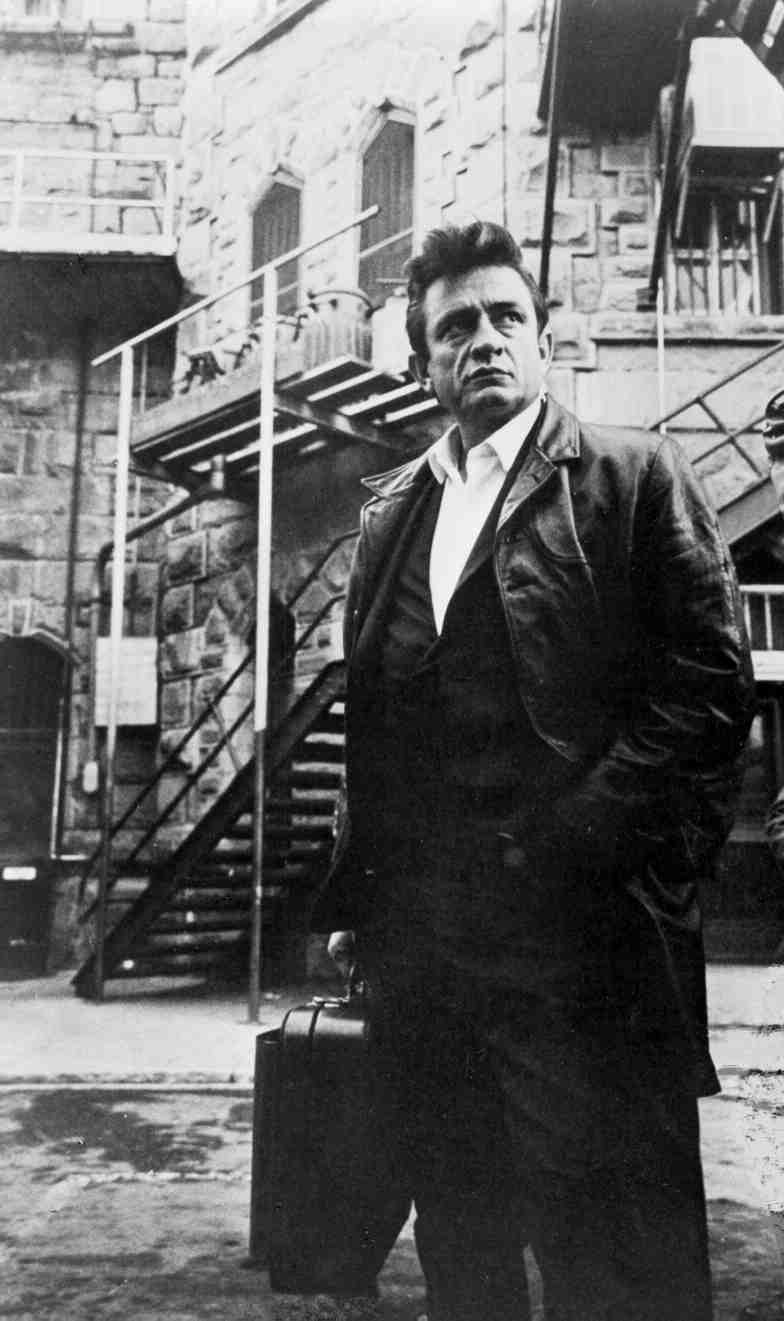
Forty years ago, one of the most famous men on the planet entered Leavenworth prison voluntarily: Johnny Cash. Cash was at the peak of his powers in 1970. Two earlier prison albums, recorded at San Quentin and Folsom, had not only re-established Cash’s reputation, but earned him a television show on ABC. The Man in Black was beamed into nearly four million homes each week and selling out big venues, such as Madison Square Garden.
Cash shuffled into Leavenworth between taping two episodes of his show, a month after playing the White House and 10 days before performing at a Billy Graham Crusade in Knoxville, Tenn. A series of thunderstorms and tornado warnings threatened to sabotage Cash’s penitentiary appearance, but the weather relented.
Inmate Albert Nussbaum recalled Cash’s visit in an essay included in the book “Ring of Fire: The Johnny Cash Reader.”
A pensive Cash in Folsom Prison, 1968.
“When the notice appeared on cell house bulletin boards – and even before, when rumors started to circulate – a tension began to build,” Nussbaum wrote. “Cash was going to arrive on a Friday afternoon. The prison factory was going to close. Anyone who wanted to see the show could.”
A makeshift stage was erected in the prison exercise yard; wooden bleachers for the prisoners were set up in the infield of the prison’s baseball diamond. The day’s schedule is unclear. Nussbaum reports the bleachers started filling up at 10 a.m. even though Cash wasn’t expected to arrive until 2 p.m. The Leavenworth Times reported he played in the morning.
Whatever the order, this much is clear: Cash’s entourage played three institutions that day. The troupe performed at Kansas State Penitentiary and Kansas Women’s Industrial Reformatory in Lansing either immediately before, or after playing Leavenworth. The night before, they performed at Municipal Auditorium in Kansas City, Mo.
The show opened with the standard brief opening sets from Carl Perkins, the Statler Brothers and the Carter Family. When Cash finally took the stage he told the 1,200-strong crowd “This is the same show we did for President Nixon, but we’re going to try a little harder here.”
The weather had backed off enough to allow the concert to be held outside, but it still wrecked havoc with Cash’s band, particularly the dresses worn by the backing singers. Strong gusts kept sending skirts skyward, so the Carter sisters banded closely around Robbie Harden, who was having the most trouble.
The prisoners, of course, delighted in any glimpse of female flesh they could gather. After a particularly strong stream of cheers and whistles Cash egged the prisoners on and goaded his singer. “They’re talking to you, Robbie,” he needled.
Cash also teased the audience.
“My mother told me when I was a little boy, be the best you can be at whatever you do,” Cash said. “If you’re going to be a baker, bake the best bread in town. If you’re going to pick cotton, pick more than any other man in the county … and if you’re going to rob banks, hit First National.”
During “Folsom Prison Blues” Nussbaum reported that Cash switched the song’s locale to Leavenworth.
“When he reached the words ‘I ain’t seen the sunshine since I don’t know when’ we who hadn’t seen the horizon in years were able to identify with the tone and mood of the song,” he wrote. “It captured our own feelings so exactly that our roar of approval completely drowned out the music.”
The cascade of hits and emotions – including “A Boy Named Sue,” “The Prison Song” and “Peace in the Valley” – combined with Cash’s physique and all-black attire made the legend seem larger than life to Nussbaum.
“It wasn’t his size or his costume that captured and held everyone’s attention – it was the look on his face and the sound in his voice,” Nussbaum wrote. “Cash is real. He has a bad cough and smokes too much. So did most of us who had come to see him. He has a look of suffering caused by a hard life and years of one-night stands in forgettable places. We all had pasts we didn’t like to think about either.”
After the show, Cash ambled over to the boundary near where the prisoners were corralled, shaking hands and signing autographs.
Cash was playing before a paying audience the previous night in Kansas City, but no less thrilling. Jerry Kohler covered the show for the Kansas City Star.
“A cross-section of Middle America … packed the auditorium to hear Johnny Cash tell it like it is,” Kohler wrote. “He didn’t disappoint.”
According to Kohler, high points included “Walk the Line,” “Jackson” and “Were You There When They Crucified My Lord.” Kohler also mentioned the Statler Brothers’ reading of “How Great Thou Art” and the two songs featuring Mother Maybelle Carter on lead vocals, “Wildwood Flower” and “Black Mountain Rag.”
The joyous evening ended with the best news of the night when Cash announced his TV show had been renewed for another season.
“We’ll try to keep it honest and down to earth,” Cash said of the upcoming season. Whether in prison, on tour or over the air there was no other way the Man in Black would do it.
Janet Kuemmerlein has been interested in jazz even longer than she has been making art. Growing up in Detroit, she had to take two buses to reach her arts-focused high school downtown. While there, members of the Modern Jazz Quartet might stop by and ask to borrow instruments from the school. She also made sure to take in concerts by Ella Fitzgerald, Sarah Vaughn, Woody Herman, Count Basie, Cab Calloway, Stan Kenton … well, you get the picture.
After high school, Kuemmerlein was invited to study at the Cranbrook Academy of Art. Upon graduation she moved to Chicago, where she met her husband. Work assignments finally landed the couple and their four children in Kansas City, Mo. in 1960.
Kuemmerlien started in painting and sculpture. When she found the chemicals toxic around young children she moved to fabric. Her fabric works are on display across the country in government and office buildings, libraries and hotels, churches and synagogues.
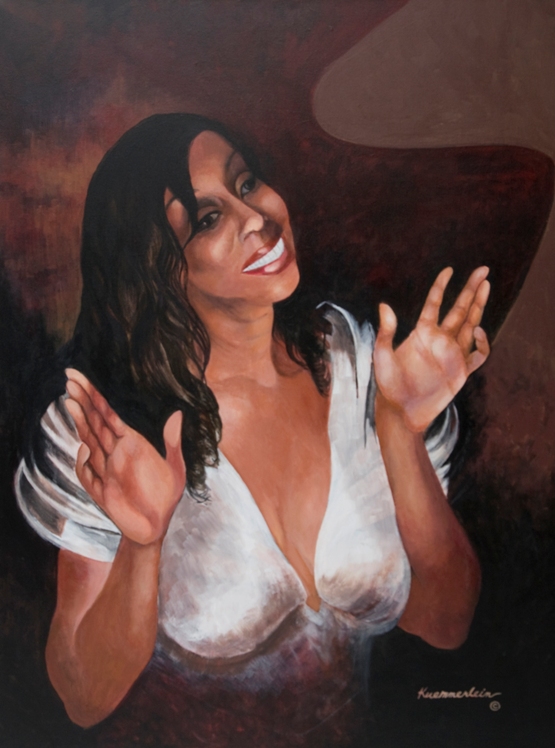
Jazz and art didn’t intersect until Kuemmerlien was asked to contribute to the Johnson County Community College art auction in 2000. Her painting of Miles Davis was purchased by a local attorney and later given to the American Jazz Museum. Last month, Kuemmerlien unveiled her latest project, a series of 11 portraits commissioned by the AJM for their Women in Jazz celebration.
The paintings are on display in the gallery off the museum lobby from 9 a.m. to 6 p.m., Tuesday through Saturday, and noon to 6 p.m. on Sundays, until the end of May. There is no charge to view the exhibit.
Kuemmerlien was kind enough to take The Daily Record on a tour of the exhibit and speak about each piece.
Oleta Adams
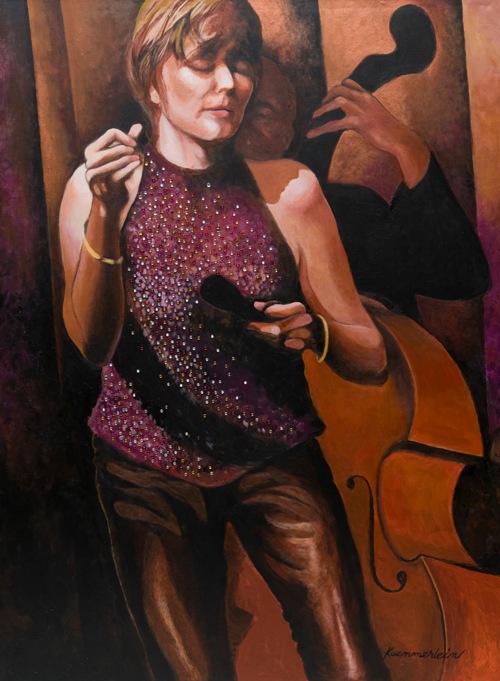
Oleta Adams – “We actually talked on the phone quite a bit beforehand because she was out of town so much. I wanted to showcase her hands because they’re such an expressive part of her performance. She and her husband are delightful people. God she is funny. She’s just adorable.”
Karrin Allyson
Karrin Allyson – “I made this from a concert photo. When I told her I was doing this she said ‘don’t paint any lines (on my face),’ but she doesn’t have any. She’s too young. She was in town recently, but I don’t know if she’s seen this or not.”
Queen Bey
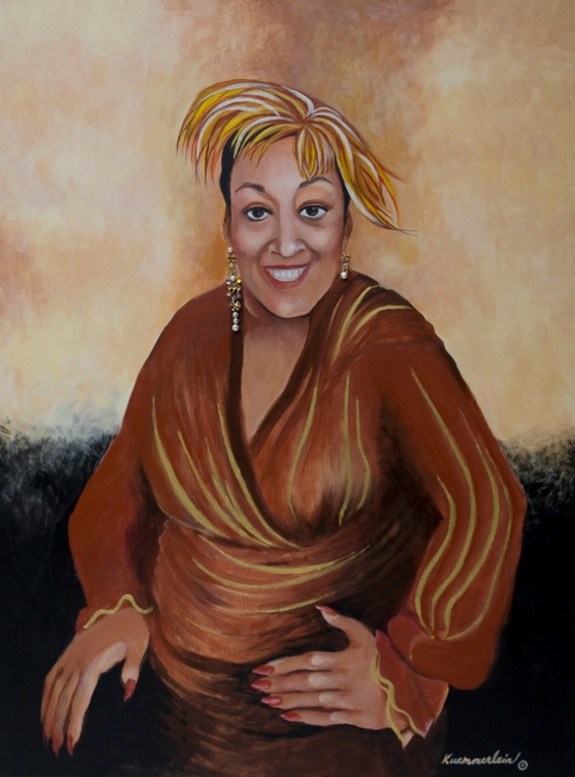
Queen Bey – “Queen lives in California now, but when we were putting the exhibit together the museum told me she absolutely had to be in it. They supplied me with some photos and this is what I came up with. Although she isn’t in Kansas City any more, Queen Bey has been around for a long time and was an important figure to our jazz and blues scene.”
Deborah Brown
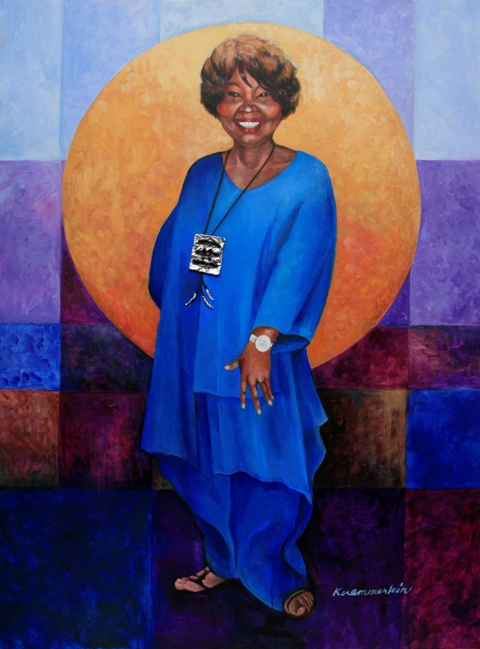
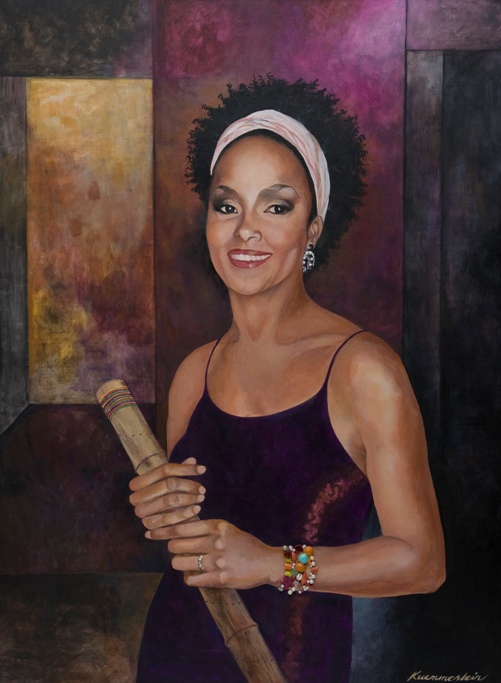
Deborah Brown – “Deborah spends a lot of time in Japan and Amsterdam. It was tricky to schedule the photo shoot, but we finally found a time and she came into my studio. She’s just a wonderful woman. I wanted the large circle in the background to reflect her career in Japan.”
Pearl Thurston Brown
Pearl Thurston Brown – “I did this partly from a photo she gave me, and partly from a photo session in her home. She’s as beautiful as she ever was. Although the painting portrays her at a younger age, she’d make a great portrait today as well.”
Carol Comer
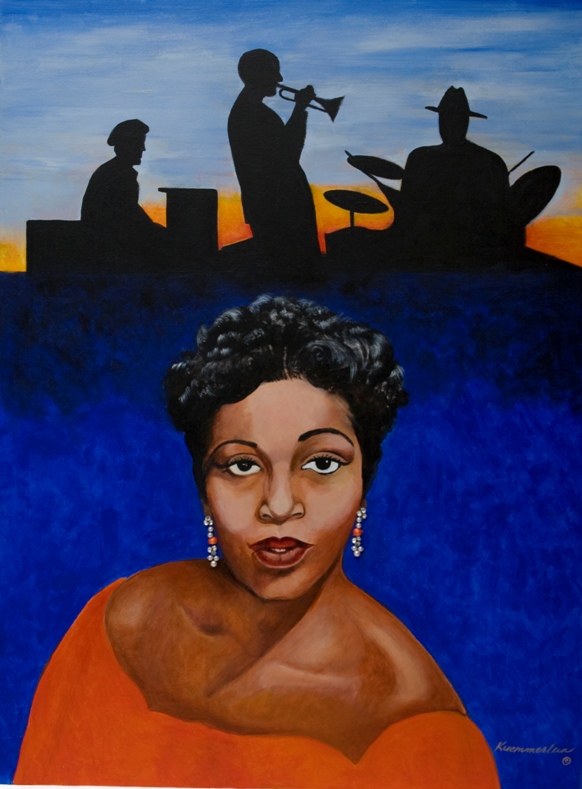
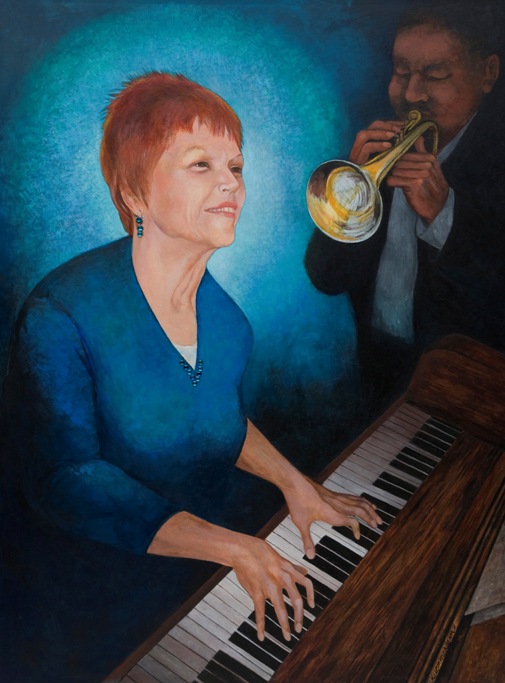
Carol Comer – “Carol is a personal friend of mine. I took her face from one photo, then went to her house and took a bunch of photos of her hands. I made up the trumpet player. Carol teaches many of the other vocalists in this series.”
Angela Hagenbach
Angela Hagenbach – “This is the first one I did. I got photos of her at Jardine’s one night before her set. I was so excited, because I got terrific pictures, except she’s so tall and I’m so short I would accidentally cut the top of her head off. She’s just a beautiful women – and great singer, too.”
Lisa Henry
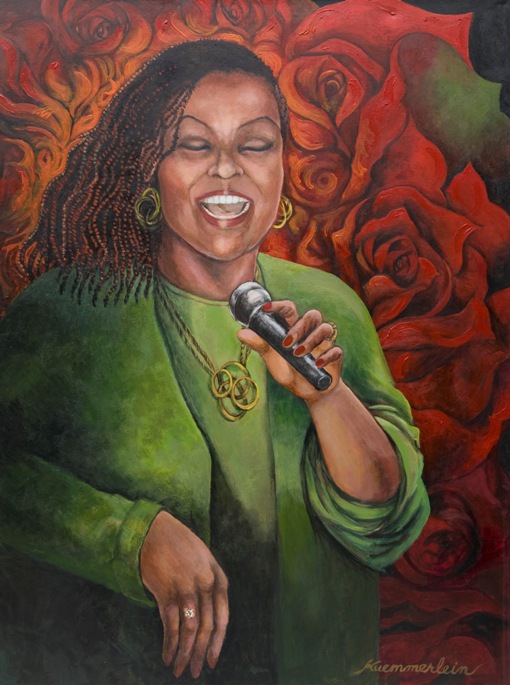
Lisa Henry – “This is one of the first ones I made. Again, I went to her house to take pictures. I knew she loved red roses, so I made those the background, then took photos of her at the Blue Room. She has such feel and phrasing. I think she’s a wonderful artist.”
Marilyn Maye
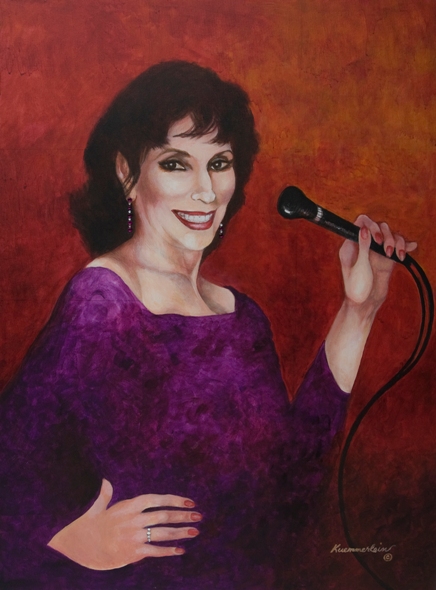
Marilyn Maye – “I painted this from photos Marilyn sent me and from album covers. Marilyn lives in New York, but she’s certainly a Kansas City legend. I tried to capture her longevity with the painting. She’s such a dynamo. Johnny Carson referred to her as a singer’s singer. She was his favorite singer.”
Julie Turner
Julie Turner – “I went to her house and photographed her. I used actual jewels to give textual interest to the painting and to have a little fun.”
The Wild Women of Kansas City
Wild Women of Kansas City – “I met with Geneva Price before I did any of the paintings, because she was working on an oral history of women jazz artists. For the painting, I used several group photos and then created a composite. I picked the best poses from each photo.”
(Above: Neil Young leads Crosby, Still and Nash through “Ohio” during the CSNY2K tour stop in Toronto.)
By Joel Francis
The Daily Record
Several years ago, my dad and I drove out to Canton, Ohio to witness Hank Stram and Marcus Allen – two of our favorite Kansas City Chiefs – be inducted into the Pro Football Hall of Fame. Since the activities were spread out over several days, we frequently had time to kill each night. One evening we saw Quiet Riot at the local fairgrounds. Another night we decided to drive an hour or so north and walk around the Kent State University grounds.
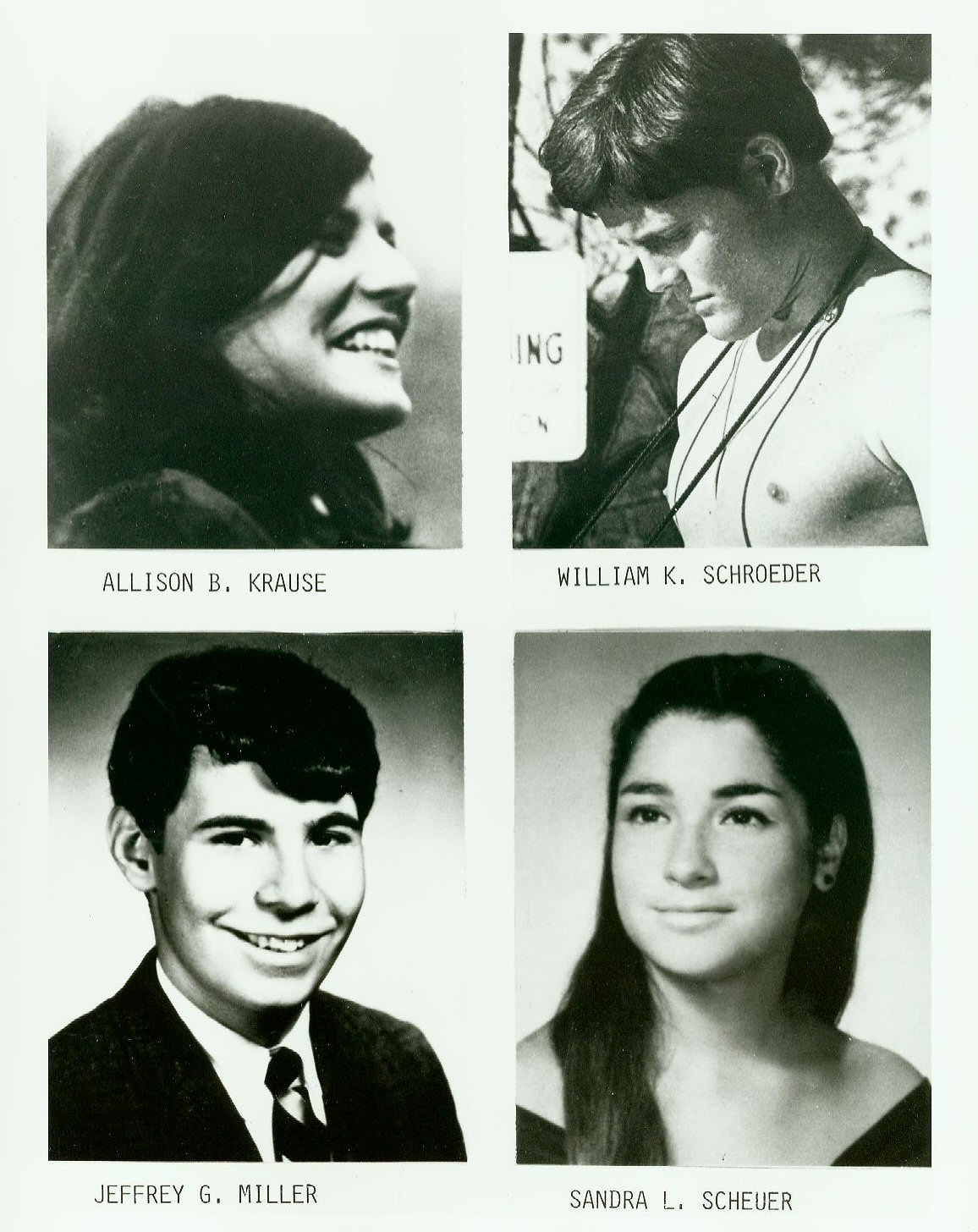
As we strolled around the campus, the emotions of that day – 40 years ago yesterday, came flooding back to my dad. He remembered hearing the news and seeing the photos for the first time, his anguish at the senseless loss of life and anger at the government cover-up.
Although my dad hated the war in Vietnam, he easily could have been on either side of this conflict. As a college student, he had no problem seeing himself amongst the protesters. But he also joined the National Guard to avoid being drafted, and could just as easily been holding a rifle. Dad’s unit was given riot training, and he was frequently the designated heckler. He remembers a couple of his fellow soldiers nearly snapped during the simulations. That’s all it would have taken, he says.
Sadly, the shootings at Kent State were not an isolated incident. Ten days later, two more students were killed in a similar skirmish at Jackson State University.
Emotions were fresh in my dad, but I was trying to remember nearly forgotten history lessons as we walked the deserted campus at dusk. We tried to piece together where the events may have happened. We found the memorial, but it was frustratingly incomplete. The names of the fallen were absent, as was anything to place the memorial in historical perspective. Once again, good intentions had been killed in committee.
Four dead in Ohio. How many, how many more?
We were walking back to the car when we finally found the memorials. Frequently, university parking spaces are blocked off for loading, traffic flow or some other purpose. At first glance, we thought the low, lighted cement pylons scattered throughout the lot were standard parking barriers. As we approached the car, however, we noticed they outlined several low, pyramidal plaques set into the blacktop. These inconspicuous shrines marked the final steps of the fallen. And to think I almost dinged one when opening the car door.
To paraphrase Joni Mitchell, they paved a historical site, put up a parking lot. I know it was a parking lot on May 4, 1970. And, yes, I recognize the scarcity of public parking on college campuses. But the fallen deserved better and Kent State should be ashamed of trying to tiptoe around history. It’s hard to believe we’re still scared of what happened nearly two generations later.
At least back then you could get a song like “Ohio” on the radio. Neil Young penned his response to the killings after viewing photos of the incident in Life magazine. The song hit the airwaves in June, 1970, the same month Edwin Starr’s “War” topped the charts. Try to imagine either song cracking Entercom’s bland, corporate playlist today. Our corporate overlords have no problem challenging the listeners’ moral sensibilities with racy (hetro)sexual lyrics, but are petrified of offending them politically. One need only look at the list of songs banned by Clear Channel in the wake of the Sept. 11 attacks for proof.
Young cut the tune with his buddies David Crosby, Stephen Stills and Graham Nash. It took four years for the song to make it onto a proper album, CSNY’s stop-gap compilation “So Far.” I didn’t discover it until I picked up the two-disc Young anthology “Decade” in high school. I knew the song’s history, and respected its energy, but didn’t mean much to me beyond that until I heard it performed in concert.
The CSNY2K concert at Kemper Arena in 2000 was one of the worst shows I have attended. Our overpriced seats were a mile away. What little energy the performances had was lost long before the sound reached our little peanut gallery. Everyone seemed to be going through the motions. Stills was clearly burned out by having to play “Love the One You’re With” yet again, and Nash looked positively lost as the band tore into “Rockin’ in the Free World.”
Despite the overall malaise of the night, there were two bright spots. Young’s solo take on “After the Gold Rush” performed on a creaky pump organ while Crosby and Nash added harmony vocals was transcendent. Then there was “Ohio.” The lyrics took on new meaning as footage from the day flashed on the screens surrounding the band, but what got me was Crosby’s cries of “How many? How many more?” The pain was still fresh in his voice and his chilling refrain gave me goose bumps. Ten years later, I still can’t listen to the song without thinking of that moment.


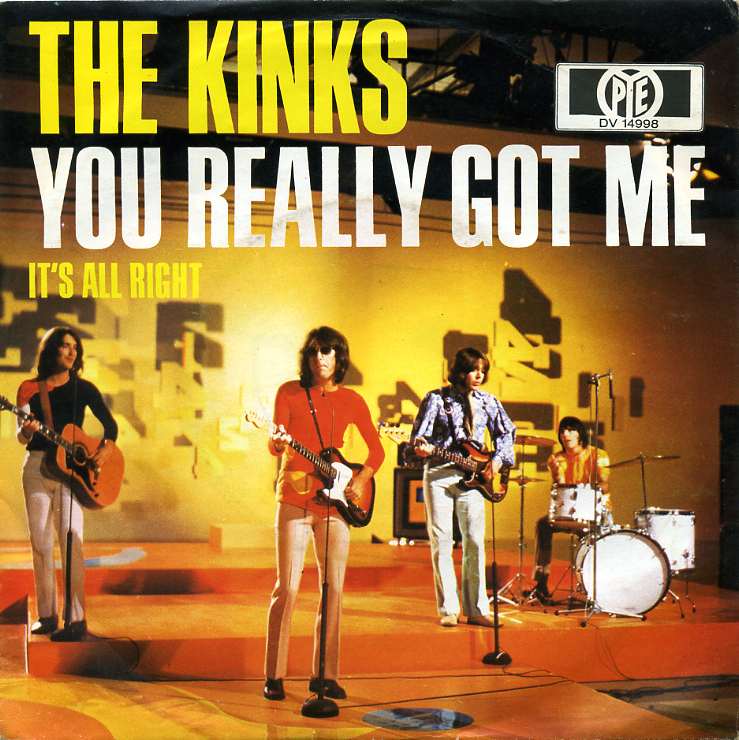 Unfortunately, the Kinks had already taken the first arrangement into the studio. It was that version that Pye, their label, intended to release as the band’s third single. The Kinks and producer Shel Talmy successfully lobbied for another session to re-record the number with the newfound grit and rawness. The result was the band’s first No. 1 hit in their native England, thereby launching their career.
 For the most part, Van Halen’s 1978 arrangement of “You Really Got Me” stayed true to the Kinks version. The biggest difference was Eddie Van Halen’s fretboard pyrotechnics. This transformed the song from a proto-punk jam into a guitar hero workout. Matching Van Halen’s instrumental energy was frontman David Lee Roth, whose grunting and moaning punctuated an already-strong come-on.





 joelfrancis.com