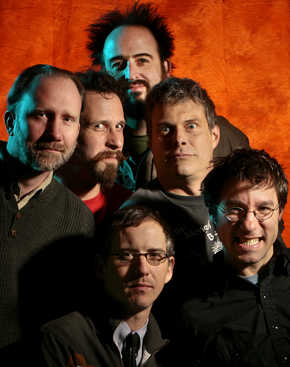
The Mongol Beach Party reunion was already booked when Mark Southerland found out about it.
“I think what happened was (drummer) Bill (Belzer) booked the show, called (guitarist) Jeff (Freeling), and everyone else found out through third parties,” said Southerland, who plays saxophone in the band.
Although the idea had been floated casually in conversation before, this time no one said no. Seventeen years apart seemed like the right time to hook back up.
“When we started this band, none of us had been in bands before,” singer Christian Hankel said. “Now we’ve spent our lives since then in bands and music.”
Today Hankel and trombonist Kyle Dahlquist are part of Alacartoona; Belzer is in the New Amsterdams with Get Up Kid Matt Pryor; and Southerland is involved in several projects, including the Malachy Papers and Snuff Jazz. Bass player Scott Easterday fronts the reconvened Expassionates; and Freeling, the lone Mongol based outside of Kansas City, plays guitar with Chicago’s Blue Man Group.
“The fact that we’ve all continued on as musicians and none of us have set down our instruments has helped us reapproach the Mongol songs again,” Freeling said. “It’s not as if we’re reliving our glory days.”
Fans who show up at the RecordBar Friday and Saturday are guaranteed the same good-time, quirky dance-rock songs they heard nearly 20 years ago at the Shadow, Harling’s Upstairs and the Hurricane.
“I get the big sense that this isn’t just our reunion,” Hankel said. “People are using us as a way of getting together with their circle of friends from that time.”
Kansas City in the late ’80s was a different scene. There were fewer places to play, fewer outlets for exposure and fewer bands.
“Back then if you wanted to be known it was expensive and difficult,” Hankel said. “You couldn’t set up a MySpace page or Web site because those didn’t exist. You could make a CD, but that was worthless unless you could get somebody to play it.”
Instead the Mongols took whatever gigs they could get, even when it meant they were packaged with completely different bands like the Sin City Disciples.
“Bands were country or blues or whatever and had their own music scene that would go with them,” Easterday said. “We were different because we cut across the sub-scenes.”
Record producer Tom Mardikes was introduced to Mongols by his aerobics instructor, Freeling’s mother.
“Tom believed in a ‘Kansas City sound’ unique to our town,” Hankel said. “He took us to City Spark Studios, offered us unfettered access to the studio to record a full CD and promotion to college radio.”
“Toast,” the Mongols’ only album, was recorded in 1991. Long out of print, it was remastered and reissued this month.
“We included a few new additions to this version,” Easterday said. “There are our three demos cut at City Spark and a couple songs from a limited-edition cassette we made.”
Mongol Beach Party formed out of the Rockhurst High School friendships of Belzer, Freeling and Hankel and the musical partnerships forged at the University of Missouri-Kansas City. After five years of living together in a house at 43rd and Harrison, and a single-minded focus on the band, the group unraveled when Belzer joined Uncle Tupelo.
“Jeff Tweedy would come drunkenly into Cicero’s (a St. Louis club the Mongols sometimes played),” Belzer said. “I loved his band, and when I was talking to him one time the idea came up for me to tour Europe with them.”
Belzer couldn’t be blamed for taking advantage of the opportunity to play for bigger crowds and share the bill with Bob Mould, Michelle Shocked and bluesman Taj Mahal. He wasn’t the only Mongol looking to expand his horizons.
“Bill did not break up the band,” Hankel said. “Because we were so close emotionally, but starting to branch out artistically, there was enormous pressure within the group. Side projects were not part of the culture at that time.”
Today the only musical trend hipper than a side project is a full-blown reunion.
“I’ll be honest, I’m looking forward to the rehearsals more than the shows,” Hankel said last week. “Jeff and I were best friends before Mongol Beach Party, and we lost touch for a long time. I’m excited about reconnecting with these guys.”
mongol farewells
The Mongol Beach Party shows are Friday and Saturday at the RecordBar. The Friday show starts at 9 p.m. with opening act the Afterparty. The Saturday show starts at 9 p.m. with the Last Call Girls. Tickets for either show cost $10 in advance, $15 at the door. Advance tickets are available at the RecordBar or through groovetickets.com.
Above: Watching the Dirtbombs rip through “Ever Lovin’ Man” at The Bottleneck was one of the Top 10 shows of the year.
By Joel Francis
(Note: All concerts in Kansas City, Mo., unless otherwise stated.)
10. Dirtbombs, The Bottleneck, Lawrence, Kan., May 25
The Dirtbombs didn’t get started until midnight, but no one seemed to mind. With barely three dozen fans in the club, just showing up was a sign of devotion. For the next hour, singer/guitarist Mick Collins and his band plowed through solid cuts like “Ever Lovin’ Man” off their latest album, “We Have You Surrounded,” and soul covers like Sly and the Family Stone’s “Underdog” from their classic album, “Ultraglide in Black.” Collins hails from the Motor City and he embraces its every aspects, combining the soul of Motown with the soiled fuzz of the White Stripes and Stooges.
9. Carbon/Silicon, Record Bar, March 29
It isn’t often a member of the Clash comes to town, and even more rare they’d play a 200-person room like The Record Bar. With barely a nod to his old band, guitarist/songwriter/singer Mick Jones displayed the chops and charm that made him a legend. Read the full review.
8. Bruce Springsteen and the E Street Band, Qwest Center, Omaha, March 14
Bruce Springsteen closed his “Magic” tour with a three-hour performance at the Sprint Center. I didn’t make that one, but I did see his warm-up gig a few months earlier in Omaha. Springsteen and company treated the crowd to most of his latest album and liberally sprinkled classics like “Jungleland,” “She’s the One” “Thunder Road,” which featured a guest appearance from hometown boy Conor Oberst. Read the full review.
7. Rhett Miller, Largo, Los Angeles, April 11
The Old 97s had barely reconvened when Rhett Miller struck out alone for two nights on the tiny stage at Largo, Los Angeles’ legendary artist-friendly club. He dusted off several 97s favorites and debuted songs from the group’s upcoming album “Blame It On Gravity.” Miller also tromped through his solo catalog and treated the intimate crowd to his favorite covers. The appearance of pianist Jon Brion midway through the set was the cherry on the sundae. The two musicians renewed their musical friendship through songs like David Bowie’s “Queen Bitch” and Wilco’s “California Stars” that had the pair grinning like schoolboys. Miller announced he was recording the show for future release. Keep your fingers crossed this pops up.
6. Sharon Jones and the Dap-Kings, Granada Theater, Lawrence, Kan., Jan. 29
It was after 11 p.m. on an icy winter night when the Dap-Kings took the stage. Within minutes it felt like a hot 1966 summer afternoon. Clad in matching suits, their three-piece horn section complementing the three-piece rhythm section, the Dap-Kings – go-to performers for everyone from Amy Winehouse to Seattle’s Saturday Knights – settled into a solid soul groove. Moments later, the diminutive Sharon Jones skittered across the stage as if she were shot from a cannon. Like a perfect hybrid of James Brown and Tina Turner, Jones partied through songs from her three albums and taught the crowd a few new dance moves. The heat from the band must have pushed the overall mercury up, because when it was all over outside didn’t feel as cold.
5. Randy Newman, Folly Theater, Oct. 11
Randy Newman found a break from his day job scoring movies to make a quick run to the heartland and give his first Missouri show in a generation. Working primarily from this year’s “Harps and Angels” album, Newman’s solo set was stocked with more than two dozen catalog favorites peppered with hilarious asides, all performed in front of a sold-out, appreciative audience. Read the full review.
4. Robert Plant/Alison Krauss, Starlight Theater, Sept. 23
Jimmy Page and John Paul Jones may be beating down Robert Plant’s door to reconvene Led Zeppelin, but Plant would be better served sticking with Alison Krauss. With a muse mightier than his former bandmates can imagine, Plant and Krauss delivered two hours of spellbinding music with arguably the greatest backing band of all time. Read the full review.
3. Dave Brubeck, Folly Theater, Oct. 2
Dave Brubeck quit touring Europe a few years ago, so the 88-year-old jazz pianist’s occasional treks to Kansas City are even more prized. Most people know Brubeck from his groundbreaking quartet with Paul Desmond, but his new group is arguably as good. Randy Jones did more with the nine pieces in his drum kit than most drummers can do with triple the amount, while saxophone player Bobby Militello applied sheets of sound and originality to Desmond’s well-worn and much-beloved “Take Five.” The quartet encored with a brief, smirking reading of Braham’s “Lullabye.”
2. Radiohead, Verizon Wireless (formerly Riverfront) Ampitheater, St. Louis, May 14
Radiohead’s last concert in the area was on the “Hail To the Thief” tour and I have been kicking myself for five years for missing them. No longer. The band’s set burned with the intensity of a supernova, climaxing with “Fake Plastic Trees.” Early detours through the “Idiotheque” and all of “In Rainbows” made the evening both invigorating and draining – and just enough to hold me over until the next tour. Read the full review.
1. Tom Waits, Fox Theater, St. Louis, June 26
Hipsters, hippies, bikers and beatniks alike populated the sold-out congregation for Tom Waits first visit to St. Louis in a generation. He made it a night to remember, performing rarities like “Heigh Ho!” (for the only time on the tour), old favorites like “Rain Dogs” and new gems like “Day After Tomorrow.” Oh yeah, and advice on how to bid on eBay. Read the full review.
Seven a.m. Saturday morning, is a brutal time to be awake, particularly when you’re 16. It was even worse in the cold weather we faced that day, standing in line outside the Hy-Vee grocery store. But no one among the 300 or so of us lined up where complaining: Pink Floyd was coming to Kansas City.
It was the biggest crowd I’d seen at Hy-Vee. Guys were walking inside to buy six-packs of liquid warmth, passing cans along the line and relieving themselves against the wall. Elderly, crack-of-dawn shoppers paused in front of the assembly and asked if they could go right in. One old lady asked why we were all waiting in the cold. One guy responded we were hoping for a sale on melons. That drew a big laugh.
In the days before the Internet, you had to buy tickets in person. Although the gonzo days of camping out at the box office were long past, it still paid to show up somewhat early. At some point management would pass out line numbers to the assembly, then draw a number at random. The person holding that number was first and the line started from there. If you showed up after line numbers were distributed you (hopefully) got bad seats or heard those two dreaded words – sold out.
Finally our effort was rewarded. Upper deck, 40-yard line. Not the greatest seats, but we were in. The remaining tickets were long gone by dinnertime. Even though the band was playing Arrowhead Stadium, the largest venue in town, it was one of the fastest sell-outs in local history.
Winter gave way to spring and the excitement built. At long last the tour commenced at Joe Robbie Stadium in Miami. As the psychedelic trio snaked their way across America I was inadvertently trailing them. A church trip found us in Columbus, Ohio the night of the show. I remember the drunken revelry waking me in our motel room as the joyous throng returned. It was hard falling back asleep with that much energy flowing just outside the door. My summer job took me to Minnesota the day after the band played Minneapolis. Everywhere I went people were talking Pink. It was the summer of Floyd.
On June 20 the Pink Floyd descended on Kansas City. Our newspaper, The Star, ran a two-page chronicle of the band’s history. One fan interviewed for the story bragged about the line of dates he had tattooed on his arm – one for each time he’d seen the band. Some lucky, longtime fans had seen them play Kemper Arena on the Animals Tour in 1977. A lot more had seen them play Arrowhead just seven years earlier on the Delicate Sound of Thunder tour. I had never seen them before, but I didn’t care. I was getting to experience them now.
As the sun lowered over Interstate-70, Stadium Drive was gridlocked. People were openly smoking weed and drinking in their cars. They hopped out to take a leak behind trees and bushes in lawns along the way. One large bush was particularly popular, but when an overweight woman decided to use it about a dozen guys hurriedly scattered back to their vehicles.
There was a popular grocery store commercial where Arrowhead Stadium was transformed into a BBQ grill and smoke rose from the bowl as meat sizzled on its field. I imagine passing cars were treated to a similar spectacle as everyone inside lit whatever they brought to mellow out before the show. The band opened with “Astronomy Domine,” but thanks to The Star we already knew that. They didn’t do the complete “Dark Side of the Moon,” but we got several of its stronger tracks, including “The Great Gig in the Sky” and “Breathe.” Two vicious pigs emerged from the speaker towers during “One of These Days.”
The most powerful moment for me was “Comfortably Numb.” During “Numb” a huge mirror ball emerged from the soundboard and effects area near the back of the field. At the point where the song fades out on record, David Gilmour was just getting started. He laid into a ferocious solo as the mirror ball opened and slowly rotated. The 80,000-seat stadium was transformed into an intimate campfire as Gilmour, keyboard player Rick Wright, drummer Nick Mason and their accompanying musicians kept building and building. After what seemed like a rapturous eternity, the song thundered to an end and the band said left the stage. The encore set of “Hey You” and a searing version of “Run Like Hell” was a great coda to a spectacular evening.
Preserved for nearly 15 years, these memories came flooding back to me when I learned that Rick Wright lost his battle to cancer today. I saw Roger Waters on his solo tour at Kemper Arena in 1999 – he premiered the song “Each Small Candle” at our concert. I was surprised at how excited I got watching the quartet finally reunite on live TV in London just hours before the Get Up Kids final show at the Uptown Theater in 2005. Honestly, though, the Floyd haven’t been a major part of my listening diet for a long time. I guess the same thing that kept me away from their records for so long brought me closer to Rick Wright today – I can cue up any of his notes from any of their albums any time I want in my head.
Set list: (opening set) Astronomy Domine, Learning To Fly, Whad Do You Want From Me, On the Turning Away, Poles Apart, Take It Back, Sorrow, Keep Talking, One Of These Days //(second set) Shine On You Crazy Diamond, Breathe, Time, Breathe Rep, High Hopes, The Great Gig In the Sky, Wish You Were Here, Us and Them, Money, Another Brick in the Wall (part two), Comfortably Numb//(encores) Hey You, Run Like Hell
Discovering a new local band can be as easy as searching Myspace, checking the weekly entertainment listings or visiting a club’s Web site (see below). Here’s the skinny on the six bands interviewed for this story.
The Architects Label: Anodyne Records Description of music: “Colossally loud and exciting. We’re not retro, but if you like The Who, Credence Clearwater Revival, Led Zeppelin or The Clash, you’re going to like us.” – Brandon Phillips, vocals/guitar myspace.com/architectskcmo
In the Pines Label: Second Nature Description of music: “I always think of us as pretty but dark folk rock, although that might sound like a cliché.” – Brad Hodgson, guitar/vocals inthepinesmusic.com
Olympic Size Label: unsigned Description of music: “Cinematic love songs. It’s very lush. A lot of people call it ‘chamber pop’ because of the harmonies. I’ve also heard it called ‘urban folk.'” – Kirsten Paludan, vocals/guitar/keys myspace.com/olympicsize
The Republic Tigers Label: Chop Shop
Description of music: “Super-sexy, melodic pop, or future folk with an edge.” – Kenn Jankowski, guitar/vocals myspace.com/therepublictigers
Rex Hobart and the Misery Boys Label: Bloodshot Description of music: “Honky tonk. Drinking and cheating. Love songs.” – Rex Hobart, vocals/guitar rexhobart.com
The Roman Numerals Label: Anodyne Description of music: “Dance music the punk fans can dance to and punk music the dance fans can punk to. But we’re all children of the ’80s, so that’s also reflected.” – Billy Smith, guitar, vocals theromannumerals.com
(Note: the following feature appeared in the April, 2008 issue of KC Magazine.)
By Joel Francis
When Keenan Nichols was 19, he couldn’t wait to get out of Kansas City. The Avondale native and North Kansas City High School graduate wanted a bigger city where he had a better chance of making a living as a guitarist. He escaped to a town with a more promising music setting-Dallas.
“The scene in Dallas was great at first, but over the last few years, it started dying off,” Nichols said. “Everyone down there lost interest in live music. Everything became a race to become the next Miami and see who could build the most dance clubs.”
When Nichols came back to Kansas City on visits, he’d catch glimpses in his hometown of what he’d hoped to find in Dallas. Eventually, he moved back.
“It seemed like the scene had grown up a little bit,” said Nichols, guitarist for the hard rock band The Architects. “With that distance, I gained a big appreciation for everyone here sticking to their guns and trying to make things happen.”
Scott Hobart moved to Kansas City in 1989 to take classes at the Kansas City Art Institute, but he found himself gravitating to the clubs more than the classrooms. Hobart was a member of the hard rock band Giant Chair when he had a change of heart (and name) and started writing country songs. Rex Hobart and the Misery Boys celebrated 10 years of honky tonk last December.
“I’ve never felt stifled geographically by playing in Kansas City,” Hobart said. “Being a country band, people always ask us why we aren’t in Nashville. Nashville’s inundated. Our music doesn’t mean anything there. There’s something more original about playing here. You can’t just be in a band to impress someone. It has to mean something.”
In the neighborhood
The desire for musical integrity, which is shared by many Kansas City bands, translates to a neighborhood of musicians who collaborate more than compete.
“The greatest thing about our scene is that it is so supportive,” said Auggie Wolber, member of Americana band In the Pines. “We’ve all played together so long, everyone has gotten to know each other.”
The spirit of fraternity is reflected in the number of benefit shows thrown for other musicians. When blues guitarist Danny Cox’s house burned down in January, several bands (including Irish ensemble The Elders) eagerly signed on to perform at a sold-out benefit concert. That same spirit showed at a successful 2006 benefit for Blackpool Lights drummer Billy Brimblecom.
Making the decision to help Billy was not difficult for The Architects.
“Our old band and his old band had done some touring together and become pretty close. If he had needed a transplant, I would’ve considered it,” said Architects singer Brandon Phillips. “It turned out he only needed us to play [for] 45 minutes and not get paid.”
Audiences show the same supportive spirit.
“The biggest show of support I’ve seen was when I was playing hard rock and decided I wanted to sing songs with a story in front of a country band,” Hobart said. “It may have confused some people at first, but everyone I knew from the rock side came out to hear me, and they’ve supported me the whole time.
“If you can switch genres drastically and have people willing to try it on some level, it proves the open-mindedness and good nature of our community,” Hobart said.
It also means more musical diversity. A punk band might play Davy’s Uptown opposite a country band at the Record Bar one night, but the next day those same clubs may offer blues or indie rock.
“One of the great things about this town is you can go to the Record Bar and see Rex (Hobart) and have dinner, or you can go to Davy’s Uptown and hear free jazz,” said Wolber of In the Pines.
The success of First Fridays and the revitalization of downtown points to the appetite and appreciation Kansas Citians have for the arts.
“I’m always surprised at how many people turn out for The Pitch Music Showcase,” said Record Bar co-owner and Roman Numerals instrumentalist Steven Tulipana. “Five bucks gets you all over town to hear different kinds of music.”
Ayo Technology
In the past, record stores provided an outlet for local artists with in-store performances and prominent displays. Today, Myspace pages and email lists provide a level of promotion and exposure that reaches far beyond stapling a flier to the wall.
Just ask Adam McGill of The Republic Tigers, a local band recently signed to an imprint of Atlantic Records and discovered via the band’s Myspace site.
“An A and R (artist and relations) rep with Atlantic found us on our site and started talking with us,” McGill said. “She asked for a CD and then passed it on to Alexandra.”
Alexandra is Alexandra Patsavas. The name might not be familiar, but the TV shows for which she selects music are-“Grey’s Anatomy,” “Numb3rs” and “Gossip Girl.” Patvas loved the band and made them the first act signed to her Chop Shop Records label. The Republic Tigers’ debut album was just released earlier this spring.
Similarly, Olympic Size found one of their songs featured prominently on MTV’s “The Real World” thanks to a pitch from Anodyne, a local record label. It’s an impressive feat for anyone, let alone a band without a long-term record contract or even a finished album.
“I think you’re more likely to get discovered out of Kansas City than you are in a big city where you’ll get lost in the mix of a billion other bands,” said Republic Tiger Kenn Jankowski. “With the Internet, it’s easy for anyone to find you.”
Join Together
Knowing about the “next big thing” could be as close as a write-up in The Pitch or The Kansas City Star‘s preview section.
“If a band shows up in there, it’s a pretty good chance they have their stuff together,” said Olympic Size guitarist Kirsten Paludan. “I think some people have a perception that rock isn’t for everyone, but this is a music scene that can appeal to a wide range of people. It’s not just for teenagers, hipsters or artists.”
Kansas City is big enough to support many types of music yet small enough that it’s not difficult to stay in the know about what’s happening across town.
“Our city is very diverse. There’s a band out there for everybody-for the kids, for the rockers; it’s all out there waiting to be discovered,” said Darren Welch of In the Pines. “Just take a chance. Pay the $5 cover and wait to be surprised.”
A smile beams from Rusty Tucker’s face. Conversation has just shifted to jazz, his favorite topic and lifelong passion. Tucker can’t disguise his delight. In fact, he can’t get more than a couple sentences without breaking into laughter or pausing to effuse happiness.
“I met all the people who are great now, when they were just starting out, Little Richard, Ray Charles,” Tucker said. “When I met Ray he was singin’ like Nat King Cole.”
When one of Charles’ musicians was sick, Tucker filled in for a one-night stand in Wichita, Kan.
“He (Ray) always said he was going to drive the first 100 miles,” Tucker said with a laugh. “Several years later when I saw him and went backstage to say hello he told me, ‘I knew I’d seen you before.'”
If stories were touchdown passes, Tucker would be Joe Montana.
“One of the biggest pleasures I had was playing with Dizzy (Gillespie),” Tucker said. “Teddy Stewart, my drummer, used to play with Diz and when Dizzy learned that, he couldn’t believe it. He said, why don’t we do a number together with both bands. So we did ‘A Night In Tunisia.’ The house went wild and I had to play a solo in front of Diz. The people just went crazy.”
Don’t worry, there’s more.
Tucker and Myra Taylor share a laugh at a 2006 jazz symposium at the University of Kansas.
“One night we were at Tootie Mayfair’s club on U.S. 40. Bird (Charlie Parker) was playing on 18th Street, then he was going to meet up with us. We’d had no rehearsal or nothing, and about midnight Bird walks in,” Tucker said. “He said we’ll do things everybody knows like blues, ‘How High the Moon,’ ‘What is This Thing Called Love,’ and ‘Perdido.’
“The blues went all right, but when we did ‘What Is This Thing Called Love,’ our piano player was an accordion player learning piano, see,” said Tucker, interrupting himself.
The apprentice pianist botched a couple chords, drawing Parker’s ire.
“Bird called us together and said it ain’t no sin not to know a tune, but to say you know a tune and not know, you (messed up) those chords,” Parker yelled at the pianist.
Bird sent word out to bring in a new keyboard player, but none were to be found at 1 a.m.
“They got in a big argument and finally Bird just told the piano player, ‘you just lay out.’ ”
Tucker grew up in Birmingham, Ala. where he took trumpet lessons from W.C. Handy Jr. It wasn’t unusual to see the elder Handy, a veteran bluesman and writer of many songs including “St. Louis Blues,” wandering the halls of and speaking to his son’s music school.
“He would always give lectures,” Tucker said. “He told us how to write tunes and get them copyrighted. He said he was getting $30,000 a year off that one tune (“St. Louis Blues”) so to always copyright your tunes.”
One day the Punch Miller Band came to town and announced they were auditioning trumpet players. Tucker tried out and got a job to play with them at the state fair.
“He (Punch) looked like Louis (Armstrong) and played like Louis and said ‘That’s why I can’t make any money,’ ” Tucker said. “I played with them at the state fair then for four or five weeks we’d go around. Then they told me they wanted me to go on the road with them. I was 18 and ran away from home to go with them. They called me ‘school boy.’ ”
He was in love with both the music and several of the dancers.
“I fell in love and ran away. My parents didn’t know where I was,” Tucker said. “I fell in love with a lot of the dancers. That was my problem; that’s why I’ve been married three times.”
Tucker toured with Punch for three years.
“We played the state fair in Sedalia and my first wife got sick,” Tucker said. “She lived in Kansas and her folks were going to come and take her back. I was supposed to meet the show in New Orleans and during the time I was here (in Kansas City) I met The Scamps and other musicians. At that time they were starting shows at the Orchid Room down at 12th and Vine and needed a trumpet player.”
Tucker decided to stay in town and take the Orchid Room gig. That was 1947 or ’48, he can’t remember the exact year, and Tucker has been here ever since. These days he plays most Thursday, Friday and Saturday nights at the Phoenix Club as a member of either Tim Whitmer’s KC Express or The Scamps, which he joined 25 years ago.
“Sometimes the Scamps play from 4 to 8 Saturday, then I play 9 to 1 with Tim. It’s long but I got used to it,” Tucker said. “The Scamps usually play for an older crowd. We do the Ink Spots and Mills Brothers. Tim does more jazz tunes. When I was on the carnivals with Punch we used to play all day so I’m used to playing long hours.”
Tucker may be a veteran of the KC jazz scene, but he still performs like he has something to prove, said Rudy Massingale, pianist and only original member of the Scamps still performing with the group.
“I think Mr. Tucker is still reaching for his goal,” Massingale said. “It seems like he’s just starting out and has to make a big impression.”
Independence has been Tucker’s home for 30 years now. He lives just off Noland Road with his wife, Diane. His children, daughters DuJuan and Carla, and son Lynn, live in Kansas City.
“It’s quiet and I don’t get any noise,” Tucker said. “Everything is so convenient. We were looking at a place in Vegas but the stores were so far away and there are so many people it’s crowded out there.”
By stretching his talent, Tucker today counts drums and piano among the instruments he can play.
“He’s a good showman,” Massingale said. “The main thing is getting the crowd’s emotions into it and he has that gift.”
By Joel Francis
The ExaminerThe Neck may have been razed 30 years ago, but its spirit lives on.
About 125 residents of the Neck, the African-American neighborhood bordered by U.S. 24, Spring, College and McCoy streets, gathered at McCoy Park, site of the old neighborhood, to eat, play games and swap stories.
“The thing about the Neck was that people down here were family — a big continuous family,” said former Neck resident Nancy Harris. “If one had bread, all had bread. This was like a village. We played together and mourned together.”
Over plates piled with barbecue, domino games and the sounds of Fats Domino, the old neighbors were more than happy to share stories of the old days, but no one could recall how the Neck earned its name.
“We think it started as a derogatory term, but we have turned it into a term of endearment,” Pettigrew said. “I guess it has been here as long as Independence has been here.”
Back then segregation was enforced.
“They had areas where blacks could live and this was one of them,” Harris said. “You couldn’t live just anywhere.”
Pettigrew agreed.
“It was a time of segregation. We got the title of ‘Neck niggers,'” Pettigrew said. “We couldn’t go to anything but we didn’t have anything but the Neck. We couldn’t go to shows uptown and we weren’t allowed to eat uptown.”
Adversity just drew the community closer.
“If one person had a problem, everyone jumped in to help,” Harris said. “Everybody had a garden all could help themselves from.”
Parenting was also a community activity.
“If Nancy’s mom told me to do something, I did it,” Pettigrew said. “There was none of this ‘you can’t tell me what to do’ stuff. These were the days before the child abuse hot line,” she added with a laugh.
Barbara Nutter spent much of her life in the Neck.
“Neighbors used to watch over us when mama and daddy went to work,” Nutter said.
“Those days were the best days of my life,” she added with a smile.
Entertainment options were limited to traveling to Kansas City or making your own fun. Since money was often tight, block parties and fish fries were the norm.
“We usually had fish fries as a church fund-raiser,” Pettigrew said. “You could have a piece of fish, cole slaw and a pickle for 35 cents, and we’d sell good old Polly’s Pop. We’d have beer at night and have music and dance all night at the back of the house.”
Dorothy King remembered learning how to dance at a Neck party.
“A woman named Katherine Thomas opened her home and we went there to dance every Sunday,” King said. “She had cakes and homemade ice cream. We had a lot of good times. A lot of us learned to dance there.”
The teen-agers usually separated themselves at fish fries and formed an area called teen town.
“The young ones would be in the front room with the blue light on and be rockin’ and rollin’,” Pettigrew said. “We had to make our own fun. We didn’t know what we were missing. We knew we couldn’t go places, but we didn’t care. We were poor but we were happy.”
The hilly streets of the Neck were perfect for sledding in the winter.
“We would carry water from the well, fill barrels up, set them up on the hill (on Mill Street) and dump ’em out,” said Herbert Sullivan, who’s Neck home is now a tennis court. “They’d freeze and the next day you could sled down the hill.”
Nutter remembers spending many a day sledding up and down Mill Street.
“You could go from the top of one hill, clear up to the top of another hill,” Nutter said. “Then daddy would have to go to work the next day and he would slip and slide the whole way.”
Pettigrew thought about having a reunion when she was working on her book, “Memories of a Neck Child.”
“Writing that book stirred up hopes,” said Pettigrew. “I thought getting together in reunion would be a good thing.”
Life in the Neck wasn’t easy, but ask anyone their memory of the area and it will be the good times that are shared.
“It was fun,” said Al Rucker, who was 10 when his family was forced to move.
“We used to do basically the same things at those parties that we are doing right now,” he said munching on a slice of watermelon while a group danced to the Temptations.
“The Neck never left. That spirit is still in these people,” King said. n the 1970s urban renewal cleared out the Neck at the prompting of Harry Truman.
“Truman didn’t want a black neighborhood near his library,” Pettigrew said.
Roxanne Copridge remembered seeing Truman on his walks.
“Truman used to walk through this neighborhood,” Copridge said, “and he always had two bodyguards with him.”
This action stands as a contrast to the man who desegregated the military while president in 1948.
“Truman’s record of civil rights speaks for itself,” said Scott Rowley, acting director of the Truman Library. “There were lots of factors involved in the decision for urban renewal, including the City of Independence.”
Families were forced from their homes with little compensation, the residents remember.
“They just stole it from us,” said Thelma Copridge, Nutter’s sister. “Every time I think about it, I get so doggone mad.”
Harris remembers that time well.
“It killed off a lot of people,” Harris said. “The city didn’t give them anything for their homes — they wanted to cart us all off to Kansas City.
“We had hard times getting people to sell us a house. We had to canvas the neighborhood to see if they wanted us here.”
Nutter expounds on the deaths during the relocation.
“There were a lot of people who owned their house and were too old to look for a job and a new home,” Nutter said. “They died from heart attacks.”
Pettigrew said she feels it is the community’s loss, not just hers.
“When the bulldozers dug up our houses we lost a part of the history of Independence,” Pettigrew said. “Not black history, but Independence’s history.”
But the good food, music and friends made harboring grudges impossible. And for at least a little while, the Neck was once again the place to be.
“I’m very happy,” Pettigrew said. “I got to renew so many old acquaintances. We’re definitely going to make this an annual affair.”
Sweet times, sweet sounds at 18th and Vine
An Interview With Buck O’Neil
By Joel Francis
(Note: This 1998 interview was published in 2001 by The Independence Examiner newspaper.)
Q: I’d like to talk about the jazz scene in Kansas City, be cause you talked a little bit about that in your book, and I think that’s an exciting aspect of our town that people may not hear about as much, especially when they think of you. What was Kansas City like in the 1930s and ’40s?
A: Outstanding. See, Kansas City was a wide-open town and all the restaurants would have live music hotels would have live music, bars live music, and so it became easy to get a gig here. So musicians flocked here and played. Kansas City was a town that closed up at 1 o’clock (a.m.), at least the legitimate places. And so the musicians would flock to this area (18th and Vine) and we had a place called the Subway.
All the musicians would come after they got through working and, oh, they would jam all night, have jam sessions, yeah. You wouldn’t be surprised to see Basie there, or Joe Taylor, Georgia Thomas and musicians from all over the country. You would see them down there at this thing jammin’, just having a good time they were having a good time. Or Charlie Parker would drop in, or a blues singer maybe Big Joe Turner, somebody would drop in. All of these things were happening here, just a couple blocks from here; (it was) very alive.
Q: You were obviously a big part of the baseball scene. Why were baseball and jazz so closely linked together?
A: We played the same circuit, man. We’d go to Chicago to play. We’d be playin’ on the South Side and they would visit our ball games and we would go to the jazz joints. It was the same thing, not only there, also in New York City. We would play ball in the afternoon, say Sunday afternoon in New York City, Sunday night go down to Sugar Ray’s, the Apollo we were catchin’ all the acts there or the Baby Grand. All of this live music, it was just jazz. They were playin’ jazz all over. We did this at all of the places we would play. At matinee shows all of the theaters had bands. In Harlem, like I said, we would go to the matinee and maybe we would catch Cab Calloway, see? And we would go from there to Washington, D.C., and the Howard Theater. Maybe Ma Mabley was there and we would catch her, or Duke Ellington, or Fletcher Henderson. Everyplace that we went to play, the jazz people went, too. This was during the days of segregation, so we probably stayed at the same places, and we got to know them and they knew us.
Q: How would you describe the Kansas City style of jazz?
A: Exciting. Different. It was different that New Orleans. And right out of Kansas City, we come up with Charlie Parker, blowin’ notes nobody’d heard before. This is a brand new thing! These were the kind of things you could hear at that Subway. Here come a new dude, come in blowin’ something you hadn’t heard before a different note. Where did this come from? Where did this sound come from? It was a brand new sound.
And the good thing about it was that the musician was telling a story and it was his story to tell. They were playing the same song, but when it was his turn to come up and blow, it was different. And you could see the other musicians listening and coming in, you know. This drummer’s going to change the beat now. He’s got to change that. You could hear it if you’re listening; you could hear the change. This guy’s playin’ “Ain’t Misbehavin'” a little different than the other guy did. He’s puttin’ a little something of him in there. You could listen to a new story. The guy would blow notes, you knew who it was without seeing him, you know what I mean? You knew it was Armstrong. You didn’t have to be in there. You knew it was Ben Webster. You knew all these things. A little jazz. So many things were happening all over the country.
Q: Like what?
A: The music was live and the whole country (was) changing. A top musician would go to, maybe, Paris and when he came back from Paris, this was his style, but he had picked up something else. Or he might go to Egypt Cairo, or something like that. And here was a guy doing something on the bongos that was just different than they were doing in Harlem. You added a little something to what you were doing. You would take a little of this, a little of that.
And the jazz singers (did this with their) different phrasing styles. Like, nobody phrased like Billie Holiday. She could just open her mouth and hey, that’s Billie. You knew because nobody did it like Billie. You could hear the different phrasing and all of it was so clean, so clear.
This is the only thing I have against a lot of the things they play now. It’s hard to understand, because a lot of the words, the way they’re sayin’ them, I don’t get. But they were so clear. Like the tones they were playin’. The tones were so clear, you could hear it, you knew it; you weren’t confused. I like rap. I like to hear rap if the guy is distinct and I can understand what he’s saying. But if he jumbles it all together where I can’t understand it, it ain’t good. This is why music then, anyone who sang it, (sang) a clear note. You could understand it. You like to know what they’re doing and where they’re going from there. They will lead you around through this thing if you listen. Music is a great medium.
Q: What role did Tom Pendergast and his political machine play in the development of jazz in Kansas City?
A: It provided a place for them to play it was a job. It was in that era they had the speakeasy they had everything goin’ on and you had to provide entertainment with it.
Q: So did Pendergast turn a blind eye to it?
A: No. If there was a blind eye, it may have been the government turning a blind eye to Pendergast. There wasn’t anything illegal about jazz, but the things Pendergast was doing could have been illegal.
Q: Did any of Pendergast’s illegal activities help the jazz scene grow?
A: It just may have, because you know you’ve got to entertain the people you’re selling whiskey to, or the people going to gamble. Right now, we’ve got the boats, and gambling is legal. Whereas it wasn’t legal during that day and you had to entertain people. This was good entertainment.
Q: If speakeasies were illegal, how did people know where to go to hear the music?
A: Pendergast was running the city. When you say illegal, if I am the boss of the city and I am running the city this way, it wouldn’t be illegal. What would have been against the law was this: If you were running a club and instead of closing at 1 o’clock, you stayed open ’till 3 o’clock. If you stayed open at 3, you were doing the same things at 3 you were doing at 10, but the law was you had to close at this time. And the places would close, the musicians would come down here and go into that Subway and play and jam. And somebody down there would be doing something illegal, because somebody would be selling some whiskey. A lot of these things were happening before prohibition.
Q: So did Prohibition help the jazz scene?
A: Yeah, sure. Actually it opened it up all over the country. Wherein you had to go just to certain spots before, now you’re (playing) in Manhattan, you’re playing in Times Square. You’re playing now all over the country, even going to universities to play. Before you were playing in speakeasies, but now you’re playing in clubs.
Q: What were some of the hot jazz clubs in Kansas City at that time?
A: The Milton was strictly jazz. They had so many different clubs in Kansas City and … music was everywhere. During that time, just like a band comes to the Starlight and plays now, every weekend it was some band at the Municipal Audi torium. That doesn’t just mean Count Basie or something like that, but Benny Goodman would play; everybody would come. I’ve seen so many wonderful bands down there.
Q: What are some of your favorite bands you’ve seen play there?
A: I like Duke. To really jump I like Lionel Hampton. I was a very good friend of Count Basie; I like Basie. I like Goodman. The Jazz Philharmonic that was the top musicians put together and they traveled all over the country. Oh man, you talk about some music! You’d hear these great artists play. I like Armstrong. They had a girl band called the Sweethearts of Rhythm; they could play. First of all you were going because it was a girl band and you wanted to see them, but they could play.
There was another one called Tiny Davis. She blew that trumpet Louis Armstrong-style; she could play. Bob Burnside played the sax he could play the bell off of that horn! It was the era of the Mills Brothers. They were one of the first singing groups, the Platters and a whole lot of others came behind them.
Q: I couldn’t go too far in this interview without mentioning Satchel Paige.
A: He was an outstanding athlete.
Q: What did Satchel think of the jazz scene?
A: He loved it. He used to play the ukulele. He would play on the bus and we would sing along. Satchel Paige, yeah, we had a lot of fun.
Q: Did Satchel go with you to all the concerts at Municipal?
A: Yes, yes he would go. We all would go as a team. They (jazz musicians) would come out to the ball game in the afternoon and at night we would go down to the jazz concert. That was a couple of musts. If you lived in Kansas City, it was a must on Sunday afternoon to go to the Monarchs and see baseball, and it was a must after that to go to the Municipal Auditorium and hear these bands.
Q: Did they ever bring any of the Monarchs onstage and introduce them as celebrities?
A: Actually they would introduce the teams, because if we were playing the Chicago American Giants here, they would be going too. All of us would be there.
Q: Did both teams sit together?
A: Sometimes.
Q: What did your managers think about the jazz scene?
A: They were there. What do you mean “what did they think,” they were with us! (Laughs).
Q: Did they impose any rules about drinking and things like that?
A: You knew that yourself. You knew you couldn’t drink too much. We were there, but we didn’t drink that much. Everybody drank a little maybe, but you didn’t drink that much because you knew you had to play ball the next day.
Q: I’d like to name off some jazz performers and have you tell me some memories about them. A lot of these we have mentioned already. Let’s start with Bennie Moten.
A: Bennie Moten, that was early. That’s when I first met Count. Count was playin’ with Bennie Moten. A good musician.
Q: Lionel Hampton.
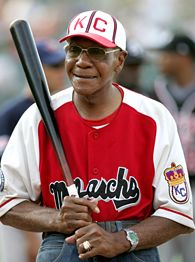
A: I made him first base coach for the Monarchs. It was just for a show. They were playing here that night and I put him in a uniform. His wife said that he kept that uniform and had it on an easel he kept in one room. He would tell everybody about that uniform.
Q: Count Basie.
A: Basie was a Yankee fan, and I’m a Dodger fan, see. And we would bet every year on the Yankees and Dodgers. You know he beat me most of the time, but we had a lot of fun.
Q: Duke Ellington.
A: Duke was sophisticated and clean. Clean music. Like with Lio nel, you wanted to dance, Duke you wanted to listen.
Q: Charlie Parker.
A: Oh, now you got a new step. You could start dancin’ a different way because you got a different beat. Charlie, he used to blow here at that Subway. He’d drop in as a kid, blowin’ that horn, making those new sounds.
Q: How did his death at such a young age affect you?
A: It wasn’t too much of a shock because of the way he was going. You knew the things happening to him, so it wasn’t a shock.
Q: Louis Armstrong.
A: That was music you could listen to, and you could laugh with Louie because Louie had a kind of a laughing horn, you know. When he blew that horn you’d laugh about the different notes he’d play. The thing about it is, you know that handkerchief he had to cover up so nobody was coppin’ those things. Quite a fella. Baseball nut too; he liked baseball.
Q: What was Satchmo’s favorite team?
A: It would be, more or less, the Black Yankees.
Q: What do you think caused the decline in the jazz scene in Kansas City?
A: It’s coming back now, and that’s all over the country. Different listeners are coming and they’re looking for new sounds. This is our last progress in anything and it’s something new, something different.
Q: What does jazz mean to you?
A: It has afforded me a lot of pleasure. I listen to it now and I like all music. There’s something about music. With television, I have to look, but I can do anything I want to do and listen to music. Every once and awhile somebody’s going to hit a note or something and I’m going to stop and listen to what they’re playing. Music can put me to sleep at night or it can wake me up. It’s a soothing thing, but it can be very exciting too.
(Above: Bill Shapiro appeared on television in Kansas City in 2008 to celebrate 30 years of his radio show, “Cypress Avenue.”)
By Joel Francis
The Examiner
Late at night, the house is silent.
Everyone is asleep, or so it seems. In a bedroom, a dim light shines through the blankets peaked around a small figure sitting up under the covers. The sound of tinny music can barely be heard.
The boy beneath the sheets is still, but his heart is racing. His hands tremble as he fine-tunes the radio under the covers with him. He thought it was lost forever, but he has found it: the jazz radio station carrying the songs of Dave Brubeck and Shorty Rogers. It was only late at night he could pick up the phantom AM signals from stations in exotic places like New Orleans. Forget sleep, he had found something far more important.
Fast-forward 50 years.
Today, the city – Kansas City – is alive. Cars zoom past on the interstate, clearly visible from the law office’s window on the 20th floor near Crown Center. Visitors scurry in and out of the renovated Union Station.
A train blows by in the distance. The stress of daily life is lost in this picturesque, birds-eye view.
The scene is quite different, but the boy, now 62 years old, has not changed. The passion for discovering new music still burns within.
Today Bill Shapiro doesn’t hid his love of music; on the contrary, he broadcasts it. Shapiro has hosted the weekly radio show “Cyprus Avenue” for more than 20 years on KUCR 89.3 FM, the University of Missouri-Kansas City, National Public Radio affiliate.
Taking the show’s title from a song on Van Morrison’s “Astral Weeks” album, “Cyprus Avenue” has become one of KCUR’s highest-rated local shows.
Shapiro has found freedom on the airwaves. Unrestricted by playlists generated by demographic studies and corporate interests, Shapiro plays the music that excites him in hopes of engaging his audience.
“He has a lot more information and insight into groups that commercial radio doesn’t know about,” says Robert Moore, KCUR and “Cyprus Avenue” producer and music director. “A show like his would never happen on commercial radio because they don’t break down artists. They just play one format.”
While commercial radio serves a bevy of Bachman-Turner Overdrive and saccharine teen pop, Shapiro slips his sophisticated audience the Velvet Underground, Stevie Wonder and Uncle Tupelo, all linked by a common theme for a given show.
When Beck’s “Midnite Vultures” was released in 1999, no Kansas City radio stations would pick it up, despite heavy play from MTV and VH1. “Cyprus Avenue” not only spotlighted the album, but buttressed it with Prince’s “Rave Un2 the Joy Fantastic,” forming a fitting tribute to both.
Shapiro sprinkles his shows with information from box sets, liner notes and magazine interviews, but for the most part he lets the music do the talking.
His inspiration may come from a television special or an album passed onto him by a friend.
More often than not, Corky Carrol, co-owner of Village Records in Overland Park, Kan., points Shapiro to a quality release. The two usually talk once a week about scheduled new releases.
“It’s strange to think that this is the only place to hear Elvis Costello or Nick Drake on the radio,” Carrol says. “You know at least for two hours you are going to get a solid effort, not a couple of good songs then Celine Dion.”
Says Moore, “He turns the public on to new groups they won’t hear anywhere else. Unfortunately, it won’t have any impact on commercial radio because it is run by corporations. It’s expected that this is what non-commercial radio does.”
“Cyprus Avenue” may be popular, but Shapiro has yet to reach the notoriety of Murray the K. Sure, he gets calls at the office from fans and fan mail isn’t unexpected, but for the most part Shapiro is anonymous. That’s fine by him.
“Other than family I don’t think I could tell you a specific person who might claim to be my biggest fan or a longtime listener,” Shapiro says.
Carrol has supplied Shapiro with music for more than 25 years and is a regular “Cyprus Avenue” listener. Carrol says he has bought “thousands and thousands” of albums for Shapiro.
“It’s hard to get one past him, but there are a few records he’s missed,” Carrol says. “His purchases are all over the board. I think the only thing I haven’t sold him is a classical record.”
A hit all over the country
The diverse playlists on “Cyprus Avenue” have made the show successful not only in Kansas City, but all over the country. During much of the 1980s, “Cyprus Avenue” was distributed on NPR’s satellite uplink system.
“In those days you could buy an hour of stereo time for $40,” Shapiro says. “I thought it was worth a shot and was willing to invest a couple thousand dollars.”
Several stations picked up “Cyprus Avenue” and it became a hit in Minneapolis and a dozen other smaller markets, but when satellite costs rose, Shapiro pulled his show.
“I knew it wasn’t going to grow because it didn’t fit the NPR format,” Shapiro says. “People think public radio should be country and jazz or folk for the adventurous.”
But Shapiro wasn’t content with confining the show to his hometown. He decided to give the satellite one more try, this time with a national sponsor. “Cyprus Avenue” proved to be popular, running in more than 40 markets, including Detroit, San Francisco and Jacksonville, Fla. Unable to find a sponsor, expenses were mounting and Shapiro was faced with a decision.
“I decided I could either earn a living as an attorney, or I could get in my car and drive across the country and build ‘Cyprus Avenue’ into a radio show,” Shapiro says.
For the second time, “Cyprus Avenue” was pulled from the uplink
“We just weren’t penetrating the major markets,” Shapiro says. “Today radio is a secondary medium. People don’t care about shows, they care about stations and that’s why radio is as homogenous as it is. Advertisers just want a demographic to sell their product to. I don’t fit that mold. I knew I’d never get the audience I wanted.”
Compromising the show to build a bigger audience would be counteractive to everything Shapiro was trying to do – share the music he loves with his friends. And if his only contact with these friends is through the radio, so be it.
“A lot of people use the TV as a companion. My stereo is my companion,” Shaprio says. “I alwasy have 30 to 50 unopened CDs at home. They come to me faster than I can listen to them. There is always part of my head saying, ‘Is this something you want to take further and put on the radio?’”
When Shapiro listens to music at home, he makes sure it gets the audio treatment it deserves. At age 12, Shapiro built his own Hi-Fi system from a Heath kit. That system has been upgraded and replaced many times since.
“I’m a sound freak,” Shapiro says. “I have more money tied up in sound equipment than most people have in a home. I wasn’t to hear it as well as I can hear it. I buy all the gold CDs and audiophile stuff.
“To me, music is as important as oxygen and food,” Shapiro continues. “When I’m home, I have music on 24 hours a day. In the car, music is on the whole time.”
Hooked by a phonograph
Shapiro got hooked on music in 1942 when an uncle gave him a phonograph player for his fifth birthday. A family friend in the jukebox business kept Shapiro supplied with records once they were too scratched for commercial play. At age 12, he discovered Brubeck, Paul Desmond and West Coast jazz.
Shapiro tried music lessons – he tackled the piano, vibraphone and banjo – but his musical aptitude was mental, not physical. He spent his time amassing records and building playback systems.
“Whatever money I made went into getting more records and improving what I had,” Shapiro says.
Shapiro migrated across Missouri and graduated pre-med from Washington University in St. Louis in 1958 with the intent of becoming a doctor.
Still an avid jazz fan, Shapiro would often get together with friends and play records. Then he saw Elvis Presley’s first appearance on the Tommy and Jimmy Dorsey show. Shapiro was hooked on rock and roll and spreading the gospel of Elvis.
“I didn’t know who or what it was, but it had the same impact on me as hearing JFK was shot,” Shapiro says. “I can still visualize that room and the TV set and here we are 50 years later.”
To a generation of buzz-cut, starched-collar squares, Elvis represented the rebellious, darker side of 1950s adolescence.
“Presley was a lightning rod from my generation, a button-down generation,” Shapiro says. “There was a whole side of our lives – smoking cigarettes, sipping beers, getting lad – that was never talked about, and here it was in our living room. I immediately became a hard-core rock and roll fan.”
By the time Shapiro graduated, he had abandoned the idea of being a doctor. He headed north to the University of Michigan and enrolled in law school. With his law degree in hand in 1961, Shapiro decided he wanted to be a tax attorney. He heard that New York University had a graduate tax law program, so he went to the Big Apple. One show on Manhattan Public Radio planted the germ that would become “Cyprus Avenue.”
“It was a thematic program,” Shapiro says. “They’d take someone like big-band arranger Fletcher Henderson and play arrangements done by different bands. They might play a combo version next to a big band version. I listened to that show religiously. In later years, I got thinking that there was so much richness and social impact in pop music as in jazz and I could do the same thing.”
Shapiro had finally found his calling, but after three universities and seven years of higher education, a career shift was not going to happen.
“By this time my family and I had spent a lot on higher education,” Shapiro says. “If I’d know then what I knew no, I would have been in the music business. It just wasn’t in the cards.”
The jump from disc jockey to tax law may seem extreme, but Shapiro says his work is extremely satisfying.
“Tax law is not what most people think it is,” Shapiro says. “It is the most creative part of the law, because what we do is planning. You might want to buy your partner out. If you do it one way, Uncle Sam takes a hunk. If you do it differently, you save money.”
Shapiro left New York in 1962 and returned to Kansas City to work and start a family. As his family grew and Shapiro flourished professionally, he became involved with broadcasting, but it was television that proved to be Shapiro’s stepping-stone to radio.
Deeply involved with public television’s early on-air auctions and fund-rasiers, Shapiro’s good deeds did not go unnoticed. A high school friend working at KCUR called Shapiro and asked if she could take him to lunch and discuss fund-raising methods. At the end of the meal, she asked if there was anything she could do for him. Shapiro asked for an audition to do a public radio rock show.
The dream was starting to materialize. Shapiro arrived at the studio with a stack of records for the show and hoped that the manager liked it.
“My first show was called ‘Ballads by Rockers.’ It was all ballad material done by people thought of as screamers,” Shapiro says. “He (the manager) says, if you can do that every week, you’re on.”
Sonic spelunking
As Cyprus Avenue entered its second decade on the air, Shapiro realized new music and artists – particularly rap and alternative – were not striking the same chord with him.
“I’ve known for a long time I’m the generation these people want to rebel against,” Shapiro says. “I respect the fact that the music says this to the previous generation,” he says, emphatically holding up his middle finger. “There is a need to shake up the status quo.”
Shapiro doesn’t mind the envelope pushing done by newer artists, he just doesn’t get it musically. The Talking Heads and Beck are about as modern as Shapiro gets with “Cypuss Avenue.”
But Shapiro’s show doesn’t need Moby and Soundgarden to be effective. “Cyprus Avenue” is a discovery process – for both Shapiro and for listeners – of influential artists and the impact they’ve had on music.
By showing listeners the roots of music, Shapiro leaves the listener naturally curious of the modern amplification and integration of this process.
“Cyprus Avenue” isn’t a forum for Shapiro to amaze everyone with his knowledge. It’s a platform for him to share his love of music and enlighten listeners who don’t fit commercial radio demographics.
Jackie Nixon, NPR director of strategic planning and audience research, says that shows like “Cyprus Avenue” are what NPR is all about.
“We treat our listeners with respect and intelligence and try to produce programming that makes people think as well as entertain,” Nixon says.
For Shapiro, those sleepless nights in the early 1940s were a discovery process.
“It was like going into a cave with a flashlight and all of a sudden – bang, something is shining back at you,” he says.
Shapiro has not forgotten that feeling and tries to instill the same feeling of excitement in his listeners.
“I think I broaden the awareness of the intelligence and importance of popular music,” Shapiro says. “I lift it out of the aural wallpaper and let people know it can be a powerful element. That it shapes opinions and tells a lot about where we are and where we are going.”




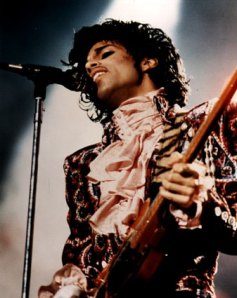 When Beck’s “Midnite Vultures” was released in 1999, no Kansas City radio stations would pick it up, despite heavy play from MTV and VH1. “Cyprus Avenue” not only spotlighted the album, but buttressed it with Prince’s “Rave Un2 the Joy Fantastic,” forming a fitting tribute to both.
 records. Then he saw Elvis Presley’s first appearance on the Tommy and Jimmy Dorsey show. Shapiro was hooked on rock and roll and spreading the gospel of Elvis.
 Shapiro gets with “Cypuss Avenue.”
 joelfrancis.com