Clark Terry’s Last Stand

(Above: A somewhat recent performance of Clark Terry’s signature song, “Mumbles.”)

By Joel Francis
The Daily Record

Perhaps only baseball reveres its heroes of the past as much as jazz. Each year, Stan Musial, Ted Williams or another bygone star is paraded around the field before the All-Star Game. Likewise, the songbooks passed down from Miles, Duke, Satchmo, Monk and others are considered sacrosanct.

Unlike baseball fans, however, jazz traditionalists are loathe to replace their legends with up-and-comers. This makes it frustratingly inconvenient when the links to that halcyon era keep dying.

Fortunately, Clark Terry was up to the task Friday night at the Gem Theater for the American Jazz Museum’s Duke Ellington celebration. The 89-year-old trumpet master played with Ellington for 10 years, led Johnny Carson’s Tonight Show band, and recorded with Oscar Peterson, J.J. Johnson, Thelonious Monk and scores of others throughout his eight-decade career.

Fellow Ellington orchestra alum Barrie Hall, Jr. introduced Terry by reminiscing when he was able to record with his hero on the soundtrack of the “Fabulous Baker Boys.” Stationed in a wheelchair, Terry appears from the backstage recesses of stage right, hidden in the wings.

As the applause built, Terry’s son, standing behind the chair, frantically waves his arms, as if to call the celebration off. The museum’s two-day tribute to Ellington has been building to this moment. Has something gone wrong? Will Terry not be able to appear after all? Killing time, Hall nervously sings a few stanzas of “Do Nothing ‘Till You Hear From Me.”


Clark Terry receives the American Jazz Museum lifetime achievement award from museum CEO Greg Carroll in Kansas City, Mo. on April 30, 2010.

Finally, Terry emerged, slumped in his chair, wearing a dark suit and white yachting cap reminiscent of Count Basie’s favorite headwear. A clear tube of oxygen runs beneath his nose, resting atop his albino moustache. A trumpet case is tantalizingly set next to Terry’s wheelchair, but it’s obvious he won’t be able to play even before the announcement is made.

As the band, led by Hall, kicks into “Full Moon at Midnight,” Terry rests his hands on the cane that stands between his knees. He takes in the saxophone solo by Ahmed Alaadeen. The esteemed Kansas City jazz fixture is another Ellington alumnus who received the museum’s lifetime achievement award earlier that evening.

When the song ended it was time for Terry to receive his own lifetime achievement award. His son pushes the wheelchair near the podium. As chief executive officer Greg Carroll reads a biography, Terry fiddles with his wristwatch, seemingly unsure of where he is. When the award is presented, he looks at the miniature bust of Charlie Parker in wonder as Carroll holds it up. Terry’s grip is too weak to clutch the statue.

While the camera flashes fade, Carroll looks at Terry and suggests a song. Terry looks so frail It seems an imposition to ask this much, but he graciously accepts the mic that has to be placed in his right hand. The band launches into “Squeeze Me,” one of Terry’s signature numbers with the Ellington orchestra. His warm voice starts out thin and strained, but grows stronger with each verse. The years fall away as he starts scatting the final verse, his left knee rocking up and down.

The applause is still strong when Hall looks at the band and blasts the intro to “Mumbles.” Terry joins right in and his nonsense spoof of blue singers brings laughter from the audience. He’s into it now, rocking back and forth and even backing his chair up so he can look Hall in the face as he supplies fills on his trumpet. Hall and Terry trade riffs back and forth from voice to horn and back like a jazz version of an Abbot and Costello routine.

The audience jumps to its feet with the final note, and a broad smile beams from Terry’s face. Wheelchair or not, it is obvious that when Terry is put onstage and given the mic he still knows exactly what to do. He has no difficulty conjuring smiles and making everyone happy. As his son wheels him offstage, Terry blows kisses and doffs his hat. A few songs later, Terry’s son and a nurse escort him quietly out of the building.

(Below: Clark Terry blows his horn on the Tonight Show in 1980.)

Keep reading:

Review: Sonny Rollins

Review: Oleta Adams

Review: Kind of Blue turns 50

Remembering Gennett Records

Releasing Jazz from Aspic

KC Recalls: The Coon-Sanders Night Hawk Orchestra

Buck O’Neil: Sweet times, sweet sounds at 18th and Vine

Piano Men: Dave Brubeck, Dr. John and the Jacksonville Jazz Festival
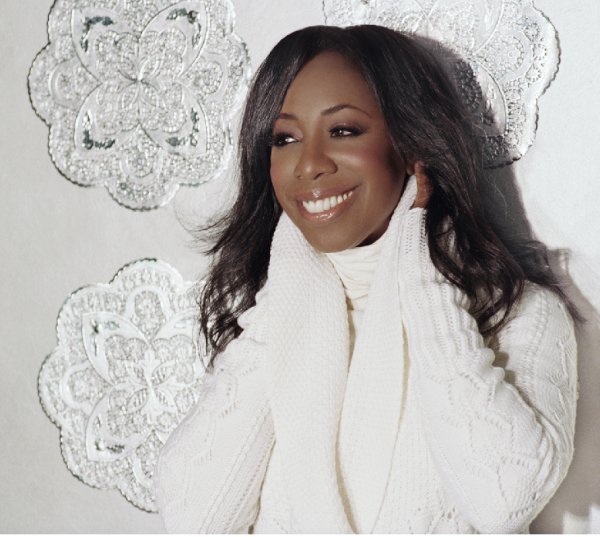
Review: Oleta Adams

(Above: “Get Here” brought down the house at Oleta Adams’ recent homecoming concert in Kansas City, Mo.)

By Joel Francis
The Kansas City Star

Oleta Adams took the stage of Gem Theater on Saturday night with a smile and an apology.

“I’m sorry I’m dressed this way,” she said, wearing a stunning, strapless, turquoise dress. “I thought it was supposed to be spring.”

It would take more than a dumping of out-of-season snow to keep the nearly full house from seeing its hometown girl. For more than two hours, the singer, who was a staple of the local jazz scene in the 1980s, indulged them with stories, a wide selection of songs, and surprises.

The evening got off to a rocky start. Adams’ piano was initially buried in the mix. The drums, played by her husband John Cushon, and keyboards, played by Kansas City native Everett Freeman, Jr., overshadowed everything. The songs were played at a level reserved for noisy clubs or large theaters, not a respectful group in an acoustically sound room.

Adams’ powerful voice, however, would not be derailed by the sonic disarray. After opening with “Feelin’ Good,” the first of several cuts from her latest album, she led her four-piece band into “New York State of Mind.” By the time she got to the reworked bridge that ushered in a lengthy guitar solo, the song bore little resemblance to Billy Joel’s hit. “I Just Had to Hear Your Voice” displayed Adams’ dynamic range. The lyric-heavy melody found her working the verses in a lower register before opening up and soaring on the chorus.

After 40 minutes, Adams announced a short break. It felt premature, but the timing couldn’t have been better. When the group returned 30 minutes later, the sound issues had been resolved. Balance had been restored and instruments were complementing instead of competing. The always-upbeat Adams seemed happier with the situation, too. During “My Heart Won’t Lie” she held onto a note with a phrasing that recalled Nina Simone and drew big applause.

The biggest cheers of the night, however, didn’t go to Adams. After playfully introducing her band, Adams informed the audience that the mother of her bass player, Jeanne Arland Peterson, was sitting in their midst. With the spotlight focused on Peterson, Adams was able to coax her to come onstage.

Peterson looked fragile making her way up the steps, but spring to life behind Adams’ grand piano. After a breathtaking solo, Peterson launched into “All the Things You Are” with her son, Paul Peterson, and Cushon. The impromptu trio sounded like they’d been playing together for years (and, I suppose, two-thirds of them had). When the 88-year-old pianist wanted to hear a solo, she raised her left hand and shot her index finger at the musician in question as if holding a gun.

Once the massive standing ovation died down, Adams joined the trio for a romp through “More Than You Know.” Peterson’s hands slid across the keyboard with gusto and inspired Adams’ best performance of the night.

Clearly excited to be playing again in her adopted hometown, Adams relished talking with the crowd as much as performing. She sang the praises of the 18th and Vine District, and recalled her days playing at the Signboard Lounge in Crown Center.

“My favorite moment every night,” Adams said, “was waiting to see who got beat up in the bathrooms.”

Fights, Adams remembered, sometimes broke out because someone didn’t applaud the right way. Adams also told of a police detective who frequented her gigs. When someone would start talking too loudly, he would start polishing his badge, hinting at what might happen if the chatter didn’t stop.

“I always had the most dedicated fans,” she said, laughing.

The night ended with what Adams said she called the “fourth set” back in her Signboard days. After hinting at her gospel roots in the first set by prefacing “No Way To Love Me“ with I Corinthians 13, Adams took the assembly to church with a powerful one-two of “If You’re Willing” and “Holy is the Lamb.” Both songs were from Adams’ 1997 gospel collection “Come Walk With Me” and fans voiced their pleasure by clapping along and shouting amen.

The poignant “Long and Lonely Hours” is part of a new collection of prayers set to song that Adams hopes will be her next album. The invocation was written after her mother died after spending five months in the hospital, and deals with the feelings of abandonment, awkwardness and, ultimately, acceptance, one feels alone at night in the hospital.

Adams wouldn’t let the night end on a dark note, so she immediately sprang into “Get Here.” Fans burst into applause at the opening chord of her most famous number and several cried out with excitement. Expectations can be high for homecoming shows, but it was clear from the closing ovation that Adams had met them all.

“Tonight,” the woman sitting next to me said, “we got our own jewel, right here at the Gem.”

Setlist: Feelin’ Good; New York State of Mind; I Just Had To Hear Your Voice; I Hope You Dance; Picture You the Way That I Do; Circle of One. Intermission. The Power of Sacrifice; Let’s Stay Here; My Heart Won’t Lie; All The Things You Are (ft. Jeanne Arland Peterson); More Than You Know; If You’re Willing; Holy is the Lamb; Long and Lonely Hours (solo); Get Here.

Keep reading:

Review: Kind of Blue turns 50

Review: Sonny Rollins

Buck O’Neil: Sweet times, sweet sounds at 18th and Vine

15 jazz greats to emerge in the last 20 years

Jazz, hip hop collide to celebrate landmark album

(Above:  “The Sixth Sense”  – A classic joint from a classic album.)

By Joel Francis
The Daily Record

Trumpet player Hermon Mehari of Diverse kept a copy of Common’s landmark hip hop album “Like Water for Chocolate” in his car for two years, but it wasn’t until he saw Les Izmore at the Czar Bar in January that he knew what he wanted to do with it.

The idea was as ambitious as the album Mehari wanted to celebrate: to combine the jazz chops of Diverse with Izmore’s hip hop style. Both outfits are staples of the local music scenes that rarely overlap.

“The people in the jazz scene often worry why people don’t go out, but the truth is some people don’t have a reason to go to Jardine’s or the Blue Room,” Mehari said. “Likewise, a lot of people may never have been to a hip hop show before. Hopefully this will give everyone a reason to get out more.”

Izmore frequently performs both on his own and with the Afro-beat collective Hearts of Darkness. Diverse made a big splash on the jazz scene when Bobby Watson unveiled the combo in 2008. They kept the momentum alive with a self-titled debut the following year and several high-profile shows and collaborations.

“Diverse has wanted to do a cross-genre collaboration for a while,” Melhari said. “I heard Les that night and was impressed. Could to tell from Les’ rhythms he liked all of that.”

By “all of that” Mehari means Common, Black Star, the Roots and the other members of the late-‘90s New Native Tongues movement in hip hop. The low-key faction turned their backs on the hard, gangsta stance of the moment to focus on socially conscious lyrics backed with soulful or jazz-influenced production.

“Hermon pretty much said he want to link up in the future,” Izmore said. “I was definitely interested, but I didn’t know he already had an idea. When he brought up ‘Like Water For Chocolate’ I was like hell yeah. That’s one of my favorite albums ever.”

On Friday, March 19, Izmore and Diverse will collaborate and celebrate the 10th anniversary of “Like Water For Chocolate” at the Czar Bar.

That album’s music, there’s no album with the sound like they have,” Izmore said. “That was my way into (Afro-beat legend) Fela (Kuti) because (his son) Femi is on there. That album can get you into so much stuff. You have the jazz guys, the hip hop, DJ Premier, Jill Scott. It’s a who’s who of that time. These are some of the best artists of their time.”

The “Like Water for Chocolate” roster also includes jazz trumpet player Roy Hargrove, rappers Mos Def and Slum Village, DJ Premier, Black Thought, Rahzel and Questlove from the Roots, soul singers D’Angelo, Macy Gray and Bilal and future Gnarls Barkley singer Cee-Lo. Producer James Yancey, or J Dilla, a longtime friend of Common’s who had worked with A Tribe Called Quest, tied all the elements together.

In keeping with the spirit of the album, Izmore and Diverse will have a few friends on hand to help them out as well. Hearts of Darkness singer Brandy Gordon will take on all the female vocal parts, and Lee Langston will stand in for D’Angelo, Bilal and Cee-Lo. Local MCs Reach and Vertigone also help out.

“We will definitely keep the jazz tradition and hip hop tradition of improve and freestyle alive,” Izmore said. “We’re not going to do the album straight through, and we might even skip a song or two. We want to leave a lot of room for improv.”

As an MC who grew up with the album, Izmore said he needed little preparation for the show. Diverse had the tougher job translating and arranging the record’s sounds and textures.

“We all expected this show to be harder than jazz shows because of a lot of the intricacies,” Mehari said. “Some of the things you have to do goes against the nature of a jazz musician. Like in jazz there are usually a lot of changes, but here because of the loops you have to find ways to be creative within that repetition.”

Izmore and Diverse worked out their parts separately, then rehearsed together in the weeks leading up to the performance.

“When I first heard them I was ecstatic,” Izmore said. “I knew it was going to be a fun night, because they got it down. It doesn’t sound like jazz players doing hip hop.”

Mehari said he was pleasantly surprised by the reaction in the jazz community.

“When Diverse played a house party at 57th and Ward Parkway, people there asked me what we had coming up,” Mehari said. “I wouldn’t have expected them to get excited, but they did.”

With its socially conscious poetry, innovative rhythms and intricate rhymes, Mehari said “Like Water For Chocolate” forced him to grow as an artist. Now he’s hoping to use the album to expand the horizon’s of Kansas City’s music community.

“This is how the scene grows,” Mehari continued. “I think people are too reliant on fans. I think it’s our job as artists to take things higher.”

Keep reading:

Releasing Jazz from Aspic

Review: Talib Kweli & Hi-Tek

Review: Sonny Rollins

Review: For The Roots It’s All In The Music

15 jazz greats to emerge in the last 20 years

Professor Griff discusses the past – and future – of Public Enemy

Buck O’Neil: Sweet times, sweet sounds at 18th and Vine

Review: Snoop Dogg with Method Man and Redman

Catching up with the Hot Club of Cowtown

(Above: Hot Club of Cowtown get lowdown at the Americana Music Association Festival in 2009.)

By Joel Francis
The Daily Record

When Elana James was growing up in Kansas City, you could usually find her in Westport on the weekends. After checking out the bookstore, window shopping for clothes or catching a movie she’d take out her violin and busk.

What James played, though, wasn’t the classical music she’d been trained. James’ bow bounced to old timey fiddle music meant for dancing. And it tormented her.

“I thought it was the road to ruin,” James (nee Fremerman) said. “It wasn’t until I graduated from college I realized I wanted to play a more immediate, social music and, especially, dance music. It was such an undeniable pull by then I didn’t feel bad about leaving classical music, but I was at war with myself for a long time over it.”

James may have gotten over her classical guilt, but she had a harder time getting over the demise of her band, the Hot Club of Cowtown. In the past decade, the band broke through and found success, only to crumble at its peak. After a few years apart, the trio reformed to try it all over again.

“It’s funny,” James said, “a lot of stuff has changed around us, but I don’t feel like what we do has changed, only gotten better.”

The Western swing trio opened the decade with two albums under their belt and were building a steady following with their dynamic live shows. In 2004 they caught a deserved break when Bob Dylan and Willie Nelson invited them to offer their joint tour of minor league ball parks.

“We were in England on tour when our manager told us of the offer,” James said, recalling the fateful day. “It was totally incredible – it was one of the happiest, most exciting things I had experience in my life at that point. There were no expectations for the tour. We just thought we’d play our 23 and a half minute slot and that’s it. It turned out the tour was incredibly fun, musically gratifying experience.”

What should have been a tipping point turned to disappointment when Hot Club guitarist Whit Smith decided to pursue other projects. Fortunately another guitarist, Bob Dylan, offered James a spot in his band.

“It’s not something I like to talk about,” James said. “He (Dylan) loved my playing and was a huge advocate of me musically and personally. He gave me a lot of confidence and it was an honor to have that reception from him.

“The highest compliment you can get is to be asked to play with somebody else,” James continued.”I got a lot out of my friendship with him and his enthusiasm for the things I was doing.”

After double-duty time with Dylan – James also served as opening act on the tour – James formed the Continental Two and released a solo album. She couldn’t stay away from her Cowtown bandmates, though. Smith frequently sat in with James. Before long, bass player Jake Erwin was back in the fold as well.

“The band is the best at what we do,” James said. “Nobody sounds like us or does what we do as well. That’s why we got back together.”

But a lot changed over the band’s four year hiatus. Print outlets that used to champion the band, like “No Depression” were no longer around. And the decay of the major labels meant the standard system of filters were no longer in place.

“It’s been difficult after stopping to regain that momentum. We’ve had to come back and reintroduce ourselves. The media opportuines – so disorganized and spread out,” James said. “We are swimming in a difficult sea.”

Between the release of a greatest hits compilation in 2008 and a new album in 2009, the threesome spent the year touring the world, reintroducing themselves to fans.

“We weren’t expecting it, but people found out about us and things have been going great guns,” James said. “We’re actually having more work than we can accommodate. We have to be choosy.”

While there won’t be a new Cowtown album this year, James said the band will “probably start heading in that direction.” In the meantime, they just want to enjoy their accomplishments.

“This is our fun year,” James said. “There’s no major agenda. Last year was hard work, making the record, then putting it out on three continents and touring to support it.”

Although James didn’t know it at the time, the country music she plays today is just as much a part of her upbringing as the classical instruction she started receiving at age 5.

“Coming from Kansas,” James said, “even though I didn’t grow up listening to fiddle tunes and old dudes sitting on the porch and drinking moonshine, when you pull back I can see how that culture just seeped into me. I wouldn’t be who I am today without my time in Kansas City.”

Keep reading:

Review: “The Oxford American: Book of Great Music Writing”

Elvis Costello – “Secret, Profane and Sugarcane”

More Bob Dylan on The Daily Record

KC’s MCs throw down this weekend

(Above: Supernatural takes on Juice in one of the most famous MC battles of all time.)

By Joel Francis
The Kansas City Star

Practice is vital but when it comes to rapping, nothing improves skills like a live, trial-by-fire MC battle. This weekend, several rappers will have a chance to compete for money.

The third annual Versus Emcee and Beat Battle goes down Saturday night at the Record Bar, 1020 Westport Road. A pre-battle show will be held tonight at the Riot Room.

“Battles are how you prove yourself and show how far your skills have developed,” said Clarence Draper, who goes by the MC name Vertigone. “This is also a way for people who aren’t actively involved in the scene or new to the area to get up and connect and get involved.”

The contest is open to the first 16 MCs who sign up. Draper encouraged them to arrive between 8:30 and 9 p.m. The winner will take home $500.

“This is first-come, first-served, so they need to be there early,” he said. “Plus people should come out to see the beat battle.”

In the beat battle, six DJs will use their own equipment and go head- to-head in six rounds that include using a common sample to create distinct productions.

Draper said the final evening will resemble the battle scenes in “8 Mile” but without scripts. Everything that comes off the stage must be spontaneous.

“At Versus we reward the freestyle,” Draper said, “which is the most pure idea of the MC not having anything and being ready to rhyme.”

Draper practices his freestyles during his normal routine, incorporating things he sees, such as traffic signals, into rhymes.

“The socially conscious stuff I do on my albums is not going to win you any battles,” he said with a laugh. “I practice all the time how to rhyme, which words work together. I focus mainly on two-syllable words like ‘eventually’ and ‘century.’ It’s not all ‘cat’ and ‘hat.’”

MC Les Izmore, who releases albums on his own and performs as part of Hearts of Darkness, participated in last year’s Versus battle. For him, the night is more about building his skills than beating others.

“I know a lot of people practice their freestyle, but I’m not prepping,” Izmore said. “(Last year) was a thrill. I didn’t know what was going to happen. I may not know the person I’m up against, but I’m there to challenge myself as an MC.”

Although boasts and insults are a large part of the battle repertoire, presentation plays a large role. In other words, sweat the technique.

“Battling is more than insulting people. You have to have style and swagger to how you do it,” Draper said. “You have to work the crowd as much as your opponent. When someone says something that sways the crowd, you have to win them back.”

While the Versus battle is only in its third year, its tradition runs deep in Kansas City. During the city’s jazz heyday, musicians would spar in ‘head cutting’ contests nearly every night in the 18th and Vine District.

“I’ve been at the Mutual Musicians Foundation and seen the musicians, all of them were just in this mood, this groove,” Draper said. “And then they started jumping off of that with solos, each person trying to outdo the other. It’s the same thing we’re trying to do in a freestyle.”

Vertigone and his friend Raymond “Kartoon” Hardy hosted the initial Versus battle because they felt there was a void in the community after the demise of the successful Mic Mechanics battles in Lawrence.

“Battle rhyming starts out under the street lights and on the corners in the neighborhood,” Draper said. “Eventually you get tired of that and want to take on other people. We are trying to keep this going for anyone who doesn’t have an outlet. It’s as much about social networking as anything.”

Izmore has one final word of advice for everyone joining him onstage this weekend.

“When I was up there (onstage last year), I could feel a ton of raw energy,” he said. “You gotta make sure to come with your best, because you don’t know what will come up next time.”

Open wide for Mouth

(Above: Mouth deliver “Snake Charmer.”)

By Joel Francis
The Daily Record

Fans wanting to pigeonhole Mouth’s music, do so at their own risk.

The three-piece Kansas City band combines elements of funk, jazz, pop, hip hop, electronica and progressive rock in their unique, dance-friendly instrumental songs.

“People have tried to make us either a jam band or a jazz/fusion band,” drummer Stephen “Gunar” Gunn says as guitarist Jeremy Anderson finishes the sentence. “Whatever genre people pigeonhole us as, they always complain.”

Talking with the band, which also includes bass player Zach Rizer, is like trying to catch a ping pong ball in a shower stall. The three are just as in synch in conversation as they are when playing. Words zip around as the three finish each other’s sentences and try to complete their own thoughts.

“I used to be afraid of being pigeonholed by the jam-band crowd,” Anderson says. “Honestly, they’re a lot more open-minded than anybody.”

They also provide a nice business model. Mouth tape all of their shows and try to saturate the market with recordings in hopes that the music will find its way out ahead of the band.

“These shows in Topeka and Wichita are the first time we’ve done two shows out of town in a row,” Gunn says of a recently completed road trip. “Right now we’re just trying to figure out how to play and get out on the road where we’ll at least earn near our gas money.”

Mouth – the name is a play on the fact that there’s no vocalist – perform in Springfield, Mo. on Saturday and will celebrate their first birthday on Jan. 29 at the Jazzhaus in Lawerence, Kan. One year ago the trio was playing a First Friday art exhibit and dipping their toe into the scene at the Jackpot Saloon.

Download the Mouth album “Escape from the North Pole” for free at http://www.abandcalledmouth.com/music/.

“I don’t know if I’ll be able to get a cake in, but I want to make party favors, maybe put songs on a CD and give them out,” Anderson said. Several friends of the band, including guitarist Matt DeViney, who co-founded Gunn’s previous band Groovelight, and local MCs Reach and Phantom will also help celebrate with the band.

Although hip hop is now a staple of the band’s catalog and all three members were longtime fans, embracing the genre was purely a business decision.  After six months of drawing meager crowds, Rizer looked at what was getting covered in the music press and where people were going and decided hip hop was the way to go. As soon as they made the switch, they attracted some attention in The Pitch. They also started growing unexpectedly as musicians.

“When you take anything from samples, you not only have to learn the parts, but you have to learn how to put them together,” Rizer says. “There are a lot of subtle things at work, like tambour and tone. The funny thing about hip hop is that DJs will play samples against each other you wouldn’t think to combine.”

For Anderson it was a chance to add his favorite elements of progressive rock – long, intricate parts – and incorporate them in a hip hop setting.

“Our songs are structured like progressive rock, but feel like hip hop,” he says. “We’re not playing prog hop, though. We’re playing hip hop.”

The members of Mouth grew up in musical families. Anderson’s little brother got a guitar, but never played it, so the 10-year-old started noodling on Steely Dan and King Crimson licks. Gunn grew up immersed in music. His dad was a drummer in the band Heat Index and moved out to California in his ‘20s to pursue a career in music. The white bass drum in Gunn’s kit was originally part of his dad’s rig.

“When I was 13, my dad didn’t want me to play because he thought it was bad for my ears,” Gunn says. “He put the kit away in the attic, but I kept getting it out and playing.”

Rizer’s father was also a musician. His dad and grandpa, both named David Rizer, were jazz musicians. Grandpa Rizer played guitar with Oscar Peterson and Charlie Parker. David Jr. plays trumpet, bass and sings and plays regularly with Everette DeVan at the Blue Room.

“My dad never pushed, but I was always surrounded by music,” says Rizer, who counts Bootsy Collins, Jaco Pastorius and Motown bassman James Jamerson among his influences. “I didn’t listen to anything rock-ish until I was older.”

At Shawnee Mission Northwest High School, Anderson introduced Rizer to rock and roll, while Rizer shared his love of funk, soul and jazz. Gunn, meanwhile, forged his own path, eventually performing at Wakarusa Music Festival with Groovelight in 2005.

“That show was kind of a turning point for me,” Gunn says. “At the time, I was into the whole progressive side, with odd time signatures. I was into Mahavishnu Orchestra and Return to Forever. At Wakarusa I realized people want to dance, not just listen. I used to play for the one guy who would appreciate us and tell us about that one measure 13/8. Now it’s come full circle to just wanting people to dance.”

One number the trio play is “Bad Wolf,” a new song that takes its name from Doctor Who. Anderson is seated, bent over his guitar, his nimble fingers dancing across the frets. When told his playing is reminiscent of Adrian Belew, he humbly replies “It should. I have his guitar and amp.” As Rizer’s groove takes over the melody, Gunn applies a hip hop/reggae rhythm on the drums. There’s very little eye contact; each musician lost in his own world.

“When we’re onstage, we definitely look at each other more,” Anderson said. “We’re constantly trying to push the boundaries of the song and include different elements.”

After a year together, Mouth has no future goals beyond continuing to push each other and trying to find a balance between the written and improvised.

“I’m looking forward to seeing where the music goes,” Gunn said. “We just pour ourselves into different scenes and see what happens.”

KC Recalls: Elvis Presley at Kemper Arena

(Above: Elvis brings a mid-year Christmas to Kemper Arena in 1977.)

By Joel Francis
The Daily Record

When Elvis Presley, who would have celebrated his 75th birthday today, rolled into Kansas City for the first of two concerts at Kemper Arena, he was far from the hungry, hunky artist who terrorized parents and could only be shown on television from the waist down.

Presley played the arena twice in the last 18 months of his life. Although the monarchy was waning, the King could still captivate a crowd. Jess Ritter wrote about Presley’s initial show on April 21, 1976, in the Kansas City Times.

“From the moment (Elvis) strode onstage last night, though, he proved clearly that, at age 41, he is still one of the most charismatic entertainers in America,” Ritter wrote. “Elvis worked hard in his stint, which lasted well over an hour. The punk hip gyrations of the past are gone and all his movements are carefully choreographed, but they are vividly real – and insinuating. In his ice-blue shirt, white singlet and tight white pants encircled at the waist with a massive rhinestone belt, Elvis dominated the stage without trying too hard.”

Ritter doesn’t mention many of the songs played in the brief review, focusing instead on Presley’s medical conditions and history. The only number mentioned by name was “Return to Sender.”

Presley’s bicentennial show wasn’t his first stop in town. He played Municipal Auditorium – the biggest concert hall in town prior to the construction of Kemper Arena – in 1971 and 1974. The venue was also the site of Presley’s only previous Kansas City concert, on May 24, 1956.

Such frequent performances were part of the King’s new motif. After the success of his ’68 Comeback Special, Presley ditched Hollywood and returned to the stage. The TCB Band, anchored by former Ricky Nelson guitarist James Burton, accompanied him on most of those occasions.

The band that rolled into Kemper 14 months later, in June, 1977, was more or less the same, with two exceptions. Drummer Larry London had replaced Ronnie Tutt, who left to join the Jerry Garcia Band. Tony Brown debuted with the band that night on keyboards – without the benefit of any rehearsals.

Brown, now a Nashville music executive, spoke with an Australian Elvis fan site about his time in the TCB Band. He said Presley liked to surprise the band. One night the King called for “Blueberry Hill, which wasn’t in the repertoire.

“I just started playing the rhythm of the song, you know,” Brown said. “This is in front of, like, 20,000 people. I’m sweating. I mean you can feel the water rolling.”

Brown suffered the collective skunk eye from his bandmates until Presley bailed him out.

“Elvis says, ‘That’s not the way it goes,’ walks over to the piano, sits down and plays something. Then the band kicks in,” Brown recalled. “He started singing it and got up and left and out in front and did the next couple of songs I was worthless. I mean total embarrassment, you know.”

While Brown fared better in his debut, his boss was not so lucky. Shifra Stein described the spectacle for the Kansas City Times.

“Looking in desperate need of a rest (Presley) drank frequently on stage from a paper cup. Sometimes he stood to one side, eyes closed, and let his show troupe take over for him,” Stein wrote. “At other times, in mocking self-parody, he ran through all his old songs – ‘Jailhouse Rock,’ ‘It’s Now or Never,’ ‘Hound Dog,’ ‘Don’t Be Cruel’ and so on. In several instances he forgot his lyrics, and at one point sang ‘My Way’ reading the lyrics from a paper, explaining to the audience ‘I can’t remember the words.’”

But the sold-out crowd didn’t care.

“The arena was filled with thousands of aging teenagers,” Stein wrote, “mostly women in their 30s whose voices rose to a maddened shriek when their beloved idol climbed on stage about 10 p.m.”

They bought $5 belt buckles, “souvenir programs with poorly reproduced Elvis photos for $3” and snapped up tickets being scalped for $50. Stein estimated the evening “represented almost one-quarter of a million dollars in profit for Presley who is currently raking it in on tour across the country.”

The concerts were the crown jewel of Kansas City’s return to national prominence at a time when the city boasted Major League Baseball, NFL, NBA and NHL franchises and hosted the 1976 Republican National Convention. Although an outdated relic today, Kemper Arena was the bait that lured the NHL and NBA teams and RNC to town.

The night after Presley played Kemper, his band took the stage in Omaha, Neb. That performance and the following nights in Lincoln, Neb. and Rapid City, S.D. were immortalized on the album “Elvis in Concert.” Just five nights later, Presley concluded his spring tour in Indianapolis. That June 26 concert, little more than a week after his performance in Kansas City, would be his last. Six weeks later, Presley was dead.

Setlist: Elvis Presley, Kemper Arena, June 18, 1977

2001 Theme, See See Rider, I Got A Woman, Amen, That’s All Right, Blue Christmas, Are you Lonesome Tonight?, Big Boss Man, Love Me, Jailhouse Rock, O Sole Mio, It’s Now or Never, Little Sister, Teddy Bear, Don’t Be Cruel, And I Love You So, My Way, Early Morning Rain, What’d I Say, Johnny B. Goode, I Really Don’t Want to Know, Hurt, Hound Dog, Can’t Help Falling In Love, Closing Vamp

Keep Reading:

Local Doctor Claims He’s Treating Elvis

KC Recalls: The Coon-Sanders Night Hawk Orchestra

The Day the Music Survived

Down on “Cyprus Avenue”

Review: Get Up Kids

(Above: The Get Up Kids perform “Martyr Me” at the second show of their two-night stand at the Record Bar in Kansas City, Mo.)

By Joel Francis
The Kansas City Star

Nearly a year to the date after reuniting, the Kids are still alright.

Homegrown heroes the Get Up Kids capped off a two-month tour opened their dual-night stand at the Record Bar Friday night in front of an energetic crowd. Both shows benefit the family of the late Recycled Sounds owner Anne Winter.

No one in the band mentioned Winter during their 80 minute set. Instead they dashed through 20 songs that encompassed their decade of glory, inspirations and a couple new numbers.

The night started with a frenetic, nonstop explosion through “Holiday,” “I’m a Loner Dottie, A Rebel” and “The One You Want.” After slowing things down with “Valentine,” the Kids kicked into a new number.

“Your Petty Pretty Things” doesn’t deviate from the sounds and themes that made the hometown band famous around the world, but has enough wiggle room in its three and a half minutes for the band to kick it into high gear during the outro and ride the riff together before abruptly wrapping up. That energy was channeled into a powerful reading of “Come Clean.”

The band was lined up four across with the drums in the back of the corner stage. Keyboard player James Dewees was pushed so far to stage left that it seemed like he faced out the windows and into the parking lot more often than into the crowd.

As usual, Dewees was the band’s not-so-secret weapon. He shined an acoustic duet of “Campfire Kansas” with guitarist Jim Suptic on lead vocals, but Dewees’ most interesting contribution came on “Keith Case.” The second new song of the night, “Case” appeared out of a left turn from “No Love.” Driven by Rob Pope’s fuzz bass, Dewees applied a shimmering sci-fi synth line that makes the sound stand out in Kids’ catalog. Later, Dewees’ classic piano riff formed the bridge from “Holy Roman” into “Mass Pike.”

Although the Record Bar was full, there was still plenty of elbow room. The faithful throng delighted in throwing back frontman Matt Pryor’s words with same energy they were delivered. “Act and Action” erupted into one of the biggest sing-alongs of the night until “Don’t Hate Me.” The atmospheric “Walking on a Wire” kept slowly building layer by layer until both the crowd and the band took it through the roof.

In lieu of an encore, the band went straight into their cover of “Close To Me.” The Cure’s  1985 hit was obviously a big influence on the band, but the Kids nearly manage to one-up their heroes with Ryan Pope’s buoyant drum line propelling the song.

The set ended at midnight with the final words to “Ten Minutes” ringing out: “Everything will work out fine.” So far, it has.

Setlist: Holiday; I’m A Loner Dottie, A Rebel; The One You Want; Valentine; Your Petty Pretty Things (new song); Coming Clean; Woodson; Out of Reach; No Love; Keith Case (new song); Red Letter Day; Campfire Kansas; Holy Roman; Mass Pike; Act and Action; Walking on a Wire; Close To Me; Beer For Breakfast; Don’t Hate Me; Ten Minutes

Former NBA player at home in KC music scene

(Above: Former NBA player and current ESPN music columnist Paul Shirley discusses some of his favorite records at Amobea Records in Los Angeles.)

By Joel Francis

Paul Shirley played in the 2005 NBA conference finals as a member of the Phoenix Suns and scrimmaged against Kobe Bryant as a training camp member of the Los Angeles Lakers, but he doesn’t want to talk about any of that right now. Shirley’s telling the story of when he first heard U2’s “Mysterious Ways” in the back of a school bus during high school.

“It dawned on me that I was old enough to have a CD player and I could play whenever I wanted,” Shirley said. “The first time I played ‘Achtung Baby,’ I thought it was the worst purchase ever, but after I played it 8 or 10 times, I thought it was the best.”

When “Zooropa” arrived a few years later, Shirley realized bands could grow and music could evolve. Nearly 20 years later, Shirley is still marveling at inventive new sounds and comforting old ones.

“Music and basketball were both my outlets,” Shirley said. “People don’t understand, but there’s a lot of catharsis in both of them. When I came home from practice, mad at the world, I could put on ‘The Downward Spiral’ and all my troubles would melt away.”

As Shirley migrated from Jefferson West High School in Meriden, Kan. – located about 15 miles outside of Topeka – to Ames, Iowa as a three-year starter for the Iowa State Cyclones men’s basketball squad and a professional ball career that encompassed Spain, Russia, Greece and several stops in the NBA, music was a constant companion.

“The music I have taken with me has allowed me to feel at home in all different places,” said Shirley, who makes his home in Kansas City, Mo. “The ability to put on my headphones and pop in a CD is priceless. It’s like having a set of friends I can take with me wherever I want.”

When not rocking with his aural amigos, Shirley was taking his friends to live shows. An early concert at the Granada Theater in Lawrence, Kan. made a big impression.

“One weekend my brother and I were home from college flipping through the Lawrence weekend paper when we saw an ad for (textural post-rock band) Mogwai,” Shirley said. “We did a little research and decided to check it out for, what, $12 or whatever. When we got there the show was so intense and focused, it was like nothing I’d ever seen. There were four guitars and no vocalist. It was just overwhelming.”

That fix turned Shirley in to a live music junkie, prowling the scene searching for the next high.

“I don’t think of myself as a person on the cutting edge, but there are moments when you see someone who you now is going to be good before anyone else. Like when I saw Ratatat open for the Killers at the Hurricane or the Secret Machines at El Torreon,” Shirley said. “Moments when you see someone destined for, if not stardom, then goodness and that’s really cool.”

Shirley’s pro ball career never took off as planned, but through those trials another passion emerged: writing.

“It never occurred to me that I could write about this stuff,” said Shirley, who saw “Can I Keep My Jersey?,” his basketball memoir, published in 2007.

After writing a column for the Phoenix Suns Website, Shirley was asked to write for ESPN.

“I think they (ESPN) were thinking I’d go back into the NBA and then they’d have a player on the inside,” Shirley said. “Instead I went to summer leagues and overseas.”

The column died when Shirley grew tired of writing about basketball, but when ESPN launched a new, non-sports section of their Website, they asked him to write a music column. Every Tuesday he interviews indie bands, reports on a festival like Austin City Limits or Lollapalloza, reviews a concert or shares his musical opinions.

“It’s nice to be able to contact a band and say, hey, I live in Kansas City and see you are coming to town. Could I go to your show?” Shirley said. “Talking to musicians is nice, too, like when I got to chat with the Dandy Warhols, who I’ve liked for 15 years.”

Today, Shirley juggles the expectations that come with being an athlete writing for the Worldwide Leader with his passion for music.

“There is a disconnect between the athletes and their fans and music nerds and book nerds, and it’s probably exaggerated for me because I write for a jock Website,” Shirley said. “People have a hard time understanding that for me, talking about basketball is like them talking about their day job. It’s not as interesting to me (as music).”

Shirley acknowledges he could be drop stories about star players, or work as an analyst, but that no longer interests him.

“Basketball doesn’t inspire me,” Shirley said. “I can only stay interested in things for so long. Right now writing – specifically writing about music – provides the spark for me.”

Keep reading:

Paul Shirley’s ESPN collumn archive

More music features on The Daily Record:

Peter, Bjorn and John Heart Hip Hop

Jamie Foxx brings it to Sprint Center on Saturday

The Derek Trucks Band makes old-school rock new

Kansas City Rocks Out

Modest Mouse: Johnny Strikes Up the Band

Hail Death Cab

Ever Fallen For The Buzzcocks?

Out of the Tar Pit Back Onto the Stage

Local Doctor Claims He’s Treating Elvis

Down on “Cyprus Avenue”

Revisiting “Cyprus Avenue”

Here’s another blast from the past. Nearly 10 years ago, I interviewed Bill Shapiro about “Cyprus Avenue,” a staple of Kansas City public radio. The past decade has been kind to Shapiro. He celebrated both the 25th and 30th anniversaries of the show and launched the great concert series “Cypress Avenue: Live at the Folly,” which has brought Jerry Lee Lewis, Bettye LaVette, Madeleine Peyroux, Los Lobos, Sly and Robbie and other great acts to town. His show producer at the time, Robert Moore, has since started the fantastic “Sonic Spectrum” radio show and founded OxBlood Records.

If you don’t listen to either “Cyprus Avenue” or “Sonic Spectrum,” you are missing out. “Spectrum” podcasts are archived by Present Magazine, and while the only way to catch “Cyprus Avenue” is to turn your dial to 89.3 FM from noon to 2 p.m. on Saturdays, this feature will bring you up to speed.

Keep Reading:

Down on “Cyprus Avenue”