(Above: Frank Black visits “Manitoba” all by his lonesome.)
By Joel Francis The Kansas City Star
It’s hard to believe, but the Pixies have been around as a reunion act for almost as long as their original incarnation. When Frank Black (aka Black Francis) announced his new project shortly after the Pixies’ first triumphant reunion tour, few could have predicted where he would end up.
The self-taught, idiosyncratic king of indie rock was working in Nashville, Tenn., with seasoned session musicians. The impulse yielded two albums, 2005’s “Honeycomb” and 2006’s double album “Fast Man Raider Man.” Earlier this year Black announced a third Music City installment was on the horizon.
“If you’re into the pop music of the 20th century and you happen to be a post-punk record maker, chances are you’ll like Patsy Cline and Miles Davis,” Black said. “Most rock musicians aren’t going to put out a bebop album, so we go to blues, folk, roots music, whatever you want to call it. It’s not that much of a jump for me — it’s all part of the same grassy hillside.”
It’s also a road well traveled. In 1966, Bob Dylan left New York City to record at the CBS studios in Nashville with the day’s top session players. More recently, Robert Plant ventured to middle Tennessee to work with Allison Krauss and Buddy Miller.
“The reason why you see this happening again and again is because of the opportunity to play with some of the best musicians in the world,” Black said. “It’s not just country music, but R&B and the whole world of 1950s and ’60s pop recording.”
Black’s collaborators are a world removed from the Boston underground scene where the Pixies formed in the mid-’80s. His album credits today include Muscle Shoals legends Dan Penn and Spooner Oldham, Stax guitarist Steve Cropper and drummer Chester Thompson, pal of Genesis and Frank Zappa.
During sessions in Los Angeles, Black worked with Funk Brother Bob Babbitt, Al Kooper, Phil Spector veteran Carol Kaye and drummer Jim Keltner. Grab any of your favorite major-label albums from the late ’50s to the mid-1970s and at least one of these names will be found on the sleeve.
“I guess you could say the era peaked in the ’60s and got a bad rap in the ’70s, because by then there was just too much easy-listening and knockoff, quickie records,” Black said. “But the people who grew up under the punk badge were young 20-somethings who didn’t have a lot of money and shopped at used clothing stores and decorated their apartments with kitsch. All of a sudden, out come those old Dean Martin albums again. Ultimately, what you rebel against becomes hip again.”
When Black comes to town on Monday, he’ll be without any of his all-star assistants. In fact, Black’s only company onstage will be his acoustic guitar. But regardless of his surroundings, Black said, his goal is the same: to satisfy the customers.
“That’s where I’m at now and it’s no different from when I played my first gig,” Black said.
“It’s all part of the world of the musician. Sometimes you play huge festivals for tons of money in front of tons of people, other times you’re playing Knuckleheads in Kansas City. Both are equally valid.”
(Above: R.E.M. opened their 2003 concert in Kansas City with the rarely performed “Star 69. Here the band does it at Glastonbury ’99. )
By Joel Francis The Daily Record
“This next song,” Michael Stipe said, “is a request.”
The number wasn’t a surprise. Much like right now, the country was leading up to a big election year. It was startling the band would start playing requests just two songs in to the set. But what made “World Leader Pretend” seem so stunning was that I had requested it.
Oh, I’m sure I’m not the only person who logged on to R.E.M.’s Website, selected the upcoming concert at Starlight Theatre and plugged “World Leader Pretend” into one of the three request slots. In that moment, however, it felt like the band was playing for ME, way up near the top of the theater bowl.
That feeling was reinforced two songs later when Stipe announced another request. “Fall on Me” is my all-time favorite R.E.M. song, and occupied another of my limited request spots. Those two moments, coupled with that night being my first (and now only) time seeing R.E.M. in concert made the night an incredible experience that cemented my passion for the band.
Shortsightedness prevented me from seeing R.E.M. eight years earlier, when they sold out two nights at Sandstone Amphitheatre in 1995 with Sonic Youth. Despite promoting the critically derided (but personally beloved) “Monster” album, that was R.E.M.’s first tour since the gigantic success of “Losing My Religion” and “Everybody Hurts.”
Eight years later the band was in a very different place. Drummer and not-so-secret weapon Bill Berry had left and the remaining trio had released three increasingly experimental records with decreasing results. They had toured faithfully during that time, but always skipped Kansas City. In 2003 they were pumping a greatest hits collection and the generally lifeless “Around the Sun” was right around the corner. In that moment R.E.M. seemed like Johnny Unitas with the Chargers or Babe Ruth with the Braves. “Accelerate” and this year’s “Collapse Into Now” proved they were more like Bobby Hull with the Jets.
And now, nearly exactly eight years to the day1 after I saw them at Starlight, R.E.M. are done. Buck will probably continue to play sideman to Robyn Hitchcock and Scott McCaughey, Mills will make pleasant but unnecessary James Taylor-meets-Brian Wilson solo albums, and Stipe will direct films and make weird solo albums that sound nothing like R.E.M.
I’m happy that R.E.M. decided to call it a day instead of endlessly releasing uninspired product (I’m looking at you, Red Hot Chili Peppers). But I’m also sorry that I likely won’t hear the new sounds of three of my favorite musicians working together again.
R.E.M. have always been a part of my musical landscape. They were legends when I discovered music, and it makes me sad to think they now only exist in history. But I’ll always have the tape of “World Leader Pretend” and “Fall on Me” in my mind.2
(Above: Harry and the Potters rock a Wisconsin bookstore.)
By Joel Francis The Kansas City Star
It is doubtful that Irma Pince, mistress of the library at Hogwarts, would approve of Harry and the Potters.
The band is loud, noisy and proud of its subversive punk influences. For nearly a decade, it has also been the delight of librarians across the country.
The band makes a return appearance to the downtown branch of the Kansas City Public Library at 2 p.m. Sunday in a free performance and Monday at the Replay Lounge in Lawrence.
“Most libraries don’t see any bands;they see author readings and story time,” said guitarist Paul DeGeorge, who founded the group with his brother Joe in Boston in 2002 and now lives in Lawrence. “Sometimes we get librarians who think we’re too loud, but now that our reputation precedes us, I think they like that what we do is unique.”
Tying in to the most popular fiction series of the new millennium doesn’t hurt either. With songs such as “Gryffindor Rocks,” “Dumbledore’s Army” and “Saving Ginny Weasley from Dean Thomas,” the duo has plugged right into the zeitgeist.
The band is among the more successful of a long list of wizard rockers, including such Potter-inspired groups as Draco and the Malfoys, the Moaning Myrtles and the Whomping Willows. They even gather for festivals, such as the annual Hallows and Horcruxes Ball in Manhattan, Kan.
“It all started as sort of a whimsical idea after reading the Harry Potter book for the first time. We wanted to find a way to convince librarians to let us play loud punk rock music in their libraries,” DeGeorge said. “We didn’t realize how extensive and pervasive the Harry Potter fan world is. Once our website [Web site] was up, word spread really quickly, and that’s when we started touring nationally.”
Onstage, both brothers are dressed as Potter. Older brother Paul portrays the seventh-year wizard, while Joe represents Potter in his fourth year at Hogwarts. Although the family-friendly music attracts a young audience, Paul DeGeorge aims for a wide demographic.
“They Might Be Giants is a band I really related to in junior high, but as I grew up I realized there were a lot of smart things in those songs that I didn’t get when I was 12,” DeGeorge said. “We want to do the same thing. We want to keep the parents engaged as well, give them stuff to smile at that their kids won’t get and give the kids things to laugh at the parents will just think is cute.”
J.K. Rowling hasn’t weighed in on Harry and the Potters, but she is a big fan of the Harry Potter Alliance, a nonprofit group DeGeorge founded.
“The Harry Potter Alliance was inspired by the fact that Harry and his friends were just teenagers, but because they were dedicated to fighting evil they changed the world,” DeGeorge said. “We re-contextualize complex global issues through Harry Potter’s world. It’s a way to help young people understand the world and get involved using language they understand.”
Although the band is strong, DeGeorge confessed it isn’t as all-encompassing since he moved from his native Boston to Lawrence, Kan. a year ago. DeGeorge moved away from his brother to be with his girlfriend, who is earning her doctorate in art history at the University of Kansas.
“We used to do 120 shows a year, then record,” DeGeorge said. “Now we’re doing a two-month tour and will take some time off. In some ways, though, the distance makes us more focused, because we know we have to maximize our time together.”
(Above: The Lawrence band Fourth of July make breakups sound like fun on “Friend of a Friend.”)
By Joel Francis The Daily Record
The big names at the top of the bill will draw the most fans, but sometimes the best performances are from lesser-known acts early in the day. In the week leading up to the inaugural Kanrocksas music festival we’ll examine 10 overlooked acts. Below are five acts from Friday’s lineup. On Thursday we examine Saturday’s bands.
FRIDAY
The Joy Formidable (Ad Astra stage, 2:50 – 3:30 p.m.)
The Joy Formidable have toured with the Editors and Passion Pit and turned to Muse and Glasvegas’ producer to help behind the boards for their studio debut. Singer Ritzy Bryan has a touch of Bjork in her delivery and the arrangements hint at what could happen if Jesus and Mary Chain were a pop band.
Fitz and the Tantrums (Main Stage, 2:50 – 3:30 p.m.)
This Los Angeles-buzz band play opposite the Joy Formidable, which is fitting because their music is at the other end of the spectrum as well. Working without a guitar, the group splits the difference between the Dap-tone sound and Maroon 5.
Fourth of July (Ink Unplugged stage, 6:15 – 6:45 p.m.)
This Lawrence quintet, comprised of two sets of siblings, combined the heartache and pain of “Blood on the Tracks”-era Bob Dylan with the relentlessly upbeat jangle of Camper Van Beethoven. A longtime mainstay of the Lawrence/KC music scene, their work deserves a wider audience.
Kid Cudi (Main Stage, 6:10 – 7 p.m.)
After bringing only a DJ to his Kansas City debut at the Midland theater last year, Kid Cudi has decided to bring a live band on the road with him this time out. Cudi’s studio work places the minimalist introspection of Kanye West’s “808s and Heartbreaks” in more lush, accessible surroundings. It should be interesting to watch Cudi try to translate his headphone music to a festival setting.
Major Lazer (Critical Mass tent, 8:15 – 9:05 p.m.)
DJs Diplo and Switch are best know for helping create the pastiche behind M.I.A.’s three albums. On their own the pair – who met through working with M.I.A. – create some swampy, dubbed-out dancehall reggae. Put Shaggy in a blender with the Bomb Squad, add George Clinton’s showmanship and you’re close.
(Above: Cake’s newest video is called “Sick of You.” They definitely seem tired of the lifestyle.)
By Joel Francis The Kansas City Star
It won’t be hard to spot John McCrea on Friday night. The lead singer and chief songwriter for the alt-rock band Cake will hold center stage in a night of music in the City Market.
Seeing him in the future, however, may be more problematic.
Concerned with the direction of the music industry and unwilling to make a living by touring alone, McCrea is seriously considering a second career as a farmer.
“When I look five to 10 years in the future, I don’t see myself able to afford to make a living as a musician,” McCrea said. “We just spent 2½ years on an album, which is a significant investment. I’m not willing to do that again if people are just going to take it against our will, play it a few times then move on to the next thing to consume.”
Although celebrity musicians will always exist, McCrea said, midlevel, working-class bands like Cake may cease to be if there’s not reciprocity between fans and artists.
“Touring is a grueling thing to do, and if that’s a musician’s only source of income it means they can never come home,” he continued. “I have a family. I hate touring, and if there’s no other option I’ll get out.”
Fans can rest easy for now, however.
When Cake’s sixth album, “Showroom of Compassion,” debuted at No. 1 last January, much was made about the fact that it had sold fewer copies than any previous chart-topper.
What people missed, McCrea said, was that it sold roughly the same number of copies in its first week as Cake’s previous release, “Pressure Chief.”
This consistency is even more remarkable considering seven years had passed between those albums, years marked by turmoil in the record industry.
“We watched everyone stop paying for music during those years (between albums),” McCrea said. “The joke in the studio was that by the time we were finished nobody would be buying music anymore.”
Cake had a solid run of Top 40 hits in the 1990s, including “The Distance,” a cover of “I Will Survive,” “Sheep Go to Heaven” and “Short Skirt/Long Jacket.” Vince DiFiore’s trumpet and McCrea’s sardonic spoken/sung lyrics became the band’s calling card. Radio airplay combined with constant touring earned the band a cult following.
“So far I’m happy with what’s happened with this album,” McCrea said. “It tells me we have a relationship with our fans, and they trust us to go out on a limb and buy something without hearing it.
“I know when I was a kid I didn’t have that much money, and sometimes you’d buy an album and there’d only be one good song on it. I learned to be careful, but at the same time I learned that other artists always seemed to put out good records and knew I could trust them. We try very hard not to waste our fans’ time or money.”
The California-based quintet still toured during their recording hiatus — they stopped in Kansas City several times — but for the main part the group’s focus was on extricating themselves from their contract with Columbia Records and setting up their own shop.
“I don’t think a major label is a good place for a band like us,” McCrea said. “Since music is now free, the industry needs to economize and go out to dinner less. We didn’t want to have to pay for all the waste at a label.”
After testing the waters with a 2005 rarities and B-sides collection, Cake decided to self-release “Showroom of Compassion.” Liberation and success instilled a newfound sense of confidence, and for the first time in a while all of the band’s members were excited to contribute.
“Democracy is a slow process,” McCrea said. “There were a lot of disagreements, but we found our way through. Unlike past albums, everyone is completely happy with how this one turned out.”
A band at a crossroads, Cake is considering setting up an annual summer event similar to Wilco’s Solid Sound Festival or Cracker’s campouts. Cake tested the concept several years ago with its own multi-artist Unlimited Sunshine Tour, but the idea of staying in one place appeals to McCrea.
“I guess by definition fewer people would be able to see it,” McCrea said, “but I travel enough as it is.”
(Above: Justin Townes Earle performs the joyous/sorrowful “Harlem River Blues” for David Letterman.)
By Joel Francis The Kansas City Star
While he was living in Los Angeles in the throes of addiction, songwriter Steve Earle reached out to his son Justin, who was living with his mom in Nashville.
“I had very little contact with my dad growing up,” Justin Townes Earle said, “but once a month I’d get a package in the mail full of records.”
Steve Earle was a country sensation at the time, building on the success of his albums “Guitar Town” and “Copperhead Road,” but the albums he mailed his son bore little relation to ones he was making.
“I guarantee you I was the first kid in Nashville to have Nirvana’s ‘Bleach,’ because I got it from my dad in ’89 when it first came out,” Earle said. “I had all the AC/DC albums … Mudhoney. I got Ice Cube’s ‘Lethal Injection’ from my father.”
A few years later, the elder Earle — now clean of his addictions — offered some musical advice to his son: Write what you know and write honestly. By this time Justin Townes Earle, 14, had discovered the music native to his hometown.
“I took that advice and ran with it,” Earle said. “I’m the type of person who, once you point me in the right direction, just leave me alone and let me go.”
Earle plays the Bottleneck in Lawrence tonight. Fifteen years have passed since his songwriting career began, and although he suffered some of the same dark periods of substance abuse his father endured, Earle has persevered. He has released an album a year since 2007, each building on the last.
“My albums have been a conscious progression,” Earle said. “ ‘Yuma’ was me addressing my Woody Guthrie thing. ‘The Good Life’ addressed the honky-tonk ghost. With ‘Midnight at the Movies’ I was trying to push to the weirder side of folk, and then on ‘Harlem River Blues’ I was going for more of the gospel and blues.”
Last year’s “Harlem River Blues” opens with what may be the standout track in Earle’s impressive catalog, an upbeat, jaunty gospel number … about suicide by drowning.
“That song initially came from something I remembered when reading the ‘Basketball Diaries’ when I was young,” Earle said. “Jim Carroll and his buddies were the toughest kids in New York because they’d jump off the cliffs into the Harlem River.”
The darker elements draw on Earle’s days as a homeless junkie. Shortly after being fired from his father’s band in the early 2000s, Earle spent two years on the streets in perpetual search for the next fix.
“Because I am a drug addict, I have friends with fairly miserable lives and a few who actually took their own lives,” Earle said. “I talked with one friend about eight hours before he did it (killed himself) and as he told me his plan. I saw a look of ease on his face I’d never seen. It was what he wanted to do and why the song has a celebratory feeling.”
Barely 29, Earle feels like he has already lived several lifetimes. He quit school at 14 and ran off with some other budding songwriters at 16. A near-death experience hastened the start of his recovery from hard substances, although Earle still smokes and just swore off alcohol.
“The album ‘Harlem River Blues’ is about a man in his late 20s realizing he’s human and slowing down. The invincible part of my 20s are over,” Earle said. “I’ve run the gamut. There’s something about drugs that make you realize how delicate life is.”
Most of Earle’s immediate future will be consumed with touring, but he plans to take several weeks in October to record his next album. After that he’s moving from New York City to Europe for three years.
“I want to go to Barcelona on weekends and Paris for dinner,” Earle said. “I’ve been to Barcelona three times on tour but have never been to the beach. I want to spend a month in Marrakech. I just want to take in as much as I can.”
Thursday’s show will be Earle’s first appearance in the area since he opened for Levon Helm at the Crossroads in July, a night Earle calls “one of my favorite shows of all time.”
“I had done a couple shows with Levon prior to that night, but because his voice was bad he didn’t sing,” Earle said. “After my set I walked out and ordered a couple drinks from the bar at the right side of the stage. When the band kicked into ‘Ophelia’ and I heard that voice, I dropped my drinks and ran to the side of the stage.
(Above: Jazz pianist Mark Lowrey teamed up with local musicians for the second installment of the Mark Lowrey vs. Hip Hop series.)
By Joel Francis The Daily Record
Mark Lowrey sits behind a grand piano, contemplating using a Thelonious Monk number as an introduction to the rapper Common’s song “Thelonious.” As his fingers coax a signature Monk melody from the keys, bass player Dominique Sanders and drummer Ryan Lee nod in approval.
“I thought it was really obvious at first,” Lowrey admits. “But sometimes obvious is good.”
Two days before Thanksgiving, Lowrey and his rhythm section are sorting through ideas, sketching a musical landscape. They are joined by singer Schelli Tolliver and MCs Les Izmore and Reach. The final vision – a bridging of jazz and hip hop, structured and improvised – will be displayed tonight at Crosstown Station. The Black Friday ensemble takes the stage at 10 p.m. Cover is $10.
“We’ll be doing a mix of originals and covers,” says trumpet player Hermon Mehari, who will also be participating. “We’re playing tribute to some of the great hip hop artists of our time like Talib Kweli, A Tribe Called Quest, J Dilla. Additionally, Reach and Les will both do some originals.”
After a few trials, the Monk number “I Mean You” has been successfully married to “Thelonious.” On “The Light,” another Common song, the band suddenly drops into Michael Jackson’s “Human Nature” right after the lyric “It’s kinda fresh you listen to more than hip hop.”
KC MCs Les Izmore (left) and Reach salute Charlie Parker inside the Mutual Musicians Foundation.
“When Les and Diverse played this (‘The Light’) earlier this year they did ‘Unforgettable’ in that spot,” Lowrey says. “Everybody liked that, but we didn’t want to use the same thing. We were tossing out ideas, and someone suggested Michael Jackson.”
That same process informed the playlist. Everyone presented the songs they wanted to do, and the set was culled from what worked and how the band’s reactions. When Reach takes the mic for Notorious B.I.G.’s “Big Poppa” he intersperses short bursts of freestyle around the original lyrics. A later run through of Jay-Z’s “Show Me What You Got” reveals an energy only hinted at on the Top 10 single. As Reach commands the imaginary crowd to wave their arms, Lee goes berserk on his drum kit.
“These shows have a different energy than Hearts of Darkness,” Izmore says of the local Afrobeat group he fronts. “With those shows you’re always trying to keep people dancing and keep the energy high. Here you can chill out and listen.”
Rehearsals will soon move to Crosstown Station, but for tonight the Mutual Musicians Foundation is home. The hallowed hall on Highland, home to Hootie and Bird, Count Basie and Big Joe Turner. The spirit of innovation those musicians introduced to the world via Kansas City is very much on display in the current sextet. Some may scoff that jazz and hip hop may seem to exist on disparate planets, but their orbits collide surprisingly often.
“I grew up on jazz, John Coltrane, Stan Getz, Ella Fitzgerald,” Reach says. “She (Ella) very much influenced my delivery and the way I play with cadences.”
Lowrey first toyed with combining rap and hip hop when he invited local MC Kartoon to sit in with his group a couple years ago. Both artists enjoyed the experience and Kartoon put Lowrey in touch with other vocalists in the KC hip hop scene.
“Hip hop has always been influenced by jazz,” Reach says. “Now, because the younger jazz musicians have grown up with hip hop, we are seeing it influence jazz. It’s kind of come full circle.”
In the past year, Lowrey has hosted several Mark Lowrey vs. Hip Hop concerts. The shows are basic, but explosive. Lowrey and drummer Brandon Draper create free jazz textures, as MCs and musicians alike improvise over the ever-changing structure.
“Our arrangements for this show are based in the tradition of jazz where you play the melody, then improvise over the chords before coming back to the head (melody),” Lowrey says. “The only difference is that we’re adding MCs in the mix with the horns.”
At another jazz/hip hop mash-up last February, Izmore and Diverse, a local jazz quartet that includes Mehari and Lee, celebrated the 10th anniversary of Common’s album “Like Water For Chocolate” by rearranging and performing the record in its entirety. The night ended with an encore of the Charlie Parker song “Diverse.”
“I’ve never seen a crowd of non-jazz fans so into the music,” Mehari says. “It’s the perfect example of what we want to do. Bring people in with hip hop and music they want to hear, then take them on a journey to new sounds. Once we’ve earned their trust, they’ll follow us anywhere.”
(Above: Vampire Weekend goes on “Holiday” with this track from their 2010 sophomore release, “Contra.”)
By Joel Francis The Kansas City Star
Success has come easily to Vampire Weekend. After starting in 2006, the indie-rock band generated major buzz the next year with its single “Cape Cod Kwassa Kwassa,” which appeared on Rolling Stone’s 100 Best Songs of the Year list.
With a mix of preppy ’80s rock and heavy debt to the African sounds of Paul Simon’s “Graceland” album, Vampire Weekend’s self-titled debut was seemingly everywhere. Songs popped up in movies, TV shows and video games, and the band performed to a capacity crowd at the high-profile Central Park SummerStage in New York.
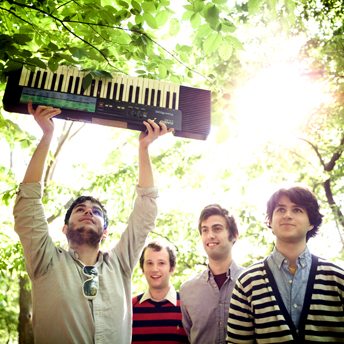
The Ivy League lads of Vampire Weekend worship both their Casio and the trees.
“When we signed with (record label) XL, if someone would have told me we would have sold 100,000 copies of our first record, I would have been elated,” said Chris Baio, the group’s bass player. “The fact that we sold 400,000 copies beyond that is just an extra bonus.”
Hot starts have derailed more than one promising band, but Baio said the group was talking about its follow-up effort just months after the first one dropped.
“We definitely felt some pressure as we started getting more and more success with the first record,” Baio said. “Very early on we were talking about the second album. I think we came up with the title ‘Contra’ within two months of the (first) album’s release.”
When it came time to record the follow-up, the band was able to push aside all the external pressure and make the album it wanted.
“If we were going for the easy commercial release it would have been five “A-Punks” and five “Oxford Commas,” Baio said, referring to two of Vampire Weekend’s biggest singles. “We didn’t think at all about the amount of records we had sold when we went in the studio to make ‘Contra.’ ”
Instead, they toyed with the formula, stretching some numbers beyond the four-minute limit imposed on “Vampire Weekend” and playing with arrangements.
“Some of the instrumentation on ‘Contra’ is a little bit weirder,” Baio said.
“There’s one song called ‘Diplomat’s Son’ that has abrupt changes that make it almost proggy in structure.”
When Vampire Weekend played Liberty Hall in Lawrence in September 2008, it emptied its repertoire in a 50-minute set. Standing in front of a static image of its only album’s cover, the band performed all of its songs, in addition to a couple of B-sides and new numbers.
“When we started, there was no light show, and we were using the house mixer,” Baio said. “Now we have our own sound and lighting guy. We have a background we’re proud of that changes at different points during the show and a good, new light show.”
Baio said both the production and set list will be improved when Vampire Weekend plays Starlight Theatre on Saturday with Beach House and the Very Best.
“I feel like we’re now putting on a full show at 85 minutes,” Baio said. “We may make some changes to the set, like if someone tweets a request, but for the most part we try not to change it. It has a nice ebb and flow we like, or rather just flow, no ebb.”
That makes the set similar to Vampire Weekend’s three-year history — one steady rush with few breaks, something the band isn’t interested in pushing any further.
“With the exception of when we went in and recorded ‘Contra,’ the past three years have been a steady grind,” Baio said. “We’re going to take some time between the second and third albums, and for now that’s still a ways off. We’re not going to be playing any songs off the third record this year.”
(Above: Solomon Burke takes a mid-day festival crowd to church with “If You Need Me.”)
By Joel Francis The Daily Record
Soul legend Solomon Burke died Sunday at an airport in Amsterdam. The 70-year old singer was best known for 1960s soul classics such as “Got To Get You Off My Mind” and “Everybody Needs Somebody to Love,” which was covered by Wilson Pickett and the Blues Brothers.
Although he made his name in the ‘60s, Burke released several stunning albums in the last decade of his life. His 2002 comeback “Don’t Give Up On Me” featured songs written specifically for him by Van Morrison, Elvis Costello, Tom Waits, Bob Dylan, Brian Wilson and Nick Lowe. In 2006, Buddy Miller helmed “Nashville,” an Americana-themed album featuring support from Emmylou Harris and Gillian Welch. 2005’s “Make Do With What You Got” is another crucial piece of Burke’s renaissance.
I never got to see Burke perform. In fact, unless I missed him at the old Blues and Jazz Fest, I can’t recall him even stopping in Kansas City in the last 15 years. I always hoped Bill Shapiro would be able to book him for one of his excellent Cyprus Avenue Live at the Folly series. Sadly, it was not to be.
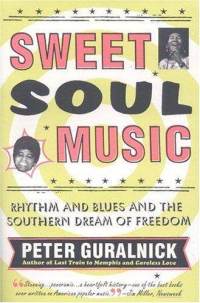
But while I missed out, thousands of fans around the world were able to enjoy the king of rock and soul up close. Writer Peter Guralnick devotes an entire chapter to Burke in his classic 1986 book “Sweet Soul Music.” Plenty has been written about Burke’s musical legacy; the following recollections from the book spotlight Burke’s colorful personality.
Burke during his glory days.
Burke was signed to Atlantic Records in 1961, in part to fill the hole that had been left when Ray Charles departed for ABC. Burke had, Guralnick wrote, “a combination of Sam Cooke at his mellifluous best and Ray Charles at his deep-down and funkiest, an improbable mix of sincerity, dramatic artifice, bubbling good humor, multitextured vocal artistry.”
Music was Burke’s love, but he always had a little something extra going on the side. Before signing to Atlantic, the Philadelphia-based singer struggled to bridge the gap between gospel and something bigger. When his first independent singles didn’t perform to expectation, he briefly left the music business to become a mortician, a skill he never completely abandoned. During an early Atlantic recording session, he begged out early to return to Philadelphia where he worked a snow-removal job for $3.50 an hour.
The ability – and willingness – to deliver a wide range of musical styles, from country to soul to gospel, not only made Burke a nationwide star, but disguised his race in a still very-segregated landscape. In “Sweet Soul Music” Burke described a Friday night gig in Mississippi that looked like a dream.
“They had those big flatbed trucks with the loudspeakers hooked up, and the black people was just bringing us fried chicken and ribs,” Burke recalled. “Oh, my God, they got corn on the cob, they making cakes and pies, they got hot bread, barbecued ribs …. Oh, man, I can’t begin to tell you – it looked like the festival of the year!”
Before the band went on, the sheriff instructed them when to take the stage and end their set, and promised protection and an escort back to the highway. When the band went onstage at the appointed time Burke noticed odd lights in the distance.
“All the way as far as your eye could see was lights, like people holding a blowtorch, coming, they was just coming slowly, they was coming toward the stage,” Burke said. “They got closer and closer. Man, they was 30,000 Ku Klux Klanners in their sheets – it was their annual rally. The whole time we played we played that show those people kept coming. With their sheets on. Little kids with little sheets, ladies, man, everybody just coming up, just moving under the lights, everyone dancing and having a good time.”
True his word, the sheriff made sure there was no trouble, and the band departed unscathed – not that they lingered any longer than necessary.
In 1964, radio station WEBB in Baltimore crowned Burke the King of Rock ‘n’ Soul. Burke took the title seriously and began performing from a thrown and wearing a crown. It was his royal cape, however, that caused the biggest problem.
If you haven’t read Peter Guralnick’s wonderful book, you are missing out.
The other reigning king of R&B had featured a cape in his shows for some time, and James Brown took offense to what he considered Burke’s stealing part of the act. The feud came to a head when Brown hired Burke to open in Chicago for $10,000. That was good money for a one-night stand in the early ‘60s, made even better when Burke was told he could use the James Brown Orchestra, saving his own band expenses.
Shortly before show time, Brown’s assistant met with Burke, ensuring Burke had his throne, red carpet, robe and crown all ready to go. Burke confirmed he was ready to go. When it was time to go on, Burke was standing in the wings in full regalia as the introduction started – only the emcee introduced Brown instead.
“James came on with his cape, dancing on the carpet. That was funny, man,” Burke said. “He says, ‘Your job, just watch me. Watch the real king.’”
At one point in the show, Brown asked Burke to come onstage and place his crown on Brown’s head. Even though he never performed, the crowd chanted Burke’s name all night.
“(Brown) says ‘Solomon Burke cannot perform because he’s been decrowned,’” Burke said. “I never did find out what ‘decrowned’ meant. But it was, as I say, very amusing.”
It was also an easy way to pick up ten grand. After the show Burke told Brown he’d be willing to do the whole thing over again the next night for a discounted price of $8,000. It was a generous gesture for Burke, who while not exactly cheap, recognized – like Brown – the value of making a buck.
For example, he frequently traveled with a mini convenience store of sandwiches, orange juice, tomato juice and ice water. As the odometer turned on the tour bus, so increased the price of Burke’s goods. Otis Redding’s brother Rodgers Redding remembers one tour with Burke.
“(Burke) always carried stuff like ice water, cookies, candy, gum; even though he didn’t drink at all, you’d go into his room at the hotel and see all this, Courvoisier, different kinds of wine, the whole room would be full of booze. He’d have a hot plate, frying pan, flowers, roses, everything, just for his guests, whoever would come by.
“I remember one tour,” Redding continued, “Solomon was selling his ice water for ten cents, sandwiches for a dollar – everybody just laughed at him. By the time they got halfway there, he was selling that water for a dollar, sandwiches for $7.50!”
Jim Crow laws in the South had given Burke a captive marketplace, but also provided a generous audience in each town. Burke taught his band never to eat out after a gig – the little old ladies would always provide a nicer meal for free in their home than they could imagine at a restaurant. Sometimes they offered more.
“Them old ladies would come out with their biscuits and fresh-baked pies, they’d say ‘Here’s some fresh milk for you, son, just be sure and bring back my thermos.’ Fried chicken, barbecued ribs, ham hocks, collard greens, man it was great,” Burke said. “Then them old ladies would say, ‘Son, would you drive my granddaughter out to the main highway? Don’t you worry none, she can find her own way back.’”
Every facet of Burke’s personality converged when he played the Apollo Theater at the height of his popularity in the mid-‘60s. Playing the famed theater was a dream for most performers, but Burke, as always, wanted a little something extra. He had language included in his contract that gave him control of the theater’s concessions that night. Known for strolling the aisles at intermission and hawking wares, this is what the theater owners thought they were agreeing to. Burke, however, had other plans.
The king of Rock and Soul on his throne.
Bobby Schiffman, brother of Apollo owner Frank Schiffman, picked up the story in his other brother Jack Schiffman’s book “Uptown: The Story of Harlem’s Apollo Theater.”
“Solomon arrived … with a cooker on which he fried pork chops to sell the gang backstage, and a carton of candy,” Schiffman said. “I decided to humor him – until the truck pulled up.”
It seems Burke had recently bought into a chain of drugstores and had an abundance of popcorn. He had taken to hauling a trailer of the stuff around to his shows and passing it out. So when the Apollo deal was struck, Burke thought he had the perfect means of ridding himself of the overstocked kernels.
“I had about 10,000 stickers printed up to go on the boxes of popcorn saying, ‘Thank you for coming to the Apollo Theater from Solomon Burke, Atlantic Records Recording Artist. Your Box of Soul Popcorn,’” Burke told Guralnick.
After nearly giving the Schiffman family a collective heart attack, the two parties hastily renegotiated. In Burke’s version of the story, he agreed to take a loss on the rest of his food and cede concessions back to the theater provided he could still distribute the popcorn. In Bobby Schiffman’s version the family bought the popcorn off Burke for $50,000 provided he not sell anything else in the theater that night.
“That’s been my problem my whole life in entertainment: I utilize my educational background and maybe that makes me a little too smart for my britches,” Burke said. “They assumed my intelligence was limited, that my ability to supply a demand was limited. I wasn’t even thinking about singing that week. My biggest shot was: get rid of that popcorn. But it was the greatest publicity thing that I ever did.”
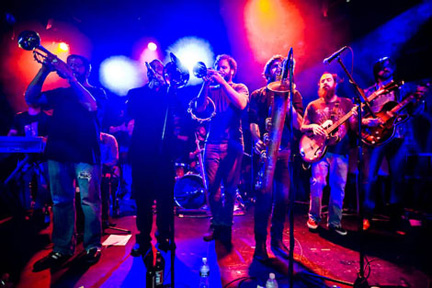
(Above: It will sound a lot like this at the Record Bar tonight when the Budos Band make their Kansas City debut. The show starts at 10 p.m. and tickets are $10.)
By Joel Francis
The Daily Record
The covers of the three albums released by the ten-piece instrumental ensemble the Budos Band depict a volcano, scorpion and cobra. In other words, objects that are fascinating, even mesmerizing, from afar, but deadly serious up close. Like those totems, the Budos Band’s music can be appreciated, but rarely trifled with.
It is fitting, then, that the ensemble came together at the turn of the century during the Afro-beat revival lead by the New York-based combo Antibalas. Although inspired by – and sharing musicians with – Antibalas, the Budos Band developed a distinct voice.
“After a year or so of playing Afro-beat we refined our sound, brought in funk and soul influences and tightened things up,” said Jared Tankel, baritone saxophone player in the Budos Band. “That Afro-beat influence is still there, but our sound has progressed in different ways.”
While the band’s 2005 self-titled debut was a jumping off point from Afro-Beat to soul, Tankel said their second album – “Budos Band II,” released in 2007 – shows the emergence of Ethiopian jazz influences. That growth continues on this summer’s “Budos Band III.” The album’s darker and heavier undertones hint at the band’s rock and metal influences.
“It’s not explicit, but I think the undercurrent of that influence is there. It might influence our arrangements or approach,” Tankel said. “It’s still heavy funk and soul, but there is a darker influence.”
Although the textures and arrangements vary, Budos Band songs come together in a pretty straightforward process. Guitarist Tom Brenneck or bass player Dan Foder come in with a rhythm bed, or Tankel and trumpet player Andrew Greene develop a melodic horn line.
“Tom and Dan are in lockstep communication at a very high level,” Tankel said. “Whether they are coming up with something or building off it, a lot of ideas come from those guys.”
After the quartet refines the idea, it goes into rehearsal, where drummer Brian Profilio listens to the parts, suggests transitions and helps develop an arrangement. The song is then presented to the other half of the band – the percussion section.
“They really know how to keep in the pocket of the song,” Tankel said. “They’ve been playing together for so long they can really fall in together and give it the texture that makes it a Budos Band song.”
Just don’t expect that process to include a vocalist any time soon.
“That’s something a lot of people ask, but I feel we’re big enough with 10 guys (in the band),” Tankel said. “I feel this third album is our truest voice of what we have going on right now. I’m not sure a vocalist would fit. We’re having too much fun right now visiting all these exciting places musically on our own.”
Like every other album released on the Daptone label, all of the Budos Band’s output was recorded at the label’s House of Soul studio/headquarters in Brooklyn, N.Y. and produced by Gabriel Roth, aka Bosco Mann, leader of the Dap-Kings. As the band behind Amy Winehouse’s “Back to Black” and Daptone flagship artist Sharon Jones, the Dap-Kings have become a hot commodity.
“There is some competition between us and the Dap-Tones, but what we each do is different enough that the competition is somewhat limited,” Tankel said. “They’re on the path to stardom. We kind of enjoy being the scrappy little brother, still playing smaller size clubs and bars.”
The true competitive spirit lies in the band’s roots with Antibalas. The groups’ shared musicians over the years have lead to a healthy level of one-upmanship.
“At this point I don’t know if there are any shared musicians simply because both bands have become busy enough guys have had to decide,” Tankel said. “We’ll definitely hear something great Antibalas or the Dap-Kings come up with and want do it even better.”


 “The reason why you see this happening again and again is because of the opportunity to play with some of the best musicians in the world,” Black said. “It’s not just country music, but R&B and the whole world of 1950s and ’60s pop recording.”




 joelfrancis.com