Review: Buddy and Bettye at Roots N Blues N BBQ Fest 2008

By Joel Francis

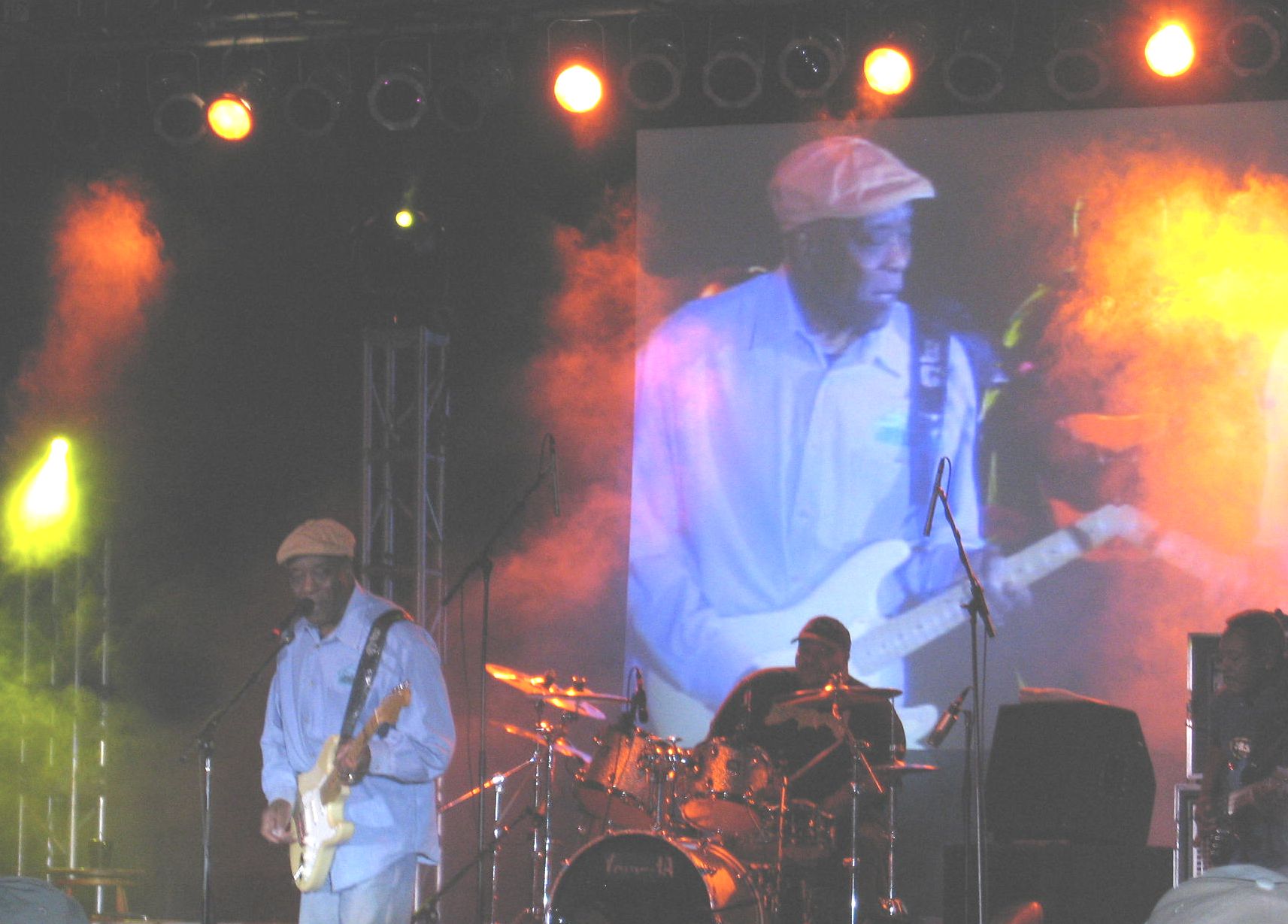
Buddy Guy

Buddy Guy is to the electric guitar what a match is to kerosene.

The 68-year-old blues legend lit into opening number “Best Damn Fool” like a house afire and closed out the Roots ‘n Blues ‘n BBQ Festival Saturday night in Columbia, Mo. with 90 minutes of barn-burning blues that skimmed through the encyclopedia of the genre.

After starting with a cut from his new album, “Skin Deep,” Guy tore through his classic “Hoodoo Man.” The song culminated with a guitar duel between Guy and his backing guitarist, who was more than capable of holding his own. After whipping the song into a frenzy, Guy put a finger to his lips and hushed both the crowd and his band. In whisper silence he noodled into “Love Her With a Feeling,” which merged with “She’s Nineteen Years Old.”

Guy’s mind is as frenetic as his fingers. He rarely plays a song all the way through, opting to mine the most joyous parts, then skip along to the next number that races through is brain. He treated the audience to a nearly two full minutes of his signature number “Damn Right I’ve Got the Blues,” before remembering he played Peggy Lee’s “Fever” at his last gig in Columbia 15 years ago and gave them all of that instead. No one seemed to mind.

“Boom Boom,” a tribute to John Lee Hooker, suddenly inspired “Strange Brew” and a shout-out to Eric Clapton and Cream. Guy hopped offstage and wandered through a shoulder-to-shoulder crowd a block deep and half a block wide to deliver “Drowning on Dry Land” and B.B. King’s “Rock Me Baby.”

Like a woman plied with one drink too many, Guy was able to coax things from his guitar beyond its natural limits. Armed with a cream-colored Fender Stratocaster instead of his trademark polka dot model, Guy hopped on a wah wah peddle to riff over the intro of Jimi Hendrix’ “Voodoo Child” before launching into Muddy Water’s “I Just Want To Make Love To You.”

The night ended with “Out in the Woods,” a boast about taming wild beasts. It was a great closing number, but also slightly redundant – at this point, Guy no longer had to prove how bad he was.

Bettye LaVette

In a perfect world, Bettye LaVette would be enjoying the same kind of success Tina Turner receives today.

After 47 years in the business and five years into her renaissance, LaVette’s raspy voice – no doubt enhanced by years of working smoky dives – is informed and enhanced by the pain and frustration of her wilderness years.

Her performance of early songs like “My Man – He’s A Lovin’ Man,” “Let Me Down Easy” and “Right in the Middle (Of Falling in Love)” hint at the career that could have been. But Lavette is not bitter. She can deliver a line like “I’ve been bruised, hurt and cheated on/ but still they couldn’t break me” (from “Close As I’ll Get to Heaven”) with both honesty and a smile.

Clad in a sleeveless black shirt and tight black pants, LaVette swayed and strutted across the stage channeling every note from her band, completely invested in every lyric. She added a swagger to her reading of “Joy” that songwriter Lucinda Williams could only dream of. Likewise, she added a level of sensuality to Leonard Cohen’s “You Don’t Know Me At All” unheard in the original. The sashay of her hips to a sizzling guitar solo said more than any of the verses.

Two years ago, LaVette put on a breathtaking performance at the Folly Theater in Kansas City. She was even better in the open air in Columbia and her band was the difference. For the earlier date, LaVette was backed by musicians who, like her, had been catapulted from juke joints to concert halls. Unlike her, they were not ready for the spotlight. Her new, four-piece band was tighter, funkier and able to keep up. They added a wash of psychedelic soul to “Sleep to Dream” and a superb gospel feel to “Choices.”

LaVette closed her 75-minute set with a riveting a cappella performance of a Sinead O’Connor song that summed up her life today: “I have all that I requested/And I do not want what I haven’t got.”

Doyle Bramhall

Drummer Doyle Bramhall grew up playing with the Vaughan brothers, so it makes sense that his Texas blues oscillate between the smooth strut of Jimmie and the rough and rocky bluster of  Stevie Ray. Unfortunately, there’s not much in between.

His five-piece band could turn it up when needed, like on a spirited cover of “Keep A Knockin’,” but for the most part they were content to keep the meat in the smoker instead of taking it out and slathering on the sauce.

Bramhall’s hour-plus set ran through songs from his solo catalog like “Top Rank Boxing” and “Cryin'” and a couple numbers he wrote with Stevie Ray. Predictably, “Change It” and “The House Is A Rockin’,” which closed the set, drew the greatest cheers.

Carolyn Crawford – “My Smile is Just a Frown (Turned Upside Down)”

Carolyn Crawford – “My Smile is Just a Frown (Turned Upside Down),” R&B #39

Smokey Robinson didn’t miss very often in the early ‘60s, but for some reason this number just didn’t hit like “Two Lovers,” “The One Who Really Loves You.” Why Robinson was able to jumpstart Mary Wells’ career with the aforementioned numbers while Crawford’s stalled is a mystery. All the right elements were in place – Crawford’s voice is delightful and inviting (perhaps the wrong mood given the lyrics) and the impeccable Motown sound hits in all the right places.

“My Smile” was the second and most successful of Crawford’s three Motown singles. After her departure from the label in 1965 she went back to being a backing vocalist, popping up in 1978 on Hamilton Bohannon’s disco single “Let’s Start the Dance.” That song reached No. 56. — by Joel Francis

Reunion bands: Ain’t nothing like the real thing

(Above: The two original members of Lynyrd Skynyrd and five other guys play “Free Bird.”)

By Joel Francis

When the Temptations and Four Tops took the stage Saturday night with only one original member in each ensemble, it raised questions of truth in advertising. Can a band be billed by its legendary name if only one of its musicians is an original legend?

Few bands are as fortunate as Los Lobos and U2 to have retained the same personnel since their debut. Some bands, like Wilco, have a different lineup on nearly every album.  But the reunion craze has accelerated hiring ringers to fill in for dead or uncooperative musicians.

When Journey played the Midland a few weeks ago, longtime singer Steve Perry had been replaced with Filipino Arnel Pineda, who was 8 years old when the band’s first album came out. No one complained, but Pineda’s job is essentially to sound like Perry while founding guitarist Neal Schon and the rest of the band deliver their signature sound.

Similarly, Yes were primed for a 40th anniversary tour when lead singer Jon Anderson fell ill. Rather than cancel the tour, the remaining members, who include Oliver Wakeman, son of original keyboardist Rick Wakeman, recruited a new singer off YouTube.

The majority of fans will tolerate a minor substitution. There were no grumbles when bass player Eric Avery sat out Jane’s Addiction’s second go-round. Most fans will recognize that age and time will prevent everyone from taking part. But when the skeleton of the original crew drag new faces out under the old name, it starts to take advantage of the people who kept the hunger for a reunion alive.

There’s also a slight double-standard in play. Few Beatles fans would be satisfied with a Beatles “reunion” featuring Paul, Ringo, Julian Lennon and Dhani Harrison, but The Who have completed not one but two successful (read: lucrative) tours minus the late John Entwistle and Keith Moon. Of course a true Fab Four reunion never happened, while The Who have launched a handful of “farewell” tours, but the rhythm section of Moon and Entwistle defined The Who’s sound just as much as John and George did for the Beatles.

Swapping drummers and bass players is one thing, but the road to finding a new frontman is fraught with peril. INXS failed miserably in their reality TV quest to carry on after the premature death of Michael Hutchinson. However, 14 years after Freddy Mercury died, Queen – minus drummer John Taylor – reconvened with former Free and Bad Company vocalist Paul Rogers. Many of the band’s East Coast concert date sold out quickly.

When Ray Manzarek and Robby Krieger hired Cult singer Ian Astbury to hit the road as The Doors they were faced with a lawsuit from drummer John Densmore and forced to tour as Riders on the Storm. The moniker didn’t alter any setlists, but it at least let the fans know they weren’t getting the same guys that worked together in the ‘60s.

Then there are the jazz orchestras that continue to tour despite the death of their bandleader. The Count Basie and Glenn Miller orchestras draw decent crowds when they visit the area, despite Miller’s disappearance during World War II and Bill Basie’s death a mere 25 years ago. The Gem Theater will host a Jazz Messengers reunion concert on October even though bandleader Art Blakey died in 1990.

The reason why a musician will resurrect his old band with ringers is obvious: Billy Corgan will sell a lot more tickets and albums as the Smashing Pumpkins than he would alone. And while there’s no clear-cut solution, I think this is a rare example of capitalism and artistry joining forces to provide the ultimate answer.

If a band’s catalog is strong enough, fans won’t mind shelling out $30 to $50 as they did Saturday night at Starlight to hear someone else sing “My Girl” and “Baby I Need Your Loving.” On the other hand, if bands plug on minus crucial components, they might be confined to the state fair/town festival circuit Three Dog Night and the Guess Who have been riding for years.

Review: The Temptations and Four Tops

(Above: Are they still tempting? “Papa Was A Rolling Stone” in 2008.)

By Joel Francis
The Kansas City Star

Halfway into his band’s set Saturday night at Starlight, Otis Williams, the last living original member of the Temptations, dedicated the evening’s performance to the late Motown producer Norman Whitfield.

It was fitting. Whitfield wrote several of the hits showcased during the night, like “Cloud Nine,” “Papa Was A Rolling Stone” and “Ain’t Too Proud To Beg.” It also matched the unofficial theme of the night: honoring the contributions of the departed.

The absence of late Temptations frontmen Eddie Kendricks and David Ruffin was obvious from the opening notes of “The Way You Do The Things You Do.” The group sounded good and the performance was strong, but something was missing.

Your verdict on the success of the show depends on how well you thought lead singer Bruce Williamson did filling some impossibly large shoes. It would be easy to cynically dismiss the night as nothing more than overblown karaoke, but it’s very hard to ignore the energy and delight they delivered to the crowd. The truth is these songs are so strong they sound good no matter who is singing them.

After opening with a cover of Marvin Gaye’s “How Sweet It Is (To Be Loved By You),” the Temps plowed through their classic catalog for nearly 30 minutes without taking a break. Every song had everyone on their feet, singing along.

Backed by a 10-piece horn section and four-piece band, the vocal quintet nimbly hopped from the propulsive “Ball of Confusion” to the tenderness of “I Wish it Would Rain” and the frustration of “Can’t Get Next To You.”

The only time the band veered from their prime years was to deliver a couple ballads. They also spiced up the set by performing a couple lesser-known numbers from their early Motown years. By the time they rolled into “My Girl” near the end of their 90-minute set it felt like the perfect conclusion. Unfortunately the song was followed by “Can I Get A Witness,” another Marvin Gaye cover. Despite its gospel flavor, the anti-climactic number trigged an exodus for the parking lot.

The Four Tops kicked off the night with a one-hour set. Although they sported as many original members – one – as the Temptations, they did not fare as well. The retirement of longtime lead singer Levi Stubbs was accentuated by slick production that was more Branson than Motown. Save for a pair of medleys that bookended the set, the band’s 1960s heyday was bypassed for ballads that bogged the momentum.

A tour-de-force cover of Heat Wave’s “Always and Forever” that included a long spoken introduction and tender, affecting vocals from Stubbs’ replacement Theo Peoples, drew the quartet’s biggest applause.

Although Starlight was far from sold out – partitions blocked off the back seating section and plenty of other empty chairs remained – few fans seemed concerned by the new faces singing the old songs. The consensus seemed to be, if these guys weren’t keeping the music and memories alive, would would? It’s a good question that doesn’t have an easy answer.

Setlists: Four Tops – Baby I Need Your Loving/Bernadette/It’s the Same Old Song/Just Walk Away/Still Water/Something About You/Ask the Lonely/Ain’t No Woman (Like the One I Got)/Always and Forever/Reach Out I’ll Be There/Standing in the Shadow of Love/I Can’t Help Myself (Sugar Pie Honey Bunch)

Temptations: How Sweet It Is (To Be Loved By You)/The Way You Do The Things You Do/Ain’t Too Proud To Beg/Ball of Confusion/I Wish It Would Rain/Just My Imagination/Papa Was A Rolling Stone/Can’t Get Next To You/You Are So Necessary In My Life/Get Ready/Treat Her Like A Lady/You’re My Everything/The Girl’s Alright With Me/Cloud Nine/Psychedelic Shack/My Girl/Can I Get A Witness

Review: Robert Plant and Allison Krauss


Above: Plant and Krauss get “In the Mood.”

By Joel Francis

Robert Plant may never outlive the shadow of his onetime partner Jimmy Page, but Tuesday night at Starlight he showed unimaginable growth with his unlikely new muse, bluegrass legend Allison Krauss.

The pair’s 23 song, two-hour set explored nearly every facet of American music with a subtly, nuance and beauty Plant’s former four-piece could only dream of. From a rockabilly cover of Ray Charles’ “Leave My Woman Alone” to Leadbelly’s “In the Pines” the pair’s voices waltzed in perfect, egoless harmony.

Clad in all black, Plant slinked around the stage like a cat burglar before spontaneously hopping into a spry dance step. Krauss stood in contrast in a bright floral dress, sporting a wide smile and, frequently, a violin on her shoulder.

“Black Dog” was reworked with a banjo delivering the main riff as Plant and Krauss’s voices circled each other on the call-and-response chorus. A spellbinding reading of “Killing the Blues” in the encore set may have been the ultimate demonstration of their musical synergy.

The hammer of the gods may have been missing, but classics like “When the Levee Breaks” (to which Plant snuck a snippet of Bob Dylan’s “Girl of the North Country”) and “Black Country Woman” had plenty of thunder. A cover of Townes Van Zandt’s “Nothin'” outrocked ‘em all, though. A harrowing tale of addiction much in the same vein as John Lennon’s “Cold Turkey,” one could feel the symptoms of withdrawal dripping from the stage as Plant unleashed a couple of his trademark primal wails.

It would be easy for a rocker of Plant’s status to command the stage and bring a captivating performance, but he was very much a team player. He turned the stage over to Krauss for a stunning a cappella reading of “Down to the River to Pray” (boosted by the stellar backing vocals of guitarist Buddy Miller and fiddle/banjo/mandolin player Stuart Duncan) and a haunting version of Tom Waits’ “Trampled Rose.” Even bandleader T-Bone Burnett, producer of Krauss and Plant’s “Raising Sand” album, the “O Brother Where Art There Soundtrack” got the spotlight for a song.

Other highlights included a chipper “Gone Gone Gone” performed in front of a shimmering gold curtain that helped the song feel like an autumn road trip. Plant’s solo hit “In the Mood” was married to the Irish melody of “Matty Groves” and was a welcome surprise. “The Battle of Evermore” was the rare Zeppelin number that wasn’t radically reworked.

The assembly of Miller, Duncan, Burnett, acoustic bass player Dennis Crouch and drummer Jay Bellerose defy the term “backing band.” Their collective resumes include work with Waits, Elvis Costello, Beck, Emmylou Harris and Steve Earle, to name a few. Amazing songwriters and musicians in their own right, each of these guys are more than capable of mesmerizing solo performances. Together, they might be the greatest band of ringers ever assembled.

The wealth of material worked up for this tour begs for proper release on an encore collaboration or concert release. The entire evening was a treat that deserves to be relived as many times as possible. Hopefully the tour of a lifetime will be preserved for even longer.

Martha and the Vandellas – “Dancing in the Street”

Martha and the Vandellas – “Dancing in the Street,” Pop #2

By Joel Francis

Poor, poor Kim Weston. Had she not passed on this song, she may be remembered for that being Marvin Gaye’s first duet partner. Instead, Martha Reeves got to place another jewel in her crown.

Funk Brother Benny Benjamin’s great drumming and the incessant, propulsive tambourine get the feet going before Marta Reeves opens her mouth. But once she does, Reeves embraces every syllable with her full voice, squeezing each note for maximum pleasure. The single was released at the end of July, 1964, but its not hard to imagine that even in the dead of winter, legions of listeners would heeded Reeves “invitation across the nation” and joined her in the streets.

The growing race riots throughout America soon cast the song in a different light. (Five years later, the Rolling Stones recast the number into the dark, political anthem “Street Fighting Man.”) It’s hard to erase the imprint that history has left on the number, but the heart of Reeves’ words is utopia: Whoever you are, whatever you wear, wherever you’re from, get outside, grab a guy (or gal) and dance. “All we need is music, sweet music.” If only life were this simple.

Like many of Motown’s signature songs, cover versions abound. The Kinks and The Who cut versions earlier in their career. Both fail to capture the joy in Reeves singing and translate the large soul arrangement to a rock quartet. Artists as diverse as Dusty Springfield, the Grateful Dead and the Carpenters also tackled the song.

Van Halen propelled the song back onto the charts nearly 20 years after the Vandellas’ hit. Eddie Van Halen’s post-disco keyboard part transforms the arrangement as Diamond Dave – never one to miss a party – celebrates the lyrics. The song is a high point on one of the group’s most puzzling albums. “Diver Down” contains not one, but two Kinks covers (which should provide a clue as to why they decided to do “Streets”), a polka featuring Alex and Eddie’s dad on clarinet, and closes with “Happy Trails.”

No discussion of “Dancing in the Street” would be complete without mentioning the horrific, oh-my-god-look-away cover performed by David Bowie and Mick Jagger. While the intent was noble – a charity single for Live Aid – the results were anything but. It didn’t help that the song was delivered at the nadir of these legendary careers. Bowie had just completed his dance-happy “Tonight” album and Jagger was in the middle of “She’s the Boss” and attempting to break up his legendary band. The production is sickeningly slick and the vocals sound tossed off. Never ones to be swayed by taste, the public sent the song to No. 7 on the U.S. chart (and clear to No. 1 elsewhere in the world).

The most intriguing version of “Dancing in the Streets” may not exist. I maintain a secret hope that somewhere there is a demo version of Marvin Gaye’s original performance. I have no idea if tape was rolling when Gaye, who co-wrote the song with Mickey Stevenson, presented the song to Reeves or if he attempted to cut a guide vocal, but I am optimistic an unmarked reel in the Motown archives will be unearthed and reveal this treasure. I got my hopes up a few years ago when the “Cellarful of Motown” rarities compilation was released, but so far nothing has surfaced. In the meantime, Martha and the Vandellas will more than suffice.

Shine on Rick Wright

Above: “Comfortably Numb” from the 1994 tour.

By Joel Francis

Seven a.m. Saturday morning, is a brutal time to be awake, particularly when you’re 16. It was even worse in the cold weather we faced that day, standing in line outside the Hy-Vee grocery store. But no one among the 300 or so of us lined up where complaining: Pink Floyd was coming to Kansas City.

It was the biggest crowd I’d seen at Hy-Vee. Guys were walking inside to buy six-packs of liquid warmth, passing cans along the line and relieving themselves against the wall. Elderly, crack-of-dawn shoppers paused in front of the assembly and asked if they could go right in. One old lady asked why we were all waiting in the cold. One guy responded we were hoping for a sale on melons. That drew a big laugh.

In the days before the Internet, you had to buy tickets in person. Although the gonzo days of camping out at the box office were long past, it still paid to show up somewhat early. At some point management would pass out line numbers to the assembly, then draw a number at random. The person holding that number was first and the line started from there. If you showed up after line numbers were distributed you (hopefully) got bad seats or heard those two dreaded words – sold out.

Finally our effort was rewarded. Upper deck, 40-yard line. Not the greatest seats, but we were in. The remaining tickets were long gone by dinnertime. Even though the band was playing Arrowhead Stadium, the largest venue in town, it was one of the fastest sell-outs in local history.

Winter gave way to spring and the excitement built. At long last the tour commenced at Joe Robbie Stadium in Miami. As the psychedelic trio snaked their way across America I was inadvertently trailing them. A church trip found us in Columbus, Ohio the night of the show. I remember the drunken revelry waking me in our motel room as the joyous throng returned. It was hard falling back asleep with that much energy flowing just outside the door. My summer job took me to Minnesota the day after the band played Minneapolis. Everywhere I went people were talking Pink. It was the summer of Floyd.

On June 20 the Pink Floyd descended on Kansas City. Our newspaper, The Star, ran a two-page chronicle of the band’s history. One fan interviewed for the story bragged about the line of dates he had tattooed on his arm – one for each time he’d seen the band. Some lucky, longtime fans had seen them play Kemper Arena on the Animals Tour in 1977. A lot more had seen them play Arrowhead just seven years earlier on the Delicate Sound of Thunder tour. I had never seen them before, but I didn’t care. I was getting to experience them now.

As the sun lowered over Interstate-70, Stadium Drive was gridlocked. People were openly smoking weed and drinking in their cars. They hopped out to take a leak behind trees and bushes in lawns along the way. One large bush was particularly popular, but when an overweight woman decided to use it about a dozen guys hurriedly scattered back to their vehicles.

There was a popular grocery store commercial where Arrowhead Stadium was transformed into a BBQ grill and smoke rose from the bowl as meat sizzled on its field. I imagine passing cars were treated to a similar spectacle as everyone inside lit whatever they brought to mellow out before the show. The band opened with “Astronomy Domine,” but thanks to The Star we already knew that. They didn’t do the complete “Dark Side of the Moon,” but we got several of its stronger tracks, including “The Great Gig in the Sky” and “Breathe.” Two vicious pigs emerged from the speaker towers during “One of These Days.”

The most powerful moment for me was “Comfortably Numb.” During “Numb” a huge mirror ball emerged from the soundboard and effects area near the back of the field. At the point where the song fades out on record, David Gilmour was just getting started. He laid into a ferocious solo as the mirror ball opened and slowly rotated. The 80,000-seat stadium was transformed into an intimate campfire as Gilmour, keyboard player Rick Wright, drummer Nick Mason and their accompanying musicians kept building and building. After what seemed like a rapturous eternity, the song thundered to an end and the band said left the stage. The encore set of “Hey You” and a searing version of “Run Like Hell” was a great coda to a spectacular evening.

Preserved for nearly 15 years, these memories came flooding back to me when I learned that Rick Wright lost his battle to cancer today. I saw Roger Waters on his solo tour at Kemper Arena in 1999 – he premiered the song “Each Small Candle” at our concert. I was surprised at how excited I got watching the quartet finally reunite on live TV in London just hours before the Get Up Kids final show at the Uptown Theater in 2005. Honestly, though, the Floyd haven’t been a major part of my listening diet for a long time. I guess the same thing that kept me away from their records for so long brought me closer to Rick Wright today – I can cue up any of his notes from any of their albums any time I want in my head.

Set list: (opening set) Astronomy Domine, Learning To Fly, Whad Do You Want From Me, On the Turning Away, Poles Apart, Take It Back, Sorrow, Keep Talking, One Of These Days //(second set) Shine On You Crazy Diamond, Breathe, Time, Breathe Rep, High Hopes, The Great Gig In the Sky, Wish You Were Here, Us and Them, Money, Another Brick in the Wall (part two), Comfortably Numb//(encores) Hey You, Run Like Hell

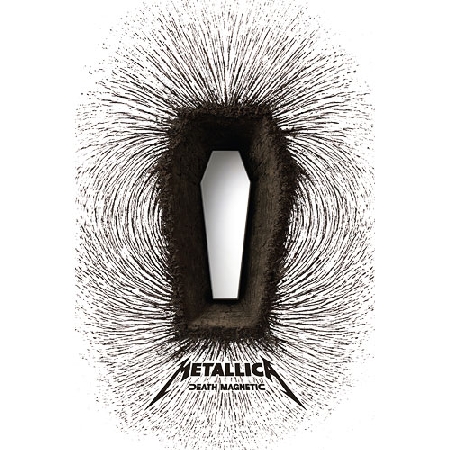
“Death Magnetic” is Metallica’s creative rebirth

By Joel Francis

For a band that takes five years between albums, quantity has never been an issue for Metallica. Indeed, every release for the past 20 years has clocked in at or well above the 70-minute mark.

The issue of quality has been a different matter. While each album may have flirted with the digital-capacity ceiling, they were also larded with lumbering material that didn’t stand up to multiple listens.

Until now.

“Magnetic Death” is Metallica’s finest album in a generation. Banished are the plastic drums and all-riff, no-solo approach of “St. Anger.” Gone is the straightforward, radio-approved songwriting of “Load” and “Re-Load.” Instead the quartet weaves through tricky time signature and twists through syncopated progressions with an energy that recalls “Master of Puppets” and “… And Justice for All.”

The first three songs tell the whole story. Lead guitarist Kirk Hammet is back applying his signature wah wah peddle accents. His guitar screeches, swoops and dives through solos like a Kamikaze fighter strafing the deck. James Hetfield’s voice nice blend of the melody learned on past few albums with his trademark primal growl. He’s still a lion, but one who’s learned a thing or two over a lifetime of hunts. Drummer Lars Ulrich has returned from the land of 4/4 time, relentlessly hammering sixteenth notes into his bass drums and navigating the intensity and dynamics of the material.

The centerpiece of the album is “All Nightmare Long,” an eight-minute campaign that starts with a dark funk intro and glides into the tight, stabbing attack that was Metallica’s bread and butter in the ‘80s. It is followed by “Cyanide,” another ‘80s throwback.

“The Unforgiven III” follows this powerful one-two punch with a piano and strings intro reminiscent of the “symphony and Metallica” experiment. The song serves two purposes – it allows the listener to catch his breath, and it shows the bands can still write a radio-ready single when it needs to.

Like all recent Metallica albums, “Magnetic Death” would benefit from some editing. Power ballad “The Day That Never Comes” is too much like the band’s ‘90s mainstream material, and while every other song rocks hard not every jam warrants more than five minutes (especially the 10-minute instrumental “Suicide and Redemption”).

These quibbles will mean nothing to the metalheads who exited at “Enter Sandman,” – this is the album they’ve been waiting for. And for those who jumped on the bandwagon at “Sad But True” the band has never sounded better.

Review: Vampire Weekend

Above: Vampire Weekend perform at Liberty Hall in Lawrence on Sept. 11, 2008. (photo by Melissa Meyer)

By Joel Francis

The Kansas City Star

While the official weekend doesn’t start until 5 p.m. Friday, the Vampire Weekend kicked off about 9:30 Thursday night.

The Brooklyn-based quartet breezed through their repertoire for a sold-out Liberty Hall crowd in little more time than it takes to play their only album. If anyone was disappointed they hid it well.

Vampire Weekend’s sound is best described as Paul Simon’s “Graceland” for the indie rock crowd. As on the album, “Mansard Roof” was the first number up. It, like most of the songs performed, sounded basically like it did on record. Which was the point – play the hits to the devoted and let them sing along.

Treated to the band’s first trip to the area, the crowd happily obliged. The high notes in the chorus of “Cape Cod Kwassa Kwassa” hung in the air like an organ in a cathedral. The call and response in “One (Blake’s Got A New Face)” nearly overwhelmed the band and even the balcony stood up to dance for “A-Punk.”

The two new songs were just as popular as the familiar material. The first new song was little more than guitar and drums over an ‘80s drum program. Temporarily freed from playing, bass player Chris Baio gleefully hopped around on the balls of his feet. Both it and the other new number were very much in the same vein and spirit as the other songs.

Overt references to Kansas drew bigger cheers that the subtle ones. Everyone yelled when the lyrics to “Byrn” namechecked The Sunflower State, but few recognized the snippets of “Over the Rainbow” keyboard player Rostam Batmanglij floated between songs.

After just 50 minutes onstage the band called it a night. Lead singer and guitarist Ezra Koenig apologized: “We promise next time we come we’ll have more songs to play for you.”

Setlist: Mansard Roof/Campus/Cape Cod Kwassa Kwassa/M79/new song/Byrn/Boston (The Ladies of Cambridge)/A-Punk/One (Blake’s Got a New Face)/I Stand Corrected/The Kids Don’t Stand a Chance/new song/Oxford Comma/Walcott (encore)

Four Tops – “Baby I Need Your Loving”

Four Tops – “Baby I Need Your Loving,” Pop #11

Few had heard of the Four Tops before this song was released in the summer of 1964, but the public quickly became acquainted. The quartet’s debut single sold over a million copies – a feat equally impressive in today’s iTunes era – and landed just outside the Top 10.

Songwriters and producers Holland-Dozier-Holland went the Phil Spector route in the studio, hauling in a 40-piece string section and supplementing the Four Tops’ voices with backing vocals from the Andantes, a female trio also signed to Motown. Spector’s Wall of Sound productions were simultaneously big and small. For all the attention lavished on the strings and vocals, check out the echo on those finger snaps. That’s ultimate flattery for Spector.

Levi Stubbs’ lead vocals capture the ache and longing of a lover hoping to be forgiven. The way he sings the line “lately I’ve been losing sleep” perfectly captures a midnight soul search in a bed too big.

While the competition between the Four Tops and Temptations raged within Berry Gordy’s Hitsville U.S.A. studio, on the carts and among fans, the Four Tops introductory offering more than equaled the Temptations breakthrough “The Way You Do the Things You Do.”

An incredibly durable number, the song charted in various arrangements (and punctuations, appearing as both “Baby I Need Your Lovin'” and “Baby, I Need Your Loving,”) for nearly 20 years after it was released. Folk singer Johnny Rivers had the first cover hit in 1967, but it has also been a hit for lounge singer O.C. Smith, soul singer Geraldine Hunt, pop idol Eric Carmen and, finally, funk singer Carl Carlton in 1982. — by Joel Francis