The Miracles – “The Tracks of My Tears,” Pop #16, R&B #2
By Joel Francis
Smokey Robinson had little to prove in 1965. Since joining Motown four years ago, he had not only given the label its first million-selling single and its first No. 1, but written, produced or performed on scores of classic tracks. Robinson was rewarded for all his work when his name was pulled out of the Miracles and given top billing.
“The Tracks of My Tears” was one of the first singles credited to “Smokey Robinson and the Miracles,” but Robinson wasn’t resting on his laurels. His heart wrenching vocals may be topped only by Levi Stubbs’ performance on “Ask the Lonely” as the label’s most powerful performance to date. With a voice packed full of heartache and longing, Robinson pulls back the mask, revealing his naked heart to his former lover.
Exhausted after meticulously maintaining his façade for the evening, and the truth seeps out of Robinson’s character when he’s finally alone. Ah that the pain of love could be so melodic. The song starts as if out of dream, introduced by the subtle but spectacular guitar line of Marv Taplin. The Miracles’ harmony vocals are the reassurance and support that are always absent in these dead-of-night confessions. The orchestra, xylophone and drumming are all perfectly arranged and placed. Everything pauses for the syncopation of the line “My smile is my makeup I wear since my break-up with you.”
“The Tracks of My Tears” is frequently lauded as not only Robinson’s best number, but one of the greatest songs of all time. It is also the Miracles’ most-covered song. Less than two year’s after the Miracles’ hit, Johnny Rivers cut a version. Aretha Franklin’s reading from “Soul ’69” is just wonderful. Her celebrated voice is framed by a gorgeous finger picked guitar and a tough brass arrangement that accentuates without overpowering. Most recently, the song has been covered by Dolly Parton and Elvis Costello, who sometime performs it in concert as a medley with his like-minded hit “Alison.”
Although the song is nearly 45 years old, it hasn’t aged a minute.
The Contours – “First I Look at the Purse,” Pop #57, R&B #12
By Joel Francis
The name on the label says “The Contours,” but all four of the singers who found success with 1962’s chart-topping “Do You Love Me” were gone by the time this number came out three years later.
A novelty song penned in the vein of Jerry Lieber and Mike Stoller’s classic Coaster’s numbers, it’s hard to imagine songwriters Smokey Robinson and Bobby Rodgers presenting this number to their group, the Miracles. But since none of the Contour’s follow-up efforts had cracked the Top 40, they had a little leeway for fun.
The production combines the Motown Sound with a spirit similar to Jimmy Soul’s 1963 hit “If You Wanna Be Happy.” In Soul’s song, ugly women cause fewer problems that pretty ones. For the Contours, fiscal assets are more desirable than physical ones. Or as the lyrics so eloquently put it, “If the purse is fat/that’s where it’s at.”
It’s not surprising the number failed to catch on, although it did prevent the group from becoming a one-hit wonder. What is surprising is the longevity of the group. As the original lineup fell away, Berry Gordy kept replacing members. Billy Gordon, the man who sang lead on “Do You Love Me” was replaced by Joe Stubbs, brother of Four Tops vocalist Levi Stubbs. After Stubbs left, Dennis Edwards was recruited to front the group.
It seemed the end for the Contours when the Temptations plucked Edwards to be their frontman in 1968. Founding member Joe Billingslea had other plans. Nearly 10 years after he left the group, Billingslea, a founding member, resurrected the name and hired four other singers to play and record with him around Detroit.
The band found themselves in demand after the Motown 25 concert and the 1988 film “Dirty Dancing,” which prominently featured “Do You Love Me.” The subsequent Dirty Dancing Concert Tour found Billingslea reunited with his old bandmate Sylvester Potts and recording for Motor City Records. In the early ’90s, Potts split from Billingslea’s quintet and started his own four-piece lineup, also called The Contours. Today, both Joe Billingslea and the Contours and The Contours featuring Sylvester Potts can be found on the oldies and county fair circuit.
Above: The Rev. Al Green brings “Love and Happiness.”
By Joel Francis
After barely over an hour onstage, Al Green said goodnight, grabbed a small black duffle bag and exited. The gesture was symbolic of the evening: the bags were packed and he was ready to go.
Saturday’s concert at the Midland Theater was the final stop on Green’s eight-month tour that took him across America and around Europe; he was anxious to get home.
“Two month is a long time,” he said. “Even a preacher can’t go that long.”
That might explain the truncated set – 77 minutes, with no encore – and why it always felt like Green had one foot off the stage.
For the most part, Green let his 13-piece band and the audience do most of the heavy lifting. After introducing the first couple lines, Green was all too happy to let the audience take over his songs. Beaming from ear to ear, he was content to scat guide vocals over the crowd’s singing and hand roses to women in the front rows.
Green Hovered like a cloud over the numbers, dipping in just long enough to let out a scream or prove the health of his pipes. When he fully immersed himself in a song, the result was even better than his allusions. During “Tired of Being Alone” Green dropped to his knees and uncurled a falsetto that raised goose bumps. He poured his heart into “Amazing Grace” and came alive during a medley of Motown and Stax numbers that inspired him as a boy.
It would be easy to assume Green was simply bored with his repertoire if he wasn’t so perpetually joyous. After overcoming some early monitor problems, Green chatted effusively to the crowd, healing the Kansas/Missouri divide, telling stories from the tour and preaching a little gospel. Since Green had tossed “Let’s Stay Together” out a half-hour into the night, he closed with his next-biggest song, “Love and Happiness.” At end the band vamped over the groove, stretching the number out as Green thanked his crowd again and again, but the effect didn’t work – it was still too soon for him to leave.
With the premium seats going for $70, the evening cost about a dollar per minute after service fees. While there are worse ways to spend a night out, there wasn’t enough of the man whose name was printed on the ticket to justify the price.
Setlist: I Can’t Stop; Let’s Get Married; Lay It Down; Stay With Me (By the Sea); Everything’s Gonna Be Alright; Amazing Grace/Nearer My God To Thee; Let’s Stay Together; Medley: How Can You Mend a Broken Heart / Here I Am (Come and Take Me) / I Can’t Help Myself (Sugar Pie Honey Bunch) / My Girl / Bring It On Home to Me /(Sittin’ On) The Dock of the Bay / You Are Everything); Tired of Being Alone; I’m Still In Love With You; Simply Beautiful; Love and Happiness
Above: Watching the Dirtbombs rip through “Ever Lovin’ Man” at The Bottleneck was one of the Top 10 shows of the year.
By Joel Francis
(Note: All concerts in Kansas City, Mo., unless otherwise stated.)
10. Dirtbombs, The Bottleneck, Lawrence, Kan., May 25
The Dirtbombs didn’t get started until midnight, but no one seemed to mind. With barely three dozen fans in the club, just showing up was a sign of devotion. For the next hour, singer/guitarist Mick Collins and his band plowed through solid cuts like “Ever Lovin’ Man” off their latest album, “We Have You Surrounded,” and soul covers like Sly and the Family Stone’s “Underdog” from their classic album, “Ultraglide in Black.” Collins hails from the Motor City and he embraces its every aspects, combining the soul of Motown with the soiled fuzz of the White Stripes and Stooges.
9. Carbon/Silicon, Record Bar, March 29
It isn’t often a member of the Clash comes to town, and even more rare they’d play a 200-person room like The Record Bar. With barely a nod to his old band, guitarist/songwriter/singer Mick Jones displayed the chops and charm that made him a legend. Read the full review.
8. Bruce Springsteen and the E Street Band, Qwest Center, Omaha, March 14
Bruce Springsteen closed his “Magic” tour with a three-hour performance at the Sprint Center. I didn’t make that one, but I did see his warm-up gig a few months earlier in Omaha. Springsteen and company treated the crowd to most of his latest album and liberally sprinkled classics like “Jungleland,” “She’s the One” “Thunder Road,” which featured a guest appearance from hometown boy Conor Oberst. Read the full review.
7. Rhett Miller, Largo, Los Angeles, April 11
The Old 97s had barely reconvened when Rhett Miller struck out alone for two nights on the tiny stage at Largo, Los Angeles’ legendary artist-friendly club. He dusted off several 97s favorites and debuted songs from the group’s upcoming album “Blame It On Gravity.” Miller also tromped through his solo catalog and treated the intimate crowd to his favorite covers. The appearance of pianist Jon Brion midway through the set was the cherry on the sundae. The two musicians renewed their musical friendship through songs like David Bowie’s “Queen Bitch” and Wilco’s “California Stars” that had the pair grinning like schoolboys. Miller announced he was recording the show for future release. Keep your fingers crossed this pops up.
6. Sharon Jones and the Dap-Kings, Granada Theater, Lawrence, Kan., Jan. 29
It was after 11 p.m. on an icy winter night when the Dap-Kings took the stage. Within minutes it felt like a hot 1966 summer afternoon. Clad in matching suits, their three-piece horn section complementing the three-piece rhythm section, the Dap-Kings – go-to performers for everyone from Amy Winehouse to Seattle’s Saturday Knights – settled into a solid soul groove. Moments later, the diminutive Sharon Jones skittered across the stage as if she were shot from a cannon. Like a perfect hybrid of James Brown and Tina Turner, Jones partied through songs from her three albums and taught the crowd a few new dance moves. The heat from the band must have pushed the overall mercury up, because when it was all over outside didn’t feel as cold.
5. Randy Newman, Folly Theater, Oct. 11
Randy Newman found a break from his day job scoring movies to make a quick run to the heartland and give his first Missouri show in a generation. Working primarily from this year’s “Harps and Angels” album, Newman’s solo set was stocked with more than two dozen catalog favorites peppered with hilarious asides, all performed in front of a sold-out, appreciative audience. Read the full review.
4. Robert Plant/Alison Krauss, Starlight Theater, Sept. 23
Jimmy Page and John Paul Jones may be beating down Robert Plant’s door to reconvene Led Zeppelin, but Plant would be better served sticking with Alison Krauss. With a muse mightier than his former bandmates can imagine, Plant and Krauss delivered two hours of spellbinding music with arguably the greatest backing band of all time. Read the full review.
3. Dave Brubeck, Folly Theater, Oct. 2
Dave Brubeck quit touring Europe a few years ago, so the 88-year-old jazz pianist’s occasional treks to Kansas City are even more prized. Most people know Brubeck from his groundbreaking quartet with Paul Desmond, but his new group is arguably as good. Randy Jones did more with the nine pieces in his drum kit than most drummers can do with triple the amount, while saxophone player Bobby Militello applied sheets of sound and originality to Desmond’s well-worn and much-beloved “Take Five.” The quartet encored with a brief, smirking reading of Braham’s “Lullabye.”
2. Radiohead, Verizon Wireless (formerly Riverfront) Ampitheater, St. Louis, May 14
Radiohead’s last concert in the area was on the “Hail To the Thief” tour and I have been kicking myself for five years for missing them. No longer. The band’s set burned with the intensity of a supernova, climaxing with “Fake Plastic Trees.” Early detours through the “Idiotheque” and all of “In Rainbows” made the evening both invigorating and draining – and just enough to hold me over until the next tour. Read the full review.
1. Tom Waits, Fox Theater, St. Louis, June 26
Hipsters, hippies, bikers and beatniks alike populated the sold-out congregation for Tom Waits first visit to St. Louis in a generation. He made it a night to remember, performing rarities like “Heigh Ho!” (for the only time on the tour), old favorites like “Rain Dogs” and new gems like “Day After Tomorrow.” Oh yeah, and advice on how to bid on eBay. Read the full review.
Above: Smithsonian patrons deserve a space to discover and learn more about American musicians like Big Bill Broonzy.
By Joel Francis
The Smithsonian National Museum of American History’s two-year, $85 million facelift is a lot like the plastic surgery aging stars get – it attracts a lot of interest at first and does a good job of hiding the wrinkles, but ultimately accentuates all the other flaws.
A visit to the renovated Washington, D.C. museum in the week after it re-opened to the public revealed Kool Herc’s turntable and Afrika Bambaataa’s pendant as the most prominent exhibits of 20th Century American music. There was no acknowledgement to the richness of the museum’s own music archives and label, Smithsonian Folkways.
The National Museum of American History needs a showcase dedicated to the legacy of Smithsonian Folkways recordings. A place for visitors to learn about its artists – not only better-known names like Pete Seeger, Guthrie and Leadbelly, but the anonymous rural musicians label founder Moses Asch sought to document.
Asch founded Folkways Records and Service Co. in 1948 to “suppor(t) cultural diversity and increase understanding among peoples through the documentation, preservation, and dissemination of sound,” Much like his contemporary and fellow musicologist Alan Lomax, Asch captured songs from primitive villages to New York City’s avant-garde, ancient Greek literature to Russian poetry.
The permanent space should include an interactive map where visitors can hear and learn about indigenous music styles in a given area, and see how those forms migrate and influence each other. They should also house several kiosks where listeners can listen to recordings while learning about the performers. Rotating exhibits of instruments, lyrics and other memorabilia would also enhance the space.
When the Smithsonian acquired Asch’s library after his death in 1987, they adopted his mission of document “the people’s music” as their own. They also guaranteed that all the label’s 2,000 releases would forever remain in print. One wouldn’t know this promise has been kept by visiting the museum’s gift stores.
In the old configuration, the main retail store on the bottom floor was a clearinghouse for the Smithsonian Folkways catalog. Nearly every title and artist was at the shopper’s fingertips. All that remains today is a few compilations of blues, bluegrass, train and labor songs and the essential Woody Guthrie box set. Patrons deserve better than this. They deserve a place to flip over the rocks of American roots music and discover what lies underneath.
Addressing this need would not correct all the problems of the renovated museum. The public would have been better served had the curators waited until all their exhibit space was completed before re-opening. More than a third of the building is still under construction and closed to the public. But the tapestry of American music the Smithsonian has preserved is too rich to be swept under the rug.
Four Tops – “I Can’t Help Myself (Sugar Pie Honey Bunch),” Pop #1, R&B #1
By Joel Francis
The piano riff that kicks off this tune is instantly and universally recognizable – and with good reason. Depsite the apologetic lyrics, Levi Stubbs’ magnificent vocals are a ray of sunshine. He might be singing that he’s “weaker than a man should be,” but Stubbs is clearly having more fun than he should for a man in his predicament.
The string arrangement echoes the upbeat, impulsive melody – pay attention to the delightful vibraphone line – while Funk Brother Richard “Pistol” Allen’s offbeat drumming keep the feet moving. Stubbs’ vocals sound like the direct descendent of Kansas City, Mo. jazzman Big Joe Turner’s “shout” singing style. If they couldn’t bring his lover back, then the saxophone interlude should have sealed the deal.
Holland-Dozier-Holland’s song capped five straight No. 1 hits with the Supremes. Although the trio penned the Tops’ early hits like “Baby I Need Your Loving,” Berry Gordy thought they had lost their touch and passed the Tops to Mickey Stevenson and Ivy Jo Hunter’s pen for “Ask the Lonely.” After the success of “I Can’t Help Myself,” Holland-Dozier-Holland were given nearly exclusive rights to the Tops’ singles for the next three years.
In the summer of 1965, this song fought for the No. 1 spot with The Byrd’s “Mr. Tambourine Man” and “I Can’t Get No (Satisfaction)” by the Rolling Stones. What a summer that must have been.
“Ooo Baby Baby” didn’t hit the top of the chart, or even sell a million copies, but it was one of THE songs of the summer in 1965.
Despite a baby-talk title, the song starts melancholy and doesn’t waver. An unfaithful Smokey Robinson is heartbroken, miserable and penitent. Check out the way he sings the word “crying” at the end of each verse, echoing Roy Orbison’s heart-wrenching single of the same name. Robinson’s creamy vocals help the pain go down smoother, but the way the last note is left hanging, it’s clear there is no hope or delivery ahead.
And yet, Robinson and Pete Moore’s song was one of the most-played songs of the summer, and one of the Miracles’ most-covered tunes. Linda Ronstadt found a 1979 hit with the number, but not before Ella Fitzgerald, the Five Stairsteps and a slew of others tried their hands. – by Joel Francis
Brenda Holloway – “When I’m Gone,” Pop # 25, R&B #12
By Joel Francis
Brenda Holloway isn’t the biggest name in soul music, but she was on top of the world when this song hit 1965. She opened for the Beatles on their U.S. tour that year, and performed at the legendary Shea Stadium show.
The story behind “When I’m Gone” is more interesting than the song itself. Originally slated to be Mary Well’s follow-up to “My Guy,” the song was given to Holloway when Wells spurned Motown for 20th Century Fox Records. Despite being an alto to Well’s soprano, Berry Gordy thought Holloway was best-suited to put lead vocals to Well’s backing track.
“When I’m Gone” wasn’t as big a hit as “Every Little Bit Hurts,” but Holloway kept making singles for the next three years. Shortly after recording the original version of “You’ve Made Me So Very Happy” (later a huge hit for Blood Sweat and Tears), Holloway retired from the music business. Deeply religious, Holloway was disillusioned with Motown and conflicted about the lifestyle expected of a young star. Although she was just 22, Holloway had been making records for 6 years. After a 12-year absence, she returned with gospel album in 1980 and a pop album in 1999.
Martha and the Vandellas – “Nowhere To Run,” Pop #8, R&B #5
Every element positively soars in this song. The brief, simple horn riff lifts off and Martha Reeves’ voice pushes the listener into the stratosphere. Funk Brother Benny Benjamin’s bouncing drums and ascending backing vocals from the Vandellas keep the track in the air well past the run-off groove.
Reeves’ vain search to shake a no-good lover from her mind is further propelled by a light tickle of piano and hard-driving percussion than included a pair of snow chains bolstering the tambourine placed front and center in the mix. Holland-Dolland-Holland clearly knew what they were doing with this number. Heartbreak has never sounded so jubilant. – by Joel Francis
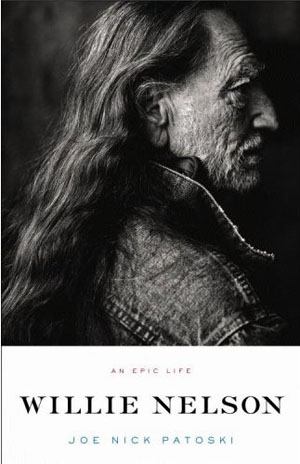
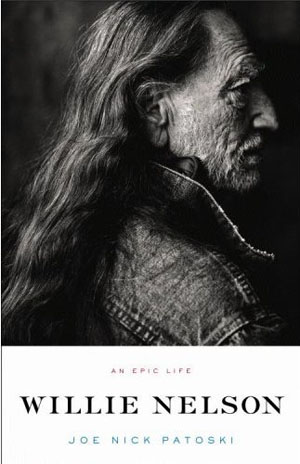
“Epic” is the key word in the title of Joe Nick Patoski’s 567-page biography on Willie Nelson. Drawn from dozens of interviews and scores of oral histories, books and articles, Patoski paints a comprehensive picture of his fellow Texan.
If Patoski skimps on Nelson’s childhood – less than 50 pages are devoted to his years as a minor – he makes up for it by piling chapter on top of chapter about Nelson’s early family life, struggles as a disc jockey and songwriter for hire and, finally, as a nascent country performer. Patoski also devotes an entire chapter on IRS struggles and puts in strong perspective how such horrible accounting could have transpired.
But while Patoski’s journalism skills and research is impeccable, he spends too much of his time telling and not enough showing. For example, there piles of anecdotes about Nelson’s generosity and his inability to say no. He sticks around for hours after concerts to sign autographs, and lavishly gifts his friends and family. When a credit card company asked him to put his face on their card, he said yes without thinking of the consequences. Manager Mark Rothbaum has to explain the implications.
“Well think about it: A third of all credit cards go into receivership, so a third of your fans will go bankrupt, and they will have to look at your picture on that card,” Rothbaum tells Nelson. “Every time they see your picture they will think, That prick is making money off of me.”
Nelson asked Rothbaum to get him out of the deal, but the reader is never given understanding of what compels Nelson to be so affable.
The person who shines best is Nelson’s longtime drummer Paul English. English doesn’t appear until a third of the way through, where he initially surfaces as a pimp who drills and robs pinball machines and operates backroom card games. When Nelson’s drummer failed to show up for a radio session, English is recruited. Even though he had never played drums before, but the experience went well enough English accepted Nelson’s invitation to walk away from the lucrative prostitution business and join the band on the road.
English’s skills with a gun and knife were handing in prying a reticent promoter away from the band’s money and bailing Nelson’s smart mouth out of fight. English was never shy about displaying the pistol he always carried, which was usually all it took to calm any disagreements. English’s black market background also came in handy procuring marijuana for the band.
Patoski’s meticulous exploration sheds light on Nelson’s long walk to fame, where record labels and producers try in vain to pigeonhole the artist, and Nelson’s inability to fit into their boxes, even when he gamely goes along. Later, as Nelson’s fame and wealth grows, he builds a studio on his Texas estate. Patoski conveys a laid-back atmosphere where music flows as freely as beer and songs are recorded as effortlessly as lighting a roach. That Nelson practically lived in his studio explains the prolificacy of his catalog (he released two albums in 2008), and the easygoing environment explains how his financial problems reached the boiling point.
The vision of Nelson unearthed in the book refuses to be worried about anything except his music, even when doing so compromised his family and friends. His nature reminds me of a line from the film “Walk the Line.” When Johnny Cash tells June Carter on the back of the tour bus that everything will work itself out, she replies “No, John. People work them out for you, and you think they work themselves out.”
That Nelson’s music has attracted rednecks and hipsters alike is less mystifying after this thorough examination of the man. The songs are merely an extension of the personality: Nelson is willing to meet anyone anywhere for a good time. The access Nelson provided for this thick tome can rest proudly alongside his albums as a testament to the man’s generosity.


 joelfrancis.com