(Above: Booker T. Jones performs “Time Is Tight” in Dublin earlier this year.)
By Joel Francis
Soul legend Booker T. Jones’ concert Sunday night at Knucklehead’s was the tale of two shows. The first half of Jones’ two-hour set was solid, if unspectacular and marred by sound and equipment issues. After a 20-minute recess to fix the technical problems, the band returned rejuvenated and tore through powerful readings from the MGs catalog.
Jones’ organ playing has always been more powerful than his singing voice, but both his instruments were drowned out by Troy Gonyea’s guitar. The quartet started off fine with the opening trio of songs from this year’s “Potato Hole” album, but it was difficult to hear Jones’ between-song banter and his singing on “Born Under A Bad Sign” was inaudible.
That song earned a few scowls toward the soundboard and a staff member hurriedly setting up a second mic at the organ. Jones took a mulligan on that one and ran it through again with somewhat improved results. The sound problems followed Jones across the stage when he strapped on a black Stratocaster to pay tributes to his friends and fellow Stax legends Isaac Hayes and Otis Redding.
Hayes and David Porter’s “Hold On, I’m Comin’” was marred by feedback that made “Sittin’ on the Dock of the Bay” unlistenable. After the sound crew proved unable to fix what Jones identified as “440 or 360 frequency” hum, the band took a technical break.
With the sound fixed, the band emerged a new beast. Jones’ organ was crisp and each instrument was more distinct. The band seemed happier, too, and made up for the false start. New song “Native New Yorker” sounded like a lost Allman Brothers track and Drummer Darian Gray updated a couple MGs tracks, including “Hip Hug Her” and “Hang ‘Em High” with freestyle rap vocals. “Melting Pot” built slowly over Gonyea’s chicken-scratch guitar before exploding at the gospel chorus. The 10-minute reading gave the band plenty of time to stretch out and play off each other.
The main set ended with a thunderous “Time is Tight” that opened with organ and bass before the rest of the band kicked down the door. The band scattered after that song, leaving Jones on his organ bench talking to fans and posing for pictures. The musicians reappeared for a spontaneous, powerful roll through Jones’ wonderful, upbeat arrangement of Outkast’s “Hey Ya.”
Knucklehead’s was about three-quarters full of appreciative fans who didn’t hesitate to jump to their feet and crowd the dance floor. “Green Onions” drew a big crowd in front of the stage early, and nearly everyone was on their feet for the second half of the show. It had been a long time since Jones last played Kansas City, and everyone in the house – musicians included – were graciously patient and willing to make sure the evening turned out all right. The ultimately spectacular evening was well worth the wait.
Setlist: Pound It Out, She Breaks, Warped Sister, Green Onions, Born Under A Bad Sign, Hold On, I’m Comin’, Sittin’ on the Dock of the Bay, Potato Hole, Hip Hug Her, New York Native, Melting Pot, Hang ‘Em High, Time Is Tight, (encore) Hey Ya
(Above: Robert Randolph and the Family Band examine the “Man in the Mirror.”)
By Joel Francis
The Kasnas City Star
As the temperature dipped into the low 60s Saturday night at Crossroads, Robert Randolph and his family band mounted a two-front war: against the elements and against early onset hibernation in the crowd.
Pedal steel virtuoso Randolph and his six-piece band immediately conquered the weather. Opening with the buoyant “Good Times (3 Stroke),” Randolph frequently jumped out from behind his instrument to hop around like his own hype man. That proved more than enough to get the blood flowing.
For whatever reason, the band had more trouble winning over the audience. The third-full venue was populated with people who would rather converse and take their pictures on cell phones than dance and listen. The only times the crowd was engaged was when Randolph gave them something to do, like clap or sing. Everything else was background music.
When the night’s first Michael Jackson tribute – “Man in the Mirror,” delivered gospel-style by Randolph’s sister Lenesha Randolph – failed to rouse the crowd, Randolph segued into a John Lee Hooker boogie. Inviting dozens of ladies onstage to shake their hips did the trick during the number, but once the song was over it seemed everyone wanted to talk about what or who they saw onstage.
“Nobody” offered plenty of participation during the chorus and several encouraged call-and-responses. For a moment it seemed like everything would gel, but mic problems capsized “Gilligan,” scat-vocal number about the Minnow’s castaways played on a square Bo Diddley guitar, and the crowd grew restless with the ensuing jam.
Finally, after 75 minutes onstage, Randolph got the crowd on board. “I Don’t Know What You Come To Do” had plenty of cues to clap and stomp along and the audience joyously obliged. That bled into “Ain’t Nothing Wrong With That,” which teased the riff to “Whole Lotta Love” and featured an organ sound straight out of “96 Tears.”
The second Jackson tribute went over better than the first. Sliding into the melody of “Rock With You” after a brief encore break, Randolph, who has been playing MJ songs long before the King of Pop’s passing, gave the crowd a forum to both sing and dance. The night ended with “Roll Up,” an unreleased number similar to what Randolph had been serving all night. This time everyone was up for it.
Randolph’s upbeat music rocks the middle ground between gospel and funk, and his songs are basically vamps and choruses. His band can ride a groove into the sunset, but when the organ player leaned into his B3 with some gospel chords the performance kicked up another level.
Wearing a silk do-rag, pink tie, dress shirt, black vest, plaid shorts and knee-high black nylon socks, Randolph looked like a cross between LL Cool J and a middle infielder. If he was frustrated by the distracted crowd, Randolph didn’t show it. He grinned from ear to ear all night, dancing in his seat under the pedal steel or two-stepping across the stage behind a six-string.
When the parade of ladies left the stage after “Shake Your Hips” several of them planted a kiss on Randolph’s cheek. Lost in his playing, Randolph never looked up or acknowledged the gesture. He was wise to ignore the adulation from a crowd that gave little more than lip service for most of the night.
Setlist: Good Times (3 Stroke), Deliver Me, Man in the Mirror, Shake Your Hips, Black Betty, Nobody, Das EFX, Gilligan, I Don’t Know What You Come To Do, Ain’t Nothing Wrong With That, (Encore) Rock With You, Roll Up
(Below: Paper setlists are so passe. Photo by Joe Hutchison.)
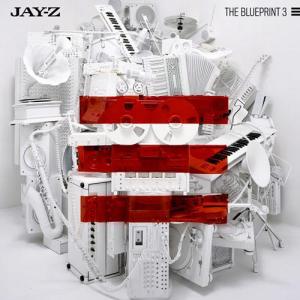
“The Blueprint 3” is not just the third installment in Jay-Z’s “Blueprint” saga. It’s also the third album since Jay “retired” in 2004. “The Blueprint 3” manages to split the differences in both of these lineages. It falls between the pared-down masterpiece of the first “Blueprint” and its guest- and lard-laden sequel. Similarly, it splits the difference between Hova’s uninspired comeback “Kingdom Come” and “American Gangster”’s return to form.
Just because “Blueprint 3” isn’t as bland and unfocused as “Kingdom Come” and “Blueprint 2,” doesn’t mean it’s a triumph. The album gets off to a strong start with “What We Talkin’ About,” which continues the hard feel of “American Gangster.”
No ID supplied an excellent track for “D.O.A. (Death of Auto-Tune),” the lead single. “Run this Town,” Jay’s collaboration with Rihanna and Kanye West is another in a long line of classic summer singles. “Empire State of Mind,” Jay’s duet with Alicia Keys, completes the album’s early run through its three consecutive singles. The strongest song on the album, the town fathers can immediately add it to the overflowing Big Apple hymnal.
“Hate,” a chorus-less mic battle between Jay and West, has fire in the belly. Young Jeezy nicks part of “Public Service Announcement” for his opening verse in “Real As It Gets.” Jay responds with one of his most convicted performances on the album.
Remove the EP’s worth of solid cuts, though, and Jay’s post-retirement secret emerges: he’s having problem finding new things to say. There’s nothing as fun and clever as “Brooklyn Go Hard,” his contribution to this year’s “Notorious” soundtrack. That song contains one of the best verses in Jay’s cannon:
“I father, I Brooklyn Dodger them,
I Jack, I Rob, I sin,
Ah man, I’m Jackie Robinson
‘Cept when I run base, I dodge the pen,
Lucky me, Luckily they didn’t get me,
Now when I bring the Nets I’m the black Branch Ricky,
From Brooklyn corners, burnin’ branches of sticky.”
Instead, Jay drops a dated Mac/PC comparison and gives us this in “Venus vs. Mars:”
“Shorty like Pepsi, me I’m the coke man,
Body like a coke bottle, I crush it like a Coke can,
Started at the window, then the bedroom wall,
the Ying to my Yang, I skeet skeet off,
I hits it from the back, Shorty like the front,
the Bonnie to my Clyde,
both riding shotgun,
both covered in gold like C3PO,
James and Florida Evans let the good times roll.”
Using this strained metaphor, Jay is able to reference his past as a drug dealer (now nearly 15 years ago), brag about his sexual prowess and remind everyone about his bank roll. Toss in a reference to his estranged father, and this is basically every Jay-cliché in one verse.
There aren’t many points on “Blueprint 3” as hollow as this, but there are enough that it can’t be excused as an isolated incident. Album closing “Young Forever” is intended as an uplifting anthem, but is cornier than an all-occasion greeting card that suffers from the P. Diddy school of sampling. Kanye West gets the production credit here, but all he does here is cue Alphaville’s “Forever Young” – best known for its prominence in the film “Napoleon Dynamite” – and let Jay karaoke.
Despite surrounding himself with A-list producers and guests, Jay lacks much of the fire and creativity that fueled masterpieces like the original “Blueprint.” After three installments, it’s clear Jay needs to go back to the drawing board.
The Temptations – “I Wish It Would Rain,” Pop # 4, R&B # 1
By Joel Francis
“I Wish It Would Rain” had been out less than two weeks when songwriter Roger Penzaben took his life on New Year’s Eve, 1967. The heartache and melancholy Temptation David Ruffin poured into his singing was Penzaben’s story.
In the spring of 1967, Penzaben caught his wife in an affair. Unable to cope with the pain and betrayal, Penzaben dumped his feelings into the lyrics. Producer Norman Whitfield and Barrett Strong, who had previously teamed on Tempts’ classics EX.
The song opens with a few stately piano chords before Ruffin takes over. Backed only by a tambourine, it’s practically a cappella. Ruffin’s voice drips with so much sorrow that it’s hard to believe just three years prior he had “sunshine on a cloudy day.”
The understated strings and arrangement bear the hallmarks of Motown’s classic Holland-Dozier-Holland productions. It’s hard to believe that in less than a year, Whitfield and the Temps would be on the vanguard of the psychedelic soul movement.
It’s also hard to believe that “Rain” was Ruffin’s next-to-last single as a Temptation. Ruffin’s cocaine addiction and insistence that the group follow Smokey Robinson and Diana Ross’ leads and be renamed “David Ruffin and the Temptations led to his firing in the summer of 1968. When the Temps again cracked the pop Top 10 with “Cloud Nine,” both Ruffin and Whitfield’s traditional arrangements were long gone.
Shortly before the Tempts debuted their psychedelic sound, Gladys Knight and the Pips took gave “Rain” an encore lap that reached Nos. 41 and 15 on the Pop and R&B charts, respectively. In 1973, Marvin Gaye recorded a funk version that was released as the b-side of his No. 1 hit “Let’s Get It On.” That same year, British slopsters The Faces had a U.K. hit with their interpretation. Aretha Franklin and hair metal band Little Caesar have also recorded versions of this miserable masterpiece.
(Above: Biz Markie rocks his classic “Just a Friend” in Sweden on March 28, 2009.)
By Joel Francis
Rapper Biz Markie’s free performance at the Power and Light District Thursday night was less a concert than a warm-up/advertisement for his nightclub set later that night.
Markie was onstage for about 45 minutes. He spent 20 minutes behind turntables, 20 on the mic and five plugging the late show. The set-up was as old school as Markie’s material: two turntables and a microphone (and a laptop). After warming up the sparse crowd – the entire audience could have comfortably fit inside the Record Bar – with a brief DJ set of random favorites, Markie finally emerged from behind the tables.
A celebrated beat boxer before breaking through as an MC, Markie was Rahzel before Rahzel. His skills are no less impressive today. Vocal recreations of “Thriller” and “Beat It” drew big cheers, as Markie placed the mic on top of his head and against his throat to capture new sounds. Think of it as a funky ear-nose-and-throat exam you could dance to.
The dedicated audience took advantage of the ample dance space. Pockets of break dancing and circles of swinging bachelorette parties populated the floor close to the stage. The dancers were a nice visual diversion. There was little to see onstage beyond the Markie’s crew, turntables and the oversized, t-shirt and sweat-pant clad MC. The kaleidoscope of twisting colors and twirling ladies definitely added to the evening’s presentation.
Markie didn’t perform many songs, but he made the handful he did count. “Vapors” and “Nobody Beats the Biz” are old school staples that had everyone singing and bobbing along. Markie teased “Just A Friend,” his Top 10 hit from 1989, with the signature piano sample and backbeat urging everyone to sing along and throwing his weight behind every “oh baby.” The biggest of his songs, it was also the most disappointing. Markie only delivered one verse, turning the song into one big crowd participation number with looped chorus.
Frequently and appropriately omitted from the rolls of rap legends, Markie’s charm outstrips his talent. He didn’t shy from playing the clown, wagging his tongue to the crowd when they responded to a record he played and grinning at his modest singing abilities. The best of these moments was when he encouraged the crowd to join in his rendition of the Jackson 5’s “I Want You Back.” Markie’s signing was hilariously out of tune and he free-styled new verses, despite repeatedly telling the audience to sing along if they knew the words.
Although the set was definitely slight, it was also free, which meant all it cost was a little time. That hour was definitely a good time.
From “Brand New Cadillac” to “Little Red Corvette,” no art form has had a love affair with the automobile quite like rock and roll. So while the subject matter for Andrew W.K.’s fourth album, “55 Cadillac,” is well-trod, his approach is surprising and fresh.
W.K. appeared on the scene in 2001 sporting a bloody nose on his album cover and urging hard rock fans to “Party Hard.” In the years since opened a New York night club, penned an advice column that was compiled into a book, produced an album by reggae legend Lee “Scratch” Perry, hosted a show on Cartoon Network and continued to turn out big dumb anthems like “Make Sex.” That said, few could have seen the side of Andrew W.K. he reveals on “55 Cadillac.”
Comprised of eight “spontaneous solo piano improvisations,” the album finds W.K. expressing himself on the 88 keys he started learning at age 4.
“55 Cadillac” opens where Neko Case’s “Middle Cyclone” – which features our heroine on the hood of a 1968 Mercury Cougar – left off, with the sound of crickets and frogs. Like a drag race, W.K.’s prize auto doesn’t start, but “begin.” Appropriately, we can hear the motor thrust and idle as pistons warm up on the first cut, “Begin the Engine.”
Though the performances are spontaneous, W.K. obviously put a lot of thought into tone and texture. “Seeing the Car” is suitably elegant, while “Night Driver” features an upbeat, galloping melody. The stately ballad “5” is the album’s most tuneful moment and “City Time” is choppy, reflecting urban stop-and-go traffic.
The tracks are joined by the sound of a car racing past and the album works as one long piece. The songs flow well, sustaining the mood without becoming stale, but despite the solid pacing it can easily become background music.
W.K.’s party rock persona doesn’t emerge until the opus’ closing minutes. When the flood of electric guitars enter on “Cadillac,” the closing track,” it sounds like a lost snippet of musical dialogue between Queen’s Brian May and Freddy Mercury.
Co-released on the Sonic Youth guitarist’s Ecstatic Peace! Label, “55 Cadillac” is the rare album that can be enjoyed by both Thurston Moore and Thurston Howell, III.
Smokey Robinson and the Miracles – “I Second That Emotion,” Pop # 4, R&B # 1
By Joel Francis
Smokey Robinson was Christmas shopping with fellow Motown songwriter Al Cleveland when Cleveland let slip the malapropism “I second that emotion.” Intrigued, Robinson penned a lyric about a man disinterested in flirting, fishing for long-term love. In other words, it’s the complete opposite of every Kiss song ever.
The arrangement and delivery is relaxed and easy. Never a forceful singer, Robinson lets the horns punctuate his pleas. His vocals are soft and comforting as a pillow, while Miracle Marv Tarplin’s guitar pulls the song over the unusually subdued percussion. There’s no climax or resolution to the number – the horn breakdown in the final moment is as close as we get. It’s almost like Robinson is auditioning the idea.
The song fades before we learn the woman’s reaction, but audiences were delighted, sending “I Second That Emotion” into the Top 5 and earning the Miracles their sixth million-selling single.
Less than two years later, Diana Ross and the Supremes and the Temptations teamed up for a television special and album. “Diana Ross and the Supremes Join the Temptations” featured their interpretation of “I Second that Emotion,” which was a Top 20 UK hit (the single was not released in America). The album marked the debut of new Temp Dennis Edwards, who replaced the troubled David Ruffin. Miracle guitarist Tarplin reprised his role for the all-star revision. The song has a diverse cover life, with performances issued by Jerry Garcia, ‘80s synth band Japan, and “Stand By Your Man” country singer Tammy Wynette.
(Above: Cross Canadian Ragweed show off their new song “51 Pieces.” What’s with the Raiders shirt on an Oakie?)
By Joel Francis
The Kansas City Star
The television show “CMT Crossroads” found a niche by pairing seemingly disparate artists like Taylor Swift and Def Leppard or Lucinda Williams and Elvis Costello for a one-hour performance. With their blend of arena-ready country channeled through classic rock radio, Cross Canadian Ragweed could fill a show all by themselves.
The Oklahoma-based quartet preached to a half-full Crossroads Friday night delivering nearly two dozen tracks from across their 12-year career and several songs from their just-released seventh album. Singer and lead guitarist Cody Canada played like a character from the latest edition of “Guitar Hero,” flipping between Eddie Van Halen’s finger-tapping technique, the heavy rhythm riffs inspired by Angus Young and subtle finger-picked solos a la Mark Knopfler.
Although it’s fun and easy, the congregated faithful weren’t playing spot the influence. They were too busy dancing in bliss, rocking to the music, hands raised, hallelujah. Their following is so loyal Canada could toss a lyric to the crowd and get it back twice as loud, but even he was impressed when the boisterous bunch sang along to material released just 10 days ago.
The high points of the two hour set came from opposite ends of the spectrum. “Anywhere But Here” opened like the country cousin of “Panama” and benefited from the extra muscle the band put into the extended reading. When snippets of “Won’t Get Fooled Again” appeared, it was less a cover than an assimilation.
Canada’s three-song solo acoustic set showed off his songwriting and storytelling chops. “Lonely Girl” was inspired by his sister while new number “Bluebonnets” was written for his four-year-old son. The trilogy of acoustic numbers was followed by a three-part medley Canada dubbed “The Trifecta,” which swaggered from rock to blues before ending with another new cut, “Pretty Lady.”
Bass player Jeremy Plato gave Canada a smoke break by handling lead vocals on two songs. His voice was a nice change of pace but too many bass solos – including two in the final three numbers – bogged the energy a bit. Ditto for the drum solo that preceded “Number.”
Ragweed’s set ended with guaranteed crowd pleasers “Carney Man” and “Late Last Night.” For “Time To Move On” Jonathan Tyler, who led the first act on the bill, joined the quartet on guitar. The night ended with a new song that felt old. Although it wasn’t officially released until Sept. 1, the crowd went ballistic for “51 Pieces” based on the opening lines of the story that introduced the number.
Lucero got sandwich billing between opener Jonathan Tyler and Northern Lights and Ragweed. The Memphis-based quartet sounds like the E Street Band via Uncle Tupelo and front man Ben Nichols sounds like Jay Farrar after too many cigarettes and way too much whiskey.
Their one-hour set was heavy on fan requests and included “Kiss the Bottle,””Raising Hell” and new material like “Darken My Door.” Although Lucero weren’t the band most of the crowd came to see, they did a great job of firing up the sizable swarm in front of the stage.
Setlist: Sister, Alabama, Burn Like the Sun, Mexican Sky, Deal, To Find My Love, Hammer Down, 42 Miles, Soul Agent, Anywhere But Here (including Won’t Get Fooled Again), Drag, drum solo, Number, (acoustic set) Let the Rain Fall Down (unsure if this title is correct), Lonely Girl, Bluebonnets, The Trifecta (including Pretty Lady), Carney Man, Time to Move On (with Jonathan Tyler), Late Last Night, (encore) 51 Pieces
(Above: U2 encourage America to “Walk On” in a live appearance broadcast less than two weeks after the Sept. 11 attacks.)
By Joel Francis
U2’s “All That You Can’t Leave Behind” had been out for nearly a year the morning two planes slammed into the World Trade Center, another collided with the Pentagon and a fourth flight was forced into the Pennsylvania farmland.
Following the trend of “The Joshua Tree” the first three songs were released to huge acclaim as singles. It was the fourth cut, though, that found the greatest resonance. By the time “Walk On” came out in November, 2001, the song had become an unofficial anthem of hope.
When the quartet performed the song live on the “America: A Tribute to Heroes” special just 10 days after the attacks it was prefaced with the first verse of “Peace On Earth.” Written about an Irish terrorism attack, the lyrics were poignant: “Heaven on Earth, we need it now.”
The words that didn’t make the broadcast, but ended most concerts on U2’s then-current tour were just as affecting. As pictures of missing loved ones were plastered on every available surface in New York City, and the names of the departed rolled up the video boards in arenas each night, Bono sang “They’re reading names out on the radio/All the folks the rest of us won’t get to know.”
I had only been to New York City briefly at that point. On our way to Cooperstown, N.Y., to watch my childhood hero George Brett get inducted into the National Baseball Hall of Fame in 1999, my dad and I saw Kansas City,Mo.-native David Cone make his first start in Yankee Stadium after throwing a perfect game. He got shelled and after driving in that afternoon for the game we slept at a hotel in New Jersey.
At that time, I didn’t know Battery Park from Battery Island. But listening to Bono sing “New York,” I felt like an honorary citizen. Songs like “When I Look at the World” and “Grace” spoke to my feelings of grief and confusion. Several months later, when Bruce Springsteen released “The Rising” my soundtrack was expanded. That album ended with “My City of Ruins,” the most poignant performance on the “Tribute to Heroes” telecast. As the first anniversary of the attacks rolled around, “Into the Fire” and “You’re Missing” helped quell all the resurfaced sentiment.
If the Big Apple was largely unknown to me, the Middle East was a greater enigma. The only images I had of the region and its inhabitants were those pumped over the news. Surely that wasn’t right. Not all of these people were monsters. They were regular Joes and Janes like you and me, trying to do whatever it was they did to make ends meet and survive, right?
“Passion,” Peter Gabriel’s 1989 soundtrack to the uber-controversial film “The Last Temptation of Christ,” was filled with music from the Middle East and Africa meant to evoke the time of Christ. The instrumental album was my way of relating to the people of Afghanistan and the region that gave birth to al Qaeda and the Taliban.
These albums were my balms in 2001 and 2002. Starting the album when I backed out of the driveway, it took me exactly four cuts off “The Rising” to reach the first anniversary 9/11 memorial service in downtown Kansas City. For more than an hour, Christians, Jews and Muslims celebrated and mourned together. We weren’t three sects, we were one collective.
And then it all seemed to evaporate. The services and events of Sept. 11, 2003 weren’t quite as elaborate. Within a couple years it seemed the only experience available away from the crash sites was a prayer breakfast or moment of silence. In 2007, the day was marked by rapper 50 Cent’s boast that he would sell more copies of his new album than Kanye West. He didn’t.
I have no problem with an open marketplace on national holidays. Johnny Cash’s final album, “American V: A Hundred Highways,” came out on July 4, 2006. I can think of no artist better suited to that day, but his record was merely a window-dressing to the occasion. Heck, I made time on Sept. 11, 2001, to pick up Bob Dylan’s new release, “Love and Theft.”
I take issue, however, when ephemera overshadow history. No one cared about 50’s album. All of its singles had vanished from the charts by Thanksgiving, yet the competition he invented to sell more records eclipsed the anniversary. This year the other artist to release a masterpiece on Sept. 11, 2001, Jay-Z, was going to put out the third installment in his “Blueprint” series on Sept. 11. (Because the album leaked the date was pushed up to Sept. 8.)
A proud New Yorker, Jay-Z appeared at the Concert for New York benefit in October, 2001, and is donating all profits from his Sept. 11, 2009, concert at Madison Square Garden to the New York Police and Fire Widows’ and Children’s Benefit Fund. If anyone gets Sept. 11, it’s Jay-Z, yet on his new album, he reduced the events to a crude metaphor for his prowess:
“I was gonna 9/11 them but they didn’t need the help
and they did a good job, them boys is talented as hell,
so not only did they brick but they put a building up as well
then ran a plane into that building and when that building fell
ran to the crash site with no mask and inhaled, toxins deep inside they lungs”
A friend recently reminded me that American culture doesn’t handle history very well. It can market the hell out of nostalgia, but history is another matter. Dec. 7, 1941, the Day of Infamy, has been reduced to a scratchy FDR soundbite. Memorial Day is for mattress sales. On top of that, the events of Sept. 11 are awkwardly unresolved. Victory has been declared, but not achieved. Were it to happen, no one in America or the Middle East has any idea what it would look like. There are no holidays, my friend said, marking the Tet Offensive or the charge at San Juan Hill. Additionally, Sept. 11 has become so politicized any organized event tied to the day is instantly and cynically scrutinized.
If record sales and a proposed day of community service aren’t the answers, perhaps the best solution is subtle one that’s somehow gone underground and survived: prayer. After all the speechifying, 8:46 and 9:03 a.m., EST, are always observed with a moment of silence. Each Sept. 11, take a moment to converse with whatever Supreme Being you believe in. Spill your guts, pause and listen for twice as long as you spoke. It might not change the world, but it could change your day.
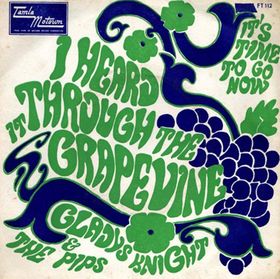
Gladys Knight and the Pips – “I Heard It Through the Grapevine,” Pop # 2, R&B # 1
By Joel Francis
Unlike nearly every other soul singer at the time, Gladys Knight didn’t want to go to Motown. She was (rightly) worried she and her group, the Pips, would end up playing second fiddle to Diana Ross and the Supremes. However, the Pips were a democracy. When the rest of the group voted to migrate to Hitsville, Knight reluctantly acquiesced.
“I Heard It Through the Grapevine” was a thrice-heated leftover when Norman Whitfield presented his song to the group in 1967. Smokey Robinson and the Miracles cut a version the previous year that didn’t make it out of Berry Gordy’s Quality Control meeting. A second Miracles recording of “Grapevine” was buried as an album cut on 1968’s “Special Occasion” LP. The Isley Brothers were rumored to have recorded a version during their brief stint on the label, but no recording has surfaced to date. Several Motown scholars believe a recording session with the Isleys to cut “Grapevine” was scheduled, but then cancelled.
This is likely the case. In 2005, Motown released the two-disc clearinghouse “Motown Sings Motown Treasures.” This incredible and enlightening collection presented many recordings – Kim Weston performing “Stop! In the Name of Love,” the Supremes doing “Can IGet A Witness,” and the Miracles original, unissued version of “Grapevine,” among others – previously locked in the vaults. It seems unlikely that the Isley Bros. version of “Grapevine,” if it exists, would have been omitted from this collection.
Although it wouldn’t be released for another year, Marvin Gaye had also cut his reading of “Grapevine” by the time the Pips were hearing Whitfield’s pitch.
Whitfield’s latest “Grapevine” arrangement was inspired by Aretha Franklin’s “Respect” and Whitfield’s desire to “out-funk” Franklin. It’s clear from the great snare-and-cymbal intro that Whitfield was on to something new. Motown had been a lot of things until that point, but it had rarely been so overtly funky. In the coming years, Whitfield would help place Hitsville at the epicenter of psychedelic soul. This recording was one of the first steps down that path.
Whitfield’s attempt to out-do the Memphis soul sound Aretha was getting from Atlantic producer Jerry Wexler was buoyed by Knight’s singing. The gospel background isn’t as obvious in Knight’s delivery, and her voice is a little earthier than Franklin’s, but Knight’s vocals can soar just as high. In fact, the song is little more than drums, piano and Knight’s powerful voice until a scratch guitar enters during the first chorus.
Stealing a page from the Holland-Dozier-Holland production book, the tambourine is mixed front and center. The instrument serves as a tractor, dragging the entire song it its wake. The signature organ line that introduces Gaye’s chart-topping “Grapevine” makes a cameo on the piano about a minute into the song. The saxophone solo bisecting the song is a straight-up homage to King Curtis, the Memphis soul legend. Even the juiciest gossip is rarely this much fun.
The fourth time was the charm for Whitfield, as the Pips’ powerful “Grapevine” finally made it past Gordy’s Quality Control meeting. That didn’t guarantee label support, though, as Knight was forced to rely on her DJ connections to promote the song. When “Grapevine” finally caught on, it caught fire holding the top spot on the R&B chart for six weeks and stalling behind the Monkee’s “Daydream Believer” at No. 2 on the pop chart. Although it was Motown’s best-selling single to date, the “Grapevine” story was far from over.




 joelfrancis.com