Review: Megadeth

(Above: Megadeth perform “Hangar 18” in England earlier this year. The audio quality is pretty much what it sounded like inside the Beaumont Club as well.)

By Joel Francis
The Kansas City Star

Blazing fast guitar licks, double-kick bass-drum riffs and an armada of metal anthems: Dave Mustaine brought everything that made Megadeth famous to the Beaumont Club on Saturday night.

The majority of the quartet’s 90-minute set drew from its reign at the top of the thrash heap in the late ‘80s and early ‘90s, when it played before massive crowds alongside Slayer and Anthrax and was compared to Mustaine’s former bandmates, Metallica.

Although Mustaine had to rehearse the crowd’s part for “Head Crusher,” one of four songs performed off the band’s current album, “Endgame,” most of the time he was able to step back and let the mob rule the mic. The schizophrenic “Sweating Bullets” and outro to “Peace Sells” were especially lusty sing-alongs. The audience vocals were frequently clearer than Mustaine’s, which were buried in an abysmal mix that made every number sound and feel like brick to the head.

Snarling vocals aside, Megadeth’s other hallmark is lightning-fast, labyrinthine fretwork gymnastics. Although he’s yet to celebrate his second anniversary in the band, guitarist Chris Broderick was more than up to the task, ripping up the extended instrumental half of “Hangar 18,” tearing through the epic “In My Darkest Hour” and trading solos with Mustaine on “She-Wolf” and the warp-speed new song “1,320’.” Ever the gracious host, Mustaine frequently retreated to bang his rusty locks alongside the bank of Marshall amplifiers lined across the back of the stage while Broderick took center stage.

The rhythm section of Shawn Drover and James LoMenzo – Megadeth veterans with six and four years of service, respectively – guided the groove into “Trust” and held down the framework for the guitar pyrotechnics.
While many metal songs focus on war, Mustaine has never been afraid to get political. Megadeth’s previous album was called “United Abominations” and features a song called “Washington is Next!” The closing triptych revealed an interesting point of view.

“Symphony of Destruction” deals with political puppets propped up by a government bent on war. “Peace Sells” discusses disillusionment and hypocrisy of politicians who aim for peace but somehow end up perpetuating war. (The song’s refrain is “Peace sells/but who’s buying?”) “Holy Wars” started out as a referendum on Northern Ireland, but features several Middle Eastern guitar breaks and echoes jihad theory.

Surprisingly, it wasn’t war Mustaine wanted to talk about. Instead, he interrupted “Peace Sells” for an anti-Obama screed, blasting the president without using his name for selling the country to the Chinese and giving away civil rights. Mustaine’s solution was to “write my own (expletive) name in there” on the ballot come election day.

(It is curious that in the week following Obama’s announcement of an Afghani surge after running a campaign on ending the war, Mustaine would ignore these parallels for clichéd attacks.)

After peaking on the charts in the late ‘90s, Mustaine broke up the band in 2002. Two years later, he resurrected the name as the only continuing member, but has yet to regain drawing power as a live act. While the Beaumont was plenty crowded, tickets were still being sold at the door after the band had taken the stage.

If the stumble from stadiums to clubs frustrated Mustaine, it didn’t show. He took time before “44 Minutes” to express heartfelt thanks to everyone for letting them play, and long after the rest of the band had departed, Mustaine lingered onstage after “Holy Wars” to shake hands and congratulate fans.

Setlist: Dialectic Chaos, This Day We Fight, Wake Up Dead, Skin of My Teeth, Head Crusher, A Tout Le Monde, She-Wolf, Tornado of Souls, 1,320’, In My Darkest Hour, Sweating Bullets, Hangar 18, 44 Minutes, Trust, Symphony of Destruction, Peace Sells. Encore: Holy Wars.
Review: Metric

(Above: Metric roar through “Dead Disco” in their native Toronto.)

By Joel Francis

It’s hard not to be impressed by the Midland Theater. The opulent 3,500-seat venue has hosted scores of acclaimed performances in its 82-year history. Both Spoon and the Bravery commented on the austere surroundings during their sets at the annual “The Night the Buzz Stole Christmas” concert on Thursday night. And why not? The grand old venue was both more stately and spacious than the clubs and outdoor festivals they were accustomed to playing.

Emily Haines, the vibrant front woman for the indie pop quartet Metric, however, did not comment on the hall; she owned it. Overcoming an unkind mix and unfamiliar audience, Haines commanded the stage and the band slowly won over the crowd with its merger of ‘80s pop, dance, industrial and indie rock.

Filled by the swirling synthesizers of opening number “Twilight Galaxy,” the Midland felt more like a basement club than a cavernous theater. Metric is much edgier in concert and they put it to good use. Haines strapped on an electric guitar for “Help I’m Alive” and locked eyes with guitarist James Shaw while he peeled off a solo that recalled Mike Campbell’s on “Runnin’ Down a Dream.” “Dead Disco,” the lone number not drawn from “Fantasies,” the ensemble’s celebrated new release. Packed with several crescendos, it was an industrial barrage that felt like a Nine Inch Nails outtake.

The first half of the 40-minute set felt like a teaser for the second. Haines prefaced “Gimme Sympathy,” a song that revives the age-old debate over the Beatles and the Rolling Stones, with part of Neil Young’s “Hey Hey, My My.” The performance drew a spirited response from the crowd. Metric seized on this newfound attention by segueing into the spiky “Sick Muse,” which drew even more cheers and hands in the air.

By the time Haines roared into “Stadium Love,” it felt like the band was ready to play Arrowhead. Although Metric headlined the much smaller Granada Theater six months ago, and couldn’t command a crowd this size on their own – the band was second on the “Buzz” bill of four acts – they’ll get there soon enough. And when they do, they’ll be ready for it.

Setlist: Twilight Galaxy, Help I’m Alive, Gold Guns Girls, Gimme Sympathy > Sick Muse > Dead Disco, Stadium Love

Review: Chuck Brown Winds Up Annapolis

(Above: Chuck Brown reworks the “Batman” theme at the 2009 New Orleans Jazz and Heritage Festival.)

By Joel Francis
The Daily Record

ANNAPOLIS, MD – When you’re as well-known and revered as Chuck Brown, it’s hard going anywhere unnoticed. Especially onstage.

Brown rattled off shout-outs, hellos and congratulations for several minutes before his eight-piece band finally settled down to business for the first of two Black Friday shows at Rams Head Live.

As the reigning Godfather of Go-Go, Brown showed off his guitar chops and sharp horn section with the extended opener “Love Theme from The Godfather.” Brown then put everyone in the holiday mood with a reading of “Merry Christmas, Baby” that lived somewhere between B.B. King and George Clinton. But the dance floor set up to the left of the stage remained conspicuously vacant.

The opening words of “Run Joe” – a cross between the Coasters, hip hop, reggae and a children’s song – unleashed a stampede to the floor. The moving multitude knew exactly when to throw Brown’s catch-phrases back at him, and forced the 73-year-old performer to split his time between the bodies in front of the stage and the spirited congregation on the side.

Go-go is a funk hybrid driven by congas and percussion and a palette wide enough to include jazz, blues, pop and Caribbean influences. Brown helped pioneer the form in the mid-‘70s. Born in Washington, D.C., the genre has yet to catch on beyond the Mid-Atlantic states. Brown’s shows feel like a cross between Parliament-Funkadelic and Jimmy Buffett.

Like Buffett, Brown has a dedicated following who know all the calls and responses and relish the opportunity to feel like part of the band. And like P-Funk, Brown’s band carries a strong groove that can hang on or switch up as often – and quickly – as their leader commands.

The heart of the show was Brown’s magnificent medley of “It Don’t Mean A Thing (If It Ain’t Got That Swing),” “Midnight Sun,” “Moody’s Mood for Love” and the “Woody Woodpecker” theme. These songs were old when Brown started performing them a couple decades ago, but they’ve rarely felt as vital. Brown resuscitated these standards and made them feel like not nostalgic night club pieces but animated dance club anthems. For a moment, it felt a little like how all the stories described the Savoy Ballroom in its heyday.

But Brown’s set isn’t rooted in the past. He invited his daughter, keyboardist K.K., out front to lead the crowd through Lady GaGa’s “Pokerface” and Beyonce’s “Single Ladies (Put A Ring On It).” Thanks to the energy of the crowd and spirited performance by the band, these ubiquitous numbers also felt fresh. The band also proved a lesson that contemporary record producers have yet to learn: Pop music sounds infinitely better with a live rhythm section driving the track.

The evening ended with Lil Benny, another guest singer, leading the crowd through the pop and lock and other dance moves. In a year packed with Michael Jackson tributes, the Benny delivered one of the best. His version of “Butterfly” brought the song out of its cocoon.

Although he never left the stage, Brown closed the set by reclaiming the mic and performing “Bustin’ Loose,” his signature song. At 80 minutes, the performance felt a little light, and Brown conceded too much time to the other vocalists, but no one seemed to mind. Besides, another show was always right around the corner.

With the house lights up, Brown ended the night just as it started, talking with the crowd. Although Rams Head Live isn’t much bigger than the Bottleneck in Lawrence, Kan. – the biggest difference is that the room is positioned horizontally with the stage in the middle, instead of vertically with the stage at the end – it was going to Brown a while to reach the dressing room. And he was going to enjoy every moment of the journey.

Dylan’s Christmas offers lots of heart, but little else

(Above: The magnificent video for “Must Be Santa,” far and away the best track on Bob Dylan’s new holiday album, “Christmas in the Heart.”)

By Joel Francis
The Daily Record

Bob Dylan surprised a lot of people when he announced the release of his first Christmas album several months ago. “Christmas in the Heart” surprises in a different way, however, by playing it straight and offering no surprises at all.

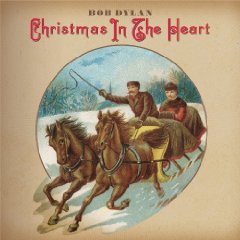
Adorned with a cover that looks like a Norman Rockwell collectible dinner plate come to life, “Christmas in the Heart” features 15 well-worn holiday favorites with arrangements and production straight out of the 1940s and ‘50s.

In retrospect, Dylan’s desire to record a Christmas album shouldn’t have been an astonishment. For the past several years, Dylan has dabbled in pre-war pop. A cover of “Return to Me” popped up on a soundtrack several years ago, and several similar originals, including “Beyond the Horizon,” populated his 2006 album “Modern Times.”

Of course, Dylan has long been a purveyor of traditional song and the folk tradition. As the oral history components of American society diminish, holiday and children’s music are the few remaining songs passed from generation to generation. Christmas music stands directly at the crossroads of these passions.

A third consideration is that Dylan delights in doing the unexpected and challenging expectations. The man who returned to the Newport Folk Festival nearly 10 years ago in a wig (and dons a similar headpiece in the video for a “Christmas in the Heart” song), appeared in a Victoria’s Secret commercial and wrote a song with Michael Bolton, clearly enjoys toying with his dedicated following and legend.

Unfortunately, this understanding doesn’t make “Christmas in the Heart” an enjoyable listen. Producing the album under the pseudonym Jack Frost, Dylan drapes the album in arpeggio guitars that recall Les Paul’s singles with Bing Crosby, lilting backing voices in the style of the Andrews Sisters and a nostalgic gauze that would be at home on a Perry Como platter. By smoothing every surface, Dylan leaves no room for any rough edges, which, frankly, is all his voice has to offer these days.

The song selection is another stumbling block. The vast majority of these hymns and carols have been heard and performed a thousand times over. Although his arrangements are clever – check out the piano on “Little Drummer Boy” or violin and light country touch on “Silver Bells” – they hem too closely to the tried and true. Dylan does not have a traditional voice, so it’s understandable his singing doesn’t work in this traditional setting. The album would have been better served if Dylan played to his strengths, like a reading of “Run Rudolph Run” a la “Summer Days,” or more obscure choices, like Buck Owens’ “Santa Looked a lot Like Daddy.”

The single “Must Be Santa” hints at what “Heart” could have been. Originally a 1961 sing-along with Columbia Records honcho Mitch Miller, Dylan more than doubles the tempo and thanks to the frenetic accordion playing of Los Lobos’ David Hildago – who also bolstered Dylan’s “Together Through Life,” released just six months prior – turns the song into a mariachi rave. Another lesser-known track, “Christmas Blues” was also a good choice. More songs like this and fewer Latin hymns could have made “Christmas in the Heart” a holiday staple.

With all album proceeds going to charity, Dylan’s intentions are noble and his reasons sound, but the flawed execution prove the record’s undoing. It’s too bad “Must Be Santa” wasn’t released as a stand-alone single, with any of the remaining 14 songs on its b-side, or as the centerpiece of an EP. As it is, “Christmas in the Heart” is best purchased as a Black Friday bargain.

Keep reading:

“Together Through Life” is a Minor Masterpiece

Traveling Wilburies – “Inside Out”

“Tell Tale Signs” Sheds Light on Legend

Bob Dylan – “All Along the Watchtower” (live)

George Kalinsky: Painting with Light

Bob Dylan – “Workingman’s Blues No. 2”

What Bob Dylan Means to Me (part 1)

What Bob Dylan Means to Me (part 2)

Edwin Starr – “Twenty-five Miles”

Edwin Starr – “Twenty-Five Miles,” Pop # 6, R&B #6

By Joel Francis

If the horn arrangement on “Twenty-Five Miles” sounds like something out of the Stax studio, that’s because it is. Motown songwriters Harvey Fuqua and Johnny Bristol based their number on the obscure Wilson Pickett song “32 Miles Out of Waycross (Mojo Mama)” written by Bert Berns and Jerry Wexler and recorded in 1967.

It’s little surprise Fuqua and Bristol turned to a Pickett number when looking for material for Edwin Starr. Like Pickett, Starr was a strong baritone who sang from the throat. And like fellow Motown family member Levi Stubbs of the Four Tops, Starr’s voice was seeped in the Southern style.

Unlike, Stubbs, however, Starr didn’t have a string of hits under his belt, which made him a bit of an outcast at the label. A Detroit native who somehow escaped Berry Gordy’s eagle eye for talent, Starr’s biggest hit. to date was the 1965 song “Agent Double ‘O’ Soul” recorded on the Ric-Tic label. Three years later, when Motown purchased Ric-Tick in 1968, Starr joined the Hitsville stable.

“Twenty-Five Miles” opens with Benny Benjamin’s athletic drumming and he stays front and center as the funky scoutmaster that keeps Starr’s (and everyone on the dance floor) feet relentlessly moving. The bass line echoes a horn line that has become a staple of marching and pep bands across the country. The listener never learns what happens when Starr reaches his destination, but the energetic vocals definitely prove that getting there is half the fun.

Although “25 Miles” was a Top 10 hit, it often been overlooked when acts mine the Motown catalog. For nearly 20 years, Charles Wright and the Watts 103rd Street Rhythm Band were the only group to cover the song. Their version was released several months after Starr’s as an album track on “In the Jungle, Babe.” In 1989, UK dance outfit the Cookie Crew sampled “25 Miles” on their hit “Got to Keep On.” Australian boy band Human Nature covered “25 Miles” on their 2005 release “Reach Out: The Motown Album.”

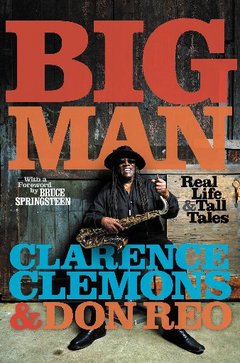
Review: “Big Man” by Clarence Clemons

(Above: Clarence Clemons, the Big Man, scored a Top 40 hit with this song.)

By Joel Francis
The Daily Record

Legions of dedicated Bruce Springsteen fans have no doubt haunted hotel bars after concerts in hopes of being able to buy their heroes a drink and soak in their stories. In his new autobiography “Big Man,” E Street saxophone player Clarence Clemons offers fans the next best thing with 360 pages of his favorite stories from the road and adventures with friends like Robert DeNiro, Kinky Friedman and, of course, the Boss.

The warning is right there in the subtitle: “Real Life and Tall Tales.” This is not a chronological telling of Clemons’ life. Rather, it’s a series of episodes and anecdotes. In the first 50 pages, the story races from Clemmons’ childhood in rural Virginia to meeting Springsteen, his first job with a band and ultimately joining the Bruce Springsteen Band.

Early vignettes like the portrait of Clemons and Springsteen hanging out underneath the Jersey pier are vivid snapshots of uninhibited creativity, innocence and ambition. The book is best when it operates along these lines, lifting the veil of history and putting the reader in the moment.

Clemmons’ telling of receiving a phone call from Springsteen while on tour with Ringo Starr’s All-Starr Band is especially poignant. Also entertaining is the tale of shooting pool with Fidel Castro in Cuba as Hunter S. Thompson offers commentary from the bar.

But moments like this are divorced from context, and raise many unanswered questions. Clemons never discusses how he spent decade away from the E Street Band or how he became friends with the Good Doctor. Too frequently the story is bogged down by diversions of pay phone conversations with Groucho Marx and competitive exchanges with Norman Mailer.

There is no doubt that Clemons is an intelligent man, filled with wit who knows how to tell a story. He is happy to take the reader into the Temple of Soul, the backstage sanctuary Clemons creates before each show, but unwilling to reveal everything that happens away from the music.

Clemons recognizes omitting the juicy bits undermines his purpose. At one point he jokes about writing another book that contains all the sex and drug stories from the early days and publishing it after everyone in the band has died, but realizes everyone has children and grandchildren and quickly recants. The decision is understandable, but the kid gloves weaken the saga and experience.

For example, we learn that Springsteen has two rules: don’t take drugs and be on time. Clemons reports that since he breaks one rule regularly, he is always punctual. Drugs, particularly marijuana, show up several times, but Clemons never explains his introduction to these experiences or their perpetual attraction.

Clemons is more transparent about his health problems. He had both knees and hips replaced prior to the “Working on a Dream” tour and underwent a tough rehab regimen before being able to perform at the Super Bowl. These issues, coupled with ruminations on the deaths of E Street veterans Danny Federici and Terry Magovern give the last third of the book a morbid preoccupation. What should be a celebration, feels like a premature wake.

The biggest problem with “Big Man,” however, is co-writer Don Reo. While most “as told to” authors stay in the background, Reo has no difficulty inserting himself into the story, bragging about his past as a television writer for “The Cher Show” and bringing “Blossom” to the small screen. Reo sometimes serves as an uber-fan insider, providing a third-party perspective on the inner workings of a Springsteen tour or an alternate angle on some of Clemons’ tales. Unfortunately, he’s too preoccupied with dropping names and gushing about how cool it is to be part of Clemmons’ entourage to be completely effective.

Reo’s interruptions also cause an inconsistent narrative voice. Clemmons’ story distractingly jumps between first and third person, depending on which author is helming the chapter.

Despite these shortcomings, “Big Man” is a breezy, entertaining read. Although it may have worked better as a series of blog entries or podcasts, hardcore fans will revel in hearing the man who defined “Jungleland” spin yarns.

(Below: Clemons reflects on the death of longtime E Street band member Danny Federici.)

Keep reading:

Review: Boss is Bigger than Big 12 Tourney (2008)

Bruce Springsteen and Tom Morello – “The Ghost of Tom Joad”

Review: Springsteen’s “Dream” Needs More Work

Springsteen in the Waiting Room: Drop the Needle and Pray

Springsteen Rocks the Hall (part 1)

Springsteen Rocks the Hall (part 2)

More Bruce Springsteen on The Daily Record

Smokey Robinson and the Miracles – “Baby, Baby Don’t Cry”

Smokey Robinson and the Miracles – “Baby, Baby Don’t Cry,” Pop # 8, R&B # 3

By Joel Francis

“Baby, Baby Don’t Cry” ended the Miracles streak of seven consecutive Top 10 R&B hits and was the group’s fourth and final hit of 1968.

At four minutes, the song was one of Motown’s longest singles to date, but Smokey Robinson and Motown staff writers Al Clevelend and Terry Johnson made the most of every second. As a singer and arranger in 1950s doo wop group the Flamingos, Johnson wrote the arrangement for “I Only Have Eyes for You” and other genre classic. Recruited to Motown by Robinson in 1964, the pair turned in some of their finest work on this number.

“Baby, Baby Don’t Cry” starts on the piano, but gives way to Miracle Marv Tarplin’s immortal guitar line. A full orchestra stealthily enters after the third stanza and explodes on the chorus. Again, Robinson and Johnson apply a deft touch to the score as the horns punch lightly and the string soar. For the spoken interlude, the song scales back to guitar, bass and drums, but never loses its warmth and fullness. On the last verse, the song shifts gears again, as the key changes and the bass and organ lean on the throttle.

Rare among Motown hits, the Funk Brothers are completely absent on this recording. Strings and horns aside, the Miracles play all the instruments on this album, with Robinson’s wife Claudette’s distinct voice sitting atop the vocal arrangement.

Robinson’s singing performance on “Baby” is one of the best in his career. His voice aches with pain and sympathy, but is strong and encouraging at the same time. This is a man who clearly knows the sting of lost love and the warmth of new romance. It’s impossible to deny Robinson and the Miracles evocation that “love is here, standing by.”

It’s hard to imagine anyone improving or adding anything new to these four minutes of perfection, and for once the rest of the industry agreed. “Baby, Baby Don’t Cry” is a rare Motown hit that hasn’t been covered.

Review: Get Up Kids

(Above: The Get Up Kids perform “Martyr Me” at the second show of their two-night stand at the Record Bar in Kansas City, Mo.)

By Joel Francis
The Kansas City Star

Nearly a year to the date after reuniting, the Kids are still alright.

Homegrown heroes the Get Up Kids capped off a two-month tour opened their dual-night stand at the Record Bar Friday night in front of an energetic crowd. Both shows benefit the family of the late Recycled Sounds owner Anne Winter.

No one in the band mentioned Winter during their 80 minute set. Instead they dashed through 20 songs that encompassed their decade of glory, inspirations and a couple new numbers.

The night started with a frenetic, nonstop explosion through “Holiday,” “I’m a Loner Dottie, A Rebel” and “The One You Want.” After slowing things down with “Valentine,” the Kids kicked into a new number.

“Your Petty Pretty Things” doesn’t deviate from the sounds and themes that made the hometown band famous around the world, but has enough wiggle room in its three and a half minutes for the band to kick it into high gear during the outro and ride the riff together before abruptly wrapping up. That energy was channeled into a powerful reading of “Come Clean.”

The band was lined up four across with the drums in the back of the corner stage. Keyboard player James Dewees was pushed so far to stage left that it seemed like he faced out the windows and into the parking lot more often than into the crowd.

As usual, Dewees was the band’s not-so-secret weapon. He shined an acoustic duet of “Campfire Kansas” with guitarist Jim Suptic on lead vocals, but Dewees’ most interesting contribution came on “Keith Case.” The second new song of the night, “Case” appeared out of a left turn from “No Love.” Driven by Rob Pope’s fuzz bass, Dewees applied a shimmering sci-fi synth line that makes the sound stand out in Kids’ catalog. Later, Dewees’ classic piano riff formed the bridge from “Holy Roman” into “Mass Pike.”

Although the Record Bar was full, there was still plenty of elbow room. The faithful throng delighted in throwing back frontman Matt Pryor’s words with same energy they were delivered. “Act and Action” erupted into one of the biggest sing-alongs of the night until “Don’t Hate Me.” The atmospheric “Walking on a Wire” kept slowly building layer by layer until both the crowd and the band took it through the roof.

In lieu of an encore, the band went straight into their cover of “Close To Me.” The Cure’s  1985 hit was obviously a big influence on the band, but the Kids nearly manage to one-up their heroes with Ryan Pope’s buoyant drum line propelling the song.

The set ended at midnight with the final words to “Ten Minutes” ringing out: “Everything will work out fine.” So far, it has.

Setlist: Holiday; I’m A Loner Dottie, A Rebel; The One You Want; Valentine; Your Petty Pretty Things (new song); Coming Clean; Woodson; Out of Reach; No Love; Keith Case (new song); Red Letter Day; Campfire Kansas; Holy Roman; Mass Pike; Act and Action; Walking on a Wire; Close To Me; Beer For Breakfast; Don’t Hate Me; Ten Minutes

Review: Widespread Panic

(Above: Widespread Panic jam with DJ Logic at a 2008 show in Charlotte, N.C.)

By Joel Francis
The Kansas City Star

Call it hippie-hop. The surprise appearance by DJ Logic late into Widespread Panic’s sprawling set at the Midland Theater Tuesday night set both the evening and the audience on its ear.

Singer John Bell may have been claiming “this ain’t no nightclub” during the jam band’s faithful cover of the Talking Heads song “Life During Wartime,” but Logic’s turntables and the mood of the room said otherwise.

Logic’s scratching added another texture to the Georgia-based jam band’s already expansive palate. As the evening’s wild card, he pushed and challenged the Georgia-based jam band to meet his challenge.

Percussionist  Sonny Ortiz responded by soloing around a loop that Logic provided. Keyboard player JoJo Hermann sprinkled some ‘80s synth sounds into his normal B3 repertoire. The result was a jam/rap hybrid somewhere between Snoop Dogg and Ratdog.

The timing couldn’t have been better. The sextet was three hours into their set and had just wrapped a marathon performance of “Hatfield” when Logic -– who was in town for his own engagement at Crosstown Station -– and his turntables rolled out of stage left. Based on the legend of Fort Scott, Kan., Native Charles Hatfield, the song was the biggest moment so far. With the house lights up for the chorus, the crowd enthusiastically sang along.

As the band made its way from “Hatfield” into “Fishwater,” the crowd predicted the number and erupted. What had been bob-and-weave dancing before turned into some serious getting down. After several minutes of “Fishwater,” the group suddenly doubled the tempo kicked into the Heads number. Panic covered the Heads song “Papa Legba” in their first set, but thoroughly assimilated everything but the signature guitar riff into their own monolithic sound. “Wartime,” however, felt and sounded like the second coming of “Stop Making Sense.”

Although nothing topped their half-hour with Logic, there many other memorable moments throughout the night. A marathon reading of “Diner” primed the pump for “Hatfield.” Hermann channeled Billy Preston during a medley of the instrumental “Disco” and the song “You Should Be Glad.” Earlier in the night, he applied Stevie Wonder’s clavinet sound to “Worried.”

“Barstools & Dreamers” started with a slap bass and slide guitar intro and drew the first signs of fervor. Bell unleashed a guitar solo in that number that sounded like his instrument was strung with barbed wire. The instrumental “Party at Your Mama’s House” was the product of acoustic and slide guitars, slap bass and buoyant percussion. It felt like sipping lemonade on the back porch then kicking a soccer ball around on the beach.

Tuesday night was the band’s first two shows in town, and the Midland was far from sold out. Although the floor was packed, there were acres of empty seats in the balcony. Panic probably could have packed the house by playing a one-night stand, but brevity and efficiency seem to be less important than passion and ability.

When the band finally said good night, they had been performing for nearly four hours (including a 40 minute intermission). Anyone wanting more would have to wait another 20 hours until the start of tonight’s show.

Setlist:
Better Off, Little Kin; Worried, Gradl; Barstools & Dreamners; Jack; Lil’ Drums; Papa Legba (Talking Heads cover); Party at Your Mama’s House; Ribs and Whiskey. Intermission. Let’s Get Down to Business; Disco;  You Should Be Glad, Diner; Hatfield; Fishwater (with DJ Logic); Life During Wartime (Talking Heads cover, with DJ Logic); drum solo (with DJ Logic); Fishwater (with DJ Logic). Encore: Nobody’s Loss; Fixin’ to Die.

Morris Day makes up for lost time

(Above: Morris Day and Jerome riff on Abbott and Costello in this scene from the 1984 film “Purple Rain.”)

By Joel Francis
The Kansas City Star

The original members of the ‘80s funk band the Time, including Morris Day, Jimmy Jam, Terry Lewis, and Jesse Johnson, will have an album of new material out within the next year if Day has his way.

“The original members get together when we can,” Day said. “It’s getting to the point where we can put something new out within the next year.”

After dropping three classic albums in the early ‘80s, the band briefly reunited in 1990. A group appearance at the 2008 Grammys kicked off the latest reconvening, Day said.

“What happened was we’ve been getting together and doing tracks for fun,” Day said. “It so happens Jimmy Jam is chairman of NARAS (National Academy of Recording Arts and Sciences), the company that does the Grammys. They found out he was an original member of the Time and thought we needed to come out together. So we did that, which lead to a string (of shows) in Vegas at the Flamingo, then we decided to keep on going.”

Just don’t expect Jam, Lewis, Johnson or any new cuts on Morris Day and the Time’s current tour.

“We’re holding up on that (playing new cuts). We’re going to launch it in a way that makes sense at the time,” Day said. “I do know we sound even better than the old records. You’ll be surprised how good everybody looks and sounds. There are still a few original members. We still have Jellybean (Johnson) on drums and Monte (Moir) on keyboards. “

In 1980, Prince culled the best musicians from local Minneapolis bands Flyte Time, the Family and Grand Central to be in his pet side project, the Time. Although the Time’s 1981 debut album featured Prince on most of the instruments, the other musicians gradually had more input.

“On the first record, Prince played a lot of the instruments, but I played drums,” Day said. “Every time he was in the studio, I was down there with him working just as much. We cut the tracks together. With each album, the musicians played larger roles. You can see it from all the spin-off careers. Everyone became very efficient in the studio.”

Jam and Lewis made their name as producers working with Janet Jackson. The pair brought in Jellybean Johnson to help produce Jackson’s 1989 hit “Black Cat.” Jesse Johnson also worked with Jackson and has written music for several movies, including “The Breakfast Club,” in addition to recording as a solo artist.

“I knew we had something special right away from the first song the band had to learn,” Day said. “When we played our first big show at the 20 Grand in

08-24-2009.ngl_24MorrisDay_Product.GH72M5BFB.1
Day performs onstage in Ft. Worth, Texas in August, 2009.

Detroit, I started out with my back to the crowd and I could hear the people going nuts. Then after the show I saw the response from the musicians and people into music and knew we had something special.”

The Time found their biggest success after appearing in “Purple Rain,” which celebrates its 25th anniversary this year.

“When we made ‘Purple Rain’ we weren’t thinking the movie would be a blockbuster, we were just having fun,” Day said. “I’ve only seen once in its entirety and that was at the premier. That said, I think it’s held up well because I always end up running into people who can quote my lines like they wrote the script.”

Unfortunately, the band was no longer intact to enjoy the results.

“What happened was Jimmy and Terry missed a show in Atlanta. They were somewhere producing for S.O.S. Band, missed their flight and because of bad weather couldn’t get out,” Day said. “Because we were signed to Prince’s production company, he fired them. The band never felt the same to me after that. I wasn’t feeling it any more so I decided to start a solo career.”

Day continued to work with Prince, though, appearing in the film “Graffiti Bridge.” Eventually Day realized he liked music more than movies.

“Acting is not an easy gig. It takes a special talent that not just anyone can do it,” Day said. “It takes a lot of memory and concentration, things that don’t come easy to me. I like to work an hour, hour and a half, and be able to go into the studio at my leisure.  The musician has more control over life than an actor.”

After a lengthy absence, Day returned to the big screen for the “Jay and Silent Bob Strike Back” in 2001.

“That’s an interesting scenario, because apparently (director) Kevin (Smith) wrote the script with us in mind before he contacted us,” Day said. “It was a good experience. I had teenage kids at the time, and they just thought of me as the guy who dropped them off at school. But after ‘Jay and Silent Bob’ so many kids were coming up to me. It set young eyes hip to what I do.”

(Note: This article was written in advance of a scheduled concert by Morris Day and the Time on Nov. 6, 2009, at the Midland Theater in Kansas City, Mo. Unfortunately, Day cancelled the concert hours after the piece was submitted. It is published on The Daily Record for the first time.)