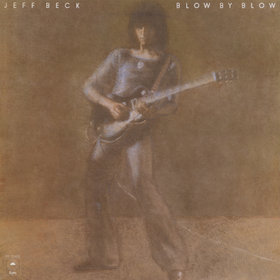
Jeff Beck relishes “Commotion”

(Above: Jeff Beck darn near steals “A Day in the Life” from the Beatles.)

By Joel Francis
The Kansas City Star

Guitar wizard Jeff Beck’s career spans six decades and encompasses rock, fusion, prog rock, rockabilly, techno and blues.

So when Beck says he prefers to experiment in different styles, it’s a bit like Mick Jagger saying he likes groupies.

There are few times on Beck’s 17 studio albums where he dips into as many styles as he has on his latest release, “Emotion and Commotion.”

The record includes performances with a full orchestra, collaborations with Irish, soul and opera singers and a pair of tributes to the late Jeff Buckley.

“I try not to get stuck on something or I’ll end up doing four albums of the same thing. I dabble,” Beck said in a recent telephone interview while on tour in Australia.

While Beck covers the gamut, his latest album was largely the product of good-luck accidents. Taking a cue from his fellow guitarists in the Yardbirds, Eric Clapton and Jimmy Page, Beck appears with an orchestra on several pieces, including Puccini’s aria “Nessun Dorma” and an arrangement of “Corpus Christi Carol,” recorded in tribute to Buckley.

“The whole idea of me doing classical numbers started five or six years ago,” Beck said. “I was trying to get my guitar to sound like a voice in an orchestra.”

The initial result — an interpretation of Mahler’s Symphony No. 5 — remains unreleased, but it encouraged Beck to keep trying.

“It was a hell of a lot of work for it to just be lying around, but (Mahler’s Fifth) allowed me to compromise,” Beck said. “I didn’t want to take an entire album’s worth to EMI Classics, because I couldn’t see a career jumping on orchestra stages every night with me as conductor. So we just have a taste.”

Beck unintentionally mirrored another aspect of Clapton’s career when he covered “Over the Rainbow.” Clapton performed the number on his 2001 tour, but Beck said he has no intention of hearing Clapton’s interpretation “because I don’t want to realize any similarity.

“I used to watch weepy movies, genuine quality films by Busby Berkeley, where all of a sudden a band kicks in and music would happen,” Beck said. “When I heard that song, it was one of the most beautiful performances.”

The lush orchestral numbers are countered by a pair of songs featuring Joss Stone on vocals, and several hard-rocking cuts with his old touring band, including young British bass savant Tal Wilkenfeld.

On “Lilac Wine,” a second tribute to Buckley, Beck is joined by Imelda May on the mic.

“This is how my life is,” Beck said. “I meet people or hear about them, and then I find out they’re available when I look into them. Imelda and Joss are two of the most beautiful women ever, and they fancy working with me, so who’s going to say no?”

“Emotion and Commotion” closes with a song from the Oscar-winning score to “Atonement.” Beck had been working with an orchestra on the piece, when producer Steve Lipson told him opera singer Olivia Safe was recording next door.

“We played her ‘Elegy for Dunkirk,’ and she completely flipped out. The next thing I know, she’s sitting in on it,” Beck said. “I was missing some element on my own. The performance is much deeper, thanks to her.”

The tributes to Buckley were also serendipitous. Beck wasn’t familiar with the late singer-songwriter until someone slipped him a CD on the way out of a party.

Beck said he was incredibly moved by Buckley’s singing and wanted to interpret that voice on the guitar.

“Without any design, these songs slid into place,” he said. “At first we were going to do ‘Hallelujah,’ but that song has become very popular, so we decided against it.”

Before embarking on his latest tour, Beck paired with Clapton for a handful of dates in Japan. The shows featured solo sets from each guitarist and culminated with a jam.

“Eric and I have always been linked through the Yardbirds, but we always seem to brush casually past each other,” Beck said. “I know people were hoping we’d compete to see who’s better, but I’ve always thought it looks stupid to try and out-shred someone. Eric would hit me with a certain style of music, and then it’s up to me to respond. It’s a meeting of two people, not a guitar contest.”

While Beck’s tour will include about half of the songs from “Emotion and Commotion,” it will feature none of the guest musicians, including Wilkenfeld.

However, the tour has reunited Beck with drummer Narada Michael Walden, who played on Beck’s 1976 album “Wired.” Walden has since produced “The Bodyguard” soundtrack, wrote the No. 1 hit “Freeway of Love” for Aretha Franklin and has penned or produced other chart-toppers for Mariah Carey, Diana Ross, Starship and Al Jarreau.

“I had to replace the rhythm section because they had other commitments,” Beck said. “Tal had her own project to do, which she delayed while she was playing with me. I hesitated to call Narada because I knew how busy he was, but he said I should have called 30 years ago. He was waiting for the call.”

Keep reading:

The Best of Jeff Beck

Review: B.B. King and Buddy Guy

Review: Experience Hendrix

The True Story of Cadillac Records (Part One): The Birth of Chess Records and the Chicago Blues

The Best of Jeff Beck

(Above: “Goodbye Porkpie Hat” was Charles Mingus’ tribute to Lester Young. It has been a regular part of Jeff Beck’s performances for the past 30 years.)

By Joel Francis
The Kansas City Star

The guitarist’s guitarist, Jeff Beck has a long and varied career. Here are some of the high points from each of the genres he’s worked in.

Blues

“Ultimate Yardbirds” (2001)

The song “For Your Love” brought the Yardbirds their first big hit, but it cost them their guitarist. When Eric Clapton quit the group for abandoning their blues roots, Jeff Beck was recruited. Beck’s tenure in the Yardbirds bridged the early rave-up blues era and the later psychedelic rock phase. For a brief period, he was joined by Jimmy Page on bass and, later, second guitar. Shortly after the Beck-Page incarnation appeared in the film “Blow Up,” Beck left the band and started his solo career. He has, however, participated on several of the Yardbirds’ reunion albums.

Note: The Yardbirds’ catalog was a frustrating mess of reissues and piecemeal compilations until Rhino released the two-disc anthology “Ultimate Yardbirds.” The collection contains every A-side, key album tracks and a handful of rarities across all three eras of the band.

Hard rock

“Truth” (1968), “Beck-Ola” (1969)

As a nonvocalist, Beck has always had to hunt for a singer. When assembling his first post-Yardbirds project, he nabbed a little-known English R&B singer Rod “The Mod” Stewart. He also recruited Ronnie Wood to play bass. The trio — joined by a rotating cast of drummers — made two albums together before Stewart and Wood left to join the Faces. Both records have a similar feel to the heavy blues/rock Beck’s former bandmate Jimmy Page was making with Led Zeppelin.

Progressive rock

“Beck Bogert Appice,” “Live in Japan” (both 1973)

After the demise of the Jeff Beck Group’s second lineup, Beck teamed up with the rhythm section from Vanilla Fudge, drummer Carmen Appice and bass player Tim Bogert. While the studio album was a typical slab of power trio hard rock, the band expanded its template on the live album, stretching several songs to the 10-minute mark. Both albums contain Beck’s version of “Superstition,” the song Stevie Wonder wrote with Beck in mind, before Wonder’s manager persuaded him to keep it for himself.

Jazz/fusion

“Blow by Blow” (1975), “Wired” (1976)

Beck teamed with producer George Martin for his first all-instrumental solo projects. Asthetically, the albums fit comfortably alongside Chick Corea’s “Return to Forever” and the Mahavishnu Orchestra. “Blow by Blow” contains two Stevie Wonder covers and a version of the Beatles’ “She’s a Woman.” “Wired” contains some outtakes from the “Blow by Blow” sessions and a cover of Charles Mingus’ “Goodbye Porkpie Hat” that has become a concert staple. The drummer on “Wired,” Narada Michael Walden, is in Beck’s current touring band.

Pop

“Flash” (1985)

After a five-year recess, Beck returned with Nile Rodgers of Chic. “Flash” was Beck’s bid for mainstream credibility and featured eight singers across its 11 tracks. The album won a Grammy and reunited Beck with Stewart on Curtis Mayfield’s “People Get Ready.”

Rockabilly

“Crazy Legs” (1993)

The guitar sound on “B-I-Bickey-Bi, Bo-Bo-Go” and other early Gene Vincent singles had a big effect on Beck as a teenager. In the early ’90s he paired with the Big Town Playboys to pay tribute to Cliff Gallup, Vincent’s guitar player.

Techno

“Who Else!” (1999), “You Had It Coming” (2001)

Longtime fans were surprised when Beck embraced the samples and looping techniques made popular by the Chemical Brothers and Aphex Twins. “You Had It Coming” finds Beck sparring with guitarist Jennifer Batten and features an update of Muddy Waters’ “Rolling and Tumbling” with Imogen Heap on vocals.

Guest Appearances

Jeff Beck has popped up in some unlikely places over the years. Here are some of his most noteworthy performances on others’ albums.

  • Stevie Wonder – “Talking Book” on the song “Lookin’ For Another Pure Love”
  • Tina Turner – “Private Dancer” on the song “Private Dancer”
  • Mick Jagger – “She’s the Boss” and “Primitive Cool”
  • Roger Waters – “Amused to Death”
  • Jon Bon Jovi – “Blaze of Glory – Young Guns II” soundtrack
  • Hans Zimmer – “Days of Thunder” soundtrack
  • Buddy Guy – “Damn Right, I’ve Got the Blues” on the song “Mustang Sally”
  • The Pretenders – “Viva el Amor!” on the song “Legalise Me”
  • Toots and the Maytals – “True Love” on the song “54-46 Was My Number”
  • Cyndi Lauper – “The Body Acoustic” on the song “Above the Clouds”
  • Morrissey – “Years of Refusal” on the song “Black Cloud”

Keep Reading:

Jeff Beck relishes “Commotion”

Review: Jonsi

(Above: This live version of “Grow Till Tall” doesn’t begin to capture the emotion of experiencing it in person.)

By Joel Francis
The Kansas City Star

When bands play Liberty Hall, they usually park their bus on Seventh Street, on the south side of the building. Prior to Jonsi’s show on Thursday night, that space was conspicuously empty except for two huge generators with power cords running inside the theater.

The generators only hinted at the energy Jonsi, lead singer for the atmospheric indie rock band Sigur Ros, would pour into his 80-minute set. The performance culminated with “Grow Till Tall” and the most powerful emotional moment I’ve experienced at a concert.

Before we get to that, however, a little context is appropriate. The Icelandic quartet Sigur Ros formed in the late ‘90s, but didn’t break through until their 2002 release. The album didn’t have a title – fans have named it “()” or parenthesis based on the symbols on the cover – or song titles. The lyrics are in Hopelandic, a nonsense language the band invented. It’s admittedly pretentious, but surprisingly accessible once one gets past the packaging and listens.

Sigur Ros songs are built on minimalist structures equally influenced by rock, classical and ambient elements. Imagine Radiohead singing in a foreign language spiked with a heavy dose of Brian Eno and you’re getting close. On his own, Jonsi still hews pretty closely that sound. Although he didn’t perform any Sigur Ros songs on Thursday, he likely could have slipped one in and only the audience response would have given it away.

Backed by a four-piece band that included his partner Alex Somers on guitar, Jonsi delivered all of “Go,” his debut solo album released this month, and four new songs that didn’t make it on the record. Jonsi and Somers, the masterminds behind “Go,” crept onstage together in the dark, the unmistakable falsetto of Jonsi’s voice marking their entrance. While Jonsi played acoustic guitar, Somers used a violin bow on vibraphone keys to create a gentle feedback. The rest of the band emerged on the next number, but this approach – Jonsi’s gorgeous, angelic voice placed within inventive settings – remained a hallmark of the night.

The music was bolstered by the theatrical staging. Four large, luminescent boxes framed the stage and an intricate glass and screen installation stood behind the band. As the projections on the boxes and screen changed, so did the mood of the room. All the images were developed by 59 Productions, and at times the combination of music and visuals threatened to overwhelm the senses. One could almost feel the heat from the fire projected around the band, smell the ozone after the simulated storm and taste the fat, wet raindrops dripping down the screens.

The band shifted textures by changing instruments after nearly every song. On a given number there might be three people playing keyboards, or two guitarists, or toy piano, percussion, vibraphone or digital manipulation. The consistent musician was drummer þorvaldur þorvaldsson. Þorvaldsson attacked his kit with the power of John Bonham or Dave Grohl, but had the finesse of a seasoned jazz drummer. More than any one player, he could change the mood of a song with a single cymbal crash and he was frequently the driving force behind the powerful crescendos.

The main set closed with Jonsi on piano, a single light shining over his shoulder. It felt like the house was privy to a late-night songwriting session. The number, appropriately titled “New Piano Song,” gave way to “Around Us.” As the melody entered, a golden glow of light settled on the crowd that felt like a sunrise. The song ended with Jonsi’s singing dissolving into a digitized barrage of vocals that ended suddenly, letting his live, pure sound ring out.

The sold-out crowd responded as it had throughout the night, waiting until the number was finished, then jumping to its feet with applause. Each number was held hushed reverence, punctuated by delighted bursts of applause between numbers. It seemed no one wanted to break the spell by talking. Pristine sound also helped perpetuate the atmosphere.

When Jonsi returned, he wore something on his head that resembled an American Indian headdress and matched the multi-colored fringes on his shirt. After “Animal Arithmetic,” the quintet moved into “Grow Till Tall.” With a forest scene projected around the band, it felt like the performance was coming from the home of “Where the Wild Things Are.”

As the song shifted, autumn settled on the forest and falling leaves swirled around the musicians. The leaves gave way to a gentle snow, which warmed into a hard rain. As the rain intensified so did the performance. Jonsi was bent over at the waist, singing into the floor and the rest of the band flailed as if caught in a terrific wind.

Like a roller coaster car inching its way to the top of a hill, the music kept ratcheting in intensity, building past any release point until it became a dense sheet of white noise, and even then it continued to swell. It seemed the only thing that kept the audience from being engulfed by the sound and the building from being torn apart was the fragile magnificence of Jonsi’s voice that penetrated the noise.

Three hours after that moment, the emotion remains strong. In a review posted on Jonsi’s Web site moments after the show, one fan stated that the performance had taken her through every emotion except anger and she knew she wouldn’t be able to sleep. That should have given her plenty of time to drive up to Minneapolis for the next concert. I know of at least one person ready to go with her.

Setlist: Hengilas; Icicle Sleeves; Kolinour; Tornado; Sinking Friendships; Saint Naïve; K12; Go Do; Boy Lilikoi; New Piano Song; Around Us. Encore: Animal Arithmetic; Grow Till Tall.

Keep reading:

Radiohead Rock St. Louis

Review: Mutemath

Review: Yo La Tengo

Review: Lupe Fiasco

(Above: “Shining Down” was one of several new songs Lupe Fiasco performed at his recent concert at the Midland Theater in Kansas City, Mo.)

By Joel Francis
The Kansas City Star

Chicago rapper Lupe Fiasco’s Kansas City debut promised to touch the sky, but left many fans hanging in midair. While Fiasco’s 65-minute set was strong, the lack of an encore left the brief evening seeking resolution.

As his guitar player noodle a riff reminiscent of “Sweet Child O’ Mine,” Fiasco launched into “Shining Down,” a song he released as a on-line single last year. A handful of similarly low-profile or unreleased cuts were sprinkled throughout the set. It has been three years since Fiasco’s last release, and the crowd happily embraced the new material.

Hip hop always sounds better when delivered through live instruments. Fiasco’s band included a drummer and a DJ, who rocked two Macs instead of two turntables, and it flexed its muscles several times. The setlist included a devastating reading of Radiohead’s “The National Anthem” as Fiasco spit some of his most articulate and angry rhymes of the night. The players also bridged one song to another with brief solos or instrumentals.
.
Although the new songs were appreciated, the evening didn’t officially seem to start until the fifth number, “Hip Hop Saved My Life.” The performance raised a sea of hands and kicked off a powerful run through most of Fiasco’s biggest songs. A surprise detour through N.E.R.D.’s “Everybody Nose” (“all the girls standing the line for the bathroom”) led straight into “Go Go Gadget Flow” and Fiasco’s pride for the Windy City. The run culminated with the skateboard anthem that took Fiasco into the mainstream, “Kick, Push.”

The favorites were exhausted, but Fiasco still had plenty of tricks up his sleeve. “Scream,” another new track, was a low-key mood piece set in a wash of keyboards and guitars over insistent drumming and magical delivery. From there Fiasco made his biggest statement of the night. The trio of “Little Weapon,” a song about child soldiers in Africa, “Streets of Fire,” a portrait of inner-city gang culture, and “Fighters” created a stirring case against violence and war. 

The cavernous Midland was more empty than full. The upper balcony was closed and the floor was only three-quarters populated. While the fans’ energy rarely flagged, the sound suffered, and one had to wonder if the performance wouldn’t have been better in a smaller venue. 

A lot of the band’s sound seemed lost in the room. The drums were thin and it seemed only the guitar or DJ could be heard in the mix at the same time. Only Fiasco’s ultra-enunciated, rapid-fire rhymes consistently penetrated the space.

The set ended with two of Fiasco’s biggest songs off “The Cool.” “Superstar” is a portrait of the fragility behind a celebrity’s public armor, and the hook-happy “Paris, Tokyo” is a hip hop love song about life on the road.

When the band departed after a little over an hour, an encore seemed inevitable. Too many good songs –including Lupe’s duets with Kanye West, “Touch the Sky,” “Us Placers” – had yet to be played. Chanting for their return, the crowd continued to stand in disbelief when the house lights came on. As the canned music grew louder, they gradually filed out.

Les Izmore: The local MC turned his 30-minute opening set into a taste of the city’s hip hop scene. Backed by a DJ, he performed one number alone, then brought out Dutch Newman for another. His set really took off when the four-piece horn section and rhythm section from Hearts of Darkness came out. “Middle of the Map” had a tight James Brown feel, and the Afro-beat number “America One” got the crowd involved. Izmore took the stage wearing a duck head and leading the crowd in “Row, Row, Row Your Boat,” but quickly proved he’s no joke.

Setlist: Shining Down, Solar Midnite, The Instrumental, The National Anthem, State-Run Radio, Hip-Hop Saved My Life, High Definition, Everyone Nose (N.E.R.D. cover); Go Go Gadget Flow; I Gotcha; Kick, Push; Scream;Little Weapon; The Cool; Streets on Fire; Fighters; I’m Beaming; Superstar; Paris, Tokyo.

Keep reading:

Les Izmore – Jazz, hip hop collide to celebrate landmark album
Review: Talib Kweli & Hi-Tek
Professor Griff discusses the past – and future – of Public Enemy
Review: For The Roots It’s All In The Music

Stevie Wonder – “Signed, Sealed, Delivered I’m Yours”

Stevie Wonder – “Signed, Sealed, Delivered I’m Yours,” Pop # 3, R&B # 1

By Joel Francis
The Daily Record

Little Stevie Wonder hadn’t been little in a while, but “Signed, Sealed, Delivered I’m Yours” was the first single clearly made by a grown man. Released in June, 1970, it was the first single Wonder produced on his own, and his first collaboration with Syreeta Wright, who would become his wife.

The Wright-Wonder marriage didn’t last long, but their musical collaboration lives on. Wonder helped write and produce much of the material on Wright’s first solo albums (including the lost Motown classic “Stevie Wonder presents Syreeta Wright”), and the two collaborated on songs that appeared on “Where I’m Coming From,” “Music of My Mind” and “Talking Book.” This pivotal run of albums transformed Wonder as both an artist and a musician, setting up his staggering run of success later in the decade.

Signed to Motown in 1963, Wonder was starting to get bored with Hitsville at the dawn of the ‘70s. He was exploring different musical styles and arrangements and trying to broaden his sound. One day Wonder gave a tape of an instrumental he was working on to Lee Garrett, a frequent collaborator. Garrett shared the tape with Wright and the two began brainstorming ideas. The title, however, came from Wonder’s mom Lula, who exclaimed the phrase after hearing a rough version of the track.

“Signed” was recorded with the Funk Brothers, but had a strong Southern soul groove. Although many Hitsville staffers were reluctant to release a number so far removed from the Motown sound, Wonder prevailed and the song spent six weeks at the top of the R&B charts. “Signed” also earned Wonder his first Grammy nomination, which he ultimate lost to Stax artist Clarence Carter for the song “Patches.”

Elton John was the first musician to cover “Signed, Sealed, Delivered.” The pre-fame pianist cut the song under his birth name, Reg Dwight, for a discount copy band compilation. James Brown’s right-hand man Bobby Byrd released his version as a single a few years later. In 1977, Peter Frampton combined elements of “Signed” and Wonder’s “For Once In My Life” on his follow up to “Frampton Comes Alive.”

In 2003, Michael McDonald released his version on his Motown covers collection. Later that year, Wonder and Angie Stone appeared with the British boy band Blue on their cover, which hit No. 11 on the British charts. Most recently, presidential candidate Barack Obama played the song at the end of his 2008 campaign events.

Review – “Record Store Days”

(Above: The crew at Championship Vinyl discuss their favorite Side 1, Track 1’s in the ultimate record store flick “High Fidelity.”)

By Joel Francis
The Daily Record

Music fans geeked out for Record Store Day, have a new bedside companion until the next incarnation of the annual event. In “Record Store Days,” Gary Calamar and Phil Gallo have loving assembled a history of their musical Mecca.

The tome operates on several levels. The bountiful pictures that depict the stacks, musicians and proprietors of record shops qualify the book as a fetish object. It’s easy to get lost in the details, such as trying to identify the covers on display during Elvis Presley’s trip to a Memphis shop, or getting lost in the promotion displays in a picture the counter at The Holiday Shop, a Roeland Park, Kan. store in the 1950s.

The chapters are quickly paced, and contain lots of headers, so they can be read in bits and pieces. There are nearly as many sidebars as photos. The insets tell the stories behind the most outlandish names, like Minneapolis’ Oarjokefolkopus or Los Angeles’ Licorice Pizza, chronicle the history of record stores in movies, and tell about finding that first love in the racks – musical or otherwise. Along the way, plenty of musicians, owners and fans relate their favorite vinyl experiences.

Finally, the book offers a comprehensive history of the independent retail industry. The story starts at the turn of the last century, when records were sold in furniture stores as an accoutrement to Victrolas and other record players. Like everything else, music sales declined during the Depression, and the materials used to create the platters were scarce during World War II.

The record store as we know it blossomed in the 1950s, and enjoyed a heyday in the 1960s and ‘70s. The spaces almost became alternative community centers, where music fans would swap songs and stories while digging for the latest gem.

The final half of the book also serves as a cautionary tale of the industry. CDs gradually replace vinyl, but when the bubble bursts in the late ‘90s, neither the major labels nor the stores have anything to replace them. Particularly telling is the story behind SoundScan, the computer-based sales tabulator that destroyed the manipulative hand tallying.

“Record Store Days” ends on a happy note, with the opening of Amoeba on Sunset Boulevard in Los Angeles and the recent resurgence of vinyl. The final chapter discusses the founding of Record Store Day and is sunny enough to convince anyone to hop in their car and run to a record shop as soon as they finish the page. The book doesn’t try to be objective. It reads like a loving embrace written by people who love vinyl, for record fans.

The book’s biggest flaw is that too much of the action is centered in Los Angeles and New York. There are some mentions of Criminal Records in Atlanta, Waterloo in Austin, Texas and Oarjokefolkopus, but little else occurs between the coasts. Some love for the great college town record shops would have been a welcome – and diverse – addition.

Calamar and Gallo are not out to convert new fans to the cult of vinyl, and readers will quickly know if they are in the target audience. (Hint: If you don’t think it’s cool that the record on the cover actually has grooves, this book likely isn’t for you.) The duo knows the next best experience to being in a record store is reading about record stores, and their offering does a great job of taking fans there.

Keep reading:

Review – “King of the Queen City”

Review: “The Oxford American: Book of Great Music Writing”

Review – “How the Beatles Destroyed Rock ‘n’ Roll”

Review – Arctic Monkeys

(Above: The Arctic Monkeys put their spin on Nick Cave’s “Red Right Hand.”)

By Joel Francis
The Kansas City Star

Five years ago, the Arctic Monkeys arrived on the music scene riding a wave of hype. The influential British music publication the NME ranked the Arctic Monkey’s debut album, “Whatever People Say I Am, That’s What I’m Not,” ahead of the Beatles, Radiohead and the Clash on its list of top 100 British albums.

Monday night the English quintet came to Liberty Hall in Lawrence in support of its third album, “Humbug.” The transitional album didn’t command the propaganda and isn’t as flashy as their first two efforts, but that didn’t stop a nearly full house from rabidly devouring everything the band played.

Over the course of their 80-minute set, the Monkeys delivered more than half of “Humbug,” including a couple B-sides, and half of their second release, 2007’s “Favourite Worst Nightmare.” The contrasting material revealed two very different sides of the band. “Humbug”’s songs, for the most part, are more downbeat, while the cuts from “Nightmare” border on metal.

Opening number “Dance Little Liar” foreshadowed the juxtaposition with a drum cadence lifted from Metallica’s “One.” As the number died down, a bank of strobe lights behind the band kicked on and the group thrashed their way through “Brainstorm” with a performance that wouldn’t have been out of place at Ozzfest.

The band’s approach seemed to be to combine the angular approach of the Talking Heads and Gang of Four with the speed and intensity of Slayer. Slanted guitar lines, surf riffs and plenty of tremolo framed most of the songs. Even at their heaviest, the Monkey’s songs were infused with enough pop hooks to keep the crowd moving, although it was hard to tell if they were dancing or moshing.

Although the newer material was well received, the biggest cheers came for the three numbers from the band’s debut. The opening chords of “Still Take You Home” prompted a big response, and the crowd went nuts during the one-two of “The View from the Afternoon” and “I Bet You Look Good on the Dance Floor.”

Surprisingly those numbers arrived in the middle of the set. After lifting the crowd so high, there was nowhere to go but down, so Alex Turner strapped on an acoustic guitar for the country-tinged “Cornerstone.” Later, a deconstructed reading of Nick Cave’s “Red Right Hand” rendered the already spooky song in a completely new light.

The Monkey’s performed on a minimalist stage, in front of a plain curtain and a bank of lights raised about 10 feet off the ground by a series of poles. When the lights were on, which was frequent, it created an artificial ceiling and made the mid-sized theater feel like a cramped, sweaty basement.

Bass player Nick O’Malley is the band’s secret weapon. Tucked in the back corner at stage right, he supplied the needed melody underpinning the abstract guitar lines. As Jamie Cook and Andy Nicholson strafed the songs from unprecedented angles on their guitars, Malley’s melodic bass lines and Matt Helders’ manic drumming held the performances together.

The set ended with the poppy “Fluorescent Adolescent,” which sounded like a mangled Mod single. The aggressive “Nettles” had the crowd clapping along and featured more false endings than a Beethoven symphony. When the number final ended, the instruments were abandoned buzzing, leaving feedback long after the band had departed.

On the way back to the car, I overheard two fans lamenting that more songs from the first album weren’t performed.

“I guess what we have to remember,” one fan said, trying to console himself, “is that what would be new to us, these guys have been carrying for five years.”

Sleepy Sun: While the Arctic Monkeys focus on delivering tightly crafted, manic singles, opening act Sleepy Sun was content to play spacey, long-form album tracks. The six-piece San Francisco band’s 45-minute set was filled with psychedelic, progressive rock that incorporated more than a hint of Black Sabbath and first-album-era Led Zeppelin. The co-ed lead singers brought a touch of folk to the arrangements, particularly when tambourine, harmonica or acoustic guitars were introduced. Fans of Death Star and the Seven Dwarfs, Black Moth Super Rainbow and the Flaming Lips might want to keep an eye open for their next trip through town.

Setlist: Dance Little Liar > Brainstorm; This House is a Circus; Still Take You Home; Potion Approaching; Joining the Dots; My Propeller; Crying Lightning; The View from the Afternoon; I Bet You Look Good on the Dance Floor; Cornerstone; Fire and the Thud; Do Me A Favour; Pretty Visitors; Red Right Hand (Nick Cave cover) > If You Were There, Beware; 505. Encore: Fluorescent Adolescent; Nettles.

Keep reading:

Review: Flaming Lips New Year’s Freakout
Review: The Decemberists
Review: Megadeth
Review: Get Up Kids
Review: Modest Mouse

Six Songs of Spring

(Above: “April In Paris” brought spring to many parts of the world whenever it was played. Few did it finer than the Count Basie Orchestra.)

By Joel Francis
The Daily Record

Spring arrived on the calendar several weeks ago, but Mother Nature didn’t get the memo until recently. The half dozen songs that follow don’t explicitly mention chirping birds, budding flowers, sun dresses and deck parties, but they certainly conjure the feeling.

“Starting a New Life” – Van Morrison

Van the Man throws off the shackles of winter in the jubilant first verse of this song:

“When I hear that robin sing,
Well I know it’s coming on spring,
Ooo-we, and we’re starting a new life.”

In a little more than two minutes, Morrison and his buoyant country/folk melody captures the romance of the season and the essence of why so many couples get married in the spring.

“Starting a New Life” was one of the first songs Morrison wrote after relocating from Woodstock, N.Y. to just north of San Francisco. Although the move wasn’t his idea, he was clearly relishing his new surroundings.

“Satchel Paige Said” – The Baseball Project

For many fans of the nation’s pastime, spring doesn’t arrive until Opening Day. Wind chill and even snow are mentally eliminated once the boys of summer line up along the base paths.

Dream Syndicate’s Steve Wynn and Scott McCaughey of the Minus Five and Young Fresh Fellows teamed up in 2008 under the name “The Baseball Project” and cut 13 tributes to their favorite sport.

“Satchel Paige Said” sounds like an outtake from Tom Petty’s “Full Moon Fever.” McCaughey’s lyrics draw on elements of Paige’s biography and his famous advice: “Don’t look back. Something might be gaining on you.”

“Radio Head” – Talking Heads

Generation X is littered with great bands that take themselves too seriously. Perhaps the only common element shared by Pearl Jam and the Smashing Pumpkins is that neither band wants to provide its audience with the opportunity to laugh.

But the biggest and most serious of all Gen X bands is Radiohead. Which makes it even more delightful that they titled their first album after a Jerky Boys gag and named themselves after this supremely silly Talking Heads track.

But even if the English quintet had chosen another moniker, “Radio Head” would deserve a footnote in music history. David Byrne’s song about a man who can pick up radio transmissions with his noggin is set to a poppy zydeco rhythm that makes it the perfect song for that first spring car ride with the windows rolled all the way down and the stereo turned all the way up.

“Bowtie” – Outkast

Once the temperature swells, the unshapely layers of winter clothing are shed. And when the flimsy summer apparel is donned, it’s time to strut. Urban radio stations bank on this transition, building their warm-weather playlists around the singles designed maximize swagger.

The funky horns on this cut from Big Boi’s half of “Speakerboxxx/The Love Below” will make any stroll seem like a parade. The hip hop equivalent of ZZ Top’s “Sharp Dressed Man,” this track exudes more than enough confidence to turn a timid Romeo into a pimp daddy for one night.

“April, Come She Will” – Simon and Garfunkel

Ah, the fickle fancy of spring flings. On “April, Come She Will,” Paul Simon uses the changing seasons as a metaphor for a girl’s elusive affection following a brief affair. Thematically, the romantic longing of “April” was echoed on “For Emily, Wherever I May Find Her.” Both songs hover around the two minute mark. The economy of Simon’s lyrics and arrangements and the power of Art Garfunkel’s vocals make both songs potent vignettes.

Although it was written three years before the film, “April, Come She Will” is used to great effect in “The Graduate” as Benjamin Braddock chases the heart of Elaine Robinson.

“Springtime for Hitler” from “The Producers”

You don’t have to be an English major to see the metaphor in the title song from Bialystock and Bloom’s failed musical. As chorus girls parade around in beer stein bustiers, and pretzel tassels, the faux fuhrer solemnly intones: “Springtime for Hitler and Germany/Autumn for Poland and France.” Any remaining sensibilities are purged when storm troopers in a Busby Berkeley-style dance form a swirling swastika.

The coup de tat that saves the song from being an anti-Semitic nightmare comes from the fact that Mel Brooks, a Jew who fought the Germans at the Battle of the Bulge, gleefully wrote all the lyrics to this brilliant satire. (That’s his overdubbed voice delivering the line “don’t be stupid, be a smarty/come and join the Nazi party.”)

Review – Greg Ginn and the Taylor Texas Corrugators

(Above: The Taylor Texas Corrugators captured onstage via cell phone at the Record Bar on April 7, 2010.)

By Joel Francis
The Daily Record

In person, Greg Ginn couldn’t be more different the songs he wrote for the legendary hardcore punk band Black Flag. The primary architect of the group’s sound, Ginn’s songs were brash, aggressive and threatening. In contrast, Ginn is gentle, soft-spoken and hospitable.

Likewise, the music Ginn is currently making with the Taylor Texas Corrugators couldn’t be further removed. Black Flag’s taught bursts of violence have been replaced by extended, amorphous, improvised pieces.

The mechanics of Ginn’s recent show with the Corrugators at the Record Bar, however, were eerily similar to the rituals he performed more than two decades ago. Ginn pulled into town late Tuesday afternoon and gave a brief, free performance at the Guitar Syndicate music shop in the Crossroads district before heading to Westport for the evening gig.

The three-piece outfit hauled all their own equipment in a white panel van that showed some scars from its many treks across the continent. With only one roadie/soundman in tow, they set up and broke down all their own equipment with an efficiency born from years of routine.

Once all the amps, cords and instruments were assembled onstage, a simple rat-a-tat-tat from Sean Hutchinson’s snare signaled the start of the proper set. For the next 20 minutes, the three bobbed and weaved, trying to make sense of the monstrous sound they were creating. Gary Piazza’s guitar solos were heavily indebted to Jimi Hendrix and Jerry Garcia, but with enough bursts of feedback and weird noises to topple any jam band tedium.

At 55 years old, Ginn was easily older than the combined ages of his two bandmates, but he was very much the bedrock of the group. Anchoring the songs on bass guitar, Ginn hasn’t lost his keen ear for melody. Time and again he tossed out a bass line begging to be fleshed out and turned into a proper song, only to be discarded for the next impulse.

As Piazza wailed and Hutchinson held the backbeat, Ginn closed his eyes and swayed back and forth in unison with Hutchinson’s backbeat. One got the feeling Ginn would be doing this regardless, and was just as happy to play for fans on the road as in a studio or rehearsal space.

Ginn was equally happy to talk with anyone who approached him. He made it a point to catch everyone’s name, listened patiently and answered thoughtfully. Sadly, there were only a handful of fans at the opening end of the Corrugators’ allotted hour at Guitar Syndicate, and about two dozen souls in the Record Bar that night.

When I asked Ginn how he hooked up with the Corrugators, at the pre-show stop at Guitar Syndicate, he shook his head and shrugged. “I don’t know,” he said softly. “They’re probably into U2.” Turning to me he asked, “Do you like U2?” I confessed that I liked the band, but that their last few albums had been too similar and I had fallen away.

“Everybody likes U2,” he said with weary resignation. “I guess that’s why thousands of people turn out for Bono wherever he goes.”

Moments later, Ginn proved his disdain for the group when Hutchison threatened to start playing “Where the Streets Have No Name” one night during a show. “Is that one of their songs?” Ginn asked. “I don’t even know what that is.”

Ginn could be forgiven – even respected – for not knowing one of U2’s biggest songs. When that single broke in the summer of 1987 he was on the tour, reasserting himself after the recent demise of Black Flag. The road, the van, the do-it-yourself ethos weren’t just part of Ginn’s punk persona; they are the core of who he is.

The night ended as spontaneously as it began. After three songs and 45 minutes, Ginn thanked the sparse Record Bar crowd for coming out, and started packing up. It wouldn’t be long before the gear was hauled out and Ginn was back home, back in the van.

Keep reading:

Go green with Stiff Little Fingers

Dischord finds harmony in D.C. hardcore scene

Review: Carbon/Silicon at the Record Bar

Ever Fallen For The Buzzcocks?

Jackson 5 – “The Love You Save”

Jackson 5 – “The Love You Save,” Pop # 1, R&B # 1

By Joel Francis
The Daily Record

The process behind the J5’s two previous singles was too successful and irresistible not to try again. And for the third time, the resulting song stuck at the top of the chart.

The product of a Berry Gordy and the Corporation, “The Love You Save” bears more than a passing resemblance to “ABC” and “I Want You Back.” Don’t fall into the trap of writing off the song as a carbon copy, though. “The Love You Save” has a more complex arrangement – it deviates from AABA structure – and greatly benefits from Jermaine’s supporting vocals. Plus it’s just as infectious and fun as the first two singles.

On their tours in the late ‘70s and early ‘80s, the Jacksons combined all three songs in one medley. It was an obvious and surefire idea. Put these three together and you’ve got 10 minutes of music guaranteed to put a smile on the most hardened face and get the most sedentary feet moving.

The lyrics in “The Love You Save” echo the warning Diana Ross delivered five years earlier on “Stop! In the Name of Love,” another Motown No. 1. Both songs open hard on the word “stop” and implore their partners to both slow and settle down. Playing these songs back to back shows how far Motown has pushed soul music. The excitement of the Holland-Dozier-Holland composition is tempered by Ross’ mannered delivery that almost turns her pleading into nagging. On the other hand, the Corporation’s number jumps out of the speakers with a kinetic energy and Michael’s charismatic vocals. The supporting string arrangement is only hint of the assembly line Motown sound that HDH developed.

Few artists have covered “The Love You Save.” More noteworthy are the songs penned by Joe Tex and the Holmes Brothers that bear the same name.