Reunion bands: Ain’t nothing like the real thing

(Above: The two original members of Lynyrd Skynyrd and five other guys play “Free Bird.”)

By Joel Francis

When the Temptations and Four Tops took the stage Saturday night with only one original member in each ensemble, it raised questions of truth in advertising. Can a band be billed by its legendary name if only one of its musicians is an original legend?

Few bands are as fortunate as Los Lobos and U2 to have retained the same personnel since their debut. Some bands, like Wilco, have a different lineup on nearly every album.  But the reunion craze has accelerated hiring ringers to fill in for dead or uncooperative musicians.

When Journey played the Midland a few weeks ago, longtime singer Steve Perry had been replaced with Filipino Arnel Pineda, who was 8 years old when the band’s first album came out. No one complained, but Pineda’s job is essentially to sound like Perry while founding guitarist Neal Schon and the rest of the band deliver their signature sound.

Similarly, Yes were primed for a 40th anniversary tour when lead singer Jon Anderson fell ill. Rather than cancel the tour, the remaining members, who include Oliver Wakeman, son of original keyboardist Rick Wakeman, recruited a new singer off YouTube.

The majority of fans will tolerate a minor substitution. There were no grumbles when bass player Eric Avery sat out Jane’s Addiction’s second go-round. Most fans will recognize that age and time will prevent everyone from taking part. But when the skeleton of the original crew drag new faces out under the old name, it starts to take advantage of the people who kept the hunger for a reunion alive.

There’s also a slight double-standard in play. Few Beatles fans would be satisfied with a Beatles “reunion” featuring Paul, Ringo, Julian Lennon and Dhani Harrison, but The Who have completed not one but two successful (read: lucrative) tours minus the late John Entwistle and Keith Moon. Of course a true Fab Four reunion never happened, while The Who have launched a handful of “farewell” tours, but the rhythm section of Moon and Entwistle defined The Who’s sound just as much as John and George did for the Beatles.

Swapping drummers and bass players is one thing, but the road to finding a new frontman is fraught with peril. INXS failed miserably in their reality TV quest to carry on after the premature death of Michael Hutchinson. However, 14 years after Freddy Mercury died, Queen – minus drummer John Taylor – reconvened with former Free and Bad Company vocalist Paul Rogers. Many of the band’s East Coast concert date sold out quickly.

When Ray Manzarek and Robby Krieger hired Cult singer Ian Astbury to hit the road as The Doors they were faced with a lawsuit from drummer John Densmore and forced to tour as Riders on the Storm. The moniker didn’t alter any setlists, but it at least let the fans know they weren’t getting the same guys that worked together in the ‘60s.

Then there are the jazz orchestras that continue to tour despite the death of their bandleader. The Count Basie and Glenn Miller orchestras draw decent crowds when they visit the area, despite Miller’s disappearance during World War II and Bill Basie’s death a mere 25 years ago. The Gem Theater will host a Jazz Messengers reunion concert on October even though bandleader Art Blakey died in 1990.

The reason why a musician will resurrect his old band with ringers is obvious: Billy Corgan will sell a lot more tickets and albums as the Smashing Pumpkins than he would alone. And while there’s no clear-cut solution, I think this is a rare example of capitalism and artistry joining forces to provide the ultimate answer.

If a band’s catalog is strong enough, fans won’t mind shelling out $30 to $50 as they did Saturday night at Starlight to hear someone else sing “My Girl” and “Baby I Need Your Loving.” On the other hand, if bands plug on minus crucial components, they might be confined to the state fair/town festival circuit Three Dog Night and the Guess Who have been riding for years.
Holiday Marketing Can Reveal Bands’ Inner Grinch


By Joel Francis

The Kansas City Star’s Back To Rockville blog

Your favorite band’s opinion of its fans will not be found on the concert stage, but under the Christmas tree.

For years the holiday season has been the dumping ground for record labels. Greatest hits albums from nearly forgotten artists (last year: Sugar Ray, this year: Staind) and reissues with bonus tracks are both designed to cash in on the holiday shopper. While most best-ofs are aimed at the casual buyer, and some can be a great starting place for a uninitiated fan daunted by an artist with a tremendous catalog, reissues take straight aim at the dedicated fan.

Few artists are able to find the balance between old and unreleased material and introduce themselves to new fans without appearing to gouge long-time fans. The Dave Matthews Band finds that balance this year with “The Best of What’s Around, Vol. 1.”

This set gets props for being selected by the band’s fan club and coming with a second disc of unreleased live performances that don’t overlap the material on the first disc. Plus it’s available at a one-disc price. That’s a lot better than most greatest hits with the obligatory two new tracks tacked on to the end.

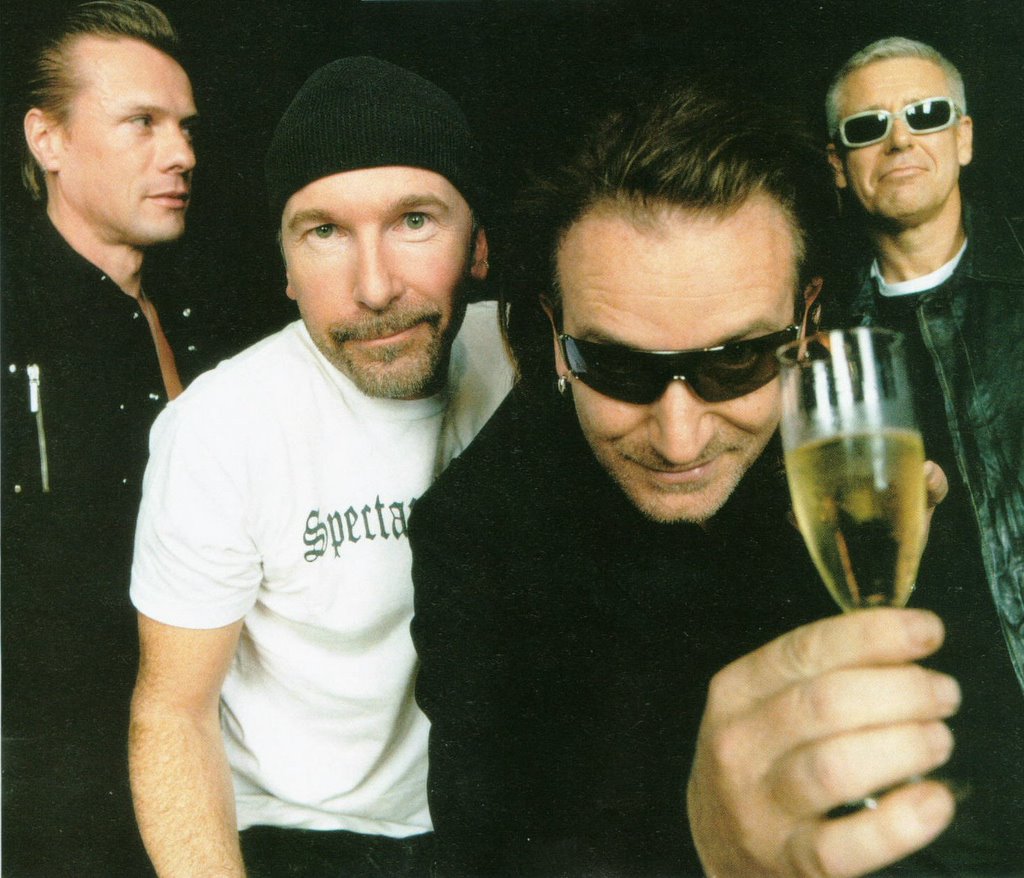
Which is exactly what U2 does on their collection, “18 Singles.” This is the third best-of compilation from the band in the past decade, a figure which matches the number of studio albums they’ve given us in the same span. It is impossible to summarize the band in one disc and here the band doesn’t even try. Eight songs post-date the millennium, leaving 10 tracks to cover the first two decades of the band. Three albums, “Boy,” “October” and “Pop,” are ignored completely. It’s unclear who this is trying to appeal to, but the band’s intentions could be summed up by playing the intro of Pink Floyd’s “Money.”

For all their humanitarian efforts and “everyman” appeal, it is appalling that U2 would stoop to such a low marketing ploy. They manage to make matters worse with a “deluxe edition” of “18 Singles” that includes at 10-song DVD at nearly double the price. This is not a new practice. U2 have been releasing their concerts on DVD in two editions from some time now. The bare-bones disc of the full concert usually runs about $10, while at double the price the “deluxe edition” adds a second disc of content that barely holds up on first viewing. U2 are shamelessly profiting off their hardcore fans — the ones who made the band what it is today — with this tactic.

Unfortunately U2 are not alone. Last spring Bruce Springsteen released the excellent “We Shall Overcome: The Seeger Sessions” album. This fall it is back in the “American Land Edition” with five more songs. Columbia Records, the same label that brings us The Boss, released no fewer than three versions of the Los Lonely Boys debut album in 2004 and 2005. First came the standard issue. Then, when the band started to take off, Columbia pushed an enhanced version with Spanish-language tracks. Finally came a DualDisc version with videos and a surround-sound mix of the album.

When artists and the labels lament over the money lost through downloading, piracy and hard-drive swapping they should remember that it is ploys like this that turn fans away. It’s never profitable in the long run to spit on the fan who bought the album when it was first released and boosted its all-important SoundScan numbers. This is a trick akin to the repairman who keeps finding one more thing to fix, and it is capable of damaging years of devotion and goodwill.

Fortunately some artists are getting this right. Wilco has provided a free EP of exclusive content for fans who bought their last two studio albums. A code in the CD booklet may be keyed in to the band’s Web site to access the downloadable songs and artwork. Those who purchased Wilco frontman Jeff Tweedy’s solo concert DVD this fall can put the disc in their computer to download high-quality audio versions of all the songs in addition to two bonus tracks. Sure, the system isn’t flawless, but it rewards those who buy and acts on good faith.

All bands thank their fans, but what is expected to be put under the tree speaks much louder than concert-concluding platitudes. Like the Grinch, it appears that The Boss and Bono need a visit from Dave and Wilco to have their hearts expanded a few sizes.