Hail Death Cab

Expect a ‘faster and louder’ show at the Bleeding Kansas Festival.

Cover story, August 03, 2006

By Joel Francis
The Kanas City Star

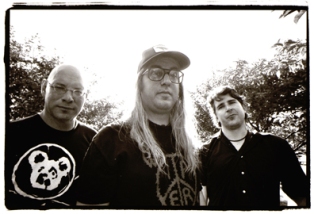
Elvis Costello, Atlantic Records, Franz Ferdinand and Lollapalooza have at least one thing in common: Death Cab for Cutie.
The Seattle band had been building a loyal fan base since 1998 when last year it signed to Atlantic Records and released the album “Plans.” The fans rejoiced when the big label association didn’t alter the music. In fact, the band wasn’t done pushing its core conceptions.
“We knew full well when we signed (with Atlantic) that we didn’t have to,” said keyboard player, guitarist and producer Chris Walla. “If they didn’t give us what we wanted, they wouldn’t get us. What we wanted was to be able to do exactly what we were doing but with more resources and access to people.”
Walla and the rest of the band — singer, guitarist and chief songwriter Ben Gibbard, bassist Nick Harmer and drummer Jason McGerr — are headlining the Bleeding Kansas Arts & Music Festival at Burcham Park in Lawrence on Saturday. The steamy outdoor setting isn’t ideal for “Plans,” an album best suited for rainy afternoons indoors.
“We’re not performancy performers. There are no rock-star moves or laser shows,” Walla said. “Festivals are difficult for us because there are so many ‘X’ factors. We just turn it up and play faster and louder than we would otherwise.”
The more popular Death Cab gets, however, the more it plays in places that serve thousands of fans than it does intimate clubs. In June, Death Cab played Bonnaroo; Friday the band plays Lollapalooza in Chicago. In both places, Walla said, the band will adjust.
“It’s a different mind-set,” he said. “The whole performance from the stage keeps having to get bigger and bigger to reach the back of the places we’re playing.”
That’s not the only adjustment fans have had to make. It recently toured with Franz Ferdinand, whose frenetic disco rock is the complete opposite of Death Cab’s introspective, mellow sound.
“It was an exercise in counterpoint,” Walla said. “Franz could go out with American Hi-Fi or the Arctic Monkeys, but how much of one thing do you need?”
The bands were already mutual fans and quickly embraced the idea, alternating opening and closing nights.
“If we were the first band up that night, we’d start big, but if Franz would open then we’d start out super quiet,” Walla said. “We bring it back as far as we could. To highlight and contrast (the two bands) just seemed to be the thing to do.”
Death Cab recently performed with Elvis Costello for VH1’s televised “Legends” concert.
“It was especially exciting for me because Elvis Costello, Talking Heads and the first few XTC albums are my bread and butter,” Walla said. “It was difficult to find a song that made sense to us and that we could play (with Costello). It would be completely inappropriate for us to play anything from ‘This Year’s Model.’ I wanted to play ‘Peace in Our Time,’ but it didn’t work out.”
In the end, “Accidents Will Happen” and “Kinder Murder” won out.
So what are the consequences of all this mingling with strange bedfellows and playing huge festivals?
“Our musical direction right now is pretty static,” he said. “We’re just playing shows. There are no new songs or decisions about the next record.”
For a band that has been as adventurous as Death Cab has been lately, static is a new direction.

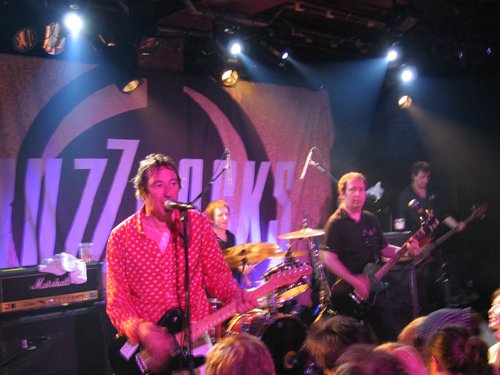
Ever Fallen For The Buzzcocks?


Buzzcocks 2006First-gen Brit punk band is an inspiration to groups that follow.

Kansas City Star

By Joel Francis

It’s hard to keep a band together for 30 years.
It’s even harder to stay relevant for that long. But to achieve both and outlast contemporaries like the Sex Pistols, The Clash and the Damned – the original families of the British punk movement – is a rock ‘n’ roll hat trick.
“It’s strange to think that we’re the last gang in town. Funny how that works,” Steve Diggle, the Buzzcocks’ guitarist and singer. “Our inspiration is still to write good songs, and it’s still possible for us to do that. People – the younger people now, which surprises me a bit – still want to see us and that’s what keeps us going.”
The band’s durability has not gone unnoticed.
“We just got Mojo magazine’s Inspiration Award,” Diggle said. “I’m not big into awards but I think this one sums it up, rather than saying ‘lifetime achievement’ or something.”
Diggle may not be big into awards because, as he later revealed, this was the first one the band has received.
“We’ve never won an award in our life, but this is a good one to have,” Diggle said. “It was hard to accept without freaking out a bit because Elton John was there saying ‘I love the Buzzcocks.’”
John, who was being inducted into Mojo’s Hall of Fame, also said he’s had a ball performing the Buzzcock’s classic “Ever Fallen in Love.”
The Buzzcocks formed in Manchester in 1975. Singer/guitarist Pete Shelley, the other longest-tenured member of the band, met Diggle at a Sex Pistols show and asked him to be the band’s bass player.
“In Britain at that time music was stale all around us. It was all progressive rock bands, but there was no music for our generation,” Diggle said. “We made the most uncommercial music possible, with rough guitars and weird mixes.”
After a series of artistically successfully/commercially dismal singles and albums the band broke up. Foreshadowing the current reunion trend by nearly a generation, the classic Buzzcocks lineup regrouped in 1989.
“It was supposed to be a two-week tour of America, because there was no farewell tour before,” Diggle said, explaining why the band regrouped. “From my point of view, me and Pete were getting on and things were cooking between us.”
Shelley and Diggle permanently returned the Buzzcocks to the music scene in 1990, when bass player and producer Tony Barber and drummer Phil Barker were hired. The quartet has played twice as long as the original incarnation.
“You know on the first day if it’s a good decision” to reunite, Diggle said. “You have to have your head on straight, be realistic and analyze it. Is it as good?
If a band can’t perform as good, if not better, than it did before, there’s no point in getting back together, Diggle said.
Music had changed a lot in the Buzzcocks’ absence. Punk had given way to a new wave on the carts and hardcore in the underground.
“In some ways everyone is a punk rocker now. (Punk) is a long way from what we started,” Diggle said. “These new bands have taken the works of Shakespeare and put on a play. What they’ve done is make it entertainment.”
Far from being bitter, Diggle is happy to headline the Warped Festival and share the bill with so many younger bands.
“I’m not knocking them completely,” Diggle continued, “but they’re a few yards, or maybe 200 miles, away from what we do.”

Concert Review: Wakarusa Music Festival (2006)

flaming-lips.jpg

The Kansas City Star’s Back To Rockville blog

By Joel Francis

Flaming Lips
Bubbles, confetti, lights, super heroes, Santa Claus, space aliens, streamers, balloons and smoke.
We’re only halfway through the Flaming Lips first song and it already feels like the greatest party ever thrown.
The Lips closed down the main stages at Wakarusa on Saturday night by bombarding their audience with happiness for 90 minutes. The props might have seemed like a gimmick if the songs and their performances weren’t equally incredible. Thankfully, they were.
Lips singer Wayne Coyne played the role of merry prankster, shooting confetti, singing with puppets, asking to be pelted with glo-light sticks and rolling over the crowd in a giant bubble.
The heat of the day was gone and a cool breeze had settled in from a storm that was still a few hours off. Maybe Coyne himself put it best: “I don’t want to exaggerate, but this might be the most perfect moment of the whole festival.”

Setlist: Race For the Prize, Bohemian Rhapsody, Free Radicals, Yoshimi Battles the Pink Robots (part one), Yoshimi Battles the Pink Robots (part two), Vein of Stars, The Yeah Yeah Yeah Song, The W.A.N.D. , She Don’t Use Jelly, Do You Realize, (encore:) A Spoonful Weighs a Ton

Les Claypool
The undeniable highlight of Les Claypool’s 80 minute set was when heavy metal guitarist Buckethead and funk keyboard legend Bernie Worrell jumped onstage about an hour into the set.
If that pairing sounds eclectic, consider that Claypool’s five-piece band comprised a xylophone, sitar, saxophone, bass and drums. Under the leadership of Claypool’s dexterous bass playing the ensemble was a simultaneous homage to Ravi Shankar, Ornette Coleman and the Violent Femmes’ Brian Ritchie.
The songs averaged 10 minutes in length and there were several head-scratching moments, including a brief sitar/xylophone duet, but most seemed to work.
Other high points included “David Makalster,” “One Better” and the bluegrass inflected “Iowan Gal,” which Claypool performed alone on a bass affixed to a banjo head.

Bernie Worrell and the Woo Warriors
Bernie Worrell is the consummate sideman. A major architect of George Clinton’s P-Funk sound and hired gun in the Talking Heads’ live masterpiece “Stop Making Sense,” he somehow managed to sound like a sideman in his own band.
From behind his elevated rack of six keyboards at extreme stage right, Worrell pounded out everything from Atari noises to “London Bridge Is Falling Down” while his lead guitarist sang the majority of songs and worked the crowd. The six-piece band laid the funk on heavy for just over an hour and even managed to make “She’ll Be Comin’ ‘Round the Mountain” sound cool.
P-Funk was only represented sonically, while the Talking Heads “Burning Down the House” closed the set.

Cracker
Twenty minutes after dismissing Camper Van Beethoven, David Lowery was back onstage with a new outfit and guitarist, keyboard player and fresh catalog.
Cracker is heavier and wants to be played on the radio more than CVB, but it also hasn’t changed its sound much in the past 14 years. Earlier gems like “Eurotrash Girl” and “Low” sounded great alongside later works like “One Fine Day,” “Brides of Neptune” and even material debuted from Cracker’s just-released seventh studio.
The oppressive mid-day heat thinned out some of the crowd, but for every person who left, another one, intrigued by the sounds from afar, took his or her place.

Keep Reading:

Wakarusa Music Festival (2008)

Wakarusa Music Festival (2007)

Wakarusa Music Festival (2005)

You Want Moe Jams, You’ve Got Moe Jams

May 3rd, 2006

Fans appreciate band making its music assessable to them.

Kansas City Star

By Joel Francis

Jam band.
The words evoke images of tie dyed clothing, long hair, VW vans and the aroma of perspiration and smoke.
Yet despite its improvisational and organic nature, the genre is diverse and its fans are committed.
Take Moe, the upstate New York quintet.
“One thing I’ve discovered is that people don’t come to our shows by accident,” guitarist Al Schnier said. “If you show up, you’ve meant to be there. Either you’re a fan, or a friend goaded you into coming, or you heard our music.”
Some of those conscientious first-timers are likely to be surprised by what they hear. The twin-guitar attack of Schnier and Chuck Garvey owes just as much to Eddie Van Halen as it does Duane Allman.
“The thing about the jam band scene is that there’s a wide spectrum of music,” Schnier said. “The Yonder Mountain String Band are essentially a bluegrass band, but they put on a long show that stretches out and is definitely not the traditional bluegrass structure. Then there’s the Disco Biscuits, who incorporate progressive rock, classical and electronica into their shows and music. And yet both are jam bands.”
Keeping fans in the fold is vital to a band that tours hard and makes records sparingly. Moe hasn’t yet released a follow-up to 2003’s “Wormwood.”
“Going into the studio is still something we struggle with,” Schnier said. “I’m not sure it makes sense financially. After 15 years, we’ll get some … radio play, but I don’t expect us to cross over into the mainstream. We can’t afford to pay radio enough to play our records.”
So on its Web site, the band states that “audience taping is highly recommended at all times.” Those live recordings give fans some new material to listen to, but even Schnier admits: “My favorite things to listen to are not live albums but studio recordings: ‘OK Computer’ or Abbey Road’.”
Moe returned to the studio not once, but twice this year. Early recording sessions resulted in “vague, lifeless versions” of songs the band first presented long ago in concert. So the band returned, “deconstructed the songs and exploited the studio,” Schnier said.
With one studio album in the can and a live DVD planned for fall release, new songs are floating around.
“We’re geared up to do a studio album of new material, which we can take out and premier live like a traditional band does,” Schnier said,. “We constantly have material. It’s a matter of scheduling it in. The other side of being in a jam band is that you’re always on tour.”
Fans will support what the radio won’t, provided they always have an outlet to tap into.
“You have to hit as many markets as possible with frequency,” Schnier said. “Make shows as reasonably close together as possible so people can come two nights in a row if they want.”
But if fans are encouraged to follow the band, they need variety.
“The same show every night doesn’t work. People won’t come,” Schnier said. “So you have to be willing to take chances onstage. And it follows suit that you’d better have a semi-decent grasp on an instrument to pull it off.”
Just as important is the relationship between band and fans, he said. Before there was Myspace or even the Internet, Moe gave away its music.
“If people came with a blank tape, we would give them a copy of a prerecorded show,” Schnier said. “The (record) industry doesn’t get it. If you make yourselves available, fans will build a lifelong relationship.”

Concert Review: Dinosaur Jr April 13 at Liberty Hall

Dinosaur Jr

By Joel Francis
The Kansas City Star

There’s just no pleasing some people.
Faced with the opportunity to see the original lineup of Dinosaur Jr perform for the first time in 18 years, some morons would rather throw trash onstage and heckle the band.
Fifty minutes into the band’s set and partway into the song “Sludgefeast,” singer and guitarist J Mascis angrily knocked his mic stand over and threw his guitar to the ground while he walked offstage. The rest of the band – bass player Lou Barlow and drummer Murph – followed, leaving the audience to piece together what happened: someone hit Mascis’ mic stand while he was singing, and the microphone hit him in the mouth.
Mascis confirmed that when the trio returned a few minutes later.
“Sorry about that. I just didn’t want to lose my teeth,” he said as the band assaulted the song “Kracked,” which led into “Freak Scene,” which merged into “Chunks.”
The trio had been playing well before impromptu break in the show; when they returned to the stage, they played even louder, more aggressively and, well, better.
They soon left again. Most of the fans used this time to coax them back out for an encore; but someone started throwing trash onstage. He was escorted out.
After two rushed numbers, including a cover of “Just Like Heaven,” Dinosar Jr left for good. They had been onstage for 75 minutes.
The evening started more promisingly. After nearly two decades of fighting and bitterness, all seemed forgiven and forgotten when Barlow and Mascis traded stanzas on the opening number, “Gargoyle.”_The band and its material, which drew almost exclusively from its first three albums, sounded astonishingly fresh, especially when they stretched out on “Forget the Swan” and “Bulbs of Passion.”
The unlikelihood of this reunion was not lost on the crowd, many of whom were too young to have seen the band the first time around. The show wasn’t sold out, but almost everyone seemed delighted and appreciative of anything played for them – almost everyone. It’s a shame a couple jerks had to interrupt the evening for everyone.

Setlist: Gargoyle, Tarpit, No Bones, the Wagon, Forget the Swan, Bulbs of Passion, the Lung, Little Furry Things, Lose, In A Jar, Sludgefeast (aborted), Kracked, Freak Scene, Chunks. Encore: Just Like Heaven (The Cure cover), Mountain Man

Keep Reading:

Out of the Tar Pit Back Onto the Stage

Dinosaur Jr Sets High Bar For Reunion Albums

Out of the Tar Pit Back Onto the Stage

Dinosaur Jr

By Joel Francis
The Kansas City Star

Anybody can do a reunion tour these days.
Dead or unwilling bandmates are no longer an obstacle; just ask the Doors, INXS, Queen or the New Cars.
Two years ago the Pixies destroyed expectations by burying the hatchet and reuniting. Now Dinosaur Jr has gone one further: Not only is the band’s founding lineup touring together for the first time since the ’80s, but they also are recording new material.
“We’re not really rushing ourselves or pushing hard,” bass player Lou Barlow said of his work with guitarist and songwriter J Mascis and drummer Murph. “We’re not working long days, but slowly it’s kind of taking shape. It reminds me of the Fog stuff J’s done.”
Recording the new Dinosaur Jr material at J’s house has been a homecoming on more than one level, Barlow said.
“When we’re done working there, I go back and stay with my parents because all this is out in Massachusetts, and I live in California,” Barlow said. “We’re doing things that are familiar but much mellower. It’s like going home. It’s unique and it’s Dinosaur but without the drama.”
Drama was one of the hallmarks of the initial tours, where tensions often ran high.
“We were never at each other’s throats,” Barlow said. “There was nothing outward; it was all very repressed. Any warfare was done covertly. It was a war of attrition. Everyone would consciously or unconsciously try to wear each other down. It wasn’t fun.”
The more things change, the more they stay the same — sort of.
“It’s like that now but way softer,” Barlow said with a laugh. “There’s a sense we can enjoy ourselves now.”
From 1984 to 1989, Dinosaur Jr single-handedly brought the guitar solo back to post-punk underground rock, helping pave the way for Nirvana and the ’90s grunge movement.
“It was stunning to realize how loud he plays guitar,” Barlow said. “After I was kicked out I never played in a band as loud as Dinosaur Jr.”
In the interceding years, Barlow sued his former band over royalties and wrote angry songs about Mascis. But in the last few years their paths began to cross onstage again.
“J and I played onstage a couple of times,” he said. “There was a Stooges thing with the Asheton brothers and Mike Watt where I did a guest vocal. Then we did a benefit show in western Massachusetts where J played a solo with Sebadoh.”
Those shows planted the seed that resulted in a reunion show at last year’s Lollapalooza in Chicago. From there a larger tour was booked.
“The agenda is clear: J wants to make a ton of money, and Murph and I were hired to help him do that,” Barlow said. “But we’ve all been enjoying the shows.”
So far the material has drawn from the only three albums Dinosaur Jr recorded as a trio, “Dinosaur,” “You’re Living All Over Me” and “Bug,” and the song “The Wagon.”
“ ‘The Wagon’ is the first thing they recorded after kicking me out,” Barlow said. “I remember I bought the single, listened to it and liked it. Me playing on a Dinosaur Jr song is like me claiming it because my style is so different. Stylistically this is a pretty close fit to me.”
Barlow was fired shortly after “Bug” was completed. Murph lasted a few more albums but had much less of a presence in the studio. By the early ’90s Dinosaur Jr was basically a glorified J Mascis solo outfit.
“I’m glad I was kicked out because the path I took couldn’t have happened otherwise,” said Barlow, whose post-Dinosaur bands include Sebadoh and Folk Implosion. “Maybe someway by touring we’re reclaiming the influence we did have, and I’m reclaiming what I gave to the band Dinosaur that went on to big things after I was gone.”
Until then Dinosaur Jr is accomplishing something it rarely achieved in the ’80s: fun.
“Every night there’s a moment where we’ll be playing a song, and I’ll think, ‘Maybe this is the best I’ve ever played this song,’ ” Barlow said. “That’s cool.”

Keep reading:

Concert Review: Dinosaur Jr April 13 at Liberty Hall

Dinosaur Jr Sets High Bar For Reunion Albums

Review: Son Volt with the North Mississippi All-Stars and Split Lip Rayfield

Oct. 8 in Westport

Kansas City Star

By Joel Francis

Four months ago, Son Volt took the main stage at the Wakarusa Music Festival at Clinton Lake early on Friday afternoon. The sun was hot and the oversized crowd seemed more interested in talking to each other than paying attention to the music.
Saturday night’s show in the parking lot across the street from the Beaumont Club in Westport couldn’t have been more different. The sun was down and the temperature hovered around 40 degrees. The crowd of more than 1,500 people hung on every word of lead singer and songwriter Jay Farrar.
The Wakarusa show was one of the revamped Son Volt’s first shows together (only Farrar remains from the band’s original ’90s incarnation).
The band’s album “Okemah and the Melody of Riot” has also been on store shelves for a couple months now, giving the fans a chance to become familiar with the new material. Some in the crowd were even requesting the newer songs, which is always a good sign.
Farrar and his four-piece band played 10 of the album’s 12 songs, half of those coming as the show’s opening five numbers. But after that fifth song, Farrar announced “something from a long time ago.” The band launched into “Medicine Hat,” knowingly nodding at the material the most people came to hear. From there it was a sprinkling of more “Okemah” material alongside classic Son Volt songs from “Trace,” “Straightaways” and “Wide Swing Tremolo.”
If “Medicine Hat” hinted at the band’s best era, the new song “Medication” was the fulcrum on which the show’s momentum rest.
“Medication,” a Indian-influenced drone and one of “Okemah”’s stand-out cuts, ended with Farrar ferociously banging his fists against the body of his guitar as the rest of the band jammed. The song abruptly collided with “Route” from “Trace” and was the best one-two punch of the 90 minute set.
The steadily dropping temperature thinned the crowd considerably as the evening progressed. By the end of the night, the crowd’s brave remainders were either toasted or frosty, but all were rewarded.

Buckwheat Brings It Back Home

Buckwheat Zydeco

Kansas City Star

By Joel Francis

After a 20-year estrangement, Stanley Dural Jr. is returning to his first love: the Hammond B-3 organ.
But fans of the man otherwise known as Buckwheat Zydeco needn’t worry. He has found a way to reconcile the differences between his main squeeze, the accordion, and the B3.
“When I was playing the accordion originally I had the organ onstage with me,” Dural said. “I had the tendency to run from the accordion to the organ, but it was cutting into my time with the accordion, so I took it off the stage.”
Dural will bring a road-size version of the B3 with him at Knucklehead’s Saloon on Wednesday, continuing a reunion that began when he used it on some tracks for his first studio album in eight years, “Jackpot!”
“If I was going to use it in the studio, it wouldn’t be fair to if people didn’t hear it on stage,” Dural said. “I’ve always had a keyboard but it was a simple one. I couldn’t fully express myself on it. Now I Can, and the fans are loving it.”
Dural’s B3 playing is featured on the album’s 18-minute trilogy, “Encore: Featuring Organic Buckwheat,” which includes a slow blues and a jazz tribute to Jimmy Smith. This might seem like a stretch from zydeco’s traditional territory, but from a man who has stretched the genre to include country, gospel, children’s music and rock, it’s just bringing it back home.
“I’m taking it to another level,” said Dural, who counts Eric Clapton, Mavis Staples, Willie Nelson and members of Los Lobos among his recorded collaborators. “I love rasta and Bob Marley so there’s a song called ‘Love and Happiness’ that’s all about unity that has a Jamaican reggae feel.”
Listeners may have to wait awhile to hear that song at home, though – it’s one of dozens of Dural’s new tracks that didn’t make it on the album.
“We cut near 30 songs, and I caught the blues trying to figure out what to put on and what to leave off (the album),” Dural said. “It was my worst nightmare.”
No one will have to wait 8 years for the next Buckwheat Zydeco studio album, though.
“I’m going to give this one a chance,” Dural said, “but please believe me there’s another one coming right behind it.”
Dural’s re-embrace of the B3 is a sort of homecoming. It’s the instrument he played as the founder of Buckwheat and the Hitchhikers, a 15-piece funk band that backed artists like Joe Tex, Solomon Burke and Bobby Bland in the early ‘70s and also precipitated his friendship with Eric Clapton in the mid-‘80s.
A jam session broke out after Buckwheat Zydeco’s set at the 25th anniversary party ofr Island Records, Dural’s label at the time. Spying a vacant B3, Dural’s manager asked if he wanted to play.
“I said not ‘yeah,’ but ‘hell yeah,’” Dural said. “There was an army of guitars and Eric was at the front of the stage, but somehow we got to trading licks. We kept going back and forth, and when we got done he walked to the back of the stage, put out his hand and said, ‘I’m Eric, who are you?’ I took his hand and said, ‘I’m Buckwheat.’ We hit it off.”
Clapton played the guitar solo on Buckwheat Zydeco’s 1987 remake of “Why Does Love Got to Be So Sad” and invited the band to open his 12-night stand at Royal Albert Hall in 1988.
“That was like a dream come true,” Dural said. “It was frightening, but it went over big time.”
If the concept of a zydeco band opening for a rock legend in one of London’s most hallowed music halls seems incongruous, consider Buckwheat Zydeco opening for U2 around the same time.
“If you think about U2 and Buckwheat, they don’t match. That’s a different audience,” Dural said. “But it worked.”
The major-label shakeups 10 years ago led Dural to start his own label, Tomorrow Recordings, which also handles younger talents. If he misses rubbing shoulders with other legends and playing large venues, Dural isn’t letting on.
“I feel like I’m in a place now where I’m opening a lot of doors,” Dural said. “It doesn’t matter where I perform as long as I see a smile on people’s faces.”

Review: Wakarusa Music Festival (2005)

Wilco

June 17-19, Clinton Lake, Lawrence (Kan.)

Kansas City Star

By Joel Francis

Son Volt – Friday afternoon, Sun Down Stage
Jay Farrar’s revamped Son Volt made their regional debut on Friday afternoon to a collective yawn. Maybe it was the early hour of the show – 3 p.m. – but more people were greeting each other than grooving to the music. Son Volt Version 2.0 leaned heavily on classic material from “Trace” and “Straightaways” in its hourlong set, but were not as country-leaning as the previous incarnation. Uncle Tupelo was no where to be found._The new lineup is rawer and plays up Farrar’s classic rock influences – a sound closer to Joe Walsh than Joe Ely.

Matisyahu – Friday afternoon, Campground Stage
Matisyahu’s novelty – a Hasidic Jew playing reggae music – may have drawn people to his tent, but his music made them stay.
Dressed in a white dress shirt and glasses and sporting a full black beard, he may have looked like a rabbi, but he sounded like Toots Hibbert. Matisyahu’s groove spread quicker than a flu bug in day care, and though the tent was too crowded to give the music the motion it deserved, no one seemed to mind, least of all Matisyahu, who had to rest a hand on his head to keep his yarmulke from flying off as he jumped up and down. After proving his reggae credibility, Matisyahu dismissed the band and began an a capella beatboxing, incorporating dub, hip-hop and techno rhythms culminating in a call-and-response with the drummer.

Ozomatli – Friday evening, Sun Up Stage
Ozomatli isn’t afraid to toss a rap into a Spanish melody. In fact, it doesn’t seem to be afraid of anything musically. The10-piece band blended Spanish, rock, African, Middle Eastern and hip hop into the most contagious and diverse groove of the day. The 75-minute set drew heavily from Ozomatli’s latest album, last year’s “Street Signs,” but the band worked in a new song, a rap driven by a Middle Eastern flute. The crowd thinned considerably when the String Cheese Incident took the adjacent stage, but there were enough hands raised in the air and bodies shaking to show that these folks weren’t just killing time.

Junior Brown – Saturday evening, Revival Tent
Junior Brown took a mostly full and enthusiastic Revival Tent crowd honky tonkin’ early Saturday evening. Wearing an immaculate three-piece suit and backed by a three-piece band, including his wife Tanya Rae, Brown kept the stage banter to a minimum and kept his music plowing along like the Orange Blossom Special. His deep voice was cribbed in the same fertile tone as Johnny Cash’s and he deftly switched from traditional country melodies to a Spanish language song and even a surf guitar medley.
The highlights were all of Brown’s tasteful guitar solos, performed on his trademark “guit-steel,” a double-neck six-string and pedal steel guitar, and his drummer of 31 years, who was able to do more with his simple snare and cymbal set than most can from an entire trap kit.

Neko Case – Saturday night, Sun Down Stage
Despite having a large crowd assembled in anticipation of headliner Wilco, Neko Case did not go out of her way to win any new converts Saturday night. Case’s hourlong restrained set never moved above mid-tempo and failed to engage the patient crowd. Taken individually, each song was quite good, but together they became a long, lonesome lullaby. Like a mournful train whistle crying out late in the night, Case and her four-piece band wallowed in love gone wrong. The material was well-done, but best suited for an intimate club and Case looked a little overwhelmed by the crowd, which was polite in spite of the pacing problems and the fact that few of her subtleties transferred effectively to the lawn.

Wilco – Saturday night, Sun Down Stage
Jeff Tweedy, Wilco’s frontman and songwriter, had the sold-out crowd eating out of his hand from the opening strains of the first number, “A Shot in the Arm.” The 90-minute show only got better from there. Wilco’s expanded six-piece line-up, including two keyboards and two guitars, fought like siblings in the sonic mélange. It shouldn’t have worked, but it did, creating the perfect atmosphere for each song. “Handshake Drugs” and “Kidsmoke (Spiders)” had thick walls of distortion that would have made Sonic Youth proud, while the folksier romps through the “Mermaid Ave.” material were warm and happy. If the audience participation bits failed, it was only because Wilco’s material isn’t really suited for it. Besides, Tweedy already had them at hello.

Proto-Kaw – Sunday afternoon, Sun Down Stage
Proto-Kaw will inevitably be compared to songwriter Kerry Livgren’s other band, Kansas, but the call-and-response in the opening number between Livgren’s guitar John Bolton’s flute should put those differences to rest. Formed in the early ‘70s, the band folded after failing to land a record contract and Livgren’s leap to a rival band and classic rock history. The septet belatedly reconvened when their archival demos were released to critical acclaim in 2002 and have since recorded an all-new album together. Proto-Kaw drew from both of those sources in their hour-long set that was enjoyed by the meager and decidedly older crowd that braved the mid-day sun for a set of progressive rock that somehow managed to replace arena-ready anthems with splashes of jazz and funk.

Jazz Mandolin Project – Sunday afternoon, Revival Tent
The Jazz Mandolin Project has more in common soncially with its good friends in Phish than it does the Preservation Hall Jazz Band, of which bandleader Jamie Masefield was once a member. Anyone expecting soothing acoustic jazz may have been pleased by the first number, but the songs grew more experimental and danceable as the set progressed. The quartet – mandolin, drums, upright bass and trumpet – is what the Flecktones would sound like if they were a jam band. The crowd was enthralled by the improvisation, but the bass and drums were sometimes so propulsive and funky one lost track of the mandolin. The 70-minute set culminated with the feel-good and danceable “Oh Yeah,” the best song of the night.

Old Crow Medicine Show – Sunday evening, Revival Tent
If, as the old saying goes, you can’t play sad music on a banjo, then Old Crow Medicine Show is the happiest band in the world. With half of the sextet on the jubilant drumhead five-string, the Crows threw a mighty hoedown as the sun set over the Wakarusa Music and Camping Festival.
The Revival Tent was about half full at the start of the set, but by the end the tent was so full that people were dancing outside. The clappin’ and stompin’ were nonstop throughout the 70-minute set, which included classics like “CC Rider,” “Poor Man,” “Take ‘Em Away,” a cover of “Bluegrass Bob” Marley’s “Soul Rebel” and plenty of down-home stage banter.

Keep Reading:

Wakarusa Music Festival (2006)

Wakarusa Music Festival (2007)

Wakarusa Music Festival (2008)

Concert Review: George Clinton, May 6, 2005 at the Beaumont Club

George Clinton

Kansas City Star

By Joel Francis

The list of 64-year-olds who can get away with rainbow-colored hair is a short one. Here’s an even shorter list: people soon to qualify for Social Security who can bring the heavy funk.
First on that list: George Clinton, who brought his band Parliament-Funkadelic before a near-capacity crown at the Beaumont Club on Friday night.
The show started with a keyboard solo from longtime Clinton cohort and fellow legend Bernie Worrell. From the beginning, the band show why many of Clinton’s tunes had so much influence but such little chart success. Songs like “One Nation Under a Groove” and “Bop Gun” got big cheers of recognition from the crowd and most ran well over 10 minutes.
Clinton didn’t appear onstage until an hour into the set, his multicolored locks covered by an all-white Philadelphia Phillies cap.
He slowly crept onstage, but as the set progressed he gained energy and his voice grew stronger. By the end of the back-to-back 20 minute jams of “Aqua Boogie” and “Flashlight,” he appeared invincible.
Throughout the show, the floor in front of the stage was a sea of hands, waving high in the air. Many of those bore a black “X” – too young to drink – a sign that Clinton and his troupe of two dozen performers are still attracting a younger crowd.
They weren’t disappointed. During the 3 _-hour set, Clinton and company interspersed their own hits with favorites from the backing singers, including a rap from Clinton’s granddaughter and covers of James Brown’s “Big Payback” and Genesis’ “That’s All.”
When “Atomic Dog” started up three hours into the show, it seemed like the perfect closer. Instead, Clinton followed that by launching into “Whole Lotta Shakin’ Goin’ On” and a Little Richard medley. It was a perfect twist: After demonstrating why his music continues to influence the hip-hop generation, Clinton turned to the music that influenced him.
It could have ended there, but it didn’t. As Clinton and most of the band left the stage, a few stuck around and kept jamming. When they put down their instruments, roadies immediately started tearing down the stage, but the band members stayed out front, leading the audience in chanting, “We want the funk.”
By that point, anyone who didn’t have it already was never going to get it.

Keep Reading:

Concert review: George Clinton (2007)

Feature: George Clinton is bringing the funk

Concert Review: George Clinton heats up cold night

Review: George Clinton and the P-Funk All-Stars (2009)