Isley Brothers – “This Old Heart of Mine (Is Weak For You)”

isleys

Isley Brothers – “This Old Heart of Mine (Is Weak For You),” Pop #12, R&B #6

By Joel Francis

For the most part, Motown’s talent during its heyday was home-grown. Martha Reeves was a Hitsville secretary, Stevie Wonder was a kid pestering the Funk Brothers for lessons, Marvin Gaye and Smokey Robinson were part of Berry Gordy’s extended family and Diane Ross and her friends stopped by every day after school to pester staff for an audition.

In short, talent came to Motown, not the other way around.

Of course that mindset quickly changed when the Isley Brothers hit the free agent market in 1965. The brothers made their name with 1959’s “Shout!” (recorded for RCA) and 1962’s “Twist and Shout” (recorded for the Wand label and covered by the Beatles). But after bouncing between those two labels and the failure to establish their own imprint, the Isley Brothers were looking for a new home. Berry Gordy was all too happy to welcome them to his fold.

The Isley’s Motown debut, “This Old Heart of Mine (Is Weak For You) was their biggest success so far. Holland-Dozier-Holland definitely applied the Motown sound to their number. The drums lead the mix, and the string section sounds more like the Four Tops than the Isley Brothers’ gritty urban soul. The brothers had never sounded so slick before, but the results couldn’t be argued with. The song is infectious, fun and impossible to listen to without breaking into smiles or dance.

Unfortunately, the Isley-Motown marriage didn’t last long. Despite releasing two more albums, the group couldn’t find a follow-up hit and complained of being fed inferior, cast-off tracks. They had a point: “This Old Heart” was originally intended for the Supremes. The brothers left Motown in 1968 and signed with Buddha before finding long-term success with Epic.

Kim Weston – “Take Me In Your Arms (Rock Me A Little While)”

kim-weston

Kim Weston – “Take Me In Your Arms (Rock Me A Little While),” Pop #50, R&B #4

By Joel Francis

Kim Weston is best remembered as Marvin Gaye’s duet partner on “It Takes Two,” but she did manage to score a few chart hits on her own. (Like seemingly every Motown hit of 1965) “Take Me In Your Arms” was written by the Holland-Dozier-Holland team. It was Weston’s most successful solo effort.

Weston faced the same obstacle that confronted every female Motown singer post-1964: She wasn’t Diana Ross. While label founder Berry Gordy was busy obsessing over Ross and the Supremes, Weston’s husband, longtime Motown A&R man Mickey Stevenson, was pouring the same energy into his wife. Unfortunately, the Motown machinery didn’t quite know what to do with her. Weston’s body wasn’t built for the dresses Gordy had designed for his female stars and Gordy’s sisters, who also worked at the label, grew resentful of all the time Stevenson spent grooming his wife. Aside from her tenure as Gaye’s duet partner, Weston was always a second-tier vocalist for the label.

After writing epic, sweeping arrangements for the Four Tops, the score for this number is pretty straightforward. There are no strings or horns. In fact, the entire song rests in the strength of the Funk Brothers rhythm section. “Rock Me” is the operative phrase from the title. The tambourine and drums pushed in the listeners face while equally strong guitar and piano work buried in the mix. Weston’s powerful singing drives everything home. If you’re feet aren’t moving 10 seconds into this number call the doctor, there’s something wrong.

The song was back on the R&B charts just two years later courtesy of the Isley Brothers. A different set of brothers, the Doobie Brothers rode the song to No. 11 on the pop chart in 1975. Blood, Sweat and Tears also covered the song on their 1971 album “BS&T 4.”

Marvin Gaye – “How Sweet It Is (To Be Loved By You)”


Marvin Gaye – “How Sweet It Is (To Be Loved By You),” Pop #6, R&B #4

Marvin Gaye scored his second Top 10 hit with this song penned and produced by the Holland-Dozier-Holland team. Gaye’s love songs were rarely this straightforward. The vocal melody is so strong the background singers and percussion are basically window dressing. And who says Motown doesn’t do jazz – check out the boogie-woogie piano playing under Gaye’s buoyant singing.

Gaye’s career has been infamously bipolar. In the ‘60s, he was essentially two performers: a nightclub singer turned pop star and coveted duet partner. “How Sweet It Is” was released after Gaye’s lone album with Mary Wells, and a couple years before he connected with Tammi Terrell. For most casual listeners, Gaye’s first decade is summarized by “I Heard It Through the Grapevine,” a couple Terrell duets and this song.

Jr. Walker comes close to stealing Gaye’s song with his celebratory 1966 cover. Walker’s voice isn’t a smooth as Gaye’s, but his sax is. James Taylor took the song one spot higher – to No. 5 – in 1975. Listeners who enjoy a brief, deep nap can program Taylor’s cover against Michael Buble’s 1996 version. – by Joel Francis

[Note: This concludes the first disc on our road trip through the four-disc “Hitsville U.S.A.” box set.]

Martha and the Vandellas – “Dancing in the Street”

Martha and the Vandellas – “Dancing in the Street,” Pop #2

By Joel Francis

Poor, poor Kim Weston. Had she not passed on this song, she may be remembered for that being Marvin Gaye’s first duet partner. Instead, Martha Reeves got to place another jewel in her crown.

Funk Brother Benny Benjamin’s great drumming and the incessant, propulsive tambourine get the feet going before Marta Reeves opens her mouth. But once she does, Reeves embraces every syllable with her full voice, squeezing each note for maximum pleasure. The single was released at the end of July, 1964, but its not hard to imagine that even in the dead of winter, legions of listeners would heeded Reeves “invitation across the nation” and joined her in the streets.

The growing race riots throughout America soon cast the song in a different light. (Five years later, the Rolling Stones recast the number into the dark, political anthem “Street Fighting Man.”) It’s hard to erase the imprint that history has left on the number, but the heart of Reeves’ words is utopia: Whoever you are, whatever you wear, wherever you’re from, get outside, grab a guy (or gal) and dance. “All we need is music, sweet music.” If only life were this simple.

Like many of Motown’s signature songs, cover versions abound. The Kinks and The Who cut versions earlier in their career. Both fail to capture the joy in Reeves singing and translate the large soul arrangement to a rock quartet. Artists as diverse as Dusty Springfield, the Grateful Dead and the Carpenters also tackled the song.

Van Halen propelled the song back onto the charts nearly 20 years after the Vandellas’ hit. Eddie Van Halen’s post-disco keyboard part transforms the arrangement as Diamond Dave – never one to miss a party – celebrates the lyrics. The song is a high point on one of the group’s most puzzling albums. “Diver Down” contains not one, but two Kinks covers (which should provide a clue as to why they decided to do “Streets”), a polka featuring Alex and Eddie’s dad on clarinet, and closes with “Happy Trails.”

No discussion of “Dancing in the Street” would be complete without mentioning the horrific, oh-my-god-look-away cover performed by David Bowie and Mick Jagger. While the intent was noble – a charity single for Live Aid – the results were anything but. It didn’t help that the song was delivered at the nadir of these legendary careers. Bowie had just completed his dance-happy “Tonight” album and Jagger was in the middle of “She’s the Boss” and attempting to break up his legendary band. The production is sickeningly slick and the vocals sound tossed off. Never ones to be swayed by taste, the public sent the song to No. 7 on the U.S. chart (and clear to No. 1 elsewhere in the world).

The most intriguing version of “Dancing in the Streets” may not exist. I maintain a secret hope that somewhere there is a demo version of Marvin Gaye’s original performance. I have no idea if tape was rolling when Gaye, who co-wrote the song with Mickey Stevenson, presented the song to Reeves or if he attempted to cut a guide vocal, but I am optimistic an unmarked reel in the Motown archives will be unearthed and reveal this treasure. I got my hopes up a few years ago when the “Cellarful of Motown” rarities compilation was released, but so far nothing has surfaced. In the meantime, Martha and the Vandellas will more than suffice.

Stax vs. Motown (part one)

With the recent passings of Jerry Wexler and Isaac Hayes and The Daily Record’s ongoing walk through the Hitsville U.S.A. box set, I thought this would be a good time to examine the histories of the twin titans of soul music, Stax and Motown. Joining me in this conversation is Brad, friend of the blog and the man who puts the “B” in “R&B.” This is part one of three in the series.

Joel Francis: To me, Motown and Stax are two sides of the same coin. Like most people born after the baby boom, I first heard Motown and Stax records on the oldies station. I didn’t know much about the artists, but I could tell that certain songs sounded similar and stood apart. It wasn’t until college that I could differentiate the Temptations from the Four Tops. Around the same time, I learned that the Booker T and the MGs were the backing band for most of the Stax singles I loved. Brad, as a fellow soul music fan, tell me about how you were introduced to Stax and Motown and why Stax holds ultimate appeal for you.

Brad S.: In my hometown, we had the Top 40 station, the country station, the “background music” station, the “farm report” station and static. So it took a little bit of work to discover soul music beyond the omnipresent James Brown “I Got You (I Feel Good).” But being a child of the 80’s, a few factors put soul on my radar:

(1) Some soul classics came along with the oldies music that came out of a Hollywood retro trend – “Dirty Dancing,” “The Big Chill,” “Peggy Sue Got Married,” “Back to the Future,” etc.

(2) The baffling cultural mini-phenomenon of the California Raisins advertising campaign.

(3) Being a Hall & Oates fan, who followed their popular “Big Bam Boom” album with “Live at the Apollo with David Ruffin and Eddie Kendrick.”

(4) Discovering the Blues Brothers movie.

This last factor was the most significant. That musical stew of blues,R&B and soul – featuring Stax alums Steve Cropper and Donald “Duck” Dunn – really drew me in. The music was a blend of classic and re-recorded numbers that enabled it to sit alongside of contemporary rock without feeling diminished in comparison. It also had a gritty edginess that I felt the Motown stuff lacked. I perceived Stax to be the “rock” to Motown’s “pop.” Motown’s impeccable production sometimes felt “overproduced” to my sensibilities – like all the edges had been sanded down. It felt like it was trying to appeal to the “white” audience, and in that it was successful. But my personal preferences lie elsewhere.

I tend to oversimplify in the following way: Motown is sweet and smooth; Marvin Gaye is Motown’s archetypical vocalist. Stax is raw and gritty; Otis Redding is its archetypical vocalist. Beyond its oversimplification, I’m curious if you – being better-read on the matter – think my musical shorthand is accurate or not.

JF: Oh man, “The Blues Brothers.” What a cultural discovery that was. I think I first saw that movie my freshman year of high school. Like you, I knew several of the songs from oldies radio, but seeing them performed added a completely new dimension to the song.

Being a few years younger than you, I really got into the California Raisins. I saved up my allowance to buy their cassette, which featured “You Can’t Hurry Love” and a couple other Motown songs. I didn’t learn until recently that Buddy Miles, the great drummer in Jimi Hendrix’ Band of Gypsys, was the voice of the Raisins.

The prevalence of Motown on the oldies station – my mom’s favorite station – and the grit of the Blues Brothers drove me away from Motown for a while. The sweet strings just couldn’t match the punchy horns. That lasted until I went off-dial and discovered the Motown songs untouched by our microscopic oldies radio playlist. Songs from the late ’60s and early ’70s by Stevie Wonder, Marvin Gaye and the Temptations. That drove me right back in.

Continue on to part two.

Marvin Gaye – “Pride and Joy”

Marvin Gaye – “Pride and Joy,” Pop #10, R&B #2

The bouncy piano that opens and propels this track may be pure Chicago blues and Gaye’s singing more jazz than soul, but the backing vocals are pure Motown.

Supported by Martha and the Vandellas, Gaye reunited with Norman Whitfield and Mickey Stevenson for this jaunty ode to label boss Barry Gordy’s sister, Anna. This songwriting trio may have misfired on “Beechwood 4-5789,” but everything works here. Not only was the song Gaye’s first Top 10 hit, but Anna Gordy went on to marry Gaye. — By Joel Francis

Marvin Gaye – “Stubborn Kind of Fellow”

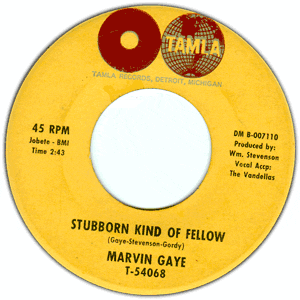
Marvin Gaye – “Stubborn Kind of Fellow,” Pop #46, R&B #8

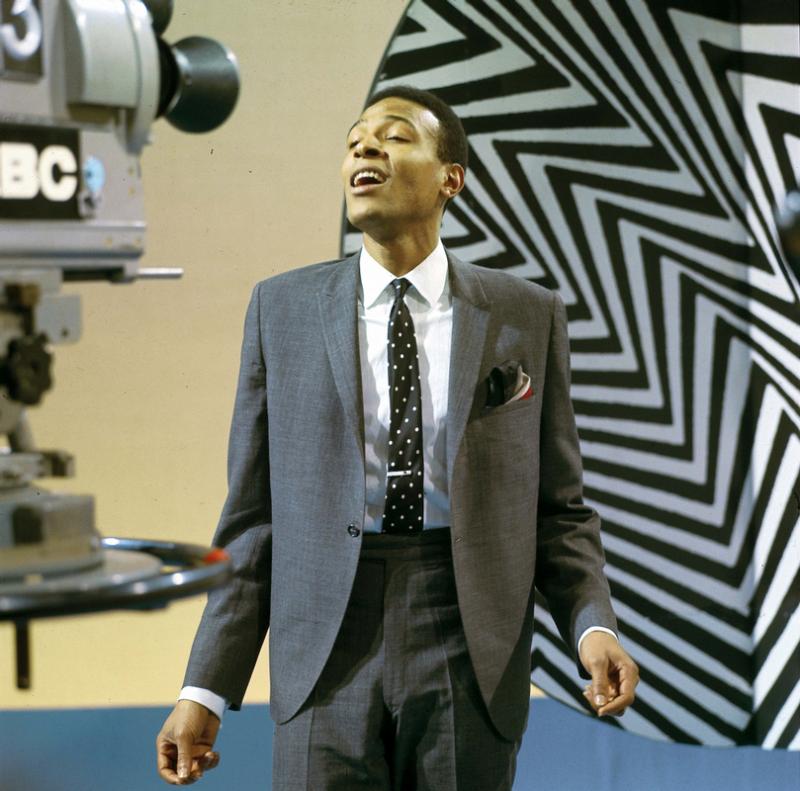
Aside from Smokey Robinson, no one completely dominates Motown’s landscape like Marvin Gaye. Gaye’s debut album was the second record released by the label – right behind the Miracles first platter. Gaye and Robinson’s songwriting credits littered the charts until the Holland, Dozier, Holland and Whitfield, Strong teams took over. Gaye was famously married to Barry Gordy’s sister, Anna, while Robinson named his first son in honor of the label’s founder. The impact and legacy of these two men is intertwined and it is impossible to imagine the Motown empire with them.

Gaye’s initially fancied himself a Frank Sinatra-styled singer. His vocals were always smooth, but the lounge vocals have moved out front to the sidewalk. The opening drum roll and “say yeah, yeah, yeah” vocal hook immediately draw in the listener. It’s a great opening, not only for Gaye’s first major Motown solo hit, but for his amazing catalog. — By Joel Francis