A conversation with Elijah Wald

(Above: Although forgotten by both jazz and pop historians today, bandleader Paul Whiteman was a major figure in early 20th century music. A central figure in Elijah Wald’s latest book, “How the Beatles Destroyed Rock and Roll,” here is the trailer for Whiteman’s 1930 film “King of Jazz.”)

By Joel Francis
The Daily Record

Author Elijah Wald has dedicated his past two books to stripping away the legend and mythology surrounding two of music’s most iconic figures, and placing them in the context of their times. In “Escaping the Delta,” Wald demonstrates how Robert Johnson was very much a product of his time, and how his deification was established. Wald’s latest book expands that motif, and bears the inflammatory title “How the Beatles Destroyed Rock and Roll.”

Wald recently took the time to speak with The Daily Record about some of the themes in his new book and, of course, how the Beatles changed rock and roll.

In the book you talk about how “everything old becomes new again,” and use the Twist to illustrate your point. What are some of the other examples of cyclical trends you discovered?

To be fair, I don’t say everything old can always be recycled. When something new comes along, we tend to look back and find things that seem similar to us. But I think that may be less a recognition of real cycles than a way of making the present seem less strange.

Clearly, things come back, but when they do come back they are different. I’m not sure things are cyclical. It may just be they way we get comfortable with them. When the Twist came around, the way the entertainment industry handled it was to talk with Irene Castle and say “This is like what was happening in 1914, isn’t it?”

Why do you call “Rhapsody in Blue” the “Sgt. Pepper’s” of the ‘20s?

This is really the germ of the whole book. I was reading how people in the people in the 1920s wrote about “Rhapsody in Blue” and noticed how similar it was to what was said about “Sgt. Pepper’s” in the 1960s.

(In the 1920s) everyone was saying how until now jazz was a lot of noise and music for rowdies and kids, but now this had turned it into a mature art form. This is exactly what happened with “Sgt. Pepper’s.” Leonard Bernstein said he was excited about it and Lennon and McCartney were compared to Schubert. Just as “Rhapsody in Blue” created a respectable thing that could still be called “jazz,” “Sgt. Pepper’s” created something respectable that was still considered rock.


Who was Paul Whiteman and what was his impact on music? Why has he largely been forgotten today?

I spend a whole chapter in the book on this, but in a nutshell, Paul Whiteman was the most popular bandleader of the 1920s. He was the man who transformed the perception of jazz from noisy, small groups into large orchestras who played not only fun dance music, but also at Carnegie Hall.

I think Whiteman is largely forgotten because he didn’t swing by and large and was resolutely white. We have understood the history of jazz to largely be a history of African-American music. Whiteman tried, for better or worse, to separate jazz from that heritage.

In many ways, the 1940s parallel today, in that there is fear new technology will usurp the traditional way artists got paid. Then it was a fear of jukeboxes and radio’s reliance on pre-recorded music and today, of course, the dominant issue is digital piracy. What are some of the similarities and differences you’ve observed between these two decades?

The huge difference is that all the things we talked about in the ‘40s did involve musicians getting paid, just different musicians. It was R&B and country musicians getting paid instead of big bands. A lot of people previously neglected became huge stars.

What’s happening now is really dangerous, in terms of musicians continuing to be able to make a living. It is exciting, in terms of everyone being able to make their music available to millions of listeners, but it is getting harder and harder to make a living in music. It’s more like a lottery – win and become a star or lose and go on to something else.

There are skills you develop as a professional musician that we’re seeing less and less of because people don’t perform as much. Everyone in my book went through an apprenticeship playing seven nights a week for four or five hours a night. Those opportunities no longer exist. There’s no way to build those kinds of skills today.

Explain the difference between hot and sweet combos. Why have the hot survived while the sweet are dismissed?

A lot of people will say this is a false dichotomy. Everyone played some sweet and some hot, but the best way to explain the difference to people of my generation is to go back to the British Invasion. In the U.S., we thought of both the Beatles and the Rolling Stones as belonging to the same genre. In England, however, the Beatles were called pop and the Rolling Stones were called R&B, and it’s easy to understand why.

The way we look at it today, hot bands played for boys who were into music as fans and listeners, while sweet bands were for sappy girls. That’s not the way I would phrase it, but it’s not necessarily wrong. Women have always been the determining pop buyers, because they like to dance, but men have always been the main critics. In any case, in the 1930s the two extremes were Guy Lombardo on the sweet end and Count Basie as hot, but most bands were in the middle.

One reason the hot bands live on is because by and large the only people listening today are jazz fans and they always liked the hot bands better. There’s also the racial component I mentioned earlier. I don’t disagree that what is exciting in American music was largely taken from African-American music—I would argue that it’s more complicated than that, because they are always interchanging, but as a listener I am certainly more excited by Basie than by Lombardo. As a historian, though, I am interested in both, and well aware that in their era Lombardo was far more popular.

What is the connection between swing and rock and roll?

It was the hot dance music, youthful, noisy dance music. We think of these worlds as separate, but a lot of the same musicians crossed over. The first house band for Alan Freed’s rock party was the Count Basie Orchestra. Bill Haley and the Comets all did their apprenticeships playing swing. Musically, there was a lot of overlap.

How did the success of the Beatles and other late-‘60s rock bands segregate the music industry? What are the lasting effects of that segregation?

Two things happened at once. One, the Beatles arrived when the industry was moving very heavily toward black music. The myth is the Beatles rescued us from Frankie Avalon, but they really rescued us from Motown and girl groups. If you look at the charts, black groups had so completely taken over, they actually stopped having separate charts.

The Beatles and British Invasion bands were exciting, but their rhythm sections were old fashioned. In a world of Motown and James Brown they played archaic styles. Black kids were not much interested in the British bands, because they weren’t as much fun to dance to—and it was not just black kids, but everyone who was dancing to Motown, which included a lot of white kids, especially white girls.

At the same time, the discotheque craze was hitting, so people didn’t have to have live bands. The lasting effect of that is that you no longer had to have one band who could play every style of music. Before you couldn’t have a band play only black or white music, because people wanted to dance to and hear the full range of current hits. In the ‘60s, though, you could have one band only play one kind of music, because when you wanted to hear a different kind you could just change the record.

In the epilogue you discuss how rock and dance music gradually began playing to divergent audiences. Do you think they will intersect again?

Today we don’t have bands that have to play anything, period. It’s a sad reality that if you listen to hit records – or even records that aren’t hits, by little-known, local performers – the number of records where the group on the album plays regularly is vanishingly small. The number of hits that can be recreated without recordings is virtually none.

Don’t get me wrong; hip hop couldn’t exist in a world where you had to play everything live and I think hip hop is exciting. Overall, however, the world of live music is becoming extinct. There are certainly plenty of people for whom live music is important, and I’m sure there always will be, but they are increasingly a minority.

Keep reading:

Review – “How the Beatles Destroyed Rock and Roll”

Talking King Records with author Jon Hartley Fox

Review – “King of the Queen City”

Talking Motown with author Bill Dahl

Key King Artists

The True Story of Cadillac Records

Talking King Records with Jon Hartley Fox

(Above: Blues guitarist Freddie King was one of several King artists to get pinched when James Brown’s career started taking off.)

By Joel Francis
The Daily Record

Jon Fox Hartley is the author of the book “King of the Queen City” about King Records in Cincinnati. From 1943 to 1968, King was the home of James Brown, Freddie King, Grandpa Jones and countless other musicians. While other independent labels of the time concentrated on one type of music, King founder Syd Nathan wanted to produce “music for the little man” in all genres.

Fox , a native of Dayton, Ohio who now lives in California, recently took the time to speak with The Daily Record over the phone.

In the book, you make the case for several forgotten artists, such as Henry Glover, Wynonie Harris, Roy Brown and the Dominoes. These pioneers made important contributions to music, but have been ignored by the Rock and Roll Hall of Fame. Why do you think they have been overlooked and haven’t received the recognition they deserve?

I think the first reason is that they’re all dead and have been for several years. Because of that, there’s no one to go to award shows and remind people they haven’t been elected. Also, because of the haphazard status of King reissues, records on King weren’t as available and presented as well as those on other labels. Finally, while all of these artists had pop success, they weren’t pop artist with large audiences. They were niche artists.

I would think that Wynonie Harris has a pretty good shot at getting in (the Rock and Roll Hall of Fame). Henry Glover’s daughter has talked to me about putting together some kind of campaign to get Henry into the Rock and Roll Hall of Fame in Country Music Hall of Fame.

Jon Hartley Fox

In the book you also make the case for “Good Rockin’ Tonight” as the first rock and roll song. Why do you believe “Good Rockin’” that title over “Rocket 88”? How does acknowledging “Good Rockin’,” which was recorded in 1948, change our perspective of the landscape of early rock and roll?

It’s funny, because I made this argument in the book but hadn’t thought I’d have to explain or defend it. Right before the book came out, my wife says “You know you’re going to have to talk about that.” And she was right, because everyone has asked.

It’s a backwards process. You start with a song acknowledged as rock and roll, like “Rocket 88.” Then you break down the attributes that make it rock as opposed to jump blues or country. There’s a certain beat, a certain attitude and the subject matter of the lyrics aimed at kids. There’s also the aggressive, hyper-charged vocals.  Once you have those attributes of what makes a song rock and roll, you can apply them to other songs and see if they measure up.

For me, “Good Rockin’ Tonight” makes a strong case. It was the first post-war song to use “rockin’” in the sense of having a good time. “We’re going to party tonight.” It was also one of the first songs to be bought and listened to by white teenagers. The trend crested in the ‘50s, but as early as late ‘40s, white kids were buying these songs and listening to them on the radio.

If you take “Good Rockin’ Tonight” as the first rock and roll song over something by Bill Haley and the Comets or Elvis Presley or Jackie Brenston, it changes our understanding that rock and roll was something brand new that popped on the scene fully formed. It coincides with the evolution of a lot of things reflected in the music people in the upper South and Midwest heard on radio stations out of Memphis and Nashville. You’d hear country, gospel, jump blues, R&B and country boogie on those stations. Then you realize everything that went into rock and roll wasn’t a market creation so much as young people coming of age hearing the music of the ‘40s and synthesizing them.

Describe King founder Syd Nathan. What kind of a person was he? How did he live? How did his personality compare to other independent label owners of the time like, say, Leonard Chess or Berry Gordy?

When I talked to people about Syd Nathan, the word that invariably came up was “character,” as in He was a real character. He was kind of like someone out of a short story. He was tight with a penny, but generous sometimes. He was ahead of the race line culturally and politically, but could tell the crudest racist joke. He was a fun guy but abusive and could push people to the brink of mayhem.

A lot of people got mad at Syd Nathan, but few stayed mad at him. He was gregarious and loved to be surrounded by people. He was the guy holding court in the corner booth at the bar.

In talking to people who worked for and knew Syd Nathan, everyone respected him. Everyone had Syd stories. It is rare to find anybody who will badmouth Syd Nathan these days. I think that’s partly out of nostalgia, but I also think on a day-to-day basis he was probably a real good guy.

There are several stories about Syd’s anger, but I think he used those temper tantrums in the studio to get results out of people. He was trying to get the artist fired up. If he thought there was a spark missing from the performance, he would pick a fight to get the artist fired up. I think these fights were calculated, because Syd never held a grudge and no one stayed mad.

Compared to Leonard Chess or Berry Gordy, Syd Nathan was certainly more expansive musically than either man. He didn’t want to limit himself to one style of music; he wanted to try it all.

I really don’t know this for sure, but I think Syd was probably a little more progressive on race matters than Leonard Chess. I often thought of this while researching the book. At King, Henry Glover would write songs, play on sessions and produce. He was a highly valued vice president of the company. At Chess, Willie Dixon filled many of the same roles, but his day job was as a janitor at Chess.

I had long heard a rumor that during World War II Nathan had 30 or 40 Japanese-Americans working for him. I thought that was unusual because on the West Coast these people were being sent to internment camps.

Well I asked somebody who knew Syd at a book signing. He told me Syd was working with a religious political action group trying to relocate people about to be interred. Syd accepted about 30 to 40 families. They were American citizens, but if they’d stayed at home they would have been locked up. Syd moved them all to Cincinnati where they lived in an apartment complex on the bus line so they could come in to King and work each day.

Most labels find one niche and exploit it. Why do you think King was so successful in so many varied genres?

I think they were successful because they wanted to be and weren’t afraid to try. Syd realized he could make more money if he didn’t specialize in one kind of music, but did a lot of different things. Before the days of record stores, only two or three shops in a town would sell records back in the corner. They’d sell what they got from wherever. Syd saw that specializing was leaving money on the table so if they wanted gospel, he had gospel records for them. Same thing for blues, country, R&B, whatever.

Syd also realized that the song sold the record more than the style or performer. If he thought a song was good, he’d record it in several different styles. Once in a while he was right, and the same song was a hit on the country and R&B charts by different performers.

Once the major labels smelled money and figured out what King and other independent labels were doing they would swoop in and take it away. Syd knew the more diverse he could make King the more control he would have and the more success was guaranteed.

One often hears of a hit record ruining a company, like the Beatles and Vee-Jay. How was King able to sustain the massive popularity of James Brown? Did Brown’s success come at the price of other artists on the label?

To answer the last part first, yeah, Brown sometimes hurt other artists. Freddie King was very vocal about why he left King. One of his reasons was that all the promotional muscle and ad money went to James Brown. There were certainly others who felt his success came at their expense.

King built a huge infrastructure in the ‘40s and ‘50s. They had their own pressing plant and printing facilities to make covers; the studio was in house. The infrastructure took a certain amount of volume to make it profitable.

Right about the time they got it perfected in the mid-‘50s, business started to fall off. But just as the market started to decrease, along comes James Brown. Here was an infrastructure dedicated to James Brown, because frankly there weren’t many other artists left.

Had James’ success hit at a busier time, he might have swamped them. Other labels might not have been able to keep up with demand or gotten paid. That wasn’t a factor at King because they controlled their pressing. If they needed 100,000 James Brown records shipped out, they could get it done. They didn’t have to stand in line like other labels did.

In one of the last chapters you discuss the difficulties King supporters have faced in trying to get the label complex the landmark recognition it deserves. Other than the unveiling of a plaque in 2008, why has King yet to be recognized by the city of Cincinnati?

Again, I think this is in part because the principals are all dead or moved away a long time ago. There’s no real physical presence. The ice house complex (the former King building) is an ugly building in an industrial facility in a funky part of town. With the label’s move to Nashville in the ‘70s, there’s nothing to memorialize. About the only thing to do is put something on the building, and now they’ve got that done.

People have been trying for years to get something done with the old facility. A group at Xavier University in Cincinnati is the latest to try. They want to build a King museum with a recording studio and training facility for youth. We’ll see how this goes. It seems something like this gets proposed every 10 years.

The important thing about King is the spirit of it and I don’t know how to memorialize that. King was never about the facility, it was the spirit and idea of making records.

Keep reading:

Review – “King of the Queen City”

Talking Motown with Bill Dahl

Key King Artists

The True Story of Cadillac Records

Key King Artists

(Above: The groundbreaking “Working on a Building,” which the Swan Silvertones cut for King Records.)

By Joel Francis
The Daily Record

James Brown is certainly the best-known artist to record for Syd Nathan’s Cincinnati-based label, but King Records had forged a reputation long before Brown emerged. For a quarter century, from 1943 to 1968, King recorded some of the top performers in not only R&B, but gospel, jazz, bluegrass, rockabilly, blues and early rock and roll.

Here are some other King artists worth checking out.

Bill Doggett
Organist Bill Doggett was the biggest-selling instrumentalist on King. He joined the label after leaving Louis Jordan’s band in 1951, and recorded several sides with a trio. When the results weren’t what he’d hoped, Doggett added saxophone and guitar to the lineup and scored big hits with “Ding Dong, “Hammer Head” and “Shindig.” Doggett’s biggest success, though, was the 1956 smash “Honky Tonk.” The record sold 1.5 million copies that year, spent seven months on the chart and won several awards Doggett left King for Warner Bros. in 1960 when King owner Syd Nathan refused to increase Doggett’s royalty rate.

Swan Silvertones
Claude Jeter’s Swan Silvertone’s were the biggest gospel act to record for King. They were only with the label for five years, from 1946 to 1951. The 45 songs cut for King bridged the transition from the traditional barbershop-based style of gospel singing to a more spontaneous, emotional approach. Jeter’s duet with co-lead singer Solomon Womack on “Working on a Building” epitomized the potential of the new method and influenced future stars Al Green, Curtis Mayfield and Sam Cooke. The Slivertone’s later recordings on Specialty and Vee-Jay receive more attention, but the half-decade at King cemented the group’s sound and reputation.

Charlie Feathers
Rockabilly guitarist Charlie Feathers is one of those criminally forgotten musicians whose talent outshines his reputation. Feathers grew up in Mississippi listening to the Grand Ol Opry, but learned guitar from bluesman Junior Kimbrough. Feathers briefly recorded for Sun before coming to King in 1956. After cutting several raw, visceral rockabilly numbers that went nowhere, commercially speaking, Feathers decided to model himself after Elvis Presley. When the sanitized new records also refused to budge, a frustrated Feathers left King. He bounced around from label to label, continuing to perform until his death in 1998. In 2003, director Quentin Tarantino resurrected a couple Feathers songs for his “Kill Bill” films.

Stanley Brothers
Bluegrass legends Carter and Ralph Stanley were already stars when they signed to King in 1958. That fall, the duo released one of the genre’s landmark albums, an untitled recorded nicknamed after its catalog number, King 615. Along with old-timey mountain music, the Brothers recorded gospel and even R&B numbers, putting their stamp on Hank Ballard’s “Finger Poppin’ Time.” The Stanley Brothers reached new audiences during the folk revival of the early ‘60s, and cut their final album for King in 1965. Carter Stanley died the following year, but his Ralph kept the flame alive. In 2006, Ralph Stanley found improbable acclaim for his a cappella reading of “O Death” on the “O Brother, Where Art Thou?” soundtrack.

Little Willie John
Soul singer Little Willie John had one of the longer tenures at King, spending one third of his life on the label. Unfortunately, John only lived to 30 and all his success came early. The Detroit native was just 18 when he landed his first big hit, “All Around the World.” In the next few years, John racked up 10 more To 20 R&B hits, including his signature number, “Fever.” A has-been at 25, John struggled with alcohol and drug addiction. He was charged with manslaughter after stabbing a man to death following a concert in Seattle. In 1968, John died in prison.

(Below: “Can’t Hardly Stand It” was one of several great rockabilly songs Charlie Feathers cut for King in the 1950s.)

Keep Reading:

“King of the Queen City” book review

Police On My Back: Five Musicians Convicted of Murder

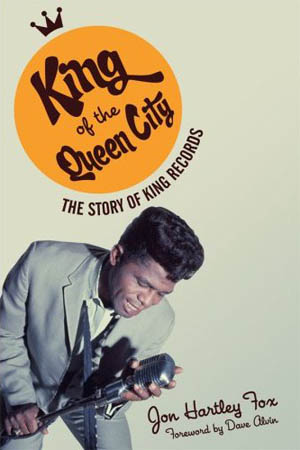
Review – “King of the Queen City”

(Above: The Delmore Brothers landed a hit with “Blues Stay Away From Me” in 1949 on King Records.)

By Joel Francis
The Daily Record

In a musical landscape that lionizes pioneering indie labels Chess, Motown and Atlantic, Cincinnati’s King Records is at best remembered as a footnote and the early home of James Brown.

Author Jon Hartley Fox aims to correct that perspective with his new book “King of the Queen City: The Story of King Records.” While Brown receives his due, Fox spends a great deal of time making the case that King was the most diverse and innovative label of its time.

King Records was founded in 1943 by Syd Nathan, a 40-year-old Cincinnati businessman with asthma and poor eyesight. Nathan’s got into the music business started by reselling old jukebox platters at the tail end of the depression. The venture proved so successful he opened Syd’s Record Shop on Cincinnati’s Central Avenue in 1940.

The first artists Nathan signed to King were Grandpa Jones and Merle Travis. Their success, coupled with the early hit “I’m Using My Bible for a Road Map,” led Nathan to advertise with the slogan, “If it’s a King, it’s a hillbilly.”

In 1945, Nathan dipped his toe in the waters of “race music” (the term “rhythm and blues” wouldn’t be coined for another three years), with Queen Records. The success of early artists like Bull Moose Johnson led the subsidiary to be moved onto the proper King label.

Nathan’s pursuit to make records for the “little man” took him into nearly every conceivable genre of music. Throughout his quarter century at the helm of King, the label produced hits on the country, blues, gospel, pop, R&B and jazz charts. A cross section of King’s staggeringly diverse roster includes Freddie King, Hank Ballard and the Midnighters, the Stanley Brothers, Homer and Jethro and, briefly, John Lee Hooker, Hot Lips Page and Johnny Otis.

The label’s biggest artist, however, nearly didn’t make it out of the studio. James Brown came to King through a demo of “Please, Please, Please.” Nathan hated the track with a passion, and released it only to humiliate the producer, who staked his career on its success. The Hardest Working Man in Show Business went on to have an unprecedented string of hits on King beginning with “Please, Please, Please” 1956 and continuing until 1971, when Brown and his back catalog moved to Polydor.

The label’s success went beyond its across-the-board chart triumphs. In the early 1940s it was the first independent label to have its own fully functioning recording studio. Nathan was also at the vanguard of race relations, hiring black producers to supervise sessions with white musicians. Eight years before the hometown Cincinnati Reds would let blacks and whites play on the same team, Nathan had integrated crews in nearly every facet of the label.

Clearly, Fox has a lot of ground to cover in his book, and he does a good job of presenting the material in easy-to-digest portions. Each chapter covers a different facet of the label, such as country, gospel, solo or group R&B acts, production and distribution. From one-hit wonders to major performers, Fox does a good job breaking down the biographies of all the key players. In one or two pages, Fox paints a tight picture of everything the subject did before, during and after King. In that regard, the book functions almost as well as an encyclopedia of mid-century, Midwestern performers.

That approach, however, can also suffer from losing sight of the forest from all the trees. Nathan’s persona could have provided an easy and useful narrative thread, but he disappears for pages at a time. We don’t learn about his failing health until Fox casually mentions Nathan had a heart attack during a treatise on Brown. We also don’t learn much about Nathan’s personality – when he showed up at the office, his lifestyle, where he lived or his personal life.

The book’s timing also puts Fox at a disadvantage. Nathan died in 1968 and Brown in 2006. Most of the other performers are also deceased, giving Fox few primary sources to work with. Despite these difficulties, Fox proves himself a good researcher who draws on previously published material and interviews to tell his story.

The concise book covers a lot of territory in just over 200 pages. “King of the Queen City” is a brief but compelling work that should be devoured by music historians, both professional and amateur.

Stevie Wonder – “For Once in my Life”

for once
Stevie Wonder – “For Once in my Life,” Pop # 2, R&B # 2

By Joel Francis

“For Once in my Life” was less than two years old, but already practically a staple by the time Stevie Wonder’s cover was finally released in October, 1968.

Jean DuShon recorded the original version for the Chess Records subsidiary Cadet in 1966. Although the label failed to promote the single, it still managed to reach the ears of Berry Gordy. He was not pleased to learn that Motown composer Ron Miller had written the number for a performer outside of the Hitsville stable. Gordy demanded Miller let a Motown artist record the number and he promptly gave it to Barbara McNair for her 1966 album “Here I Am.” Best known as an actress who appeared on “Mission: Impossible,” “Hogan’s Heroes” and “Dr. Kildare,” McNair’s version sank without a trace.

Gordy wasn’t done with the song, though. In 1967 he gave it to the Temptations as a showcase for baritone Paul Williams. Their downbeat interpretation was one of the highlights of a 1968 television special with the Supremes.

Tony Bennett released his version of “For Once in My Life” the same time the Temptations were staking claim to the tune. Bennett’s reading was a crossover hit, lodging in the Top 10 of the Easy Listening chart and peaking at 91 on the pop chart. The title song of his 1967 album, it became one of the crooner’s signature numbers.

So the public was more than familiar with “For Once in My Life” by the time Wonder’s version hit the streets. Arriving a year after Bennett’s version peaked, Wonder’s interpretation became the most successful and definitive reading of the song. Like many great songs, however, this one almost didn’t get released.

Wonder recorded his vision of “For Once in My Life” the same summer the Temptations cut the song. Wonder’s upbeat arrangement stood in sharp contrast to the Temptations’ soulful balladry, and Gordy preferred the Tempts’ reading. After a year of pleading and cajoling, the head of Motown’s Quality Control department finally talked Gordy into allowing Wonder’s version to be released as a single. The result, of course, was a No. 2 single (held out of the top spot by Marvin Gaye’s “I Heard it Through the Grapevine”) that became the title track of Wonder’s tenth album.

Sonically, it’s hard to believe this song hails from 1968. The production and arrangement sounds like a throwback from the Holland-Dozier-Holland heydays of 1966. The big strings and Wonder’s vocals are front and center in the mix with the drums pushing the entire arrangement. The strings and horn tiptoe just shy of being bombastic, and a great piano line snakes along the bottom of the mix. Wonder’s harmonica makes the most of its verse-long solo, nimbly improvising on the melody like a jazz horn. The backing vocals are a little corny, but they are redeemed by Wonder’s best vocal performance to date. Wonder wasn’t yet 18 when he recorded this song, but there is a confidence in his delivery and phrasing that shows how much he’d grow since “Uptight” was released the summer before.

Wonder had far from the final word on the song. Gordy’s old boss Jackie Wilson released a cover that tried to split the difference between the Bennett and Wonder arrangements as a single to compete with Wonder. His version stalled at No. 70 on the cart. Ella Fitzgerald performed the song in concert throughout the summer of 1968 with an arrangement based on Bennett’s version. The following year, Frank Sinatra included his reading on the “My Way” album. In the twilight of his career, Sinatra revisited the song with Gladys Knight and Wonder for the 1994 “Duets II” album. Wonder returned to the song a dozen years later, sharing vocal duties with Bennett for Bennett’s “Duets: An American Classic” recording.

An enduring classic, “For Once in My Life” was covered by rocksteady singer Slim Smith in1969, recorded by James Brown in 1970 and translated into German by Stefan Gwildis in 2005. The song has also popped up on “Oprah,” “American Idol” and countless other television shows and films.

Review: Earth, Wind and Fire with Chicago

(Above: Chicago and Earth, Wind and Fire team up to rock “25 or 4 to 6.” That song ended the duo’s three-hour performance at the Sprint Center on Sunday.)

By Joel Francis
The Kansas City Star

Chicago and Earth, Wind and Fire took the stage Sunday night at the Sprint Center armed with enough musicians for a intramural football team and sufficient horns to start a Glenn Miller Orchestra franchise.

The 18-strong band opened with a tag-team of each other’s hits, opening appropriately with “Beginning” followed by “Never” and an extended “We Can Make It Happen.” The bands played like there was a penalty for letting the energy lag, barely pausing to take a breath between numbers.

With the crowd warmed up, Chicago departed leaving Earth, Wind and Fire to entertain on their own. The soul veterans were more than up to the task. They kicked off their hour-long set with “Boogie Wonderland,” which activated the hidden springs in each seat that forced everyone to their feet.

Serpentine Fire” and the Latin-influenced “Evil” made sure everyone kept moving until the cascade of slow jams: “That’s the Way of the World,” “After the Love is Gone” and a cover of Chicago’s “Wishing You Were Here.” That number got a smooth jazz make-over that featured original member Philip Bailey’s pillow-soft falsetto.

The spotlights turned on the energetic crowd for a sing-along through “Got to Get You Into My Life,” which found the band working the lip of the stage shaking hands with the crowd. After “Fantasy,” the stage went dark and three huge neon drums were wheeled to center stage. Armed with neon drumsticks and shirts with lights the ad hoc drum corp. created an impressive groove that segued into the set-ending “Let’s Groove.”

Chicago did themselves a favor by scheduling a 20-minute intermission before their set, but they still had a hard time matching EWF’s energy. “Saturday in the Park” got things off to a good start and their cover of “I Can’t Let Go” returned the favor EWF paid with “Wishing You Were Here.”

Unfortunately, the band slipped into soft rock mode after an spirited “Alive Again.” “Look Away” melted into “Hard Habit To Break,” “You’re the Inspiration,” “Just You and Me” and “Hold Me Now.” True, all the songs were hits and drew enthusiastic vocal support from the crowd, but putting them all together killed the pacing and energy.

After coaxing the audience back to their feet, Chicago’s 50-minute set closed with “Stronger Every Day.”
Despite just seven original members across the two groups, strong arrangements meant key departed musicians like Maurice White and Peter Cetera weren’t missed. With so much talent onstage, special effects took a back seat – the musicians were more than enough spectacle.

The stage featured a two-tiered riser with a drum kit on each side at the top which made the structure resemble twin pyramids. There was plenty of space out front for the artists to run around. None of them made better use of this space than EWF founding bass player Verdine White, who strutted in fringed bell-bottoms and appeared to be having the time of his life.

The upper deck of the Sprint Center was curtained off, leaving a cozy lower bowl that didn’t have many empty seats. The sound was good. Not clear enough to pick out each specific instrument, but each section was distinct. Drums thumped, guitars sizzled and horns punched.

This was the groups’ third tour together and it’s easy to see why both musicians and audiences keep coming back. While similar outings could turn into a battle of the bands, Chicago and EWF complement each other well. Both are known for soaring vocals and intricate horn lines and really are two sides of the same coin.

The night ended the same way it began, with both bands onstage trading hits. EWF’s “September” led into Chicago’s “Free,” which featured the sax players from both bands sparring over a White bassline that recalled the finer moments of Maceo Parker and Bootsy Collins in James Brown’s band.

The bands nailed the night shut with a run on “Sing A Song,” “Does Anybody Know What Time It Is,” “Shining Star” and “25 or 4 to 6” that didn’t leave any other option but to dance. Three hours after taking the stage together, the musicians celebrated each other like a sports team winning the pennant. In a way, they had.

The Temptations – “Ain’t Too Proud To Beg”

680083

The Temptations – “Ain’t Too Proud To Beg,” Pop #13, R&B #1

By Joel Francis

If you’re not hooked in the first five seconds of this song, you haven’t been paying attention. All the elements attack immediately: the drum roll coupled with the insistent clanging cymbal, the knuckle-roll piano riff and, of course, David Ruffin’s raspy vocal. The stinging staccato guitar that shows up later in the initial verse is a direct homage to James Brown. Throw in the glorious backing vocals from the rest of the Temptations and a stellar horn line and you’ve got not only an incredible song, but a definitive snapshot of Motown in full glory.

“Ain’t Too Proud To Beg” would be no less a masterpiece if the story stopped there, but remarkably the song almost didn’t get made.

After a few of Smokey Robinson’s productions for the Temps failed to take hold on the charts, hotshot Norman Whitfield wanted the chance to sit behind the boards with the group. Whitfield was a long shot to topple Robinson’s incumbency, but Whitfield thought he had a number that could give him control. Enlisting songwriting help from Edward Holland, Jr. of the Holland-Dozier-Holland team, Whitfield had the Funk Brothers lay down the backing track to one of Motown’s funkiest numbers to date. The Temptations then added their vocals and Whitfield submitted the single to be auditioned at the Motown Quality Control meeting.

Quality Control meetings were the result of Berry Gordy’s days on the Detroit assembly line. Each week, the label’s top creative minds would meet, listen to music and decide what should be released. Surprisingly, “Ain’t To Proud To Beg” didn’t make the cut. It didn’t make the cut the second week, either. Politics could have been at play – Robinson and Gordy were so close that Robinson named his son Berry – but Gordy asserted that the number simply needed more work.

So Whitfield went back into the studio and moved the melody for the vocal line just out of Ruffin’s range. The straining singer’s vocals added the needed muscle and desperation to the song, and the number was once again submitted to Quality Control.

This time, however, the song had unexpected competition in the form of “Get Ready,” a Temptations number Robinson had written and produced for the band. Since Robinson was the Temps’ established producer “Get Ready” went out while “Ain’t Too Proud To Beg” stayed on the shelf. Whitfield was so upset that Gordy promised him “Beg” would be the next single if “Get Ready” failed to reach the pop Top 20.

Gordy kept his word and the song was finally released in May, 1966, eventually reaching No. 1 on the R&B charts. When Whitfield found success with the Temptations following two singles he was instated as the group’s main producer, a role he guarded fiercely until 1974.

Around the same time Whitfield was leaving Motown and the Temptations to form his own record label, the Rolling Stones found No. 17 pop hit with their cover. Through the years, the number has also yielded interpretations by Ben Harper, the Count Basie Orchestra and, even more strangely, Rick Astley, who also made it a Top 20 hit (albeit on the Adult Contemporary charts) in 1988.

George Clinton is bringing the funk

(Above: This song is a “Quickie” but George Clinton’s musical career as a funk pioneer has encompassed more than five decades.)

By Joel Francis
The Kansas City Star

If James Brown cleared the road from soul to funk, then George Clinton paved it.The link between the two is undeniable, not only in the style of music Brown and Clinton created, but because they used many of the same artists to create that music, and because Clinton modeled his P-Funk empire in part on Brown’s business blueprint.

Clinton and Parliament-Funkadelic, which includes his longtime drummer Frank “Kash” Waddy, play Crossroads, 417 E. 18th St., on Wednesday with 4 Fried Chickens and a Coke and Browntown.

The Godfather of Soul

George Clinton’s first impression of James Brown was not favorable.

“Back then, in my Motown days, we used to criticize him, until we knew better,” Clinton said of his days in the mid-’60s as a songwriter at the legendary Detroit label. “At Motown, we specialized in lyrics. Berry (Gordy, Motown’s president) made sure we got a story out of every song.”

Brown’s storytelling skills didn’t measure up to Hitsville U.S.A.’s standards.

“Everyone thought James wasn’t saying anything,” Clinton said. “It wasn’t until hip hop came along that we realized James was saying more in one ‘unh’ than all of our stories combined.”

Clinton left Motown and started a doo-wop group called The Parliaments. When The Parliaments record label folded, their backing band, The Funkadelics stepped into the spotlight. Funkadelic ushered in the 1970s with an aggressive blend of Jimi Hendrix, Sly Stone and James Brown.

While Clinton was tinkering with the formation of Funkadelic, Brown was turning America on to hard funk and inspiring countless imitators.

“Bootsy Collins, his brother Catfish and I all grew up in Cincinnati together playing music,” said Frank “Kash” Waddy. “Back then, every town would have a group that tried to sound like James Brown. We’d come up with false IDs, draw moustaches on our faces, wear sunglasses and a shirt and tie — anything to try to look as manly as possible so we could sneak into bars and play.”

The mid-adolescent trio of Bootsy on bass, Catfish on guitar and Waddy on drums did well enough on regional tours and local shows to eventually attract the attention of The Godfather himself.

“Little by little James got word of us and he’d come and sit in on our shows. That was some major validation,” Waddy said. “Really he was prepping us for if he needed us to join his band, but we didn’t know because we were totally naïve.”

After sitting in on studio sessions and short tours with Hank Ballard, Arthur Prysock and other artists on Brown’s King record label, Waddy and the Collins brothers got the call to join James himself onstage.

“It all happened so fast. He start by calling off a song and a key and count off,” Waddy said. “Since I was behind the drums I could see the whole scene. Bootsy and Catfish were bunched up by me. Kush (trumpet player Richard Thompson), Strawberry and (saxophonist) Pee Wee Ellis — all guys we idolized — were onstage with us, and in front was the biggest crowd we’d seen. We were scared out of our minds.”

Brown formed the original lineup of The J.B.s around those musicians and for the next couple years, Kash, Bootsy and Catfish toured the world with Brown.

“It was a good two months that we went around pinching ourselves, because we went from nothing to James Brown,” Waddy said. “James Brown had hotels. He was so powerful it was unbelievable. He had his own radio stations and record label.”

Brown had built a vertically integrated empire of recording, publishing, airplay and promotion, but he didn’t have everything.

“We got to looking at the guys who were with James all the time, and they all seemed to be kind of depressed,” Waddy said. “We didn’t understand it, but it wouldn’t be nothing to see a grown man cry or be upset, and James would keep them like that. I began to realize there was not happiness at the end of this rainbow.”

In 1971, the Cincinnati trio bolted from Brown and formed The Houseguests, a band whose sound was constantly being compared to Funkadelic’s.

“We had never heard Funkadelic before, but one night in Detriot we were playing on a bill between Funkadelic and Gladys Knight,” Waddy said. “George heard us that night and hired the whole band. The rest is history.”

The Hardest Working Man In Show Business

Recruiting Brown’s old rhythm section opened the door for more defections, as Fred Wesley, Maceo Parker and others eventually joined the Funkadelic family.

“At one time, we had all of James Brown’s band with us,” Clinton said through a laugh. “Working with James was something they’d complain about and idolize at the same time. You had to be the best in the world to be with James, because coming out of it almost any of those guys could run their own organization.”

Freed from the militaristic management of Brown, Clinton’s band was a playground for Brown’s former musicians.

“We left such a regimented, staunch environment with James, and got total freedom from George,” Waddy said. “It was a happy medium. We brought professional discipline and introduced George to The One (Brown’s style of emphasizing the one beat in his grooves).”

Clinton didn’t manage, he made sure shows were lined up, studio time was available and let the results speak for themselves.

“Man, I just got onstage and let them play what they wanted to play,” Clinton said. “Personality-wise I’d just let them be the bandleaders and tell them what I wanted.”

Building on the Motown model and Brown’s King label, and foreshadowing Prince’s Paisley Park empire, Clinton let his musicians front their own outfits under his production and input. Fred Wesley and Maceo Parker led the Horny Horns, while Waddy and Catfish became core members of Bootsy’s Rubber Band. Other Clinton combos included The Parlets, The Brides of Funkenstien and Parliament, a happier, dance-friendly outlet for the Funkadelic musicians.

“We had a whole studio in Detroit called United Sounds to ourselves,” Waddy said. “We weren’t told you work on this and you work on this. You’d just go in, listen to a track and jump in if you could. George would come in and listen and might give one cut to the Horny Horns, another to the Rubber Band. Sometimes we’d go in and wouldn’t see daylight for three days.”

By the end of the decade, nearly all of Clinton’s bands were dominating dance floors and concert stages across the country. The ripple effect of that music was inescapable from the onslaught of imitators trying to capture that sound and feeling.

“For us funk was a way of life,” Waddy said. “We wouldn’t listen to TV or the radio because we didn’t want our stuff to be tainted. That’s why these songs have stood the test of time; they weren’t a fad, they were a way of life.”

Soul Brother No. 1

Clinton first got the idea for the mothership watching Lt. Uhura on an episode of Star Trek.

“I was thinking about putting black people where folks wouldn’t picture them. That’s why I got the idea of a spaceship with me sitting outside like a pimp mobile,” Clinton said. “Once Parliament got a hit record with ‘Up for the Downstroke,’ I took the royalty money and bought a spaceship. I wanted to do something big onstage like Sgt. Pepper or The Who’s Tommy.”

With the Brides of Funkenstien, The Parlets and Bootsy’s Rubber Band opening the show and everyone onstage for Parliament-Funkadelic’s set, Clinton set the new standard for stage performances.

“It changed the whole industry, because prior to us it was all three-piece suits with bass, guitar and an amp. Black guys would try to get by with as little as possible to keep overhead low,” Waddy said. “Now after us, all acts had to invest to compete.”

The stage wasn’t the only place Clinton was reinventing music.

“Our language was street talk,” Clinton said. “At the time black DJs with personalities were on the way out for Quiet Storm. We became our own DJs on our records and made that the standard. After that, DJs in the club started doing the same thing. Give yourself a few more years and artists were doing it over records, which became hip hop.”

There’s not much subtlety in the Clinton catalog, but the political content of his lyrics are a consistently understated element.

“I never wanted to write about boy/girl, black/white issues. I wanted to keep it vague, Clinton said. “I always avoided strict interpretations of politics, because I thought if people got caught up in that, the political winds were libel to change and people would just end up fighting against a particular stance.”

There are brains behind the bounce on songs like “Chocolate City” and “Think, It Ain’t Illegal Yet.”

“I applaud George, because he was always reading and wanting to teach. Issues we’re talking about today, like cloning, we talked about 30 years ago on ‘Placebo Syndrome’ when they were not mentioned,” Waddy said. “Politically, George was East Coast and James was Southern. James was just a dead hit with his lyrics. George was a little slicked up, more coy.”

Mr. Dynamite

Despite all his success and innovation, shortly after the 1980s dawned, Clinton and his bands found themselves without record contracts.

“One or two somebodies orchestrated all the negotiations with the labels in 1980,” Clinton said. “I didn’t think they’d throw us to the curb that quickly with all our hit records, and it all stopped at the exact same time I started Uncle Jam records.”

Clinton likened his experience to what happened to Prince in the early ’90s and revealed, “we’re just starting to get into the courts to see those papers and see what really happened, and I promise the full story will come out soon.”

“A lot of people say we got high and used up all our money on drugs,” Clinton said with a laugh. “It’s not true. We hadn’t gotten paid yet!”

Clinton had some success, but several of his musicians drifted away. Fortunately, for every musician who left, seemingly 10 rappers discovered the P-Funk sound. Clinton’s songs, along with Brown’s, are the most sampled in hip hop.

“Hip hop kept funk alive,” Clinton said. “I made a relationship with the artists, that instead of fighting them, I kept them close to me. Our records are like James Brown’s – they never get old.”

The proliferation of Clinton samples kept his catalog fresh. Even if listeners had never heard a P-Funk song, they probably knew “The Humpty Dance,” which relies on Clinton’s “Let’s Play House,” “Me, Myself and I,” which uses “(Not Just) Knee Deep” or any number of songs that liberally borrow “Atomic Dog.”

“We’ve been traveling around and playing so long that live music has caught back on,” Waddy said. “People don’t want to hear music from sequencers anymore. They want to hear live instrumentation and be entertained. Our crowds range from high schoolers to middle aged people.”

Or as Clinton puts it: “The charts don’t mean near as much anymore once you have a following.”

Today Clinton has a reality TV show in the works, a new record label, a reputation as a great live act and when Brown died on Christmas Day, claim to being the biggest living link to the funk era.

“There’s a lot of James Brown in our music, but it’s not only James Brown. We’ve got Motown and Jimi and Sly Stone and Ray Charles,” Clinton said. “There’s always so much of that stuff built into our music that by the time it got there, it was hard to pick out just one thing.”

Waddy, who is working on a book about his times with Brown and Clinton, is less modest.

“In my mind, James and George were nose and nose for years, but James always had a bit more of the edge because of seniority,” Waddy said. “Now that James is gone, George is the man. People are feeling it without realizing it. The public always has to have their guy, and right now George is on top of the heap.”

Keep Reading:

Concert review: George Clinton (2007)

Concert Review: George Clinton, May 6, 2005 at the Beaumont Club

Concert Review: George Clinton heats up cold night

Review: George Clinton and the P-Funk All-Stars (2009)