Mary Wells – “You Beat Me To the Punch”

Mary Wells – “You Beat Me To the Punch,” Pop #9, R&B #1

If the Contours’ “Do You Love Me” was Motown at its most raw, “You Beat Me to the Punch” was really where the “Motown sound” started to be defined. The vibes in the background smooth all the rough edges while the bongos add an extra bounce to the melody. Backing vocals from the Love-Tones add to Mary Wells’ delivery without distracting from it and foreshadowed the relationship this song’s writer, Smokey Robinson, would have on record with The Miracles.

Wells sounded insecure in her debut single, “The One who Really Loves You,” (although the pedestrian songwriting doesn’t give her much to work with), but she nails the surprise and thrill of new love here. Smitten from the first time she saw her man, the shy girl is delighted to learn her feelings are reciprocated.

This is an underrated gem in Wells’ too-small Motown catalog. –By Joel Francis
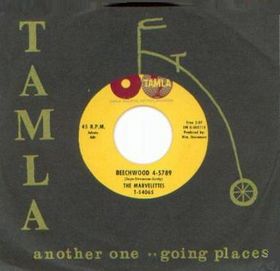
The Marvelettes – “Beechwood 4-5789”

The Marvelettes – “Beechwood 4-5789” Pop #17, R&B #7

The Marvelletes’ follow-up single wasn’t as successful as “Please Mr. Postman.” Berry Gordy hoped to cash in on the telephone song trend that included Glenn Miller’s earlier big-band hit “Pennsylvania 6-500” and Wilson Pickett’s “634-5789,” but the chorus wasn’t as strong or memorable as either of those songs or the Tommy Tutone’s ‘80s hit “Jenny (867-5309).”

Gladys Horton’s earnest lead vocals sound more desperate than inviting. Although she’s trying to sound casual, it’s clear that Horton’s request for the boy of her dreams to call her up for a date, “any old time” is her frustrated, final attempt at being noticed. While the dream date may never have phone, this number did become the most popular in America until Jenny arrived on the scene in the ‘80s.

The song was written by Marvin Gaye, Berry Gordy and musical director William “Mickey” Stevenson, who was memorialized in The Miracles’ song “Mickey’s Monkey.” Like “Please Mr. Postman,” “Beechwood 4-5789” was also covered by The Carpenters. Time has preserved the superior renderings of both of these songs. — By Joel Francis

The Contours – “Do You Love Me”

The Contours – “Do You Love Me,” Pop # 3, R&B # 1

“Do You Love Me” sounds more its cross-town cousin Detroit garage rock than the Hitsville factory. Completely devoid of the “Motown sound,” this is the rawest release from the label until the signing of Rare Earth seven years later.

After the guitar accompaniment of the spoken intro, the song is all piano, drums and handclaps. The lead vocals borrow more than a little from James Brown, but the sheer joy and exuberance of everyone in the room is what carries the song. The five singers are having too much fun to care to care about love. If this woman won’t have them back, they know there are plenty more hopping in line.

Like a party that steamrolls past curfew, this song has too much energy to stop. The first attempt at shutting down is little more than a hiccup. After a false fade that fools absolutely no one, the Contours are right back in the pocket. If it weren’t for radio restrictions, this bash would have carried on all night. Ultimately, the engineer has no choice but to fade the track.

Legend has it this song was originally going to be a Temptations vehicle, but I can’t imagine anyone topping this performance. Forty-five years later, the smiles are still audible. — By Joel Francis

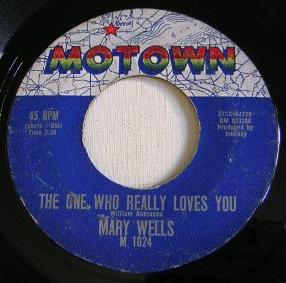
Mary Wells – “The One Who Really Loves You”

Mary Wells – “The One Who Really Loves You,” Pop # 8, R&B # 2

Mary Wells was billed as “Motown’s First Female star” but she got off to a slow start with this song. Penned by the usually reliable Smokey Robinson, “The One Who Really Loves You” suffers from overly simplistic lyrics and a melody that doesn’t try much harder. Wells’ vocals are frequently flat as she basically just calls out her smitten rivals – like Silly Lily – and points out their flaws. After listening to the song a half-dozen times, I think the singer may be exaggerating the threat of Ginnie and Minnie to steal her man, but I’ve also never been a lovelorn teenage girl. Then again, neither has Smokey Robinson.

Thankfully, while this song doesn’t work, it didn’t take long for the Robinson-Wells collaborations to click. Special note should also be made of Eddie “Bongo” Brown’s lilting percussion, supposedly inspired by the island rhythms of Harry Belafonte. — By Joel Francis

Eddie Holland – “Jamie”

index-hdh1.jpg

Eddie Holland – “Jamie,” Pop #30, R&B #6

Like Barrett Strong, who co-wrote this song, Eddie Holland was more comfortable composing than performing. He only had two hits in front of the mic, but teamed with Lamont Dozier and brother Brian Holland to pen a staggering 25 No. 1 pop hits in six years. You could call Holland-Dozier-Holland the Neptunes of their time, but the reverse is probably more accurate.

“Jamie” was a big enough hit that Motown built an self-titled album around it and dropped it in stores in late 1962. The album didn’t sell well, but Holland continued to turn out singles for the next couple years. None of them replicated enough of “Jamie”‘s chart success to warrant release of a second album. Today, all of Holland’s Motown solo material has been rounded up on the “Complete Eddie Holland” import collection. — by Joel Francis

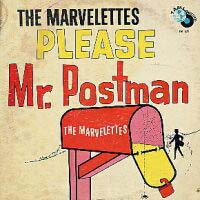
The Marvelettes – “Please Mr. Postman”

marvelettes-please-mr-postman1.jpg

The Marvelettes – “Please Mr. Postman” Pop #1, R&B #1

It took six songwriters, but Motown finally, swept the top of the charts with this song. The Marvelettes were a group of high school who entered a 1961 school talent contest for the chance to audition for Motown. While this original performance is certainly memorable, the group definitely isn’t, which is probably why both the Beatles and the Carpenters were successful with their covers.

For the Beatles, the song was a tribute to American Motown music free of specific artistic association (it wasn’t “The Beatles doing Smokey,” like their cover of “You Really Got A Hold On Me”). For the Carpenters, it was a chance to revisit the schoolgirl longing and nostalgia the song represented. (By the way, this entry contains way more than I ever thought I’d write on the Carpenters. Let us promise never to speak of them again.) — by Joel Francis

The Miracles – “Shop Around”

Shop Around

The Miracles – “Shop Around” Pop #2, R&B #1

Barry Gordy borrowed $800 from his family to launch the Tamla label. The first group Gordy signed to Tamla was The Matadors, who changed their name to The Miracles.

It’s impossible to underestimate how important main Miracle Smokey Robinson was to Barry Gordy’s success. He not only brought dozens of hit records to the charts with The Miracles, but wrote most of Mary Well’s early hits and “My Girl” for the Temptations. It is impossible to get to Hitsville U.S.A. without going through Robinson.

This song was Motown’s first No. 1 hit (on the R&B charts, at least), over 45 years ago. If you updated the production and handed this song to Mariah Carey under the altered title to “Sleep Around” it would probably be a hit again today. Not that this is necessarily a good thing. — by Joel Francis

Barrett Strong – “Money (That’s What I Want)”

Note: This post is the beginning of a new running feature on The Daily Record. In anticipation of the 50th anniversary of Motown, we’ll be walking through the “Motown: Hitsville U.S.A. (1959-1971)” box set track by track.


Money 45

Barrett Strong – “Money (That’s What I Want)”Pop #23, R&B #2


Barrett Strong may not have wanted to be a lead singer, but Motown founder Barry Gordy definitely wanted money. Strong’s sister went to school with Jackie Wilson, whom Gordy had written some songs for in the early ‘50s. Gordy’s song “Lonesome Teardrops” was a big hit for Wilson, but when Gordy realized the real money in the music game was producing and publishing, he started his own label.

Strong said he was never comfortable on the mic, but he was definitely in the zone with songwriting partner Norman Whitfield. The two would go on to pen several hits for The Temptations including “I Wish It Would Rain,” “Cloud Nine,” and “Just My Imagination” and Edwin Starr’s No. 1 anti-war hit “War.” All of these songs made Gordy some serious money. — by Joel Francis