Open wide for Mouth

(Above: Mouth deliver “Snake Charmer.”)

By Joel Francis
The Daily Record

Fans wanting to pigeonhole Mouth’s music, do so at their own risk.

The three-piece Kansas City band combines elements of funk, jazz, pop, hip hop, electronica and progressive rock in their unique, dance-friendly instrumental songs.

“People have tried to make us either a jam band or a jazz/fusion band,” drummer Stephen “Gunar” Gunn says as guitarist Jeremy Anderson finishes the sentence. “Whatever genre people pigeonhole us as, they always complain.”

Talking with the band, which also includes bass player Zach Rizer, is like trying to catch a ping pong ball in a shower stall. The three are just as in synch in conversation as they are when playing. Words zip around as the three finish each other’s sentences and try to complete their own thoughts.

“I used to be afraid of being pigeonholed by the jam-band crowd,” Anderson says. “Honestly, they’re a lot more open-minded than anybody.”

They also provide a nice business model. Mouth tape all of their shows and try to saturate the market with recordings in hopes that the music will find its way out ahead of the band.

“These shows in Topeka and Wichita are the first time we’ve done two shows out of town in a row,” Gunn says of a recently completed road trip. “Right now we’re just trying to figure out how to play and get out on the road where we’ll at least earn near our gas money.”

Mouth – the name is a play on the fact that there’s no vocalist – perform in Springfield, Mo. on Saturday and will celebrate their first birthday on Jan. 29 at the Jazzhaus in Lawerence, Kan. One year ago the trio was playing a First Friday art exhibit and dipping their toe into the scene at the Jackpot Saloon.

Download the Mouth album “Escape from the North Pole” for free at http://www.abandcalledmouth.com/music/.

“I don’t know if I’ll be able to get a cake in, but I want to make party favors, maybe put songs on a CD and give them out,” Anderson said. Several friends of the band, including guitarist Matt DeViney, who co-founded Gunn’s previous band Groovelight, and local MCs Reach and Phantom will also help celebrate with the band.

Although hip hop is now a staple of the band’s catalog and all three members were longtime fans, embracing the genre was purely a business decision.  After six months of drawing meager crowds, Rizer looked at what was getting covered in the music press and where people were going and decided hip hop was the way to go. As soon as they made the switch, they attracted some attention in The Pitch. They also started growing unexpectedly as musicians.

“When you take anything from samples, you not only have to learn the parts, but you have to learn how to put them together,” Rizer says. “There are a lot of subtle things at work, like tambour and tone. The funny thing about hip hop is that DJs will play samples against each other you wouldn’t think to combine.”

For Anderson it was a chance to add his favorite elements of progressive rock – long, intricate parts – and incorporate them in a hip hop setting.

“Our songs are structured like progressive rock, but feel like hip hop,” he says. “We’re not playing prog hop, though. We’re playing hip hop.”

The members of Mouth grew up in musical families. Anderson’s little brother got a guitar, but never played it, so the 10-year-old started noodling on Steely Dan and King Crimson licks. Gunn grew up immersed in music. His dad was a drummer in the band Heat Index and moved out to California in his ‘20s to pursue a career in music. The white bass drum in Gunn’s kit was originally part of his dad’s rig.

“When I was 13, my dad didn’t want me to play because he thought it was bad for my ears,” Gunn says. “He put the kit away in the attic, but I kept getting it out and playing.”

Rizer’s father was also a musician. His dad and grandpa, both named David Rizer, were jazz musicians. Grandpa Rizer played guitar with Oscar Peterson and Charlie Parker. David Jr. plays trumpet, bass and sings and plays regularly with Everette DeVan at the Blue Room.

“My dad never pushed, but I was always surrounded by music,” says Rizer, who counts Bootsy Collins, Jaco Pastorius and Motown bassman James Jamerson among his influences. “I didn’t listen to anything rock-ish until I was older.”

At Shawnee Mission Northwest High School, Anderson introduced Rizer to rock and roll, while Rizer shared his love of funk, soul and jazz. Gunn, meanwhile, forged his own path, eventually performing at Wakarusa Music Festival with Groovelight in 2005.

“That show was kind of a turning point for me,” Gunn says. “At the time, I was into the whole progressive side, with odd time signatures. I was into Mahavishnu Orchestra and Return to Forever. At Wakarusa I realized people want to dance, not just listen. I used to play for the one guy who would appreciate us and tell us about that one measure 13/8. Now it’s come full circle to just wanting people to dance.”

One number the trio play is “Bad Wolf,” a new song that takes its name from Doctor Who. Anderson is seated, bent over his guitar, his nimble fingers dancing across the frets. When told his playing is reminiscent of Adrian Belew, he humbly replies “It should. I have his guitar and amp.” As Rizer’s groove takes over the melody, Gunn applies a hip hop/reggae rhythm on the drums. There’s very little eye contact; each musician lost in his own world.

“When we’re onstage, we definitely look at each other more,” Anderson said. “We’re constantly trying to push the boundaries of the song and include different elements.”

After a year together, Mouth has no future goals beyond continuing to push each other and trying to find a balance between the written and improvised.

“I’m looking forward to seeing where the music goes,” Gunn said. “We just pour ourselves into different scenes and see what happens.”
Review: Snoop Dogg with Method Man and Redman

 (Above: Snoop Dogg performs a medley of old hits on Nov. 6 at Harrah’s Voodoo Lounge in Kansas City, Mo.)

By Joel Francis
The Kansas City Star
The revue that brought rappers Snoop Dogg, Method Man and Redman to the Voodoo Lounge on Friday was called the “Wonderland High School Tour.” The promoters should have inserted the word “reunion.”

Hip-hop has turned the corner as a genre. Its former disposable nature and willingness to discard any artist who dared to fall behind a trend, regardless of their past successes, has shifted to establishing legacy artists.

Despite releasing new –- and very good –- material, the three artists were more than happy to trade on their old numbers for most of the evening’s performances.

The sold-out crowd couldn’t have been happier.

After opening with a trio of cuts from his new album-length collaboration with Redman, “Blackout! 2,” including the excellent singles “A-Yo” and “City Lights,” sometime Wu-Tang Clan MC Method Man announced his intentions.

“We want to take this back to when hip-hop was good,” he declared, before launching into Redman’s 1992 song “Time 4 Sum Aksion.” That was followed by Meth’s signature song, the 1993 Wu-Tang classic “Method Man.”

A couple hours later, Snoop Dogg echoed the sentiment. Asking the crowd who came to hear the “classic stuff,” he beamed when the audience erupted in screams.

Snoop opened his 80-minute set with “The Next Episode.” The five-piece backing band added muscle and intensity to Dr. Dre’s nimble arrangements. The hits “P.I.M.P.,” originally recorded with 50 Cent in 2003, and 1993’s breakthrough “Gin and Juice” followed, sending the audience into ecstasy.

Snoop was so enamored with his early ‘90s, Death Row heyday he brought out Lady of Rage to deliver her part on a song from “Doggystyle,” Snoop’s debut album, and her one hit, “Afro-Puffs.”

Rage has been missing in action for better than a decade, but everyone sang along to her hit like Newt Gingrich had just announced the Contract with America. Snoop was all smiles, slinking around the stage and working the crowd as Rage took the spotlight.

The Death Row glory days connection was reinforced when Snoop paid tribute to 2Pac with a performance of “Hail Mary.”

There were some concessions to newer material. “Riding in My Chevy” was well received, but the magnificent “Drop It Like It’s Hot” was tethered to a cover of House of Pain’s 1992 hit “Jump Around.” Why did Snoop feel he needed to attach his song to a one-hit wonder? Also a mystery is why Snoop chose to ignore his upcoming album except for a quick plug at the end of the set.

At any rate, “Hot” was the finest musical moment of the night. The full band fleshed out the bare-bones album arrangement, adding deeper bass and bigger bass. The performance gradually built in intensity until both band and crowd alike were flat-out rocking.

The biggest problem with Snoop’s set was his over-reliance on back-up MCs Kurupt and Daz Dillinger. Their solo turns took time away from other song Snoop could have performed and their backing role was the equivalent of Garrett Morris delivering the news for the hearing impaired on Saturday Night Live.

A medley of “Deep Cover,” “Nuthin’ But A ‘G’ Thang” and “B— Please” went off like a flash pot. A delirious crowd devoured every beat, recited every syllable and danced furiously. It was the hip hop equivalent of “Jump” or even “Jumpin’ Jack Flash.” Snoop closed with another crowd-pleaser: “Who Am I? (What’s My Name?)”

Snoop’s laid-back delivery and contentment to stroll and swagger across the stage stood in contrast to the kinetic energy of Method Man and Redman. The pair barely stood still throughout their hour-long set, delivery Wu-Tang favorites, solo cuts like “Bring the Pain” and “You’re All I Need To Get By” and the obligatory tribute to deceased Wu-Tang member Ol’ Dirty Bastard.

The duo was backed by frequent Wu-Tang producer Mathematics and DJ Nice and scored points with the pro-cannabis crowd by performing weed anthems “How High” and “Part II.” Marijuana was a reoccurring theme of the night. A pair of sheriffs camped on either side of the club entrance and the beginning of the night and a lingering presence later in the night quashed many would-be smokers. The dense clouds produced by the overhead smoke machines created enough cover for the rest.

The evening kicked off promptly at 8 p.m. with the only performer who wasn’t tied to the 1990s. Devin the Dude provided an hour of rhymes about women and weed. His base lyrics and laconic delivery found many fans in the crowd but were no match for what followed.

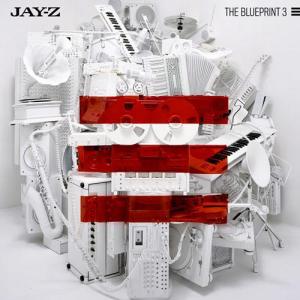
Jay-Z – “The Blueprint 3”

Blueprint_3
By Joel Francis

“The Blueprint 3” is not just the third installment in Jay-Z’s “Blueprint” saga. It’s also the third album since Jay “retired” in 2004. “The Blueprint 3” manages to split the differences in both of these lineages. It falls between the pared-down masterpiece of the first “Blueprint” and its guest- and lard-laden sequel. Similarly, it splits the difference between Hova’s uninspired comeback “Kingdom Come” and “American Gangster”’s return to form.

Just because “Blueprint 3” isn’t as bland and unfocused as “Kingdom Come” and “Blueprint 2,” doesn’t mean it’s a triumph. The album gets off to a strong start with “What We Talkin’ About,” which continues the hard feel of “American Gangster.”

No ID supplied an excellent track for “D.O.A. (Death of Auto-Tune),” the lead single. “Run this Town,” Jay’s collaboration with Rihanna and Kanye West is another in a long line of classic summer singles. “Empire State of Mind,” Jay’s duet with Alicia Keys, completes the album’s early run through its three consecutive singles. The strongest song on the album, the town fathers can immediately add it to the overflowing Big Apple hymnal.

“Hate,” a chorus-less mic battle between Jay and West, has fire in the belly. Young Jeezy nicks part of “Public Service Announcement” for his opening verse in “Real As It Gets.” Jay responds with one of his most convicted performances on the album.

Remove the EP’s worth of solid cuts, though, and Jay’s post-retirement secret emerges: he’s having problem finding new things to say. There’s nothing as fun and clever as “Brooklyn Go Hard,” his contribution to this year’s “Notorious” soundtrack. That song contains one of the best verses in Jay’s cannon:

“I father, I Brooklyn Dodger them,
I Jack, I Rob, I sin,
Ah man, I’m Jackie Robinson
‘Cept when I run base, I dodge the pen,
Lucky me, Luckily they didn’t get me,
Now when I bring the Nets I’m the black Branch Ricky,
From Brooklyn corners, burnin’ branches of sticky.”

Instead, Jay drops a dated Mac/PC comparison and gives us this in “Venus vs. Mars:”

“Shorty like Pepsi, me I’m the coke man,
Body like a coke bottle, I crush it like a Coke can,

Started at the window, then the bedroom wall,
the Ying to my Yang, I skeet skeet off,
I hits it from the back, Shorty like the front,
the Bonnie to my Clyde,
both riding shotgun,
both covered in gold like C3PO,
James and Florida Evans let the good times roll.”

Using this strained metaphor, Jay is able to reference his past as a drug dealer (now nearly 15 years ago), brag about his sexual prowess and remind everyone about his bank roll. Toss in a reference to his estranged father, and this is basically every Jay-cliché in one verse.

There aren’t many points on “Blueprint 3” as hollow as this, but there are enough that it can’t be excused as an isolated incident. Album closing “Young Forever” is intended as an uplifting anthem, but is cornier than an all-occasion greeting card that suffers from the P. Diddy school of sampling. Kanye West gets the production credit here, but all he does here is cue Alphaville’s “Forever Young” – best known for its prominence in the film “Napoleon Dynamite” – and let Jay karaoke.

Despite surrounding himself with A-list producers and guests, Jay lacks much of the fire and creativity that fueled masterpieces like the original “Blueprint.” After three installments, it’s clear Jay needs to go back to the drawing board.

Review: Biz Markie

(Above: Biz Markie rocks his classic “Just a Friend”  in Sweden on March 28, 2009.)

By Joel Francis

Rapper Biz Markie’s free performance at the Power and Light District Thursday night was less a concert than a warm-up/advertisement for his nightclub set later that night.

Markie was onstage for about 45 minutes. He spent 20 minutes behind turntables, 20 on the mic and five plugging the late show. The set-up was as old school as Markie’s material: two turntables and a microphone (and a laptop). After warming up the sparse crowd – the entire audience could have comfortably fit inside the Record Bar – with a brief DJ set of random favorites, Markie finally emerged from behind the tables.

A celebrated beat boxer before breaking through as an MC, Markie was Rahzel before Rahzel. His skills are no less impressive today. Vocal recreations of “Thriller” and “Beat It” drew big cheers, as Markie placed the mic on top of his head and against his throat to capture new sounds. Think of it as a funky ear-nose-and-throat exam you could dance to.

The dedicated audience took advantage of the ample dance space. Pockets of break dancing and circles of swinging bachelorette parties populated the floor close to the stage. The dancers were a nice visual diversion. There was little to see onstage beyond the Markie’s crew, turntables and the oversized, t-shirt and sweat-pant clad MC. The kaleidoscope of twisting colors and twirling ladies definitely added to the evening’s presentation.

Markie didn’t perform many songs, but he made the handful he did count. “Vapors” and “Nobody Beats the Biz” are old school staples that had everyone singing and bobbing along. Markie teased “Just A Friend,” his Top 10 hit from 1989, with the signature piano sample and backbeat urging everyone to sing along and throwing his weight behind every “oh baby.” The biggest of his songs, it was also the most disappointing. Markie only delivered one verse, turning the song into one big crowd participation number with looped chorus.

Frequently and appropriately omitted from the rolls of rap legends, Markie’s charm outstrips his talent. He didn’t shy from playing the clown, wagging his tongue to the crowd when they responded to a record he played and grinning at his modest singing abilities. The best of these moments was when he encouraged the crowd to join in his rendition of the Jackson 5’s “I Want You Back.” Markie’s signing was hilariously out of tune and he free-styled new verses, despite repeatedly telling the audience to sing along if they knew the words.

Although the set was definitely slight, it was also free, which meant all it cost was a little time. That hour was definitely a good time.

Peter, Bjorn and John Heart Hip Hop

(Above: Kanye West and Peter, Bjorn and John marry indie rock to hip hop in  “Young Folks.”)

By Joel Francis
The Kansas City Star

The distance between whistling and beat-boxing shrank considerably once Kanye West got involved.

When West sampled Peter, Bjorn and John’s whistle-based sensation “Young Folks” for his mixtape, he not only united the worlds of indie rock and hip-hop, he also awakened Peter, Bjorn and John’s burgeoning love of urban music.

“When I first heard his version I thought it was a joke,” drummer John Eriksson said. “I didn’t think it’s strange, though, because a lot of hip-hop artists are trying to get more rock with a lot of electric guitars and the rest.”

West proved his indie rock cred when he asked the Swedish trio to perform the mashup during his set at the 2007 Way Out West festival. The collaboration helped open the band’s ears to new ways of presenting its music. The commercial follow-up to “Young Folks” was this year’s “Living Thing,” which disposed of guitars and traditional drumming and embraced icy synthesizers, spare arrangements and altered percussion.

“Many people think the drums on ‘Living Thing’ are programmed, but it’s not,” said Eriksson, whose band performs Friday night at the Granada in Lawrence. “Eighty percent of the sounds are acoustic but turned to make it sound like a drum machine or given a spaced-out, futuristic sound.”

Hip-hop wasn’t much of an influence when the band formed in 1999, but at the end of the “Living Thing” sessions, singer Peter Moren tried what would have been unthinkable 10 years ago and rapped an entire song.

“I didn’t think it was good enough (to make the album), so we tried to get someone else to do the vocals,” Eriksson said. “That’s how we met Mick Boogie, who helped us come up with the idea of having other people rap over all of our songs.”

The resulting remix album was dubbed “Re-Living Thing” and features original rhymes by GZA, Talib Kweli, Three 6 Mafia, Bun B and Rhymefest, with production from Jazzy Jeff, 6th Sense and Apple Juice Kid.

“I’ve only heard three versions so far. Jazzy Jeff did a fantastic job on his track, and I can’t wait to hear the others,” Eriksson said. “Knowing GZA from Wu Tang is on there makes me want to cry, almost. It seems surreal he’s doing something with one of our songs. I don’t know how Mick convinced him to take part. Maybe they played chess and Mick won.”

After the band released an online- and vinyl-only instrumental album last year and commissioned friends to make different arrangements of past singles for vinyl release, Eriksson feels like Peter, Bjorn and John fans should be up for anything.

“I think our fans are used to us doing weird, surprising stuff. A couple tracks on last year’s instrumental album have a Swedish narrative in the old dialect,” Eriksson said. “After five albums, by now people should be open to who we are. Maybe our next album will be trash-metal mixed with Stockhausen.”

Hesitant or curious fans won’t have to part with much to hear the results. “Re-Living Thing” will be released online today for free.

“That’s just how it works these days. Music is free,” Eriksson said. “When you make music, you don’t think about how to make money. Usually other people do that.”

Eriksson said most of the band’s money comes from licensing songs like “Young Folks” to TV shows and commercials. The corporate funds pay for the band’s creative ventures, like jazz and hip-hop remixes.

“When people ask us if they can use songs in commercials, we think about what the commercial is for. We won’t say yes to banks, McDonald’s and things we don’t agree with,” Eriksson said. “When it’s something we like — like TV shows, beer, maybe ice cream, stuff people need — we have no problem. It’s the only way we can make money. I wish we could sell albums, but most of our money is from that.”

Friday
Peter, Bjorn and John perform Friday night at the Granada, 1020 Massachusetts in Lawrence. Cowboy Indian Bear opens at 9 p.m. Tickets to the all-ages show are $15. Visit www.thegranada.com.

Album review – “Stax: The Soul of Hip-Hop”

30535_03_HH_Book.qxd:-

By Joel Francis

When RZA needed a hook for “C.R.E.A.M.” he turned to the Charmels’ “As Long As I’ve Got You” and joined a large fraternity of rappers and producers who have leaned on the Stax catalog for their tracks. And though Stax has provided the samples for hits by Jay-Z, Public Enemy, Notorious B.I.G. and countless others, the source material has somehow remained in the secret province of crate-diggers.

Until now. “Stax: The Soul of Hip Hop” is 14 wonderfully selected, mostly obscure late-period Stax cuts released as part of Concord Record’s revitalization of the label. It’s unlikely that many Ghostface Killah fans listening to “Supreme Clientele” would have the urge to track down the source material for “The Grain.” But listening to Rufus Thomas’ “Do the Funky Penguin” on this compilation not only sheds light on the music that informed Ghostface – it’s fun enough to make the album more than a history lesson.

It’s great if De La Soul and Cypress Hill are the reasons these song sound familiar, but the collection succeeds because it dusts off great songs that are ignored on most retrospectives. 24-Carat Black’s lone album was ignored in 1973. That album’s title track “Ghetto: Misfortune’s Wealth” opens this compilation with a slab of socially conscious funk. The female trio the Emotions found their greatest success with Earth, Wind and Fire in the late ‘70s, but “Blind Alley” shows they were fully formed pop soul act long before Maurice White helmed their albums.

The Dramatics’ “Get Up and Get Down” foreshadows the disco movement, while Little Milton’s “Packed Up and Took My Mind” is the marriage of soul and blues that Robert Cray has been chasing for 20 years. The inclusion of Isaac Hayes and Booker T. and the MGs tosses a bone to casual fans, although two Hayes cuts may be one too many.

The only misstep is a song that dates from Stax’ early days with Atlantic Records. Wendy Rene’s 1964 track “After the Laughter (Come Tears)” is an unconvincing ballad whose best quality is a great calliope organ line. Complaining about this cut, the extra Hayes track and the wish that the producers would have packed the disc with more tracks, though, misses the point and spoils a great treasure.

This set not only proves that the hip hop samplers had immaculate taste, but that they weren’t just cherry picking.  While they may have only mined 10 or 15 seconds from each track, the ore runs consistently deep through each performance.

If hip hop is the reason for this collection to exist and that marketing angle will draw those fans to this music, then so be it. But a celebration this fun doesn’t need an excuse.

Review: Talib Kweli & Hi-Tek

(Above: “Back Again” from the forthcoming Talib Kweli/Hi-Tek album.)

By Joel Francis
The Kansas City Star

Ten years ago, rapper Talib Kweli and DJ Hi-Tek united to produce two of the genre’s landmark albums. Teaming with Mos Def they created “Black Star;” on their own they released “Train of Thought.”  The duo celebrated their past and future before a nearly full Granada Theater in Lawrence, Kan. on Sunday night.

The set started with a new song which showcased Kweli’s dense delivery and more-words-per-breath approach. From there the evening got more familiar with “Move Something” and “Eternalists,” two of several cuts to come off “Train of Thought.”

With barely a breather in between, the songs came in rapid-fire succession: “Too Late,” “Definition,” “Africa Dreams,” “Love Language,” “Down for the Count,” “Respiration,” “Memories Live.” Each number brought a big response -– a sea of hands and chorus of vocals.

Early in the set the pair switched spots, with Kweli on the turntables and Hi-Tek prowling the front of the stage in rhyme. The performances were passable, but neither as in his element. Kweli later ceded the mic again to DJ a 10-minute medley of songs Hi-Tek has produced for others. Most of the cuts were drawn from his trilogy of “Hi-Teknology” albums.

Hi-Tek was just as accommodating as DJ, working in ample Kweli hits produced by others like will.i.am’s “Hot Thing,” Just Blaze’s “Hostile Gospel,” Madlib’s “Over the Counter.” The room broke into pandemonium when Hi-Tek dropped into a loop of Kanye West’s “Get ‘Em High.” Instead of reprising the verse he cut for West’s album, though, Kweli freestyled, dropping references to the University of Kansas. It may have been pandering, but it was very effective.

For past tours, Kweli has brought backing vocalists and other onstage help. None of that was necessary this night. With Hi-Tek behind the turntables and on a riser, the MC had all the support and camaraderie he needed.

Live hip-hop is a deservedly suspicious beast. Many an MC has been cut to size by a performance that fails to replicate the studio magic and a DJ who cannot conjure the vibe. Hi-Tek’s varied samples, encompassing African rhythms, quiet storm, reggaeton and more, kept the music sonically interesting, while Kweli continually proved his microphone prowess.

The main set ended with two of the evening’s strongest songs. “Back Again” was another new song. Laced with African drums and R&B vocals it sounded like a “Train of Thought” outtake. The crowd wasn’t familiar enough to be singing along yet, but before Kweli’s next swing through town they will be. The audience had no problem, though, chiming in for “Get By,” Kweli’s biggest number and set closer.

After 70 minutes the concert morphed into an after-party. Audience members were invited onstage while Kweli and Hi-Tek played past and current hip-hop favorites. After a couple numbers, the stage was so crowded the headlining duo were barely visible.

Once the after-party started, the crowd split two ways: half took to the stage and the rest of us, faced with a drive back to Kansas City in a hard rainstorm, headed for the door.

Another Side of Norah Jones

Above: Norah Jones strolls through Wilco’s “Jesus, Etc.” at the 2008 Bridge School Benefit concert.

By Joel Francis

When Beyonce sang “a diva is a female version of a hustler” she probably wasn’t thinking of Norah Jones.

Jones has made her name with impeccable background music that is tasteful to a fault and straddles the line between folk and jazz. It appears she saves the more interesting facets of her personality for her side projects with the Little Willies, El Madmo, a punk one-off, and her burgeoning side career as hip hop chanteuse. Jones’ appearances with Talib Kweli, Andre 3000, Wyclef Jean and Q-Tip prove there may be more than a little hustler in her after all.

“Take Off Your Cool” with Andre 3000 of Outkast, from “Speakerboxxx/The Love Below”

Jones was a little more than a year removed from the massive success “Come Away With Me” when this number appeared. Both camps took shots from a surprised public. Andre 3000 was blasted for pandering by working with the reigning adult contemporary queen and Jones was flamed for lowering herself to the low level of hip hop. Of course, the final result proved all naysayers wrong.

Anchored by a finger-picked acoustic guitar, the gentle production wouldn’t out of place on Jones’ own album – that is if Jones’ stuffy supporters could get past Andre 3000’s greasy come-ons.

“Any Other Day” with Wyclef Jean, from “The Carnival Vol. II: Memoirs of an Immigrant”

This song, which first appeared on the Hurricane Katrina relief charity album “Come Together Now,” has more in common with the Dave Matthews Band than the Fugees. Wyclef Jean’s acoustic guitar leads the way, but it is essentially Jones’ showcase. She affectingly croons the story of someone trapped by a storm, while Jean drops in a faux-Bob Marley patois.

A quick glance and the writing credit explains Jones’ prominence. The song is a true collaboration, with Jones and her then-boyfriend Lee Alexander sharing authorship with Jean and his producer Jerry “Wonder” Duplessis.

“Soon the New Day” with Talib Kweli, from “Ear Drum”

Even so-called “conscious rappers” aren’t above desires of the flesh. This celebration of one-night stands is draped across producer Madlib’s backdrop of smooth ’70s soul. As Talib Kweli boasts about his conquest, Jones’ voice surfaces like the first rays of dawn gently forcing their way into the bedroom through the closed shade.

Although Jones is essentially limited to one line, she makes the most of it, adding heart and emotion to Kweli’s calculated braggadocio. But don’t mistake Jones as the conscience of the story – there is no remorse from either party. She clearly enjoyed it just as much as he did, just in a different way. Despite their disparate deliveries, the two voices work naturally together – neither performer sounds of his (or her) element.

“Soon the New Day” is a stand-out tune on a great album that should have been a single.

“Life Is Better” with Q-Tip, from “The Renaissance”

This cut is essentially a jam, with Q-Tip and Jones giving props to hip hop pioneers like the Cold Crush Brothers, the Leaders of the New School and, of course, Tip’s close friend J. Dilla. Jones gets the song to herself for the first two minutes and she makes the most of it. It’s fun to hear her away from her natural reference points singing of hip hop songs “banging for you” against a thumping bass line and jazzy sample. Tip’s verse is a roll call of his favorite artists.

Jones’ strong performance in her most urban setting to date makes one wish she’d take similar chances on her own albums. But if she’s not willing to alienate her own audience, it’s nice to see her spreading her wings elsewhere. Don’t be surprised when she shows up on the next Snoop Dogg album.

Green Ribbon Haikus

feedtheanimals_news
By Joel Francis

Before we bid farewell to 2008, let’s have some more haiku fun and revisit five albums that may not have made The Daily Record’s year-end, best-of list but still merit a listen.

Girl Talk – “Feed The Animals”
Is it art? Question
eclipses legalities.
WTF? Dance! Dance!

The Hold Steady – “Stay Positive”
Great songwriting, strong
performances. Forget Bruce,
Craig Finn holds his own.

Rachel Yamagata – “Elephants…Teeth Sinking into Heart”
Aching ballads and
torrid rockers on two discs.
Schizophrenic’s OK. 

Sigur Ros – “Med Sud I Eyrum Vid Spilum Endalaust”
Don’t speak Icelandic?
Who does? Same great songwriting,
new stripped-down approach.

The Roots – “Rising Down”
For once, band doesn’t
reinvent themselves. Solid,
if similar; guests thrive.

PE Still in Full Effect

The squeak on the front door to our office sounds strangely like Terminator X’s scratches on “Rebel Without A Pause.” Every time I’ve opened the door this week my mind has jumped to “the rhythm, the rebel.” Unfortunately, maintenance oiled the hinges last night. On the bright side, my friend Lindsay said his office fax machine sounds eerily like “Miuzi Weighs a Ton.”