(Above: Jay Bennett and Jeff Tweedy perform the unreleased Wilco song “Cars Can’t Escape.”)
By Joel Francis The Daily Record
When I first heard Jay Bennett had been fired from Wilco back in 2001, I was worried the band had just lost their secret weapon. Jeff Tweedy may have been the wordsmith and idea man, but Bennett was the artist who polished those ideas to perfection.
Bennett died in his sleep May 24. He was 45 years old.
Bennett’s presence was felt from the moment he joined Wilco in 1995. Tweedy was still trying to crawl out from the shadow of Uncle Tupelo and establish his identity independent of his Tupelo cohort (and rival) Jay Farrar. Bennett’s presence on the band’s second album, “Being There,” added a new dimension to the arrangements and production.
“Summerteeth” is arguable Wilco’s finest hour and definitely the perfect product of the Tweedy/Bennett vision. For each of Tweedy’s dark moments, like “She’s A Jar” or “Via Chicago,” there are the sun-drenched pop anthems of “Nothing’severgonnastandinmyway(again)” and “I’m Always in Love.” Wilco’s music has never been happier and more optimistic than it is on “Summerteeth.” For proof, check out the opening riff in the title song. “Summerteeth” the song is the musical equivalent of a gentle breeze caressing the backyard hammock, or those Corona beach commercials.
Bookending the recording of “Summerteeth” are two albums using unused Woody Guthrie lyrics recorded with British folker Billy Bragg. Bennett’s touch is felt across both volumes of the “Mermaid Avenue” material; “Secrets of the Sea” and “Hoodoo Voodoo” continue that “Summerteeth” vibe.
Wilco’s next album, “Yankee Hotel Foxtrot,” famously found the band in transition and butting heads. But if “I Am Trying to Break Your Heart” and “I’m the Man Who Loves You” point to the band’s future without Bennett, “Jesus, etc.” and “Heavy Metal Drummer” still held plenty of Bennett’s sunny, radio-friendly magic.
Although Tweedy continued building critical acclaim and growing his fan base after “Foxtrot,” Bennett was not as successful on his own. That Bennett was working as a VCR repairman prior to joining Wilco says a lot about his craft. Bennett was a tinkerer, one who was best improving and polishing other’s creations. Left to both build and execute, he struggled.
Despite this, Bennett’s four solo albums still have merit. His first post-Wilco release, a collaboration with Edward Burch called “The Palace at 4 a.m.,” has a remake of the “Summerteeth” track “My Darling” that may top the original. This album and the two that follow it have more unused Guthrie material which makes for a nice “Mermaid Avenue” post script. (The post script continued this year with Wilco’s release of Guthrie’s “Jolly Banker.” Hopefully a “Volume Three” will appear sometime.) Bennett’s limited singing ability can grows wearisome across these releases, his production never does.
Bennett’s most complete solo statement was his second-to-last album, 2006’s “The Magnificent Defeat.” The second word in the title should be given more emphasis than the third. Bennett’s lyrics and delivery have a bit of Elvis Costello anger to them, but the fun he had putting the album together jumps out the speakers and makes for an infectious listen.
Today, Tweedy and bass player John Stirratt are all that remain of the Wilco lineup that brought us “Summerteeth” and “Being There.” But every time the band launches into “She’s A Jar” or “ELT” – as they frequently do – a little bit of Jay Bennett will be smiling on the audience. And they’ll be smiling back.
Continuing The Daily Record’s look at the state of jazz today, here is the second of three installments shedding light on 15 jazz greats to emerge in the last 20 years. Note that these musicians are not necessarily the 15 greatest jazz artists to arrive since 1990. A brief listen to any of them, though, should more than persuade the most ardent purist that jazz is alive and well.
Ravi Coltrane
Not only has Ravi Coltrane followed in his famous father’s footsteps as a musician, but he’s established himself with his dad’s instrument. The child of John and Alice Coltrane (Ravi was two when his dad died), Ravi cut his teeth with McCoy Tyner and Elvin Jones before finally stepping out on his own. In little over 10 years, he’s build a strong catalog that would sound just as sweet under a different surname. Coltrane is currently on the road in a new septet celebrating 70 years of Blue Note Records. Albums to start with: Mad 6, In Flux.
Kora Jazz Trio
Comprised of pianist Abdoulaye Diabaté (who is not related to kora master Toumani Diabate), griot percussionist Moussa Sissokho and kora player Djeli Moussa Diawara, this trio deftly blends their African heritage with American jazz. Throughout their three albums, they have tackled songs by Charlie Parker, Thelonious Monk and the Buena Vista Social Club and delivered over a dozen dazzling originals. Imagine McCoy Tyner getting lost in an African marketplace and you’re getting close. Albums to start with: Part II, Part III
Diana Krall
Pianist and singer Diana Krall grew up surrounded by her dad’s extensive collection of Fats Waller albums, but ended up with a style and sound closer to that of Ralph Sharon, Tony Bennett’s longtime arranger and accompanist. Although Krall’s music is certainly not aggressive or pushing any boundaries, dismissing her music as smooth jazz for dinner parties would be a mistake. Her performances of Irving Berlin, Cole Porter and Jimmy McHugh have a freshness, energy and vitality lacking in other “supper club” performers. Krall’s most recent album, “The Girl in the Other Room,” leans heavily on original material written with her husband, Elvis Costello. Albums to start with: Love Scenes, The Girl in the Other Room
Medeski, Martin and Wood
Decades of touring have made the bass/keyboard/drums trio of Medeski, Martin and Wood one of today’s tightest ensembles. Their experimental, groove-based sound is broad enough to be equally at home at both Newport and Bonnaroo without changing a thing. Early pieces like “Hermeto’s Daydream” sound like Dave Brubeck run through “A Clockwork Orange,” while newer material features hip hop artists like DJ Logic, and guitarists Marc Ribot and John Scofield. Albums to start with: Notes from the Underground, Combustication.
Jason Moran
Pianist Jason Moran only has 10 years of recording under his belt, but he’s covered a lot of territory in that time. His albums contain interpretations of Prokofiev and Afrika Bambaataa interspersed with original compositions and spoken-word pieces. In addition to releasing seven albums under his own name, Moran has worked and recorded with Andrew Hill, Cassandra Wilson, Christian McBride, Don Byron, Ravi Coltrane and dozens more. Only 34 years old, Moran is just getting started. Albums to start with: Modernistic, Same Mother
Keep Reading: 15 Jazz Greats to Emerge in the Last 20 Years
(Above: “True Love Ways” is The Daily Record’s favorite Buddy Holly song.)
By Joel Francis The Daily Record
Fifty years ago this week, the plane carrying Buddy Holly, Ritchie Valens and the Big Bopper crashed in an Iowa cornfield, claiming its passengers and 22-year-old pilot Roger Peterson.
The event became known as “The Day the Music Died,” but the fact people were still talking about it 12 years later when Don McLean memorialized the moment with the song “American Pie” proves that music indeed survived.
The rock landscape had changed a lot between 1959 and 1971. The pioneers of the rock and roll were having hard time. Chuck Berry had bounced from Chess to Mercury and back and was seven years removed from his most recent Top 40 hit (although the No. 1 “My Ding-A-Ling” was right around the corner). Carl Perkins was performing as a sideman in Johnny Cash’s band and Little Richard, Bo Diddley, Fats Domino and Bill Haley dismissed as washed up. Only Elvis Presley and Jerry Lee Lewis retained a whiff of their ’50s fervor, but it took a televised “comeback” special and a genre hop to country and western for them to manage the trick.
That Holly was not only remembered, but celebrated in the aftermath of Woodstock and Altamont, in an era where rock’s excesses were just starting to steamroll, was not pure nostalgia.
Far from killing rock and roll, Holly planted the seeds that allowed it to flourish. Holly was one of the first artists to recognize the recording studio as creative environment, by experimenting with double-tracking and overdubs. He was the first songwriter to pilfer the Bo Diddley beat for “Not Fade Away.” He was the first rock and roll star to play a Fender Stratocaster, the guitar of choice for Eric Clapton, Jeff Beck, Jimi Hendrix, Stevie Ray Vaughan and countless others.
Although the Beatles often receive credit for being the first group to write their own material and put strings on a rock album, the truth is, Holly did both nearly a decade before them. It’s not a big leap from Holly’s “Raining In My Heart” to McCartney’s “Yesterday.”
But the most amazing of Holly’s feats is that he did it all by 22, an age at which Bob Dylan was just emerging from his Woody Guthrie fixation, Brian Wilson was begging out of tours because of stage fright and Neil Diamond was still trapped in the Brill Building.
Few mourn other ’50s rock casualties, like Eddie Cochran, who died a scant 14 months later, but Holly’s influence continues to be felt today. It’s in Elvis Costello’s spectacles, Weezer’s Top 5 1994 hit, and the myriad of bands – ranging from the Rolling Stones to the White Stripes to the cover band in the bar around the corner – who regularly drop “Not Fade Away” into their sets.
Above: Elvis Costello, Bruce Springsteen, Dave Grohl and Little Steven Van Zant do “London Calling” at the Grammys for Joe Strummer.
By Joel Francis
I remember getting the call from my brother-in-law like it happened yesterday. I was sitting in my apartment, it was the night before Christmas Eve, 2002 His words slowly trickled out: “Joe Strummer is dead.” The next day I loaded my CD changer with nothing but Clash and Mescelaros music and played it on shuffle for the entire day. Every Christmas Eve since then has been Clash-mas Eve, with at least a couple hours devoted to celebrating the art of Joe Strummer. To borrow a line from The Hold Steady’s “Constructive Summer,” let’s “raise a toast to St. Joe Strummer” and revisit five of his greatest moments.
“Letsagetabitarockin'” by the 101ers, from “Elgin Avenue Breakdown Revisited” The 101ers drew more on the bluesy rock of the Rolling Stones and classic American rock and roll than they did on the jagged precursors of punk rock. Formed in 1974, Joe Strummer knew his band was done in 1976 after hearing just five seconds of the Sex Pistols. When the 101ers lone single, “Keys to Your Heart” came out later that year, the group was already over. Having seen the light, Strummer jumped ship to join the Clash, but the 101ers remained a curious footnote of Strummer’s pre-punk powers. In 1981, the group’s few studio and live recordings were cobbled together for release. “Letsagetabitarockin'” kicks off that album with a shot high-octane rockabilly recorded in 1975 that would become the Stray Cats stock in trade several years later. Stylistically, it’s not much of a leap from this to the music Strummer was making in the Clash. The change in attitude and approach, however, is huge.
“1977” by the Clash, from “Super Black Market Clash” Strummer eviscerates his former life as a pub rocker and skewers rock’s sacred cows with his cry of “no Elvis, Beatles or the Rolling Stones” on the chorus of “1977.” An early calling card for the band, it appeared on the b-side of their first single and helped establish them as the new guard of rock and roll. Written by Strummer and Clash guitarist Mick Jones, the two packed a lot into their 99 seconds. In addition to denouncing the previous generation’s music, they draw on the Rastafarian prediction of July 7, 1977 bringing chaos and tip a hat to George Orwell’s novel “1984” by counting up to that year before ending abruptly.
“Brand New Cadillac” by the Clash, from “London Calling” “Letsagetabitarockin'” and “Brand New Cadillac” are both rockabilly songs, but the similarity pretty much ends there. Strummer not only changed his surrounding musicians, his voice has transformed. His singing has the edge of a switchblade knife and you can hear his sneer as he angrily spits likes like “Jesus Christ, where’d you get that Cadillac?” That line wasn’t in the 1958 version of “Brand New Cadillac” written and recorded by Vince Taylor and his Playboys. Taylor’s version was menacing in its own right back then, but he sounds less inclined to track his woman down. Strummer, on the other hand, is ready to do more than slash her tires.
“Magnificent Seven” by the Clash, from “Sandinista!” Rap music wasn’t much older than punk when the Clash cut this track in 1981. Strummer throws stream-of-conscious lyrics over a bass loop composed not by Clash bass player Paul Simonon, but Norman Watt-Roy from the Blockheads. The arrangement over the loop is strongly influenced by reggae and dub, two of the cornerstones of the Clash’s sound. The result, though, was unlike anything recorded up to that time. Preceding Blondie’s “Rapture” by six months, this was white rock’s first attempt to write a rap song. Strummer delivers his story about a good working boy with his typical swagger, but throws a curveball in the third verse – the work isn’t to make ends meet, but to buy all the junk he sees advertised on TV. Emboldened by his anti-consumerist diatribe, Strummer tosses Ghandi, Karl Marx and Richard Nixon into the final verse before musing who’s better known, Plato the Greek or Rin Tin Tin.
“Straight To Hell (live)” by the Clash, from “From Here To Eternity: Live” Recorded live at The Orpheum in Boston on the Combat Rock tour, the band stretches this reading of “Straight To Hell” more than three minutes longer than its LP run time. Given more space, the song becomes even more moody. Strummer wallows in the beat as he damns those who mistreat immigrants by closing steel mills or burning their communities. The deliberately slow tempo shows how much the Clash have grown since their rapid-fire debut just five years earlier. The arrangement again echoes strongly of reggae and dub elements and was borrowed by M.I.A. for her hit “Paper Planes.” The defining moment comes at the end when Strummer yells at the crowd to “sing in tune, you bastards.” For a man who always wore his emotions on his sleeve, it doesn’t get more heartfelt than this.
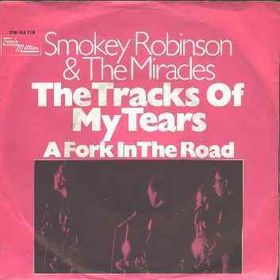
The Miracles – “The Tracks of My Tears,” Pop #16, R&B #2
By Joel Francis
Smokey Robinson had little to prove in 1965. Since joining Motown four years ago, he had not only given the label its first million-selling single and its first No. 1, but written, produced or performed on scores of classic tracks. Robinson was rewarded for all his work when his name was pulled out of the Miracles and given top billing.
“The Tracks of My Tears” was one of the first singles credited to “Smokey Robinson and the Miracles,” but Robinson wasn’t resting on his laurels. His heart wrenching vocals may be topped only by Levi Stubbs’ performance on “Ask the Lonely” as the label’s most powerful performance to date. With a voice packed full of heartache and longing, Robinson pulls back the mask, revealing his naked heart to his former lover.
Exhausted after meticulously maintaining his façade for the evening, and the truth seeps out of Robinson’s character when he’s finally alone. Ah that the pain of love could be so melodic. The song starts as if out of dream, introduced by the subtle but spectacular guitar line of Marv Taplin. The Miracles’ harmony vocals are the reassurance and support that are always absent in these dead-of-night confessions. The orchestra, xylophone and drumming are all perfectly arranged and placed. Everything pauses for the syncopation of the line “My smile is my makeup I wear since my break-up with you.”
“The Tracks of My Tears” is frequently lauded as not only Robinson’s best number, but one of the greatest songs of all time. It is also the Miracles’ most-covered song. Less than two year’s after the Miracles’ hit, Johnny Rivers cut a version. Aretha Franklin’s reading from “Soul ’69” is just wonderful. Her celebrated voice is framed by a gorgeous finger picked guitar and a tough brass arrangement that accentuates without overpowering. Most recently, the song has been covered by Dolly Parton and Elvis Costello, who sometime performs it in concert as a medley with his like-minded hit “Alison.”
Although the song is nearly 45 years old, it hasn’t aged a minute.
(Above: Bill Shapiro appeared on television in Kansas City in 2008 to celebrate 30 years of his radio show, “Cypress Avenue.”)
By Joel Francis
The Examiner
Late at night, the house is silent.
Everyone is asleep, or so it seems. In a bedroom, a dim light shines through the blankets peaked around a small figure sitting up under the covers. The sound of tinny music can barely be heard.
The boy beneath the sheets is still, but his heart is racing. His hands tremble as he fine-tunes the radio under the covers with him. He thought it was lost forever, but he has found it: the jazz radio station carrying the songs of Dave Brubeck and Shorty Rogers. It was only late at night he could pick up the phantom AM signals from stations in exotic places like New Orleans. Forget sleep, he had found something far more important.
Fast-forward 50 years.
Today, the city – Kansas City – is alive. Cars zoom past on the interstate, clearly visible from the law office’s window on the 20th floor near Crown Center. Visitors scurry in and out of the renovated Union Station.
A train blows by in the distance. The stress of daily life is lost in this picturesque, birds-eye view.
The scene is quite different, but the boy, now 62 years old, has not changed. The passion for discovering new music still burns within.
Today Bill Shapiro doesn’t hid his love of music; on the contrary, he broadcasts it. Shapiro has hosted the weekly radio show “Cyprus Avenue” for more than 20 years on KUCR 89.3 FM, the University of Missouri-Kansas City, National Public Radio affiliate.
Taking the show’s title from a song on Van Morrison’s “Astral Weeks” album, “Cyprus Avenue” has become one of KCUR’s highest-rated local shows.
Shapiro has found freedom on the airwaves. Unrestricted by playlists generated by demographic studies and corporate interests, Shapiro plays the music that excites him in hopes of engaging his audience.
“He has a lot more information and insight into groups that commercial radio doesn’t know about,” says Robert Moore, KCUR and “Cyprus Avenue” producer and music director. “A show like his would never happen on commercial radio because they don’t break down artists. They just play one format.”
While commercial radio serves a bevy of Bachman-Turner Overdrive and saccharine teen pop, Shapiro slips his sophisticated audience the Velvet Underground, Stevie Wonder and Uncle Tupelo, all linked by a common theme for a given show.
When Beck’s “Midnite Vultures” was released in 1999, no Kansas City radio stations would pick it up, despite heavy play from MTV and VH1. “Cyprus Avenue” not only spotlighted the album, but buttressed it with Prince’s “Rave Un2 the Joy Fantastic,” forming a fitting tribute to both.
Shapiro sprinkles his shows with information from box sets, liner notes and magazine interviews, but for the most part he lets the music do the talking.
His inspiration may come from a television special or an album passed onto him by a friend.
More often than not, Corky Carrol, co-owner of Village Records in Overland Park, Kan., points Shapiro to a quality release. The two usually talk once a week about scheduled new releases.
“It’s strange to think that this is the only place to hear Elvis Costello or Nick Drake on the radio,” Carrol says. “You know at least for two hours you are going to get a solid effort, not a couple of good songs then Celine Dion.”
Says Moore, “He turns the public on to new groups they won’t hear anywhere else. Unfortunately, it won’t have any impact on commercial radio because it is run by corporations. It’s expected that this is what non-commercial radio does.”
“Cyprus Avenue” may be popular, but Shapiro has yet to reach the notoriety of Murray the K. Sure, he gets calls at the office from fans and fan mail isn’t unexpected, but for the most part Shapiro is anonymous. That’s fine by him.
“Other than family I don’t think I could tell you a specific person who might claim to be my biggest fan or a longtime listener,” Shapiro says.
Carrol has supplied Shapiro with music for more than 25 years and is a regular “Cyprus Avenue” listener. Carrol says he has bought “thousands and thousands” of albums for Shapiro.
“It’s hard to get one past him, but there are a few records he’s missed,” Carrol says. “His purchases are all over the board. I think the only thing I haven’t sold him is a classical record.”
A hit all over the country
The diverse playlists on “Cyprus Avenue” have made the show successful not only in Kansas City, but all over the country. During much of the 1980s, “Cyprus Avenue” was distributed on NPR’s satellite uplink system.
“In those days you could buy an hour of stereo time for $40,” Shapiro says. “I thought it was worth a shot and was willing to invest a couple thousand dollars.”
Several stations picked up “Cyprus Avenue” and it became a hit in Minneapolis and a dozen other smaller markets, but when satellite costs rose, Shapiro pulled his show.
“I knew it wasn’t going to grow because it didn’t fit the NPR format,” Shapiro says. “People think public radio should be country and jazz or folk for the adventurous.”
But Shapiro wasn’t content with confining the show to his hometown. He decided to give the satellite one more try, this time with a national sponsor. “Cyprus Avenue” proved to be popular, running in more than 40 markets, including Detroit, San Francisco and Jacksonville, Fla. Unable to find a sponsor, expenses were mounting and Shapiro was faced with a decision.
“I decided I could either earn a living as an attorney, or I could get in my car and drive across the country and build ‘Cyprus Avenue’ into a radio show,” Shapiro says.
For the second time, “Cyprus Avenue” was pulled from the uplink
“We just weren’t penetrating the major markets,” Shapiro says. “Today radio is a secondary medium. People don’t care about shows, they care about stations and that’s why radio is as homogenous as it is. Advertisers just want a demographic to sell their product to. I don’t fit that mold. I knew I’d never get the audience I wanted.”
Compromising the show to build a bigger audience would be counteractive to everything Shapiro was trying to do – share the music he loves with his friends. And if his only contact with these friends is through the radio, so be it.
“A lot of people use the TV as a companion. My stereo is my companion,” Shaprio says. “I alwasy have 30 to 50 unopened CDs at home. They come to me faster than I can listen to them. There is always part of my head saying, ‘Is this something you want to take further and put on the radio?’”
When Shapiro listens to music at home, he makes sure it gets the audio treatment it deserves. At age 12, Shapiro built his own Hi-Fi system from a Heath kit. That system has been upgraded and replaced many times since.
“I’m a sound freak,” Shapiro says. “I have more money tied up in sound equipment than most people have in a home. I wasn’t to hear it as well as I can hear it. I buy all the gold CDs and audiophile stuff.
“To me, music is as important as oxygen and food,” Shapiro continues. “When I’m home, I have music on 24 hours a day. In the car, music is on the whole time.”
Hooked by a phonograph
Shapiro got hooked on music in 1942 when an uncle gave him a phonograph player for his fifth birthday. A family friend in the jukebox business kept Shapiro supplied with records once they were too scratched for commercial play. At age 12, he discovered Brubeck, Paul Desmond and West Coast jazz.
Shapiro tried music lessons – he tackled the piano, vibraphone and banjo – but his musical aptitude was mental, not physical. He spent his time amassing records and building playback systems.
“Whatever money I made went into getting more records and improving what I had,” Shapiro says.
Shapiro migrated across Missouri and graduated pre-med from Washington University in St. Louis in 1958 with the intent of becoming a doctor.
Still an avid jazz fan, Shapiro would often get together with friends and play records. Then he saw Elvis Presley’s first appearance on the Tommy and Jimmy Dorsey show. Shapiro was hooked on rock and roll and spreading the gospel of Elvis.
“I didn’t know who or what it was, but it had the same impact on me as hearing JFK was shot,” Shapiro says. “I can still visualize that room and the TV set and here we are 50 years later.”
To a generation of buzz-cut, starched-collar squares, Elvis represented the rebellious, darker side of 1950s adolescence.
“Presley was a lightning rod from my generation, a button-down generation,” Shapiro says. “There was a whole side of our lives – smoking cigarettes, sipping beers, getting lad – that was never talked about, and here it was in our living room. I immediately became a hard-core rock and roll fan.”
By the time Shapiro graduated, he had abandoned the idea of being a doctor. He headed north to the University of Michigan and enrolled in law school. With his law degree in hand in 1961, Shapiro decided he wanted to be a tax attorney. He heard that New York University had a graduate tax law program, so he went to the Big Apple. One show on Manhattan Public Radio planted the germ that would become “Cyprus Avenue.”
“It was a thematic program,” Shapiro says. “They’d take someone like big-band arranger Fletcher Henderson and play arrangements done by different bands. They might play a combo version next to a big band version. I listened to that show religiously. In later years, I got thinking that there was so much richness and social impact in pop music as in jazz and I could do the same thing.”
Shapiro had finally found his calling, but after three universities and seven years of higher education, a career shift was not going to happen.
“By this time my family and I had spent a lot on higher education,” Shapiro says. “If I’d know then what I knew no, I would have been in the music business. It just wasn’t in the cards.”
The jump from disc jockey to tax law may seem extreme, but Shapiro says his work is extremely satisfying.
“Tax law is not what most people think it is,” Shapiro says. “It is the most creative part of the law, because what we do is planning. You might want to buy your partner out. If you do it one way, Uncle Sam takes a hunk. If you do it differently, you save money.”
Shapiro left New York in 1962 and returned to Kansas City to work and start a family. As his family grew and Shapiro flourished professionally, he became involved with broadcasting, but it was television that proved to be Shapiro’s stepping-stone to radio.
Deeply involved with public television’s early on-air auctions and fund-rasiers, Shapiro’s good deeds did not go unnoticed. A high school friend working at KCUR called Shapiro and asked if she could take him to lunch and discuss fund-raising methods. At the end of the meal, she asked if there was anything she could do for him. Shapiro asked for an audition to do a public radio rock show.
The dream was starting to materialize. Shapiro arrived at the studio with a stack of records for the show and hoped that the manager liked it.
“My first show was called ‘Ballads by Rockers.’ It was all ballad material done by people thought of as screamers,” Shapiro says. “He (the manager) says, if you can do that every week, you’re on.”
Sonic spelunking
As Cyprus Avenue entered its second decade on the air, Shapiro realized new music and artists – particularly rap and alternative – were not striking the same chord with him.
“I’ve known for a long time I’m the generation these people want to rebel against,” Shapiro says. “I respect the fact that the music says this to the previous generation,” he says, emphatically holding up his middle finger. “There is a need to shake up the status quo.”
Shapiro doesn’t mind the envelope pushing done by newer artists, he just doesn’t get it musically. The Talking Heads and Beck are about as modern as Shapiro gets with “Cypuss Avenue.”
But Shapiro’s show doesn’t need Moby and Soundgarden to be effective. “Cyprus Avenue” is a discovery process – for both Shapiro and for listeners – of influential artists and the impact they’ve had on music.
By showing listeners the roots of music, Shapiro leaves the listener naturally curious of the modern amplification and integration of this process.
“Cyprus Avenue” isn’t a forum for Shapiro to amaze everyone with his knowledge. It’s a platform for him to share his love of music and enlighten listeners who don’t fit commercial radio demographics.
Jackie Nixon, NPR director of strategic planning and audience research, says that shows like “Cyprus Avenue” are what NPR is all about.
“We treat our listeners with respect and intelligence and try to produce programming that makes people think as well as entertain,” Nixon says.
For Shapiro, those sleepless nights in the early 1940s were a discovery process.
“It was like going into a cave with a flashlight and all of a sudden – bang, something is shining back at you,” he says.
Shapiro has not forgotten that feeling and tries to instill the same feeling of excitement in his listeners.
“I think I broaden the awareness of the intelligence and importance of popular music,” Shapiro says. “I lift it out of the aural wallpaper and let people know it can be a powerful element. That it shapes opinions and tells a lot about where we are and where we are going.”


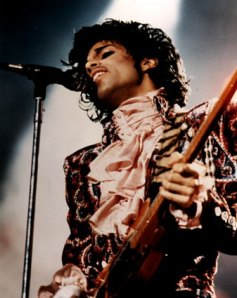 When Beck’s “Midnite Vultures” was released in 1999, no Kansas City radio stations would pick it up, despite heavy play from MTV and VH1. “Cyprus Avenue” not only spotlighted the album, but buttressed it with Prince’s “Rave Un2 the Joy Fantastic,” forming a fitting tribute to both.
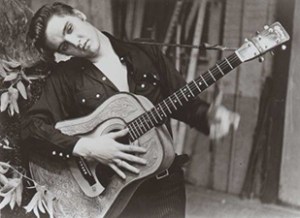 records. Then he saw Elvis Presley’s first appearance on the Tommy and Jimmy Dorsey show. Shapiro was hooked on rock and roll and spreading the gospel of Elvis.
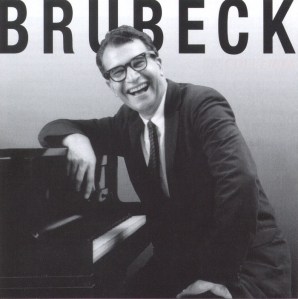 Shapiro gets with “Cypuss Avenue.”
 joelfrancis.com