Review: Jonsi

(Above: This live version of “Grow Till Tall” doesn’t begin to capture the emotion of experiencing it in person.)

By Joel Francis
The Kansas City Star

When bands play Liberty Hall, they usually park their bus on Seventh Street, on the south side of the building. Prior to Jonsi’s show on Thursday night, that space was conspicuously empty except for two huge generators with power cords running inside the theater.

The generators only hinted at the energy Jonsi, lead singer for the atmospheric indie rock band Sigur Ros, would pour into his 80-minute set. The performance culminated with “Grow Till Tall” and the most powerful emotional moment I’ve experienced at a concert.

Before we get to that, however, a little context is appropriate. The Icelandic quartet Sigur Ros formed in the late ‘90s, but didn’t break through until their 2002 release. The album didn’t have a title – fans have named it “()” or parenthesis based on the symbols on the cover – or song titles. The lyrics are in Hopelandic, a nonsense language the band invented. It’s admittedly pretentious, but surprisingly accessible once one gets past the packaging and listens.

Sigur Ros songs are built on minimalist structures equally influenced by rock, classical and ambient elements. Imagine Radiohead singing in a foreign language spiked with a heavy dose of Brian Eno and you’re getting close. On his own, Jonsi still hews pretty closely that sound. Although he didn’t perform any Sigur Ros songs on Thursday, he likely could have slipped one in and only the audience response would have given it away.

Backed by a four-piece band that included his partner Alex Somers on guitar, Jonsi delivered all of “Go,” his debut solo album released this month, and four new songs that didn’t make it on the record. Jonsi and Somers, the masterminds behind “Go,” crept onstage together in the dark, the unmistakable falsetto of Jonsi’s voice marking their entrance. While Jonsi played acoustic guitar, Somers used a violin bow on vibraphone keys to create a gentle feedback. The rest of the band emerged on the next number, but this approach – Jonsi’s gorgeous, angelic voice placed within inventive settings – remained a hallmark of the night.

The music was bolstered by the theatrical staging. Four large, luminescent boxes framed the stage and an intricate glass and screen installation stood behind the band. As the projections on the boxes and screen changed, so did the mood of the room. All the images were developed by 59 Productions, and at times the combination of music and visuals threatened to overwhelm the senses. One could almost feel the heat from the fire projected around the band, smell the ozone after the simulated storm and taste the fat, wet raindrops dripping down the screens.

The band shifted textures by changing instruments after nearly every song. On a given number there might be three people playing keyboards, or two guitarists, or toy piano, percussion, vibraphone or digital manipulation. The consistent musician was drummer þorvaldur þorvaldsson. Þorvaldsson attacked his kit with the power of John Bonham or Dave Grohl, but had the finesse of a seasoned jazz drummer. More than any one player, he could change the mood of a song with a single cymbal crash and he was frequently the driving force behind the powerful crescendos.

The main set closed with Jonsi on piano, a single light shining over his shoulder. It felt like the house was privy to a late-night songwriting session. The number, appropriately titled “New Piano Song,” gave way to “Around Us.” As the melody entered, a golden glow of light settled on the crowd that felt like a sunrise. The song ended with Jonsi’s singing dissolving into a digitized barrage of vocals that ended suddenly, letting his live, pure sound ring out.

The sold-out crowd responded as it had throughout the night, waiting until the number was finished, then jumping to its feet with applause. Each number was held hushed reverence, punctuated by delighted bursts of applause between numbers. It seemed no one wanted to break the spell by talking. Pristine sound also helped perpetuate the atmosphere.

When Jonsi returned, he wore something on his head that resembled an American Indian headdress and matched the multi-colored fringes on his shirt. After “Animal Arithmetic,” the quintet moved into “Grow Till Tall.” With a forest scene projected around the band, it felt like the performance was coming from the home of “Where the Wild Things Are.”

As the song shifted, autumn settled on the forest and falling leaves swirled around the musicians. The leaves gave way to a gentle snow, which warmed into a hard rain. As the rain intensified so did the performance. Jonsi was bent over at the waist, singing into the floor and the rest of the band flailed as if caught in a terrific wind.

Like a roller coaster car inching its way to the top of a hill, the music kept ratcheting in intensity, building past any release point until it became a dense sheet of white noise, and even then it continued to swell. It seemed the only thing that kept the audience from being engulfed by the sound and the building from being torn apart was the fragile magnificence of Jonsi’s voice that penetrated the noise.

Three hours after that moment, the emotion remains strong. In a review posted on Jonsi’s Web site moments after the show, one fan stated that the performance had taken her through every emotion except anger and she knew she wouldn’t be able to sleep. That should have given her plenty of time to drive up to Minneapolis for the next concert. I know of at least one person ready to go with her.

Setlist: Hengilas; Icicle Sleeves; Kolinour; Tornado; Sinking Friendships; Saint Naïve; K12; Go Do; Boy Lilikoi; New Piano Song; Around Us. Encore: Animal Arithmetic; Grow Till Tall.

Keep reading:
Radiohead Rock St. Louis

Review: Mutemath

Review: Yo La Tengo

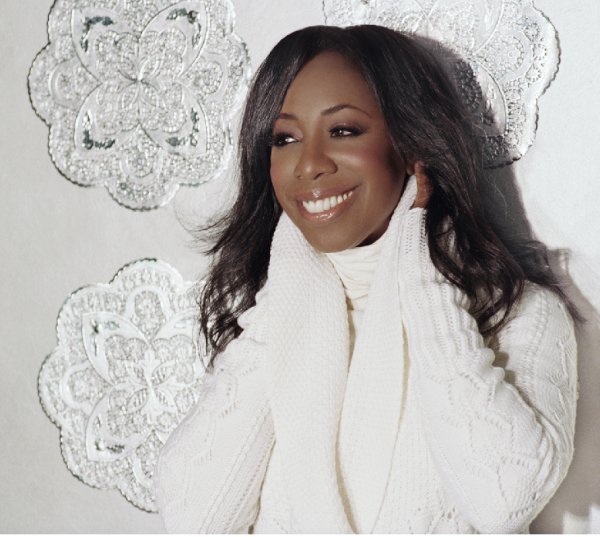
Review: Oleta Adams

(Above: “Get Here” brought down the house at Oleta Adams’ recent homecoming concert in Kansas City, Mo.)

By Joel Francis
The Kansas City Star

Oleta Adams took the stage of Gem Theater on Saturday night with a smile and an apology.

“I’m sorry I’m dressed this way,” she said, wearing a stunning, strapless, turquoise dress. “I thought it was supposed to be spring.”

It would take more than a dumping of out-of-season snow to keep the nearly full house from seeing its hometown girl. For more than two hours, the singer, who was a staple of the local jazz scene in the 1980s, indulged them with stories, a wide selection of songs, and surprises.

The evening got off to a rocky start. Adams’ piano was initially buried in the mix. The drums, played by her husband John Cushon, and keyboards, played by Kansas City native Everett Freeman, Jr., overshadowed everything. The songs were played at a level reserved for noisy clubs or large theaters, not a respectful group in an acoustically sound room.

Adams’ powerful voice, however, would not be derailed by the sonic disarray. After opening with “Feelin’ Good,” the first of several cuts from her latest album, she led her four-piece band into “New York State of Mind.” By the time she got to the reworked bridge that ushered in a lengthy guitar solo, the song bore little resemblance to Billy Joel’s hit. “I Just Had to Hear Your Voice” displayed Adams’ dynamic range. The lyric-heavy melody found her working the verses in a lower register before opening up and soaring on the chorus.

After 40 minutes, Adams announced a short break. It felt premature, but the timing couldn’t have been better. When the group returned 30 minutes later, the sound issues had been resolved. Balance had been restored and instruments were complementing instead of competing. The always-upbeat Adams seemed happier with the situation, too. During “My Heart Won’t Lie” she held onto a note with a phrasing that recalled Nina Simone and drew big applause.

The biggest cheers of the night, however, didn’t go to Adams. After playfully introducing her band, Adams informed the audience that the mother of her bass player, Jeanne Arland Peterson, was sitting in their midst. With the spotlight focused on Peterson, Adams was able to coax her to come onstage.

Peterson looked fragile making her way up the steps, but spring to life behind Adams’ grand piano. After a breathtaking solo, Peterson launched into “All the Things You Are” with her son, Paul Peterson, and Cushon. The impromptu trio sounded like they’d been playing together for years (and, I suppose, two-thirds of them had). When the 88-year-old pianist wanted to hear a solo, she raised her left hand and shot her index finger at the musician in question as if holding a gun.

Once the massive standing ovation died down, Adams joined the trio for a romp through “More Than You Know.” Peterson’s hands slid across the keyboard with gusto and inspired Adams’ best performance of the night.

Clearly excited to be playing again in her adopted hometown, Adams relished talking with the crowd as much as performing. She sang the praises of the 18th and Vine District, and recalled her days playing at the Signboard Lounge in Crown Center.

“My favorite moment every night,” Adams said, “was waiting to see who got beat up in the bathrooms.”

Fights, Adams remembered, sometimes broke out because someone didn’t applaud the right way. Adams also told of a police detective who frequented her gigs. When someone would start talking too loudly, he would start polishing his badge, hinting at what might happen if the chatter didn’t stop.

“I always had the most dedicated fans,” she said, laughing.

The night ended with what Adams said she called the “fourth set” back in her Signboard days. After hinting at her gospel roots in the first set by prefacing “No Way To Love Me“ with I Corinthians 13, Adams took the assembly to church with a powerful one-two of “If You’re Willing” and “Holy is the Lamb.” Both songs were from Adams’ 1997 gospel collection “Come Walk With Me” and fans voiced their pleasure by clapping along and shouting amen.

The poignant “Long and Lonely Hours” is part of a new collection of prayers set to song that Adams hopes will be her next album. The invocation was written after her mother died after spending five months in the hospital, and deals with the feelings of abandonment, awkwardness and, ultimately, acceptance, one feels alone at night in the hospital.

Adams wouldn’t let the night end on a dark note, so she immediately sprang into “Get Here.” Fans burst into applause at the opening chord of her most famous number and several cried out with excitement. Expectations can be high for homecoming shows, but it was clear from the closing ovation that Adams had met them all.

“Tonight,” the woman sitting next to me said, “we got our own jewel, right here at the Gem.”

Setlist: Feelin’ Good; New York State of Mind; I Just Had To Hear Your Voice; I Hope You Dance; Picture You the Way That I Do; Circle of One. Intermission. The Power of Sacrifice; Let’s Stay Here; My Heart Won’t Lie; All The Things You Are (ft. Jeanne Arland Peterson); More Than You Know; If You’re Willing; Holy is the Lamb; Long and Lonely Hours (solo); Get Here.

Keep reading:

Review: Kind of Blue turns 50

Review: Sonny Rollins

Buck O’Neil: Sweet times, sweet sounds at 18th and Vine

15 jazz greats to emerge in the last 20 years

Review: The Original Wailers

(Above: “We and Dem” was one of several new cuts the Original Wailers performed in Kansas City.)

By Joel Francis
The Kansas City Star

New material can be problematic for established acts. At a Kemper Arena concert several years ago, Elton John apologized for playing new songs and promised the he’d get to the hits as quickly as possible.
The Original Wailers took the opposite track Friday at the Voodoo Lounge, making several tracks from their upcoming album the centerpiece of the show. The gamble paid off.

Bob Marley casts a long shadow over all reggae acts, but the Original Wailers are especially stricken: Their two guitarists, J unior Marvin and Al Anderson, played with Marley on some of his greatest albums, including “Exodus” and “Uprising.”

The seven-piece band didn’t overlook those moments, but it was clear they want to be remembered as something more as well. After introducing themselves with a trio of Marley numbers, they dove into several songs from the as-yet unreleased album “Justice.”
Wailers1
Even though the crowd couldn’t sing along, they didn’t seem to mind. Part of this had to do with band’s enthusiasm for the numbers. It was evident they were happy to be playing their new creations, and as a result the performances bounced a little bit higher. The other reason is that the songs maintained several of Marley’s hallmarks, like socially conscious, yet upbeat lyrics underlined by gospel organ lines and subtly textured guitar parts.

“Blackbird Fly” was dedicated to the late Joseph Hill from Culture and floated as effortlessly as its title implied. “Backslider” was a song about hypocrites in the vein of “Who the Cap Fit,” and “We and Dem” featured a nifty dub bass-and-drum breakdown.

After several new songs, Anderson declared the band would take a request. There were shouts for “I Shot the Sheriff” and “No Woman No Cry.” Both were good suggestions; neither was played. Instead, the band played another new number, “What’s Love Supposed To Do.” It might have been a cruel trick, but the poppy number kept everyone dancing happily.

Marvin and keyboard player Desi Hyson shared vocal duties. The pair were as much educators as entertainers, pausing between tracks to frame each song. The song “Justice” was prefaced by a quote from founding Wailer Peter Tosh, which drew a big cheer.

The band didn’t deliver a big Marley hit until nearly halfway through the two-hour show. The Voodoo Lounge wasn’t close to full, but just about everyone in the place ran onto the dance floor during the opening chords of “Three Little Birds.” A more obscure cut “Heathen,” also from the “Exodus” album, kept the floor crowded thanks to Anderson and Marvin’s extended solos. A master of feel, Anderson added touches of Latin, psychedelica, blues and even metal into the songs.

After introducing “Jammin’” the crowd didn’t need an incentive to stick around, but Marvin gave them one anyway, leading them through dance steps, hand claps and a call and response. Anderson added a weird, dissonant blues riff to the mix that didn’t seem to fit but somehow worked. As the band worked the groove, backing vocalist Erica Newell, spurred on by fans near the stage, unleashed her funkiest dance moves of the night.

Wailers2After a brief break, Anderson resumed the stage alone, playing a guitar solo that recalled Jimmy Page’s “White Summer/Black Mountainside.” Eventually joined by drummer Paapa Nyarkoh, the rest of the band fell in as he slid into the familiar intro to “Redemption Song.” The performance had a hymn-like solemnity until Marvin kicked it into doubletime, reworking the last verse into a ska number.

The night ended with a 15-minute romp through “Exodus” that wouldn’t quit. After jamming through all the verses, Nyarkoh took a drum solo that didn’t slow the dancing by a single step. Marvin eventually regained the stage, but the band wouldn’t stop, working the groove tighter and tighter as Anderson took a long solo. At this point there were two options: continue playing the number for the rest of the night, which no one on stage or in the crowd seemed to mind, or break it off immediately. Realizing the band had an upcoming gig and the audience may have weekend plans, Anderson chose the latter. If he hadn’t we might all still be dancing.

Setlist: Natty Dread, Rastaman Vibration, Forever Loving Jah, Solution, We Are the Children, Backslider, Justice, Pimper’s Paradise, We and Dem, Blackbird Fly, Three Little Birds, Heathen, What Love’s Supposed To Do, Jammin’. Encore: Al Anderson guitar solo > Redemption Song, Exodus/drum solo.

Keep reading:

Original Wailers keep promise to Bob Marley

Review: Toots and the Maytals, the Wailers

Review: Sly and Robbie

Review: Lee “Scratch” Perry

Review: David Gray

(Above: A 2006 performance of “Freedom” at Hammersmith Apollo Theater in London. When David Gray returned to the song at the Uptown Theater in Kansas City, it was one of several stand-out moments during the show.)

By Joel Francis
The Kansas City Star

David Gray rewarded a decade’s worth of patience Wednesday night at a sold-out Uptown Theater. The English singer-songwriter broke through in America with the release of his album “White Ladder” in 2000. Gray has released three additional albums since then, but this was his first performance in Kansas City.

The set stopped just shy of two hours, and drew almost exclusively from those albums, tipping slightly toward last fall’s “Draw the Line.”

The crowd didn’t need a reason to get excited, but Gray gave them incentive anyway, pulling out heavy hitter “Sail Away” early. Directing the audience into the chorus with a broad sweep of his arm, the performance felt like an encore. It was the second number of the night.

Once he held the crowd, Gray never let them go. Or rather, the crowd never let go of him. Even quiet numbers were assaulted with proclamations of love and song requests.  The opening chords of “Babylon,” the song that likely introduced a lot of the audience to Gray, drew an evangelic fervor. Arms were waved and voices raised as the congregation celebrated every syllable of the song.

A couple times early on, Gray shook his head and wiped his face as if to shut out the relentless adoration, but the performances were too strong to be capsized by the overzealous assembly. Much of the credit for this goes to Gray’s four-piece backing band.

All of the members save one were lined up on the lip of the stage, adding further intimacy to the evening. Positioned at extreme stage left, drummer Keith Prior was the secret weapon, adding urgency and energy in all the right places, yet knowing exactly when to back off.

On “Now and Always” bass player Robbie Malone added a great bass line to Gray’s wailing harmonica that left the song sounding like a train in the distance. Guitarist Neill MacColl contributed great slide guitar to “Be Mine” and “Fugitive.” He also delivered especially nimble line on “Nemesis.” Behind them all, keyboard player James Hallaway was the subtle glue that held everything together.

Shifting from guitar to piano, Gray was spectacular regardless of the setting, be it the spare, solo piano of “Ain’t No Love,” the hushed acoustic guitar of “Kathleen,” or an epic full-band performance like “Freedom.” Whatever he played and however he delivered them, Gray’s songs all bore a certain similarity. Many of them started at a glacier’s pace. Like an iceberg, they didn’t appear to be moving, then would suddenly tower over everything, overwhelming the surroundings with their strength and beauty.

With touch of echo on the vocals and a starry backdrop, “The Other Side” seemed to be emanating from the Flint Hills. It was one of the more powerful performances of the night, but “Nemesis,” the next number, was even better. As thin beams of light bounced off a mirror ball and sprayed into the space, Gray closed his eyes and threw his arms out over his guitar as if healing the room. Meanwhile, everyone prayed it wouldn’t be another ten years until his return.

Phosphorescent: This pleasant, low-key act from New York was the perfect complement to Gray’s asthetic. The quintet’s 30-minute set caught fire with a pair of Willie Nelson covers: “It’s Not Supposed to Be That Way” and “Reasons to Quit.” Unfortunately, just when they started to build momentum, time elapsed. They would definitely be worth a closer look in a smaller venue, like Davy’s Uptown.

Setlist
Draw the Line; Sail Away; Jackdaw; World To Me; Now and Always; Kathleen; Babylon; Be Mine; Stella the Artist; Slow Motion; Freedom; Ain’t No Love; Fugitive; The One I Love. Encore: This Year’s Love; The Other Side; Nemesis; Please Forgive Me.

Keep reading:

Review: Mutemath

Review: Wilco returns to the Crossroads (2009)

Review: No Doubt, Paramore

Review: Yo La Tengo

(Above: Yo La Tengo tear into “Sugarcube.”)

By Joel Francis
The Kansas City Star

Almost an hour into Yo La Tengo’s show Tuesday night at the Granada Theater, a fan asked how long the band had been together. The choices presented were 12, 13 or 14 years or longer.

Singer/guitarist Ira Kaplan quickly set the record straight: “I’d like to take this opportunity to announce that this is our 26th year of rocking,” he said. “And I know a lot of you are similarly looking forward to your 26th birthday.”

The indie-rock trio from Hoboken, N.J., is not only a case study in longevity, but consistency. Its set exceeded two hours and touched on all facets of the band’s career, from a whisper-soft reading “Speeding Motorcycle,” one of the band’s earliest “hits,” to bright, up-tempo new song “Nothing To Hide.”

The opening number showcased the two facets of Yo La Tengo’s personality. “We’re an American Band,” was not a Grand Funk cover, but a 10-minute, laid-back drone. Kaplan’s sweet falsetto vocals were countered by his sudden guitar spasms, creating something like an abrasive lullaby.

The rest of the night swung between those two poles. A spacey reading of “Little Eyes” drew big cheers. Drummer Georgia Hubley (Kaplan’s wife) took over vocal duties. Kaplan’s guitar had a flat tone and was buried in the mix, making it feel like the song was floating out of a distant radio.
Other early highlights included the jaunty “Mr. Tough,” which had some people dancing. “I’m On My Way,” another new song, featured bass player James McNew on lead vocals and Hubley on acoustic guitar.

The mellow, dreamy soundscape was punctured by the ferocious drums and guitar that introduced a raucous “Sugarcube.” The energy from that number carried into “More Stars From Heaven,” that slowly built in intensity until reaching a blissful crescendo after nearly 10 minutes.

While Yo La Tengo knows how to nurse a mood, the instrumental “I Heard You Looking” was a tour de force. With Hubley and McNew holding down the groove, Kaplan battered and molested his guitar for nearly 20 minutes. Jumping in the air while strumming, and swinging the instrument by its neck, Kaplan did everything he could to coax out new sounds. When his guitar strap broke, Kaplan kept on playing, using the experience to add new texture to his strumming.

After surveying their catalog, the band turned to their influences during the encore sets. A fun garage rock cover of the Small Faces’ “What Cha Gonna Do” and a goofy duet of “It’s OK, I’m Alright” with opening band Times New Viking showed the trio’s sense of humor. While the crowd didn’t get the band’s oft-requested cover of Sun Ra’s “Nuclear War,” the night closed with another Ra cover.

Nearly two hours after taking the stage, Yo La Tengo surprised everyone by returning for a second encore. After playing a stripped down version of “Big Day Coming,” that found Hubley replacing Kaplan on lead vocals, the trio broke out some doo-wop on Sun Ra’s “Somebody’s In Love.” Although the house wasn’t sold out, it was comforting to know the band could, and would, come back and do this again anytime they wanted.

Setlist: We’re An American Band, All Your Secrets, Periodically Double or Triple, Avalon or Someone Very Similar, Little Eyes, Here To Fall, If It’s True, Mr. Tough, I’m On My Way, Don’t Say, Tom Courtenay, Sugarcube, More Stars Than There Are In Heaven, The Story of Jazz, Nothing To Hide, I Heard You Looking. Encore: It’s OK, I’m Alright (with Times New Viking), Stockholm Syndrome, What Cha Gonna Do (Small Faces cover), Speeding Motorcycle; Big Day Coming (acoustic), Somebody’s In Love (Sun Ra cover).

KC’s MCs throw down this weekend

(Above: Supernatural takes on Juice in one of the most famous MC battles of all time.)

By Joel Francis
The Kansas City Star

Practice is vital but when it comes to rapping, nothing improves skills like a live, trial-by-fire MC battle. This weekend, several rappers will have a chance to compete for money.

The third annual Versus Emcee and Beat Battle goes down Saturday night at the Record Bar, 1020 Westport Road. A pre-battle show will be held tonight at the Riot Room.

“Battles are how you prove yourself and show how far your skills have developed,” said Clarence Draper, who goes by the MC name Vertigone. “This is also a way for people who aren’t actively involved in the scene or new to the area to get up and connect and get involved.”

The contest is open to the first 16 MCs who sign up. Draper encouraged them to arrive between 8:30 and 9 p.m. The winner will take home $500.

“This is first-come, first-served, so they need to be there early,” he said. “Plus people should come out to see the beat battle.”

In the beat battle, six DJs will use their own equipment and go head- to-head in six rounds that include using a common sample to create distinct productions.

Draper said the final evening will resemble the battle scenes in “8 Mile” but without scripts. Everything that comes off the stage must be spontaneous.

“At Versus we reward the freestyle,” Draper said, “which is the most pure idea of the MC not having anything and being ready to rhyme.”

Draper practices his freestyles during his normal routine, incorporating things he sees, such as traffic signals, into rhymes.

“The socially conscious stuff I do on my albums is not going to win you any battles,” he said with a laugh. “I practice all the time how to rhyme, which words work together. I focus mainly on two-syllable words like ‘eventually’ and ‘century.’ It’s not all ‘cat’ and ‘hat.’”

MC Les Izmore, who releases albums on his own and performs as part of Hearts of Darkness, participated in last year’s Versus battle. For him, the night is more about building his skills than beating others.

“I know a lot of people practice their freestyle, but I’m not prepping,” Izmore said. “(Last year) was a thrill. I didn’t know what was going to happen. I may not know the person I’m up against, but I’m there to challenge myself as an MC.”

Although boasts and insults are a large part of the battle repertoire, presentation plays a large role. In other words, sweat the technique.

“Battling is more than insulting people. You have to have style and swagger to how you do it,” Draper said. “You have to work the crowd as much as your opponent. When someone says something that sways the crowd, you have to win them back.”

While the Versus battle is only in its third year, its tradition runs deep in Kansas City. During the city’s jazz heyday, musicians would spar in ‘head cutting’ contests nearly every night in the 18th and Vine District.

“I’ve been at the Mutual Musicians Foundation and seen the musicians, all of them were just in this mood, this groove,” Draper said. “And then they started jumping off of that with solos, each person trying to outdo the other. It’s the same thing we’re trying to do in a freestyle.”

Vertigone and his friend Raymond “Kartoon” Hardy hosted the initial Versus battle because they felt there was a void in the community after the demise of the successful Mic Mechanics battles in Lawrence.

“Battle rhyming starts out under the street lights and on the corners in the neighborhood,” Draper said. “Eventually you get tired of that and want to take on other people. We are trying to keep this going for anyone who doesn’t have an outlet. It’s as much about social networking as anything.”

Izmore has one final word of advice for everyone joining him onstage this weekend.

“When I was up there (onstage last year), I could feel a ton of raw energy,” he said. “You gotta make sure to come with your best, because you don’t know what will come up next time.”

Review: Megadeth

(Above: Megadeth perform “Hangar 18” in England earlier this year. The audio quality is pretty much what it sounded like inside the Beaumont Club as well.)

By Joel Francis
The Kansas City Star

Blazing fast guitar licks, double-kick bass-drum riffs and an armada of metal anthems: Dave Mustaine brought everything that made Megadeth famous to the Beaumont Club on Saturday night.

The majority of the quartet’s 90-minute set drew from its reign at the top of the thrash heap in the late ‘80s and early ‘90s, when it played before massive crowds alongside Slayer and Anthrax and was compared to Mustaine’s former bandmates, Metallica.

Although Mustaine had to rehearse the crowd’s part for “Head Crusher,” one of four songs performed off the band’s current album, “Endgame,” most of the time he was able to step back and let the mob rule the mic. The schizophrenic “Sweating Bullets” and outro to “Peace Sells” were especially lusty sing-alongs. The audience vocals were frequently clearer than Mustaine’s, which were buried in an abysmal mix that made every number sound and feel like brick to the head.

Snarling vocals aside, Megadeth’s other hallmark is lightning-fast, labyrinthine fretwork gymnastics. Although he’s yet to celebrate his second anniversary in the band, guitarist Chris Broderick was more than up to the task, ripping up the extended instrumental half of “Hangar 18,” tearing through the epic “In My Darkest Hour” and trading solos with Mustaine on “She-Wolf” and the warp-speed new song “1,320’.” Ever the gracious host, Mustaine frequently retreated to bang his rusty locks alongside the bank of Marshall amplifiers lined across the back of the stage while Broderick took center stage.

The rhythm section of Shawn Drover and James LoMenzo – Megadeth veterans with six and four years of service, respectively – guided the groove into “Trust” and held down the framework for the guitar pyrotechnics.
While many metal songs focus on war, Mustaine has never been afraid to get political. Megadeth’s previous album was called “United Abominations” and features a song called “Washington is Next!” The closing triptych revealed an interesting point of view.

“Symphony of Destruction” deals with political puppets propped up by a government bent on war. “Peace Sells” discusses disillusionment and hypocrisy of politicians who aim for peace but somehow end up perpetuating war. (The song’s refrain is “Peace sells/but who’s buying?”) “Holy Wars” started out as a referendum on Northern Ireland, but features several Middle Eastern guitar breaks and echoes jihad theory.

Surprisingly, it wasn’t war Mustaine wanted to talk about. Instead, he interrupted “Peace Sells” for an anti-Obama screed, blasting the president without using his name for selling the country to the Chinese and giving away civil rights. Mustaine’s solution was to “write my own (expletive) name in there” on the ballot come election day.

(It is curious that in the week following Obama’s announcement of an Afghani surge after running a campaign on ending the war, Mustaine would ignore these parallels for clichéd attacks.)

After peaking on the charts in the late ‘90s, Mustaine broke up the band in 2002. Two years later, he resurrected the name as the only continuing member, but has yet to regain drawing power as a live act. While the Beaumont was plenty crowded, tickets were still being sold at the door after the band had taken the stage.

If the stumble from stadiums to clubs frustrated Mustaine, it didn’t show. He took time before “44 Minutes” to express heartfelt thanks to everyone for letting them play, and long after the rest of the band had departed, Mustaine lingered onstage after “Holy Wars” to shake hands and congratulate fans.

Setlist: Dialectic Chaos, This Day We Fight, Wake Up Dead, Skin of My Teeth, Head Crusher, A Tout Le Monde, She-Wolf, Tornado of Souls, 1,320’, In My Darkest Hour, Sweating Bullets, Hangar 18, 44 Minutes, Trust, Symphony of Destruction, Peace Sells. Encore: Holy Wars.

Review: Get Up Kids

(Above: The Get Up Kids perform “Martyr Me” at the second show of their two-night stand at the Record Bar in Kansas City, Mo.)

By Joel Francis
The Kansas City Star

Nearly a year to the date after reuniting, the Kids are still alright.

Homegrown heroes the Get Up Kids capped off a two-month tour opened their dual-night stand at the Record Bar Friday night in front of an energetic crowd. Both shows benefit the family of the late Recycled Sounds owner Anne Winter.

No one in the band mentioned Winter during their 80 minute set. Instead they dashed through 20 songs that encompassed their decade of glory, inspirations and a couple new numbers.

The night started with a frenetic, nonstop explosion through “Holiday,” “I’m a Loner Dottie, A Rebel” and “The One You Want.” After slowing things down with “Valentine,” the Kids kicked into a new number.

“Your Petty Pretty Things” doesn’t deviate from the sounds and themes that made the hometown band famous around the world, but has enough wiggle room in its three and a half minutes for the band to kick it into high gear during the outro and ride the riff together before abruptly wrapping up. That energy was channeled into a powerful reading of “Come Clean.”

The band was lined up four across with the drums in the back of the corner stage. Keyboard player James Dewees was pushed so far to stage left that it seemed like he faced out the windows and into the parking lot more often than into the crowd.

As usual, Dewees was the band’s not-so-secret weapon. He shined an acoustic duet of “Campfire Kansas” with guitarist Jim Suptic on lead vocals, but Dewees’ most interesting contribution came on “Keith Case.” The second new song of the night, “Case” appeared out of a left turn from “No Love.” Driven by Rob Pope’s fuzz bass, Dewees applied a shimmering sci-fi synth line that makes the sound stand out in Kids’ catalog. Later, Dewees’ classic piano riff formed the bridge from “Holy Roman” into “Mass Pike.”

Although the Record Bar was full, there was still plenty of elbow room. The faithful throng delighted in throwing back frontman Matt Pryor’s words with same energy they were delivered. “Act and Action” erupted into one of the biggest sing-alongs of the night until “Don’t Hate Me.” The atmospheric “Walking on a Wire” kept slowly building layer by layer until both the crowd and the band took it through the roof.

In lieu of an encore, the band went straight into their cover of “Close To Me.” The Cure’s  1985 hit was obviously a big influence on the band, but the Kids nearly manage to one-up their heroes with Ryan Pope’s buoyant drum line propelling the song.

The set ended at midnight with the final words to “Ten Minutes” ringing out: “Everything will work out fine.” So far, it has.

Setlist: Holiday; I’m A Loner Dottie, A Rebel; The One You Want; Valentine; Your Petty Pretty Things (new song); Coming Clean; Woodson; Out of Reach; No Love; Keith Case (new song); Red Letter Day; Campfire Kansas; Holy Roman; Mass Pike; Act and Action; Walking on a Wire; Close To Me; Beer For Breakfast; Don’t Hate Me; Ten Minutes

Review: Widespread Panic

(Above: Widespread Panic jam with DJ Logic at a 2008 show in Charlotte, N.C.)

By Joel Francis
The Kansas City Star

Call it hippie-hop. The surprise appearance by DJ Logic late into Widespread Panic’s sprawling set at the Midland Theater Tuesday night set both the evening and the audience on its ear.

Singer John Bell may have been claiming “this ain’t no nightclub” during the jam band’s faithful cover of the Talking Heads song “Life During Wartime,” but Logic’s turntables and the mood of the room said otherwise.

Logic’s scratching added another texture to the Georgia-based jam band’s already expansive palate. As the evening’s wild card, he pushed and challenged the Georgia-based jam band to meet his challenge.

Percussionist  Sonny Ortiz responded by soloing around a loop that Logic provided. Keyboard player JoJo Hermann sprinkled some ‘80s synth sounds into his normal B3 repertoire. The result was a jam/rap hybrid somewhere between Snoop Dogg and Ratdog.

The timing couldn’t have been better. The sextet was three hours into their set and had just wrapped a marathon performance of “Hatfield” when Logic -– who was in town for his own engagement at Crosstown Station -– and his turntables rolled out of stage left. Based on the legend of Fort Scott, Kan., Native Charles Hatfield, the song was the biggest moment so far. With the house lights up for the chorus, the crowd enthusiastically sang along.

As the band made its way from “Hatfield” into “Fishwater,” the crowd predicted the number and erupted. What had been bob-and-weave dancing before turned into some serious getting down. After several minutes of “Fishwater,” the group suddenly doubled the tempo kicked into the Heads number. Panic covered the Heads song “Papa Legba” in their first set, but thoroughly assimilated everything but the signature guitar riff into their own monolithic sound. “Wartime,” however, felt and sounded like the second coming of “Stop Making Sense.”

Although nothing topped their half-hour with Logic, there many other memorable moments throughout the night. A marathon reading of “Diner” primed the pump for “Hatfield.” Hermann channeled Billy Preston during a medley of the instrumental “Disco” and the song “You Should Be Glad.” Earlier in the night, he applied Stevie Wonder’s clavinet sound to “Worried.”

“Barstools & Dreamers” started with a slap bass and slide guitar intro and drew the first signs of fervor. Bell unleashed a guitar solo in that number that sounded like his instrument was strung with barbed wire. The instrumental “Party at Your Mama’s House” was the product of acoustic and slide guitars, slap bass and buoyant percussion. It felt like sipping lemonade on the back porch then kicking a soccer ball around on the beach.

Tuesday night was the band’s first two shows in town, and the Midland was far from sold out. Although the floor was packed, there were acres of empty seats in the balcony. Panic probably could have packed the house by playing a one-night stand, but brevity and efficiency seem to be less important than passion and ability.

When the band finally said good night, they had been performing for nearly four hours (including a 40 minute intermission). Anyone wanting more would have to wait another 20 hours until the start of tonight’s show.

Setlist:
Better Off, Little Kin; Worried, Gradl; Barstools & Dreamners; Jack; Lil’ Drums; Papa Legba (Talking Heads cover); Party at Your Mama’s House; Ribs and Whiskey. Intermission. Let’s Get Down to Business; Disco;  You Should Be Glad, Diner; Hatfield; Fishwater (with DJ Logic); Life During Wartime (Talking Heads cover, with DJ Logic); drum solo (with DJ Logic); Fishwater (with DJ Logic). Encore: Nobody’s Loss; Fixin’ to Die.

Morris Day makes up for lost time

(Above: Morris Day and Jerome riff on Abbott and Costello in this scene from the 1984 film “Purple Rain.”)

By Joel Francis
The Kansas City Star

The original members of the ‘80s funk band the Time, including Morris Day, Jimmy Jam, Terry Lewis, and Jesse Johnson, will have an album of new material out within the next year if Day has his way.

“The original members get together when we can,” Day said. “It’s getting to the point where we can put something new out within the next year.”

After dropping three classic albums in the early ‘80s, the band briefly reunited in 1990. A group appearance at the 2008 Grammys kicked off the latest reconvening, Day said.

“What happened was we’ve been getting together and doing tracks for fun,” Day said. “It so happens Jimmy Jam is chairman of NARAS (National Academy of Recording Arts and Sciences), the company that does the Grammys. They found out he was an original member of the Time and thought we needed to come out together. So we did that, which lead to a string (of shows) in Vegas at the Flamingo, then we decided to keep on going.”

Just don’t expect Jam, Lewis, Johnson or any new cuts on Morris Day and the Time’s current tour.

“We’re holding up on that (playing new cuts). We’re going to launch it in a way that makes sense at the time,” Day said. “I do know we sound even better than the old records. You’ll be surprised how good everybody looks and sounds. There are still a few original members. We still have Jellybean (Johnson) on drums and Monte (Moir) on keyboards. “

In 1980, Prince culled the best musicians from local Minneapolis bands Flyte Time, the Family and Grand Central to be in his pet side project, the Time. Although the Time’s 1981 debut album featured Prince on most of the instruments, the other musicians gradually had more input.

“On the first record, Prince played a lot of the instruments, but I played drums,” Day said. “Every time he was in the studio, I was down there with him working just as much. We cut the tracks together. With each album, the musicians played larger roles. You can see it from all the spin-off careers. Everyone became very efficient in the studio.”

Jam and Lewis made their name as producers working with Janet Jackson. The pair brought in Jellybean Johnson to help produce Jackson’s 1989 hit “Black Cat.” Jesse Johnson also worked with Jackson and has written music for several movies, including “The Breakfast Club,” in addition to recording as a solo artist.

“I knew we had something special right away from the first song the band had to learn,” Day said. “When we played our first big show at the 20 Grand in

08-24-2009.ngl_24MorrisDay_Product.GH72M5BFB.1
Day performs onstage in Ft. Worth, Texas in August, 2009.

Detroit, I started out with my back to the crowd and I could hear the people going nuts. Then after the show I saw the response from the musicians and people into music and knew we had something special.”

The Time found their biggest success after appearing in “Purple Rain,” which celebrates its 25th anniversary this year.

“When we made ‘Purple Rain’ we weren’t thinking the movie would be a blockbuster, we were just having fun,” Day said. “I’ve only seen once in its entirety and that was at the premier. That said, I think it’s held up well because I always end up running into people who can quote my lines like they wrote the script.”

Unfortunately, the band was no longer intact to enjoy the results.

“What happened was Jimmy and Terry missed a show in Atlanta. They were somewhere producing for S.O.S. Band, missed their flight and because of bad weather couldn’t get out,” Day said. “Because we were signed to Prince’s production company, he fired them. The band never felt the same to me after that. I wasn’t feeling it any more so I decided to start a solo career.”

Day continued to work with Prince, though, appearing in the film “Graffiti Bridge.” Eventually Day realized he liked music more than movies.

“Acting is not an easy gig. It takes a special talent that not just anyone can do it,” Day said. “It takes a lot of memory and concentration, things that don’t come easy to me. I like to work an hour, hour and a half, and be able to go into the studio at my leisure.  The musician has more control over life than an actor.”

After a lengthy absence, Day returned to the big screen for the “Jay and Silent Bob Strike Back” in 2001.

“That’s an interesting scenario, because apparently (director) Kevin (Smith) wrote the script with us in mind before he contacted us,” Day said. “It was a good experience. I had teenage kids at the time, and they just thought of me as the guy who dropped them off at school. But after ‘Jay and Silent Bob’ so many kids were coming up to me. It set young eyes hip to what I do.”

(Note: This article was written in advance of a scheduled concert by Morris Day and the Time on Nov. 6, 2009, at the Midland Theater in Kansas City, Mo. Unfortunately, Day cancelled the concert hours after the piece was submitted. It is published on The Daily Record for the first time.)